


The prevalence of childhood obesity is increasing at a dramatic rate, especially in economically developed countries(Reference Jackson-Leach and Lobstein1–Reference Wang and Lobstein3). According to international definitions, 10 % of the world’s school-aged children is estimated to be overweight, a quarter of which is obese(Reference Lobstein, Baur and Uauy2, 4). Recent data indicate that in Europe, 31·8 % of schoolchildren were estimated to be overweight, including 7·9 % estimated to be obese(Reference Jackson-Leach and Lobstein1, Reference Wang and Lobstein3), with a higher prevalence of overweight youth in Southern Europe(Reference Janssen, Katzmarzyk and Boyce5, Reference Lobstein and Frelut6). The significant linear trends in the annual increments indicate that the rate of change of prevalence is itself increasing. The predicted prevalence for 2010 will be 38·2 % for overweight, of which 10 % reports to obesity(Reference Jackson-Leach and Lobstein1, Reference Wang and Lobstein3).
In Portugal, weight and height are not assessed regularly at the national level. In a recent review, fifteen individualised studies reported overweight and obesity, in Portugal, in children and adolescents aged 2–15 years(Reference Moreira7). In a sample of 5511 children (7–9-year-old), a prevalence of overweight between 19·1 % and 21·4 % and of obesity between 10·2 % and 12·3 % was reported, respectively, in boys and girls(Reference Padez, Fernandes and Mourão8).
Obesity has important consequences as it increases the risk of other chronic diseases, including dyslipidaemia, hypertension, CVD, insulin resistance and diabetes. Moreover, obesity influences the physical, social and psychological development of children(Reference Dietz9). Approximately one-third of overweight children and one-half of overweight adolescents remain obese as adults(Reference Wang and Lobstein3, Reference Singh, Mulder and Twisk10). Therefore, prevention of obesity in these age groups should be a public health priority.
There is no widely agreed standard for classifying overweight and obesity in paediatric age, however the use of a universal classification may facilitate international comparisons(Reference Lobstein, Baur and Uauy2, Reference Reilly11). The BMI is the most practical and widely used index to identify overweight and obese children and adolescents for survey purposes(Reference Dietz and Robinson12). The International Obesity Task Force (IOTF) recommends the use of BMI cut-off points of Cole et al.(Reference Cole, Bellizzi and Flegal13). These were derived from the BMI cut-off points of 25 and 30 kg/m2 at an age of 18 years and by extrapolating these along the equivalent BMI-for-age centile lines in a multinational data set of children aged 6–18 years(Reference Cole, Bellizzi and Flegal13). The US Centers for Disease Control and Prevention (CDC) recommends the sex- and age-specific 85th and 95th BMI percentile as the cut-offs to define overweight and obesity in children and adolescents(Reference Kuczmarski, Ogden and Grummer-Strawn14). Both methods are routinely employed to assess childhood obesity(Reference Janssen, Katzmarzyk and Srinivasan15), nevertheless previous research(Reference Flegal, Ogden and Wei16, Reference Zimmermann, Gübeli and Püntener17) showed that they yield different prevalences for overweight and obesity.
The present study has been carried out in order to estimate the prevalence of overweight and obesity in 7–9-year-old children from Aveiro and to compare the IOTF and CDC sex-specific BMI-for-age reference values.
Subjects and methods
The study was carried out in public primary schools of Aveiro in a sample of 7–9-year-old children. This age group was chosen for physiological reasons, as it precedes puberty(Reference Lehingue18). The study protocol was approved by each group of schools (forty public primary schools scattered within seven groups of schools).
Aveiro is the fifth most populous district in Portugal. Its gross domestic product (GDP) per capita represents 90 % of the national average, with low levels of poverty(19).
Participants
The number of children enrolled at 2nd and 3rd grade (corresponding to children aged between 7 and 9 years) was identified (n 1799) at the beginning of 2005/2006 academic year. A random sample of schools was extracted with the restriction of having at least one school from each group of schools. The probability of selection of one school was proportional to the number of students in the 2nd and 3rd grade. From a total of forty, thirteen schools were selected (see Appendix). A representative sample of 980 children was obtained, corresponding to all students in the 2nd and 3rd grade of the sampled schools. The survey was carried out from January to March 2006 and 931 children were evaluated, of which 98·8 % were Caucasian. Twenty-six children were excluded (twenty-five were older than 9 years; one suffered from Down syndrome). Therefore, our sample consists of 905 children (92·4 % of the initial sample).
Anthropometric measures
In each school, two trained staff (one nutritionist and one nurse) measured height, weight and waist circumference according to standardised procedures(20). Weight was measured to the nearest 0·1 kg using an electronic column scale (SECA-780; Seca Ltd, Hamburg, Germany); height was measured to the nearest 0·1 cm using a stadiometer (SECA-220, Seca Ltd), with the head in the Frankfort horizontal plane; waist circumference was measured at the mid-point between the iliac crest and the lower edge of the ribs at the end of a normal expiration. Age was calculated in decimal units based on the date of the survey relative to birth date. Overweight and obesity were defined using the IOTF cut-offs proposed by Cole et al.(Reference Cole, Bellizzi and Flegal13) derived from BMI cut-points of 25 and 30 kg/m2 and the CDC sex- and age-specific 85th and 95th BMI percentile(Reference Kuczmarski, Ogden and Grummer-Strawn14). The term overweight in the present study does not include obese children. Abdominal obesity was defined using the sex and age-specific 95th waist circumference percentile by McCarthy et al.(Reference McCarthy, Jarret and Crawley21).
Statistical analysis
Statistical analysis was performed using the Statistical Package for the Social Sciences statistical software package version 14·0 (SPSS Inc., Chicago, IL, USA). Descriptive statistics were executed by computing the mean and standard deviation for continuous variables, or frequencies for ordinal and nominal variables. Pearson and Spearman correlation coefficients were computed to evaluate the degree of association between variables. Independent samples t test and ANOVA were performed on scale variables to evaluate the differences between two or more groups, respectively. The Mann–Whitney U test was used in ordinal variables to evaluate the differences between two groups. To study the independence between nominal categorical variables, the χ 2 test was used. Cohen’s k was calculated in order to measure the agreement between the IOTF and CDC criteria. The IOTF criteria were computed using the Excel add-on lmsGrowth(22) and CDC criteria were computed using the tables provided by the Centers for Disease Control and Prevention webpage(23).
Results
The analysis involves 905 children aged 7–9 years, of whom 457 (50·5 %) were boys and 448 (49·5 %) were girls. The characteristics of the sample are shown in Table 1. There are no significant differences in age and anthropometric characteristics between boys and girls.
Descriptive characteristics of the 7–9-year-old Portuguese children living in Aveiro, according to gender
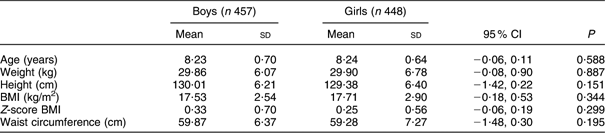
There are no significant differences between boys and girls in relation to all studied variables.
The prevalence of overweight and obesity by gender according to IOTF and CDC is shown in Table 2. The prevalence of excess weight (overweight and obesity) was lowest according to IOTF (28·1 % v. 31·2 %), especially in the obese group (8·1 % v. 14·0 %). The IOTF and CDC criteria have a strong agreement (Cohen’s k = 0·755, P < 0·001), however with higher prevalence of obesity when using the CDC. According to IOTF, the prevalence of excess weight was highest among girls, without significance (Z = −1·794, P = 0·073). Also, according to the CDC criteria, the prevalence of both overweight and obesity was highest among girls (35·7 % v. 26·9 %), with significant differences between genders for the CDC criteria (Z = 2·966, P = 0·003) for the mean rank of the BMI group (normal, overweight and obese).
Prevalence of overweight and obesity among 7–9-year-old Aveiro children according to the IOTF and the CDC sex-specific BMI-for-age reference values and gender
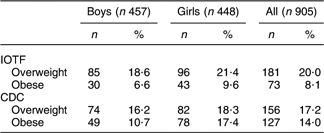
IOTF, International Obesity Task Force; CDC, US Centers for Disease Control and Prevention.
There were significant differences between genders for the CDC criteria (Mann–Whitney Z = 2·966, P = 0·003) but no differences were found for the IOTF (Mann–Whitney Z = −1·794, P = 0·073) for the mean rank of the BMI group (normal, overweight and obese).
Obese children are younger (8·25 (sd 0·67) years in normal weight v. 8·08 (sd 0·63) years in obese according to IOTF, and 8·15 (sd 0·64) years in obese according to CDC), although the correlation between age and Z-score BMI is very weak (R = −0·084, P < 0·011). There is no statistical difference in age (P = 0·588) and Z-score BMI (P = 0·300) according to gender. Abdominal obesity (Table 3) is present in 84·9 % and 83·5 % of obese children according to IOTF (ρ = 0·608; P < 0·001) and CDC criteria (ρ = 0·639; P < 0·001), respectively. Waist circumference is strongly associated with BMI (R = 0·922; P < 0·001).
Waist circumference percentile distribution in 7–9-year-old normal weight, overweight and obese children according to the IOTF and the CDC sex-specific BMI-for-age reference values
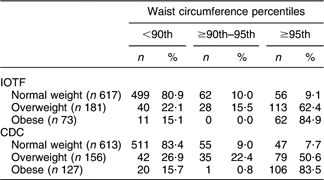
IOTF, International Obesity Task Force; CDC, US Centers for Disease Control and Prevention.
Spearman correlation between waist circumference percentile and IOTF criteria: ρ = 0·608 (P < 0·001). Spearman correlation between waist circumference percentile and CDC criteria: ρ = 0·639 (P < 0·001).
According to the school environment (ten rural schools: 458 children; three urban schools: 447 children), the prevalence of excess weight is similar in both school types (IOTF: 27·51 % in rural v. 28·57 % in urban; CDC: 33·63 % v. 32·14 %). There is no statistical difference between gender, age and Z-score BMI according to rural or urban environment (P = 0·154; P = 0·519; P = 0·185) and according to each school (P = 0·116; P = 0·188; P = 0·092).
Discussion
Our study presents the first estimates on prevalence of overweight and obesity in children living in Aveiro. These data constitute a representative sample of 7–9-year-old schoolchildren, although randomisation was school- and not individually based. We found a high prevalence of excess weight (overweight and obesity) between 28 % and 31 % according to the criteria used (IOTF and CDC, respectively), which is estimated to be among the highest in Europe(Reference Jackson-Leach and Lobstein1). This prevalence is in accordance with Padez et al.(Reference Padez, Fernandes and Mourão8), which found 31·5 % of excess weight according to IOTF (20·3 % overweight and 11·3 % obesity v. 20·0 % overweight and 8·1 % obesity in our study).
The prevalence of overweight in our sample is slightly higher when using IOTF reference (20·0 % v. 17·2 %). However, a higher prevalence of obesity, almost twofold, was found when using the CDC charts (8·0 % v. 14·0 %). Several authors also have found a higher prevalence of obesity when using the CDC reference. Lobstein et al. showed that 10·7 % of boys and 14·0 % of girls (6–11-year-old) were obese according to IOTF, while according to CDC criteria obesity increased to 19·9 % in boys and 17·6 % in girls (data from the National Health and Nutrition Examination Survey 2003–2004). In contrast, the IOTF reference yielded a higher percentage of overweight compared to CDC (21 % and 23·6 % for IOTF v. 16·6 % and 20·4 % for CDC, respectively in boys and girls)(Reference Lobstein and Jackson-Leach24). In a national sample of 6–12-year-old Swiss children, 3·85 % and 3·72 % of boys and girls were obese based on IOTF reference, whereas 7·63 % and 5·91 % were obese based on CDC(Reference Zimmermann, Gübeli and Püntener17). In the Pro Children Study, the authors also found that CDC criteria consistently estimated higher proportions of obesity than IOTF(Reference Yngve, De Bourdeaudhuij and Wolf25). These two definitions differ in data sets, smoothing methods and approaches to set cut-offs(Reference Flegal, Ogden and Wei16, Reference Toschke, Kurth and von Kries26). The IOTF BMI cut-off points derived from a multinational (Brazil, United Kingdom, Hong-Kong, Singapore, the Netherlands and USA) data set of children(Reference Cole, Bellizzi and Flegal13). While the CDC2000 growth charts were created to update the 1977 National Center for Health Statistics charts using data from five cross-sectional child growth surveys, involving US nationally representative samples(Reference Kuczmarski, Ogden and Grummer-Strawn14). For 6–12-year-olds, the IOTF cut-offs are generally higher than the CDC ones. For boys, the mean differences between the CDC and IOTF references for overweight and obesity are around 0·5 and 1·5–2·0 kg/m2, respectively. For girls, the two sets of reference values are similar for overweight, but the IOTF cut-offs are near 1·0 kg/m2 higher(Reference Flegal, Ogden and Wei16). Therefore, the IOTF definition of obesity tends to be more cautious and according to several studies its sensitivity for obesity is poorer when compared to CDC definition(Reference Zimmermann, Gübeli and Püntener17, Reference Wang27). This can lead to an underestimation of obesity prevalence. Although the IOTF reference has a slightly stronger capacity for predicting obesity and metabolic disorders in young adulthood(Reference Janssen, Katzmarzyk and Srinivasan15), the CDC criteria, being broader, might have the advantage of identifying more children who will benefit from an early intervention, even at the risk of creating false positives.
Differences in gender are generally small and there is no suggestion that either males or females consistently predominate within particular age groups, or according to particular overweight definitions(Reference Sweeting28, Reference Livingstone29). In almost all cases, the gender differences were not statistically significant(Reference Sweeting28). Nevertheless, in our study we found a higher prevalence of excess weight in girls, statistically significant according to CDC. This might be related to gender differences in physical activity, since boys are generally more active than girls(Reference Sweeting28). However, physical activity levels were not evaluated in our study.
Researchers should be aware of the differences between IOTF and CDC criteria, since they will yield different prevalence rates. Each one has its advantages and limitations, and should be used taking into account its possible limitations(Reference Flegal, Ogden and Wei16).
Despite the small age interval of the sample, the prevalence of obesity was higher in younger children, which could be an indicator of a future increase in the prevalence of obesity. It also shows the importance of an early intervention in order to prevent the increase in weight and its consequences.
In our sample, the majority of obese children present abdominal obesity. According to other authors, waist circumference is a useful measure of the abdominal obesity that is more closely related to cardiovascular risk and metabolic syndrome than overall obesity(Reference Moreno, Pineda and Rodriguez30, Reference Freedman, Serdula and Srinivasan31). Therefore, waist circumference measurement might be a simple tool to help identify children at risk.
The school environment might be associated with socio-economic status of families, but we did not find differences in the prevalence of excess weight between children from schools in rural and in urban areas. In the rural area, schools are smaller and children generally come from families that work mainly in agriculture and factories, with a lower education level. In the urban area, children generally come from families that work mainly in the services industry, normally with higher education level. A limitation of our study is that we did not evaluate the family socio-economic status and the parent’s education. In industrialised societies, adults with a low/medium education level and less qualified occupations are at risk of excess weight, and also influence the diet and lifestyle of their families, which leads to a greater risk for their children(Reference Strauss and Knight32). Lower socio-economic status may also be related to decreased physical activity in children and adolescents(Reference Ekelund, Neovius and Linné33).
In summary, the prevalence of excess weight in Portuguese schoolchildren living in Aveiro is high, especially in the female gender, and among the highest in Europe. Our data confirm that the CDC charts give a higher prevalence of obesity, compared to the IOTF. The majority of obese children present abdominal obesity, which can be associated with cardiometabolic risk. It is clear that the obesity epidemic calls for an urgent action, to set up surveillance programmes and preventive strategies in order to contain the increasing number of obese children.
Acknowledgements
Sources of funding: This work was supported by a SPEDM/ABBOTT grant. Conflicts of interest: None declared. Authors’ contributions: C.P. developed the study protocol, participated in child screening and assessment, data analysis and writing the manuscript. F.C. participated in protocol development, data analysis and contributed to the writing of the manuscript. D.S. provided advice on study design, and participated in child screening and assessment. B.M.P.M.O. completed the random sampling and statistical analysis, and provided advice regarding interpretation and presentation of results. C.S.P. and M.D.V.A. provided advice on study design and contributed to the writing of the manuscript. All authors read and approved the final manuscript. Acknowledgements: We thank the children and the teachers who participated in the study. We also like to thank the nurse Ana Lebreiro for her support in the fieldwork and the nutritionist Isabel Albuquerque for review and comments.
Appendix
Public primary schools of Aveiro and children enrolled at 2nd and 3rd grade and evaluated per school

Population = students from 2nd and 3rd grade (aged 7–9 years); Prob. = probability to be selected (%).
*School 39 had more students enrolled at the time of evaluation than when information was obtained.



