


Saraiki (ISO 639-3:skr) is an Indo-Aryan language widely used in Pakistan and India (Bashir, Conners & Hefright Reference Bashir, Conners and Hefright2019). The variety described here is Central Saraiki, spoken in the districts of Multan, Muzaffargarh, Bahawalpur and the northern parts of Dera Ghazi Khan in Pakistan, which form the largest of the Saraiki-speaking areas.Footnote 1 Geographically, Pakistan is divided into four provinces, Punjab, Sindh, Khyber Pukhton Khaw (KPK) and Balochistan. Punjabi is spoken in Punjab, and Sindhi is the dominant language in Sindh. Most Pashto speakers live in KPK and Balochistan, while the inhabitants of Balochistan speak Balochi, Brahui and Saraiki. Other than Urdu, Saraiki is the only language which is spoken in all four provinces of Pakistan, with a majority of speakers in southern Punjab.
There are an estimated 20 million Saraiki speakers (Gordon Reference Gordon2005). Since Saraiki has been spoken in different regions of Pakistan for a considerable period of time, different dialects have developed. Shackle (Reference Shackle1976) distinguishes six varieties:
1. Southern Saraiki. This variety is spoken in the Rahim Yar Khan district, including the southern parts of Dera Ghazi Khan (D.G. Khan), Bahawalpur and Muzaffargarh. It covers an area that is relatively small as compared to the Central variety, with which it borders at the former princely state of Bahawalpur. Having undergone influence from Punjabi, it is also considered a blend of Punjabi and Saraiki.
2. Northern Saraiki. This variety covers the districts of Mianwali and Dera Ismail Khan, and is geographically close to the Central variety, with which it shares certain features. On the other hand, being spoken in a Pashto-dominated region, it also shows significant influences from Pashto.
3. Sindhi Saraiki. This variety is used in the Sindh province, and is a mixture of the Sindhi and Saraiki languages.
4. Jhangi Saraiki. The Jhangi variety is spoken in the Jhang district of Punjab. It is different from the other Saraiki varieties because it has some phonological features of its own, such as dental and retroflex implosives (Shackle Reference Shackle1976: 8). One can observe a frequent use of implosives in this variety, although it lacks the phonemic contrast between plain stops and dental implosives.
5. Shahpuri Saraiki. This variety is spoken in the Sargodha district of Punjab and some parts of Jhang. It shares some features with the Central variety, but is also closely related to Punjabi. It is sometimes considered a Punjabi dialect, with some Saraiki features.
6. Central Saraiki. The Central variety is spoken in the districts of Multan, Muzaffargarh, Bahawalpur and the northern parts of Dera Ghazi Khan. It covers the largest area where Saraiki is spoken.
All these varieties have minor regional variations in pronunciations. For example, /ӕ/ and /o/ in some varieties are substituted by /e/ and /u/ in others (Grierson Reference Grierson1919). The Jhangi variety shows some consonantal differences because in this variety dental and retroflexFootnote 2 implosives are frequently used. This variety tends to replace plosives by implosives (Grierson Reference Grierson1919). Since Saraiki is used in multilingual environment, so, all varieties are influenced by other, dominant regional languages such as Punjabi, Sindhi or Pashto.
However, Saraiki is different from other languages of its family (like Urdu, Sindhi and Punjabi) in many ways. The retention of historical aspiration and the advancement of four implosive phonemes makes Saraiki different from Punjabi and Urdu (Shackle Reference Shackle, George and Dhanesh2003). Grierson (Reference Grierson1916) divided Pakistani languages into two circles, an inner circle and an outer circle, and classified Saraiki under the name of Lahnda (‘language of the people residing in the west of Punjab’, because Lahnda denotes the direction where the sun sets). Later on, Grierson (Reference Grierson1919) himself argued against using the term western Punjabi (Lahnda) for Saraiki, as he found that there was no sufficient relation between these two languages to prove that one is a dialect of the other. Likewise, Sindhi and Saraiki show some morphological and grammatical differences (Grierson Reference Grierson1919). In a recent study, Atta (Reference Atta2019) claims that Saraiki is a language of its own rather than a dialect of any other language. As an Indo-Aryan language, Saraiki has a basically Indo-European lexis, but with numerous loanwords from Urdu. The language is written from right to left, using the Perso-Arabic script, adding some letters of its own (specifically  ) to indicate the implosive sounds, which are not found in Urdu or Arabic (see below).
Previous work on Saraiki includes a general description (Wagha Reference Wagha1990), a grammar which describes a variety that is slightly different from the one recorded and described here (Shackle Reference Shackle1976, Reference Shackle1977), and one study on the acquisition of English as a second language by Saraiki speakers (Syed Reference Syed2013). A recent volume on Hindko, Panjabi and Saraiki (Bashir et al. Reference Bashir, Conners and Hefright2019) offers a description based on Shackle (Reference Shackle1976). Hussain (Reference Hussain2018) presents acoustic data on the Saraiki stops. The present Illustration may be compared to other studies of languages spoken in the same region, including Sindhi (Nihalani Reference Nihalani1995) and Hindi (Ohala Reference Ohala1994).
The speaker recorded for this Illustration is a 29-year-old male native speaker of Saraiki. He is a lecturer at a university in Pakistan and at the time of recording he was pursuing his Ph.D. degree in Shanghai, China. He grew up in a small village (SokarFootnote 3) in district D.G. Khan, Punjab, Pakistan, using Saraiki to communicate with his parents, siblings and friends, as Saraiki is the lingua franca in this village. Apart from Saraiki, he is also fluent in Urdu and English. Recordings were made in a sound-proof booth at the Institute of Linguistics at Shanghai International Studies University, using a SONY laptop with a Terratec DMX 6Fire external sound card. The resulting sound files (44.1 kHz) were analyzed using Praat (Boersma & Weenink Reference Boersma and Weenink2017).
Consonants
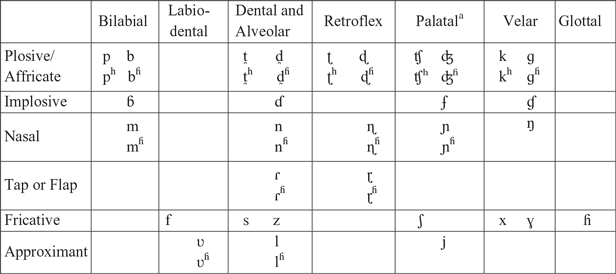
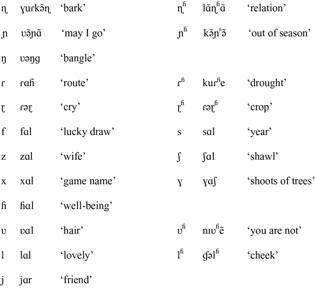
[ʃ] is a voiceless palato-alveolar fricative. A trill [r] sometimes occurs as a free variant of the tap/flap, and as a syllabic consonant, see (12) below. The palatal plosives may be realized as palato-alveolar affricates. Aspirated flaps, approximants and nasals are realized as C+/ɦ/ as shown in the spectrograms below.
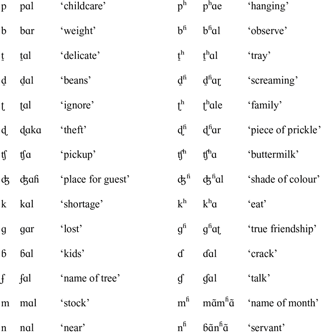
Minimal pairs illustrating the aspiration contrast in plosives are given in (1). Here and below, phonemic symbols are used unless otherwise indicated.
(1) Aspiration contrast in plosives
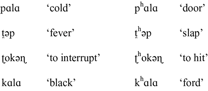
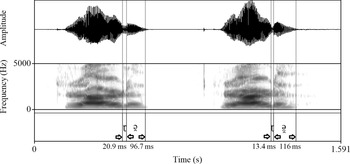
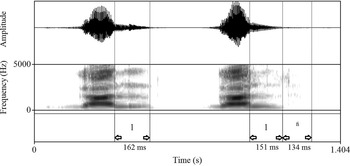
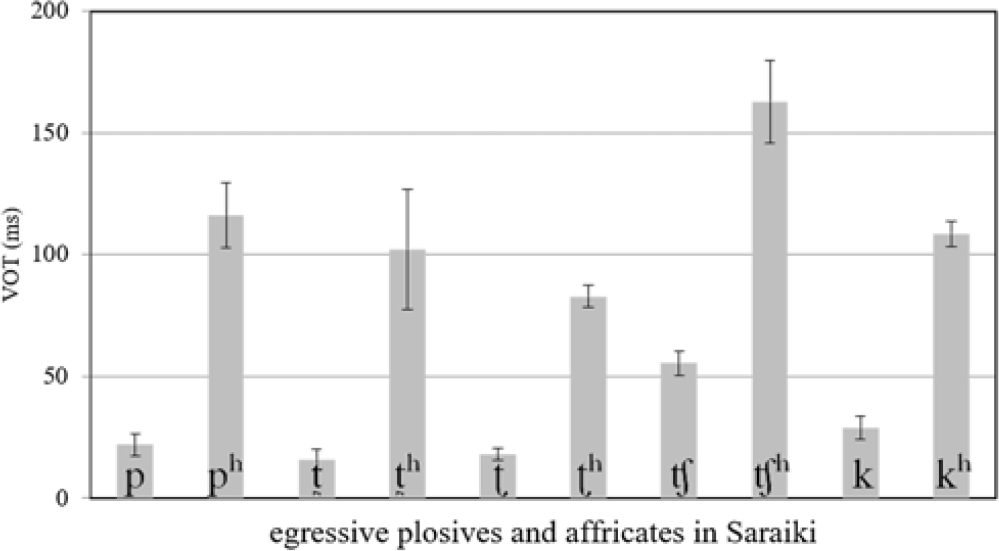
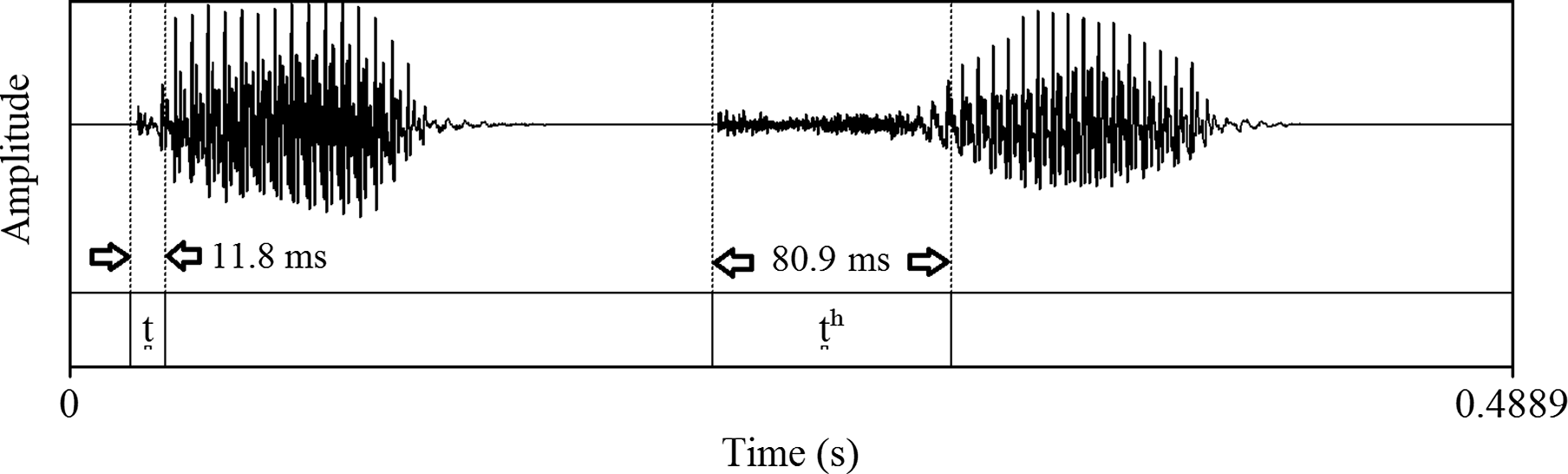
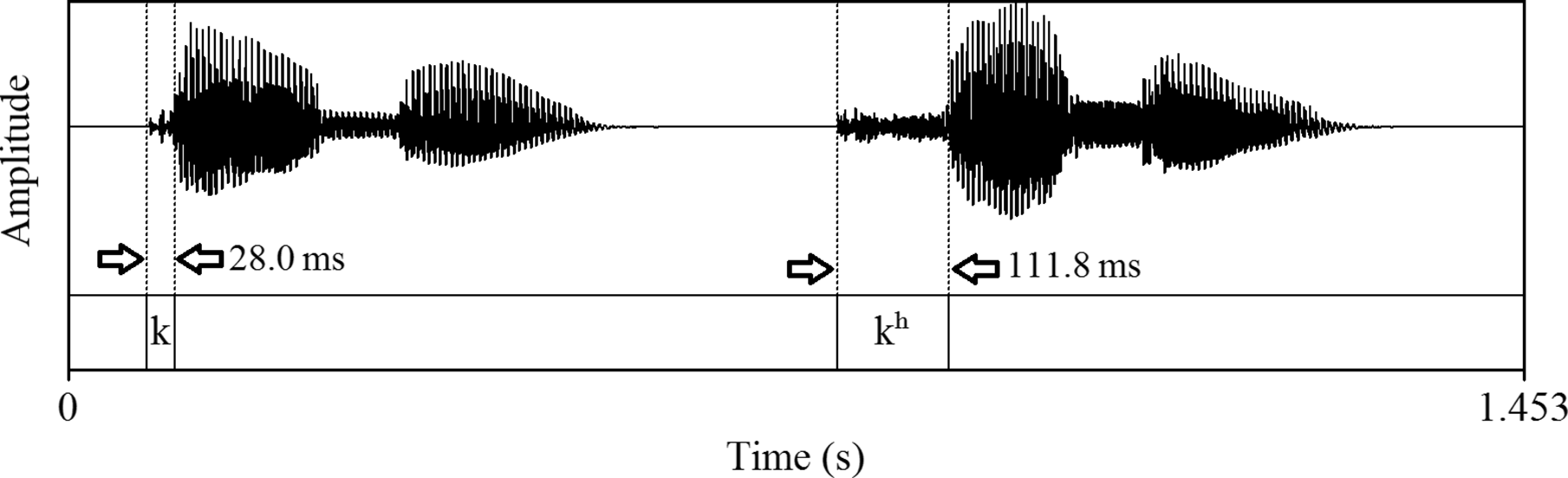
The pronunciation of relevant examples listed just below the consonant table by our speaker shows that unaspirated voiceless plosives of Saraiki mostly have a VOT under 50 ms, while the aspirated ones usually have a VOT between 80 ms and 150 ms (see also discussion in Hussain Reference Hussain2018). This is illustrated in Figure 1. Figures 2 and 3 illustrate the aspiration contrast.
VOT of voiceless plosives and affricates in Saraiki (based on pronunciation of relevant examples under the consonant table by one male speaker, each for three times, in ms).
Waveforms of ‘fever’ and
 ‘slap’.
Waveforms of ‘black’ and
 ‘ford’.
We also illustrate the contrast between modal-voiced and breathy-voiced plosives:
(2) Contrast between modal-voiced and breathy-voiced plosives and affricates
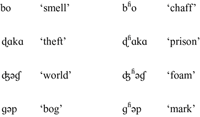
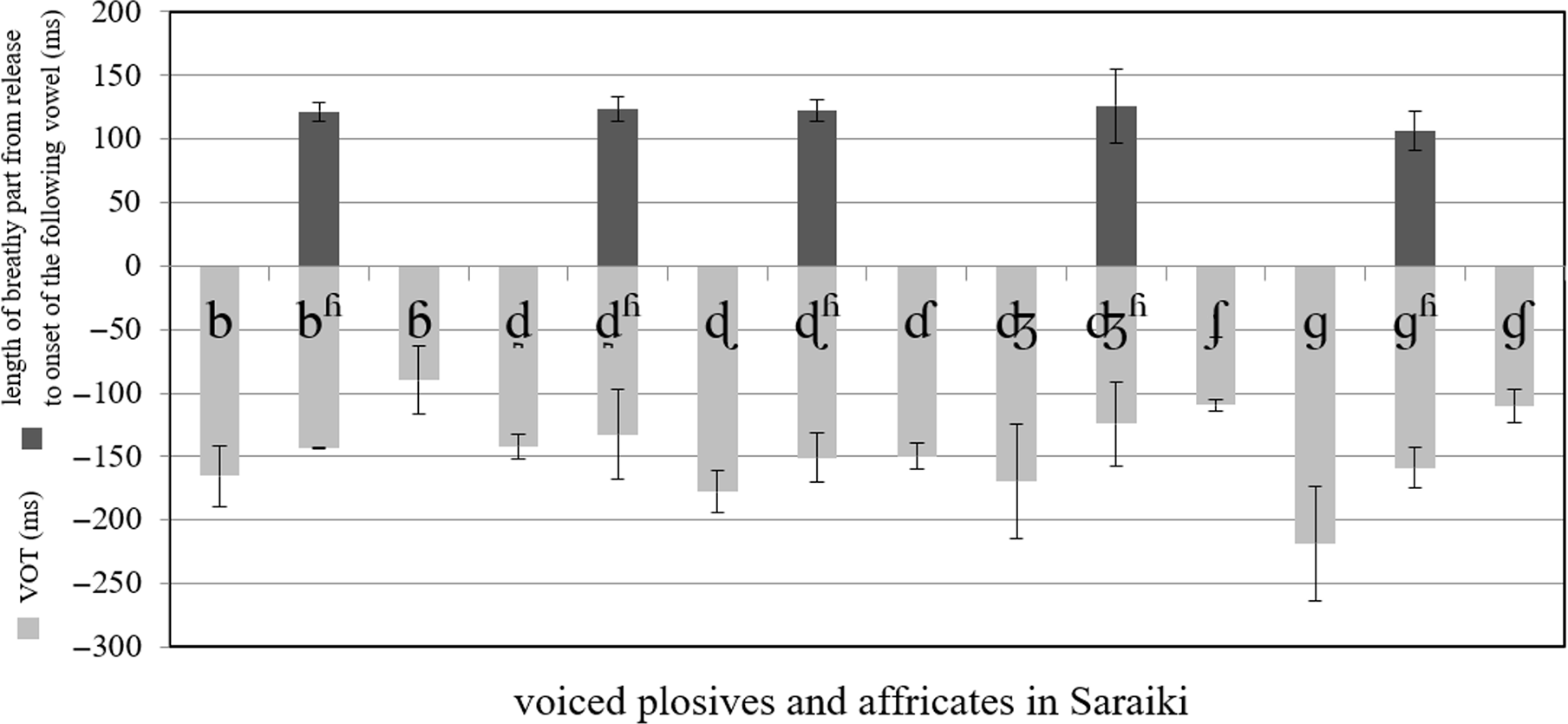
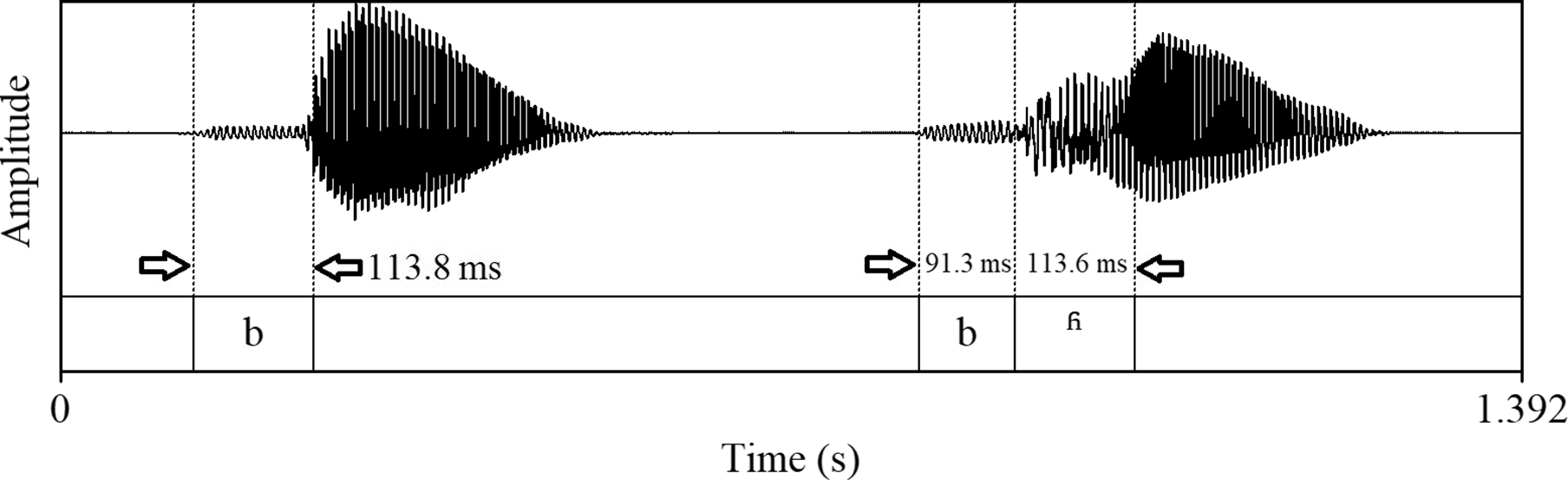
While the phonetic features of Saraiki breathy-voiced plosives and affricates need to be further explored, we have found in our data that the VOTs of these sounds are normally in between those of the modal-voiced plosives and affricates on the one hand and implosives on the other (Figure 4). Of course, they have an extra breathy-voiced part, often above 100 ms, from release to the onset of the following vowel. The waveforms in Figure 5 (of the first pair of words in (2)) illustrate the contrast.
VOT of voiced plosives and affricates in Saraiki (with the length of the breathy part, where applicable, from release to onset of the following vowel, all based on pronunciation of relevant examples under the consonant table by one male speaker, each for three times, in ms).
Waveforms of ‘smell’ and
 ‘chaff’.
The following examples illustrate the contrast between plosives and implosives:
(3) Egressive plosives vs. implosives

The implosives are clearly distinguished from the egressive plosives by their gradually increasing amplitude during the occlusion phase, as illustrated by Figures 6–8. The egressive plosives, in contrast, usually show a decreasing amplitude because of the pressure build-up in the oral cavity (Lindau Reference Lindau1984).
Waveforms of ‘smell’ and
 ‘sow’.
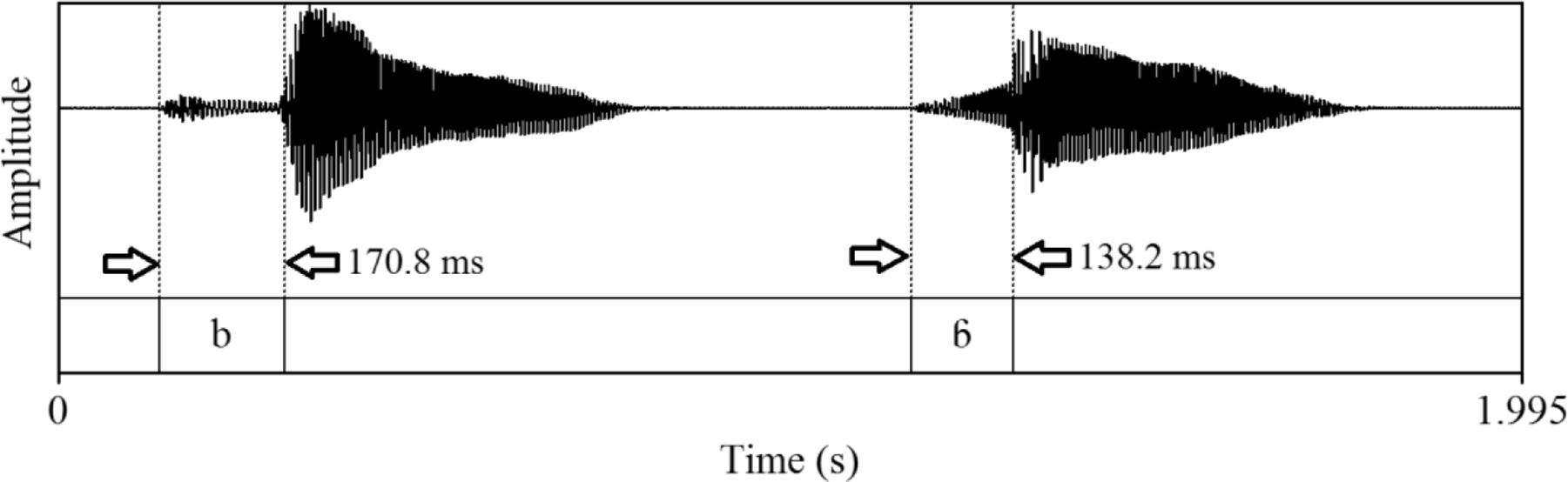
Waveforms of ‘pulse’ and
 ‘crack’.
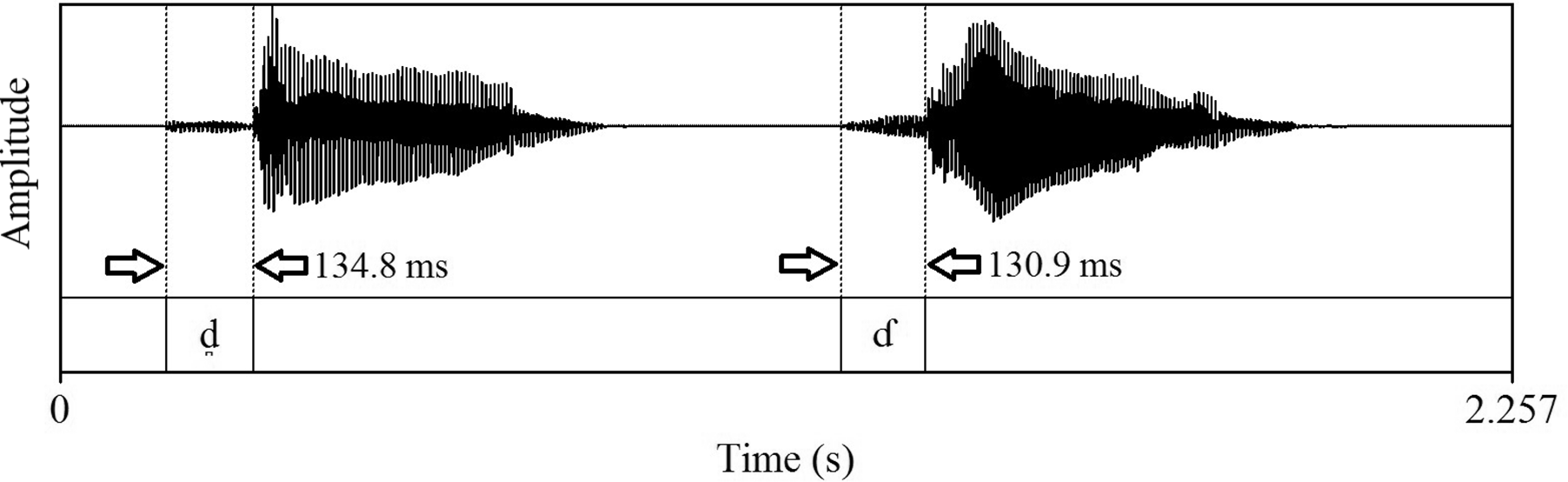
Waveforms of ‘camel driver’ and
 ‘body hair’.
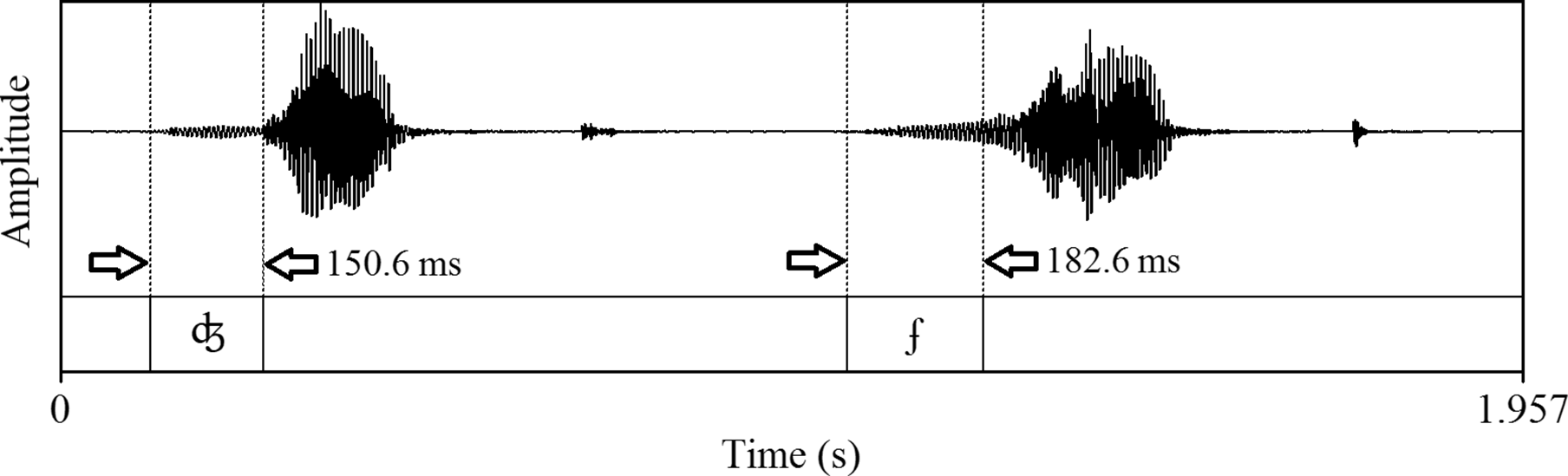
The examples in (4) show that implosives can appear in different positions of the word or syllable:
(4) Implosives in different positions
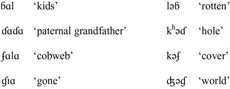
Compared with word-initial implosives, word-final implosives do not show gradual increase in amplitude (Figures 9–11).Footnote 4
Waveforms of ‘kids’ and
 ‘rotten’.
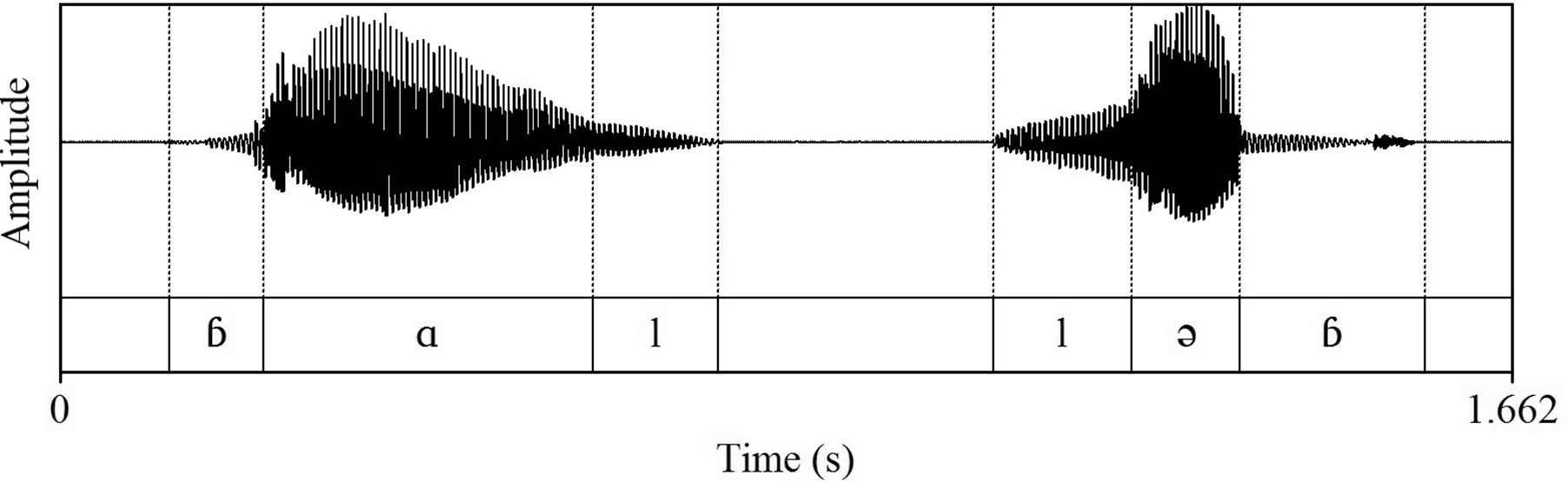
Waveforms of ‘cobweb’ and
 ‘cover’.
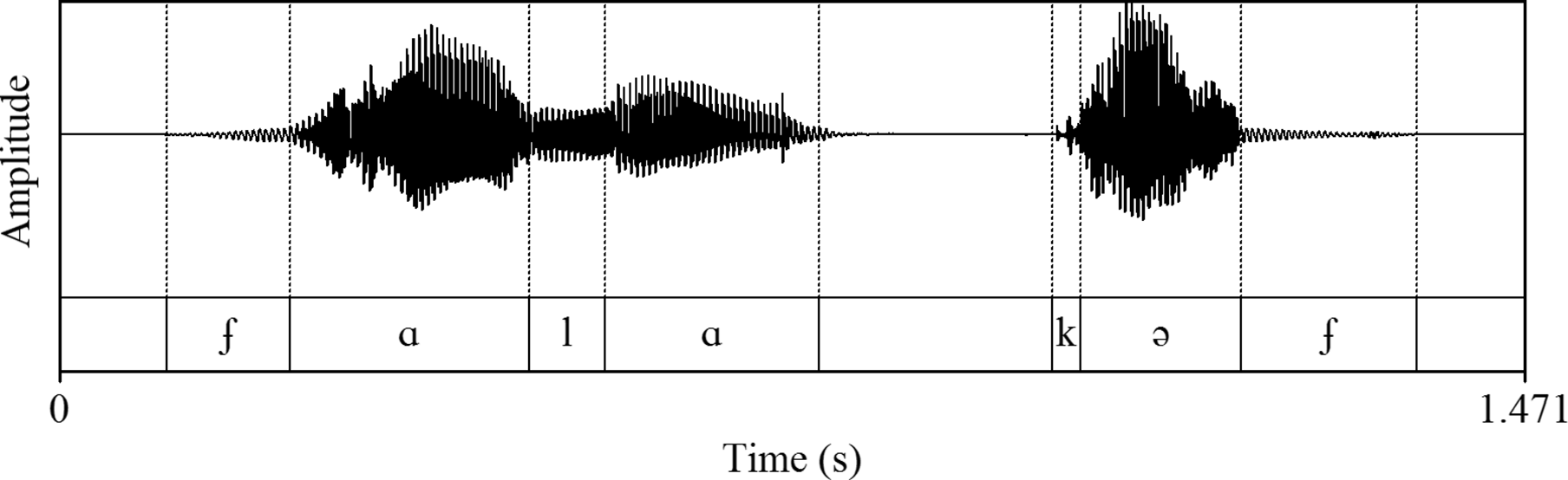
Waveforms of ‘gone’ and
 ‘world’.
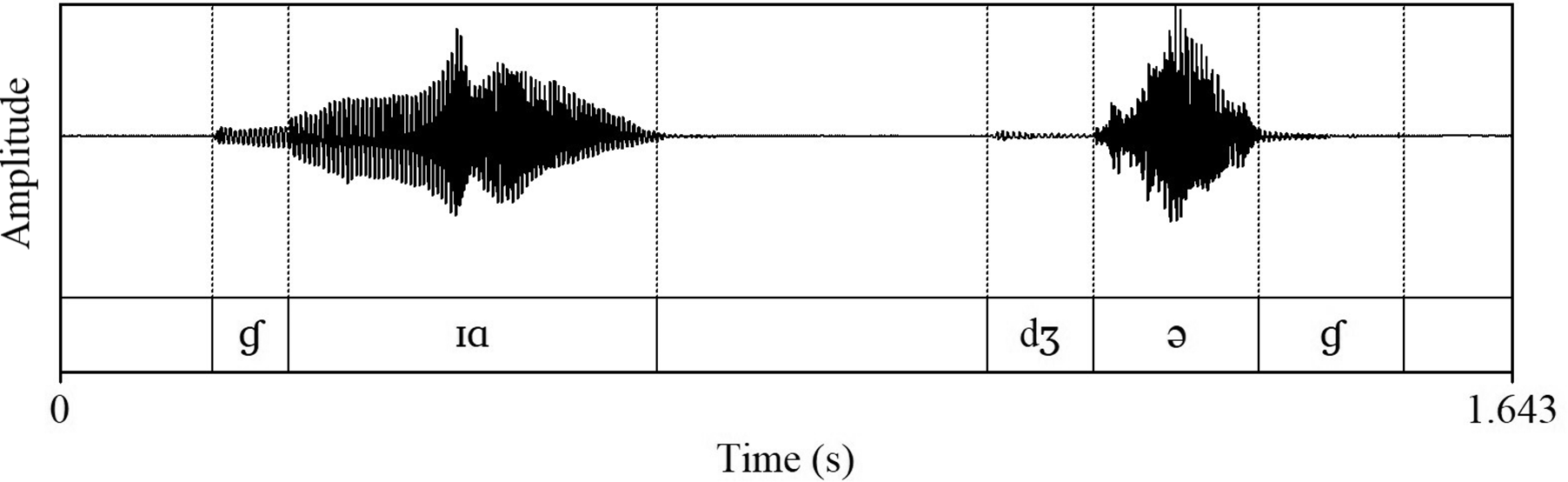
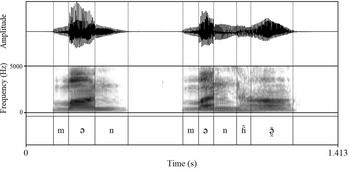
The examples in (5) show that non-aspirated nasals (in the left column) contrast with aspirated nasals (in the right column), which are followed by a nasalized copy of the vowel to their left.
(5) Aspirated nasals
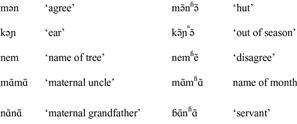
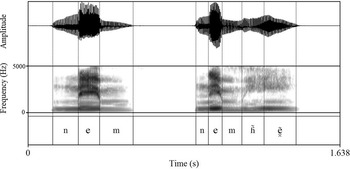
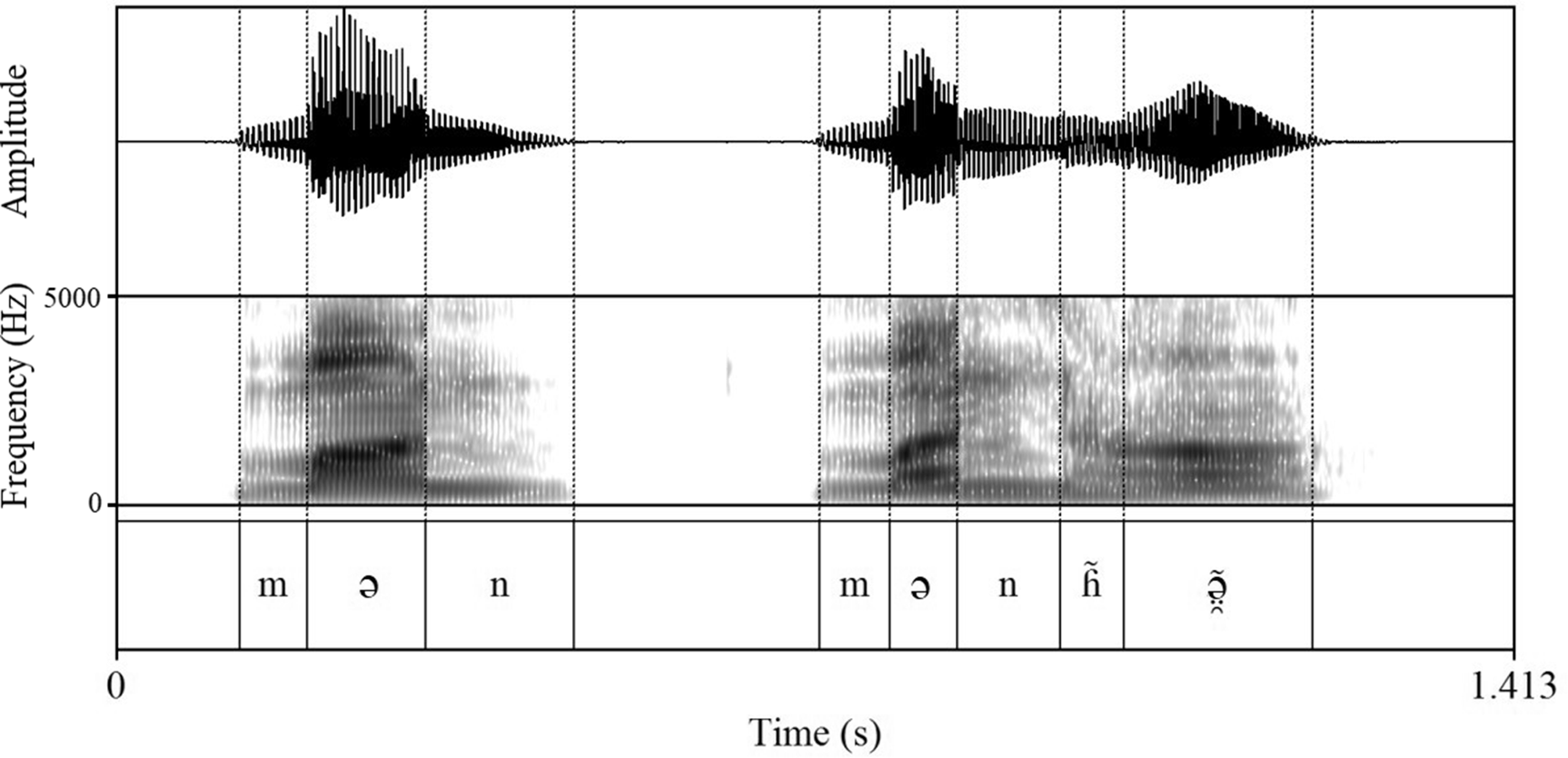
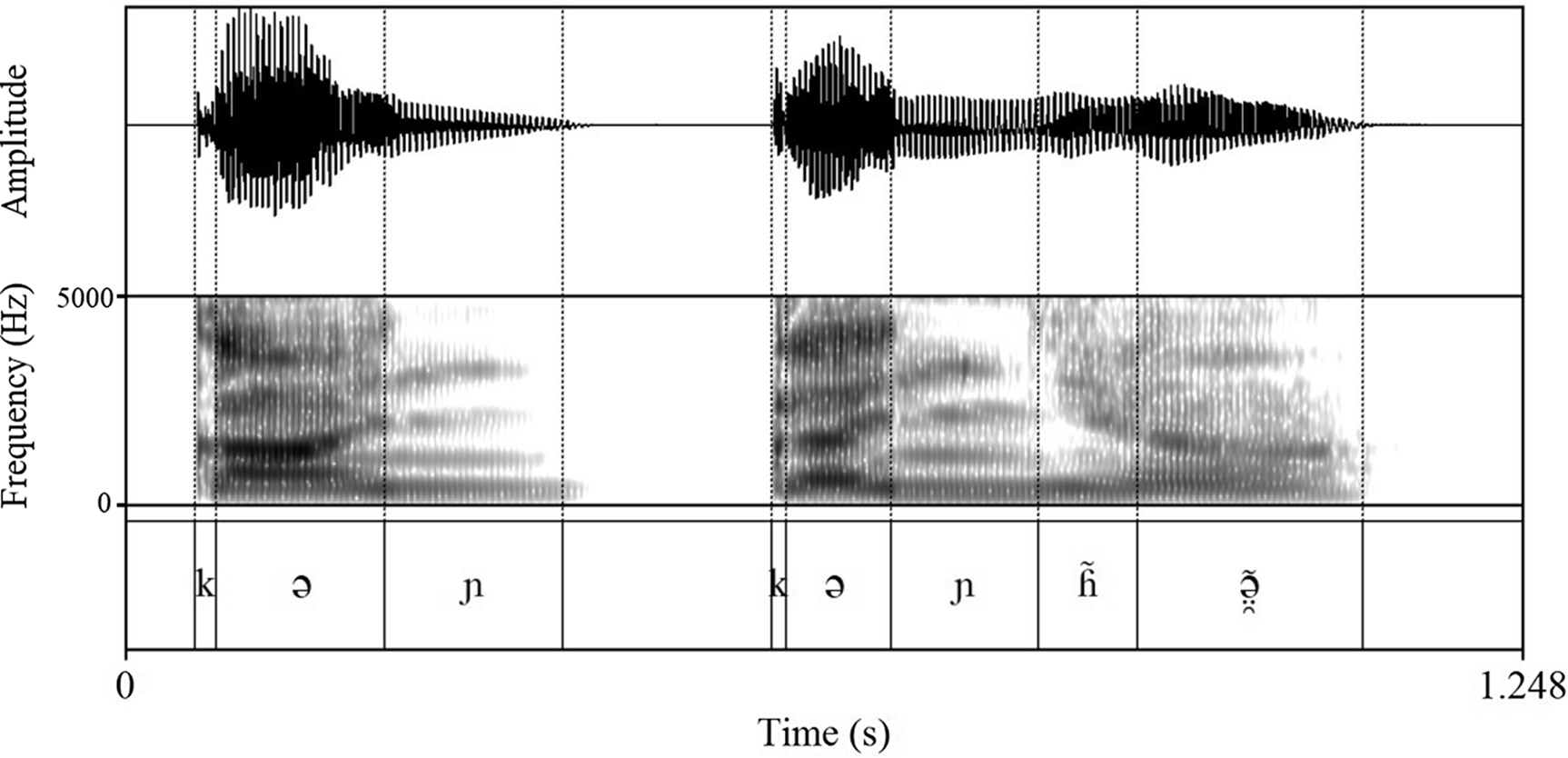
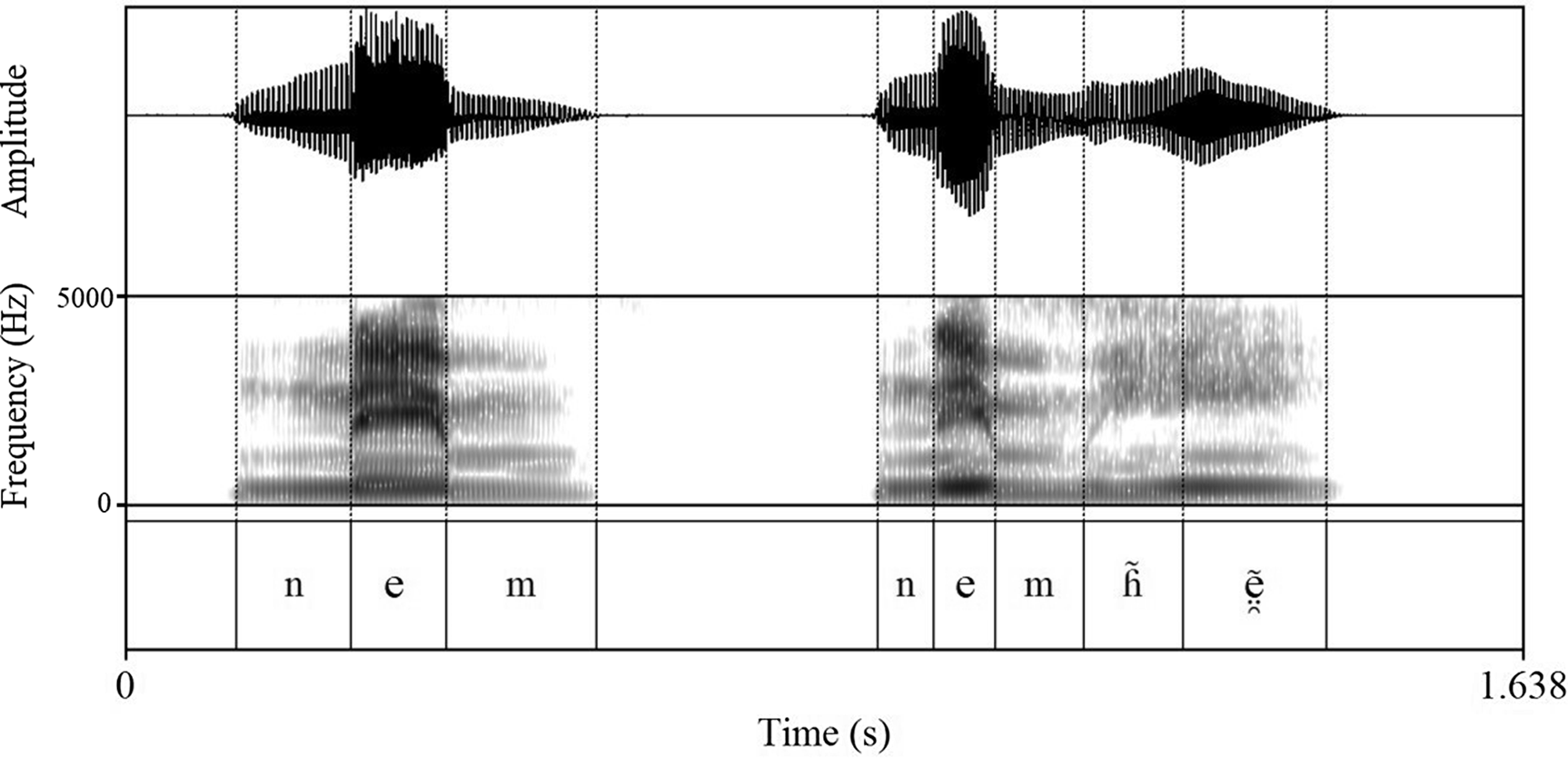
Aspirated nasals never occur initially. A final aspirated nasal is often followed by an epenthetic vowel which is a copy of the vowel preceding the nasal (as shown in Figures 12–14) and which the native speaker does not normally perceive as syllabic. Aspirated nasals are often divided across syllables but in fact, they do not occur where true clusters occur (beginning of the word). This argues against their (underlying) status as clusters. The native speakers cannot differentiate between these two forms (as cluster or aspirated nasals). Therefore, it can be said that the aspirated nasals are variably realized as either pure aspirated nasals or nasal +/ɦ/ clusters. Keeping all these facts in mind, we will still refer to them as ‘aspirated nasals’.
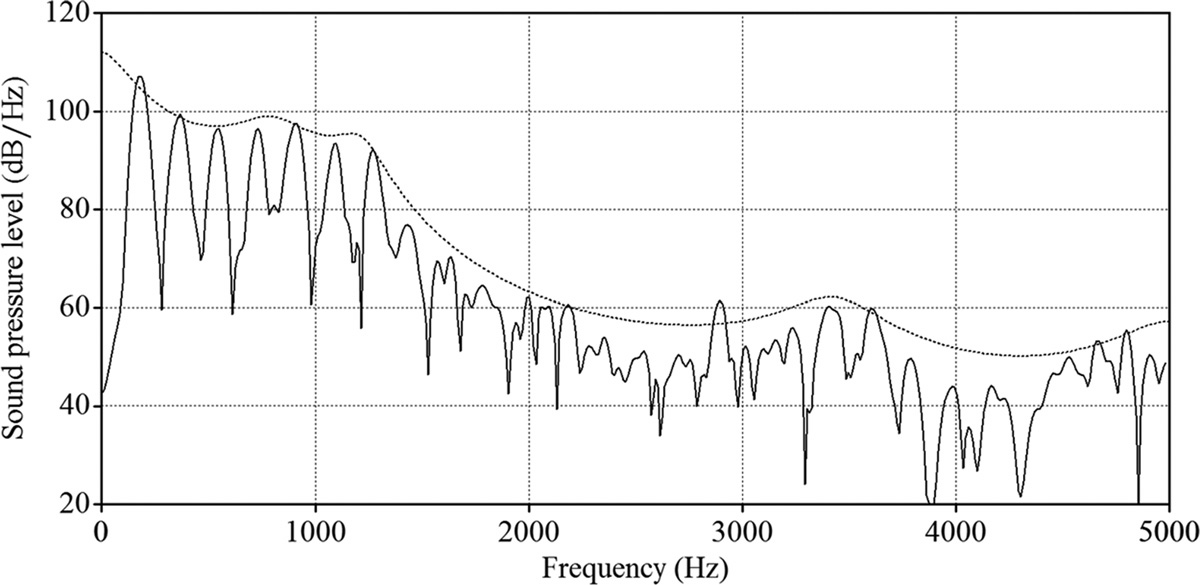
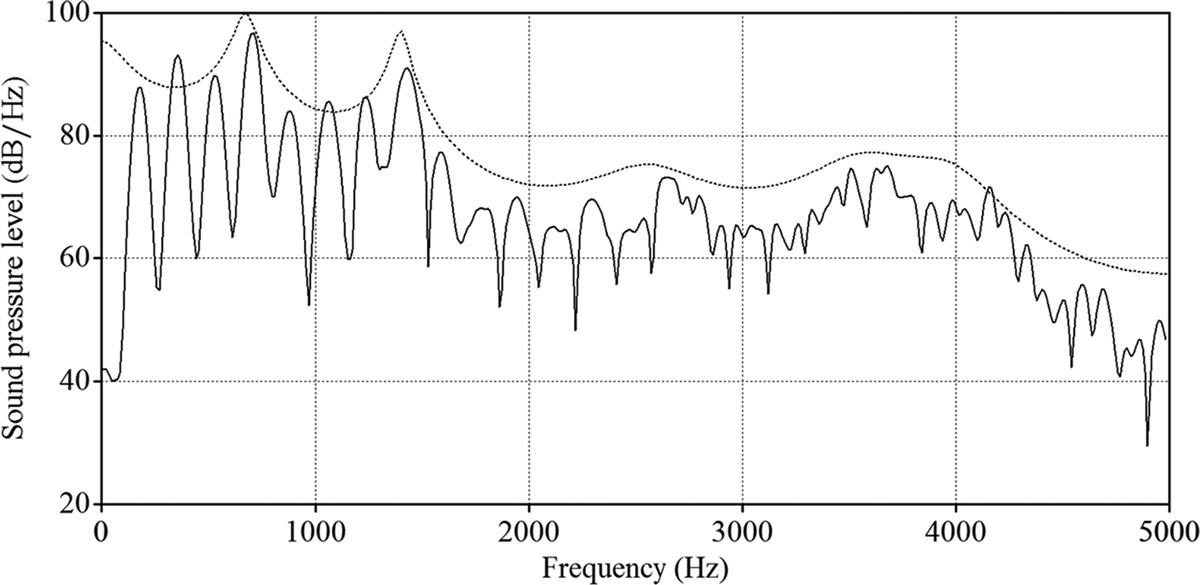
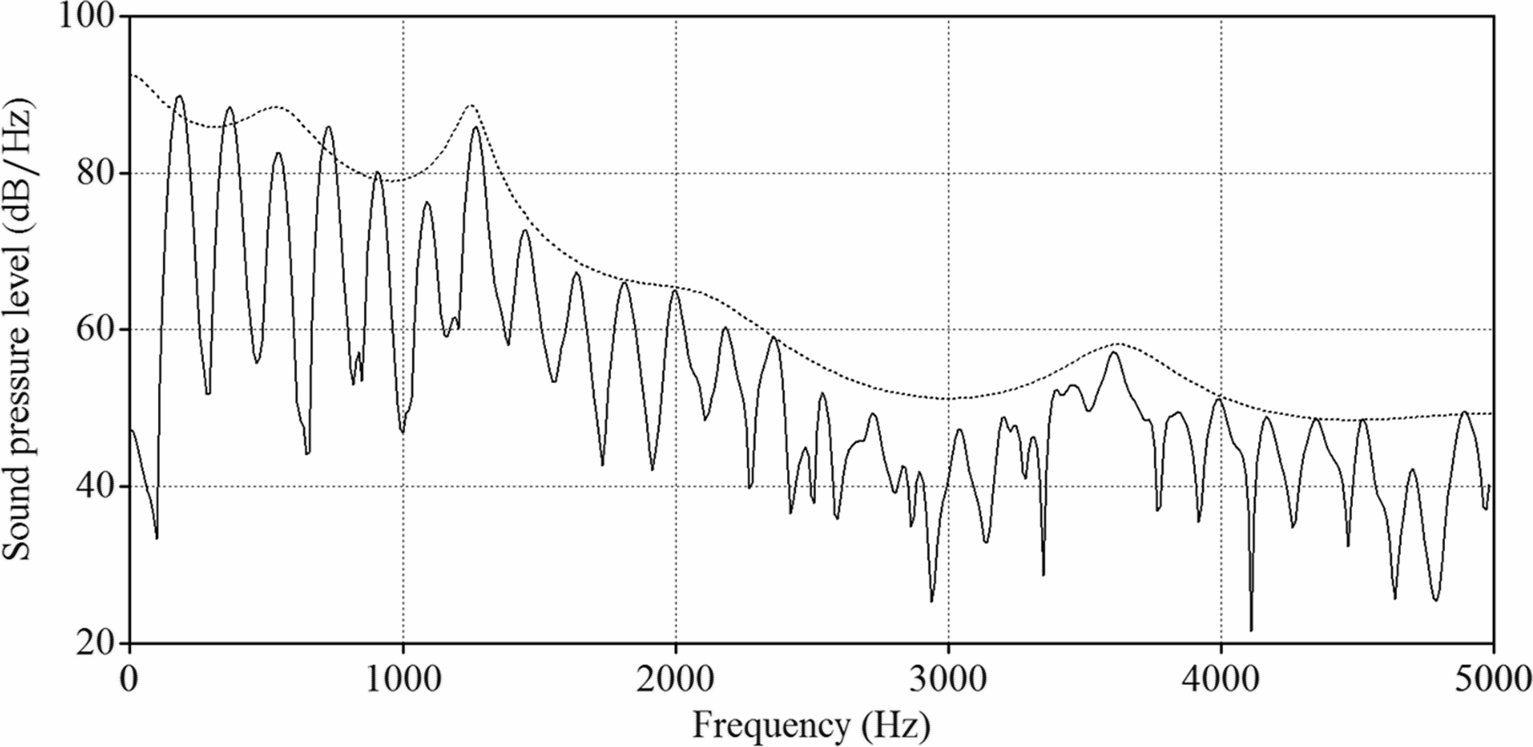
This epenthetic vowel is not only nasalized, but also breathy, with a higher H1–H2 and a steeper decline in high-frequency energy. This is shown both in Figures 15 and 16, which contrast the final vowel in [mɑ˜mɑ˜] ‘maternal uncle’ and the final epenthetic vowel in [mɑ˜mʱɑ˜̯] ‘name of month’, and in Figures 17 and 18, which contrast the middle vowel and the final epenthetic vowel in [mənʱə] ‘hut’. The status of vowel nasalization is not completely clear. There are no clear-cut minimal pairs with oral vowels, and nasalized vowels often occur in free variation with sequences of oral vowel followed by a nasal consonant. Moreover, vowels are often nasalized in the vicinity of retroflex consonants. Tentatively, we will assume that nasal vowels are not phonemic in Saraiki but the issue needs further investigation.
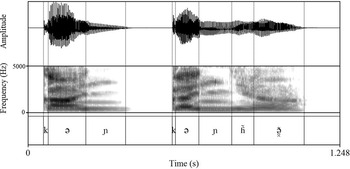
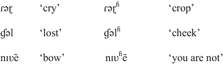
The examples in (6) show that aspirated flaps and approximants may occur at the end of the word. In fact, they never occur at the beginning of the word:
(6) Aspirated flaps and approximants
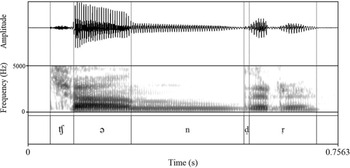
Waveforms and spectrograms of ‘agree’ and
 ‘hut’.
Waveforms and spectrograms of ‘ear’ and
 ‘out of season’.
Waveforms and spectrograms of ‘name of tree’ and
 ‘disagree’.
Spectrum of final in
in ‘maternal uncle’ in the middle of the vowel.
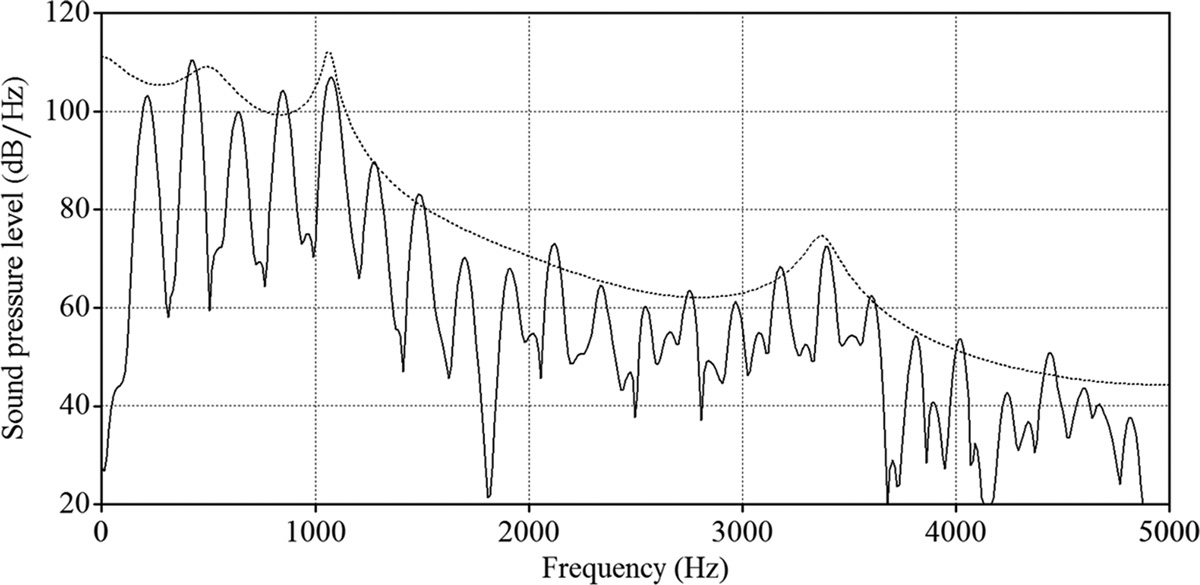
Spectrum of final in
in ‘name of month’ 30 ms after the start of the vowel.
Spectrum of the first in
in ‘hut’ in the middle of the vowel.
Spectrum of final in
in ‘hut’ 30 ms after the start of the vowel.
Waveforms and spectrograms of ‘cry’ and
 ‘crop’.
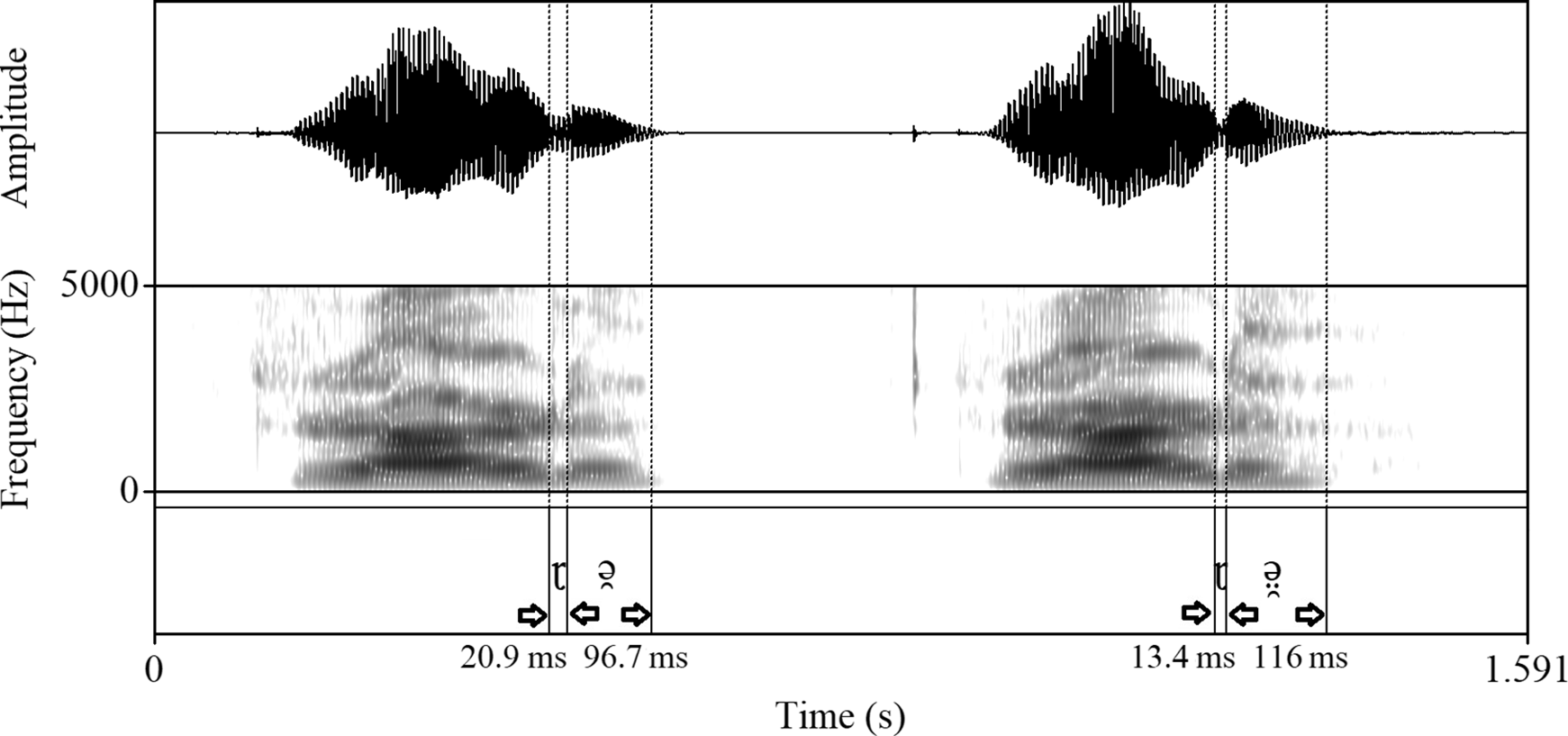
Waveforms and spectrograms of ‘lost’ and
 ‘cheek’.

A final flap is often followed by an epenthetic vowel, while a final aspirated flap is often realized with the aspiration voiced so that a breathy-voice vowel occurs finally, as shown in Figures 19 and 20. In neither case is the final vowel perceived as syllabic by the native speaker.
Gemination
The process of gemination is frequently observed in Saraiki (/əmmɑ˜/ ‘mother’). Mostly this process occurs in word-medial position to satisfy the onset of the second syllable. However, gemination is not phonemic but rather consists of two identical consonants that are pronounced as one lengthened consonant.
Vowels
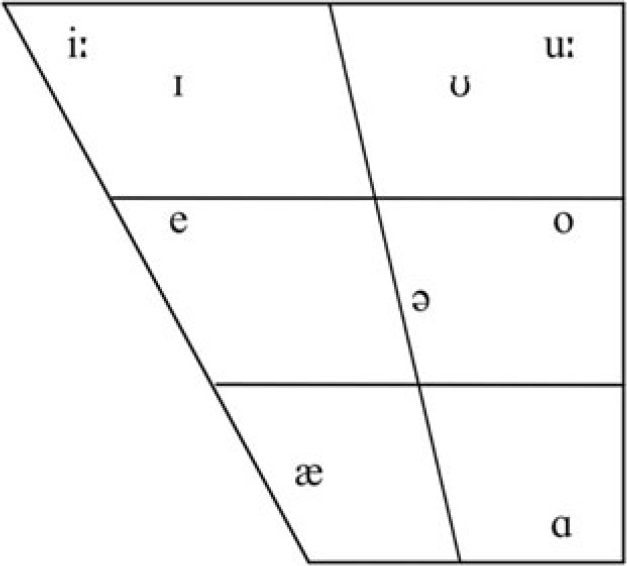
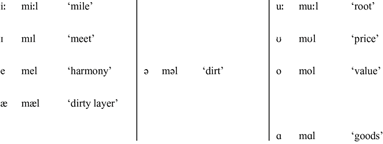
Minimal pairs are presented in (7).
(7) Vowel length contrast for high vowels
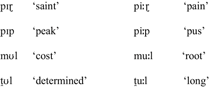
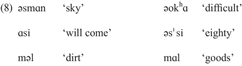
Of interest is the vowel /ə/, which is not included in the vowel inventory presented by Shackle (Reference Shackle1976). Examples of this vowel are presented below, as well as one minimal pair:
Diphthongs
Figure 21 illustrates the oral diphthongs of Saraiki.
Oral diphthongs of Saraiki.

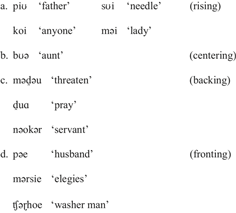
Saraiki has a large number of vowel–vowel combinations, both intra- and hetero-morphemically (see Shackle Reference Shackle1976: 13–16). We regard intramorphemic vowel combinations as diphthongs. The examples in (9) illustrate rising diphthongs, a centring diphthong, backing diphthongs and fronting diphthongs, respectively. These are all oral.
(9) Oral diphthongs
An isolated example of a diphthong with a nasal element appears in (10).
(10) Nasal diphthong

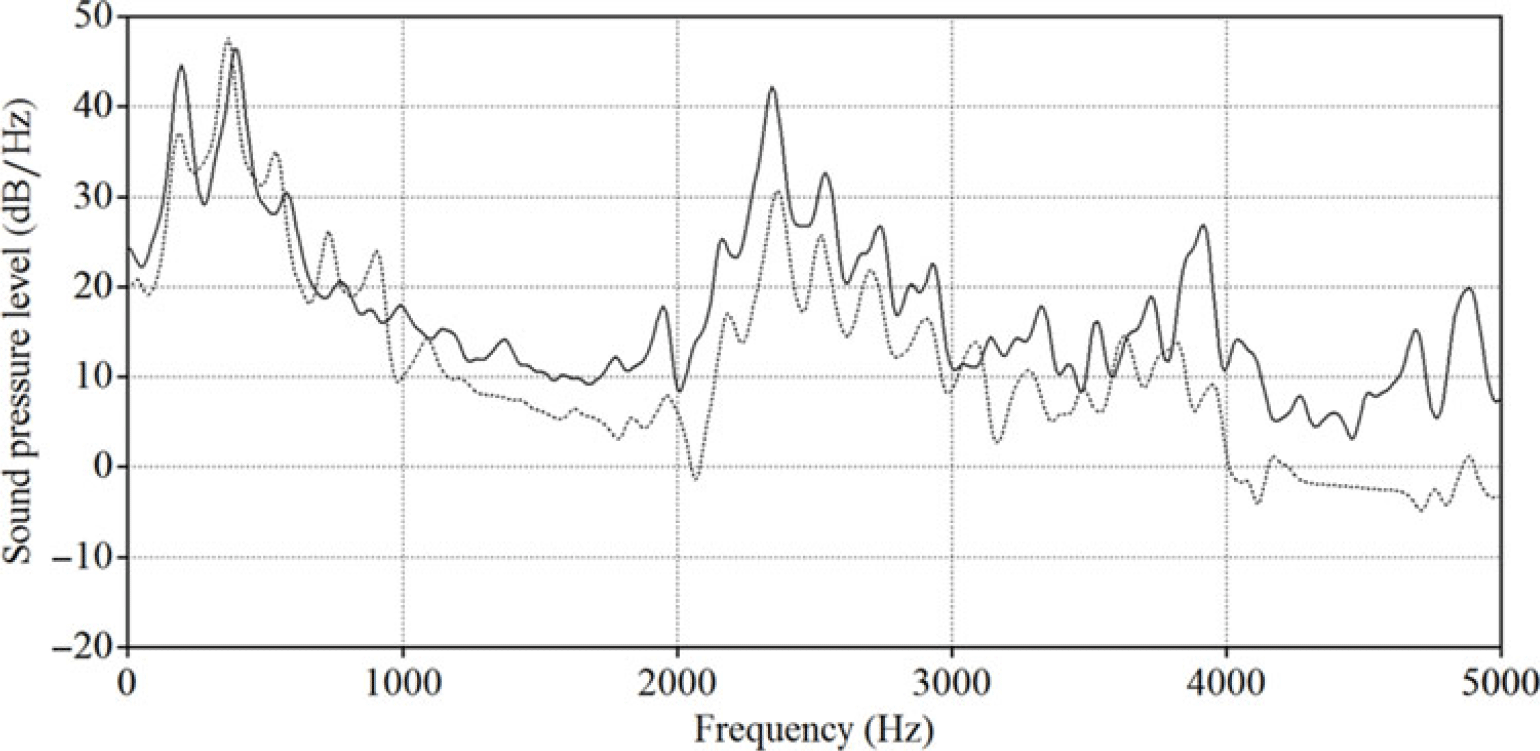
Average spectrum of in
in ‘father’ (solid line) and
 in
in ‘let’s drink’ (dotted line).
Average spectrum of in
in ‘father’ (solid line) and
 in
in ‘let’s drink’ (dotted line).
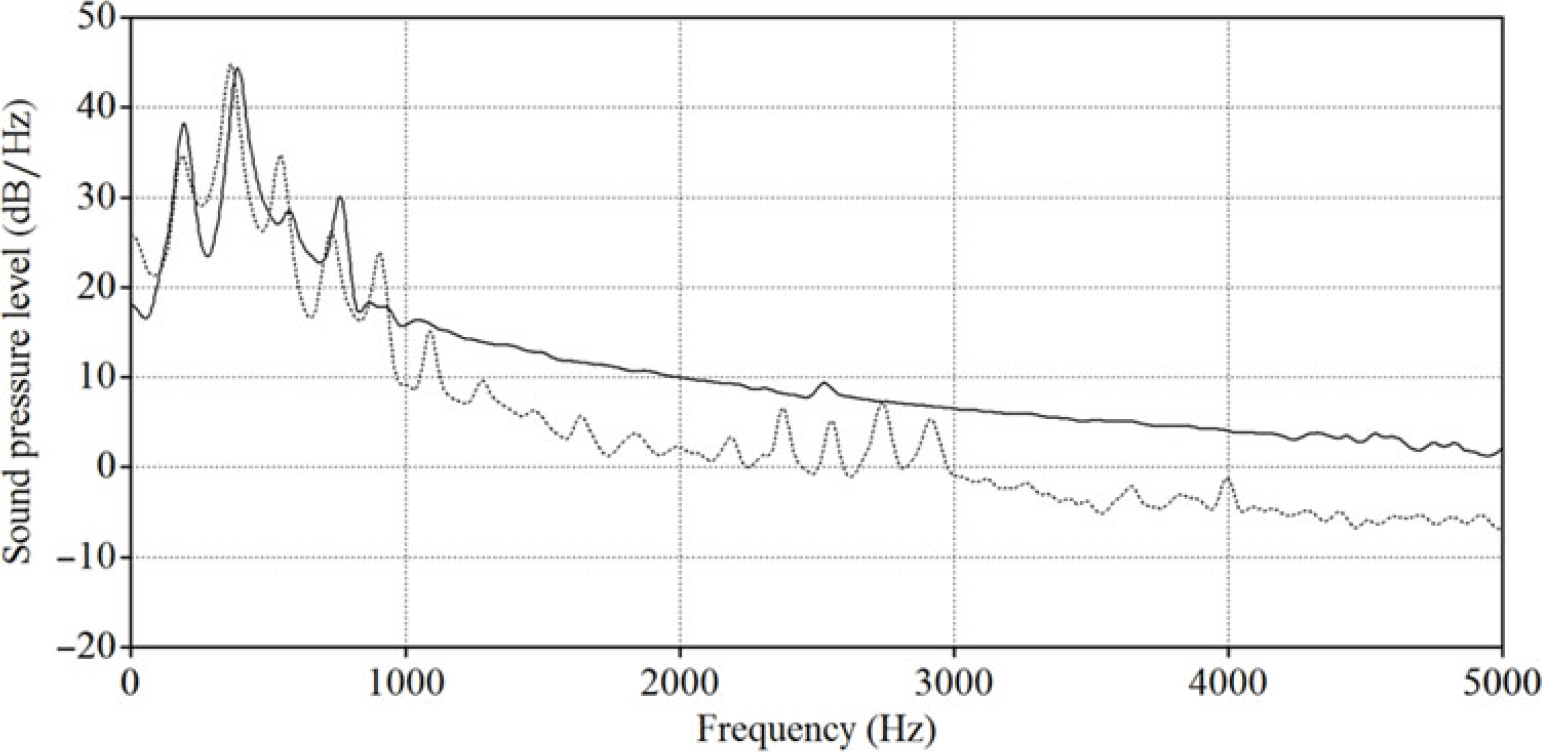
Figures 22 and 23 show a comparison of the average spectra of the [ɪ] and [ʊ] parts in [pɪʊ] ‘father’ and the corresponding parts in [pɪʊ˜] ‘let’s drink’, where in the latter word there is a morpheme boundary between both vowels: the morpheme /ʊ˜/ contributes a plural meaning. The figures suggest that both elements in the vowel–vowel combination of [pɪʊ˜] are nasalized, since their resonances are conspicuously weakened in the high frequencies. Further analysis of the nasal airflow and vowel nasalization in general are called for.
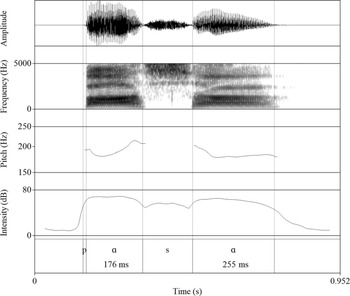
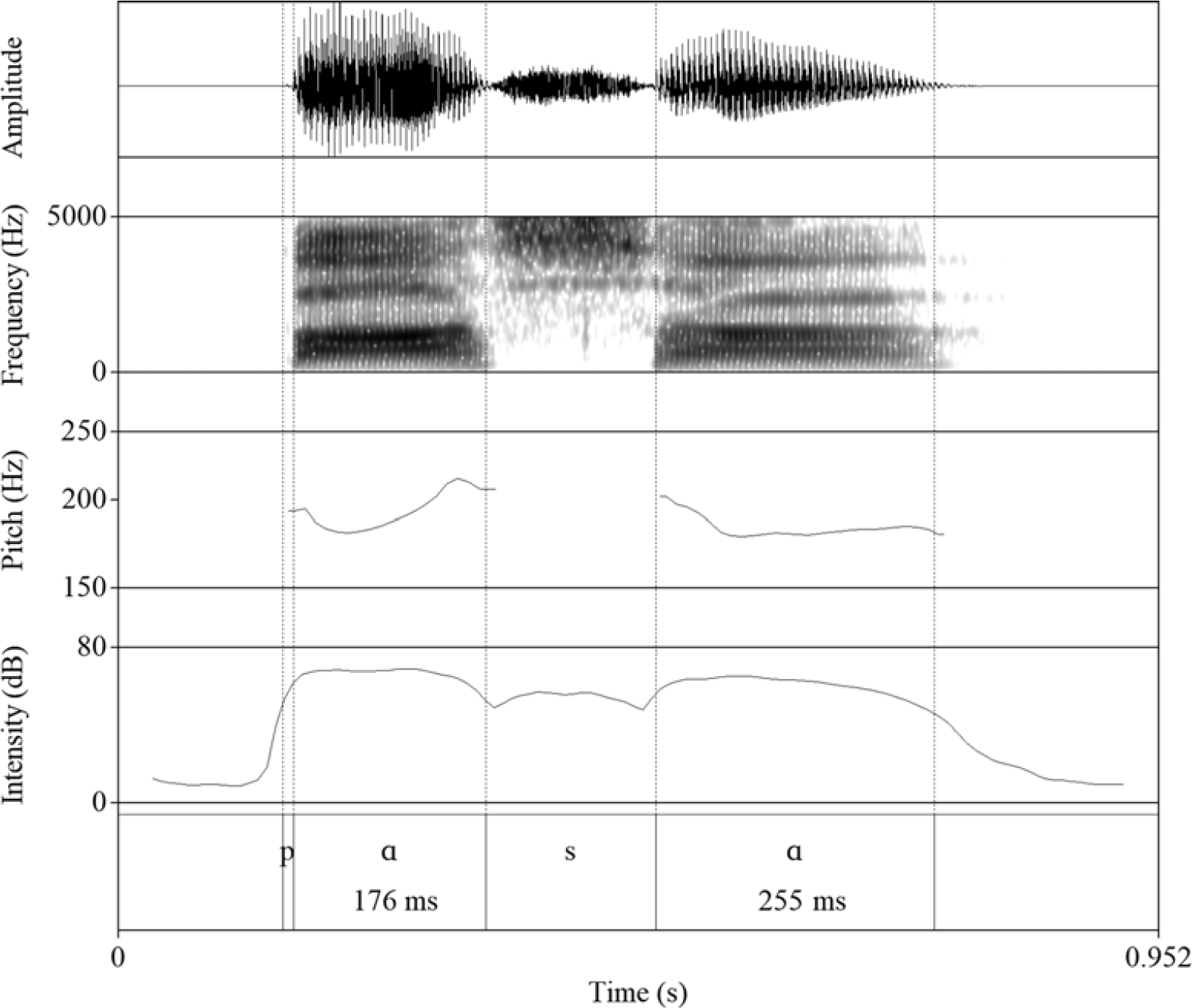
Waveform, spectrogram, pitch contour and intensity contour of ‘side’.
Prominence
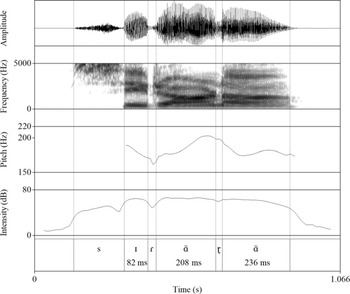
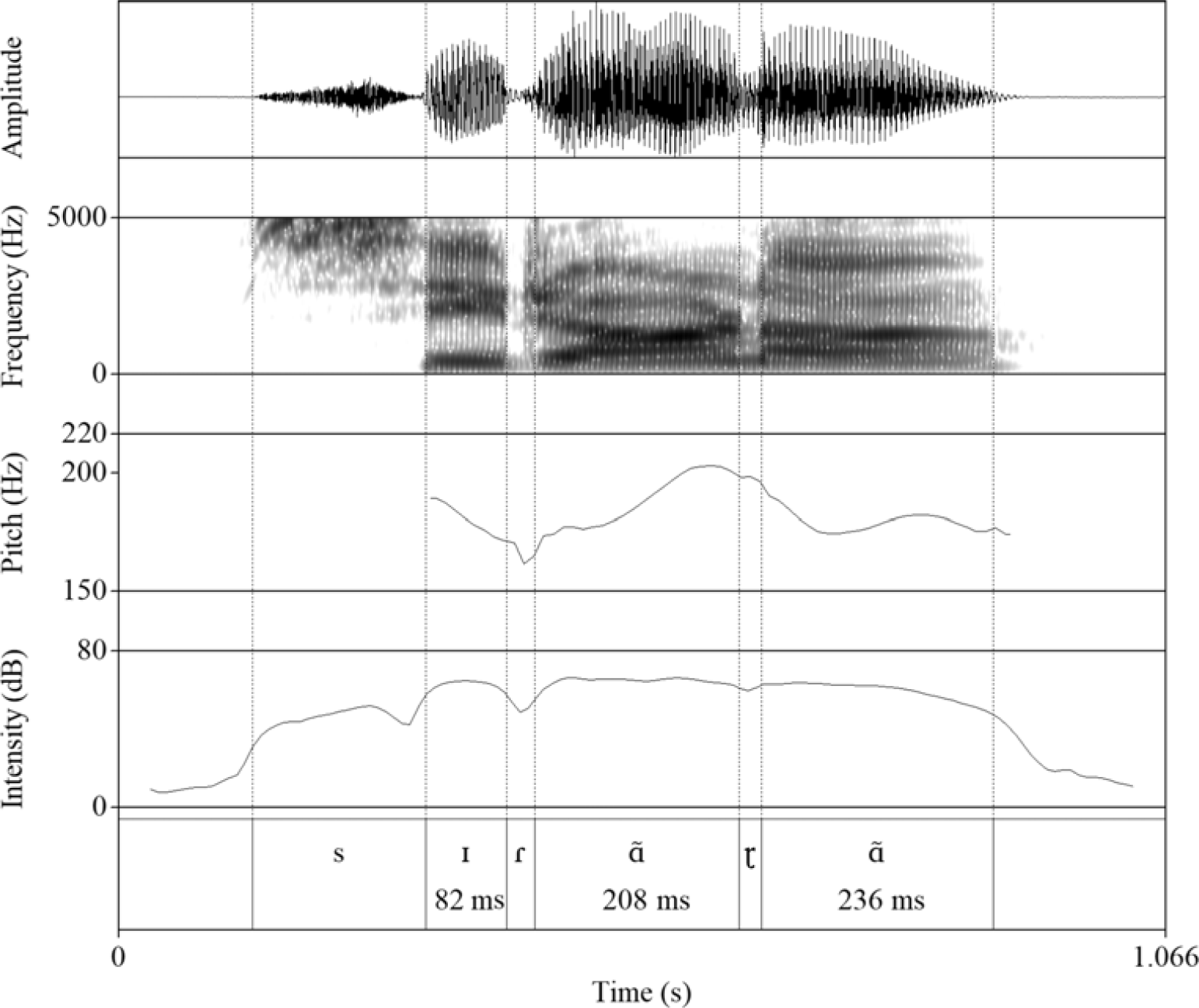
Syllables that are perceived as stressed by native speakers display a pitch rise and increased intensity, but do not necessarily have the longest duration (see Figures 24 and 25).
Waveform, spectrogram, pitch contour and intensity contour of ‘pillow’.
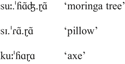
Examples of disyllabic and trisyllabic nouns are given in (11).
(11) a. Disyllabic nouns

b. Trisyllabic nouns

Syllable structure
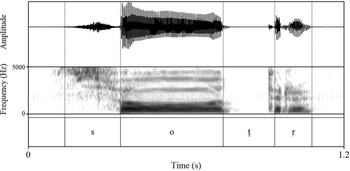
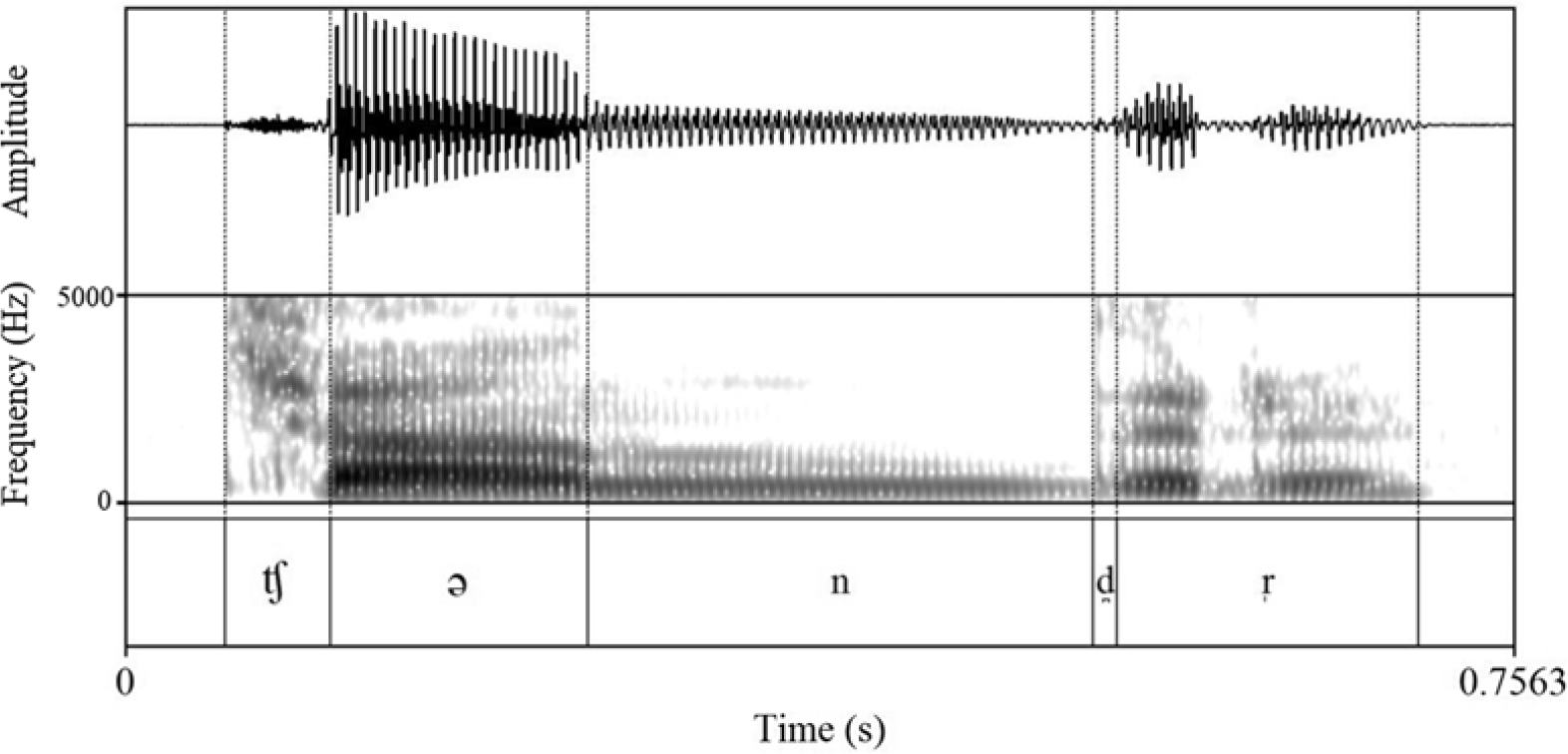
Saraiki has a wide variety of syllable structures, maximally up to CCVCC, e.g. [d̪rəxt̪] ‘tree’ and [sʊst̪] ‘lazy’. There is some variation between speakers: some have an epenthetic vowel in the initial cluster. Of interest are disyllabic words with syllabic trills, shown in (12) and Figures 26 and 27. The trills only occur after alveolar plosives.

Waveform and spectrogram of ‘cousin’.
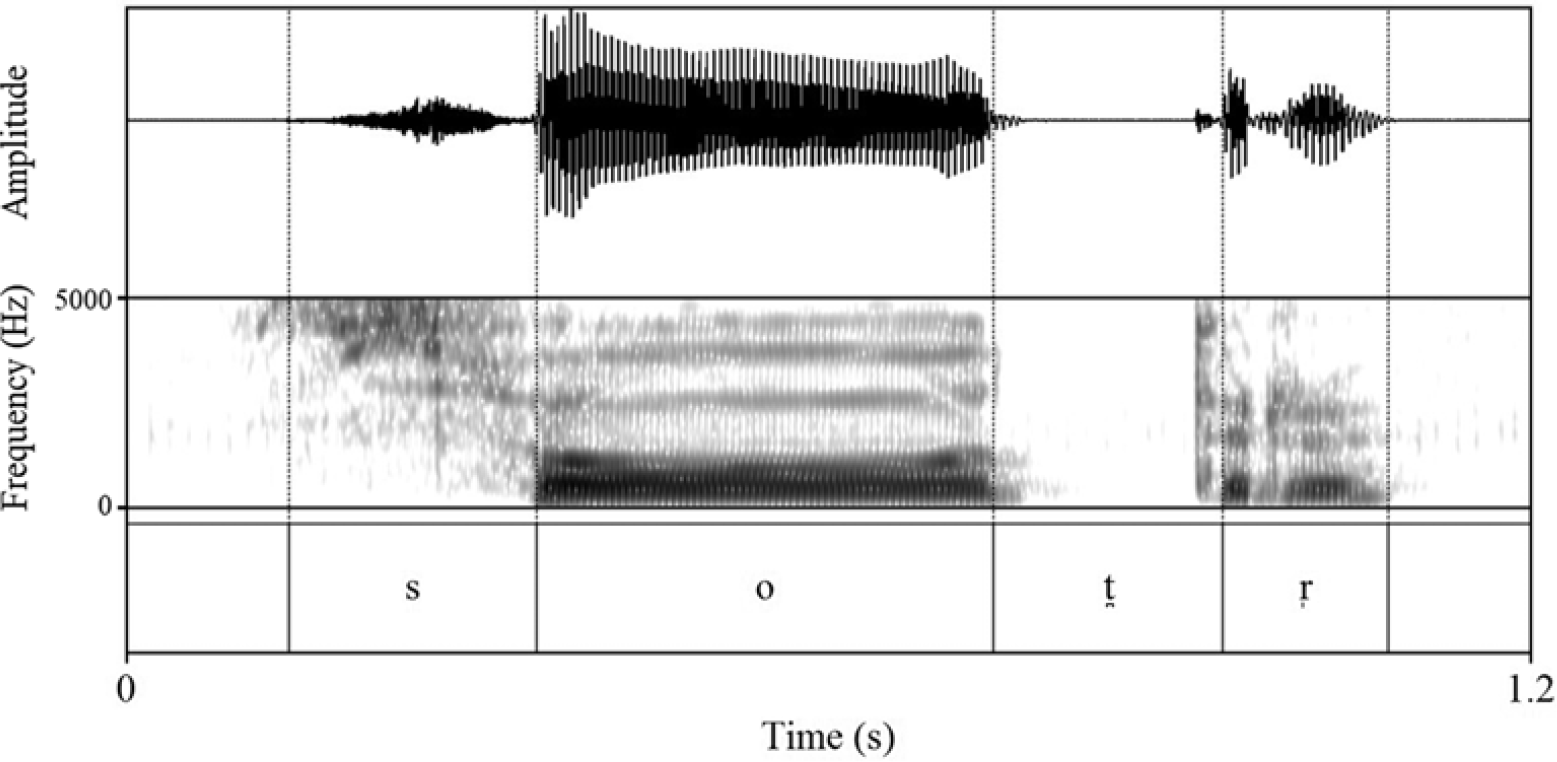
Waveform and spectrogram of ‘moon’.
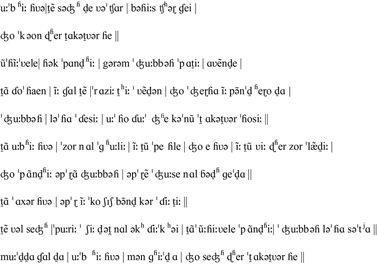
Recorded passage
Phonetic transcription
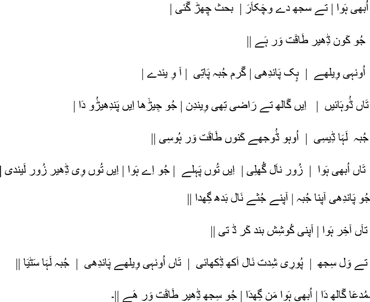
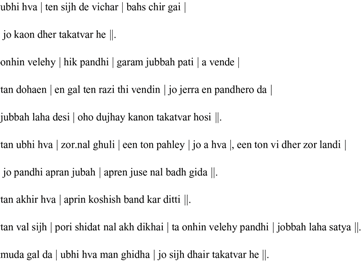
Double vertical lines indicate major pauses; single vertical lines indicate brief breaks. The pauses and brief breaks are reflected in the orthographic and transliterated passages.
Orthographic version
Transliterated version
Acknowledgements
We thank our Saraiki informants for their kind cooperation as well as two anonymous JIPA reviewers for their detailed and helpful suggestions. Any remaining errors are our own responsibility. Jeroen van de Weijer would like to acknowledge a Teambuilding Grant awarded by the Guangdong Provincial Government (grant No.: 2019WCXTD010).
Supplementary material
To view supplementary material for this article, please visit https://doi.org/10.1017/S0025100320000328.