Climate change is widely recognised as one of the greatest threats facing the world today and is seriously challenging our ability to achieve worldwide food and nutrition security. In December 2015, the United Nations Framework Convention on Climate Change drew up The Paris Agreement for commitment to tackle global climate change and more than 170 countries pledged to reduce greenhouse gas emissions (GHGE). The aim of The Agreement is ‘to strengthen the global response to the threat of climate change, in the context of sustainable development and efforts to eradicate poverty’(1). This means limiting global warming, ‘holding the increase in the global average temperature to well below 2 °C above pre-industrial levels and pursuing efforts to limit the temperature increase to 1·5 °C above pre-industrial levels, recognizing that this would significantly reduce the risks and impacts of climate change’. The Agreement specifically refers to the threat climate change poses to food production and the need to safeguard food security against adverse impacts of climate.
The effects of climate change are becoming increasingly apparent and more extreme weather events are occurring. Climate variability and its consequences (e.g. droughts, floods, storms and extreme temperatures) have led to severe food crises and a key driver of the increase in global hunger(2). It is estimated that the number of extreme climate-related disasters that have harmed agricultural production has doubled since 1990, which has increased global food insecurity especially in low-income countries. Middle- and high-income countries are in a better position to absorb the effects of climate extremes that create local food shortages because they have a greater ability to import food.
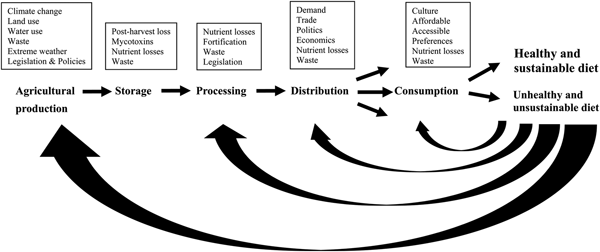
It has been consistently stated that the current food system is not delivering food and nutrition security for all and is contributing significantly to damaging the planet. Radical changes are needed with a much more co-ordinated approach if healthy and sustainable diets are to be achieved. The food system encompasses all aspects of agricultural production, storage, processing, distribution and consumption (see Fig. 1). It is not a linear progression from production to consumption since feedback loops are needed to address failures or unintended consequences that occur at any stage within the food system. It is a complex system with drivers (e.g. demand, economics, legislation, climate change) and consequences (e.g. food waste, nutrient losses, food safety, access, climate change) at each point that can influence other stages in the system and collectively determine whether healthy and sustainable diets can be achieved. Waste, for example, is produced at every point, and across the food system, it is estimated that approximately one third of all food is not eaten(3). Nutrient losses also occur throughout the food system, with losses during production, processing and cooking, as well as in storage and transportation. National and international politics, trade and legislation play a significant role in the access and affordability of food and this has consequences for food and nutrition security at a national and individual level. In the UK, about 30 % of the total GHGE come from the food system. Emissions produced at the different points in the food system vary, with agriculture (including manufacturing of fertiliser) accounting for the greatest proportion (45 %), followed by food manufacturing (12 %) and transport (12 %). Waste and packaging only make up 2 and 7 %, respectively, with the remainder coming from retail, catering and at home(Reference Garnett4).
The stages in the food system that drive whether diets are healthy and sustainable.

A ‘business-as-usual’ scenario, which means continuing on the current trajectory, is not an option if the average global temperature is not to exceed that set in The Paris Agreement and nutrition security is to be achieved. Not least as it was estimated that on the current trajectory, the GHGE from the agricultural sector alone would exceed the carbon budget for keeping the global temperature rise below 1·5 °C limit(Reference Ritchie, Reay and Higgins5). Technological solutions to reduce GHGE using more efficient agricultural systems and changing animal breeding are being developed, but this alone will be insufficient to meet the reduction in GHGE needed within the timeframe to prevent global warming exceeding the targets. A growing population and increasing incomes that are linked to dietary changes and are associated with high GHGE, means that dietary intakes have to change to meet The Paris Agreement targets(Reference Bajzelj, Richards and Allwood6). The regions of the world producing the least GHGE tend to be those that are most vulnerable to the negative effects of climate change. Limiting the global rise in GHGE is essential for food and nutrition security in low-income countries, but it is high-income countries that are responsible for producing the most GHGE. Therefore, it is in high-income countries where the emphasis on changing dietary patterns and food choices needs to be focused. In addition, emerging middle-income countries are transitioning towards unhealthy and high GHGE diets, typical of those in high-income countries. This is known as nutrition transition, where, with increasing wealth intakes of animal-based products, fat, sugar and processed foods increase and fibre decreases. Alongside this transition is the increase in the prevalence of non-communicable diseases(Reference Popkin7).
As well as The Paris Agreement, there are the sustainable development goals (SDG) which are set in order to achieve a better and more sustainable future, and also relies on developing a sustainable food system(8). Two of the SDG are specifically about nutrition security and sustainable diets; to reduce hunger (SDG 2) and increase good health through nutrition security (SDG 3). Many of the other SDG, however, such as climate action, life on land, life below water, no poverty and responsible consumption and production, will affect food and nutrition security. Linking up action to achieve the SDG with proposals to meet The Paris Agreement target to reduce GHGE provides a framework to develop a sustainable food system that can deliver healthy and sustainable diets. Much of the work to date has been identifying the variation in GHGE associated with the production of different food commodities (e.g. animal v. plant products). In general, GHGE are highest in the production of ruminant animals (e.g. cows, sheep, goats) since their digestive system produces methane, followed by other animals (e.g. poultry, pigs) and lower in the production of plant-based foods. Rice has one of the higher GHGE of plant-based foods because methane is emitted in production from flooded rice fields(Reference Audsley, Brander and Chatterton9).
Food production and consumption on climate change
Current agricultural practices account for approximately a quarter of global anthropometric GHGE, with livestock production having the greatest contribution. It is estimated to be responsible for about 14 % of all the GHGE(Reference Smith, Martino and Cai10, Reference Eshel, Shepon and Makov11). Livestock production carries the greatest environmental burden and nutritionally it is disproportionately higher than for the amount of nutrients derived from other food commodities. The demand livestock production places on land use and water use is typically higher than for most other food commodities, although water demand can be higher for fruit and vegetables depending on where they are grown. The magnitude of the impact does depend on the type and intensity of livestock production systems and there is on-going research into breeding programmes and methods to reduce methane associated with ruminant production, but this does not displace the need for dietary change to reduce meat consumption. There are both pros and cons for both intensive farming systems (dependent on feed) and extensive systems (grassland grazing) on GHGE, land use, animal welfare, biodiversity and economics(Reference Garnett12, Reference Poore and Nemecek13). Intensive industrial systems can have a lower GHGE than extensive systems as the livestock are reared faster and slaughtered earlier, hence less methane is produced overall but they require more land to produce animal feed and there can be concerns about animal welfare. A holistic approach is needed rather than focusing on a single outcome. A recent study proposed that in the USA the demand for beef could not be met from a purely grass-fed system, as yields would be too low(Reference Hayek and Garrett14). The authors concluded that regardless of the production system, the only way to reduce the environmental impact was to reduce beef consumption. Inevitably this means people will need to change their diets and eat less meat.
Diets comprise a combination of foods not individual commodities and therefore only looking at the GHGE of single food commodities does not give an accurate assessment of the net environmental impact and nutritional quality of sustainable diets. Studies that have looked at dietary patterns with the greatest environmental impact, such as GHGE, land use and water use, have concluded that typically diets with more animal products have higher GHGE than plant-based diets(Reference Aleksandrowicz, Green and Joy15–Reference Hallström, Carlsson-Kanyama and Börjesson17). However, it cannot be assumed that reducing meat consumption in the diet will always reduce GHGE of the whole diet, nor that a healthy diet will necessarily have lower GHGE(Reference Macdiarmid18). It is possible to have a healthy diet with high emissions, an unhealthy diet with low emissions or an unhealthy diet with high emissions. The net effect of reducing meat depends on the foods that replace the meat, as well as other changes made to the diet, which may arise from removing meat (e.g. switch from traditional meals with meat and potatoes to rice dishes or increasing the amount of dairy products, e.g. cheese, in place of meat). The type of meat is also important as production of beef and lamb has higher GHGE than other meats, such as poultry and pork but these animals tend to be intensively reared and therefore are highly dependent on the production of feed, which has implications for land use. A recent YouGov survey commissioned by EAT BETTER asked people to describe a non-meat meal they would eat in place of a meal with meat, and in many cases, it was a cheese-based dish(19). This could increase the GHGE associated with the whole diet, as dairy products have similar associated GHGE to meat, but also have negative nutritional outcomes by potentially increasing the fat content of the diet. Furthermore, other foods such as sugar have low GHGE but would not be recommended to increase in the diet for health reasons.
People eat different diets and therefore the starting points in making dietary changes to move towards healthy and sustainable diets vary between people. Horgan et al.(Reference Horgan, Perrin and Whybrow20) modelled the dietary changes that individuals would have to make to their diet to achieve their nutrient and food requirements for health and reduced GHGE, using data from the National Diet and Nutrition Survey. The baseline was people's current diet and the aim was to minimise the amount of change people would have to make to their diet to achieve a healthy and sustainable diet. As expected the majority of people had to reduce their intake of meat and dairy products, but for a minority (excluding vegetarians and vegans) adding a small amount of meat or other animal products into their diet was found to be the most efficient way to meet dietary requirements but still reduce GHGE. Understanding the substitutes people make for meat is important and it will differ greatly between individuals. Unlike nutrition, for climate change, the overall population reduction in GHGE is what matters, but to achieve this, collective action is needed at an individual level, where small changes in a higher proportion of the population is likely to be more effective than a small number of people removing all meat from their diet. This study illustrates the high variability in the different pathways people need to take to achieve healthy and low GHGE diets, not least if they want to minimise the change from their current diet that may be easier to achieve. Any dietary changes need to be monitored to ensure changes are beneficial and progress is being made to reach the GHGE reduction targets.
Reducing meat consumption and alternative protein sources
The concept of sustainable diets has been around for years linking environmental damage to our food choices(Reference Gussow and Clancy21). In 2012, the first comprehensive definition was published, describing the multifaceted nature of sustainable diets. It includes not only meeting nutrition requirements, but also having low environmental impacts, respecting biodiversity and being culturally sensitive, accessible and affordable(Reference Burlingame and Dernini22). Studies have combined some of these elements and shown that it is possible to create diets that achieve dietary requirements and reduce GHGE, typically by reducing intakes of animal products and replacing them with plant-based foods(Reference Aleksandrowicz, Green and Joy15). The focus on reducing meat consumption, however, has put protein under the spotlight with concern that diets with less meat would have insufficient protein and therefore it would need to be replaced by alternative protein sources. This has stimulated a lot of work to find alternative sources of protein with a lower environmental impact. The current high profile of protein is also being fuelled by various sectors including the food industry, the weight-loss industry and the media, through the production and advertising of high-protein foods, drinks and supplements with added protein for various ‘health benefits’.
A wide range of alternative sources of protein to fill the hypothetical ‘protein gap’ have been proposed. These include existing plant-based foods (e.g. pulses), creating novel foods (e.g. cultured meat/laboratory-grown) and finding alternative animal sources (e.g. edible insects). Substituting meat with pulses would be beneficial from a climate change perspective as well as from health perspective since they are a good source of dietary fibre. The intake of fibre in the UK is low, with only two-thirds of adults eating the recommended intake(23). Pulses are familiar to most people and compared with other options may be more culturally acceptable. Novel foods or alternative animal sources, such as cultured meat or insects, may be less acceptable, but that is not to say that norms may not change over time. The development of cultured meat is seen as a potentially healthier and more sustainable alternative to conventional meat(Reference Tuomisto and de Mattos24). With the sensory properties and appearance of cultured meat, it may satisfy meat eaters more than the other alternatives by minimising changes to their overall dietary patterns. This option is still very much in its infancy(Reference Bhat, Kumar and Bhat25), and currently unlikely to replace conventional livestock production at a competitive price or become culturally acceptable in time to make a meaningful impact on lowering GHGE. Insects are being proposed as a convenient, sustainable, economic and healthy alternative source of protein. Commercially farmed insects have gained significant attention recently as an alternative source of protein. The net effect on reducing GHGE of any of these alternatives will very much depend on the resources used to produce them and the production system.
The viability of any these products needs to be looked at through multiple different lenses(Reference van Huis26). Taking insects as an example, from a purely nutritional perspective, they could provide a good source of protein and some essential minerals (e.g. zinc and iron). From an environmental perspective, insects look like a viable alternative source of protein with lower GHGE and use less land than livestock production(Reference Smetana, Mathys and Knoch27, Reference Oonincx, de Boer and Imke28). Farming insects on food waste that cannot be used for human consumption has been proposed as a solution to two problems; reducing GHGE from decaying organic waste and providing a source of sustainable protein. This is not without its problems, including the efficient collection of food waste, the contamination by non-organic material and scaling up of small laboratory trials to large-scale production. Insects are bioaccumulators and studies have shown they can accumulate a range of heavy metals and contaminants, such as cadmium, lead and arsenic(Reference der Fels-Klerx, Camenzuli and Belluco29). The quantity in which insects would need to be eaten to meet protein and mineral requirements raises concern about the ingestion of these contaminants(Reference Yates-Doerr30). The commercial production of insects for food and feed falls under the EU Novel Food Regulation (No 2015/2283), but there are still some issues around food safety and animal welfare that are believed not to have been addressed yet(Reference Lähteenmäki-Uutela and Gremelová31).
Like all other animals (beef cattle, dairy cows, sheep, humans), insects cannot manufacture amino acids, the building blocks of protein, de novo, they can only accumulate them from organic material. Ultimately, amino acids originate from plants, bacteria and fungi(Reference Jander and Joshi32). Converting plant protein into human protein via insects is generally more efficient and less environmentally damaging than doing so via large animals(Reference van Huis, van Itterbeeck and Klunder33). However, even after consideration of the lower digestibility of plant-based protein compared with animal-based protein, consuming insects is less efficient and has a higher environmental cost than converting plant protein directly into human protein. Finally, the social acceptability of eating insects varies across different cultures, and while it may currently be a trend in some social groups the acceptability of insects as a staple source of protein in many countries is unknown. This example illustrated the complexity of sourcing alternative foods but all these factors need to be brought together to decide whether farmed insects or other alternatives really are a viable protein source or a distraction from more pressing issues.
The search for alternative protein sources assumes that we need more protein, or at least need to replace the protein removed in diets with reduced meat intakes. Some people are concerned that by eating less meat they will become protein deficient(Reference Macdiarmid, Douglas and Campbell34, Reference Graça, Calheiros and Oliveira35). It would seem that a fundamental question has been overlooked while searching for protein replacements; do we need more protein and would eating less meat risk protein deficiency? In 2013, the national supply of protein in the UK was estimated to be 103·2 g/capita/d (FAO: Food Balance Sheets www.fao.org/faostat), which is about 200 % of the population-level protein requirement. In a hypothetical situation, if all meat were removed from the supply and not replaced with any other protein the national supply would be approximately 72·1 g/capita/d, which still exceeds the population-level requirement(Reference Macdiarmid, Clark and Whybrow36). In the National Diet and Nutrition Survey (2014–2016), it was shown that the average intake of protein of men and women was 87·4 and 66·6 g/d(23), which is higher than the reference nutrient intakes (RNI) of 55·2 and 45·0 g/d, respectively(37). Approximately one third of the protein in the diets came from meat and meat products, while 23 % came from cereal and cereal products. These data are from self-reported diaries, which are known to be subject to misreporting and therefore the actual intakes are likely to be higher. Nevertheless, both data sources suggest that the supply and consumption of protein is more than adequate, and would remain so even if meat were reduced or removed. It has been suggested that current RNI for protein in the elderly should be increased(Reference Pedersen and Cederholm38), but this would not necessitate an increase in the current supply.
Most of the research to date on the reduction of meat consumption has concerned finding protein replacements, with less consideration of the implication for micronutrient intakes. From a nutrition perspective, is protein the right nutrient to focus on in terms of reducing meat consumption or are there other nutrients that are more important? For example, red meat is a good source of iron and zinc in a more bioavailable form than in many plant-based foods. The most recent National Diet and Nutrition Survey (2014–2016) reported the mean daily intake of iron for men and women is 134 % and 76% of the RNI, respectively, with 2 % of men and 27% of women having an intake below the lower RNI (LRNI). For men 22% of their iron intake comes from meat and meat products (16% for women)(23). For zinc, the average intake for men is 102 % of the RNI (7 % men below the LRNI) and 109 % for women (8 % women below the LRNI), with 37 and 29 % of zinc intake coming from meat and meat products, respectively. Fifty-four per cent of girls aged 11–18 years had intakes below the LRNI for iron and 27 % for zinc. This suggests that there is less scope to reduce intakes of these micronutrients in the diet than protein, and therefore it is important to find alternative sources of these micronutrients when meat consumption is reduced. While these micronutrients are available from plant-based foods, it is in a form that is less bioavailable, which should be taken into consideration. These micronutrients can be supplied through voluntary fortification of breakfast cereals and other cereal-based foods, but these foods include phytates that inhibit the uptake of these micronutrients. In changing to more sustainable diets with less meat, perhaps attention should shift from protein to micronutrient adequacy of diets.
Effect of climate change on micronutrient density and yields of crops
The climate is changing and current dietary habits are contributing to GHGE, but as the climate changes the nutrient composition of some crops are likely to change, which adds another layer of complexity to nutrition security. Experiments growing crops in different controlled environments have found that elevated atmospheric CO2 levels and increases in temperature not only reduce crop yields but also lowers the nutrient density in a range of staple crops(Reference Myers, Zanobetti and Kloog39–Reference Challinor, Koehler and Ramirez-Villegas41). A meta-analysis of the data by Myers et al.(Reference Myers, Zanobetti and Kloog39) showed that zinc, iron and protein concentrations in C3 crops (e.g. wheat, rice) and legumes (e.g. field peas, soyabeans) were significantly lower when grown at elevated CO2 (levels predicted for 2050) compared with those grown at ambient CO2 levels. They reported that in the edible portion of wheat grown under warmer and higher CO2 conditions, the zinc, iron and protein concentrations were lower by an average of 9·3, 5·1 and 6·3 %, respectively. The phytate content also reduced, which could potentially counter some of the losses in zinc and iron in terms of increasing the bioavailability. For rice, the reduction was 3·3, 5·2 and 7·8 %, respectively, but there was no significant change in the phytate concentration.
In the C4 crops (e.g. maize, sorghum), there were no significant reductions seen, except that in iron with maize (5·8 %). A more recent review reported the reduction in protein concentrations in other crops, such as barley (14·1 %), potatoes (6·4 %), fruit (22·9 %) and C3 vegetables (17·3 %)(Reference Medek, Joel and Myers42). It should be noted that these are percentage changes not absolute changes in nutrients and that the protein, iron and zinc content of these commodities differ. The exact mechanism is still unclear as the changes in concentrations are not uniform between nutrients for different crops and cultivars do not appear to respond in the same way. One possible explanation is that elevated CO2 levels and increased temperatures accelerate crop growth and development, which shortens the crop production duration and reduces the time to accumulate biomass thereby lowering concentrations of nutrients, and producing lower yields(Reference Challinor, Koehler and Ramirez-Villegas41).
The impact of a reduction in nutrient density of these crops for nutrition security depends on the diversity of the whole diet and the reliance on these staple crops for these nutrients. The impact is likely to be less in developed countries where diet diversity is high and because when these crops are processed many are fortified with micronutrients. In developing countries, however, the impact will be significantly greater because these staple crops are the main source of these micronutrients, and in many countries, there are already widespread iron and zinc deficiencies(Reference Smith and Myers43). The experiments showed small differences in the magnitude of reduction in nutrients between cultivars, and therefore there could be opportunities to breed plants that are more sustainable and less reactive to increases in temperatures and atmospheric CO2 levels(Reference Myers, Zanobetti and Kloog39). Complex trade-offs will be needed to be made in the selection of the best cultivars to ensure nutrient quality, resilience to climate changes (e.g. drought-resistant varieties), to maximise yields, to be culturally acceptable and economically viable. It may be the case that the diet diversity in developing countries will increase and there will be less dependency on these staple crops to meet nutrient requirements. There are still many unknowns about how the climate change, increased temperature and elevated CO2 levels may affect food production and the nutrient composition of food.
Processing in the food system
The food system comprises the pathway from agricultural production to consumption (Fig. 1) but the current food system is failing to deliver healthy diets with low environmental impacts or food and nutrition security. Each part of the food system needs to be explored for where improvements can be made. It cannot be assumed that the production of healthy food commodities with low environmental impacts will necessarily end up as healthy and sustainable diets. This is in part because it neglects the intermediate step of processing. For example, potatoes processed into crisps, whole fruit into fruit juices and wholegrains into refined white starch. The reasons for processing are multifaceted, but it can result in unintended consequences in different domains that are not connected.
An example is the processing of wholegrain to refined white flour. Eighty-eight per cent of wheat in the UK is milled into refined white flour where the bran and the germ are removed(44). Nutritionally this is undesirable because the germ contains micronutrients, but this is recognised and there is UK legislation that states that refined flour must be fortified with iron, calcium carbonate, niacin and thiamine to compensate(45). One of the reasons to remove the germ is because it contains fat, which over time can become rancid and thereby, if not removed it would shorten the shelf-life of products. From an environmental and economic perspective, shortening the shelf-life is undesirable as it could increase food waste. The processing also removes the fibre and in the UK the population intake of fibre is below the recommended intake(23). A recent study assessing nutrition security in the UK found that the national supply of fibre is insufficient to meet the population-level dietary requirements(Reference Macdiarmid, Clark and Whybrow36). In this study, it was shown that if all cereals were consumed as wholegrain then the supply of fibre available to consumers would be sufficient. Through a social and cultural lens, the social norm for most people is to eat refined grains rather than wholegrains. Twice as much white bread is eaten in the UK than wholemeal bread, and four times as much refined breakfast cereal is eaten than wholegrain(23). The example of refining grain illustrates the complexity within the food system and importance of considering all perspectives to avoid any unintended consequences.
Dietary guidelines for healthy and sustainable diets
Having established the basic principles of and the need for a healthy and sustainable diets, a number of countries have revised their dietary guidelines to include environmental sustainability, which typically is to reduce meat consumption(Reference Fischer and Garnett46). This is a significant step forward and should be applauded, as recommendations for just healthy diets are not necessarily going to reduce GHGE. Ritchie et al.(Reference Ritchie, Reay and Higgins5) considered current national dietary recommendations (healthy diets) for several countries and found that they did not address GHGE mitigation. In their study, they estimated the GHGE associated with diets that would comply with each country's dietary guidelines and compared them to the maximum GHGE of a diet needed to keep global warming below the 1·5 °C increase. Of the countries included in the study, the GHGE of healthy diets for the USA, China, Canada, Germany and Australia were higher than the maximum limit to meet the 1·5 °C target, with only India having diets that were below this limit. These data suggest that dietary guidelines that focus only on recommendations for health need to address climate change to meet the 1·5 °C target, although many would meet the 2 °C target. New guidelines for healthy and sustainable diets should be seen as a positive first step and the changes proposed may be more achievable for many people, but acknowledging that greater changes will be needed. The difficult part is not creating dietary guidelines but it is knowing how to change dietary habits, particularly when the recommendation is to reduce meat consumption. Meat is seen by many people as central to a meal and their diet, which is one of the barriers to reducing consumption. Identifying the points where to intervene in the food system, both in production and consumption, is essential but then working out how to achieve these changes in practice will need social, natural and biological sciences to work together.
Food for thought: when is it appropriate to use feed to produce food?
A growing population with increasing incomes will escalate the demand for certain types of foods, which will place more pressure and competition for the limited land available to produce food. Land use change, such as deforestation for livestock production and animal feed, is contributing significantly to climate change and is devastating biodiversity. Meeting the increasing global demand for meat has meant creating more intensive farming systems that are dependent on the supply of animal feed, which creates greater demand for land. It is often argued that the land used for animal feed should be used to produce crops for human consumption. This would decrease the supply of animal products and necessitate a reduction in meat consumption, but as we know many people are unwilling to eat less meat(Reference Macdiarmid, Douglas and Campbell34).
One of the problems we are facing is that there is a finite amount of land to produce enough nutritious food to feed a growing population. There are foods being produced that are using valuable agricultural land but which have no nutritional value and raises the question about whether these should be removed from the diet. A recent study showed that production of stimulant crops, such as tea, coffee and chocolate, uses a significant amount of cropland(Reference de Ruiter, Macdiarmid and Matthews47) but these commodities provide very few, if any, essential nutrients. Land is also used to grow crops for the production of alcoholic beverages. These crops could be described as ‘feed’, which is converted into products that have little nutritive value. Culturally these foods are deeply ingrained in our habitual diets, and therefore suggesting people stopped consuming them would be met by an enormous barrier, possibly more so than for reducing meat consumption. These are extreme examples, but are used here to illustrate the importance of cultural and social aspects of food and eating that need to be recognised, if dietary change is to be effective.
Conclusion
Significant advances have been made in understanding healthy and sustainable diets to provide nutrition security, but finding the right balance between climate change, nutrition and society is still a challenge. The SDG and Paris Agreement provide an ideal platform to join up the various elements for a healthy and sustainable food system since food is relevant to almost all of the goals. It is agreed that there has to be immediate action if the maximum global temperature increase, set out in The Paris Agreement, is not to be exceeded. This means changing dietary habits now. This will require new thinking about how to achieve dietary change since the success of attempts to date to shift people to eat healthy diets has been limited. Embedding an understanding of cultural and social norms around eating is critical. This means a shift in the way that we think about nutrition, viewing it from multiple perspectives, if global food and nutrition security is to be achieved.
Financial Support
J. I. M. and S. W. acknowledge funding from the Rural and Environment Science and Analytical Services, Scottish Government.
Conflict of Interests
None.