

Implications
Methods and thresholds to record and assess the amount of rest milk in the udder vary among studies and operators in literature. The comparison and evaluation of three different methods, and implementation of a new hand-milking method with a defined handgrip and strip frequency, to record and assess the amount of rest milk in each udder quarter offers help for further researchers, consultants and farmers in making a choice of one of these methods for a specific scope of application.
Introduction
In order to record and assess the completeness of milking in dairy cows, usually the post-milking strip yield is collected. It represents the amount of rest milk that remains in the udder cistern and large milk ducts after milk flow rate drops below a given threshold (Wehowsky, Reference Wehowsky1972), or after milk flow has ceased due to temporary closing of the milk passageway between the udder and the teat cistern (Mein et al., Reference Mein, Thiel and Akam1973). This closure of the milk passageway towards the end of milking is inherent in machine-milking and can be explained by the narrowing of the surrounding tissue followed by peaks in flow velocity, which results in temporary negative pressure in the milk passageway, typically ~0.7 to 1.3 kPa (Bothur and Wehowsky, Reference Bothur and Wehowsky1978). The extent to which incomplete milking negatively affects the milk production rate and the probability for new intra-mammary infections depends on the filling of the alveolar and cisternal udder compartments and the preceding udder health status of the cow, and is not yet conclusively studied. Milk remaining in the alveoli, so-called residual milk, reduces the milk production rate through autocrine inhibition of milk secretion with serotonin as one main regulator (Weaver and Hernandez, Reference Weaver and Hernandez2016). In addition, the pressure building up during the filling of the alveoli (Stelwagen et al., Reference Stelwagen, Knight, Farr, Davis, Prosser and McFadden1996) and concomitant leaky tight junctions (Stelwagen et al., Reference Stelwagen, Van Espen, Verkerk, McFadden and Farr1998) likely induce a decline in milk secretion once the alveolar capacity is reached (Stelwagen, Reference Stelwagen2001). The amount of residual milk in the alveoli will be high after milking if oxytocin release from the pituitary was inhibited, for example, due to failed stimulation or unfamiliar surroundings (Bruckmaier et al., Reference Bruckmaier, Schams and Blum1993). On the contrary, rest milk in the udder cistern will not necessarily affect milk secretion. Large amounts of rest milk might have an indirect effect, however. Penry et al. (Reference Penry, Endres, de Bruijn, Kleinhans, Crump, Reinemann and Hernandez2017) found that considerable leftovers of milk in the udder cistern resulted in a reduction of the milk production rate by about 25%. The authors assumed that the remaining milk in the udder cisterns reduced the time until alveolar capacity was exceeded. Likewise, Stelwagen et al. (Reference Stelwagen, Knight, Farr, Davis, Prosser and McFadden1996) reported a higher milk yield in catheterised cows, that is, with infinite cisternal capacity, compared to non-catheterised cows both milked once daily. Although large amounts of rest milk in the udder cistern is rather unusual in common milking operation, the information about the leftover in the cistern is valuable for the evaluation of the milking process itself. Its main use is to improve the milking process by adapting the settings and the equipment of the milking system, such as automatic cluster remover (ACR) settings and liner fit, in order to optimise milk flow characteristics, milking duration and teat condition.
In order to prevent negative effects from incomplete milking, traditional threshold settings for ACR were set at low levels (∼200 ml/min). Low threshold settings in turn present a higher risk of over-milking at quarter level that may have a negative impact on parlour efficiency and teat condition, including impacts on udder health (Rasmussen, Reference Rasmussen1993). Particularly the incidence of hyperkeratosis increases the probability of intra-mammary infections (Neijenhuis et al., Reference Neijenhuis, Mein, Britt, Reinemann, Hillterton, Farnsworth, Baines, Hemling, Ohnstad, Cook and Morgan2001). Previous research showed that raising threshold settings for ACR from 200 to 400 ml/min (Rasmussen, Reference Rasmussen1993; Reid and Stewart, Reference Reid and Stewart1997) and setting a limit for milking time (Clarke et al., Reference Clarke, Cuthbertson, Greenall, Hannah, Jongman and Shoesmith2004; Jago et al., Reference Jago, Burke and Williamson2010) led to a higher milking efficiency, and not necessarily to milk yield losses. Besier and Bruckmaier (Reference Besier and Bruckmaier2016) concluded that ACR settings up to 600 ml/min would not cause a considerable loss of milk. This seems to change if the threshold setting for the ACR is raised up to 800 ml/min when Magliaro and Kensinger (Reference Magliaro and Kensinger2005) recorded a reduction in milk yield by ~2.5%. According to Edwards et al. (Reference Edwards, Jago and Lopez-Villalobos2013), an earlier removal of the milking cluster led to more rest milk in the udder, leading to higher post-milking strip yields.
In addition to the threshold settings of the ACR, the completeness of milking is affected by further factors such as mismatches of technical settings of the milking machine, cluster weights, milking clusters hanging unbalanced at the udder, liner type and liner condition (Jones, Reference Jones1999). For example, Davis et al. (Reference Davis, Reinemann and Mein2000) found a significant higher machine strip yield with aged milking liners compared to new liners. The post-milking strip yield can be harvested by either giving extra weight to the teat cup or by hand-milking after teat cup removal (Wehowsky, Reference Wehowsky1972). A key issue of hand-milking methods is the high variation among operators (Davis et al., Reference Davis, Reinemann and Mein2000). Furthermore, hand-milking methods are often not described in detail, which is presumably the main reason for the variation in the results among operators in previous studies.
The aim of this study was to evaluate a new, precisely defined hand-milking method (DEFINED) to collect quarter strip yield, using a typical northern Europe milking handgrip and a predefined handgrip interval. The hypothesis was that the outcome of a precisely defined method depends mainly on rest milk in the cistern and only to a lesser extent on external influences such as evaluator or herd. This method was compared with two other methods: visual scoring of the degree of quarter filling (VISUAL) and assessment of the number of easy strips (EASYSTRIPS). The evaluation comprised an analysis of the statistical relationship of each method to the hand-milked strip yield in 60 s. The effects of evaluators and herds on the outcome were included in the evaluation, and the suitability of the three methods for quantitative or qualitative assessment of milk-out was finally ranked.
Material and methods
The study was conducted from July to August 2017 in six German-Friesian dairy herds in northern Germany. Herd size varied between 81 and 390 cows. Herd B belonged to an organic research farm. All animals were kept in cubicle housings and milked in different milking parlours (Supplementary Table S1).
Experimental cows
From each dairy herd, 22 to 25 experimental cows were selected based on (1) being Holstein-Friesian breed, (2) in first to sixth lactation, (3) more than 50 days in milk (DIM) to a maximum of 200 DIM, and (4) four intact udder quarters. In total, 148 cows entered the experiment. Due to clinical mastitis (n = 7), claw disease (n = 4), acute death (n = 2), aggressive defence (n = 2) and loss of their marking (n = 2), 17 cows were excluded from the experiment. Therefore, the final dataset consisted of 131 cows, between 20 and 24 per herd. The experimental cows were in average 124 DIM, and mean daily milk yield (DMY) was 33.7 ± 9.3 l/day (Table 1). With regard to parity, 43% of the cows were in their first lactation, 45% in their second or third lactation, and 12% in their fourth or higher.
Daily milk yield (DMY) and lactation characteristics of the cows included in the evaluation of completeness of milk-out at the six German Holstein dairy herds
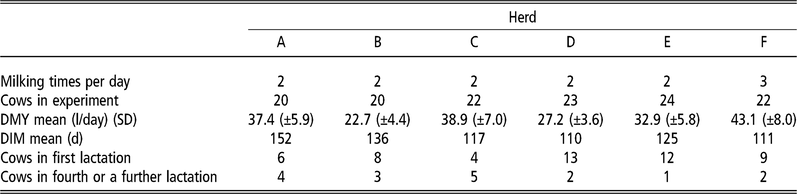
DIM = days in milk.
Milking systems and technical settings
The cows were milked in parallel, herringbone and tandem parlours with 2 × 4 to 2 × 20 milking places. Operating vacuum settings in the milking parlours were between 37 and 44 kPa. Pulsation rate was 58 to 60 cycles/min, and pulsation ratio settings in the milking parlours were 60 : 40 or 65 : 35 (Supplementary Table S1). All milking parlours were equipped with an ACR. In addition, the milking parlour of herd 2 was equipped with a mechanical teat stimulation with a preset stimulation time of 30 s (300 cycles/min, 37 kPa; GEA Farm Technologies GmbH, Bönen, Germany) and an automatic stripping arm, starting when milk flow drops below 700 ml/min. The switch point settings for the ACR were between 250 and 480 ml/min with a delay time of 25 to 30 s for herds milked twice daily (n = 5) and 750 ml/min with a delay time of 15 s for herd F for which milking was performed three times daily (Supplementary Table S1).
Experimental design
The assessment of completeness of milking was done by three female evaluators. They have experience with different types of milking parlours, but practised milking only in irregular intervals. In order to align the procedure for hand-milking between the three evaluators, they were trained in hand-milking herd A during one milking time 1 week before the experiment started. Each evaluator sampled herds 1 to 6 once; the herds were visited in 6 consecutive weeks (Supplementary Figure S1). Farm visits were scheduled in the afternoon at the second milking of the day. The time interval between two visits at the same farm was 2 days to minimise the effects of the preceding visit on the actual milk-out. The three evaluators visited the herds in a randomised order to account for interactions between visit and evaluator or evaluator sequence. Hence, the chronological order of the evaluators visiting the herds changed from week to week (Supplementary Figure S1).
Visual scoring of the degree of quarter filling
Immediately after the milking cluster was removed, the evaluator started assessing the completeness of milk-out of the right rear quarter using a visual scoring method adopted and modified from Joe et al. (Reference Joe, Cranefield, Hodge and Clarke2010) and Mein et al. (Reference Mein, Dyson, Eden, Reinemann, Burke, Jago, Greenall and Penry2010). The evaluator assessed the degree of quarter filling of the rear quarter visually with a straight point of view from behind the cow. A flashlight was used, if necessary.
The completeness of milk-out was assessed as follows: good (quarter visibly wrinkled), poor (obvious filling of the quarter, quarter appears slightly plump, not visibly wrinkled) and uneven (one rear quarter appears plumper and less wrinkled, relative to the other quarter). Cows with natural anatomical unevenly-formed udders were noted before milking to avoid an erroneous classification as ‘uneven’ milked-out. Concerning these cows, the evaluators only distinguished between ‘good’ or ‘poor’ milked-out. This method is named VISUAL in the further course.
Hand-milking using a defined handgrip and handgrip interval
After visual scoring of the udder, the evaluator started to hand-milk the right rear quarter of the cows for 15 s. The procedure of hand-milking was clearly defined for all evaluators, involving the following steps: (1) four fingers behind the teat, the thump in front; (2) the four fingers encircle the teat; (3) the thump is used to compress the teat on the upper end to prevent milk in the teat canal and teat cistern from flowing up into the milk cistern of the udder; (4) the remaining four fingers apply downward directed pressure on the teat by forming a fist, beginning with the index finger and ending with the little finger. This milking handgrip was applied once every second. The three milkers used a stopwatch to ensure a consistent rhythm for hand-milking. If no milk flew for at least 5 s, hand-milking was stopped. This method is named DEFINED in the further course.
Assessing the number of easy strips
During the first 15 s of hand-milking of the right rear quarter (see DEFINED), the evaluator counted the number of easy strips to a maximum of six. The completeness of milk-out was assessed as ‘good’ if the evaluator counted four or fewer strips, and as ‘poor’ if the evaluator counted five or more easy strips. This method was adopted and modified from Mein et al. (Reference Mein, Dyson, Eden, Reinemann, Burke, Jago, Greenall and Penry2010).
An easy strip was predefined by three criteria, which all needed to be fulfilled. The jet of milk needed to be: (1) uninterrupted, (2) with a clear direction of milk strip/flow and (3) needed to produce a hearable sound, when hitting the surface of the collecting container. This method is named EASYSTRIPS in the further course.
Reference value
The total strip yield collected in 60 s (SY60) was used as a reference for the amount of milk left in the udder after machine-milking. For this purpose, the first 15 s of hand-milking of the right rear quarter of the cows was followed by another three periods of 15 s, adding up to a total hand-milking time of 60 s. The gained strip yields per 15 s were collected in four separate containers and weighed afterwards. A digital scale with a measurement resolution of 1 g was used (measuring accuracy ±1 g; KA7-DE, Amir, Shenzhen). The milking handgrip was applied once every second using the same procedure as described in the DEFINED hand-milking method. The reference value is named SY60 in the further course.
Statistics
To analyse the statistical relationship between the three distinct methods – the herd, the evaluator and SY60 – a separate full model was fitted for each of the three methods. The first full model (VISUAL), a logistic regression model, had VISUAL as dependent variable and herd, evaluator and SY60 as independent variables (Supplementary Material S1). The second full model (DEFINED) included the strip yield gained in the 15 first seconds as dependent variable and herd, evaluator and SY60 as independent variables (Supplementary Material S1). In the third full model (EASYSTRIPS), the number of easy strips was the target variable; and herd, evaluator and SY60, the independent variables (Supplementary Material S1). The two last models were linear regression models. In principle, all these models rely on independent data points, but the cows were sampled repeatedly during the experiment. To avoid pseudoreplication, the cow was included in all models as random effect (Supplementary Material S2). Another assumption of linear regression models is a homogeneous variance of the residuals throughout all values of the independent variables. However, neither herd nor evaluator had a homogeneous variance. This problem could be solved by allowing for different variances per variable value (Zuur et al., Reference Zuur, Ieno, Walker, Saveliev and Smith2009). Therefore, a fixed variance structure based on herd and evaluator was implemented in the models of DEFINED and EASYSTRIPS (Supplementary Material S2). To find the minimum adequate model, backward elimination was performed. Independent variables in the minimum adequate model were selected based on a significance level of 5% (α = 0.05).
To compare the different methods, R 2 was calculated. For R 2 calculation, single-parameter models were fitted to avoid having different numbers of parameters. The single parameter for the first and second models was SY60. Data handling, statistics and graphics were performed in R (R Core Team, 2017) using the packages xlsx (Draguslescu and Arendt, Reference Dragulescu and Arendt2018), nlme (Pinheiro et al., Reference Pinheiro, Bates, DebRoy and Sarkar2018), ggplot2 (Wickham, Reference Wickham2009) and plyr (Wickham, Reference Wickham2011).
Results
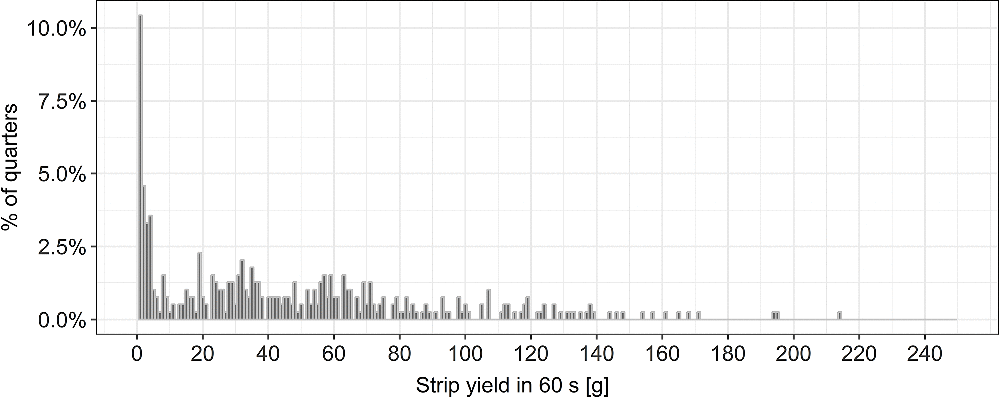
The dataset consists of the results of a total of 131 cows, their identification number, the herds (1 to 6) they belonged to, information about the evaluator (1 to 3) and the day when the data were collected. Every evaluator carried out each method – VISUAL, DEFINED, EASYSTRIPS and the reference value (SY60) – in every herd and on every cow that entered the experiment (Table 2). Concerning the method of EASYSTRIPS, the evaluators milked in 30% of the quarters six easy strips and in 16% of the quarters zero easy strips. The results achieved by the three evaluators were approximately similar (Table 2). Due to the fact that only one cow was scored as unevenly milked-out, this cow was excluded from further investigations. The number of easy strips was significantly higher in herd 4 in comparison to herd 1 (P < 0.001), herd 2 (P < 0.001) and herd 3 (P < 0.001). Concerning the quantity of milk via hand-milking for 15 s (DEFINED), the results varied from 0 to 57 g. With regard to SY60, the measured quantity of milk varied from 0 to 214 g (Table 2). Evaluator 2 collected slightly higher amounts of rest milk in 60 s compared with evaluators 1 and 3 (P < 0.001). SY60 gained by hand-milking showed a left-leaning distribution (Figure 1). Most quantities were measured between 20 and 50 g.
Herd and evaluator dependent outcome of the applied methods (VISUAL, DEFINED, EASYSTRIPS) and the reference (SY60) for assessing completeness of milk-out in dairy cows (n = 131 German Holstein dairy cows)
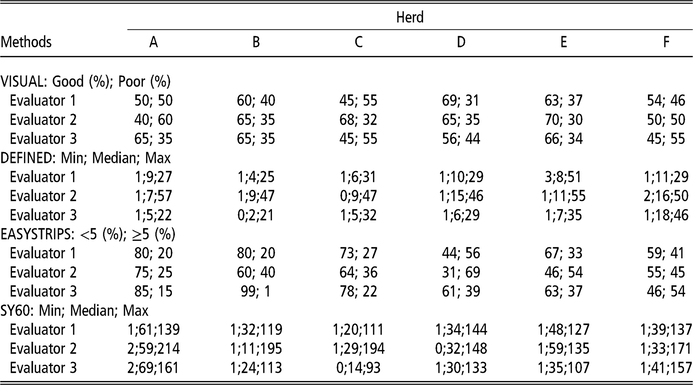
VISUAL = visual scoring of the degree of quarter filling; DEFINED = defined hand milking method; EASYSTRIPS = quantitative assessment of number of easy strips; SY60 = strip yield of the right rear quarter in 60 s.
Frequency distribution of strip yields in dairy cows gained immediately after cluster removal by hand milking of right rear quarters for 60 s (g) (n=131 German Holstein dairy cows, 6 farms, 3 evaluators).
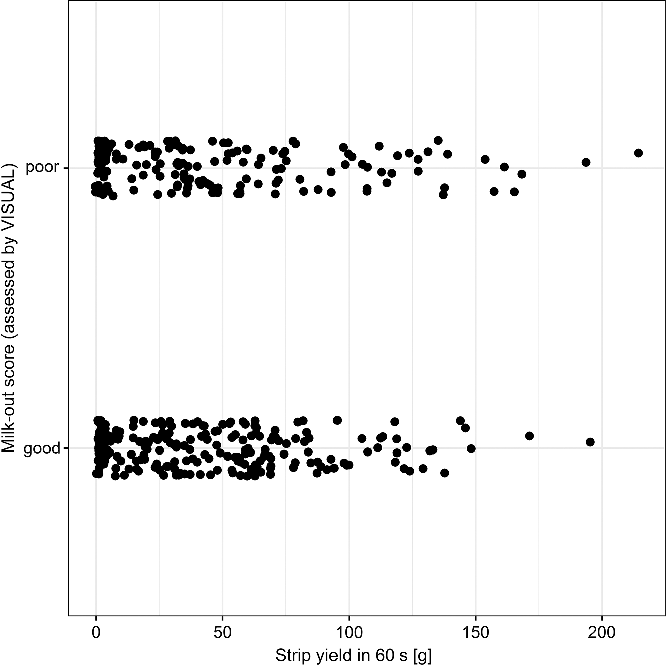
The influence of the herd, evaluators and reference value (SY60) on the three methods (VISUAL, DEFINED and EASYSTRIPS) was analysed in minimum adequate models. Neither the herd (P = 0.24) nor the evaluator (P = 0.82) nor SY60 (P = 0.6) had a significant influence on the score of milk-out given by VISUAL scoring. The relationship between SY60 and VISUAL is shown in Figure 2.
Completeness of milk-out of the right rear quarter of dairy cows assessed by VISUAL quarter filling degree after cluster removal and related strip yield in 60 s (g) (n = 131 German Holstein dairy cows, 6 farms, 3 evaluators).
In the minimum adequate model of DEFINED, the strip yield in 15 s was significantly influenced by SY60 (P < 0.0001) and evaluator (P < 0.0001), while the herd had no influence (P = 0.26). The full model of DEFINED, consisting of SY60 and evaluator, was significant (P < 0.0001). The relationship between SY60, evaluator and strip yield in 15 s (DEFINED) is shown in Figure 3.
Strip yield of dairy cows in the first 15 s (g) gained by three different evaluators by DEFINED hand milking of the right rear quarter after cluster removal and related strip yield in 60 s (g) (n = 131 German Holstein dairy cows, 6 farms, 3 evaluators).

In the minimum adequate model of EASYSTRIPS, SY60 (P < 0.0001), herd (P < 0.0001) and evaluator (P = 0.04) had a significant influence on the estimation of the number of easy strips. The full model of EASYSTRIPS, consisting of SY60, herd and evaluator, was significant (P < 0.0001). The relationship between SY60 and EASYSTRIPS is shown in Figure 4.
Maximum number of easy strips (EASYSTRIPS) milked from dairy cows after cluster removal by hand milking of the right rear quarter and related strip yield in 60 s (g) (n = 131 German Holstein dairy cows, 6 farms, 3 evaluators).

The single-variable models EASYSTRIPS and DEFINED were compared by analysing their coefficient of determination, R 2. Thereby, the single-input variable SY60 could explain the output achieved by DEFINED (R 2 = 0.84) to a higher extent than the number of strips achieved by EASYSTRIPS (R 2 = 0.54).
Discussion
The present study evaluated three methods to record completeness of milk-out by visual scoring or hand-milking. The aim was to examine the relationship between the outcome of the three methods and SY60 of hand-milking. The latter was defined as an independent variable based on the assumption that it represents rest milk in the rear quarter and the expectation that the recorded indicators depend to a large extent on rest milk and only to a less extent on external influences such as evaluator or herd. This expectation proved to be true with regard to the methods DEFINED and EASYSTRIPS. In consideration of the single-variable model, SY60 explained 84% of the statistical variation in the data gained by the DEFINED hand-milking method, and 54% in the data gained by EASYSTRIPS. The expectation that a high amount of rest milk in the quarters causes a less wrinkled and plump appearance of the quarter was not confirmed by the data in our study.
The reference strip yield, SY60, was generally lower in this study than the strip yield gained by hand-milking over 60 s in Davis and Reinemann (Reference Davis and Reinemann2001). The maximum recorded SY60 was 241 g, and only 0.2% of the records exceeded 200 g. Davis and Reinemann (Reference Davis and Reinemann2001) found a maximum of > 450 ml, and in 28% of cases at least 200 ml per 60 s of milking. These differences can be explained, to some extent, by the fact that strip yield in Davis and Reinemann (Reference Davis and Reinemann2001) comprised four single-strip yields of four different quarters. In the present study, SY60 comprised the strip yield of only one quarter per cow. In addition, Davis and Reinemann (Reference Davis and Reinemann2001) used a ‘quick method of hand-stripping’ to collect strip yield. The hand-stripping method uses two fingers and two alternate hands and allows fast action at the teat if strip frequency is not restricted or predefined. In comparison, concerning milking handgrip typical for northern Europe, the thumb is used to constrict the upper end of the teat and the remaining four fingers apply downward directed pressure to the teat (Krömker, Reference Krömker2006). Furthermore, in the present study, the frequency of milking handgrip was fixed to 60 times per minute or 1 Hz, which was particularly important to ensure comparable results between evaluators and days. It is reasonable that, given the same amount of rest milk in the udder, milking by hand-stripping or using a full-hand method will not result in the same amounts of milk per unit of time. Likewise, Davis and Reinemann (Reference Davis and Reinemann2001) concluded that the amount of rest milk harvested by machine-stripping will be much higher than by hand-stripping.
The maximum of hand-milking time was set to 60 s in order to prevent the results from being affected by another milk let-down, caused by the stimulation effect of the handgrip. According to Bruckmaier and Hilger (Reference Bruckmaier and Hilger2001), the start of milk ejection following tactile stimulation depends on the degree of udder filling. For a degree of filling of 0% to 20%, which might be also assumed for udders post-milking, the expected mean delay until alveolar milk ejection occurs was 107 s, while for a degree of filling of 20% to 40%, latency until milk ejection was reduced to 78 s (Bruckmaier and Hilger, Reference Bruckmaier and Hilger2001).
The influence of evaluators on hand-milking methods in recording strip yield was mentioned in previous studies (Davis et al., Reference Davis, Reinemann and Mein2000; Davis and Reinemann, Reference Davis and Reinemann2001; Mein et al., Reference Mein, Dyson, Eden, Reinemann, Burke, Jago, Greenall and Penry2010). On the basis of the fact that clear instructions for the hand-milking handgrip and time interval were given, influence of the evaluators was expected to be the least. However, that expectation was not completely fulfilled. The evaluator had an influence both using the DEFINED method and the EASYSTRIPS method. Possible explanations for the observed effects of the evaluator on the DEFINED hand-milking method might be variations in the applied pressure during hand-milking or hand size in relation to the morphology of the teat. Milking short teats with large hands might be a problem as well. With regard to the EASYSTRIPS method, the quantity of milk in distinct easy strips was unfortunately not recorded. It might be that the amount of milk harvested by one easy strip varies enormously among cows and evaluators. Likewise, the influence of the herd on EASYSTRIPS could possibly be explained by teat morphology or a higher internal pressure in teat cistern in cows with higher amounts of rest milk.
The assessment of the completeness of milk-out is described in different ways. According to Joe et al. (Reference Joe, Cranefield, Hodge and Clarke2010), it can be scored by a visual assessment of udder fill and ease of hand-stripping using the following three criteria: very good (udder visibly wrinkled and very little milk stripped, < 100 ml), good (udder with some wrinkles and some milk able to be stripped, 100 to 500 ml) and poor (obvious filling of the udder and very easy to strip milk, > 500 ml). It remains unclear whether the mentioned thresholds (100 and 500 ml; Joe et al., Reference Joe, Cranefield, Hodge and Clarke2010) referred to hand- or machine-stripping. Thresholds for rest milk harvested by machine-stripping are in general higher than for hand-stripping, and thresholds ranging from 500 (Mein and Reid, Reference Mein and Reid1996; Mein et al., Reference Mein, Dyson, Eden, Reinemann, Burke, Jago, Greenall and Penry2010) to 1500 ml (Davis and Reinemann, Reference Davis and Reinemann2001) are suggested in machine-stripping. The present study used the following three visual criteria to score the completeness of milking: good, poor and uneven milked-out. The requirements on ‘good’ and ‘poor’ milked-out udders were adopted from Joe et al. (Reference Joe, Cranefield, Hodge and Clarke2010). As can be seen from the results, rest milk in the udder could not be derived by these assessment criteria. Even more, almost similar quantities of the reference strip yield, SY60, were measured for udders that were assessed as ‘good’ or ‘poor’ milked-out. As noted in Mein et al. (Reference Mein, Dyson, Eden, Reinemann, Burke, Jago, Greenall and Penry2010) the visual assessment method is recommended for herds where a hand-stripping method would cause unacceptable disruption of milking or an unacceptable risk from kicking cows. Further, it can improve the reliability of diagnosis, when practised in combination with a quantitative method (Mein et al., Reference Mein, Dyson, Eden, Reinemann, Burke, Jago, Greenall and Penry2010). The current findings, however, contradict these recommendations.
Davis and Reinemann (Reference Davis and Reinemann2001) compared the strip yield of two hand-milking methods and two machine-milking methods. One of the hand-milking method was to strip the quarter of a cow’s udder for 15 s, whereby 21% of the measured strip yields was equal or higher than 100 ml, and 71% of strip yields were below 40 ml. On the basis of these findings, Davis and Reinemann (Reference Davis and Reinemann2001) concluded that a hand-milking threshold should be set between 40 and 100 ml for the assessment of milk-out on quarter level. Reinemann et al. (Reference Reinemann, Mein and Ruegg2001) recommended that less than 20% of quarters should yield more than 50 ml of rest milk when hand-stripped. Using the northern European milking handgrip with a predefined frequency of 60 per min, the recommendations for the threshold should rather orientate on lower threshold levels. Only 3% of DEFINED were equal to or higher than 40 g, with a maximum of 57 g, and 12% of SY60 were equal to or above 100 g. With regard to the median of the sixth easy strip in the EASYSTRIPS method, the findings of this study suggest that a possible threshold for milked-out quarters could be set at 75 g quarter strip yield per 60 s of hand-milking, corresponding to a quarter strip yield of 20 g per 15 s of hand-milking, both with a strip frequency of one handgrip per second. In that case, a total of 19% of quarters would have been not milked-out completely. Further investigations are required to confirm this threshold and to exclude the possibility that lower quantities of the collected strip yield in this study were found due to the fact that the cow’s quarters were sufficiently milked-out.
Acknowledgements
This study was part of the European Innovation Partnership (EIP-AGRI) project ‘InnoMelk’ and received funding from the European Agricultural Fund for Rural Development and the Regional Rural Development Programme (LPLR) Schleswig-Holstein.
D. Meyer, 0000-0002-0825-6321
Declaration of interest
The authors confirm that there are no known conflictions of interest associated with this publication, and there has been no significant financial support for this work that could have influenced its outcomes.
Ethics statement
Not applicable.
Software and data repository resources
None of the data were deposited in an official repository.
Supplementary material
To view supplementary material for this article, please visit https://doi.org/10.1017/S1751731119001757


 Open access

