




Situated within expansive gardens in Boulogne-Billancourt, a leafy suburb west of Paris, lie the archives of the French banker, philanthropist, and photographic pioneer, Albert Kahn (1860–1940). The archives contain little-known autochrome portraits of four Indian Muslims, each dressed in black and sitting in front of a plain backdrop. These images were taken in the summer of 1920, when the men were travelling across Europe representing the cause of the Indian Khilafat Movement (1919–24), a campaign to prevent the anticipated dissolution of the Ottoman Empire and, with it, the temporal foundations of the Ottoman Caliphate in the post-war peace settlement. The group was led by the notable early twentieth-century Indian pan-Islamist, Mohamed Ali Jauhar (1878–1931). Accompanying him were Maulana Sulaiman Nadwi (1884–1953), a religious scholar from the Nadwat al-‘Ulama in Azamgarh in Uttar Pradesh; Syud Hossain (1888-1949), a newspaper editor and political organiser; and Hassan Muhammad Hayat (1882–1955), who served as the group’s secretary. The portraits of these men are striking in part for their aesthetic quality—the autochrome method of photography, which had been invented by Auguste and Louis Lumière in 1903 and remained in use until the 1930s, produced a rare set of colour portraits of leading Indian Muslim figures from this period. But their historical significance also lies in the fact that the portraits are housed within the Archives de la Planète, a vast collection of still and moving images compiled by a team of professional photographers employed by Kahn between 1909 and 1931.
The autochrome portraits of the Khilafat delegation are part of a particular swell of individual and group portraits in the collection dating from the years following the end of the First World War, when Paris became a centre for international congresses and conferences, and intellectual and political convergences. The subjects of these portraits included visiting politicians, dignitaries, spokespersons for various causes, as well as litterateurs, publicists, and other notable individuals. Many of these portraits feature members of the various official delegations to the post-war Paris Peace Conference. Yet, among these portraits, too, are men and women who, although not formally part of the conference, nevertheless hoped to influence this unprecedented moment. The portraits of the four Indian representatives in the Archives de la Planète are part of this latter group, for these men sought to sway proceedings through their meetings with statesmen, political parties, and sympathetic interlocutors, but played no official role in the peace conference. The portraits thus help to situate the Khilafat Movement within a globalising moment and place these individual Indian Muslims among the broader ranks of ‘representatives’ of various causes and constituencies who formed so large a part of the international traffic in people, causes, and ideas during this period.
The specific nature of these images—individual and distinct yet situated within a wider ecumene—offers a potential entry point into the question of Muslim subjectivity in a global context. The notion of the Muslim self has been a prominent theme in studies on colonial South Asia. Much scholarly attention has been devoted to the plethora of Islamic reformist and revivalist movements that emerged in the nineteenth and twentieth centuries, emphasising the reappraisal of this-worldly life that accompanied political and social transformations under European colonialism. Such a reappraisal has been marked by growing emphasis on the individual Muslim subject and their capacity and responsibility to act wilfully in the world in the service of Islam. Francis Robinson has written of a self-conscious, self-affirming, self-reflective Muslim subject who emerged in late nineteenth-century north India, the product of a variety of reformist impulses that were enabled by new technologies, chief among them print, which facilitated personal learning and contemplation.Footnote 1 More recently, Farina Mir has deepened this picture by looking at popular ethical literature (akhlaq), which transcended the boundaries of religious schools to reach a wider Urdu-reading public.Footnote 2 Beyond both religious and ethical literature, scholars such as Javed Majeed and Ayesha Jalal have drawn attention to poetry and the press as spaces where the temporal bounds of Muslim self and subjectivity were creatively reimagined amidst the rising tides of pan-Islamism and nationalism in the early twentieth century.Footnote 3 This scholarship highlights the fact that political mobilisation was not only the result of a new emphasis on individual action but also a sphere of subject formation itself—through participation in collective community action, individuals could understand themselves as playing a vital role in shaping the temporal fortunes of an Islam that seemed imperilled by the expanding and intensifying forces of European imperialism. The post-war Khilafat Movement might be regarded as the culmination of this form of political mobilisation, though its roots can be traced back to the first stirrings of Ottoman-centric pan-Islamism in India in the 1870s.Footnote 4
The tendency to frame transformations in the Muslim self as responses to the conditions of Muslim life and colonial rule in India has meant a relative paucity of accounts focusing on encounters with the transnational and the global. While there was a long and rich history of movement between South Asia and other parts of the world, encounters between Muslims from dispersed geographies, possessing their own subjectivities, became much more frequent from the mid-to-late nineteenth century. Imperial networks ironically served as the conduits through which more Muslims could travel, interact with, and learn about other peoples and places. Such encounters undoubtedly ‘fuelled processes of communal re-definition’ among Muslims in all corners of the Indian Ocean world.Footnote 5 An example of this can be seen in the steamship journey to Europe undertaken in 1869–70 by the venerable historian, jurist, and founder of the Muhammadan Anglo-Oriental College in Aligarh in north India, Sayyid Ahmad Khan (1817–98), accompanied by his two sons. Their journey required them to pass through several port cities in South Asia and the Middle East, leading to brief encounters with a diverse range of Muslim populations. Sayyid Ahmad’s wonder about these populations was clear in his travel writings, but so was a self-consciousness that it was he who appeared strange and foreign among these people. His letters and articles, primarily intended for a north Indian audience, functioned as both a means of self-articulation and an attempt to describe an Indian Muslim subject situated within a broader, heterogeneous Muslim world.Footnote 6 Simultaneously, and perhaps paradoxically, with increasing contact also came awareness of the shared experience of European imperialism; in such a context, the concept of ‘Muslim world’ gained currency, denoting something much more than a spiritual community of believers (ummah).Footnote 7
The admixture of wonder and self-consciousness expressed by Sayyid Ahmad Khan was also experienced by the members of the Indian Khilafat delegation, travelling half a century later along much the same route and led by an Aligarh graduate, Mohamed Ali. Unlike Sayyid Ahmad Khan and his sons, however, these figures also encountered countless Muslims in Europe itself. Letters that members of the delegation sent home during their sojourn from February to August 1920 suggest that they spent as much, if not more, time in the company of people from other parts of the Muslim world as with Europeans. While few of these other Muslims made it to the photographic studio on Albert Kahn’s estate in Boulogne, interwar portraits of, for instance, Iranians, Turks, and Tunisians in the Archives de la Planète nevertheless gesture to this wider context.
Photographic images captured by Europeans of non-European subjects have typically been understood through the framework of the ethnographic gaze—a concept that draws attention to the work of objectification, classification, and colonial knowledge formation that accompanied the arrival of new visual technologies in colonial contexts. Photography offered a tool to capture the ‘otherness’ of colonial subjects, fixing their perceived difference in perpetuity. Photography simultaneously promised to record them, with a fidelity hitherto unimaginable, but also to describe and demarcate them. In India, this process was definitively initiated by J. Forbes Watson’s and John William Kaye’s monumental eight-volume project, The People of India (1868–75), which assembled likenesses of a vast population recently made subject to Crown rule. Unlike this undertaking, the Archives de la Planète was not explicitly conceived as an imperial project, and yet it was also a self-consciously documentary project with quasi-ethnographic aims. Kahn sought to ‘fix, once and for all, the aspects, practices and modes of human activity whose disappearance is but a question of time’.Footnote 8 Kahn’s photographers embarked on ‘missions’ across Europe, the Middle East, South and East Asia, Africa, and the Americas to record a world that ‘stood on the threshold between the traditional and the modern, the local and the global all with a view of facilitating international peace and cooperation’.Footnote 9 The Khilafat portraits of 1920 sit chronologically equidistant between two such missions to India in 1913–14 and 1927–28, led by operators Stéphane Passet and Roger Dumas, respectively. Even more than The People of India, the Archives de la Planète was a monumental project, seeking to capture a bewilderingly vast subject. It eventually came to contain 72,000 autochrome photographs, stereographic images, and thousands of metres of black and white silent film, documenting over fifty countries and four continents.Footnote 10 Within this material are thousands of photos of frequently unnamed non-European and colonial subjects in both actual and staged environments. In many cases, these subjects appear in the collection to illustrate a cultural, regional, religious, or ethnic ‘type’, garbed in authentic ‘costume’, rather than as individual personalities.Footnote 11 Scholars have usually attributed this systemising logic to the Archives’ director, Jean Brunhes (1869–1930), the first chair in Human Geography at the Collège de France—a post that Kahn had funded. Brunhes believed photography was an integral tool for the discipline, frequently illustrating his lectures and talks with images taken from the Archives de la Planète.Footnote 12
The images of the Indian Khilafat delegation do not lie entirely outside this framework, but nor does the induction of these Muslims into the Archives de la Planète suggest itself as solely or even primarily continuous with the epistemic work of recording ‘a disappearing planet’. The Archives also contain hundreds of studio portraits of named individuals, including dignitaries and functionaries who visited the photographic studio in Boulogne. Kahn was an internationalist, a pacifist, and a utopian, drawn to citoyens du monde whom he believed would play some part in transforming the world. Kahn had been a student of the philosopher Henri Bergson, who became a lifelong friend and interlocutor. As Jay Winter has argued, the Archives became ‘a kind of visualization’ of Kahn and Bergson’s shared, prophetic vision of peace and tolerance; for Kahn, this meant capturing ‘the very new’—a world enabled by new technologies, communications, and the expansion of capitalism—‘and very old’.Footnote 13 The chorus of individuals and delegations invited to Boulogne arguably speaks more to Kahn’s internationalist impulses than Brunhes’s social scientific ones. Such a reading does not imply that the Archives de la Planète can be neatly cleaved into two projects, one concerned with Paris and another with the world beyond it; indeed, the Archives ought to be regarded as a space of contradictions and instabilities.Footnote 14 But it does suggest that the Khilafat delegation portraits represent something more than simply late additions to an established colonial ethnographic tradition. Whereas the 1913–14 mission to India had captured a range of ‘types’—anonymous theologians, ascetics, veiled women, labourers, families gathered at Mughal sites—there is little, formally, to distinguish the studio portraits of the Indian Muslims in Paris from any of the other men and women captured in the same setting.
These portraits complicate a conventional understanding of the purpose of photography as primarily one of objectification in more immediate ways as well. These Muslim subjects not only elected to travel to Paris and then to the outskirts of the city to be photographed on Kahn’s estate, but they also played, we might assume, a part in crafting these images. They were participants in—rather than simply individuals subjected to—the photographic process. If they represented a ‘type’, it was that class of people who felt that they ought to participate in the remaking of the world from Europe in the formative years following the end of the First World War. To the extent that they had actively willed themselves into the Archives de la Planète, we might see the portraits of the Khilafat delegation as part of the broader process of subject formation across colonial and European sites in this period.
Such an approach builds on much recent scholarship that has complicated our understanding of photography’s impact on the colonial world and questioned the essentialising binary between ‘colonial’ and ‘indigenous’ ways of seeing and image-making.Footnote 15 Ali Behdad has observed that indigenous photography does not inherently constitute ‘an oppositional locus or resistant iconography, for it too belongs to the Orientalist network that mediates its vocabulary and thematics of representation’.Footnote 16 As Christopher Pinney set out in the seminal Camera Indica, power might instead be taken as the more crucial variable; this allows us to see certain continuities between photographic practices that were initially confined to relatively elite groups.Footnote 17 Zahid Chaudhary’s exploration of photography in colonial India, meanwhile, sees colonialism as bound up with the phenomenology of photography itself, rather than something that was merely furthered through photography’s representative, reproductive promise, for photography was a product of the age of large-scale industrialism that colonialism had made possible.Footnote 18 Chaudhary has described his approach as ‘noniconophobic’; he does not view the image itself with suspicion, but as an object that must always be read ‘against the grain’.Footnote 19
Other scholars have also complicated what might, at first glance, appear to be derivative practices. Stephen Sheehi’s study of the carte de visite (visiting card) in the late Ottoman world, for instance, is concerned with resisting simplistic observations regarding visual similitude. He sees studio portraiture by Arab and Armenian photographers in places such as Cairo and Jerusalem as something that enacts ‘the massive transformations in political economy, class structure, nationalism, and subject formation’ taking place in the Arab world in the period marked by both the nahdah al-‘arabiya (the Arab awakening) and projects of Ottoman state-led modernity, collectively referred to as the Osmanlılık. The concept of enactment has enabled Sheehi to situate photography’s role in the social construction of power as something that ‘enlisted and relied on the complicity and participation of its subject’.Footnote 20 In other words, the subjects of photography were a collective of actors who fundamentally instantiated class through their engagement with portrait photography. This was undoubtedly also the case in the Indian context, where late nineteenth-century Indian photographers embraced portraiture as a medium to document individual members of the aristocracy, as well as the aspiring colonial bourgeoisie.Footnote 21
An understanding of photographic portraiture as the ‘visual condensation’ of social power allows us to bypass, to some extent, the question of whether the Khilafat images were a mimicry of the European ‘master-image’, a copying by non-European subjects of the form, pose, and ‘genetic patterns’ adopted by hundreds of sitters in Boulogne before and after them.Footnote 22 Sheehi’s idea of enactment, however, presupposes ‘a circuit of intelligibility, or reception, and of circulation in hopes of eliciting some social value’.Footnote 23 The carte de visite, for example, was explicitly produced to be organised in albums, to be an object exchanged and circulated among like-minded subjects, or to bring noted individuals into the middle-class home. This was as true of the carte de visite in nineteenth-century France as it was in the Arab world during the nahdah.Footnote 24 As far as it is known, the Khilafat delegation portraits were not widely circulated. This relative obscurity may partly stem from the physical limitations of the autochrome method itself,Footnote 25 and the fact that Kahn’s project, guided by its preservationist impulse, was oriented toward ‘a future spectator’.Footnote 26 But that obscurity might also prompt us to take heed of arguments made by social anthropologists of material culture against seeing objects as empty of intrinsic meaning, as always representative of something else, accruing—or losing—value primarily as a result of their circulation through cultural space.Footnote 27
The remainder of this article is divided into two parts: the first examines in further detail the circumstances that gave rise to the Khilafat delegation portraits, situating them within a broader history of Muslim transnationalism, self-fashioning, and the emergence of global bourgeoisies. The second part focuses on the delegation members’ correspondence from Europe, examining the sympathies and tensions that emerged between various representatives who had travelled to Europe from different parts of the Muslim world, some of whom also appear in the Archives de la Planète. Given the political complexities of the Muslim world during this period, it may be assumed that these portraits cannot reflect a simple story of converging Muslim subjectivities, whether bourgeois or otherwise. Nevertheless, it remains useful to ask how the purportedly self-conscious Indian Muslim subject who emerged from the transformations of the late nineteenth century confronted this global moment, and, more specifically, confronted the evident plurality of perspectives on political, intellectual, and religious questions that beset the early twentieth-century Muslim world.
This article suggests that encounters among Muslims in Paris heightened the distinctively Indian dimension of Indian Muslim subjectivity. Rather than affirming a unified Muslim world—the precondition of pan-Islamism—these encounters revealed a fragmented landscape in which Muslim polities were arranged as a configuration of diverse, sometimes irreconcilable realities. By highlighting the fact that the Muslim world was neither homogenous nor temporally unified, these experiences made manifest the heterotopic nature of ‘the Muslim world’ itself: an ‘other’ space in which presumed hierarchies and certainties were frequently inverted.Footnote 28 In this space of discovery, crisis, and contestation, Indian pan-Islamists in 1920 negotiated and refined their own sense of self along more national lines.
Muslim subjectivity
The ‘global bourgeoisie’ emerged in the long nineteenth century, in parallel with the ‘age of steam and print’, and peaked, arguably, after the First World War, when ‘middle classes’ from across the colonial world embraced nationalist politics in their struggles against European imperialism.Footnote 29 As the editors of a recent volume have written, by 1920, ‘clusters of bourgeois classes … had matured almost everywhere’.Footnote 30 Margrit Pernau, for instance, has traced the particular gentrification of Muslim identities in Delhi during this same period. She argues for the transformation of the ashraf—the ‘noble’—into ‘middle classes’ from 1857 to the end of the First World War, though she is careful to note that class was only one axis of identity.Footnote 31 These global bourgeoisies were, in many cases, the leaders of movements for national self-determination in the late nineteenth and early twentieth centuries, but religion too could form a key aspect of the modern bourgeois subjectivity; indeed, this is what often drew Muslims into transnational spaces. David Motadel, for instance, has written of a Muslim ‘bourgeois exile milieu’ in interwar Germany, who, despite hailing from diverse national backgrounds, ‘were able to interact and organise themselves on the basis of two commonalities: Islamic and bourgeois lifestyles and values’.Footnote 32 Motadel’s focus on the kind of institutions and associations educated Muslims forged, including the premier journal of the Muslim community in Berlin, Moslemische Revue, suggests the importance of paying attention to diasporic ‘communicative and intellectual spaces’ as part of a broader appreciation of the history of Muslim thought.Footnote 33
Even more so than Berlin, Paris had long been regarded as a bastion of cosmopolitanism, a city of exiles, refugees, and revolutionaries, of the radical and the avant-garde.Footnote 34 The immediate post-First World War years, as noted above, saw a particularly dramatic convergence in Paris of would-be world-makers, which included a considerable number of colonial subjects from around the world, setting the stage for a host of encounters that, in turn, nourished the ‘seeds’ of anti-imperial thought. The experiences of the Indian Khilafat delegation are a testament to this: the delegation was frequently in touch with visiting Tunisians, Moroccans, Iranians, Egyptians, and Muslims from China and Russia in 1920. They were in conversation with Arab delegations from Syria and the Hijaz, as well as, of course, the considerable number of Turks in Europe. Michael Goebel has explored the importance of different groups from the peripheries seeing each other at work and hearing each other’s experiences: ‘transnational and transregional networks and intellectual exchange centred in interwar Paris’, he argues, ‘elucidated the systemic global connections of imperialism and opened new contours of a global system’.Footnote 35 If what was brought into view was a ‘global’ system, that is not to say that it looked the same from each vantage point, but the asymmetries between non-Europeans from different backgrounds,Footnote 36 their differing perspectives and experiences, could in itself be generative.Footnote 37 One need only note the plethora of competing political imaginaries among Muslims in the period 1914–24—traversing the national, regional, imperial, and religious—to appreciate the possibilities of this moment.Footnote 38
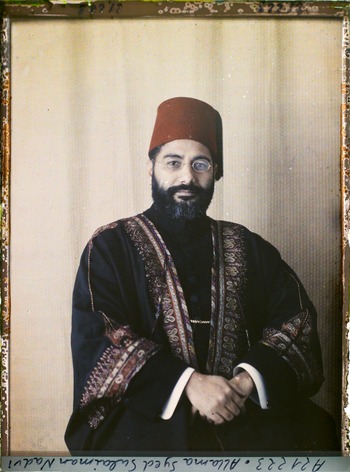
‘Of course, everything will have to give place to the visit to Paris the moment the Turks arrive there for negotiating the peace’, Mohamed Ali (Figure 1) wrote to his older brother, Shaukat Ali (1873–1938), from London in April 1920.Footnote 39 A week later, in another letter to his brother, this time from Paris, Mohamed Ali noted that they would have to make Paris their headquarters.Footnote 40 ‘[W]e realised’, said Mohamed Ali, ‘that Paris was … the political centre for Eastern people’.Footnote 41 The only theologian on the trip was Sulaiman Nadwi (Figure 2), whose purpose on the delegation was to emphasise the doctrinal foundations of its claims and communicate with fellow Muslims.Footnote 42 Nadwi also marvelled over this moment of conjuncture: ‘Paris is now the centre of delegations from all over the world. The Chinese delegation, the Azerbaijani delegation, the Egyptian delegation and who knows how many others are here to demand rights from around the world.’Footnote 43 London, too, was becoming a destination for rights-seeking nations.Footnote 44 But there was a different tone of wonder when Nadwi described the crowding of delegations in Paris, and their growing appreciation of one another. The Moroccans had not known about the fate of Indians; the Indians had not known about the troubles of Chinese Muslims; no one had known about the situation in Malaya, Nigeria, the Philippines, and Madagascar. There were entire nationalities they had seemingly not been aware of, such as Polish Muslims.Footnote 45 Nadwi wrote that the delegation’s ‘eyes were opened’ in Paris to the common plight of Muslims around the world.Footnote 46 Nadwi had worried when he departed India that he would not see the people of the Islamic world for several months, but, to the contrary, he had more opportunities to see them in Europe than anywhere else.Footnote 47
Maulana Muhammad Ali (Mohamed Ali), 20 May 1920, Boulogne. Autochrome by Auguste Léon. A21217, MAK.

Sulaiman Nadvi (Sulaiman Nadwi), 20 May 1920, Boulogne. Autochrome by Auguste Léon. A21223, MAK.

Nadwi’s sense of Islam’s wholeness had already begun to form en route to Europe. At each port of call, including Port Said and Aden, he noted the presence of other Muslims and the opportunities presented to apprise them of their duty and the work of the Khilafat Movement. Everywhere they stopped, they strove to pray at a local mosque with all classes of people.Footnote 48 In Europe, besides London and Paris, some unlikely places appeared to be hubs for Muslims—Territet in Switzerland, which was a stop on the Orient Express route between Paris and Istanbul, was described as a dār al-hijra (place of exile or migration) for Islam, filled as it was with Muslim exiles and refugees.Footnote 49 During a trip to Italy, they found another small community of Muslims in Rome, who organised a candlelit feast in their honour.Footnote 50 In Nadwi’s correspondence with fellow scholars, family members, and friends, which was frequently reprinted in newspapers for wider circulation, he reflected upon the stirring effect of Muslims from so many faraway parts of the world being able to meet and realise their common cause.Footnote 51 It was not just an awareness of collective suffering; there were signs of progress everywhere in the Muslim world.Footnote 52 ‘Young Muslims will create a young Islam—the old walls have fallen, let them fall’, he wrote evocatively on one occasion.Footnote 53
It was during one of these stirring Parisian visits that the delegation made a trip to Boulogne, which was described in letters Mohamed Ali and Nadwi wrote to their correspondents in India. In a letter from the former to Shaukat Ali in May 1920, Kahn was referred to as a philanthropist and the ‘founder of a circle of world travellers’, who had built several artistic houses and gardens on his estate, including a Japanese one.Footnote 54 They had been brought there by the secretary of the Comité National d’Etudes Sociales et Politiques (National Committee for Social and Political Studies).Footnote 55 As far as we know, they did not meet Kahn himself, but we might speculate that the Khilafat delegation’s cause was seen as one of a number of utopian internationalisms washing into Paris at this time, all urging the establishment of a post-war order that would secure a lasting peace.Footnote 56 In one ‘house’, they ‘were shown very exclusive cinema films’ and then ‘were photographed by a special process of colour photography, which is the only one that has hitherto proved successful’.Footnote 57 This was a typical routine—visitors to Boulogne were often taken around the gardens, then to a screening room equipped with projectors where they were shown a series of specially chosen autochromes and films, sometimes combined with newsreel extracts, before being invited to sit for their own portraits. Three portraits were typically produced: one for the sitter to keep and two to be archived.
Mohamed Ali was no stranger to photography. As the editor of two high-profile newspapers in Delhi before the war, he had overseen the deployment of the medium to significant effect. He had himself been photographed several times in connection with pan-Islamic projects. We also know from Nadwi’s letters that the Khilafat group had already been photographed in London, and copies had been sent back to meet demand in India.Footnote 58 Mohamed Ali noted, nevertheless, that successful colour photography was a significant technological departure. He was most impressed by the moving images they were shown of ‘notable scenes of the last war’; his tone suggested both something of the shock of the new and the realisation of the potential for aerial photography to remake the very nature of war.Footnote 59 He was also struck, however, by the images the ‘colour photographer … very kindly’ showed the Indians of ‘the Dewan i Khas and the Pearl Mosque in the Delhi Fort, and also the gardens inside the Fort, and of the Tahj [sic] at noon, in the afternoon, in the gloaming, twilight, and then in moonlight, and the last was a sunset scene of great magnificence’, all taken during the Passet mission to India in 1913–14.Footnote 60 One might imagine that these vibrant, dream-like autochromes of Mughal sites viewed by the Khilafat delegation in Paris, with all the ‘uncanny evidentiary power’ that colour added to photography,Footnote 61 elicited pride in what Muslims had achieved in India. This stands in sharp contrast to the horror that Sayyid Ahmad Khan and his sons experienced when they were shown the first volume of Watson and Kaye’s The People of India on a visit to the India Office in 1869.Footnote 62 The Khilafat delegation was sufficiently captivated by the results of the autochrome method that each member sat in front of the camera themselves in May 1920. Abul Kasem, a scholar from Bengal who joined the delegation on this visit, was photographed alongside the other Indians.Footnote 63
Neither Mohamed Ali nor Sulaiman Nadwi described how the Indians experienced the actual process of photography in Boulogne, but the latter provided a tantalising glimpse when, in one letter, he described this latest invention (ījād) as both entirely modern and a method still in development. Eastern figures or faces (mashriqi suratin) and Eastern clothes (mashriqi libās) were strange and rare (‘ajīb) here, he wrote, so the Indians’ presence was a new instrument (nayā sāmān) for the photographers to display their innovation (jiddat).Footnote 64 Rather than feel removed from this world by a sense of difference, Nadwi understood their presence as providing an opportunity for improvement and thus saw himself and the other Khilafat members as agents in the further refinement of autochrome photography. The camera operator at Boulogne that day, Auguste Léon, was an experienced photographer and a seasoned traveller, having been on several ‘missions’ for the Archives, including one across Europe and the Balkans with Jean Brunhes in 1912–13 that had helped crystallise the latter’s documentary vision.Footnote 65 But Nadwi nevertheless saw himself as a strange and new problem for the camera’s enchanted workings, ascribing the delegation’s members with a co-constitutive power in the making of these images.Footnote 66
The four principal members of the Khilafat delegation appear to have been photographed in broadly similar attire. Mohamed Ali wore a black suit, white shirt, and a dark-striped bow tie. Syud Hossain (Figure 3) was dressed likewise. Muhammad Hayat (Figure 4) was in a slightly more elaborate version of this outfit: a black suit, waistcoat, white shirt, a long black tie, a tie pin, and a pocket square. Only Nadwi was dressed otherwise: he wore an embroidered black abaya, signalling his status as a theologian, over what appears to be a sherwani, or Persian suit. All wore brimless hats—Mohamed Ali and Syud Hossain wore the distinctive white lambswool fezzes of the Indian Khilafat Movement (though the embroidered crescent moon is only visible on the former’s hat); Muhammad Hayat and Nadwi each wore a red fez with a black tassel; Abul Kasem wore a tall, black brimless hat. One might wonder how typical this attire was. Sulaiman Nadwi’s correspondence offers glimpses into this question. On board the ship from Karachi to Aden, he described his style thus: ‘Turkish hat (tarkī topī) instead of turban (‘imāma), pants rather than pyjamas, higher collar. A black suit was necessary for dinner, an Iranian style sherwani, that is to say, a simple sherwani, and black pants, white cuffed shirt.’Footnote 67 In another letter, this time from London, he described his usual attire in Europe: a Turkish cap, a doublet, a shirt over a woollen vest, with stiff white cuffs and collar, a black sherwani hanging down to mid-calf, pants, and black shoes or boots.Footnote 68 By this account, the clothing in which he was photographed in Boulogne was only unusual in terms of the robe he donned over his suit—worn, perhaps, to signal the special nature of this visit. Other sources corroborate that he and the other delegation members wore fezzes regularly: Jean Longuet, the editor of Le Populaire (Paris), noted in a sympathetic interview with the delegation published on the front page of the newspaper in April 1920 that the men were ‘Muslims of very modern spirit … serious under their turbans and fez…’.Footnote 69
‘Hussain Abadwala’ (Syud Hossain), 20 May 1920, Boulogne. Autochrome by Auguste Léon. A21229, MAK.

‘Hassan Muhammad Hayat’, 20 May 1920, Boulogne. Autochrome by Auguste Léon. A21226, MAK.

Nadwi reflected in a subsequent letter on how long and busy the delegation members’ days were, using his mutable dress to signal the break from his usual habits. At home in Azamgarh, he wrote, he would spend all day at a table or in an armchair, dressing only to go out, but in Europe, after dawn prayers, he was forced to sit in his suit and boots all day. A stiff (akrā) man, he lamented, puts on his Azamgarh clothes at two o’clock at night.Footnote 70 Clothing shaped the contours of his identity throughout the day—his Azamgarhi self existed for only a few short hours, while for the bulk of his time, Nadwi’s body was bound in his formal, foreign attire, performing the public function of a Khilafat delegate. The most painful aspect of this new dress for him was its colour. Nadwi supposed that it was because of the engine and the fireplace, which left everything covered in soot, that black dress became common not only in England but in all of Europe.Footnote 71 Nadwi was photographed in his stiffening and severe suit, but the robe he donned drew him closer to his Eastern self. The resulting appearance was that of a bourgeois alim. In a later letter, Nadwi commented on his correspondent’s response to a photo of him (it is unclear which photo)—that he saw in it something of a disguise or deception. A friend in France, Nadwi wrote, had said something similar to him: ‘You look like a caliph in this dress.’ We can infer from this that the clothing Nadwi wore in this photograph rendered him unfamiliar to those who knew him best.
In semiotically oriented analyses, clothing is typically understood to signify the surface or superficial dimension of social relations—clothes-as-objects are a layer of signs and representations beneath which the supposedly authentic subject lies. To conceptualise clothing as ‘sartorial codes’ is to see dress as a site of ideology and literal self-fashioning.Footnote 72 Recent critiques have troubled this distinction, arguing for the integral, coeval relationship between clothing and persons (and objects and subjects more generally). This critique posits that there are no a priori social relations to be revealed by stripping back the meaning of clothing; the ‘material forms constituted and were not just superficial cover for that which they created, in part through their enclosing and giving shape’.Footnote 73 Nadwi’s cursory reflections on his self in ‘Azamgarh’ clothes and his European clothes begin to suggest the constitutive rather than simply representative role of clothing; in other parts of his correspondence, discussed below, he also seems to read the clothing of others as more than simply an index of identity.
Aside from Sulaiman Nadwi’s robe, the members of the Khilafat delegation appeared broadly similar to other figures from various parts of the Muslim world photographed in Boulogne in the years after the First World War. The portraits of Muhammad Hayat, a member of the Indian Khilafat delegation, and Mirza Hussein Khan Alai, an Iranian minister and a member of the 1919 Iranian delegation to the Paris Peace Conference, are particularly illustrative of surface similitude. Hayat (Figure 4), who served as the Khilafat delegation’s secretary and oversaw communication of the group’s news back to India, is pictured, fittingly, holding a rolled-up newspaper, or perhaps one of the Khilafat delegation’s numerous pamphlets, as well as a pair of white gloves. He gazes at the camera, one hand tucked in a pocket. Alai (Figure 5), in virtually identical attire, is photographed with a pince-nez rather than spectacles and gazes away from the camera, seemingly caught unaware as he concentrates upon a piece of paper—perhaps a letter or even a carte de visite—in his hands. It is precisely because these images are so alike in all other regards that the one notable visual difference becomes all the more striking: Hayat’s brilliant red fez.
‘Mirza Hussein Khan’, 10 August 1919, Boulogne. Autochrome by Georges Chavalier. A18569, MAK.

The fez, also known as a tarboosh, would have been, if not a familiar, then at least an instantly recognisable sight in Europe at this time. Thought to originate in North Africa, the distinctive headwear was widely worn across the Ottoman world from the early nineteenth century and thereafter in the wider Muslim world. On his 1869–70 trip to Europe, for instance, Sayyid Ahmad Khan wore the red, brimless hat at a time when the headwear was becoming popular among Muslims in India—a sign of growing awareness of the Ottoman Empire and Caliphate, if not necessarily Turkophilia. Sayyid Ahmad recounts that while in Bombay, en route to Europe, he and his sons stopped to pray at a mosque; they expected to draw some attention but instead saw many people wearing ‘the same Turkish cap like us’. It was instead their dress that marked them out as different, for Sayyid Ahmad wore ‘European boots and trousers, knee-length black coat not very different from the European style except that it buttoned at the neck’.Footnote 74 It was these clothes, not the fez, that led locals to assume that they were visiting Turks.Footnote 75 While European dress could still be deeply divisive in India, as noted by the English writer and sympathetic interlocutor of Islam, Wilfrid Scawen Blunt,Footnote 76 the fez, with its association with an Eastern rather than European modernity, became normative quite quickly. The fez arguably telegraphed a broad, ecumenical Muslim modernism, one embraced by a broader ashraf class that included members of the north Indian ‘ulama.Footnote 77 In the wider Muslim world, even the so-called intellectual progenitor of modern pan-Islamism, Jamal al-Din al-Afghani, who decried followers of Sayyid Ahmad as Westernising ‘naturalists’, appears to have sought access to the effect of this mode of dress. Photographs of al-Afghani from a stay in Paris in 1882-83 indicate he donned a ‘Parisian costume, complete with stiff white collar, necktie, buttoned coat, and fez’ at some point. These images of al-Afghani in what Blunt, who met the former in Paris, described as the ‘Stambouli cut’ were in marked contrast to the now much more familiar images of al-Afghani in ‘Sheykh’s dress’, complete with turban.Footnote 78
By the early twentieth century, the resonances of the fez had subtly shifted. It remained a widely worn item of clothing in the Ottoman world, especially among bureaucrats and officials, but in places such as India, it identified one as a sympathiser with a particular kind of ‘pan-Islamic’ politics associated with the ‘young Muslims’ of north India in particular. Then, in the 1910s, the alternative white Khilafat astrakhan hat, with the more explicit symbol of the crescent and moon, appeared, worn by figures such as Mohamed and Shaukat Ali as part of the uniform of Indian pan-Islamism.Footnote 79 It was not, therefore, necessarily surprising that in 1920, the Indian Khilafat delegation combined their European suits with both red fezzes and Khilafat hats. Still, their diverse choices indicate the particularity of Indian Muslim subjectivities in this period—one might broadly speak of the red fez as representing a connection to a wider world of Muslim modernist politics and the astrakhan as denoting an impulse to Indianise pan-Islamism and thereby place India at the heart of discussions about the future of the Muslim world. Nadwi’s recurring references to the importance of the red fez indicate that his own experience of Europe and his relationships with other Muslims, at least, were likely shaped by his decision to wear it. ‘The Turkish cap has become a means of identification’, he wrote on one such occasion. On another, he noted that ‘the Turkish hat has become the national dress of Islam all over the world. People from Morocco, Algeria, Tunisia, and Egypt wear the hats here.’Footnote 80
Nadwi again allows us to see how clothing could be constitutive of subjectivity. For Indian travellers to London and Paris at the turn of the century, it was chiefly the turban (pagṛī) that, in combination with their countenance and ‘dark visages’, made them a ‘spectacle’ that drew the attention of strangers and especially of women, writes Antoinette Burton.Footnote 81 For Nadwi, it was seemingly his attire alone. In a letter of 9 August 1920, he noted that his red hat (lāl topī) was a ‘wonder of creation’ (ʻajāʼibu-l-maḵẖlūqāt).Footnote 82 ‘In England, wherever I go, I become a spectacle (tamāshā) because I wear a red hat and a sherwani ….’Footnote 83 The encounters prompted by his headwear included one with an English street sweeper who had fought during the war in Mesopotamia and another with a Frenchwoman who had lost her son at Gallipoli.Footnote 84 This latter encounter, in particular, led Nadwi to reflect on the war’s effects on ordinary French people. ‘Everywhere there are mutilated people, missing hands and feet …’, he wrote.Footnote 85 The fez had become an invitation to intimacy from a Frenchwoman, and he and his Algerian companion, who was serving as his translator in this moment, were evidently moved.
The clothing of Europeans also prompted Nadwi to reflect on his relationship with Europe itself. In a particularly acute set of observations, he remarked that he found it difficult in England to distinguish between rich and poor. Their typing girl was a servant, but she wore expensive clothing. ‘You will find nothing less than silk on the feet of a working woman.’Footnote 86 He reflected on their homes, too: the poor, he remarked, lived in houses like those found in Bombay and Calcutta, and the decoration inside these houses surpassed Eastern palaces and mansions. The question was: where did this abundance come from? He speculated that it was from Indian pockets. ‘[O]ur houses are empty, theirs are full.’Footnote 87 He slipped from a consideration of clothing and homes to leisure pursuits. Even the poor in London, he said, could be found queuing for the theatre and other entertainment. Nadwi was surely exaggerating here with regards to the similarity of appearance between classes, but he was doing so not to comment on the existence of a kind of egalitarianism within European societies but rather to highlight the wealth disparity between India and the metropole. At this moment, he can hardly be described as identifying with a global bourgeois aesthetic, comportment, or lifestyle; his and the Khilafat delegation’s material possessions and surroundings, such as they might have been, were nothing compared to the riches of the ordinary subject in London.
While their choice of headwear might have made the Khilafat delegation more visible to Europeans and North African Muslims, it also suggests the limits of a religious and class-based circuit of intelligibility among Indian and other Muslim bourgeoisies. No other delegation in the Archives de la Planète appears to wear them. The fez was experiencing a further reappraisal during this period. In the aftermath of the First World War, Turkish politics was caught between the Ottoman Porte in Istanbul, seeking to preserve its hold over the empire and Caliphate, and the growing power of Turkish nationalists, led by Mustafa Kemal, who, in 1922, succeeded in abolishing the sultanate and establishing a new government in Ankara (Angora). In 1924, the last caliph was exiled, and the institution of the Ottoman Caliphate was abolished. The fez, so long associated with the Ottoman Empire, was marked as a dangerous anachronism and banned under the Hat Law of 1925. European hats were encouraged in its stead, provoking considerable consternation among the ‘ulama, who worried not only that brimmed headwear would interfere with prostrations during prayer but, more broadly, that the move from the fez to the fedora signalled Kemal’s uncompromising secularism.Footnote 88 In 1927, there was a similar promulgation in Iran, where the appeal of an Ottoman pan-Islamism centred on a Sunni Caliphate had never been strong, forbidding turbans and mandating the new, French-style ‘Pahlavi’ hat. In 1920, headwear was already disappearing. The Iranian delegation, which had visited in 1919, wore none, and neither did the members of a Turkish delegation from Ankara who visited the Kahn studio in July 1921, in between the first Conference of London and the signing of the Treaty of Ankara between France and the Grand National Assembly.
As might be expected, there were no complete transformations in fashions, especially among Muslims in Europe, and it would be reductive to suggest that the mere presence of headwear in the Indian photographs and their absence in the portraits of others constitutes meaning in itself. Motadel, commenting on an image of a group of Muslims in Berlin published in the Moslemische Revue in 1929, notes that it is ‘fairly representative of the pictures taken of (mostly male) Muslims in Berlin during the 1920s and 1930s’, for while their attire was characterised by ‘restrained, fine clothing, particularly the black or gray suits usually donned by contemporaneous bourgeois gentlemen’, their headwear was ‘remarkable’ for its mix of styles: European-style brimmed hats, turbans, and fezzes.Footnote 89 The choice of the red fez was nonetheless meaningful for the Khilafat delegation in 1920. Nadwi’s frequent references to it suggest it could be a symbol of mutual recognition among Muslims as well as a distinctive marker in relations between Muslims and Europeans.
The Khilafat delegation’s first trip to Kahn’s studio led to an invitation for Mohamed Ali to return. ‘They are going to take another photograph of myself in Indian costume’, he wrote to his brother. He also planned to give a lecture on this next visit. Conscious, perhaps, of how agreeable such activities might sound to those in India facing mounting political pressure as a result of the Khilafat and Non-Cooperation Movement, Ali added a further note: ‘But do not get the idea that the visit was meant on our side to be one of pleasure alone. All these are meant to have results as definite as one can expect in the circumstances.’Footnote 90 This cryptic statement left it unclear why Mohamed Ali returned in June 1920 for further autochrome portraits, of which there are three in the Archives de la Planète. In these latter portraits, Ali was pictured in a light-coloured, embroidered angarkha (Figure 6). This full-length robe tied at the waist had become courtly attire in the Mughal period and was particularly associated with the north Indian princely state of Awadh, where it was traditionally worn with a contrasting neema between the robe and torso. From the mid-nineteenth century, it was an ‘acceptable outfit for an educated Indian man in public …’.Footnote 91 Ali was also no longer wearing the white Khilafat headwear but a black turban instead.
‘Maulana Muhammad Ali’ (Mohamed Ali), 11 June 1920, Boulogne. Autochrome by Auguste Léon. A21579, MAK.

It seems possible that, despite his intimations to his brother that this was all part of the Khilafat work, Mohamed Ali saw this second trip to Boulogne as an opportunity to step away from the political history – the histoire événementielle – of Paris in 1920 and to instead participate in the Archives de la Planète’s mission to assemble kaleidoscopic fragments of the world at large.Footnote 92 In setting aside the crescent-moon Khilafat headwear of his first outfit, which had, as noted above, become a part of the visual language of Indian pan-Islamism and, indeed, an indelible part of the iconography of Ali himself, he made his association with the Indian Khilafat Movement less, rather than more, visible. Ali’s decision to return to have photographs taken in ‘Indian costume’ after the delegation members had had the opportunity to see something of the studio’s planetary work may be taken as an indication of the broader acts of Muslim self-constitution that transnational travel in this period enabled. It highlights the fact that there was no single Indian Muslim subject rendered visible by photography, no universal bourgeois standard. If Ali consciously sought out his own admission into the archive, he wished to do so as both a representative of the Khilafat Movement and in the distinctive costume of a north Indian Muslim. This doubling might suggest the enactment of a self grounded in national and cultural specificities rather than, or as well as, in the atemporal universalism of pan-Islamism.
Between image and text
Historians share a tendency to read into visual material historical knowledge acquired by other means. Pinney refers to this as the ‘Ginzburg problem’: For Carlo Ginzburg, ‘just as physiognomists’ readings of faces tell us only about the classificatory system that informs the readings (rather than about the relationship between the face and character), so [historians] unwittingly claim to find evidence in the visual that in fact we have discovered elsewhere.’Footnote 93 Pinney notes that when we treat the photograph, or indeed any visual form, as merely representative of an a priori understanding of social relations derived by linguistic means, the historian is ‘unable to catch hold of the ways in which the materiality of representation creates its own force field’.Footnote 94 He notes that much of his own earlier work on photography in India featured this sort of slippage between context and photographic meaning. In a similar vein, one might read religious, and perhaps class-based, tension into the Khilafat portraits—interpreting relatively minor sartorial differences as indicators of profound divergences—because they appear to illustrate a fundamental paradox in the politics of pan-Islamism in this period: that it was simultaneously deepening its reach in particular parts of the world—including India—while also revealing itself to be, at best, an asynchronous, and at worst, an anachronistic, phenomenon in the Muslim world at large. Knowing what we do about the Khilafat delegation’s limited impact in Europe, itself part of a broader historiographical script in which the Khilafat Movement is deemed a failure of Indian Muslims to appreciate the complexities of global Muslim politics in the post-war world, photographs depicting the delegation bedecked in Khilafat hats and red fezzes may seem merely to reinforce a sense of the provincial nature of their pursuit.
No attempt is made here to divorce these images entirely from the context of their production. Pinney’s reminder that images are part of an ‘aesthetic, figural domain’ and thus ‘exist in a temporality that is not necessarily coterminous with more conventional political temporalities’ is nevertheless valuable. The visual is ‘a zone in which new narratives are established that may be quite disjunct from the familiar stories of a nonvisual history’.Footnote 95 In this sense, the Archives de la Planète can be read as a heterotopia in itself—a refracted view of the world as it was.Footnote 96 In tracing an alternative to ‘conventional political temporalities’, we might take our cue from the striking immediacy of the autochrome portraits themselves—their luminous affect—which do not appear to occupy the same historical and cultural space as the Khilafat Movement, so often read as the final phase of a pan-Islamism born of the late Victorian period. This was the view of Gail Minault in her classic study of the Khilafat Movement, which depicted the delegation as a relic of a nineteenth-century petitioning culture. As such, it failed to see beyond its own imperial context. Referring to the delegation’s objections to Arab independence, Minault observed its ‘total misunderstanding of the Arab position’. Because the Indians could only negotiate with the imperial government and fellow Indians on religious terms, ‘it was only natural for them to view the Arab situation in much the same terms’.Footnote 97
Such a reading implies that Indian Muslims had no opportunities to apprise themselves of actual views within the Arab world or, worse still, that they were so wedded to their own outlook that they had no interest in doing so. In fact, during the months spent in Europe in 1920, the Khilafat delegation spent a great deal of time with individuals from all parts of the Muslim world, including those from the Ottoman Empire. Their interactions with other Muslims broadly encompassed organisations and societies operating independently in Europe, as well as members of various groups that had also travelled to Europe to participate in or try to influence the outcome of the peace negotiations.Footnote 98 The Khilafat representatives sought to use these encounters to cultivate mutual understanding and solidarity. The delegation hosted events, including public meetings, to inform Europeans about their cause and draw together Muslims. They also arranged forms of sociality for the latter.Footnote 99 One particularly diverse demographic was the student population in Europe, which included, for instance, Chinese and Malay Muslims.Footnote 100 The delegation was particularly reassured by meetings with ‘French Mussalmans’ from Tunisia, where, as Mohamed Ali wrote, the delegation believed support for the Caliphate was ‘fairly strong’.Footnote 101 For the Indians, the political arguments made by Tunisians against the French Empire seemed to echo their own position in the British Empire.Footnote 102 Nadwi was the only member of the Khilafat group able to speak Arabic fluently. This is perhaps why his letters are particularly rich in details about conversations with Muslims from other parts of the world.Footnote 103 The delegation was, in general, pleased with the outcome of these interactions—Nadwi remarked to one correspondent that, ‘if nothing else has been gained from these delegations, at least the Muslims of different countries have become united.’Footnote 104
While Ali and Nadwi were gratified to be able to speak to so many Muslims from around the world, the delegation was notably concerned about dissension within the Ottoman Empire itself. While Syrians, Hijazis, and Turks might share a thirst for freedom, it seemed impossible for Arabs and Turks to unite around the Caliphate.Footnote 105 Minault is right to stress that the Khilafat Movement thought that the religious argument was, prima facie, the correct argument to use to secure the Ottoman Empire from European predation, but she understates how far the Khilafatists in Europe tried to persuade Arabs of this in person. In London, for instance, the delegation met with Nuri al-Said, the envoy of Faisal ibn al-Hussein (who had been declared King of Syria in March 1920), and a group of Muslim and Christian Arabs to elicit support for the cause of the Caliphate. Mohamed Ali related to his brother after one particular encounter that only a visible display of emotion elicited any sympathy: ‘it really sounds like an insult to a community that produced our great Prophet to say that an Indian’s tears alone were necessary to move him into demonstrating similarly his love for Islam …’.Footnote 106 ‘My general impression’, he wrote, ‘is that any rate the Arabs mean to secure their independence’.Footnote 107 Their surprise at the response of Arab representatives in Europe was no doubt all the greater because of the rapturous reception the delegation had apparently received en route to Europe, including in Port Said, Egypt, where everyone, from children to the very old had eyes ‘filled with tears’.Footnote 108
Nadwi claimed that the Arabs were aware of the world’s opinion of them and felt ashamed.Footnote 109 But he was himself aware that Arab Muslims did not share one opinion on the question of the Caliphate—on another occasion in late summer, just before the signing of the peace treaty by representatives of the Porte, he noted that some Arabs from Iraq and Syria had asked him to write a letter on their behalf to the King of the Hijaz, Sharif Hussein, laying out the issue of the Caliphate and Holy Lands.Footnote 110 The delegation also felt that they made some headway with an Egyptian delegation (wafd) they met in Paris, who ‘assured us that they were heart and soul with the Khilafat, and that they were not publicly demonstrating that, merely because they wanted to avoid giving the least excuse to their enemies to say that the Egyptians did not want their independence’.Footnote 111 Egyptians were a critical potential ally. They, like the Tunisians, shared the colonial condition experienced by Indians; they, too, were in the midst of a movement to wrest themselves free from British control. According to Nadwi, the leader of the Egyptian delegation—the revolutionary nationalist Saad Zaghloul (1857–1927), who demanded the independence of Egypt and Sudan from British rule—apologised to the Khilafat delegation on behalf of all Egyptians for their lack of vocal support for the Khilafat Movement.Footnote 112
The delegation’s impressions and understanding of the ‘Arab’ position were thus complicated at best. Their encounters with various Turkish representatives in Europe were more decidedly negative. They met several Turkish delegations, one led by former Grand Vizier Ahmet Tevfik Pasha (1843–1936) and another sent by Damat Ferid Pasha (1853–1923), Tevfik’s successor as Grand Vizier. When the Allied peace terms were announced in April 1920, soon after the Indian delegation had arrived in Europe, the Turkish delegation led by Tevfik was reportedly as ‘terribly agitated’ as the Indians were.Footnote 113 When the Khilafat representatives met with Tevfik, however, they were unsure what to make of his disposition—it seemed that ‘any honest Turk’ would have to reject terms that only the likes of ‘Kemal Pasha [Mustafa Kemal] and his modern prototypes’ could agree to.Footnote 114 It seemed possible that the Turks would be willing to sign the ‘terrible treaty’, which contained ‘definite clauses … which lay the axe at the root of the Khilafat’.Footnote 115 They were even more suspicious of Ferid, who seemed ‘thoroughly subservient to the British’, a view ‘reflected in the view of some of the [Turkish] Plenipotentiaries who have come to Paris’.Footnote 116 Here, the semiotics of the fez came under particular scrutiny—the representatives of the Porte who travelled to Paris did wear the distinctive headwear, but, according to Nadwi, it was a disguise for their actual, pro-British politics. The fez had become a simulacrum of Turkishness, open to deceit.Footnote 117
After meeting with Ahmet Rıza (1858–1930), a former Young Turk who had spent several years in exile in Paris, but who had by this time returned to Turkey to take over leadership of the Senate and joined Mustafa Kemal’s party, they were even more disconsolate. ‘I am sorry to say’, wrote Mohamed Ali to his brother, ‘it took us two solid hours to make him understand that Turkey’s safety lay not in merely doing her duty by herself, but in doing her duty to Islam’. ‘[N]ationalism is almost everything even with the best of Turks … Europe, which is so anxious to turn them out bag and baggage, even from her southern extremity, has taught them to neglect the consciousness of their obligation to Islam and the Khilafat.’Footnote 118 ‘[L]ong talks’ with delegates from the Hijaz furthered their unease about the lure of nationalism: ‘although they complain of Turkish nationalism, they themselves are reverting to the nationalism which turned the Khilafat into an Arab dynasty and monarchy in the days of the Omayyides [sic]’.Footnote 119 The Indians were caught between two camps, neither of which seemed to value the independence of the Caliphate. They were frustrated with the Turks for showing signs that they would be willing to renounce their jurisdiction over non-Turkish Muslims while also indignant that Arabs were seeking to settle with European powers; the Hijaz, they said, was not the Arabs’ to give away.Footnote 120 It was their view that both Arabs and the Turks, however much they might despise one another, were ‘in the clutches of others’.Footnote 121
The spectre of nationalism haunted these encounters. Even the Egyptian delegates, whom they found generally reassuring, appeared ‘inclined to imitate Europe just when Europe wants to punish them for this sincerest form of flattery’.Footnote 122 The Khilafat delegation also came into conflict with the Iranians in Paris on this same issue. On one occasion, the Khilafat delegation met with two Iranians in Paris: the writer and statesman Mohammad Ali Foroughi (1877–1942), also known as Zoka-ol-Molk, and the scholar Mirza Mohammad Khan Qazvini (1877-1949), who had been living in Europe since 1904. Foroughi was part of the Iranian delegation to the Paris Peace Conference in 1919, which was photographed in Boulogne on 10 August 1919. It seems likely he was in Paris again in May 1920 as part of the Iranian Government’s demand that the League of Nations Council meet to discuss action to prevent a rumoured Russian advance on Iran.Footnote 123 The Indians discussed with the Iranians their alarm over a recent piece by Sayyid Hassan Taqizadeh (1878–1970) in the Berlin-based journal Kaveh.Footnote 124 Nadwi had been gifted a copy of this journal from the renowned Persian scholar E.G. Browne during a trip to Cambridge.Footnote 125 The Indians did not like how the journal spoke about Europe as if it were the cure for all diseases.Footnote 126 The specific article they took issue with claimed Iranians desired ‘to adopt everything belonging to Europe except its language’.Footnote 127 Foroughi and Qazvini told them that this was not true, that there could be no question of abjuring Islam. The Indians nevertheless produced for the Iranians, over a subsequent dinner, copies of the work of Muhammad Iqbal (1877–1938)—the cherished poet of Indian pan-Islamism—‘particularly pointing out the passages in which he had addressed an appeal to Persia and the Persians’. It seems likely that the works in question were either Asrar-i Khudi (Secrets of the Self), first published in Persian in 1915, or Rumuz-i-Bekhudi (Secrets of Selflessness), first published in Persian in 1919. ‘I hope they will now understand what we are all working for in India’, wrote Mohamed Ali, rather naively, to his brother.Footnote 128 Iqbal was unlikely to have helped bring about a common understanding. As Javed Majeed has noted of Iqbal’s Urdu and Persian poetry, they were beset with two sets of tensions: first, ‘between territorial nationalism and the global imaginings of religious identity’ and secondly, ‘between the homogenizing imperatives of nationalism and the subjectivity of individual selfhood’.Footnote 129 In Asrar-i Khudi, Iqbal emphasized the divinity of the self and its potential for spiritual connection to God and the Universe; in Rumuz-i-Bekhudi, he explored the relationship between the self and the community. Iqbal argued for the importance of communal life, but not one separate from individual subjectivity.
It is difficult to know if the Iranians were moved. The question of Iran’s regeneration had become urgent following the ruinous impact of the First World War. The delegation’s ongoing attempts in Paris to demand the return of lost territory and argue for Iran’s sovereignty were part of a period marked by ‘acceptance that reform was vital in order to survive’.Footnote 130 Among political elites, even those formally in government, there was disagreement about the level of foreign intervention compatible with progress and modernisation: while the ‘triumvirate’, led by Prime Minister Vosuq al-Dowleh, entered into secret negotiations with the British—leading to the controversial 1919 Anglo-Persian Agreement—the Iranian delegation sent to Paris in 1919 represented a form of nationalism that sought independence from the British and complete sovereignty. But while al-Dowleh had undermined the efforts of the Iranian delegation in Paris, modernity and progress were the leitmotifs of much Iranian political thought in this period, as they had been more broadly since the Constitutional Revolution of 1905–11. In 1920, figures such as Taqizadeh were also troubled by the worsening international situation around Iran.Footnote 131 The Khilafat delegation was certainly critical of the Anglo-Persian Agreement.Footnote 132 But the more avowedly nationalist position, represented by figures such as Foroughi, seemed to them no better. The Indians believed that the problem was not merely imperial encroachment but a lack of religious consciousness. Muslims everywhere had realised the current situation: Tunisians were declaring their participation in French socialism, Egyptians were demanding independence, and India was the centre of hope, but Iran was in the same position India was a half-century ago.Footnote 133
Basing their view of Iran’s present condition on one copy of a journal published by a group of exilic Iranians in Berlin was surely unwise. Figures such as Taqizadeh and publications from Berlin were no doubt significant in the development of Iranian political discourse in the 1910s and 1920s, but the Indians’ reaction to the text is perhaps indicative of a general paucity of informed discussion between Indians and Iranians.Footnote 134 As Timothy Nunan has argued, Taqizadeh’s thought, in particular, shifted from something like ‘Muslim world politics’ before the war to a more Eurocentric internationalism during it.Footnote 135 This shift underscores the fact that there were multiple challenges to a shared ‘Muslim’ subjectivity in this period, not least of which was the fact that local intellectual traditions were marked by their own internal contestations.
The Indians met again with Tevfik and his son Ismail Hakki of the Turkish delegation in Versailles in early June—Mohamed Ali’s correspondence suggested a kind of easy sociality, comprising dinner followed by strawberries and cream, before all retired to the Turkish delegation’s apartment for conversation.Footnote 136 But they still feared that Ferid was anxious to negotiate with the Allies and that he might turn up in Paris to surrender the Caliphate at any point.Footnote 137 When he did arrive in Paris some weeks later, the Indians had a fraught meeting with him—they could not move this man to tears and were left ‘fairly disgusted’ by some of his remarks, which seemed calculated to sow further discord between representatives of the Porte and Turkish nationalists, and between Turks and Indians.Footnote 138 By July, when it was clear that the representatives of the Porte would accept the peace terms, the Khilafat delegation wrote to the Sultan-Caliph to note that the latter had virtually abdicated the Caliphate.Footnote 139 Privately, they acknowledged that their mission to Europe had been a failure, with no tangible impact on the peace terms that were eventually codified in the Treaty of Sèvres (1920); it was now left to ‘our people’ in India to salvage what they could of the situation.Footnote 140
Conclusion
The Khilafat portraits housed in the Archives de la Planète do not fit neatly into either the expansive scholarship on colonial photography or the more recent, growing literature on photography in the Muslim world, which has, among other things, focused on portraiture as the instantiation or enactment of class-based subjectivities. The form, appearance, and very existence of the Khilafat portraits attest to the delegation’s access to a kind of bourgeois experience while in Europe, but they tell us little, in and of themselves, about either bourgeois subjectivity in a relational sense or how that bourgeois subjectivity interacted with religious subjectivity. Indeed, viewing the portraits in the Archives de la Planète alongside an analysis of the Khilafat delegation’s encounters with others from the so-called ‘Muslim world’ in Paris in 1920 may require us to question the limits of collective experience among ‘global bourgeoisies’ in this historical moment altogether. All these men moved through the same hotels, meeting rooms, lecture halls, and, often, photography studios. This shared vocabulary—literal and visual—is reflected in the surface sameness of the portraits of the individuals captured in Boulogne, where the dress and composure of individual subjects largely obscured national and religious backgrounds. However, textual sources indicate that if there was mutual intelligibility in social intercourse, relations became fraught—even undone—when Islam and the Caliphate were brought into the conversation. The Indians felt that they were advocating for a universal cause; the co-religionists they met in Europe seemed instead to be focused on projects of national self-determination or modernisation above all else. This was an existential challenge that bore profoundly on their understanding of themselves as individuals belonging to a corporate community.
While stressing the need to consider Muslim subjectivity in a relational sense, this article has also sought to suggest that each Khilafat representative represents an individual moment in the visual archive—none of them is reducible to an ‘ethnographic’ or colonial ‘type’, but none of them exists merely to visualise an Indian Muslim bourgeoisie at large either. Using Mohamed Ali’s multiple portraits and Sulaiman Nadwi’s reflections on dress—his own and others’—has enabled an exploration of the specificities of their experience as individuals and in relation to others. This has highlighted the challenge of writing about collective identities while relying on the accounts of individual, often idiosyncratic personalities. Furthermore, while it may be self-evident that local subjectivities were always enmeshed with visions of world-making, this study underscores the fact that no universalist, however ardent, could possess a truly global subjectivity.
Prior histories of the Khilafat Movement have suggested it was Indian Muslims who were most out of sync with the dominant mood of the moment—it was their Caliphate-centric politics that seemed contrary to the political subjectivity of the post-First World War moment. But returning to an India that was in the midst of the Non-Cooperation Movement, Mohamed Ali recast the delegation’s European encounters into a less divisive lesson: the message of Muslims outside of India, he told his audiences, was that Indian Muslims must save their own country first because it was their armies that were enslaving others, and it was for the sake of preserving access to India that the British sought to control Egypt, Afghanistan, and elsewhere. And the reverse was also true: ‘If you want to make India free you must preserve the freedom of Afghanistan; you must also preserve the freedom of the Persians, the Arabs and the Turks.’Footnote 141 Nadwi expressed similar sentiments in his letters from Europe, suggesting that securing the independence of India was an Islamic duty.Footnote 142 In one of his last missives, he reflected thus:
After six months of experience in Europe and exchanging ideas with the Muslim world, I see that there are three ways of working for us. Islamic unity, Eastern unity, and national unity … My belief now is that the freedom of India is the freedom of the world. If you want to liberate the ka’ba, liberate India.Footnote 143
In a sense, the conflict between an expansive pan-Islamism and a narrow patriotism had been inverted—or at least refracted—through the global encounter: it was national liberation movements that would eventually liberate the world at large. Engagement with fellow Muslims might not have achieved what they had hoped it would do, but it arguably helped the Khilafat activists articulate the relationship between Islam and the cause of Indian independence all the more clearly. Having experienced the limits of mutual intelligibility among Muslims worldwide, they returned home more aware of the complex subjective position of Indian Muslims. One might read Mohamed Ali and Nadwi’s words as an apology, an attempt to cast in a positive light what had been an ultimately disappointing venture to Europe in 1920. However, the Khilafat representatives had also shown their commitment to the cause of Indian freedom throughout their time in Europe. If their travels had provided opportunities to discuss their views with other Muslims, they had also provided ample opportunities for collective experiences with their compatriots.Footnote 144 It was, perhaps ironically, in their full-throated embrace of the national problem that the Khilafat representatives truly became part of the ‘global’ bourgeoisie.
The idea of the Muslim world, such as it was, might thus be read as a heterotopia, a concept Foucault explained through the visual analogy of a mirror. When the Indian pan-Islamists looked into the Muslim world, much like a mirror, it made the place that they occupied ‘at once absolutely real, connected with all the space that surround[ed] it’, and ‘absolutely unreal’, since in order to be perceived, it had to pass through a virtual plane.Footnote 145 The Muslim world was similarly a plane that reflected the relationship between a series of sites; it allowed the Khilafat delegation to perceive India as a place that existed in relation to—and perhaps in juxtaposition with—a set of other places. Ironically, perhaps, having gazed into the mirror, the Indians came away with the sense that India formed a vitally important position in this configuration. This is not to argue for the inevitability of the nation-state as a container of identity—the tension between religion and nation undoubtedly remained significant for Indian Muslims in the interwar period. Instead, it is an argument for seeing the universalisms that animated the global in the early twentieth century as functioning not as utopias, but rather as real spaces where the world as it actually existed could be viewed in a different light. Through these projects, universalists gained a new perspective on their place in the world.
By the time Barīd-i Farang, a compilation of Nadwi’s letters from Europe, was published in the early 1950s, many of the leading lights of the Khilafat Movement had died. Nadwi could reflect on the fact that in the early twentieth century, at a time when the horizons of Islam had seemed most dim, the Khilafat advocates had a vision of the future that had been realised. India had become free; Iran, Iraq, Syria, Egypt, and Turkey were on new paths of development; states such as Pakistan and Indonesia had emerged. The struggle for independence was continuing in Morocco, Algeria, and Tunisia. All of this, he felt, should instil courage and patience in the hearts of his Muslim contemporaries.Footnote 146 From the vantage point of the 1950s, seeing the sweep of decolonisation movements around him, Nadwi could reasonably imagine that his trip to Europe some three decades earlier had been the beginning of a period in which individual nationalities configured within the Muslim world would act independently to fulfil the greater promise of pan-Islamism.
Acknowledgements
An earlier version of this article was presented at a workshop at the University of Amsterdam. I am grateful to the organisers and participants for their insights, as well as to the peer reviewers and editors at the Journal of Global History, for their thoughtful feedback. I also extend my thanks to the collections staff at the Musée départemental Albert-Kahn in Paris for their assistance.
Financial support
None to declare.
Competing interests
The author declares none.
Faridah Zaman is an Associate Professor in the History of Britain and the World at the University of Oxford, and a Fellow in History at Somerville College, Oxford.



 Open access

