


The Rey Auditory Verbal Learning Test (AVLT) (Rey, Reference Rey1958; Taylor, Reference Taylor1959) is a common neuropsychological measure of verbal learning and memory and enjoys a long history of use that, despite its common eponym, has its origins in the late 19th century with the Swiss psychologist Édouard Claparède (Boake, Reference Boake2000). Claparède developed the Test de mémoire des mots (Test of Memory for Words) as a single trial memory task containing 15 words. Claparède’s memory stimuli formed the basis of Rey’s multi-trial verbal learning test (Boake, Reference Boake2000), although several words from Claparède’s/Rey’s list were modified in the translation from French to English (bell for belt, moon for sun, nose for moustache).
In North America, the AVLT is less frequently used than the California Verbal Learning Test (CVLT) in clinical settings to assess verbal learning and memory (Rabin et al., Reference Rabin, Paolillo and Barr2016), and there are clear psychometric and standardization advantages associated with the CVLT. Because the AVLT was developed as an instrument to research memory rather than created as a clinical memory test and remains in the public domain, the AVLT has never been subjected to contemporary standardization practices. Consequently, for clinicians using the AVLT in their practices and for research protocols using the AVLT for sample characterization, there are multiple datasets to choose from for normative characterization (Mitrushina et al., Reference Mitrushina, Boone, Razani and D’Elia2005). However, the normative sampling and subject description of these normative datasets do not meet the formal standards required from commercial test publishers such as standardization and characterization of validity, reliability, and errors of measurement.
Until recently, the two main sources for AVLT normative values were the Schmidt AVLT meta-norms (aggregate adult sample of nearly 2000 participants; Schmidt, Reference Schmidt1996) and the Mayo Clinic’s Older Americans Normative Studies (MOANS; derived from 530 cognitively normal participants living in Olmstead County, Minnesota; Ivnik et al., Reference Ivnik, Malec, Smith, Tangalos, Petersen, Kikmen and Kurland1992). In a major improvement for AVLT normative characterization, the Mayo Normative Studies (MNS) provides demographically characterized normative information from a large sample of 4400+ cognitively healthy participants living in the Rochester, Minnesota area (Stricker et al., Reference Stricker, Christianson, Lundt, Alden, Machulda, Fields, Kremers, Jack, Knopman, Mielke and Petersen2021). The MNS cohort demonstrated, in addition to age and education effects, robust sex performance differences across multiple AVLT measures, highlighting the importance of demographic sex correction to accurately characterize AVLT performance. While group differences for sex are incorporated into CVLT normative tables, most existing AVLT norms have not characterized test performance by sex despite this being recognized as an important normative consideration (Gale et al., Reference Gale, Baxter, Connor, Herring and Comer2007). Thus, there are clear risks of different clinical inferences based upon the choice of normative datasets and incorporation of appropriate demographic corrections.
Another important factor influencing AVLT interpretation is the reliability of the obtained memory scores. Consideration of confidence intervals (CIs), however, is often neglected during test score interpretation. Nunnally and Bernstein (Reference Nunnally and Bernstein1994) note “it is important to recognize that any obtained score is only one in a probable range of scores whose size is inversely related to the test’s reliability” (p. 291). Lezak (1994) also observes that “few persons unschooled in statistics understand measurement error; they do not realize that two different numbers need not necessarily stand for different quantities but may be chance variations in the measurement of the same quantity” (p. 132). Consideration of CIs can influence whether specific diagnostic thresholds have been met, and score uncertainty has been incorporated into the Fifth edition of the Diagnostic and Statistical Manual of Mental Disorders (DSM-V; American Psychiatric Association, 2013) in which an error of 5 IQ points was explicitly included in defining the upper range of cognitive or intellectual disability to reflect measurement error.
We report AVLT performance from 663 cognitively healthy volunteers aged 50 years or older who were participants in the Emory Healthy Brain Study (EHBS; Goetz et al., Reference Goetz, Hanfelt, John, Bergquist, Loring, Quyyumi, Clifford, Vaccarino, Goldstein, Johnson Nd, Kuerston, Marcus, Levey and Lah2019). AVLT data were analyzed to: (1) replicate the magnitude of sex differences reported in the MNS sample; and (2) establish the generalizability of MNS demographic normative correction to cognitively healthy participants from a major metropolitan southeastern city in the United States. Geographic region is one potential factor contributing to different clinical inferences from independent normative samples (Martin et al., Reference Martin, Schroeder and Baade2017). As secondary goals, we (1) examine item-level patterns to explore whether specific words are disproportionate contributors to any age-, sex-, or education-related effects; (2) characterize performance levels for individual targets and foils during recognition memory testing; (3) examine the recognition performance benefit compared to delayed free recall across age groups; and (4) derive AVLT CIs from MNS reliability statistics to facilitate clinical performance characterization.
Methods
Participants
Participants were subjects in the EHBS and were tested between April 2016 and December 2020. The EHBS is designed as a preclinical Alzheimer disease (AD) biomarker discovery project intended to capture early conversion from normal age-related cognitive performance. The EHBS cohort is a large community-based prospectively enrolled cohort of cognitively healthy participants between 50–75 years of age (Goetz et al., Reference Goetz, Hanfelt, John, Bergquist, Loring, Quyyumi, Clifford, Vaccarino, Goldstein, Johnson Nd, Kuerston, Marcus, Levey and Lah2019). Although the study protocol limited enrollment of subjects up to age 75 years, during the initial study ramp up, several subjects over age 75 were allowed to enroll (n = 5) and their scores are included in this report. Participants were self-declared cognitively normal without functional limitation, had normal Montreal Cognitive Assessment (MoCA) scores (Nasreddine et al., Reference Nasreddine, Phillips, Chertkow, Rossetti, Lacritz, Cullum and Weiner2012), and were without neurological diagnoses suggesting prodromal or current degenerative disease. All patients spoke fluent English. This project was approved by the Emory University institutional review board in accordance with the Declaration of Helsinki and all participants provided written informed consent.
There were 663 participants with MoCA scores that were 24/30 or higher, and included 463 females and 200 males. Participants with MoCA scores less than 24/30 were excluded (n = 72). The average education level for females was 16.6 years (SD = 2.0) and for males was 16.9 years (SD = 2.0). The average age for females was 62.6 years (SD = 6.6) and 63.7 (SD = 6.9) for males. There were 20 participants who identified as Hispanic and 643 who identified as non-Hispanic. The largest group of participants identified as White (n = 584) followed by Black (n = 69), American Indian or Alaska Native (n = 3), Asian (n = 3), or Mixed (n = 1), with 3 participants choosing not to disclose. There were 400 White and 54 Black females and 184 White and 15 Black male participants.
Auditory Verbal Learning Test
The AVLT is a verbal learning and memory task in which the individual is asked to learn a list of 15 semantically unrelated words (List A) over five learning trials. After the fifth trial, a new list of 15 words is presented for a single learning trial (List B), followed by free recall of the original 15 items (List A). Delayed free recall (∼ 30 min) for the original List A items is obtained followed by a recognition trial. The recognition memory task was developed by Ivnik et al. (Reference Ivnik, Malec, Smith, Tangalos, Petersen, Kikmen and Kurland1992) (Schmidt Form AB), which itself is a modification of Rey’s paragraph recognition format presented by Lezak (Reference Lezak1976). Thirty words consisting of the 15 List A targets and 15 foils are presented as a two-column list, and the participant indicates words considered to be from the List A stimulus set. The interval prior to AVLT delayed memory testing included Rey-Osterrieth Complex Figure, Digit Span, Trail Making Test, and Judgment of Line Orientation.
Analysis
Group differences for age, sex, and education were established based upon one-way ANOVAs for each group separately for primary AVLT measures. We did not impose any experiment-wise alpha adjustment associated with multiple comparisons since in the context of the present report, we considered Type II errors more serious than Type I errors (Perneger, Reference Perneger1998). Effect sizes are reported using eta squared (η 2 ); by convention, η 2 ≥ .01 is considered a small effect, η 2 ≥ .06 is considered a medium effect, and η 2 ≥ .14 is considered a large effect.
Additional analyses were performed for recognition items including both target words and foils, with statistical demographic performance differences established using chi-squared analyses. The recognition performance benefit compared to delayed free recall was analyzed using age as the group factor with a one-way within subject ANOVA, with no correction for false positive intrusion errors.
Confidence interval construction
Although AVLT reliabilities were reported for ∼80% of the MNS subjects (n = 3,555), formal CIs were not reported (Stricker et al., Reference Stricker, Christianson, Lundt, Alden, Machulda, Fields, Kremers, Jack, Knopman, Mielke and Petersen2021). Using the MNS test-retest reliabilities, we calculate CIs to facilitate clinical interpretation. We do not use the standard error of measurement as the basis for constructing CIs around test scores since it provides inaccurate estimates of the confidence or prediction intervals, especially with lower reliabilities (Dudeck, Reference Dudek1979; Nunnally & Bernstein, Reference Nunnally and Bernstein1994). CIs are estimated for primary AVLT score using MNS test-retest Pearson reliabilities (Stricker et al., Reference Stricker, Christianson, Lundt, Alden, Machulda, Fields, Kremers, Jack, Knopman, Mielke and Petersen2021, Table 3) and MNS raw score Standard Deviations (Stricker et al., Reference Stricker, Christianson, Lundt, Alden, Machulda, Fields, Kremers, Jack, Knopman, Mielke and Petersen2021, Supplemental Table 1) to calculate SE
Estimation and SE
Prediction for raw scores and T scores, respectively. SE
Estimation is calculated using this formula [σ
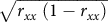 $$\sqrt {{{r}}_{xx}\;\left( {1 - {{r}}_{xx}} \right)} $$
] and SE
Prediction is calculated using this formula [σ
$$\sqrt {{{r}}_{xx}\;\left( {1 - {{r}}_{xx}} \right)} $$
] and SE
Prediction is calculated using this formula [σ
 $$\sqrt {1 - \left( {{{r}}_{xx}*{{r}}_{xx}} \right)} $$
], where σ is the standard deviation and rxx
is the reliability of the test score (Bowden & Finch, Reference Bowden, Finch and Bowden2017). The CI is a matter of professional judgment, some clinicians preferring a 90% CI, others a 95% CI, and others some other value for the CI; here we use z = 1.64 for 90% CI generation.
$$\sqrt {1 - \left( {{{r}}_{xx}*{{r}}_{xx}} \right)} $$
], where σ is the standard deviation and rxx
is the reliability of the test score (Bowden & Finch, Reference Bowden, Finch and Bowden2017). The CI is a matter of professional judgment, some clinicians preferring a 90% CI, others a 95% CI, and others some other value for the CI; here we use z = 1.64 for 90% CI generation.
Raw performance levels and demographically corrected MNS T scores across age groups. Standard deviations for both scores are in parentheses

Notes: All group differences statistically significant the p < .001 level or better with exception of List B and Recognition Hits (both p = .006), False Positives (p = .009), Recognition false Positives (NS), and Recognition/Discrimination (p = .004).
By convention, η 2 ≥ .01 is considered a small effect, η 2 ≥ .06 is considered a medium effect, and η 2 ≥ .14 is considered a large effect.
Results
Primary analyses
Age effects
To characterize age-related influences on raw AVLT performance, participants were grouped into six 5-year age bands beginning with 50–54. One-way ANOVAs were performed on raw AVLT scores including Sum of Trials 1–5, 3-Trial Sum, List B Recall, Immediate List A Recall, Delayed List A Recall, and Recognition variables including Correct Targets, False Positives, and Recognition/Discrimination. While 3-Trial Sum, reflecting the trial sum across the initial 3 AVLT learning trials, is not a common AVLT score, the 3-Trial Sum is included in the MNS regression equations. Characterizing the 3-Trial Sum provides interpretative guidance for the 3-trial AVLT short-form, which is a supplemental NIH Cognitive Toolbox measure (National Institutes of Health & Northwestern University, 2017). Except for False Positive Recognition errors, there were significant age effects across all ALVT measures (Table 1). These findings confirm the well-established age-decline across multiple memory measures and provide reassurance regarding the representativeness of our EHBS sample. MNS normative performance adjusting for age-related changes is also presented in Table 1. In contrast to raw scores, no age-related differences were observed when comparing MNS demographically corrected T scores.
Sex differences
One-way ANOVAs with sex as the grouping factor were performed separately on AVLT measures including Sum of Trials 1–5, 3-Trial Sum, List B Recall, Immediate List A Recall, Delayed List A Recall, and Recognition including Correct Targets, False Positives, and Recognition/Discrimination (Targets minus False Positives). All AVLT scores showed statistically significant group sex differences at the p < .001 levels of statistical significance or better except for False Positives, which was statistically significant but with a lower probability level (p = .009). Effect sizes ranged from η 2 = .01 (False Positive Recognition Errors) to η 2 = .07 (Trial 1–5 Sum) (see Table 2).
Raw performance levels and demographically corrected MNS T scores for females and males. Standard deviations for both scores are in parentheses

Notes: All group differences with raw scores are statistically significant at the p < .001 level or better with exception of False Positives, which is statistically significant at p = .009.
By convention, η 2 ≥ .01 is considered a small effect, η 2 ≥ .06 is considered a medium effect, and η 2 ≥ .14 is considered a large effect.
We next investigated sample similarity to the MNS norms by calculating demographically corrected T scores for the primary AVLT measures separately for each sex. If the MNS normative sample is generalizable across geographic region, then demonstrated sex differences present with raw performance levels should no longer be observed, and average values for both men and women across all AVLT measures following transformation should approach T = 50 and a SD = 10. After full MNS demographic correction (age, sex, and education), most sex differences were no longer present, with the only remaining statistically significant sex differences being Trial 1–5 Sum (p = .036) and List B recall (p = .046) (see Table 2). Although Trial 1–5 and List B recall differences remain statistically significant, the statistical significance results from the relatively large sample sizes associated with small magnitude effects of η 2 = 0.007 and η 2 = 0.003, respectively.
Education differences
To characterize education-related influences on raw AVLT performance, participants were classified into groups (12 years, 13–15 years, 16–17 years, and 18+ years; see Table 3). Significant group differences were present for Trial 1–5 Sum (p = .004), 3-Trial Sum (p = .009), List B (p = .004), and False Positive Recognition Hits (p = .045). Application of MNS norms eliminated any education group performance differences for available measures (Trial 1–5 Sum [p = .901], 3-Trial Sum [p = .635], and List B [p = .441]).
Raw performance levels and demographically corrected MNS T scores across education groups. Standard deviations for both scores are in parentheses

Notes: Significant group differences were present for Trial 1–5 Sum (p = .004), 3-Trial Sum (p = .009), List B (p = .004), and False Positive Recognition Hits (p = .045).
By convention, η 2 ≥ .01 is considered a small effect, η 2 ≥ .06 is considered a medium effect, and η 2 ≥ .14 is considered a large effect.
Secondary analyses
Item-level learning
To investigate the source of sex differences on AVLT summary scores, we explored whether sex group differences were present at the individual word level by examining the 5-trial sums for each word individually. Statistically significant sex differences were present for all words except for farmer, house, and river, with the largest effect sizes present for garden (η 2 = 0.06) and moon (η 2 = 0.04, see Figure 1, Table 4).
Individual item performance levels across learning trials by sex.

Item-level effect sizes for age, sex, and education differences for individual AVLT stimulus words

Notes: By convention, η 2 ≥ .01 is considered a small effect, η 2 ≥ .06 is considered a medium effect, and η 2 ≥ .14 is considered a large effect.
We performed a similar series of ANOVAs for age group analyzing the 5-trial sums for each word individually. Statistically significant age effects were present for all words with the exception of hat and river ranging in level of statistical significance from p = .043 (house) to p = .0001 (farmer); effect sizes for all List A words are presented in Table 4.
Item-level recognition
Correct individual item recognition for targets ranged from 78.3% (house) to 98.5% (farmer) (Table 5). Incorrect identification of foils ranged from 0% (kerchief, broomstick) to 46.2% (face). The high frequency of incorrectly choosing face results from the MoCA being administered prior to the AVLT, where face is one of the 5 MoCA memory stimuli. The next most selected foil was teacher at 22.4% followed by gun (12.3%).
Item-level recognition identification for targets and foils (F = 463, M = 200)

Age group differences for individual items using chi-squared analyses were present for curtain (p = .028) and parent (p = .023). There were no age group differences in foil identification or with other target words.
Sex differences for individual item recognition were examined using chi-squared analyses. Significant sex recognition effects included teacher (p = .04), moon (p = .0001), color (p = .01), coffee (p = .015), hat (p = .0001), turkey (p = .0002), nose (p = .003), bell (p = .003), garden (p = .002), and parent (p = .037). There were no significant sex differences for any foil.
Education differences were explored after combining the two groups with less than a college education into a single group due to small cell sizes associated in both high school and less than college education groups. For items with all cell sizes greater than 5 in each cell, group differences were present for nose (p = .016) and face (=.044), both of which were associated with more incorrect recognitions with the low education group.
Recognition memory benefit
Because the performance benefit of recognition testing compared to delayed free recall is frequently considered an indication of memory retrieval inefficiency, we examined the recognition benefit compared to delayed free recall (Recognition correct – Delay Free Recall) as a function of age. We made no correction for false positive (commission) errors; 92.7% of the sample made 2 or fewer intrusion errors. The sex x age group interaction was not statistically significant, and therefore we report performances with sexes combined. The performance benefit across age demonstrated a medium effect size (η 2 = 0.066) ranging from 2.7 words (SD = 2.3) in the 50–54 age group to 4.7 words (SD = 2.7) in the 70–74-year-old age group. Performance for each age group is presented in Table 6.
Recognition benefit (standard deviation) across age groups

Notes: By convention, η 2 ≥ .01 is considered a small effect, η 2 ≥ .06 is considered a medium effect, and η 2 ≥ .14 is considered a large effect.
Confidence intervals
MNS test-retest reliability coefficients derived from slightly over 80% of the full MNS normative sample with follow-up testing (M = 16.7 months, R = 8.1–37.3) were used to calculate AVLT CIs (Table 7). Also shown are CIs derived from the standard error of prediction (SE Prediction ) for change scores associated with repeated testing. The respective CI is centered on the predicted true score during the initial assessment for both the single assessment and interval change score (see Bowden & Finch, Reference Bowden, Finch and Bowden2017). Note that the prediction interval (or CI) derived from the standard error of prediction (SE Prediction ) is a variant of the formula for predicting the range of scores at retest using “reliable change” methods (Hinton-Bayre & Kwapil, Reference Hinton-Bayre, Kwapil and Bowden2017). For both single assessment and characterization of follow-up change scores, the 90% CIs are large and typically exceed 1 SD for single scores and 2 SDs for interval change scores.
Confidence intervals estimated for primary AVLT scores using both the SE Estimation and SE Prediction for raw scores and T scores, respectively. Note that confidence intervals should be centered on the predicted true score (see text for details)

a MNS test-retest Pearson reliabilities (Stricker et al., Reference Stricker, Christianson, Lundt, Alden, Machulda, Fields, Kremers, Jack, Knopman, Mielke and Petersen2021, Table 3).
b MNS raw score Standard Deviations (Stricker et al., Reference Stricker, Christianson, Lundt, Alden, Machulda, Fields, Kremers, Jack, Knopman, Mielke and Petersen2021, Supplemental Table 1).
Discussion
These findings confirm AVLT sex differences reported by Stricker et al. (Reference Stricker, Christianson, Lundt, Alden, Machulda, Fields, Kremers, Jack, Knopman, Mielke and Petersen2021) which, by extension, demonstrates how different clinical inferences may be made based solely on the normative database selected to characterize performance. Although AVLT sex differences have previously been described (Gale et al., Reference Gale, Baxter, Connor, Herring and Comer2007), common AVLT normative tables do not demographically correct for sex. The failure of other datasets to correct for sex provides prima facie evidence of risk of different clinical inference across various normative approaches even in the absence of direct formal statistical performance contrasts. However, Stricker et al. described 3.1% of females and 13.0% of males being characterized as having low test performance on 30-min recall using MOANS (ss < 7) with no differences when fully adjusted using MNS based upon T < 40 (female = 13.8%; male = 13.7%; Supplemental Table 4). Application of the full MNS demographic correction in the EHBS cohort adjusted for the sex differences across most measures, and the small statistically significant sex differences that remained were associated with effect sizes that are considered small, thus demonstrating generalizability of the MNS regression norms to a different geographic region of the United States.
A similar pattern was present when examining AVLT scores across age, with the MNS demographic adjustment yielding demographically corrected T scores near the idealized value of T = 50 with small effect sizes that did not differ statistically across groups. The robustness of the demographic MNS normative regression equations in adjusting for demographic differences observed with raw scores provides strong support for their clinical application. It is noteworthy that although our EHBS sample includes participants with relatively high educational levels, the average primary AVLT T scores remain close to T = 50 reflecting appropriate MNS demographic adjustment. The utility of demographically corrected MNS scores has been demonstrated in improved amnestic mild cognitive impairment (aMCI) identification, with failure to make appropriate sex-based performance correction leading to aMCI diagnosis associated with a 20% diagnostic error rate (Sundermann et al., Reference Sundermann, Maki, Biegon, Lipton, Mielke, Machulda and Bondi2019).
Confidence interval application
CIs associated with an obtained score help minimize clinical judgment errors that may arise from over-interpretation of chance fluctuations, although CIs are often neglected in test score interpretation. CIs help determine whether an observed score is different from a population parameter (e.g., 1.5 standard deviations below the mean criterion for suspected cognitive impairment), or used to test whether a score at retest clearly falls above or below the score obtained at a prior assessment. Innovative approaches to establishing CIs have relied on bootstrapping approaches from large datasets (i.e., 10,000+) to estimate percentile precision at lower percentile levels (O’Connell et al., Reference O’Connell, Kadlec, Griffith, Maimon, Wolfson, Taler, Simard, Tuokko, Voll, Kirkland and Raina2021). This approach demonstrated the superiority of different age-based regression models for predicting 5th percentile performance based on sex and education level as characterized by measurement invariance of different models, but revealing variability in the methods employed to adjust for demographic covariates. This hybrid approach to normative performance generation at specific percentile thresholds has an advantage since it is specifically designed to minimize measurement bias at cut scores commonly used to infer abnormal cognitive ability. However, one limitation of the approach described by O’Connell and colleagues is that it does not incorporate retest reliability estimates, so may consequently underestimate regression to the mean effects. Further comparisons of alternative approaches are needed.
Although test-retest reliabilities are typically included in formal testing manuals, they often are calculated from short time intervals (e.g., CVLT-II retest interval Mdn = 21 days, R = 9–41; Delis et al., Reference Delis, Kramer, Kaplan and Ober2000). Further, except for global measures of cognitive abilities (e.g., WAIS-IV), reliabilities are typically not incorporated into CIs despite their importance for valid test inferences (Bowden & Finch, Reference Bowden, Finch and Bowden2017; Franzen, Reference Franzen2000; Nunnally & Bernstein, Reference Nunnally and Bernstein1994). CIs derived from MNS test-retest reliability coefficients are particularly valuable since they reflect relatively long follow-up intervals (M = 16.7 months), minimizing carry over learning/memory effects from using the same stimuli that inflate test-retest reliability estimates.
The appropriate midpoint anchor for CIs is not the observed score, but rather the predicted true score. The predicted true score reflects the influence of regression to the mean upon retest, when the retest score is likely to be closer to the population mean. Thus, the predicted true score will always fall between the observed score and the population mean (Bowden & Finch, Reference Bowden, Finch and Bowden2017; Nunnally & Bernstein, Reference Nunnally and Bernstein1994). The value of the predicted true score is determined by the score reliability using the following formula: predicted true score = (observed score * reliability) + ([population mean * (1-reliability]). Thus, with an approximate reliability of .8 for Trial 1–5 Sum (Table 8), an observed T score of 40 will be associated with a predicted true T score of 42 (i.e., [40 * .8] + [50 * .2], or [32 + 10]). Rather than reporting the score and 90% CI as T = 40 (90% CI 33–47), the appropriate band of uncertainty around the score is more accurately reported as T = 40 (90% CI 35–49). Table 7 contains predicted true scores and associated CIs for a range of AVLT Trial 1–5 T values often used to infer atypically low AVLT learning performance. Lower reliabilities result in bigger adjustments from observed score to predicted true score (see Bowden & Finch, Reference Bowden, Finch and Bowden2017).
Confidence intervals estimated for 4 AVLT T score thresholds representing for trial 1–5 sum. Note that for obtained T = 25, the lower CI limit does not practically extend lower than T = 20

The classification of amnestic Mild Cognitive Impairment (aMCI) (or mild neurocognitive disorder) is often based upon memory performance that is at least 1.5 SD below the population mean. Consequently, scores that are within 1.5 SD of the mean, but which are associated with a CI that includes the −1.5 SD/T = 35 threshold may not be interpreted as excluding aMCI. Conversely, an observed score that is below the −1.5 SD/T = 35 can only be interpreted as indicating aMCI with 90% confidence if the associated 90% CI does not include the −1.5 SD/T = 35 threshold score. As seen in Table 8, a T = 40 which is typically interpreted as reflecting low average performance (16th percentile) includes the −1.5 SD/T = 35 threshold in its CI and is consistent with aMCI given an appropriate clinical context and supporting history suggesting memory decline. Alternatively, a score of T = 30 corresponding to a 2nd percentile performance contains T scores up to T = 41 in its CI, demonstrating that a score this low on AVLT may be consistent with normal ability. Failure to use CIs that use the predicted true score as the appropriate midpoint for the CI will increase the risk of diagnostic error since scores needed to infer impairment occur at the lower end of the distribution in which regression to the mean associated with performance improvement upon retesting is more likely than obtaining a lower score (see Bowden & Finch, Reference Bowden, Finch and Bowden2017).
Recognition
Examination of AVLT recognition provides information to potentially guide future test modifications. The most frequent incorrect item selected was face, and although participants are instructed to identify only items from the AVLT word list, face is one of the five memory items from the MoCA. The frequency of choosing this foil is disproportionately high reflecting source memory confusion and would not be expected when the AVLT is administered without prior MoCA stimulus exposure. Although we have not altered the EHBS assessment protocol, we have changed face on our AVLT recognition form to finger for our clinical use because the MoCA is included in our telehealth assessment protocols (Hewitt & Loring, Reference Hewitt and Loring2020). The next most common foils selected as a target are teacher (22.4%) and gun (12.3%). We speculate that the high frequency of teacher identification is related to the presence of school as a target item. The high frequency of gun selection relates not only to source memory confusion since it is a List B word, but there may be additional influences of it being an emotionally charged item that may contribute to its attractiveness as a distractor, and which may be expected to have different saliency in different cultures or environments. There are multiple recognition word lists provided by Schmidt (Reference Schmidt1996) from which to choose, many of which explicitly test recognition for both List A and List B words with versions that also contain foils that are semantically related to the List A targets.
There were two recognition foils never identified as targets – kerchief and broomstick. These words appear antiquated, are not part of the contemporary vernacular in North America, and likely are not viewed as attractive distractors since they are colloquially distinct from other targets. While kerchief may be more common in other cultures, similar words such as handkerchief or bandana may be better foils for recognition testing, realizing that both target words and distractors will likely vary in their selection/saliency based upon cultural influences. We are not aware of any rules of thumb to create foil items for recognition memory testing, but as an initial approach, the likelihood of foil selection in cognitively healthy participants should probably be modest (e.g., ≤ 5%).
Characterization of the performance of individual items is a novel aspect of this report, although future studies should benefit from applying more advanced approaches including differential item functioning. Few neuropsychological measures have been subjected to measurement invariance or differential item function analyses; however, the presence of differential item functioning within a given scale can result in different clinically relevant thresholds across groups. For example, both sociodemographic factors and primary language have been demonstrated to exert strong effects of task performance (e.g., Jones, Reference Jones2006; Yang et al., Reference Yang, Tommet and Jones2009) such that geographic region and education may be most relevant to characterize with differential item functioning.
The primary limitation of this report is its restricted range for both age and education. The MNS sample included subjects ranging from 30–91 years with education levels ranging from 8–20 years (Stricker et al., Reference Stricker, Christianson, Lundt, Alden, Machulda, Fields, Kremers, Jack, Knopman, Mielke and Petersen2021). The number of MNS participants with less than a high school education cannot be determined, although the MNS sample included 28.4% with education categorized as between 8–12 years while there were no subjects in this validation sample who had not completed high school at a minimum. Thus, this report does not provide empirical evidence to support MNS application outside of these ranges. While a linear relationship with memory change for younger ages than those included in this report can be expected in a healthy population, it is more likely that there is a nonlinear relationship between education and memory performance at lower education levels (Lövdén et al., Reference Lövdén, Fratiglioni, Glymour, Lindenberger and Tucker-Drob2020) and application of normative MNS to subjects with low education should be interpreted with appropriate caution.
Despite shortcomings of being a nonproprietary verbal memory measure without formal standardization, many of which are addressed by the MNS normative project, the AVLT remains a popular test of verbal learning and memory. For example, the AVLT was selected as a Common Data Element for verbal memory assessment by the National Institute of Neurological Disorders and Stroke for funded epilepsy studies due to its greater sensitivity than the CVLT to verbal memory impairment associated with left temporal lobe seizure onset (Loring et al., Reference Loring, Lowenstein, Barbaro, Fureman, Odenkirchen, Jacobs, Austin, Dlugos, French, Gaillard, Hermann, Hesdorffer, Roper, Van Cott, Grinnon and Stout2011). This increased sensitivity was hypothesized to be related to the AVLT’s use of semantically unrelated words. Since the CVLT stimulus items are semantically related, patients may use this relationship for self-cueing during recall, thereby partially compensating for disease related memory inefficiencies (Loring et al., Reference Loring, Strauss, Hermann, Barr, Perrine, Trenerry, Chelune, Westerveld, Lee, Meador and Bowden2008). The AVLT is also a common memory measure for longitudinal research studies in aging and dementia such as the Alzheimer’s Disease Neuroimaging Initiative (Mueller et al., Reference Mueller, Weiner, Thal, Petersen, Jack, Jagust, Trojanowski, Toga and Beckett2005) and the Advance Cognitive Training for Independent and Vital Elderly (Tennstedt & Unverzagt, Reference Tennstedt and Unverzagt2013). The AVLT’s popularity is also demonstrated by its modification for use in multiple languages including Spanish (Ponton et al., Reference Pontón, Satz, Herrera, Ortiz, Urrutia, Young, D’Elia, Furst and Namerow1996), Portuguese (Malloy-Diniz et al., Reference Malloy-Diniz, Lasmar, Gazinelli Lde, Fuentes and Salgado2007), German (Helmstaedter et al., Reference Helmstaedter, Lendt and Lux2001), Czech (Bezdicek et al., Reference Bezdicek, Stepankova, Moták, Axelrod, Woodard, Preiss, Nikolai, Růžička and Poreh2014), Russian (Melikyan et al., Reference Melikyan, Puente and Agranovich2020) as well as Rey’s original French word list (Sziklas & Jones-Gotman, Reference Sziklas and Jones-Gotman2008) to name but a few.
This is the first study we are aware of to characterize performance improvement associated with recognition testing compared to delayed free recall in a cognitively healthy cohort. In clinical practice, a large performance benefit is often interpreted as evidence of retrieval inefficiency, although this series demonstrates that the recognition benefit after age 65 averages 5 words or more. This age effect is not surprising, but demonstrates that relatively large recognition performance benefit is common in normal aging and does not, by itself, suggest the presence of disease-related retrieval inefficiency in similarly aged patients (e.g., retrieval deficit hypothesis with Parkinson disease, see Flowers et al., Reference Flowers, Pearce and Pearce1984; but also see Whittington et al., Reference Whittington, Podd and Kan2000).
In conclusion, this report confirms a strong sex effect across multiple AVLT measures in addition to age and education, but also demonstrates the overall accuracy of MNS normative data to correct for these demographic differences, at least for the age and education ranges examined. Further support for MNS use in performance characterization is present by its ability to adjust age-related performance differences to overall performance levels near the expected value of T = 50. It is a testament to both Claparède’s and Rey’s thoughtfulness in developing a technique to measure memory that the AVLT remains an important verbal memory test in the 21st century.
Acknowledgements
These findings were presented at the 2022 Annual Meeting of the International Neuropsychological Society.
Funding statement
This study was supported by Emory Healthy Brain Study R01 AG070937 awarded to James J. Lah.
Conflicts of interest
None.


 Open access

