





Introduction
In Spain, over 310 000 non-European workers are hired each year to perform agricultural work(Reference Soldi and Cavallini1). Despite being in Europe, a first-hand necessary workforce(Reference Marie-Laure2), seasonal migrant farmworkers (SMFW) have been identified as a vulnerable group who experience health inequalities(Reference Briones-Vozmediano and González-González3), high economic precariousness(Reference Rye and Scott4) and prevalence of up to 87 % in food insecurity in high-income countries(Reference Al-Bazz, Béland and Lane5). The FAO defines food insecurity as a lack of consistent access to sufficient, safe and nutritious food that secures a healthy life(6). Food insecurity is a multifactorial phenomenon not only related to adequate caloric intake but also dependent on cultural acceptance of food acquisition in a socially acceptable manner(Reference Weiser, Palar, Hatcher and Ivers7) and sensitive to changes in dietary choices(Reference Bivoltsis, Trapp and Knuiman8).
In Europe, recent reports have noted that the most disadvantaged SMFW often lack access to the necessary housing facilities for preparing safe food and ensuring sanitation(Reference López-Sala and Molinero-Gerbeau9–Reference Rodríguez-Guerrero, Pérez-Urdiales and Escrig-Piñol11). Structural barriers such as poor working conditions and insufficient economic resources(Reference Schroeder and Smaldone12) can limit access to housing with adequate infrastructure for food acquisition, preparation and storage, which could lead to changes in dietary patterns (DP) and food insecurity(Reference López-Sala and Molinero-Gerbeau9,Reference Martínez, Brons and Wertheim-Heck13) .
DP includes all the total compounds of the quantities, proportions, variety or combination of foods, drinks and nutrients in the diet and the frequency with which they are habitually consumed(Reference Ćatović14). Evidence also indicates that dietary intakes vary by origin and cultural background, including ethnicity and religion, especially among migrants from the African continent(Reference Berggreen-Clausen, Pha and Alvesson15,Reference Headey, Ecker and Comstock16) . In this context, in Mediterranean countries such as Italy and Spain, it has also been reported that SMFW experience exclusion from social protection resources and food assistance, which can modify their DP(17–Reference Corrado and Caruso19) and put them at risk of hunger(Reference Matias, Stoecklin-Marois and Tancredi20).
In Spain, there is variability in the origin and sex of SMFW. West African and North African men constitute the primary workforce in the northern and southern regions, whereas in southern provinces such as Huelva, North African women are prominently represented in the workforce through recruitment programmes such as GECCO(Reference Corrado and Caruso19,Reference González21) . Additionally, in Northern regions such as Lleida and La Rioja, some SMFW follow an internal seasonal calendar of agricultural campaigns, which leads them to move between different agricultural enclaves(Reference González21). This itinerant dynamic positions these workers as an invisible, hard-to-reach population that faces multiple inequalities, with repercussions for their food security(Reference Briones-Vozmediano and González-González3,Reference Ruiz-Ramírez, Castillo-Rojas-Marcos and Molinero-Gerbeau22) . Nevertheless, research on the direct measurement of food security, socio-economic factors and DP among SMFW from the African continent in Spain remains scarce(Reference Martínez, Brons and Wertheim-Heck13,Reference Rodríguez-Guerrero, Mateos and Pérez-Urdiales18,Reference Egbe23,Reference Mansour, Liamputtong and Arora24) . This knowledge gap is particularly concerning, given the Spanish agricultural sector’s heavy dependence on those workers, highlighting an urgent need to maintain a healthy workforce(Reference Molinero-Gerbeau25). Therefore, this study aims to examine the DP of SMFW in Spain and their relationship to key socio-economic factors, including food insecurity.
Methods
Study design and population
This multicentre cross-sectional study is part of a broader project that analyses the influence of living and working conditions on the health of SMFW(Reference Briones-Vozmediano, Andrés-Cabello and Escrig-Piñol26). Since SMFW are a hard-to-reach population due to high mobility, difficulty in establishing a census-based sampling, and, in some cases, reluctance to participate related to precarious administrative or legal status(Reference González Rodríguez, Garreta i Bochaca and Llevot Calvet27). This study follows an exploratory descriptive design, using validated dietary assessment tools to quantitatively characterise the DP of SMFW in Spain(Reference Briones-Vozmediano, Andrés-Cabello and Escrig-Piñol26).
Data collection
Data collection for this study took place from June to September 2022 at work sites and temporary accommodations in four provinces: two in the north of Spain (Lleida and La Rioja) and two in the south (Almeria and Huelva), characterised by the presence of shantytowns and temporary settlements(Reference Briones-Vozmediano, Andrés-Cabello and Escrig-Piñol26). Recruitment was carried out using the non-probability sampling technique now known as ‘snowball sampling’(Reference Faugier and Sargeant28,Reference Lorenzo Ortega, Sonego and Pulido29) . The inclusion criteria for being a participant were as follows: (1) To be an active male or female SMFW at the time of the survey or within the last year, that is, working in some or all of the following activities outdoors: harvesting, processing, storing and topping, (2) to be a national of a country from the African continent, (3) to agree to participate in the study by verbally accepting informed consent. The exclusion criteria were as follows: (1) to not understand the language of the survey: Spanish, English or French, (2) to not have answered more than 20 % of the items in the survey, (3) to have more than two unanswered key questions: Sociodemographic characteristics and food insecurity indicators. The study initially included 623 participants from twenty-one countries of the African continent (Supplementary material 1). Fourteen participants were excluded due to missing responses to key questions, such as not reporting participant sex, country of origin, eating less due to a lack of money and receiving food aid, and seventy-two were incomplete for the logistic analysis (Figure 1).
Flowchart showing study participants.

Sociodemographic variables
A single survey of forty-six items based on the 2017 Spanish National Health Survey(30) and the 2019 Spanish Living Conditions Survey(31) collected information regarding sociodemographic data such as province, age, country of origin, education level, length of residence in Spain, civil/married status and legal status. Economic information was collected regarding the housing type, the condition of the housing and financial hardship. Country of origin was dichotomised into two African regions: (1) North Africa and (2) Western, Central, East and South Africa. A principal component analysis was run from these items to create a socio-economic status (SES) index(Reference Islam, Kabir and Nisha32). Principal component analysis results were grouped into a weighted SES quintile variable.
Outcome variable
The outcome of DP was defined according to the recommendations of the Spanish Society of Community Nutrition (SENC) to assess the gold standard for the frequency of food groups across diverse DP(Reference Aranceta-Bartrina, Partearroyo and López-Sobaler33). Thus, we evaluated the food frequency of SMFW using a FFQ based on the Spanish National Health Survey(30). Answers were categorised as ‘Never/rarely’, ‘At least once a week’ and ‘More than three times a week’ in each food group. Based on this information, we tested the SENC recommendations across all food groups and constructed an ordinal outcome(Reference Aranceta-Bartrina, Partearroyo and López-Sobaler33). A cut-off point was determined by frequency within groups, based on previous evidence(Reference Cubas de Basterrechea, González Antón and de la Vega-Hazas Pérez34). For example, among the food groups recommended at each main meal, vegetables were set at 2–3 servings/day and fruits at 3–4 servings/day. Among the daily varied food groups, fish, low-fat meat, pulses, nuts and eggs were set at 1–3 servings/day, and dairy at 2–3 servings/day. For more information, see Appendix 2.
The DP defined according to the SENC recommendations was categorised into ‘Adherence to dietary guidelines’, which included seven to ten food groups conforming to SENC guidelines, and ‘Below dietary guidelines’, which included zero to six food groups following the same criteria. Highly processed foods, such as pastries and sweet beverages, were evaluated separately and categorised as ‘Above SENC recommendations’, indicating excessive consumption, or ‘Adherence to SENC recommendations’, reflecting compliance with the established guidelines for these specific food groups.
Indicators of food insecurity were measured using the variables ‘Receiving food aid from an institution or NGO’ from the 2019 Spanish Living Conditions Survey(31) and ‘skipping meals for economic reasons’ adapted from the FAO Food Insecurity Experience Scale(Reference Nord, Cafiero and Viviani35), and responses for both variables were dichotomised separately for analysis in: EATLESS: Eating less food due economic/saving money: Yes/No; and Receiving Food aid help: Yes/No.
Statistical analyses
Descriptive analysis was disaggregated by gender (men and women). Frequency and percentages were used to describe the characteristics of the participants. Pearson’s chi-squared test was used to assess the association between DP diversity and food-related and SES categorical variables.
Four multiple logistics models were used to assess the strength of the relationship between several explanatory variables simultaneously and the outcome variable. OR and CI (95 %) were reported. Backward-elimination procedures were performed until a P-value of <0·05 was used to denote significant statistical associations. The variance inflation factor was used to test for multicollinearity. Missing imputation was carried out using a logistic regression method when appropriate for the sensitivity analysis. A Monte–Carlo error estimation test based on 20 imputations showing less than 10 % of the se ensures the statistical reproducibility of our results(Reference Islam, Kabir and Nisha32). Data analysis was carried out using Stata V13(Reference Islam, Kabir and Nisha32).
Results
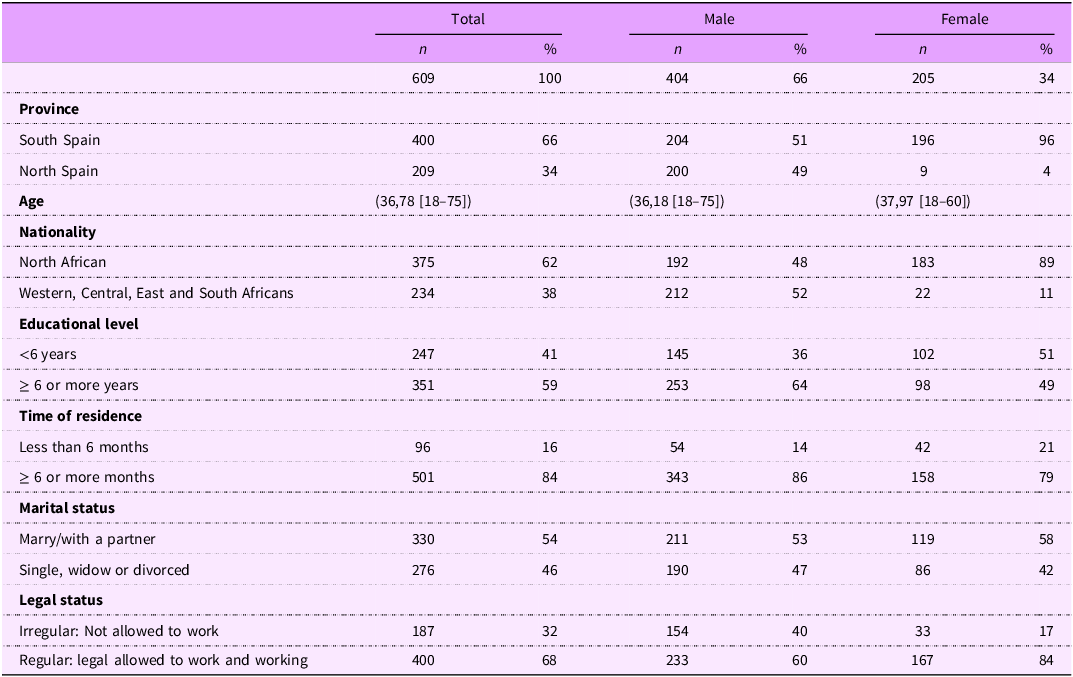
A total of 66 % of the participants were male. Regarding the province of working, 96 % of the female group were in the South Spain category. 51 % of the females reported having less than 6 years of schooling. 54 % of participants were married/in a partner. 84 % had resided in Spain for six or more months, and 68 % reported a regular legal status, higher among females (Table 1).
Sociodemographic variables

Analysis of DP showed that less than 40 % of the population consumed seven or more food groups in accordance with dietary guidelines. Furthermore, 42 % of males in our sample showed greater adherence to dietary guidelines, whereas 66 % of females did not meet the recommended guidelines. For specific information, see Appendix 2. Nevertheless, under 25 % of all the male and female SMFW have eight or more food groups that adhere to SENC guidelines, as Figure 2 reveals.
Total number of food groups following the Spanish Society of Community Nutrition recommendation consumed by seasonal migrant farmworkers.

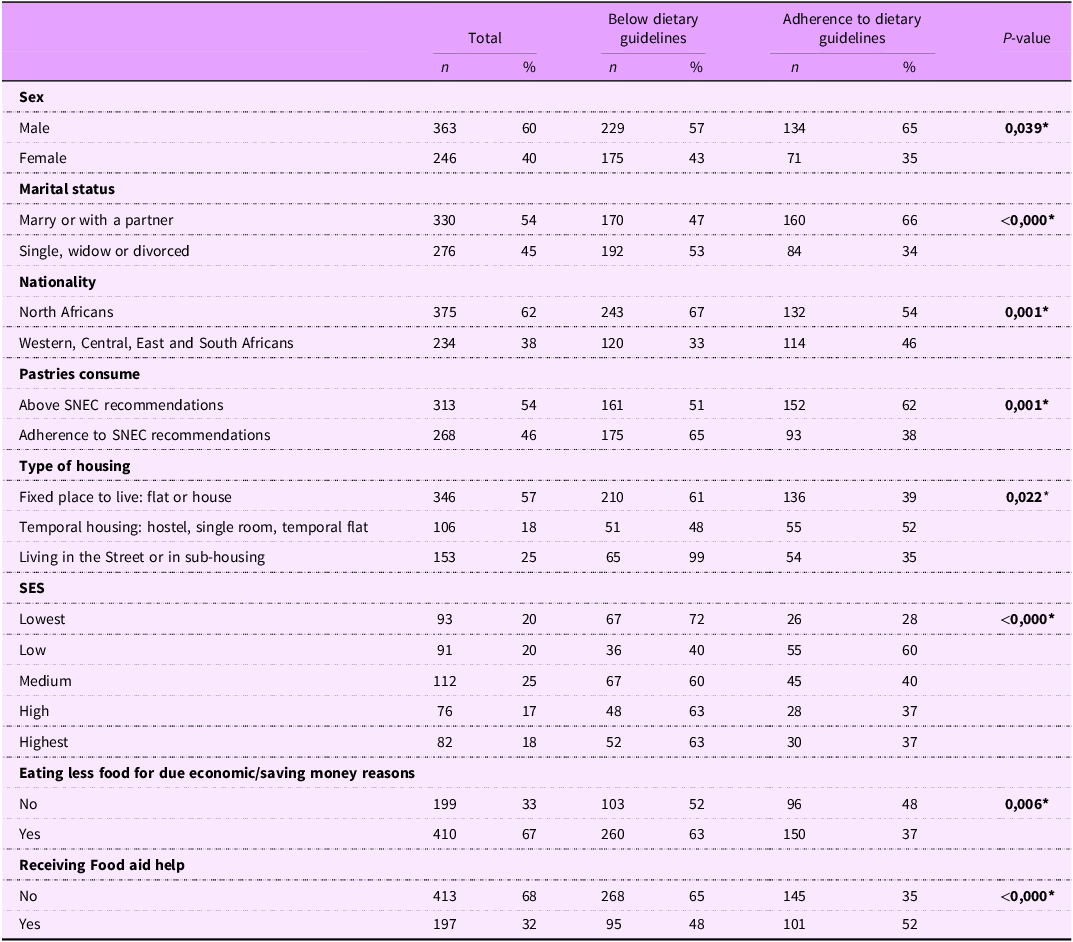
Table 2 highlights key factors associated with increased consumption of food groups among SMFW. The number of food groups consumed varies according to socio-demographic characteristics. Men consumed more food groups than women [P = 0·039]. Workers who were married or had a partner consumed more food groups than those who were single, widowed or divorced [P ≤ 0·000]. North African workers consumed more food groups than Western, Central, East and South African Africans [P = 0·001].
Food patron according to Spanish Society of Community Nutrition recommendations

*P-value: ≤0.05; **P-value: ≤ 0.01.
According to socio-economic factors, the greater consumption of food groups with adherence to dietary guidelines was found in those SMFW residing in temporary housing (52 %), followed by those who lived in a fixed place, such as a flat or a house (39 %) (P = 0·022). SMFW classified into the lowest SES quintile declared more food groups consumed, whereas all other SES categories reported values below 40 % [P = 0·001]. Economic constraints also played a significant role: 48 % of those who did not skip meals for financial reasons or to save money reported consuming more food groups [P = 0·006], as did 52 % of SMFW who received food aid [P ≤ 0·000].
Figure 3 presents the association between the dependent variables and the primary outcome. The effect of our statistical model on certain socio-economic and food insecurity variables remained consistent. SMFW living in the northern provinces of Spain (La Rioja and Lleida) [OR = 2·75] and those who were married or had a partner [OR = 1·80] had higher odds of consuming more food groups with adherence to dietary guidelines. Additionally, belonging to a low SES [OR = 2·45] was associated with greater adherence to dietary guidelines across more food groups than in the lowest, high and highest categories. Regarding food insecurity factors, consuming pastries above SENC recommendations [OR = 2·08], not reducing food intake due to economic or financial constraints [OR = 1·86] and receiving food aid [OR = 2·30] were significantly associated with consuming a greater number of food groups with adherence to dietary guidelines among SMFW.
Association between sociodemographic, socio-economic and food security factors and more diverse diet in seasonal migrant farmworkers.

Discussion
Food studies on SMFW in Spain remain an open field for exploration. The DP observed in our study indicates that 40 % of SMFW in our sample adhered to SENC’s dietary guidelines to achieve nutritional diversity. SMFW who presented certain sociodemographic factors, such as working in a northern province of Spain, being married, having a partner and having a low SES, were associated with a greater number of food groups consumed with adherence to dietary guidelines. Finally, SMFW who received food aid were also associated with a more varied consumption of food groups with adherence to dietary guidelines.
Our study showed that most SMFW face significant challenges in adhering to dietary guidelines recommended by the SENC. Fewer than half of the participants achieved the dietary threshold of seven or more food groups, which is considered adherence to dietary guidelines. Marital status emerged as a positive factor influencing dietary diversity, particularly among married or partnered workers. These findings align with recent evidence suggesting that marital status promotes significant dietary diversity and higher consumption of fibre-rich plant-based DP in Mediterranean countries(Reference Kouiti, Ortega-Rico and Arrebola36).
When adjusting for SES, the variable nationality of origin failed to demonstrate a statistically significant effect on increased dietary diversity, although the results were in the same direction. However, Western, Central, East and South African countries had a higher OR of achieving dietary diversity than North Africans. This finding is consistent with the existing literature highlighting how cultural differences(Reference Rodríguez-Guerrero, Mateos and Pérez-Urdiales18) and food accessibility(Reference Headey, Ecker and Comstock16) can hinder the adoption of DP following the SENC guidelines. For instance, North Africans who adhere to traditional DP practices limit changes to their DP due to cultural preferences and traditional preservation(Reference El Rhazi, Garcia-Larsen, Nejjari, Preedy and Watson37). In contrast, workers in Western, Central, East and South African countries might benefit from access to a broader diversity of food, possibly facilitated by social networks that influence their dietary practices, as long as they receive that support(Reference Berggreen-Clausen, Pha and Alvesson15).
Establishing a clear relationship between DP and the role of household equipment across different types of accommodations presents significant challenges. Evidence from Germany(Reference Fiałkowska and Matuszczyk38), Finland(Reference Alho and Helander39) and Spain(Reference López-Sala and Molinero-Gerbeau9) indicates that agricultural seasonal migrant workers frequently reside in substandard, isolated accommodations, often lacking adequate facilities for food preparation. In contrast, the existing literature suggests that housing equipment and cooking facilities play a crucial role in shaping health outcomes(Reference Al-Bazz, Béland and Lane5). To address this limitation, we develop an SES measure that accounts for both housing conditions and the presence of cooking facilities, providing a potentially more sensitive indicator of the living environments experienced by SMFW.
Our analysis found a positive association between dietary diversity and SES. Specifically, individuals in the ‘low’ SES group had twice the odds of achieving a diverse diet than those in higher SES categories. Contextual factors, including the living and working conditions of SMFW in Spain, can help explain these results. In regions such as the South Spanish provinces of Almeria and Huelva, SMFW often reside in shantytowns that fail to meet basic European housing standards(Reference Allande-Cussó, García-Iglesias and Miranda-Plata10). While these accommodations are typically precarious, some may have minimal facilities for basic food preparation(Reference Garcés-Mascareñas and Güell40). Additionally, many workers migrate between different Spanish regions, following itinerant employment patterns tied to harvest schedules. They often live in temporary accommodations, such as shelters, shantytowns or single rooms, where cooking facilities are unavailable(Reference Martínez, Brons and Wertheim-Heck13,Reference Rodríguez-Guerrero, Mateos and Pérez-Urdiales18) . Previous studies from the project AGROMISALUD indicated that, in Spain, food catering services and charitable food services often provide at least one daily meal to SMFW(Reference Rodríguez-Guerrero, Mateos and Pérez-Urdiales18). In the results, workers in the ‘Low’ SES category may rely more on these food catering services, which generally adhere to a DP closer to the proposed SENC guidelines(Reference Cubas de Basterrechea, González Antón and de la Vega-Hazas Pérez34). This does not necessarily indicate a poorer diet for SMFW with a higher SES. Still, it could reflect adherence to less acculturated or more traditional DP, which differs from the SENC guidelines(Reference Yau, Adams and White41).
Food security emerged as one of the most significant factors in greater compliance with the SENC guidelines in SMFW. These findings align with previous research indicating that access to food aid can reduce skipping meals due to economic constraints(Reference Capodistrias, Szulecka and Corciolani42) and improve dietary diversity, especially for those materially vulnerable(Reference Berggreen-Clausen, Pha and Alvesson15). Additionally, a study of immigrant farmworkers in Spain found that longer periods of residence in the country increased familiarity with available dietary resources, thereby enhancing dietary diversity(Reference Martínez, Brons and Wertheim-Heck13). However, while food banks and food aid programmes could increase diet diversity, they do not necessarily guarantee access to healthier food options. Instead, it could lead to increased consumption of highly energetic ultra-processed food(Reference Oldroyd, Eskandari and Pratt43). This evidence may explain why, in our final model, consumption of pastries exceeding the SENC recommendation was associated with greater dietary diversity. Although SENC DP advocates minimal pastry consumption, the current dietary composition in Spain suggests a contrasting reality(Reference Blas, Garrido and Unver44). The widespread availability and distribution of products such as pastries in food aid programmes or food banks may reinforce cultural preferences, particularly among North Africans(Reference El Rhazi, Garcia-Larsen, Nejjari, Preedy and Watson37), and contribute to the westernisation of DP among Western, Central, East and South African populations(Reference Egbe23).
This study is not exempt from limitations. Firstly, our study used the Spanish Life Conditions Survey to present the various types of accommodation used by SMFW throughout their work contracts. While this survey reflects the more common living conditions in Spain(31), SMFW often use diverse and precarious housing arrangements during their employment periods in Spain(Reference Plaza del Pino, Muñoz Lucena and Azougagh45) and across Europe(Reference Ruiz-Ramírez, Castillo-Rojas-Marcos and Molinero-Gerbeau22). Future research could explore the challenges posed by different housing conditions and their influence on SMFW’s DP in Spain, as has been examined in another context(Reference Al-Bazz, Béland and Lane5,Reference Ruiz-Ramírez, Castillo-Rojas-Marcos and Molinero-Gerbeau22) .
A second limitation of this research has been the lack of exploration of other structural key factors related to DP, such as geographic isolation, difficulties accessing food stores and food deprivation due to low wages or fear of deportation. In this regard, in Almeria, the lack of legal regular immigration status among the most vulnerable irregular SMFW prevents them from accessing food aid, increasing their dependence on relatives and shaping food allocation(Reference Martínez, Brons and Wertheim-Heck13,Reference Fernández García, Molinero-Gerbeau and Sajir46) . In Huelva, two out of every three SMFW purchase daily food in convenience stores near their homes, which results in limitations in food preparation and conservation and an increase in food expenditure(Reference Padilla, Alcón and Galán47). And in Murcia, some SMFW seek salary supplements through self-exploitation, thereby increasing the risk of adverse health effects and time-consuming chores, such as food preparation(Reference Navarro-Gambín and Jansen48,Reference de Castro Pericacho, Gadea Montesinos and Pedreño Cánovas49) . Although in previous studies we provided evidence of these food challenges(Reference Rodríguez-Guerrero, Mateos and Pérez-Urdiales18), we now present analytical quantitative evidence based on a robust theoretical framework and economic indicators that measure the degree of inequalities inferred previously(Reference Molinero-Gerbeau50).
This study provides a pioneering quantitative assessment of DP among SMFW in Spain, using a validated dietary assessment tool and a diverse sample from 21 African countries. Its multicentre design covers several key agricultural regions, offering insights into dietary diversity and sociodemographic factors shaping eating behaviours in this hard-to-reach population(Reference Cubas de Basterrechea, González Antón and de la Vega-Hazas Pérez34). By comparing findings with the widely recognised SENC nutritional guidelines, the study frames dietary diversity within a broader public health context and highlights inequalities compared to the general Spanish population (Appendix 2).
Novel analytical approaches reveal how SES influences DP differently across low-and high-SES SMFW, pointing to specific barriers to healthy eating such as low adherence to diets low in ultra-processed foods(Reference Martínez, Brons and Wertheim-Heck13,Reference Egbe23) . Moreover, the study’s identification of regional differences in DP underscores the vulnerabilities of itinerant workers and the gaps in local food assistance programmes. These strengths make the study foundational for interdisciplinary research and targeted public health interventions aimed at improving nutrition among migrant agricultural workers in Spain.
Moreover, our work has found that cooperation between all sectors is necessary to ensure a healthy and diverse DP. Ensuring food aid to the most vulnerable workers promotes social justice in line with European commitments(53). Efforts should focus on promoting a principal dietary self-efficacy, following a healthy DP, such as those recommended by the SENC, while promoting a healthy dietary environment, improving food quality by ensuring a variety of 3 to 4 fresh products and decreasing the consumption of highly energetic foods such as pastries or soft drinks. Offering free, diverse, whole pieces of fresh fruit and wholegrain snacks in food catering and food banks is a measure to promote the health needs and ensure absolute food security for one of the most critical workforces in the European agricultural sector(54).
Future research should ensure an adequate female representation to explore gender differences and shed light on the social and economic factors that influence the DP among SMFW. Understanding this relationship is key to developing a culturally acceptable dietary intervention to promote adherence to dietary guidelines, such as those proposed by the SENC, and to ensure that food aid and catering services available to SMFW promote dietary diversity and nutritional quality. A deep evaluation of these programmes is needed. Finally, building on our experience, future initiatives should more comprehensively monitor the health and living conditions of these vulnerable populations and their offspring through more systematic data collection. Additionally, using different economic measures, such as hourly earnings and proxy budgets for accommodation and food, might provide a close approximation of the SMFW’s reality.
Conclusion
This study offers a first insight into the DP of SMFW. The DP of seasonal African agricultural migrant workers in Spain is influenced by location, sociodemographic factors, and access to coping strategies such as food aid for the most vulnerable workers. Improving the diversity of SMFW’s diet is a task that should be addressed.
Supplementary material
To view supplementary material for this article, please visit https://doi.org/10.1017/S1368980026102158
Data availability statement
Data belong to a PhD ongoing project, so it can be accessed upon request to the authors.
Acknowledgements
The authors would like to thank all the NGOs and institutions that facilitated the recruitment of participants and also all the participants who shared their time and information with us to make this work possible. The first author has been funded by the Department of Health of the Generalitat de Catalunya through the project AVIMPCA (Agricultural Campaign Project PP10608). The sponsors did not have a role in the collection, analysis and interpretation of data, writing of this manuscript, nor the decision to submit this manuscript for publication. The content is solely the authors’ responsibility and does not necessarily represent the views of respective funding agencies.
Authorship
Luis Alejandro Rodriguez-Guerrero: Writing – review & editing, Writing – original draft, Methodology, Formal analysis, Data curation, Conceptualisation, Visualisation. Masoud Vaezghasemi: Review & editing, Methodology, Supervision, Conceptualisation, Data curation. Agustín González-Rodríguez: Review & editing, Supervision. Sergio Andrés-Cabello: Review & editing, Supervision, Maria del Mar Jiménez-Lasserrotte: Review & editing, Supervision. Montserrat Gea-Sánchez: Review & editing, Funding acquisition. José Tomás Mateos: Writing – review & editing, Supervision, Conceptualisation, Corresponding. Erica Briones-Vozmediano: Writing – review & editing, Supervision, Methodology, Conceptualisation, Funding acquisition.
Financial support
This study has been funded by Instituto de Salud Carlos III through the project PI20/01310 (Co-funded by European Regional Development Fund/European Social Fund ‘A way to make Europe’/‘Investing in your future’).
Competing interests
No competing interests of any authors or persons related to this research are declared.
Ethical standard
The study was conducted with all ethical considerations of the Declaration of Helsinki. Before the start of data collection, approval was obtained from the Healthcare Ethics Committee of the Arnau of Vilanova Hospital in Lleida in 2021 [CEIC– 2459]. Respondents agreed to participate voluntarily and signed an informed consent document guaranteeing the confidentiality of the data. Responses were anonymised, and each participant was assigned an identifying number in compliance with the confidentiality agreement as required by regulation.




 Open access

