



Latinos are the largest and most rapidly growing population group in the USA( Reference Ogden, Carroll and Flegal 1 ) and children in low-income Latino families are at elevated risk of becoming overweight and obese, making childhood obesity among Latinos a pressing public health concern because childhood weight status tracks into adulthood( Reference Nyberg, Ramirez and Gallion 2 ). Racial/ethnic disparities in being overweight and obese among minority and immigrant children in the USA, including Latinos, are associated with socio-economic disparities (e.g. lower maternal education and family income)( Reference Rossen 3 – Reference Guerrero, Mao and Fuller 5 ). A recent study by Guerrero et al.( Reference Guerrero, Mao and Fuller 5 ) using a nationally representative cohort of children of pre-school age found that significant racial and ethnic differences exist in early childhood BMI trajectories, with African-American and Latino children displaying higher BMI growth trajectories than white children. Furthermore, Latino children from primarily Spanish-speaking households had the highest mean BMI trajectories( Reference Guerrero, Mao and Fuller 5 ). Substantive efforts are needed to prevent obesity among Latino children if future trends in chronic diseases are to be altered in this population( Reference Nyberg, Ramirez and Gallion 2 ).
The home and child-care settings are important early social environments for the development and maintenance of children’s early dietary and physical activity (PA) habits( Reference Spurrier, Magarey and Golley 6 – Reference Jones and Fiese 12 ). Parents and caregivers are influential in children developing healthful behaviours during early childhood, which is when diet and PA habits are formed( Reference Spurrier, Magarey and Golley 6 , Reference Lindsay, Sussner and Kim 8 ).
Early education and care (EEC) programmes are important settings for preventing obesity( Reference Larson, Ward and Neelon 7 – Reference Story, Kaphingst and French 9 ) and for developing healthful eating and PA behaviours in young children( Reference Larson, Ward and Neelon 7 – Reference Story, Kaphingst and French 9 ). EEC programmes are growing in importance due to parents’ increasing reliance on child care for their young children( 13 – 15 ). Almost two-thirds of pre-school children attend EEC programmes, such as Head Start, child-care centres and family child-care homes (FCCH)( Reference Lindsay, Sussner and Kim 8 ). More than 1·9 million pre-school children attend FCCH, and this EEC setting is the second largest provider of non-relative care in the USA for children up to 5 years old( Reference Cespedes, McDonald and Haines 11 , Reference Jones and Fiese 12 ). Many Latino families prefer FCCH to other EEC settings due to cultural preferences for family-like care, flexible hours and lower costs, thus making FCCH an ideal setting for obesity prevention targeting Latino families and children( Reference Daugherty 16 ).
Research indicates that healthful eating and PA practices implemented in child-care settings can positively affect children’s healthful behaviours in this setting( Reference Brann 17 – Reference Kipping, Jago and Metcalfe 20 ). Moreover, this effect on healthful behaviours may possibly transfer to the home environment( Reference Gunter, Rice and Ward 21 , Reference Mena, Gorman and Dickin 22 ). A recent qualitative study by Mena et al.( Reference Mena, Gorman and Dickin 22 ) revealed that Latino parents believe having their children attend a child-care centre with healthful practices will influence their family choices and home environment. While more research is needed to examine whether behaviours learned in FCCH transfer to the home and family, the potential for transferability is especially important given that Latino children’s home environment is often characterized by obesogenic parenting practices( Reference Lindsay, Salkeld and Greaney 23 ).
Although a growing number of studies have focused on FCCH as a setting for promoting early healthful eating and PA( Reference Brann 17 – Reference Kipping, Jago and Metcalfe 20 , Reference Trost, Messner and Fitzgerald 24 – Reference Rosenthal, Crowley and Curry 26 ), to our knowledge no study has examined Latino parents’ perceptions of their children’s eating and PA experiences in FCCH run by Latino providers. Therefore, the purpose of the current qualitative study was to examine Latino parents’ perceptions of their children’s eating and PA experiences while at home and at FCCH. Understanding parents’ perceptions and attitudes is essential to the development and implementation of culturally and family-appropriate interventions that account for the day-to-day context of parents and families( Reference Bluford, Sherry and Scanlon 27 , Reference Skouteris, McCabe and Swinburn 28 ).
The Social Ecological Model (SEM) was used to construct the moderator guide for the focus group discussions. The SEM is often utilized to explore personal, family, environmental and organizational influences on parents’ beliefs, attitudes and practices amenable to intervention and modification( Reference McLeroy, Bibeau and Steckler 29 ).
Methods
Study design
The current study was part of a multicomponent qualitative research project exploring factors influencing eating, PA and sedentary behaviours among Latino children of pre-school age attending FCCH in Massachusetts, USA( Reference Kipping, Jago and Metcalfe 20 ). We worked with the Massachusetts EEC and Child Care Circuit to enrol FCCH, utilizing master lists of all licensed Latino FCCH providers in the state, and randomly selected twenty-five providers in each area of the state (North Shore, Greater Boston, Central MA and Western MA). We mailed each selected provider a flyer in Spanish with a telephone number to call for additional information. Interested providers were screened for eligibility (Latino, having at least three children aged 2–5 years in the FCCH). Eligible providers who enrolled in the study (n 45) assisted our research staff in recruiting Latino parents with children between 2 and 5 years of age attending their FCCH to participate in the current study.
Study participants
A total of six focus groups (four to seven participants per group) with thirty-six Latino parents or primary caregivers (twenty-seven mothers, six fathers, three grandmothers) of pre-school children (2–5 years), representing thirty-six unique families, were conducted before thematic saturation was reached. Participants were originally from South America (e.g. Colombia, Peru), Central America (e.g. Guatemala, Honduras, El Salvador), Mexico or the Caribbean (e.g. Dominican Republic, Puerto Rico), and had been in the USA for an average of 9 years. Parents’ mean age was 29·0 years, and grandmothers’ mean age was 58·7 years. Approximately 61 % had not completed high school, and all participants predominantly spoke Spanish at home. Participants had an average of two children (range: 1–4) per household and reported that their children spent on average 8·5 h (range: 6–11 h) per day in the FCCH (see Table 1).
Sociodemographic and acculturation characteristics of focus group participants: Latino parents (n 36) of pre-school children, Massachusetts, USA
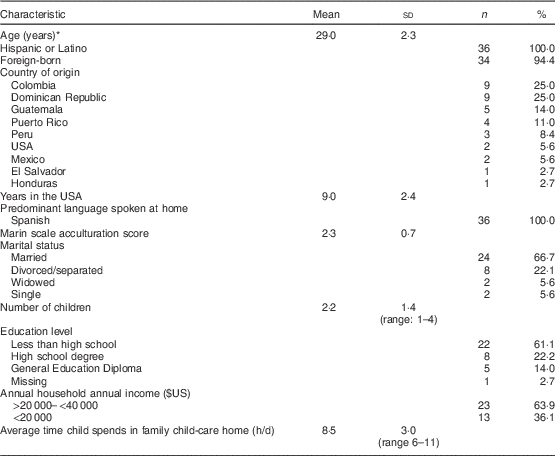
* Average age of parents was calculated for both mothers (n 27) and fathers (n 6) participating in the focus groups; average age of the grandmothers (n 3) participating in the focus groups was 58·7 years.
Procedures
A native Spanish-speaker trained in qualitative research methods moderated the focus groups in Spanish using a discussion guide with open-ended questions and probes (see Table 2). The pilot-tested guide explored: (i) parents’ beliefs and attitudes related to eating and PA; (ii) parents’ perceptions of children’s eating and PA experiences at home; (iii) parenting practices related to eating and PA behaviours at home; (iv) barriers faced in structuring a home environment conducive to healthful eating and PA; (v) parents’ perceptions of children’s eating and PA experiences at FCCH; and (vi) communication between parents and FCCH providers. The same focus group discussion guide was used for all focus groups.
Questions from the focus group discussion guide on Latino parents’ perceptions of children’s eating and physical activity (PA) experiences at home and in family child-care homes (FCCH), Massachusetts, USA
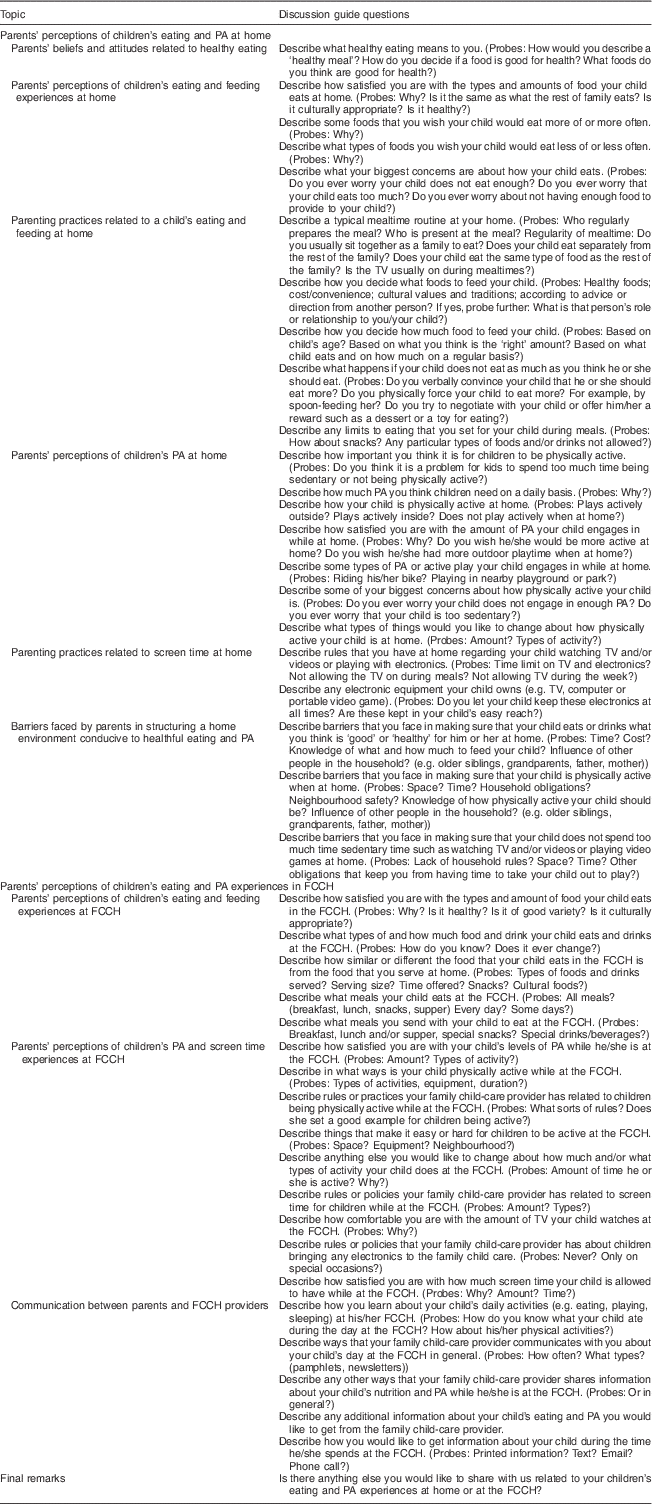
TV, television.
The study was approved by the Institutional Review Board for the Protection of Human Subjects at Harvard T.H. Chan School of Public Health. Focus groups, held in meeting rooms of public libraries between April and September 2015, lasted approximately 90 min and were audio-taped after participants provided signed informed consent.
Before each group, the moderator explained procedures and participants completed a brief, self-administered questionnaire assessing education, marital status, country of origin and length of time living in the USA. At the start of the focus group, the moderator directed participants to think about their oldest pre-school child (2–5 years) when participating in the discussion. Participants received a $US 25 gift card.
Analyses
Audio tapes were transcribed verbatim in Spanish and translated into English without identifiers. To ensure that the integrity and equivalence of the data was not lost in the process of translation, a professional transcriptionist, bilingual and native Spanish-speaker translated the transcripts using forward–backward techniques to establish semantic equivalence in translation.
Transcripts were analysed using thematic analysis( Reference Vaismoradi, Turunen and Bondas 30 ), an iterative process of coding data in phases to create meaningful patterns( Reference Vaismoradi, Turunen and Bondas 30 – Reference Miles and Huberman 34 ), using the SEM as a framework. Analytic phases included data familiarization, generation of initial codes, searching for and review of themes and patterns, and defining and naming themes( Reference Silverman 31 , Reference Ritchie, Spencer and O’Connor 33 ). Two authors, both experienced qualitative researchers, independently conducted all analyses, checked for consistency between their analyses and resolved discrepancies. During the coding process and data analyses, the two authors responsible for coding met regularly and read the codes and focus group reports independently( Reference Vaismoradi, Turunen and Bondas 30 – Reference Pope, Ziebland and Mays 32 ). The reliability of coding was determined by measuring the ratio of number of agreements against the sum of agreements plus disagreements( Reference Vaismoradi, Turunen and Bondas 30 , Reference Pope, Ziebland and Mays 32 – Reference Miles and Huberman 34 ). In most cases, the inter-coder reliability was over 85 %. Disagreements were discussed until a consensus was reached. Descriptive statistics were calculated for the sociodemographic data using Microsoft Excel 2008®.
Results
Emergent themes related to parents’ and grandparents’ (hereafter referred to as ‘parents’) perceptions of their children’s eating and PA experiences at FCCH and at home are discussed below. Identified themes are categorized using the SEM when applicable.
I. Themes related to children’s eating and physical activity experiences at home
Individual level
Parents are aware of the importance of healthful eating and physical activity
There was consensus among parents about the importance of children eating healthfully and being physically active, and most recognized the importance of developing these habits early in life. As one mother stated:
‘I think children eating a healthy diet and being active is really important, and they have to learn and start having these habits when they are little, so that they get used to eating and grow healthy.’
Nevertheless, several parents acknowledged that despite their intentions and efforts, their children do not always eat healthy foods and may not be physically active at home. One parent mentioned:
‘As parents, we know it is important for children to eat healthy and be physically active, but it is not always as easy as it sounds making sure that children want to eat healthy foods, and making sure that you have time to take them out to play.’
Parents believe that children’s eating habits at home need to change
Most parents stated they would like their children to eat more healthfully at home, including eating more fruits and vegetables and less sweets. One parent said:
‘I like for her [daughter] to eat more vegetables. She doesn’t like vegetables. She says I have to add some dressing so she can eat the vegetables … she doesn’t like the taste.’
Interpersonal and socio-cultural context level
Parents are important role models
Parents spoke of their own eating behaviours influencing those of their children, but acknowledged that being a positive role model was challenging. One parent mentioned:
‘We all need to role model good eating habits for our children … we should show portion control as adults and also not eat what children leave on their plates.’
Similarly, another parent said:
‘It is not always easy to do what you know is right … you are tired and still have a lot to do, so it’s easy to go for fast food and just think that it’s only one day … but I think it is important to try.’
Parents also recognized their role in instilling PA habits for their children. As one parent said:
‘I try to show my son that it’s important to be physically active. We play soccer together, and I encourage him to play in our local soccer league.’
Competing demands make it difficult to have family eating routines
Most parents reported that lack of time due to competing daily demands (e.g. multiple household chores, work obligations, long workdays) make it difficult to eat together as a family and establish set eating routines such as family dinners during the week. A parent said:
‘During the week, I [am] busy with work and have less time, so usually the kids eat first. I try to prepare something quick, give them a bath and put them in bed.’
Several parents reported they are more likely to eat together as a family on weekends. As a parent mentioned:
‘During the weekends, I try to make some time for cooking, and on Sundays, especially, we usually eat together as a family. That’s when we have more time.’
Additionally, several parents mentioned that it is difficult to establish eating routines during the week as they are often tired from working long hours and do not have the energy to ‘enforce’ eating rules and routines for their children. One parent said:
‘In my house, there are no set rules. I buy whatever food the kids like. If my daughter doesn’t want vegetables, then I tell her, “Well don’t eat them.” I come home and I am tired, the kids are also tired. It is really hard for all of us after a long day of work …’
A few parents also reported that they did not want to disagree with their children about what they should eat after spending many hours apart. For example, one parent reported:
‘We spend many hours apart, and most days of the week … I don’t think it’s good to be “fighting” about food and what she [daughter] should eat or not eat … so I just don’t.’
Nevertheless, some parents spoke of their efforts to enforce family eating routines because they view this as their responsibility. A parent reported:
‘I try to plan some meals in advance for the whole week so I can try and have them eat healthier foods … I feel it’s my job as they will eat what I serve.’
Latino culture positively influences children’s and families’ eating habits
Parents spoke of their Latino culture positively influencing their children’s and family’s eating habits. One parent mentioned:
‘I feel like my culture plays a role in what I buy to eat. For example, in Colombia we eat lots of vegetables and hearty soups, and I try to keep that as part of our family traditions.’
Furthermore, parents spoke of their culture as having a positive influence on their children’s and family’s choice of foods. One parent said:
‘I love to eat my traditional foods and the vegetables from my country. And it also makes me happy to cook and see my children eating some of the foods I grew up eating.’
Spending time outdoors and being physically active are important aspects of Latino culture
Parents discussed that central aspects of Latino culture and traditions are spending time outdoors and being physically active. Nevertheless, nearly all acknowledged that their daily lives in the USA do not allow for them and their families to be as physically active as they were in their home countries. As one parent stated:
‘Here, you are always busy with work, trying to take care of your family, and there is not much time left to go out, be physically active, and relax. It’s a different pace of life.’
Another parent added:
‘I grew up outside, running, playing soccer, being very physically active. My children don’t spend much time outside; they are either in school, daycare, or inside the house. During the summer is when we spend more time outside, but it’s only a few months.’
Physical activity is important, but not a family priority
Nearly all parents spoke of PA as being ‘important for our children’; however, they acknowledged that their children are not always physically active. As one parent explained:
‘I think it’s really important for kids to be physically active, but there are days that [it] is really hard to get them out to play and spend some energy.’
Although some parents spoke of trying to ensure that their children are physically active when home, several reported being ‘too busy’ to do so. One parent said:
‘My son likes to play baseball and my husband tries to play with him. If it is left to me, I don’t have time. ... It’s really hard, you want them to be active but you have to find the time, and it’s not easy.’
Parents face barriers to helping their children be active at home
The majority of parents spoke of barriers such as lack of time, lack of space, safety concerns and cold weather that prevented their children from physically active while at home. As one parent stated:
‘By the time you get home and have to get dinner ready, there isn’t much time left to take the kids outside to play. They end up sitting and watching some TV while I get things done.’
Another parent explained:
‘I don’t feel safe letting the kids go outside and play by themselves. An adult needs to be with them at all times. The streets are not safe.’
Home environment level
Strategies parents use to promote healthful eating at home
Several parents discussed trying to incorporate a variety of strategies to influence healthful eating behaviours of their children, such as controlling portion size and not having ‘junk’ food at home. One parent said:
‘I try to not buy or bring junk food into the house. If we have cookies and sweets in the house, we all eat. So, I just try not to have those foods in the house.’
Excess screen time at home
When discussing how children spend time at home, almost all parents said that their children engage in excessive screen time. Parents stated that their children have more screen time (e.g. television viewing and playing video games) at home than at FCCH. One parent said:
‘At home my daughter watches a lot more TV than at daycare. The first thing she does when she gets home is to watch TV…’
Furthermore, several parents said that the television is always on when they were home, including during meals; even when no one is watching a programme, the television is on in the background.
II. Themes related to parents’ perceptions of children’s eating and physical activity experiences at family child-care homes
Individual level
Children engage in healthier behaviours at family child-care homes than at home
Nearly all parents expressed the belief that their children eat more healthfully at FCCH than at home. For example, one parent stated:
‘My daughter eats all kinds of fruits and vegetables served at her daycare, but at home she always rejects when I tell her that she should eat her vegetables … She just doesn’t eat at home the foods that she eats at the home daycare.’
Some parents noted that children learned to eat what they are served, including fruits and vegetables, while at the FCCH due to the FCCH having set menus. One parent reported:
‘My son has really learned to eat his fruits and vegetables at the daycare. He knows he needs to eat what is served. He sees the other kids eating, and that helps him try.’
Another parent explained:
‘I try to set rules at home, but the reality is that my daughter eats healthier foods at the daycare. At home she eats foods that children are not allowed to have at the home daycare like sweets.’
Another parent added:
‘At my daughter’s daycare, the provider has rules of what children are and are not allowed to eat. Besides, she [provider] has time to prepare the foods, and does [so] in a way that the kids think the food is actually good. My daughter would never eat broccoli at home, but at the family child care, she says it is [broccoli] like eating the trees in the forest. They have songs they sing when they eat, they count the colours of the different foods ... I don’t have time or ideas for any of that.’
Furthermore, parents spoke of their children spending more time being physically active and less time in sedentary activities at FCCH than at home. They felt that the structured routine of FCCH that incorporated time for children to be physically active resulted in their children being more active at FCCH than at home. As one parent mentioned:
‘The child-care provider takes the children out to play every day. Even when it is cold, she says that children need to go out and get some physical activity and fresh air.’
Interpersonal level
Family child-care home providers have the ability to promote healthful behaviours
Overwhelmingly, parents reported that their FCCH providers have the knowledge, skills and time to provide healthful meals and snacks and to ensure their children are physically active while at FCCH. As one parent stated:
‘My child-care provider is very good – she makes sure that the kids eat healthy, are active, and have time to play.’
Furthermore, some parents believed that FCCH providers had more resources to plan and serve healthful meals than they had. One parent explained:
‘My child-care provider is very well informed about good nutrition for young children. She is always giving me information that she gets from workshops and conferences that she goes to. It’s a requirement for her job. I trust she is doing the best for my child … and my daughter eats more healthy foods when she is at the daycare than when she is at home.’
Environmental and organizational levels
Parents are supportive of foods served at family child-care homes
Most parents reported being very satisfied with the types of foods their children were served at FCCH and believed their children are learning healthful eating habits. Overwhelmingly, as discussed earlier, parents reported that their children ate more healthfully and consumed a greater variety of healthy foods at the FCCH than at home. As one parent reported:
‘At daycare they tend to be healthier [meals] because they are stricter with food. They also serve a healthy variety of foods. At home, I have more [unhealthy] options. So, by far, my son eats better at the daycare.’
Family child-care home licensing requirements promote physical activity and limit screen time
Parents perceived that FCCH licensing requirements promote healthful PA behaviours among their children and, as a result, children are more active when in this setting. As one parent explained:
‘At the daycare they take her out, there is more physical activity. They have to go out, it’s a requirement. When I get home, there is no time – I have to fix the house, prepare them something to eat, bathe them, etcetera. So, there is not a lot of time. So, I am glad my son can play and be active when he is at daycare.’
Moreover, parents reported that children watch less television and play fewer video games while at FCCH than at home.
Parents also viewed FCCH providers as being more skilled than they are at managing screen time rules and routines. As one parent said:
‘In her daycare they watch cartoons or movies but for only about 15–30 min while the provider prepares their food. I know that on weekends they watch more television with me.’
Another parent added:
‘I believe that there should be daycare on weekends! In her daycare, they have strict rules about TV. Also, at my house there are no rules. They do what they want. That is why I wish there was daycare on weekends. They would feed my kids correctly, monitor their screen time, and return them to me at 5.’
Policy-related factors
State rules and regulations promote healthful eating and physical activity PA in family child-care homes
Parents spoke of their child-care providers having to meet training requirements and being required to follow nutrition and PA regulations set by state agencies, which results in them being more knowledgeable than parents are about nutrition and healthy eating. As one parent explained:
‘My child-care provider follows a plan. They are better informed on the right kinds of food to serve the children. They have to follow and serve healthy foods to the children … they are required to take courses, which is really good for the care they provide to the children.’
Parents also noted that the state regulations impact PA and screen behaviours. One parent stated:
‘At daycare, the children are not allowed to watch a lot of TV, the child-care provider has activities for them to do when they come in, and they are only allowed to watch 30 min of TV after lunch when she is cleaning up and getting the children ready for naptime.’
Another parent noted:
‘My provider tells me that the state agency does not allow them to let kids watch a lot of TV. She [provider] doesn’t even let the kids bring any electronic devices to the daycare. She [provider] is required to make sure that the kids go out and play and are physically active. She needs to follow the rules.’
Discussion
The purpose of the current study was to examine Latino parents’ perceptions of their children’s eating and PA experiences at home and at FCCH. This information is essential for the development and implementation of interventions that are compatible with parents’ and families’ perceptions, attitudes and practices of children’s eating and PA behaviours( Reference Bluford, Sherry and Scanlon 27 , Reference Skouteris, McCabe and Swinburn 28 , Reference Falbe, Cadiz and Tantoco 35 , Reference Bender, Nader and Kennedy 36 ). Analyses determined that parents perceived that their children have healthier eating and PA behaviours at FCCH than at home. Parents attributed this to FCCH providers being more knowledgeable, having more skills, resources and time than parents do, and being required to follow rules and regulations set by the state that promote healthful eating and PA.
Moreover, an important theme identified in our study was parents’ trust in FCCH providers to promote healthful eating and PA for their children. This finding may be particularly important for low-income, ethnic minority parents, who may benefit from having a person of similar culture provide information, education and modelling on how to structure and reinforce culturally sensitive healthy eating and PA for children( Reference Larson, Ward and Neelon 7 , Reference Brann 17 , Reference DeSilva-Sanigorski, Elea and Bell 18 , Reference Østbye, Mann and Vaughn 25 , Reference Rosenthal, Crowley and Curry 26 ). Latino parents’ trust in their Latino FCCH providers suggests that providers may be well positioned to engage and help parents establish home environments conducive to children’s development of healthful eating and PA behaviours. FCCH providers could provide parents with important skill-building materials and training for effective parenting, such as limit setting. FCCH providers could disseminate individualized information about the child’s day (e.g. what the child ate and amount of PA) and facilitate access for parents to evidence-based information that is linguistically and culturally appropriate through in-person individual and group meetings, bulletin boards or e-communications. Moreover, FCCH providers’ health promotion efforts could extend beyond the children and the families they serve since they are often members of the same communities and culture of these children and families, making them a natural and sustainable part of the daily social context.
Our findings also highlight the importance of understanding and addressing the social day-to-day context of Latino families when designing interventions to promote healthy eating and PA among young children. Interventions that do not address the context of Latino families will likely not be successful. Parents in our study discussed daily life demands that impacted their ability to create and maintain a home environment conducive to healthful eating and PA habits. This finding is important because previous studies indicate that children living in households with regular family routines (e.g. regularly eating meals as a family) are at lower risk of obesity than those who do not have household routines( Reference Anderson and Whitaker 10 – Reference Jones and Fiese 12 ).
Although it is essential that parents recognize the importance of healthful behaviours, parents need to have the self-efficacy to make changes to the home and family environment that support children’s healthy eating and PA( Reference Bluford, Sherry and Scanlon 27 , Reference Skouteris, McCabe and Swinburn 28 ). Most parents participating in our study recognized the importance of healthful eating and PA, but appeared to lack the confidence to make the changes needed to create a home environment supportive of these behaviours. Future studies should explore parental self-efficacy and readiness to make changes supportive of healthful eating and PA behaviours for their children and family.
Study results should be considered in the light of some limitations, including limited generalizability due to purposive sampling and a relatively small sample of low-income, diverse Latino parents in four areas of Massachusetts. Because the purpose of the study was to explore parents’ perceptions and attitudes about their children’s eating and PA environments at home and in FCCH, the findings cannot be used to extrapolate children’s actual dietary intake or PA levels at home and at FCCH. Future studies using objective assessments (e.g. accelerometers and direct observation of foods consumed) are necessary to describe children’s behaviour. Additionally, parents who chose to participate in the study could have a heightened interest and awareness regarding the focus group topics. Future research can address these limitations by exploring influences on Latino parents’ beliefs, attitudes and practices from other communities across the USA and employing mixed methods to strengthen the validity of the findings. Nevertheless, the study’s qualitative methodology provided deeper insight into personal perceptions and experiences of Latino parents concerning their children’s eating and PA experiences at home and at FCCH. Finally, while a strength of the study was its use of the SEM, the outer levels (organizational and policy) need to be explored further, perhaps including key informants from these levels( Reference Bluford, Sherry and Scanlon 27 , Reference Skouteris, McCabe and Swinburn 28 ).
Conclusions
Understanding parental perceptions, attitudes and practices related to establishing and maintaining an environment conducive to children’s healthful eating and PA at home and at FCCH is essential for the design of successful interventions to promote children’s healthful behaviours in these two settings. Study findings revealed that parents view multiple factors, including individual, interpersonal, social context, home environment, organizational and policy factors, as influencing pre-school children’s healthy eating and PA experiences at home and at FCCH. Therefore, interventions targeting the home and FCCH settings serving Latino children should address multiple levels of the SEM to create healthful eating and PA experiences. Addressing both the home and FCCH settings will likely increase the impact of designed interventions. Furthermore, given that parents perceive their children as having more healthful behaviours while at FCCH, interventions that address both settings jointly may be most effective than those addressing only one environment by itself( Reference Bluford, Sherry and Scanlon 27 , Reference Skouteris, McCabe and Swinburn 28 , Reference Kim, Shim and Wiley 37 ).
Acknowledgements
Acknowledgements: The authors are grateful for the assistance of personnel at the Massachusetts Department of Early Education and Care, Child Care Circuit, Family Care Systems, and Child and Adult Care Food Program, especially Yours for Children, Inc. The authors are thankful to the FCCH providers and parents who participated in this study. Financial support: This study was supported by Aetna Foundation Inc. (grant number 11-02395; A.C.L., Principal Investigator). Conflict of interest: The authors declare that there is no conflict of interest regarding the publication of this paper. Authorship: The co-authors contributed to the work as follows: A.C.L. in study design, data collection, data analysis and manuscript preparation and review; M.L.G. in study design, manuscript preparation and manuscript review; S.F.W. in development of the theoretical framework for the study, manuscript preparation and manuscript review; F.D.S. in data analysis and manuscript review; J.A.W. in manuscript preparation and manuscript review; and J.S. in data collection, data analysis and manuscript review. All authors read and approved the final manuscript. Ethics of human subject participation: This study was approved by the Institutional Review Board for the Protection of Human Subjects at the Harvard T.H. Chan School of Public Health. Written informed consent was obtained from all participants.



