


Introduction
Many marine turtle nesting rookeries in the Caribbean have been reduced or extirpated by human exploitation (Parsons, Reference Parsons1962; Bjorndal & Jackson, Reference Bjorndal, Jackson, Lutz, Musick and Wyneken2003; Bell et al., Reference Bell, Blumenthal, Austin, Solomon, Ebanks-Petrie, Broderick and Godley2006; Bräutigam & Eckert, Reference Bräutigam and Eckert2006). Although a number of rookeries have been studied for several decades and their status is well documented (Dutton et al., Reference Dutton, Dutton, Chaloupka and Boulon2005; Troëng & Rankin, Reference Troëng and Rankin2005; Richardson et al., Reference Richardson, Hall, Mason, Andrews, Bjorkland, Cai and Bell2006; Diez & van Dam, Reference Diez and van Dam2007; Beggs et al., Reference Beggs, Horrocks and Krueger2007), many other Caribbean rookeries remain poorly described (McClenachan et al., Reference McClenachan, Jackson and Newman2006; Dow et al., Reference Dow, Eckert, Palmer and Kramer2007). The Dominican Republic is an area where information on marine turtle nesting activity is scarce and outdated. Unlike foraging habitats, which have been studied since 1996 (León & Diez, Reference León and Diez1999; León & Bjorndal, Reference León and Bjorndal2002), the conservation status of nesting populations in the Dominican Republic has never been comprehensively assessed, although there have been suggestions that they are seriously threatened (Ottenwalder, Reference Ottenwalder1981, Reference Ottenwalder1987; Stam & Stam, Reference Stam and Stam1992; Dow et al., Reference Dow, Eckert, Palmer and Kramer2007).
The Dominican Republic has a long history of harvest of and commerce in marine turtles, which have constituted an important resource for coastal communities (Ottenwalder, Reference Ottenwalder1981; Fleming, Reference Fleming2001; Mota & León, Reference Mota, León and Pilcher2003; Reuter & Allan, Reference Reuter and Allan2006). Marine turtles are now legally protected and their trade banned in the country by laws dating from 1966 and recently confirmed through the 2005 Fisheries Law CODOPESCA (Dominican Council of Fisheries and Agriculture). Slaughter of leatherback turtles Dermochelys coriacea for their meat and eggs was widely recorded in the 1980s (Ottenwalder, Reference Ottenwalder1981; Ross & Ottenwalder, Reference Ross, Ottenwalder, Rhodin and Miyata1983) and juvenile and adult green Chelonia mydas and hawksbill turtles Eretmochelys imbricata were exploited for their meat, eggs, shell and other products (Ottenwalder, Reference Ottenwalder1981; Dominguez & Villalba, Reference Dominguez, Villalba, Bjorndal, Bolten, Johnson and Eliazar1994; Mota & León, Reference Mota, León and Pilcher2003). By the 1980s it was estimated that 1,000–2,000 turtles were taken annually, of which 70% were green and hawksbill turtles and 30% loggerhead Caretta caretta and leatherback turtles (Ottenwalder, Reference Ottenwalder1996). Most of these turtles were caught by divers or taken incidentally in seine nets but many were captured from beaches whilst nesting. Despite legislation banning trade in tortoiseshell, an estimated 600 kg of hawksbill shell were used annually in the Dominican Republic in the 1980s (Ottenwalder, Reference Ottenwalder1987). Between 1970 and 1986, Japanese customs data indicate that a total of 4,366 kg of hawksbill shell were exported to Japan (Fleming, Reference Fleming2001). Domestically, sale of items made from tortoiseshell has been reported more recently (Mota & León, Reference Mota, León and Pilcher2003; Reuter & Allan, Reference Reuter and Allan2006; Feliz et al., Reference Feliz, León, Tomás, Hierro, Mateo, Méndez, Raga, Dean and López Castro2010).
The Dominican Republic receives four million visitors annually, and this mass tourism has resulted in degradation of coastal habitats (León, Reference León2004; Wielgus et al., Reference Wielgus, Cooper, Torres and Burke2010). Between 1980 and 1996 seven major coastal areas, including a large proportion of the most important turtle nesting habitat, were developed (Ottenwalder, Reference Ottenwalder1996). By the 1980s six marine protected areas had been established, four of which (Montecristi, Del Este, La Caleta and Jaragua National Parks) cover c. 22% of the coastline. There are nine coastal parks managed by the National Parks Directorate and, although none of them were created specifically for protection of marine turtles, some provide nesting and foraging habitat for them. However, there is little information available on marine turtles nesting in these areas.
Surveys in the 1970s and 1980s previously constituted the main reference on the status of marine turtles in the Dominican Republic (Ottenwalder, Reference Ottenwalder1981; Ross & Ottenwalder, Reference Ross, Ottenwalder, Rhodin and Miyata1983). Based on a combination of five countrywide aerial surveys conducted in April–July 1980, interviews with fisherman and local people, and non-intensive beach surveys, Ottenwalder (Reference Ottenwalder1981) estimated 420 (range 240–600) hawksbill, 380 (range 253–507) leatherback, 260 (range 160–360) green and 60 (range 30–90) loggerhead turtles nesting annually. Ross & Ottenwalder (Reference Ross, Ottenwalder, Rhodin and Miyata1983) identified four areas of special interest for nesting leatherback turtles: the beaches of San Luis and Bahía de las Águilas in Jaragua National Park in the south-west and Del Muerto and Macao beaches on the east coast. More recently leatherback turtle nesting has been recorded on the eastern beaches of Jaragua National Park during irregular beach walks during April–June (Dominici, Reference Dominici1996).
The lack of comprehensive studies and recent information and the threatened status of marine turtles in the Dominican Republic necessitated an updated assessment to help target effective conservation action. Our study had three main objectives: (1) to present the first systematic assessment in 30 years of the status of marine turtles nesting in the entire Dominican Republic based on 5 years (2006–2010) of systematic surveys, (2) to identify the main nesting rookeries and describe the current spatio-temporal patterns of nesting, and (3) to assess the likely impact of the current threats to these nesting stocks.
Study area
The Dominican Republic is in the eastern part of the Caribbean island of Hispaniola, which it shares with Haiti. It has 1,389 km of shoreline of which c. 800 km are sandy beaches. In February 2006 beach surveys and interviews with local people were carried out on 31 beaches previously described as important nesting sites (Ottenwalder, Reference Ottenwalder1981; Ross & Ottenwalder, Reference Ross, Ottenwalder, Rhodin and Miyata1983). Following these surveys intensive sampling concentrated in the two areas where nesting still seemed to be significant: Jaragua National Park and Saona Island. Opportunistic surveys were conducted in other areas during 2006–2010 to detect any other potential nesting sites and to verify reports received during the study (Figs 1 & 2).
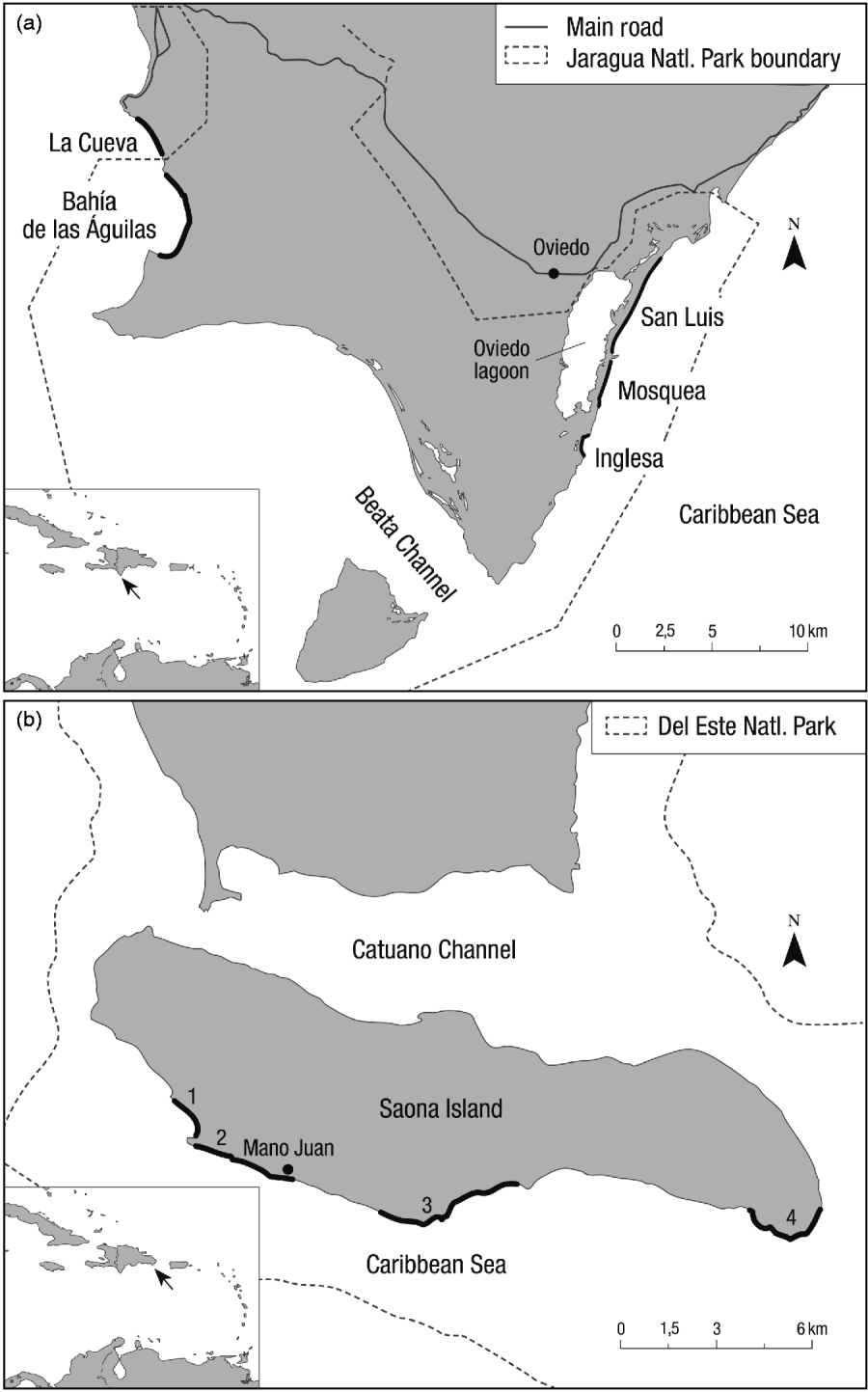
The two main study areas of (a) Jaragua National Park, indicating the beaches of La Cueva and Bahía de las Águilas in the west and of San Luis, Mosquea and Inglesa in the east, and (b) Saona Island, indicating Mano Juan village and the four surveyed areas of (1) El Toro, (2) Mano Juan, (3) Canto la playa and (4) Faro Punta Cana. The insets indicate the location of the main maps in the Caribbean.
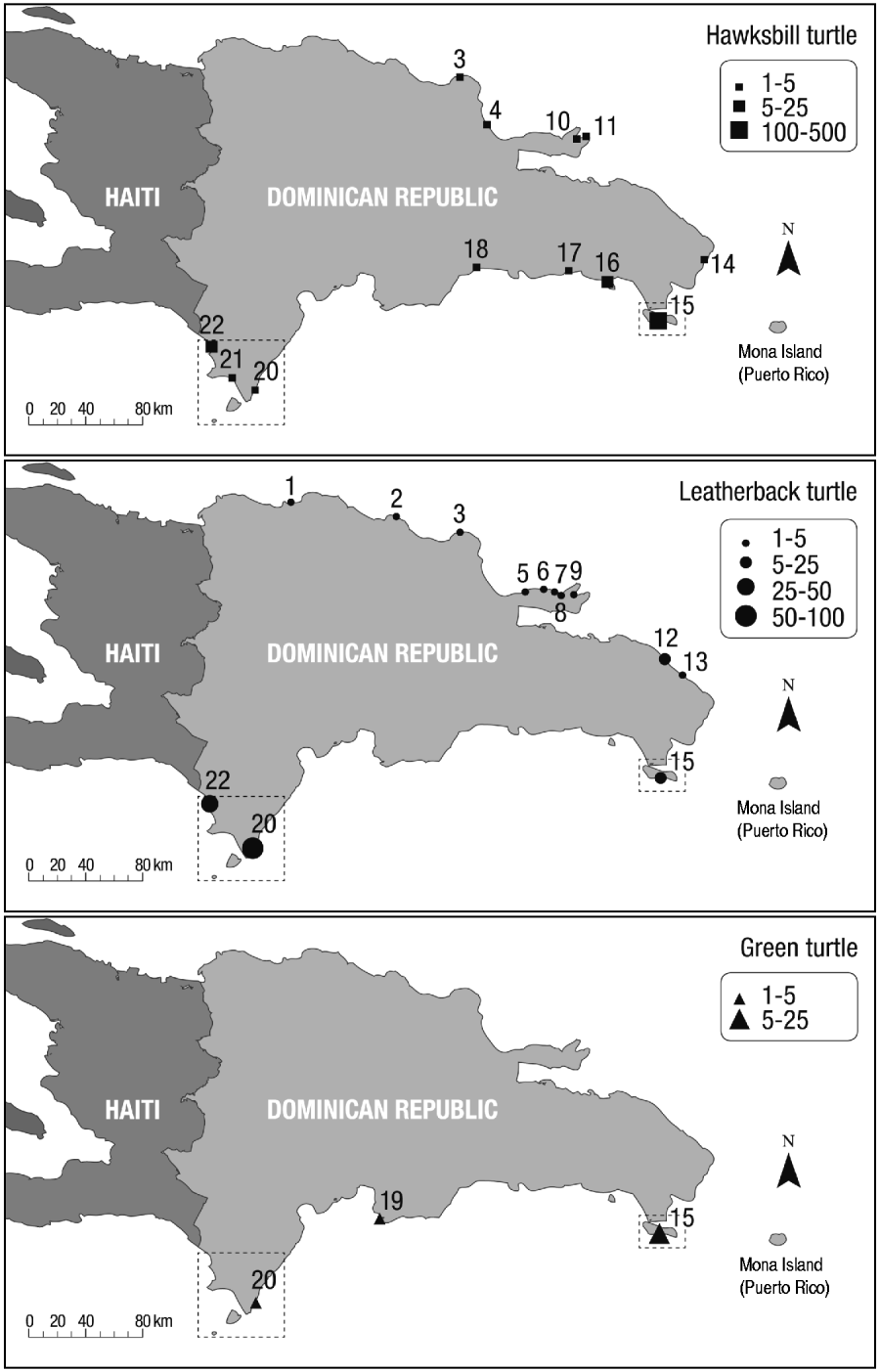
Maximum number of confirmed nests of hawksbill Eretmochelys imbricata, leatherback Dermochelys coriacea and green Chelonia mydas marine turtles per year during 2006–2010. Numbers correspond to beach locations: (1) beaches on both sides of the Estero Hondo bay (Punta Rucia and Punta Burén), (2) Sosúa and Cabarete beaches (Puerto Plata province), (3) Playa Grande, (4) Arroyo Salado, (5) Cosón (bonita and Morón beaches), (6) El Limón, (7) Lanza del Norte, (8) El Valle, (9) Rincón, (10) Colorá, (11) Las Galeras/Madama, (12) El Muerto/La Vacama, (13) Macao and Uvero Alto, (14) Punta Cana, (15) southern Saona Island (several beaches), (16) Isla Catalina, (17) San Pedro de Macorís, (18) Guibia (Santo Domingo), (19) Salinas, (20) Oviedo Lagoon, (21) Beata Channel, and (22) La Cueva–Bahía. Dotted lines show the two main study areas: Jaragua National Park in the south-west and Saona Island in the south-east (part of Del Este National Park).
Jaragua National Park in the south-west covers 1,374 km2, of which 905 km2 comprises beaches and dunes. The westernmost beaches, Bahía de las Águilas (4.4 km long) and La Cueva (2.5 km), have fine-grained, coralline, white sand. Although these beaches have no infrastructure development, they receive >24,000 visitors per year (Wielgus et al., Reference Wielgus, Cooper, Torres and Burke2010). The easternmost beaches of San Luis (11 km), Mosquea (3.3 km) and Inglesa (1.2 km) are on the narrow area of land between Oviedo Lagoon and the Caribbean Sea (Fig. 1). Eastern beaches are wider than those in the west and have coarser, darker sand, a steeper slope and strong wave action, which contributes to the accumulation of large amounts of plastic and other debris on the beaches of San Luis and Mosquea (OR, YML, PF & JT, pers. obs.). Six human settlements with a total population of c. 15,000 are located around the boundary of the Park.
Saona Island (a part of Del Este National Park) in the south-east has an area of 110 km2. The main nesting zones for marine turtles include 12 narrow, white sand beaches (15 km long in total) interspersed with rocky areas on the south and west of the island (Fig. 1). Access to some of these beaches by foot is difficult. There is one permanent human settlement on Saona, Mano Juan, with a population of c. 300. Both Saona Island and Jaragua National Park are regularly visited by groups of itinerant fishermen for several days at a time.
Methods
Daytime surveys were undertaken on foot by researchers and trained local people on the beaches of Jaragua National Park and Saona during 2006–2010. In Jaragua National Park beaches were monitored during: (1) 15 April to 19 November 2006, (2) 17 March to 20 October 2007, (3) 7 March to 8 October 2008, (4) 14 March to 23 September 2009, and (5) 26 March to 9 September 2010. Until 2009 the eastern beaches of the Park were monitored weekly, with the exception of the remote Inglesa beach, which was monitored twice per month. In 2009 and 2010 Mosquea was monitored daily by government rangers. On the western beaches of the Park there were 3–4 daytime surveys per week but survey effort ensured the record of all nesting events every year. Other remote beaches at this site with low levels of nesting were also occasionally visited to confirm reports of nests from reliable informants, although these were few (16 clutches in 5 years). On these beaches successful nesting events and false crawls that had occurred since the previous visit were recorded.
On Saona Island surveys started in September 2006 and thus we do not include total nesting numbers for this location and year. Since 23 September 2006 four major areas (Fig. 1) were patrolled weekly throughout the year.
Surveys in other areas of the Dominican Republic were undertaken during 2006–2010. Visits, sporadic patrols and interviews were made in 11 areas of the northern coast in 2006, 2007 and 2008, and on six beaches of the eastern and southern coasts in 2008, 2009 and 2010 (Fig. 2). Reports about other nesting events, particularly from resorts or beach front developments, were also compiled.
During daytime surveys in Jaragua National Park and on Saona Island we recorded total number of emergences of nesting females. We identified the species based upon track characteristics (Schroeder & Murphy, Reference Schroeder, Murphy, Eckert, Bjorndal, Abreu-Grobois and Donelly1999) and confirmed whether each activity had successfully resulted in clutch deposition, by digging to find the clutch. Nest location was recorded using a global positioning system and turtle tracks were marked to avoid duplicate counts. Signs of eggs taken by people were recorded (presence of probing sticks, evidence of digging and broken eggshells, and/or human footprints around the nesting site; Troëng et al., Reference Troëng, Chacón and Dick2004). Remaining clutches were either camouflaged and incubated under natural conditions on the beach, or clutches with high risk of subsequent take (because of proximity to a human settlement and the number of people in the area) were transferred to protected hatcheries for incubation in boxes. Because of funding limitations night surveys were only carried out on Saona Island and the western beaches of Jaragua National Park. To maximize the probability of finding nesting females during night surveys, we timed these surveys according to the inter-nesting intervals of the females. We collected data on clutch size and egg size and weight and measured the curved carapace length (CCL, from nuchal notch to the caudal tip of the carapace) and maximum curved carapace width (CCWmax) of nesting females. Leatherback females were tagged with large metal Inconel tags (National Brand and Tag Co., Newport, USA) fitted between the tail and rear flippers. Hawksbill females were tagged with small metal Inconel tags on the trailing edge of both fore-flippers.
Results
Status and spatio-temporal distribution
The surveys confirmed that leatherback, hawksbill and green turtles are nesting in the Dominican Republic. Nesting is concentrated in Jaragua National Park and on Saona Island. Nesting outside these areas was confirmed, through visits and interviews, to be relatively uncommon (Fig. 2).
The Jaragua National Park consistently had the highest number of clutches per year of leatherback turtles (mean 126.4±SD 74.1, range 17–210), with a total of 632 clutches recorded during 2006–2010 (Figs 2 & 3). These values correspond to an estimated annual number of three, 33, 19, 40 and 25 females in each of the 5 years, respectively (based on a mean number of clutches per season of 5.26; Boulon et al., Reference Boulon, Dutton and McDonald1996). Hawksbill turtles nested in low numbers in the Park (mean 14.6±SD 6.7 per year, range 7–22 clutches per year), with a total of 73 clutches recorded in the 5 years, mainly in the west (Fig. 2). The estimated annual number of hawksbill turtles was five, four, four, one and two nesting females in each of the 5 years, respectively (based on a mean number of clutches per season of 4.5; Richardson et al., Reference Richardson, Bell and Richardson1999). We recorded only one confirmed clutch of green turtles in this area during the study period (Fig. 2).
Number of clutches of leatherback, hawksbill and green marine turtles per year in Jaragua National Park and on Saona Island. In 2007 one green turtle nest, which is not shown, was recorded in Jaragua National Park. Note the different y-axis scales.
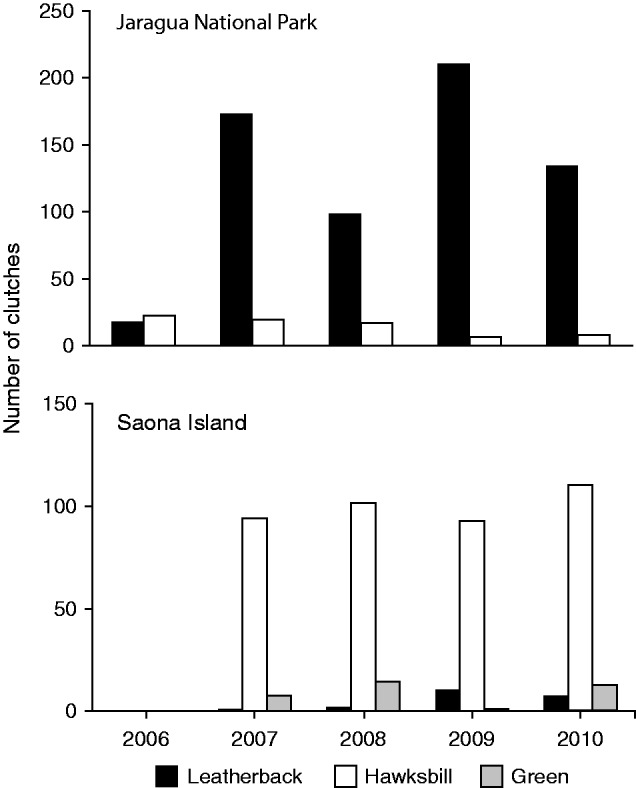
Saona Island hosted the majority of recorded hawksbill (mean 100±SD 8.4 per year, range 93–111, total 400) and green turtle clutches (mean 9.2±SD 6.2, range 1–15, total 37) but only 22 leatherback turtle clutches were recorded (mean 5.5±SD 4.8, range 1–11). The annual number of hawksbill turtle clutches recorded was similar among years (Fig. 3) and the estimated annual number of hawksbill females nesting in each year was 21, 23, 23 and 25 in 2007–2010, respectively.
Elsewhere 1–5 hawksbill turtle nests per year were reported on the Punta Cana and Cap Cana beach resort on the east coast. The only beach outside the two main nesting areas that seems to host significant leatherback turtle nesting is El Muerto beach (Fig. 2). In 2009 we recorded 12 recent nests there. Local people reported nine nests later in the same season. This area merits future monitoring. The northern coast of Samaná Peninsula seems regularly to have a low number of nests (1–3 clutches per beach and year) of hawksbill and leatherback turtles, and merits further surveys.
Seasonality
In Jaragua National Park the nesting period of leatherback turtles extended from March to August, with most emergences occurring in April–June (89.6% of nests). The highest number of emergences was in May (mean number of nests 64±SD 12.7). Because of the low level of nesting by hawksbill turtles in the Park it is difficult to ascertain seasonality for this species there, although nesting appears to be higher in July (Fig. 4). On Saona Island hawksbill turtles were observed nesting in every month of the year, although most nesting occurred in June–November (71.2% of the nests) and low levels of nesting were observed in December–May (Fig. 4). The green turtle appears to have a shorter nesting season, from July to November, with a possible peak in August. However, any seasonality in the nesting of this species is unclear because of the low number of nests observed. The three species nested mainly at night although there were two records of hawksbill turtles nesting diurnally on Saona Island.
Mean (±SD) number of clutches per month of leatherback and hawksbill marine turtles for 2006–2010 in Jaragua National Park, and for 2007–2010 on Saona Island. Note the different y-axis scales.

Morphometrics and reproductive data
Biometric parameters of leatherback and hawksbill turtles are given in Table 1. All leatherback females encountered on western beaches of Jaragua National Park in 2006–2010 were tagged. We recorded four reproductive females (30.8%) with a CCL (132, 135, 138 and 143 cm) below the threshold carapace length for adult classification in leatherback turtles (145 cm; Eckert, Reference Eckert2002; James et al., Reference James, Sherrill-Mix and Myers2007). Mean clutch sizes (yolked eggs) of leatherback turtles recorded in the Park were 68.7±SD 18.1 (n=64), 72.4±SD 15.5 (n=59), 75.1±SD 17.3 (n=125) and 67.5±SD 17.8 eggs (n=67) in 2007–2010, respectively.
Morphometric and reproductive parameters of leatherback Dermochelys coriacea and hawksbill Eretmochelys imbricata turtles nesting at Jaragua National Park and Saona Island in the Dominican Republic (Fig. 1).

On Saona Island seven female hawksbill turtles were tagged in 2008, five in 2009 and seven in 2010 (Table 1). Mean clutch sizes of hawksbill turtles on Saona Island were 125.7±SD 23.3 (n=29), 132.4±SD 29.9 (n=55), 138.4±SD 23.2 (n=40) and 139.5±SD 29 (n=55) in 2007–2010, respectively.
Assessment of threats
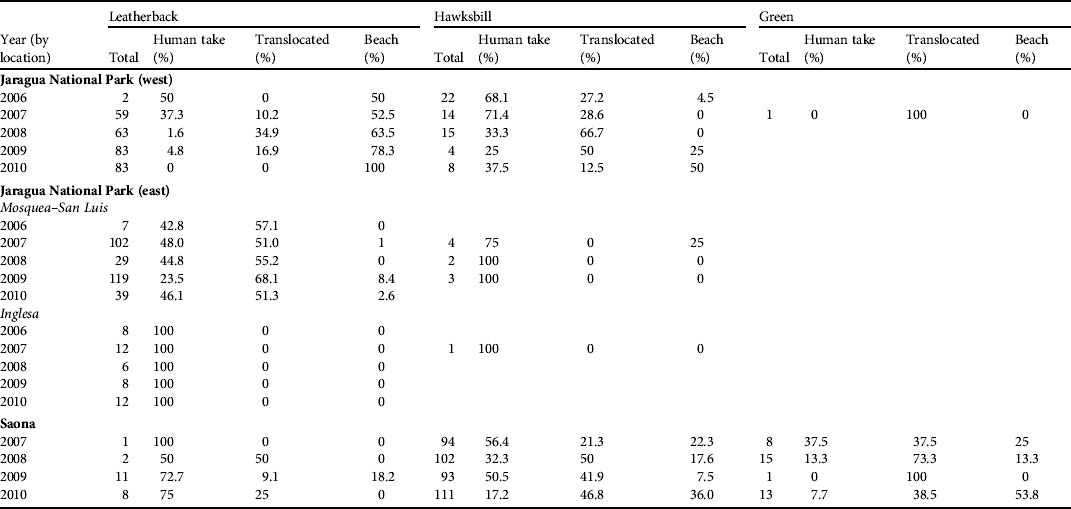
Illegal taking of eggs was identified as the main threat to the marine turtles (Table 2). The highest level of egg-take was from the eastern beaches of Jaragua National Park. All clutches laid by hawksbill and leatherback turtles on Inglesa beach were taken by humans. Overall 88.9% of hawksbill clutches laid on Mosquea and San Luis beaches during the study period were taken and only a small percentage of leatherback clutches were incubated on the beach (1% in 2007 and 8.4% in 2009); the remainder were relocated to a protected hatchery for artificial incubation or otherwise taken by humans. The percentage of leatherback turtle clutches taken on the beaches of Bahía de las Águilas and La Cueva in the west of the Park was lower than on the eastern beaches, with 75.9% of 290 clutches incubated naturally during the study period. However, take of hawksbill turtle clutches was high every year (Table 2).
Total numbers and percentage of hawksbill, leatherback and green Chelonia mydas turtle clutches recorded in Jaragua National Park and Saona Island during 2006–2010 that were subject to human take, translocated to a breeding facility, or incubated on the beach under natural conditions.
We found hawksbill and green turtle carcasses, bones and scutes from both adults and juveniles in Jaragua National Park and on Saona Island, which we presume to be remains, at least in part, from illegal take. Meat and eggs are consumed and illegally sold in local markets (YML & JT, pers. obs.). Throughout the study period no reported cases of consumption of leatherback meat were recorded.
Discussion
For the first time in recent decades we have documented the presence of three marine turtle species (hawksbill, leatherback and green) nesting in the Dominican Republic. Comparison of our results with early reports (Ottenwalder, Reference Ottenwalder1981; Ross & Ottenwalder, Reference Ross, Ottenwalder, Rhodin and Miyata1983) indicates that a profound decline appears to have taken place in the last 30 years. Nesting has largely been reduced to the undeveloped, protected areas of Jaragua National Park and Saona Island. However, there are still high rates of human exploitation of eggs and at least some take of turtles in these protected areas.
The number of clutches of hawksbill and green turtles, which we found mainly on Saona Island, are low compared to estimates of 400 hawksbill and 260 green turtles nesting per year throughout the country in the 1980s (Ottenwalder, Reference Ottenwalder1981). Ross & Ottenwalder (Reference Ross, Ottenwalder, Rhodin and Miyata1983) suggested that 300 leatherback turtles were nesting annually in the Dominican Republic, based on one aerial survey, 24 interviews and a few beach surveys between 24 March and 13 April 1980. Based on 5 years of systematic surveys we have estimated that a maximum of 40 leatherback females currently nest in Jaragua National Park per year, with no more than 50 in the country. Of further concern was our failure to detect loggerhead turtles nesting, even though Ottenwalder (Reference Ottenwalder1981) estimated c. 60 females were nesting per year.
Our findings seem to indicate that there has been a marked reduction in the abundance of the four species throughout the country since the 1980s. However, there are some caveats regarding the previous estimates. Firstly, data reported by Ottenwalder (Reference Ottenwalder1981) were based on 2 years of non-intensive monitoring and interviews. Secondly, loggerhead turtles are considered to nest infrequently in the Caribbean (Ehrhart et al., Reference Ehrhart, Bagley, Redfoot, Bolten and Witherington2003; Dow et al., Reference Dow, Eckert, Palmer and Kramer2007), and Ottenwalder noted that, in interviews, many fishermen confused this species with others. It is therefore possible that the number of loggerhead turtles nesting was previously overestimated, as is thought to have occurred in similar studies based on interview data in the region (Richardson et al., Reference Richardson, Bruford, Calosso, Campbell, Clerveau and Formia2009). Thirdly, the decline of the leatherback turtle nesting rookeries in the Dominican Republic could be because of a shift of nesting to nearby rookeries, as this species has low nest site fidelity (Georges et al., Reference Georges, Fossette, Billes, Ferraroli, Fretey and Grémillet2007; Troëng et al., Reference Troëng, Harrison, Evans, De Haro and Vargas2007). The leatherback turtle population in the Dominican Republic possibly forms part of a wider regional nesting stock, as has been suggested for other rookeries in the Antilles (Dutton et al., Reference Dutton, Dutton, Chaloupka and Boulon2005). Despite these caveats it is probable that harvesting of eggs and females from beaches and the trade in marine turtles documented in the Dominican Republic (Ottenwalder, Reference Ottenwalder1996; Fleming, Reference Fleming2001; Reuter & Allan, Reference Reuter and Allan2006) has contributed significantly to the decline of these turtle populations. However, we cannot refute the possibility that numbers of all three turtle species nesting in the Dominican Republic, particularly the leatherback and hawksbill, were lower in previous years and are beginning, as in some Caribbean range states, to increase (Dutton et al., Reference Dutton, Dutton, Chaloupka and Boulon2005; Troëng & Rankin, Reference Troëng and Rankin2005; Richardson et al., Reference Richardson, Hall, Mason, Andrews, Bjorkland, Cai and Bell2006).
According to Ottenwalder (Reference Ottenwalder1981) hawksbill turtles nested in the past in significant numbers on beaches around the entire coast of the Dominican Republic and green turtles nested every night on northern beaches. Currently, only the relatively unspoilt beaches of Saona Island, in Del Este National Park, provide major nesting areas for hawksbill and green turtles. Nesting of leatherback turtles previously occurred on the northern and eastern coasts, and the beaches of Macao and El Muerto in La Altagracia province on the eastern coast hosted 2–3 females nightly during the nesting season in the 1980s (Ross & Ottenwalder, Reference Ross, Ottenwalder, Rhodin and Miyata1983). Significant nesting by leatherback turtles occurs only on the isolated beaches of Jaragua National Park, where access for people is difficult and there is no coastal development. In addition to the taking of eggs and adults on beaches near habitation, habitat has been lost to intensive coastal development during the last 30 years (Ottenwalder, Reference Ottenwalder1981; León, Reference León2004; Wielgus et al., Reference Wielgus, Cooper, Torres and Burke2010). Currently, the northern and eastern coasts have the most tourism infrastructure and we detected only sporadic nesting events on these beaches.
Despite the importance of coastal and marine protected areas as refuges for marine biodiversity in the country we observed that there is little actual protection and inadequate management by local authorities (OR, YML, PF & JT, pers. obs.). Our results highlight the need for adequate protection and management of these areas for marine turtle conservation, especially considering that Jaragua National Park also hosts important foraging habitats for Caribbean hawksbill and green turtles (León & Diez, Reference León and Diez1999; León & Bjorndal, Reference León and Bjorndal2002).
Items made from tortoiseshell were previously widely available in tourist gift shops in the Dominican Republic (Ottenwalder, Reference Ottenwalder1996; Mota & León, Reference Mota, León and Pilcher2003; Reuter & Allan, Reference Reuter and Allan2006; Feliz et al., Reference Feliz, León, Tomás, Hierro, Mateo, Méndez, Raga, Dean and López Castro2010). However, since 2009 the environmental authorities have conducted several seizures of tortoiseshell items in the gift shops of Santo Domingo, resulting in a significant reduction in the sale of such items (OR, YML & PF, pers. obs.).
Our study has shown that the leatherback turtle nesting season is from March to August, with a peak in May, consistent with reports for neighbouring nesting populations (Dutton et al., Reference Dutton, Dutton, Chaloupka and Boulon2005; Hilterman & Goverse, Reference Hilterman and Goverse2007; McGowan et al., Reference McGowan, Broderick, Frett, Gore, Hastings and Pickering2008). The seasonality of hawksbill turtle nesting is similar to nearby rookeries on Antigua, Barbados and Mona Island, Puerto Rico (Richardson et al., Reference Richardson, Bell and Richardson1999; Beggs et al., Reference Beggs, Horrocks and Krueger2007; Diez & van Dam, Reference Diez and van Dam2007).
The differences in nesting activity between the two main nesting areas may be explained by species' preferences. Leatherback turtles tend to use high energy beaches with deep water nearby, free of obstructions and often with a windward orientation (Mrosovsky, Reference Mrosovsky1983; Eckert, Reference Eckert1987). This description fits the eastern beaches of Jaragua National Park, which is the most important nesting area for the species in the country. Hawksbill turtles, however, often swim over reefs and through shallow waters with lower wave energy to reach beaches with dense vegetation (Horrocks & Scott, Reference Horrocks and Scott1991). This description fits all of the Saona Island beaches and most of the western beaches of Jaragua National Park.
The mean CCL (147.4 cm) of leatherback turtles in the Dominican Republic is lower than the global mean, which is normally distributed around 155 cm (see review in Stewart et al., Reference Stewart, Johnson and Godfrey2007) and we confirmed the viability of clutches of females that are below the minimum size of sexual maturity reported elsewhere (e.g. Eckert, Reference Eckert2002). We are confident that our results are not measurement errors because we used standard measurements (Bolten, Reference Bolten, Eckert, Bjorndal, Abreu-Grobois and Donelly1999) and the carapaces had no deformities or injuries. This could be the sign of a recovering population with a high proportion of neophyte females. However, reduction in the size of nesting females can be caused by intensive capture of turtles either in the foraging areas or in the same nesting areas (Bjorndal et al., Reference Bjorndal, Carr, Meylan and Mortimer1985; Limpus et al., Reference Limpus, Miller, Parmenter and Limpus2003). The mean CCL of nesting hawksbill turtles in the Dominican Republic is similar to the mean CCL in other Caribbean regions. However, the CCL of 11 hawksbill females measured on Saona Island was within the CCL range recorded for neophytes in Buck Island, US Virgin Islands (82.1–88 cm, Garland & Hillis-Starr, Reference Garland, Hillis-Starr and Seminoff2003).
This research has filled a significant gap in knowledge of the population status and conservation of marine turtles in the Caribbean (Dow et al., Reference Dow, Eckert, Palmer and Kramer2007). Many of the large turtle rookeries in the region are the subject of ongoing long-term monitoring and conservation programmes. Although several appear to be showing signs of recovery (St Croix, US Virgin Islands, Dutton et al., Reference Dutton, Dutton, Chaloupka and Boulon2005; Barbados, Beggs et al., Reference Beggs, Horrocks and Krueger2007; Mona Island in Puerto Rico, Diez & van Dam, Reference Diez and van Dam2007) this is not the case for all turtle rookeries in the region.
To facilitate effective marine turtle conservation across the Caribbean conservation programmes need to focus on sites that were formerly important nesting areas (McClenachan et al., Reference McClenachan, Jackson and Newman2006). Our results suggest this is the case in the Dominican Republic, which therefore warrants increased attention at the regional level, particularly for the hawksbill turtle. Molecular and genetic techniques have provided insights into patterns of migration, stock differentiations, and links between nesting beaches and foraging grounds of the hawksbill turtle in the Caribbean (Bowen et al., Reference Bowen, Grants, Hillis-Star, Shaver, Bjorndal, Bolten and Bass2007; Blumenthal et al., Reference Blumenthal, Abreu-Grobois, Austin, Broderick, Bruford and Coyne2009). Recovery will therefore depend on actions both in the Dominican Republic and in the wider Caribbean.
The fact that nesting activity is concentrated in protected areas provides an opportunity to implement specific actions for protection and management of the rookeries (Santidrián Tomillo et al., Reference Santidrián Tomillo, Saba, Piedra, Paladino and Spotila2008). We conclude that to improve marine turtle conservation in the Dominican Republic it is necessary to promote the effective management of existing protected areas, including nesting beaches for marine turtles, to promote the management of coastal development to avoid further loss of nesting beaches, and to support the enforcement and efficient implementation of laws to reduce take of marine turtles and their eggs.
Acknowledgements
The present study is part of a conservation project funded by the Spanish International Cooperation Agency (AECI, projects A/2991/05 and A/5641/06), the Spanish Ministry of Education and Sciences (CGL2006-02936-BOS and CGL2011-30413), the General Foundation of the University of Valencia, a special action of the same University (UV-INV-AE11-42960), and the European Union (Marie Curie grants, FP6 and 7). We thank the Dominican NGO Grupo Jaragua and The Nature Conservancy. The project counts on the support of the Dominican Environmental authorities (Office of Protected Areas and Biodiversity of the Environmental Ministry) and the rangers of the National Parks. We are grateful to our assistants in Jaragua National Park, Bienvenido Pérez Turbí ‘Blanco' and the rangers for their work, and especially to Pelagio Paulino ‘Negro’ for his help during fieldwork on Saona Island and his work for the conservation of marine turtles. We extend our thanks to the Dominican and international students, volunteers and villagers for their help and friendship during the field work.
Biographical sketches
Ohiana Revuelta has interests in wildlife conservation. Her research is focused on marine turtles of the Dominican Republic. Yolanda M. León is Secretary of the environmental NGO Grupo Jaragua. Her research focuses on the threatened species of the Dominican Republic, including work with marine turtles, cetaceans and avifauna. Pablo Feliz is a student member of Grupo Jaragua. Brendan J. Godley coordinates the Marine Turtle Research Group at the University of Exeter, UK, and is involved in projects on the conservation of marine turtles and mammals in several countries. Juan A. Raga has participated in research projects on marine vertebrate conservation and parasitology at the University of Valencia. Jesús Tomás has participated in a number of research projects and contracts for the conservation of marine turtles in the Mediterranean, Africa and the Caribbean.



