



Fruits and vegetables are an essential component of a healthy diet( 1 ). They are an important source of dietary fibre and of many essential nutrients that are deficient in the US diet, such as Mg, vitamin A and vitamin C( 1 , 2 ). Low fruit and vegetable intake is one of the ten top risk factors for mortality in the world( 3 ) and is associated with increased risk of obesity and chronic diseases including CVD, diabetes and some cancers( 4 , 5 ).
The Dietary Guidelines for Americans recommend that healthy adults consume a total of about five servings (2½ cups) of fruits and vegetables per day, or that fruits and vegetables make up about half of a plate of food( 1 ). Less than a third of Americans meet these recommendations. According to the Behavioral Risk Factor Surveillance System (BRFSS), which monitors health behaviours through an annual telephone survey, the percentage of US adults who consumed two or more servings of fruit daily decreased from 34·4 % in 2002 to 32·5 % in 2009; the percentage who consumed three or more servings of vegetables daily stayed the same at about 26·5 % over this period( Reference Grimm, Blanck and Scanlon 6 ). In 2011 BRFSS reported, for the first time, the percentage of adults consuming fruits and vegetables less than once daily: 37·7 % for fruits and 22·6 % for vegetables, respectively( 7 ). Thus, more effective public health intervention efforts are needed to increase consumption of fruits and vegetables.
Research on factors associated with consumption of fruits and vegetables in Western developed countries has identified that there is a socio-economic gradient, with higher fruit and vegetable consumption associated with higher individual or family socio-economic status (SES). Epidemiological studies of populations in countries such as the UK, Western and Northern European countries, Australia and North America consistently show that fruit and vegetable consumption is greater in more educated and higher-income groups, among both adults and children( Reference Conklin, Forouhi and Surtees 8 – Reference Deshmukh-Taskar, Nicklas and Yang 13 ).
In the USA, the role of SES in determining dietary behaviour is complex for several reasons. First, because SES is intertwined with race and ethnicity, and because ethnicity and culture play an important role in shaping dietary habits, it is unclear whether SES, culture or a combination of these two factors influences consumption of fruits and vegetables. Second, ethnicity’s role in influencing dietary behaviour can be expected to change with length of time in the USA as migrant populations acculturate to a new environment( Reference Perez-Escamilla 14 ). Third, residential segregation (by race/ethnicity and SES) in the USA is high and there is a considerable body of literature that alludes to the influence of the neighbourhood environment on food consumption patterns( Reference Diez-Roux, Nieto and Caulfield 15 – Reference Moore, Diez Roux and Nettleton 17 ). Specifically, fresh produce may be less accessible in lower-income and/or segregated neighbourhoods( Reference Morland, Wing and Diez-Roux 16 – Reference Moore and Diez Roux 18 ) while energy-dense, nutrient-poor foods such as those offered in convenience stores may be more accessible in these same neighbourhoods( Reference Pearce, Blakely and Witten 19 – Reference Richardson, Meyer and Howard 21 ). Understanding the independent effects of these individual and neighbourhood social factors on diet has implications for the design of effective public health interventions.
In the present study of 2669 African American, Asian/Pacific Islander, Latina and White women of childbearing age who participated in the California Maternal and Infant Health Assessment (MIHA) survey during the years 2003–2007, and were followed up in the Geographic Research on Wellbeing (GROW) Study (2012–2013), we sought to answer the following questions:
-
1. What are the independent effects of race/ethnicity and SES (measured by individual-level income and education, and neighbourhood-level poverty) on consumption of fruits and vegetables, adjusting for age, marital status and neighbourhood poverty?
-
2. Does SES modify the effects of race/ethnicity?
-
3. Among Latinas, the group with sufficient numbers by nativity, do the effects of SES differ between US-born and immigrant women?
In most studies, consumption of fruits and vegetables is measured in terms of either frequency or amount. Because the Dietary Guidelines recommend that fruits and vegetables be consumed daily, and the types of food available in the home have been observed to be associated with weight status and diet( Reference Emery, Olson and Lee 22 , Reference Clarke, Haire-Joshu and Schwarz 23 ), we operationalized consumption of fruits and vegetables as: (i) consuming fruits and vegetables less often than daily; and (ii) not having fruits and vegetables in the home frequently. The availability of fruits and vegetables in the home is a marker of consumer behaviour that may be important for women as well as others in the home.
Methods
Data sources
The GROW Study is based on the 2003–2007 California MIHA survey, a collaborative project of the California Department of Public Health’s Maternal, Child, and Adolescent Health Branch and researchers at the University of California, San Francisco. MIHA, which is very similar to the Centers for Disease Control and Prevention’s Pregnancy Risk Assessment Monitoring System, is an ongoing, statewide-representative survey of mothers delivering live infants in California during February through May annually, linked with birth certificate data. Each year during this time period, MIHA collected data from approximately 3500 women representing approximately 500 000 births using a questionnaire that was administered by mail or telephone. During 2003–2007, 71 % of the surveys were completed in English and 29 % in Spanish; response rates exceeded 70 % each year. The maternal characteristics of the MIHA sample are weighted to be representative of all eligible births statewide (http://www.cdph.ca.gov/data/surveys/MIHA/Documents/MIHA%20Technical%20Document%20Web%202011.pdf). Additional details about the MIHA survey have been reported elsewhere( Reference Rinki, Martin and Curtis 24 , Reference Cubbin, Braveman and Marchi 25 ).
MIHA respondents were eligible for GROW if they lived in one of six largely urbanized counties at the time of the 2003–2007 surveys (Alameda, Los Angeles, Orange, Sacramento, San Diego and Santa Clara) and had agreed to be re-contacted for future studies; over 95 % of women had agreed. Respondents in these six counties represented 55 % of all MIHA respondents from 2003–2007. Data collection for GROW began in February 2012 and was completed in September 2013. The questionnaire comprised approximately eighty questions regarding demographic, socio-economic, neighbourhood, psychosocial and health-related characteristics pertaining to the respondent and her index child (her infant from the MIHA survey). The women received a $US 20 gift card as an incentive.
Of the 9256 women who were initially identified as eligible to be in the sample, 3016 responded (32·6 %); of the 4026 women who could be located (‘active’ sample), 74·9 % responded. The majority of respondents (90·3 %) still lived in one of the six GROW counties. Fifty-six per cent completed the survey by telephone and 73 % completed it in English. The geocoding accuracy to census tracts for the GROW respondent addresses was very high, at 97 %. Respondents were not highly clustered. There was an average of 1·4 respondents per tract (range 1–9); 90 % of tracts contained only one or two GROW respondents. There were few missing responses. Missing values were less than 8 % for all items except income (9·8 %). Weights were created to produce data that were representative of births in the six GROW counties, and a sampling fraction file was created to make a minor finite population correction to the standard errors for analyses (C Cubbin, unpublished results).
The analytic data set excluded women whose race/ethnicity was reported as American Indian/Alaska Native, missing or ‘other’ because of small sample size, or whose data were missing for either of the dependent variables, or whose addresses did not accurately geocode to a census tract (n 347), resulting in 2669 records for analysis out of 3016 total.
The GROW Study was approved by the Institutional Review Boards at the University of Texas at Austin, the University of California, San Francisco and the California Department of Public Health; all participants gave informed consent. Additional details about the GROW Study have been reported (C Cubbin, unpublished results).
Variables
The dependent variables were consuming fruits and vegetables less often than daily and not having fruits and vegetables in the home frequently. Consuming fruits and vegetables less often than daily was based on responses to the questions, ‘During an average week, how often do you eat… fruit, including 100 % fruit juice’ or ‘… vegetables, not including French fries’. Response choices were ‘never or almost never’, ‘about once or twice a month’, ‘about once or twice a week’, ‘about every other day’ and ‘every day’. Respondents not reporting daily consumption of both fruits and vegetables were coded as consuming fruits and vegetables less often than daily. Not having fruits and vegetables in the home frequently was based on responses to the questions, ‘How often are there fresh or frozen fruits (or fresh or frozen vegetables) available in your home?’ Response choices were ‘very often’, ‘somewhat often’, ‘not very often’ and ‘never’. Respondents not reporting having both fruits and vegetables available very often were coded as not having fruits and vegetables in the home frequently.
Other variables included age (20–29 years; 30–39 years; ≥40 years), marital status (previously or never married; married or living together), race/ethnicity (from the birth certificate: non-Hispanic African American; non-Hispanic Asian or Pacific Islander; Latina; non-Hispanic White), country of birth (US-born; immigrant (for Latinas only)), educational attainment (less than high school; high-school graduate/GED; some college; college graduate (where GED is General Educational Development)), income (annual family income, in increments of the federal poverty level: ≤100 %; 101–200 %; 201–300 %; 301–400 %; >401%; missing) and longitudinal neighbourhood poverty. Longitudinal neighbourhood (census tract) poverty data (percentage of poor persons in the census tract) are from the Neighborhood Change Database (NCDB) published by Geolytics, Inc.( Reference Larson, Story and Nelson 20 ) and the American Community Survey 2005–2009 (ACS). These data were linked to the GROW database via census geocodes based on the respondent’s address. The NCDB includes decennial census data at the tract level from 1970, 1980, 1990 and 2000 all normalized to the same Census 2000 tract boundaries (since tract boundaries change over time). Longitudinal neighbourhood poverty was based on a latent class growth modelling (LCGM) analysis( Reference Nagin and Tremblay 26 ) of all census tracts in California using data from the NCDB and the ACS (five time points). LCGM identifies distinct subgroups of the sample that follow a similar pattern of change over time on a given variable; in this case, neighbourhood poverty rates. From the LCGM analysis, we estimated three distinct latent classes, referred to as ‘long-term low poverty’, ‘long-term moderate poverty’ and ‘long-term high poverty’.
Analyses
We first examined the distribution of all variables by race/ethnicity. Next, we constructed a series of logistic regression models for each dependent variable: (i) ‘crude’ models performing the regression of each variable separately v. the fruit and vegetable consumption variables; (ii) a ‘demographic’ model performing the regression of age, marital status and race/ethnicity v. the fruit and vegetable consumption variables; (iii) an ‘SES’ model performing the regression of the demographic variables as well as education and family income v. the fruit and vegetable consumption variables; and (iv) a ‘full’ model adding longitudinal neighbourhood poverty to the SES model. All analyses were conducted using the statistical software package SAS version 9·4 and incorporated weighting and the complex sample design.
Results
Table 1 presents the sample characteristics overall and according to race/ethnicity. The highest proportion of older women were Asian/Pacific Islander or White (nearly half), while the highest proportion of women in their 20s were US-born Latinas (37 %). The lowest proportion of married women were African American and the highest proportion were Asian/Pacific Islander. The socio-economic characteristics reflect the stark patterns of inequality by race/ethnicity. While 45 % of Latina immigrants had not completed high school, nearly 90 % of Asian/Pacific Islander and White women had at least some college education, compared with about 73 % for African Americans and 59 % for US-born Latinas. Strikingly, over half of Latina immigrants were living below the poverty line (which is probably closer to two-thirds if women with ‘missing’ income are included; these are typically women with very low incomes). African American women also had high rates of below-poverty income, at 37 %, while almost half of Asian/Pacific Islander and White women had incomes over four times the federal poverty level. About one-fifth of African American and Latina immigrants lived in neighbourhoods that experienced long-term high neighbourhood-level poverty, compared with 12 % of the sample overall, while close to 90 % of Asian/Pacific Islander and White women lived in neighbourhoods that experienced long-term low poverty compared with 61 % of the sample overall. White women had the most favourable fruit and vegetable consumption pattern, with over 80 % consuming fruits and/or vegetables daily and over 90 % having both in the home very often, compared with 69 % and 78 % overall, respectively.
Characteristics of the study sample, overall and according to race/ethnicity; Geographic Research on Wellbeing (GROW) Study, California, USA, 2012–2013
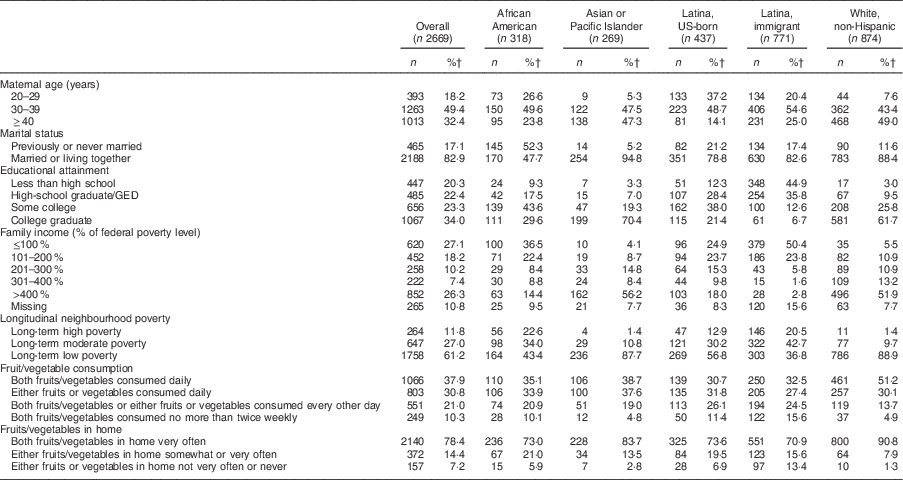
GED, General Educational Development.
†Weighted percentage.
Table 2 presents crude and adjusted odds of consuming fruits and vegetables less often than daily. All variables had significant associations in the crude models. All racial/ethnic groups had higher odds of consuming fruits and vegetables less often than daily compared with White women, and there appeared to be a gradient in the relationship of consuming fruits and vegetables less often than daily to SES. The odds remained similar in the model adjusting for demographics, except that women in their 30s were no longer at higher odds compared with older women and the odds for African American women appeared to be attenuated somewhat. In the SES model, women of colour were still at higher odds compared with White women, but the odds were generally attenuated compared with the demographic model. The odds for educational attainment and income were also attenuated compared with the crude models. In the full model, unmarried women, women of colour and women without college degrees were at higher odds compared with their respective reference groups, while neighbourhood poverty was no longer statistically significant, suggesting that individual-level sociodemographic factors were mediating the neighbourhood poverty–fruit and vegetable consumption relationship.
Odds of consuming fruits and vegetables less often than daily; Geographic Research on Wellbeing (GROW) Study (n 2669), California, USA, 2012–2013
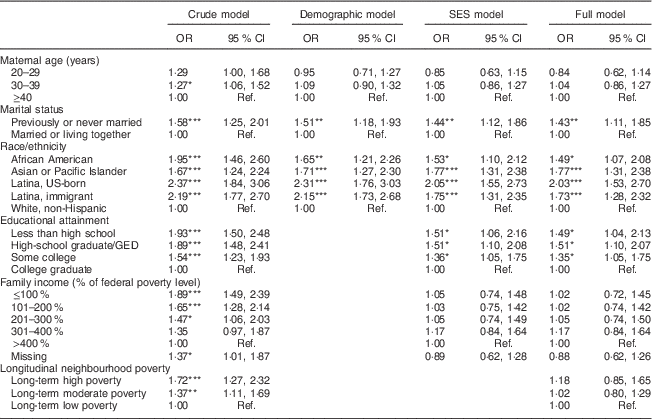
SES, socio-economic status; GED, General Educational Development; Ref., reference category.
*P<0·05, **P<0·01, ***P<0·001.
Table 3 presents the same set of models, with the outcome being not having fruits and vegetables in the home very often. Every level of every variable had statistically significant higher odds of not having fruits and vegetables in the home very often compared with their respective reference groups in the crude models. In addition, racial/ethnic and socio-economic disparities appeared to be stronger than for consuming fruits and vegetables less often than daily. Age was no longer significant in the demographic model, and odds for unmarried and each racial/ethnic group (except for Asian/Pacific Islanders) appeared to be attenuated. In the SES model, we observed that women of colour were still at higher odds compared with White women, but the odds were further attenuated (except for Asian/Pacific Islanders) compared with the demographic model, and odds for educational attainment and income were also attenuated compared with the crude models. In the full model, race/ethnicity, educational attainment and income were each independently associated with not having fruits and vegetables in the home very often.
Odds of not having fruits and vegetables in the home very often; Geographic Research on Wellbeing (GROW) Study (n 2669), California, USA, 2012–2013
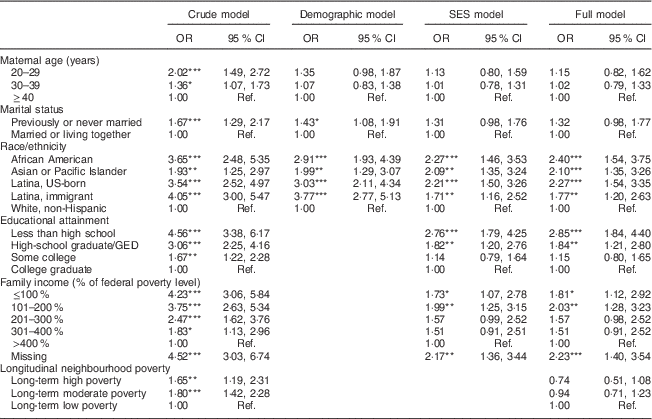
SES, socio-economic status; GED, General Educational Development; Ref., reference category.
*P<0·05, **P<0·01, ***P<0·001.
Interaction terms tested in subsequent models (data not shown) demonstrated that individual- and neighbourhood-level SES did not modify the relationship between race/ethnicity and fruit and vegetable consumption. Finally, patterns were somewhat similar for US-born and immigrant Latinas in the odds of fruit and vegetable consumption compared with White women, although US-born Latinas appeared to be at slightly higher risk of low consumption of fruits and vegetables than Latina immigrants after controlling for SES.
Discussion
In the present study of a socio-economically and ethnically diverse sample of 2669 mothers of young children, we investigated the independent effects of race/ethnicity and SES (individual-level education and income, and neighbourhood-level poverty) on daily consumption of fruits and vegetables and the availability of fruits and vegetables in the home, considering the potential confounding effects of age, marital status and nativity of Latinas.
We found that 69 % of all women consumed fruits and/or vegetables daily. This percentage is consistent with that reported for US adult men and women in 2013 by the BRFSS, which found that over 60 % consumed fruits or vegetables daily( 7 ). In our investigation of the associations of race/ethnicity and individual-level SES with fruit and vegetable consumption, we noted that race/ethnicity showed consistent relationships with consuming fruits and vegetables less often than daily as well as with not having fruits and vegetables in the home frequently, after adjusting for age, marital status and neighbourhood poverty. Specifically, all racial/ethnic groups showed significantly higher odds than non-Hispanic Whites with regard to both of these outcome variables. Women with the lowest levels of family income had the highest odds of consuming fruits and vegetables less often than daily and not having fruits and vegetables in the home frequently, suggesting that inadequate financial resources may be a critical barrier to purchasing fresh fruits and vegetables for the home( Reference Darmon, Ferguson and Briend 27 , Reference Burr, Trembeth and Jones 28 ). Several studies together support the notion that while lack of knowledge may have been a barrier in the past, at present, addressing financial constraints may be a more effective means of increasing fruit and vegetable consumption( Reference Darmon, Ferguson and Briend 27 , Reference Burr, Trembeth and Jones 28 ).
Our findings illuminate other reports of socio-economic and racial/ethnic differences in fruit and vegetable consumption. Analysing data obtained from 1266 young adult African American and European American men and women aged 20–38 years enrolled in the Bogalusa Heart Study, Deshmukh-Taskar et al. reported that race and education, but not income, were associated with fruit and vegetable consumption( Reference Deshmukh-Taskar, Nicklas and Yang 13 ). However, they did not examine these associations in a multivariate model that included neighbourhood SES. By examining the associations of race/ethnicity and individual-level SES with fruit and vegetable consumption simultaneously and controlling for neighbourhood poverty and other potential confounders, we observed that the effects of race/ethnicity on fruit and vegetable consumption were independent of individual- and neighbourhood-level SES. In addition, we examined interactions between SES and race/ethnicity and found little evidence of any, suggesting that regardless of the racial/ethnic composition of the targeted population, public health interventions aiming to promote daily consumption of fruits and vegetables in low-income communities must not only be culturally tailored, but also simultaneously address the accessibility of fruits and vegetables from an availability and affordability perspective.
Social disparities in diet quality have been a concern globally, but especially in post-industrialized Western nations where there is an abundance of healthy food. The issue in such societies is not whether healthy food is available but whether it is accessible to all socio-economic groups, and whether having a healthy diet is a matter of individual choice and preferences. An increasing body of literature points to the inequities of food distribution, with healthy and fresh foods being less accessible to lower-income communities, where unhealthy processed and fast foods are more readily available( Reference Morland, Wing and Diez-Roux 16 , Reference Larson, Story and Nelson 20 ). In the USA, the UK and wealthier Western nations, efforts have been made to increase access to healthy food, particularly fresh fruits and vegetables, in lower-income communities and through benefits such as the Supplemental Nutrition Assistance Program( Reference Morland, Wing and Diez-Roux 16 , Reference Moore and Diez Roux 18 ). Still, questions remain as to whether culturally tailored nutrition education interventions are needed and whether such interventions are effective without addressing social inequities in income and education.
In our study, we observed longitudinal neighbourhood poverty to be associated with consuming fruits and vegetables less often than daily and not having fruits and vegetables in the home frequently in the unadjusted model. However, once individual-level factors (race/ethnicity, income, education, etc.) were accounted for, its associations with both of these variables were no longer statistically significant. In contrast, Dubowitz et al. ( Reference Dubowitz, Heron and Bird 29 ), who analysed data from the Third National Health and Nutrition Examination Survey, reported associations between neighbourhood socio-economic characteristics and fruit and vegetable intake, independent of individual SES. Race/ethnicity, income and education influence where people live( Reference Clark and Ledwith 30 ). At the same time, neighbourhood SES influences individual SES via access to education and employment opportunities. Hence, longitudinal neighbourhood poverty may mediate the relationship between race/ethnicity or SES and diet, or as observed in our study, race/ethnicity and individual SES may mediate the relationship between longitudinal neighbourhood poverty and diet. These relationships should be further explored using systems science methods such as agent-based modelling to allow for consideration of dynamic interactions and feedback loops( Reference Hammond 31 ). Understanding the role of neighbourhood poverty in determining the consumption of fresh fruits and vegetables is important for designing appropriate intervention programmes to address food insecurity issues in low-income communities. For example, nutrition assistance programmes that simply provide nutrition education and food vouchers or cash assistance to low-income families may lead to increased consumption of unhealthy foods if fresh fruits and vegetables are not accessible in the neighbourhood.
In the USA today, unhealthy, energy-dense processed foods are more readily available in poor neighbourhoods. Such foods are cheaper than fresh fruits and vegetables and therefore in greater demand by low-income families with limited food budgets. They are also more profitable for small grocery stores, which are found in greater numbers in lower-income neighbourhoods compared with full-service grocery stores( Reference Morland, Wing and Diez-Roux 16 , Reference Moore and Diez Roux 18 ), to carry in that they are less perishable and do not require refrigeration. We conclude that addressing the dietary needs of poor communities requires multilevel interventions that simultaneously provide culturally tailored nutrition education and address the physical and economic accessibility of culturally acceptable fruits and vegetables.
Acknowledgements
Acknowledgements: The authors thank Kristen Carrillo-Kappus for administrative assistance. Financial support: This work was supported by a Research Scholar Grant from the American Cancer Society (C.C., grant number RSGT-11-010-01-CPPB). The American Cancer Society had no role in the design, analysis or writing of this article. Conflict of interest: None. Authorship: M.Wa., C.C. and M.Wi. designed the study, K.H. conducted the data analyses, M.Wa. and C.C. interpreted the results and wrote the article, and M.Wi. and K.H. revised the article. Ethics of human subject participation: This study was conducted according to the guidelines laid down in the declaration of Helsinki and all procedures involving human subjects/patients were approved by the University of Texas at Austin Institutional Review Board and the California Committee for the Protection of Human Subjects with an approved waiver of written documentation of consent for mail participants. Verbal consent was witnessed and formally recorded for telephone participants.



