


What is critical psychiatry?
The institution of psychiatry has attracted controversy since its 19th century origins, initially from public campaigners with experience of asylum life. These centred on wrongful detainment and poor conditions. During the mid-20th century certain scholars (Box 1) began to articulate an intellectual critique which became known as ‘anti-psychiatry’. This focused on the suitability and implications of considering mental disorders as medical conditions.
Leading ‘anti-psychiatrists’
Thomas Szasz (1920–2012) An American psychiatrist who challenged the idea of mental illness, and argued that what is considered as mental illness is better understood as socially deviant behaviour.a
R. D. Laing (1927–1989) A Scottish psychiatrist, whose work was influenced by existential philosophy. He analysed the meaning of mental illness ‘symptoms’ in relation to the familial and social environment. He founded Kingsley Hall, a therapeutic community for people with psychosis.a
Michel Foucault (1926–1984) A French philosopher whose first major work considered varying understandings of madness through different historical epochs and social responses to it.
David Cooper (1931–1986) A South African psychiatrist, who worked in Britain. He set up a therapeutic community (known as Villa 21) within an existing asylum. He was a Marxist ideologue and he coined the term ‘anti-psychiatry’.
Erving Goffman (1922–1982) An American sociologist whose book Asylums described the impoverishing effects of ‘total institutions’, including asylums, on people's behaviour.
a. Szasz did not consider himself an ‘anti-psychiatrist’, a term he disliked and considered to be associated with the ideas of R. D. Laing. Laing, in his turn, also eschewed the term.
Other perspectives that challenge the hegemony of the now dominant biological view of mental disorder include social psychiatry, psychotherapy and psychoanalysis. Critical psychiatry is indebted to this background. Unlike anti-psychiatry, which often called for the abolition of psychiatry on what have been perceived as ideological grounds, critical psychiatry offers constructive criticism of clinical psychiatry and of the aims and organisation of mental health services. Important concerns are the implications of the medical or biological model of mental disorder, harmful effects of the sick role, overuse and misunderstanding of psychopharmaceuticals, recognition of the central part relationship plays in psychological therapies, tensions between social control functions and patients' best interests, and socio-political influences on psychological well-being. Many in the critical psychiatry movement are practising psychiatrists keen to grapple with the intellectual and practical challenges that confront them, and thus develop better ways of working with people suffering mental health problems.
The Critical Psychiatry Network (CPN) started in the UK but now extends globally. It accommodates a wide range of opinions rather than claiming to speak with a single voice, and it acts as a lobbying, campaigning and mutually supportive body. This contribution to BJPsych Advances is intended to air controversies experienced by many and widely discussed by members of the CPN. It is presented in two sections: the relationship between medicine and psychiatry, and alternative approaches to understanding the principal forms of treatment psychiatry offers.
Medicine and psychiatry
Traditional psychiatry presents itself as a medical specialty addressing ‘mental illness’: ‘Differences between mental and physical illnesses, striking though some of them are, are quantitative rather than qualitative, differences of emphasis rather than fundamental differences’ (Kendell Reference Kendell and Schaler2004: pp. 41–42).
The idea that psychiatric conditions are equivalent to medical diseases suggests that psychiatric practice is straightforward and uncontroversial. Illnesses should be eradicated wherever possible, and coercion is sometimes justified because mental illness can disrupt insight. Disturbances of thought and behaviour are sufficiently understood as medical conditions, underpinning much of how mental health difficulties are viewed and responded to, and who has authority over them. Unfortunately, this position glosses over a number of conceptual difficulties, which critical psychiatry considers important.
The ‘myth’ of mental illness?
The assumption that mental disorders are medical conditions is challenged by Thomas Szasz's famous assertion that ‘mental illness is a myth’ (Szasz Reference Szasz1960). Szasz insisted that ‘disease’ and illness are the consequence of a bodily biological dysfunction: ‘pathology’. From this position it is misleading to extend the use of ‘illness’ to situations that are characterised by patterns of personal conduct rather than by evidence of physical pathology. He argued that ‘mental illnesses’ are properties of human beings, not of biological systems. It is whole human beings who think, speak and act, and as humans are social creatures, behavioural abnormalities considered evidence of mental illness are identified by reference to social norms. Furthermore, defining unwelcome behaviour as a ‘mental illness’ amounts to a social interaction, not something wholly explained by reference to a single individual.
Much has been invested in a search for biological evidence that would allow mental disorders to be considered ‘true’ diseases by this logic. Szasz's response was always that, were this to be successful, the result would be a category shift whereby the condition would cease to be considered a ‘mental illness’ and become a ‘neurological’ one instead. Despite decades of intensive research, there is still no conclusive evidence that enables any of the major categories of mental disorder, including schizophrenia, depression, anxiety and attention-deficit hyperactivity disorder (ADHD), to be considered a neurological condition in this way (Joseph Reference Joseph2003; Sullivan Reference Sullivan, Kendler and Neale2003; Moncrieff Reference Moncrieff2008; Leo Reference Leo, Cohen, Timimi and Leo2009; Moncrieff Reference Moncrieff2013; Ripke Reference Ripke, Neale and Corvin2014). The fact that there are some subtle group differences between people with some diagnoses and ‘normal controls’ in aspects of brain structure or function does not demonstrate the presence of a neurological disease. None of the findings are sufficiently specific or capable of differentiating between a person who is thought to have a particular mental disorder and one who is not. Diagnosis is still made on the basis of behaviour, thoughts and feelings that are reported by the individual or those around them and that depend, of course, on judgements about what is ‘normal’ and what is not. Moreover, the variations in brain structure or function that are detected, are most likely attributable to other differences between people who are labelled with psychiatric disorders and those who are identified as ‘controls’: differences in life experiences, social class, IQ and the use of psychiatric medication (Ho Reference Ho, Andreasen and Ziebell2011; Kendler Reference Kendler, Ohlsson and Sundquist2015).
Szasz lived long enough to defend his thesis in person for more than half a century. Criticisms of it include the view that, although mental illness is not adequately understood in biological terms, a distinction between mental and physical illness is too categorical. Some critical psychiatrists have expressed this view: that the assignation of all illness and disease reflects a negative evaluation, and mental and physical suffering cannot be wholly disentangled (Bracken Reference Bracken and Thomas2007). Others suggest that Szasz was right to highlight how concepts of disease and illness are fundamentally biological and are different from the situations we regard as constituting mental disorder (Moncrieff Reference Moncrieff and Schaler2017). Yet others argue that use of terms such as ‘pathology’, ‘disease’ and ‘illness’ is at root a semantic choice reflecting common usage. Their use by psychiatrists is determined by wider social forces which favour the identification of mental disorders with medical problems in order to facilitate a number of otherwise difficult social or political problems (Scheff Reference Scheff1999; Middleton Reference Middleton2015).
Although Szasz's ideas have not been widely embraced by psychiatry and are variously interpreted, they do open debate about the consequences of viewing mental health difficulties through the same conceptual and institutional lens as physical illness. Viewing conditions as illnesses or diseases sets them in a particular social context, where certain professions have jurisdiction and certain arrangements (in this case the sick role and its entitlements) automatically apply. It also facilitates mental health legislation, though not necessarily in the most fair or transparent manner (see below).
Psychiatry's knowledge base
The link between psychiatry and medicine confers legitimacy on psychiatry as a professional enterprise because its practitioners are seen to hold and exploit expert medical knowledge. Medical knowledge is identified with the scientific approach that was developed to study the natural world; systematically investigating assumed-to-be immutable truths by measurement and manipulation of particular elements in a controlled environment. The application of this form of knowledge-seeking to the world of human affairs is referred to as ‘positivism’, an approach that has been criticised for oversimplifying human affairs. Earlier scholars distinguished between Geisteswissenschaften, human or moral sciences, and Naturwissenschaften, natural sciences. The distinction remains a core feature of social science, where it is argued that the study of human beings is irreducibly different from the study of the natural world. Human behaviour is intentional, interactive and inextricable from its social setting. It has meaning, rather than causes, that can only be discerned by reference to its context.
Therefore, if mental disorders are to be understood as human reactions rather than as physical diseases, a positivist perspective cannot provide adequate or comprehensive knowledge. Different approaches are needed that can study social phenomena appropriately.
Hermeneutics is one such alternative. A hermeneutic approach emphasises how mental disorder should be regarded not as intrinsically meaningless phenomena that arise as a result of an underlying morbid process but as meaningful responses to individuals' life histories and particular social, cultural and familial contexts (Bracken Reference Bracken and Thomas2007). In this way mental disorder is not fundamentally different from all human thought and behaviour. This view was embraced by the leading mid-20th-century American psychiatrist Adolf Meyer, who argued that mental disorders can be seen as meaningful, if misguided, reactions to real-life challenges. His thought prefigured later thinkers such as R. D. Laing, and similar ideas inspired clinical innovations, including therapeutic communities. Recent therapeutic movements such as open dialogue also embrace hermeneutic principles.
Social constructivism presents another challenge to positivism by emphasising the social nature of cognition and knowledge. Knowledge is the product of interactions among members of groups or societies and expressed in ways that are particular to that group or culture. Social construction also emphasises the role of language in expressing locally accepted ideas and values. Examples from psychiatry include cross-cultural research exploring variations between cultures in the way that mental distress is expressed, and analyses of how diagnoses evolve over time. Two examples are outlined in Box 2.
The social construction of depression
Mental illness in Eastern Europe
The work of anthropologist Vieda Skultans demonstrates how the Western concept of depression was contrived to replace prior understandings of distress popular in the Soviet era (often diagnosed as ‘neurasthenia’) (Skultans Reference Skultans2007). The growth of pharmaceutical marketing influenced doctors' behaviour and helped to effect this change. Her analysis of medical consultations in Latvia reveals how the transition to the concept of depression involved doctors imposing an increasingly objectified view of suffering onto their patients' complaints, ignoring personal explanations and context. Skultans' analysis illustrates how the diagnosis and treatment of psychiatric complaints reflect their social context; in this case, the effects of an emerging market economy.
Mental illness in Japan
The introduction of the Western concept of ‘depression’ into Japan has been carefully documented by anthropologists Lawrence Kirmayer and Junko Kitanaka. They describe how prior understandings emphasised somatic symptoms and anxiety, with high use of benzodiazepines. Moreover, sadness and suicide were not regarded entirely negatively as in the West, and were valued for indicating sensitivity, bravery and honour. Ihara (Reference Ihara2012) has documented how pharmaceutical marketing and public health campaigns introduced the Western concept of depression as an illness, using the slogan the ‘cold of the soul’. This has been accompanied by soaring rates of antidepressant use.
From this perspective people come to define their own or others' behaviours and experiences through the discourse that is prevalent within a particular culture. Feelings of distress can be perceived as depression, anxiety, bipolar disorder or neurasthenia, depending on the cultural availability and promotion of different concepts. These concepts are, in turn, shaped by social and cultural developments, including the expansion of Western medicine and pharmaceutical marketing.
In other work, philosopher Jeff Coulter describes the social construction of concepts relating to more severe mental disorder. According to Coulter, communities designate certain patterns of behaviour that infringe rules of conduct and social expectations as ‘mental illness’. He argues that it is this social process that defines situations as requiring official, psychiatric attention, rather than professionally constructed categorisations or ‘diagnoses’, and he highlights how this process contrasts with the process of diagnosis in physical medicine (Coulter Reference Coulter1979).
Psychiatry as a social institution
Historical analyses also reveal how psychiatry has evolved out of institutions developed to manage troubling behaviour or ‘deviance’. Productive interactions between people depend on the maintenance of social order. Confusion, despair, misunderstanding and dependency are all disruptive, though not necessarily unlawful. How they are understood and responded to is determined by prevailing social and political structures. Critical psychiatrists have highlighted how contemporary psychiatry is a current embodiment of the need to contain disruptions of social order, a perspective articulated by French philosopher Michel Foucault (Reference Foucault1965) and historian Andrew Scull (Reference Scull2015), as well as by Szasz.
Foucault traced how attitudes to madness were transformed over the 17th and 18th centuries. As industrial society started to emerge, conformity and discipline became important. In France, the economically unproductive were brought together in the hôpitaux généreaux; Foucault identified this as the ‘Great Confinement’. In England, those without means were provided with minimal subsistence in the community under the Tudor Poor Laws, and then increasingly in the workhouse. Asylums reflected the segregation of ‘paupers’ into the ‘able-bodied’, who were kept in the workhouse and who could be obliged to work, and the incapacitated, who were moved to the workhouse hospital or the local asylum. Thus, the birthplace of institutional psychiatry can be considered arrangements for managing unproductive behaviour in a system of wage labour and industrial production. The growth of psychiatry in the 19th century legitimated this system by presenting it as a medical and therapeutic endeavour. From Foucault's perspective, ‘psychiatry is a moral practice, overlaid by the myths of positivism’ (Foucault Reference Foucault1965: p. 276). In the 20th century the medical framework became more strongly cemented, so that the social functions of mental institutions and services were further obscured.
The sick role
Psychiatry's institutional functions are legitimated by the designation of its clients or patients as ill or ‘sick’. This inevitably enters them into a ‘sick role’. The ‘sick role’ (Parsons Reference Parsons1951) is a contract between the sick person and society, whereby the sick are provided for and the social costs of sickness are minimised. The ‘ill’ person enjoys relief from responsibilities and access to care in exchange for submission to expertly defined treatment. Through its association with medicine, psychiatry has extended the sick role to a wider range of situations. Most would concur with a need for care and support of the mentally disturbed, but using the sick role to achieve this has limitations. Power relations enshrined in it encourage long-term passivity, impair investment in change and can contribute to dissatisfaction as the promised cure (the physician's part of the contract) may fail to materialise.
Psychiatry and social control
Anti-psychiatrists highlighted that when behaviour is designated as disease, individuals' rights and liberties can be overridden in the name of acting in their own interests. The fact that this can be presented as an objective, scientific endeavour means it is easily open to abuse, and powerful groups can define any socially repudiated behaviour as ‘mental illness’ in order to eradicate or control it. Generally agreed examples of this include the designation of male homosexuality as a mental disorder up until the 1970s, and the application of a ‘diagnosis’ of drapetomania to African American slaves intent on escaping.
Unlike anti-psychiatrists, most critical psychiatrists accept the need for recourse to coercion in circumstances where individuals are so overwhelmed, confused or desperate that they fail to cope with everyday demands or place others in intolerable or dangerous situations, and that under such circumstances lawful restraint and other related measures are justified. However, veiling these situations as ‘medical disorder’ disguises the real reasons for taking coercive action, which are usually to maintain social order and to support the dependent. A more transparent approach would acknowledge these pressures and scrutinise authorised interventions more rigorously. Legislation based on the concept of ‘capacity’ rather than the presence of ‘illness’ (or its legalistic pseudonym, ‘disorder’) is one such possibility (Szmukler Reference Szmukler and Applebaum2008). This would avoid the medicalising assumptions woven into current legislation and would require explicit justification for coercive and paternalistic actions. It would also challenge the extension of coercion into the community, as occurred with the introduction of ‘community treatment orders’. Most patients able to live in the community would be considered to have capacity to decide whether or not to take psychiatric medication. However, capacity-based legislation, such as the Mental Capacity Act 2005, requires contentious and subjective judgements about the best interests of individuals and the safety of society. Replacing a medically justified system of control is not easy, but balancing the interests and freedoms of different groups and individuals is inherently fraught and deserves greater attention and transparency.
There is a substantial body of work addressing the political implications of the ‘medicalisation’ of human experience, which dates back at least to the writings of Ivan Illich in the 1960s and 1970s (e.g. Medical Nemesis, Illich Reference Illich1974). The widespread, pharma-funded promotion of the idea that unwanted emotions or behaviour can be understood as ‘abnormal brain chemistry’ has taken this process to a new level, encouraging large swathes of the population of Western countries to view life difficulties as brain events that need chemical correction. Several commentators, many in the Marxist tradition, have highlighted how this helps to support a pliable society in which imperfections are attributed to individuals rather than social injustice, obscuring the systemic difficulties that cause widespread misery and distress (e.g. Cohen Reference Cohen2016). American sociologists Conrad & Potter (Reference Conrad and Potter2000) discuss how the availability of the diagnosis ‘adult ADHD’ can be seen as a form of ‘medicalisation of underperformance’, which diverts attention from the increasing competitiveness and performance-driven culture of modern society. Gary Greenberg (Reference Greenberg2011) highlights how the concept of depression as an illness obscures social and economic hardships and discourages opposition to the structures that maintain these.
Responding to mental disorder
Critical psychiatrists (and many others) argue that mental disorders do not simply occur in individuals, but are patterns of behaviour expressed during interpersonal and social interactions. Social conditions contribute, and social and political interventions are required if the burden of mental disorder is to be reduced. Moreover, non-professional activities such as peer support, befriending schemes and community initiatives help individuals who struggle to cope with everyday demands without designating them as ‘mentally ill’ and consigning them to the sick role. Thus, critical psychiatry recognises that the best ways of responding to ‘mental disorder’ are not necessarily psychiatric, although psychiatry can provide help too. This section examines the two main forms that this help generally takes and considers how they can be offered to people in ways that reflect the preceding discussion about the nature of mental distress and the role of psychiatric services.
Drug treatment
There is considerable criticism of the dominant role drug treatment plays in contemporary psychiatry. Critics point to the enormous influence of the pharmaceutical industry, accusing it of overselling its products, inflating their benefits and understating adverse effects (Whitaker Reference Whitaker2010). Prescriptions for most drugs are rising steadily, with little evidence that this is producing better outcomes (Ilyas Reference Ilyas and Moncrieff2012).
Critical psychiatrists do not eschew drug treatment. Instead, they offer an alternative framework for understanding and using it that is more transparent and involves patients more centrally in determining how it happens.
Models of drug action
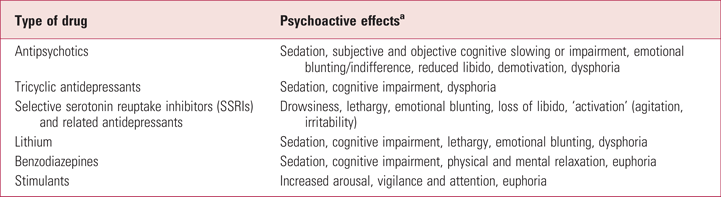
Conventional psychopharmacology assumes that psychiatric drugs work by modifying an underlying physiological abnormality responsible for the disorder. This might be referred to as a ‘disease-centred’ model of drug action. Drug treatment is presented as restoring a normal or healthy state. Psychiatric drugs ‘counter or compensate for the abnormal pathophysiology’ (Hyman Reference Hyman and Nestler1997). However, critical psychiatrists have argued that there is little evidence to support the disease-centred model and they propose an alternative, ‘drug-centred’ model. This suggests that, as psychiatric drugs are psychoactive substances, they modify symptoms through the alterations they produce in normal mental processes, emotion and behaviour (Moncrieff Reference Moncrieff2008; Breggin Reference Breggin2008) (Table 1).
Psychoactive effects of psychiatric drugs
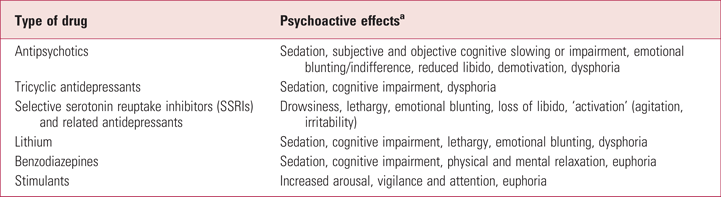
a. The effects of different drugs within each class vary, particularly drugs classified as antipsychotics. The information provided is necessarily a summary which glosses over distinctions between individual agents. For more detail and references see Yeomans et al (Reference Yeomans, Moncrieff and Huws2015).
Antipsychotics, antidepressants, anxiolytics and ‘mood stabilisers’ all induce significant cognitive, emotional and behavioural alterations in animals and in normal volunteers. The drug-centred approach focuses on making judgements about when these alterations might be useful. Intrusive psychotic symptoms may be muted and rendered less distressing by the cognitive slowing and emotion-blunting effects of antipsychotics, for example. Intense anxiety may be relieved by the state of mental and physical relaxation induced by benzodiazepines. However, although drugs may reduce unwanted feelings and behaviours, this approach also highlights their adverse effects on other aspects of mental and physical functioning. A more detailed discussion of disease- and drug-centred approaches to the use of psychiatric medication was published in Advances in 2015 (Yeomans Reference Yeomans, Moncrieff and Huws2015).
‘Placebo’ effects
Alongside their established pharmacological properties, the use of psychotropic medicines has psychological, social and ritualistic dimensions, commonly grouped together as the ‘placebo effect’.
The prescription of drugs regarded as ‘medicines’ has many potential received meanings: the user has a brain disease; other explanations are irrelevant; the user cannot affect the outcome; they are entitled to financial, material and emotional support; the doctor cares. These meanings, some of which relate to the sick role, may be reinforced by family and other professionals, and will interact with the subjective alterations the drug produces. Furthermore, although placebo effects are generally regarded as positive, some of these meanings may entrench people in a role of chronic dependency and hinder long-term recovery.
Collaborative prescribing
Critical psychiatrists are clear that there is more to prescribing a psychiatric medication than simply introducing a chemical into the patient. It is important to explore the reasons why patients want medication, what they expect it to achieve and the functions it is intended to fulfil. In this way it may be possible to identify other ways of achieving desired outcomes. When drug treatment is considered, a drug-centred approach to psychopharmacology readily lends itself to a collaborative discussion of the potential benefits and harms of different agents. It changes the relationship between patient and prescriber because drug treatment is no longer justified on the basis that it normalises underlying pathology. The drug-centred model advocates a form of self-medication, in which the psychiatrist acts as a reservoir of information and evidence, helps to explore the likely impact and limitations of drug treatment and consideration of alternative, non-drug-based approaches (Box 3).
An example of collaborative prescribing
Discussing antidepressant medication
The psychiatrist should explain that there is no evidence that antidepressants work by correcting a chemical imbalance or other identifiable abnormality. They should inform the patient of the mental and physical alterations produced by common antidepressants (Table 1), acknowledging the paucity of research data about these effects. They might highlight the reduction in intensity of emotions – both desired and undesired – that appears to be produced by some antidepressants and how this effect may be linked with sexual impairment. As in any consultation, they should discuss known adverse effects, including withdrawal effects. The psychiatrist should attempt to understand what the patient expects to gain from drug treatment and whether their expectations match the evidence of what antidepressants can achieve. They should discuss alternative options and help the patient to weigh up the pros and cons of taking an antidepressant in the light of all these considerations.
Psychological therapies
Differing psychotherapeutic models have reputations for greater efficacy in certain situations, are claimed by some to be effective in all conditions, and all are sometimes ineffective. This questions distinctions between them and whether ‘psychotherapy’ really differs from other forms of therapeutic encounter; questions which are taken up by critical psychiatry.
Defining psychotherapies
Therapists generally present themselves as adhering to one or more therapeutic traditions that reflect differing theoretical frameworks, how a therapy might be conducted and the problems for which it might be best suited. These also reflect training and qualifications, inform commissioning and offer the curious client some idea of what to expect.
From a critical perspective, ‘psychotherapy’ also shares territory with wise counsel, training, coaching and religious teaching. It also has much in common with supportive and caring interactions found throughout human experience: love, friendship, advice and mentoring. This perspective has a long and respectable background.
The ‘Dodo bird verdict’
Rosenzweig adopted Lewis Carroll's ‘Everybody has won, and all must have prizes’ when suggesting that psychotherapeutic outcome might reflect influences common to all forms of therapy rather than effects attributable to technique or theoretical position (Rosenzweig Reference Rosenzweig1936). The ‘Dodo bird verdict’ is widely accepted (Budd Reference Budd and Hughes2009) and supported by reviews and meta-analyses of outcome data over the past half-century, which all agree that different psychotherapeutic approaches produce broadly similar results. It appears to reflect the operation of common factors most famously articulated by Jerome D. Frank (Frank Reference Frank1971):
• a confiding relationship
• rationale
• personal qualities, status and a setting that strengthen expectations of help
• success experiences
• emotional arousal as a prerequisite to psychological change.
Each of the main psychotherapeutic approaches emphasises some of these. Psychodynamic approaches attend to intense feelings (transference). The relationship between client and therapist is a central feature of humanistic approaches. Behavioural and cognitive–behavioural psychotherapies offer an explicit rationale for the client's distress, ways of relieving it and opportunities for ‘success experiences’.
Humanistic approaches place particular emphasis on clients' growth, hopes and interpersonal competences. The experiential experiments of behavioural and cognitive–behavioural psychotherapy, analyses of transference and defence mechanisms in the course of a psychodynamic psychotherapy, and the identification of self-defeating strategies during a humanistic therapy are all challenges to the client's status quo. They encourage uncomfortable risk-taking in the pursuit of change, which is only likely to happen if the therapist is able to engage positively with clients' anxieties and heightened emotions.
Common ingredients of psychotherapy are also reflected in the ‘ordinary’ helping relationships that people develop in the course of everyday life. They are illustrated by some of the words used to describe them: ‘a shoulder to cry on’, ‘reliable and trustworthy’, ‘they know what they are talking about’, ‘helped to put things in perspective’.
Supportive relationships
Whether presented as a formal psychotherapy or not, all professionally orchestrated relationships can be a healing encounter. They have the potential to be a supported and bounded opportunity to address problems and effect personal change. They can do this when everyday relationships have broken down or become strained. Specific theoretical frameworks and techniques might be of value in particular situations, such as addressing safety behaviours in someone disabled by anxiety or in elucidating the fuller meaning of psychological defences troubling someone with personality difficulties, but the most important ingredient of therapeutic practice is the formation and maintenance of a supportive and accepting relationship. This is not always easy when the client is someone who has reason to be fearful or suspicious, and critical psychiatry does not minimise the need for professionalism and experience. However, at present services are commissioned and organised around the provision of specific forms of therapy for specific forms of mental health difficulty. Perhaps much more explicit priority should be given to the relational dimensions of what practitioners do. Although this may read as motherhood and apple pie, critical psychiatry draws attention to the many ways in which resource pressures and institutional arrangements hinder this important aspect of practice and instead encourage paternalising and instrumental approaches.
To summarise
Critical psychiatry is not ‘anti-psychiatry’, but there are legitimate grounds on which to question the conceptual assimilation of psychiatric practice and physical medicine, and the equation of mentally disordered behaviour with physical disease. Critical psychiatry does not reject science, but questions the applicability of positivist research paradigms to the study of complex human responses, suggesting that other epistemologies may often be more enlightening. For critical psychiatry, the institution of psychiatry can be considered an element of society's arrangements for caring for the incapacitated and maintaining productivity and social order, which is legitimated through the medical framework of disease, illness and treatment.
Nevertheless, critical psychiatry believes that there are real social problems to be addressed and that psychiatrists can contribute through judicious use of drug treatments and a perspicuous approach to therapeutic relationships. Traditional understandings of psychopharmacology ignore the universal mind- and behaviour-altering properties of psychiatric drugs and their interactions with symptoms, as well as the important non-pharmacological effects of prescribing medicines.
Although specialised psychotherapeutic expertise and training are valuable and play important parts in service provision, it would seem that the most important contribution any practitioner can make to patients' well-being is to provide and engage in a supportive, accepting, understanding and appropriately bounded relationship.
MCQs
1 The following is true of critical psychiatry:
a it is a new term for what has been known as anti-psychiatry
b it believes patients should never be subjected to coercion
c it believes there is no place for drug treatment in psychiatry
d it offers constructive criticism of assumptions underpinning conventional practice
e its views are held by a small minority of psychiatrists.
2 Thomas Szasz was critical of psychiatry because:
a he felt the language and logics of medicine did not apply to it
b he was religiously opposed to it
c patients complain about it
d people should not be restrained when they threaten to harm themselves or others
e treatments are ineffective.
3 The medical sick role is problematic in psychiatry because:
a it does not accommodate the need for treatment without consent
b not all carers agree with patients' wishes
c psychiatrists cannot always be honest with their patients
d the classic sick role no longer has a part to play in modern medicine
e the sick role inhibits autonomy and self-reliance.
4 Concerning models of drug action:
a the disease-centred model rules out the placebo response
b the disease-centred model was developed in the early 20th century
c the drug-centred model of action classifies drugs according to their target condition or symptoms
d the drug-centred model of action explains how altered mental functions can interact with mental and behavioural symptoms
e modern drugs have been shown to act through a disease-centred mechanism.
5 The importance of common factors in determining psychotherapeutic outcome suggests that:
a a great deal can be achieved by anyone able to supportively engage with distressed individuals
b only mental health professionals should attempt to form a helping relationship
c only qualified psychotherapists are capable of developing a therapeutic relationship with clients
d psychological therapies have to be conducted in special settings
e technical skills are the key to successful practice.
MCQ answers
1 d 2 a 3 e 4 d 5 a



eLetters
No eLetters have been published for this article.