





No CrossRef data available.
Article contents
Numerical invariants on twisted noncommutative polyballs: curvature and multiplicity
Published online by Cambridge University Press: 27 November 2024
Abstract
The goal of this paper is to show that the theory of curvature invariant, as introduced by Arveson, admits a natural extension to the framework of  ${\mathcal U}$-twisted polyballs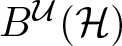 $B^{\mathcal U}({\mathcal H})$ which consist of k-tuples $(A_1,\ldots, A_k)$ of row contractions $A_i=(A_{i,1},\ldots, A_{i,n_i})$ satisfying certain ${\mathcal U}$-commutation relations with respect to a set ${\mathcal U}$ of unitary commuting operators on a Hilbert space ${\mathcal H}$. Throughout this paper, we will be concerned with the curvature of the elements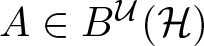 $A\in B^{\mathcal U}({\mathcal H})$ with positive trace class defect operator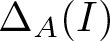 $\Delta_A(I)$. We prove the existence of the curvature invariant and present some of its basic properties. A distinguished role as a universal model among the pure elements in ${\mathcal U}$-twisted polyballs is played by the standard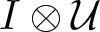 $I\otimes{\mathcal U}$-twisted multi-shift S acting on $\ell^2({\mathbb F}_{n_1}^+\times\cdots\times {\mathbb F}_{n_k}^+)\otimes {\mathcal H}$. The curvature invariant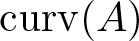 $\mathrm{curv} (A)$ can be any non-negative real number and measures the amount by which A deviates from the universal model S. Special attention is given to the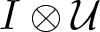 $I\otimes {\mathcal U}$-twisted multi-shift S and the invariant subspaces (co-invariant) under S and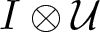 $I\otimes {\mathcal U}$, due to the fact that any pure element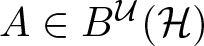 $A\in B^{\mathcal U}({\mathcal H})$ with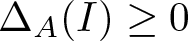 $\Delta_A(I)\geq 0$ is the compression of S to such a co-invariant subspace.
Information
- Type
- Research Article
- Information
- Copyright
- © The Author(s), 2024. Published by Cambridge University Press on behalf of The Royal Society of Edinburgh
References
Arveson, W. B.. The curvature invariant of a Hilbert module over  ${\mathbb{C} [z_1,\ldots, z_n]}$. J. Reine Angew. Math. 522 (2000), 173–236.Google Scholar ${\mathbb{C} [z_1,\ldots, z_n]}$. J. Reine Angew. Math. 522 (2000), 173–236.Google Scholar
Beurling, A.. On two problems concerning linear transformations in Hilbert space. Acta Math. 81 (1948), 239–251.CrossRefGoogle Scholar
De Jeu, M. and Pinto, P. R.. The structure of doubly non-commuting isometries. Adv. Math. 368 (2020), .CrossRefGoogle Scholar
Englis, M.. Operator models and Arveson’s curvature invariant, Topological algebras, Their applications, and Related topics, Vol. 67, 171–183 (Warsaw: Banach Center Publ, 2005).CrossRefGoogle Scholar
Fang, X.. Hilbert polynomials and Arveson’s curvature invariant. J. Funct. Anal. 198 (2003), 445–464.CrossRefGoogle Scholar
Fang, X.. Invariant subspaces of the Dirichlet space and commutative algebra. J. Reine Angew. Math. 569 (2004), 189–211.Google Scholar
Fang, X.. Additive invariants on the Hardy space over the polydisc. J. Funct. Anal. 253 (2007), 359–372.CrossRefGoogle Scholar
Gleason, J., Richter, S. and Sundberg, C.. On the index of invariant subspaces in spaces of analytic functions of several complex variables. J. Reine Angew. Math. 587 (2005), 49–76.CrossRefGoogle Scholar
Greene, D., Richter, S. and Sundberg, C.. The structure of inner multipliers on spaces with complete Nevanlinna-Pick kernels. J. Funct. Anal. 194 (2002), 311–331.CrossRefGoogle Scholar
Jorgensen, P. E. T., Proskurin, D. P. and Samoilenko, Y. S.. On $C^*$-algebras generated by pairs of q-commuting isometries. J. Phys. A. 38 (2005), 2669–2680.CrossRefGoogle Scholar $C^*$-algebras generated by pairs of q-commuting isometries. J. Phys. A. 38 (2005), 2669–2680.CrossRefGoogle Scholar
Kabluchko, Z. A.. On the extension on higher noncommutative tori. Methods Funct. Anal. Topology. 7 (2001), 22–33.Google Scholar
Kribs, D. W.. The curvature invariant of a non-commuting n-tuple. Integral Equations Operator Theory. 41 (2001), 426–454.CrossRefGoogle Scholar
Kuzmin, A., Ostrovskyi, V., Proskurin, D., Weber, M. and Yakymiv, R.. On q-tensor product of Cuntz algebras. Internat. J. Math. 33 (2022), .CrossRefGoogle Scholar
Muhly, P. S., and Solel, B.. The curvature and index of completely positive maps. Proc. London Math. Soc. 87 (2003), 748–778.CrossRefGoogle Scholar
Omland, T.. C$^*$-algebras generated by projective representations of free nilpotent groups. J. Operator Theory. 73 (2015), 3–25.CrossRefGoogle Scholar $^*$-algebras generated by projective representations of free nilpotent groups. J. Operator Theory. 73 (2015), 3–25.CrossRefGoogle Scholar
Packer, J.. C$^*$-algebras generated by projective representations of the discrete Heisenberg group. J.Operator Theory. 18 (1987), 41–66.Google Scholar $^*$-algebras generated by projective representations of the discrete Heisenberg group. J.Operator Theory. 18 (1987), 41–66.Google Scholar
Philips, J. and Raeburn, I.. Center-valued index for Toeplitz operators with noncommuting symbols. Canad. J. Math. 68 (2016), 1023–1066.CrossRefGoogle Scholar
Popescu, G.. Curvature invariant for Hilbert modules over free semigroup algebras. Adv. Math. 158 (2001), 264–309.CrossRefGoogle Scholar
Popescu, G.. Operator theory on noncommutative domains. Mem. Amer. Math. Soc. 205 (2010), .Google Scholar
Popescu, G.. Curvature invariant on noncommutative polyballs. Adv. Math. 279 (2015), 104–158.CrossRefGoogle Scholar
Popescu, G.. Berezin transforms on noncommutative polydomains. Trans. Amer. Math. Soc. 368 (2016), 4357–4416.CrossRefGoogle Scholar
Popescu, G.. Euler characteristic on noncommutative polyballs. J. Reine Angew. Math. 728 (2017), 195–236.CrossRefGoogle Scholar
Popescu, G.. Doubly ${\Lambda}$-commuting row isometries, universal models, and classification. J. Funct. Anal. 279 (2020), pp.CrossRefGoogle Scholar ${\Lambda}$-commuting row isometries, universal models, and classification. J. Funct. Anal. 279 (2020), pp.CrossRefGoogle Scholar
Popescu, G.. Functional calculus and multi-analytic models on regular ${\Lambda}$-polyballs. J. Math. Anal. Appl. 491 (2020), .CrossRefGoogle Scholar ${\Lambda}$-polyballs. J. Math. Anal. Appl. 491 (2020), .CrossRefGoogle Scholar
Popescu, G.. Classification of doubly ${\mathcal{U}}$-commuting row isometries. Banach J. Math. Anal. 17 (2023), .CrossRefGoogle Scholar ${\mathcal{U}}$-commuting row isometries. Banach J. Math. Anal. 17 (2023), .CrossRefGoogle Scholar
Popescu, G.. Von Neumann inequality and dilation theory on regular ${\mathcal{U}}$-twisted polyballs. Results Math. 79 (2024), .CrossRefGoogle Scholar ${\mathcal{U}}$-twisted polyballs. Results Math. 79 (2024), .CrossRefGoogle Scholar
Proskurin, D.. Stability of a special class of qij-CCR and extensions of higher-dimensional noncommutative tori. Lett. Math. Phys. 52 (2000), 165–175.CrossRefGoogle Scholar
Rieffel, M.. Noncommutative tori–a case study of noncommutative differentiable manifolds. Contemp. Math. 105 (1990), 191–211.CrossRefGoogle Scholar
Weber, M.. On $C^*$-algebras generated by isometries with twisted commutations relations. J. Funct. Anal. 264 (2013), 1975–2004.CrossRefGoogle Scholar $C^*$-algebras generated by isometries with twisted commutations relations. J. Funct. Anal. 264 (2013), 1975–2004.CrossRefGoogle Scholar
Wold, H.. A Study in the Analysis of Stationary Time series. 2nd edn., (Stockholm: Almqvist & Wiksell, 1954).Google Scholar