





During the Covid-19 pandemic, the prevalence rates of anxiety and depression increased sharply among adolescents (Racine et al., Reference Racine, McArthur, Cooke, Eirich, Zhu and Madigan2021), but even before the pandemic, these rates were increasing (Daly, Reference Daly2022; Potrebny et al., Reference Potrebny, Nilsen, Bakken, von Soest, Kvaløy, Samdal, Sivertsen, Aase and Bang2024). Anxiety and depression are among the leading causes of health burden worldwide (Santomauro et al., Reference Santomauro, Mantilla Herrera, Shadid, Zheng, Ashbaugh, Pigott, Abbafati, Adolph, Amlag, Aravkin, Bang-Jensen, Bertolacci, Bloom, Castellano, Castro, Chakrabarti, Chattopadhyay, Cogen, Collins, Dai and Ferrari2021) and are highly comorbid. Between 31% and 47% of adolescents with depressive disorders also have one or more anxiety disorders (Essau, Reference Essau2008). Findings from clinical cohorts show that as many as between 53% and 75% of adolescents with anxiety and/or depression experience recurrence three years after treatment (Curry et al., Reference Curry, Silva, Rohde, Ginsburg, Kratochvil, Simons, Kirchner, May, Kennard, Mayes, Feeny, Albano, Lavanier, Reinecke, Jacobs, Becker-Weidman, Weller, Emslie, Walkup, Kastelic, Burns, Wells and March2011; Kovacs, Reference Kovacs1996; Ranøyen et al., Reference Ranøyen, Lydersen, Larose, Weidle, Skokauskas, Thomsen, Wallander and Indredavik2018; Warwick et al., Reference Warwick, Reardon, Cooper, Murayama, Reynolds, Wilson and Creswell2017). These findings raise significant concerns about the intractability or permanency of these common mental health problems. A high rate of comorbidity between internalizing disorders may indicate that individual disorders do not represent the actual structure of internalizing problems, thereby impeding efforts to understand risk mechanisms and tailor treatment for these disorders (Snyder et al., Reference Snyder, Silton, Hankin, Smolker, Kaiser, Banich, Miller and Heller2023). Hence, more knowledge about factors that contribute to better prognoses of these disorders and what might disrupt their continuity seems vital. To our knowledge, the present study is the first to examine the role of promotive factors in the continuity and discontinuity of anxiety and depression in a clinical sample of adolescents.
Continuity of disorders
Continuity of mental health disorders has been divided into homotypic continuity, when the same disorder is persistent over time, and heterotypic continuity, when one disorder is a precursor for another disorder (Maughan & Rutter, Reference Maughan, Rutter, Rutter, Bishop, Pine, Scott, Stevenson, Taylor and Thapar2008). Population-based longitudinal studies covering two (Copeland et al., Reference Copeland, Shanahan, Costello and Angold2009; Melvin et al., Reference Melvin, Dudley, Gordon, Ford, Taffe and Tonge2013), four (Long et al., Reference Long, Young and Hankin2018), and six (Kouros et al., Reference Kouros, Quasem and Garber2013) time points indicate that anxiety disorders and depression display a dynamic relationship with cross-prediction in adolescence. Such a relationship may suggest an underlying latent transdiagnostic liability to either psychopathology in general or more specifically internalizing disorders, rather than individual disorders (Göbel et al., Reference Göbel, Ortelbach, Cohrdes, Baumgarten, Meyrose, Ravens-Sieberer and Scheithauer2022; Hankin et al., Reference Hankin, Snyder, Gulley, Schweizer, Buttebier, Nelis, Toh and Vasey2016). Yet, other studies find symptoms of anxiety and depression to be strongly interconnected but the associations between symptoms within disorders were still stronger than between disorders (Grassie et al., Reference Grassie, Kennedy, Halliday, Bainter and Ehrenreich-May2022). In our previous study where we aimed to examine homotypic and heterotypic continuities of anxiety and depression with two timepoints across three years in adolescence and emerging adulthood in a clinical cohort (Ranøyen et al., Reference Ranøyen, Lydersen, Larose, Weidle, Skokauskas, Thomsen, Wallander and Indredavik2018), heterotypic continuity was common with depression predicting anxiety disorders in general (OR = 2.01), social anxiety (OR = 2.14), and phobic anxiety disorders (OR = 1.83). These results support transdiagnostic theories and are also in line with a general internalizing factor proposed to represent motivational anhedonia (Snyder et al., Reference Snyder, Silton, Hankin, Smolker, Kaiser, Banich, Miller and Heller2023). In addition, there was evidence of homotypic continuity for anxiety (OR = 2.44), depression (OR = 2.12), and phobic anxiety disorders (OR = 7.45) supporting specificity in line with existing diagnostic categorizations.
Homotypic continuity of anxiety and depressive symptoms in adolescence may be caused by stable genetic influences and a modest proportion of time-specific environmental influences (Waszczuk et al., Reference Waszczuk, Zavos, Gregory and Eley2016). In contrast, heterotypic continuity can be explained by overlap between both stable and developmentally dynamic genetic influences as well as time- and symptom-specific environmental influences (Waszczuk et al., Reference Waszczuk, Zavos, Gregory and Eley2016). Thus, environmental influences are involved in both homotypic and heterotypic continuity and may contribute to change as well as stability in the course of anxiety and depression. Psychosocial factors, such as stress in early life, peer interpersonal stress, social isolation, reduced social competence and self-efficacy, and poor family functioning, have been proposed as environmental influences that may increase the probability of disorder (Hankin et al., Reference Hankin, Snyder, Gulley, Schweizer, Buttebier, Nelis, Toh and Vasey2016; Kouros et al., Reference Kouros, Quasem and Garber2013). However, we know little about the contribution of psychosocial factors predicting reductions in the two types of continuity. Thus, in the present study, we aim to identify such factors that are associated with the reduction in homotypic or heterotypic continuity of anxiety and depressionFootnote 1 in adolescents. Such findings would lead to a better understanding of mechanisms associated with different types of continuity (Melvin et al., Reference Melvin, Dudley, Gordon, Ford, Taffe and Tonge2013) and promotion of resilience (Rutter, Reference Rutter, Shonkoff and Meisels2000). This knowledge is also essential when developing interventions, as higher levels of resilience are associated with fewer mental health problems, but such studies, especially using longitudinal methods, are scarce within the field of child and adolescent psychopathology (Mesman et al., Reference Mesman, Vreeker and Hillegers2021).
Resilience against continuity
Recent definitions of resilience are broad and incorporate a systems perspective, referring to “the capacity of a dynamic system to adapt successfully through multisystem processes to challenges that threaten the function, survival, or development of the system” (Masten et al., Reference Masten, Lucke, Nelson and Stallworthy2021, p. 524). Earlier definitions are more specific, with one example defining resilience as “the protective factors, processes, and mechanisms that, despite experiences with stressors shown to carry significant risk for developing psychopathology, contribute to a good outcome” (Hjemdal et al., Reference Hjemdal, Friborg, Stiles, Martinussen and Rosenvinge2006, p. 84). Most definitions start with the recognition that there has been a significant threat to an individual’s development or adaptation, yet the individual displays a satisfactory adjustment to the threat (Luthar & Cicchetti, Reference Luthar and Cicchetti2000; Rutter, Reference Rutter, Shonkoff and Meisels2000; Wright et al., Reference Wright, Masten, Narayan, Goldstein and Brooks2013). Thus, resilience is not a stable characteristic of an individual (Luthar & Cicchetti, Reference Luthar and Cicchetti2000). Satisfactory adjustment may include achievement of developmental tasks, high or acceptable competence in various areas, or the absence of emotional or behavioral maladjustment (Wright et al., Reference Wright, Masten, Narayan, Goldstein and Brooks2013). Promotive factors are assumed to predict a positive outcome, in a similar way for low and high levels of risk, whereas protective factors predict better outcomes in risk situations, where risk notifies increased odds of an unfavorable outcome (Wright et al., Reference Wright, Masten, Narayan, Goldstein and Brooks2013).
Different models of resilience have been proposed (Fergus & Zimmerman, Reference Fergus and Zimmerman2005). The most prominent models are the compensatory, in which a promotive factor works directly in the opposite direction of a risk factor, independently of the outcome of the risk factor, and the protective model, in which a protective factor mitigates the effects of a risk on a negative outcome. Furthermore, in a protective-stabilizing model, higher levels of risk are associated with higher levels of a negative outcome when the protective factor is absent, but there is no association between the risk and the outcome when the protective factor is present. In a protective-reactive model, a protective factor reduces, but does not eliminate, the association between risk and outcome. We aim here to evaluate how different models of resilience can illuminate any reduction in homotypic or heterotypic continuity of anxiety and depressionFootnote 2 in adolescents.
Factors reducing continuity
In the present study, several factors assumed to predict reductions in homotypic and heterotypic continuity of anxiety and/or depression are examined. Findings from the early resilience research showed that protective factors in childhood and adolescence were multidimensional and could be classified into characteristics of the (1) individual, (2) the family, and (3) the broader social network (Werner & Johnson, Reference Werner and Johnson1999). This has also been corroborated more recently in a systematic review of resilience factors important for mental health in adolescents (Fritz et al., Reference Fritz, de Graaff, Caisley, van Harmelen and Wilkinson2018). A large body of research shows that factors on all three “levels” alleviate responses to risk factors among children and adolescents across geography, history, race, and social class (Werner & Johnson, Reference Werner and Johnson1999). More specifically, protective factors at all these levels are negatively associated with symptoms of anxiety and depression (Gårdvik et al., Reference Gårdvik, Rygg, Torgersen, Wallander, Lydersen and Indredavik2021; Hjemdal et al., Reference Hjemdal, Vogel, Solem, Hagen and Stiles2011; von Soest et al., Reference von Soest, Mossige, Stefansen and Hjemdal2010). However, how to operationalize the concept of resilience reliably has been a problem, and most studies have focused on individual characteristics ignoring that resilience is a multivariate construct (Naglieri et al., Reference Naglieri, LeBuffe, Ross, Goldstein and Brooks2013). A reliable and valid measure of resilience should therefore include factors at the individual, family, and the social network level. Furthermore, a vast amount of psychological phenomena has been included in research as putative protective factors, but these do not share equal psychometric qualities making it challenging to compare findings between studies (Hjemdal et al., Reference Hjemdal, Friborg, Stiles, Martinussen and Rosenvinge2006; Naglieri et al., Reference Naglieri, LeBuffe, Ross, Goldstein and Brooks2013). Thus, reliable and valid measures of resilience are required so that individuals may benefit from the research documenting important protective factors. However, the problems mentioned above imply that there are numerous so-called resilience scales, but not all measure protective factors at all the three levels resulting in questionable psychometric adequacy of the scales (Windle et al., Reference Windle, Bennett and Noyes2011). In a methodological systematic review of resilience measurement scales (Windle et al., Reference Windle, Bennett and Noyes2011), the Resilience Scale for Adolescents (READ) (Hjemdal et al., Reference Hjemdal, Friborg, Stiles, Martinussen and Rosenvinge2006) was, at the time of the present study, deemed the most appropriate choice for adolescents incorporating all three levels in the definition of resilience, and with high internal consistency, content validity, and construct validity.
READ was developed from a measurement scale on adult resilience (Friborg et al., Reference Friborg, Hjemdal, Rosenvinge and Martinussen2003), which was based on a content analysis of 29 international publications on resilience. In the adaptation for use with adolescents, READ measures structured style, personal competence beliefs, and social competence as individual resilience characteristics in addition to family cohesion and social support (Hjemdal et al., Reference Hjemdal, Friborg, Stiles, Martinussen and Rosenvinge2006). The scale has been validated and used in several countries (e.g., Spain (Pérez-Fuentes et al., Reference Pérez-Fuentes, Molero Jurado, Barragán Martín, Mercader Rubio and Gazquez Linares2020), Germany and Switzerland (Janousch et al., Reference Janousch, Anyan, Hjemdal and Hirt2020), Ireland (Kelly et al., Reference Kelly, Fitzgerald and Dooley2017), Italy (Stratta et al., Reference Stratta, Riccardi, Di Cosimo, Cavicchio, Struglia, Daneluzzo, Capanna and Rossi2012), and Mexico (Ruvalcaba-Romero et al., Reference Ruvalcaba-Romero, Gallegos-Guajardo and Villegas-Guinea2014)) enabling comparisons between different countries and studies. The themes covered in the factors of the READ were also empirically supported in a systematic review of resilience factors found to benefit mental health in adolescents and emerging adults exposed to childhood adversity, except for social competence which was not examined (Fritz et al., Reference Fritz, de Graaff, Caisley, van Harmelen and Wilkinson2018).
Individual factors
Structured style, which is related to the personality trait of conscientiousness and aspects of executive function, such as self-regulation, planning, and goal orientation, has been associated with reduced internalizing symptoms in several studies. For example, in a population-based study of 1,313 adolescents assessed annually for five years, conscientiousness and depressive symptoms displayed a bidirectional negative relationship over time, where low conscientiousness resulted in more depressive symptoms and more depressive symptoms resulted in lower conscientiousness (Klimstra et al., Reference Klimstra, Akse, Hale, Raaijmakers and Meeus2010). A meta-analysis of 167 studies of children (age below 18) found executive function to be associated with later depressive symptoms but not later anxiety symptoms (Yang et al., Reference Yang, Shields, Zhang, Wu, Chen and Romer2022).
Personal competence beliefs, which are related to self-efficacy, concern an individual’s belief in his or her ability to produce a successful outcome (Bandura, Reference Bandura1997). Such beliefs are negatively related to anxiety and depression in a vast body of studies in both community and clinical samples. For example, in three cross-sectional population-based studies, adolescents’ personal competence beliefs were associated with fewer symptoms of anxiety and depression (Askeland et al., Reference Askeland, Bøe, Breivik, La Greca, Sivertsen and Hysing2020; Hjemdal et al., Reference Hjemdal, Aune, Reinfjell, Stiles and Friborg2007; Moksnes & Lazarewicz, Reference Moksnes and Lazarewicz2019). Self-efficacy was negatively associated with recurrence of depressive disorder both two and four years later in a study of 111 adolescents and young adults (aged 17–24) (Melvin et al., Reference Melvin, Dudley, Gordon, Ford, Taffe and Tonge2013) and predicted treatment outcome in a clinical study of adolescents with anxiety disorders (Lewis et al., Reference Lewis, Matsumoto, Cardinale, Jones, Gold, Stringaris, Leibenluft, Pine and Brotman2020).
Social competence may be defined as an individual’s ability to function well in relation to others, that is, getting along and being able to establish and maintain close relationships (Burt et al., Reference Burt, Obradović, Long and Masten2008). Internalizing problems may result in difficulties with processing social information, or socially inappropriate behavior disrupting peer relations, and conversely, experiencing social rejection may increase internalizing problems (Burt et al., Reference Burt, Obradović, Long and Masten2008). Findings from population-based samples suggest that the most likely direction of the relationship is that low levels of social competence predict internalizing symptoms in adolescents and young adults (Burt et al., Reference Burt, Obradović, Long and Masten2008; Hjemdal et al., Reference Hjemdal, Aune, Reinfjell, Stiles and Friborg2007, Reference Hjemdal, Vogel, Solem, Hagen and Stiles2011; Lee et al., Reference Lee, Hankin and Mermelstein2010; Nilsen et al., Reference Nilsen, Karevold, Røysamb, Gustavson and Mathiesen2013; Obradović et al., Reference Obradović, Burt and Masten2009; Segrin & Flora, Reference Segrin and Flora2000). Also, high levels of social competence are associated with lower odds of internalizing symptoms (Skrove et al., Reference Skrove, Romundstad and Indredavik2013). Individuals with good social competence have also been found to display a stable high or stable moderate resilient trajectory from infancy into adolescence (Cahill et al., Reference Cahill, Hager and Shryane2023).
Family factors
Research has found that individuals who were part of families inciting trust, autonomy, and affectionate ties displayed resilience (Werner & Johnson, Reference Werner and Johnson1999). Better family functioning is negatively related to symptoms of anxiety and depression (Askeland et al., Reference Askeland, Hysing, Sivertsen and Breivik2020; Höltge et al., Reference Höltge, Theron and Ungar2022; Skrove et al., Reference Skrove, Romundstad and Indredavik2013), as well as anxiety (Beesdo et al., Reference Beesdo, Knappe and Pine2009), depression (Goodyer, Reference Goodyer1998), and comorbid anxiety and depressive disorders (Guberman & Manassis, Reference Guberman and Manassis2011; O’Neil et al., Reference O’Neil, Podell, Benjamin and Kendall2010) in children and adolescents. In clinical samples, adolescents with either depressive disorder or comorbid anxiety and depressive disorder reported lower overall family functioning marked by difficulties with problem-solving, communication, roles, affective responsiveness and involvement, and behavioral control than adolescents with only anxiety disorder (Guberman & Manassis, Reference Guberman and Manassis2011; O’Neil et al., Reference O’Neil, Podell, Benjamin and Kendall2010). This suggests that family functioning may be more strongly related to depression than anxiety, but more research is needed.
Social factors
At the level of the broader social network, social resources gained from positive role models, such as peers, members of the extended family, teachers, and mentors, promote resilience in children and adolescents (Werner, Reference Werner, Goldstein and Brooks2013). Yet, social resources have been inconsistently related to anxiety and depression. Social resources were negatively associated with anxiety symptoms (Lewis et al., Reference Lewis, Byrd and Ollendick2012) and depressive symptoms (Höltge et al., Reference Höltge, Theron and Ungar2022; Sund et al., Reference Sund, Larsson and Wichstrøm2003) in three cross-sectional population-based studies of adolescents and negatively associated with anxiety, depression, and comorbid anxiety and depression over three years in a school-based longitudinal study of adolescents with oversampling of participants scoring high on neuroticism (Metts et al., Reference Metts, Zinbarg, Hammen, Mineka and Craske2021). In other studies, social resources were negatively related to symptoms of anxiety, but not depression in a cross-sectional study of 1,183 adolescents (Moksnes & Lazarewicz, Reference Moksnes and Lazarewicz2019), and, notably, adolescent friendships characterized by co-rumination, and in particular dwelling on negative affect, have been associated with more depressive symptoms (Rose et al., Reference Rose, Schwartz-Mette, Glick, Smith and Luebbe2014).
Study aims
To our knowledge, there are no studies examining the role of structured style, personal and social competencies, family functioning, and social resources in the continuity and discontinuity of anxiety and depression in clinical samples of adolescents. In the present study, the role of these promotive factors in homotypic and heterotypic continuity of anxiety and depression in adolescence, starting at ages 13–18, was prospectively examined over three years in a clinical cohort. Both compensatory and protective models were investigated. More specifically, we aimed to examine whether promotive factors in adolescence (baseline, T1), including individual factors, family functioning, and social resources outside the family:
-
1. Predict anxiety and/or depressive disorder three years later (follow-up, T2);
-
2. Predict homotypic and heterotypic continuity of anxiety and depression according to a compensatory model; and
-
3. Moderate homotypic and heterotypic continuity of anxiety and depression according to a protective model.
Methods
Participants
Data came from the St. Olav Child and Adolescent Psychiatry Study (the St. Olav CAP Study) at the Department of Child and Adolescent Psychiatry, St Olav’s Hospital, Trondheim, Norway. The department provides diagnostic assessment and treatment for all psychiatric conditions in referred children and adolescents aged 0-18 years. The catchment area for this clinical population was the former Sør-Trøndelag County in Norway, with 290,542 inhabitants in 2010, including both urban and rural areas. At the baseline assessment (T1), all referred adolescents between 13 and 18 years of age with at least one personal attendance at the department in a two-year period between 2009 and 2011 were invited to participate in the study. Exclusion criteria were major difficulties with answering the questionnaire due to psychiatric state, cognitive function, visual impairments, or lack of sufficient language skills. Emergency patients were invited to participate as soon as they entered a stable phase.
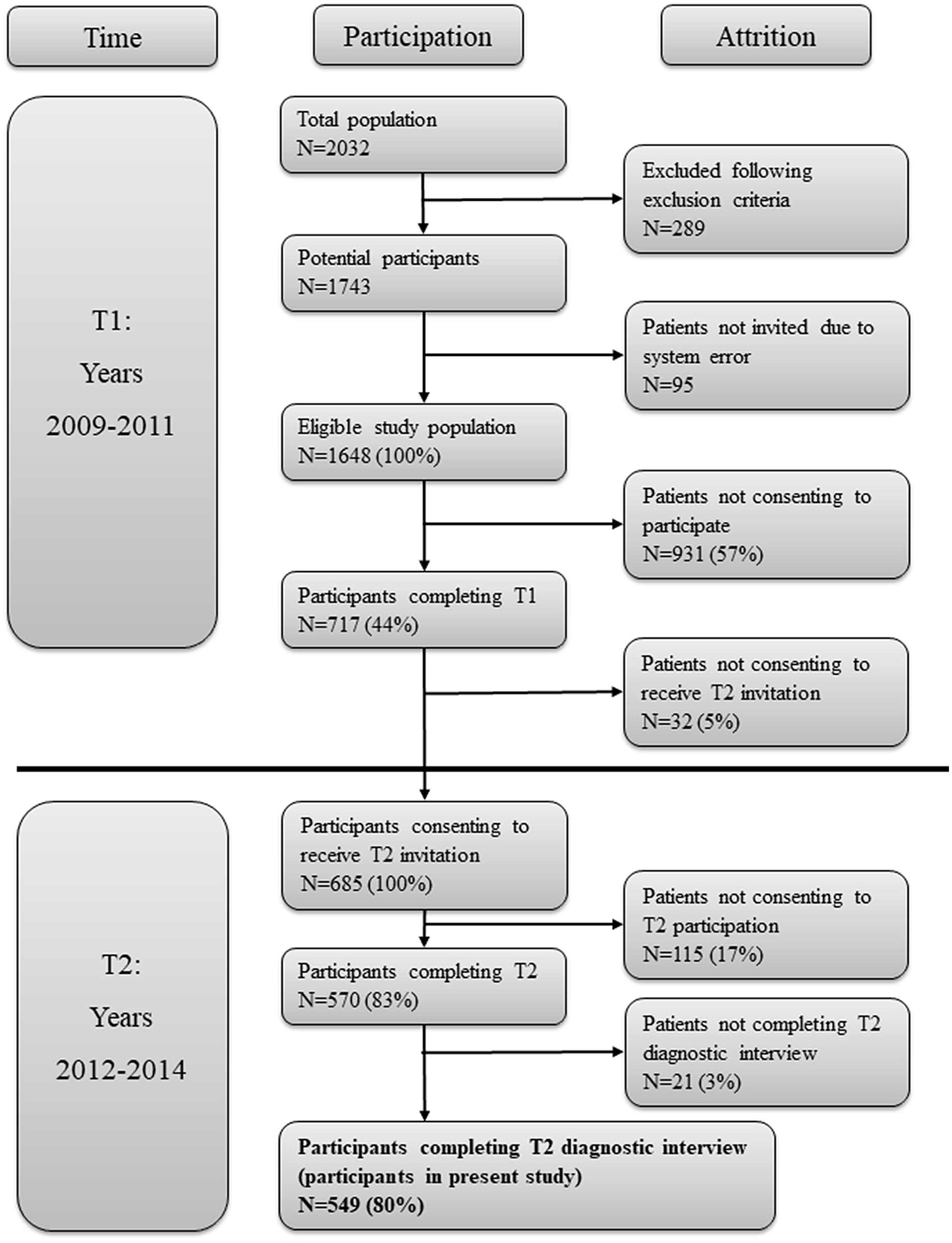
Of the 1,648 eligible and invited adolescent patients at T1, 717 (44%) agreed to participate (mean age = 15.66, 55% females). All T1 participants who consented to reassessment were invited to participate three years later (T2) when participants were 16–21 years old (n = 685), of whom 570 (83% of eligible) volunteered. The sample in the present study consists of the 549 (80% of eligible) participants who completed a diagnostic interview at T2 (mean age = 18.64, 56% females). See Figure 1 for participant flow details.
Flowchart of participants.

The representativeness of the T1 study sample was explored by collecting anonymous information about all potential participants from annual reports from the hospital from 2009 to 2011. Potential participants (n = 1,743; 95 adolescents were unfortunately not invited to the study due to a system error) were defined as all adolescents attending the department in the study period (n = 2,032) minus those who were ineligible, based on the exclusion criteria (n = 289). In accordance with the permission given by the Norwegian Social Science Data Services, the Data Protection Official for Research, we were allowed to compare age, sex, and main reason for referral between participants (n = 717) and non-participants (n = 1,026). The participants were 0.27 years (95% CI: 0.10–0.45) older than non-participants [mean (SD) 15.66 (1.65) vs. 15.39 (1.95, p = .002) and included more females (55% vs. 50%, p = .032). The main reason for referral was not significantly different between participants and non-participants (Pearson exact chi-square test; p = .11).
Attrition analyses were performed by comparing T1 age, sex, and diagnoses of anxiety and depression for the T2 participants (n = 549) with the T2 nonparticipants (n = 168). The average age of both participants and non-participants was 15.7 years (SD = 1.6), there were 56% female participants compared to 51% non-participants, 11 and 11% had an anxiety disorder at baseline, and 18 and 19% had depression at baseline among the participants and non-participants, respectively.
Clinical interventions
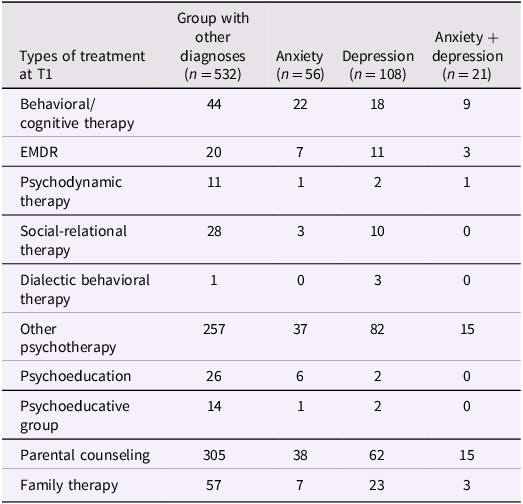
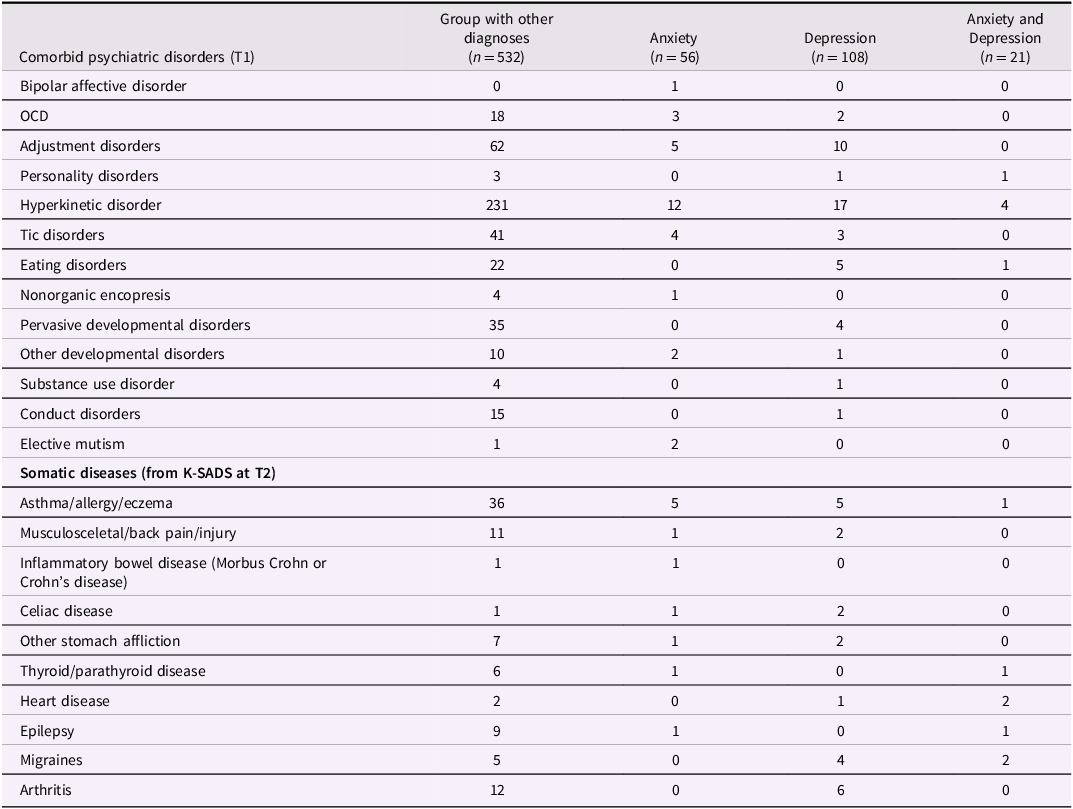
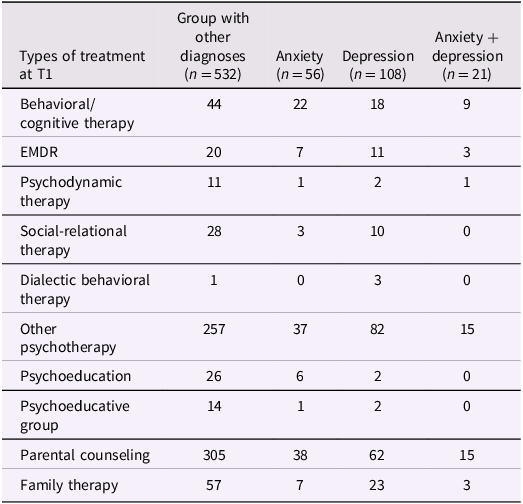
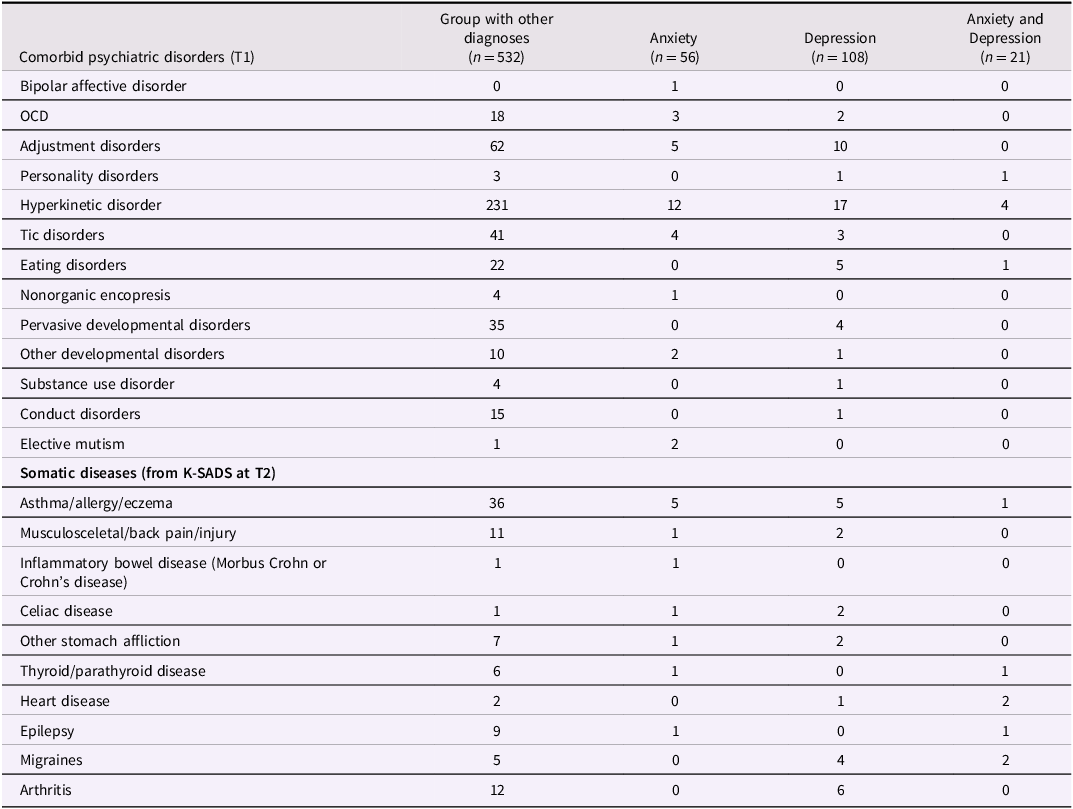
Nearly all patients with anxiety and depression (93% of the 56 patients with anxiety and 92% of the 108 patients with depression) received treatment. The usual treatment for anxiety disorders was cognitive behavioral therapy with exposure. For depression, provided therapies included predominantly cognitive behavioral therapy and family support, but also metacognitive therapy, eye movement desensitization and reprocessing (EMDR) and mindfulness-based approaches. The therapy was selected based on the skills and preferences of the therapist and the needs and expectations of patients and families. Medication (Sertraline or another SSRI) was added in severe cases or if psychotherapy was not effective (23% of the 56 patients with anxiety and 26% of the 108 patients with depression), but never without concomitant psychotherapy. For further information, Table 1 displays the types of treatment the patients received at T1; Table 2 shows how many of the participants who received treatment at T1, between T1 and T2 for each diagnostic group, and the mean number and standard deviation of individual treatment sessions, family treatment sessions, and counseling of teachers from T1 to T2; and Table 3 shows psychiatric and somatic comorbidity in patients with anxiety and/or depression.
Types of treatment at T1
Number of patients who received treatment at T1 and between T1 and T2

Psychiatric and somatic comorbidity in patients with anxiety and/or depression
Procedure
Baseline (T1)
Both newly referred and patients who were previously enrolled at the department received oral and written invitations to participate on first attendance. The participating adolescents responded to an electronic questionnaire, and diagnostic information was collected from medical records.
Follow-up (T2)
Diagnoses were based on telephone interviews with the participants. The interviewers, who were blinded to the participants’ assessment at T1, had a graduate degree in medicine or psychology and experience in child and adolescent psychiatric assessment. They were extensively trained to conduct assessments in this study, and a blinded experienced child and adolescent psychiatrist supervised the interviewers throughout the study. Interrater reliability at T2 was examined by having all seven interviewers independently rerate four audiotaped interviews performed by a different interviewer, so that the number of rerated patients was 7 × 4 = 28. For anxiety disorders, positive agreement Cohen’s κ = .615 and negative agreement = .884, and for depressive disorders, both positive and negative agreement = 1.000.
Materials
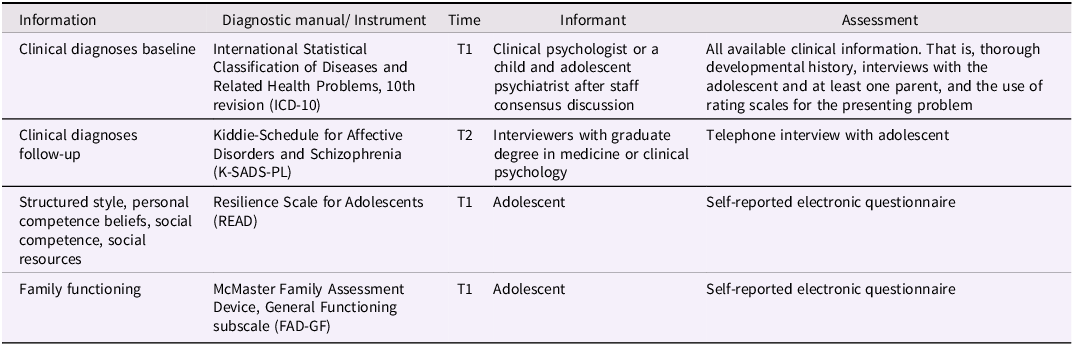
Clinical diagnoses at T1 were established by a clinical psychologist or a child and adolescent psychiatrist after staff consensus discussion in the clinic. The diagnoses were based on the International Statistical Classification of Diseases and Related Health Problems, 10th revision [ICD-10] (World Health Organization [WHO], 1992) multiaxial diagnostic system (i.e., axes I-VI) following standardized procedures. This implies that the diagnoses were based on all available clinical information, that is, a thorough developmental history, interviews with the adolescent and at least one parent, and the use of rating scales for the presenting problem. Additionally, possible comorbid disorders were assessed. Physical examinations were supplemented when indicated. At T1, the clinical diagnoses were collected from the patients’ medical records after being determined by employees at the clinic. An overview of the ICD-10 diagnoses included in a diagnosis of anxiety disorder and depressive disorder at T1 is provided in Supplement 1.
Clinical diagnoses at T2 were based on the Kiddie-Schedule for Affective Disorders and Schizophrenia (Present and Lifetime version; K-SADS-PL) (Kaufman et al., Reference Kaufman, Birmaher, Brent, Rao, Flynn, Moreci, Williamson and Ryan1997) (approved Norwegian version: Sund, NTNU, Trondheim) completed by telephone with the adolescent participants. Psychiatric diagnoses were determined by the interviewers who were experienced in child and adolescent psychiatric assessment and had a graduate degree in medicine or psychology. K-SADS-PL is a well-established, semi-structured diagnostic interview assessing present and past episodes of psychopathology in children and adolescents according to the Diagnostic and Statistical Manual of Mental Disorders [4th ed., text revision; DSM-IV-TR] (American Psychiatric Association, 2000). An overview of the DSM-IV-TR diagnoses included in a diagnosis of anxiety disorder and depressive disorder at T2 is included in Supplement 1. In addition, disorders in ‘partial remission’ were assessed where criteria had previously been fulfilled, and the individual presented either fewer threshold symptoms than required for a DSM-IV diagnosis, or subthreshold symptoms for a period of at least two weeks, but less than two months.
Promotive factors were measured by self-report at T1 and included structured style, personal competence beliefs, and social competence as individual factors, and social resources as a social factor, which were measured by four corresponding subscales of READ (Hjemdal et al., Reference Hjemdal, Friborg, Stiles, Martinussen and Rosenvinge2006). READ comprises positively phrased items, rated on a 5-point scale (1 = totally disagree, 5 = totally agree). Higher scores indicate higher levels of these factors. READ has been validated using a representative sample of 6,723 Norwegian high school students aged 18–20, which resulted in a modified 23-item version (of the original 28 items) with acceptable psychometric properties (von Soest et al., Reference von Soest, Mossige, Stefansen and Hjemdal2010). Several other population-based studies of adolescents ages 13–19 have supported the construct and convergent validity of the READ but examinations of the factor structure have been variable (e.g., Askeland et al., Reference Askeland, Bøe, Breivik, La Greca, Sivertsen and Hysing2020; Moksnes & Haugan, Reference Moksnes and Haugan2018). As far as we know, no studies have examined this in a clinical sample. Hence, for the present study, we conducted factor analyses based on the 23-item version, but excluding the family cohesion factor because we chose to measure family functioning using the McMaster Family Assessment Device (see below) as we consider this scale to measure family functioning in more depth. The factor analyses indicated worse model fit for one factor (root mean square error of approximation (RMSEA) = .116, comparative fit index (CFI) = .888, Tucker–Lewis index (TLI) = .876) versus four factors (RMSEA = .078, CFI = .951, TLI = .945), demonstrating acceptable validity of the four-factor structure of the READ used in the present study (further details are available from the authors). The subscale structured style consists of three items (α = .70 in the current study). A scale score was not calculated if responses to any of the three items were missing. For the subscales for personal competence beliefs (5 items, α = .81), a scale score was not computed if responses to more than one item was missing; for social competence (4 items, α = .80), a scale score was not computed if any responses were missing; and for social resources (5 items, α = .83), a scale score was not computed if responses to more than one item was missing.
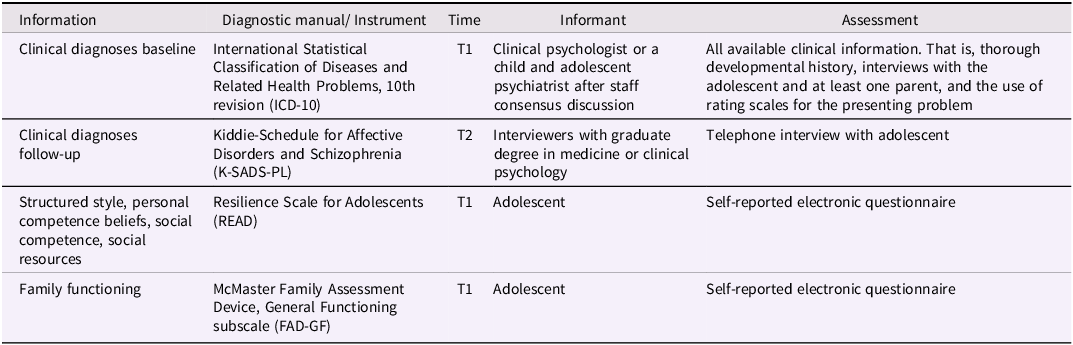
Family functioning as a promotive family factor was measured by self-report at T1 using the General Functioning subscale of the McMaster Family Assessment Device (FAD-GF) (Epstein et al., Reference Epstein, Baldwin and Bishop1983), with 12 items (α = .89 in the present study) rated on a 4-point scale (1 = strongly agree, 4 = strongly disagree). Six items were positively and six items were negatively worded. The positively worded items were reversed, and the responses to each item were averaged to provide a scale score ranging from 1.00 (unhealthy family functioning) to 4.00 (healthy family functioning). Following the FAD manual, a scale score was not calculated if more than 40% of the items were missing. Table 4 shows an overview of the instruments, time of assessment, and informants in the current study.
Overview of instruments, time of assessment, and informants
Ethics
Written informed consent was obtained from all participants prior to inclusion, including at least one parent if the adolescent was below 16 years of age. The study was approved by the Norwegian Social Science Data Services [Reference No: 19,976] and by the Regional Committee for Medical and Health Research Ethics (REK midt, reference No. T1: 4.2008.1393, T2: 2011/1435, present study: 2015/1754).
Data analysis
Correlations among promotive factors and means and standard deviations of the promotive factors in each of the diagnostic groups at T1 were calculated. Ordinal proportional odds logistic regression analyses were performed to examine whether T1 promotive factors were predictors of T2 diagnoses of anxiety or depression. The dependent ordinal variables were classified at T2 as no disorder (0), disorder in partial remission (1), and diagnostic criteria of disorder fulfilled (2). The odds ratio (OR) in the ordinal proportional odds logistic regression can be interpreted similarly to the OR in standard (binary) logistic regression, if a cutoff were to be made between any of the three categories of the dependent variable. With T1 promotive factors, the findings are reported as the OR for change in one category of the dependent variable when the mean of the promotive factor increases by 1 unit. With T1 disorders as predictors, the results are reported as the OR for comparisons between subgroups defined as without versus with diagnosis, where the subgroup without diagnosis was the reference group. All these logistic analyses were adjusted for age and sex.
To address the first research aim, a promotive factor at T1 was the single predictor of disorder at T2. To address the second aim, we examined whether a promotive factor in addition to either T1 anxiety or depression diagnosis predicted disorder at T2. Changes in odds ratios from crude estimators to adjusted estimators were evaluated based on recommendations to use approximately 20% as a cutoff value (Hosmer et al., Reference Hosmer, Lemeshow and Sturdivant2013). To address the third aim, whether the promotive factors moderated homotypic and heterotypic continuity of anxiety and depression, a promotive factor, either T1 anxiety or depression, and the interaction between the T1 promotive factor and the T1 diagnosis, were included as predictors of disorder at T2. To assign a meaningful value to 0 for the promotive factors, the variables were centered on the upper and lower quartiles of the individual promotive factor. Two-sided p-values < .05 were considered significant. The factor analyses were performed in Mplus version 8.10. All other analyses were performed in IBM SPSS Statistics 26 and were based on complete case analyses because the rate of missing at T2 was not dependent on T1 disorder, and missing values of the promotive factors at T1 were low ≤ 3.8%.
Transparency and openness
We report all data exclusions, and all measures in the study, and we follow APA standards of reporting. This study design and its analyses were not preregistered. Materials and analysis code for this study can be made available by emailing the corresponding author. The sensitive nature of the clinical data precludes sharing any data online, which could violate the participants’ confidentiality.
Results
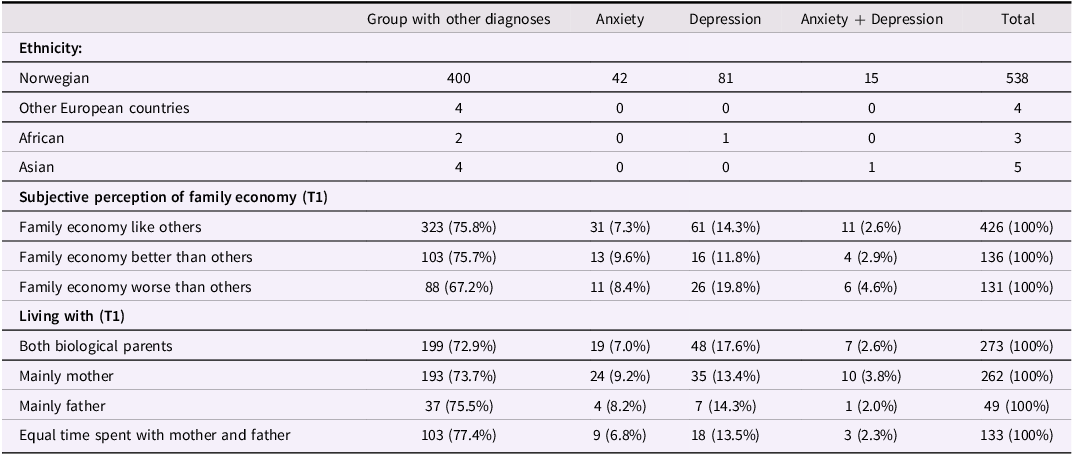
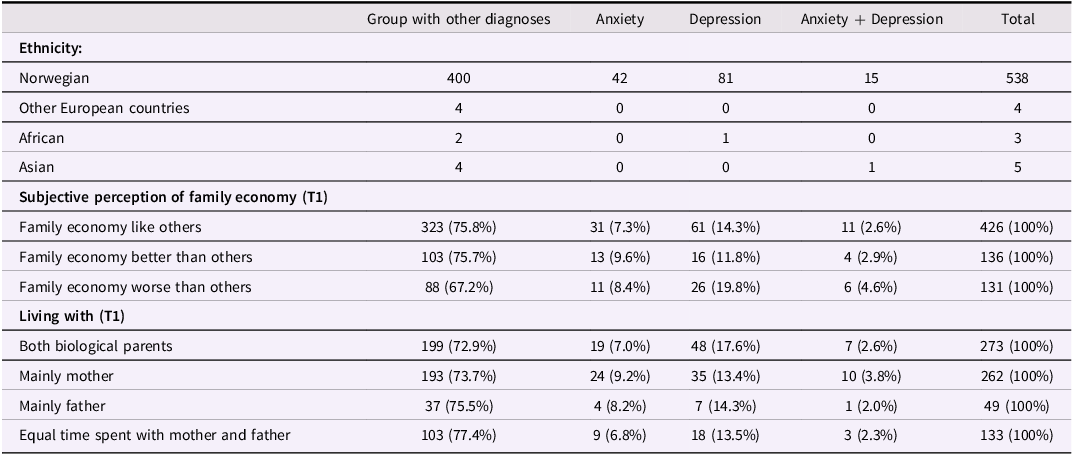
Table 5 displays the participants’ sociodemographic information. Most participants were of Norwegian descent. There were no major differences among the diagnostic groups in subjective perception of family economy or with whom the participants were living.
Sociodemographic information
Further descriptive information and the diagnostic status of the participants have been described in detail in a previous publication (Ranøyen et al., Reference Ranøyen, Lydersen, Larose, Weidle, Skokauskas, Thomsen, Wallander and Indredavik2018). In short, at T1, 77 adolescents (11%; 14% of females and 7% of males) fulfilled the diagnostic criteria for an anxiety disorder and 129 (18%; 26% of females and 8% of males) for a depressive disorder (of these, 21 participants had coexisting anxiety and depression).
At T2, 119 (17%; 24% of females and 8% of males) fulfilled the diagnostic criteria for an anxiety disorder and 39 (2%; 8% of females and 3% of males) for a depressive disorder, and of these, 25 had coexisting anxiety and depression. In addition, 60 (8%; 11% of females and 5% of males) were in partial remission from an anxiety disorder and 41 (6%; 9% of females and 2% of males) were in partial remission from depression.
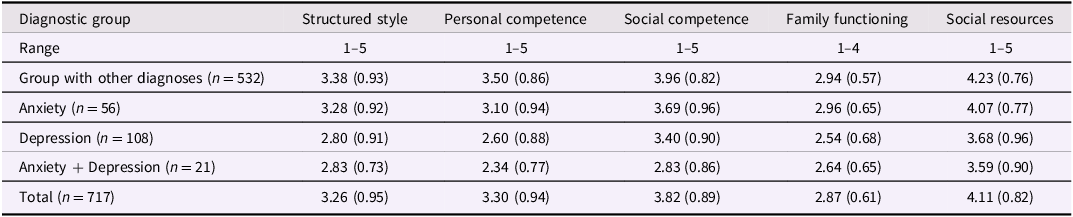
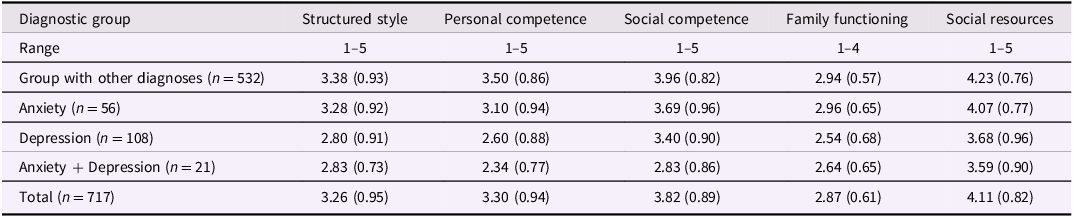
Table 6 displays correlations among the promotive factors at T1, which range from 0.298 to 0.676 (all p < .001). Table 7 displays means and standard deviations of the promotive factors measured at T1 in the different diagnostic groups.
Pearson correlations among promotive factors

** Statistically significant correlations (p < .001).
Means (and standard deviations) of the promotive factors in the diagnostic groups at T1
Do promotive factors at T1 predict reduced anxiety and/or depression at T2?
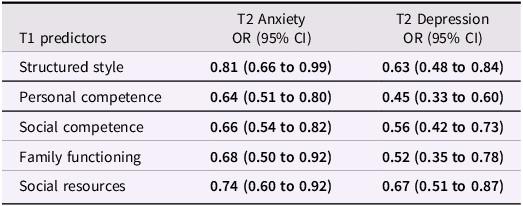
Results from ordinal proportional odds logistic regression analyses are in Table 8 and show that all promotive factors significantly predicted anxiety and depressive disorders at T2. Thus, higher levels of structured style, personal competence beliefs, social competence, family functioning, and social resources outside the family were associated with reduced odds, ranging from 19% to 55% per unit increase in the promotive factor, of a diagnosis of anxiety or depressive disorders three years later.
Proportional odds logistic regression with promotive factors at T1 as individual predictors of anxiety or depressive disorder at T2

Note. T2 diagnostic criteria fulfilled or in partial remission. Three category-dependent variable (T2) and continuous T1 predictors (higher scores represent higher levels of the promotive factors). All analyses adjusted for age and sex. Statistically significant odds ratios in bold (p < .05).
Do promotive factors predict homotypic and heterotypic continuity of anxiety and depression?
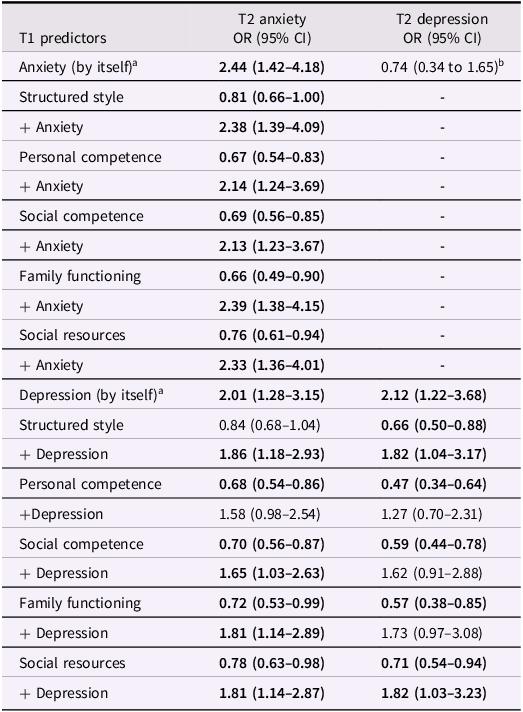
Findings reported in a previous publication (Ranøyen et al., Reference Ranøyen, Lydersen, Larose, Weidle, Skokauskas, Thomsen, Wallander and Indredavik2018) and repeated in Table 9 here showed that T2 anxiety was predicted by both T1 anxiety (OR = 2.44) and T1 depression (OR = 2.01), whereas T2 depression was predicted by only T1 depression (OR = 2.12) (and not by T1 anxiety). Inclusion of promotive factors showed that all but one were associated with reduced likelihood of anxiety or depression three years later, when adjusted for T1 diagnosis, specifically as follows:
Proportional odds logistic regression with promotive factors plus anxiety or depression at T1 as predictors of anxiety or depression at T2
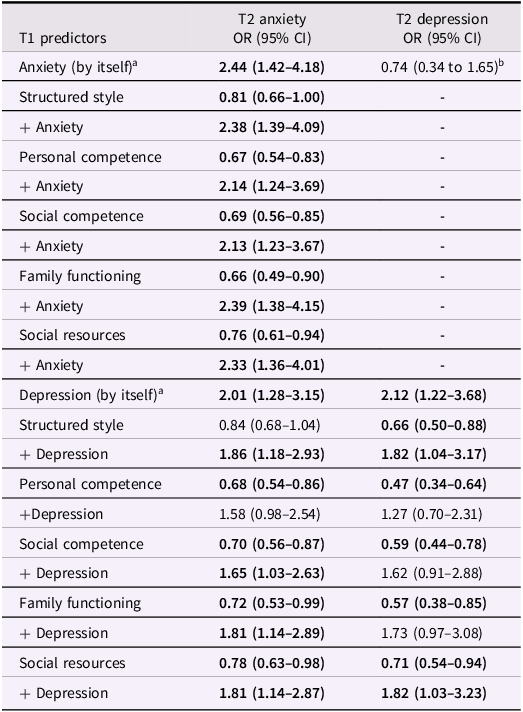
Note. The proportional odds logistic regression includes three category-dependent variable (T2) and dichotomous T1 diagnoses and continuous T1 protective factor (higher scores represent higher levels of the promotive factors) as predictors in each model. T2 diagnostic criteria fulfilled or in partial remission. All analyses adjusted for age and sex. Statistically significant odds ratios in bold (p < .05).
a Findings originally published in Ranøyen et al. (Reference Ranøyen, Lydersen, Larose, Weidle, Skokauskas, Thomsen, Wallander and Indredavik2018).
b Heterotypic continuity of T1 anxiety predicting T2 depression was not supported in Ranøyen et al. (Reference Ranøyen, Lydersen, Larose, Weidle, Skokauskas, Thomsen, Wallander and Indredavik2018). Hence, results are not reported for these associations.
Homotypic continuity of anxiety
When we adjusted for T1 anxiety (and age and sex), T1 structured style, personal competence beliefs, social competence, family functioning, and social resources all separately predicted a reduced likelihood of T2 anxiety. Furthermore, T1 anxiety remained a statistically significant predictor of T2 anxiety when the promotive factors were included, with only small reductions in the odds ratios.
Heterotypic continuity from depression to anxiety
When we adjusted for T1 depression (and age and sex), all promotive factors, except structured style, separately predicted a reduced likelihood of T2 anxiety. T1 depression remained a statistically significant predictor of T2 anxiety when adjusting for each promotive factor, except for personal competence beliefs. There were only small reductions in the odds ratios of T1 depression as a predictor when family functioning and social resources were included, while there were greater reductions in the odds ratios of T1 depression when personal competence beliefs (22%) and social competence (18%) were included.
Homotypic continuity of depression
When we adjusted for T1 depression (and age and sex), all promotive factors predicted a reduced likelihood of T2 depression. T1 depression remained a significant predictor of T2 depression, with minor odds ratio reductions when adjusting for structured style and social resources. In contrast, there were large reductions in the odds ratios for T1 depression predicting T2 depression when we adjusted for personal competence beliefs (40%), social competence (24%), and family functioning (18%).
Do T1 promotive factors moderate homotypic and heterotypic continuity of anxiety and depression?
The ordinal proportional odds logistic regression analyses with interaction terms between T1 promotive factors and T1 diagnoses show that the promotive factors did not moderate homotypic and heterotypic continuity of anxiety and depression. None of the interactions were statistically significant. That is, the OR for T1 diagnosis generally did not depend on the level of the promotive factor. Details are available in Supplement 2. For example, the OR for T1 anxiety as a predictor of T2 anxiety was 2.34 (95% CI 1.27 to 4.31) for low scores on structured style (25th %ile) and 2.48 (95% CI 1.14 to 5.41) for high scores on structured style (75th %ile). The corresponding interaction term, which is the ratio between these ORs, was 1.04, which is not statistically different from 1.00. The largest interaction term was 1.64 (95% CI 0.71 to 3.78) for T1 anxiety and family functioning as predictor of T2 anxiety.
Discussion
Findings from this prospective study of a clinical psychiatric cohort of adolescents, starting at ages 13–18 years, showed that higher levels of promotive factors, including structured style, personal competence beliefs, social competence, family functioning, and social resources, were associated with a reduced probability of anxiety or depressive disorders three years later. All promotive factors were associated with reduced anxiety at T2, also when adjusting for baseline anxiety, but inclusion of the promotive factors did not change the contribution of baseline anxiety as a risk factor. Regarding the homotypic continuity of depression, all promotive factors were associated with a reduced likelihood of T2 depression, even when adjusting for T1 depression. There were especially large reductions in the associations between earlier and later depression when personal competence beliefs, social competence, and family functioning were included. Turning to heterotypic continuity from depression to anxiety, personal and social competencies, family functioning, and social resources were associated with reduced anxiety three years later, when adjusting for depression at baseline. Especially personal and social competencies were associated with a considerably reduced association between T1 depression and T2 anxiety. However, we did not find that the promotive factors moderated homotypic and heterotypic continuity of anxiety and depression, meaning that their contributions to continuity were not dependent on diagnosis of anxiety or depression at T1.
Compensatory vs. protective model
Our findings indicate only main effects of the promotive factors on anxiety or depression three years later. No interaction effects were found, suggesting no support of the protective model, and indicating that the promotive factors did not protect adolescents with anxiety or depression at baseline more than adolescents without such a diagnosis from anxiety or depression three years later. Rather, our findings suggest support for the compensatory model of resilience in that the promotive factors have a reducing effect on later anxiety or depression, which is irrespective of a baseline diagnosis of anxiety or depression. Support for the compensatory model is also evident from population-based research on resilience and symptoms of anxiety and depression (Askeland et al., Reference Askeland, Bøe, Breivik, La Greca, Sivertsen and Hysing2020; Fergusson & Horwood, Reference Fergusson, Horwood and Luthar2003; Hjemdal et al., Reference Hjemdal, Aune, Reinfjell, Stiles and Friborg2007). Our findings are especially consistent with the compensatory model applying to the homotypic continuity of anxiety.
When we look at the homotypic continuity of depression and the heterotypic continuity from depression to anxiety, the picture is more nuanced. Considering the homotypic continuity of depression, there were large reductions in the odds ratios of T1 depression as a predictor when we adjusted for personal competence beliefs (−40%), social competence (−24%), and family functioning (−18%), suggesting support for a protective-reactive model, in which these factors were associated with reduced homotypic continuity of depression. Adjustment for structured style and social resources, on the other hand, resulted in minor odds ratio reductions, indicating support for the compensatory model for these two promotive factors. Regarding the heterotypic continuity from depression to anxiety, there were quite large reductions in the odds ratios of T1 depression predicting T2 anxiety when we included personal competence beliefs (−22%) and social competence (−18%). This may suggest support for a protective-reactive model in which these two factors were associated with reduced heterotypic continuity from T1 depression to T2 anxiety. In contrast, there were only small reductions in the odds ratios of T1 depression as a predictor when we included family functioning and social resources, indicating support for the compensatory model for these promotive factors. Hence, personal competence beliefs, social competence, and, to a lesser degree, family functioning may play an important role in reducing homotypic continuity of depression and heterotypic continuity from depression to anxiety. Even though protective models of resilience are usually tested by including multiplicative terms, which in this study indicated no support for a protective model, our findings may suggest support for a protective-reactive model in which personal and social competencies were related to reduced associations between T1 depression and T2 anxiety and depression. Hence, findings may depend on the statistical procedures chosen for the analyses, and the sole reliance on interaction effects in resilience research may be problematic, as has been pointed out previously (Luthar, Reference Luthar1993). In addition, the processes underlying these effects should be explored.
Factors associated with reduced clinical continuity
Consistent with previous research (Hjemdal et al., Reference Hjemdal, Aune, Reinfjell, Stiles and Friborg2007; Melvin et al., Reference Melvin, Dudley, Gordon, Ford, Taffe and Tonge2013; Moksnes & Lazarewicz, Reference Moksnes and Lazarewicz2019), we found personal competence beliefs to be associated with lower odds of depression three years later. In addition, our findings are in line with studies showing that self-efficacy, an aspect of personal competence, was related to treatment outcome in clinical samples of adolescents with anxiety disorders (Lewis et al., Reference Lewis, Matsumoto, Cardinale, Jones, Gold, Stringaris, Leibenluft, Pine and Brotman2020). Although we need more information on the precise mechanisms linking self-efficacy to anxiety and depression, it is thought that self-efficacy is more related to active coping and less related to passive coping, which may indicate enhanced emotion regulation resulting in less avoidance (Lewis et al., Reference Lewis, Matsumoto, Cardinale, Jones, Gold, Stringaris, Leibenluft, Pine and Brotman2020). Increasing self-efficacy is also an important target in interventions designed to treat and prevent anxiety and depression in adolescents, where a belief in one’s capacity to solve problems is assumed to result in a more optimistic outlook on life (Reivich et al., Reference Reivich, Gillham, Chaplin, Seligman, Goldstein and Brooks2013), and thereby reduce the probability of later anxiety and depression.
Social competence was associated with lower odds of anxiety and depression three years later. This finding is supported in a large body of research (Burt et al., Reference Burt, Obradović, Long and Masten2008; Hjemdal et al., Reference Hjemdal, Aune, Reinfjell, Stiles and Friborg2007, Reference Hjemdal, Vogel, Solem, Hagen and Stiles2011; Lee et al., Reference Lee, Hankin and Mermelstein2010; Nilsen et al., Reference Nilsen, Karevold, Røysamb, Gustavson and Mathiesen2013; Obradović et al., Reference Obradović, Burt and Masten2009; Segrin & Flora, Reference Segrin and Flora2000). Moreover, good social skills are associated with showing resilient trajectories from infancy into adolescence in individuals exposed to adverse childhood experiences and displaying lower than expected mental dysfunction (Cahill et al., Reference Cahill, Hager and Shryane2023). Problems with forming social relationships may be particularly upsetting for youngsters who are trying to establish social networks when at the same time having fewer coping strategies at hand (Segrin, Reference Segrin2000). Furthermore, there is a stronger association between stressful life events and depression for adolescents with low social competence than for those with high social competence (Segrin & Flora, Reference Segrin and Flora2000). Hence, adolescents with low social competence seem to have greater difficulty with drawing on social support to help them cope in times of stress, which may increase the risk of internalizing problems (Segrin & Flora, Reference Segrin and Flora2000; Segrin, Reference Segrin2000).
We found better family functioning to be associated with lower odds of depression, and to some degree of anxiety at T2. This is in concordance with much previous research (Beesdo et al., Reference Beesdo, Knappe and Pine2009; Goodyer, Reference Goodyer1998). Interestingly, our findings fit nicely with studies in which lower family functioning is reported among adolescents with either depressive disorder or comorbid anxiety and depressive disorder, compared to adolescents with only anxiety disorder (Guberman & Manassis, Reference Guberman and Manassis2011; O’Neil et al., Reference O’Neil, Podell, Benjamin and Kendall2010). Many studies examining family factors in the development of anxiety and depression show inconsistent findings (Kim et al., Reference Kim, Richards and Oldehinkel2022; Yap et al., Reference Yap, Pilkington, Ryan and Jorm2014), but parental rejection may be more strongly related to depression, and parental control to anxiety (McLeod et al., Reference McLeod, Weisz and Wood2007; McLeod et al., Reference McLeod, Wood and Weisz2007; Rapee, Reference Rapee1997). The measure of family functioning used in our study assesses parental rejection and to a lesser degree control. Hence, this may also be one reason why family functioning in our study seems to be more strongly associated with depression than anxiety. Furthermore, one study examining the possibility of a reciprocal relationship between family functioning and psychopathology found internalizing problems to predict family functioning in adolescence and not vice versa (Serna et al., Reference Serna, Thakur, Cohen and Briley2023). The direction of associations should therefore be examined more closely in future studies. Also, in studies seeking to disentangle between-person and within-person associations, family functioning and internalizing problems were only associated on the between-person level and not on the within-person level suggesting that family functioning and internalizing problems are not associated in individual families, only on a group level (Fredrick et al., Reference Fredrick, Nickerson and Livingston2022; Kim et al., Reference Kim, Richards and Oldehinkel2022; Mastrotheodoros et al., Reference Mastrotheodoros, Canário, Gugliandolo, Merkas and Keijsers2020). Alternative explanations for these findings may be that causal processes may happen at shorter or longer time intervals than investigated, which should be examined in future studies.
Structured style and social resources seemed less important factors in this study. Aspects of structured style have been related to anxiety and depressive symptoms in previous individual studies (Friedman et al., Reference Friedman, du Pont, Corley and Hewitt2018; Han et al., Reference Han, Helm, Iucha, Zahn-Waxler, Hastings and Klimes-Dougan2016; Hjemdal et al., Reference Hjemdal, Friborg, Stiles, Martinussen and Rosenvinge2006; Klimstra et al., Reference Klimstra, Akse, Hale, Raaijmakers and Meeus2010; Weyandt et al., Reference Weyandt, Willis, Swentosky, Wilson, Janusis, Chung, Turcotte, Marshall, Goldstein and Naglieri2014). Interestingly, one meta-analysis of children found executive function to be associated with later depressive symptoms but not later anxiety symptoms leading the authors to speculate that anxiety may have deleterious effects on executive function and not vice versa (Yang et al., Reference Yang, Shields, Zhang, Wu, Chen and Romer2022). There are also studies indicating that structured style interacts with social withdrawal in predicting depressive symptoms (Smith et al., Reference Smith, Barstead and Rubin2017). This has not been examined in this study. Social resources have been examined more extensively in relation to anxiety compared to depression, with findings suggesting negative associations between social support and anxiety symptoms (Cavanaugh & Buehler, Reference Cavanaugh and Buehler2016; Lewis et al., Reference Lewis, Byrd and Ollendick2012; Moksnes & Lazarewicz, Reference Moksnes and Lazarewicz2019). The relationship between social resources and depressive symptoms seems more complex and dependent on factors such as parental support and the nature of adolescent friendships (Helsen et al., Reference Helsen, Vollebergh and Meeus2000; Rose et al., Reference Rose, Schwartz-Mette, Glick, Smith and Luebbe2014). Hence, the association between different types of social support and depression should be further examined in future studies. Finally, one study of adolescents oversampled for high scores on neuroticism, where social support was measured by independent raters, and not self-reports, showed that social support was negatively associated with anxiety disorders, depressive disorders, and comorbid anxiety and depression over three years (Metts et al., Reference Metts, Zinbarg, Hammen, Mineka and Craske2021). This may point to a problem with relying on self-reports to examine social support.
Limitations
Although this is a prospective study, we cannot claim that the prospective factors were the causes of reduced continuity of anxiety and depression, which would require other types of designs or studies with more time points, controlling for time invariant and variant confounders. Our findings may also be influenced by genetic as well as biological or psychosocial factors not examined in this study, for example traumatic experiences, emotion regulation difficulties, physical illness, chronic pain, environmental changes such as changing schools, physical activity, a supportive teacher–student relationship, or extracurricular activities. Examining resilience with the residuals approach (Cahill et al., Reference Cahill, Hager and Chandola2022) could be an interesting extension to our findings, although this approach currently only has been used in studies examining the impact of adverse childhood experiences. Nonetheless, this approach is believed to contribute to a better comprehension of the phenomenon of resilience in different contexts in the coming years (Cahill et al., Reference Cahill, Hager and Shryane2023). Furthermore, the measured promotive factors may be differentially related to outcome, depending on, for example, developmental phase, gender, and culture (Oldehinkel & Ormel, Reference Oldehinkel and Ormel2023; Werner, Reference Werner, Goldstein and Brooks2013). Also, the promotive factors were measured by self-report. Hence, we cannot preclude that our findings are affected by the biased cognitions often accompanying depressive disorders, leading adolescents to perceive family relationships, for example, as negative (Millikan et al., Reference Millikan, Wamboldt and Bihun2002). In addition, the promotive factors are measured in a clinical sample, and one could argue that the level of the promotive factors may be different in such a sample compared to a community sample. There is limited data available on the distribution of these promotive factors in a relevant community population, but we do have information on the social competence subscale from a Norwegian community sample, showing the mean to be 3.86 (Skrove et al., Reference Skrove, Romundstad and Indredavik2013). This is very close to the mean social competence score in Table 7 which is 3.82, suggesting that this concern may be abated. Furthermore, resilience is not defined as a stable characteristic of an individual, and we therefore consider differentiation of resilience, with individuals being resilient to one thing but not to another, as very plausible. Second, we also know that other factors than severeness of mental health problems leads to referral to psychiatric services, including the worries and exhaustion of the patient’s family or how well school and community nurses detect mental health problems (Angold et al., Reference Angold, Messer, Stangl, Farmer, Costello and Burns1998; Wichstrøm et al., Reference Wichstrøm, Belsky, Jozefiak, Sourander and Berg-Nielsen2014). Furthermore, experiencing highly traumatic events may lead to a decision to seek psychiatric help and needing professional support to bounce back from such experiences, does not necessarily imply that these individuals lack resilience.
Consistent with this being a cohort seen in a psychiatric clinic, nearly all patients with anxiety and/or depression received treatment for their disorder at T1, whereas a considerable minority of patients also received psychotherapy somewhere in the three-year period between T1 and T2. As can be discerned from Table 2, more patients with depression reported outpatient and inpatient therapy between T1 and T2 than patients with anxiety. This could influence our findings. However, as we have no way of knowing the contents of this therapy and whether the therapy was directed toward the promotive factors, which were measured at T1 in this study, we cannot address any role regarding treatment effects. Also, we do not have information on aspects like the intensity and duration of treatment, which could influence treatment effects. Regardless, knowledge about psychosocial factors associated with reduced anxiety and depression are important as they could constitute crucial targets both in prevention of disorder and in psychotherapy.
In a psychiatric cohort, comorbidity could be an important confounding factor. However, Table 3 shows that there were no major comorbidities in our sample although the comorbidity with ADHD was somewhat higher than other disorders. Furthermore, the comorbidity between anxiety and depression was surprisingly quite low in this sample. This contrasts with findings suggesting a transdiagnostic liability to psychopathology in general, often named the p-factor (Caspi et al., Reference Caspi, Houts, Belsky, Goldman-Mellor, Harrington, Israel, Meier, Ramrakha, Shalev, Poulton and Moffitt2014; Choate et al., Reference Choate, Bornovalova, Hipwell, Chung and Stepp2023). In studies separating within-person effects from between-person effects, weak within-person cross-lagged effects between mental health problems in different domains are often found in contrast to quite strong support for within-person homotypic stability (Oldehinkel & Ormel, Reference Oldehinkel and Ormel2023). This may suggest that in addition to treating presenting symptoms, attempts to prevent mental health problems to extend to other domains may be more effective when strengthening psychological resilience in general (Oldehinkel & Ormel, Reference Oldehinkel and Ormel2023), in line with the compensatory model of resilience. This may be especially important when we know that comorbid anxiety and depression are more difficult to treat (Rapee et al., Reference Rapee, Lyneham, Hudson, Kangas, Wuthrich and Schniering2013) and is associated with more impairment than either disorder alone (Cummings et al., Reference Cummings, Caporino and Kendall2014). Finally, although the rate of comorbid diagnoses was low, this does of course not preclude the presence of a high degree of comorbid symptoms. Thus, replicating the findings with symptom ratings should be a priority in future research.
In the analyses, participants were grouped according to three levels at T2: 0 = no disorder, 1 = disorder in ‘partial remission’, or 2 = diagnostic criteria fulfilled. The partial remission classification reflected individuals previously fulfilling diagnostic criteria of anxiety and/or depression but in the past two to eight weeks either presented fewer symptoms than required for a diagnosis or subthreshold symptoms. This does to some degree answer the question of how the promotive factors were associated with the severity of anxiety or depression. Advantages of assessing anxiety and depression in terms of the presence or the absence of clinical diagnoses are that it ascertains the clinical relevance of the problems, for example requiring the presence of symptoms over a certain amount of time. Subthreshold problems are somewhat more difficult to assess, but such problems are also associated with increased psychosocial dysfunction and would be overlooked when assessing only categorical clinical diagnoses. Thus, the advantages of a dimensional approach are that it also takes milder problems into account with increased statistical power. Hence, examining promotive factors and anxiety and depression dimensionally would supplement our findings. Furthermore, this study did not compare outcomes for adolescents with episodic depression to those with long-term depression. The latter group is shown to display worse mental health outcomes in adulthood, including a higher number of recurrent episodes, anxiety disorders, other comorbid psychopathology, and lower social functioning (Johnson et al., Reference Johnson, Dupuis, Piche, Clayborne and Colman2018; Jonsson et al., Reference Jonsson, Bohman, von Knorring, Olsson, Paaren and von Knorring2011). Although the promotive factors were associated with reduced odds of depression at T2, anxiety and recurrent episodes of depression may still arise in the future for some participants.
This clinical sample originates from Norway, with universal healthcare coverage and a more homogeneous sociodemographic structure than most other countries. Although the participation rate was low at T1, there were no substantial differences between participants and non-participants in terms of main reason for referral. This indicates that participants were quite representative of the clinical population from which it was drawn. Age, sex, and diagnoses of anxiety and depression did not differ between T2 participants and non-participants, and the attrition rate in the enrolled sample was low. Still, non-enrolled patients may, for example, have more severe symptoms, resulting in an underestimation of the associations found. Also, the different diagnostic procedures used at T1, where the diagnoses were routinely established by a larger group of clinicians in daily practice, and T2, where diagnoses were determined by a semi-structured diagnostic interview completed by fewer professionals, may have influenced the results. Assuming better validity and reliability when the semi-structured diagnostic interview was used, this may have caused an underestimation of diagnoses at T1 meaning that the patients might have had more psychiatric problems than what was assessed. Consequently, the observed homotypic and heterotypic continuities could have been slightly underestimated. Furthermore, the fact that the diagnostic procedures were based on ICD-10 at T1 and DSM-IV at T2 could also affect the findings as the diagnoses of anxiety and depression are not completely comparable in the two diagnostic systems. Indeed, studies indicate that DSM-IV-TR classifies more children with anxiety and depression than ICD-10 (Adornetto et al., Reference Adornetto, Suppiger, In-Albon, Neuschwander and Schneider2012; Sørensen et al., Reference Sørensen, Mors and Thomsen2005). However, other studies suggest that the concordance between ICD-10 and DSM-IV, and between diagnoses from routine clinical practice and systematically collected diagnoses, is high for depression with a positive predictive value of about 75% and moderate for anxiety with a positive predictive value of about 60% (Andrews et al., Reference Andrews, Slade and Peters1999; Davis et al., Reference Davis, Sudlow and Hotopf2016). This could partly explain why the promotive factors were more strongly associated with depression than anxiety. Ideally, K-SADS would have been used at both time points, but this was not feasible due to limitations in the clinical practice.
Clinical implications
All promotive factors measured in our study were associated with a reduced risk of anxiety and depression three years after treatment. Combined with previous findings where only 25%–47% of adolescents had recovered three years after psychiatric treatment (Curry et al., Reference Curry, Silva, Rohde, Ginsburg, Kratochvil, Simons, Kirchner, May, Kennard, Mayes, Feeny, Albano, Lavanier, Reinecke, Jacobs, Becker-Weidman, Weller, Emslie, Walkup, Kastelic, Burns, Wells and March2011; Kovacs, Reference Kovacs1996; Ranøyen et al., Reference Ranøyen, Lydersen, Larose, Weidle, Skokauskas, Thomsen, Wallander and Indredavik2018; Warwick et al., Reference Warwick, Reardon, Cooper, Murayama, Reynolds, Wilson and Creswell2017), we find that an enhanced focus on promotive factors and patients’ strengths may have the possibility to increase success of treatment. Aiming especially to increase personal competence beliefs and social competence seem to be fruitful avenues to improve outcomes for adolescents with anxiety and particularly depression. Hence, clinicians should strive to teach patients with these disorders how to employ more active coping mechanisms focusing, for example, on problem-solving and cognitive restructuring. Also, it would be valuable to help adolescents increase their social competence by practicing skills like starting and maintaining conversations, offering help, giving and receiving compliments, and responding assertively to others’ inappropriate behavior (Beidel et al., Reference Beidel, Turner and Morris2000; Yao & Enright, Reference Yao and Enright2021). A stronger focus on enhancing such competencies and family functioning may contribute to improve the prognoses of anxiety and depression in adolescents and reduce the widespread health and social consequences associated with these disorders both in adolescence and adulthood. Our findings are also consistent with a meta-analytic review of resilience-oriented cognitive behavioral interventions for depressive symptoms focusing on enhancing cognitive, problem-solving, and social skills (Ma et al., Reference Ma, Zhang, Huang and Cui2020). This review showed small but robust effect sizes at 6 months follow-up, especially in targeted samples when the intervention incorporated homework and was led by professional interventionists rather than school personnel.
Large-scale population studies show that the rates of self-reported symptoms of anxiety and depression have increased dramatically from 1992 to 2019 in Norway (Potrebny et al., Reference Potrebny, Nilsen, Bakken, von Soest, Kvaløy, Samdal, Sivertsen, Aase and Bang2024). Recent studies indicate even larger increases in symptoms of anxiety and depression during the COVID-19 pandemic period (De France et al., Reference De France, Hancock, Stack, Serbin and Hollenstein2022; Kauhanen et al., Reference Kauhanen, Wan Mohd Yunus, Lempinen, Peltonen, Gyllenberg, Mishina, Gilbert, Bastola, Brown and Sourander2023; von Soest et al., Reference von Soest, Kozák, Rodríguez-Cano, Fluit, Cortés-García, Ulset, Haghish and Bakken2022). Also, resilience factors have been shown to moderate the association between COVID-19-related distress and depressive symptoms (Gladstone et al., Reference Gladstone, Schwartz, Pössel, Richer, Buchholz and Rintell2022). Such findings emphasize the need for an enhanced focus on strengthening promotive factors among adolescents with anxiety and depression.
Supplementary material
The supplementary material for this article can be found at https://doi.org/10.1017/S0954579424001469.
Acknowledgments
We would like to thank Dr Bernhard Weidle and Head Librarian Oddvin Heggestad for their valuable contributions to this work.
Funding statement
This study was financed by a Grant (project number 46056935) awarded to the first author by The Liaison Committee for education, research and innovation in Central Norway. The St Olav CAP Study is a product of the collaboration between St Olav’s University Hospital and the Regional Centre for Child and Youth Mental Health and Child Welfare (RKBU), NTNU; it is also funded by Unimed Innovation at St Olav’s University Hospital and The Liaison Committee for education, research and innovation in Central Norway.
Competing interests
None.




 Open access

