


Childhood overweight and obesity rates are increasing worldwide, and have reached epidemic proportions in many developed countries(Reference Caprio and Genel1–Reference Lobstein, Baur and Uauy5). The prevalence of childhood overweight and obesity tripled between 1980 and 2000 in the USA(Reference Ogden, Kuczmarski and Flegal6) and doubled between 1985 and 1995 in Australia(Reference Magarey, Daniels and Boulton7). An increase has also been observed in countries such as Canada, the UK, China, Germany, France and Finland(Reference Lobstein, Baur and Uauy5). In Greece, the prevalence of overweight approximately doubled and that of obesity almost tripled between 1982 and 2002 among 9- and 12-year-old children(Reference Magkos, Manios and Christakis8). In a recently published review, it is mentioned that a mean increase of 6 kg was observed among Greek children aged 0–18 years from 1978 to 2000(Reference Roditis, Parlapani and Tzotzas9).
Overweight or obese children are at increased risk for health-related problems during their youth and throughout their adulthood. In particular, overweight or obese children are more likely to have CVD risk factors (i.e. hypertension, dyslipidaemia and type 2 diabetes mellitus)(Reference Freedman, Dietz and Srinivasan10, Reference Daniels11), even in childhood. Moreover, overweight and obesity seem to track into adulthood(Reference Serdula, Ivery and Coates12, Reference Whitaker, Wright and Pepe13), leading to an increased risk for developing acute and chronic medical conditions(Reference Nanchahal, Morris and Sullivan14, Reference Mullis, Blair and Aronne15). Although several genetic factors have been associated with obesity and its comorbidities, environmental factors such as increase in total energy intake and decrease in physical activity have also been proposed as important determinants of obesity(Reference Hill, Wyatt and Reed16, Reference Meirhaeghe, Helbecque and Cottel17).
Therefore, adequate assessment of diet quality is of critical importance in order to identify children with poor diet and at increased risk for becoming overweight/obese. However, the assessment of diet quality is complicated because people consume meals as opposed to single nutrients or foods. Several national epidemiological studies have examined dietary intakes of toddlers and preschoolers. These studies have revealed increased total energy intake, inadequate intake of certain nutrients (i.e. fibre), excessive intake of other nutrients (i.e. total fat, saturated fat and sugars)(Reference Kranz, Mitchell and Siega-Riz18–Reference Kranz, Siega-Riz and Herring22) and low intake of fruits and vegetables(Reference Ballew, Kuester and Gillespie23, Reference Hampl, Taylor and Johnston24). These findings indicate inadequacies in some nutrients and foods; however, they do not reflect the overall diet quality. Dietary pattern analysis has recently emerged as a holistic dietary approach to evaluate diet quality and examine whether adherence to a certain pattern may benefit human health(Reference Jacques and Tucker25, Reference Hu26). Among the approaches proposed to determine dietary patterns, dietary quality indices have received increased attention because they capture the multi-dimensional nature of people’s diets, and also because they are based on general dietary guidelines as guiding principles, which make them objective(Reference Michels and Schulze27).
To date, several dietary indices have been developed in research settings(Reference Panagiotakos, Pitsavos and Stefanadis28–Reference Patterson, Haines and Popkin31). The vast majority of existing indices are considered inappropriate for preschool-aged children because they have been developed on the basis of dietary recommendation proposed for adults (i.e. US Dietary Guidelines for adults, Mediterranean pattern)(Reference Panagiotakos, Pitsavos and Stefanadis28, Reference Trichopoulou, Kouris-Blazos and Wahlqvist29, Reference Patterson, Haines and Popkin31). However, the Healthy Eating Index (HEI)(Reference Kennedy, Ohls and Carlson30) and the Revised Children’s Diet Quality Index (RC-DQI)(Reference Kranz, Hartman and Siega-Riz32) are appropriate tools to assess diet quality of children aged 2–5 years, because they have been developed taking into account the specific recommendations for this particular age group (i.e. the US Department of Agriculture’s (USDA) Food Guide Pyramid recommendations (http://www.mypyramid.gov), etc.). The limitation of these indices is the fact that the estimation of selected nutrient intakes (i.e. iron, total fat, saturated fat, cholesterol, sodium, linoleic acid, etc.) is involved in their calculation, making them complex and labour-intensive. Moreover, these indices have never been associated statistically significantly with BMI of preschoolers and school-aged children.
Therefore, the primary aim of the present study was to incorporate existing recommendations into a simple and easy to use index (i.e. the Preschoolers Diet–Lifestyle Index (PDL-Index)) for evaluation of preschool children’s dietary and lifestyle habits. Validation of the index was checked against the presence of obesity/overweight in preschoolers and the prevalence of children not meeting the Estimated Average Requirements (EAR) for selected nutrients.
Methods
Component selection for diet–lifestyle index development
Eleven components were used to develop the PDL-Index. The first nine components measure the frequency of consumption of fruits, vegetables, total grains, dairy products, red meat, white meat/legumes, fish and seafood, unsaturated fats and sweets. The other two components reflect the physical activity status of children by measuring the time children spend watching television (TV)/videos (sedentary lifestyle) and on moderate-to-vigorous physical activity (MVPA) in order to adjust for the energy expenditure. These components were selected taking into account the dietary recommendations of the USDA’s Food Guide Pyramid (http://www.mypyramid.gov), Canada’s Food Guide (http://www.hc-sc.gc.ca/fn-an/food-guide-aliment/choose-choix/advice.../child-enfant-eng.php), the American Heart Association(Reference Gidding, Dennison and Birch33) and the American Academy of Pediatrics (AAP)(34). There are no nutrient or dietary guidelines available for preschool children in Greece. These recommendations aim to form a more balanced diet, adequate in all necessary nutrients (i.e. fibre, calcium, iron, vitamins, etc.) to support the normal growth and optimum health of children.
Scoring system for the development of PDL-Index
A 5-point scoring system (i.e. 0–4) was used to assign the appropriate score to each index component based on the following rationale: higher score indicates greater adherence to corresponding dietary–lifestyle guidelines. Because no adverse effects have been reported for consumption of whole fruits and vegetables, score 4 was assigned to more than three servings per day since all guidelines recommend four to five servings per day of both fruits and vegetables. Score 0 was assigned when someone reported no or rare consumption (less than one serving per week), whereas the remaining scores were assigned for the intermediate frequency consumption as presented in Table 1. At this point, it should be noted that the percentage of total fruit intake consumed in the form of fruit juice was taken into account in order to assign scores to the fruit component (Table 1). In particular, the AAP recommends that no more than half of total fruit servings be provided as fruit juice, i.e. no more than half a cup per day or approximately 4 oz(35, Reference Barlow36). Regarding the consumption of sweets, for which no intake is recommended, scores 4 and 0 were assigned to no or rare consumption (less than one serving per week) and to daily consumption, respectively. The deduction of points for these particular foods was proportional to the deviation from the recommended frequency consumption.
The scoring system for the development of the Preschoolers Diet–Lifestyle Index (PDL-Index)

MVPA, moderate-to-vigorous physical activity.
The total score of PDL-Index was obtained summing the scores assigned to each component and this score ranges between 0 and 44.
Fruits: All fresh, frozen, canned and dried fruits and all fresh or packaged fruit juices with no added sugar or fat. The serving is equal to a medium fruit or half a cup of fruit juice.
Vegetables: All vegetables with no added sugar or fats. The serving is equal to half a cup.
Total grains: All whole-grain products and refined grain products and grains, such as breads, rice, pasta, cereals, crackers and oatmeal. The serving is equal to one slice of bread or half a cup of cereals, pasta and rice.
Dairy products: All milks, yoghurts and cheeses (most choices should be fat-free or low-free). The serving is equal to one cup of milk or yoghurt and 1·5 oz of cheese.
Red meat: Beef, pork, lamb, goat and meatballs. The serving is equal to 2 oz.
White meat/legumes: Poultry, rabbits and legumes. The serving is equal to 2 oz.
Fish and seafood: All fishes and octopus, squid, cattlefish, shrimps, crabs. The serving is equal to 2 oz.
Sweets: All chocolates and cakes, biscuits, cookies, ice cream, butter cookies, traditional sweets, doughnuts, waffles, candies, lollipops, fruits in syrup and jelly beans. The serving is equal to 1 oz.
Oils and fats: Margarine and olive oil. The serving is equal to 1 tbsp.
Regarding the consumption of dairy products and total grains, score 4 was assigned to the recommended frequency consumption and score 0 was assigned to over-consumption (i.e. one serving per day higher consumption than recommended) and to no or rare consumption (Table 1). The remaining scores (i.e. 1, 2 and 3) were assigned taking into account that a bit higher consumption (i.e. one serving per day) of these particular foods is less harmful compared to lower consumption. Therefore, scores 1 and 2 were assigned to lower consumption than recommended, while score 3 was assigned to a bit higher consumption than recommended.
Concerning the consumption of unsaturated fats, recommendations of Canada’s Food Guide propose 2–3 tbsp/d unsaturated fat intake. Therefore, score 4 was assigned to this consumption. Score 0 was assigned to those reporting no or rare consumption because no consumption of unsaturated fat may imply higher intake of saturated fat, while score 1 was assigned to higher consumption than recommended, because fat over-consumption is more likely to lead to adverse effects compared to inadequate intake. Regarding red meat, white meat/legumes and fish/seafood components, scores were assigned taking into account that all guidelines suggest the consumption of two servings per day from all these food groups, together. Moreover, guidelines suggest that children should have at least two servings per week of fish/seafood and that at least half of their meat intake should be lean meat/legumes. Therefore, score 4 was assigned to two to four servings per week for fish/seafood and red meat intake and to four to six servings per week for white meat/legumes intake. The remaining scores were assigned taking into account whether the higher consumption of these foods was unnecessary or not a problem. For example, score 0 was assigned to never/rare consumption of white meat/legumes and fish/seafood because no consumption of these food groups may be more harmful than higher than the recommended consumption. In contrast, score 0 was assigned to one or more servings per day for red meat because everyday consumption of red meat may be more harmful than no/rare consumption.
For the component that measures children’s MVPA, the highest score was assigned to children reported as spending more than 45 min/d in MVPA, since all guidelines for school-aged children recommend approximately 1 h/d MVPA(Reference Strong, Malina and Blimkie37). However, to the best of our knowledge, there are no guidelines for toddlers and preschoolers and considering that it is hard for preschoolers to achieve the recommendation of 60 min/d, we used, arbitrarily, the 45 min/d as a limit. The lowest score was assigned to no MVPA. Moreover, regarding the component measuring the sedentary lifestyle of children, score 4 was assigned to children spending <1 h watching TV/video per day and score 0 was assigned to children spending >4 h watching TV per day. More details on the scores assigned to each component are presented in Table 1.
Summation of the scores assigned to each index component resulted in the total score of the PDL-Index. The values of this index ranged from 0 to 44. Higher values of the PDL-Index indicate greater adherence to dietary and lifestyle recommendations for preschoolers or otherwise greater adherence to a ‘healthy’ dietary–lifestyle pattern. Participants were then divided into three groups by using the tertiles of the PDL-Index as follows: those considered as having (i) an ‘unhealthy diet–lifestyle pattern or a diet–lifestyle pattern away from recommendations’ (first tertile), (ii) a ‘moderate healthy diet–lifestyle pattern or a diet–lifestyle pattern close to recommendations’ (second tertile) and (iii) a ‘healthy diet–lifestyle pattern or a diet–lifestyle pattern very close to recommendations’ (third tertile).
Validation of PDL-Index in a population-based sample
The design and rationale of the Growth, Exercise and Nutrition Epidemiological Study in preSchoolers (GENESIS study) have been described in a previous study(Reference Manios38). In brief, 2518 children, aged 1–5 years were recruited in the study. In the present study, 2287 children aged 2–5 years were used. Approval to conduct the GENESIS study was granted by the Ethical Committee of Harokopio University of Athens and by all municipalities invited to participate in the study.
Dietary intake data were obtained for two consecutive weekdays and one weekend day using a combination of techniques comprising weighed food records (during nursery hours) and 24 h recall or food diaries (outside nurseries). While the child was at the nursery (during weekdays), a team member (i.e. a dietitian) weighed and recorded all foods consumed by each child. Information on the food consumed outside the nursery for these specific weekdays was obtained during a pre-arranged meeting with the parent/guardian in the following morning, using the 24 h recall procedure(Reference Blanton, Moshfegh and Baer39). Food intake data were analysed using the Nutritionist V diet analysis software version 2·1 (1999; First Databank, San Bruno, CA, USA), which was extensively amended to include traditional Greek foods and recipes, as described in Food Composition Tables and Composition of Greek Cooked Food and Dishes(Reference Serra-Majem, Trichopoulou and Ngo de la Cruz40, 41). Furthermore, the databank was updated with nutritional information on chemically analysed commercial food items widely consumed by infants and preschoolers in Greece. The distribution of usual intakes was estimated by using the National Research Council method, which attempts to remove the effects of day-to-day variability (within-subject) in dietary intakes(42). The EAR cut-point method was used to calculate the proportion of the population with usual intake less than EAR(42). The food-grouping scheme was designed for all foods or entries (core and recipe) appearing in Nutritionist V. Forty-seven food groups were initially established, based on similar source characteristics and nutrient content. Composite food items, such as recipes, were de-composed and were assigned to food groups according to primary ingredients. A similar methodology for the extraction of food groups has been previously reported in studies with smaller sample size but also only one 24 h recall available(Reference Nicklas, Yang and Baranowski43). Examples of foods included in the food groups have been documented previously(Reference Nicklas, Farris and Johnson44).
Children’s TV viewing time was assessed by parental proxy report during a usual weekday and a usual weekend. In particular, two questions were used in order to assess children’s TV viewing time on weekdays and weekends, respectively. The mean daily TV viewing time was calculated using the following equation: daily TV hours = [(weekday TV hours × 5) + weekend TV hours]/7. Moreover, using a valid, structured questionnaire, information regarding children’s physical activity was obtained by parents during scheduled interviews at the nurseries (heart rate monitoring was used to validate this questionnaire)(Reference Manios, Kafatos and Markakis45). More information regarding the assessment of physical activity is presented elsewhere(Reference Manios38).
Preschoolers’ body weight and standing height were recorded. Details about the measures used for performing the aforementioned measurements are presented elsewhere(Reference Manios38). BMI was calculated as the ratio of weight to height squared (kg/m2). The Nutstat module of EpiInfo(46) was used to determine children’s age- and sex-specific percentiles for weight, length and BMI. The US Centers for Disease Control and Prevention age- and sex-specific growth charts and relative cut-off points were used for the definition of overweight and obesity(47, Reference Flegal, Ogden and Wei48). Additional data were recorded regarding: (i) parental educational level; (ii) mothers’ age at birth; (iii) participant’s birth rank (i.e. first-born v. not first-born child); (iv) the presence of brothers/sisters; (v) the region of residence (i.e. large urban/urban v. rural/small towns); (vi) maternal employment status (i.e. employed v. unemployed); (vii) child’s size at birth; (vii) child’s feeding patterns from birth to 6 months of age (i.e. breastfeeding, use of formula and age when formula was first initiated); (ix) maternal medical history of gestational diabetes; and (x) maternal active and passive smoking patterns during pregnancy.
Statistical analysis
To describe the distribution of the index, descriptive measures such as mean, sd, 25th and 75th percentiles (interquartile range) and range were calculated. Continuous variables were presented as mean and sd and categorical variables as relative frequencies (%). The Shapiro–Wilk test was used to assess the normality of the continuous variables. Associations between categorical variables were tested by using the χ 2 test. The associations between the PDL-Index components, the overall PDL-Index scores and binary variables (i.e. sex) were evaluated through the Student’s t test or the Mann–Whitney test when scores were normally or skewed distributed, respectively. Comparisons between continuous variables (i.e. dietary intakes) and the tertiles of the PDL-Index were made by using ANOVA, after testing for equality of variances or using the Kruskal–Wallis test, as appropriate. Bonferroni correction was used to account for increase in type I error due to multiple comparisons.
The associations between the PDL-Index score (independent variable), treated either as a continuous variable or as a categorical variable, and preschoolers’ obesity or/and overweight were assessed through logistic regression models, either unadjusted or adjusted for sex, age, region of residence, postnatal feeding patterns, parental BMI, total energy intake, birth weight for gestational age, weight gain in the first 6 months and maternal smoking habits during pregnancy. The c-statistic was calculated to evaluate the diagnostic ability of multiple logistic regression models(Reference Hosmer and Lemeshow49). Correct classifications rates, i.e. the percentage of individuals correctly classified into their true category (i.e. obese or non-obese) by the corresponding model, were also calculated.
Cut-off point analysis was used to identify the optimal value of the PDL-Index that differentiates obese from non-obese as well as obese and overweight from normal weight children. The threshold was defined by the greatest distance from the diagonal line of the receiver operating characteristic curve (ROC; sensitivity v. (1–specificity))(Reference Ma and Hall50). Using the cut-off points obtained from the analysis mentioned above, the sensitivity and specificity of the index for the aforementioned health outcomes were calculated.
All reported P values were based on two-sided hypotheses and compared to a significant level of 5 %. All statistical calculations were performed using the STATA statistical software package version 8·0 (Stata Corp., College Station, TX, USA).
Results
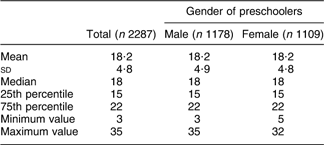
Among the participants (51·5 % boys and 48·5 % girls), 23·1 %, 42·5 % and 34·4 % were 24–36, 36–48 and 48–60 months old, respectively. Table 2 illustrates descriptive characteristics of the PDL-Index among the total sample and by gender. The overall mean of the PDL-Index score was 18·2 (sd 4·8) and this score was normally distributed (P = 0·175). Stratified analysis by gender showed no statistical difference in PDL-Index score between boys and girls (P = 0·717).
Descriptive characteristics of the Preschoolers Diet–Lifestyle Index (PDL-Index)Footnote * in a sample of Greek preschoolers: the GENESIS study
GENESIS, Growth, Exercise and Nutrition Epidemiological Study in preSchoolers.
* The value of the index ranges between 0 and 44.
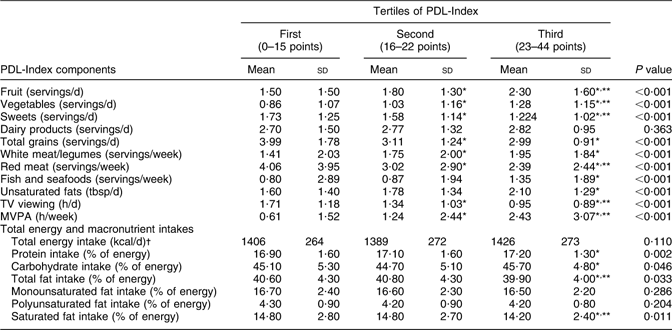
Table 3 illustrates the mean and sd of the index components, total energy intake and macronutrient intakes by the tertiles of the index. The appropriate tests showed that there was a significant trend towards a better diet quality with increasing PDL-Index score. More specifically, as expected from the design of the PDL-Index, the consumption of vegetables, fruits, fish/seafood, unsaturated fats and white meats/legumes, as well as the time children spent on MVPA, was significantly higher in participants belonging to the third tertile of the PDL-Index compared to those belonging to the lowest tertile (P < 0·001). In contrast, the consumption of red meat, sweets and grains, as well as the time children spent watching TV, was significantly lower in the third tertile compared to the first tertile (P < 0·001). No significant difference was detected in total energy intake across the tertiles of the index. Moreover, total and saturated fat intake was significantly lower, while the protein and carbohydrate intake was significantly higher in the third compared to the first tertile. No significant difference was detected in monounsaturated and polyunsaturated fat intake across the tertiles of the PDL-Index (Table 3).
Mean of the Preschoolers Diet–Lifestyle Index (PDL-Index) components and macronutrient intakes by tertile of the total score: the GENESIS study (n 2287)
GENESIS, Growth, Exercise and Nutrition Epidemiological Study in preSchoolers.
TV, television; MVPA, moderate-to-vigorous physical activity.
The PDL-Index total score ranges between 0 and 44.
† 1kcal = 4·184 kJ.
*P < 0·05 for the comparison with the first tertile of PDL-Index after Bonferroni correction for multiple comparisons.
**P < 0·05 for the comparison with the second tertile of PDL-Index after Bonferroni correction for multiple comparisons.
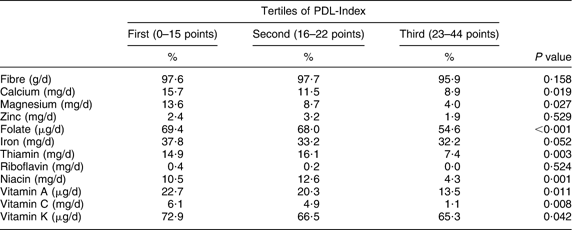
Table 4 illustrates the percentage of participants with lower intakes than the EAR for selected nutrients. It was observed that higher PDL-Index score was associated with lower proportion of preschoolers not meeting the EAR. Unfortunately, the proposed index was not strongly associated with fibre, zinc and riboflavin intake.
The percentage of participants with intake lower than the Estimated Average Requirement(42) by tertile of the Preschoolers Diet–Lifestyle Index (PDL-Index): the GENESIS study (n 2287)
GENESIS, Growth, Exercise and Nutrition Epidemiological Study in preSchoolers.
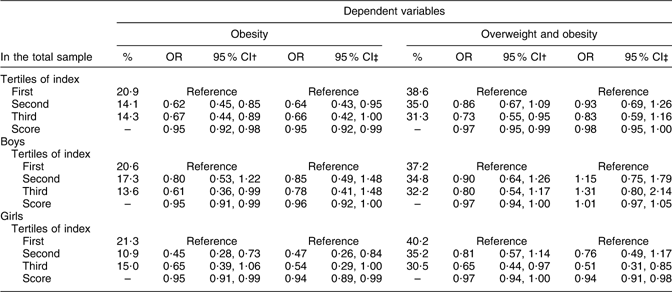
Among the sample preschoolers, 16·7 % were obese (17·9 % among boys and 15·5 % among girls) and 35·1 % were overweight and obese (34·9 % among boys and 35·2 % among girls). The participants who belonged to the third tertile of the PDL-Index were less likely to be obese or overweight/obese compared to those who belonged to the first tertile (Table 5). Moreover, it was observed that a 1/44 unit increase in the score was associated with approximately 5 % and 3 % lower odds of being obese and overweight/obese, respectively. These results remained significant after adjusting for sex, age, region of residence, postnatal feeding patterns, parental BMI, total energy intake, birth weight for gestational age, weight gain in the first 6 months and maternal smoking habits during pregnancy (Table 5). Stratified analysis by gender revealed similar results for both boys and girls.
The association between obesity or both overweight and obesity (dependent variables) and the Preschoolers Diet–Lifestyle Index (PDL-Index; independent variable): the GENESIS study (n 2287)
GENESIS, Growth, Exercise and Nutrition Epidemiological Study in preSchoolers.
†Unadjusted.
‡Adjusted for sex, age, region of residence, postnatal feeding patterns (i.e. breast v. formula v. mixed feeding), parental BMI (i.e. both normal weight, one of two overweight or obese and both overweight or obese), total energy intake, birth weight for gestational age (i.e. appropriate, small, large), weight gain in the first 6 months (i.e. average, poor, rapid) and maternal smoking habits during pregnancy.
The discriminating ability of the final models was adequate since the c-statistic was 0·66 (95 % CI 0·62, 0·70) for models with obesity and overweight/obesity as dependent variables. The correct classification rates of the estimated models were 85 % and 67 % for being obese and overweight/obese, respectively. The cut-off point analysis revealed that the optimal value of the PDL-Index that discriminates obese from non-obese and overweight/obese from normal weight was 18. On the basis of these cut-off points, the sensitivity of the PDL-Index was 60 % for obesity and 55 % overweight/obesity. The corresponding specificities were 52 %.
Discussion
The HEI and the RC-DQI are the only indices that have been proposed as appropriate tools to assess diet quality of preschoolers(Reference Kennedy, Ohls and Carlson30, Reference Kranz, Hartman and Siega-Riz32). However, these indices are not widely applied because they involve the estimation of specific nutrient intakes for their calculation. In the present study, a simple dietary index (PDL-Index) was developed based on specific available dietary recommendations for preschoolers. This index aimed to evaluate the overall diet–lifestyle quality of preschoolers. The proposed index was applied to a validation sample of 2287 preschoolers from Greece in order to examine its validity in terms of nutrient intake, as well as whether it is associated with obesity in preschoolers.
The analyses showed that the PDL-Index is a good means to measure diet quality of preschoolers, as higher values of the PDL-Index are strongly associated not only with foods incorporated in index calculation, but also with selected nutrients. Moreover, a strong inverse association of the proposed index with the likelihood of being obese and overweight/obese was observed. Furthermore, it was detected that the developed index has a good true positive rate (i.e. sensitivity: 57 % and 54 %) and an acceptable negative rate (i.e. specificity: 42 %).
Regarding Greek preschoolers’ diet quality, the present results revealed that there is an increased necessity to improve children’s diet, since the mean index value of the present study is approximately 18, much lower than the intermediate value of the range of the index (i.e. 22). As concerns particular food groups, it was found that the consumption of vegetables, fish/seafood and white meat/legumes was lower than recommended, even in children of the highest PDL-Index tertile. Moreover, it was observed that approximately 6 %, 14 % and 18 % of participants over-consumed unsaturated fat, dairy products and grains, respectively.
These findings are in agreement with studies conducted in the USA reporting that the consumption of fruits, vegetables and whole grains is below recommendations in children(Reference Langevin, Kwiatkowski and McKay51–Reference Dennison, Rockwell and Baker53). Consistent with the present results, other studies have also revealed that fat intakes among Greek children and adolescents are much higher than recommended(Reference Roditis, Parlapani and Tzotzas9, Reference Roma-Giannikou, Adamidis and Gianniou54). Furthermore, a recently published study showed that the majority of Greek children consume sugar-added beverages on a daily basis and this is strongly related to low intake of fruit and vegetables(Reference Linardakis, Sarri and Pateraki55). Regarding over-consumption of dairy products, no data are available from previous studies. However, due to the wide availability of milk and its relatively low cost, children, especially those from low-income families, are at increased risk for over-consuming milk and dairy products(Reference Kelly56, Reference Dennison, Erb and Jenkins57).
The dietary index approach is one of the methods used to derive dietary patterns(Reference Hu26). This technique is considered an ‘a priori’ procedure, because the index is developed based on current nutrition knowledge (i.e. recommended diets or dietary guidelines) and not on food intake data collected in a particular study. However, it should be underlined that this approach is limited by the fact that availability of dietary guidelines is required to define dietary patterns, as well as by the fact that dietary guidelines are not usually disease specific. As a result, adherence to dietary guidelines may have a varied effect on the risk of different diseases. Furthermore, the selection of individual components, the definition of cut-off points for each component, and the relative contribution of each component to the total score are subjective(Reference Waijers, Feskens and Ocke58).
In terms of the proposed index, one of its advantages is the fact that its score is obtained easily through a simple evaluation process. The PDL-Index examines the frequency of consumption of particular foods or food groups and sedentary time through the assessment of time spent watching TV/playing video games and on MVPA. There is no requirement for specific estimation of nutrient intakes, which would make the calculation of the total score more complex and labour-intensive as in the HEI and RC-DQI. Another advantage of the proposed index is the use of a wide-range scoring system (i.e. 0–4) for all components, rather than a binary system. This fact implies that the suggested index may be an accurate tool to predict several nutritional-related health outcomes, since it has recently been shown that when the number of partitions of index items (i.e. components) increases, the diagnostic accuracy of the index in predicting a binary outcome also increases(Reference Anderson, Field and Collins60).
However, there are some potential limitations to the study. First, the weekday intakes were collected with greater precision than the weekend intakes, since 24 h recall or food diaries were used for preschoolers’ dietary assessment outside nurseries. Therefore, it is possible that there is a bias in the estimation of children’s diet quality through the PDL-Index score. However, several techniques were used to address these limitations and strengthen the study, such as the addition of a third weekday, the use of weighted records for two out of three days, cultural tailoring of the dietary database, parental training by a trained dietitian and the availability of a dietitian during the weekday/weekends. Regarding physical activity data, a valid parental proxy questionnaire was used, although it is widely accepted that the use of accelerometry would provide more valid information. Likewise, children’s TV viewing time was obtained by parental reports, the validity of which was not examined. However, significant correlation has been reported between parental reports of children’s TV viewing time and TV diaries(Reference Kourlaba and Panagiotakos59).
In conclusion, the proposed PDL-Index is a simple and easily applied tool for assessing the degree of adherence to specific dietary and lifestyle recommendations and for identifying preschoolers with increased probability of becoming overweight/obese. Further implementation of the PDL-Index in prospective studies conducted in different populations (i.e. US preschoolers) is considered necessary in order to evaluate its predictive validity against several health outcomes and among several populations with different dietary and lifestyle habits. In addition, further studies should be conducted in order to compare the predictive validity of the proposed index with those of HEI and RC-DQI. Further modifications may need to be implemented in order to improve the diagnostic accuracy of the PDL-Index. Still, the PDL-Index seems to be a useful means for public health policy makers in identifying population subgroups more likely to have poor diet–lifestyle patterns and an increased probability of being overweight/obese. The information provided by the PDL-Index can guide policy makers in developing targeted and cost-effective intervention actions both in family and preschool settings. In addition, this index can be used by health-care professionals to evaluate diet–lifestyle quality of preschoolers at an individual level, to assess their risk of overweight/obesity, and to better consult families in everyday practice.
Acknowledgements
The GENESIS study was supported with a research grant from Friesland-Foods Hellas. Y.M. works as a part-time scientific consultant for Friesland Foods Hellas. The study sponsor had no involvement in the study design, data collection or writing of the manuscript. None of the authors have any personal or financial conflict of interest. All authors participated in writing the manuscript, interpreting the results, reviewing its content and approving the final version submitted for publication. Y.M. contributed to the design of the study and supervised data collection; G.K. carried out the statistical analysis and contributed to the data collection; E.G., G.M. and O.A. contributed to data collection, data management and preparation of database; and E.R.G. contributed to the design of the study. The authors thank Vivian Detopoulou, Anastasia Anastasiadou, Christine Kortsalioudaki, Elina Ioannou, Margarita Bartsota, Thodoris Liarigkovinos, Elina Dimitropoulou, Nikoleta Vidra, Theodoros Athanasoulis, Pari Christofidou, Lilia Charila, Sofia Tzitzirika and Christos Vassilopoulos for their contribution to the completion of the study.



