



Inadequate 25-hydroxyvitamin D (25(OH)D) concentrations are a major public health concern as they are highly prevalent in many countries( Reference Hossein-nezhad and Holick 1 ), and have been associated with numerous health outcomes such as hypertension, CVD and decline in physical functioning( Reference Perez-Lopez, Chedraui and Fernandez-Alonso 2 ). The definition of vitamin D status is controversial( Reference Gallagher and Sai 3 ). Briefly, plasma 25(OH)D concentrations < 20 ng/ml tend to be considered as ‘insufficient’ or ‘(moderately) deficient’, and concentrations < 10 ng/ml as ‘(severely) deficient’( Reference Gallagher and Sai 3 – Reference Vernay, Sponga and Salanave 5 ). The proposed cut-off values for a ‘sufficient’ status vary, one suggested value is ≥ 30 ng/ml( Reference Gallagher and Sai 3 – Reference Vernay, Sponga and Salanave 5 ). In France, 47·3 % of the adult population is estimated to have concentrations < 20 ng/ml( Reference Vernay, Sponga and Salanave 5 ). Socially disadvantaged populations seem to be affected to a much higher degree: in a sample of French food aid users, 45·9 % had concentrations < 10 ng/ml, and 44·2 % had concentrations between 10 and 19 ng/ml( Reference Grange, Castetbon and Guibert 6 ).
Meanwhile, support for the neurocognitive benefits of 25(OH)D has also begun to accumulate( Reference Barnard and Colon-Emeric 7 – Reference Buell, Dawson-Hughes and Scott 9 ). Vitamin D receptors and the enzyme that converts vitamin D into its active form (1-α-hydroxylase) have been detected in the brain( Reference Barnard and Colon-Emeric 7 , Reference Eyles, Feron and Cui 10 ), and experimental studies in animals and cell cultures have provided support for both direct( Reference Brewer, Thibault and Chen 11 ) and indirect( Reference Neveu, Naveilhan and Baudet 12 ) neuroprotective actions of vitamin D. This is of great public health interest because effective treatments for conditions such as Alzheimer's disease are not yet available( Reference de la Torre 13 ). Moreover, cognitive decline is a long-term process, especially in the case of Alzheimer's disease, where the diagnosis is preceded by a very long pre-symptomatic phase. Thus, it is probably possible to intervene in a preventive manner( Reference Amieva, Le Goff and Millet 14 ). Accordingly, it is important to collect long-term prospective data on potentially protective or detrimental factors during midlife (or even earlier) in relation to cognitive outcomes later in life.
Meta-analyses and systematic reviews of epidemiological studies have suggested a link between higher 25(OH)D concentrations and better cognitive health; yet, there is a considerable amount of inconsistency in study results( Reference van der Schaft, Koek and Dijkstra 8 , Reference Annweiler, Montero-Odasso and Llewellyn 15 – Reference Balion, Griffith and Strifler 17 ). This has been attributed to cross-sectional study designs, inadequate statistical adjustment and heterogeneity in cognitive function measures and 25(OH)D cut-off values( Reference Barnard and Colon-Emeric 7 , Reference van der Schaft, Koek and Dijkstra 8 , Reference Eyles, Feron and Cui 10 , Reference Balion, Griffith and Strifler 17 , Reference Etgen, Sander and Bickel 18 ). Moreover, little is known about the role of vitamin D in different cognitive domains( Reference Balion, Griffith and Strifler 17 ).
In the present study, we investigated the association between 25(OH)D concentrations at midlife and performance in several cognitive domains assessed 13 years later.
Subjects and methods
Study design and participants
The French ‘SUpplémentation en Vitamines et Minéraux AntioXydants’ study (SU.VI.MAX, 1994–2002) was a randomised, double-blind, placebo-controlled primary prevention trial on the effect of daily, nutritional-dose antioxidant vitamin and mineral supplementation (ascorbic acid (120 mg), vitamin E (30 mg), β-carotene (6 mg), Se (100 μg) and Zn (20 mg)) on CVD and cancer incidence( Reference Hercberg, Galan and Preziosi 19 ). Details about the cohort are available elsewhere( Reference Hercberg, Galan and Preziosi 19 ). Briefly, 12 741 volunteers aged 35–60 years (women) or 45–60 years (men) who were free of any disease likely to hinder active participation or threaten 5-year survival were included in the trial. Following the trial phase, a total of 6850 individuals were included in the SU.VI.MAX 2 observational follow-up study (2007–9)( Reference Kesse-Guyot, Fezeu and Jeandel 20 ).
Baseline measurements of 25(OH)D concentrations were available for a subsample of participants included in a nested case–control study set-up to investigate the link between plasma 25(OH)D and cancer risk. The nested cohort included all first primary incident cancer cases diagnosed between 1994 and 2007 (n 928) and one or two matched controls (n 1850) per case. Controls were randomly selected among the participants of identical sex, age (10-year strata), intervention group and season of blood draw. We restricted the present analyses to control subjects aged 45–60 years at baseline (in order to obtain similar age ranges for men and women, and to obtain a sample of participants of relatively old age at follow-up) with complete data on cognitive test variables at follow-up.
Standard protocol approvals, registrations and patient consents
The SU.VI.MAX and SU.VI.MAX 2 studies were conducted according to the guidelines laid down in the Declaration of Helsinki, and all procedures involving human subjects/patients were approved by the Ethics Committee for Studies with Human Participants of Paris-Cochin Hospital (CCPPRB no. 706 and no. 2364, respectively) and the Commission Nationale de l'Informatique et des Libertés (CNIL no. 334641 and no. 907094, respectively). Written informed consent was obtained from all subjects. The SU.VI.MAX trial was registered at www.clinicaltrials.gov under NCT00272428.
Assessment of plasma vitamin D concentrations
A 35 ml venous blood sample was collected at baseline in vacutainer tubes from each participant following fasting for 12 h at the time of the visit. All blood draws occurred between October 1994 and April 1995. Blood samples were centrifuged immediately after the blood draw, and plasma aliquots were stored in dry ice less than 1 h after blood draw for shipment to the central biobank (maximum 24 h), where they were stored frozen in liquid nitrogen ( − 196°C). Concentrations of 25(OH)D were analysed via the Roche Cobas electrochemoluminescent total 25(OH)D assay( Reference Knudsen, Nexo and Hojskov 21 , Reference Touvier, Deschasaux and Montourcy 22 ).
Cognitive assessment and scoring
Cognitive performance was evaluated during the SU.VI.MAX 2 Study (2007–9) by trained neuropsychologists using a battery of validated tools. A summary of the applied tests and the computation of cognitive outcome variables are shown in Fig. 1. Briefly, episodic memory was evaluated with the validated French ‘rappel indicé-48 items’ (RI-48) cued recall test where subjects were presented with a list of forty-eight words divided into twelve categories. For each word correctly recalled, one point was attributed (thus the maximum score was 48)( Reference Adam, Van der Linden, Poitrenaud and Van der Linden 23 ). For this analysis, we considered the number of words remembered during the ‘delayed cued recall’. Lexical semantic memory was assessed in a timed manner by a phonemic fluency task (citing words beginning with the letter P) and a semantic fluency task (naming as many animals as possible). The respective score on each task was the number of correct words produced during a 2-min period( Reference Lezak, Howieson and Loring 24 ). The French version of these fluency tasks has been validated( Reference Cardebat, Doyon and Puel 25 , Reference Cardebat, Démonet and Viallard 26 ). Two-digit span tasks (issued from the validated Wechsler Adult Intelligence Scale-Third Edition( Reference Wechsler 27 ), that have also been validated in French( Reference Wechsler 28 , Reference Lecerf 29 )), served to assess short-term (forward digit span) and working memory (backward digit span). These tasks consisted in immediately repeating growing series of digits (in inverse order for the backward digit span), with one point attributed for each sequence repeated correctly (maximum score for each span: 14). Mental flexibility was assessed via the number–letter switching task (condition 4) of the Delis–Kaplan Trail Making Test, which has been validated in English( Reference Delis, Kaplan and Kramer 30 ), and whose original form (the ‘classical’ Trail Making Test) has also been validated in French( Reference Amieva, Le Goff and Stoykova 31 , Reference Ferreira, Vanholsbeeck and Chopard 32 ). The task consists of alternately connecting numbers and letters presented in circles (i.e. 1–A–2–B) as quickly as possible. Based on the time taken, reverse-coded, logarithmised, age-corrected scaled scores were calculated using the conversion tables provided by Delis and Kaplan.
Cognitive tests applied and calculation of the cognitive outcome variables. * Lezak et al. ( Reference Lezak, Howieson and Loring 24 ). † Wechsler( Reference Wechsler 27 ). ‡ Adam et al. ( Reference Adam, Van der Linden, Poitrenaud and Van der Linden 23 ). § Delis et al. ( Reference Delis, Kaplan and Kramer 30 ). ∥ In order to obtain the final composite cognitive score, the mean of the individual T scores was rescaled to sd= 10. ¶ Principal component analysis calculates ‘factors’ that are linear combinations of the initial variables (the cognitive test scores in our case), which explain a maximum of the structure of the variance–covariance matrix of the initial variables. Principal component analysis factors were converted to T scores (mean = 50, sd= 10). RI-48, Rappel indicé-48 items.

In order to obtain synthetic cognitive variables, we performed principal component analysis (PCA) on the individual test scores. PCA calculates ‘factors’ that are linear combinations of the initial variables (the cognitive test scores in our case) that explain a maximum of the structure of the variance–covariance matrix of the initial variables( Reference Joliffe and Morgan 33 ). Habitually, PCA factors are then named after the initial variables with which they are the most strongly correlated (we followed the suggestion of Kline( Reference Kline 34 ) to consider factor loadings >0·6 as indicators of substantial correlations). Thus, PCA served to group tests measuring similar cognitive domains. We used a Cattel's scree plot to determine the number of factors to retain. The obtained factors were converted to T scores (mean = 50, sd= 10).
Next, all individual test scores were also converted to T scores, and a ‘composite cognitive score’ was created by calculating the mean of the cognitive test − T scores, and rescaling the obtained value to sd= 10.
Covariates
At baseline, participants completed self-administered questionnaires providing data on sociodemographics (sex, age and education), lifestyle (physical activity and smoking), memory complaints (yes/no) and medication use. Further, alcohol intake (g/d) was estimated using a short validated semi-quantitative dietary questionnaire( Reference Lasfargues, Vol and Le Clesiau 35 ), and information on the skin phototype was obtained via a questionnaire based on the Fitzpatrick classification (I: always burns, never tans; II: burns easily, tans minimally; III: burns moderately, tans uniformly; IV: burns minimally, always tans well; V: rarely burns, tans profusely; VI: never burns)( Reference Astner and Anderson 36 ). Baseline BMI (kg/m2) was calculated using height and weight measurements performed by a trained personal at the 1995–6 clinical examination.
Information on hypertension ( ≥ 140/90 mmHg) and diabetes (fasting blood glucose ≥ 7 mmol/l, or anti-diabetic medication use, or self-reported diagnosis) over follow-up was obtained as previously reported( Reference Kesse-Guyot, Amieva and Castetbon 37 ). ‘History’ of diabetes and of hypertension was defined as having the respective condition at baseline or having acquired it during the follow-up.
In case of suspected CVD during follow-up, relevant medical data were requested from participants, physicians, and/or hospitals, and reported events were reviewed by an independent expert committee. Concomitant with the cognitive evaluation, depressive symptoms were assessed with the validated French version of the Center for Epidemiologic Studies Depression Scale( Reference Radloff 38 ).
Missing values on covariates were dealt with by attributing the mean or mode, as appropriate (number of missing values per variable: smoking habits, n 29; physical activity level, n 2; living situation, n 21; Center for Epidemiologic Studies Depression Scale, n 9). In order to verify that this did not affect the results of the present study, we conducted sensitivity analyses using multiple imputation techniques (SAS PROC MI and PROC MI ANALYZE).
Statistical analysis
Baseline characteristics were presented by 25(OH)D status (sufficient: ≥ 30 ng/ml; insufficient: ≥ 20 and < 30 ng/ml; moderately deficient: ≥ 10 and < 20 ng/ml; severely deficient: < 10 ng/ml( Reference Vernay, Sponga and Salanave 5 )). Because not all variables were normally distributed, values were stated as median (25th and 75th percentile), and differences were tested using χ2 tests and Kruskal–Wallis tests.
Associations between 25(OH)D concentrations and cognitive outcomes were analysed by linear regression models. In addition, we computed adjusted means and 95 % CI of each cognitive factor by categories of 25(OH)D status, using ANCOVA. Differences in adjusted means across categories were evaluated by a linear contrast test.
We tested potential effect modification by sex, treatment allocation during the trial phase and educational level. As there was a significant interaction between educational level and 25(OH)D concentrations concerning the composite score and one of the two factors derived from PCA (factor 2, P< 0·10), all analyses were stratified by educational level (primary, secondary and higher education).
Model 1 was adjusted for sex, age at the neuropsychological evaluation (years), duration of follow-up (years) and the season during which the plasma sample was drawn (October–December, January–April). Model 2 was further adjusted for treatment allocation group (supplemented, placebo), occupational category (inactive or unemployed, retired, agricultural or manual work, intermediate profession, leadership position or intellectual profession), living situation (alone, in a couple), physical activity (no regular activity, regular activity equivalent to < 1 h of walking/d, regular activity equivalent to ≥ 1 h of walking/d), smoking status (non-smoker, former smoker, present smoker), alcohol consumption (g/d), baseline BMI (kg/m2), self-reported memory troubles at baseline (yes/no) and depressive symptoms at follow-up (Center for Epidemiologic Studies Depression Scale score).
The creation of the ‘season’ variable was based on to the observed variation in 25(OH)D by month of blood draw (of note, adjusting for the month of blood draw as a continuous variable did not substantially change the present results (data not shown)).
As vascular health( Reference Buell, Dawson-Hughes and Scott 9 ) and diabetes( Reference Song, Wang and Pittas 39 , Reference Luchsinger 40 ) may mediate the association between 25(OH)D concentrations and cognitive functioning, we created an additional model (model 3) with further adjustment for major cardiovascular events during follow-up, history of diabetes and history of hypertension.
All analyses were conducted using Statistical Analysis Systems statistical software package version 9.3 (SAS Institute), with a significance level of 0·05 (except for the interaction terms, where a significance level of 0·10 was applied, as the statistical power for such tests tends to be lower( Reference Greenland 41 )). In order to account for multiple comparisons, results were hierarchically interpreted – considering the composite cognitive score and the PCA-derived factors as our main outcomes, and the cognitive test scores as secondary outcomes.
Results
Participant characteristics
Of the 1850 cancer-free subjects with available 25(OH)D data, 1217 were within the specified age range, of whom 1009 (552 men and 457 women) had complete data on cognitive test variables at follow-up. Individuals in our final study sample had a mean age of 66·6 (sd 4·5) years at the neuropsychological evaluation, and a mean follow-up time of 13·4 (range 12·7–14·7) years. Only 15·9 % had a sufficient 25(OH)D status (27·3 % had an insufficient status, 42·3 % were moderately deficient and 14·6 % severely deficient).
Participants of the SU.VI.MAX Study that were not included in the present study sample (because they were not part of the control subjects of the nested case–control study for which 25(OH)D measurements were performed, younger than 45 years at baseline, or had missing data on cognitive variables at follow-up) significantly differed from those included in the present study sample with respect to several baseline variables. Excluded participants were younger, more often female, more often smokers and declared memory troubles, declared less often high levels of physical activity and had a lower BMI, lower systolic and diastolic blood pressures, and lower fasting blood glucose (online Supplementary Table S1). When comparing only those excluded participants that were older than 45 years at baseline (n 8858) to included participants, the only significant differences that remained between the two groups concerned age (excluded participants were younger), sex (excluded participants were more often women) and smoking status (excluded participants were more often smokers) (data not shown).
Table 1 presents participant characteristics by vitamin D status. Subjects with a better 25(OH)D status were older, more frequently male, less often living alone, had a higher Fitzpatrick-phototype index, consumed more alcohol and were more likely to report increased physical activity. Moreover, they were less likely to have a history of diabetes and their blood samples were more frequently drawn in October–December.
Characteristics of the study sample across categories of plasma vitamin D status (SUpplémentation en Vitamines et Minéraux AntioXydants (SU.VI.MAX) and SU.VI.MAX 2 studies, 1994–2009, France)* (Medians with their 25th and 75th percentiles, or percentage n 1009)

25(OH)D, 25-hydroxyvitamin D; CES-D, Center for Epidemiological Studies Depression Scale.
* Values are characteristics at baseline unless indicated otherwise.
† Total number of subjects without missing data on the respective variable.
‡ χ2 Test or Kruskal–Wallis test.
§ Measurement: Roche Cobas electrochemoluminescent immunometric assay (Roche Diagnostics).
∥ Intervention group of the SU.VI.MAX trial (antioxidant supplementation).
¶ CES-D, administered at follow-up.
** I: always burns, never tans; II: burns easily, tans minimally; III: burns moderately, tans uniformly; and IV: burns minimally, always tans well. No participant in our sample had a Fitzpatrick phototype of V or VI.
†† Or intellectual profession.
‡‡ At baseline or follow-up. Hypertension: blood pressure ≥ 140/90 mmHg or anti-hypertensive medication use. Diabetes: fasting blood glucose ≥ 7 mmol/l or anti-diabetic medication use, or self-reported diagnosis.
§§ Events during follow-up.
Identification of principal component analysis-derived cognitive factors
PCA revealed two cognitive factors related to verbal memory and short-term/working memory (Table 2), accounting for 62·0 % of the total initial variance in cognitive performance. The first factor (‘verbal memory’) accounted for 41·0 % of the variance, and was strongly correlated with the RI-48 cued recall, semantic and phonemic fluency (i.e. these cognitive tests had loadings >0·6 on the factor). The second factor (‘short-term and working memory’) accounted for 21·0 % of the variance, and was strongly correlated with the forward and backward digit span. The Trail Making Test had a moderate correlation with both factors.
Factor-loading matrix from principal components analysis (PCA)*
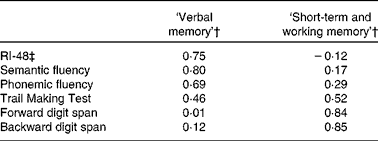
RI-48, Rappel indicé-48 items (cued recall test-48 items).
* The presented values are loadings of each cognitive test variable on the first and second factor derived by PCA. For this analysis, we considered loadings >0·6 to indicate strong correlations.
† The first PCA factor (named ‘verbal memory’) accounted for 41·0 % of the variance in cognitive test scores; the second PCA factor (named ‘short-term and working memory’) accounted for 21·0 %. A high percentage of explained variance corresponds to a good capacity of a PCA factor to explain the variance–covariance structure of the original variables.
Associations between plasma 25-hydroxyvitamin D concentrations and cognitive outcomes
Table 3 presents the associations between 25(OH)D concentrations and cognitive outcomes, stratified by educational level. Furthermore, we present adjusted means of the cognitive outcomes by categories of vitamin D status, separately for subjects with primary (Table 4), secondary (online Supplementary Table S2) and higher education (online Supplementary Table S3).
Linear regression analysis of the association between baseline 25-hydroxyvitamin D plasma concentrations and cognitive outcomes evaluated 13 years later* (β Coefficients and 95 % confidence intervals, n 1009)

RI-48, Rappel indicé-48 items (cued recall test-48 items).
* Higher scores indicate better performance.
† Factors derived from principal component analysis. The ‘verbal memory’ – factor was strongly correlated with the semantic and phonemic fluency tests and the RI-48; the ‘short-term/working memory’ – factor was strongly correlated with the forward and backward digit span.
‡ Model 1: adjusted for age, sex, follow-up time, season of blood draw.
§ Model 2: additionally adjusted for intervention group, socioprofessional category, family situation, physical activity level, smoking status, alcohol consumption, BMI, self-reported memory troubles at baseline and Center for Epidemiologic Studies-Depression Scale score.
∥ Mean of all standardised cognitive test scores.
¶ Number–letter switching task of the Delis–Kaplan Executive Function System version.
Association between categories of baseline plasma 25-hydroxyvitamin D and cognitive outcomes evaluated 13 years later in subjects with primary education only* (Adjusted mean values and 95 % confidence intervals, n 230)

RI-48, Rappel indicé-48 items (cued recall test-48 items).
* Higher scores indicate better performance.
† Linear contrast test.
‡ Factors derived from principal component analysis. The ‘verbal memory’ – factor was strongly correlated with the semantic and phonemic fluency tests and the RI-48; the ‘short-term/working memory’ – factor was strongly correlated with the forward and backward digit span.
§ Model 1: adjusted for age, sex, follow-up time, season of blood draw.
∥ Model 2: additionally adjusted for intervention group, socioprofessional category, family situation, physical activity level, smoking status, alcohol consumption, BMI, self-reported memory troubles at baseline and Center for Epidemiologic Studies-Depression Scale score.
¶ Mean of all standardised cognitive test scores.
** Number–letter switching task of the Delis–Kaplan Executive Function System version.
In participants with primary education only (n 230), there was a significant linear association between 25(OH)D concentrations and the ‘short-term and working memory’ factor (model2, P= 0·02). After further adjustment for the potential health-related mediators (major cardiovascular events during follow-up, history of diabetes and history of hypertension), the association was only slightly weakened and remained statistically significant (online Supplementary Table S4, P= 0·03). Concerning the three individual cognitive tests correlated with that factor, significant results were only observed for the backward digit span (model 2, P= 0·004). Yet, there was an association between higher 25(OH)D concentrations and scores on the forward digit span with borderline significance (model 2, P= 0·05). Plasma vitamin D was not related to the ‘verbal memory’ factor, to any of the cognitive tests correlated with it, or to the composite cognitive score. The results obtained when considering categories of vitamin D status were very similar: vitamin D status was significantly related to the ‘short-term and working memory’ factor and the backward digit span.
Among subjects with secondary education (n 262), 25(OH)D concentrations were not related to the PCA-derived cognitive factors, or to the composite cognitive score. Yet, higher 25(OH)D concentrations were significantly related to higher scores on the phonemic fluency test. Among subjects with post-secondary education (n 517), no associations between plasma vitamin D and any of the considered cognitive variables were observed.
Sensitivity analyses
Repeating our analyses using multiple imputation instead of attribution of mean/modal values in the case of missing data did not substantially change the present results (data not shown).
Discussion
In this population-based epidemiological study, we investigated the association between midlife plasma 25(OH)D concentrations and performance in different cognitive domains, assessed 13 years later. Among participants with low education, higher plasma 25(OH)D concentration was associated with higher scores on a PCA-derived cognitive factor linked to short-term and working memory. This association was largely attributable to performance on the backward digit span, and to a lesser degree to performance on the forward digit span. As the backward digit span is a measure of working memory, it appears that 25(OH)D status was the most strongly associated with the performance of working memory among individuals with low education in our sample.
Among participants with secondary education only, there was no association of plasma vitamin D with any cognitive variable except phonemic fluency, where better outcomes were found in individuals with higher plasma 25(OH)D concentrations. The interpretability of this result is limited, as we aimed to interpret the present results hierarchically (with the PCA-derived factors and the composite cognitive score as primary outcomes), in view of the large number of statistical tests performed.
A modelling approach in which we categorised 25(OH)D concentrations confirmed the linear shape of the association among subjects with low education. In order to obtain an indicator that may facilitate an interpretation of the magnitude of the effect sizes found in the present study, we calculated mean scores on the ‘short-term and working memory’ – factor for younger ( < 60 years) and older ( ≥ 70 years) subjects (data not shown). While younger individuals had a 2·1 points higher mean than older individuals, subjects with a sufficient vitamin D status had, on average, a 5·1 points higher score than severely deficient subjects. This indicates that the effect size observed for the relationship between vitamin D status and short-term/working memory is not negligible.
We attempted to account for potential mediation effects by vascular health( Reference Buell, Dawson-Hughes and Scott 9 ) and diabetes( Reference Song, Wang and Pittas 39 ) by running additional models in which we adjusted for incident CVD and history of diabetes and hypertension. Yet, in the present study, adjusting for these conditions, yielded relatively similar results, suggesting that the observed effects may be largely due to biological pathways other than vascular disease and diabetes.
The effect modification by educational level could be explained by the phenomenon of cognitive reserve. This concept has been proposed to explain the observation that the same degree of brain damage or neuropathology can yield apparent manifestations in some subjects, but not in others( Reference Stern 42 ). Higher education has been proposed as a potential modulator of cognitive reserve, improving the ability to cope with neurological damage( Reference Stern 42 ). Thus, it is possible that impairments of brain function linked to low plasma vitamin D were only measurable in participants with a lower ability to use neural compensation mechanisms.
In a recent systematic review of epidemiological studies on vitamin D and cognition( Reference van der Schaft, Koek and Dijkstra 8 ), eighteen out of twenty-five cross-sectional studies have found a significant link between lower vitamin D concentrations or intake and worse cognitive performance or a higher prevalence of dementia. Out of six prospective studies, four have found that lower vitamin D concentrations were related to an increased risk of cognitive decline. Since the publication of this review, several other prospective studies investigating the association between 25(OH)D concentrations and cognition have appeared. A significant inverse association between 25(OH)D and cognitive decline during a follow-up of 4·4 years has been observed in a population-based cohort of 1927 elderly individuals( Reference Toffanello, Coin and Perissinotto 43 ). In a further investigation of 5010 subjects aged 40–79 years at baseline, 25(OH)D concentrations have been inversely associated with the risk of dementia over a 17-year follow-up among women, but not among men( Reference Knekt, Sääksjärvi and Järvinen 44 ). In addition, two studies without data on cognitive performances at baseline have found a positive association between 25(OH)D and cognitive function at follow-up( Reference Bartali, Devore and Grodstein 45 , Reference Wilson, Houston and Kilpatrick 46 ). In contrast, among 315 very old hospitalised patients, 25(OH)D concentrations were not predictive of the risk to develop dementia over a period of 2 years( Reference Graf, Rossi and Giannelli 47 ), and an investigation of data from 1652 individuals initially aged 48–68 years has found no association between 25(OH)D and cognitive decline over a follow-up of 3 or 10 years( Reference Schneider, Lutsey and Alonso 48 ). Thus, epidemiological evidence tends to indicate an association between vitamin D status and cognition, but study findings remain inconsistent. This could be partly due to differences in the investigated age ranges, the cognitive tests applied and whether or not baseline measurements of cognitive performance were available.
Studies investigating potential effects of vitamin D supplementation on cognition are scarce. A recent review of the literature has counted three randomised controlled trials and two case–control studies in clinical settings, of which none has identified a beneficial effect of vitamin D supplementation on cognitive outcomes. The review argues that this may be explained by the doses administered (often relatively high) and the generally short study periods( Reference Anastasiou, Yannakoulia and Scarmeas 49 ). As very high vitamin D doses may have detrimental side effects( Reference Anastasiou, Yannakoulia and Scarmeas 49 ), it is possible that low-dose supplementation is more effective than high-dose supplementation. This may be one reason why a non-randomised pre–post study (that was not included in the above-cited review) did identify an improvement in cognitive outcomes after a 16-month supplementation with low-dose vitamin D3 (800 IU/d; 0.02 mg/d) among elderly outpatients( Reference Annweiler, Fantino and Gautier 50 ). On the other hand, results of simple pre–post studies have an evidence level that is largely inferior to that of randomised controlled trials.
In order to explore the specific cognitive domains potentially affected by a low vitamin D status, Annweiler et al. ( Reference Annweiler, Montero-Odasso and Llewellyn 15 ) published a meta-analysis focusing on episodic memory and executive function. The present results concerning working memory are in agreement with this meta-analysis as all six studies assessing ‘information updating/working memory’ found a link between higher vitamin D concentrations and better working memory performance. The fact that the present study did not identify an association with episodic memory is also in accordance with the meta-analysis, as the effect size found by Annweiler et al. ( Reference Annweiler, Montero-Odasso and Llewellyn 15 ) was judged to be too small to draw any conclusion. In contrast to the present study, the meta-analysis identified a positive relationship between 25(OH)D and mental flexibility. Of note, this overall positive relationship was mainly driven by results from two studies whose participants were much older than subjects in our sample.
In the present study, a positive association of 25(OH)D concentrations with age was observed (Table 1). Yet, other studies have suggested that 25(OH)D concentrations decline with age( Reference Baker, Peacock and Nordin 51 , Reference Daly, Gagnon and Lu 52 ). In fact, after adjustment for other variables (notably physical activity level), a significant relationship between age and 25(OH)D was no longer present (data not shown). Of note, older participants were much more frequent to have high baseline levels of physical activity than younger participants (data not shown). Moreover, in the studies that found inverse associations between age and 25(OH)D concentrations, the considered age ranges were much larger than in the present study (in which participants were aged 45–60 years at the moment of blood draw).
Some limitations of the present study should be noted. First, there was no cognitive assessment at baseline, preventing us from modelling cognitive decline. It is possible that individuals with low vitamin D status already had worse cognitive performance at baseline, thus leading to an overestimation of the identified association. Yet, adjustment for self-reported memory complaints at baseline, educational level and baseline-socioprofessional category may attenuate potential bias. Further limitations are that no data on vitamin D status at follow-up (2007–9) had been collected, and that only a single baseline measurement of 25(OH)D was available for each participant. Yet, a recent study has indicated that, depending on the season of blood draw, a single sample can provide a reasonable average for 25(OH)D over a 1-year period( Reference Major, Graubard and Dodd 53 ). Additionally, we did not dispose of data on dietary supplement use (including vitamin D supplements) after the end of the SU.VI.MAX trial phase. Yet, during the trial phase (1994–2002), participants were asked not to consume any dietary supplements, and we were interested in the relationship of vitamin D status and cognition, irrespective of vitamin D sources.
Next, the stratification of our analyses by educational level implies a reduction in statistical power, which may explain why we did not find a significant association of plasma vitamin D with the forward digit span among subjects with low education. Furthermore, residual confounding cannot be excluded even though it is likely minimised due to extensive adjustment for potential confounders. Finally, the external validity of the present results may be limited as the SU.VI.MAX cohort is a selected sample of compliant volunteers( Reference Hercberg, Galan and Preziosi 19 ).
Strengths of the study include its longitudinal design, and the assessment of plasma vitamin D status in a middle-aged population. Additionally, we used a neuropsychological battery including validated cognitive tests designed to limit floor and ceiling effects. Moreover, in contrast to many other studies on vitamin D and cognition, the use of a large number of different cognitive tests permitted us to report specific results on different cognitive domains.
In conclusion, the present study confirms previous findings from epidemiological studies that support a link between higher vitamin D concentrations and better cognitive outcomes. However, the present results were restricted to individuals with a low educational level, which could be explained by the phenomenon of cognitive reserve. Future prospective studies and randomised controlled trials are necessary to clarify the role that an improved vitamin D status could have in the prevention of cognitive impairment and dementia.
Supplementary material
To view supplementary material for this article, please visit http://dx.doi.org/10.1017/S0007114515001051
Acknowledgements
The authors thank Stéphane Raffard, who was responsible for standardisation of the cognitive evaluation; Frédérique Ferrat, who coordinated with the logistic aspects of the neuropsychological evaluation; Nathalie Charnaux and Angela Sutton, who were responsible for the vitamin D measurements; and Gwenaël Monot, Paul Flanzy, and Mohand Ait Oufella (computer scientists); Nathalie Arnault, Laurent Bourhis, and Stephen Besseau (statisticians); and Rachida Mehroug (logistics assistant) for their technical contribution to the SU.VI.MAX Study.
The present study was funded by the French National Research Agency (no. ANR-05-PNRA-010), the French Ministry of Health, Médéric, Sodexo, Ipsen, MGEN and Pierre Fabre. Médéric and MGEN are French health insurance organisations, which are complementary to the National Health Insurance System. Ipsen and Pierre Fabre are private pharmaceutical companies. Sodexo, a food catering company, supported the study by organising meetings between researchers and study participants. Moreover, the realisation of plasma vitamin D measurements was supported by a grant from the French Research Institute for Public Health (IRESP Grant AAR201206). K. E. A. was supported by a doctoral fellowship from Ecole Doctorale Galilée, University of Paris 13, Sorbonne Paris Cité, and M. D. was supported by a PhD grant from the Cancéropôle Ile-de-France (public funding from the Paris region). None of the funding bodies had any involvement in the design/conduct of the present study, in data analysis/interpretation or in the writing/approval of the manuscript.
M. T., V. A. A., T. C., S. H., P. G. and E. K.-G. report no disclosures.
None of the authors reports any conflict of interest.
The authors' contributions are as follows: P. G., S. H., E. K.-G. and M. T. designed the study; K. E. A. performed the statistical analysis and wrote the paper; K. E. A. and E. K.-G. had primary responsibility for the final content; E. K.-G. and M. T. provided methodological guidance; K. E. A.,V. A. A., M. T., M. D., T. C., S. H., P. G. and E. K.-G. were involved in interpreting the results and editing the manuscript for important intellectual content. All authors read and approved the final version of the manuscript.



