




Making the body politic through medicine: taste, health and identity in the Dutch Republic, 1636–1698
How, where and by whom were bodies shaped, maintained and politicized through medicine, diet and taste in the early modern Low Countries? In an age with limited pharmaceuticals and institutionalized healthcare, the medicinal use of foodstuffs, tastes and diets played an important role in the maintenance and restoration of health. Since Ernst H. Kantorowicz's The King's Two Bodies appeared in 1957, the metaphor of the body politic has been used widely in the analysis of early modern historical regimes.Footnote 1 Yet the focus tends to be on royalty or elite bodies, and on political literature and the medical metaphors used in relation to the body politic in such documents. The intersections between food and taste, power and politics, and (national) identities are among the oldest and most extensively debated issues in the discipline, and both dietary advice and the introduction of new substances in the early modern diet have been studied extensively.Footnote 2 Yet if the intersections of diet, taste and identity in the early modern period are studied, the focus is mostly on culinary texts, spaces and practices in England and France, and again tends to privilege social and intellectual elites.Footnote 3
However valuable such studies are, Dutch seventeenth-century food culture has been described by Simon Schama and Rachel Laudan as middling and bourgeois, ample but not luxurious, rooted in locality, with the family meal a place to teach the morals of society to children and a food industry that provided even the lowest classes with simple but nutritious fare.Footnote 4 Indeed, in the seventeenth-century Low Countries, politically engaged medical men published popular medical literature intended for the lower and middle classes in which they offered advice on diet and taste, which was aimed not only at maintaining and restoring health, but also at shaping emerging national tastes and identities. In this article, I therefore argue that we should also study the way thinking about politics – and, by extension, the body politic – influenced popular medicine, and thus likely also shaped the health, bodies and identities of the lower and middle classes through diet and taste.
This article analyses six popular medical and pharma-botanical works in the vernacular by the Dutch physicians Johan van Beverwijck (1594–1647), Petrus Nylandt (c.1635–c.1675) and Steven Blankaart (1650–1704). In order to provide a historiographical framework for this analysis, I will first briefly discuss the meanings of and existing discourse on the body politic, taste and identity in early modern Europe, and specifically the Dutch context.
The body politic, taste and identity in early modern Europe
The body politic
The body politic is probably one of the oldest political metaphors. Philosophers from Plato and Aristotle to Thomas Hobbes drew the analogy between the state and the human body. In early modern Europe, the metaphor was frequently taken literally – as Foucault has shown, words and the objects they referred to were considered to be the same thing in the medieval period, meaning that metaphors were tangible rather than abstract, and this appears to have continued well into the seventeenth century.Footnote 5 Hence those qualified to treat the illnesses of the king's body, medical doctors, were often also considered to be qualified to treat the ‘illnesses’ of the body politic – the state – and the monarch was sometimes envisioned as a practising physician of the state, as Soll has described in the French context.Footnote 6
The expressions ‘body politic’ and corps-état were common in English and French from the medieval period onwards, yet there was no equivalent in Dutch. This might be explained by the fact that the state formation of the Netherlands was very different than that of monarchies like England and France, as before the Dutch Republic (1588–1795) the Low Countries were part of or consisted of various and changing empires, duchies and principalities. However, Helmer Helmers has demonstrated that despite the lack of a Dutch term for the body politic, the themes of the natural, single-headed body politic and medical metaphors were echoed in Dutch sources. Helmers identifies certain constants around the body politic and metaphors of illness in Dutch seventeenth-century political literature. Foreigners and religious others were identified as xenobiotic, sickening agents, and the sick body politic was increasingly employed to construct otherness, shaping notions of national purity and autonomy, and some of the writers of these political texts were medical doctors.Footnote 7 This raises the question of the extent to which the idea of the body politic influenced medicine – is it possible not only that the metaphorical body politic was medicalized, but also that the natural body was politicized in medical texts?
Although both natural human bodies and the idea of the body politic have existed for millennia, Charlotte Epstein has convincingly argued that the state and the surveyable natural body with political rights are mutually constructive entities which first emerged in the early modern period, and that they were closely linked to the concept of the body politic. Analysing Hobbes's and Locke's work, Epstein demonstrates that neither the state nor a subject endowed with political rights guaranteed by the state pre-existed the relation.Footnote 8 Inspired by this argument, I demonstrate that this process was also shaped through literature that at first sight is not political but medical in nature. In this chapter, I argue that politically active physicians in the seventeenth-century Dutch Republic not only actively contributed to the constitution and the maintenance of the health of the body politic, as others have shown before me, but possibly also attempted to politicize and shape individual and collective bodies through medical writing aimed at social climbers. Taste – both sensory and cultural – played an important role in these texts.
Taste
Between 1600 and 1700, taste developed from an imperative, a classically sanctioned set of experiences, to something subjective.Footnote 9 This process has been identified in most Western European countries in the seventeenth century, and a variety of causal explanations have been offered.Footnote 10 Food historian Jean-Louis Flandrin, for example, suggested that the broadening of the meaning of the word ‘taste’ from purely sensory to aesthetic can be linked to an increased importance of food across all classes, while literary historian James Noggle argues that aesthetic taste in literature and poetry, although subjective, simultaneously serves to make immediate, passionate experiences ‘reassuringly collective, reified, and processual’.Footnote 11
The changing meaning of taste is frequently traced back to both Renaissance Italy and the work of the Spanish philosopher Baltasar Gracián (1601–58).Footnote 12 First emerging in Christian religious and mystical literature, it spread to the domains of politeness and civility.Footnote 13 These origins suggest that figurative good taste was originally a moral rather than an aesthetic concept. In his 1637 El Héroe, for example, a criticism of Machiavelli, Gracián writes, ‘Ay cultura de gusto, assi como de ingenio’ (There is the cultivation of taste as well as of ingenuity) – indicating that taste involved the cultivation of the senses as well as of the faculties of the mind.Footnote 14 According to Gracián, sensory taste, despite being animalistic and the most embodied of all senses (it is, after all, the only sense that needs foreign matter to enter the body in order to perceive it), contains the seed of the judgement that takes place in the mental evaluation of things. Gracián's gusto has also been interpreted by other scholars in recent years as a distinct form of symbolic or cultural capital and as a key concept akin to judgement or discernment and thus as important in the acquisition of knowledge.Footnote 15
From the early eighteenth century onwards, taste became explicitly associated with ingenuity in various European languages.Footnote 16 Such attempts to bring sensory experience under the reign of reason shaped pre-Kantian natural philosophy in the seventeenth and eighteenth centuries, as both Alexander Wragge-Morley and I have shown for the Dutch and English contexts respectively.Footnote 17 Alexander Baumgarten introduced the term ‘aesthetica’ when he addressed the issues that arose from knowledge gained through sensory perception, as well as issues related to criticism of taste in the arts in his 1735 Meditationes philosophicae de nonnullis ad poema pertentibus. In order to explain the necessity of combining mental and sensory perception to acquire knowledge, Baumgarten argued that there are two levels of cognition, namely logic (comparable to the Aristotelian scientia) and the lower level of aesthetics (comparable to the Aristotelian artes) which is autonomous and has its own laws. The object of logic is to investigate the kind of perfection proper to thought and to analyse the faculty of knowledge, while the object of aesthetics is to investigate the kind of perfection proper to perception.Footnote 18
What we would now call the aesthetic use of the term ‘taste’ likely found its way into Dutch through translations of French literature and French–Dutch dictionaries, as Lieke van Deinsen has suggested. She has traced it back to the 1710 Dictionnaire complet François et Hollandois, published by the Amsterdam-based French publisher Pierre Marin.Footnote 19 Although the Dutch were seemingly rather late in their adaption of explicitly using the term ‘taste’ as an aesthetic qualifier, I will demonstrate that we can find earlier, implicit indications that sensory and cultural taste were linked in the Low Countries, especially in medical theory, and that they were both used to shape an emerging national identity.
Identity
When discussing these processes, we should keep in mind that the use of the term ‘identity’ in the sense of ‘a set of characteristics or a description that distinguishes a person or thing from others’ is a relatively recent one, especially in combination with the adjective ‘national’. According to some, it only first appeared as a category in social-scientific and psychological research in the 1940s and 1950s.Footnote 20 In English and Dutch, the earliest use can be traced back to the early eighteenth century. Before that time, ‘identity’ referred primarily to ‘the quality or condition of being the same in substance, composition, nature, properties, or in particular qualities under consideration; absolute or essential sameness; oneness.’Footnote 21 Yet the modern use of the term has become so pervasive that historians often use it without noting that it is not an actor's category. For example, Stephen Greenblatt asserts that identity is not self-referential, but ‘the ideological product of the relations of power in a particular society’, in his work on self-fashioning in the Renaissance.Footnote 22 It is not necessarily a problem to use ‘identity’ in its modern sense to describe (the shaping of) early modern perceptions of self and other, as long as we remain aware of the fact that the early moderns whose lives and work we are discussing did not use the term in that sense themselves.
Making Dutch bodies and Dutch taste in popular health books
The north-west of the Dutch Republic, especially the province of Holland, urbanized rapidly in the seventeenth century due to a combination of flourishing trade and a great influx of migrants. As Maarten Prak has pointed out, by 1700 two-thirds of the population of Holland lived in towns, while the national average for the Dutch Republic was one-third.Footnote 23 The cities of the seventeenth-century Dutch Republic were also book-producing and highly literate societies.Footnote 24 Books containing advice on how to manage and restore health were owned and read in nearly all strata of society, from cheap, small booklets printed on inferior paper to large, beautifully illustrated, multi-volume publications, printed on high-quality paper, for which luxurious bindings and colouring were frequently commissioned by owners. Health advice could be found in ‘treasures’ or advisories limited to health, but also in pharmaco-botanical handbooks aimed at a broader audience, as well as in the emerging genres of household manuals and printed culinary recipe books – categories that often overlapped in terms of topic and audience, which I will discuss in more detail below.
These diverse books containing health advice were mostly written by medical men who also held influential administrative and political positions, and together they provide a fascinating insight into how they attempted to shape Dutch bodies and tastes. To what extent they actually succeeded in doing so remains difficult to tell, but given the enormous popularity of these books, it is unlikely that they did not have a profound effect on their readers and thus on (urban) society as a whole. Het Schat der Armen (The Treasure of the Poor), for example, written by the Antwerp schoolmaster Heyman Jacobi (dates unknown), saw no less than twenty-seven reprints between 1603 and 1764, ranging from Emrick (currently Emmerich, on the German–Dutch border), Amsterdam and Antwerp, to Haarlem, Dordrecht and Rotterdam. It contained a discussion of the influence of the six non-naturals on health, basic anatomical information, and a section with home remedies for over three hundred illnesses and health problems, ranging from stinking breath and nausea to wounds and the plague.Footnote 25 Despite this long print life, very few changes were made to the original text over the years – only the final edition was extended with a section on distillations by the printer.
For the lower classes, the advice contained in Jacobi's Treasure was something that they could follow themselves, while for wealthier citizens the health advice in pharma-botanical handbooks and household manuals was likely to be read and applied by household staff. As the famous Dutch poet and politician Jacob Cats (1577–1660) wrote in his Tachtigjarige Bedenkingen (1657), a health advisory in the Salernian tradition,
In order to develop a better understanding of how various book genres containing health advice functioned in the shaping of Dutch bodies and tastes, the following sections will analyse the works of three of the most popular authors of such books: Johan van Beverwijck's Treasure of Health (1636) and Introduction to the Cures of Holland (1651), Petrus Nylandt's Experienced Housekeeper or Medicine Shop (1669) and The Dutch Herbarium or Herb Book (1670), and Steven Blankaart's Citizen's Table (1683) and Dutch Herbal.Footnote 27
Johan van Beverwijck
Johan van Beverwijck was born in Dordrecht in 1594. He studied in Leiden, Paris, Montpellier and finally Padua, where he gained his PhD in medicine. From 1618 onwards, he practised medicine in his home town, and from 1625 he held several public offices, including that of deputy in the States General, the government of the Dutch Republic. He published widely on both medical and historical–political topics.Footnote 28 Here I will focus on his 1636 Schat der Gesontheyt – the Treasure of Health. The Treasure was the first part of a trilogy of books on health and medicine – other parts focused on surgery and anatomy – and was very popular: it saw at least ten reprints up to 1680 and was translated into German. What made the book exceptional was that it was the first printed book in Dutch that provided not just recipes to manage one's health, like Jacobi's Treasure of the Poor, but also an extensive integrated theoretical framework about dietetics and medicine.Footnote 29 It was printed in a small size (octavo), therefore was not prohibitively expensive, and was clearly meant as a manual in the early modern sense: a book that could easily be held in one hand when consulted. Van Beverwijck's Treasure, however, was fancier than Jacobi's: it had an elaborate frontispiece and numerous illustrations.Footnote 30
And there is more to Van Beverwijck's Treasure. His close friend, the aforementioned Jacob Cats, wrote introductory rhymes for the chapters of the book, and both in these rhymes and in the text written by Van Beverwijck interwoven views on politics and health can be found. This, I argue, shows not only that Van Beverwijck was concerned with the health of the body politic, as others have identified in his historical–political works, but also that he politicized the health and bodies of Dutch citizens in his work on medicine. Moreover, I will demonstrate that taste and tasting were important epistemic tools in Van Beverwijck's theory.
Van Beverwijck's theory of health clearly builds on the classic Galenic six non-naturals, the elements that are not innate to the body but shape its health: air, food and drink, rest and exercise, sleeping and waking, excretions and retentions, and the passions of the mind. The first part of the Treasure is divided into four chapters in which all six non-naturals are discussed: the first chapter deals with the passions of the mind, the second with air, the third is about food and drink, and the fourth concerns rest and exercise, sleeping and waking, and the excretions and retentions. The chapter on food and drink is by far the most extensive: 235 pages, as opposed to 146 pages on the passions; fifty-five on air; two on rest, exercise, sleeping and waking; and thirteen on excretions and retentions. It opens with a discussion of what true food is. Derived from Galen's De simplicium medicamentorum, it suggests that food is something that can feed the substance of our bodies, and that can be transformed entirely into the substance of the body as it is digested by the natural heat of the body. This is what distinguishes it from what Van Beverwijck calls medicamenten, drugs which can affect the body but do not become part of it. However, there is also a special category of food: Medicamenteus Voedsel – foods that can act as drugs, and that consist of parts that become part of the body and of parts that do not become part of it, but do affect it like drugs would.Footnote 31 Van Beverwijck continues to explain that everything that can feed our bodies can be divided into two categories: things that are animate and things that are inanimate. The latter category includes things like water and salt; the former can be divided into three subcategories: vegetables; the bodies of animals; and derivates of animals, such as milk, honey, blood, whey, eggs and cheese.Footnote 32
Van Beverwijck's theory of taste is complex and woven through his work. Identifying tastes with the tongue, such as bitter, sweet or acidic, is clearly for him an epistemic tool in recognizing the potential nutritious and medicinal qualities of the foodstuff in question.Footnote 33 He developed this argument further in a 1651 pamphlet titled Inleydinge tot de Hollandtsche Genees-middelen ofte kort bericht, dat elck Land genoegh heeft, tot onderhoudt van het Leven, ende de Gesontheydt der Inwoonders (An Introduction to the Medicines of Holland, or a Short Message That Each Country Has Enough for the Maintenance of the Lives and Health of Its Inhabitants). In this treatise, Van Beverwijck argues that the power of herbs can be known from their taste, smell and resemblance to dyes; by how their shapes resemble those of body parts or defects; and, last but not least, by experience.Footnote 34 Here sensory perception (primarily taste), the principles of sympathetic medicine, and professional experience are combined to create dietetic and pharmacological expertise.Footnote 35
Yet at various points in the Treasure, Van Beverwijck also warns of the deceptive nature of taste – warnings that he undoubtedly knew from earlier works, such as Luigi Cornaro's La vita sobria (1558).Footnote 36 For example, in a chapter on the necessity and diversity of food, Van Beverwijck points out that people who choose their foods primarily based on taste and delicacy tend to choose not the healthiest foods, but those they like best, and that people suffering from something tend to long for good-tasting but unhealthy foods.Footnote 37 In a chapter on the meat of mammals as food, Van Beverwijck points to the work of the Renaissance polymath Gerolamo Cardano (1501–76) when he argues that it is more important to consider the substance of food and how we feel after we have eaten it than its taste when deciding which foods are suitable for one's constitution and lifestyle.Footnote 38 He illustrates this point by saying that delicate meats like fowl are more suitable for those with a sedentary lifestyle, whereas pork is better for those doing heavy work, an idea that harks back to at least the Middle Ages.Footnote 39 Pleasant-tasting food is also dangerous because it can lead to overeating, although Van Beverwijck warns that too much of any food, no matter its taste, is potentially dangerous. Refined, pleasant-tasting foods tend to be easier to digest than crude and bad fare as the stomach receives them with more eagerness, Van Beverwijck writes, but we also tire of them faster and the stomach starts to reject them. We get fed up with fowl soon, while we happily eat cheese with bread and beef and other crude fare year-round, he writes.Footnote 40
Taste was therefore simultaneously an important epistemic tool in shaping a healthy diet and using ‘medicamental’ foodstuffs, and a potentially deceptive sense which appeared to reside not just in the tongue, but also in the stomach. This ambivalence means that taste could be relied on in the assessment of the health effects of foodstuffs. Yet it was believed that such an assessment could only be carried out by someone who was properly trained and possessed intellectual judgement. This was a far from straightforward process, and Van Beverwijck was not the only one who encountered this ambivalence. For example, Saskia Klerk has shown how seventeenth-century physicians at Leiden University struggled to understand the medicinal properties of opium, and tried to make sense of it through a combination of tasting and imposing a Galenic framework. Similarly, Ken Albala has demonstrated that European physicians around 1700 had difficulty classifying cacao and chocolate within the dominant system of humoral physiology, partly because of their taste, which did not fit neatly in the humoral binaries of warm–cold and moist–dry.Footnote 41
It was implied that one should observe taste, but not merely taste as perceived by the tongue. Taste was believed to be something that was perceived and judged through a combination of tongue, mind and even stomach. The stomach, too, was seen as an organ of taste, and more important in the maintaining of health through food than the tongue.Footnote 42 Van Beverwijck argues that there are two reasons for this. First, the most delicate and lovely foods affect the moderation and essence not of the tongue, but of the stomach, either by upsetting it or by being digested too easily, which means that the stomach does not have to do anything and they are not nourishing. Second, the tongue has no taste itself but merely detects it, making a first assessment of the palatability of food. But the tongue does not assess the nourishing qualities of food – that, too, is the work of the stomach. Hence all sentient beings have a natural aversion to all that can change or spoil their natural constitution, and it is important for them not just to be led by the tongue, but also to rely on the sensory capacities of the stomach.Footnote 43
But how do these theories of food and taste relate to the politicization of health and the body in Van Beverwijck's work? Statements about the foods produced by the land being best suited for the constitution of its inhabitants could be dismissed as classical medical environmentalism – such arguments, as Van Beverwijck himself points out, can be found in the work of authors such as Galen, Hippocrates, Plato and Aristotle.Footnote 44 Yet in the Treasure this environmentalism is applied selectively, depending on whether it fits the trade and political interests of the republic. This becomes clear especially in the poems that Cats wrote for Van Beverwijck's book and the perspectives voiced by Van Beverwijck in the main text. I will analyse three examples here.
The first example is found in Chapter 9, the last chapter of the section on plants, ‘Van Suycker ende Kruydt’, literally translated ‘Of sugar and spice’. It opens with a poem by Cats in which he stresses that Holland, despite being a small country with few allies, has been blessed by God with its success in the sugar and spice trade, giving the Dutch easy access to sugar, pepper, nutmeg, mace, ginger and saffron. Cats concludes his poem by saying that those who want to know the powers of hot spices should read the book.Footnote 45 In the rest of the chapter, Van Beverwijck argues that sugar and spices can be a useful part of the diet in Holland, especially in winter and for ‘old, cold people’, as they are warming. Sugar, for example, is warm and moist in the first degree, and less thirst-inducing and sharp than honey. It can be beneficial to the digestive system, lungs and kidneys of those with a cold constitution.Footnote 46 Yet moderation is key: pepper, Van Beverwijck writes, should not be used often or in excess, especially when ground, because it will easily heat the liver. It is damaging for people with a hot constitution and in hot weather.Footnote 47 In this chapter the fact that sugar and spices are certainly not Dutch is not at all considered incompatible with integrating them into the Dutch diet, if done in moderation. Strikingly, the illustration heading the chapter, and thus the taste of sugar and spices, was ‘Dutchified’ in later editions: where originally it depicted only enslaved black people working in a sugar mill (Figure 1), in later editions Dutch slave owners are depicted next to the enslaved sugar workers (Figure 2).
Illustration to the chapter ‘Of sugar and spice’ in Johan van Beverwijck's Treasure of Health, in the 1636 and 1660 editions respectively. KB │ Koninklijke Bibliotheek.

A very different picture emerges in Chapter 15, on animal products such as blood, milk, butter, cheese, whey, intestines, eggs and honey.Footnote 48 It opens with a poem by Cats – who was governor of the province of Holland at the time of publication – that states that Holland rightly praises ‘the fruits of cows’ – dairy.Footnote 49 Cats stresses that dairy is readily available year-round, twice a day, unlike ‘the fruit that Spain sends only once a year’. This might seem an innocent reference to citrus fruits, but in the context of the early seventeenth-century Netherlands and Cats's political position, it is obviously a reference to the Spanish occupation of the Low Countries in the sixteenth century. Despite the title, which refers to a variety of animal products, the largest part of the chapter is indeed devoted to ‘the fruits of cows’, in particular butter and cheese.
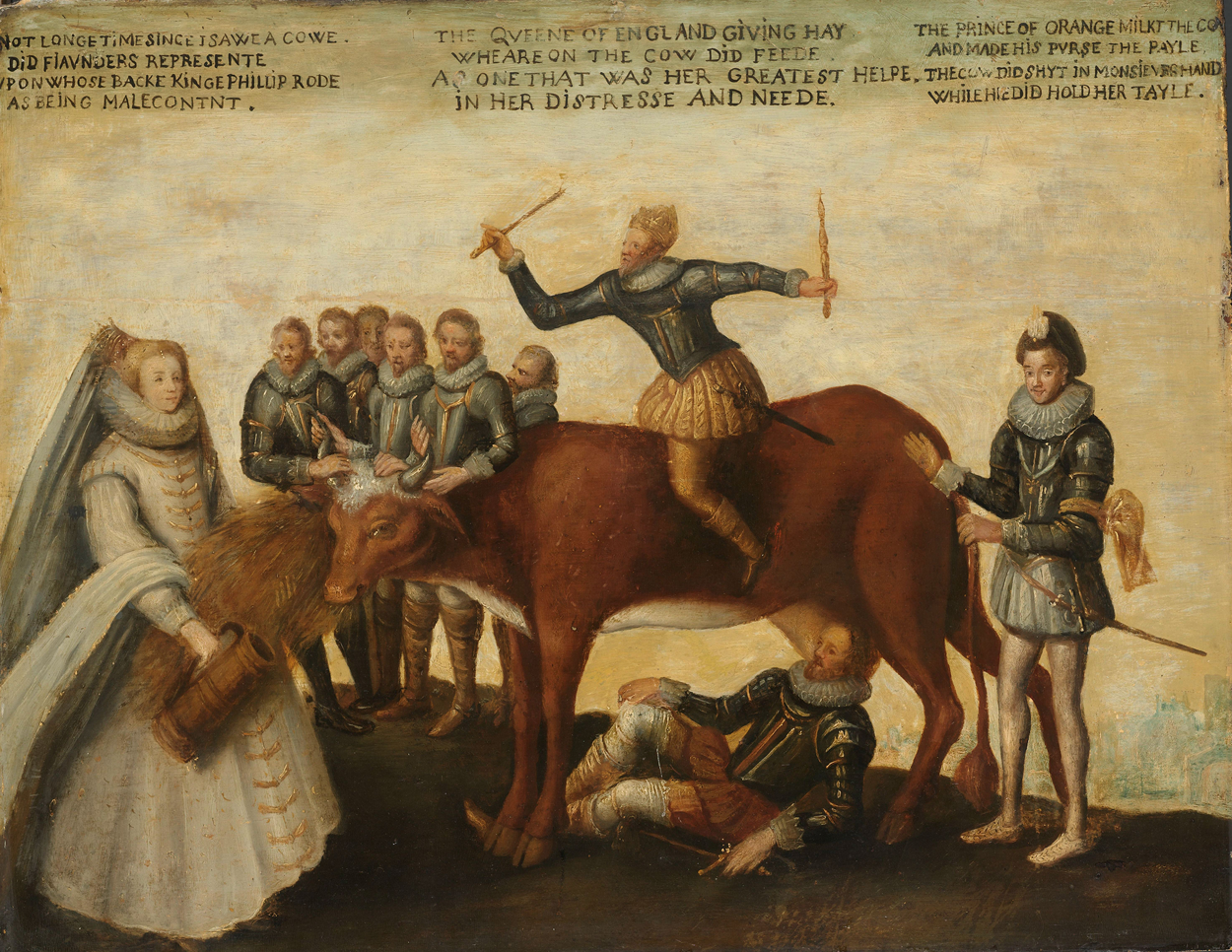
Van Beverwijck opens the chapter with the anecdote that milk is so plentiful that the Duke of Alva (1507–82), the Spanish general and unpopular governor of the Low Countries in the Eighty Years War (1568–1648), when he first arrived, threatened to drown the Dutch in their milk and butter.Footnote 50 This reputation of the Low Countries, especially the province of Holland, as a centre of dairy production is found in many early modern sources. The Italian humanist scholar Lodovico Guicciardini (1521–89), in his 1567 description of the Low Countries, already wrote that the cows produce so much cheese and butter with their milk that one would not believe it if one did not see it with one's own eyes.Footnote 51 Although Van Beverwijck did not illustrate his chapter on dairy, the importance of dairy and cheese for the early modern Dutch was also reflected in visual culture, in the hyper-specific genres of portraits and still lifes with cheeses, and with satirical depictions of the Dutch Provinces as a dairy cow (Figures 3–5).Footnote 52
Anonymous, Woman with Cheeses from Benningbroek, in the Province of Holland, c.1550–74, Oil on panel, Rijksmuseum SK-C-1510.

Clara Peeters, Still Life with Cheeses, Almonds, and Pretzels, 1615, oil on panel, 34.5 × 49.5 cm, 1615, Mauritshuis.

Anonymous, The Dairy Cow: The Dutch Provinces, Revolting against the Spanish King Philip II, Are Led by Prince William of Orange, the States General Entreat Queen Elizabeth I for Aid, c.1633–c.1639, oil on panel, 52 × 67 cm, Rijksmuseum SK-A-2684.
Dairy production only increased further in the period when Van Beverwijck published his work, as ever larger swaths of pasture were created in Holland (and to a lesser extent in West Frisia) by pumping water away with windmills, thus transforming swamps and lakes into dry land, the famous Dutch polders. This process had started with the draining of the lake Achtermeer near Alkmaar in 1533 and came to a height in the early seventeenth century with the drainage of the Beemster polder (1608–12) – still a major centre of dairy production and a UNESCO World Heritage site today.Footnote 53
According to Van Beverwijck, milk, butter and cheese were indeed staples of the Dutch diet, especially for women and children. Cow's milk was considered the most suitable for the human body because of its high fat content. Consisting of three parts, butter, whey and cheese, the specific properties of each part meant that milk was a versatile foodstuff in Van Beverwijck's eyes. The warm, fatty nature of butter and the cold, dry, earthy properties of cheese meant that the liberal consumption of both made for a balanced diet. Butter was best eaten with bread – a belief going back so far that the Dutch word for ‘slice of bread’ in Van Beverwijck's book is boteram. Boterham in modern Dutch contains the word ‘butter’ (boter).Footnote 54 Van Beverwijck also gave very specific advice about the consumption of cheese. He pointed out that the quality of milk (and hence of the cheese made from it) was influenced by the animal's health as well as the season and the availability of fresh grass. The healthiest cheese was relatively soft, neither too old nor too salty, and mild-tasting; sweet cheese was to be preferred over sharp, overly solid cheese.Footnote 55 Of course, it was no coincidence that this was exactly the kind of cheese that was produced and consumed in abundance in Holland.
The final example of politicizing health and the body in Van Beverwijck's work is found in Chapter 10 of the second part of the Treasure, on the ideal lifestyle and diet for adults. Cats's opening poem for this chapter is almost satirical in nature and a stark contrast with the previously discussed poem from the chapter on sugar and spice. Here, Cats states that what is sent to Holland from faraway coasts is the preferred food for those with a fad for strange and expensive tastes, such as Bologna sausage and Moscow caviar. The poet and statesman argues that ‘fish from our sea and meat from our stable’ tastes much better than such exotic foodstuffs, and anyone who cannot appreciate the foods that Holland produces is ‘a true glutton, or a wanton, spoilt child’.Footnote 56
Van Beverwijck echoes these sentiments in the rest of the chapter. It outlines classic dietary guidelines like choosing foods that agree with one's constitution and the benefits of a varied and moderate diet, and the warning that overeating is not to be blamed on the food but on the tongue that is seduced by deliciousness is repeated.Footnote 57 Yet central to the chapter is the focus on the benefits of locally sourced food. Van Beverwijck admits that some imported foods, such as citrus fruits and olives, can be part of a healthy diet, but he is quick to point out that each country has enough to satisfy the appetite of its inhabitants, and to cure the local illnesses. Hence it is silly not to savour what is locally available. Preferring food and drink that comes from afar is not only potentially damaging to physical health, but also detrimental to family life.Footnote 58 Van Beverwijck illustrates this point by referring to classical sources that state that the Romans created a world empire when they lived soberly and in moderation, but that they lost it once they bathed in excessive wealth, thus implicitly comparing empires or states to households.Footnote 59
This chapter on lifestyle and diet thus appears to contradict the praise loaded on sugar and spice in the first part of the book. Yet, considered together with the chapter on dairy and the Hollandse geneesmiddelen (‘Dutch cures’), it becomes clear that these apparent contradictions serve the same purpose: not only to provide easily accessible health and dietary advice for the individual body, but also to politicize individual and collective bodies and tastes. In Van Beverwijck's work, the Dutch body and its organs of taste are made part of an emerging nation state. The health of Dutch bodies is linked to the specific tastes and materiality of locally produced foods, literally sweetened and spiced with the gains of the trading companies. These companies, the Dutch United East India Company (VOC) and the West India Company (WIC), were government-directed and founded in 1602 and 1621 respectively to protect the trade interests in the Indian Ocean and the Americas, and to assist in the Dutch wars of independence. While Van Beverwijck was very explicit in his politicization of the Dutch body, its health and its taste, the work of the man who could in a sense be seen as his successor was much more subtle.
Petrus Nylandt
Little is known about the life of the Amsterdam medical doctor Petrus Nylandt, despite the success of his work. He also wrote for burghers, but nearly thirty-five years after Van Beverwijck first published his Treasure. This was a period in which Dutch society had changed considerably. From the mid-seventeenth century onwards, affluent city dwellers who had acquired wealth in the colonies or the weapon trade, for example, built stately mansions along the canals, which in summer stank so badly that many fled to countryside estates if they had the opportunity.Footnote 60 These country estates usually included gardens, livestock and fully staffed kitchens. The absence of medical doctors and apothecaries meant that the kitchen and pantry were important sources for self-medication during the summer months. Such large burgher households were the perfect market for a new genre of books: manuals that included general advice on the household and estate management, and specific advice on subjects such as the maintenance of ornamental gardens and of vegetable patches and orchards, animal husbandry, hospitality, and medicinal and culinary recipes. These books reflected and shaped burgher practices that aimed to replicate those of higher ranks.Footnote 61 With their miscellany of gardening and housekeeping instructions, and medicinal and culinary recipes, they sat more in the tradition of Dutch hofdichten. These books – often in rhyme – stress the exemplary character of the author's country estate, rather than being in the tradition of gardening books that appeared in the German lands from the sixteenth century onwards.Footnote 62
In 1669, the Amsterdam publisher Doornick issued the first edition of such a book: Het Vermakelijck Landt-Leven (The Entertaining Country Life), consisting of three parts authored by Nylandt and bound together with Den Nederlandtsen Hovenier (The Dutch Gardener), by Jan van der Groen, Prince William III's royal gardener.Footnote 63 Nylandt's work opened with a part on gardening, the sensible gardener (‘Den Verstandigen Hovenier’), which focused on maintaining a garden that could provide sustenance for the household by growing fruit, vegetables and herbs. Groen's work, which by contrast was aimed at the installation and maintenance of decorative gardens, was bound after Nylandt's first volume, and followed by Nylandt's remaining volume. This third volume, Den Ervaren Huys-Houder of Medicyn-Winckel (The Experienced Housekeeper or Medicine Shop), included sections not just on household medicine, but also on distillation, beekeeping, cooking and making jam.Footnote 64 Although its actual use in practice remains questionable, the book was very popular. Doornick simultaneously published it both in Dutch and in a dual German–French edition, and it saw seven more Dutch editions in Amsterdam and two French editions in Brussels in the next four decades.Footnote 65
The frontispiece to the volume titled The Experienced Housekeeper, or Medicine Shop clearly shows the integrated nature of the book: livestock is depicted with an apothecary shop in the background, and on the wall to the left we see the words ‘Medicyn-Winckel voor Menschen ende Beesten’ (‘Medicine Shop for Humans and Animals’) (Figure 6). In it, Nylandt explains that simple medicines which are easy to prepare can be found in the gardens of the countryside estate, or in the fields surrounding it. Because of their kinship with the character of the inhabitants of the country, they are by no means inferior to foreign drugs, he stresses. If they fail to provide relief, this should not be ascribed to the nature of these medicines, but to the inexperienced and weak judgement of those preparing and administering the cure.Footnote 66
Frontispiece to Petrus Nylandt's Experienced Housekeeper.

Nylandt continued this line of argument in his Dutch Herbarius, which was first published in quarto in 1670 and again in 1673, and reprinted in a cheaper, smaller octavo format a decade later by Michiel de Groot.Footnote 67 Although Nylandt claimed that the book was aimed at ‘herb researchers’, the extensive ‘medicinal register’ in the back listing illnesses and health problems shows that the book must have been used primarily to maintain and restore health. In the introduction to his Herbarius, Nylandt lists similar motives to those Van Beverwijck mentioned in his Medicines of Holland. Local availability, freshness, inexpensiveness and compatibility with the constitution of the inhabitants are the main reasons for Nylandt to focus on plants that grow in the Netherlands, both in nature and in gardens. This last point shows that ‘indigenous’ meant something different to Nylandt and his contemporaries than it does to us: plants that originate elsewhere but that flourish in the Dutch climate are also included as Dutch – although here they are relegated to a separate chapter. Nylandt's fascination with the influence of the soil on the qualities of plants also shaped the design of his book, which was divided into chapters in an innovative manner. Rather than solely using categories such as flowering, nice-smelling or thorny plants, bushes and trees, he combined these with where the plants grew, such as gardens, fields, the verges of roads, forests, clay or sand. Despite his fascination with the locality of plants and human constitutions, and unlike Van Beverwijck, Nylandt does not devote much attention to the role of taste.
However, if we compare some of the recipes in Nylandt's Experienced Housekeeper with those in Jacobi's Treasure of the Poor, it becomes clear that Nylandt knew his audience – and their cultural and sensory tastes – very well, and adjusted his recipes accordingly. For example, both books contain recipes to cure diseases of the mouth.Footnote 68 However, unlike the Treasure, the Housekeeper does not contain recipes that are specifically aimed at afflictions of the tongue, such as swelling, rawness, sores or burning. On the other hand, while both books contain recipes for teeth and gums, the Housekeeper provides seven recipes, three of which are variations, including two recipes for whitening teeth, whereas the Treasure is limited to three simple recipes: one to cure sore teeth, one to make them clean and fixed and one to clean dirty gums, all containing readily available ingredients such as mulberries, rainwater, vinegar, honey, mint and brambles. The teeth-whitening recipes in the Housekeeper, by contrast contain luxurious ingredients such as marble powder, red coral, dates and East Indian porcelain shards.Footnote 69 Rather than lecturing his readers about the follies of desiring luxurious and exotic materials, as Van Beverwijck did, Nylandt indulged them, yet simultaneously stressed the suitability of locally available plants and tastes throughout his work.
From this, we can conclude that Nylandt's works were a much less open attempt than Van Beverwijck's to construct a distinct Dutch body and identity through taste and medicine. This can possibly be explained from the fact that although the trauma of the Eighty Years War was less fresh, the political situation in the Dutch Republic was not at all stable.Footnote 70 Rather than being explicitly political in his work, Nylandt operated subtly, likely because he wanted his message – Dutch plant foods and medicine are highly beneficial to Dutch bodies, but a well-developed cultural taste for luxurious imported substances from the colonies can be indulged – to reach as many readers as possible. In the last decades of the seventeenth century, the economy of the Dutch Republic faltered, and it was in this period that Steven Blankaart published his health advisories.
Steven Blankaart
Steven Blankaart tried to shape the bodies, health and identity of a lower class of burghers: relatively well-to-do city dwellers from humble backgrounds.Footnote 71 He did so through his books De Borgerlyke Tafel (1683, 1690) and Den Nederlandschen Herbarius, first published in 1798. Steven Blankaart was born in Middelburg in 1650 the son of Nicolaas Blankaart, a professor of Greek and history. He started his career as an apothecary's apprentice and studied philosophy and medicine in Franeker. In 1674 he moved to Amsterdam, where he set up a practice as a physician. He published at least nine books on a wide range of health- and nature-related subjects, such as children's diseases, gout, venereal diseases, apothecary practices, botany, insects, anatomy, chemistry, dietetics and tea.Footnote 72
Blankaart's work is different from that of Van Beverwijck and Nylandt in one important respect: he was a iatrochemist, and this shows clearly in his work. This approach was the subject of staunch debates within late seventeenth-century Dutch academia. Blankaart was likely introduced to iatrochemistry during his studies in Franeker. Iatrochemistry was based on a theory that explained all processes of life and illness in chemical terms. Illness was perceived as an imbalance between acids and alkalis in the body, which could be resolved by using a substance of opposing nature. So an excess of acids should be cured with alkaline diet and/or medicine, and vice versa.Footnote 73 These iatrochemical principles are the foundation of Blankaart's ideas about physiological taste and health. In the Borgerlyke Tafel he writes,
All the foods and beverages, which I have approved, have a superfluous Alcali in them; but by contrast those that I have dispraised are full of mucus or acid. Because superfluous acid and mucus makes our juices run slow, which necessarily results in many obstructions and illnesses.Footnote 74
Iatrochemical advice is so important that Blankaart repeats it in rhyme:
Here we see that Blankaart advocates the reining in of the acids in the body with alkaline food and drink, which served as (preventive) medicine. In his view and that of his contemporaries, this was particularly important because the innate humoral character of the Dutch was cold and phlegmatic rather than hot.Footnote 76 In the Borgerlyke Tafel he therefore advises the consumption of clean water, beer, coffee, tea, chocolate, tobacco, spices, salads, cooked vegetables, ripe and cooked fruits, unsalted meat, butter and oil, and discouraged the use of acidic foodstuffs such as lemons, vinegar, unripe fruits and fish. It should be noted that Blankaart's ideas about taste and health are mostly based on iatrochemical theory rather than on clinical observations and sensory experience, as was the case in Van Beverwijck's work. That he does advocate paying attention to tastes was because taste could inform the consumer about the acidic or alkaline nature of foodstuffs.
Blankaart's dietary advice should be seen in light of the previously discussed socio-economic context of polders and VOC and WIC trade of the late seventeenth-century Low Countries. Despite economic stagnation in the late seventeenth century, a broad section of urban society had access to dairy, meat and exotic products such as coffee, tea, sugar and spices. Around 1700, for example, housemaids could afford a daily cup of coffee or tea.Footnote 77 Blankaart's work was aimed at social climbers in the city rather than his academic peers or the upper classes with country estates that Nylandt had aimed at. The borger from the title of the Borgerlyke Tafel is a burgher, a citizen in the early modern sense of the word: an ordinary city dweller with city rights, who may have built some fortune through trade, but who is not necessarily familiar with the habits of the landed nobility or gentry. In the introduction to the Borgerlyke Tafel, Blankaart explicitly states that farmers tend to have healthier diets than those living in the city, as city dwellers tend to be led by considerations of gustatory taste rather than health.Footnote 78 In the first edition of the book, in 1683, Blankaart's advice remains limited to dietary topics and bloodletting. However, the second edition in 1690 was extended with sections on table etiquette, meat-carving techniques and culinary recipes. The latter was an integral copy of the recipes from the Verstandige Kock as it appeared in the 1669 edition of Het Vermakelijck Landleven. Footnote 79 Blankaart readily admits that he did not write these sections himself, and that adding them was the publishers’ idea. What is particularly interesting is that the recipes that have been copied from De verstandige Kock, which in turn had partly been copied from Carolus Battus and Bartolomeo Scappi's papal recipe book, are now framed as the burgerlijke kitchen, so the ‘burgher kitchen’.Footnote 80 It is unclear where the etiquette sections were copied from, but there is no doubt that the intended readers of Het Vermakelijck Landleven would not have needed such basic advice on table etiquette. Good manners are outlined, such as not to gorge, not to put elbows on the table, not to whine about not liking certain foods, not to blow one's nose or tell dirty jokes.
Although Blankaart expresses the same sentiment about the best diet as his predecessors – the foods and beverages provided by the land are the best suited to the constitution of its inhabitants – he was enough of an entrepreneur to also discuss the qualities of popular, relatively new imports such as tea. In his Cartesian Academy or Institute of Medicines he writes about tea that most people need a couple of tries to get used to its taste, but then soon experience its benefits:
The drink Tea is the healthiest drink I have known thus far: because the herb, being of fine parts, soaked in hot water, and drunk slobbering, up to twelve or twenty cups, dilutes our blood and juices, and makes them run better, it takes away all illnesses, is a good cooling drink in fever, drunk the more the better. I have used it successfully to expel fever, mixed with some other means.Footnote 81
Blankaart writes that people who found tea too expensive were frugal in the wrong manner because they would be ill more often than people who did drink tea. It is not necessary to buy the most expensive kind of tea. He indicates that mediocre tea could be made more pleasant with jasmine, cloves or Peru balm – the resin of a South American tree that is used in perfume and cosmetics up to this day.Footnote 82 In 1686, Blankaart strengthened his tea argument by publishing a tractate on tea and tobacco that was written by the Dutch physician Cornelis Bontekoe (1647–85). Bontekoe, born in Alkmaar, was personal physician to Friedrich Wilhelm I, Elector of Brandenburg (1620–88). According to Bontekoe, drinking tea is beneficial to the health of the mouth, the digestive system and the blood, and to mental health. Tea hydrates without intoxicating; it lessens flatulence and improves the mood. All these good qualities are explained by the mucus-dissolving properties, the warm and diluting effect of tea, and the ‘fine particles’ of which the plant consisted. These remove salty and acidic substances from the body.Footnote 83
Interestingly, Bontekoe also devotes attention to the way in which tea should be drunk. He recommends fresh white tea, made with clean rainwater. Tea should not be too strong or too bitter, and is preferably drunk in the evening, from a pewter or earthenware cup – a copper cup is out of the question.Footnote 84 This might seem a curious prescription, but drinking something hot from a copper cup regularly might lead to copper poisoning. However, it is likely that another consideration played a role in this advice. The increasing intertwinement of sensory and aesthetic taste in the seventeenth century, as described at the beginning of this article, likely plays a role in this advice too. Even though nearly everyone in the Dutch Republic by the end of the seventeenth century was able to afford tea, and popular physicians such as Blankaart advocated its health benefits, the ways in which tea was drunk varied wildly between social classes.Footnote 85 Blankaart's advice not to buy expensive tea and Bontekoe's recommendation to drink from earthenware or pewter were likely informed by a fear of being associated with rich ladies who spend hours sipping expensive tea from exclusive porcelain cups. This new fashion was considered ridiculous by many, as shown in a cartoon of a tea party by Pieter van den Berghe from the early eighteenth century (Figure 7).
Pieter van den Berge, Ladies Drinking Tea, c.1694–1737. Etch, Rijksmuseum RP-P-1908-4729.
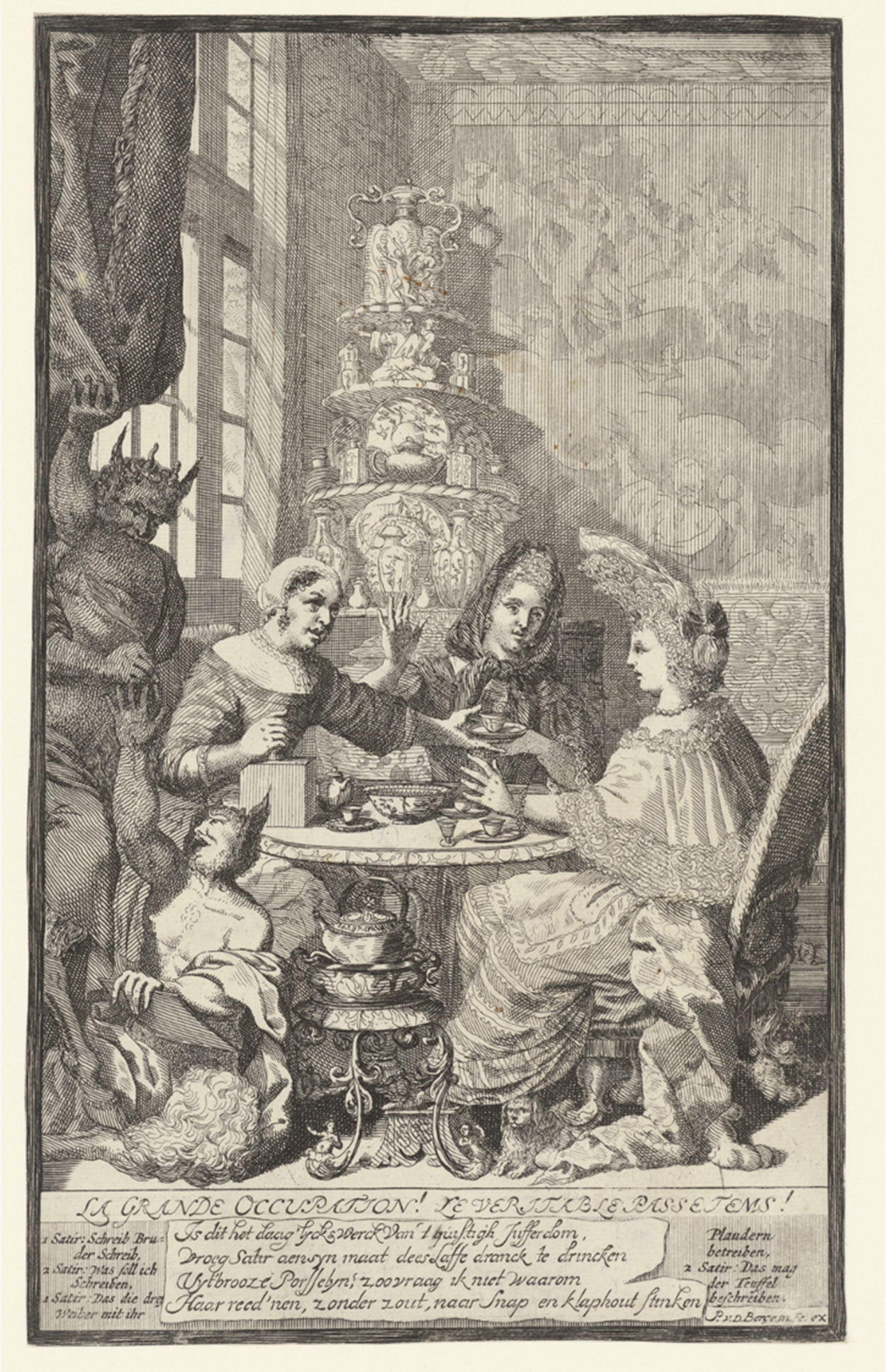
Underneath the cartoon we find a rhyme ridiculing the ladies:
Thus the idea that tea was an item of luxury consumption attracted ridicule. No wonder a physician like Blankaart, who with his publications aimed at the aspiring middle classes rather than the truly rich, wanted to distance himself from these associations.
In his Dutch Herbal, first published in 1698, Blankaart continued his project of shaping Dutch taste and identity. The 770-page book was only the start of a much bigger project, probably his life's work, as the Royal Library in The Hague has a 2368-page illustrated manuscript containing five parts of ‘Steph. Blancardi Herbarium of Kruidboek’, including sections on the fruits and plants of the Indies.Footnote 87 That the first part was only published in 1698 might have been related to the fact that Nylandt's 1670 Dutch Herbarius was reprinted twice (1673, 1680), and each reprint had a fifteen-year privilege, meaning no other herbals could be published in Holland during that time.Footnote 88 In his introduction, Blankaart explains that he has chosen to publish his book in quarto and with a limited number of prints, as he does not like illustrated books being too small, and too many prints would lead to a book that is ‘misshapen’ – although price was probably an important consideration too.Footnote 89
Like Van Beverwijck and Nylandt before him, Blankaart states in his introduction that he writes specifically about herbs growing in the Netherlands, as he does not want to copy information about the medicinal uses of plants from classical works such as those by Theophrastus, Dioscorides and Galen, authors who lived in faraway regions. The now familiar environmentalist theses are repeated: herbs have different strengths depending on where they grow, and the quality of air, water, location, character and habits of the inhabitants should also be taken into account. This, however, did not mean that Blankaart only included indigenous plants and herbs: he, too, argued that it was better to use ‘exotic’ plants cultivated in the Netherlands than imported material of the same plants, as cures that come from afar have often lost their strength, and it is hard to tell if the dried goods are indeed what they are sold as.Footnote 90 Hence we also find in the Dutch Herbal plants that played an important role in Dutch medicine and cuisine, such as cumin and almond trees, although the majority of the plants listed are indeed indigenous.Footnote 91 What defines foodstuffs suited to shaping, maintaining and restoring the health of individual and collective Dutch bodies and tastes in Blankaart's work, as in that of his predecessors, is not necessarily what has always grown within the borders of the Dutch Republic, but what flourishes there – whether imported from elsewhere or not. Moreover, it is effortlessly combined with the use of exotic foodstuffs that were available because of the VOC.
Conclusion
From the analysis of this corpus of medical and pharma-botanical handbooks we can draw a number of conclusions. Van Beverwijck, Nylandt and Blankaart were all academically trained authors from relatively well-off backgrounds who wrote for a specific audience in the seventeenth-century Dutch Republic, and it appears that they all did so with the intention of shaping, maintaining and politicizing individual and collective Dutch bodies through medicine, diet and taste. Their works were not aimed at the established elites of nobility, regents and academics, but at social climbers who had gained their position through trading and investments. Van Beverwijck, with his manuals, and Nylandt, with his contributions to The Entertaining Country Life, aimed at those who had acquired country estates and become familiar both with managing such a property and with dealing with the illnesses of members of the household when in the countryside, where medical assistance was not readily available.
Blankaart chose a slightly different audience. His Citizen's Table, his posthumous edition of Bontekoe's work on tea and his herbal were meant for relatively well-off city-dwelling burghers who wanted to manage their health through diet and herbal medicine. He seamlessly integrated new iatrochemical theory with existing theories of sensory and cultural taste and their influences on health and identity. With the extended reprint of the Citizen's Table he built on the success of the culinary recipe section of The Entertaining Country Life, while simultaneously recommending some kitchen and table etiquette.
Classical medical environmentalism, the idea that a specific region provides vegetation, crops and livestock that are exceptionally compatible with the constitution of the inhabitants of that region, is combined with a pragmatic approach that integrates the spoils of colonial trade into a diet that is particularly suited to shaping, maintaining and restoring the health of individual and collective Dutch bodies and tastes. Over the course of the seventeenth century, sensory and cultural taste as tools to discern what is good and healthy for the Dutch body are increasingly mixed into these health advisories. Yet this happens subtly, without the explicit theorization of the two kinds of taste as we see it in other European countries at the time.Footnote 92
By writing in the vernacular, stressing the importance of indigenous diet and medicine for health, and including ‘Dutch’ and ‘Holland’ in the titles of their works, Van Beverwijck, Nylandt and Blankaart seem to have subtly attempted to establish a distinct Dutch body and identity through medicine and taste. By focusing on taste both as an epistemic tool for the identification of the medicinal properties of plants and as a cultural means to maintain or restore health and to behave in a socially acceptable way, they appear to have used taste – both sensory and cultural – to reinforce the Dutch body and identity, thus politicizing medicine.
Acknowledgments
This research was funded by the Royal Netherlands Academy of Arts and Sciences. I would like to thank Monica Azzolini for inviting me to speak on this topic at the Renaissance Society of America annual meeting 2020, helping me to develop this idea into a paper. I would also like to thank the two anonymous reviewers for their helpful comments and suggestions.


 Open access

