



Introduction
The potential for improved soil health to help farmers and ranchers adapt to and mitigate climate change has generated substantial enthusiasm among various stakeholders. While much of this conversation has centered on croplands and related conservation agriculture practices (Poeplau and Don, Reference Poeplau and Don2015; VandenBygaart, Reference VandenBygaart2016), grasslands and grazing lands have gained increasing attention (Paustian et al., Reference Paustian, Lehmann, Ogle, Reay, Robertson and Smith2016; Teague et al., Reference Teague, Apfelbaum, Lal, Kreuter, Rowntree, Davies, Conser, Rasmussen, Hatfield, Wang, Wang and Byck2016). The significance of these grass and grazing-based systems is in part due to their wide geographic range; in the USA, there are about 777 million acres of grazing land (Nickerson et al., Reference Nickerson, Ebel, Borchers and Carriazo2011), and about 25% of the global land surface is managed as grazing land (Asner et al., Reference Asner, Elmore, Olander, Martin and Thomas Harris2004). Further, grazing systems are the foundation of millions of livelihoods in the USA and hundreds of millions globally, and these lands and livelihoods are very vulnerable to climate change (Thornton et al., Reference Thornton, van de Steeg, Notenbaert and Herrero2009; Sayre et al., Reference Sayre, McAllister, Bestelmeyer, Moritz and Turner2013; Briske et al., Reference Briske, Joyce, Polley, Brown, Wolter, Morgan, McCarl and Bailey2015). Therefore, these areas represent a significant opportunity to address land sector solutions for climate adaptation and mitigation.
Grasslands provide numerous ecosystem services, including the capacity to store substantial quantities of soil carbon, reduce runoff and erosion, protect water quality, store water, reduce drought and flood risk, provide wildlife habitat and recreational areas, and support biodiversity (Franzluebbers et al., Reference Franzluebbers, Paine, Winsten, Krome, Sanderson, Ogles and Thompson2012; Werling et al., Reference Werling, Dickson, Isaacs, Gaines, Gratton, Gross, Liere, Malmstrom, Meehan, Ruan, Robertson, Robertson, Schmidt, Schrotenboer, Teal, Wilson and Landis2014; Yahdjian et al., Reference Yahdjian, Sala and Havstad2015). Together, these services contribute to both climate change mitigation and adaptation, in addition to many other co-benefits. Despite their value, grasslands are being degraded and converted around the world, frequently to crop production systems (Wright and Wimberly, Reference Wright and Wimberly2013; Gibbs and Salmon, Reference Gibbs and Salmon2014; Lark et al., Reference Lark, Meghan Salmon and Gibbs2015; Gage et al., Reference Gage, Olimb and Nelson2016). Notably, many of these ecosystems are highly prone to erosion under cropland management and may be better ecologically suited to production of animal products in well-managed grazing systems (Peters et al., Reference Peters, Picardy, Darrouzet-Nardi, Wilkins, Griffin and Fick2016). Identifying the best management practices that can maximize ecosystem services while maintaining farm profitability may be one way to protect and improve the ecological function of grasslands.
While uncertainties remain, several approaches to improve grazing land management have been proposed. These include identifying optimal stocking rates and adopting more complex grazing management strategies, for example, through rotational grazing, adaptive management practices (e.g., adaptive multipaddock grazing) or silvopasture (Mysterud, Reference Mysterud2006; Heckman, Reference Heckman2015; Teague et al., Reference Teague, Apfelbaum, Lal, Kreuter, Rowntree, Davies, Conser, Rasmussen, Hatfield, Wang, Wang and Byck2016; Teague and Barnes, Reference Teague and Barnes2017). Other strategies involve integrating grazing and pastures into more intensively managed diverse cropping systems (Russelle et al., Reference Russelle, Entz and Franzluebbers2007; Sulc and Franzluebbers, Reference Sulc and Franzluebbers2014). Extended rest from grazing has also been adopted in an effort to restore lands and ecosystem services (Bock et al., Reference Bock, Bock and Smith1993; Castellano and Valone, Reference Castellano and Valone2007; Jeddi and Chaieb, Reference Jeddi and Chaieb2010; Allington and Valone, Reference Allington and Valone2011). These strategies can have different impacts and tradeoffs related to ecosystems, livelihoods and other socio-economic factors (Rivera-Ferre et al., Reference Rivera-Ferre, López-i-Gelats, Howden, Smith, Morton and Herrero2016).
Among the many ecosystem services affected by grazing land management, climate change resilience is especially critical given increasing rainfall variability (Pryor et al., Reference Pryor, Scavia, Downer, Gaden, Iverson, Nordstrom, Patz, Robertson, Melillo, Richmond and Yohe2014). One approach to adapting to rainfall variability is to improve conditions for effective water management in soils, enabling them to capture more rainfall and make it available to plants during drier times (Stroosnijder et al., Reference Stroosnijder, Moore, Alharbi, Argaman, Biazin and van den Elsen2012; Stewart and Peterson, Reference Stewart and Peterson2015). A variety of chemical, physical and biological soil processes affect soil water storage, but a key driver is infiltration rate, the rate of water entry into the soil (Hillel, Reference Hillel1998). Soil water content also has strong links to soil carbon and soil organic matter contents (Hudson, Reference Hudson1994; Emerson, Reference Emerson1995), variables that can be affected in response to both crop and grazing land management (Conant et al., Reference Conant, Paustian and Elliott2001; Wright et al., Reference Wright, Hons and Rouquette2004; Franzluebbers et al., Reference Franzluebbers, Paine, Winsten, Krome, Sanderson, Ogles and Thompson2012; McSherry and Ritchie, Reference McSherry and Ritchie2013; McDaniel et al., Reference McDaniel, Tiemann and Grandy2014; Poeplau and Don, Reference Poeplau and Don2015; Paustian et al., Reference Paustian, Lehmann, Ogle, Reay, Robertson and Smith2016). Other factors affecting soil water content include hydrological properties such as porosity and plant available water, which can also be improved in agricultural systems, such as by cover crops, perennial grasses and agroforestry (Basche and DeLonge, Reference Basche and DeLonge2017).
Understanding soil water infiltration rates and how they change is useful given their role in enhancing soil water storage and because they are an indicator of soil health (Moebius-Clune et al., Reference Moebius-Clune, Moebius-Clune, Gugino, Idowu, Schindelbeck, Ristow, van Es, Thies, Shayler, McBride, Wolfe and Abawi2016). Importantly, infiltration rates differ between and among ecosystems; for example, infiltration rates are often higher on grasslands than croplands (Bharati et al., Reference Bharati, Lee, Isenhart and Schultz2002; Ghosh et al., Reference Ghosh, Saha, Gupta, Ramesh, Das, Lama, Munda, Bordoloi, Verma and Ngachan2009), and can be even higher in agroforestry systems (Ketema and Yimer, Reference Ketema and Yimer2014; Bayala and Wallace, Reference Bayala, Wallace, Ong, Black and Wilson2015). Within grasslands, grazing management can influence infiltration rates; studies have found that rates tend to decrease as grazing pressure increases (Radke and Berry, Reference Radke and Berry1993; Holechek et al., Reference Holechek, Gomes, Molinar, Galt and Valdez2000; Bell et al., Reference Bell, Kirkegaard, Swan, Hunt, Huth and Fettell2011; Kumar et al., Reference Kumar, Anderson, Udawatta and Kallenbach2012), and some comparisons of well-managed grazing systems have suggested that adding complexity to grazing patterns can improve or maintain infiltration rates relative to continuous grazing (Thurow, Reference Thurow1991; Teague et al., Reference Teague, Dowhower, Baker, Haile, DeLaune and Conover2011). Areas where grazing has been excluded can also have higher infiltration rates. For example, a recent analysis of Australian grazing lands found significant declines in ecosystem structure and function, including hydrological processes such as water infiltration and soil water, when cattle or sheep were introduced to previously ungrazed fields; however, this analysis did not focus on opportunities to improve outcomes with grazing management (Eldridge et al., Reference Eldridge, Poore, Ruiz-Colmenero, Letnic and Soliveres2016).
While many individual studies exist, to our knowledge, there are no quantitative reviews of the effect of improved grazing land management practices on soil water, particularly for infiltration rates. Furthermore, we know of no reviews that evaluate how soil water properties and soil carbon sequestration may be jointly affected by management changes in grazing systems. The primary goal of this study is to investigate the potential of different management practices on grass-based grazing systems to improve water infiltration rates. A secondary goal was to evaluate the degree to which experiments on this topic have also explored relationships between soil water infiltration rates and soil carbon. This analysis builds on other recent work investigating impacts of cropland management practices (no-till, cover crops, crop rotations, perennials, cropland grazing) on infiltration rates, porosity and water retained at field capacity (Basche and DeLonge, Reference Basche and DeLonge2017; Basche and DeLonge, Reference Basche and DeLongeIn Preparation). In this analysis, we focus on management options for grass-based systems with a history of grazing.
Methods
Literature search
To investigate how soil water is affected by grazing management, we conducted a meta-analysis of grass-based field studies. We identified papers with the EBSCO Discovery Service™ using the keyword string ‘infiltration AND graz*’, and secondarily searched the USDA-NRCS Soil Health Literature database (USDA-NRCS, 2016), as detailed in Basche and DeLonge (Reference Basche and DeLonge2017). Ultimately, 37 papers (representing 221 paired comparisons) were included in the database.
Defining management practice categories
Three management categories were used to group the studies in this analysis (Table 1), and these categories were defined as described below.
Overview of experiments. All systems include either continuous (C) or rotational (R) grazing with stocking rates that are low (L), moderate (M), high (H), very high (VH) or uncertain (n/a, considered to be moderate for analysis). Studies are categorized overall as (a) grazing pattern complexity studies, where treatments are agroforestry (For), rotational grazing (R) or adaptive grazing (Ada); (b) stocking rate studies, where treatments are reduced grazing (represented as L, M or H); and (c) extended rest studies, with exclosure treatment(s) only. Studies in (a) or (b) that also have exclosure treatments are noted with an ‘E’

Increased grazing pattern complexity (12 experiments): Experiments were included in this category if they represented a switch from a continuous grazing system to a more complex or strategically managed system (online Supplemental Material Table S1). This category primarily included cases where grazing was changed from continuous (year-round or seasonal) to complex (e.g., rotational, mob, adaptive, etc.) management. We also searched for cases of increasing management complexity through other variables, such as by moving from a fully grass-based system to silvopasture, but we only found one paper that met those criteria (Sharrow, Reference Sharrow2007). This category generally included comparisons that added complexity while kept stocking rates (ha AU−1 yr−1) similar (see online Supplemental Material Table S1).
Reduced stocking rates (17 experiments): Treatments were included in this category if they represented a reduction in grazing pressure without any clear changes to grazing land or grazing management complexity. Changes in stocking rates or densities were reported in database studies using a variety of variables (stocking rate, stocking density, residual phytomass, degradation, vegetation type; see online Supplemental Material Table S2).
Extended rest from grazing (31 experiments): Numerous experiments from our search included treatments where livestock were excluded from grazing areas. In fact, 58% (10/17) of the grazing pattern complexity studies and 88% (15/17) of the stocking rate studies also included grazing exclosure measurements (online Supplemental Material Tables S1 and S2). Additionally, 15 studies from our keyword search had measurements on exclosure only (online Supplemental Material Table S3). While not the focus of our analysis, we included these studies to provide insight into the potential effects on land from extended rest from grazing. For these studies, we defined the experimental treatment as the exclosures (i.e., rested areas) and the controls to be the grazed treatments. We further categorized these studies based on what type of grazing the treatments were being rested from (complex versus continuous grazing patterns, and light, moderate, heavy or very heavy stocking rates). Treatment duration was defined as the time since rest from grazing began; this was not always equivalent to the time since introduction of the control grazing pattern, so in some cases the control treatment should be considered only a proxy for the grazed condition. This artifact of the available data also means that the responses to rest estimated here could be larger or smaller than what would likely be found in a well-controlled experiment.
Database development
Data from studies were extracted and analyzed as systematically as possible, as described in Basche and DeLonge (Reference Basche and DeLonge2017). Our analysis only included values of steady-state infiltration (e.g., total volume of water infiltrated over a defined period). Further, multiple measurements reported in 1 yr were averaged, unless those measurements were distinctly different (due to experimental differences related to grazing management, slopes, soil textures, etc.). Additional variables were identified to assess the influence of different environmental or management factors. These included soil texture (percent sand, silt, clay), mean annual precipitation, treatment duration (number of years that a treatment was in place) and information on grazing (animal type, stocking rates and densities, annual days of grazing, days of rest between grazing, residual dry matter) (see Appendices 1–4). When available for both control and treatment conditions, we also extracted data on soil carbon or organic matter (concentrations or contents).
To supplement reported values, annual precipitation and temperature data were obtained from NOAA (Menne et al., Reference Menne, Durre, Vose, Gleason and Houston2012; https://www.ncdc.noaa.gov/cdo-web/datatools/normals), and soil texture was retrieved from the US Department of Agriculture (Soil Survey Staff, 2017) for US locations only. When soil texture data were unavailable (seven of 37 studies), broader texture categories were defined if possible, based on soil textural descriptions (e.g., clay loam, loamy sand, etc.). Finally, we estimated aridity indices for all study sites using geographic coordinates, based on the CGIAR-CSI Global-Aridity Database (Zomer et al., Reference Zomer, Trabucco, van Straaten and Bossio2006; Zomer et al., Reference Zomer, Trabucco, Bossio and Verchot2008).
Statistical analysis
The meta-analysis was conducted by calculating response ratios, representing a standardized comparison of the experimental to control treatments (Hedges et al., Reference Hedges, Gurevitch and Curtis1999). We calculated the natural log of the infiltration rate measured in the experimental treatment divided by the infiltration rate in the control treatment [Equation (1), e.g., more complex compared with more continuous management; reduced compared with greater stocking rates and extended rest from grazing compared with continued grazing]. Natural log results were back transformed to a percent change to ease interpretation, and results were considered significant if the 95% confidence intervals did not cross zero.
 $${\rm LRR} = \ln \displaystyle{{\hbox{Experimental Infiltration Rate}} \over {\hbox{Control Infiltration Rate}}}.$$
Many meta-analyses use weighting factors in statistical models to calculate mean treatment effects, which can include standard errors, standard deviations or experimental replications (Philibert et al., Reference Philibert, Loyce and Makowski2012). However, due to the limited reporting of standard errors or standard deviations, as well as the fact that many grazing studies did not include true replications (experimental designs frequently included only subsamples from larger areas or transects, as opposed to a true randomized block design), we performed an unweighted meta-analysis (Eldridge et al., Reference Eldridge, Poore, Ruiz-Colmenero, Letnic and Soliveres2016). Categories of grazing management (pattern complexity, stocking rates, extended rest) were analyzed separately, due to differences in experimental designs. A mixed model (lme4 package in R) was used to calculate category means and standard errors, including a random effect of study to account for similar study environments when experimental designs allowed for multiple paired observations (St-Pierre, Reference St-Pierre2001; Eldridge et al., Reference Eldridge, Poore, Ruiz-Colmenero, Letnic and Soliveres2016). For several of the continuous environmental variables (soil texture, mean annual precipitation and aridity index), regression coefficients were generated from a similar statistical model where environmental variables were considered fixed effects.
Results
Infiltration database description
We located 37 total experiments representing 221 paired observations from five continents that met the criteria for this analysis (Fig. 1a). The number of suitable experiments for this analysis was smaller, but comparable, to the number of experiments available for a companion study investigating impacts conservation agriculture techniques on infiltration rates in cropping systems (e.g., 52 experiments for no-till, 23 for cover cropping; Basche and DeLonge, Reference Basche and DeLongeIn Preparation). The management practice that was most represented within the database was extended rest from grazing (n = 140 paired comparisons), followed by reduced stocking rates (n = 63) and changes to pattern complexity (n = 18).
(a) Geographic distribution of included studies (Africa: eight, Australia/New Zealand: one, Asia: four, South America: two, North America: 23 (22 in the USA)). Aridity indices are also shown for context. (b) Histogram showing timeline of publication of studies from each grazing management category.

The studies within the database were diverse in several ways. For example, the types of grazing animals varied among experiments. For the complexity studies, six were cattle, two were sheep, three were mixed (including cattle, sheep and goats) and one was described as livestock only. For the stocking rate studies, nine were cattle, two were sheep, four were mixed and two were livestock, whereas studies investigating the effects of extended rest included nine focused on cattle, four on mixed systems and two on livestock. Additional variability occurred with respect to vegetation (ranging from annual to perennial grasses, shrubs and forested areas); grazing management systems (including seasonal, rotational and adaptive grazing); and experimental design (ranging from replicated plots to cross-fence transects) (see online Supplemental Material Tables S1–S3). Several studies were published over a decade ago (the first three were published between 1974 and 1980), but overall papers have been published at a steady rate (1–4 papers every 2 yr) for all management categories (Fig. 1b, online Supplemental Material Tables S1–S3). Histograms of response ratios for the database, separated by grazing management categories, did not reveal evidence of publication bias (Fig. 2).
Histograms of the natural log of response ratios to test for publication bias, separated by studies evaluating impacts of adding complexity to grazing patterns, reducing stocking rates or extended rest from grazing.

Response of infiltration rates to management changes
Of the full dataset representing all practices, 81.9% of response ratios were above zero, indicating an increase in infiltration rates (Fig. 3a). Of the grazing management response ratios that included either changes to pattern complexity or stocking rate, 72.8% were above zero (66.7 and 74.6% from adding complexity and reducing stocking rates, respectively). An even larger percentage of studies investigating the impacts of extended rest had positive response ratios (87.1%). Overall, results indicate that infiltration rates improved by 59.3 ± 7.3% following the implementation of the considered management practices (including adding complexity, reducing stocking rate and adopting extended rest from grazing; Fig. 3b). All individual management categories had mean response ratios significantly different from zero, including the categories with smaller sample sizes (changes to pattern complexity or stocking rate). There was no clear effect of treatment duration in any of the experiments, although several of the extended rest studies continued over relatively long periods; however, some studies suggested that relatively large differences could be possible within a short timeframe (Table 2, online Supplemental Material Fig. S1).
(a) Influence of grazing system management on infiltration rates, separated by studies evaluating impacts of adding complexity to grazing patterns, reducing stocking rates or extended rest from grazing. (b) Mean response ratios (±95% CI) for the overall database and for various subsets of grazing system management (changes to pattern complexity, changes to stocking rate, extended rest). Results were considered statistically significant if error bars did not cross zero. Numbers of response ratios per subgroup are shown for reference.

Regression coefficients, t- and P-values from statistical model considering key environmental variables as fixed effects
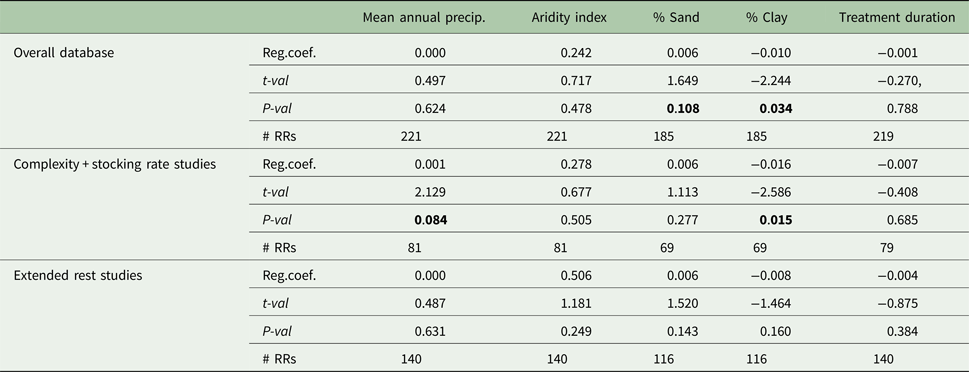
P-values ⩽0.1 are shown in bold for convenience. Number of available response ratios (# RRs) for each analysis shown for context.
We found no significant differences between or within the complexity, stocking rate and extended rest treatments, although the mean values and confidence intervals differed. The mean response ratios for the added complexity and reduced stocking rate studies (33.8 ± 13.0%, n = 18 from 12 experiments, and 42.0 ± 10.8%, n = 63 from 17 experiments, respectively) were slightly lower than those from the extended rest studies (67.9 ± 8.5%, n = 140 from 31 experiments) (Fig. 3b). There was no significant difference between the effect of reducing stocking rate (42.0 ± 10.8%; n = 63 from 17 experiments) and increasing complexity (33.8 ± 13.0%, n=18 from 12 experiments). Likewise, we did not detect any significant differences when grazing was prevented from continuous versus more complex (rotational, adaptive, etc.) managed grazing systems (Fig. 4). Treatments that reported an exclosure from continuous grazing had slightly higher mean response ratios (73.7 ± 10.1%) and represented a greater number of the available studies (n = 119) as compared with the exclosures from more complex grazing patterns (50.4 ± 9.8%, n = 23) (Fig. 4).
Influence of extended rest on infiltration rates. Grouped mean response ratios (±95% CI) are shown for all extended rest experiments (overall), as well as for subgroups of studies based on the control treatment grazing systems (systems with continuous or complex grazing patterns; systems with low, moderate or heavy stocking rates). Results were considered statistically significant if error bars did not cross zero.

We did not detect a clear relationship between the percent reduction in stocking rates and changes to infiltration rates (online Supplemental Material Table S2 and Fig. S2). However, when we grouped the data in categories based on author descriptions of stocking rates, we found that the largest improvements in infiltration rates came from studies that reduced stocking rates from ‘very heavy’ to ‘moderate’ or ‘low’ stocking rates, as reported by authors (Fig. 5). There were relatively smaller differences in infiltration rates when the change in stocking rate was less pronounced, such as a change from ‘very heavy’ to ‘heavy’ or ‘heavy’ to ‘moderate’, and these groups exhibited changes that were not statistically different from zero.
Influence of changes to stocking rates on infiltration rates. Grouped means (±95% CI) are shown for all studies evaluating changes to stocking rates (overall) as well as within subgroups determined by the control shown (very heavy or heavy) and treatment (heavy, moderate or low) stocking rates. Means were considered statistically significant if error bars did not cross zero.

Influence of soil and climatic factors
There were no clear patterns indicating relationships between management effects and climate variables (Table 2, online Supplemental Material Figs S3 and S4). The strongest observed relationship was a pattern in the aridity indices, where regression coefficients indicated a greater effect of grazing management in environments that are more humid. Among the relatively few studies in humid environments (aridity index >0.65; n = 25 from seven experiments), there were no negative response ratios and there was a larger mean effect compared with the experiments in more arid environments (online Supplemental Material Fig. S3).
Similarly, we were unable to identify any strong relationships between management effects and soil texture, although there was some evidence that greater clay contents were more likely to lead to lower response ratios (Table 2, online Supplemental Material Fig. S5). There was also a relatively wide range in sand content, and in experiments that altered stocking rates or grazing pattern complexity the soils with a higher sand content tended to have positive and relatively higher response ratios. For clay content, there was a slightly narrower range, and the only negative response ratios were observed in soils with higher clay contents (>30%). However, it is important to note that only limited soil texture data were available in many of the studies.
Relationship between water infiltration and soil carbon impacts
We found that very few studies rigorously investigated both soil water and soil carbon, but several of the infiltration studies in our database did include at least some measure of organic matter or carbon. Specifically, 42, 41 and 29% of the complexity, stocking rate and extended rest studies, respectively, reported at least some data related to soil carbon (a total of 42 paired observations, representing approximately 19% of the full database) (Table 3). Of the available paired comparisons, most cases were associated with increases in the soil carbon metric in response to treatments (64–73% of paired comparisons, depending on management category). Similarly, in a majority of cases, the direction of the treatment effect (positive or negative) was the same in both the infiltration rate and soil carbon measurements (at least 60% of cases within all management categories). Finally, greater increases in soil carbon tended to be associated with higher increases in infiltration rates (Fig. 6).
Relationship between the percent changes in soil carbon or soil organic matter and infiltration rates for the subset of the database where sufficient data were reported for both properties (see Table 3).

Availability of soil carbon or organic matter data (content or concentration, including measurements to any depth) in the database that was reported by grazing land management treatments within any of the studies

The number of paired comparisons indicating an increase in the soil carbon metric is shown, as well as whether the treatment response ratio (RR) for the soil carbon metric tracked the observed response in infiltration rates (IR) (i.e., either both increased or both decreased).
Discussion
Grazing management impacts on infiltration rates and soil carbon
Our analysis suggests that changes to grazing systems can increase infiltration rates, and that such improvements are possible through a variety of management strategies. These strategies include increasing grazing pattern complexity, in addition to reducing stocking rates or preventing grazing for an extended period. This finding is consistent with results from individual studies showing that infiltration rates can be increased by adding complexity to continuously grazed systems even at heavy stocking rates (Thurow, Reference Thurow1991), although such results have not been seen in all studies (e.g., Pluhar et al., Reference Pluhar, Knight and Heitschmidt1987, Teague et al., Reference Teague, Dowhower, Baker, Ansley, Kreuter, Conover and Waggoner2010).
In addition, our results did not indicate any clear effect of treatment duration on the degree of improvements to infiltration rates. This finding is consistent with past studies that have found that high inter-annual variability in precipitation in combination with slow recovery processes could mean that over 20 yr are needed to see significant treatment effects in grazing systems (Castellano and Valone, Reference Castellano and Valone2007). Only select studies have documented a faster recovery of infiltration rates in grazing systems. For example, Gifford (Reference Gifford1982) found that infiltration rates improved significantly after excluding livestock for just 6 yr. While our study did identify select cases where relatively large improvements were achieved within short treatment durations, the lack of a significant trend and constraints in defining treatment duration (described earlier) suggested that substantial results are unlikely over short timeframes.
Our analysis of environmental factors suggests that infiltration rate improvements are possible in a wide range of climatic and soil conditions. Although there were no statistically significant differences when comparing response ratios by aridity or rainfall, there was some evidence to suggest slightly greater improvements in more humid environments. This trend was consistent with findings from another meta-analysis looking at conservation agriculture impacts on infiltration rates (Basche and DeLonge, Reference Basche and DeLongeIn Preparation; for no-till and crop rotation practices). On the other hand, the trend conflicted with results from a meta-analysis of the effects of continuous living cover on porosity and water retained at field capacity, where treatment effects were strong in more arid environments (Basche and DeLonge, Reference Basche and DeLonge2017). Finally, the lack of an effect of soil texture in our study could by explained in part by the limited availability of data. However, soil texture has also been shown to have only a weak effect on soil variables in other meta-analyses related to agricultural management (McDaniel et al., Reference McDaniel, Tiemann and Grandy2014; Poeplau and Don, Reference Poeplau and Don2015)
Despite the importance of soil organic matter or carbon content for soil water properties (Hudson, Reference Hudson1994; Emerson, Reference Emerson1995), we found that few studies have rigorously investigated and reported results on both soil water infiltration and carbon. Nevertheless, our findings did indicate that the grazing treatments leading to improved infiltration rates were frequently associated with increases in soil organic matter or carbon content (although data were often very limited, in terms of replications, soil depth, etc.). This finding is similar to results from another study that showed that agricultural practices (e.g., cover crops, perennials) known to increase soil carbon can significantly improve infiltration rates (Basche and DeLonge, Reference Basche and DeLongeIn Preparation). The concurrent effect of grazing management on both increased infiltration rates and soil carbon could result from enhanced biological activity that follows reduced soil disturbance. For example, it is understood that reduced soil disturbance increases earthworm activity and contributes to soil aggregation, which can increase water entry into the soil (Metting, Reference Metting1993; Tomlin et al., Reference Tomlin, Shipitalo, Edwards and Protz1995; Bronick and Lal, Reference Bronick and Lal2005; Briones and Schmidt, Reference Briones and Schmidt2017). Rest from grazing for long periods of time (which occurred in both the extended rest and added complexity categories) could also facilitate greater plant growth, and as a result lead to increased root development and decomposition, which is known to improve soil structure and enhance water entry into the soil (Six et al., Reference Six, Bossuyt, Degryze and Denef2004).
Grazing management impacts as compared with cropland management
This study focused on grass-based grazing lands, but was part of a broader analysis that also investigated the management changes to conventional (annual) croplands. Interestingly, the improvements in soil water properties estimated in this study were on a similar order of magnitude as to what was observed in response to cropland management changes (Basche and DeLonge, Reference Basche and DeLonge2017; Basche and DeLonge, Reference Basche and DeLongeIn Preparation). Specifically, the mean improvements in this analysis were similar to the improvements in response to the introduction of perennials, and more reliably positive as compared to the implementation of crop rotations, no-till or cropland grazing. Of particular importance is the consideration that converting annual croplands to perennial systems (which are the foundation of the present study) offered the biggest overall benefit for cropland systems (Basche and DeLonge, Reference Basche and DeLongeIn Preparation). With this broader perspective of agricultural lands, optimally managed grass-based grazing lands could offer even more significant water infiltration benefits relative to croplands. While we found very few studies that explicitly compared infiltration rates on croplands as compared with grass-based grazing lands (Bharati et al., Reference Bharati, Lee, Isenhart and Schultz2002; Liebig et al., Reference Liebig, Tanaka and Wienhold2004; Ketema and Yimer, Reference Ketema and Yimer2014), the available studies generally supported the idea that grazed grasslands had greater infiltration rates than nearby croplands.
Uncertainty and publication bias
Meta-analyses are inherently limited by the available published literature that fits inclusion criteria. In this analysis, there were additional limitations in the experimental details reported by many of the included studies, and this could explain some of the uncertainty in trends. For example, many of the experiments did not include any information about soil texture (12/37 experiments included numeric values of soil texture), which required using the best available public data or the creation of broader texture categories for many locations in our database, which ultimately did not reveal definitive trends. Further, we tracked whether studies reported slope (13/37) or aspect (4/37), but there were not enough experiments to perform a meaningful analysis with these variables. Some variables were reported relatively more frequently and in better detail, such as grazer type, plant communities and more specific details on stocking rates. However, given the already limited number of studies available for the full analysis, the subcategories within such variables were too limited to be analyzed for robust results.
Our study reveals the overall need for more well-replicated, randomized research experiments exploring the effects of changes to grazing management on soil water properties, especially infiltration rates, as well as on other metrics of soil health (such as soil carbon and organic matter). Our results also emphasize the importance of including clear and detailed data in publications, especially from field experiments investigating the effects of grazing on soil water properties, as these tend to be relatively complicated and rare. Recently, Gerstner et al. (Reference Gerstner, Moreno-Mateos, Gurevitch, Beckmann, Kambach, Jones and Seppelt2017) proposed a list of useful variables that field experiments should report to improve their likelihood of being valuable for follow-up studies, including meta-analyses and other syntheses. They suggested, for example, better description of environmental characteristics related to soil and climate. Similarly, Eagle et al. (Reference Eagle, Christianson, Cook, Harmel, Miguez, Qian and Ruiz Diaz2017) noted the importance of standardized and consistent agricultural field experiments (and related reporting) to ensure that data syntheses, such as meta-analyses, are most insightful. For grazing systems, they highly recommended inclusion of details on species, intensity and timing of grazing. We further propose that details on historical and current management practices are particularly needed; these may include typical periods of grazing and rest, treatment durations and any specific factors that managers may consider when adjusting such parameters.
Given the complexity of experimental designs and the lack of reported standard errors in the studies within our database, we were unable to perform a weighted meta-analysis. This likely did not have a large effect on the overall findings, however. A histogram of response ratios did not reveal evidence of publication bias (Fig. 2) and given the overall similar magnitude and direction of results observed across a range of grazing management approaches and environments, the soil processes likely to be responsible for infiltration rate increases appear to be robustly captured by our analysis.
Conclusions
Overall, our findings revealed that a variety of grazing management practices can improve soil water properties, including not only extended rest from grazing but also changes to grazing pattern complexity and stocking rates. Furthermore, a lack of significance of several experimental and environmental variables (e.g., treatment duration, mean annual precipitation, aridity index, soil texture) suggested that grazing management could improve soil infiltration rates across a wide range of conditions. However, our results were constrained due to the limited availability of studies within any management category that met the criteria for inclusion into the database.
In general, the findings from this study are significant given the expansiveness of grasslands and grazing lands, their role in livelihoods and ecosystem service provisioning, and their potential connection to both climate change adaptation and mitigation. However, we note that significant uncertainties result from the shortage of well-replicated experiments in all grazing management categories. Therefore, we call for additional research on opportunities to improve grassland management and ecosystem service outcomes, especially related to climate change adaptation and mitigation, for these critical agroecosystems.
Supplementary Material
The supplementary material for this article can be found at https://doi.org/10.1017/S1742170517000588
Acknowledgements
The authors would like to thank the Union of Concerned Scientists Kendall Fellowship Program, as well as TomKat Foundation and The Grantham Foundation for the Protection of the Environment, for funding that supported the authors while writing this article. The authors would also like to thank Alexandra Parisien who was supported by the Duke University Stanback Internship Program while contributing to early stages of the design of this study, as well as Joy McNally and Jasmin Gonzalez for substantial assistance in database creation. Finally, the authors would like to thank Oliver Edelson, who contributed to the completion of the database and who was supported by Dartmouth College's Porter Family Fund for Sustainability in the Curriculum and the Richard and Jane Pearl Family Fund for Environmental Studies.



