Introduction
Brain research has advanced our understanding of the biological substrates of human behavior and its perturbations across a variety of neurophysiological states and disorders. It comprises a diversity of research themes such as mental health (i.e., one’s psychological and emotional well-being), brain health (i.e., development, function, and diseases of the brain), cognitive function (e.g., memory, attention, perception, language, learning, decision-making, etc.), and basic brain functions (i.e., underlying genetic, biochemical, physiological, endocrine, immunological, and anatomical mechanisms of and related to the brain). Simply put, brain research can be defined as the study of structural, functional, and behavioral properties of the brain in health and disease.
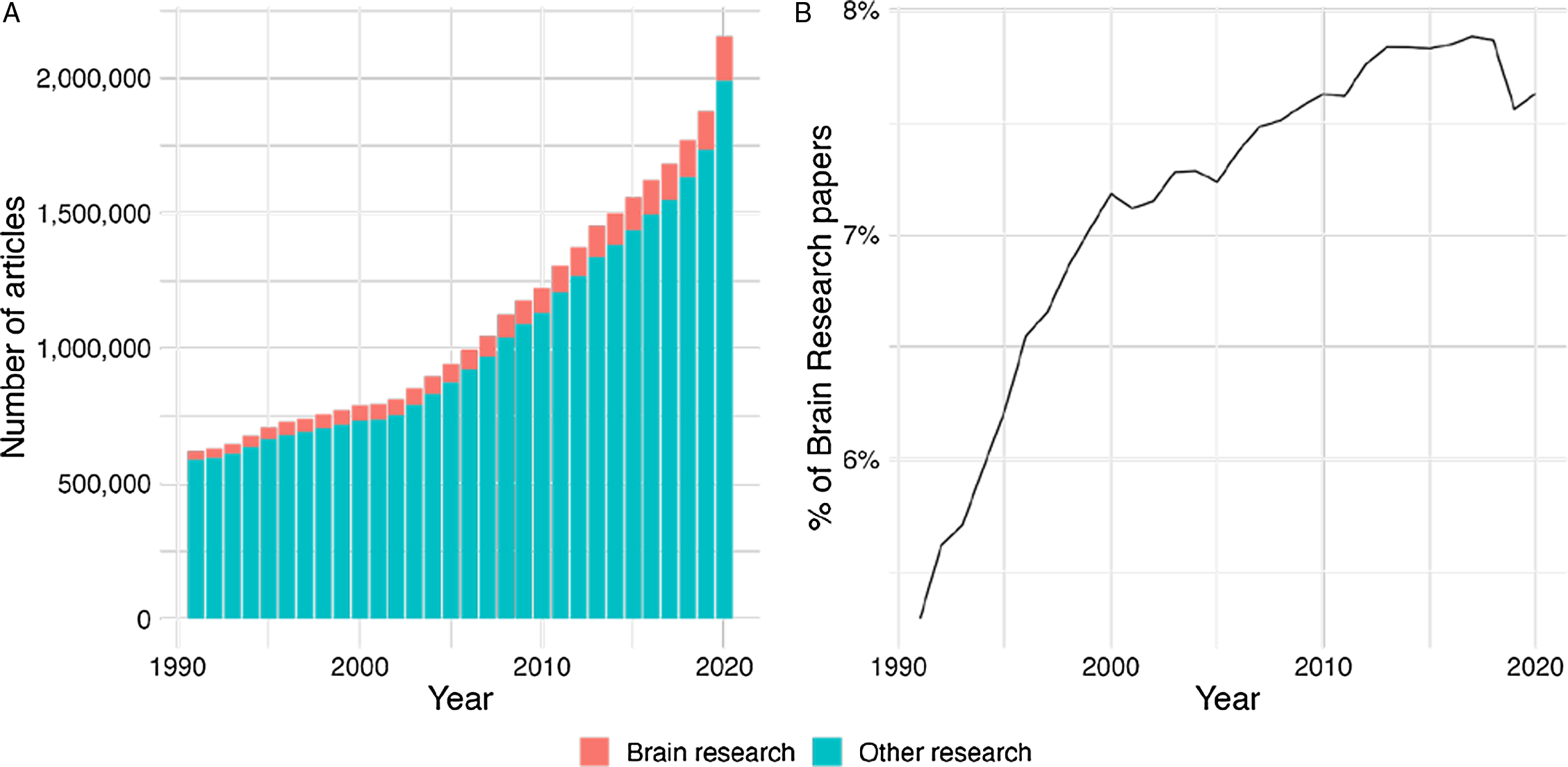
Brain disorders exert a significant and increasing global burden with varying opportunities for prevention and intervention. Reference Feigin, Nichols and Alam1,Reference Rehm and Shield2 According to the European Commission, 3 approximately 165 million Europeans are presently living with a brain disorder, while one third of all people will suffer from a neurological or a psychiatric disorder in their lives. Over the last 80 years, brain research has gained a lot of traction, culminating in the 1990s, which was named “The Decade of the Brain” by the US President, to enhance the visibility of brain research and due to several major breakthroughs related to the brain and the nervous system. 4 In the 2000s, the World Health Organization underlined the importance of brain and mental health research in the context of a worldwide increase in mental health and neurological conditions. 5 More recently, the science academies of the G7 nations along with seven other scientific academies urged world leaders to develop global brain resources to understand, protect, and develop global brain resources. 6 According to them, brain disorders represent a “global threat” to individual well-being, economic productivity, and intellectual capital. They offered four objectives to provide a path to science-based development of global brain resources: (1) Support fundamental research on brain principles and technologies; (2) Address brain disorders with next-generation integrative programs; (3) Promote theoretical neuroscience for creating brain-based applications; and (4) Integrate brain, behavioral, and social sciences for education and life management. To achieve these objectives, government or private foundation funding and supporting basic and clinical brain sciences is critical. Reference Grillner, Ip and Koch7 This attention on brain research has led to recent advances such as the development of cutting-edge tools for mapping neuronal connections, the increase in resolution and quality of neuroimaging technology, and the rise of nanoscience, which have created great opportunities to understand how the brain works in health and disease and integrate these various new methods across scientific fields. 8 Brain research’s popularity may be observed through the ever-growing number of brain-related research papers in the different bibliographic databases. For example, looking at the Web of Science by Clarivate Analytics, the production of brain-related documents has grown from a few hundred per year in the 1950s to over 30,000 per year in the 1990s. As of 2023, there are over 100,000 new brain-related documents indexed in the Web of Science yearly. As our results will show, this expansion of brain-related publications since the 90' is aligned with the general growth in the number of publications, but it is even more pronounced. This results in a relative increase in the proportion of articles related to this field (see Fig. 1).
Number of articles in Web of Science (WoS) related to brain research and other disciplines (A), and proportion of brain research articles with respect to all WoS over time (B).
Using Bibliometrics to Assess Brain Research
Bibliometrics are the application of mathematical methods to study publication and communication practices in the dissemination of information. Reference Diodato and Gellatly9 Essentially, bibliometrics allow researchers to measure various aspects of research productivity (collaboration, authorship, impact, etc.) with the use of metadata from a bibliographic database. One of the main advantages of bibliometrics is that they can be used to process large amounts of data, Reference Sugimoto and Larivière10 which makes it especially useful to assess the evolution of scientific fields or of science in general. The main limits of bibliometrics are related to the source of data – whether it is Web of Science, Scopus, Google Scholar, OpenAlex, or Dimensions –, and bibliometric data itself. These limits manifest in various ways: There are differences among publishing and authoring practices among different scientific disciplines (e.g. the average age of cited documents), which makes them hard to compare; Reference Sugimoto and Larivière10–Reference Nederhof13 limits in the coverage of certain disciplines Reference Archambault and Larivière11,Reference Nederhof13,Reference Van Leeuwen14 or languages and local scientific literature, Reference Archambault and Larivière11,Reference Archambault, Vignola-Gagné, Côté, Larivière and Gingrasb15–Reference Hicks18 and the poor coverage of monographs. Reference Sugimoto and Larivière10,Reference Archambault and Larivière11,Reference Hicks, Moed, Glänzel and Schmoch17–Reference Glänzel and Schoepflin19
In this context, bibliometrics may be used to assess the production of the authors of brain-related research over time. As of now, bibliometrics have been used in several articles that attempted to study general brain research, Reference Buchan, Jurczyk, Isserlin and Bader20–Reference Yeung, Goto and Leung22 or specific brain research topics such as Alzheimer’s disease, Reference Chen, Wan, Jiang and Cheng23,Reference Dong, Wang, Ye, Wang and Bi24 neuroimaging, Reference Wu, Wang and Li25–Reference Yeung, Goto and Keung Leung27 brain-computer interfaces, Reference Hu, Chen, Meng, Williams and Xu28 epilepsy, Reference Wang, Li, Tao and Zhao29 microbiota-gut-brain, Reference Zyoud, Smale, Waring, Sweileh and Al-Jabi30 neuropharmacology, Reference Duan, Gao, Shao, Tian, Fu and Zhu31,Reference Yeung, Tzvetkov and Atanasov32 deep brain stimulation, Reference Hu, Moses, Xu and Williams33 brain injuries, Reference Li, Ma and Pandey34–Reference Qi, Jin, Qian and Zou36 neuroethics, Reference Leefmann, Levallois and Hildt37 neuropathic pain, Reference Chen and Wang38 and music. Reference Albusac-Jorge and Giménez-Rodríguez39 The evolution of brain research in specific geographic areas such as South America, Brazil, and Saudi Arabia has also been covered. Reference Alhibshi, Alamoudi, Haq, Rehman, Farooq and Shamrani40–Reference Hoppen and de Vanz S.A.42
While many topics of brain research have been covered by these previous studies, there is no comprehensive overview of the evolution of brain research and its various specialties, and funding over a long period of time. This paper aims to determine (1) how brain research has evolved over time in terms of papers, (2) country rankings in terms of papers and impact, and (3) how those various trends vary by area of brain research.
Methods
Database
Data for this paper were drawn from Clarivate Analytics’ Web of Science for a 30-year period (1991–2020). The Web of Science covers three global citation indexes: Science Citation Index Expanded, Social Science Citation Index, and Arts & Humanities Citation Index. These three databases cover more than 17,000 journals over the period studied, and more than 13,500 in 2020 only. The Web of Science is a restrictive dataset as it does not cover all the journals that are being published but rather focuses on the subset of the most cited. Reference Sugimoto and Larivière10 This means that certain research products, such as articles published in highly specialized or national journals, book chapters, and preprints not yet published, are likely to be excluded. It is also likely to miss papers published in languages other than English. Reference Mongeon and Paul-Hus43 Despite this limitation, the Web of Science has a good coverage of research outputs in most fields of the medical and health sciences.
Keyword Selection
The lower bound (1991) of the period analyzed was selected as it is the year when papers’ keywords and abstracts began to be indexed in the Web of Science database. We used a relatively broad definition of brain research, which includes papers published in 513 journals (Appendix 1) as well as those retrieved using a set of 247 keywords and expressions (Appendix 2) chosen by experts in the field and validated. The 513 core brain journals were manually selected based on their title and topic (e.g. brain, neurology, neuroscience, pain), and included the majority of journals indexed in the Neurology & Neurosurgery subfield from the classification developed by the Patent Board (formerly CHI Research Reference Hamilton44 ) and used by the US National Science Foundation. Keywords were chosen following the method developed by Archambault et al. Reference Archambault, Caruso, Côté and Larivière45 A first set of 794 keywords was created based on the characteristics of the papers of core researchers in the field of brain research, defined by the set of papers funded by Brain Canada. Those 794 keywords – which occurred at least twice in Brain Canada’s funded papers – were then used to retrieve a sample of papers at the world level, which were manually validated using a ranking system (0 = not related to brain, 1 = related to brain, 2 = maybe) by both an expert in brain research as well as a bibliometric researcher. After the first round of review aiming to obtain higher recall, most keywords proved to be too generic – keywords such as “expression,” “activation,” or “in vivo” – which are used in brain research but also in other unrelated fields. After a second round of more rigorous validation aiming for more precision, the set of keywords stabilized at 247 – a number based on the experts' agreement that maximized recall of papers in the field of brain research and precision – the percentage of retrieved papers that were not false positives. Finally, to reduce false positives, we limited the analysis to articles published in journals from fields of biomedical research, clinical medicine, health, and psychology, as well as the subfield of computer science, which is under the field of engineering. The final set of papers is based on all papers published in the 513 core journals, as well as the papers retrieved using the set of 247 keywords and published outside the core journals. It totals 2,467,708 papers indexed in the Web of Science over the 1991–2020 period.
Analysis
Three indicators are used in the analysis: number of papers, specialization, and research impact. We focus on the number of papers published as an indicator of the brain research activity of countries. We used the “full counting” approach, meaning that each country appearing in the affiliation lists gets one full paper unit. Reference Sugimoto and Larivière10 Each country’s percentage of all global papers is obtained by dividing their number of papers by the total number of papers at world level. As authors from different countries collaborate and we use a full counting approach, the sum of the proportion of all countries will be more than 100%. Specialization in brain research is obtained by dividing the proportion of publications of each country in brain research by the proportion of the world’s publications in brain research. For example, if globally 7% of all articles are about brain research, but for a country, the proportion is 14%, then this country would have a specialization index (SI) of two. An SI value above one indicates the country has a higher percentage of brain research than would be expected, while an index value below one indicates the opposite. Research impact of countries in brain research is obtained through the compilation of the average of relative citations (ARCs), which considers the fact that papers across different disciplines and specialties have different citation potential. Reference Sugimoto and Larivière10 The ARC is obtained by compiling the number of citations for each paper from their publication year onwards and dividing it by the average number of citations received by all papers in brain research published in the same publication year and field. Therefore, an ARC greater than one indicates that the countries’ papers obtain, on average, higher citation rates than the world average; an ARC below one indicates the opposite.
Results
A total of 2,467,708 brain-research-related papers, identified through a list of keywords (see appendix 1), were retrieved from the Web of Science over the 1991–2020 period, which represents 7% of all papers indexed in WoS over that time period. Figure 1 presents the evolution of the number of papers at the global level for the 1991–2020 period, both for brain research and all other disciplines (Fig. 1a), and the percentage that brain research represents across all fields (Fig. 1b). As previous research has shown Reference Bornmann and Mutz46 , the number of papers has grown exponentially over the last 30 years, from about 600,000 papers in 1991 to more than 2 million papers in 2020. Within this exponential growth, brain research papers have grown at a faster pace than the general rate, particularly during the 90s. During this decade, the proportion of brain-related papers across papers published in all disciplines combined increased from 5% to 7%, to almost 8% during the next decade, stabilizing since then. Although many health-related disciplines have grown at faster pace during this time period, the growth in brain research stands out. For comparison, the proportion of cancer-related papers grew from 1.5% to 1.7% in the 90s to 2.18% by 2020, while papers on cardiology show a relative decrease as they remained stable between 1991 and 2010 at 1.4% of the total number of publications and then decreased to 1.1% by 2020 (see Figure S1).
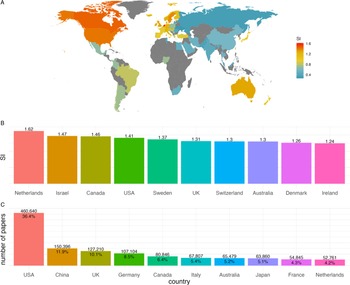
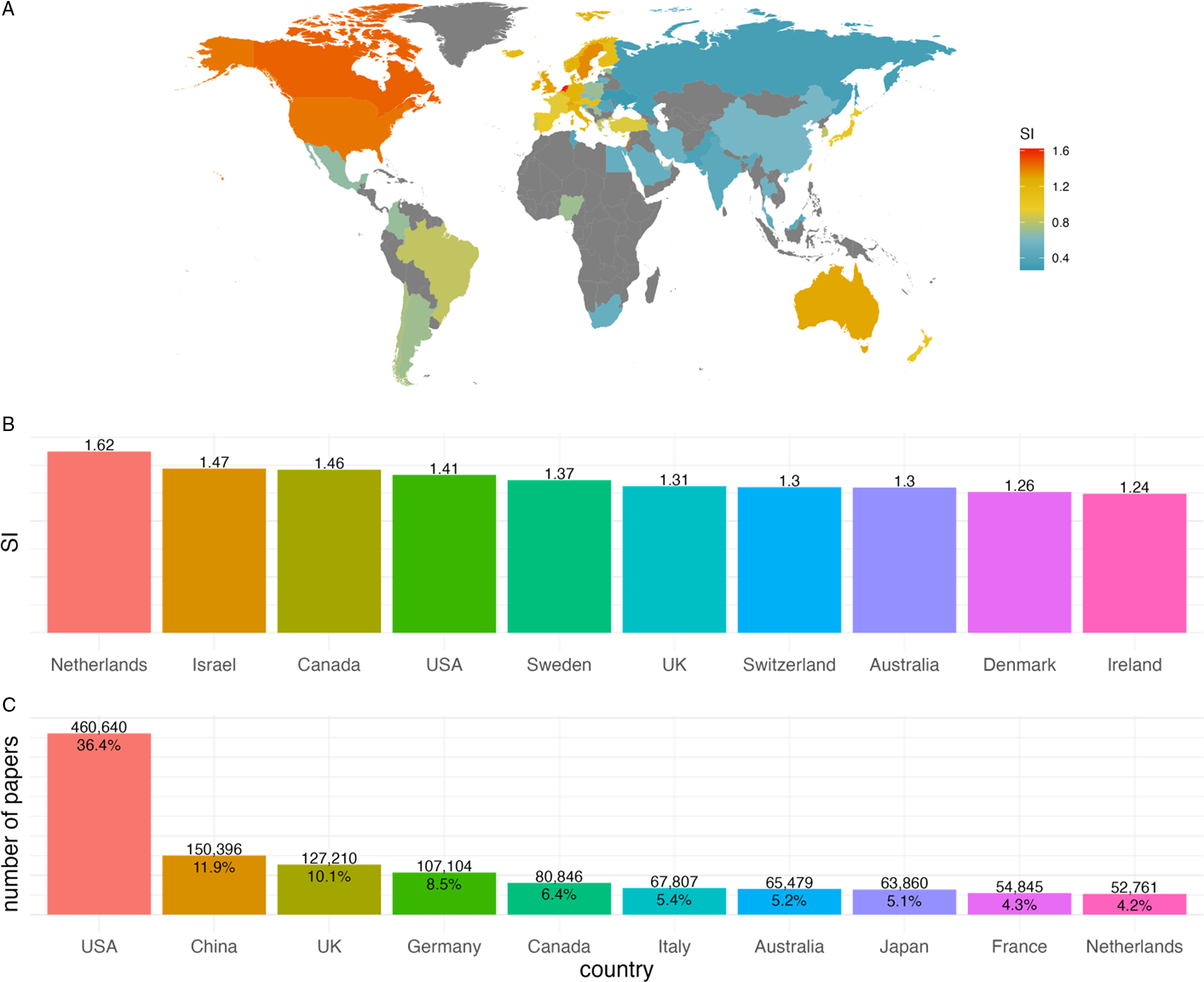
The research output in the field is, however, quite heterogeneous across countries. Figure 2 shows the distribution of brain-related research around the world. At the global level (Figure 2a), we can see that there is a continental divide, a concentration in North America, Western Europe, and Oceania. South America is divided between a slightly below-average production and countries with fewer than 1000 articles on brain research in the period. Asia presents a very low degree of specialization in brain research, while almost all African countries have fewer than 1000 articles. These results show a strong correlation between specialization in brain research and economic development of countries. Figure 2b shows the specialization index of the ten most specialized countries. The country with the highest level of specialization in brain research is the Netherlands, with an SI of 1.62, indicating that they perform 62% more brain research than expected. This is followed by Israel (1.47), Canada (1.46), the United States (1.41), Sweden (1.37), the United Kingdom (1.31), and Switzerland (1.30). Nevertheless, given the different volume of papers each country produces, countries that have a lower degree of specialization still account for a large share of brain research articles. Figure 2c shows the top 10 largest producers on the field, which together are involved in more than 97% of brain-related articles. Given that some articles have authors from different countries, the sum of the participation of countries is more than 100%. Countries with more than 1000 brain-related articles outside the top 10 are involved in almost 40% of articles. The United States, United Kingdom, Canada, Australia, and the Netherlands are among the top producers and the most specialized countries in the field.
Specialization in brain research by country. Above 1 indicates that the country is more specialized than average, below one indicates that the country is less specialized than average. In gray, countries with fewer than 1000 articles in brain research. All countries (a), top 10 most specialized countries (b), and number of articles and share of the top 10 producers (c). 2011–2020, Web of Science database.
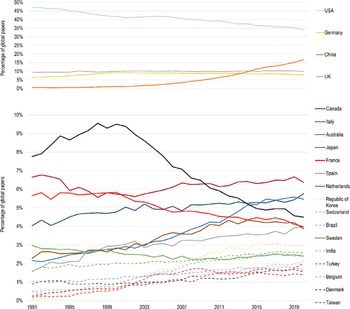
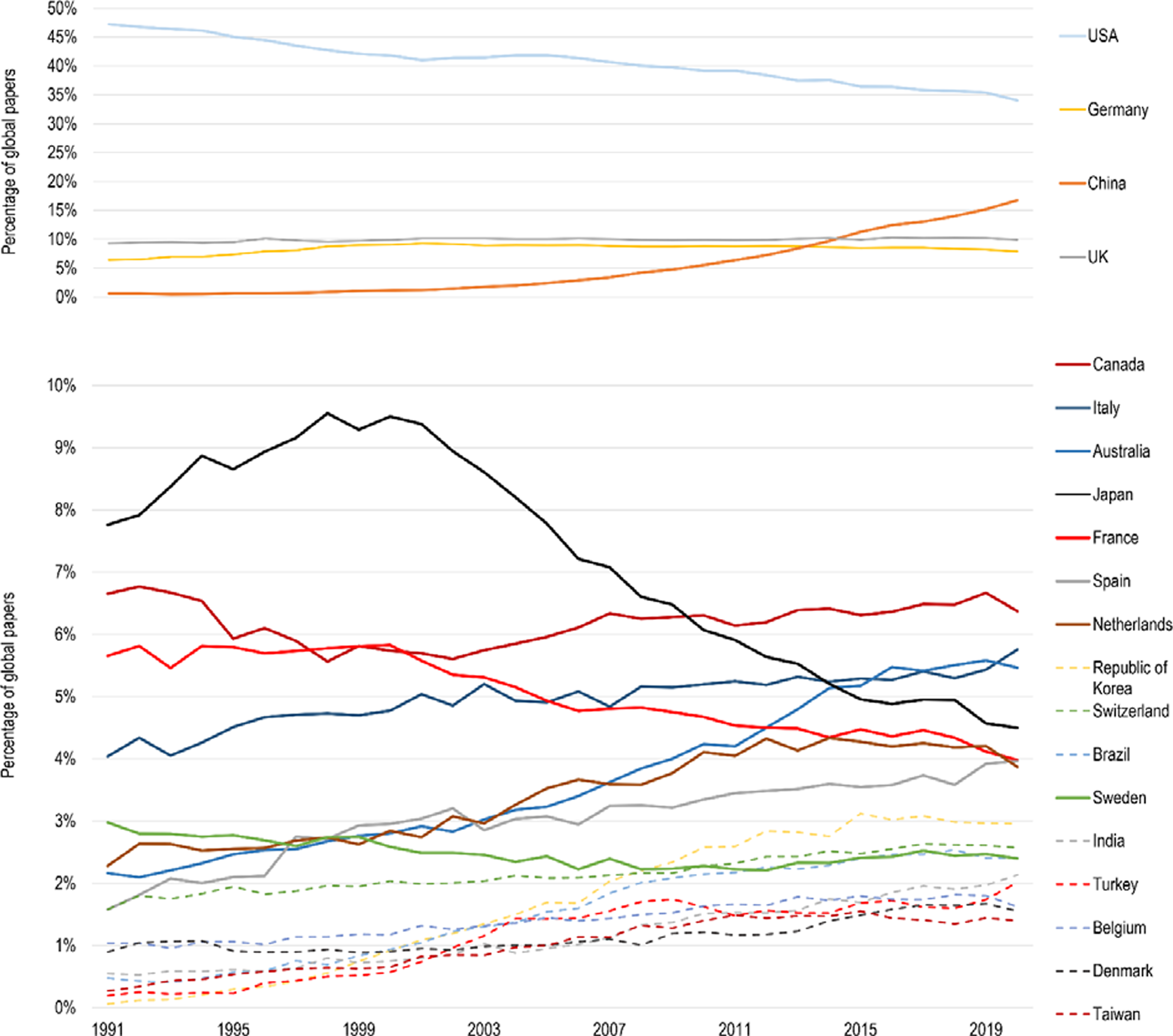
The relative contribution of countries in the field has varied significantly over the last three decades (Fig. 3). The decline of the United States – also observed across all domains combined – is quite striking. While the United States accounted for more than 47% of all brain-related papers in 1991, this number dropped to 34% in 2020. Complementary to this decline is the rise of China’s research activities in the field, which rose from less than 1% at the beginning of this millennium to 17% in 2020 (a growth of 2750%). Other countries whose contribution to brain research is declining include Japan, whose share of global papers has decreased from 10% in the late 1990s to 5% in 2020; France decreased from 6% in 1991 to 4% in 2020, and Germany from 9% in the early 2000s to 8% in 2020. Many smaller countries, particularly in Europe, are taking up increasing space in the field: the Netherlands (170% increase in share of papers over the period), Spain (252% increase), Switzerland (162% increase), and Belgium (156% increase). In other parts of the world, notable increases include the Republic of Korea (4626% increase), Turkey (1036% increase), Brazil (508%), and India (387%).
Percentage of world papers in brain research, by country, 1991–2020. Web of Science database. The top 20 countries with the highest number of papers are presented.
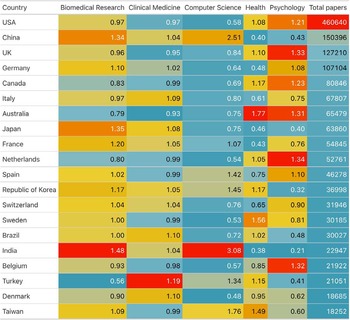
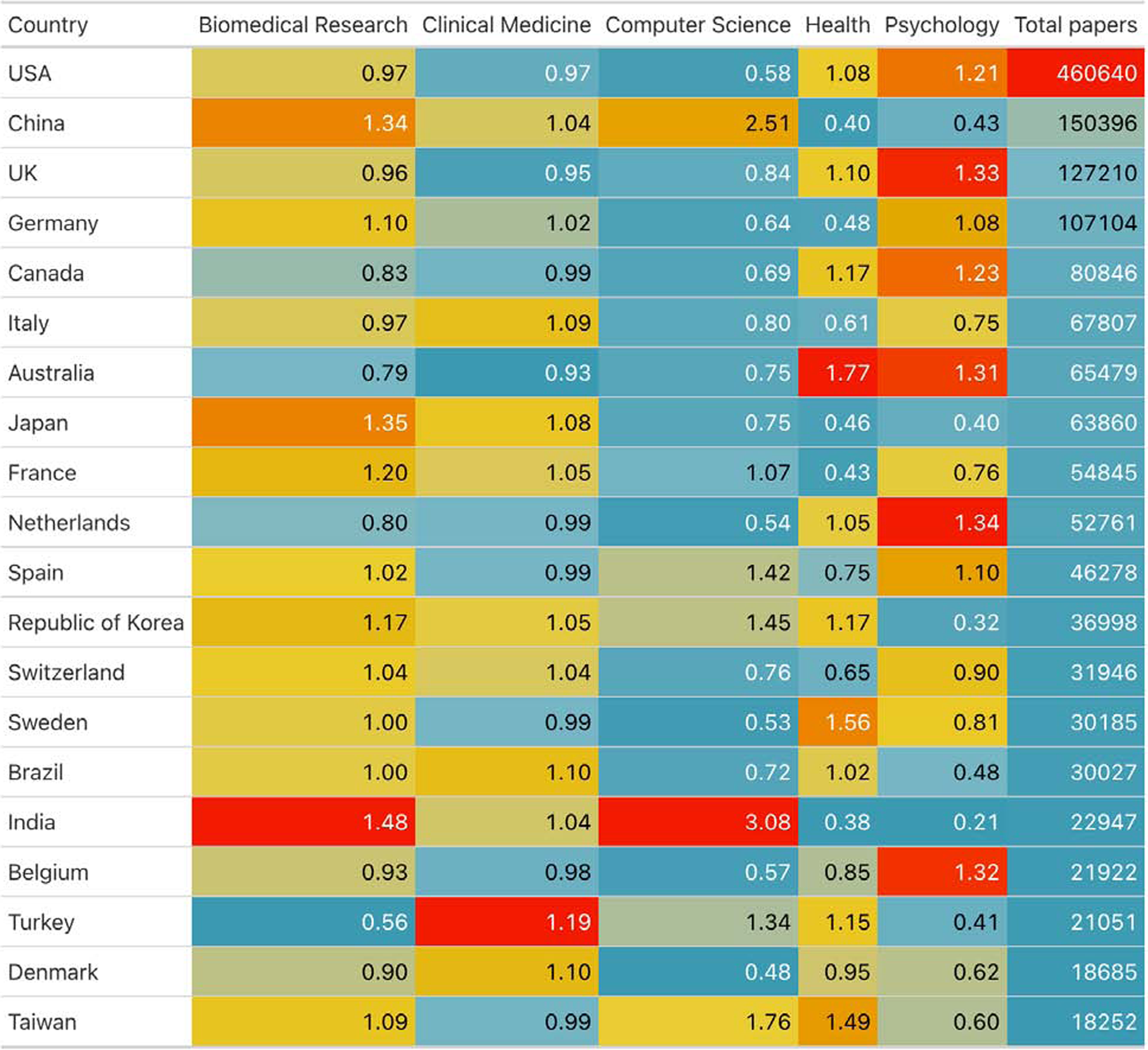
We then sought to assess the contribution of these countries to different subcategories of brain research. Figure 4 shows the SI for each of the five areas of brain research: biomedical research, covering the biological or physiological aspects of research; clinical medicine, computer science, public health, and psychology. Given that most papers in the brain research field are published in clinical medicine, most countries are relatively close to the average (i.e., 1) in this domain, with Turkey having 19% more papers than expected, and Australia having 7% less. In biomedical research, India, Japan, China, France, and Korea are relatively more active, while Turkey, Australia, Canada, and Denmark are relatively less active. Psychology and public health follow a similar pattern, with Western countries often being specialized in those areas, and Asian countries being relatively less active. In computer science, the relative strength of Asian countries (China, Republic of Korea, India, and Taiwan) and Spain is noteworthy.
Specialization in brain research, by area and country, 2011–2020. Specialization is obtained by dividing each country’s percentage of world papers for a given area by their percentage of world papers for all areas combined. Orange/red (>1) indicates the country is relatively more active in the area; blue (<1) indicates the country is relatively less active in the area; yellow (≈1) indicates the country is performing brain research in the same percentage as expected values. Web of Science database. The top 20 countries with the highest number of papers are presented in order of magnitude.
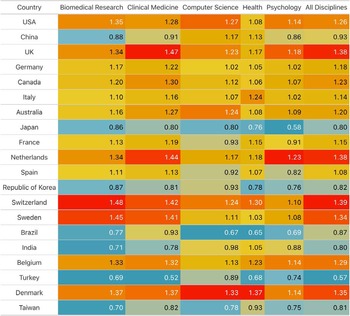
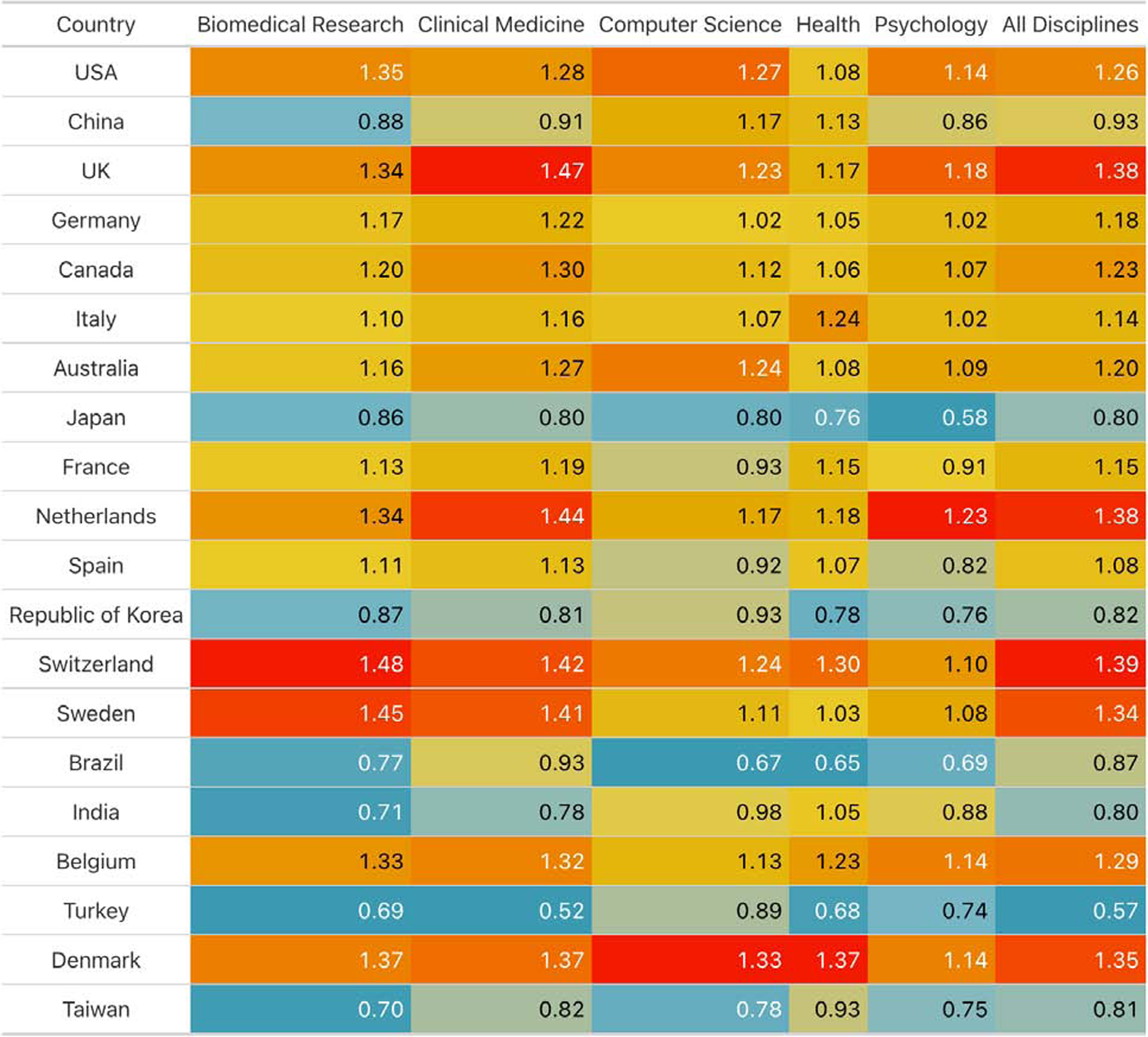
Citations are a useful metric for determining a paper’s impact on the research community. Nevertheless, the different citation patterns across disciplines need to be considered. Given this, we computed the normalized scholarly impact by country and discipline of brain-related research. This normalization compares citations received by an article with the average citations that brain research articles receive in that discipline. Figure 5 shows the average impact by country and discipline for the 20 countries with the highest number of papers. Some countries show an overall high scholarly impact across domains, such as Denmark, the United Kingdom, the Netherlands, Switzerland, Sweden, and Belgium. Other countries show an overall lower impact, such as Japan, Korea, Turkey, and Taiwan. China shows a combination, with an outperforming impact on computer science and health, and a low impact on biomedical research, clinical medicine, and psychology. The opposite pattern is shown by the United States and Canada, which have a high performance on biomedical research, and clinical medicine, but their impact on health is not as strong.
Scholarly impact, by country and area, 2011–2020. Average of relative citation is obtained by dividing each papers’ number of citations by the average citation rate of papers published in the same speciality and year, for papers in brain research. Red (>1) indicates a higher scientific impact in the area; blue(<1) indicates a lower scientific impact in the area; yellow (≈1) indicates a scientific impact on par with the world average. Web of Science database. Top 20 countries with the highest number of papers are presented in order of magnitude.
We finally sought to identify the top funders of published brain research worldwide. Thirty funders were identified as having funded at least 10,000 brain research papers in the 2011–2020 period, which account for almost 75% of all brain research. Their percentage of funded papers by research area is shown in Figure 6. Among the top funders of brain research papers are the US National Institutes of Health, the European Commission, the National Natural Science Foundation of China, the UK Medical Research Council, and the German Research Foundation/Deutsche Forschungsgemeinschaft. These five institutions funded 458010 articles on brain research during this period, which represents more than 35% of articles in the area.
Percentage of funded papers by area, for the 30 funders that funded at least 10,000 brain research papers, 2011–2020.
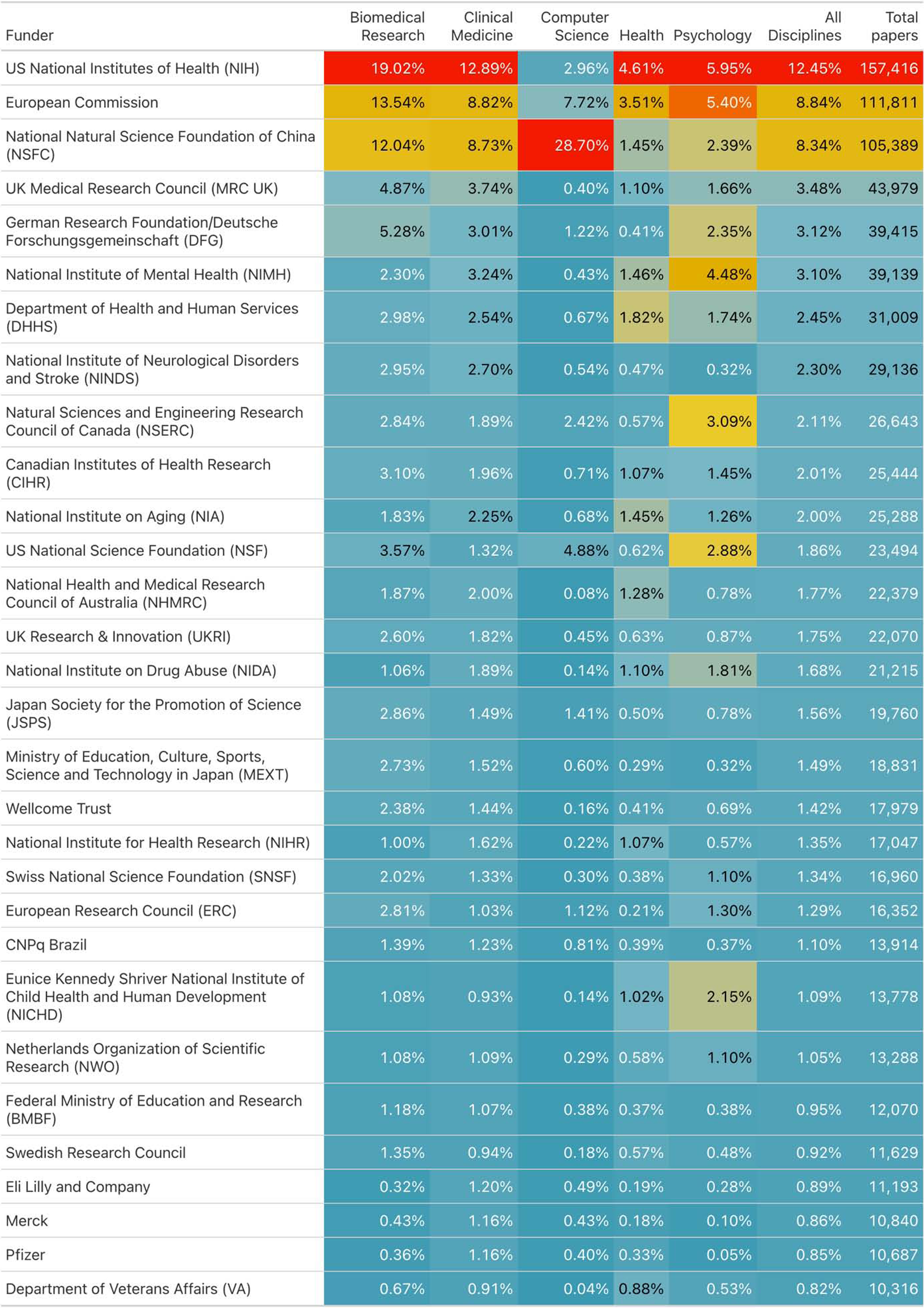
However, these funders vary in their share of funded papers across brain research areas. For example, the US NIH – which represents the largest funder of brain research worldwide – funds a lower percentage of computer science research, as well as slightly less public health and psychology than expected, while it funds almost 20% of brain research in the biomedical domain. The European Commission shows similar patterns, but with more balance between fields, and the National Natural Science Foundation of China funds almost 30% of brain research on computer science, the largest proportion on a field by any funder, but less than 1.5% in health. We also observe a strong focus on biomedical research – and a much lower emphasis on computer science and public health for the German Research Foundation – as well as an important emphasis on psychology at the National Institute of Mental Health. The top 30 list also includes three firms – Eli Lilly, Merck, and Pfizer – which all share a similar (and sole) focus on clinical medicine.
Discussion and Conclusion
Our results show that over the past 30 years, the number of brain-related papers has grown at a faster pace than the number of papers from all disciplines combined, with North America, Western Europe, and Oceania leading the charge in terms of specialization. There are likely multiple factors contributing to this growth in the proportion of brain-related research compared to all other disciplines combined: (1) the growth in funding and brain-related initiatives, Reference Grillner, Ip and Koch7 (2) a growth in the various neuroimaging technologies that allow for more precise studies of brain-related phenomena, 8 (3) endogenous growth within the discipline (i.e. due to new discoveries and theories), and (4) exogenous growth related to increased awareness (i.e. on mental health) and demands from aging societies. For instance, neurosciences have witnessed massive increase in funding by the NIH, going from $5.6 billion USD in 2014 to 10.1 billion USD in 2020. 47
Results have also shown the variation in the research contribution of countries over the past three decades. While previous studies have estimated that the United States accounts for about 40 to 45% of all neuroscience research, Reference Buchan, Jurczyk, Isserlin and Bader20,Reference Yeung, Goto and Leung21,Reference Yeung, Goto and Leung22,Reference Dong, Wang, Ye, Wang and Bi24 our data illustrate a steady decline going from a share of 47% of all brain-related papers in 1991 to a share of 34% in 2020. Other major players in brain research such as Japan, France, and Germany have also seen their share in published articles on brain research decline, despite some major brain research investments and initiatives such as the NIH’s Brain Research Through Advancing Innovative Neurotechnologies, 8,Reference Bargmann and Newsome48,Reference Jorgenson, Newsome and Anderson49 the European Union’s Human Brain Project Reference Grillner, Ip and Koch7,50 , and Japan’s Brain/MINDS project. Reference Grillner, Ip and Koch7,51
This decline could be explained by the massive rise in China’s contribution to brain research, which has grown by 2750% over the past 20 years. This growth is accompanied by massive investment in brain research and by the creation of major research initiatives such as the China Brain Project, which aims to establish China as one of the forefronts in neuroscience, artificial intelligence, and robotics. Reference Grillner, Ip and Koch7,Reference Normile52,Reference Poo, Du, Ip, Xiong, Xu and Tan53 Other nations such as the Netherlands, Spain, Switzerland, Belgium, the Republic of Korea, Turkey, Brazil, and India have also shown considerable growth over the same period. Looking at the various areas of brain research over the past decade, Asian countries were generally more active in computer science and biomedical research, while Anglo-Saxon countries were more active in psychology and public health. Looking at the scholarly impact of countries that published brain research in the past ten years, Western European and Nordic countries such as Denmark, the United Kingdom, the Netherlands, Switzerland, Sweden, and Belgium had the biggest scientific impact, while other countries such as the United States, China, Canada, and Australia had a strong impact in specific areas of brain research. Lastly, we identified the top 30 funders of published brain research between 2011 and 2020. Our data showed that the US National Institutes of Health, the European Commission, the National Natural Science Foundation of China, the UK Medical Research Council, and the German Research Foundation were among the top funders, with differences among brain research areas funded.
Our findings also have significant implications for funding agencies at the national and international levels. By giving a detailed up to date portrait of the current landscape of brain research funding and specializations, our study provides information for strategic specialization of funding. For instance, it allows agencies to identify areas where they are stronger or weaker, and adjust their funding accordingly based on their strategic goals (e.g., public health, R&D, etc.), their capacities, and their current research infrastructure. Furthermore, considering the importance of international collaboration in science, Reference Wagner, Whetsell and Leydesdorff54 our results could also be used by agencies to identify potential international partners based on research interest, specialization, and growth. Finally, our results also show a relation between the degree of specialization of countries and their income level. Given that rich countries are prone to specialize more in brain research, it is important that funding agencies account for the diverse necessities in brain research that might be underrepresented in the current landscape.
It should be noted that we have not taken into account the existence of cohorts such as the Alzheimer’s Disease Neuroimaging Initiative, Reference Petersen, Aisen and Beckett55 and the Framingham Heart Study Reference Mahmood, Levy, Vasan and Wang56 that publish large quantities of papers on the same topic, often reusing the same datasets. Papers arising from these types of initiatives were considered individually and not as a part of a bigger project. Future studies could cover the impact of such cohorts in the evolution of brain research at the national and international levels.
Strengths
While previous articles have used bibliometrics to study various topics of brain research, our study is the first to offer a comprehensive overview of the evolution of brain research and its various specialties through its funding and collaboration practices over a long period of time. Using a sample of 513 core brain-related journals and a set of keywords validated by experts, this approach allowed us to examine the changes in global trends as well as the changing influence and specialization of individual countries.
Limitations
As previously mentioned, one of the main limitations of this study is the use of the Web of Science as a bibliometrics source of data, which may lead to an underestimation of regional and non-English scientific literature, Reference Archambault and Larivière11,Reference Archambault, Vignola-Gagné, Côté, Larivière and Gingrasb15–Reference Hicks18 especially in countries such as China where publishing in Chinese is strongly encouraged by funders and stakeholders, even more so since the beginning of the Covid-19 pandemic. Reference Larivière and Shu57 However, the effect of these policies has yet to make a considerable difference in the Chinese research ecosystem. Reference Shu, Liu and Larivière58 Furthermore, our delimitation of research areas related to brain research and a field of research was based on the opinions of experts. However, a different set of experts could have come up with a different delimitation of areas. For instance, we acknowledge that the inclusion of Computer Science papers as a part of brain research affects our results. It could be argued that papers on brain-related topics published in this field should not be considered. The omission of these papers would heavily influence the growth of China seen in Figure 3. As Figure 4 shows, China is highly specialized in Computer Science, where it also has a higher scholarly impact (see Fig. 5). Also, the National Natural Science Foundation of China funds almost 30% of papers coming from Computer Science, 3.44 times more than its participation across all disciplines. Finally, in interpreting the results of this study, it should be noted that increased research output does not linearly reflect research progress. For example, mental health researchers have lamented the slow progress in treatment of mental disorders despite large investments in basic research. Reference Torrey, Simmons, Hancq and Snook59 Similarly, Alzheimer’s disease is a pressing concern for aging societies, but numerous clinical trials conducted in the past decades have not resulted in disease-modifying treatments. Reference Cummings, Feldman and Scheltens60 With these caveats in mind, our findings provide a large-scope snapshot of the evolution of brain research and its funding, which may be used as a baseline for future studies on these topics.
Supplementary material
The supplementary material for this article can be found at https://doi.org/10.1017/cjn.2023.314.
Acknowledgments
Marc-André Simard and Diego Kozlowski acknowledge funding from MITACS, in collaboration with Brain Canada Foundation.
Competing interests
Vincent Larivière has served as a consultant to Brain Canada Foundation in 2021 and 2022. Diego Kozlowski (2023) and Marc-André Simard (2021-2022) held Mitacs fellowships at Brain Canada.
Authors contribution
Conceptualization: MAS, CF, VL.
Data curation: DK, VL.
Funding acquisition: MAS, VL.
Investigation: MAS, DK, VL.
Methodology: MAS, DK, VL.
Project administration: CF, VL.
Supervision: CF, VL.
Visualization: DK, VL.
Writing – original draft: MAS, DK, JS, MM, DDO, TS, CF, VL.
Writing – review & editing: MAS, DK, JS, MM, DDO, TS, CF, VL.