


Introduction
Svalbard’s location at the northernmost loop of the Gulf Stream means it is well placed for examining the impacts of heat advection from mid- to high latitudes on the cryosphere. In general, Svalbard’s climate is influenced by sea surface temperatures in the Norwegian Sea, by sea-ice extent in the Barents Sea and Fram Strait and by the tracks of Arctic weather systems that are responsible for incursions of cold Arctic air (Reference Førland and Hanssen-BauerFørland and Hanssen-Bauer, 2003). Interactions between these factors mean that Svalbard’s winter temperatures are highly variable from year to year.
Two Svalbard glaciers, midre Lovénbreen and austre Brøggerbreen, have the longest Arctic mass-balance records (Reference Hagen, Kohler, Melvold and WintherHagen and others, 2003; Kohler and others, unpublished data). However, detailed surface energy-balance studies on Svalbard glaciers are rare, limiting our ability to examine how changes in energy exchange between the atmosphere and snow/ice surfaces in summer may impact upon the generation of fresh-water runoff for mixing in downstream aquatic and marine ecosystems (Reference HopHop and others, 2002). Thus, this paper describes the hydrometeorological processes governing meltwater generation and runoff between 1997 and 2002 at the midre Lovénbreen catchment (78˚50’ N, 12˚ E). Specifically, we examine summer surface energy balances and annual water budgets, enabling us to calculate interannual variations in water storage within the glacier (cf. Reference Jansson, Hock and SchneiderJansson and others, 2003).
Data and Methods
Field site
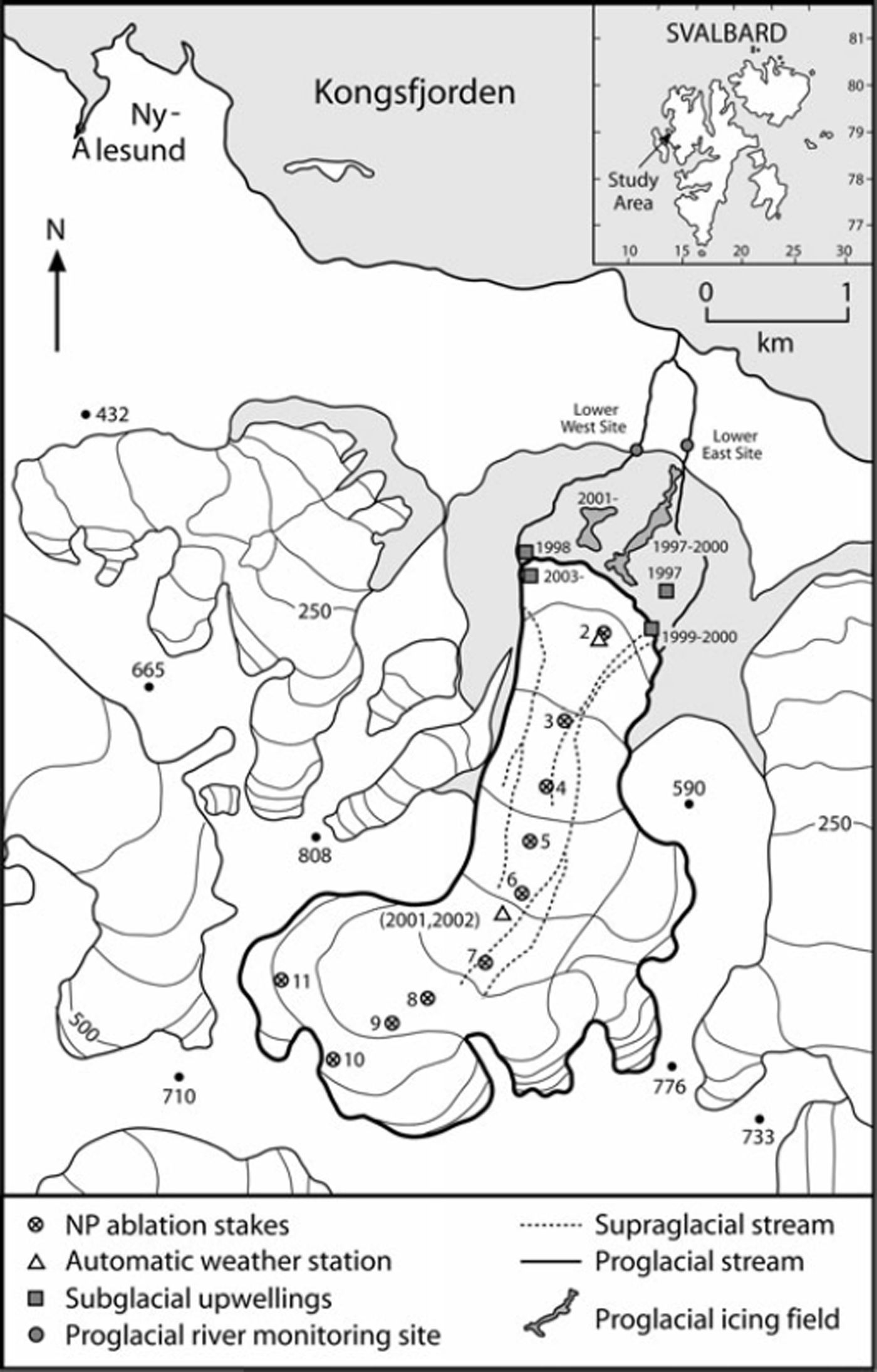
Midre Lovénbreen is a 5.4 km2 polythermal glacier that occupies a 10.8 km2 basin (Fig. 1). The glacier is up to 180 m thick, and about two-thirds of its bed is at the pressure-melting point (Reference RippinRippin and others, 2003). The glacier and its neighbour, austre Brøggerbreen, have mass-balance records extending back to the late 1960s. There have been a few previous studies of midre Lovénbreen’s hydrology; estimates of annual runoff, chemical denudation and nutrient budgets were presented by Reference Hodson, Tranter and VatneHodson and others (2000, Reference Hodson, Mumford, Kohler and Wynn2005), and aspects of the internal glacier drainage system have been inferred using ground-penetrating radar and other geophysical methods by Reference Kulessa and MurrayKulessa and Murray (2003) and Reference RippinRippin and others (2003).
The midre Lovénbreen basin, its major features and the location of the measurement sites.
Mass balance
The long-term mass-balance record shows that elevation exerts a strong control over winter accumulation bw explaining 99.7% of the variance in the average accumulation of the glacier’s 50 m elevation zones (Kohler, unpublished data). These zones have an accumulation range of 0.2-0.9 mw.e. and produce an average precipitation gradient for the basin of 0.13 mw.e.(100m)–1 during the study period (1997-2002). Typically, summer melting on the glacier nearly always exceeds these winter accumulation rates, so the glacier has had an almost consistently negative net mass balance (bn) since records began in 1967, with only four years in which b n was positive. The long-term average b n since 1967 (−0.36mw.e.) is also close to that for our study period -0.38mw.e.).
Discharge
Summer runoff is conveyed to Kongsfjord via two proglacial streams draining the lateral margins of the glacier. Subglacial drainage also occurs in the summer, and subglacially routed water typically emerges in the first half of July as either single or multiple upwellings in the glacier forefield. Changes in the location of the upwellings reflect changes in subglacial drainage system structure (Reference RippinRippin and others, 2003). Proglacial icings form every winter, indicating that subglacially routed water emerges from the glacier throughout the year. Interestingly, these icing features may also form in different locations from year to year, and they are never observed in the same location as the subglacial upwellings.
Since July 1997, standard methods have been employed to measure runoff from the glacier and its ∼1.54km2 forefield (see Fig. 1 and Reference Hodson, Mumford, Kohler and WynnHodson and others, 2005 for further details). These runoff data are incomplete, so the series have been filled using simple regression models and data from a permanent Norwegian Water and Energy Administration (NVE) gauging station, ∼ 4 km west of the study site draining the Bayelva catchment (see Reference Hagen, Kohler, Melvold and WintherHagen and others, 2003). Two models were necessary to account for missing data: one for before day of year (DOY) 190 (early season) and one for after DOY 205. All missing data (∼50% of the total runoff between 1997 and 2002) were represented by these intervals. The models took the form:


QML and QB represent daily runoff volumes for midre Lovénbreen and the Bayelva catchment respectively, and the superscripts ‘early’ and ‘late’ represent before DOY 190 and after DOY 205 respectively. The errors of the model parameters are shown in parentheses. The number of observations for Equations (1) and (2) was 30 in each case, whilst the coefficients of determination (r 2) were 0.88% and 0.89% and the standard errors of the model were 13 500 and 15 800 m3 d–1 respectively. Three years of data were used in each model, and their slopes were both highly significant at p < 6 × 10–14. Model predictions were in close agreement with a coupled temperature index and runoff model developed by Reference BrinkhausBrinkhaus (2003). The larger parameter values of Equation (2) were due to the release of subglacial runoff from beneath midre Lovénbreen during the latter half of summer.
Meteorological data and water balance
Hourly meteorological data were collected from a single site on the glacier surface, at ∼75ma.s.l. between 1997 and 2000, and at ∼310 m a.s.l. for 2001 and 2002. We report all data standardized to the original 75 m altitude using a fixed lapse rate of 0.635˚C (100 m)–1 for the 2001 and 2002 data. Hourly wind-direction samples and hourly averages of wind speed, air temperature, relative humidity, incident radiation and net radiation were logged using a CR10x data logger. In addition, hourly total ablation was measured using an acoustic ranging sensor. Turbulent (latent- and sensible-heat) and radiative (short- and longwave) energy-balance components during melting were estimated for 75 m altitude using Brock and Arnold’s (2000) surface energy-balance model. Albedo values were calculated for snow (0.50-0.70) and ice (0.22-0.38) using net radiation measurements after solving the longwave radiation balance for incoming radiation using standard empirical relationships based upon cloud cover (see Reference BrinkhausBrinkhaus, 2003). Surface roughness was parameterized using mean observations collected by N. Arnold (unpublished data). These were 2.53 mm for glacier ice and 0.25 mm for snow.
Gaps were filled in the air-temperature series using data collected by the Norwegian Meteorological Institute in Ny-Ålesund (∼3 km west of the glacier) and the regression model:

T ML and T NÅ denote hourly air temperatures at midre Lovénbreen and Ny-Ålesund respectively, whilst values in parentheses represent the standard errors of the parameters. For this regression, 18 000 observations were used, r2 was 0.95 and the standard error of the model was 1.57˚C. The slope was significant at p < 1 ×10⁻⁶ , the intercept at p=3×10⁻⁵. The range of values that supported this relationship extended from -25˚C to 13˚C.
The water budget of the glacier was estimated from:

All units are in ma– 1 , P abl is precipitation (usually rain) that falls in the ablation season (summer) and does not refreeze in the basin, P acc is precipitation during the accumulation season (winter), b n is the net balance of the glacier (representing either firn accumulation (positive values) or glacier ice ablation (negative values) and normalized for the entire catchment area), Q is runoff, C is condensation, E is evaporation and DS is water storage. Winter runoff is accounted for because the gauging stations were installed downstream of the proglacial icing. Note that in other studies of glacier water balance in Svalbard (e.g. Reference Hagen, Kohler, Melvold and WintherHagen and others, 2003), the storage term is neglected under the assumption that groundwater storage is minimal due to permafrost conditions. We wish to test this assumption, so Equation (4) was solved for DS using our runoff observations, mass-balance data and estimates of precipitation, condensation and evaporation during summer. Summer precipitation was estimated directly from the Norwegian Institute for Air Research (NILU) weekly sampling programme in NyÅlesund using empirical transfer functions and a precipitation gradient (1mm m–1) described in Reference Hodson, Mumford, Kohler and WynnHodson and others (2005). Evaporation was assumed to be 0.08 ma– 1 for the glacier forefield (Reference Killingtveit, Pettersson and SandKillingtveit and others, 2003) and negligible elsewhere. Condensation was assumed to be significant over the glacier only and thus calculated using the energy-balance model. Error calculations for this solution of the water-balance equation followed Reference Hodson, Mumford, Kohler and WynnHodson and others (2005). Briefly, the main error terms were defined by the standard error of the discharge rating curve for Q (variable, but between 0.11 and 0.15 ma–1 when errors with Equations (1) and (2) were also considered) and by error estimates for mass-balance terms following Reference JanssonJansson (1999) (0.1 m a–1 for b n, 0.071m a–1 for P acc). Since no data were available for the significant uncertainty that was likely to have been associated with P abl, we assumed this was equivalent to the P acc error. Errors in C and E were not considered since these terms were found to be insignificant.
Meteorological Conditions and Surface Energy Balance
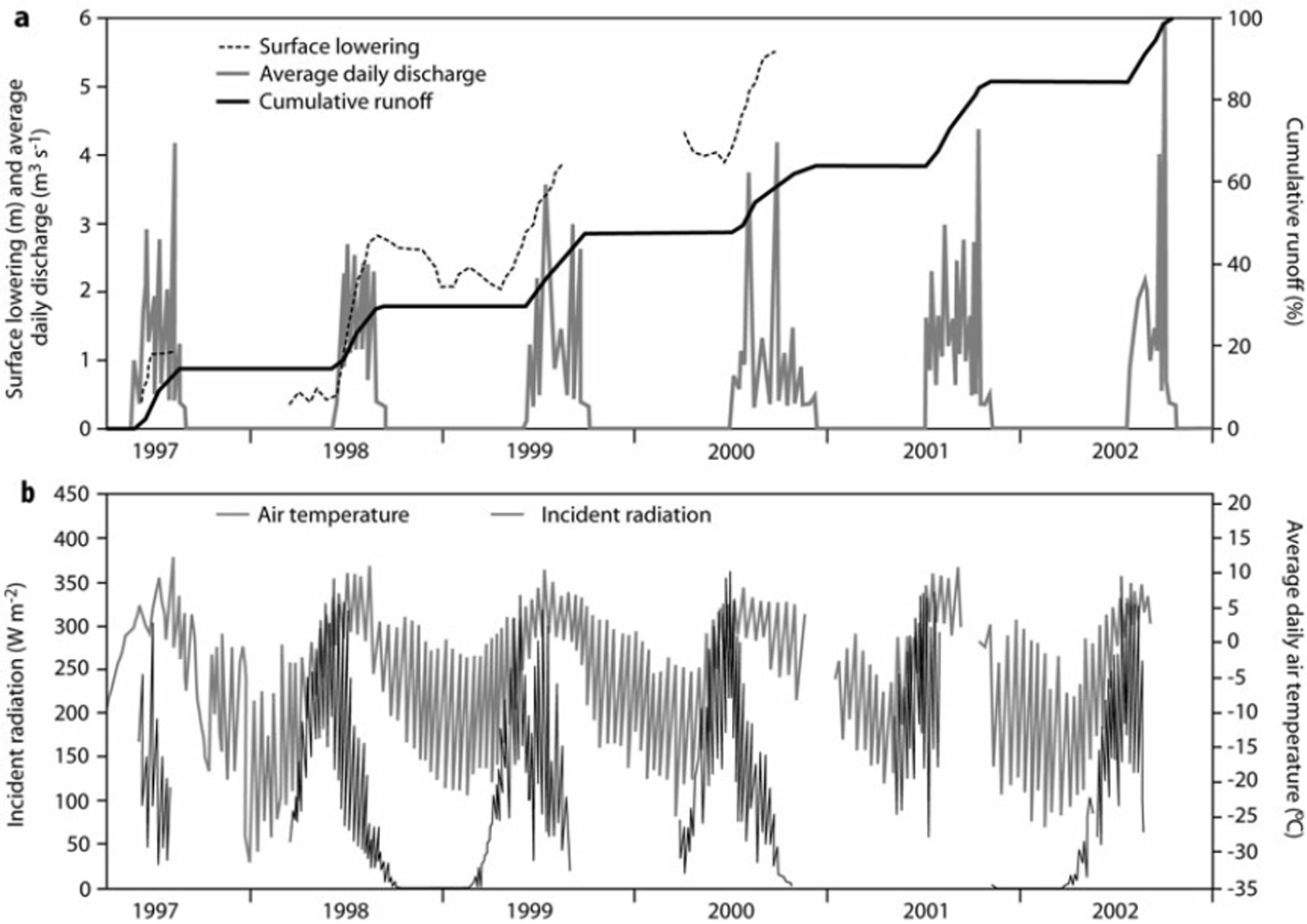
Figure 2 shows daily incident radiation and air temperature throughout the study, whilst Table 1 shows details of the meteorological conditions during the summer months. Mean daily air-temperature and relative humidity values peak during July, indicating the importance of humid maritime air advection during the summer. Variability in air temperature is inversely correlated with mean values because dynamic interactions between cold northeasterly and warmer southwesterly air masses are typically restricted during the summer periods (e.g. Reference Hodson, Gurnell, Washington, Tranter, Clark and HagenHodson and others, 1998). Precipitation is high during all summers and even exceeds winter accumulation in 2000. There is typically a steady increase in precipitation throughout the ablation season. In contrast, wind velocity was the most stable series throughout the observation period.
(a) Daily values of surface lowering at the automatic weather station, average runoff during summer and cumulative runoff. (b) Average air temperature and incident radiation at the automatic weather station.
Average daily meteorological conditions and total monthly precipitation for the interval 1997–2002 at the weather station (76 m) during summer. Also shown are 1 standard deviation and the number of days with available data (where relevant) in parentheses
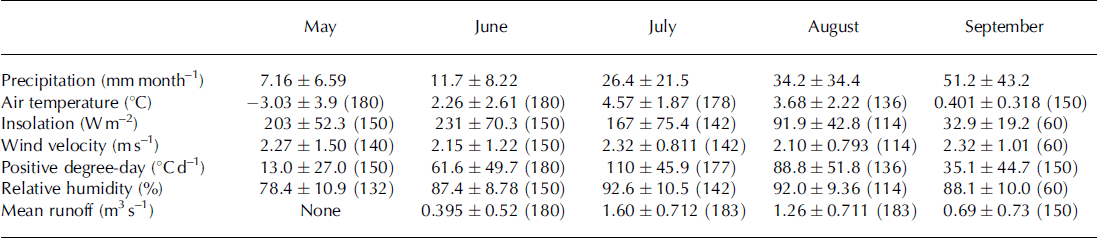
Table 2 shows that the energy balance during the ablation seasons over the lower parts of the glacier was dominated by the net shortwave radiation flux, as is common on many glaciers (e.g. Reference Willis, Arnold and BrockWillis and others, 2002). Thus, net shortwave radiation represented, on average, 76–100% of the total energy used to melt snow and ice, and was most dominant late in the ablation period when turbulent heat fluxes were smaller.
Mean daily heat fluxes (as mm d–1 w.e.) during melting conditions, and the percentage of energy supplied for melt by fluxes of sensible heat (SHF), latent heat (LHF) shortwave radiation (SWR) and longwave radiation (LWR)

Annual Water Balances and Subglacial Drainage
Table 3 shows the water-balance terms for each ablation season. Summer runoff yields were 1.1–1.5ma–1, reflecting significant contributions from summer precipitation (0.34– 0.69 m) and ablation (0.59–1.13 m). Surprisingly, there are years with significant residual water-storage terms (1997 and 2002 both show water retention within the catchment) that exceed our conservative error estimates. Water storage appears to have declined throughout the observation period and then risen sharply during 2002. A possible explanation of the storage phenomena is therefore sought below.
Water budget estimates, including winter accumulation (P acc), summer precipitation (P abl), condensation (C), evaporation (E), the net balance of the glacier (b n), runoff (Q) and storage (S). All terms are expressed as m a–1 and normalized for total catchment area. %Sub denotes the proportion of bulk runoff emerging from subglacial springs, and PDD the sum of positive degree-days in ˚C d–1 prior to the onset of subglacial runoff. Error estimates for DS are also included

Each summer, the emergence of subglacial drainage in the glacier forefield has a notable effect upon the chemistry and turbidity of the proglacial streams (Reference Hodson, Mumford, Kohler and WynnHodson and others, 2005; Reference Rippin, Willis, Arnold, Hodson and BrinkhausRippin and others, 2005). Detailed hydrochemical datasets are available for all principal streams and subglacial upwellings during the study period (sampled on a daily or 2 day basis), so a mixing model using dissolved Si as a basis for flow separation was used to estimate the quantity of runoff emerging via delayed subglacial flowpaths and faster supraglacial/ice-marginal routes (see Reference Rippin, Willis, Arnold, Hodson and BrinkhausRippin and others, 2005 for further details).
Table 3 shows that the proportion of summer runoff routed through the subglacial drainage network was 24–36% and showed a significant negative correlation with both the glacier’s net balance (r 2 = 0.56) and summer precipitation (r 2 = 0.79). Thus, high-runoff years are associated largely with more supraglacial and ice-marginal runoff, and proportionately less subglacial runoff. Table 3 also shows the cumulative sum of positive degree-days recorded at the weather station prior to the onset of subglacial runoff from the glacier. The data indicate a possible trend in the amount of energy required to establish subglacial runoff from the glacier each year, which we contend is related to conditions at the glacier bed rather than at the surface. This is because the cumulative positive degree-day sum prior to the onset of subglacial runoff increased significantly (p = 0.002) throughout the study period but was not significantly correlated with winter snow accumulation or average spring/early-summer air temperatures (a proxy for snowpack temperatures in the early melt period). Thus, a changing glacial drainage system and/or a change in the level of overwinter water storage within the existing system are required to explain the relationship between melting and the onset of subglacial runoff. Further, there is a significant negative correlation between term DS of the water balance in year x and the degree-day sum in year x+1 (r 2 = 0.79). This suggests that lower spring/early-summer surface energy inputs (and therefore meltwater inputs) are required to initiate subglacial runoff from the glacier when the volume of water stored over the winter period is relatively high. Such a relationship might indicate that initiation of subglacial drainage from the glacier is dependent upon the development of high water pressures within the glacier, and that such water pressures are more readily achieved when there is a large degree of water storage remaining within the system from the previous ablation season. This hypothesis is commensurate with geochemical observations of early subglacial water, which indicate prolonged storage (weeks to months) within an anoxic, geochemically reactive sedimentary environment (see Reference Hodson, Mumford, Kohler and WynnHodson and others, 2005). Such an environment is most likely to exist at the bed of the glacier rather than elsewhere in the catchment.
Discussion and Conclusions
Six years of meteorological and hydrological observations from midre Lovénbreen show that surface melting is achieved largely by a combination of net shortwave radiation and sensible-heat transfer in the glacier surface in the lower ablation area. These heat fluxes accounted for 80% and 13%, respectively, of all melting in the lower ablation area between 1997 and 2002. Latent-heat transfer, the next most important heat flux, accounted for only 6%. The corresponding meltwater yields were high, lying between 1.1 and 1.5 m a-1 , which was mostly snowmelt and summer precipitation, since glacier ice ablation only accounted for 0.013-0.42 m a-1.
The relationship between energy fluxes at the glacier surface and annual runoff is not simple and indicates that large volumes of water are stored within the glacier and that the volume of water stored varies from year to year (accounting for up to 0.47 ± 0.21 m a-1). High levels of overwinter water storage also appear to influence the development of the drainage system beneath the glacier during the early summer. Thus, summers with lower than expected runoff yields precede summers in which less melt is required to open the subglacial drainage system. A simple explanation might be that high water pressures are required to initiate subglacial runoff and that these are best achieved when early-season subglacial water pressures are already high due to internal water storage. This hypothesis is supported by geochemical observations because the first fractions of subglacial drainage to emerge each year have redox and major-ion chemistries that are diagnostic of prolonged contact with geochemically reactive sediments in an anoxic environment. Thus, although runoff may be expressed as a simple function of melt in glacier basins without extensive subglacial drainage (e.g. Reference Hagen, Kohler, Melvold and WintherHagen and others, 2003), we argue that this may not be the case in the majority of Svalbard glaciers where extensive parts of the glacier bed are at the pressure-melting point and able to support a subglacial drainage system.
Acknowledgements
Hodson acknowledges UK Natural Environment Research Council grant GR8/04339, the Nuffield Foundation’s Newly Appointed Lecturers Scheme, The Royal Society and the University of Sheffield. P. Jansson, R. Braithwaite and I. Willis are thanked for comments on the manuscript.



