





Introduction
Children who experienced early caregiving-related adversity are at elevated risk for diverse forms of psychopathology, including mood, anxiety, disruptive, and oppositional behavior problems (Brown et al., Reference Brown, Cohen, Johnson and Smailes1999; Cohen et al., Reference Cohen, Brown and Smailes2001; Green et al., Reference Green, McLaughlin, Berglund, Gruber, Sampson, Zaslavsky and Kessler2010; Juffer & van IJzendoorn, Reference Juffer and Van Ijzendoorn2005; LeMoult et al., Reference LeMoult, Humphreys, Tracy, Hoffmeister, Ip and Gotlib2020; Maclean, Reference MacLean2003; McLaughlin et al., Reference McLaughlin, Green, Gruber, Sampson, Zaslavsky and Kessler2012). Along with its deleterious effects on mental health, early caregiving-related adversity is also a risk factor for immune dysregulation (Danese & McEwen, Reference Danese and McEwen2012; Dutcher et al., Reference Dutcher, Pama, Lynall, Khan, Clatworthy, Robbins, Bullmore and Dalley2020; Slopen et al., Reference Slopen, Kubzansky, McLaughlin and Koenen2013) and cardiovascular disease (Doom et al., Reference Doom, Mason, Suglia and Clark2017; Shonkoff et al., Reference Shonkoff, Boyce and McEwen2009), which may operate through its effects on stress physiology (Kuhlman et al., Reference Kuhlman, Chiang, Horn and Bower2017). Though there are diverse forms of caregiving-related adversity, such as abandonment, death, surrender, or maltreatment and removal from biological caregivers, these experiences are distinct from non-interpersonal adversities (e.g., poverty) in their violation of expected developmental environments (e.g., nurturing and secure relationships with caregivers; Callaghan et al., Reference Callaghan, Meyer, Opendak, Van Tieghem, Harmon, Li, Lee, Sullivan and Tottenham2019) and unique impact on brain and behavioral outcomes (Vannucci et al., Reference Vannucci, Fields, Hansen, Katz, Kerwin, Tachida, Martin and Tottenham2023, Reference Vannucci, Fields, Heleniak, Bloom, Harmon, Nikolaidis, Douglas, Gibson, Camacho, Choy, Hadis, VanTieghem, Dozier, Milham and Tottenham2025). Nevertheless, not all children who experience early caregiving-related adversity will develop mental and physical health problems later in life (Leve et al., Reference Leve, Harold, Chamberlain, Landsverk, Fisher and Vostanis2012). Thus, the aim of the present study was to evaluate resilience-promoting dynamics between children and post-adoptive caregivers following early adversity exposure.
Following early caregiving-related adversity, establishment of stable and supportive caregiving arrangements, either via adoption or foster care, may attenuate adversity-related risks (Afifi & MacMillan, Reference Afifi and MacMillan2011; van IJzendoorn & Juffer, Reference Van IJzendoorn and Juffer2006). Experimental evidence demonstrated that children who experienced severe early deprivation and were subsequently randomized to foster care were less likely to exhibit internalizing problems and clinically significant psychopathology than their counterparts who remained in institutional care (King et al., Reference King, Guyon-Harris, Valadez, Radulescu, Fox, Nelson, Zeanah and Humphreys2023; Nelson et al., Reference Nelson, Zeanah, Fox, Marshall, Smyke and Guthrie2007; Zeanah et al., Reference Zeanah, Humphreys, Fox and Nelson2017; Wade et al., Reference Wade, Parsons, Humphreys, McLaughlin, Sheridan, Zeanah, Nelson and Fox2022). Alongside decrements in mental health risk, children who were randomized to receive foster care early in life demonstrated normalization of sympathetic and neuroendocrine stress response systems, whereas children who remained in institutional care exhibited blunted sympathetic and neuroendocrine (cortisol) responses to psychosocial stress (McLaughlin et al., Reference McLaughlin, Sheridan, Tibu, Fox, Zeanah and Nelson2015; Wade et al., Reference Wade, Parsons, Humphreys, McLaughlin, Sheridan, Zeanah, Nelson and Fox2022). Intervention studies also suggest therapeutic interventions for foster parents or parents who adopt youth internationally can support the normalization of diurnal cortisol patterns (Fisher et al., Reference Fisher, Stoolmiller, Gunnar and Burraston2007; Flannery et al., Reference Flannery, Gabard-Durnam, Shapiro, Goff, Caldera, Louie, Gee, Telzer, Humphreys, Lumian and Tottenham2017; Raby et al., Reference Raby, Bernard, Gordon and Dozier2020). In turn, reversing the neglect-hypocortisolism relationship may attenuate the contributions of blunted cortisol patterns to increased risk for physical (e.g., cancer, immune system activation, obesity) and mental health (e.g., depression, oppositional and externalizing problems) concerns (Adam et al., Reference Adam, Quinn, Tavernier, McQuillan, Dahlke and Gilbert2017; Ford et al., Reference Ford, Boch and Browning2019; Koss et al., Reference Koss, Hostinar, Donzella and Gunnar2014). Further, empirical evidence highlights the importance of the quality of the relationship between early adversity-exposed youth and their adoptive/foster caregivers. Higher-quality relationships (e.g., those characterized by parental sensitive responsiveness and secure attachment) with foster parents are associated with children’s reduced externalizing (Humphreys et al., Reference Humphreys, McGoron, Sheridan, McLaughlin, Fox, Nelson and Zeanah2015) and internalizing problems (McLaughlin et al., Reference McLaughlin, Green, Gruber, Sampson, Zaslavsky and Kessler2012) and normalization of cortisol stress reactivity (DePasquale et al., Reference DePasquale, Raby, Hoye and Dozier2018) and longer-term dynamics of cortisol production (Reindl et al., Reference Reindl, Schippers, Tenbrock, Job, Gerloff, Lohaus, Heinrichs and Konrad2022).
Caregiver–child interaction dynamics
Whereas research on post-adoptive caregiving typically relies on static and global assessment methods that capture the quality of the caregiver–child relationship, dynamic and micro-level approaches are needed to capture the processes by which caregivers and children sequentially influence each other during ongoing interactions. Historically, research on dynamic interaction processes has underscored maladaptive dyadic processes that precipitate and maintain youth externalizing problems (e.g., “coercive cycles”; Patterson et al., Reference Patterson, Dishion and Bank1984). Recent observational studies demonstrated that parents’ and their adolescents’ tendency to get “stuck” in negative affect or conflict behaviors (e.g., low levels of variability in emotions and conflict) is also associated with greater maternal and adolescent emotional (anxiety and depression) problems (Van Der Giessen et al., Reference Van der Giessen, Hollenstein, Hale, Koot, Meeus and Branje2015; Zhang et al., Reference Zhang, Buchanan, Piehler, Gunlicks-Stoessel and Bloomquist2022). These innovative studies illustrate that the dyad’s difficulty regulating emotions and behavior during conflict bears risk for each individual’s ability to regulate their emotions in other contexts (Van Der Giessen et al., Reference Van der Giessen, Hollenstein, Hale, Koot, Meeus and Branje2015; Zhang et al., Reference Zhang, Buchanan, Piehler, Gunlicks-Stoessel and Bloomquist2022). Yet, the responsibility for conflict resolution within the dyad is not equally borne: novel work suggests that when children are the ones to end the dyad’s conflicts, conflicts are more likely to escalate and persist for longer durations of time (Moed et al., Reference Moed, Gershoff, Eisenberg, Hofer, Losoya, Spinrad and Liew2015).
Whereas much theoretical and empirical attention has been paid to maladaptive interaction dynamics, parent–child interaction processes can also uplift both members of the dyad (Kochanska et al., Reference Kochanska, Kim and Boldt2015). According to theories of mutuality and reciprocity (Harrist & Waugh, Reference Harrist and Waugh2002; Kochanska, Reference Kochanska1997; Maccoby, Reference Maccoby1983, Reference Maccoby1992; Maccoby & Martin, Reference Maccoby, Martin, Mussen and Hetherington1983), parents’ responsiveness to their children’s needs and behavior facilitates children’s willing cooperation, which over time diminishes the need for parental coercion and enhances children’s receptivity to parental values (Kochanska, Reference Kochanska1997). In dyads characterized by a high degree of mutually responsive orientation, awareness of and attunement to each other’s emotional experiences and needs facilitates reciprocity, harmonious communication, and mutual cooperation (Aksan et al., Reference Aksan, Kochanska and Ortmann2006). Research on micro-level, moment-to-moment processes of dyadic interaction has similarly highlighted the importance of parents’ contingent responsiveness to their children’s behavior during social interactions for children’s developing stress response systems and mental health. Lack of maternal contingent responsiveness to their child’s needs is associated with adversity and confers risk for children: Relative to nonabusive mothers, mothers who perpetrated physical abuse of preschool-aged children engaged in fewer positive contingent transactions characterized by maternal autonomy support in response to children’s friendly autonomous behavior (Skowron et al., Reference Skowron, Loken, Gatzke-Kopp, Cipriano-Essel, Woehrle, Van Epps, Gowda and Ammerman2011). Further, for both abused and nonabused children, positive maternal contingent transactions predicted lower child parasympathetic functioning (Skowron et al., Reference Skowron, Loken, Gatzke-Kopp, Cipriano-Essel, Woehrle, Van Epps, Gowda and Ammerman2011), highlighting the importance of parents’ contingent responsiveness to their child’s behavior for children’s developing stress response systems. Likewise, research with preschool-aged children and their parents during challenging tasks demonstrated it was not the overall amount of positive maternal behaviors that was associated with child internalizing and externalizing behavior problems; rather; it was the dyadic coupling of maternal and child positive behavior that predicted reduced child behavior problems (Lunkenheimer et al., Reference Lunkenheimer, Ram, Skowron and Yin2017).
Although attachment and related socialization theories (Kochanska, Reference Kochanska1997; Maccoby, Reference Maccoby1983, Reference Maccoby1992; Maccoby & Martin, Reference Maccoby, Martin, Mussen and Hetherington1983) posit that children and their parents are bound in a system of reciprocity, positive contingent responsiveness is often assessed from a top-down perspective that focuses on how parents respond to their child’s behavior (Davidov et al., Reference Davidov, Knafo-Noam, Serbin and Moss2015). These unidirectional models are inconsistent with transactional perspectives on human development (Sameroff, Reference Sameroff1975), which explicitly include children’s capacity to influence their parents’ behavior, strategies, and personalities (De Mol & Buysse, Reference De Mol and Buysse2008; Schermerhorn & Cummings, Reference Schermerhorn and Cummings2003). Agentic child behavior is evident as early as infancy, reflected in children’s varying levels of confidence in both their exploration of the environment and belief that their signals to parents will elicit desired reactions (Ainsworth et al., Reference Ainsworth, Blehar, Waters and Wall1978), and remains important throughout the relationship. Child-led influences are especially important in middle childhood and across the transition to adolescence, as children enter into a “supervision partnership” with their caregivers characterized not only by the perceived availability and accessibility of the caregiver, but also by the child’s willingness to communicate about their plans, goals, and life events and both dyad member’s willingness to contribute to the decision-making process (Bowlby, Reference Bowlby1982; Koehn & Kerns, Reference Koehn and Kerns2021). Highlighting the influence that youth have on their parents, on average, among a community sample of families with children ages 7–13 years, during a conflict discussion, children’s prior constructive behavior predicted greater subsequent maternal constructive behavior (Sokolovic et al., Reference Sokolovic, Plamondon, Rodrigues, Borairi, Perlman and Jenkins2021), whereas mother’s prior constructive behavior was not predictive of their child’s subsequent constructive behavior (Sokolovic et al., Reference Sokolovic, Plamondon, Rodrigues, Borairi, Perlman and Jenkins2021). Though microanalytic work has begun to evaluate bidirectional contingent transactions between caregiver and child positive behavior that occur during daily interactions, it is not clear whether these patterns would be similar for adversity-exposed youth, who may have difficulty accessing parental support (Madigan et al., Reference Madigan, Brumariu, Villani, Atkinson and Lyons-Ruth2016), or what the correlates of positive contingent transactions are for adversity-exposed youth.
Current study aims
Parent–child conflict is an important context for evaluating processes of risk or resilience during middle childhood and adolescence, as children and their caregivers must negotiate children’s autonomy-striving with parent authority and efforts to socialize their children (Pinquart & Silbereisen, Reference Pinquart and Silbereisen2002; Smetana, Reference Smetana2011). Whereas frequent and intense conflict is associated with children’s poor mental and physical health (Repetti et al., Reference Repetti, Taylor and Seeman2002; Whitton et al., Reference Whitton, Waldinger, Schulz, Allen, Crowell and Hauser2008), mild conflict or disagreement can be functional, offering the opportunity for children and their caregivers to revisit responsibilities and appropriate behavior and promote problem-solving and socioemotional competence (Adams & Laursen, Reference Adams and Laursen2007; Laursen & Collins, Reference Laursen and Collins2009; Smetana et al., Reference Smetana, Campione-Barr and Metzger2006). During parent–child conflict in middle childhood and adolescence, dyads characterized by high degrees of mutual responsiveness and synchrony are expected to engage in shared authority and mutual decision-making (Chu & Powers, Reference Chu and Powers1995; Goffin et al., Reference Goffin, Boldt and Kochanska2018), which is reflected in open discussion and talking about feelings, attempts to reason and understand the other’s perspective, and efforts to provide support and improve the partner’s internal feeling states and to move the interaction toward a positive resolution (Coyne & Smith, Reference Coyne and Smith1991; Deutsch, Reference Deutsch1973; Sokolovic et al., Reference Sokolovic, Plamondon, Rodrigues, Borairi, Perlman and Jenkins2021; Zaki & Williams, Reference Zaki and Williams2013). Over time, the accumulation of reparative, positive experiences following conflict may strengthen ties between children and their caregivers (Lawler, Reference Lawler2001; Pietromonaco et al., Reference Pietromonaco, Greenwood and Barrett2004) and support children’s developing regulatory capacities and adaptive coping (Chu & Powers, Reference Chu and Powers1995; Goffin et al., Reference Goffin, Boldt and Kochanska2018; Granic et al., Reference Granic, O’Hara, Pepler and Lewis2007; Hollenstein et al., Reference Hollenstein, Lichtwarck-Aschoff and Potworowski2013).
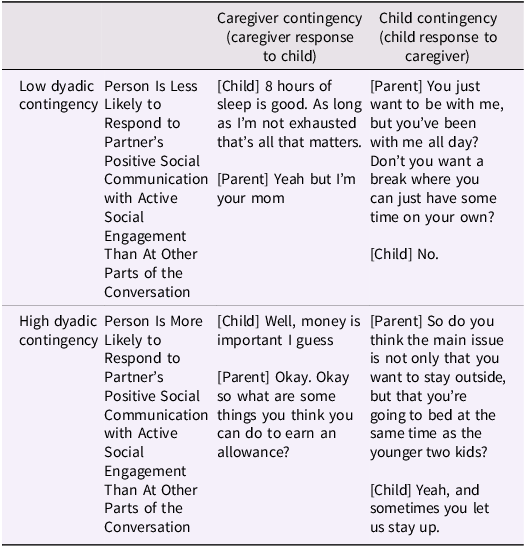
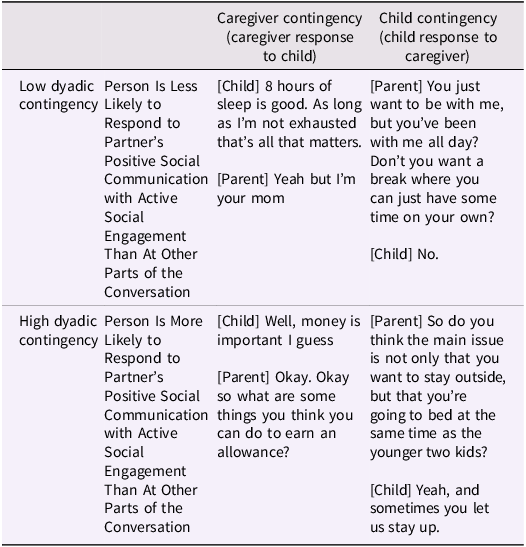
For children who are at-risk for poor mental and physical health due to early experiences of caregiving-related adversity, positive contingent transactions involving constructive conflict resolution behaviors may represent novel and specific health-promotive caregiver–child interaction sequences. Thus, the purpose of the present study was to evaluate whether positive dyadic contingencies, where one dyad member’s positive social communication is met with their partner’s active efforts to promote emotional understanding or regulation and/or problem-solve, buffer against adversity-related risk for poor child biobehavioral health. Specifically, guided by work on mutuality and reciprocity (e.g., Kochanska, Reference Kochanska1997; Maccoby & Martin, Reference Maccoby, Martin, Mussen and Hetherington1983), we hypothesized that (a) caregiver contingency (caregiver’s responding to child’s positive social communication behavior with active engagement) and (b) child contingency (children’s responding to their caregiver’s positive behavior with active engagement) between school-aged and adolescent youth and their adoptive caregivers (see Table 1 for examples) would attenuate the effects of early caregiving-related adversity exposure on youth mental health problems and blunted long-term cortisol production.
Examples of dynamics in families with low and high levels of caregiver and child contingency
Methods
Participants
The sample consists of 159 caregiver–child dyads from 112 families (see “Data Analytic Plan” for how clustering of child participants in families was handled) who participated in a videorecorded conflict discussion task as part of a broader study on the effects of early caregiving-related adversity on youth physical, cognitive, and emotional development, the Mind, Brain, and Body study. Two families who participated in the broader study but did not adhere to interaction task instructions were not included in the present analyses. Parents were eligible to participate in the Mind, Brain, and Body if they were aged 18 years or older, had at least one child between 6 and 16 years of age, and could read and write in English. The University of California, Los Angeles (UCLA) IRB approved all study procedures prior to study inception.
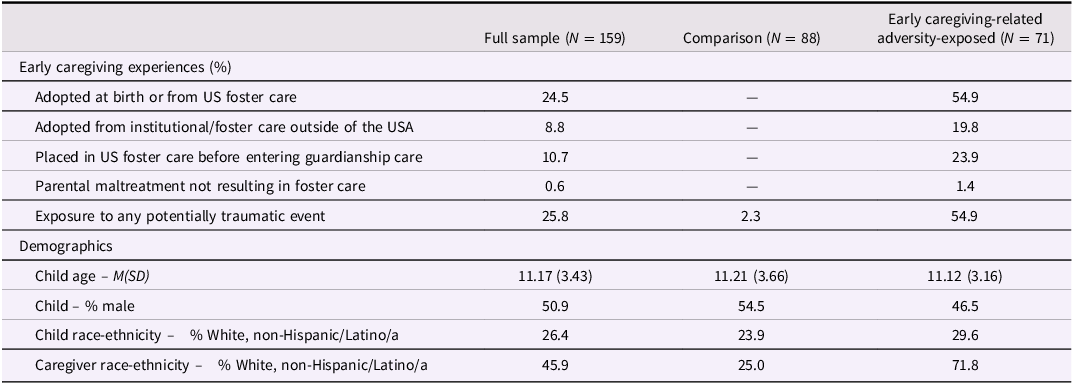
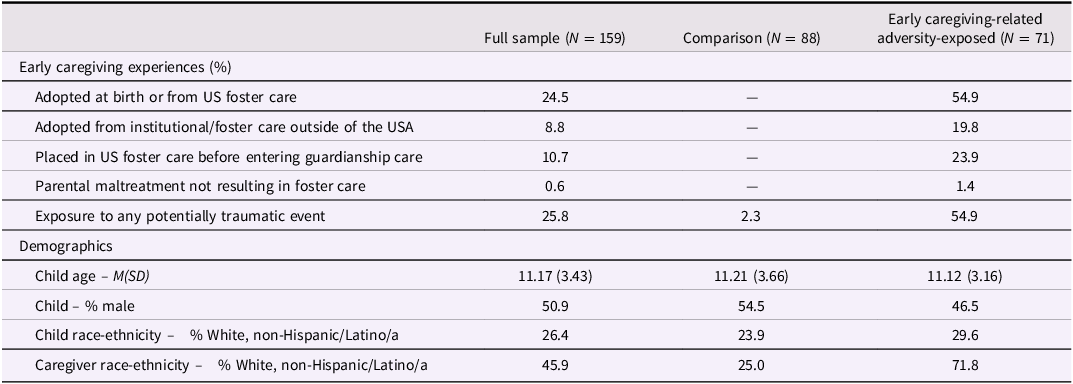
Families were recruited based on youth exposure to significant early life caregiving-related adversity. Half of the children in the sample lived continuously with their biological parents and had never experienced maltreatment (Comparison group; n = 88; 55.3%); the other half of the children experienced removal or surrender from their biological parents’ care (Caregiving-related Early Adversity [crEA] group (N = 71; 44.7%) and were now in stable care arrangements. Specifically, children in the crEA group must have met at least one of the following conditions: been adopted internationally from institutional or foster care; been adopted domestically from foster or kinship care; be in guardianship care with a non-biological caregiver (kinship care or foster parent); have had extensive separation from a primary caregiver for other reasons (e.g., parental incarceration); and/or have been exposed to significant maltreatment by a caregiver. Half of children in the crEA group entered stable care by two years (M = 3.27 years, SD = 3.36 years), and all children in the crEA group were now in stable care arrangements, allowing us to assess whether positive interaction dynamics with stable caregivers (e.g., through adoption or guardianship) can attenuate the adverse effects of early life caregiving-related adversity. Most parents enrolled one child in the study; the average number of children enrolled was 1.4 (range: 1–5). Sample characteristics are shown in Table 2.
Sample characteristics
Recruitment
Families were recruited through multiple methods, including flyers in community centers, street fairs and community gathering events, referrals from community organizations, and online advertising. Families who expressed interest in participating were contacted for a brief telephone interview to assess eligibility. Exclusion criteria included lack of fluency in the English language, uncorrected vision, and parent- or youth-report of youth mental health concern or disability that would interfere with their ability to comply with study procedures.
Procedure
After caregivers provided informed consent and children assented to study procedures, children and their parents completed an assessment including questionnaires and a videorecorded parent–child conflict discussion task. During the 6-min discussion task, dyads were given 1 min to select area(s) of conflict from the Issues Checklist (Prinz et al., Reference Prinz, Foster, Kent and O’Leary1979) and were then asked to spend 5 min discussing these source(s) of conflict and to generate solutions. Data were collected from December 2019 to March 2022. Following the onset of the global COVID-19 pandemic, data collection took place remotely over Zoom, while families were in their homes; prior to the pandemic, data collection occurred in the laboratory at UCLA (n = 27; 17%).
Measures
Microcoded caregiver and child behavior
Caregiver and child behavior were coded with the microFIMS coding system (Somers et al., Reference Somers, Querdasi, Aghajani, Sun, Xu, Li, Nussbaum, Chu, Gancz, Towner and Callaghan2025), which consists of six binary, mutually exclusive and exhaustive codes: two potentially constructive (positive social communication and active social engagement) and four potentially destructive (off-task, withdrawn, non-autonomous behaviors that reflect a lack of self-efficacy or autonomy in coping with role or task demands, and rejecting behavior) codes, applied separately to each caregiver and child speech act. Open-source coding manual and training materials can be found at https://auburnflowerlab.wixsite.com/the-flower-lab/researchers. A neutral behavior code was applied for behaviors that were below the threshold for coding criteria or did not meet any criteria for these codes. An “uncodable” code was applied when the participant’s speech was unintelligible (e.g., due to recording quality or low or unclear utterances), the participant’s behavior could not be clearly discerned (e.g., the participant moved out of camera view), or the participant spoke in a language other than English. One caregiver code and one child code were applied to each 1-s epoch of the videorecorded conflict discussion, resulting in two 360-epoch-long time series of parent and child behavior during the 6-min interaction. All coding was conducted in the open source software ELAN (ELAN, 2025).
Undergraduate female coders completed approximately 85 hours of certification training over 13 weeks, prior to coding the videorecorded interactions. Undergraduate coders were required to achieve a minimum κ = .60 on each video and minimum average κ = .65 against the primary manual developer before coding for the present study. Following this training period, two teams of two certified coders double-coded each videorecorded conflict discussion task. Coders were not aware of child adversity exposure. Coders were instructed to code in a fixed order, with caregiver behavior coded prior to child behavior, to minimize the potential impact of carryover effects. Agreement on codes and kappa were checked weekly, and weekly meetings were held to discuss interactions that were difficult to watch or code and to minimize coder drift. On average, κ was 0.78 (SD = 0.16) for parents and 0.79 (SD = 0.14) for children. In addition to high interrater reliability, prior work supports the construct validity of the microFIMS coding system (Somers et al., Reference Somers, Querdasi, Aghajani, Sun, Xu, Li, Nussbaum, Chu, Gancz, Towner and Callaghan2025).
Operationalization of dyadic contingency. The present investigation focused on dyadic contingencies involving two types of potentially constructive behavior: “positive social communication” and “active social engagement.” Positive social communication refers to behaviors that broadly reflect an emotional climate characterized by warmth and responsiveness (e.g., active listening behaviors, being nondefensive when others disagree, expressing warmth and supportiveness through verbal or nonverbal means). Active social engagement refers to specific emotion-related behaviors that require active efforts to coach or guide emotional understanding and regulation and scaffold problem-solving (e.g., elaboration or clarification of an opinion, communication of one’s independent thinking while recognizing the other person’s point of view, statements that support working toward a shared understanding or new perspective). Using Generalized Sequential Querier 5.1.23 (Bakeman & Quera, Reference Bakeman and Quera2016), we conducted time-lag sequential analyses to evaluate whether the presence of positive social communication behavior in one dyad member increased the probability that their partner would engage in active social engagement behavior in the next moment. Analyses were calculated at lag-1, reflecting the next immediate behavior occurring following the “given” behavior of interest (consistent with prior work; e.g., Skowron et al., Reference Skowron, Loken, Gatzke-Kopp, Cipriano-Essel, Woehrle, Van Epps, Gowda and Ammerman2011; Williams et al., Reference Williams, Kertz, Schrock and Woodruff-Borden2012). Contingencies were only calculated if the dyad met a minimum base rate of five observations per interaction to ensure observed frequencies were reliable (Bakeman & Quera, Reference Bakeman and Quera2011), consistent with prior work examining dyadic contingencies during conflict resolution (e.g., Ferrar et al., Reference Ferrar, Stack, Baldassarre, Orsini and Serbin2021). For each family, we calculated Yule’s Q values for (a) the caregiver’s responding to the child’s positive social communication behavior with active engagement (i.e., caregiver contingency) and (b) the children’s responding to their caregiver’s positive social communication behavior with active engagement (i.e., caregiver contingency). Yule’s Q is a measure of the effect size of the time-lagged sequential associations, with possible values ranging from -1 (a negative relationship where active social engagement is less likely to occur following positive social communication) to 1 (a positive relationship where active social engagement is more likely to occur following positive social communication).
Caregiver and youth mental health
Caregivers reported on their depressive symptoms using the well-validated Beck Depression Inventory (BDI-II; Beck et al., Reference Beck, Steer and Brown1996). Caregivers responded to 20 items using a 4-point scale from 0 to 3; higher scores correspond to more severe depressive symptoms. One item regarding suicidality was omitted from the original scale for ethical reasons due to the inability to respond to active suicidality in this sample. Internal consistency of the scale (a conservative estimate of scale reliability) was good (Cronbach’s α = .84). Following common procedures, a mean of responses was obtained and used in primary analyses.
Caregivers reported on their child’s mental health symptoms using the Diagnostic and Statistical Manual of Mental Disorders (DSM)-oriented depressive/affective, anxiety, attention-deficit/hyperactivity disorder (ADHD), oppositional defiant (ODD), and conduct disorder (CD) subscales of the widely used Child Behavior Checklist (CBCL/6–18; Achenbach, Reference Achenbach and Kazdin2000). Caregivers responded to each item on a 3-point scale from 0 to 2; higher scores correspond to more frequent problems. In the present study, two items regarding suicidality were omitted from the affective/depressive scale for the reasons outlined above; in addition, four items were accidentally omitted, including from the depressive/affective (little interest in activities), ADHD (fails to finish, inattentive), and CD (breaks rule) subscales. Internal consistency of each scale was good (Cronbach’s α depressive/affective = .80; α anxiety = .83; α ADHD = 0.82; α ODD = 0.82; α CD = 0.84). A mean of responses for each DSM subscale was obtained and used in primary analyses.
Youth hair cortisol concentration
Total cortisol production as reflected in hair reflects cumulative hormone secretion over an extended period of time and is less influenced by diurnal and situational factors than other methods of assessment (e.g., Stalder et al., Reference Stalder, Steudte, Miller, Skoluda, Dettenborn and Kirschbaum2012; Steudte-Schmiedgen et al., Reference Steudte-Schmiedgen, Kirschbaum, Alexander and Stalder2016). Hair cortisol concentrations were assayed from 3 cm hair samples. Research assistants, along with help from a caregiver, helped child participants obtain three hair samples from underneath the crown of the head and close to the root. Samples were either collected in the laboratory and stored at −20 Celsius or collected at home, stored at room temperature, and mailed to the lab (depending on whether the study was conducted in the laboratory or remotely). All samples were shipped at ambient temperature to the Meyer lab; sample processing and analysis was conducted according to methods described in Gancz et al. (Reference Gancz, Querdasi, Chu, Towner, Taylor and Callaghan2024). Intra- and inter-assay coefficients of variation for this assay were both <10%.
Potential covariates
Given a robust literature that sociodemographic characteristics can influence parent–child interaction dynamics and mental health, potential covariates included caregiver-reported child race and ethnicity, caregiver and child gender, child age, and whether families participated in the study in-person, pre-pandemic, or over Zoom during the COVID-19 pandemic. We also evaluated whether primary variables differed depending on the proportion of time caregiver and child spent engaged in positive social communication and active social engagement behavior. Finally, given the caregivers’ own mental health may influence both dyadic contingencies and caregivers’ perceptions of their child’s mental health, we covaried youth outcomes with caregivers’ self-reported depressive symptoms.
Data analytic plan
Primary analyses included evaluation of multivariate regression equations conducted in a structural equation modeling framework in MPlus v. 8.11 using full information maximum likelihood estimation with cluster-robust standard errors, which adjusts for nonindependence due to clustering of child participants within families. Models statistically adjusted for the effects of covariates on outcomes; in the interest of model parsimony, only covariates that remained statistically significant in final models were retained. Outcomes were allowed to covary. Separate models were conducted for parent and child contingency. All models were fully saturated. All continuous predictors were grand mean-centered prior to analysis. Unstandardized estimates are reported. Statistically significant interaction effects (p < .05) were evaluated at below average ( −1 SD) and above average ( +1 SD) levels of dyadic contingency. We also evaluated the regions of significance on dyadic contingency for the regression of health outcomes on CrEA, using an online web utility (Preacher et al., Reference Preacher, Curran and Bauer2006).
Transparency and openness
Our aims and hypotheses were not preregistered. Sample size was determined by the parent study, the Mind, Brain, and Body study. There is no widely accepted method for calculating power and sample size for sequential analysis (Bakeman & Gottman, Reference Bakeman and Gottman1997). We used G*Power to estimate the sample size for moderation. Interaction effects tend to produce increments in R2 between .01 to .03 (Chaplin, Reference Chaplin1991; Jaccard & Wan, Reference Jaccard and Wan1995), which we used as a basis for our power analysis. For a situation where the lower-order terms and covariates account for 20% of the total variation and the interaction accounts for an additional 3%, results indicate that a sample size of N = 159 would produce power = 0.70, and a sample size of N = 204 would produce power = 0.80. Due to participant privacy concerns, the raw data are not available; processed data are available at https://osf.io/hbsq9/?view_only=cec56b32c6174fdcaf0c220c5976c501. We report how we determined our sample size, all data exclusions, all manipulations, and all measures in the study. The analytic code necessary to reproduce the primary analyses is available at https://osf.io/hbsq9/?view_only=cec56b32c6174fdcaf0c220c5976c501.
Results
Preliminary analyses
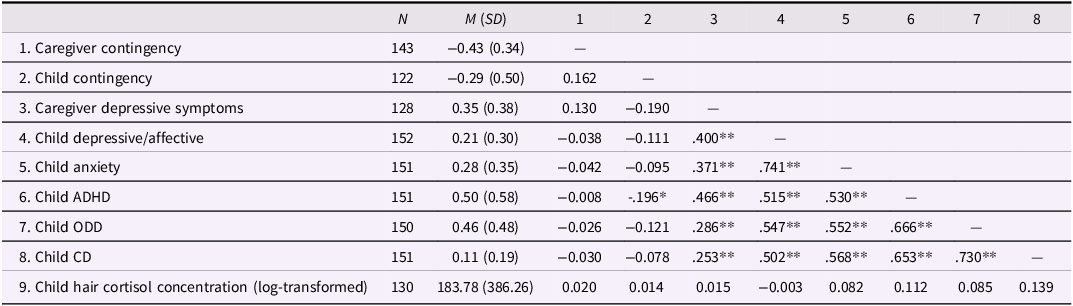
Descriptive statistics. Descriptive statistics and bivariate correlations among primary study variables are shown in Table 3. Results of pooled time-lagged sequential analyses are shown in Supplementary Table 1. Bivariate correlations by crEA status are presented in Supplementary Table 2. Values of hair cortisol concentration were skewed and kurtotic, consistent with prior work (e.g., Gancz et al., Reference Gancz, Querdasi, Chu, Towner, Taylor and Callaghan2024); thus, the values were log-transformed to restore normality, and natural log-transformed values were used in all analyses. All other study variables were normally distributed. Among the full sample and in each subsample, caregiver and child contingency were not significantly correlated with each other. Among the full sample, child contingency was negatively associated with child ADHD symptoms, and in the crEA subsample only, child contingency was negatively associated with child depressive/affective symptoms, ADHD symptoms, and ODD symptoms.
Descriptive statistics and bivariate correlations among primary study variables
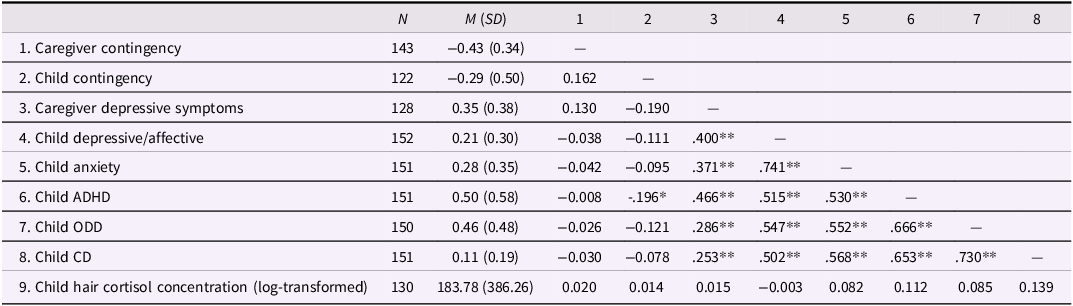
Note. ADHD = attention-deficit/hyperactivity disorder; ODD = oppositional defiant; CD = conduct disorder. *p < .05. **p < .01.
Results of independent samples t-tests indicated that caregivers of crEA-exposed youth reported their children had statistically more depressive symptoms, anxiety symptoms, ADHD symptoms, ODD symptoms, and CD symptoms than comparison youth, all p’s < .001. There were no statistically significant differences based on crEA in parent contingency, child contingency, parent depressive symptoms, or youth hair cortisol concentration, all p’s >0.21 (see Supplementary Table 3).
Covariate selection. Based on their associations with levels of and/or missingness on primary study variables, child age and sex, in-person status, and the proportion of time spent in child positive social communication, child active social engagement, and caregiver active social engagement were considered as potential covariates in all analyses (see Supplementary Materials). Only covariates that remained statistically significant in final analyses were retained.
Primary results
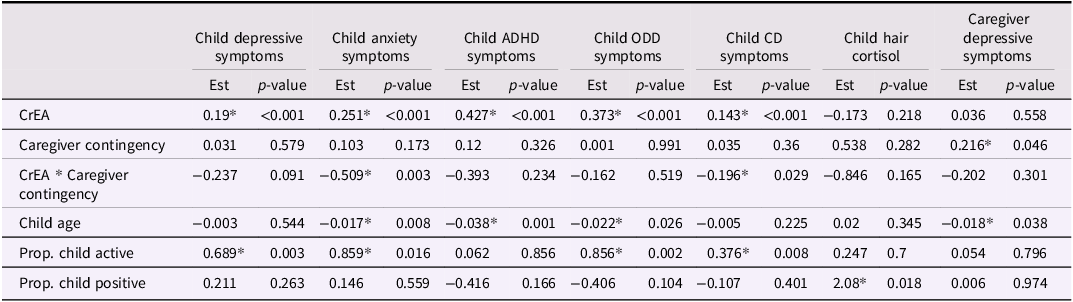
Aim 1. Associations between caregiver contingency, early caregiving-related adversity exposure, and their interaction on child biobehavioral health. To test Aim 1, we conducted a path model where early caregiving-related adversity exposure, caregiver contingency, and their interaction predicted children’s mental health symptoms and hair cortisol concentration and parents’ depressive symptoms, after adjusting for covariates (proportion of time the child spent in positive social communication behavior, proportion of time the child spent in active social engagement behavior, and child age). Full model results are presented in Table 4.
Regression analyses predicting child and parent mental health from early life caregiving-related adversity exposure, caregiver contingency, and their interaction
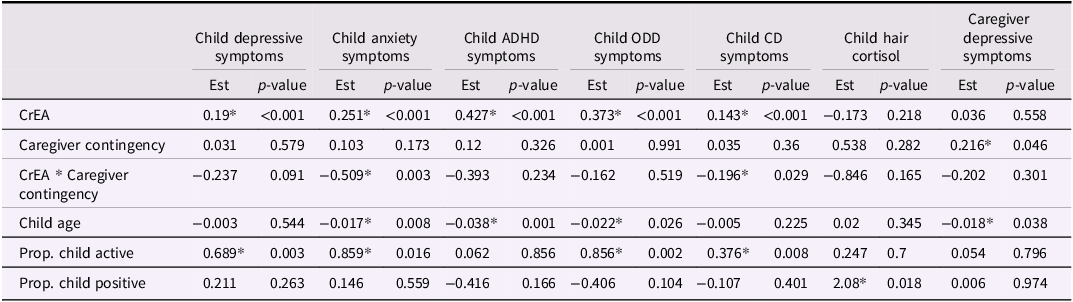
Note. ADHD = attention-deficit/hyperactivity disorder; ODD = oppositional defiant; CD = conduct disorder; crEA = Caregiving-related Early Adversity. Unstandardized estimates are presented. * p < .05. Covariances between exogenous variables not shown for visuality. CrEA was positively associated with prop. child positive. Prop. child active was positively associated with child age.
Covariances between endogenous variables not shown for visual clarity. Hair cortisol was negatively associated with ODD and CD symptoms. Child depressive symptoms were positively associated with anxiety, ADHD, ODD, and CD symptoms and caregiver depressive symptoms. Anxiety symptoms were positively associated with ADHD, ODD, CD, and caregiver depressive symptoms. ADHD symptoms were positively associated with ODD, CD, and caregiver depressive symptoms. ODD symptoms were positively associated with CD and caregiver depressive symptoms. CD symptoms were positively associated with caregiver depressive symptoms.
CrEA was associated with more child depressive symptoms, anxiety symptoms, ADHD symptoms, ODD symptoms, and CD symptoms (all p’s < .001). Caregiver contingency was surprisingly positively associated with parent depressive symptoms, Est = 0.216, SE Est = 0.108, p = 0.046. The associations between crEA and child anxiety and CD symptoms were each qualified by statistically significant interaction effects between crEA and parent contingency (described below).
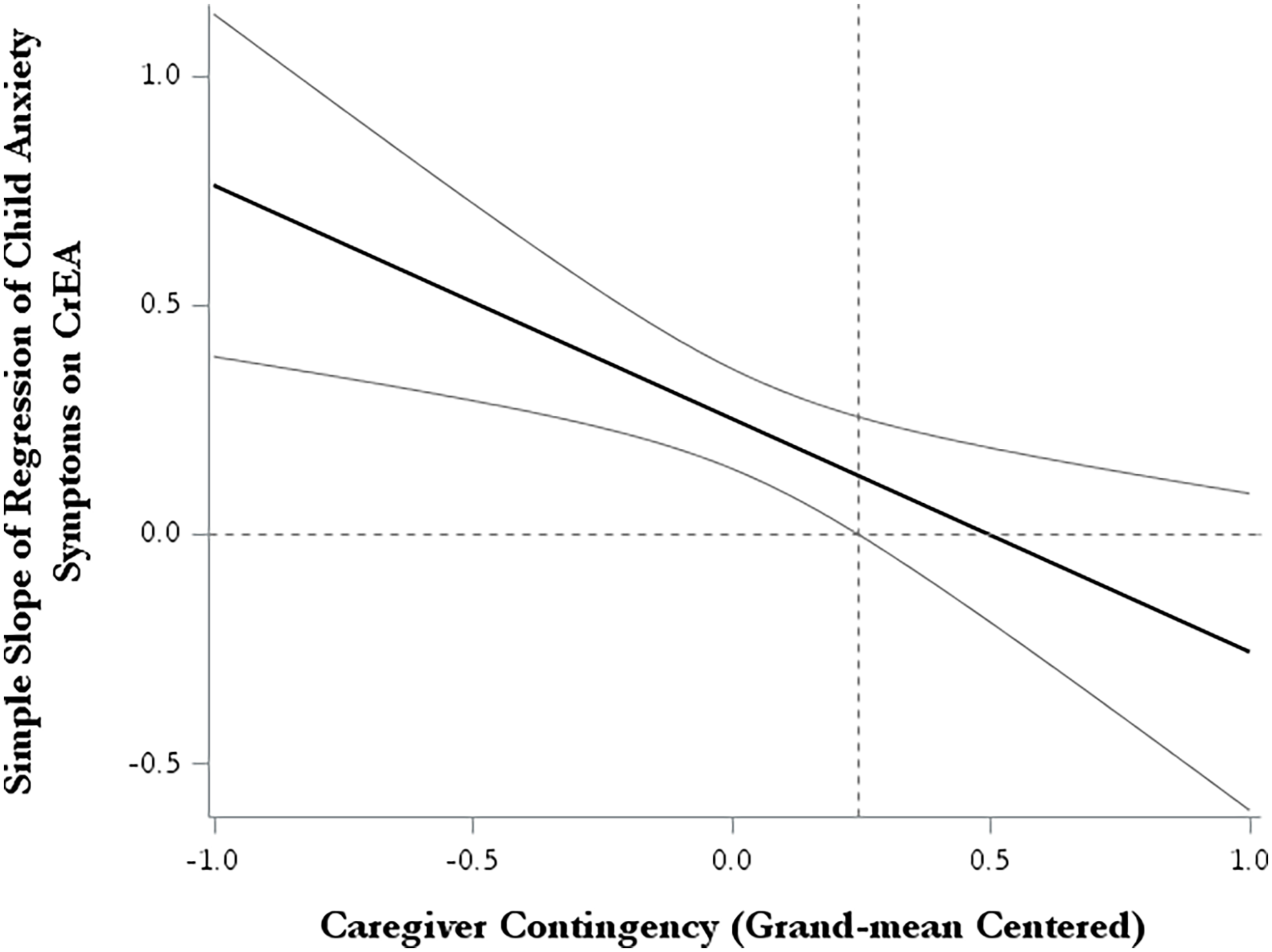
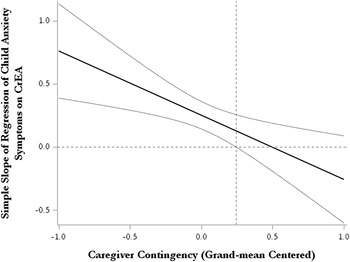
Interactive effects on child mental health problems. The association between CrEA and child anxiety symptoms was qualified by a statistically significant interaction effect between CrEA and caregiver contingency, Est = −0.509, SE Est = 0.173, p = 0.003. At low (Est = 0.426, SE Est = 0.089, p = 0.000) and average (Est = 0.251, SE Est = 0.057, p = 0.000) levels of caregiver contingency, there was a statistically significant positive effect of CrEA on anxiety symptoms. However, this effect was attenuated at high levels of caregiver contingency (Est = 0.076, SE Est = 0.080, p = 0.34). Results of regions of significance analysis indicated that there was a statistically significant positive association between CrEA and youth anxiety symptoms among families who had less than −0.19 on caregiver contingency (78.3% of the sample); there was not a significant association between CrEA and youth anxiety symptoms among families who had greater than -0.19 on caregiver contingency (see Figure 1).
Region of significance on caregiver contingency of the effect of early life adversity on child anxiety. Note. The region of significance is demarcated by the vertical line. Slopes in which the 95% confidence interval does not contain 0 are considered statistically significant.
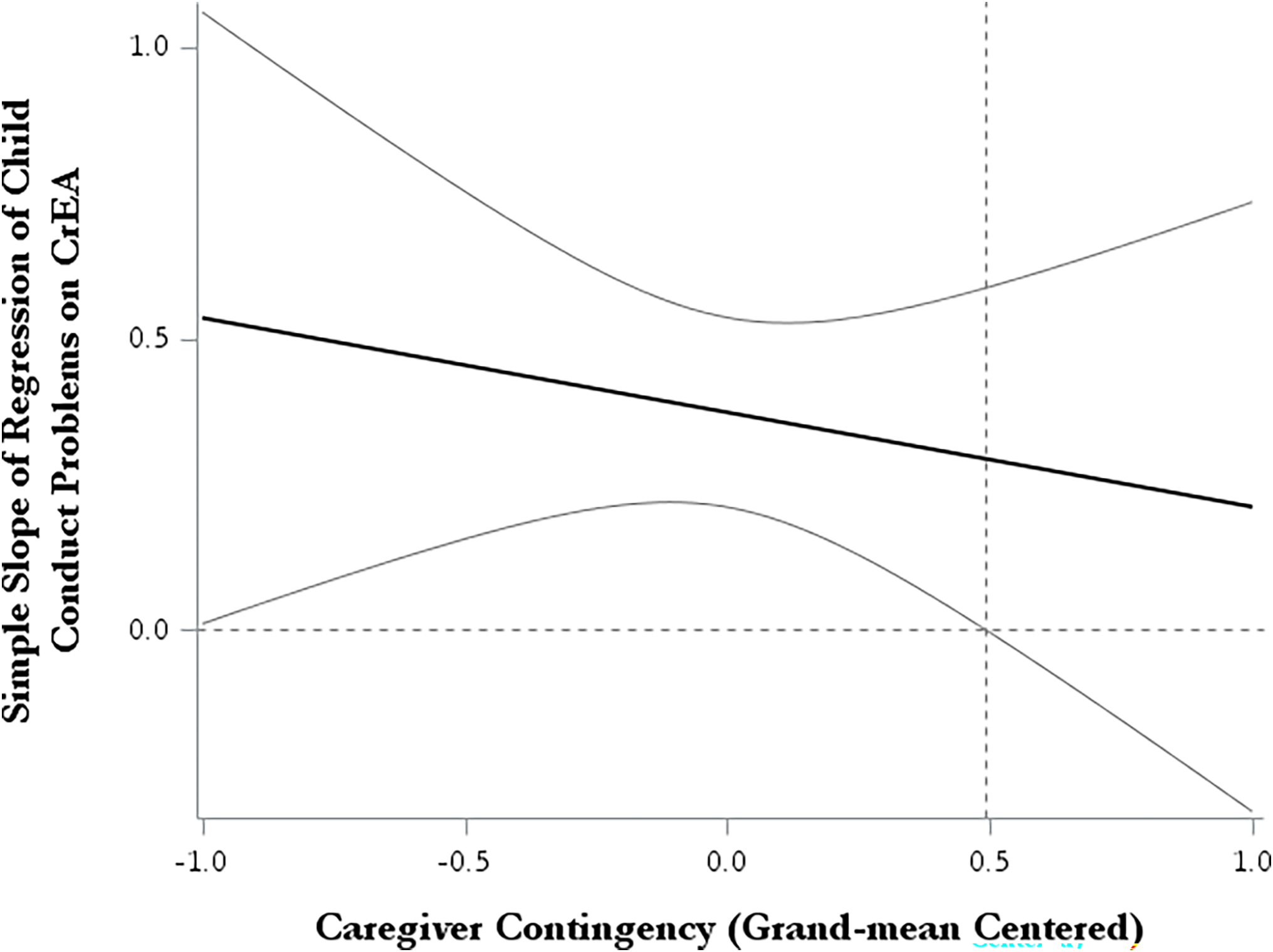
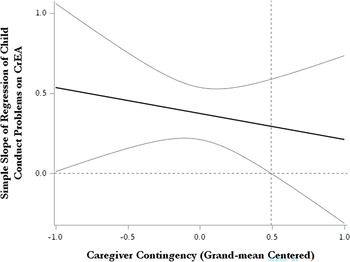
Similarly, the association between CrEA and child CD symptoms was qualified by a statistically significant interaction effect between CrEA and caregiver contingency, Est = −0.196, SE Est = 0.090, p = 0.029. At low (Est = 0.211, SE Est = 0.046, p <0.001) and average (Est = 0.144, SE Est = 0.033, p <0.001) levels of caregiver contingency, there was a statistically significant positive effect of CrEA on CD symptoms. However, this effect was attenuated at high levels of caregiver contingency (Est = 0.076, SE Est = 0.045, p = 0.09). Regions of significance analysis indicated that there was a statistically significant positive association between CrEA and youth CD symptoms among families who had less than 0.06 on parent contingency (90.2% of the sample); there was not a significant association between CrEA and youth anxiety symptoms among families who had greater than 0.06 on caregiver contingency (see Figure 2).
Region of significance on caregiver contingency of the effect of early life adversity on child conduct problems. Note. The region of significance is demarcated by the vertical line. Slopes in which the 95% confidence interval does not contain 0 are considered statistically significant.
Covariate effects. Surprisingly, the proportion of time children spent engaged in positive social communication was positively associated with hair cortisol, Est = 2.08, SE Est = 0.879, p = 0.018. Similarly, the proportion of time children spent engaged in active social engagement was positively associated with their depressive symptoms, Est = 0.689, SE Est = 0.234, p = 0.003; anxiety symptoms, Est = 0.859, SE Est = 0.358, p = 0.016; ODD symptoms, Est = 0.856, SE Est = 0.271, p = 0.002; and CD symptoms, Est = 0.376, SE Est = 0.142, p = 0.008. Child age was negatively associated with anxiety symptoms, Est = −0.017, SE Est = 0.006, p = 0.008; ADHD symptoms, Est = −0.038, SE Est = 0.012, p = 0.001; ODD symptoms, Est = −0.022, SE Est = 0.010, p = 0.026; and caregiver depressive symptoms, Est = −0.018, SE Est = 0.009, p = 0.038.
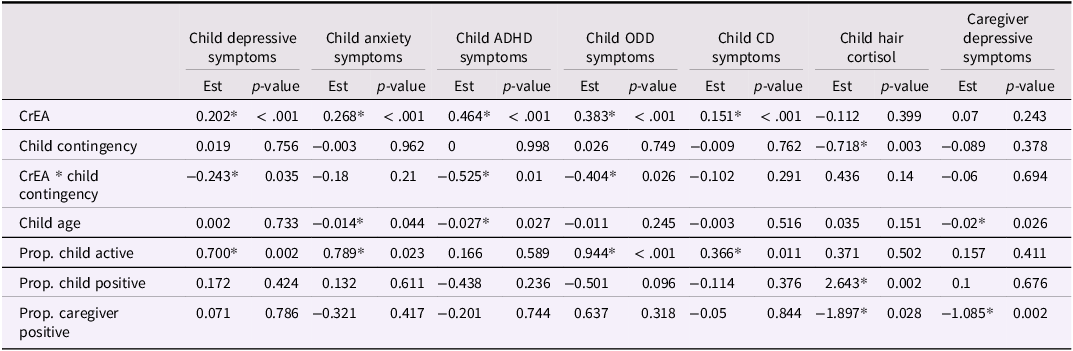
Aim 2. Associations between child contingency, early caregiving-related adversity exposure, and their interaction on child biobehavioral health. To test Aim 2, we conducted a path model where early caregiving-related adversity exposure, child contingency, and their interaction predicted children’s mental health symptoms and caregivers’ depressive symptoms, after adjusting for covariates (proportion of time the child spent in positive social communication behavior, proportion of time the caregiver spent in positive social communication behavior, proportion of time the child spent in active social engagement behavior, and child age). Full model results are presented in Table 5.
Regression analyses predicting child and parent mental health from early life caregiving-related adversity exposure, child contingency, and their interaction
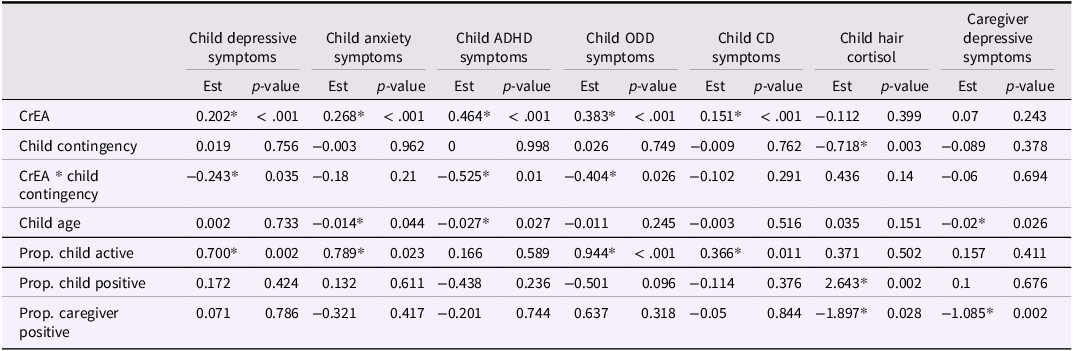
Note. ADHD = attention-deficit/hyperactivity disorder; ODD = oppositional defiant; CD = conduct disorder; crEA = Caregiving-related Early Adversity. Unstandardized estimates are presented. * p < .05. Covariances between exogenous variables not shown for visuality. CrEA was positively associated with prop. Child positive and prop. caregiver positive. Prop. child positive was negatively associated with child age and positively associated with prop. caregiver positive.
Covariances between endogenous variables not shown for visual clarity. Hair cortisol was negatively associated with ODD and CD symptoms. Youth depressive symptoms were positively associated with anxiety, ADHD, ODD, and CD symptoms and caregiver depressive symptoms. Anxiety symptoms were positively associated with ADHD, ODD, CD, and caregiver depressive symptoms. ADHD symptoms were positively associated with ODD, CD, and caregiver depressive symptoms. ODD symptoms were positively associated with CD and caregiver depressive symptoms. CD symptoms were positively associated with caregiver depressive symptoms.
CrEA was associated with more child depressive symptoms, anxiety symptoms, ADHD symptoms, ODD symptoms, and CD symptoms (all p’s < .001). Child contingency was associated with lower child hair cortisol concentration, Est = −0.718, SE Est = 0.240, p = 0.003. The associations between crEA and child depressive symptoms, ADHD, and ODD symptoms were each qualified by statistically significant interaction effects between crEA and child contingency (described below).
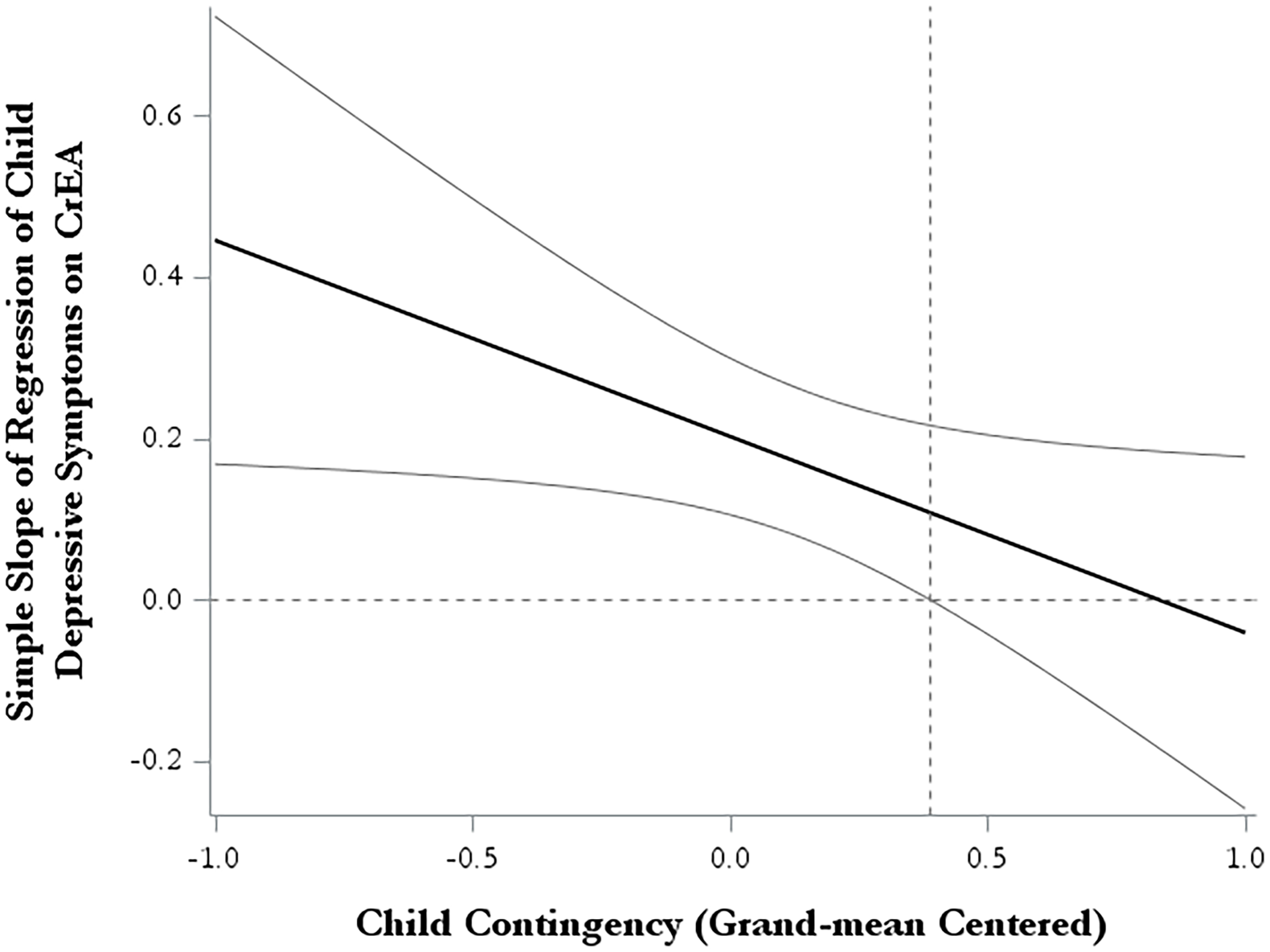
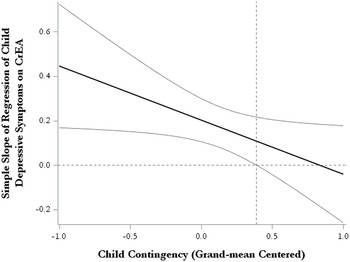
Interactive effects on child mental health problems. The association between CrEA and child depressive symptoms was qualified by a statistically significant interaction effect between CrEA and child contingency, Est = −0.243, SE Est = 0.116, p = 0.035. At low (Est = 0.321, SE Est = 0.087, p <0.001) and average (Est = 0.198, SE Est = 0.048, p <0.001) levels of child contingency, there was a statistically significant positive effect of CrEA on depressive symptoms. However, this effect was attenuated at high levels of child contingency (Est = 0.076, SE Est = 0.060, p = 0.20). Regions of significance analysis indicated there was a statistically significant positive association between CrEA and youth depressive symptoms among families who had less than 0.10 on child contingency (77.0% of the sample); there was not a significant association between CrEA and youth depressive symptoms among families who had greater than 0.10 on child contingency (see Figure 3).
Region of significance on child contingency of the effect of early life adversity on child depressive symptoms. Note. The region of significance is demarcated by the vertical line. Slopes in which the 95% confidence interval does not contain 0 are considered statistically significant.
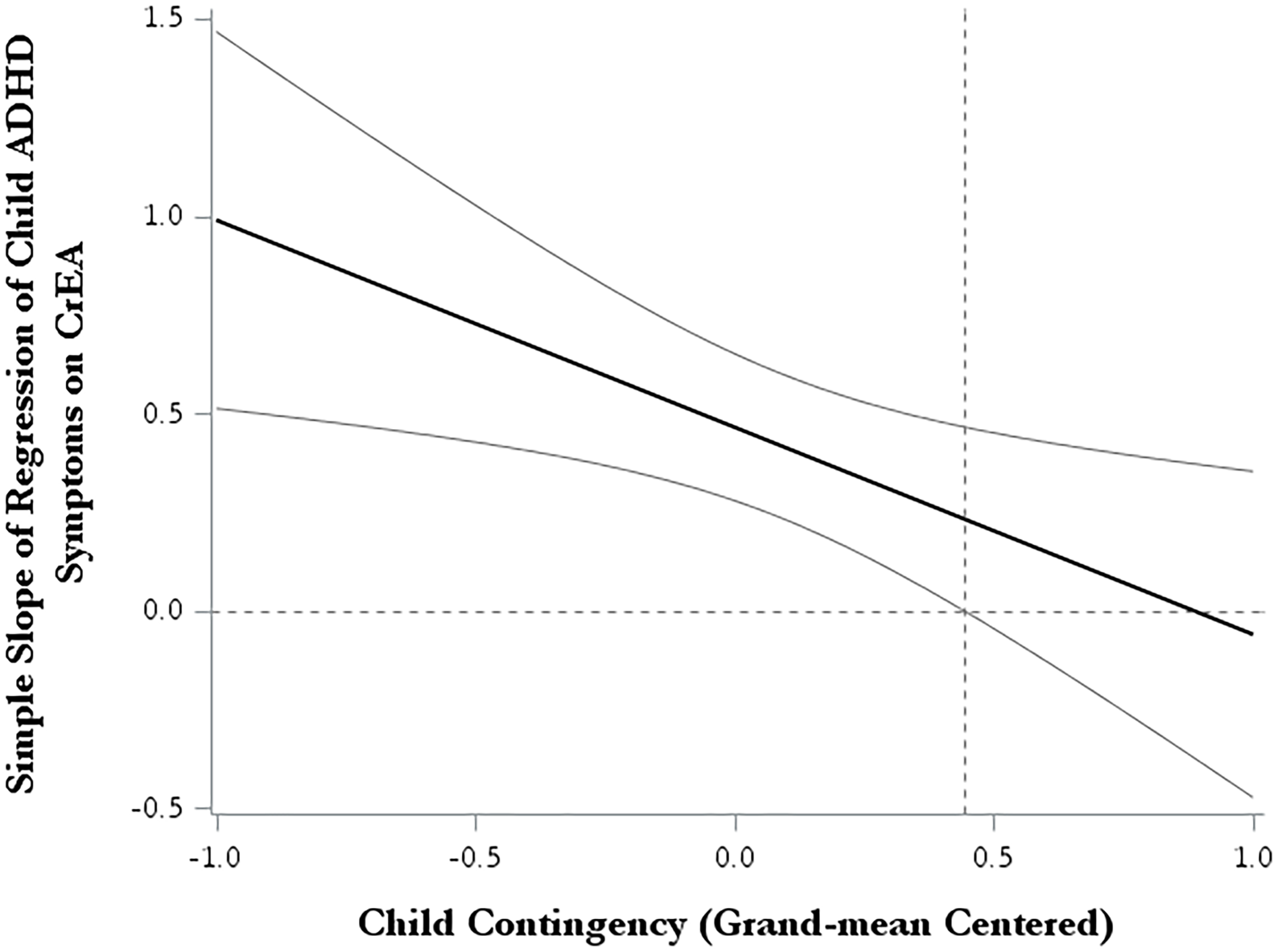
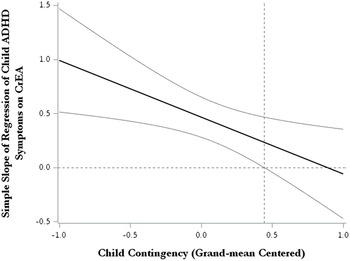
Similarly, the association between CrEA and child ADHD symptoms was qualified by a statistically significant interaction effect between CrEA and child contingency, Est = −0.525, SE Est = 0.205, p = 0.010. At low (Est = 0.722, SE Est = 0.152, p <0.001) and average (Est = 0.457, SE Est = 0.094, p <0.001) levels of child contingency, there was a statistically significant positive effect of CrEA on ADHD symptoms. However, this effect was attenuated at high levels of child contingency (Est = 0.192, SE Est = 0.127, p = 0.13). Regions of significance analysis indicated there was a statistically significant positive association between CrEA and youth ADHD symptoms among families who had less than 0.15 on child contingency (78.7% of the sample); there was not a significant association between CrEA and youth ADHD symptoms among families who had greater than 0.15 on child contingency (see Figure 4).
Region of significance on child contingency of the effect of early life adversity on child attention-deficit/hyperactivity disorder symptoms. Note. The region of significance is demarcated by the vertical line. Slopes in which the 95% confidence interval does not contain 0 are considered statistically significant.
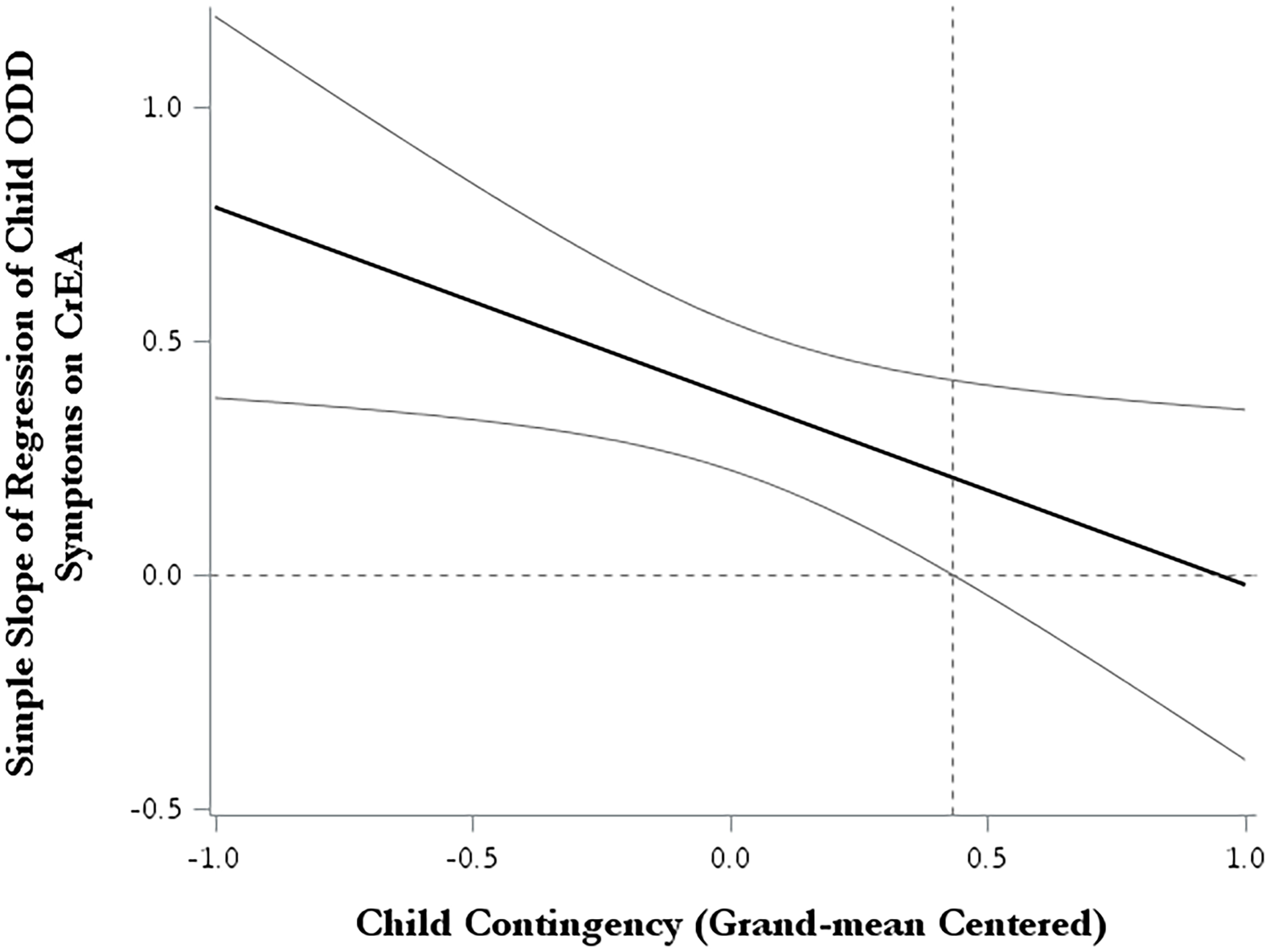
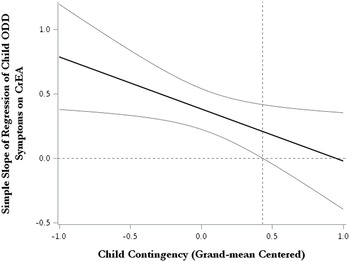
In addition, the association between CrEA and child ODD symptoms was qualified by a statistically significant interaction effect between CrEA and child contingency, Est = −0.404, SE Est = 0.181, p = 0.026. At low (Est = 0.581, SE Est = 0.130, p <0.001) and average (Est = 0.377, SE Est = 0.082, p <0.001) levels of child contingency, there was a statistically significant positive effect of CrEA on ODD symptoms. However, this effect was attenuated at high levels of child contingency (Est = 0.174, SE Est = 0.112, p = 0.12). Regions of significance analysis indicated there was a statistically significant positive association between CrEA and youth ODD symptoms among families who had less than 0.15 on child contingency (78.7% of the sample); there was not a significant association between CrEA and youth ODD symptoms among families who had greater than 0.15 on child contingency (see Figure 5).
Region of significance on child contingency of the effect of early life adversity on child oppositional defiant symptoms. Note. The region of significance is demarcated by the vertical line. Slopes in which the 95% confidence interval does not contain 0 are considered statistically significant.
Covariate effects. Surprisingly, the proportion of time children spent engaged in positive social communication was positively associated with child hair cortisol, Est = 2.643, SE Est = 0.861, p = 0.002. Similarly, the proportion of time children spent engaged in active social engagement was positively associated with their depressive symptoms, Est = 0.700, SE Est = 0.223, p = 0.002; anxiety symptoms, Est = 0.789, SE Est = 0.346, p = 0.023; ODD symptoms, Est = 0.944, SE Est = 0.271, p <0.001; and CD symptoms, Est = 0.366, SE Est = 0.144, p = 0.011.
However, as expected, the proportion of time caregivers engaged in positive social communication was negatively associated with child hair cortisol, Est = −1.897, SE Est = 0.861, p = 0.028; and with caregiver depressive symptoms, Est = −1.085, SE Est = 0.343, p = 0.002.
Child age was negatively associated with child anxiety symptoms, Est = −0.014, SE Est = 0.007, p = 0.004; ADHD symptoms, Est = −0.027, SE Est = 0.012, p = 0.027; ODD symptoms, Est = −0.404, SE Est = 0.181, p = 0.026; and parent depressive symptoms, Est = −0.074, SE Est = 0.021, p = 0.001.
Exploratory analyses
Test of effects of caregiver and child contingency on internalizing and externalizing problems. We conducted exploratory path models in which child internalizing and externalizing problems, child hair cortisol concentration and caregiver depressive symptoms were each regressed on early caregiving-related adversity exposure, caregiver/child contingency, and their interaction effects, as well as covariates (proportion of time the child spent in positive social communication behavior, proportion of time the caregiver spent in positive social communication behavior, proportion of time the child spent in active social engagement behavior, and child age). Consistent with our primary results, there was a marginally significant interactive effect between early caregiving-related adversity exposure and caregiver contingency on child externalizing problems, p = 0.072, and a significant interactive effect between early caregiving-related adversity exposure and caregiver contingency on internalizing problems, Est = −0.319, SE Est = 0.118, p = 0.007 (see Supplementary Table 5). There was a marginally significant interactive effect between early caregiving-related adversity exposure and child contingency on child externalizing problems, p = 0.082; however, there was no significant interactive effect between early caregiving-related adversity exposure and child contingency on internalizing problems, p = 0.19 (see Supplementary Table 5).
Test of the unique effects of caregiver and child contingency. In order to evaluate the unique effects of caregiver and child contingency, we conducted an exploratory path model in which primary child biobehavioral health outcomes and caregiver depressive symptoms were each regressed on early caregiving-related adversity exposure, child contingency, caregiver contingency, and their interaction effects, as well as covariates (proportion of time the child spent in positive social communication behavior, proportion of time the caregiver spent in positive social communication behavior, proportion of time the child spent in active social engagement behavior, and child age). Due to model complexity, this model did not use cluster-robust standard errors. Full model results are shown in Supplementary Table 4. Overall, the pattern of results was consistent with those obtained from the two primary models. Further, all interactive effects remained statistically significant, with one exception. When adjusting for child contingency and its interactive effect with crEA, the interactive effect between caregiver contingency and crEA on child conduct problems was no longer statistically significant, p = 0.07.
Preliminary tests of directionality. Given that youth mental health problems, in concert with earlier history of caregiving-related history, may influence dyadic dynamics, we also evaluated interactive effects between crEA and mental health problems on dyadic contingency. In a path model predicting caregiver contingency from crEA, anxiety, conduct problems, and their interactive effects, adjusting for covariates, the interaction effect between crEA and anxiety on caregiver contingency was marginally significant, Est = −0.427, SE Est = 0.218, p = 0.050. The effect of crEA on caregiver contingency was positive and non-significant at low levels of child anxiety, Est = 0.136, SE Est = 0.105, p = 0.19. By contrast, the effect of crEA on caregiver contingency was negative and non-significant at average, Est = −0.013, SE Est = 0.067, p = 0.85, and above average levels of anxiety symptoms, Est = −0.161, SE Est = 0.102, p = 0.12. However, the interaction effect between crEA and conduct problems on caregiver contingency was not significant, Est = −0.136, SE Est = 0.433, p = 0.75.
In a path model predicting child contingency from crEA, depressive problems, ADHD problems, and ODD problems, and their interactive effects, adjusting for covariates, neither the interaction effect between crEA and child depressive symptoms, Est = −0.575, SE Est = 0.440, p = 0.19, nor the interaction effect between crEA and ADHD symptoms, Est = −0.116, SE Est = 0.218, p = 0.60; nor the interaction effect between crEA and ODD symptoms, Est = −0.090, SE Est = 0.242, p = 0.71, was significant.
Discussion
Extending observational and experimental evidence that supportive caregivers can attenuate adversity-related risk with theories of mutuality and reciprocity (e.g., Kochanska, Reference Kochanska1997), we hypothesized that youth who engaged in positive contingent transactions with their caregivers during a conflict resolution discussion would be buffered from the adverse effects of early caregiving-related adversity on poor biobehavioral health. Using a novel coding system to capture positive contingent transactions between youth and their caregivers, results generally provided empirical support for our hypotheses across a diverse sample of adversity-exposed school-aged children and adolescents. Among dyads where one member of the dyad typically responded to their partner’s positive behavior with active efforts to promote emotional understanding or regulation or to collaboratively problem-solve, youth were resilient to the effects of early caregiving-related adversity on a diverse range of mental health problems. Although child contingency did not modulate the effect of early caregiving-related adversity on long-term cortisol production, across the entire sample, child contingency was associated with lower hair cortisol concentration. Overall, positive caregiver and child contingency (reflecting differences in the respondent in sequential dyadic interactions) were differentially related to biobehavioral outcomes, which bear implications for tailoring family-based prevention and intervention services for specific child mental health concerns.
Positive contingent transactions: novel transdiagnostic resilience factors for mental health problems
Adversity-exposed youth did not differ from comparison youth in the strength of positive dyadic contingencies; rather, among the subsample of adversity-exposed youth who had strong positive contingencies with their caregivers, there was no detectable effect of early life adversity on their mental health. Youth in dyads with stronger negative caregiver contingency, characterized by patterns where caregivers were less likely to respond to their child’s positive behaviors with active efforts to facilitate emotion understanding or regulation or problem-solving, were at greatest risk for adversity-linked anxiety problems. Further, exploratory analyses suggested that relative to adversity-exposed youth with fewer anxiety symptoms, caregiver contingency was marginally lower among adversity-exposed youth with higher levels of anxiety symptoms. Taken together, these results underscore a potentially complex bidirectional relationship between child anxiety risk and dyadic interaction patterns characterized by overcontrolling caregivers’ unwillingness or inability to engage in mutually reciprocal, autonomy-promotive interactions. Overcontrolling parental behavior may be motivated in part by parents’ perceptions that their anxious child may be unable to persist through the challenge of negotiating a conflict (Borelli et al., Reference Borelli, Margolin and Rasmussen2015), a desire to protect the child that may be heightened among caregivers of adversity-exposed youth. Nevertheless, when parents fail to perceive or respond to their children’s attentive and open behaviors with autonomy-supportive behaviors, children may internalize the message that they are not capable of resolving challenges and also miss opportunities to gain skills in handling interpersonal conflict (Borelli et al., Reference Borelli, Margolin and Rasmussen2015). By contrast, when parents scaffold their child’s positive behaviors with constructive autonomy-supportive behaviors, children appear resilient to the effects of early life caregiving-related adversity on anxiety specifically. Longitudinal research is needed to better understand differential family-based pathways of risk and resilience for anxiety and to tease apart transactional processes between child anxiety risk and caregiver contingent responsiveness over time.
Stronger positive child contingency, that is, youth responding to their caregiver’s friendly or warm behaviors with active efforts to engage their caregiver in emotion understanding or problem-solving, was uniquely protective against the deleterious effects of early adversity on youth depressive, ADHD, and ODD symptoms. In contrast to work that has historically focused on maternal contingency (e.g., maternal response to child behavior; Lunkenheimer et al., Reference Lunkenheimer, Ram, Skowron and Yin2017; Skowron et al., Reference Skowron, Loken, Gatzke-Kopp, Cipriano-Essel, Woehrle, Van Epps, Gowda and Ammerman2011), our results provide novel evidence that child contingency is a marker of resilience across internalizing (specifically depression) and externalizing (ADHD, ODD) spectra. Notably, whereas the present study contributes to a limited literature that has empirically evaluated children’s influence in interactions with their caregivers, families may not view these patterns as intentional forms of influence within the dyad (De Mol & Buysse, Reference De Mol and Buysse2008). Whether automatically or intentionally, youth may be “tuned” into their caregivers, such that caregivers’ immediately prior behavior and behavior during previous interactions may influence children’s expectations of their caregiver’s future behavior. Youth who interpret caregiver behavior to be appropriate and supportive and/or expect their own behavior to be well-received by their caregivers may be more likely to transform potentially caregiver-constructive behavior into a positive contingent transaction, which in turn shapes the course of development (Laible & Thompson, Reference Laible, Thompson, Grusec and Hastings2007). In this way, child contingency is embedded within transactional processes between caregivers and their children that unfold from one moment to the next and across developmental time (Sameroff, Reference Sameroff1975; Schermerhorn & Cummings, Reference Schermerhorn and Cummings2003).
Importantly, our results also illustrate that it is important to understand potentially constructive child behaviors during conflict resolution within a temporally sensitive and dyadic context. Whereas greater overall youth engagement in active social engagement behaviors (e.g., efforts to facilitate emotional understanding or problem-solving) was associated with more mental health problems, when these behaviors were more likely to occur immediately following positive caregiver behavior, youth were resilient to the adverse effects of adversity on diverse mental health problems. In certain contexts, parents may perceive active conflict resolution behaviors as inappropriately assertive or even coercive and in turn engage in harsher parenting. However, positive contingent transactions may occur when parents indirectly solicit children’s disclosure of their emotional states or ideas for problem-solving via attentive listening and friendly responses; it is in the dyadic context of open and receptive communication that children’s conflict resolution behaviors may be most beneficial.
Effects of early caregiving-related adversity and dyadic interaction patterns on long-term neuroendocrine functioning
The present study failed to support our hypotheses regarding the joint effects of early caregiving-related adversity and dyadic contingencies on youth hair cortisol concentration. Whereas prior work demonstrated that young children with more sensitive foster or adoptive parents had normalization of their cortisol stress reactivity (DePasquale et al., Reference DePasquale, Raby, Hoye and Dozier2018) and had marginally higher hair cortisol levels than those with less sensitive caregivers (Reindl et al., Reference Reindl, Schippers, Tenbrock, Job, Gerloff, Lohaus, Heinrichs and Konrad2022), we failed to demonstrate effects of early caregiving-related adversity and its interaction with dyadic contingencies on youth hair cortisol concentration. One possible explanation is that multi-indicator (e.g., the ratio of cortisol to other neuroendocrine hormones such as dihydroepiandrosterone; Reindl et al., Reference Reindl, Schippers, Tenbrock, Job, Gerloff, Lohaus, Heinrichs and Konrad2022) and multi-system (e.g., hypothalamus–pituitary–adrenal [HPA] axis and microbiome composition; Gancz et al., Reference Gancz, Querdasi, Chu, Towner, Taylor and Callaghan2024) may be more sensitive indices of HPA axis activity in adversity-exposed youth.
At the same time, our results highlight the effects of dyadic interaction patterns on long-term patterns of cortisol production. Across adversity-exposed and comparison youth, greater proportions of caregiver positive social communication and child contingency (youth active social engagement in response to caregiver positive social communication) were associated with lower child hair cortisol concentration. Our results extend prior evidence that fathers’ coercive behavior was positively associated with preschool-aged children’s hair cortisol concentration (Isaac et al., Reference Isaac, Rodriguez, D’Anna-Hernandez, Gemmell, Acedo, Dougherty and Bufferd2023) to illustrate the influence of caregiver and dyadic interaction patterns on youth neuroendocrine functioning across middle childhood and adolescence. Consistent with an allostatic load framework (McEwen, Reference McEwen1998), a chronic, frequently stressful home environment in which children fail to capitalize on parents’ friendly or warm behaviors may require more frequent adjustment of HPA axis functioning that over time produces wear and tear on the body and results in negative physical and mental health outcomes. Within this framework, the surprising positive association between child positive social communication and hair cortisol concentration may also be understood: When children overcompensate for a lack of caregiver positivity or dyadic contingency, their positive behaviors may confer “skin-deep” resilience evinced in better mental health problems but higher levels of allostatic load (Brody et al., Reference Brody, Yu, Chen, Miller, Kogan and Beach2013). Future work is needed to evaluate longer-term mental and physical health outcomes among adversity-exposed youth within the context of individual and dyadic behavior.
Strengths and limitations
The present study benefited from several key strengths. First, in contrast to prior work that has focused on younger children (e.g., Lunkenheimer et al., Reference Lunkenheimer, Ram, Skowron and Yin2017; Skowron et al., Reference Skowron, Loken, Gatzke-Kopp, Cipriano-Essel, Woehrle, Van Epps, Gowda and Ammerman2011), we assessed positive contingent transaction interactions among parents and their school-aged children and adolescents. Our assessment of positive contingent transactions across middle childhood and adolescence addresses a notable gap in the literature, given that older children have more autonomy in the parent–child relationship and experience relatively greater levels of conflict with their parents. Second, our novel methodological approach afforded disentanglement of unique patterns of dyadic contingency (e.g., caregiver versus child contingency), and highlighted the often-overlooked role of the child as an active agent in the socialization process. Notably, in so doing, we were able to establish the unique significance of caregiver contingency to child anxiety problems, as well as provide novel evidence that child contingency acts as a transdiagnostic resilience factor. Third, we evaluated our hypotheses among an ethnic and racially and socioeconomically diverse sample of adversity-exposed youth and across a wide range of biobehavioral outcomes. Although theory suggests that enhanced stress reactivity and stress buffering may be a mechanism of recovery from early caregiving-related adversity (Wade et al., Reference Wade, Parsons, Humphreys, McLaughlin, Sheridan, Zeanah, Nelson and Fox2022), our results suggest that adversity-exposed youth’s mental health risk may persist even after normalization of biological processes; at the same time, mutually reciprocal caregiver–child interactions may attenuate youth allostatic responses. Finally, evidence of the protective benefits of caregiver–child dyadic patterns on youth mental health was strengthened by inclusion of caregiver-report of their own mental health, given parents’ own depressive symptoms may bias their perceptions of their child’s wellbeing (Najman et al., Reference Najman, Williams, Nikles, Spence, Bor, M.I.C.H.A.E.L. and Andersen2000).
Nevertheless, our results must be understood in the context of our study’s limitations. The present analyses were slightly underpowered (power = 0.70) to detect typically sized, small interaction effects. Low base rates precluded reliable assessment of positive contingent transactions in 7–13% of our sample, and future studies may benefit from utilizing longer discussion tasks. Our study was composed of distinct subgroups of caregiving-related adversity-exposed and comparison families for whom we evaluated positive contingent transactions; however, our study was underpowered to detect potential differences between these groups (e.g., domestic versus international adoption, adoption versus guardianship). Children who experienced greater placement instability and/or were adopted at older ages may have greater difficulty adjusting to caregiving placements and are at greater risk for a range of mental health issues (e.g., anxiety, aggression, hyperactivity), highlighting the importance of identifying protective factors within stable caregiving arrangements (White, Reference White2016). Further, our sample size precluded assessment of differences in the pattern of findings depending on individual characteristics (e.g., child age, pubertal stage, caregiver and child gender). Our results may not generalize to other interaction contexts, developmental periods, or families from higher-risk backgrounds (e.g., maltreating families or families with acute mental health needs). Notably, the cross-sectional design of the present study precludes a strong assessment of directionality; our exploratory analyses of reverse causality (e.g., effects of early caregiving-related adversity and youth mental health problems on dyadic contingencies) suggested potential transactional relationships between caregiver contingency and youth anxiety, which warrant evaluation in prospective longitudinal studies.
While we obtained measures of diverse youth mental health problems, our assessment of caregiver mental health was limited to reports of depressive symptoms. Although our results replicated the widely demonstrated association between caregiver depressive symptoms and lower warmth, depressed parents surprisingly also demonstrated greater caregiver contingency. Caregiver contingency, which requires caregivers’ efforts to push the conversation forward and scaffold children’s developing regulatory and problem-solving abilities, may take a toll on caregiver mental health, an especially important consideration in light of the national epidemic of parental stress (U.S. Surgeon General, 2024). At the same time, though our study benefited from the use of a highly reliable observational coding system, our coders may have perceived caregiver behavior differently from how it was experienced by caregivers or their children. Future work is needed that incorporates caregivers’ and youth perceptions and behavioral attributions into understanding of resilience-promoting dyadic interaction patterns.
Conclusion
The increase in parent–child conflict and mental health problems across the transition to adolescence (Steinberg, Reference Steinberg2001) renders this an important period for identifying family-based factors that may contribute to youth adjustment. Particularly for at-risk, adversity-exposed youth, stronger positive contingent transactions conferred resilience to diverse mental health problems. Our results extend theories of mutuality and reciprocity in at least two key ways: (a) by highlighting the relevance of constructive conflict dynamics among older children and adolescents and (b) by teasing apart the unique benefits of caregiver and child contingencies, which reveal the historically overlooked role of the child as a positive socialization agent. Whereas intervention programs typically focus on individual parent behaviors or on maladaptive interaction dynamics (e.g., disrupting coercive cycles), positive contingent transactions represent a novel marker of positive dyadic interactions that can foster resilience. Refinements and innovations in prevention and intervention programs could leverage video feedback and other techniques to reinforce these transactions and transform less adaptive interaction patterns to more adaptive ones where dyad members notice each other’s friendly or warm behaviors and respond in constructive ways.
Supplementary material
The supplementary material for this article can be found at http://doi.org/10.1017/S0954579425100941.
Data availability
We adhered to the TOP Level 2 guidelines.
Acknowledgments
We would like to thank the Meyer lab for their assistance in processing hair cortisol data.
Funding statement
This research was funded by NIMH 4R00MH113821-03 (PI: Callaghan) and a Mental Research Institute grant (PIs: Callaghan and Somers). The second author was also supported by NIMH T3215750. The funding sources had no role in study design, collection, analysis, interpretation, or writing of the report or in the decision to submit the article for publication.
Competing interests
We have no conflicts of interest to declare.
Preregistration
The study’s aims and hypotheses were not preregistered.
Availability of data
Due to participant privacy concerns, the raw data are not available; processed data are available at https://osf.io/hbsq9/?view_only=cec56b32c6174fdcaf0c220c5976c501.
Availability of code
The analytic code necessary to reproduce the analyses presented in this paper is available at https://osf.io/hbsq9/?view_only=cec56b32c6174fdcaf0c220c5976c501.
Availability of materials
The materials necessary to attempt to replicate the findings presented here are publicly accessible. Our coding manual and training videos can be found on the first author’s website: aub.ie/auburnflowerlab.
AI statement
Generative AI was not used in the research or writing process.


 Open access

