


The Caribbean Court of Justice is the international court at the heart of the Caribbean Community (CARICOM). CARICOM is a regional integration organization comprising fifteen member states: Antigua and Barbuda, the Bahamas, Barbados, Belize, Dominica, Grenada, Guyana, Haiti, Jamaica, Montserrat, Saint Lucia, Saint Kitts and Nevis, Saint Vincent and the Grenadines, Suriname, and Trinidad and Tobago. The CCJ began operating in 2005, and since then it has made a mark on the Caribbean Community by fulfilling its role as the guardian of Community law and as the court of last resort for some member states. Through a close investigation of the CCJ’s decision-making, this chapter examines the book’s core argument in the case of an international court with a midrange strategic space. In contrast to the EACJ’s pervasive political constraints, the CCJ’s strategic space is characterized by intermediate political constraints that develop from high formal independence that is partially offset by a lack of political fragmentation. Based on the theoretical framework presented in Chapter 2, we expect the CCJ’s deference to be moderate.
This chapter assesses this expectation and whether the CCJ’s structural political constraints and adaptive practices account for the observed patterns of deference. It shows that the CCJ’s deference is moderate. Its decisions frequently reject states’ exercise of authority through outcomes that are in favor of applicants and broad legal interpretations. Yet, the Court frequently stops short of placing high demands on states, preferring to offer recommendations rather than impose intrusive remedies. It also tends to defer to CARICOM institutions or when states reveal uniform preferences. The chapter links these patterns of deference to the CCJ’s robust formal safeguards to judicial independence alongside the minimal political fragmentation across CARICOM’s membership. While formal independence depresses deference by boosting the legitimacy of the CCJ and reducing the possibilities of collective state resistance, homogeneous state preferences have the opposite effect. The latter effect is especially prominent when the Court reviews decisions and actions taken by CARICOM organs. Moreover, the analysis reveals that the CCJ copes with its political environment by practicing persuasive argumentation and public legitimation. Last, the chapter shows that the CCJ’s deference is difficult to reconcile with the strength and activity of its support network.
The chapter unfolds in five steps. First, it introduces the CCJ by way of describing its historical origins and ideational setting. Second, using original data, the chapter provides an overview of the Court’s mandate and workload before mapping the extent to which the CCJ defers. Third, the chapter considers the role of the Court’s support networks, suggesting that the CCJ’s supporters lack sufficient influence to explain the level of observed nondeference. Fourth, the chapter explores how the CCJ’s (non)deference corresponds with formal independence and political fragmentation on the one hand and adaptive judicial practices on the other. Last, the chapter reviews the core findings of the case study.
The CCJ’s Ideational Setting: Colonial Legacies, Political Norms, and Legal Culture
The CCJ’s ideational context, which likely has an impact on the CCJ’s performance, resembles that of the EACJ (Chapter 4) and the ACtHPR (Chapter 6) in many ways. To begin with, the CCJ is rooted in the colonial past of the Caribbean nations that it serves. While all but two of CARICOM’s members are English-speaking and were most recently British colonies,Footnote 1 the Spanish, French, Dutch, and British settled and colonized today’s CARICOM nations at various points of time and in various constellation. For instance, during the years of the American War of Independence through the end of the Napoleonic Wars (roughly 1775–1815), “the West Indian territories were tossed between the warring European powers.”Footnote 2 Despite differences in how the French, British, and Dutch ruled these colonies, colonialism had many homogenizing socioeconomic effects across the region.Footnote 3 Colonial rulers established plantation colonies, mostly for sugar exportation, across these territories. Indigenous populations were devastated by disease, slavery, war, brutality, and displacement,Footnote 4 while millions of enslaved Africans and later indentured servants from India were transported to the colonies to work the plantations.Footnote 5 Moreover, plantation landowners were largely absent.Footnote 6
Colonial governors, especially among the former British colonies, experimented with intraregional administration, or some version of integration. As Payne describes, the island nations “suffered from a bewildering and unsettling series of experiments in inter-colonial administration for a period which lasted for more than two and half centuries. Only the relatively remote territories of Jamaica, British Guiana [Guyana] and British Honduras [Belize] were excluded from the merry-go-round.”Footnote 7 Despite these efforts to integrate the colonies, a sense of regional unity did not develop and was impeded because intraregional administration was pursued solely for purposes of administrative efficiency, intraregional communication and transport were poor, and plantation competition spurred inter-colonial rivalries.Footnote 8 It was not until the early twentieth century that regionalism truly began to develop. At this point, intraregional communication and transport improved and several regional institutions and associations were formed, including the West Indian Court of Appeal (1919), the Imperial College of Tropical Agriculture (1924), and the Associated Chambers of Commerce (1917).Footnote 9 With time, unity started to have a political purpose – independence and self-governance.Footnote 10 Yet, support for integration waxed and waned in the decades leading up to independence, with some territories being more and others less eager to pursue political cooperation or regional unification. For some, pan-Caribbean unity was the most viable path toward full self-governance, especially because the small size of the former colonies was viewed as an impediment to their capacity to function as sovereign states.Footnote 11 For others, it conflicted with nationalist sentiments.Footnote 12
By the end of WWII, many local elites supported, albeit with some nudging from British authorities, a closer political unity of the colonies.Footnote 13 Ten of the now fifteen members of CARICOM (which included most of the British West Indies) were consolidated into the West Indies Federation (WIF) in 1958, with the understanding that it would constitute a self-governing sovereign state.Footnote 14 Designing a constitutional order for the new federation was politically challenging due to competing interests and visions,Footnote 15 and because the different colonies were reluctant to concede elements of self-governance over to a federal government, which they were increasingly enjoying.Footnote 16 The WIF was short-lived and ultimately failed before it became a fully autonomous state. By popular referendum in 1961, Jamaica withdrew from the federation, and Trinidad and Tobago quickly followed.Footnote 17 With the absence of the region’s two largest economies, the WIF collapsed in 1962.
Integration, nevertheless, was not completely sidelined. Some of the newly independent states – along with some of the still dependent territories – set aside aims for a closer political union and instead focused on economic cooperation. Driven not only by earlier aspirations for unification but also anxiety that the nations would lose preferential trade status with the impending entry of the United Kingdom (UK) into the European Economic Communities (the precursor to the EU), leaders created the Caribbean Free Trade Association (CARIFTA) which came into effect in 1968.Footnote 18 In 1972, the Conference of Heads of Government (CHOG) decided to transform the CARIFTA into a common market and established the Caribbean Community in 1973 with the adoption of the Treaty of Chaguaramas (TOC).Footnote 19 States dominated CARICOM through the main intergovernmental decision-making bodies (the CHOG and the Council of Ministers), which took decisions by consensus,Footnote 20 and CARICOM had weak enforcement powers. Consequently, CARICOM relied heavily on the willingness of governments to give effect to the Community’s decisions. Ultimately, poor economic performance led Community leaders to contemplate reforms. They established the West Indian Commission (WIC), also known as the Ramphal Commission because Sir Shridath Ramphal served as the chair, to make proposals on how to fulfill the ambitions of the TOC.Footnote 21 The WIC found faults with CARICOM’s inability to ensure implementation, in other words, its limited monitoring and enforcement capacity. The WIC’s report in 1992 recommended a variety of changes to ensure better implementation of the common market, including the establishment of a court.Footnote 22 The WIC argued: “Integration rests on rights and duties; it requires the support of the rule of law applied regionally and uniformly. A CARICOM Supreme Court interpreting the Treaty of Chaguaramas, resolving disputes arising under it… declaring and enforcing Community law … is absolutely necessary to the integration process.”Footnote 23 Thus, the court that would eventually become the CCJ was viewed as integral to economic integration and global competitiveness for the region.
At the same time, a regional court was also believed to be necessary to complete the process of independence for the former British colonies. When the members of CARICOM gained independence from the UK beginning in the 1960s, most states gained self-governance in legislative and executive affairs only, and not judicial matters.Footnote 24 In fact, most of the newly independent states kept the UK’s Judicial Committee of the Privy Council in London as their court of last resort. Only Guyana severed ties with the Privy Council after gaining independence, as did Grenada for the period of 1979 to 1991.Footnote 25 This important vestige of colonialism was not to everyone’s liking. For years, various legal and political elites circulated ideas of establishing a supreme court for the Commonwealth Caribbean to replace the Privy Council.Footnote 26 For instance, the Organisation of Commonwealth Caribbean Bar Associations in 1972 recommended the establishment of a Caribbean court of appeal.Footnote 27
The tides began to shift in the late 1980s, when Trinidad and Tobago proposed the establishment of a Caribbean court of appeal at a meeting of CHOG in 1987. The CHOG concluded this proposal should be considered and mandated the attorney generals of CARICOM states, in consultation with national judiciaries and representative bodies of the legal profession, to study and make recommendations on this proposal.Footnote 28 The CHOG endorsed the progress made toward creating an appellate court in 1989.Footnote 29 The WIC echoed the conclusions of the CHOG, also recommending the replacement of the Privy Council with a Caribbean court that would have appellate jurisdiction.Footnote 30 Many establishment elites, however, were opposed to the idea. The holdouts against a court of appeal acquiesced in the 1990s after the Privy Council determined that Caribbean countries’ use of the death penalty violated human rights standards.Footnote 31
Finally, with an eye toward improving integration and completing independence, the CHOG decided to establish a Caribbean Court of Justice in 1998.Footnote 32 When the CCJ was finally created in 2001 by the Agreement Establishing the Caribbean Court of Justice (CCJ Agreement) and the Revised Treaty of Chaguaramas (RTC),Footnote 33 it was vested with appellate and original jurisdiction to meet both demands of replacing the Privy Council and ensuring greater implementation of the Community’s objectives.
By looking back, we can see that the CCJ is deeply rooted in the colonial legacies of the region. The dualism of two existent political norms – independence and sovereignty versus regionalism and unity – meant the path to CARICOM and the CCJ was often unsteady and fraught with tensions that are still noticeable today. For example, only five states recognize the appellate jurisdiction of the CCJ,Footnote 34 indicating a less than wholehearted embrace of the CCJ among the CARICOM members or that some member states “do not have full confidence in the Court.”Footnote 35 More broadly, CARICOM – as it was adopted by member states – is “a model of regional integration which involved virtually no concession of national sovereignty.”Footnote 36 These tensions might be reflected in CARICOM’s institutional design, which features midrange delegation (meaning the granting of authority to an independent body) alongside low pooling (defined as joint decision-making where the national veto is surrendered).Footnote 37
In addition, the colonial past has contributed to the legal culture within which the Court operates. Most notably, an important legacy is legal pluralism. The CCJ presides over disparate legal systems, despite their commonalities. While most of the member states are rooted in common law legal traditions, and all began with externally imposed law, their legal traditions are not uniform. The common law was not uniformly received in the Caribbean, there was no historical aim toward legal harmonization across the region, and “law-making and most judicial decision-making in the Caribbean is markedly local and national, not regional.”Footnote 38 Moreover, Guyana and Saint Lucia retain aspects of the civil law system – poignant reminders of their tumultuous colonial pastFootnote 39 – and Haiti and Suriname are civil law systems.Footnote 40 Thus, the legal regimes are best described as “disparate but closely connected.”Footnote 41
Moreover, state law exists alongside other “legal orders,” to varying degrees across the CARICOM states. Custom is a source of law “of particular importance in the area of land law or property law and family law.”Footnote 42 Other informal systems of law and justice have emerged, such as that found in garrison communities in JamaicaFootnote 43 or within Maroon communities.Footnote 44 Religious legal traditions also have recognition in some CARICOM states.Footnote 45 Thus, pluralism is an important aspect of the legal identity both across and within CARICOM states.
In addition, the legal culture across the Caribbean has been described as lacking a “constitutional faith.”Footnote 46 Wheatle and Campbell argue the lack of constitutional faith is reflected in and due to the widespread beliefs that the judicial system is slow or unresponsive. Failures to respect constitutional rights also “make it difficult to cultivate reliance, trust and positive stories about the constitution and the state.”Footnote 47 Several studies similarly reveal that public perceptions of the justice system are often poor, although there is variation across countries and according to the year under study.Footnote 48 As some have argued, the lack of faith in the judicial system and the state legal order, like legal pluralism, is part of the legacy of colonialism.
Overall, the CCJ today exists within an ideational context characterized by colonial legacies, political norms that value regionalism alongside commitments to preserving sovereignty and independence, and legal culture rooted in pluralism and a lack of trust or faith in the state legal order. With this in mind, the section “The Caribbean Court at Work” provides an overview of CCJ’s workload.
The Caribbean Court at Work
The Agreement Establishing the Caribbean Court of Justice entered into force in 2003, and the CCJ became operational in 2005.Footnote 49 Its seat is in Port of Spain, Trinidad and Tobago. The CCJ had dual jurisdiction: (1) it has appellate jurisdiction and serves as a supreme court for states that accede to this jurisdiction; and (2) it has original jurisdiction in respect of the interpretation and application of the RTC. Its original jurisdiction is compulsory and exclusive for member states of CARICOM.Footnote 50 Within its original jurisdiction, the Court can hear disputes between member states, between member states and the Community, or referrals from national courts of member states concerning the interpretation and application of the RTC.Footnote 51 The Court can also review applications from private individuals or entities concerning the interpretation and application of the RTC, if the Court grants special leave to have their application reviewed.Footnote 52 In granting special leave, the Court determines whether the applicant has standing based on criteria spelled out in Article 222 of the RTC. If special leave is granted, the Court then proceeds to the merits of the case. Member states and the Community may also request advisory opinions from the Court.Footnote 53
The Court received its first application to its appellate jurisdiction in 2005, while the first application in the original jurisdiction was submitted in 2008. Figure 5.1 shows the yearly number of judgments the Court has issued by jurisdiction from 2005 to 2020. As illustrated by this figure, the lion’s share of its workload has consistently been in appellate review. Also, while the number of judgments fluctuates from year to year, there has been a steady increase over time. In total, there have been 256 judgments, 222 of which have been within the CCJ’s appellate jurisdiction. Within the original jurisdiction, there have been thirty-four judgments, spread across eighteen contentious applications and one advisory opinion.
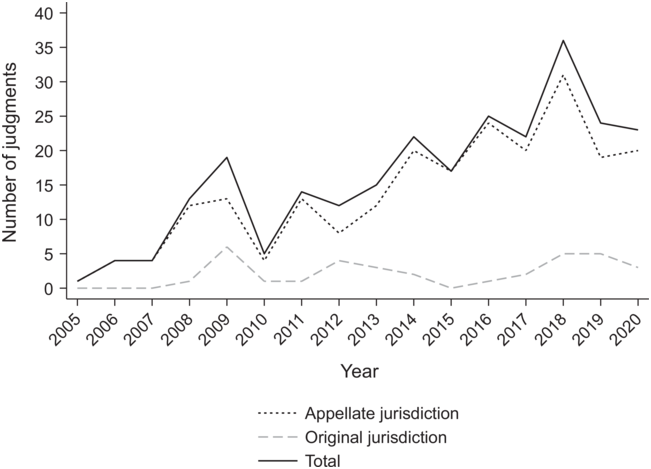
Figure 5.1 Long description
A line graph with the vertical axis labeled the number of judgments ranging from 0 to 40 in increments of 5. The horizontal axis spans from 2005 to 2020. Three lines represent appellate jurisdiction (dotted), original jurisdiction (dashed), and total (solid). All three rose from 0 in 2005. The total and appellate judgments record a generally upward trend with fluctuations and peaks near 2010, 2014, and 2018. The total peaks at 36 in 2018. Original jurisdiction remains lower, below 10, with a gradual rise from 2005 and small fluctuations after 2010.
The remainder of the analysis focuses on the Court’s decision-making within its original jurisdiction because it is only within this jurisdiction that the CCJ acts as an international court. In its appellate jurisdiction, the Court functions as a national court. As my overall aim is to understand international judicial decision-making, the appellate jurisdiction falls outside the scope of analysis. To examine deference by the CCJ, I draw from original data based on all cases (i.e., applications) within the original jurisdiction finalized up to and through the end of 2020.Footnote 54
From the first application through the end of 2020, the Court has finalized eighteen applications in its original jurisdiction. These applications address several legal issues, although most relate to one of two issues.Footnote 55 Eight applications concern the common external tariff (Article 82 and 83 of the RTC). Four address the freedom of movement (RTC Article 45 and 46). Import duties (RTC Article 87) have been addressed in two applications. Two applications have centered around Community institutions and associate institutions and whether the Court had jurisdiction over disputes arising from the acts and decisions of those institutions. Other applications relate to competition (RTC Article 174 and 175) and freedom of services (RTC Article 36).
A few other applications within the Court’s original jurisdiction also stand out. The Court issued its first judgment of friendly settlement in 2020.Footnote 56 It received its first interstate dispute in 2022, involving Belize and Trinidad and Tobago.Footnote 57 The fact that the RTC recognizes alternative dispute resolution mechanisms may partially account for the lack of interstate disputes.Footnote 58 Last, the Court received its first request for an advisory opinion in 2019 and delivered the opinion in 2020.Footnote 59
As the above makes clear, in any given year the Court decides only a handful of cases, if that, within its original jurisdiction. The CCJ’s workload lags that of other courts. For instance, the CCJ has had far fewer cases than the European Court of Justice in its first fifteen years (see Figure A4.1 in the Appendix); between 1953 and 1967 the ECJ issued 236 rulings. The comparative sluggishness of the CCJ’s caseload, as will be discussed further below, is partially attributable to the absence of cases brought by CARICOM and referrals from national courts. The CCJ’s caseload also lags that of the EACJ (see Chapter 4). We should also bear in mind that CARICOM comprises smaller nations and markets than both the EU and EAC. Regardless, even though the caseload within the original jurisdiction has grown slowly, the decisions taken by the Court so far have been crucial in laying the foundation for future applications and the development of Community law. Understanding the Court’s decision-making, even with the relatively small number of applications, sheds light on what we might expect of it in the coming years while also offering insights into the factors shaping international courts and their jurisprudence throughout their infancy.
Judicial Deference by the Caribbean Court of Justice
How can we characterize the Caribbean Court of Justice’s decision-making? To what extent does it defer to states? As explained in Chapter 2, deference can be observed in case outcomes, a court’s legal interpretation and reasoning, and its use of remedies. This section examines the CCJ’s deference on each of these dimensions. The examination reveals that deference by the CCJ is generally moderate but varies.
Case Outcomes
Whether the CCJ defers depends on the respondent. The picture of deference also differs for merits-only decisions in contrast to all decisions (this includes admissibility and jurisdiction plus merits decisions). Table 5.1 provides descriptive statistics for case outcomes, based on the respondent and type of decisions. The total deference rate is 50 percent, reflecting outcomes for all applications, irrespective of respondent or type of decision. This suggests that the Court deferred half of all applications because it either abstained or validated the state or CARICOM’s exercise of authority. Put differently, the applicant won in only half of applications. The deference rate, however, is lower among merits judgments. Specifically, the merits deference rate is 36 percent, regardless of respondent. This means that if applicants are granted leave and the Court considers the application’s merits, the Court accepts the state or CARICOM’s exercise of authority in slightly more than one-third of applications.
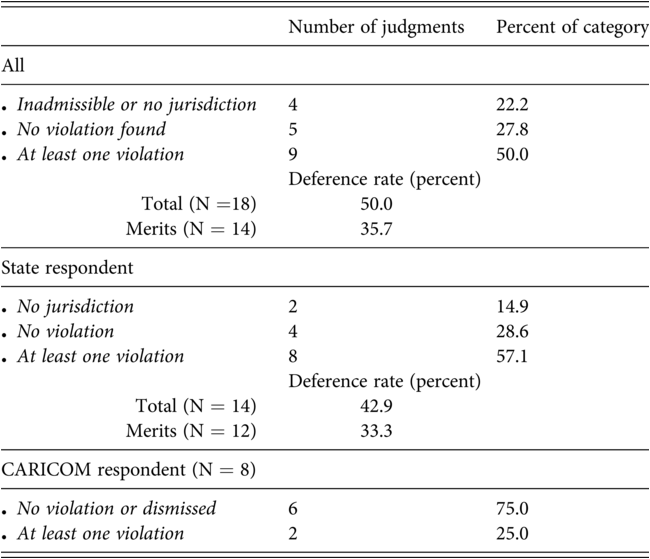
Table 5.1 Long description
The table provides a summary of the Caribbean Court of Justice’s case outcomes from 2009 to 2020. The table presents the number of judgments and the percentage of the category for different outcomes, broken down by all cases, state respondents, and C A R I C O M respondents.
All
For cases deemed inadmissible or where there was no jurisdiction, there were 4 judgments, representing 22.2%.
In cases where no violation was found, there were 5 judgments, representing 27.8%.
Cases with at least one violation numbered 9, representing 50.0%.
The total number of cases is 18, with a deference rate of 50.0%. For merit-based cases, where N equals 14, the deference rate is 35.7%.
State respondent
Cases with no jurisdiction numbered 2, representing 14.9%.
There were 4 judgments with no violation, representing 28.6%.
Cases with at least one violation numbered 8, representing 57.1%.
The total number of state respondent cases is 14, with a deference rate of 42.9%. For merit-based cases, where N equals 12, the deference rate is 33.3%.
C A R I C O M respondent, where N equals 8
Judgments with no violation or which were dismissed numbered 6, representing 75.0%.
Cases with at least one violation numbered 2, representing 25.0%.
Note: In four cases, respondents were both CARICOM and a state(s). Total deference rate = (no violation + inadmissible or no jurisdiction) ÷ Total N. Merits deference rate = (no violation) ÷ Merits N.
If we differentiate between the type of respondent (state versus CARICOM), the picture is slightly different. The CCJ more frequently finds states in violation of Community law than it does Community institutions, meaning it defers more to CARICOM than it does states. Of all fourteen applications where a member state was the respondent, the Court deferred 43 percent. Among the applications against states that were considered on the merits, the Court deferred to states in only 33 percent. CARICOM was a respondent in eight applications; the Court deferred to CARICOM in six, or 75 percent, of these applications. All else equal, the CCJ tends to defer less often to states than to CARICOM.Footnote 60
Based on these figures alone, we can surmise that the CCJ defers minimally to states – especially if it considers the merits – but it defers more to CARICOM organs. On balance, we might say that CCJ is moderately deferential. Case outcomes, however, reflect much more than deference alone, such as actual (non)compliance, the quality of legal defense, or the strength of a legal case. For this reason, deference rates provide an incomplete picture of deference and suggest we need to combine this information with that of legal interpretation and reasoning by the Court as well as its use of remedies. I turn to these next.
Legal Interpretations and Reasoning
The Court’s legal interpretations and reasoning tend to be nondeferential, often rejecting states’ preferred interpretations. The Court’s inclination toward nondeference is evident in several pivotal interpretations. First, the Court’s interpretation of Article 222 of the RTC, which provides private actors’ access to the CCJ, was nondeferential. The Court was required to interpret Article 222 in TCL v Guyana, a case which related to Guyana’s alleged failure to implement CARICOM’s common external tariff on cement.Footnote 61 Trinidad Cement Limited (TCL), a Guyanese cement company, filed an application against Guyana because the Government taxed cement imported from outside CARICOM at a lower rate than required by the common external tariff. Before considering the merits of TCL’s claim, however, the Court had to decide whether to grant special leave to TCL to have its application reviewed. The Court therefore needed to determine if Article 222(c) required the national state to espouse the private entity’s claim or for that state to agree to the complaint.Footnote 62 Guyana argued that the RTC required this. The Court argued that such a literal, restrictive interpretation of paragraph (c) would require a state to be both complainant and respondent whenever a private actor has a complaint against the state of which it is a national, thereby precluding nationals from filing a complaint against their own state. The Court rejected Guyana’s preferred interpretation, arguing it would be contrary to the “object and purpose of the RTC.” Instead, the Court found that it must “interpret the Article in a manner that would render it effective. In effect the Court must adopt a teleological approach.”Footnote 63 It argued that the contracting parties of the RTC did not intend to prohibit a national from filing a claim against their own state.Footnote 64 Paragraph (c), rather, intended to protect states from being “twice vexed,” or to prevent the same claim from arising from both a state and a private entity.Footnote 65
The interpretation advocated by Guyana was likely a view shared by several states and would have permitted states greater control over litigation before the CCJ. Pollard, who later became a CCJ judge, in his book on the drafting of the RTC and creation of the CCJ, argued:
The Agreement Establishing the Caribbean Court of Justice, consonant with traditional international law, does not accord private entities locus standi as a matter of right in matters before the court. Consequently, a private entity aggrieved by a member state or any of its nationals in the enjoyment of rights accorded by or under the Revised Treaty must have its claim espoused by the State of nationality. Alternatively, the party aggrieved may institute proceeding in national courts … [and seek a referral to the CCJ]. In both instances, therefore access to the Caribbean Court of Justice by private entities would be indirect either by espousal of the claim through the State of nationality or by a reference pursuant to Article 214.Footnote 66
Pollard suggests that a “work-to-rule,” restrictive interpretation that would defer to states was plausible. Ultimately, however, the Court’s teleological interpretation of Article 222 in TCL v Guyana expanded access, leaving “the Court’s door … wide open to potential applicants,”Footnote 67 while suspending states’ authority to decide which complaints the Court could review.
A second crucial instance of the Court’s nondeferential interpretation concerned its judicial review and remedial powers. The question of the Court’s judicial review and remedial powers arose in another application filed by TCL, namely, TCL v Caribbean Community.Footnote 68 In this case, the CCJ needed to determine: (1) if it could review the lawfulness of a decision taken by the Council for Trade and Economic Development (COTED) and the Secretary-General of CARICOM to suspend the common external tariff for cement, and (2) if so, whether the Court could strike down as null and void COTED’s decision to suspend the tariff as unlawful. In short, it had to ascertain the scope of its judicial review and remedial powers.
The RTC is not clear on this matter. It makes no expressed statement about whether the Court can review an act of a CARICOM organ. The Court concluded that it does have such authority. It reasoned that it “has power to scrutinise the acts of the Member States and the Community to determine whether they are in accordance with the rule of law which is a fundamental principle accepted by all the Member States of the Caribbean Community. It would be almost impossible to interpret the RTC and apply it to concrete facts unless the power of judicial review was implicit in that mandate.”Footnote 69 Having asserted its authority to determine whether specific acts of a state or the Community were in accord with the RTC, the Court then found that this also implied the authority to declare unlawful acts void. Specifically, the Court argued, “[g]iven the Court’s duty to enforce the rule of law and to render the RTC effective, competence to review the legality of acts adopted by Community institutions must perforce include competence to award appropriate relief to private entities that have suffered and established loss as a result of an illegal act or omission on the part of the Community.”Footnote 70 This interpretation was an expressed rejection of alternative, deferential interpretation proffered by a nonrespondent state.Footnote 71 Rather than accept this alternative, the Court bestowed itself with “far-reaching powers”Footnote 72 that rejected CARICOM’s authority to supervise Community institutions and to decide on how to remedy violations.
A third important interpretation illustrating nondeference, whereby the Court rejected the states’ exercise of authority, came about in Myrie v Barbados.Footnote 73 This dispute concerned Shanique Myrie, a Jamaican national who was travelling to Barbados. Upon arrival at the airport in Barbados, she was detained, body-searched, and denied entry. Among other things, she claimed that this was a violation of Article 45 of the RTC, which ensures free movement for CARICOM nationals, and a 2007 decision of the CHOG, which entitles Community nationals to an automatic definite stay of six months in other CARCIOM states.Footnote 74 The Court took several important steps in this case, all of which exemplify nondeference. It affirmed “the Court can and must take into account principles of international human rights law when seeking to shape and develop relevant Community law.”Footnote 75 The Court did not assert jurisdiction to adjudicate over violations of international human rights law, but rather that Article 217 of the RTC authorized the Court to apply rules of international law when relevant. The Court determined that this included international human rights treaties.
In addition, the Court took steps toward asserting the supremacy of Community law and giving it direct effect. The Court affirmed that states were bound by Community law, even if they had not enacted or transposed it into domestic law, saying, “it is inconceivable that such [transposition] would be necessary in order to create binding rights and obligations at the Community level.”Footnote 76 Later in this judgment, the Court would clarify that the supremacy of CARICOM law applied at the Community level: “Community law and the limits it imposes on the Member States must take precedence over national legislation, in any event at the Community level.”Footnote 77 This implies that Community law would supersede domestic law when enforced at the Community level. The Court did not go so far as to say that supremacy was enforceable at the domestic level, but it “leave[s] the door open” for a more encompassing notion of supremacy.Footnote 78
The Court also opened the door for the “direct effect”Footnote 79 of CARICOM law based on its interpretation of Article 240. Article 240 of the RTC reads: “(1) Decisions of competent Organs taken under this Treaty shall be subject to the relevant constitutional procedures of the Member States before creating legally binding rights and obligations for nationals of such States. (2) The Member States undertake to act expeditiously to give effect to decisions of competent Organs and Bodies in their municipal law.” The Court claimed that Article 240
speaks to giving effect to such rights and obligations in domestic law. This is clearly reflected in its second paragraph which requires Member States to give effect to decisions of competent Organs and Bodies in their municipal law so as to enable Community nationals to enforce their rights at the national level and in the municipal courts. If binding regional decisions can be invalidated at the Community level by the failure on the part of a particular State to incorporate those decisions locally the efficacy of the entire CARICOM regime is jeopardized… The Court is therefore entitled, if not required, to adjudicate complaints of alleged breaches of Community law even where Community law is inconsistent with domestic law. It is the obligation of each State, having consented to the creation of a Community obligation, to ensure that its domestic law, at least in its application, reflects and supports Community law.Footnote 80
The CCJ’s interpretation of Article 240 most likely was not states’ intended meaning. Berry argues that “Article 240 of the RTC, would greatly hinder, if not prohibit outright, the development of the principle of direct effect.”Footnote 81 Yet, the CCJ concluded that “Article 240(1) RTC does not require that Member States enact a binding Community decision into domestic law in order to create at the Community level legally binding rights and obligations. The States are merely required to give domestic effect to such a decision subject to their own relevant constitutional procedures.”Footnote 82 The Court’s interpretation of Article 240 advances a position that cannot be clearly discerned from the text of the Treaty. Rather, the CCJ “employed well-crafted legal reasoning … to cement the Caribbean legal order by roughly establishing the principles of supremacy and the direct effect of CARICOM Community law.”Footnote 83 Ultimately, due to the implications for supremacy and direct effect, the Myrie judgment rejects the states’ authority in ways most likely not envisioned by states.
These three pivotal interpretations (special leave, judicial review and remedial powers, and supremacy and direct effect) exemplify the CCJ’s nondeference. They defined and expanded the boundaries of the Court’s authority, while also rejecting the scope of states’ authority and control within areas of Community competence. Beyond these decisions, interviewees describe the CCJ’s interpretation and reasoning as generally nondeferential. When asked to characterize the method of treaty interpretation used by the CCJ, interviewees confirmed that the Court tends to use a “purposive” approach.Footnote 84 For example, one judge said: “I would say that the Court by and large demonstrates a very big degree of liberal interpretation. And the Court has shown that it is not at all conservative.”Footnote 85 A lawyer with experience litigating before the Court similarly expressed the view that the CCJ has “definitely, consistently used the technique of the purposive construction.”Footnote 86 No interviewees referred to its interpretation or reasoning as deferential.
However, there is a striking difference in how the Court defers depending on the respondent. The CCJ’s interpretation and reasoning reflects more deference when the respondent is CARICOM, as opposed to when a state is the responding party. For instance, the Court expressed that it will be deferential when assessing decisions of CARICOM, giving Community organs a wide margin of discretion. It stated:
The clear intention of the Court as expressed in this passage is to recognize and retain judicial competence to review decision-making in the organs of the Community where these are capable of legal analysis, whilst reserving the necessary space for policy-making by those organs. The Court will not substitute its own assessment for that of the competent authority but will simultaneously insist that there be adherence to established normative standards. In the modern vernacular, a margin of discretion is reserved to the community actors.Footnote 87
In contrast, the CCJ ruled in Myrie v Barbados that a state’s rationale for restricting CARICOM nationals’ right of definite stay must be “interpreted narrowly and strictly” and that the burden of proof falls upon states seeking to invoke an exemption.Footnote 88 In this instance, the Court implies that it will give states a narrow margin of appreciation on exemptions. These two examples are themselves not definitive evidence that the CCJ treats CARICOM differently from states. For example, the Court has not cited these paragraphs in later decisions as precedent (with one exceptionFootnote 89). Nonetheless, if we combine these examples with the data on case outcomes, there is indication that the CCJ defers more to CARICOM than it does to individual states.
Finally, it should be noted that compared to the earliest decisions of the CCJ, some recent judgments demonstrate greater deference. For instance, the decisions in TomlinsonFootnote 90 and DouglasFootnote 91 can be seen as partially deferential, issued respectively in 2016 and 2017. Berry suggests that Douglas might signal a shift to more restrictive interpretations.Footnote 92 Similarly, Caserta and Madsen argue that Tomlinson reflects a dismissal on narrow factual grounds and an avoidance of human rights matters, despite seemingly bold pronouncements.Footnote 93
Remedies
While the Caribbean Court has exercised the full range of its remedial powers, it defers remedial decisions to states more often than not. Table 5.2 summarizes the Court’s use of remedies based on my data. It illustrates that the CCJ has found breaches in nine out of eighteen applications, meaning the Court issued declaratory judgments in half of all its finalized applications. In four of these applications, or in 44 percent of those where a breach was found, the Court ordered at least one remedy in addition to the declaratory judgment. The Court has ordered two remedies in addition to the declaratory judgment in only one case. Interestingly, the Court has issued only declaratory judgments against CARICOM, while states were subject to more intrusive remedies. This is yet another indication that the Court is more deferential toward Community organs than it is toward states.
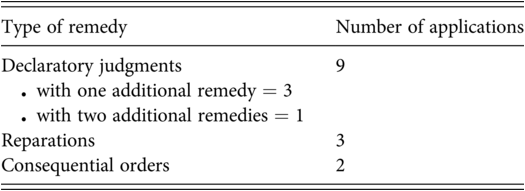
Table 5.2 Long description
The table summarizes the remedies issued by the Caribbean Court of Justice from 2009 to 2020. The table lists the type of remedy and the corresponding number of applications.
For declaratory judgments, there are 9 applications in total.
Within those, 3 applications include one additional remedy.
Also, 1 application includes two additional remedies.
Reparations were ordered in 3 applications.
Consequential orders were delivered in 2 applications.
Note: The Court has also granted an interim order in one instance: Trinidad Cement Limited & Arawak Cement Limit v The State of Barbados [2018] CCJ 1 (OJ) (July 17, 2018).
The Court’s merits judgment in TCL v Guyana determined that the Court had the power to order compensation (or pecuniary reparations) even though the threshold for giving such orders is high.Footnote 94 The Court awarded pecuniary damages (to compensate for material loss) in TCL v Guyana as this threshold was met. In Myrie, the CCJ went further and determined that it could award both pecuniary damages and nonpecuniary damages (to compensate for moral, nonmaterial loss such as pain and suffering).Footnote 95 The Court, however, has found that, in accord with common opinion on punitive damages in international law, it will not order punitive damages.Footnote 96 In all, the Court has ordered pecuniary reparations in three cases, representing one-third of the applications where wrongdoing was found.
In addition to reparations, the Court has delivered consequential orders. As discussed earlier, the Court determined in TCL v CARICOM, its first merits judgment, that it had the power to deliver coercive remedies.Footnote 97 While the Court ultimately did not deliver a consequential order in TLC v CARICOM,Footnote 98 it has made use of this power in two later instances, or approximately 22 percent of successful applications. These orders required the respondent state(s) to amend their law or policy.Footnote 99 Thus, while the Court has asserted its power to deliver intrusive remedies, it typically stops short of ordering changes to law and policy.
That said, the Court does not shy away from recommending reforms. For instance, the Court gave several recommendations in TLC v CARICOM, among them “that in the future when the Secretary-General takes a decision to authorise a suspension [of the common external tariff] it is a good practice for his authorisation to be supported by a brief statement of the reason or reasons for arriving at his decision.”Footnote 100 Similar suggestions can be found in the judgment. The Court has also provided extensive policy recommendations in relation to the common external tariff in other applications.Footnote 101
Another important example arose in the case of Tomlinson.Footnote 102 In this case, Tomlinson claimed that Belize and Trinidad and Tobago “had prejudiced him in the enjoyment of his Community right to enter these countries without hassle or harassment by maintaining an express prohibition on entry of homosexuals in their Immigration Acts.”Footnote 103 The Court ruled that while the respondent states did keep these incompatible laws on the books, state practice was compatible with Community law and states were legally required by their domestic legal orders to carry out Community law as a result of their Treaty obligation.Footnote 104 Moreover, the applicant did not provide evidence that the prohibition was enforced against Community nationals. While the Court dismissed Tomlinson’s claim, it stated that its decision
is not to be taken as condoning the indefinite retention on the statute book of a national law which in appearance seems to conflict with obligations under Community law. Member States should ensure that national laws, subsidiary legislation and administrative practices are transparent in their support of the free movement of all CARICOM nationals. In principle, national legislation should expressly be harmonized with Community law. Any permanent or indefinite discord between administrative practices and the literal reading of legislation is undesirable as the rule of law requires clarity and certainty especially for nationals of other Member States who are to be guided by such legislation and practice.Footnote 105
Thus, the Court formally preserved states’ authority to maintain their legislation, but it also strongly suggested what actions would be appropriate for the states to take.
To summarize, the CCJ’s deference in terms of case outcomes, interpretation, and remedies varies markedly depending on the respondent: the CCJ defers more to CARICOM than to respondent states. Community organs “win” more frequently than states, and the Court has so far given a wider margin of appreciation to CARICOM than to states. Deference also varies across outcomes, interpretation, and remedies. On the one hand, nondeference is more prominent in outcomes and interpretation, while remedies reflect deference. The Court’s decisions have outlined and established an expansion of the Court’s authority while rejecting state authority. Also, even though it has shown a willingness to apply intrusive remedies when an infraction is “serious and egregious”Footnote 106 or where “there would be grave consequences for the rule of law,”Footnote 107 such remedies are minimally applied, even less so for Community organs than for states. On balance, we can therefore describe the CCJ’s deference as moderate.
Explaining the Caribbean Court’s Deference
What accounts for the Court’s moderate deference? By one account, deference depends on the strength and activity of a judicial support network. Alternatively, I have posited that formal independence and political fragmentation shape deference. The following section assesses these accounts in relation to the patterns of (non)deference observed in the case of the CCJ.
The Role of Support Networks
The logic of support networks suggests that the CCJ’s moderate deference arises from having a relatively strong and active judicial support network and opportunities for this network to access the Court. At first glance, these conditions apply. From the early days leading to its creation through the beginning of its operations, the Court has enjoyed support from some political and legal elites.Footnote 108 Moreover, the Court has several channels of access for a support network to leverage and utilize. This section examines these access channels, whether the Court has tried to mobilize supporters, whether supporters utilize these points of access, and if there is any evidence that their use aligns with the Court’s (non)deference. It shows that even though there are various channels of access, the support network is insufficiently robust or active to account for the observed patterns in deference.
The CCJ features opportunities for private actors (e.g., individuals, for-profit actors, NGOs), subnational actors, and, to a lesser extent, supranational actors to access the Court. Importantly, the CCJ provides direct access for private actors, upon being granted leave according to Article 222 of the RTC. The CCJ has taken both judicial and nonjudicial measures to expand this access and encourage its use. It has adopted several judicial decisions that are pro-private litigant. The CCJ’s interpretation of Article 222 has been friendly to private actors and effectively expanded their access to the Court (see also prior discussion about interpretation of Article 222). Article 222 provides that special leave to the Court requires, among other things, that applicants demonstrate (a) a right or benefit is conferred by the Treaty and (b) the enjoyment of that right or benefit was prejudiced. To demonstrate that the Treaty confers a right or benefit, the Court developed a correlative rights doctrine, finding that the right or benefit need not be expressly conferred by the Treaty but rather may be derived from and correlated to a state obligation based in the Treaty.Footnote 109 Moreover, the CCJ ruled applicants only need to make “an arguable case” that a prejudice has occurred to be granted leave.Footnote 110 The Court’s approach to Article 222 has thus lowered the threshold for private actors to access to the Court.
The Court’s approach to awarding litigation costs is also pro-private litigant. The rules of the Court state that a losing party shall be ordered to pay the costs of the successful party,Footnote 111 but where “circumstances are exceptional, the Court may order that the costs be shared or that the parties bear their own costs.”Footnote 112 The Court has found that “exceptional circumstances” include instances where the application benefits the Community, for instance by enabling the development of Community law. The Court in Hummingbird Rice Mills Ltd v Suriname & CARICOM explained that while exceptional circumstances must be determined on a case-by-case basis, “At this nursery stage of the development of Caribbean Community law, it is important that the burden of establishing the basic principles underpinning the Single Market should not weigh too heavily and disproportionately on private entities and thus discourage the bringing of important issues of economic integration law before the Court.”Footnote 113 With this in mind, the CCJ ordered the Caribbean Community to bear its own costs, even though it was the successful party.
The benefits to the Community also constituted sufficient reason to discharge a private actor from paying the respondent’s costs in TCL v the Competition Commission, when the CCJ found that the
Commission and the Community have received benefits from the litigation. To require the Claimant, a private entity to bear the full costs of the proceedings in these circumstances would not be warranted. It would be disproportionate to require it to bear the cost of clarifying the rules and procedures on this important aspect to the Single Market and Economy. At this fledgling stage of the Single Market and Economy, it is important that the private litigants are not discouraged from initiating process.Footnote 114
The Court ordered the complainant to therefore pay 30 percent of the respondent’s costs, as opposed to its full costs. The Court has required a losing private litigant to pay partial costs of the responding party in two other instances, both in cement cases where the private litigant was a for-profit actor.Footnote 115 In all other applications where the private litigant was unsuccessful, parties were ordered to bear only their own costs – alleviating private litigants of the punishing effects of pursuing litigation.
While the CCJ typically alleviates private litigants from the burden of paying the litigation costs of a successful respondent, the Court has done the same for states and the Community. In fact, the Court has awarded full litigation costs to the successful private litigant in only two cases (as the default rule would require). In all other cases, the Court awarded successful private litigants’ only partial costs: meaning that when states and the Community are unsuccessful, typically they do not have to pay the private party’s full costs. Nonetheless, the Court has taken a pro-litigant stance by allaying some of the burdens that would otherwise prevent private litigants from filing applications.
The Court has taken several practical steps to facilitate private actors’ access to the CCJ. The Court has integrated e-services (e.g., filing of cases and documents) and sub-registries where applications can be filed.Footnote 116 These measures allow applicants to access the Court without physically traveling to Port of Spain, which is difficult and expensive due to the geography and nature of transport in the region. The Court also has “off-the-bench” activities through which it informs potential private litigants and their legal counsel about the CCJ and Community law. For example, judges of the Court speak and participate at meetings of regional bar associations, law schools, chambers of commerce, business associations, and more.Footnote 117 The Court also hosts events and activities where it disseminates information about the Court and Community law, such as its annual law moot competition for law students.Footnote 118
Despite these significant efforts to mobilize private litigants and inform their potential lawyers, private actors have not widely pursued litigation through the Court’s original jurisdiction, as indicated by the relatively small number of applications. When private actors have availed themselves of the CCJ, it has been limited to a narrow set of private actors. Eight out of the eighteen applications originated from a single industry – the cement industry (spearheaded by two companies). Also, a relatively small number of lawyers have been crucial to litigation so far. My data reveal that twelve lawyers (out of thirty-two) have been involved in two-thirds (or twelve) of applications from private actors.Footnote 119 While this might be indicative of a burgeoning support network and the centrality of lawyers to the development of Community law, similar to that of the EU,Footnote 120 it is doubtful that such a small segment of the Community can account for the nondeference that we observe. The relatively small number of applications from private actors within the original jurisdiction may be partially due to private for-profit actors’ preferences for mediation or arbitration or, in the worst cases, corruption as opposed to litigation.Footnote 121 Also, interregional trade remains comparatively low,Footnote 122 which might reduce private actors’ functional needs to rely on the CCJ.
Private actors can also participate as a third party to a dispute by acting as an intervener or submitting an amicus curiae brief. The Court has so far entertained either an intervener or an amicus in four applications. An NGO was the third party (amicus) in only one of these instances, while the others were cement companies who intervened in the cement cases.
While the CCJ does have support from a small cross section of private actors, their participation in litigation before the CCJ is associated typically with more, not less, deference. Table 5.3 compares case outcomes and remedial orders against whether applications were represented by a repeat counsel or a private actor participated as a third party.Footnote 123 Lawyers who acted as counsel in at least one prior case before the CCJ are counted as repeat counsel. Table 5.3 provides mixed evidence. Two findings from these data match the expectations of a support network logic. First, when looking at case outcomes for all applications, deference occurs less often – in 42 percent of applications – when applicants are represented by repeat counsel than when they are not (67 percent). Second, consequential orders have been delivered, which is indicative of nondeference, only when an applicant is represented by repeat counsel. In contrast, all other findings point to the inadequacy of an explanation based on the strength and activity of a support network, as deference is more common with the participation of a support network than without. For instance, declaratory judgments are less common when a support network participates, either as repeat counsel or as a third party, than if it does not. Third-party participation is more often associated with case outcomes or remedies that are deferential than when there is no private actor participating as a third party. Overall, the mix of results suggest that whether the CCJ defers or not cannot be adequately explained by the participation of a support network, especially in terms of lawyers and third parties.
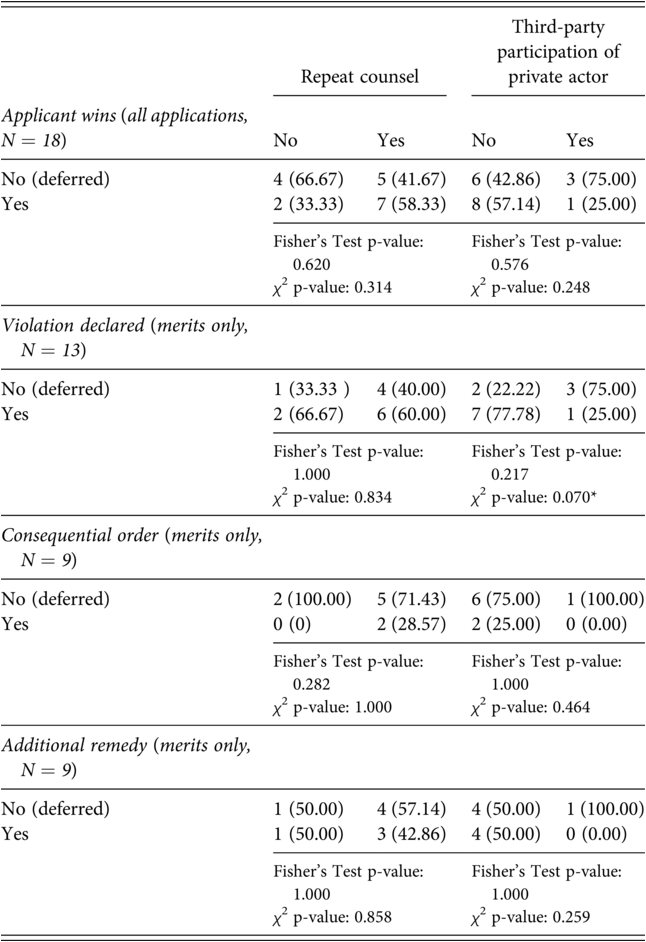
Table 5.3 Long description
The table features cross-tabulations of the Caribbean Court of Justice’s deference by support network. It examines the relationship between applicant win, declared violation, issuance of a consequential order, and order for any additional remedy , and two support network variables of repeat counsel, with categories of no or yes, and third-party participation of a private actor, also with categories of no or yes. The table provides data for all applications and for merit-only cases, including the number of cases and row percentages within each cell. Below each cross-tabulation, Fisher’s exact test p-value and Chi-squared p-value are reported.
1. Whether applicant wins, all applications, where N equals 18
No deferred
In the category of repeat counsel, no accounts for 4 cases, representing 66.67% of no counsel, and yes accounts for 5 cases, representing 41.67% of repeat counsel.
In the category of third-party participation of a private actor, no accounts for 6 cases, representing 42.86% of cases without private third-parties, and yes accounts for 3 cases, representing 75.00% of cases with private third-parties.
Yes, applicant wins
In the category of repeat counsel, no accounts for 2 cases, representing 33.33% of cases without repeat counsel, and yes accounts for 7 cases, representing 58.33% of cases with repeat counsel.
In the category of third-party participation of a private actor, no accounts for 8 cases, representing 57.14% of cases with no private third-party, and yes accounts for 1 case, representing 25.00% of cases with private third-party.
Statistical test results show that for repeat counsel, Fisher’s Test p-value is 0.620, and Chi-squared p-value is 0.314. For third-party participation, Fisher’s Test p-value is 0.576, and the Chi-squared p-value is 0.248.
2. Violation declared merits only, where N equals 13
No violation, reflecting deference
In the category of repeat counsel, no accounts for 1 case, representing 33.33% of cases with no repeat counsel, and yes accounts for 4 cases, representing 40.00% of cases with repeat counsel.
Regarding third-party participation of a private actor, no accounts for 2 cases, representing 22.22%, and yes accounts for 3 cases, representing 75.00%.
Yes, a violation is declared, reflecting nondeference.
In the category of repeat counsel, no accounts for 2 cases, representing 66.67% of cases without repeat counsel , and yes accounts for 6 cases, representing 60.00% of cases with repeat counsel.
In the category of third-party participation of a private actor, no accounts for 7 cases, representing 77.78%, and yes accounts for 1 case, representing 25.00% of cases with private third-party participation.
Statistical test results show that for repeat counsel, Fisher’s Test p-value is 1.000, and Chi-squared p-value is 0.834. For third-party participation, Fisher’s Test p-value is 0.217, and the Chi-squared p-value is 0.070.
3. Consequential order merits only, where N equals 9
No consequential order, reflecting deference
In the category of repeat counsel, no accounts for 2 cases, representing 100.00% of cases without repeat counsel, and yes accounts for 5 cases, representing 71.43% of cases with repeat counsel.
In the category of third-party participation of a private actor, no accounts for 6 cases, representing 75.00% of cases without private third-party, and yes accounts for 1 case, representing 100.00% of cases with private third-party..
Yes, consequential order, reflecting nondeference.
In the category of repeat counsel, no accounts for 0 cases, representing 0% of cases without repeat counsel, and yes accounts for 2 cases, representing 28.57% of cases with repeat counsel.
In the category of third-party participation of a private actor, no accounts for 2 cases, representing 25.00%, and yes accounts for 0 cases, representing 0.00% of cases with private third-party.
Statistical test results show that for repeat counsel, Fisher’s Test p-value is 0.282, and Chi-squared p-value is 1.000. For third-party participation, Fisher’s Test p-value is 1.000, and the Chi-squared p-value is 0.464.
4. Additional remedy merits only, where N equals 9
No additional remedy, reflecting deference
In the category of repeat counsel repeat counsel, no accounts for 1 case, representing 50.00% of cases without repeat counsel, and yes accounts for 4 cases, representing 57.14% of cases with repeat counsel.
Regarding third-party participation of a private actor, no accounts for 4 cases, representing 50.00%, of cases without private third-party, and yes accounts for 1 case, representing 100.00% of cases with private third-party.
Yes
In the category of repeat counsel, no accounts for 1 case, representing 50.00% of cases without repeat counsel, and yes accounts for 3 cases, representing 42.86% of cases with repeat counsel.
In the category third-party participation of a private actor, no accounts for 4 cases, representing 50.00% of cases without private third-party, and yes accounts for 0 cases, representing 0.00% of cases with private third-party.
Statistical test results show that for repeat counsel, Fisher’s Test p-value is 1.000, and Chi-squared p-value is 0.858. For third-party participation, Fisher’s Test p-value is 1.000, and the Chi-squared p-value is 0.259.
Note: *p<0.10, ** p<0.05, *** p<0.001. In each cross-tabulation, the first number is the frequency and the second number (in parentheses) is the column percentage.
The strength and activity of substate and supranational actors also provide limited evidence of the role of support networks. Substate actors, namely, national courts, could bolster the CCJ by referring cases for preliminary ruling to the Court, which they are required to do when questions of Community law come before them.Footnote 124 In the case of the EU, referrals by national courts to the Court of Justice of the EU have been crucial to expansion of judicial power and nondeference.Footnote 125 However, this channel of access has yet to bear fruit for the CCJ, as the Court has not received any referrals from national courts as of December 2024. This is not for lack of efforts by the Court to encourage such referrals. The Court has noted in its judgments that national courts should refer questions of Community law to it.Footnote 126 The Court’s educational arm, the CCJ Academy for Law,Footnote 127 informs legal audiences about the referral procedure. For instance, it began organizing lectures in several judiciaries on the Article 214 referral obligation in 2016.Footnote 128 More recently, the CCJ Academy developed a referral manual along with an instructional video.Footnote 129 Judges also speak at conferences and meetings of national judges and magistrates, which provide opportunities to remind judges of the preliminary reference procedure. Several interviewees suggest that a lack of knowledge contributes to the lack of references.Footnote 130 Other factors might contribute to absence of referrals. For example, the referral system requires resources that national courts tend to lack.Footnote 131 The administration of justice in many of the national jurisdictions is insufficient, according to a 2020 report by the UNDP: “[I]n all jurisdictions the backlog of cases … is one of the most challenging issues. The reasons for the backlogs are multifaceted and include primarily the slow pace of investigations by police, inordinate delays in production of depositions, and lack of human and technological resources.”Footnote 132 There might also be legal reasons or complications that explain the lack of referrals, such as national civil proceeding rules or inadequate incorporation of the RTC obligations into national legislation, which is required in dualist legal systems for the RTC to be enforceable in domestic courts.Footnote 133 While additional research is needed to understand the lack of engagement by national courts, the absence of referrals nonetheless casts doubts as to whether the levels of nondeference demonstrated by the CCJ are attributable to support from substate actors, specifically, national courts.
Access and participation of supranational actors is also weak. The opportunities for CARICOM organs (e.g., Secretariat) to access the CCJ are limited; they have minimal capacity to use the CCJ as part of an enforcement mechanism. The Competition Commission is the only supranational organ of CARICOM that has a mandate to enforce compliance in tandem with the Court.Footnote 134 For instance, when the Commission finds a company engages in anticompetitive business conduct and fails to comply with actions specified by the Commission, the Commission may seek orders from the CCJ to enforce compliance. The Commission’s access to the Court relates only to competition law, and even then, no such requests have yet been made. Aside from the Competition Commission, the only “organ” that has access to the Court and a mandate to monitor compliance is the Community Council of Ministers,Footnote 135 which is an intergovernmental organ composed of state representatives.Footnote 136 Not only has the Community Council not made any petitions to the Court, but it would be highly irregular for an intergovernmental organ to refer another state to the Court. The only instance of a case arising from a Community organ was an advisory opinion, not a contentious case. As one interviewee explained, “the underlying and associated structures [within CARICOM] to support [the Court] are just not there.”Footnote 137 Thus, the design of CARICOM limits the likelihood that CARICOM’s monitoring and compliance machinery will serve as a crucial access channel through which a supranational contingent of a judicial support network will be able to bolster the Caribbean Court. The CARICOM Secretariat, however, can act as a third party, submitting observations, which it has done on a few occasions.
As this discussion shows, private, substate, and supranational actors, especially the latter two, have yet to realize the full potential of these various access channels through which they can utilize the Court and thereby strengthen its position vis-à-vis states and others who wield power within CARICOM. The general fragility of the CCJ’s support network is at odds with the CCJ’s moderate deference, as deference is much higher than its support network would imply. The weaknesses of the CCJ’s support network may relate to several considerations. Caserta and Madsen argue that Oxbridge legal elites, who have been empowered by colonial legacies, underlie societal reluctance toward the CCJ.Footnote 138 In this sense, they might be viewed as an “anti-support” network. Distrust of local justice is deeply engrained in the public consciousness due to centuries of dependence on justice from afar (i.e., the UK), which also contributes to the lack of a robust support network.Footnote 139 The CCJ may also be suffering from normal “growing pains,” in which only “time builds trust in a court.”Footnote 140 Moreover, CARICOM is not designed to facilitate supranational enforcement, nor has it developed a practice of doing so, in ways that have been associated with the construction of judicial power in other regional integration organizations, like the EU. The combined effect of these factors, and potentially others, leaves the CCJ without a sufficiently influential and active support network.
The Structural Determinants of the Caribbean Court’s Strategic Space
The CCJ’s decision-making and tendency toward moderate deference is difficult to understand based on support networks. I have posited that a combination of structural factors – formal independence and political fragmentation – significantly shapes the Court’s strategic space. The Court’s high level of formal independence alongside the limited political fragmentation of states imposes contrasting pressures on the strategic space of the Court; the former boosts the legitimacy of the Court and hinders possibilities of collective state resistance, while the latter makes collective resistance easier. Combined, these two factors provided intermediate constraints and thus lead to moderate deference. I have also suggested that this strategic space is not static; state preferences can change. Also, past resistance by states can shrink the strategic space. Therefore, these additional considerations help to account for the variation in deference. The following discussion maps out these factors and dynamics in the case of the CCJ.
Formal Independence
The CCJ has an unusual institutional design among international courts. It is the only international court to have dual jurisdiction, and its resource management designFootnote 141 and rules on accessFootnote 142 are unique. Most relevant to the analysis here, the CCJ has a high degree of formal independence, which is the result of several atypical institutional safeguards. The comparative mapping of formal independence in Chapter 3 reveals that the CCJ has the highest independence of all twenty-six international courts. The following section describes the rules that constitute the CCJ’s formal independence. Table 5.4 summarizes these rules based on whether they enhance or weaken formal independence. After describing the rules, I evaluate how they affect perceptions of the Court.
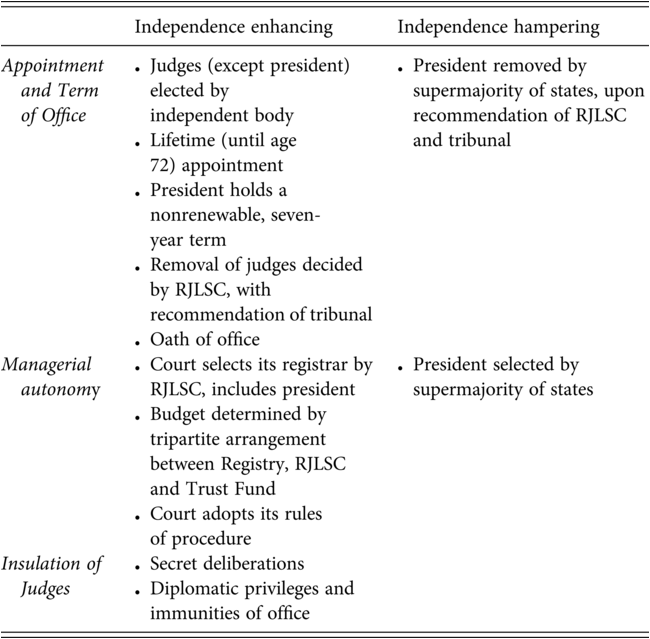
Table 5.4 Long description
The table outlines the rules constituting the formal independence of the Caribbean Court of Justice. The table is divided into two main categories, including the factors enhancing independence and factors hampering independence, further broken down by specific aspects of judicial operation.
1. Appointment and Term of Office
In independence enhancing,
Judges, except the president, are elected by an independent body.
Judges have a lifetime appointment until the age of 72.
The president holds a non-renewable, seven-year term.
Removal of judges is decided by the Regional Judicial and Legal Services Commission R J L S C, with the recommendation of a tribunal.
Judges are required to take an oath of office.
In independence hampering,
The president can be removed by a supermajority of states, upon the recommendation of the R J L S C and a tribunal.
2. Managerial autonomy
In independence enhancing,
The court selects its registrar by the R J L S C, which includes the president.
The budget is determined by a tripartite arrangement between the registry, R J L S C, and a trust Fund.
The court adopts its own rules of procedure.
In independence hampering,
The president is selected by a supermajority of states.
3. Insulation of Judges
In independence enhancing,
Deliberations are kept secret.
Judges are granted diplomatic privileges and immunities of office.
Three sets of rules protect the Court from political influence and, thus, enhance its formal independence. The first set of independence enhancing rules relates to the appointment and terms of office for judges, all of which limit states’ ability to control the Court through judicial appointments, tenure or similar. The Court is composed of (up to) nine judges and the President of the Court,Footnote 143 and they (except the President of the Court) are appointed by the Regional Judicial and Legal Services Commission (RJLSC).Footnote 144 The RJLSC is an independent organizational body created by the CCJ Agreement composed of public officials, legal professionals and academics, and civil society representatives.Footnote 145 Eleven members comprise the RJLSC; they are:
(a) the President [of the Court] …; (b) two persons nominated jointly by the Organisation of the Commonwealth Caribbean Bar Association (OCCBA) and the Organisation of Eastern Caribbean States (OECS) Bar Association; (c) one chairman of the Judicial Services Commission of a Contracting Party selected in rotation…; (d) the Chairman of a Public Service Commission of a Contracting Party selected in rotation…; (e) two persons from civil society … (f) two distinguished jurists…; and (g) two persons nominated jointly by the Bar or Law Associations of the Contracting Parties.Footnote 146
The RJLSC elects judges by a majority vote.Footnote 147 Judicial commissions are a common model for appointing national judges in the Caribbean and beyond,Footnote 148 yet the CCJ is the only international court to have judges selected by an independent body like the RJLSC.
The RJLSC does not select the President of the Court. Rather, the President is appointed by a supermajority (three-fourths) of the member states of CARICOM, upon the recommendation of the RJLSC.Footnote 149 The selection of the CCJ’s President resembles the selection for judges to most other international courts, who are typically selected by states through an intergovernmental treaty organ or by direct appointment of a state.
Judges are required to take an oath of office, and they hold tenure until the age of seventy-two.Footnote 150 The President, however, holds office for a nonrenewable term of seven years, or until he/she attains the age of seventy-two.Footnote 151 Lifetime appointments, or similar, are not featured by any other international court. Judges “can be removed from office only for inability to perform the functions of his office, whether arising from illness or any other cause or for misbehavior.”Footnote 152 Removal of a judge or the President must first be investigated by a tribunal, which is established for this purpose.Footnote 153 Following a recommendation by the RJLSC and the advice by the tribunal, the President of the Court can be removed by a three-fourths vote of the Conference of the Heads of Government.Footnote 154 All other judges can be removed by majority vote of the RJLSC,Footnote 155 on the advice of the tribunal.Footnote 156
The second set of rules that enhance the CCJ’s formal independence relate to its managerial autonomy. In short, states have very limited ability to control how the Court is managed. According to the CCJ Agreement, the rules of procedure are developed by the President of the Court in consultation with five other judges.Footnote 157 The CCJ has autonomy over the management of its human and monetary resources.Footnote 158 The Registrar of the Court is appointed by the RJLSC.Footnote 159 Given the structure of the RJLSC, the appointment of the Registrar is selected without any direct role of states.
The monetary resources and the budgetary process of the CCJ are also outside the control of states. The Registry, the RJLSC, and the Trust Fund of the CCJ are all central to the allocation of the CCJ’s monetary resources. In order to fund the CCJ, the CARICOM states – with the assistance of the Caribbean Development Bank – established a Trust Fund with an initial capital investment of $100 million.Footnote 160 The investment income of the Fund provides the financial resources for the Court. The Trust Fund operates under the direction of a Board of Trustees. The members of the Board of Trustees include: the Secretary-General of CARICOM; the Vice-Chancellor of the University of the West Indies; the President of the Insurance Association of the Caribbean; the Chairman of the Association of Indigenous Banks of the Caribbean; the President of the Caribbean Institute of Chartered Accountants; the President of the Organisation of Commonwealth Caribbean Bar Associations; the Chairman of the Conference of Heads of the Judiciary of Member States of the Caribbean Community; the President of the Caribbean Association of Industry and Commerce; and the President of the Caribbean Congress of Labour.Footnote 161 Like the RJLSC, the Trust Fund is directed by individuals representing various sectors, including the banking industry, labor, academia, and the legal profession. None of the trustees are representatives of member states. The Trust Fund, so long as it is properly managed, finances the CCJ in perpetuity and ensures that the CCJ does not rely upon the capacity and willingness of states to adequately provide resources.
As the Board of Trustees disburses funds to the CCJ, the budget must fall within the limits of what the Trust is able and willing to release to the Court. At the same time, the RJLSC has administrative responsibility over the CCJ. Consequently, the budget process of the CCJ involves the Registry, the RJLSC, and the Trust Fund.Footnote 162 Initially the rules governing the adoption of the budget were ambiguous, but after the CCJ became operational a Protocol on the Interfacing and Interaction of the RJLSC, CCJ, and the CCJ Trust Fund was adopted to clarify the procedure.Footnote 163 The Protocol states that the budget is prepared by the Court’s registry and RJLSC, then discussed with the Executive Officer of the Trust Fund. The budget is then submitted to the RJLSC for approval. After approval, the budget is submitted to the Board of Trustees for comment, and the RJLSC can approve revisions in light of the Board’s comments.Footnote 164
A third set of rules enhances formal independence by insulating the judges from political pressure. In particular, judges are granted privileges and immunities of office to protect their independence and impartiality,Footnote 165 and deliberations of the Court are to be kept confidential.Footnote 166 In sum, the CCJ’s design provides extensive institutional safeguards to ensure the Court and its judges are independent, leaving very few formal channels through which states can apply pressure on the Court and its judges.
There are, however, a few rules that hamper the CCJ’s independence. These include, as described above, the appointment and terms of office for the President of the Court, which permit a certain degree of state influence. The member states through the CHOG have control over judges’ salaries and compensation. Some interviewees identified the rules on the remuneration as the only outstanding rule that potentially weakens the independence of the Court.Footnote 167
On the whole, the design of the CCJ grants the Court robust safeguards to independence, limiting the feasibility and credibility of states to collectively resist the Court. Moreover, this high level of formal independence endows the CCJ with a reservoir of support that it would otherwise lack at its founding and in its early years. In other words, I expect formal independence to shape stakeholders’ and judges’ perceptions of the CCJ. In particular, given its high formal independence, the CCJ will be seen as independent.
Interviewees suggest that judges and lawyers alike see the Court as independent. One lawyer, for instance, said, “As I know it, it is purely and fully independent.”Footnote 168 Another interviewee argued that “I am not aware of any operating factor that exists that hinders the independence of the Court,” and any arguments to the contrary are “entirely baseless and in my view ridiculous.”Footnote 169 Various interviewees attributed the Court’s independence to its design. The Court is viewed as independent because “there is little room for any executive government of any of the contracting states to interfere with the appointments to that regional judicial legal services commission.”Footnote 170 Similarly, another individual explained that the CCJ is independent because “[judges] are not appointed by politicians.”Footnote 171 Aside from the rules related to the appointment of judges, the unique funding mechanism for the Court has played a role in shaping views of the Court. Interviewees reported that the CCJ’s funding mechanism augments its independence.Footnote 172 Also speaking of the funding arrangements, another interview argued, “it is impeccable … it removes the possibility of political interference … and it just guarantees public confidence.”Footnote 173
Generally speaking, the formal independence of the Court broadens its strategic space because it reduces the feasibility or credibility of state resistance while also boosting legitimacy perceptions of both judges and its stakeholders. While not all segments of society, or even the legal community, are convinced that the Court is independent, the Court is better situated because of its formal design than it would be otherwise. While the rules are not the end all and be all, they provide the Court and its judges with a greater sense of discretion, or a broader strategic space, knowing the Court enjoys respect due to its design and that states have less opportunity to restrain or curb the Court through collective means.
Political Fragmentation
While the formal independence of the CCJ expands the CCJ’s capacity to not defer, I have also hypothesized that the absence of political fragmentation has the opposite effect. An unfragmented political environment encourages deference because it makes collective resistance more feasible. Put differently, agreement between states narrows the Court’s strategic space, making deference more likely (H2). This logic leads to three observable implications for the CCJ’s decision-making: (1) on issues where the Court has deferred, we should observe low fragmentation; (2) an increase in deference should correspond with a decline in observed fragmentation; and (3) on issues where fragmentation has been low, we should observe deference. The following discussion assesses the empirical evidence in relation to each of these observable implications.
First, we would expect low(er) fragmentation on issues where the Court has deferred and high(er) fragmentation when it has not. I consider this implication by comparing fragmentation on two issues over which the CCJ has rendered judgment, one where it deferred and the other not. For this purpose, I select the Court’s decisions in TomlinsonFootnote 174 and Myrie,Footnote 175 the former representing deference and the latter nondeference.Footnote 176 While both applications relate to CARICOM’s guarantees to free movement for community nationals (for a definite stay of up to six months) and nondiscrimination on grounds of nationality, they also allude to distinct policy issues. Myrie raised rule of law concerns, specifically whether a body cavity search and the conditions of her detention at the port of entry constituted a violation of Community obligations to ensure the right to entry is hassle free or without harassment. In contrast, Tomlinson addressed personal autonomy issues, or whether state immigration laws prohibiting entry for “homosexuals” limited Tomlinson’s enjoyment of the Community right to entry and definite stay. According to my theoretical expectations, therefore, fragmentation on the rule of law (as in Myrie) should be higher than on personal autonomy (addressed in Tomlinson). These expectations are summarized in Table 5.5.
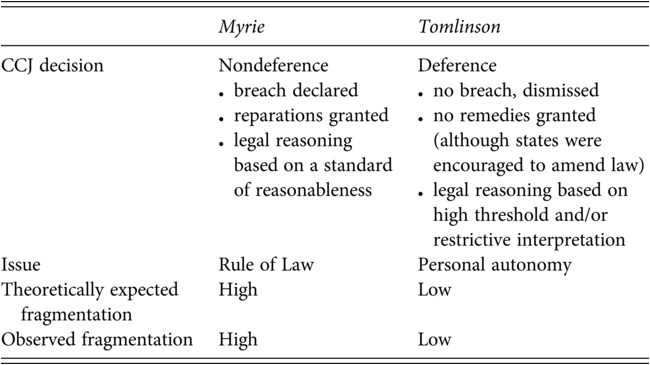
Table 5.5 Long description
The table presents the Caribbean Court of Justice’s deference and C A R I C O M fragmentation related to the Myrie and Tomlinson cases. The table compares the C C J decision, the issue at stake, the theoretically expected fragmentation, and the observed fragmentation for each case.
Myrie
The C C J decision was non-deference.
A breach was declared.
Reparations were granted.
The legal reasoning was based on a standard of reasonableness.
The issue was the rule of law.
The theoretically expected fragmentation was high.
The observed fragmentation was high.
Tomlinson
The C C J decision was a deference.
No breach was declared, and the case was dismissed.
No remedies were granted, although states were encouraged to amend the law.
The legal reasoning was based on a high threshold and slash or restrictive
interpretation.
The issue was personal autonomy.
The theoretically expected fragmentation was Low.
The observed fragmentation was low.
Note: For typologies of legal reasoning for deference, see Shirlow, Judging at the Interface. Shirlow argues that reasonableness is less deferential than high thresholds or restrictive interpretation.
I measure fragmentation as the heterogeneity of preference among CARICOM states. To discern state preferences, I rely on Freedom House data, working with the assumption that state practices roughly reflect their preferences.Footnote 177 I approximate the issues in Tomlinson using Freedom House data on personal autonomy, which includes whether persons enjoy social freedoms like same-sex relations.Footnote 178 For the issues in Myrie, I rely on Freedom House’s rule of law data, as this incorporates information on due process protections and freedom from inhuman and degrading treatment.Footnote 179 I use a statistical measure of data variability – the coefficient of variation – to assess heterogeneity. The COV indicates the size of a sample’s standard deviation in relation to its mean, and therefore, it is a standardized measure of variability that is useful for comparison across indicators. Higher values indicate greater variability in a data sample, and therefore imply greater preference heterogeneity or fragmentation. I calculate the COV for both personal autonomy and the rule of law among CARICOM member states for the period between 2006 and 2020.Footnote 180 Figure 5.2 compares political fragmentation on the rule of law to personal autonomy. It suggests that fragmentation on the rule of law is – across all years – high in comparison to personal autonomy. These findings match the theoretical expectations (as shown in Table 5.5) and lend support to H2.
CARICOM political fragmentation on select issues.
Note: Calculations and illustration by author.
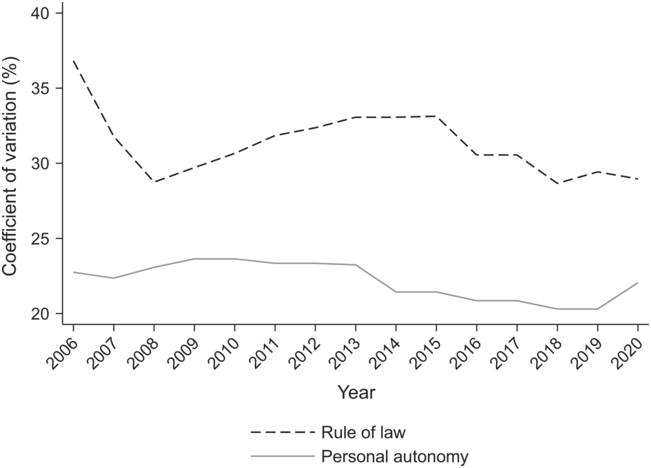
Figure 5.2 Long description
A line graph with the vertical axis labeled coefficient of variation (percent), ranging from 20 to 40 in increments of 5. The horizontal axis spans from 2006 to 2020. Two lines represent the rule of law (dashed) and personal autonomy (solid). The rule of law begins above 35 in 2006, declines to below 30 by 2008, then gradually rises to 33 by 2014, and fluctuates between 29 and 31 through 2020. Personal autonomy starts at 22 in 2006, rises to 24 by 2009, remains steady through 2013, then declines slightly and fluctuates near 21 before rising again in 2020.
The second observable implication derived from the hypothesis about political fragmentation is that we would expect declining fragmentation to correspond with increased deference. The contrast between the decision in Gilbert & othersFootnote 181 and Myrie speaks to this observable implication. Both of these cases relate to the rule of law, especially inhuman and degrading treatment. Like Myrie, the complaint in Gilbert & others concerned the applicants’ treatment by the Barbadian authorities. The applicants claimed that they were detained and subjected to a humiliating strip search for the alleged theft of a cell phone, which interfered with the right to freely move within and depart Barbados. While Myrie related to the treatment of a Community national at the port of border entry, Gilbert & others pertained to treatment of Community nationals after their entry and during their stay in Barbados. Despite some differences, these two cases have important similarities. Yet, the Court deferred in Gilbert & others, having denied special leave to the applicants as it found they had not made an arguable case that the enjoyment of their Community rights had been prejudiced. Interestingly, states’ rule of law preferences were more heterogeneous in 2013 when Myrie was decided than when Gilbert was decided in 2019 (see Figure 5.2). This suggests fragmentation has declined, as expected theoretically given the difference deference.
Third, if political fragmentation is associated with nondeference and vice versa, we would expect to observe low fragmentation on issues where the Court has deferred. Looking at the issue of free movement, this appears to be the case. The Court has, in total, reviewed fourFootnote 182 cases related to free movement: Myrie, Tomlinson, Gilbert & others, and Bain.Footnote 183 Myrie is the only case in which the Court did not defer along all three dimensions (outcome, interpretation, remedy). At the same time, tracing the history of free movement in CARICOM reveals that states broadly agreed on two core aspects of the right to free moment: (1) it is a limited right, and (2) states will dictate the terms and conditions of the right and its expansion. These two common positions are widely known, having clear signals from states, and correspond with the Court’s tendency to defer to states on this issue.
From the beginning, states have been reluctant to introduce a broad right to free movement within CARICOM.Footnote 184 In fact, the original Treaty of Chaguaramas in 1973 asserted that the Treaty did not impose any obligation on states to grant free movement of persons, including nationals, within the Common Market.Footnote 185 In time, however, policymakers and analysts viewed the absence of free movement guarantees as a hindrance to the successful implementation of the Common Market. States consequentially began to integrate a limited principle of free movement. In 1989, they agreed to take steps to ensure passport free travel across CARICOM for its nationals, to enable free movement of skilled and professional personnel and contract workers on a seasonal or project basis, and to eliminate work permits for nationals in the arts, sports, and media for participation at regional events.Footnote 186 This agreement was, however, nonbinding, and, with the exception of passport free travel, was limited to the movement of labor. Even the WIC endorsed a limited free movement.Footnote 187 In 1995, the CHOG agreed to provide for the free movement of skills, eliminating the requirement for work permits, for a limited set of professions. These provisions for the free movement of skills were enshrined within the RTC in Article 46.Footnote 188
The RTC reaffirmed that states agreed to keep the right limited and within their control. Article 45 expressed a broad concept of free movement as merely an aspirational goal, not as a guarantee: Member States “commit[ted] themselves to the goal of free movement of their nationals.” Article 46 also suggests that states envisioned an incremental expansion, subject to their determination, of the right to free movement of skill: “The Conference shall keep the provisions of this Article under review in order to: (a) enlarge, as appropriate, the classes of persons entitled to move and work.”Footnote 189 They also retained the responsibility for monitoring its implementation, according to Article 46(b).
States continued to reveal their accord over a limited right to free movement for Community nationals. In 2007, the CHOG agreed that “all CARICOM nationals should receive entry for up to six months,” but states retained the right to refuse entry for “undesirable persons” and to prevent “persons from becoming a charged on public funds.”Footnote 190 This decision was not without problems and was a step too far for some members. Antigua and Barbuda entered a reservation to this decision. Moreover, two years after the decision entered into force, CARICOM reported that implementation was problematic. Only two states had amended their legislation to accord with the Community decision, and four states still were not implementing it administratively.Footnote 191 More recently in 2018, CHOG decided to expand the free movement of skills to additional professional categories. Yet, Antigua and Barbuda and St Kitts and Nevis opted out of this expansion at the 30th Inter-Sessional Meeting of CHOG.Footnote 192 As a result, the Caribbean Community requested an advisory opinion from the CCJ to determine whether the opt-out by these two states violated Article 27(4) of the RTC. The Court concluded that the RTC permitted these opt-outs.Footnote 193
Practical and security concerns shape states’ interests in maintaining a limited right within their control. According to the International Organization for Migration (IOM), Caribbean states have significant challenges maintaining their borders. As mostly island nations, their coastal borders are difficult to patrol, which makes them vulnerable to human and drug trafficking as well as trade in illegal arms.Footnote 194 They also lack technical capacity to monitor movement across their borders.Footnote 195 For instance, the IOM reports that only four of the CARICOM states have border management systems that are capable of automatically flagging individuals who stay beyond their permitted time.Footnote 196 Together, these issues create significant security threats along with challenging circumstances for border control.
Long-standing political sentiments also drive resistance to free movement across the region. While negotiating the West Indies Federation, leaders opposed “divisions of powers which would curtail their ability to prevent immigration from the other [territories].”Footnote 197 Larger and more prosperous territories feared they would be stuck supporting poorer Caribbeans. Less densely populated territories were weary of an influx of immigrants from the other territories. Some feared that free movement would threaten the ethnic composition of their territories. For example, Indo-Caribbeans in Trinidad and Guyana were afraid that these territories would become predominately Afro-Caribbean.Footnote 198 Similar anxieties and negative perceptions permeate into contemporary political sentiments about free movement protections.Footnote 199
Most states have been reluctant or unable to comply legislatively with their existing commitments to limited free movement rights. Table 5.6 shows that member states, if they do comply, tend to implement provisions through administrative practice, not by legislative reforms. Very few states have codified the various requirements of Community law. No state, as of the end of 2019, had enacted legislation to guarantee spouses and dependents the right to move with their family member who moves on grounds of their Community right to free movement of skills.Footnote 200 Member states’ broad reliance on administrative implementation as opposed to legislative compliance is significant because it was on this basis that the CCJ ruled in Tomlinson: The Court deferred to Belize and Trinidad and Tobago by reasoning that administrative practice was sufficient, irrespective of the incompatibility of the legislation. As one interviewee explained, “to rule on the basis of legislations and to outright say there was a violation would have had so many potential ramifications.”Footnote 201 As most member states use administrative implementation, the free movement regime within CARICOM could have been upended if the Court were to use less deferential reasoning and rule on the basis of legislation.
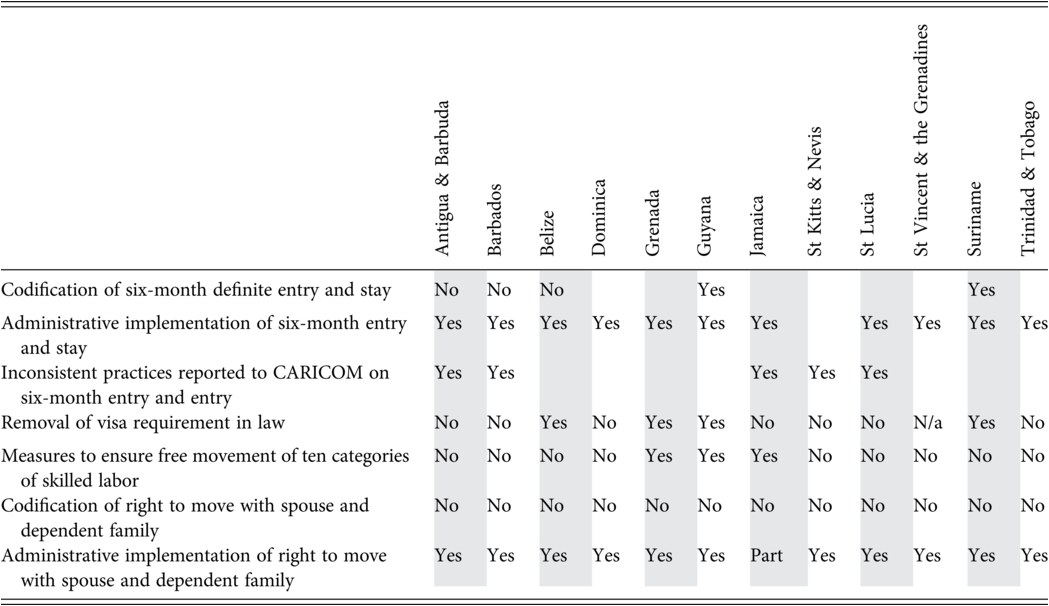
Table 5.6 Long description
The table features the state implementation of C A R I C O M’s free movement requirement across various member states. The rows represent different aspects of free movement requirements, and the columns represent the C A R I C O M member states. The entries in the table indicate the level of implementation for each requirement in each state, using yes, no, Part, or N slash A.
Here’s a summary of the information,
For the codification of a six-month definite entry and stay,
Antigua and Barbuda indicates no.
Barbados indicates no.
Belize indicates no.
Dominica indicates no.
Grenada indicates no.
Guyana indicates yes.
Jamaica indicates no.
Saint Kitts and Nevis indicates no.
Saint Lucia indicates no.
Saint Vincent and the Grenadines indicates no.
Suriname indicates yes.
Trinidad and Tobago indicates no.
For the administrative implementation of a six-month entry and stay,
Antigua and Barbuda indicates yes.
Barbados indicates yes.
Belize indicates yes.
Dominica indicates yes.
Grenada indicates yes.
Guyana indicates yes.
Jamaica indicates yes.
Saint Kitts and Nevis indicates yes.
Saint Lucia indicates yes.
Saint Vincent and the Grenadines indicates yes.
Suriname indicates yes.
Trinidad and Tobago indicates yes.
Regarding inconsistent practices reported to C A R I C O M on six-month entry and entry,
Antigua and Barbuda indicates yes.
Barbados indicates yes.
Belize indicates no.
Dominica indicates no.
Grenada indicates no.
Guyana indicates no.
Jamaica indicates yes.
Saint Kitts and Nevis indicates yes.
Saint Lucia indicates yes.
Saint Vincent and the Grenadines indicates no.
Suriname indicates no.
Trinidad and Tobago indicates no.
For the removal of the visa requirement in law,
Antigua and Barbuda indicates no.
Barbados indicates no.
Belize indicates yes.
Dominica indicates yes.
Grenada indicates no.
Guyana indicates yes.
Jamaica indicates no.
Saint Kitts and Nevis indicates no.
Saint Lucia indicates no.
Saint Vincent and the Grenadines indicates N slash A.
Suriname indicates yes.
Trinidad and Tobago indicates no.
Concerning measures to ensure the free movement of ten categories of skilled labour,
Antigua and Barbuda indicates no.
Barbados indicates no.
Belize indicates no.
Dominica indicates no.
Grenada indicates yes.
Guyana indicates yes.
Jamaica indicates yes.
Saint Kitts and Nevis indicates no.
Saint Lucia indicates no.
Saint Vincent and the Grenadines indicates no.
Suriname indicates no.
Trinidad and Tobago indicates no.
For the codification of the right to move with a spouse and dependent family,
Antigua and Barbuda indicates no.
Barbados indicates no.
Belize indicates no.
Dominica indicates no.
Grenada indicates no.
Guyana indicates no.
Jamaica indicates no.
Saint Kitts and Nevis indicates no.
Saint Lucia indicates no.
Saint Vincent and the Grenadines indicates no.
Suriname indicates no.
Trinidad and Tobago indicates no.
Regarding the administrative implementation of the right to move with a spouse and dependent family,
Antigua and Barbuda indicates yes.
Barbados indicates yes.
Belize indicates yes.
Dominica indicates yes.
Grenada indicates yes.
Guyana indicates yes.
Jamaica indicates Part.
Saint Kitts and Nevis indicates yes.
Saint Lucia indicates yes.
Saint Vincent and the Grenadines indicates yes.
Suriname indicates yes.
Trinidad and Tobago indicates yes.
Note: No information available for Haiti or Montserrat. Empty cells represent missing information.
It is fair to say that judges were aware of these dynamics and states’ agreement to limit and control free movement. For instance, Judge Winston Anderson spoke on these issues in his address to the OECS Bar Association Meeting in 2013.Footnote 202 He elaborated on the historical reluctance on free movement and the context of the “hassle free” principle. The Court itself in Myrie noted the historical background of the free movement and relevant CARICOM reports. Thus, as one interviewee explained, it made sense for the Court to keep member states in mind because “to make [RTC] more effective we [the judges] have to consider how slow or fast to try and develop the law…And if we move to quickly … there could be some problems.”Footnote 203
In this broader context, the CCJ’s tendency to defer on free movement applications is less surprising. Why then did the Court not defer in Myrie, if states were generally unified in their reluctance to extend greater protections to free movement? Most states were in fact dissatisfied with how their nationals were treated and subjected to harassment at ports of entry. A CARICOM report found that
[o]ne of the strongest and most consistent complaints in every Member State is concerned with hassle free travel and facilitation of travel at ports of entry. The remarkable aspect is that the sharpness of the criticism has come from people at every strata of the Community, government officials - including immigration officials who claim that even on official duties on behalf of their governments there was unwarranted hassle and distrustful treatment. The finger pointing was stronger and more resentful at some Member States. This is a state of affairs that could lead to retaliation, a most undesirable consequence.Footnote 204
The frustration with this state of affairs is probably what led states to agree in 2007 that entry should be “without harassment.” All in all, Myrie is the only free movement application in which the Court could have reasonably inferred that most states would agree with the substantive outcome of the Court’s decision to enforce protections on free movement. Myrie thus shows that nondeference can arise when most states will generally agree with the Court’s position. However, nondeference in the other cases was inhibited by state agreement.
Another example unrelated to free movement, TCL v the Caribbean Community, speaks to the third observable implication. In this case, TCL filed a complaint against CARICOM for its decisions to grant a suspension of the common external tariff on cement to seven different states. In reviewing the decision of CARICOM, the Court ruled that there had not been a substantive breach as it was within the discretion of the CARICOM organs to make such a decision, but that CARICOM had procedurally failed by not conducting an adequate assessment. Consequently, the CCJ found that CARICOM had committed a procedural breach but declined to quash the suspension of the CET (deference in terms of remedy). State preferences can help to explain this. Seven states had been granted the suspension (plus Guyana who unilaterally suspended the CET). In essence, eight of the twelve CARICOM Single Market and Economy states supported the suspended CET. The Court could clearly see that if it were to quash the suspension, these eight states would have the necessary votes to override the Court.Footnote 205 Therefore, the politically prudent decision for the Court was to shift focus to the procedural issues and to refrain from offering an intrusive remedy. Hence, deference in this case corresponds with a lack of political fragmentation.
As this discussion demonstrates, variation within the CCJ’s jurisprudence and the extent to which the Court defers or not correspond with temporal and issue-specific patterns of political fragmentation among member states. It also shows that an international court’s strategic space is not static; rather, it is susceptible to fluctuation in political fragmentation.
Past Resistance
Unlike the EACJ, the CCJ has no significant prior experience with collective resistance from states.Footnote 206 The Court, however, struggles to gain states’ acceptance of its appellate jurisdiction. For instance, the Court’s appellate jurisdiction has been rejected by public referenda on two occasions, and, in total, only five of the fifteen members of CARICOM have acceded to the CCJ’s appellate jurisdiction. Arguably, these issues have a minimal impact on the Court’s (non)deference in the original jurisdiction. For this reason, I discuss this issue more in relation to public legitimation.
The CCJ’s Adaptive Practices
Formal independence and political fragmentation structure the CCJ’s strategic space. While these structural constraints are important for understanding the CCJ’s moderate deference, I have argued that practices of adaptation can also be employed by a court, especially when these constraints are greater, to enable more nondeference. The following discussion illustrates if and how the CCJ has developed these adaptive practices and considers how they shed light on (non)deference of the CCJ.
Persuasive Argumentation
International courts can potentially broaden their strategic space by fortifying the persuasiveness of their arguments. I have highlighted two potential modes of persuasive argumentation: unanimous decisions and citation practices. The first of these does not apply to the CCJ within its original jurisdiction. According to Rule 3.4(4) of the Court’s rules of procedure, the Court cannot issue or publish separate opinions and judgments of the Court do not record or reveal judges’ votes.Footnote 207 For this reason, we cannot observe persuasive argumentation through voting patterns or separate or dissenting opinions.
However, the Court’s citation practices reflect efforts to improve the persuasiveness of its arguments and decisions. Table 5.7 summarizes the Court’s citation practices. The table shows that the CCJ cites its own jurisprudence at a relatively high rate, or on average between four and five references to its own judgments per application. Given the Court had only thirty-four judgments in respect of eighteen applications and only one advisory opinion throughout the time period under analysis, this figure is high.
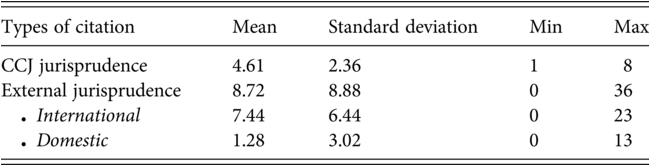
Table 5.7 Long description
The table features descriptive statistics on the Caribbean Court of Justice’s citation practices. The table depicts the mean, standard deviation, minimum value, and maximum value for different types of citations.
For jurisprudence, the mean number of citations is 4.61, with a standard deviation of 2.36. The minimum number of citations is 1, and the maximum is 8.
For external jurisprudence, the mean number of citations is 8.72, with a standard deviation of 8.88. The minimum number of citations is 0, and the maximum is 36.
Regarding international citations, the mean number is 7.44, with a standard deviation of 6.44. The minimum number of citations is 0, and the maximum is 23.
Regarding domestic citations, the mean number is 1.28, with a standard deviation of 3.02. The minimum number of citations is 0, and the maximum is 13.
Note: All eighteen cases are included. The coding of citation practices is based on citations made by the Court itself in its reasoning. It excludes citations raised by the parties to the dispute (unless it is later cited by the Court) or citations that are referred to as part of the factual background of the application. For some applications, the CCJ issued more than one relevant ruling/judgment. A citation is counted only once, even if it appears more than once in a single judgment or in different judgments related to the same application.
In addition, the CCJ frequently cites external, including international and domestic, jurisprudence. Among external citations, international jurisdictions appear frequently; there are over seven references to international jurisprudence on average in the Court’s decisions on any given application. The CCJ cites a wide array of international courts and tribunals, from the ICJ and its predecessor to the Iran–US Claims Tribunal. The Court relies extensively on the jurisprudence of the CJEU, which is an important leader in regional integration law, but it also actively cites other international tribunals, such as WTO panels and the Appellate Body, and human rights bodies (ECtHR, IACtHR, UN human rights treaty bodies). The CCJ cites national courts much less than international courts.Footnote 208 When it does cite domestic jurisdictions, it tends to cite common law jurisdictions.
The theoretical argument maintains that persuasive argumentation should be connected to deference, such that it is more prevalent when an IC does not defer. Do the CCJ’s citation practices support this proposition? Table 5.8 shows that external references appear less often in case outcomes that reflect deference than in those that reflect nondeference.Footnote 209 In fact, in all applications where the applicant wins (or the CCJ does not defer), the Court’s decision featured at least one reference to an external jurisdiction. Yet, it does so in only about 56 percent of the instances of deference. This pattern extends to deference based on remedies and holds for domestic and international citations (see Table A5.2 in Appendix). The applications in which the Court had made the highest number of external citations were also those in which it used a wider array of remedies. For instance, the application with the highest number of external references had an order for reparations (compensation) alongside the declaratory judgment.Footnote 210 All other applications that included a remedial order on top of a declaratory judgment had an above-average number of external citations.
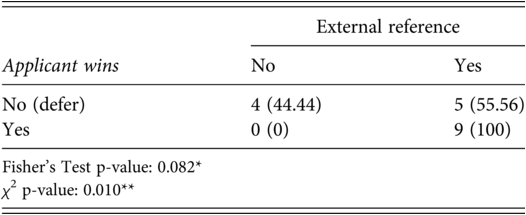
Table 5.8 Long description
The table presents cross-tabulations of the C C J’s citation practices by deference. It examines the relationship between whether the applicant wins, categorized as no, which reflects deference, defer or yes, and the citation of external references, categorized as no or yes. The table provides the number of cases and the row percentage within each cell. Below the cross-tabulation, Fisher’s Test p-value and Chi-squared p-value are reported.
For applicant wins categorized as no, reflecting deference, 4 cases have no external reference, representing 44.44% of cases reflecting deference, and 5 cases have a yes external reference, representing 55.56% of cases lost by applicant..
For applicant wins categorized as yes, 0 cases have no external reference, representing 0%, and 9 cases have a yes external reference, representing 100% of applicant wins.
Statistical test results show that Fisher’s Test p-value is 0.082, and the Chisquared p-value is 0.010.
Note: *p<0.10, ** p<0.05, *** p<0.001. All eighteen applications are included. The first number is the frequency and the second number (in parentheses) is the row percentage.
Interviews suggest that the relationship between citations and deference is intentional. Several interviewees claim that writing a high-quality, “well-reasoned” judgment is how judges seek to gain favor with the Court’s stakeholders. As one judge explained, respect is gained “by the excellence of your judgment.”Footnote 211 The Court “focus[es] on … produc[ing] really good judgments … so as to establish a kind of intellectual legitimacy.”Footnote 212 Another judge suggested that gaining public confidence and respect requires the Court to “show that we master the law, and that we should not be going our own way … we have to look at what earlier courts have said.”Footnote 213
Reference to external jurisprudence is critical to producing well-reasoned arguments. One judge explained that the Court cites external jurisprudence to show the CCJ’s awareness of how other courts have handled similar issues.Footnote 214 Another explained that it is important to look at other jurisdictions “in order to find the best way forward for this society. So that I think there should always be a comparative exercise … those are useful. Markers as to what you might consider when considering a problem.”Footnote 215 Put differently, “outside jurisprudence is not binding, but it can be persuasive.”Footnote 216 This is not to say that citations are the only way to make arguments compelling. For some judges, reasoning, rather than citations, are most important, which may be a product of the judges coming from different judicial systems (common law versus civil law).Footnote 217 Nonetheless, references are an important way in which we can observe the practice of persuasive argumentation and the Court’s efforts to make compelling decisions that will be well received.
Public Legitimation
In addition to persuasive argumentation, I have argued that courts will adopt practices of public legitimation to help expand their strategic space or support nondeference, especially when one of two conditions is present: if an IC has low formal independence, or if an IC has low political fragmentation (H4). The CCJ meets this second condition, as the membership is typically like-minded. I also raised the possibility that public legitimation may be affected by whether states can unilaterally exit (or conversely accede to) aspects of a court’s jurisdiction, which applies in the case of the CCJ because states can unilaterally accede to its appellate jurisdiction. As mentioned earlier, only five states have accepted this jurisdiction.Footnote 218 The public is especially important for accession to the appellate jurisdiction because several CARICOM states require public referenda to enable the constitutional reform necessary for the CCJ to become their court of last resort. Already, two states (Grenada and Antigua and Barbuda) have rejected the appellate jurisdiction by public referendum.Footnote 219 Thus, I expect to observe extensive practices of public legitimation by the Court, that is, public messaging about the Court’s commitment to its political purpose and its people-centeredness. An analysis of the Court’s publications, including annual reportsFootnote 220 and speeches by judges,Footnote 221 as well as interview material demonstrate that the Court is concerned with its public image and has utilized a variety of initiatives to (re)construct its public image.
Concern for and a desire to nurture its public image have been a running theme for the Court. When the CCJ began operating in 2005, it was apparent to the Court’s leaders that public perceptions were important. In the CCJ’s first annual report, it explained: “With the Court still in the early days of its development and with many as yet unfamiliar with its workings, as well as the fact that there has been much misinformation, the Court has to go about gaining the trust and confidence of the people.”Footnote 222 The Court therefore identified “attaining and preserving public trust and confidence” as one of its key performance standards.Footnote 223 It also stated, “[m]uch care has been taken by the Caribbean Court of Justice in ensuring accessibility… The Caribbean Court of Justice is determined to ensure that the people of the Caribbean know their court and have access to the activities and records of the court.”Footnote 224 It also saw public education as essential to the Court’s accountability.
The Court’s public image has continued to be an important occupation for the Court, its judges, and personnel. For example, its strategic plan for 2013–17 identified “access to justice” and “attaining and preserving public trust and confidence” among its key strategic themes.Footnote 225 Similarly, the last strategic plan applicable to the time period analyzed includes “access to justice” as an overarching themeFootnote 226 and identifies “inform[ing]and engag[ing] the regional and global community about its role and its work to facilitate greater access to the Court and promote public trust and confidence” as one of its main goals.Footnote 227 All in all, the Court expressed concern for its public legitimacy throughout the entire period under examination.
Moreover, the CCJ relied on public-oriented communication, information dissemination, and outreach to nurture its public standing. In its first year of operation, the Court began a “public education and information program,” and in conjunction with its “access to justice” initiative, the Court developed a well-functioning website and used technology to make documents, judgments, and audio and video recordings available to the public.Footnote 228 Also as part of these programs, the Court’s Protocol and Information Division “embarked on the regular provision of information on the Court and the commission through all the media: print, audio and visual.”Footnote 229 The “Court [undertook] a public outreach programme, through which it interface[d] directly with the Caribbean public, either by inviting groups into the Court for contact sessions, or by taking its message ‘on the road’ as it were, into the very heart of constituent communities.”Footnote 230 Judges frequently spoke at various events across the region, for instance, and the Court welcomed and informed visitors such as school groups and guided tours.Footnote 231 In 2008, the Public Education and Communication Unit was established, “in keeping with the Court’s commitment to Public Education to support access to justice, to build public trusted and confidence and to assist the Court’s accountability.”Footnote 232 This manifested in initiatives like a three-minute video that was featured on Caribbean Airlines’ inflight program, and similar video content featured on local television networks across the region.Footnote 233
The Court continued to prioritize public-oriented communication and outreach in the 2010s. For instance, in 2012 it engaged a media consultant, met with media personnel throughout the region, and relaunched its web presence with an improved website and use of social media platforms.Footnote 234 The Court communicated with the public through the press, regularly publishing press releases and engaging with the traditional media. For instance, the Court hosted a Media Day with regional and local media houses in attendance, “during which, judges and external speakers made presentations on the work of the Court and its influence on regional law.”Footnote 235 In 2019, the Court “disseminat[ed] hundreds of copies of ‘Fast Facts about the CCJ’ as an insert in a local daily newspaper.”Footnote 236 Judges represent the Court at various events, meetings, and conferences across the region; between 2005 and 2020 the judges had 154 speaking engagements,Footnote 237 or roughly 10 per year. For instance, between July 2018 and July 2019, President Saunders spoke at nine different regional and international meetings.Footnote 238 Also important to outreach are its special sittings, when the Court is itinerant. Since its first special sitting in 2010,Footnote 239 it has held sessions in Barbados, Guyana, Jamaica, Belize, Antigua, and St Vincent and the Grenadines.
The Court’s public communication and outreach, as well as other nonjudicial activities, portray the Court’s commitment to its political purpose, especially to strengthening of the rule of law and democracy within the region, community values, and the Caribbean people. On the one hand, the CCJ presents itself as a champion of the rule of law in the region. Since it began operating, the Court envisioned that it would be “worthy of emulation by courts of the region and the trust and confidence of its people.”Footnote 240 This vision statement was rearticulated in 2018 as “to be a model of judicial excellence.”Footnote 241 The Court’s commitment to the rule of law and democracy is echoed in how the CCJ’s President presents the Court: “I am convinced that to gain stronger support in the region, more information must be provided to the Caribbean public about the Court, its institutional architecture, its work over the last 13 years and what it can do to advance democracy and the rule of law in the Caribbean.”Footnote 242 Beyond words, the CCJ’s vision influences its nonjudicial activities and initiatives. For instance, the CCJ and its judges were part of a project called JURIST, which worked to improve the rule of law and the judiciaries throughout the region.Footnote 243 Additionally, the CCJ created the CCJ Academy for Law to “provide informative and innovative perspectives on the rules and the roles of law” and to be “a platform for examining court administration and encouraging best practices in the judicial administration of justice.”Footnote 244 As Justice Saunders explained at a public gathering, “The Court seeks consciously to develop and adopt effective practices and procedures and assist the courts of the region to strengthen their ability to engage in meaningful judicial reform and enhance justice delivery.”Footnote 245
On the other hand, the Court’s public messaging and “off-the-bench” activities frequently highlight community values and refer to the community of people it serves. For instance, the main slogan of the Court, as seen on its website, reinforces this image: “Your People. Your Region. Your Court.” The CCJ’s vision, especially in its early years, included “fostering jurisprudence that is reflective of our history, values and traditions.” Similarly, when judges deliver speeches, they often refer to the Caribbean people. For example, Justice Byron, when speaking at the Moot Law ceremony, said: “Culminated in the existence of this Court, your Court, are the aspirations of Caribbean peoples. And it is a hope that the Caribbean Court of Justice by its existences epitomises. The CCJ is currently poised to contribute to positive change in the social order of our Caribbean societies.”Footnote 246
Generally, we can see the Court has practiced public legitimation through a variety of actions: It prioritizes reshaping how the Court is perceived through a variety of public-oriented practices that convey messages of the Court’s people-centeredness and commitment to its political purpose. Interviews reveal, however, that there is some unease with the CCJ using these practices. As one judge explained, “we were told by quite a few of our stakeholders that they did not like the idea of the judges doing a lot of what we regarded as public relations work. They did not like the idea of judges debasing themselves as salespersons of the Court.”Footnote 247 Another judge expressed discomfort with the Court employing some of these methods,Footnote 248 while a lawyer suggested that the Court has to be careful with how they promote the Court: “They can’t appear to be too strident and too nonjudicial.”Footnote 249
The CCJ clearly practices public legitimation. To determine the scale or intensity of these practices and the relative weighting of people-centered and political purpose narratives, I rely on the Court’s public communication on social media. Using a web-scraping tool, I extracted the CCJ’s Facebook posts from 2018 to 2020.Footnote 250 I then conduct a text analysis of its posts, which includes 306 posts in total. Using the words or phrases commonly found in the speeches that frame the Court’s political purpose and people-centeredness, I examine the prominence of these narratives in the Facebook posts. Table 5.9 displays the words and phrases used for this purpose, as well as the number and percentage of Facebook posts that feature them. It shows that narratives associated with public legitimation are present in a small portion (approximately 13 percent) of the CCJ’s posts. It is difficult to discern any temporal patterns because the CCJ opened a Facebook account after some years of being in operation. However, the data suggest that the CCJ prioritizes people-centered narratives over commitment to its political purpose, as reflected in their relative prominence. The former is present in 10 percent of posts, while the latter is found in 5 percent of posts. The focus on people-centered narratives may be informed by the CCJ’s general interest in differentiating itself from British justice, which cannot claim to reflect Caribbean-ness. Given the postcolonial legacies and the generally favorable views toward British justice, if the CCJ is to extend its appellate jurisdiction it will need to differentiate itself from British Privy Council. In other words, portrayals of the Court’s Caribbean identity speak to the CCJ’s view that the states unilateral acceptance of it plays strongly in how it understands its political constraints, and its public legitimation is oriented toward reshaping its strategic space with this constraint squarely in mind.
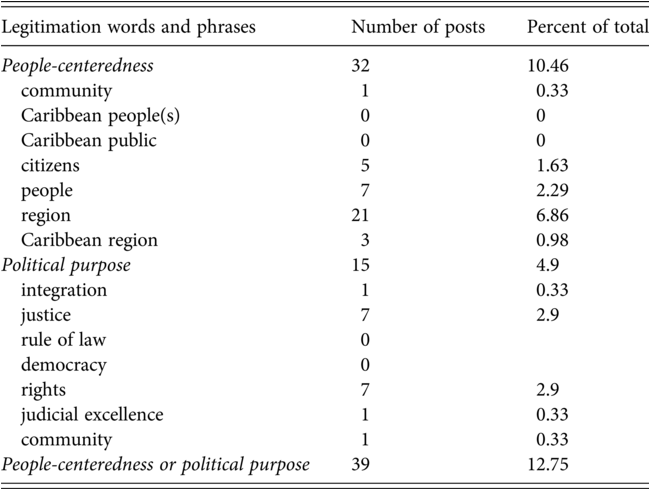
Table 5.9 Long description
The table features public legitimation narratives in the Caribbean Court of Justice’s Facebook posts. The table lists legitimation words and phrases along with the number of posts in which they are used and the percentage of the total posts that include each word or phrase.
1. People-centeredness
This category is used in 32 posts, representing 10.46% of the total.
The word community is used in 1 post, representing 0.33% of the total.
The word or phrase Caribbean people or peoples is used in 0 posts, representing 0% of the total.
The phrase Caribbean public is used in 0 posts, representing 0% of the total.
The word citizens is used in 5 posts, representing 1.63% of the total.
The word people is used in 7 posts, representing 2.29% of the total.
The word region is used in 21 posts, representing 6.86% of the total.
The phrase Caribbean region is used in 3 posts, representing 0.98% of the total.
2. Political purpose:
This category is used in 15 posts, representing 4.9% of the total.
The word integration is used in 1 post, representing 0.33% of the total.
The word justice is used in 7 posts, representing 2.9% of the total.
The phrase rule of law is used in 0 posts, representing 0% of the total.
The word democracy is used in 0 posts, representing 0% of the total.
The word rights is used in 7 posts, representing 2.9% of the total.
The phrase judicial excellence is used in 1 post, representing 0.33% of the total.
The word community is used in 1 post, representing 0.33% of the total.
3. People-centeredness or political purpose
This combined category is used in 39 posts, representing 12.75% of the total.
Note: All words and phrases are case sensitive.
In sum, we can see that the CCJ employs both persuasive argumentation and public legitimation. I contend that the Court relies on these practices to boost its strategic space. Nondeference necessitates such practices, even though the institutional safeguards to independence are robust, because the alignment of political preferences effectively lowers the barriers to collective resistance. The way to compensate for the lowered barriers and decrease the feasibility of state override of the Court, or worse, is to raise states’ audience costs for doing so. This benefit arises from improving the persuasiveness of judgments and bolstering the Court’s public image.
Conclusion
The main findings of this chapter can be summarized in four main points. First, the CCJ is an institution that stemmed from colonial legacies that contributed to prominent political norms of independence and sovereignty and regionalism and unity. These norms historically and currently are in tension. Moreover, the legal culture across CARICOM is characterized by pluralism as well as a lack of faith in the state legal order. This ideational context has important similarities to EACJ and the ACtHPR.
Second, in contrast to the EACJ and ACtHPR, the CCJ demonstrates moderate deference. In some regards, the CCJ is nondeferential. Its legal interpretations, for instance, have paved the way toward establishing principles like the supremacy of Community law and direct effect. In terms of outcomes, states lose more often than they win (by 2:1). On the other hand, the Court defers more to states in terms of how it utilizes its remedial powers. While the CCJ has used its full range of remedial powers, it shows restraint in ordering intrusive remedies. It seems to prefer a subtle approach by recommending, rather than ordering, changes to law and policy. Additionally, the Court defers more toward Community organs than it does to individual respondent states. These patterns generally suggest a Court that operates within a midrange strategic space, which produces a moderate degree of deference.
Third, the observed patterns of deference by the CCJ are difficult to square with the role of its support network. While there are the markings of a burgeoning support network, it remains small and its influence limited, while a subset of the legal elites prefer a weak CCJ. Many channels through which international courts have elsewhere benefited from robust networks remain empty vessels so far. National courts have not referred applications to the CCJ, despite efforts by the Court to encourage national judges and lawyers to pursue this option. The Community institutions are often legally constrained from approaching the CCJ for dispute resolution. CARICOM remains largely state-led and intergovernmental. If they are to avail themselves of the CCJ, they are likely to request advisory opinions rather than use the contentious jurisdiction (if they are able). Private litigants up to this point have been the lifeline of the CCJ’s original jurisdiction. In this regard, the Court has benefited enormously from private actors and their lawyers. With that said, their utilization and participation in the judicial process do not align with the patterns of deference. I observe no clear statistical relationship between repeat lawyers or third-party actors and deference. If anything, the Court’s nondeference reflects an effort to expand its support network, rather than being a result of it.
Last, the observed deference of the CCJ corresponds with its intermediate constraints. The Court has robust formal safeguards to judicial independence, more than any other international court. The Court’s formal independence affects how the institution is perceived: judges and practitioners express confidence in the institutional safeguards protecting the Court from political interference. Formal independence also narrows the options available to states to collectively resist the CCJ, which may account for why the Court has not experienced significant forms of resistance. On the other hand, CARICOM states are minimally fragmented, having homogeneous preferences. This makes potential override of the Court more feasible and credible. It is on this account that the CCJ has deferred both in terms of how it uses remedial orders and when CARICOM is the respondent, whose decisions directly reflect the accord of states. Unlike other regional organizations, CARICOM decisions are taken exclusively by intergovernmental decision-making processes. Thus, while formal independence broadens the CCJ’s strategic space, homogeneous preferences narrow it. Additionally, preference homogeneity helps to account for differences in deference depending on the issue at the center of a dispute. To minimize the constraining effects of homogeneous preferences, and thereby expand its strategic space, the Court relies on persuasive argumentation, mostly by situating its decisions in the context of authoritative international jurisprudence, and public legitimation that highlights its Caribbean identity. Thus, the theoretical argument is broadly supported by the case of the CCJ. Chapter 6 assesses the argument in the case of the African Court on Human and Peoples’ Rights.
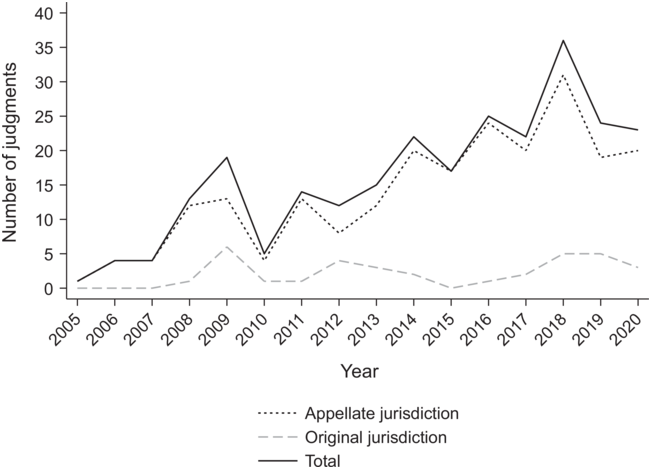
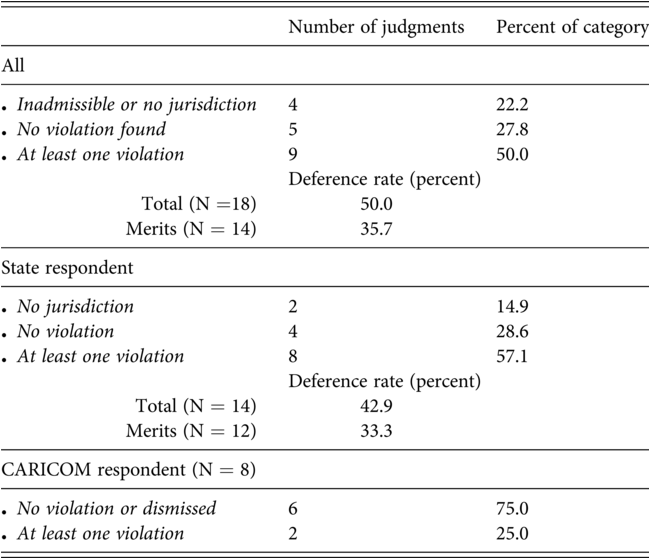
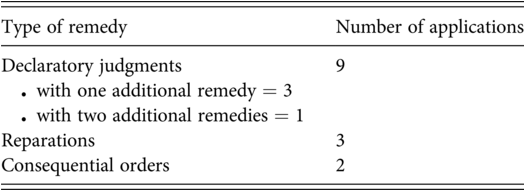
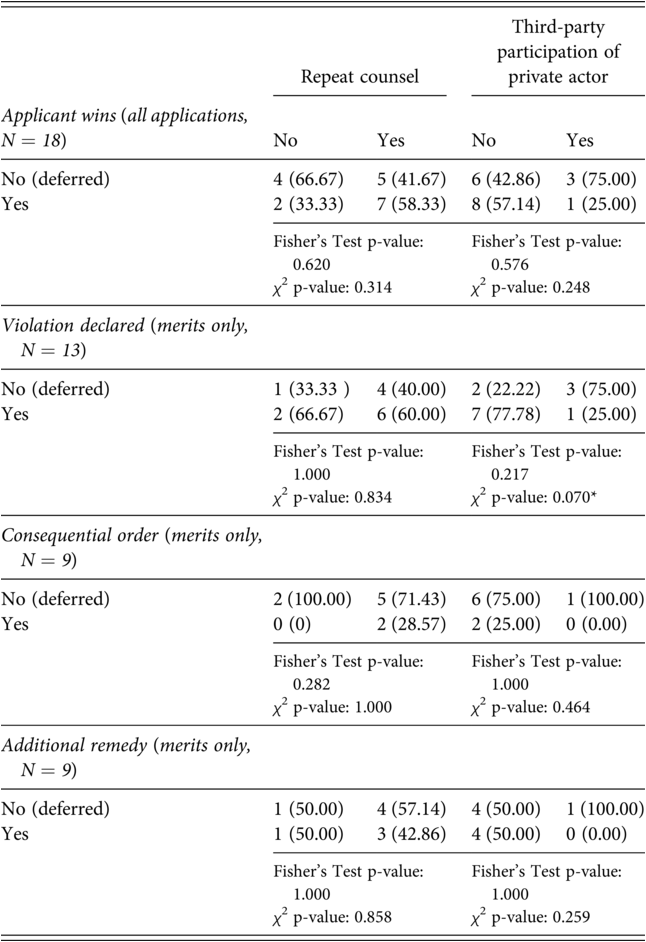
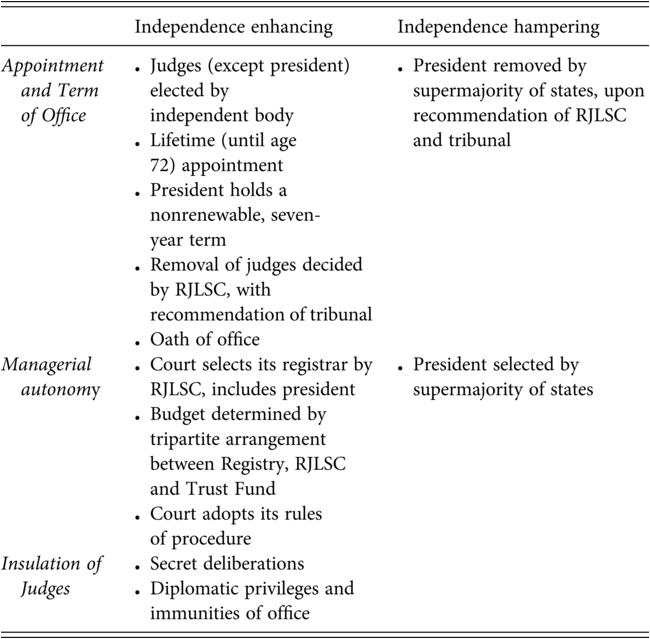
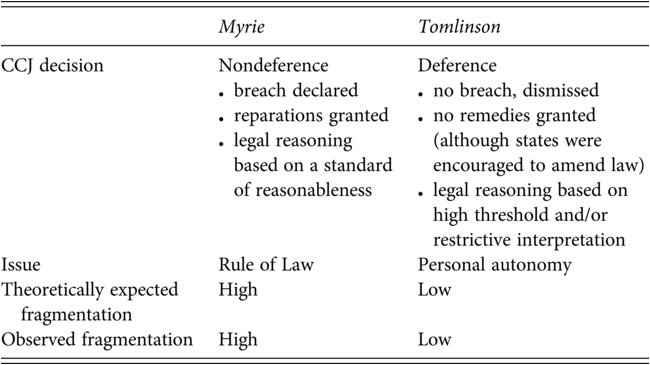
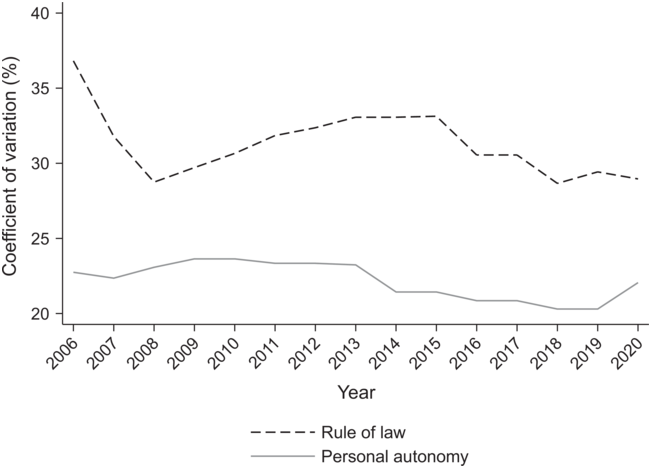
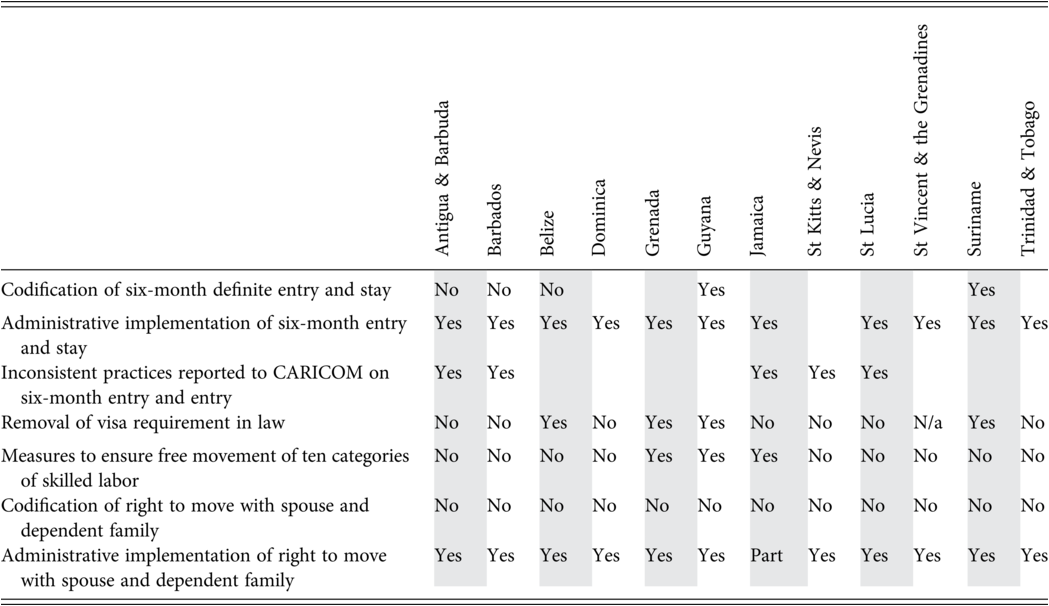
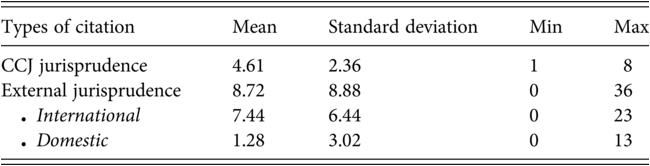
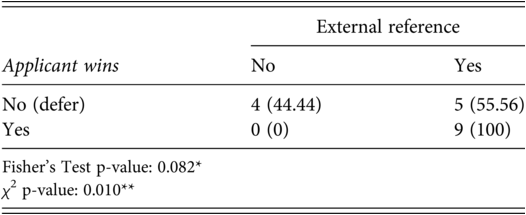
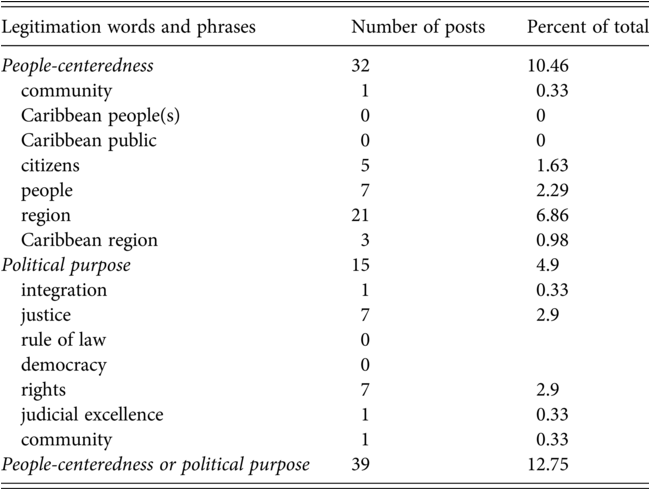

 Open access