


1 Introduction
It has been well established that consumers’ perceptions of product forms can influence their purchasing decisions (Bloch Reference Bloch1995). Rather than focusing solely on objective information, people use heuristics based on the product form to make inferences about objective product attributes (Tversky & Kahneman Reference Tversky and Kahneman1974). For example, individuals made inferences about the flavor and quality of wine based on the shape of the wine bottle (MacDonald et al. Reference MacDonald, Lubensky, Sohns and Papalambros2008) and made environmentally conscious evaluations of cars based on car shapes (Reid, Gonzalez & Papalambros Reference Reid, Gonzalez and Papalambros2010; Reid, MacDonald & Du Reference Reid, MacDonald and Du2013). However, these researchers have not studied how these evaluations change or remain the same over time.
Researchers in design have conducted a significant number of shape-perception studies, especially in an automotive context. Many of these studies have focused on preference evaluations (Orsborn, Cagan & Boatwright Reference Orsborn, Cagan and Boatwright2009; Kelly et al. Reference Kelly, Maheut, Petiot and Papalambros2011; Reid et al. Reference Reid, MacDonald and Du2013; Orsborn, Cagan & Boatwright Reference Orsborn, Cagan and Boatwright2015) and semantic evaluations (Lai, Chang & Chang Reference Lai, Chang and Chang2005; Reid et al. Reference Reid, MacDonald and Du2013; Orbay, Fu & Kara Reference Orbay, Fu and Kara2015), especially as they relate to sustainability considerations (Reid et al. Reference Reid, Gonzalez and Papalambros2010; Reid, Frischknecht & Papalambros Reference Reid, Frischknecht and Papalambros2012; Tseng et al. Reference Tseng, Cagan, Kotovsky and Wood2013; Sylcott, Orsborn & Cagan Reference Sylcott, Orsborn and Cagan2014; Goucher-Lambert & Cagan Reference Goucher-Lambert and Cagan2015). When developing new vehicles, an automotive designer needs to balance trade-offs between competing customer considerations (Burnap et al. Reference Burnap, Hartley, Pan, Gonzalez and Papalambros2016). This is especially true for sustainable-design considerations because customers often perceive environmentally conscious products as having lower quality (Goucher-Lambert & Cagan Reference Goucher-Lambert and Cagan2015). In an objective sense, sustainable design can lead to the improvement of one attribute at the expense of one or more others (Chen Reference Chen2001), such as safety (which may be compromised due to excessive light-weighting of vehicles (Crandall & Graham Reference Crandall and Graham1989)) and performance (e.g., the rate of acceleration (Boyd & Mellman Reference Boyd and Mellman1980) and the overall vehicle ride may decline (Crandall & Graham Reference Crandall and Graham1989)). Prior work by Tseng et al. showed that, on the basis of shape characteristics of cars, customers are able to make accurate inferences about objective measures regarding those cars (Tseng et al. Reference Tseng, Cagan, Kotovsky and Wood2013). However, the way in which customers’ sustainability perceptions relate to their safety perceptions has not been studied systematically and in the context of automotive design.
To address these research gaps – that is, how customers’ form-based evaluations change with time, and how people make trade-offs when evaluating car environmental friendliness and safety – a within-subjects study was conducted first in 2009 (Study 1) and then repeated in 2016 (Study 2). The study consisted of having participants evaluate a set of vehicles developed by designers in industry. Their evaluations included ratings on safety, perceived environmental friendliness (PEF), and other factors. We obtained interesting results on how people make trade-offs between cars that look safe and those that look green and how customers change their form evaluations over time. These results may provide designers with insights into how to create shapes with balanced PEF and safety in the early design stage.
In the remaining sections, we proceed as follows. We present a literature review on product forms and customers’ evaluations in Section 2. The methods, including the creation of vehicle silhouettes and the design of experiment, are presented in Section 3. The experimental results, discussion, and conclusions are presented in Sections 4, 5, and 6, respectively.
2 Background
2.1 Product form and customers’ evaluation
Customer evaluation of products is a complex decision-making process (Hoyer Reference Hoyer1984). Nearly 80% of all information crucial for people’s decisions is gathered by the eye (Schmitt et al. Reference Schmitt, Köhler, Durá and Diaz-Pineda2013), so visual impressions are often more decisive during design evaluation than other impressions (e.g., haptic, acoustic) (Duchowski Reference Duchowski2007). Bloch (Reference Bloch1995) pointed out that product form is an important part of product evaluations. By presenting product forms to customers, researchers are able to get customers’ subjective evaluation of different aspects of products (Holbrook Reference Holbrook1999; Boztepe Reference Boztepe2007; Kumar & Garg Reference Kumar and Garg2014), including product preferences, purchasing decisions based on Discrete Choice Analysis (Chen & Wassenaar Reference Chen and Wassenaar2003), emotions using Kansei Engineering (Nagamachi Reference Nagamachi1995; Orth & Malkewitz Reference Orth and Malkewitz2008; Kumar & Garg Reference Kumar and Garg2014), and/or inference-based evaluations of products such as PEF on vehicle silhouettes (Reid et al. Reference Reid, Gonzalez and Papalambros2010). Designers can then design better products by incorporating customers’ preferences on product forms (Sylcott et al. Reference Sylcott, Orsborn and Cagan2014), including aesthetic considerations (Lugo et al. Reference Lugo, Schmiedeler, Batill and Carlson2015; Valencia-Romero & Lugo Reference Valencia-Romero and Lugo2016). Orbay et al. (Reference Orbay, Fu and Kara2015) investigated the relationship between product form and consumer responses through a visual deconstruction and abstraction of existing final products. The study produced a spectrum of abstractions for a given 3D computer model (e.g., a nine-level simple-to-complex abstraction of a Ford Mustang model). The results showed that emotional responses evoked by coarse product impressions are strongly correlated with those evoked by final production models. Similar results can be found in the papers by Artacho-Ramirez, Diego-Mas & AlcaideMarzal (Reference Artacho-Ramirez, Diego-Mas and AlcaideMarzal2008) and Bates-Brkljac (Reference Bates-Brkljac2009). Orsborn et al. (Reference Orsborn, Cagan and Boatwright2015) proposed the continuous visual conjoint, which provides design researchers with a technique for quickly gathering user responses to visual information about product concepts, including shape, color, or experience. This preference information can then be modeled with a utility function and used to generate design concepts preferred by the targeted users. These studies suggest that researchers can get valuable information about customers’ evaluation of product shapes even if using simple or low-fidelity representations. Inference-based questions are proven to be robust regardless of product representation mode, but opinions can vary with representation mode (Reid et al. Reference Reid, MacDonald and Du2013). Other researchers have observed a similar trend in opinion-based questions in a study on flatware (Sylcott et al. Reference Sylcott, Orsborn and Cagan2014). These findings provide insight into what one can expect when using a single representation mode during product evaluations.
2.2 Customers’ preferences and inference-based evaluations on products
According to Reid et al. (Reference Reid, MacDonald and Du2013), customer evaluations on products can be classified into three groups: opinions, objective evaluations, and inferences. Opinions are product evaluations that are not right or wrong and that can vary between different individuals (e.g., How creative is this design?). Preference evaluations are a subset of opinions (e.g., Which design do you prefer?). An objective evaluation is either right or wrong and is made by a customer who has access to the information needed for making it (e.g., Which product is longer? Which of the designs is symmetrical?). An inference is also either right or wrong, but is made by a customer who either is not provided with the necessary information or is provided with incomplete information (e.g., Which design is the safest? How sustainable is this design?).
Previous studies have shown how customers systematically make inference-based evaluations. For example, MacDonald, Gonzalez & Papalambros (Reference MacDonald, Gonzalez and Papalambros2009a ) quantitatively examined the relationship between important, complex product attributes (crux attributes) and perceptually related but less important attributes (sentinel attributes). A ‘crux’ attribute is the critical element or function for which a product is purchased (e.g., absorbent paper towels). A ‘sentinel’ attribute is one that consumers use to help them to evaluate the product for that crux attribute (e.g., quilting on paper towels). Their results showed that the quantitative value of sentinel attributes is critically high in a marketplace where customers do not have access to information about crux attributes. Car shape can potentially serve as a sentinel attribute for the crux attribute of environmental friendliness (Reid et al. Reference Reid, Gonzalez and Papalambros2010), and others. After mapping the product-shape features with customers’ preferences and evaluations on products, designers are able to improve the product to better satisfy customers’ needs and expectations, in both form and function.
The remaining sections will review two inference-based evaluations important to this work: the PEF and the perceived safety of products.
2.2.1 Perceptions of the environmental friendliness of products
Environmental concerns have attained substantial momentum and are continuing to alter consumers’ basic habits (Stisser Reference Stisser1994; D’Souza Reference D’Souza2004). Vehicle producers are also willing to attract customers with their new environmentally friendly products (Coad, De Haan & Woersdorfer Reference Coad, De Haan and Woersdorfer2009). Previous studies have shown that green consumers are willing to change their consumption behavior to preserve the environment (Kassarjian Reference Kassarjian1971; Brooker Reference Brooker1976; Du Preez, Diamantopoulos & Schlegelmilch Reference Du Preez, Diamantopoulos and Schlegelmilch1994). However, as Goucher-Lambert & Cagan (Reference Goucher-Lambert and Cagan2015) pointed out, sustainable products often struggle to find success in the marketplace. Research has shown that although customers approve of sustainable products and technologies, they are often unwilling to purchase them (MacDonald, Gonzalez & Papalambros Reference MacDonald, Gonzalez and Papalambros2009b ; Hahnel, Gölz & Spada Reference Hahnel, Gölz and Spada2014). On one hand, customers do not completely trust the environmental claims made by producers/companies. For example, most respondents to a survey administered by Chase & Smith (Reference Chase and Smith1992) reported that environmental claims were not particularly believable. In another survey, only 15% of respondents said that environmental claims were extremely or very believable (Dagnoli Reference Dagnoli1991). Product messaging may not be effective because ‘people are busy, and may not be paying attention’ (Brannan, Heeter & Bird Reference Brannan, Heeter and Bird2012). With the public’s growing concerns about ‘greenwashing’ (i.e., superficial environmentally friendly actions with a greater purpose of profit), customers may not believe that those products with environmental labels and claims are really ‘green’ (Laufer Reference Laufer2003; She & MacDonald Reference She and MacDonald2014).
On the other hand, customers remain unwilling to sacrifice product attributes such as form, function, or price in order to adopt a product whose environmental impact is less than that of a competing product (Goucher-Lambert & Cagan Reference Goucher-Lambert and Cagan2015). One example of an environmentally friendly product being unsuccessful in the consumer marketplace was the initial offering of the Honda Insight hybrid vehicle in 1999 (Cagan & Vogel Reference Cagan and Vogel2013). While this product met the environmental needs of target consumers, many perceived the form of the vehicle to be strange (Goucher-Lambert & Cagan Reference Goucher-Lambert and Cagan2015). To remedy the problem, Honda adjusted the vehicle’s form until its shape became appealing to consumers again.
Therefore, to convey the concept of ‘environmentally friendly’, a product should use its form, labels, and messages to convince customers. She & MacDonald (Reference She and MacDonald2014) presented a design technique that uses priming specifically to help designers to communicate sustainability via design at an early stage in the design process. Their research suggested a method to improve the communication of a product’s sustainability by imbuing this communication in the product’s design, instead of relying on superficial or traditional marketing messages. Similar studies on PEF judgments and product forms can be found in Reid et al. (Reference Reid, Gonzalez and Papalambros2010, Reference Reid, Frischknecht and Papalambros2012) and Tseng et al. (Reference Tseng, Cagan, Kotovsky and Wood2013).
2.2.2 Perceptions of the safety of products
Very few studies address the role of product form in safety perceptions. However, studies on safety perception can be found in various domains, such as online shopping (Noort, Kerkhof & Fennis Reference Noort, Kerkhof and Fennis2008), food safety (Roosen, Hansen & Thiele Reference Roosen, Hansen and Thiele2004; Parra et al. Reference Parra, Kim, Shapiro, Gravani and Bradley2014), traffic safety (Anstey et al. Reference Anstey, Horswill, Wood and Hatherly2012; El-Basyouny & El-Bassiouni (Reference El-Basyouny and El-Bassiouni2013); Jian-you et al. Reference Jian-you, Xiao-fen, Liang, Shuang-xi and Xi-yang2013), and hospital environments (Haugen et al. Reference Haugen, Søfteland, Eide, Nortvedt, Aase and Harthug2010; Saleh, Darawad & Al-Hussami Reference Saleh, Darawad and Al-Hussami2015). In the automotive field, the evaluation of safety performance of cars is one kind of objective evaluation that often plays an important role in customers’ purchase decisions (Kaul et al. Reference Kaul, Singh, Rajagopalan and Coury2010; Vrkljan & Anaby Reference Vrkljan and Anaby2011; Isa et al. Reference Isa, Ariffin, Jawi and Kassim2012), motivating some customers to pay for additional safety features such as anti-lock brakes (ABS) and electronic stability control (ESC) (Kaul et al. Reference Kaul, Singh, Rajagopalan and Coury2010; Isa et al. Reference Isa, Ariffin, Jawi and Kassim2012). However, although a customer may start a decision task using these objective considerations, they will resort to subjective criteria when presented with many similar alternatives (Reid et al. Reference Reid, Frischknecht and Papalambros2012).
Researchers have also focused on the interrelation between customers’ perception of car safety and car shapes, although inconsistent results have been found. For example, Thomas & Walton (Reference Thomas and Walton2007) found that when purchasing a car, customers with high safety perception showed no preference for large SUVs (sport utility vehicles) over smaller cars; thus, the study concluded that the consumers’ consideration for safety was unrelated to the size of the vehicle. Nevertheless, Shende (Reference Shende2014) examined the Indian car industry and found that customers perceive SUVs and MUVs (multi-utility vehicles) to be safer due to their look, structure, and exterior styling. Affordance perception may be an alternative way to measure customers’ safety evaluations (Ayres et al. Reference Ayres, Wood, Schmidt, Young and Murray2000).
2.2.3 Summary of inference-based evaluations
Previous studies have shown that visual cues can be used to make inferences about product attributes. However, most of these studies only examined one inference-based evaluation. What is unknown is how the same set of visual cues in a given product may influence more than one inference-based evaluation of that product, such as safety and environmental friendliness perceptions. In the context of automotive studies, the degree to which perceptions of vehicle safety influence how people evaluate environmentally conscious vehicles is not well documented. Anecdotal evidence suggests that cars that look environmentally friendly (e.g., early models of the Toyota Prius) often appear unsafe to people. Therefore, there is a need to investigate the visual cues that influence customers’ safety perception and how it interacts with their perception of the environmental friendliness of cars.
2.3 Research on customers’ changing trend of product evaluations
In the design-research community, no studies have examined how customers change their product evaluations over time. Researchers from consumer studies and marketing have made exploratory investigations on this topic. Woodruff (Reference Woodruff1997) defined customer value as ‘a customer perceived preference for and evaluation of those product attributes, attribute performances, and consequences arising from use that facilitate (or block) achieving the customer’s goals and purposes in use situations’. This definition suggests that there are two aspects of customer value: desired value and perceived value. The former refers to what customers desire in a product or service, while the latter is the benefit that a customer believes he or she will receive from a product after it has been purchased (Shanker Reference Shanker2012). Flint & Woodruff (Reference Flint and Woodruff2001) introduced a theoretical model to explain the changes in customers’ desired value in the U.S. automobile industry and the initiators behind the changes. The study stated that the top driving force for customers to alter the products and services is changes in their demands. They also suggested that suppliers should focus on the psychological effect of change events on individual customers and their response to those effects to predict changes in their desired value (Flint & Woodruff Reference Flint and Woodruff2001).
In the green-product industry, researchers found, in a longitudinal study of the strategies used by green companies, that the reputation of a company/brand and their advertising are the top two factors that strongly influence consumers’ behavior (Smith & Brower Reference Smith and Brower2012). On the other hand, customers’ knowledge, commitment, and general awareness of green products shape their opinions and decisions when they are consuming them (Maniatis Reference Maniatis2016). Yusof et al. (Reference Yusof, Singh and Razak2013) studied the relationship between internal and external factors that influence customers’ behavior in the green-automobile industry. They found that customers’ knowledge of the environment strongly affects their perception of environmentally friendly vehicles, which in turn influences their purchase intention. A 2007 study on early adopters of hybrid vehicles showed that people purchased them for reasons that aligned with the issues of that time (Heffner, Kurani & Turrentine Reference Heffner, Kurani and Turrentine2007). In the early 2000s, there was an increased public awareness of and discussion on climate change issues and the contributions of greenhouse gas emissions to the problem, especially those that came from automobiles. High gas prices were the norm of the time, and automakers were showing social responsibility by producing light-duty vehicles and hybrid vehicles. Thus, the reasons why these early adopters purchased hybrid electric vehicles included reducing support to oil producers, preserving the environment, and opposing the war (Heffner et al. Reference Heffner, Kurani and Turrentine2007).
In summary, previous researchers have investigated some factors that influence how customers change their evaluation of products and services, but none of them have examined how customers would respond to and evaluate product forms over time.
2.4 Summary, research questions, and hypothesis formulation
Previous studies have shown that customers are able to use both direct information (e.g., environmental claims, safety specifications) and indirect information such as product form to provide opinions on and make inferences about product characteristics. However, few studies have examined the effect of the same set of product attributes on more than one inference-based attribute, namely customers’ perception of environmental friendliness and safety in the context of cars. In addition, no studies have been conducted in the design community to examine how product evaluations change over time. To cover these gaps, we conducted two studies to investigate (1) how people perceived and evaluated a set of car shapes, particularly the environmental friendliness and safety of cars, and (2) how these same sets of cars were evaluated seven years later. The following research questions and hypotheses guide the development of our studies.
Q1: What is the relationship between customers’ PEF and safety ratings of car shapes? How do these ratings correlate with car-shape characteristics?
Results from Reid et al. (Reference Reid, Gonzalez and Papalambros2010) showed that vehicles that looked more like SUVs (i.e., more boxy) were rated lowest on PEF and that vehicles with smoother shapes (i.e., less boxy) were rated highest on PEF. Shende (Reference Shende2014) found that Indian customers perceived SUVs and MUVs to be safer due to their look, structure, and exterior styling. Thus, we expect that cars with boxy shapes will receive higher safety ratings and lower PEF ratings. This leads to the following two hypotheses.
H1: Cars that are less boxy will receive higher PEF ratings than other cars.
H2: Cars that are more boxy will receive higher safety ratings than other cars.
In automotive design, various features and structures are applied to ensure the safety of a vehicle, such as safety glass, air bags, safety belts, ABS, and front/rear crumple zones (Hoffenson, Frischknecht & Papalambros Reference Hoffenson, Frischknecht and Papalambros2013). The crumple zone is a structural feature used in automobiles to absorb the energy of impact and slow the deceleration of the car. Thus, we expect that customers will rate the safety of car shapes with larger crumple zones (also called crush space) higher than the safety of shapes with smaller crumple zones. This expectation informs our third hypothesis.
H3: Cars that appear larger in the front and rear crumple zones will receive higher safety ratings than other cars.
To address the gap associated with how evaluations change over time, we seek to answer the following question.
Q2: How do customers’ PEF and safety evaluations of car shapes change over time?
Although fuel-efficient vehicles had already been in production, the year 2006 showed a marked increase in the public interest in plug-in hybrid electric vehicles (PHEVs). The 2006 Toyota Prius and Honda Insight were among the most popular and had body styles that were distinct from their non-hybrid counterparts. However, automakers have been successfully increasing the fuel efficiency of their vehicles (von Kaenel Reference von Kaenel2017) regardless of the body shape/style or class (e.g., Ford Flex). Environmentally friendly cars are no longer limited to unique shapes, and it is expected that, between 2009 and 2016, customers will have had increased exposure to a variety of body shapes that are fuel efficient and thus associated with being environmentally conscious. Therefore, we expect that, over time, people’s PEF ratings of the car shapes presented will increase, leading to our fourth hypothesis.
H4: Customers’ ratings of PEF on car shapes will generally increase with time.
As previously discussed, we expect consumers to rate safety based on the degree to which they can assess the sizes of crumple zones, as stated in H3. We believe that this standard will not change between 2009 and 2016 participants. Thus, our fifth hypothesis is as follows.
H5: Customers’ ratings of safety on car shapes will remain the same over time.
Tseng et al. (Reference Tseng, Cagan, Kotovsky and Wood2013) indicated that the participants in their study used social norms or other conventions they were familiar with to make judgments. Thus, we expect that participants’ familiarity with the car shapes will be positively correlated with their ratings for PEF and safety.
H6a: Customers’ ratings of PEF will be positively correlated with their familiarity ratings of the car shapes.
H6b: Customers’ ratings of safety will be positively correlated with their familiarity ratings of the car shapes.
The answers to these questions and the outcomes of these hypotheses can provide designers with insights into how to create optimized shapes conveying environmental friendliness and safety to customers.
3 Methods
The overall approach used in the study was similar to that used in prior work that examined perception of vehicle silhouettes (Reid et al. Reference Reid, Gonzalez and Papalambros2010) and will be described briefly in the sections that follow. The same dependent variables were used (i.e., familiarity, inspired by nature, PEF, preference), with the addition of safety as another dependent measure. The tested stimuli, the experiment details, and the demographic information on the participants will also be described in this section.
3.1 Stimulus creation
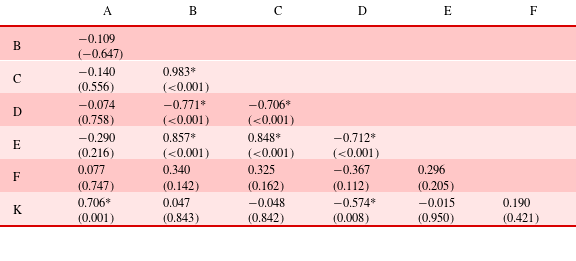
The stimuli used were 2D silhouettes of cars created by industrial designers in the automotive industry using Adobe Illustrator. It is important to note that these sketches differ from the typical artistic profile sketches that are used in the actual design process (see Tovey (Reference Tovey1992) for examples). The designers intentionally provided silhouettes for this study to mimic the approach used by Reid et al. (Reference Reid, Gonzalez and Papalambros2010). Furthermore, the use of product silhouettes is common in studies of this kind, and has been used extensively in the design community to assess customer preferences, especially in automotive contexts (Lai et al. Reference Lai, Chang and Chang2005; Kelly, Papalambros & Seifert Reference Kelly, Papalambros and Seifert2008; Orsborn et al. Reference Orsborn, Cagan and Boatwright2009; Kelly et al. Reference Kelly, Maheut, Petiot and Papalambros2011; Sylcott et al. Reference Sylcott, Orsborn and Cagan2014). The use of silhouettes helps to minimize the number of variables that may have an effect on the evaluations and makes the analysis procedure tractable. A total of 20 different forms (see Figure 1) were created by manipulating six form variables based on pixel positions. These six variables were selected and manipulated by the designers to generate shapes they were interested in studying. Figure 2 shows a schematic diagram of the main form variables that were manipulated to vary the shapes: overall vehicle length (A), cowl to front wheel center (B), cowl to front bumper (C), cab length (D), windshield angle (E), and rear glass angle (F). One additional variable, called rear crumple zone (K), was included to test H3. Table 8 in the appendix provides the values of these variables for each shape in units of inches or degrees as appropriate. Table 9 presents the Pearson correlations between each of these shape variables and each other one. Other shape variables were held constant, such as the wheel diameter, beltline height, and rocker height (see Figure 2).
The 20 vehicle silhouettes used in the experiment.

A schematic diagram of the main form variables that were manipulated in order to vary the forms (variables A to F). Variables G to J were kept constant. Variable K was added to test H3.

3.2 Methods and procedures
Two studies were conducted in order to address the research questions described in Section 2.4. Study 1 was conducted in 2009 to address the first research question. After some time had passed, we sought to address the second research question by rerunning Study 1 in 2016 to see whether the evaluations would change or remain the same (Study 2). The sections below will describe details about the two studies.
3.2.1 Study 1 experimental details
For Study 1, the experiment was implemented using a survey with two versions to study the impact of form on perceptions of safety, and how they correlate to PEF evaluations. Both versions of the survey consisted of five parts and presented the same questions. The survey was administered using Sawtooth software (www.sawtoothsoftware.com), which has been used successfully in prior studies (Reid et al. Reference Reid, Gonzalez and Papalambros2010). Figure 3 illustrates the general structure of the survey (Version A).
The general structure of the survey (Version A).

The main difference between the two versions was the order in which the safety and PEF questions were presented: Version A presented the safety questions in part I and PEF questions in part II, followed by all of the remaining questions (see Figure 3); Version B presented the PEF questions in part I and the safety questions in part II, and then all of the remaining questions.
Part III measured preference (PREF), part IV measured degree of familiarity (FAMT), and part V measured the degree to which shapes were inspired by nature (IBN), using both a rating and a sorting task. The questions were worded as follows.
-
(i) Safety: How safe does this vehicle look to you?
-
(ii) PEF: Based on the visual content, please rate how well this vehicle conveys environmental friendliness.
-
(iii) FAMT: Please rate how much this vehicle shape looks like one you may have seen before (ex. in a parking lot, on television/in magazines, etc.).
-
(iv) PREF: Please select the two vehicles you like the best.
All of the rating questions were on a seven-point Likert scale. For safety, the values ranged from 1 $=$
‘Does not look safe at all’ to 7
$=$
‘Does not look safe at all’ to 7 $=$
‘Definitely looks safe’. In like manner, for PEF, the Likert scale values ranged from 1 to 7, where 1
$=$
‘Definitely looks safe’. In like manner, for PEF, the Likert scale values ranged from 1 to 7, where 1 $=$
‘Does not look environmentally friendly at all’ and 7
$=$
‘Does not look environmentally friendly at all’ and 7 $=$
‘Definitely looks environmentally friendly’. The covariate FAMT was also on a seven-point Likert scale (1
$=$
‘Definitely looks environmentally friendly’. The covariate FAMT was also on a seven-point Likert scale (1 $=$
‘Not similar to vehicles I’ve seen before’ and 7
$=$
‘Not similar to vehicles I’ve seen before’ and 7 $=$
‘Very similar to vehicles I’ve seen before’). The covariate PREF was based on selecting the top two favorites from a set of five candidates. Figures 9 and 10 in the appendix provide screen captures of the PEF and safety questions, respectively. Figure 11 shows the FAMT question. The definitions of safety, environmental friendliness, and inspired by nature were given to participants in the respective sections of the survey that pertained to those terms, at the beginning of the section and with each question.
$=$
‘Very similar to vehicles I’ve seen before’). The covariate PREF was based on selecting the top two favorites from a set of five candidates. Figures 9 and 10 in the appendix provide screen captures of the PEF and safety questions, respectively. Figure 11 shows the FAMT question. The definitions of safety, environmental friendliness, and inspired by nature were given to participants in the respective sections of the survey that pertained to those terms, at the beginning of the section and with each question.
Participants were also provided with a list of assumptions similar to those used in Reid et al. (Reference Reid, Gonzalez and Papalambros2010), with the goal of helping the participants to focus on the form of the vehicle as described. The assumptions listed were that the vehicles
-
(i) have excellent fuel economy,
-
(ii) have clean emissions,
-
(iii) have an equal number of doors,
-
(iv) carry the same number of passengers,
-
(v) are equally priced,
-
(vi) belong to the same vehicle class (ex. sedans).
3.2.2 Study 2 experimental details
In Study 2, we replicated the 2009 survey in 2016 using Qualtrics (www.qualtrics.com), but with a minor modification. First, we removed part V, the IBN rating and sorting task, due to the strong correlation between PEF and IBN evaluations in the 2009 results and the ones published by Reid et al. (Reference Reid, Gonzalez and Papalambros2010). Second, all participants completed part II (PEF) after part I (safety), since ordering effects were not detected in Study 1.
3.3 Participants
In Study 1, a total of 101 online participants were involved in the study and were recruited through Luth Research (www.luthresearch.com). Participants were paid approximately $2 for a 20-minute survey. In Study 2, a total of 103 online respondents participated in the study and were recruited by Amazon Mechanical Turk (www.mturk.com) with a $0.65 compensation per person for finishing the survey. Amazon Mechanical Turk has been used in various studies (Rand Reference Rand2012; Kudrowitz & Wallace Reference Kudrowitz and Wallace2013), including studies on hybrid electric vehicles (Krupa et al. Reference Krupa, Rizzo, Eppstein, Lanute, Gaalema, Lakkaraju and Warrender2014), and has been shown to be a reliable source of data (Buhrmester, Kwang & Gosling Reference Buhrmester, Kwang and Gosling2011; Kudrowitz & Wallace Reference Kudrowitz and Wallace2013; Krupa et al. Reference Krupa, Rizzo, Eppstein, Lanute, Gaalema, Lakkaraju and Warrender2014). Table 1 summarizes the demographic information on the participants. In both studies, the participants were U.S. residents 18 years old or older.
The gender and age distribution of the participants.

3.4 Data analysis
We used descriptive and inferential statistics to analyse the data in both studies. The means and standard deviations were computed for all of the rating questions. In Study 1, the data from the two survey versions were combined since no ordering effects were found. Study 2 had a single data set to analyse since only one version of the survey was used. In both studies, the PEF and safety ratings were used to answer the two main research questions that guide this study. The familiarity ratings were used to address research question 2.
4 Results
In this section, we present results to answer our two main research questions. Section 4.1 presents the results for Q1: What is the relationship between customers’ PEF and safety ratings of car shapes? How do these ratings correlate with car-shape characteristics? Section 4.2 presents the results for Q2: How do customers’ PEF and safety evaluations of car shapes change over time? These questions will be answered through statistical tests conducted on the six hypotheses that were formulated to address the two research questions.
4.1 The relationship between PEF and safety ratings and how they correlate to car-shape characteristics
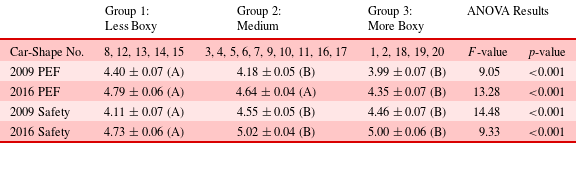
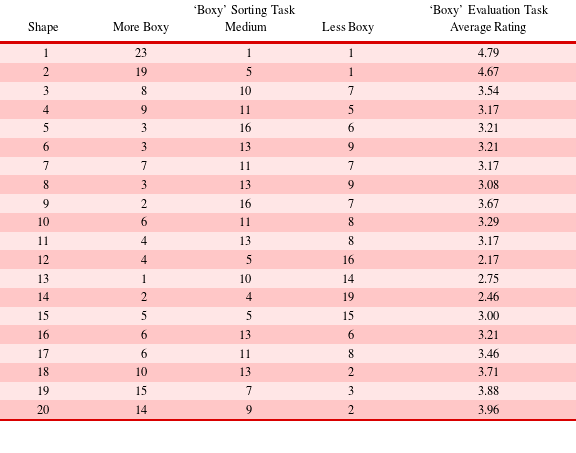
To test hypotheses H1 (cars that are less boxy will receive higher PEF ratings than other cars) and H2 (cars that are more boxy will receive higher safety ratings than other cars), the 20 car shapes were classified into three groups: less boxy, medium boxy, and more boxy. Two online surveys were used to get individuals’ opinions on the boxiness of each shape. In one survey, 25 participants were asked to sort the 20 car shapes into the three boxiness groups. In another survey, 25 participants were asked to rate how boxy each shape looked to them on a seven-point scale, where 1 $=$
‘not boxy’ and 7
$=$
‘not boxy’ and 7 $=$
‘boxy’. The results are summarized in Table 10. The grouping was performed by combining the opinions collected from these two surveys. Usually, cars with a larger windshield angle (E) and rear glass angle (F) were considered to be more boxy. The average PEF and safety ratings of the three groups were compared using ANOVA and Tukey tests. Table 2 shows the results of the comparisons. The average PEF and safety ratings of Group 1 (less boxy) are significantly different from those of Group 3 (more boxy) in both the 2009 and 2016 studies. This indicates that hypotheses H1 and H2 cannot be rejected. Cars that are less boxy and have a smooth contour will be seen as more green, and cars that are boxier will be perceived as being safer.
$=$
‘boxy’. The results are summarized in Table 10. The grouping was performed by combining the opinions collected from these two surveys. Usually, cars with a larger windshield angle (E) and rear glass angle (F) were considered to be more boxy. The average PEF and safety ratings of the three groups were compared using ANOVA and Tukey tests. Table 2 shows the results of the comparisons. The average PEF and safety ratings of Group 1 (less boxy) are significantly different from those of Group 3 (more boxy) in both the 2009 and 2016 studies. This indicates that hypotheses H1 and H2 cannot be rejected. Cars that are less boxy and have a smooth contour will be seen as more green, and cars that are boxier will be perceived as being safer.
The average PEF and safety ratings with standard errors in three groups of shapes. The ratings of the groups sharing the same letters are not significantly different from each other.
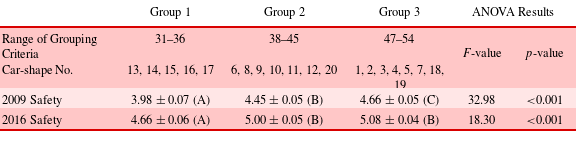
The 20 car shapes were classified into three groups using the value of the cowl to front bumper (C) of each shape to test hypothesis H3 (cars that appear larger in the front and rear crumple zones will receive higher safety ratings than other cars). For example, the values of C for the car shapes in Group 1 are in the range of 31–36, as shown in Table 3. The average safety ratings of the three groups were compared using ANOVA and Tukey tests. Table 3 shows the results. The average safety ratings in Groups 1 and 3 are significantly different from each other in both the 2009 and 2016 studies. This indicates that hypothesis H3 cannot be rejected. Vehicles that appear to have a larger distance from the cowl to the front bumper will be viewed as safer than other cars. To check on the rear crumple zone, the distance behind the rear windshield angle was computed using the sum of the cowl to front bumper and the cab length subtracted from the overall vehicle length ( $\text{A}-(\text{C}+\text{D})$
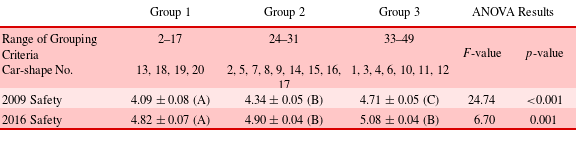
). This distance is labeled as K in Figure 2. The values were grouped in a manner similar to how they were grouped in Table 3 (the list of values can be found in Table 8 and were also analyzed using ANOVA and Tukey tests). A similar result was found when considering the rear crumple zone, as shown in Table 4. The average safety ratings in Groups 1 and 3 are significantly different from each other in both the 2009 and 2016 studies.
$\text{A}-(\text{C}+\text{D})$
). This distance is labeled as K in Figure 2. The values were grouped in a manner similar to how they were grouped in Table 3 (the list of values can be found in Table 8 and were also analyzed using ANOVA and Tukey tests). A similar result was found when considering the rear crumple zone, as shown in Table 4. The average safety ratings in Groups 1 and 3 are significantly different from each other in both the 2009 and 2016 studies.
The average safety ratings with standard errors in three groups of shapes. The grouping criterion is the front crumple zone, measured by the cowl to front bumper (C) of each shape. The ratings of the groups sharing the same letters are not significantly different from each other.
The average safety ratings with standard errors in three groups of shapes. The grouping criterion is the rear crumple zone $(\text{K}=\text{A}-(\text{C}+\text{D}))$
of each shape. The ratings of the groups sharing the same letters are not significantly different from each other.
$(\text{K}=\text{A}-(\text{C}+\text{D}))$
of each shape. The ratings of the groups sharing the same letters are not significantly different from each other.
The Pearson correlation coefficients between the car-shape variables and the participants’ average PEF and safety ratings of each shape ( $p$
-values are in parentheses). Correlations with asterisks (*) are significant.
$p$
-values are in parentheses). Correlations with asterisks (*) are significant.

Table 5 shows the correlation between the car-shape variables and participants’ average PEF and safety ratings of each shape in both the 2009 and the 2016 studies. There were significant correlations between participants’ average PEF and safety ratings on the one hand and the majority of the shape variables on the other, and these correlations are consistent between the 2009 and 2016 studies. Cars with larger distances of cowl to front wheel center (B) and cowl to front bumper (C) were perceived as safer but less environmentally friendly. Cars with larger windshield angle (E) and rear glass angle (F) were rated higher in safety but lower in PEF. The cab length (D) had an inverse effect: cars that had a longer cab length were rated as more environmentally friendly and less safe and cars with a shorter cab length were rated as more safe and less environmentally friendly. The overall vehicle length (A) did not influence participants’ perceptions of the environmental friendliness or safety of the cars.
Based on the correlations in Table 5, the regression models are obtained to predict the PEF and safety ratings using the shape variables, as follows:
 $$\begin{eqnarray}\displaystyle & \displaystyle 2009\text{PEF}=2.854-0.084\,\text{B}+0.059\,\text{C}-0.010\,\text{F}, & \displaystyle\end{eqnarray}$$
 $$\begin{eqnarray}\displaystyle & \displaystyle 2016\text{PEF}=1.870-0.130\,\text{B}+0.099\,\text{C}, & \displaystyle\end{eqnarray}$$
 $$\begin{eqnarray}\displaystyle & \displaystyle 2009\text{Safety}=-6.010+0.040\,\text{A}+0.117\,\text{E}, & \displaystyle\end{eqnarray}$$
 $$\begin{eqnarray}\displaystyle & \displaystyle 2016\text{Safety}=1.210-0.067\,\text{B}+0.096\,\text{C}+0.0.013\,\text{K}. & \displaystyle\end{eqnarray}$$
The adjusted $R^{2}$
values for the PEF and safety models in Equations (1)–(4) are 80.75%, 64.13%, 68.77%, and 69.36%, respectively. All coefficients in the regression models are significant at the 95% confidence level. Designers can use the regression models to gauge the degree to which new shapes are high or low on PEF and perceived safety. Models of this kind can assist with early-stage design decisions prior to investing significant resources.
$R^{2}$
values for the PEF and safety models in Equations (1)–(4) are 80.75%, 64.13%, 68.77%, and 69.36%, respectively. All coefficients in the regression models are significant at the 95% confidence level. Designers can use the regression models to gauge the degree to which new shapes are high or low on PEF and perceived safety. Models of this kind can assist with early-stage design decisions prior to investing significant resources.
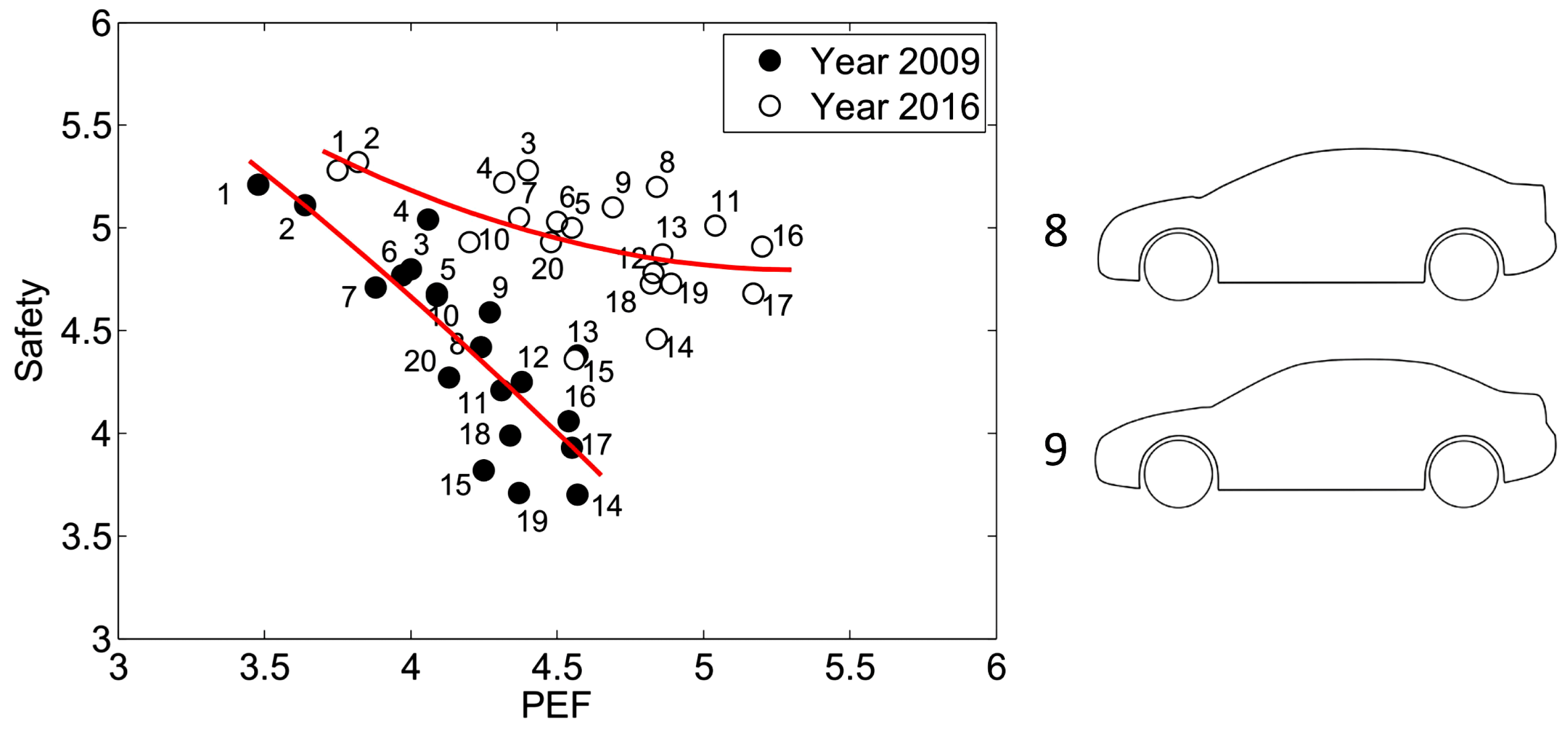
Figure 4 shows the average ratings for PEF and safety in 2009 and 2016. Higher values of safety and PEF ratings indicate that the participants considered the car shapes to be safer and more environmentally friendly to them, respectively. Each dot represents the average value of the participants’ rating on one car shape. The numbers attached to each dot correspond to the car shapes shown in Figure 1. It can be seen that there is an inverse relationship between safety and PEF. The statistics show that participants’ ratings of safety negatively correlated with their ratings of PEF in 2009 ( $r=-0.830,p<0.001$
) and 2016 (
$r=-0.830,p<0.001$
) and 2016 ( $r=-0.547,p=0.013$
). This result suggests that the car shapes with higher PEF are perceived by participants as less safe. According to this plot, car shapes 8 and 9 can be generally considered to be the optimal shapes, with balanced PEF and safety.
$r=-0.547,p=0.013$
). This result suggests that the car shapes with higher PEF are perceived by participants as less safe. According to this plot, car shapes 8 and 9 can be generally considered to be the optimal shapes, with balanced PEF and safety.
The relationship between participants’ average rating of PEF and safety.
4.2 Participants’ PEF and safety ratings over time
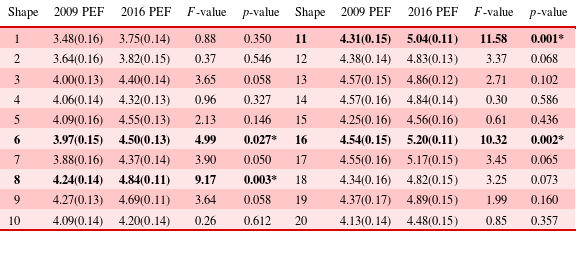
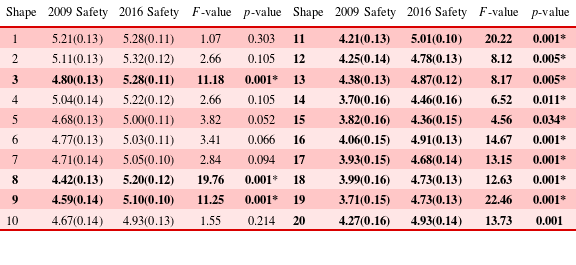
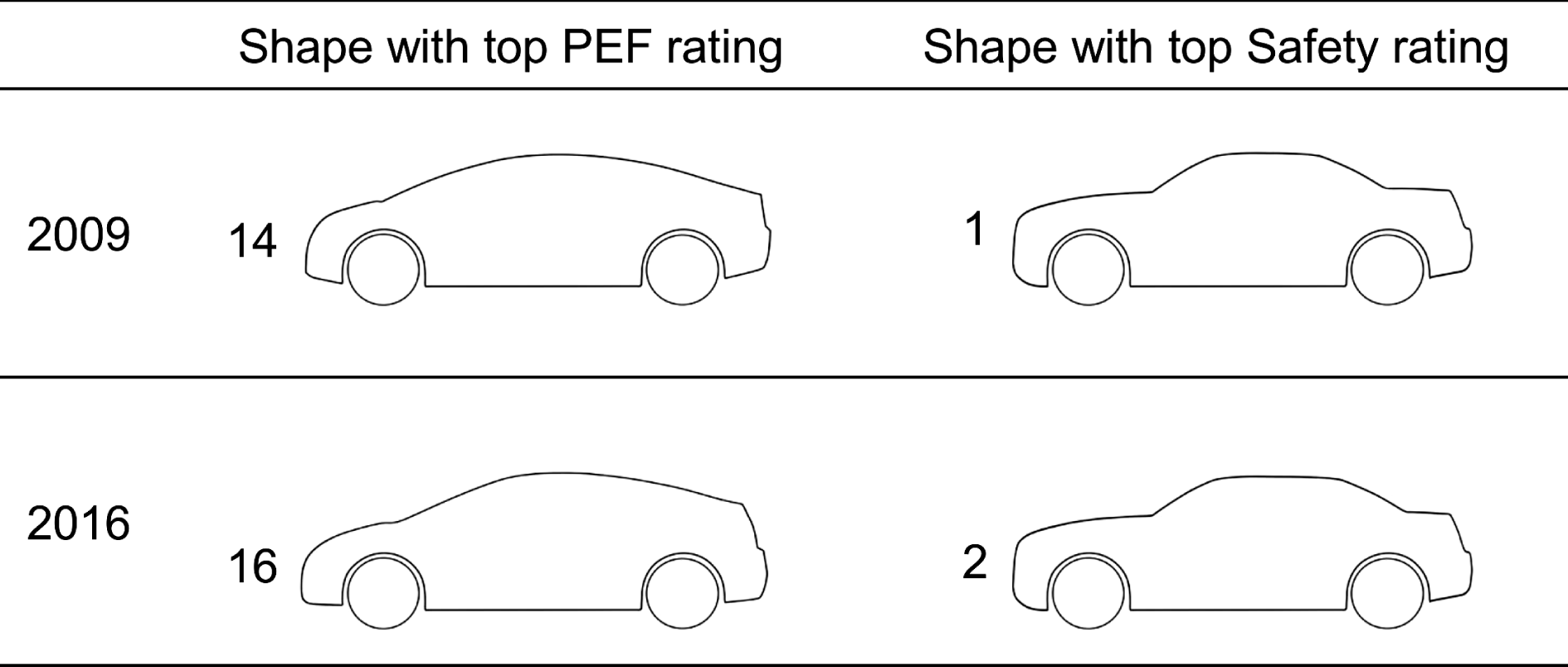
In order to test H4 (customers’ ratings of PEF on car shapes will generally increase with time) and H5 (customers’ ratings of safety on car shapes will remain the same over time), a one-way analysis of covariance (ANCOVA) was conducted to determine whether there was a significant difference between the 2009 and 2016 participants in their PEF and safety ratings. The ANCOVA controlled for age and gender by using them as two covariates in the analysis. This step was important in order to determine the effect of time and remove the effects that gender or age group may have on the results, since their numbers were not balanced between 2009 and 2016 (see Table 1). As shown in Tables 6 and 7, the PEF and safety ratings of all 20 shapes have increased from 2009 to 2016, and more than half of the 20 safety ratings are significantly different between the 2009 and 2016 studies after controlling for age and gender. These results indicate that H4 cannot be rejected, since PEF ratings did increase as predicted, and H5 is rejected, since safety ratings did change when it was predicted that they would not change. Figure 5 shows the car shapes with the highest ratings of PEF and safety in 2009 and 2016 based on the results shown in Figure 4.
Analysis of covariance (ANCOVA) on PEF ratings between 2009 and 2016 taking account of age and gender as covariates. The standard errors of the ratings are in parentheses; $p$
-values of less than 0.05 are denoted by asterisks (*).
$p$
-values of less than 0.05 are denoted by asterisks (*).
Analysis of covariance on safety ratings between 2009 and 2016 taking account of age and gender as covariates. The standard errors of the ratings are in parentheses; $p$
-values of less than 0.05 are denoted by asterisks (*).
$p$
-values of less than 0.05 are denoted by asterisks (*).
The car shapes with the highest PEF and safety ratings in 2009 and 2016.
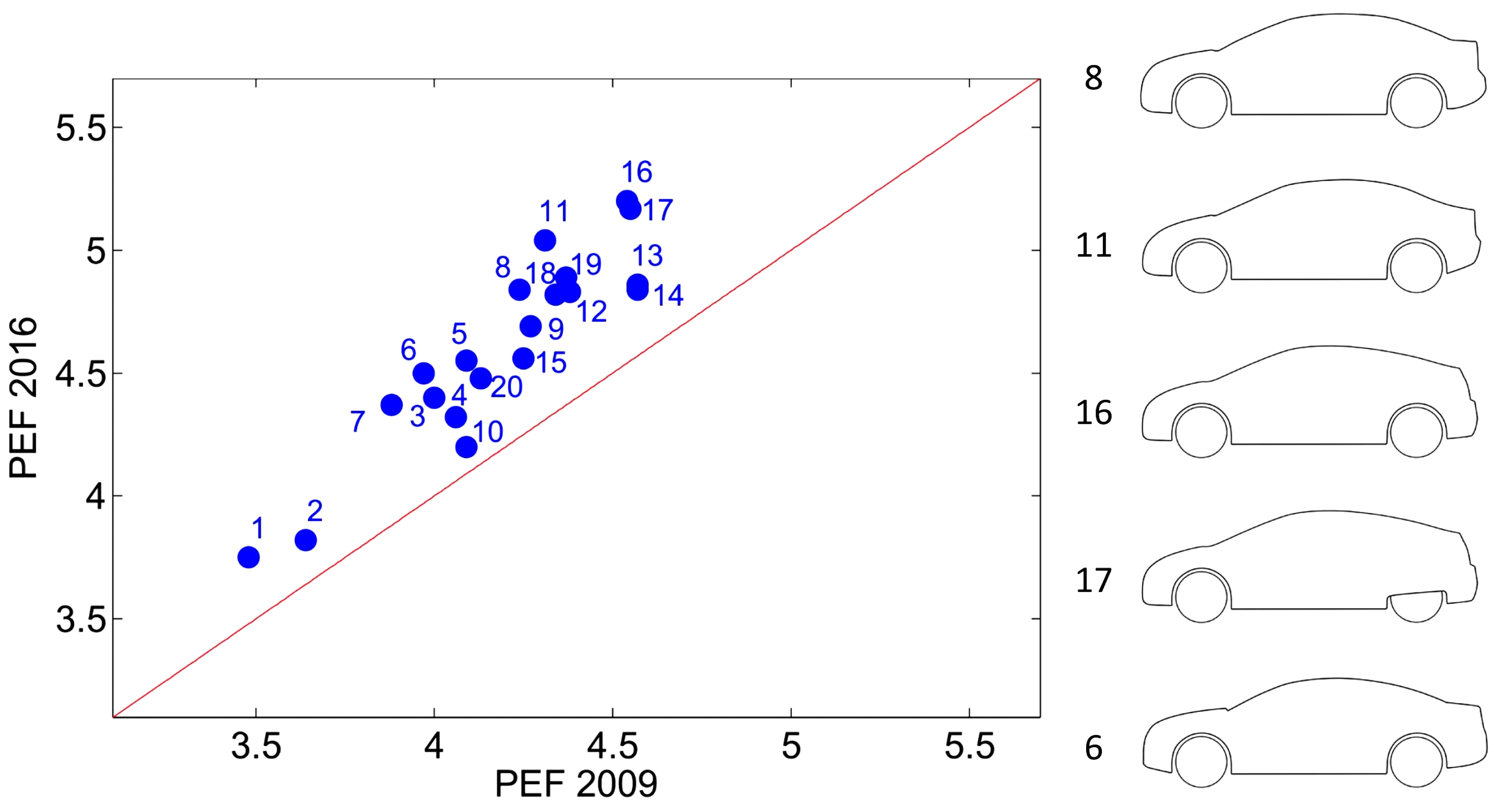
The relationship between participants’ average rating of PEF in 2016 and PEF in 2009. The car shapes listed on the right have the largest increment in their PEF ratings.
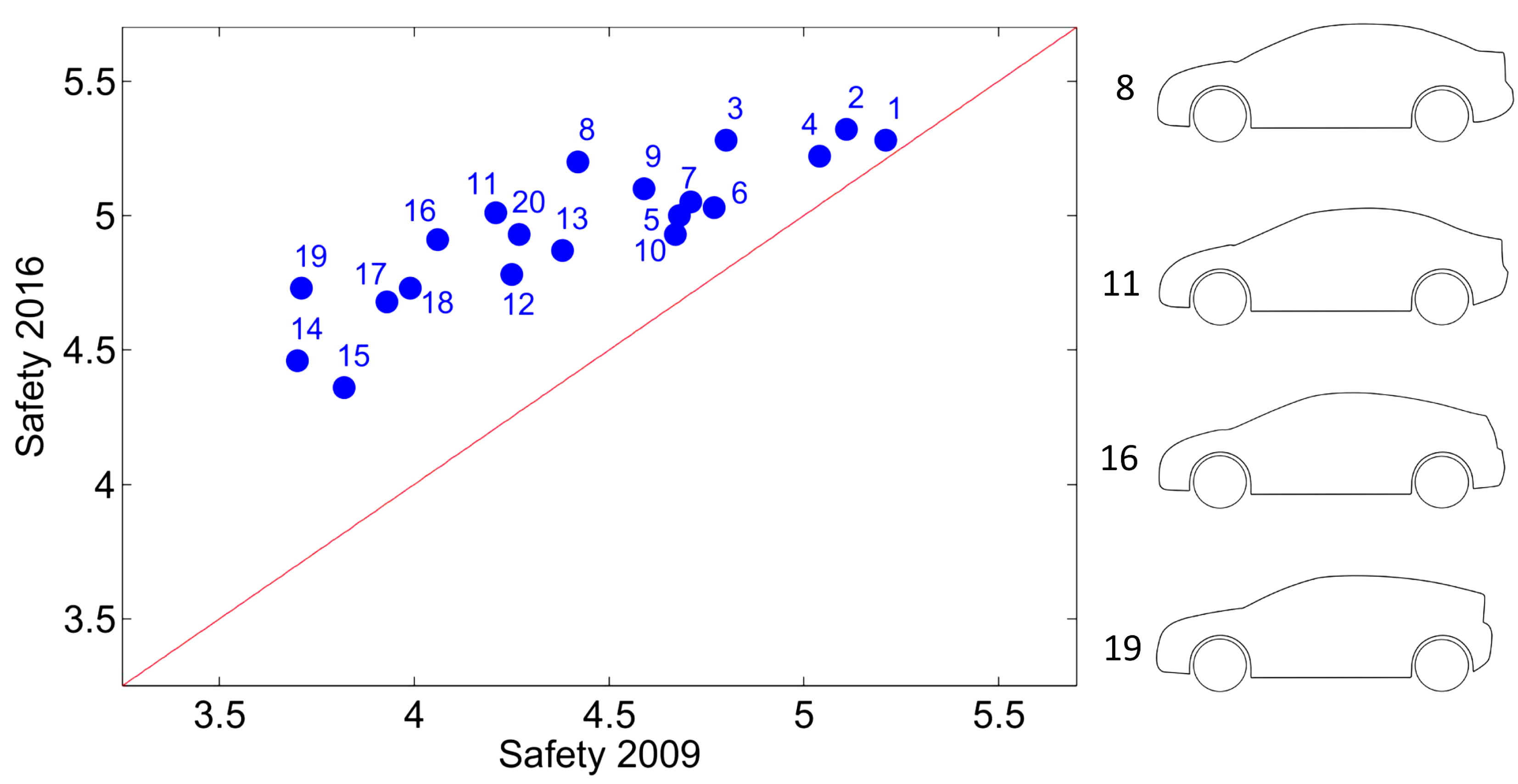
The relationship between participants’ average rating of safety in 2016 and safety in 2009. The car shapes listed on the right have the largest increment in their safety ratings.
The relationship between participants’ average rating of PEF and familiarity (a), and between their average rating of safety and familiarity (b).

Figure 6 shows the plot of participants’ average PEF ratings in 2016 against those in 2009. Data points above the red diagonal line indicate that participants’ PEF ratings of those shapes increased from 2009 to 2016. In 2016, participants gave higher PEF ratings to all 20 shapes. The PEF ratings of shapes 8, 11, 16, 17, and 6 increased more than those of the other shapes. This result suggests that the 2016 participants generally perceived the given car shapes as more environmentally friendly than the 2009 participants. Figure 7 shows the plot of participants’ average safety ratings in 2016 against those in 2009. Similarly, 2016 participants generally considered the given car shapes to be safer than the 2009 participants. The safety ratings of car shapes 8, 11, 16, and 19 were the most increased by the 2016 participants. Car shapes 16 and 17 have the same dimensions (see Table 8) and shape characteristics except for one feature: a rear wheel fender on shape 17. Yet, upon review of the results, both shapes were among the top for PEF ratings but shape 17 was not in the top shapes for safety ratings. The presence of the fender on shape 17 provided a nuanced effect such that the average ratings on safety were relatively lower than the ratings of shape 16, as seen in Figure 7.
In order to test H6a (customers’ ratings of PEF will be positively correlated with their familiarity ratings of the car shapes) and H6b (customers’ ratings of safety will be positively correlated with their familiarity ratings of the car shapes), we conducted a correlation analysis and created scatterplots of participants’ average rating of PEF against familiarity, and safety against familiarity. Figure 8 shows the results (see Figures 13 and 14 in the appendix, with ellipses representing $\pm$
1% standard error of these ratings). High values of familiarity ratings indicate that participants reported knowing the car shapes very well. The statistics show that the correlation between familiarity and PEF was
$\pm$
1% standard error of these ratings). High values of familiarity ratings indicate that participants reported knowing the car shapes very well. The statistics show that the correlation between familiarity and PEF was $-$
0.631 (
$-$
0.631 ( $p=0.003$
) in 2009 and
$p=0.003$
) in 2009 and $-$
0.273 (
$-$
0.273 ( $p=0.244$
) in 2016. Thus, H6a is rejected. This result suggests that participants considered familiar car shapes to be less environmentally friendly in 2009; however, this relationship did not hold in 2016. The correlation between familiarity and safety was 0.800 (
$p=0.244$
) in 2016. Thus, H6a is rejected. This result suggests that participants considered familiar car shapes to be less environmentally friendly in 2009; however, this relationship did not hold in 2016. The correlation between familiarity and safety was 0.800 ( $p<0.001$
) in 2009 and 0.844 (
$p<0.001$
) in 2009 and 0.844 ( $p<0.001$
) in 2016. Thus, H6b cannot be rejected. The positive correlation between familiarity and safety, on the contrary, is consistent between 2009 and 2016 participants. These results indicate that people tend to consider more familiar cars as safer ones, but as not very environmental friendly.
$p<0.001$
) in 2016. Thus, H6b cannot be rejected. The positive correlation between familiarity and safety, on the contrary, is consistent between 2009 and 2016 participants. These results indicate that people tend to consider more familiar cars as safer ones, but as not very environmental friendly.
5 Discussion
In Section 4.1, the results showed that the degree of boxiness (less boxy, more boxy), length of crumple zones, and five of the six main shape variables had a significant effect on the PEF and safety ratings. The discussion that follows provides specific details on these observations and how they support the three main hypotheses that were tested in Section 4.1.
Car shapes with larger distances from cowl to front wheel (B) and from cowl to front bumper (C) received higher ratings in safety than in PEF (see Table 5). This relates to people’s assessment of crumple zones, as predicted by H3. It was also observed that larger values of the windshield angle (E) and rear glass angle (F) led to higher ratings in safety than in PEF. Increased values of E and F cause the shapes to become more boxy, which confirms H2. These results are consistent with observations reported by Shende (Reference Shende2014), where the structure and exterior styling of SUVs made them look safer to participants in their study. A number of quotes from some of the participants support these observations about boxy car shapes and crumple zone considerations. Representative examples from different participants in both years are listed below.
-
(i) ‘The very slanted windshield worries me, the shorter the front end the less safe it feels due to front end crashes [since there is] less to slow the car.’ (2009 participant)
-
(ii) ‘I rated the ones with a shorter back end less safe, because in a rear end collision, you’d sustain more damage…. I did the same for the front end…if it was too short or if there was a particularly slanted front windshield I thought it might be more dangerous than a windshield that was extended further away from the driver.’ (2009 participant)
-
(iii) ‘A boxier rear of the vehicle makes me feel like it would do better in the event of a rear collision.’ (2016 participant)
-
(iv) ‘If it looked like there was more vehicle to absorb the impact of a crash before reaching the passengers it was probably a little safer.’ (2016 participant)
-
(v) ‘Cabins that are very close to the front of the car strike me as less safe. Cabins with a lot of rear window glass also strike me as unsafe. Large strong bumpers are important for safety and while the bumper can’t be seen in a shape, the shape may lend to the possibility of there being an adequate bumper.’ (2016 participant)
It was observed that overall vehicle length (A) had no effect on PEF or safety ratings. As can be seen from Table 8, the overall lengths of the 20 vehicles range from 181 inches to 201 inches. This change is quite small compared with the changes of other length variables. For example, the distance between cowl and front wheel center (variable B) ranges from 0 to 25 inches. Participants most likely did not notice the change of the overall length across 20 car shapes, which may explain why the overall length did not influence participants’ PEF and safety ratings. However, changes in the cab length (D) did have an effect: car shapes with shorter cab lengths were seen as more safe and shapes with longer cab lengths were seen as more environmentally friendly. The reason for this is that a shorter cab length increases the values of the windshield angle (E) and rear glass angle (F), making the car more boxy and thus lower on PEF. In like manner, a longer cab length decreases the angles E and F, making the roofline more smooth and less boxy, which people attribute to higher PEF. This interaction between increased car length and increased PEF was also observed in Reid et al. (Reference Reid, Frischknecht and Papalambros2012). Tseng et al. (Reference Tseng, Cagan, Kotovsky and Wood2013) also reported that participants rated vehicle shapes with ‘curvaceous rooflines’ as being more fuel efficient and thus more environmentally friendly. A number of quotes about shape characteristics associated with environmentally friendliness were expressed. Representative quotes from different participants in 2009 and 2016 are noted below.
-
(i) ‘I believe the design of the vehicles that have more slopes, no angles in the design are more environmentally friendly and have better air dynamics around them.’ (2009 participant)
-
(ii) ‘The sleeker looking cars looked more environmentally friendly.’ (2016 participant)
The inverse relationship between PEF and safety shown in Figure 4 mimics what can be found when using objective measures to evaluate safety characteristics of a vehicle and its fuel efficiency. Work conducted by Crandall & Graham (Reference Crandall and Graham1989) showed that the higher the fuel efficiency, the less safe a car became due to light-weighting. Although participants were not provided with explicit information about technical details of the car shapes, their perceptions aligned with data reported by others. Tseng et al., observed that participants were able to align shape characteristics with objective/functional characteristics of the car shapes (Tseng et al. Reference Tseng, Cagan, Kotovsky and Wood2013). They noted that participants’ ability to do so may be related to social norms and industry norms used in vehicle designs.
In Section 4.2, the results showed significant increases in PEF and safety ratings between 2009 and 2016. Figures 6 and 7 showed that participants from the year 2016 rated all 20 car shapes higher on PEF and safety than 2009 participants. First, the increase in PEF ratings can be attributed to changes in body styles between the two time periods which are designed to tap into the visceral/gut level responses of subjects. In 2009, most alternative-fuel vehicles had unique body styles, whereas in 2016, most alternative-fuel vehicles had the same body style as traditional counterparts (e.g., the change of four generations of Toyota Prius (Goodwin Reference Goodwin2016)). According to the data provided by U.S. Department of Energy (2016), more than 2.59 million hybrid and electric vehicles have been sold in the U.S. between 2009 and 2015. The percentage of ‘normal-looking’ alternative-fuel vehicles on the market in 2016 may be higher than the percentage in 2009 and may explain some of the migration of PEF between the two studies. This is evident upon inspection of some of the car shapes that saw the highest increase in the ratings between the 2009 and 2016 participants, as shown in Figure 6: shapes 6, 8, 11, 16, and 17. These shapes resemble common hybrid vehicles such as the Toyota Prius and Honda Insight and others that are somewhat ‘normal’ like the Ford Fusion. Second, the increase in safety ratings is related to the increase in the popularity of the car shapes between 2009 and 2016. As environmentally friendly cars (electric, hybrid, etc.) are becoming more and more popular, customers’ confidence in the safety of these cars is also growing, i.e., they are more willing to trust environmentally friendly type shapes. Some of the same shapes that saw the greatest increase in ratings between 2009 and 2016 on PEF were also increased on safety (shapes 8, 11, 16), with the addition of shape 19.
There were a few cars in the set that had similar shapes but different ratings. Car shapes 16 and 17 are exactly the same in every dimension except for the presence of a rear wheel fender. In Figure 7, it can be seen that people made a distinction between these vehicles in their safety ratings, in that shape 16 received relatively higher ratings than shape 17. This suggests one of two things: (1) people perceive that having a rear wheel fender makes the car less safe or (2) people were able to discern that the car shape is the Honda Insight, and since it is a well-known hybrid vehicle, the safety ratings were lower. On the other hand, car-shapes 8 and 9 were seen as the most balanced in terms of PEF and safety ratings (see Figure 4). This is best explained upon review of the shape variables that contribute to safety and PEF. Both shapes 8 and 9 are in the middle categories (Group 2) for the front and rear crumple zone categories (see Tables 3 and 4). This indicates that they have the right balance of crumple zone space to be seen as ‘safe enough’. Table 2 shows the degrees of boxiness of the car shapes. Car-shape 8 is part of Group 1 (less boxy) and shape 9 is part of Group 2 (medium boxy). In 2016, there was no significant difference in the PEF ratings for cars in the less boxy and medium boxy groups. Therefore, these shapes have features that people more readily align with higher PEF values while having features that support higher perceptions of safety.
Of particular interest are the ANCOVA results, to determine the effect of time on safety and PEF ratings, while controlling for gender and age group. Between 2009 and 2016, there were five shapes for which the PEF ratings increased significantly (see Table 6). However, more than half of the cars saw a significant increase in the safety ratings between the two time periods (see Table 7). These include shapes 3, 8, 9, and 11–20. There are a number of possible explanations. First, let us consider shape elements. Several vehicles aligned well with the idea that participants would consider larger frontal crumple zones (shapes 3, 18, and 19) and larger rear crumple zones (shapes 11 and 12) as being more safe. However, several vehicles in the total list had smaller front and/or rear crumple zones. Upon review of the other shape variables, several of these were among the highest in cab length (D) (listed in decreasing order: shapes 13, 20, 15, 14, 17, 16, 8). Shape 9 is the only one that does not fit these two explanations. However, it is important to note that shape 9 happens to be one of the vehicles that is considered to be optimally balanced in terms of safety and PEF ratings. These considerations indicate the presence of interaction effects amongst the shapes, which has been noted as an important area of study in visual studies of this kind (Sylcott et al. Reference Sylcott, Michalek, Cagan and Tabibnia2015).
Next, let us consider the possible influence of social and industry norms (Tseng et al. Reference Tseng, Cagan, Kotovsky and Wood2013), as previously mentioned. The results showed that the less familiar participants were with the car shapes, the higher the PEF ratings were in 2009 compared with 2016. One possible explanation is that in 2009, hybrid and electric vehicles were still novel, and assessing what one would consider an environmentally friendly vehicle was not well established at that time, but seven years later, they are now very common. One 2016 participant explicitly indicated the role that familiarity had on his evaluations: ‘I chose to rate cars that were shaped like familiar models that are known to be fuel efficient/environmentally friendly higher than ones with traditional body shapes.’ When it comes to safety, the more familiar participants were with the car shapes, the higher the safety ratings were in both 2009 and 2016. This result suggests that people are more familiar with the types of visual cues to look for when assessing safety, since the concept of safety is more familiar than PEF.
6 Conclusions
Our work contributes to an understanding of how customers have changed their shape-based evaluations after seven years, and it is the first of its kind in the design-science community. This study showed that ratings for PEF and perceived safety were inversely correlated, especially in the year 2009. Car shapes with higher PEF ratings were perceived as being less safe. In like manner, car shapes that received higher perceived safety ratings were seen as being less environmentally friendly. Shape elements that contributed to the ratings included the degree of boxiness of the shapes and the perceived amount of frontal and rear crush space (crumple zones). Car shapes that were less boxy with smoother lines received higher ratings on PEF. In general, shapes that were more boxy and had relatively larger frontal and/or rear crush space were seen as safe.
However, the participants in 2016 provided significantly higher safety ratings on more than half of the 20 car shapes than the 2009 participants did. Many of the shapes were not confined to those that were boxy and had larger crush spaces, but resembled some of the common hybrid electric vehicles on the market such as the Toyota Prius. The results suggest that with time, car shapes that were once novel can become more common and familiar to people, and familiarity was found to be positively correlated with perceptions of safety in our studies for both years. It is possible that these observations may be applicable to other product design contexts that involve inference-based evaluations. Future work would involve conducting comparative studies in other design contexts to generalize these results.
A limitation of this research is that only silhouettes and profile views of the car shapes were presented to participants. In a real showroom, customers will synthesize more details about the vehicles, including the color, material, performance specifications (e.g., fuel efficiency and safety information), and physical contact. Future research opportunities include investigation of other factors that can influence people’s perception of the environmental friendliness and safety of cars. An understanding of the inter-relationship and interplay of these factors will help car designers to create more optimized shapes for customers. In addition, future studies may involve carrying out an experiment design on the creation of the shapes to more tightly control the shape variables and performing a more in-depth study to consider interaction effects among variables (Sylcott et al. Reference Sylcott, Michalek, Cagan and Tabibnia2015).
Acknowledgments
The authors would like to thank members of the Research in Engineering and Interdisciplinary Design (REID) Laboratory at Purdue University and Dr. Richard Gonzalez for helpful suggestions on statistical methods. This work was partially supported by Ford Motor Company and gift funds from the REID Laboratory. The opinions presented here are only those of the authors.
Appendix
The values of the six car-shape variables and a seventh variable to account for the rear crumple zone (K). The length variables (A, B, C, D, and K) are in inches. The angle variables (E and F) are in degrees ( $^{\circ }$
).
$^{\circ }$
).

The matrix of the Pearson correlations between each of the six shape variables and each other one. The $p$
-values are in parentheses. Correlations with asterisks (*) are significant.
$p$
-values are in parentheses. Correlations with asterisks (*) are significant.
The results of two surveys asking people’s opinions about the boxiness of each car shape. Columns 2–4 are the votes in the ‘Boxiness’ sorting task. For example, out of 25 participants, 23 put shape 1 in the ‘more boxy’ group, one put it in the ‘medium’ group and one put it in the ‘less boxy’ group. Column 5 is the average ‘boxiness’ rating, where 1 $=$
‘not boxy’ and 7
$=$
‘not boxy’ and 7 $=$
‘boxy’.
$=$
‘boxy’.
An example of the PEF question.

An example of the safety question.

An example of the familiarity question.

The relationship between participants’ average rating of PEF and safety in 2009 (a) and 2016 (b). The ellipses represent $\pm$
1% standard error of the ratings.
$\pm$
1% standard error of the ratings.
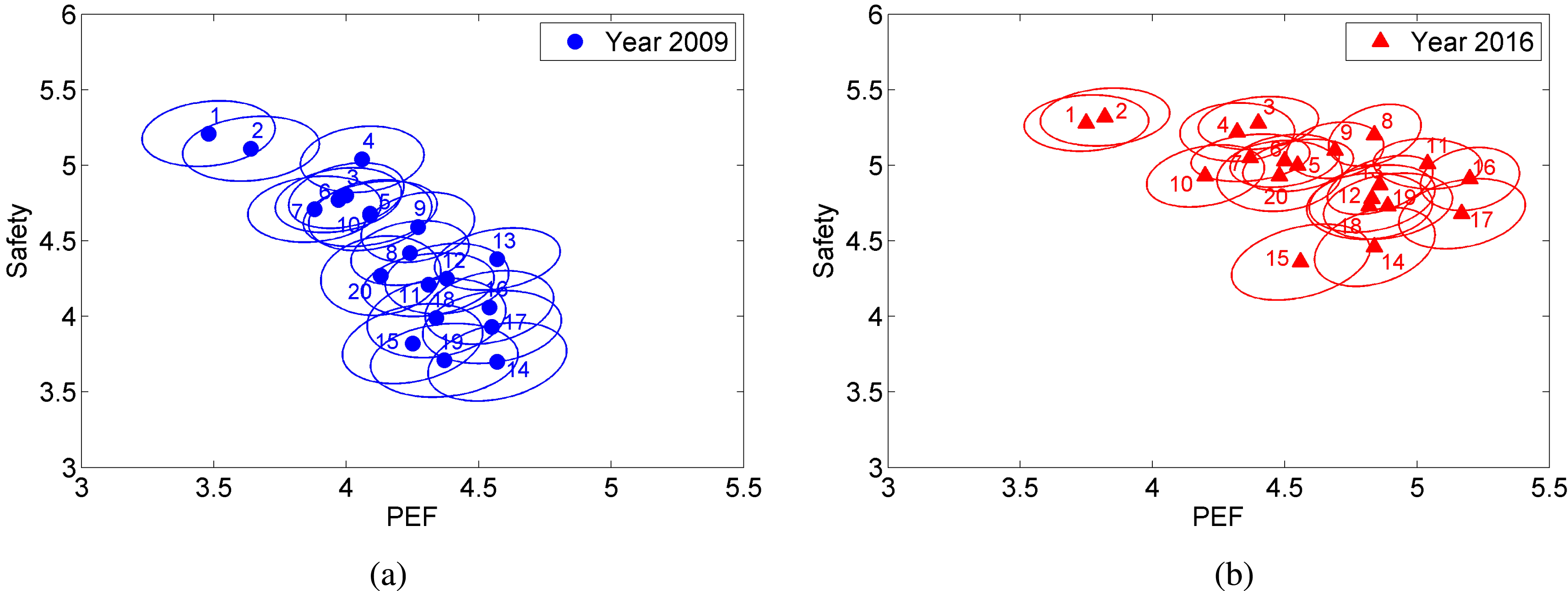
The relationship between participants’ average rating of PEF and familiarity in 2009 (a) and 2016 (b). The ellipses represent $\pm$
1% standard error of the ratings.
$\pm$
1% standard error of the ratings.

The relationship between participants’ average rating of safety and familiarity in 2009 (a) and 2016 (b). The ellipses represent $\pm$
1% standard error of the ratings.
$\pm$
1% standard error of the ratings.


 Open access

