




1. Introduction
A gauged linear sigma model (GLSM) consists, roughly, of a graded complex vector space V acted on by a linear reductive group G, together with a choice of character $\theta \in \widehat G$
, and a G-invariant function
$\theta \in \widehat G$
, and a G-invariant function $w\colon V \to \mathbb{C}$
. The data
$w\colon V \to \mathbb{C}$
. The data $(V, G, \theta, w)$
together define a GIT quotient
$(V, G, \theta, w)$
together define a GIT quotient $Y := [V\mathbin{/\mkern-6mu/}_\theta G]$
and a function
$Y := [V\mathbin{/\mkern-6mu/}_\theta G]$
and a function $w\colon Y \to \mathbb{C}$
on the quotient.
$w\colon Y \to \mathbb{C}$
on the quotient.
GLSMs arise naturally in a number of contexts; for instance, as the mirrors to Fano manifolds [Reference GiventalGiv98, Reference Hori and VafaHV00], as examples of non-commutative crepant resolutions [Reference SharpeSha13, Reference AspinwallAsp15], and as intermediate spaces appearing in wall-crossing and correspondence results [Reference WittenWit97, Reference OrlovOrl09, Reference Favero and KellyFK19]. GLSMs provide a broad setting in which it is possible to define an enumerative curve-counting theory. They simultaneously generalize the Fan–Jarvis–Ruan–Witten (FJRW) theory of an isolated singularity (affine-phase GLSMs) as well as the Gromov–Witten theory of complete intersections (geometric-phase GLSMs).
Due to their increasingly prominent role in enumerative geometry and mathematical physics, a significant effort has been made over the past decade to provide a rigorous mathematical theory of curve-counting invariants for general GLSMs. By the efforts of Fan, Jarvis, and Ruan [Reference Fan, Jarvis and RuanFJR18], Tian and Xu [Reference Tian and XuTX16, Reference Tian and XuTX17, Reference Tian and XuTX18, Reference Tian and XuTX21], the author together with Ciocan-Fontanine, Favero, Guéré, and Kim [Reference Ciocan-Fontanine, Favero, Guéré, Kim and ShoemakerCFFG+23], Chang, Kiem, and Li [Reference Cox, Katz and LeeCKL01, Reference Kiem and LiKL20], and Favero and Kim [Reference Favero and KimFK20], GLSM invariants have now been defined in a variety of contexts and levels of generality. As evidenced by the number and variety of approaches, the landscape is still developing rapidly. The relationship between these different definitions is largely unexplored.
Despite the dramatic recent progress in defining GLSM invariants, with the exception of affine phases, geometric phases, and a class of Picard-rank-one hybrid model phases [Reference Clader and RossCR18], there have been very few computations of these new invariants. In this paper, we develop a method for computing genus-zero invariants for a large class of GLSMs. We then define and compute new generating functions of GLSM invariants, which may be viewed as analogous to the big I-functions arising in mirror theorems in Gromov–Witten theory [Reference Coates, Corti, Iritani and TsengCCI+15, Reference Ciocan-Fontanine and KimCFK16, Reference Cheong, Ciocan-Fontanine and KimCCFK15].
Our method is based on a direct comparison between the genus-zero GLSM invariants of $(V, G, \theta, w)$
and the Gromov–Witten (or, more precisely, quasimap) invariants of
$(V, G, \theta, w)$
and the Gromov–Witten (or, more precisely, quasimap) invariants of $[V \mathbin{/\mkern-6mu/}_\theta G]$
. We prove that I-functions for the GLSM invariants of
$[V \mathbin{/\mkern-6mu/}_\theta G]$
. We prove that I-functions for the GLSM invariants of $(V, G, \theta, w)$
arise as derivatives of I-functions for the Gromov–Witten invariants of
$(V, G, \theta, w)$
arise as derivatives of I-functions for the Gromov–Witten invariants of $[V\mathbin{/\mkern-6mu/}_\theta G]$
. We expect this formulation to be useful in transporting known results in Gromov–Witten theory to the new setting of GLSMs. We will explore such applications in future works.
$[V\mathbin{/\mkern-6mu/}_\theta G]$
. We expect this formulation to be useful in transporting known results in Gromov–Witten theory to the new setting of GLSMs. We will explore such applications in future works.
1.1 $0^+$
-stability and light marked points
$0^+$
-stability and light marked points

In a series of papers, Ciocan-Fontanine and Kim [Reference Ciocan-Fontanine and KimCFK10, Reference Ciocan-Fontanine and KimCFK16], together with Maulik [Reference Ciocan-Fontanine, Kim and MaulikCFKM14] and Cheong [Reference Cheong, Ciocan-Fontanine and KimCCFK15], define $\epsilon$
-stable quasimap invariants for GIT stack quotients
$\epsilon$
-stable quasimap invariants for GIT stack quotients $[V \mathbin{/\mkern-6mu/}_\theta G]$
, depending on a parameter
$[V \mathbin{/\mkern-6mu/}_\theta G]$
, depending on a parameter $\epsilon \in \mathbb{R}_{\gt 0}$
. The invariants are defined as integrals over moduli spaces
$\epsilon \in \mathbb{R}_{\gt 0}$
. The invariants are defined as integrals over moduli spaces $Q_{h, n}^{\epsilon}([V \mathbin{/\mkern-6mu/}_\theta G], d)$
, which parametrizes a class of rational maps to
$Q_{h, n}^{\epsilon}([V \mathbin{/\mkern-6mu/}_\theta G], d)$
, which parametrizes a class of rational maps to $[V \mathbin{/\mkern-6mu/}_\theta G]$
that may contain basepoints of length at most
$[V \mathbin{/\mkern-6mu/}_\theta G]$
that may contain basepoints of length at most $1/\epsilon$
. For
$1/\epsilon$
. For $\epsilon$
sufficiently large, the invariants are referred to as
$\epsilon$
sufficiently large, the invariants are referred to as $\infty$
-stable, and coincide with Gromov–Witten invariants. In the limit as
$\infty$
-stable, and coincide with Gromov–Witten invariants. In the limit as $\epsilon$
approaches 0, we refer to the invariants as
$\epsilon$
approaches 0, we refer to the invariants as $0^+$
-stable quasimap invariants. It has been observed in [Reference Ciocan-Fontanine and KimCFK14] that
$0^+$
-stable quasimap invariants. It has been observed in [Reference Ciocan-Fontanine and KimCFK14] that $0^+$
-stable quasimap invariants are particularly relevant to mirror symmetry; in fact, they are expected to coincide precisely with B-model invariants.
$0^+$
-stable quasimap invariants are particularly relevant to mirror symmetry; in fact, they are expected to coincide precisely with B-model invariants.
In [Reference Fan, Jarvis and RuanFJR18], Fan, Jarvis, and Ruan construct moduli spaces of $\epsilon$
-stable LG quasimaps,
$\epsilon$
-stable LG quasimaps, $LGQ_{h, n}^{\epsilon}([V \mathbin{/\mkern-6mu/}_\theta G], d)$
, used to define GLSM invariants for
$LGQ_{h, n}^{\epsilon}([V \mathbin{/\mkern-6mu/}_\theta G], d)$
, used to define GLSM invariants for $(V, G, \theta, w)$
. These moduli spaces and the corresponding invariants also depend on a parameter
$(V, G, \theta, w)$
. These moduli spaces and the corresponding invariants also depend on a parameter $\epsilon$
. As with quasimaps, the
$\epsilon$
. As with quasimaps, the $0^+$
-stable GLSM invariants are the most directly relevant to mirror symmetry.
$0^+$
-stable GLSM invariants are the most directly relevant to mirror symmetry.
There is a second reason to focus on $0^+$
-stable GLSM invariants. For most GLSMs, the
$0^+$
-stable GLSM invariants. For most GLSMs, the $\epsilon$
-stable invariants are only defined for
$\epsilon$
-stable invariants are only defined for $\epsilon = 0^+$
. The existence of the moduli space
$\epsilon = 0^+$
. The existence of the moduli space $LGQ_{h, n}^{\epsilon}([V \mathbin{/\mkern-6mu/}_\theta G], d)$
for
$LGQ_{h, n}^{\epsilon}([V \mathbin{/\mkern-6mu/}_\theta G], d)$
for $\epsilon \gt 0^+$
requires the existence of a good lift of
$\epsilon \gt 0^+$
requires the existence of a good lift of $\theta$
(see [Reference Fan, Jarvis and RuanFJR18, Definition 3.2.13]). This condition turns out to be quite restrictive, especially outside the setting of geometric, affine, and hybrid model phases. Therefore, a study of general GLSMs must necessarily work with
$\theta$
(see [Reference Fan, Jarvis and RuanFJR18, Definition 3.2.13]). This condition turns out to be quite restrictive, especially outside the setting of geometric, affine, and hybrid model phases. Therefore, a study of general GLSMs must necessarily work with $0^+$
-stability. This is the approach we take.
$0^+$
-stability. This is the approach we take.
Quasimap invariants can be generalized further to allow for a second class of marked points on the source curve that may coincide with each other and with basepoints, but that are still distinct from nodes and regular marked points. We call these new markings light marked points to distinguish them from the usual (heavy) marked points.
In [Reference Ciocan-Fontanine and KimCFK16], it has been observed that by adding insertions from light markings one can compute big I-functions: generating functions that encode all of the genus-zero Gromov–Witten theory of $[V \mathbin{/\mkern-6mu/}_\theta G]$
. Light marked points also feature in the work of Losev and Manin [Reference Losev and ManinLM00] in the study of pencils of formal flat connections.
$[V \mathbin{/\mkern-6mu/}_\theta G]$
. Light marked points also feature in the work of Losev and Manin [Reference Losev and ManinLM00] in the study of pencils of formal flat connections.
The GLSM I-functions that we define also involve invariants with insertions from light markings. Defining GLSM invariants with light-point insertions appears to be a difficult problem in general; however, we show that for the particular invariants of interest to us, a simple definition is possible (see Definition 5.5 and Remark 5.4).
1.2 Comparison of invariants
Let $(V, G, \theta, w)$
be a GLSM. In Gromov–Witten theory, the state space for
$(V, G, \theta, w)$
be a GLSM. In Gromov–Witten theory, the state space for $[V\mathbin{/\mkern-6mu/}_\theta G]$
is given by the Chen–Ruan cohomology
$[V\mathbin{/\mkern-6mu/}_\theta G]$
is given by the Chen–Ruan cohomology $H^*_{\rm CR}([V\mathbin{/\mkern-6mu/}_\theta G])$
. We focus on the compact-type subspace, defined as the image of the natural map from compactly supported cohomology:
$H^*_{\rm CR}([V\mathbin{/\mkern-6mu/}_\theta G])$
. We focus on the compact-type subspace, defined as the image of the natural map from compactly supported cohomology:
 $$H^*_{\rm CR,ct}([V\mathbin{/\mkern-6mu/}_\theta G]) := \operatorname{im}(H^*_{\rm CR,cs}([V\mathbin{/\mkern-6mu/}_\theta G]) \to H^*_{\rm CR}([V\mathbin{/\mkern-6mu/}_\theta G])).$$
The state space of the GLSM $(V, G, \theta, w)$
is given by
$(V, G, \theta, w)$
is given by
 $$\mathcal{H}(Y, w) := H^*_{\rm CR}(Y, w^{+\infty}),$$
where $w^{+\infty} = (\mathrm{Re}(w))^{-1}( M, \infty)$
for M a sufficiently large real number. There is a compact-type subspace
$w^{+\infty} = (\mathrm{Re}(w))^{-1}( M, \infty)$
for M a sufficiently large real number. There is a compact-type subspace $\mathcal{H}_{\rm ct}(Y, w) \subseteq \mathcal{H}(Y, w)$
as well, defined roughly as the space spanned by classes Poincaré dual to proper substacks supported in
$\mathcal{H}_{\rm ct}(Y, w) \subseteq \mathcal{H}(Y, w)$
as well, defined roughly as the space spanned by classes Poincaré dual to proper substacks supported in $w^{-1}(0)$
(Definition 2.6). There exists a natural map between the GLSM and Gromov–Witten compact-type state spaces:
$w^{-1}(0)$
(Definition 2.6). There exists a natural map between the GLSM and Gromov–Witten compact-type state spaces:
 $$\phi^w: \mathcal{H}_{\rm ct}(Y, w) \to H^*_{\rm CR,ct}([V\mathbin{/\mkern-6mu/}_\theta G]).$$
Our first result is a comparison between two-pointed genus-zero GLSM and quasimap invariants with compact-type insertions.
Theorem 1.1 (Corollary 4.5). Given classes $\gamma_1, \gamma_2 \in \mathcal{H}_{\rm ct}(Y, w)$
and
$\gamma_1, \gamma_2 \in \mathcal{H}_{\rm ct}(Y, w)$
and $d \in \operatorname{Eff}([V/G])$
,
$d \in \operatorname{Eff}([V/G])$
,
 $$\langle\gamma_1 \psi^{k_1}, \gamma_2\psi^{k_2}\rangle_{0,2,d}^{(Y, w)} = \langle\phi^w(\gamma_1)\psi^{k_1}, \phi^w(\gamma_2)\psi^{k_2}\rangle_{0,2,d}^{Y},$$
where the left-hand side is the ( $0^+$
-stable) GLSM invariant and the right-hand side is the (
$0^+$
-stable) GLSM invariant and the right-hand side is the ( $0^+$
-stable) quasimap invariant.
$0^+$
-stable) quasimap invariant.
We can extend the above result to include light marked points. For the case of quasimaps, because light markings may coincide with basepoints, insertion classes are pulled back from the cohomology of the stack quotient: $H^*([V/G])$
. In the case of GLSMs, one may define light-point insertions as coming from
$H^*([V/G])$
. In the case of GLSMs, one may define light-point insertions as coming from $H^*([ V^J/(G/\langle J\rangle)], w^{+\infty})$
, where J is a distinguished element of G determined by the grading on V (Definition 2.1). We prove the following.
$H^*([ V^J/(G/\langle J\rangle)], w^{+\infty})$
, where J is a distinguished element of G determined by the grading on V (Definition 2.1). We prove the following.
Theorem 1.2 (Theorem 5.8). There exists a map
 $$\tau\colon H^*([V/G]) \to H^*([ V^J/(G/\langle J\rangle)], w^{+\infty})$$
such that, for $\gamma_1, \gamma_2 \in \mathcal{H}_{\rm ct}(Y, w)$
and
$\gamma_1, \gamma_2 \in \mathcal{H}_{\rm ct}(Y, w)$
and $\alpha_1, \ldots, \alpha_k \in H^*([V/G])$
,
$\alpha_1, \ldots, \alpha_k \in H^*([V/G])$
,
 \[\langle\gamma_1 \psi^{k_1}, \gamma_2\psi^{k_2}| \tau(\alpha_1), \ldots, \tau(\alpha_k)\rangle_{0,2|k,d}^{(Y, w)} = \langle\phi^w(\gamma_1)\psi_1^{k_1},\phi^w(\gamma_2)\psi_2^{k_2}| \alpha_1, \ldots, \alpha_k\rangle_{0,2|k,d}^{Y},\]
where the left-hand (respectively, right-hand) side denotes the $0^+$
-stable GLSM (respectively, quasimap) invariant with two heavy-point insertions and k light-point insertions.
$0^+$
-stable GLSM (respectively, quasimap) invariant with two heavy-point insertions and k light-point insertions.
While the context of this theorem may seem rather restrictive (genus zero with two heavy marked points with compact-type insertions), these are precisely the set of invariants needed to construct big I-functions for GLSMs (restricted to the compact-type subspace). Theorem 1.2 provides a method for computing these GLSM generating functions.
1.3 A mirror theorem for GLSMs
What is meant precisely by a mirror theorem in Gromov–Witten theory varies across the literature. Here, we state our main results, and explain in what sense they can be viewed as giving a mirror theorem for GLSMs.
The original mirror theorem [Reference GiventalGiv96, Reference Lian, Liu and YauLLY99] was a correspondence between the J-function and I-function of the quintic threefold Q. The former is a generating function of Gromov–Witten invariants, whereas the latter has been defined in terms of period integrals on the mirror, and has a combinatorial expression in terms of hypergeometric series. The original mirror theorem states that $J^Q$
is equal to
$J^Q$
is equal to $I^Q$
after a change of variables and scaling by an invertible function in the Novikov variables.
$I^Q$
after a change of variables and scaling by an invertible function in the Novikov variables.
A more modern formulation of the mirror theorem uses the language of Givental’s symplectic formalism and applies to more general targets [Reference BrownBro14, Reference Coates, Corti, Iritani and TsengCCI+15] and to big I-functions [Reference Ciocan-Fontanine and KimCFK16, Reference Cheong, Ciocan-Fontanine and KimCCFK15, Reference WangWan25, Reference ZhouZho22]. In this context, a mirror theorem for Y amounts to finding an explicit function $I^Y$
(known as an I-function) that lies on the overruled Lagrangian cone
$I^Y$
(known as an I-function) that lies on the overruled Lagrangian cone $\mathcal{L}^Y\!$
. Given such a statement, one can then recover Gromov–Witten invariants of Y from
$\mathcal{L}^Y\!$
. Given such a statement, one can then recover Gromov–Witten invariants of Y from $I^Y$
via a process of Birkhoff factorization.
$I^Y$
via a process of Birkhoff factorization.
A fundamental result from the theory of quasimaps is that I-functions for Y may be defined directly in terms of $0^+$
-stable quasimap invariants [Reference Ciocan-Fontanine and KimCFK14, Reference Ciocan-Fontanine and KimCFK16, Reference ZhouZho22]. More precisely, I-functions for Y often take the form
$0^+$
-stable quasimap invariants [Reference Ciocan-Fontanine and KimCFK14, Reference Ciocan-Fontanine and KimCFK16, Reference ZhouZho22]. More precisely, I-functions for Y often take the form
 \begin{equation} I^Y = S^{Y}(q, f({\boldsymbol{t}}), z)P(q, {\boldsymbol{t}}, z),\end{equation}
where $S^Y$
is the
$S^Y$
is the $0^+$
-stable quasimap generating function in genus zero with two heavy points and arbitrarily many light points:
$0^+$
-stable quasimap generating function in genus zero with two heavy points and arbitrarily many light points:
 \begin{equation}S^Y(q, {\boldsymbol{t}}, z)(\gamma) := \sum_{i \in \tilde I} \tilde \gamma_i\left\langle\!\!\left\langle \frac{\tilde \gamma^i}{z- \psi},\gamma\right\rangle\!\!\right\rangle_{\!0, 2}^{\!\!Y}({\boldsymbol{t}}),\end{equation} $f \in H^*([V/G])[[t^i]]$
is a formal cohomology-valued function satisfying
$f \in H^*([V/G])[[t^i]]$
is a formal cohomology-valued function satisfying $f(0) = 0$
, and
$f(0) = 0$
, and $P(q, {\boldsymbol{t}}, z) \in H^*_{\rm CR}(Y)[[q]][[t^i]][z]$
is some cohomology-valued function with only positive powers of z (Definition 6.8).
$P(q, {\boldsymbol{t}}, z) \in H^*_{\rm CR}(Y)[[q]][[t^i]][z]$
is some cohomology-valued function with only positive powers of z (Definition 6.8).
In this paper, we take (1.1) as the definition of an I-function for $Y\!$
. This definition has the advantage of easily generalizing to the GLSM setting, even in cases in which the Lagrangian cone for the GLSM is not defined (i.e. when
$Y\!$
. This definition has the advantage of easily generalizing to the GLSM setting, even in cases in which the Lagrangian cone for the GLSM is not defined (i.e. when $\infty$
-stable GLSM invariants do not exist). We define an I-function for the GLSM
$\infty$
-stable GLSM invariants do not exist). We define an I-function for the GLSM $(V, G, \theta, w)$
to be a function
$(V, G, \theta, w)$
to be a function $I^{(Y, w)}$
taking the form
$I^{(Y, w)}$
taking the form
 \begin{equation}I^{(Y, w)} = S^{(Y, w)}(q, f({\boldsymbol{t}}), z)P(q, {\boldsymbol{t}}, z),\end{equation}
where $S^{(Y, w)}(q, f({\boldsymbol{t}}), z) $
is the
$S^{(Y, w)}(q, f({\boldsymbol{t}}), z) $
is the $0^+$
-stable GLSM generating function in genus zero with two heavy points and arbitrarily many light points analogous to (1.2),
$0^+$
-stable GLSM generating function in genus zero with two heavy points and arbitrarily many light points analogous to (1.2), $f \in H^*([ V^J/(G/\langle J\rangle)], w^{+\infty})[[t^i]]$
is a formal cohomology-valued function satisfying
$f \in H^*([ V^J/(G/\langle J\rangle)], w^{+\infty})[[t^i]]$
is a formal cohomology-valued function satisfying $f(0) = 0$
, and
$f(0) = 0$
, and $P(q, {\boldsymbol{t}}, z) $
lies in
$P(q, {\boldsymbol{t}}, z) $
lies in $ \mathcal{H}(Y, w)[[q]][[t^i]][z]$
(Definition 6.11). If
$ \mathcal{H}(Y, w)[[q]][[t^i]][z]$
(Definition 6.11). If $P(q, {\boldsymbol{t}}, z) $
is sufficiently general, one can, in theory, recover
$P(q, {\boldsymbol{t}}, z) $
is sufficiently general, one can, in theory, recover $S^{(Y, w)}(q, f({\boldsymbol{t}}), z)$
from an I-function
$S^{(Y, w)}(q, f({\boldsymbol{t}}), z)$
from an I-function $I^{(Y, w)}$
via Birkhoff factorization.
$I^{(Y, w)}$
via Birkhoff factorization.
A particular I-function for $Y\!$
, denoted
$Y\!$
, denoted $ \mathbb{I}^Y(q, {\boldsymbol{t}}, z)$
, has been defined in [Reference Ciocan-Fontanine and KimCFK16, Reference Cheong, Ciocan-Fontanine and KimCCFK15] using localization on the quasimap graph moduli space (for the precise definition, see (6.1)). Our main result provides a way of obtaining an I-function for the GLSM
$ \mathbb{I}^Y(q, {\boldsymbol{t}}, z)$
, has been defined in [Reference Ciocan-Fontanine and KimCFK16, Reference Cheong, Ciocan-Fontanine and KimCCFK15] using localization on the quasimap graph moduli space (for the precise definition, see (6.1)). Our main result provides a way of obtaining an I-function for the GLSM $(V, G, \theta, w)$
in terms of
$(V, G, \theta, w)$
in terms of $ \mathbb{I}^Y(q, {\boldsymbol{t}}, z)$
for
$ \mathbb{I}^Y(q, {\boldsymbol{t}}, z)$
for $Y = [V\mathbin{/\mkern-6mu/}_\theta G]$
.
$Y = [V\mathbin{/\mkern-6mu/}_\theta G]$
.
Theorem 1.3 (Theorem 6.15). Given a class $\rho \in H^*([V/G])$
, if
$\rho \in H^*([V/G])$
, if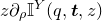 $z \partial _\rho \mathbb{I}^Y(q, {\boldsymbol{t}}, z)$
lies in cohomology of compact type, then
$z \partial _\rho \mathbb{I}^Y(q, {\boldsymbol{t}}, z)$
lies in cohomology of compact type, then $\sigma^w(z \partial _\rho \mathbb{I}^Y(q, {\boldsymbol{t}}, z))$
is a GLSM I-function for
$\sigma^w(z \partial _\rho \mathbb{I}^Y(q, {\boldsymbol{t}}, z))$
is a GLSM I-function for $(V,G, \theta, w)$
.
$(V,G, \theta, w)$
.
The above theorem is completely general. However, in the abelian case, we can say more. Let $(V, G, \theta, w)$
be a GLSM for which G is a connected torus. Through a non-trivial application of Theorem 1.3, we obtain an explicit formula for a GLSM I-function under a mild condition on the action of G on V. For an explanation of the notation, see § 6.
$(V, G, \theta, w)$
be a GLSM for which G is a connected torus. Through a non-trivial application of Theorem 1.3, we obtain an explicit formula for a GLSM I-function under a mild condition on the action of G on V. For an explanation of the notation, see § 6.
Theorem 1.4 (Corollary 6.19). Let $(V, G, \theta, w)$
be a GLSM for which G is a torus (
$(V, G, \theta, w)$
be a GLSM for which G is a torus ( $\cong (\mathbb{C}^*)^k$
). Suppose that the coordinate
$\cong (\mathbb{C}^*)^k$
). Suppose that the coordinate $x_i$
on
$x_i$
on $V = \operatorname{Spec}(\mathbb{C}[x_i]_{i=1}^r)$
has weight
$V = \operatorname{Spec}(\mathbb{C}[x_i]_{i=1}^r)$
has weight $c_i$
with respect to the grading on V. Let
$c_i$
with respect to the grading on V. Let $\mathbb{C}^*_R$
denote the one-dimensional torus, acting on V with weights
$\mathbb{C}^*_R$
denote the one-dimensional torus, acting on V with weights $(c_1, \ldots, c_r)$
, and let
$(c_1, \ldots, c_r)$
, and let $\Gamma := G \cdot \mathbb{C}^*_R$
. If
$\Gamma := G \cdot \mathbb{C}^*_R$
. If $(\mathbb{C}[x_i]_{1\leq i\leq r})^\Gamma = \mathbb{C}$
, then
$(\mathbb{C}[x_i]_{1\leq i\leq r})^\Gamma = \mathbb{C}$
, then
 \begin{align}\mathbb{I}^{(Y, w)}({\boldsymbol{t}}, q, z) :=& \sum_{d \in \mathrm{Eff}(V, G, \theta)}q^d \exp \bigg( \frac{1}{z} \sum_{j=1}^l t^j p_j(\eta_k + z\langle d, \eta_k\rangle ) \bigg) \nonumber\\&\times \sigma^w\bigg(\frac{\prod_{i| c_i \neq 0, \langle d, \rho_i\rangle\leq 0} \prod_{ \langle d, \rho_i\rangle \leq \nu\leq 0} (\rho_i + ( \langle d, \rho_i\rangle - \nu)z)}{\prod_{i| c_i \neq 0, \langle d, \rho_i\rangle \gt 0} \prod_{ 0 \lt \nu \lt \langle d, \rho_i\rangle} (\rho_i + ( \langle d, \rho_i\rangle - \nu)z)} \nonumber \\&\qquad\quad\times \frac{\prod_{ i| c_i = 0, \langle d, \rho_i\rangle\lt 0} \prod_{ \langle d, \rho_i\rangle \leq \nu\lt 0} (\rho_i + ( \langle d, \rho_i\rangle - \nu)z)}{\prod_{ i| c_i = 0, \langle d, \rho_i\rangle \gt 0} \prod_{ 0 \leq \nu \lt \langle d, \rho_i\rangle} (\rho_i + ( \langle d, \rho_i\rangle - \nu)z)} \mathbb{1}_{g_d^{-1}} \bigg) \end{align}
is a GLSM I-function for (Y, w).
In § 7, we compute $\mathbb{I}^{(Y, w)}$
in the particular cases of FJRW theory (including non-concave examples), Gromov–Witten theory (including non-convex examples), and hybrid theories. We show, in each case, that (1.4) agrees with previously computed I-functions.
$\mathbb{I}^{(Y, w)}$
in the particular cases of FJRW theory (including non-concave examples), Gromov–Witten theory (including non-convex examples), and hybrid theories. We show, in each case, that (1.4) agrees with previously computed I-functions.
Mirror constructions for toric GLSMs have been proposed by Gross, Katzarkov, and Ruddat [Reference Gross, Katzarkov and RuddatGKR17] and Clarke [Reference ClarkeCla17] based on a duality of polyhedral cones. A proposal for mirrors of non-abelian GLSMs has recently been put forth by Gu, Parsian, and Sharpe [Reference Gu, Parsian and SharpeGPS19] and Gu, Guo, and Sharpe [Reference Gu, Guo and SharpeGGS21]. As is the case in Gromov–Witten theory, we expect the components of $\mathbb{I}^{(Y, w)}({\boldsymbol{t}}, q, z)$
to coincide with oscillatory integrals of the mirror GLSM. Integral formulas for I-functions for certain GLSMs have been obtained in a physics context by Knapp, Romo, and Scheidegger [Reference Knapp, Romo and ScheideggerKRS21]. Since the original posting of this paper, an alternative computation of GLSM I-functions using loop spaces has been given by Aleshkin and Liu in [Reference Liu and AleshkinLA23] to prove a Higgs–Coulomb correspondence. It will be interesting to compare these different approaches.
$\mathbb{I}^{(Y, w)}({\boldsymbol{t}}, q, z)$
to coincide with oscillatory integrals of the mirror GLSM. Integral formulas for I-functions for certain GLSMs have been obtained in a physics context by Knapp, Romo, and Scheidegger [Reference Knapp, Romo and ScheideggerKRS21]. Since the original posting of this paper, an alternative computation of GLSM I-functions using loop spaces has been given by Aleshkin and Liu in [Reference Liu and AleshkinLA23] to prove a Higgs–Coulomb correspondence. It will be interesting to compare these different approaches.
1.4 Plan of the paper
In § 2, we define a GLSM and describe its associated state space. In § 3, we propose a definition of GLSM invariants in the particular case in which the evaluation maps are proper and the insertions are of compact type. This section also contains a comparison between our definition and the original definition of [Reference Fan, Jarvis and RuanFJR20]. In § 4 and § 5, we consider the special case of genus-zero GLSM invariants with exactly two heavy marked points, where we prove our comparison result relating GLSM invariants to associated quasimap invariants. In § 6, we define I-functions for a general GLSM and show how to compute these generating functions from known I-functions in Gromov–Witten theory. Finally, in § 7, we compare our formula with previous computations in the case of affine, geometric, and hybrid model GLSMs.
2. GLSM setup and the state space
In this section, we define a GLSM and set notation. We also describe the various state spaces that will be used throughout the paper.
2.1 Setup
Definition 2.1 A GLSM $(V, G, \theta, w)$
consists of the following data:
$(V, G, \theta, w)$
consists of the following data:
-
(1) a finite-dimensional
$\mathbb{Z}$
-graded complex vector space, where the grading is induced by the action of a one-dimensional torus
$$V=\bigoplus_{i \in\mathbb{Z}_{\geq 0}}V_i,$$
$\mathbb{C}^*_R \subseteq GL(V)$
(called the R-charge);
-
(2) an action by a linearly reductive group
$G \subseteq GL(V)$
; -
(3) a choice of character
$\theta \in \widehat G_\mathbb{Q} := \mathrm{Hom}(G,\mathbb{C}^*) \otimes_\mathbb{Z} \mathbb{Q}$
; -
(4) a G-invariant polynomial function
$w \colon V \to \mathbb{C}$
, homogeneous of degree
$d_w \gt 0$
with respect to the grading action
$\mathbb{C}^*_R$
,







satisfying the following requirements:
-
– G and
$\mathbb{C}^*_R$
commute,
$g\cdot \lambda = \lambda \cdot g$
for all
$g \in G$
and
$\lambda \in \mathbb{C}^*_R$
; -
– the intersection
$G \cap \mathbb{C}^*_R$
is cyclic of order
$d_w$
with generator J, the diagonal element in GL(V) that acts on V by multiplying
$V_n$
by
$e^{2 \pi i n/d_w}$
; -
– there are no strictly semistable points for the linearization of the G-action on V given by
$\theta$
, (2.1)
\begin{equation}V^{\rm ss}(\theta)=V^s(\theta);\end{equation}
-
– the critical locus
$Z(dw) \subset Y$
is a non-empty proper over
$\operatorname{Spec} \mathbb{C}$
; -
– the graded pieces
$V_i$
of V are empty for
$i\lt 0$
and
$i\gt d_w$
,
$$V = \bigoplus_{0 \leq i \leq d_w} V_i;$$
-
– and the group
$\mathbb{C}^*_R$
preserves the
$\theta$
-semistable locus
$V^{\rm ss}(\theta)$
.


We denote by $\Gamma$
the group
$\Gamma$
the group $G \cdot \mathbb{C}^*_R.$
Remark 2.2. In some contexts [Reference Fan, Jarvis and RuanFJR18, Reference Favero and KimFK20], a GLSM is also required to have a good lift of $\theta$
; that is, a character
$\theta$
; that is, a character $\nu \in \widehat \Gamma$
such that
$\nu \in \widehat \Gamma$
such that $\nu|_G = \theta$
and
$\nu|_G = \theta$
and $V^{\rm ss}(\nu) = V^{\rm ss}(\theta)$
. A good lift is necessary for defining
$V^{\rm ss}(\nu) = V^{\rm ss}(\theta)$
. A good lift is necessary for defining $\epsilon$
-stable GLSM invariants for
$\epsilon$
-stable GLSM invariants for $\epsilon \gt 0^+$
. In this paper, we work exclusively with
$\epsilon \gt 0^+$
. In this paper, we work exclusively with $0^+$
-stable invariants, so we do not require a good lift. Indeed, one of the main goals of this paper is to compute GLSM invariants in the absence of a good lift.
$0^+$
-stable invariants, so we do not require a good lift. Indeed, one of the main goals of this paper is to compute GLSM invariants in the absence of a good lift.
Let Y denote the GIT stack quotient
 $$Y := [V \mathbin{/\mkern-6mu/}_\theta G].$$
The function $w\colon V \to \mathbb{C}$
descends to a function on
$w\colon V \to \mathbb{C}$
descends to a function on $Y\!$
, called the potential function. By abuse of notation, we will also denote the potential function by w.
$Y\!$
, called the potential function. By abuse of notation, we will also denote the potential function by w.
Given a smooth orbifold Y and a function $w: Y \to \mathbb{C}$
, the pair (Y, w) is known as a Landau–Ginzburg (LG) model. A map of LG models
$w: Y \to \mathbb{C}$
, the pair (Y, w) is known as a Landau–Ginzburg (LG) model. A map of LG models
 $$j': (Y, w) \to (Y', w')$$
is a morphism $j: Y \to Y'$
such that
$j: Y \to Y'$
such that
 $$w' \circ j = w.$$
We say that the GLSM $(V, G, \theta, w)$
represents the LG model (Y, w) if
$(V, G, \theta, w)$
represents the LG model (Y, w) if $[V \mathbin{/\mkern-6mu/}_\theta G] = Y$
and the potential
$[V \mathbin{/\mkern-6mu/}_\theta G] = Y$
and the potential $w: Y \to \mathbb{C}$
is induced by the G-equivariant function on V of the same name. We note that two different GLSMs can represent the same LG model. In this case, one expects a relationship between the associated GLSM invariants. By abuse of notation, we sometimes speak of the GLSM invariants of (Y, w) when the particular GLSM
$w: Y \to \mathbb{C}$
is induced by the G-equivariant function on V of the same name. We note that two different GLSMs can represent the same LG model. In this case, one expects a relationship between the associated GLSM invariants. By abuse of notation, we sometimes speak of the GLSM invariants of (Y, w) when the particular GLSM $(V, G, \theta, w)$
representing (Y, w) has been fixed.
$(V, G, \theta, w)$
representing (Y, w) has been fixed.
We record for future use the following map of exact sequences

where the homomorphism $\xi$
is defined by
$\xi$
is defined by $\xi(g \cdot \lambda) = \lambda^{d_w}$
for
$\xi(g \cdot \lambda) = \lambda^{d_w}$
for $g \in G$
,
$g \in G$
, $\lambda \in \mathbb{C}^*_R$
.
$\lambda \in \mathbb{C}^*_R$
.
2.2 The state space
In this section, we introduce the state spaces used for GLSM and quasimap invariants.
Remark 2.3. The potential $w\colon Y \to \mathbb{C}$
pulls back to
$w\colon Y \to \mathbb{C}$
pulls back to $IY\!$
, the inertia stack of
$IY\!$
, the inertia stack of $Y\!$
. We will also denote this pullback by w. Unless otherwise specified,
$Y\!$
. We will also denote this pullback by w. Unless otherwise specified, $H_*$
will denote Borel–Moore homology, and all (co)homology groups will have coefficients in
$H_*$
will denote Borel–Moore homology, and all (co)homology groups will have coefficients in $\mathbb{C}$
.
$\mathbb{C}$
.
Definition 2.4. The GLSM state space of $(V, G, \theta, w)$
is defined as
$(V, G, \theta, w)$
is defined as
 $$\mathcal{H}(Y, w) := H^*_{\rm CR}(Y, w^{+\infty}) = H^*(IY, w^{+\infty}),$$
where $w^{+\infty} := (\mathrm{Re}(w))^{-1}( M, \infty)$
for M a sufficiently large real number.
$w^{+\infty} := (\mathrm{Re}(w))^{-1}( M, \infty)$
for M a sufficiently large real number.
The (Gromov–Witten theory) state space of Y is given by
 $$H^*_{\rm CR}(Y) := H^*(IY).$$
There is a map
 $$\phi^w\colon \mathcal{H}(Y, w) \to H^*_{\rm CR}(Y),$$
defined by pullback via the inclusion of pairs $(IY, \emptyset) \hookrightarrow (IY, w^{+\infty})$
. The kernel of this map is sometimes referred to as the broad sectors.
$(IY, \emptyset) \hookrightarrow (IY, w^{+\infty})$
. The kernel of this map is sometimes referred to as the broad sectors.
Consider a component $Y_g$
of
$Y_g$
of $IY\!$
, with g a representative of a conjugacy class of G. Let
$IY\!$
, with g a representative of a conjugacy class of G. Let $j\colon Z \hookrightarrow Y_g$
be a smooth and proper substack of
$j\colon Z \hookrightarrow Y_g$
be a smooth and proper substack of $Y_g$
. Assume that
$Y_g$
. Assume that $w|_Z = 0$
. In this case, there exists a map of LG models:
$w|_Z = 0$
. In this case, there exists a map of LG models:
 $$ j'\colon (Z, 0) \hookrightarrow (Y_g, w) \hookrightarrow (IY, w).$$
By capping with the fundamental class $\mu_{Y_g} \in H_*(Y_g)$
, we obtain an isomorphism as in [Reference FultonFul13, § 19.1]:
$\mu_{Y_g} \in H_*(Y_g)$
, we obtain an isomorphism as in [Reference FultonFul13, § 19.1]:
 \begin{equation}H^*(Y_g, Y_g\setminus Z) \xrightarrow{\cong} H_*(Z).\end{equation}
The pushforward $j_*\colon H^*(Z) \to H^*_{\rm CR}(Y)$
may be defined as the composition
$j_*\colon H^*(Z) \to H^*_{\rm CR}(Y)$
may be defined as the composition
 $$H^*(Z) \xrightarrow{\cong} H_*(Z) \xrightarrow{\cong} H^*(Y_g, Y_g\setminus Z) \to H^*(Y_g) \subset H^*_{\rm CR}(Y),$$
where the first map is Poincaré duality, the second is the inverse to (2.3), and the third is the natural pullback of inclusion of pairs.
By assumption on Z, we have the inclusion $w^{+\infty} \subset IY \setminus Z$
. This allows the following definition.
$w^{+\infty} \subset IY \setminus Z$
. This allows the following definition.
Definition 2.5. Define the pushforward
 $$j'_*\colon H^*(Z) \to \mathcal{H}(Y, w)$$
as the composition
 $$H^*(Z) \xrightarrow{\cong} H_*(Z) \xrightarrow{\cong} H^*(Y_g, Y_g\setminus Z) \to H^*(Y_g, w^{+\infty}) \subset \mathcal{H}(Y, w).$$
Definition 2.6. Define the compact-type GLSM state space $\mathcal{H}_{\rm ct}(Y, w) \subset \mathcal{H}(Y, w)$
as the subspace spanned by classes of the form
$\mathcal{H}_{\rm ct}(Y, w) \subset \mathcal{H}(Y, w)$
as the subspace spanned by classes of the form $j'_*(\alpha)$
for
$j'_*(\alpha)$
for $\alpha \in H^*(Z)$
and Z a smooth and proper substack of IY lying in
$\alpha \in H^*(Z)$
and Z a smooth and proper substack of IY lying in $w^{-1}(0)$
.
$w^{-1}(0)$
.
Let
 $$\phi^{\rm cs}\colon H^*_{\rm CR,cs}(Y) \to H^*_{\rm CR}(Y),$$
denote the natural map from compactly supported Chen–Ruan cohomology $H^*_{\rm CR,cs}(Y)$
to Chen–Ruan cohomology.
$H^*_{\rm CR,cs}(Y)$
to Chen–Ruan cohomology.
Definition 2.7. Define the compact-type Gromov–Witten theory state space $H^*_{\rm CR,ct}(Y)$
as the image
$H^*_{\rm CR,ct}(Y)$
as the image $\operatorname{im}(\phi^{\rm cs}) \subset H^*_{\rm CR}(Y)$
.
$\operatorname{im}(\phi^{\rm cs}) \subset H^*_{\rm CR}(Y)$
.
We observe the following.
Lemma 2.8.
For Z a smooth, proper substack of $w^{-1}(0)$
in
$w^{-1}(0)$
in $IY\!$
, the pushforward
$IY\!$
, the pushforward $j_*\colon H^*(Z) \to H^*_{\rm CR}(Y)$
factors as
$j_*\colon H^*(Z) \to H^*_{\rm CR}(Y)$
factors as
 $$j_* = \phi^w \circ j'_*.$$
Proof. The result is immediate from the above definitions and the obvious commutativity of the following diagram.

If $j\colon Z \hookrightarrow IY$
is the inclusion of a smooth proper substack, then
$j\colon Z \hookrightarrow IY$
is the inclusion of a smooth proper substack, then $j_*(\alpha)$
lies in
$j_*(\alpha)$
lies in $H^*_{\rm CR,ct}(Y)$
. By the above lemma, this implies that
$H^*_{\rm CR,ct}(Y)$
. By the above lemma, this implies that
 $$ \phi^w (\mathcal{H}_{\rm ct}(Y, w)) \subseteq H^*_{\rm CR,ct}(Y).$$
2.3 Compact-type cup product and pairing
Here, we recall some facts about compact-type cohomology $H^*_{\rm CR,ct}(Y)$
from [Reference ShoemakerSho21]. Note that in [Reference ShoemakerSho21], the compact-type cohomology has been referred to as narrow cohomology. In this paper, we have adopted the language that appears in [Reference Fan, Jarvis and RuanFJR18].
$H^*_{\rm CR,ct}(Y)$
from [Reference ShoemakerSho21]. Note that in [Reference ShoemakerSho21], the compact-type cohomology has been referred to as narrow cohomology. In this paper, we have adopted the language that appears in [Reference Fan, Jarvis and RuanFJR18].
Definition 2.9. Given a class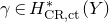 $\gamma \in H^*_{\rm CR,ct}(Y)$
, we say that
$\gamma \in H^*_{\rm CR,ct}(Y)$
, we say that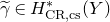 $\widetilde{\gamma} \in H^*_{\rm CR,cs}(Y)$
is a lift of
$\widetilde{\gamma} \in H^*_{\rm CR,cs}(Y)$
is a lift of $\gamma$
if
$\gamma$
if
 $$\phi^{\rm cs}(\widetilde{\gamma}) = \gamma.$$
In addition to the usual cup products,
 \begin{align*}\cup \colon &H^*_{\rm CR}(Y) \times H^*_{\rm CR}(Y) \to H^*_{\rm CR}(Y), \\\cup \colon &H^*_{\rm CR,cs}(Y) \times H^*_{\rm CR}(Y) \to H^*_{\rm CR,cs}(Y),\end{align*}
there is a cup product $\cup_{\rm cs}\colon H^*_{\rm CR,ct}(Y) \times H^*_{\rm CR,ct}(Y) \to H^*_{\rm CR,cs}(Y)$
that multiplies a pair of elements from compact-type cohomology to an element of compactly supported cohomology. It is given by
$\cup_{\rm cs}\colon H^*_{\rm CR,ct}(Y) \times H^*_{\rm CR,ct}(Y) \to H^*_{\rm CR,cs}(Y)$
that multiplies a pair of elements from compact-type cohomology to an element of compactly supported cohomology. It is given by
 $$\gamma_1 \cup_{\rm cs} \gamma_2 := \widetilde{\gamma}_1 \cup\gamma_2,$$
where $\gamma_1, \gamma_2 \in H^*_{\rm CR,ct}(Y)$
and
$\gamma_1, \gamma_2 \in H^*_{\rm CR,ct}(Y)$
and $\widetilde{\gamma}_1$
is a lift of
$\widetilde{\gamma}_1$
is a lift of $\gamma_1$
. One can check that if
$\gamma_1$
. One can check that if $\kappa \in \ker(\phi^{\rm cs})$
and
$\kappa \in \ker(\phi^{\rm cs})$
and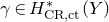 $\gamma \in H^*_{\rm CR,ct}(Y)$
, then
$\gamma \in H^*_{\rm CR,ct}(Y)$
, then $\kappa \cup \gamma = 0$
in
$\kappa \cup \gamma = 0$
in $H^*_{\rm CR,ct}(Y)$
, from which it follows that
$H^*_{\rm CR,ct}(Y)$
, from which it follows that $\cup_{\rm cs}$
is well defined (for details and a proof in de Rham cohomology when Y is smooth, see [Reference ShoemakerSho21]; a similar argument holds in singular cohomology).
$\cup_{\rm cs}$
is well defined (for details and a proof in de Rham cohomology when Y is smooth, see [Reference ShoemakerSho21]; a similar argument holds in singular cohomology).
Recall the Chen–Ruan pairing $\langle -,-\rangle^Y\!$
. For
$\langle -,-\rangle^Y\!$
. For $\widetilde{\gamma}_1 \in H^*_{\rm CR,cs}(Y)$
and
$\widetilde{\gamma}_1 \in H^*_{\rm CR,cs}(Y)$
and $ \gamma_2 \in H^*_{\rm CR}(Y)$
,
$ \gamma_2 \in H^*_{\rm CR}(Y)$
,
 $$\langle\widetilde{\gamma}_1, \gamma_2\rangle^Y :=\int_{IY} \widetilde{\gamma}_1 \cup I_*( \gamma_2),$$
where $I\colon IY \to IY$
is the natural involution. By [Reference Chen and RuanCR04], this pairing is non-degenerate. We also define a compact-type pairing
$I\colon IY \to IY$
is the natural involution. By [Reference Chen and RuanCR04], this pairing is non-degenerate. We also define a compact-type pairing $\langle -,-\rangle^{Y, {\rm cs}}$
on
$\langle -,-\rangle^{Y, {\rm cs}}$
on $H^*_{\rm CR,ct}(Y)$
by
$H^*_{\rm CR,ct}(Y)$
by
 $$\langle\gamma_1, \gamma_2\rangle^{Y, {\rm cs}} := \int_{IY} \gamma_1 \cup_{\rm cs} I_*(\gamma_2),$$
By [Reference ShoemakerSho21, Corollary 2.7], this pairing is non-degenerate.
It is immediate from the definitions that the product and pairing on $H^*_{\rm CR,ct}(Y)$
are compatible with the map
$H^*_{\rm CR,ct}(Y)$
are compatible with the map $\phi^{\rm cs}$
. That is, for
$\phi^{\rm cs}$
. That is, for $\widetilde{\gamma}_1, \widetilde{\gamma}_2 \in H^*_{\rm CR,cs}(Y)$
,
$\widetilde{\gamma}_1, \widetilde{\gamma}_2 \in H^*_{\rm CR,cs}(Y)$
,
 \begin{equation}\widetilde{\gamma}_1 \cup \widetilde{\gamma}_2 = \phi^{\rm cs}(\widetilde{\gamma}_1) \cup \widetilde{\gamma}_2 = \phi^{\rm cs}(\widetilde{\gamma}_1) \cup_{\rm cs} \phi^{\rm cs}(\widetilde{\gamma}_2)\end{equation}
and
 \begin{equation}\langle \widetilde{\gamma}_1, \phi^{\rm cs}(\widetilde{\gamma}_2)\rangle^Y = \langle \phi^{\rm cs}(\widetilde{\gamma}_1) , \phi^{\rm cs}(\widetilde{\gamma}_2)\rangle^{Y, {\rm cs}},\end{equation}
where $\langle -,-\rangle^Y$
denote the usual Chen–Ruan pairing between
$\langle -,-\rangle^Y$
denote the usual Chen–Ruan pairing between $H^*_{\rm CR,cs}(Y)$
and
$H^*_{\rm CR,cs}(Y)$
and $H^*_{\rm CR}(Y)$
.
$H^*_{\rm CR}(Y)$
.
3. Compact-type GLSM invariants
In this section, we provide a definition of GLSM invariants with compact-type insertions in the special case in which the evaluation maps are proper. We will see in later sections that this is sufficient for a mirror theorem.
3.1 Review of quasimap invariants
We denote the moduli space of genus-h, n-pointed, degree-d quasimaps to $Y = [V \mathbin{/\mkern-6mu/}_\theta G]$
by
$Y = [V \mathbin{/\mkern-6mu/}_\theta G]$
by $Q_{h,n}(Y, d)$
. In this paper, we only work with
$Q_{h,n}(Y, d)$
. In this paper, we only work with $0^+$
-stability, so we omit it from the notation. We give a construction of
$0^+$
-stability, so we omit it from the notation. We give a construction of $Q_{h,n}(Y, d)$
and the corresponding quasimap invariants below. This particular presentation of the moduli space and virtual class appears in [Reference Ciocan-Fontanine and KimCFK10] in the toric setting. In this generality, the moduli space and virtual class have originally been constructed in [Reference Ciocan-Fontanine, Kim and MaulikCFKM14].
$Q_{h,n}(Y, d)$
and the corresponding quasimap invariants below. This particular presentation of the moduli space and virtual class appears in [Reference Ciocan-Fontanine and KimCFK10] in the toric setting. In this generality, the moduli space and virtual class have originally been constructed in [Reference Ciocan-Fontanine, Kim and MaulikCFKM14].
Definition 3.1 Let $\mathfrak{M}_{h,n}$
denote the moduli stack of genus-h, n-pointed, prestable orbi-curves. By an orbi-curve, we mean a twisted curve together with a section of each gerbe markings (see [Reference Ciocan-Fontanine, Favero, Guéré, Kim and ShoemakerCFFG+23, Definition 3.1.1]). Let
$\mathfrak{M}_{h,n}$
denote the moduli stack of genus-h, n-pointed, prestable orbi-curves. By an orbi-curve, we mean a twisted curve together with a section of each gerbe markings (see [Reference Ciocan-Fontanine, Favero, Guéré, Kim and ShoemakerCFFG+23, Definition 3.1.1]). Let $\Sigma_i \to \mathfrak{M}_{h,n}$
denote the ith-marked-point gerbe and let
$\Sigma_i \to \mathfrak{M}_{h,n}$
denote the ith-marked-point gerbe and let $\Sigma = \coprod_{i=1}^n \Sigma_i$
. Let
$\Sigma = \coprod_{i=1}^n \Sigma_i$
. Let $\sigma_i: \Sigma_i \to \mathfrak{C}$
denote the inclusion of the ith marked point.
$\sigma_i: \Sigma_i \to \mathfrak{C}$
denote the inclusion of the ith marked point.
Let $\mathfrak{M}_{h,n}(BG)$
denote the moduli space of genus-h, n-pointed, prestable orbi-curves
$\mathfrak{M}_{h,n}(BG)$
denote the moduli space of genus-h, n-pointed, prestable orbi-curves $\mathcal{C}$
, together with a principal G-bundle
$\mathcal{C}$
, together with a principal G-bundle $\mathcal{P}$
such that the induced morphism
$\mathcal{P}$
such that the induced morphism $[\mathcal{P}]\colon \mathcal{C} \to BG$
is representable.
$[\mathcal{P}]\colon \mathcal{C} \to BG$
is representable.
Define the degree of a principal G-bundle $\mathcal{P} \to \mathcal{C}$
to be the element
$\mathcal{P} \to \mathcal{C}$
to be the element $d \in \hom_\mathbb{Z}(\widehat G, \mathbb{Q})$
such that, for each character
$d \in \hom_\mathbb{Z}(\widehat G, \mathbb{Q})$
such that, for each character $\zeta \in \widehat G$
,
$\zeta \in \widehat G$
,
 $$d(\zeta) = \deg(\mathcal{P} \times_G \mathbb{C}_\zeta),$$
where $\mathbb{C}_\zeta$
is the representation corresponding to
$\mathbb{C}_\zeta$
is the representation corresponding to $\zeta$
.
$\zeta$
.
For $d \in \hom_\mathbb{Z}(\widehat G, \mathbb{Q})$
, define
$d \in \hom_\mathbb{Z}(\widehat G, \mathbb{Q})$
, define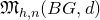 $\mathfrak{M}_{h,n}(BG, d)$
to be the open and closed substack of
$\mathfrak{M}_{h,n}(BG, d)$
to be the open and closed substack of $\mathfrak{M}_{h,n}(BG)$
for which the principal bundle has degree d. Denote by
$\mathfrak{M}_{h,n}(BG)$
for which the principal bundle has degree d. Denote by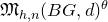 $\mathfrak{M}_{h,n}(BG, d)^\theta$
the open substack consisting of pairs
$\mathfrak{M}_{h,n}(BG, d)^\theta$
the open substack consisting of pairs $(\mathcal{C}, \mathcal{P})$
such that
$(\mathcal{C}, \mathcal{P})$
such that $\mathcal{C}$
has no rational tails and, on each irreducible component
$\mathcal{C}$
has no rational tails and, on each irreducible component $\mathcal{C} '$
of
$\mathcal{C} '$
of $\mathcal{C}$
for which
$\mathcal{C}$
for which $\omega_{\mathcal{C}, \mathrm{log}}|_{\mathcal{C} '}$
is trivial, the degree of
$\omega_{\mathcal{C}, \mathrm{log}}|_{\mathcal{C} '}$
is trivial, the degree of
 $$\mathcal{L}_\theta := \mathcal{P} \times_G\mathbb{C}_\theta$$
restricted to $\mathcal{C} '$
is positive. Let
$\mathcal{C} '$
is positive. Let $\pi\colon \mathfrak{C} \to \mathfrak{M}_{h,n}(BG, d)^\theta$
denote the universal curve and let
$\pi\colon \mathfrak{C} \to \mathfrak{M}_{h,n}(BG, d)^\theta$
denote the universal curve and let $\mathcal{P}_G \to \mathfrak{C}$
be the universal principal G-bundle. Denote by
$\mathcal{P}_G \to \mathfrak{C}$
be the universal principal G-bundle. Denote by $\mathcal{V}_G$
the vector bundle
$\mathcal{V}_G$
the vector bundle $ \mathcal{P}_G \times_G V$
.
$ \mathcal{P}_G \times_G V$
.
Definition 3.2. Define the space of sections of $\mathcal{V}_G$
to be
$\mathcal{V}_G$
to be
 \[ \operatorname{tot}(\pi_*\mathcal{V}_G) := \operatorname{Spec} ( \mathrm{Sym} ( \mathbb{R}^1 \pi_*(\omega_\pi \otimes \mathcal{V}_G^\vee))),\]
lying over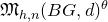 $\mathfrak{M}_{h,n}(BG, d)^\theta$
.
$\mathfrak{M}_{h,n}(BG, d)^\theta$
.
Closed points of $\operatorname{tot}(\pi_*\mathcal{V}_G)$
consist of a marked curve
$\operatorname{tot}(\pi_*\mathcal{V}_G)$
consist of a marked curve $\mathcal{C}$
together with a section
$\mathcal{C}$
together with a section $u_G \in \Gamma(\mathcal{C}, \mathcal{V}_G|_\mathcal{C})$
, which defines a map
$u_G \in \Gamma(\mathcal{C}, \mathcal{V}_G|_\mathcal{C})$
, which defines a map $[u_G]\colon \mathcal{C} \to [V/G]$
to the stack quotient. The basepoints of
$[u_G]\colon \mathcal{C} \to [V/G]$
to the stack quotient. The basepoints of $[u_G]$
consist of the preimage of the unstable locus
$[u_G]$
consist of the preimage of the unstable locus $[u_G]^{-1}( [V^{\rm us}(\theta)/G])$
.
$[u_G]^{-1}( [V^{\rm us}(\theta)/G])$
.
Definition 3.3. The stack $Q_{h,n}(Y, d)$
is the open substack of
$Q_{h,n}(Y, d)$
is the open substack of $\operatorname{tot}(\pi_*\mathcal{V}_G)$
satisfying the condition that the basepoint locus of
$\operatorname{tot}(\pi_*\mathcal{V}_G)$
satisfying the condition that the basepoint locus of $[u_G]$
is a finite set, disjoint from the nodes and markings of
$[u_G]$
is a finite set, disjoint from the nodes and markings of $\mathcal{C}$
. It is a Deligne–Mumford stack, proper over
$\mathcal{C}$
. It is a Deligne–Mumford stack, proper over $\operatorname{Spec}( (\mathrm{Sym}^\bullet V^\vee)^G)$
(see [Reference Cheong, Ciocan-Fontanine and KimCCFK15, Theorem 2.7]).
$\operatorname{Spec}( (\mathrm{Sym}^\bullet V^\vee)^G)$
(see [Reference Cheong, Ciocan-Fontanine and KimCCFK15, Theorem 2.7]).
Remark 3.4. In the case in which Y is an orbifold, there is a slight difference in the definition of the moduli space of stable quasimaps of from Definition 3.3 and that originally defined in [Reference Cheong, Ciocan-Fontanine and KimCCFK15] due to our convention that the gerbe markings have sections (Definition 3.1). This does not affect the quasimap invariants, due to the correction factor $\boldsymbol{r}$
appearing in Definition 3.8.
$\boldsymbol{r}$
appearing in Definition 3.8.
The moduli space $Q_{h,n}(Y, d)$
admits a natural relative obstruction theory over
$Q_{h,n}(Y, d)$
admits a natural relative obstruction theory over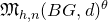 $\mathfrak{M}_{h,n}(BG, d)^\theta$
given by
$\mathfrak{M}_{h,n}(BG, d)^\theta$
given by $\mathbb{R} \pi_*(\mathcal{V}_G)^\vee.$
This defines a virtual class
$\mathbb{R} \pi_*(\mathcal{V}_G)^\vee.$
This defines a virtual class
 $$[Q_{h,n}(Y, d)]^{\rm vir}$$
by [Reference Behrend and FantechiBF97]. By choosing an appropriate $\pi$
-acyclic resolution of
$\pi$
-acyclic resolution of $\mathcal{V}_G$
, we can realize this virtual class more concretely. We make use of the following.
$\mathcal{V}_G$
, we can realize this virtual class more concretely. We make use of the following.
Proposition 3.5 [Reference Ciocan-Fontanine, Favero, Guéré, Kim and ShoemakerCFFG+23, § 3.4]. There exists a resolution of $\mathcal{V}_G$
by a two-term complex of vector bundles
$\mathcal{V}_G$
by a two-term complex of vector bundles $\mathcal{A} \xrightarrow{\delta} \mathcal{B}$
such that:
$\mathcal{A} \xrightarrow{\delta} \mathcal{B}$
such that:
-
–
$\mathcal{A}$
and
$\mathcal{B}$
are
$\pi$
-acyclic; and
-
– there exists a restriction map
$\mathcal{A} \to \mathcal{V}_G|_{\Sigma}$
such that the composition
$\mathcal{V}_G \to \mathcal{A} \to \mathcal{V}_G|_{\Sigma}$
is the usual restriction, and
$\pi_*(\mathcal{A}) \to \pi_*(\mathcal{V}_G|_{\Sigma})$
is surjective.




Let $A = \pi_*(\mathcal{A})$
and
$A = \pi_*(\mathcal{A})$
and $B = \pi_*(\mathcal{B})$
. Let
$B = \pi_*(\mathcal{B})$
. Let $p_A\colon \operatorname{tot}(A) \to \mathfrak{M}_{h,n}(B\Gamma, d)^\theta$
denote the projection. There exists an open subset
$p_A\colon \operatorname{tot}(A) \to \mathfrak{M}_{h,n}(B\Gamma, d)^\theta$
denote the projection. There exists an open subset $U \subset \textrm{tot}(A)$
such that
$U \subset \textrm{tot}(A)$
such that $Q_{h,n}(Y, d)$
can be realized as
$Q_{h,n}(Y, d)$
can be realized as $\{\beta = 0\} \subset U$
, where
$\{\beta = 0\} \subset U$
, where $\beta = p_A^*(\delta) \circ \operatorname{taut}_A $
is the section of
$\beta = p_A^*(\delta) \circ \operatorname{taut}_A $
is the section of $ E = p_A^*(B)$
induced by
$ E = p_A^*(B)$
induced by $\delta$
(see, e.g., [Reference Ciocan-Fontanine and KimCFK10, proof of Theorem 3.2.1]).
$\delta$
(see, e.g., [Reference Ciocan-Fontanine and KimCFK10, proof of Theorem 3.2.1]).
The two-term complex
 $$[E^\vee\xrightarrow{p_A^*(\delta)^\vee} p_A^*(A)^\vee = \Omega^1_{U/\mathfrak{M}_{h,n}(BG, d)^\theta}]$$
gives a resolution of $\mathbb{R} \pi_*(\mathcal{V}_G)^\vee$
over U, and thus restricts to the relative perfect obstruction theory described above. In this case, the virtual class may be realized as a localized top Chern class (for details, see [Reference Behrend and FantechiBF97, § 6]). Consider the fiber square
$\mathbb{R} \pi_*(\mathcal{V}_G)^\vee$
over U, and thus restricts to the relative perfect obstruction theory described above. In this case, the virtual class may be realized as a localized top Chern class (for details, see [Reference Behrend and FantechiBF97, § 6]). Consider the fiber square

where $\beta$
and 0 are the maps induced by the corresponding sections of E.
$\beta$
and 0 are the maps induced by the corresponding sections of E.
Definition 3.6 Define the virtual class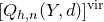 $[Q_{h,n}(Y, d)]^{\rm vir}$
to be the localized top Chern class
$[Q_{h,n}(Y, d)]^{\rm vir}$
to be the localized top Chern class
 $$[Q_{h,n}(Y, d)]^{\rm vir}:= e_{\rm loc}(E, \beta) = \operatorname{cl}(0^!( [U])),$$
where $0^!: A_*(U) \to A_*(Q_{h,n}(Y, d))$
is the Gysin pullback and
$0^!: A_*(U) \to A_*(Q_{h,n}(Y, d))$
is the Gysin pullback and $\operatorname{cl}: A_*(Q_{h,n}(Y, d)) \to H_*(Q_{h,n}(Y, d))$
is the map, described in [Reference FultonFul13, § 19.1], which gives the corresponding class in Borel–Moore homology.
$\operatorname{cl}: A_*(Q_{h,n}(Y, d)) \to H_*(Q_{h,n}(Y, d))$
is the map, described in [Reference FultonFul13, § 19.1], which gives the corresponding class in Borel–Moore homology.
We take this as the definition. It coincides with the (image in homology of the) virtual class of [Reference Behrend and FantechiBF97] using the relative obstruction theory given above, and thus is independent of the resolution $[A \to B]$
chosen in Proposition 3.5.
$[A \to B]$
chosen in Proposition 3.5.
We define quasimap invariants by integrating against the virtual class. We require the following lemma.
Lemma 3.7.
The evaluation map $ev_i\colon Q_{h,n}(Y, d) \to IY$
is proper for
$ev_i\colon Q_{h,n}(Y, d) \to IY$
is proper for $1 \leq i \leq n$
.
$1 \leq i \leq n$
.
Proof. By [Reference Cheong, Ciocan-Fontanine and KimCCFK15, Theorem 2.7], $Q_{h,n}(Y, d)$
is a proper Deligne–Mumford stack over the affine quotient
$Q_{h,n}(Y, d)$
is a proper Deligne–Mumford stack over the affine quotient $\operatorname{Spec}( (\mathrm{Sym}^\bullet V^\vee)^G)$
. The map
$\operatorname{Spec}( (\mathrm{Sym}^\bullet V^\vee)^G)$
. The map
 $$Q_{h,n}(Y, d) \to \operatorname{Spec}( (\mathrm{Sym}^\bullet V^\vee)^G)$$
factors through $ev_i$
; therefore by [Sta20, Lemma 01W6],
$ev_i$
; therefore by [Sta20, Lemma 01W6], $ev_i$
is proper.
$ev_i$
is proper.
For $1 \leq i\leq n$
, let
$1 \leq i\leq n$
, let $\boldsymbol{r}_i$
be the locally constant function on
$\boldsymbol{r}_i$
be the locally constant function on $Q_{h,n}(Y, d)$
with value given by the order of the automorphism group at the ith marking on each connected component (see [Reference TsengTse10, § 2.1]). Let
$Q_{h,n}(Y, d)$
with value given by the order of the automorphism group at the ith marking on each connected component (see [Reference TsengTse10, § 2.1]). Let $\boldsymbol{r}$
denote the product
$\boldsymbol{r}$
denote the product
 $$\boldsymbol{r} = \prod_{i=1}^n \boldsymbol{r}_i.$$
The quasimap invariant $\langle \gamma_1 \psi^{k_1}, \ldots, \gamma_n \psi^{k_n}\rangle_{h,n,d}^Y$
is well defined if either:
$\langle \gamma_1 \psi^{k_1}, \ldots, \gamma_n \psi^{k_n}\rangle_{h,n,d}^Y$
is well defined if either:
-
• at least one class
$\gamma_i$
lies in compactly supported cohomology; or -
• at least two classes
$\gamma_i, \gamma_j$
lie in compact-type cohomology.


Definition 3.8. Given $\gamma_1 \in H^*_{\rm CR,cs}(Y)$
and
$\gamma_1 \in H^*_{\rm CR,cs}(Y)$
and $\gamma_2, \ldots, \gamma_n \in H^*_{\rm CR}(Y)$
, define the quasimap invariant
$\gamma_2, \ldots, \gamma_n \in H^*_{\rm CR}(Y)$
, define the quasimap invariant $\langle \gamma_1 \psi^{k_1}, \ldots, \gamma_n \psi^{k_n}\rangle_{h,n,d}^Y$
to be
$\langle \gamma_1 \psi^{k_1}, \ldots, \gamma_n \psi^{k_n}\rangle_{h,n,d}^Y$
to be
 $$ \int_{[Q_{h,n}(Y, d)]^{\rm vir}}\boldsymbol{r} \cdot{ev_1^c}^*(\gamma_1) \cup \psi_1^{k_1} \cup \prod_{2 \leq i \leq n} ev_i^*(\gamma_i) \cup \psi_i^{k_i}, $$
where ${ev_1^c}^*$
is the pullback in compactly supported cohomology. Given
${ev_1^c}^*$
is the pullback in compactly supported cohomology. Given $\gamma_1, \gamma_2 \in H^*_{\rm CR,ct}(Y)$
and
$\gamma_1, \gamma_2 \in H^*_{\rm CR,ct}(Y)$
and $\gamma_3, \ldots, \gamma_n \in H^*_{\rm CR}(Y)$
, define
$\gamma_3, \ldots, \gamma_n \in H^*_{\rm CR}(Y)$
, define $\langle \gamma_1 \psi^{k_1}, \ldots, \gamma_n \psi^{k_n}\rangle_{h,n,d}^Y$
to be
$\langle \gamma_1 \psi^{k_1}, \ldots, \gamma_n \psi^{k_n}\rangle_{h,n,d}^Y$
to be
 $$ \int_{[Q_{h,n}(Y, d)]^{\rm vir}}\boldsymbol{r} \cdot{ev_1}^*(\gamma_1) \cup_{\rm cs} {ev_2}^*(\gamma_2) \cup \psi_1^{k_1} \cup \psi_2^{k_2} \cup \prod_{3 \leq i \leq n} ev_i^*(\gamma_i) \cup \psi_i^{k_i}. $$
Definition 3.9 An element $d \in \hom_\mathbb{Z}(\widehat G, \mathbb{Q})$
is
$d \in \hom_\mathbb{Z}(\widehat G, \mathbb{Q})$
is $(V, G, \theta)$
-effective if it arises as a finite sum of elements
$(V, G, \theta)$
-effective if it arises as a finite sum of elements $d_i$
for which there exists a stable quasimap of degree
$d_i$
for which there exists a stable quasimap of degree $d_i$
. The set of effective elements forms a semigroup, denoted by
$d_i$
. The set of effective elements forms a semigroup, denoted by $\mathrm{Eff}(V, G, \theta).$
3.2 A virtual class for GLSMs
Given a GLSM $(V, G, \theta, w)$
, the moduli stack of
$(V, G, \theta, w)$
, the moduli stack of $\epsilon$
-stable genus-h, n-pointed, degree-d LG maps,
$\epsilon$
-stable genus-h, n-pointed, degree-d LG maps, $LG_{h,n}^{\epsilon}(Y, d)$
has been defined in [Reference Fan, Jarvis and RuanFJR18]. In this paper, we focus on the
$LG_{h,n}^{\epsilon}(Y, d)$
has been defined in [Reference Fan, Jarvis and RuanFJR18]. In this paper, we focus on the $\epsilon = 0^+$
stability condition. The moduli space
$\epsilon = 0^+$
stability condition. The moduli space $LG_{h,n}^{0^+}(Y, d)$
will be denoted by
$LG_{h,n}^{0^+}(Y, d)$
will be denoted by $QLG_{h,n}(Y, d)$
. We call this the moduli space of LG quasimaps.
$QLG_{h,n}(Y, d)$
. We call this the moduli space of LG quasimaps.
Via the exact sequences given in (2.2), the group $\hom_\mathbb{Z}(\hat{\Gamma}, \mathbb{Q})$
is canonically isomorphic to
$\hom_\mathbb{Z}(\hat{\Gamma}, \mathbb{Q})$
is canonically isomorphic to
 $$\hom_\mathbb{Z}(\widehat G, \mathbb{Q}) \times \hom_\mathbb{Z}(\hat{\mathbb{C}}^*_R, \mathbb{Q}).$$
As in Definition 3.1, a principal $\Gamma$
-bundle
$\Gamma$
-bundle $\mathcal{P} \to \mathcal{C}$
naturally defines an element of
$\mathcal{P} \to \mathcal{C}$
naturally defines an element of $\hom_\mathbb{Z}(\hat{\Gamma}, \mathbb{Q})$
. Unless otherwise specified, the degree of a principal
$\hom_\mathbb{Z}(\hat{\Gamma}, \mathbb{Q})$
. Unless otherwise specified, the degree of a principal $\Gamma$
-bundle will refer the image of this element under the projection map
$\Gamma$
-bundle will refer the image of this element under the projection map $\hom_\mathbb{Z}(\hat{\Gamma}, \mathbb{Q}) \to \hom_\mathbb{Z}(\widehat G, \mathbb{Q})$
.
$\hom_\mathbb{Z}(\hat{\Gamma}, \mathbb{Q}) \to \hom_\mathbb{Z}(\widehat G, \mathbb{Q})$
.
Definition 3.10. For $c \in \mathbb{Z}$
,
$c \in \mathbb{Z}$
, $h, n \in \mathbb{Z}_{\geq 0}$
and
$h, n \in \mathbb{Z}_{\geq 0}$
and $d \in \hom_\mathbb{Z}(\widehat G, \mathbb{Q})$
, let
$d \in \hom_\mathbb{Z}(\widehat G, \mathbb{Q})$
, let $\mathfrak{M}_{h,n}(B\Gamma, d)_{\omega_{\mathcal{C}, \mathrm{log}}^c}$
denote the moduli stack of genus-h, n-pointed, prestable orbi-curves
$\mathfrak{M}_{h,n}(B\Gamma, d)_{\omega_{\mathcal{C}, \mathrm{log}}^c}$
denote the moduli stack of genus-h, n-pointed, prestable orbi-curves $\mathcal{C}$
with a degree-d principal
$\mathcal{C}$
with a degree-d principal $\Gamma$
-bundle
$\Gamma$
-bundle $\mathcal{P} \to \mathcal{C}$
, and an isomorphism
$\mathcal{P} \to \mathcal{C}$
, and an isomorphism
 $$\eta\colon \xi_*(\mathcal{P}) \cong (\omega_{\mathcal{C}, \mathrm{log}}^{\otimes c})^\circ,$$
such that the induced morphism $[\mathcal{P}]\colon \mathcal{C} \to B\Gamma$
is representable.
$[\mathcal{P}]\colon \mathcal{C} \to B\Gamma$
is representable.
Let $\nu \in \widehat \Gamma$
be a lift of
$\nu \in \widehat \Gamma$
be a lift of $\theta$
; that is,
$\theta$
; that is, $\nu|_G = \theta$
. Denote by
$\nu|_G = \theta$
. Denote by $\mathfrak{M}_{h,n}(B\Gamma, d)^\theta_{\omega_{\mathcal{C}, \mathrm{log}}^c}$
the open substack of
$\mathfrak{M}_{h,n}(B\Gamma, d)^\theta_{\omega_{\mathcal{C}, \mathrm{log}}^c}$
the open substack of $\mathfrak{M}_{h,n}(B\Gamma, d)_{\omega_{\mathcal{C}, \mathrm{log}}^c}$
consisting of pairs
$\mathfrak{M}_{h,n}(B\Gamma, d)_{\omega_{\mathcal{C}, \mathrm{log}}^c}$
consisting of pairs $(\mathcal{C}, \mathcal{P})$
such that
$(\mathcal{C}, \mathcal{P})$
such that $\mathcal{C}$
has no rational tails and, on each irreducible component
$\mathcal{C}$
has no rational tails and, on each irreducible component $\mathcal{C} '$
of
$\mathcal{C} '$
of $\mathcal{C}$
for which
$\mathcal{C}$
for which $\omega_{\mathcal{C}, \mathrm{log}}|_{\mathcal{C} '}$
is trivial, the degree of
$\omega_{\mathcal{C}, \mathrm{log}}|_{\mathcal{C} '}$
is trivial, the degree of
 $$\mathcal{L}_\nu := \mathcal{P} \times_\Gamma \mathbb{C}_\nu$$
restricted to $\mathcal{C} '$
is positive. We note that for two choices
$\mathcal{C} '$
is positive. We note that for two choices $\nu$
or
$\nu$
or $\nu '$
of lift, the line bundles
$\nu '$
of lift, the line bundles $\mathcal{L}_\nu$
and
$\mathcal{L}_\nu$
and $\mathcal{L}_{\nu '}$
differ by a power of
$\mathcal{L}_{\nu '}$
differ by a power of $\omega_{\mathcal{C}, \mathrm{log}}$
. Therefore, the definition of
$\omega_{\mathcal{C}, \mathrm{log}}$
. Therefore, the definition of $\mathfrak{M}_{h,n}(B\Gamma, d)^\theta_{\omega_{\mathcal{C}, \mathrm{log}}^c}$
is independent of the lift of
$\mathfrak{M}_{h,n}(B\Gamma, d)^\theta_{\omega_{\mathcal{C}, \mathrm{log}}^c}$
is independent of the lift of $\theta$
(see [Reference Fan, Jarvis and RuanFJR18, Corollary 4.2.15]).
$\theta$
(see [Reference Fan, Jarvis and RuanFJR18, Corollary 4.2.15]).
Let $\pi\colon \mathfrak{C} \to \mathfrak{M}_{h,n}(B\Gamma, d)^\theta_{\omega_{\mathcal{C}, \mathrm{log}}^c}$
denote the universal curve and let
$\pi\colon \mathfrak{C} \to \mathfrak{M}_{h,n}(B\Gamma, d)^\theta_{\omega_{\mathcal{C}, \mathrm{log}}^c}$
denote the universal curve and let $\mathcal{P}_\Gamma \to \mathfrak{C}$
denote the universal principal
$\mathcal{P}_\Gamma \to \mathfrak{C}$
denote the universal principal $\Gamma$
-bundle. Let
$\Gamma$
-bundle. Let $\mathcal{V}_\Gamma := \mathcal{P}_\Gamma \times_\Gamma V$
.
$\mathcal{V}_\Gamma := \mathcal{P}_\Gamma \times_\Gamma V$
.
The construction of the moduli space $QLG_{h,n}(Y, d)$
and the virtual class is identical to § 3.1 after replacing
$QLG_{h,n}(Y, d)$
and the virtual class is identical to § 3.1 after replacing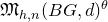 $\mathfrak{M}_{h,n}(BG, d)^\theta$
with
$\mathfrak{M}_{h,n}(BG, d)^\theta$
with $\mathfrak{M}_{h,n}(B\Gamma, d)^\theta_{\omega_{\mathcal{C}, \mathrm{log}}}$
. As in Definition 3.2, define
$\mathfrak{M}_{h,n}(B\Gamma, d)^\theta_{\omega_{\mathcal{C}, \mathrm{log}}}$
. As in Definition 3.2, define $\operatorname{tot}(\pi_*\mathcal{V}_\Gamma)$
, this time over
$\operatorname{tot}(\pi_*\mathcal{V}_\Gamma)$
, this time over $\mathfrak{M}_{h,n}(B\Gamma, d)^\theta_{\omega_{\mathcal{C}, \mathrm{log}}}$
. Closed points of
$\mathfrak{M}_{h,n}(B\Gamma, d)^\theta_{\omega_{\mathcal{C}, \mathrm{log}}}$
. Closed points of $\operatorname{tot}(\pi_*\mathcal{V}_\Gamma)$
consist of a marked curve
$\operatorname{tot}(\pi_*\mathcal{V}_\Gamma)$
consist of a marked curve $\mathcal{C}$
together with a section
$\mathcal{C}$
together with a section $u_\Gamma \in \Gamma(\mathcal{C}, \mathcal{V}_\Gamma|_\mathcal{C})$
, which defines a map
$u_\Gamma \in \Gamma(\mathcal{C}, \mathcal{V}_\Gamma|_\mathcal{C})$
, which defines a map $[u_\Gamma]\colon \mathcal{C} \to [V/\Gamma]$
to the stack quotient. The stack
$[u_\Gamma]\colon \mathcal{C} \to [V/\Gamma]$
to the stack quotient. The stack $QLG_{h,n}(Y, d)$
is the open substack of
$QLG_{h,n}(Y, d)$
is the open substack of $\operatorname{tot}(\pi_*\mathcal{V}_\Gamma)$
over
$\operatorname{tot}(\pi_*\mathcal{V}_\Gamma)$
over $\mathfrak{M}_{h,n}(B\Gamma, d)^\theta_{\omega_{\mathcal{C}, \mathrm{log}}}$
satisfying the same condition that the basepoint locus
$\mathfrak{M}_{h,n}(B\Gamma, d)^\theta_{\omega_{\mathcal{C}, \mathrm{log}}}$
satisfying the same condition that the basepoint locus $[u_\Gamma]^{-1}( [V^{\rm us}(\theta)/\Gamma])$
is a finite set disjoint from nodes and markings.
$[u_\Gamma]^{-1}( [V^{\rm us}(\theta)/\Gamma])$
is a finite set disjoint from nodes and markings.
As described in [Reference Fan, Jarvis and RuanFJR18, § 4.4], there exist evaluation maps $ev_i\colon QLG_{h,n}(Y, d) \to IY$
which are defined as follows. Let
$ev_i\colon QLG_{h,n}(Y, d) \to IY$
which are defined as follows. Let $\Sigma_i \to QLG_{h,n}(Y, d)$
denote the ith-marked-point gerbe (recall that by the definition of
$\Sigma_i \to QLG_{h,n}(Y, d)$
denote the ith-marked-point gerbe (recall that by the definition of $ \mathfrak{M}_{h,n}(B\Gamma, d)^\theta_{\omega_{\mathcal{C}, \mathrm{log}}}$
this is a trivial gerbe). The restriction
$ \mathfrak{M}_{h,n}(B\Gamma, d)^\theta_{\omega_{\mathcal{C}, \mathrm{log}}}$
this is a trivial gerbe). The restriction $[u_\Gamma|_{\Sigma_i}]\colon \Sigma_i \to [V/ \Gamma]$
determines a map
$[u_\Gamma|_{\Sigma_i}]\colon \Sigma_i \to [V/ \Gamma]$
determines a map $QLG_{h,n}(Y, d) \to I[V/\Gamma]$
. In fact, this map factors through
$QLG_{h,n}(Y, d) \to I[V/\Gamma]$
. In fact, this map factors through $[V/G]$
as follows. The isomorphism
$[V/G]$
as follows. The isomorphism $\eta\colon \xi_*(\mathcal{P}) \cong (\omega_{\mathcal{C}, \mathrm{log}})^\circ$
induces a map
$\eta\colon \xi_*(\mathcal{P}) \cong (\omega_{\mathcal{C}, \mathrm{log}})^\circ$
induces a map
 $$ \mathcal{P}|_{\Sigma_i} \to (\omega_{\mathcal{C}, \mathrm{log}})^\circ|_{\Sigma_i} \xrightarrow{=} \mathcal{O}_{QLG_{h,n}(Y, d)}^\circ|_{\Sigma_i},$$
where the second map is the residue at $\Sigma_i$
. The kernel
$\Sigma_i$
. The kernel ${\mathcal{P}}_i '$
gives a principal G-bundle on
${\mathcal{P}}_i '$
gives a principal G-bundle on $\Sigma_i$
. There is an isomorphism
$\Sigma_i$
. There is an isomorphism ${\mathcal{P}}_i ' \times_G \Gamma \cong \mathcal{P}|_{\Sigma_i} $
, from which it follows that
${\mathcal{P}}_i ' \times_G \Gamma \cong \mathcal{P}|_{\Sigma_i} $
, from which it follows that ${\mathcal{P}}_i ' \times_G V = \mathcal{P}|_{\Sigma_i} \times_\Gamma V$
. Therefore, the restriction
${\mathcal{P}}_i ' \times_G V = \mathcal{P}|_{\Sigma_i} \times_\Gamma V$
. Therefore, the restriction $u|_{\Sigma_i} $
defines a section of
$u|_{\Sigma_i} $
defines a section of ${\mathcal{P}}_i ' \times_G V$
, which in turn defines a map
${\mathcal{P}}_i ' \times_G V$
, which in turn defines a map $\Sigma_i \to [V/G]$
. Due to the condition that basepoints are disjoint from markings, in fact
$\Sigma_i \to [V/G]$
. Due to the condition that basepoints are disjoint from markings, in fact $\Sigma_i $
maps to
$\Sigma_i $
maps to $Y= [V\mathbin{/\mkern-6mu/}_\theta G]$
, which allows us to define evaluation maps
$Y= [V\mathbin{/\mkern-6mu/}_\theta G]$
, which allows us to define evaluation maps
 $$ev_i\colon QLG_{h,n}(Y, d) \to IY.$$
As before, the relative obstruction theory over $\mathfrak{M}_{h,n}(B\Gamma, d)^\theta_{\omega_{\mathcal{C}, \mathrm{log}}}$
is given by
$\mathfrak{M}_{h,n}(B\Gamma, d)^\theta_{\omega_{\mathcal{C}, \mathrm{log}}}$
is given by $\mathbb{R} \pi_*(\mathcal{V}_\Gamma)^\vee.$
Proposition 3.5 holds over
$\mathbb{R} \pi_*(\mathcal{V}_\Gamma)^\vee.$
Proposition 3.5 holds over $\mathfrak{M}_{h,n}(B\Gamma, d)^\theta_{\omega_{\mathcal{C}, \mathrm{log}}}$
as well. Thus, we can define a smooth Deligne–Mumford stack
$\mathfrak{M}_{h,n}(B\Gamma, d)^\theta_{\omega_{\mathcal{C}, \mathrm{log}}}$
as well. Thus, we can define a smooth Deligne–Mumford stack $U \to \mathfrak{M}_{h,n}(B\Gamma, d)^\theta_{\omega_{\mathcal{C}, \mathrm{log}}}$
, a vector bundle
$U \to \mathfrak{M}_{h,n}(B\Gamma, d)^\theta_{\omega_{\mathcal{C}, \mathrm{log}}}$
, a vector bundle $E \to U$
, and a natural section
$E \to U$
, and a natural section $\beta \in \Gamma(U, E)$
such that
$\beta \in \Gamma(U, E)$
such that $QLG_{h,n}(Y, d) = \{\beta = 0\}$
. As in the previous section, we make the following definition.
$QLG_{h,n}(Y, d) = \{\beta = 0\}$
. As in the previous section, we make the following definition.
Definition 3.11. Define the virtual class $[QLG_{h,n}(Y, d)]^{\rm vir}$
to be
$[QLG_{h,n}(Y, d)]^{\rm vir}$
to be
 $$[QLG_{h,n}(Y, d)]^{\rm vir} := e_{\rm loc}(E, \beta) = \operatorname{cl}(0^!( [U])),$$
where $0^!: A_*(U) \to A_*(QLG_{h,n}(Y, d))$
is the Gysin pullback via the following diagram.
$0^!: A_*(U) \to A_*(QLG_{h,n}(Y, d))$
is the Gysin pullback via the following diagram.

In general, the virtual class of Definition 3.11 is not sufficient for defining enumerative GLSM invariants because the moduli space $QLG_{h,n}(Y, d)$
is not usually proper; nor are the evaluation maps. Furthermore, this virtual class does not take into account the potential
$QLG_{h,n}(Y, d)$
is not usually proper; nor are the evaluation maps. Furthermore, this virtual class does not take into account the potential $w\colon Y \to \mathbb{C}$
.
$w\colon Y \to \mathbb{C}$
.
3.3 GLSM invariants via cosection localization
In this section, we recall the definition of compact-type GLSM invariants proposed by Fan, Jarvis, and Ruan in [Reference Fan, Jarvis and RuanFJR18, Reference Fan, Jarvis and RuanFJR20].Footnote
1
For compact-type insertions $\gamma_1, \ldots, \gamma_n \in \mathcal{H}_{\rm ct}(Y, w)$
satisfying Assumption 3.12 below, they define the GLSM invariant
$\gamma_1, \ldots, \gamma_n \in \mathcal{H}_{\rm ct}(Y, w)$
satisfying Assumption 3.12 below, they define the GLSM invariant
 $$\langle \gamma_1 \psi^{k_1}, \ldots, \gamma_n \psi^{k_n}\rangle_{h,n,d}^{(Y, w)}$$
in terms of a cosection-localized virtual class. This section serves as motivation for our eventual definition of compact-type GLSM invariants in the case of proper evaluation maps (Definition 3.17); however, it is not strictly necessary for the rest of the paper.
Let $\gamma_1, \ldots, \gamma_n \in \mathcal{H}_{\rm ct}(Y, w)$
be compact-type insertions. By definition of
$\gamma_1, \ldots, \gamma_n \in \mathcal{H}_{\rm ct}(Y, w)$
be compact-type insertions. By definition of $\mathcal{H}_{\rm ct}(Y, w)$
,
$\mathcal{H}_{\rm ct}(Y, w)$
, $\gamma_i$
may be expressed as
$\gamma_i$
may be expressed as ${j'_i}_*(\beta_i)$
for
${j'_i}_*(\beta_i)$
for $j_i\colon Z_i \hookrightarrow IY$
an inclusion of a smooth proper substack into the locus
$j_i\colon Z_i \hookrightarrow IY$
an inclusion of a smooth proper substack into the locus $\{w = 0\}$
and
$\{w = 0\}$
and $j'_i\colon (Z_i,0) \to (IY, w)$
the map of LG models. Without loss of generality, we may assume that
$j'_i\colon (Z_i,0) \to (IY, w)$
the map of LG models. Without loss of generality, we may assume that $Z_i$
is contained in a single twisted sector
$Z_i$
is contained in a single twisted sector $Y_{g_i} = [(V^{g_i})^{\rm ss} / Z_G(g_i)]$
. Following [Reference Fan, Jarvis and RuanFJR20, § 6.1], we assume the following for
$Y_{g_i} = [(V^{g_i})^{\rm ss} / Z_G(g_i)]$
. Following [Reference Fan, Jarvis and RuanFJR20, § 6.1], we assume the following for $1 \leq i \leq n$
.
$1 \leq i \leq n$
.
Assumption 3.12. There exists a $\Gamma$
-invariant subspace
$\Gamma$
-invariant subspace $H_i \subset V^{g_i}$
such that
$H_i \subset V^{g_i}$
such that $Z_i = [H_i^{\rm ss} / Z_G(g_i)]$
.
$Z_i = [H_i^{\rm ss} / Z_G(g_i)]$
.
Let
 $$\underline {ev}: QLG_{h,n}(Y, d) \to IY \times\cdots \times IY $$
denote the product of the evaluation maps. Denote by $\underline Z$
the product
$\underline Z$
the product $Z_1 \times \cdots \times Z_n \subset IY \times \cdots \times IY\!$
. Define the substacks
$Z_1 \times \cdots \times Z_n \subset IY \times \cdots \times IY\!$
. Define the substacks
 $$QLG_{\underline Z}(Y, d) : = \underline {ev}^{-1}(\underline Z)_{\vphantom{\big(}}$$
and
 $$QLG_{\underline Z}(\mathrm{Crit}(w), d) = QLG_{\underline Z}(Y, d)\cap QLG_{h,n}(\mathrm{Crit}(w), d),_{\vphantom{\big(}}$$
where $QLG_{h,n}(\mathrm{Crit}(w), d)$
denotes the locus of LG quasimaps to the critical locus
$QLG_{h,n}(\mathrm{Crit}(w), d)$
denotes the locus of LG quasimaps to the critical locus $[\{dw = 0\} /\Gamma] \subset [V/\Gamma]$
. As explained in [Reference Fan, Jarvis and RuanFJR20], there is a modified perfect obstruction theory on
$[\{dw = 0\} /\Gamma] \subset [V/\Gamma]$
. As explained in [Reference Fan, Jarvis and RuanFJR20], there is a modified perfect obstruction theory on $QLG_{\underline Z}(Y, d)$
, which we recall below.
$QLG_{\underline Z}(Y, d)$
, which we recall below.
First, we restrict from $\mathfrak{M}_{h,n}(B\Gamma, d)^\theta_{\omega_{\mathcal{C}, \mathrm{log}}}$
to
$\mathfrak{M}_{h,n}(B\Gamma, d)^\theta_{\omega_{\mathcal{C}, \mathrm{log}}}$
to $\mathfrak{M}_{h,(\underline g)}(B\Gamma, d)^\theta_{\omega_{\mathcal{C}, \mathrm{log}}}$
, the open and closed substack defined by the condition that the generator of the isotropy at the ith marked point maps to
$\mathfrak{M}_{h,(\underline g)}(B\Gamma, d)^\theta_{\omega_{\mathcal{C}, \mathrm{log}}}$
, the open and closed substack defined by the condition that the generator of the isotropy at the ith marked point maps to $g_i \in G$
. Let
$g_i \in G$
. Let $\pi_{\underline g}: \mathfrak{C}_{\underline g} \to \mathfrak{M}_{h,(\underline g)}(B\Gamma, d)^\theta_{\omega_{\mathcal{C}, \mathrm{log}}}$
denote the universal curve. On
$\pi_{\underline g}: \mathfrak{C}_{\underline g} \to \mathfrak{M}_{h,(\underline g)}(B\Gamma, d)^\theta_{\omega_{\mathcal{C}, \mathrm{log}}}$
denote the universal curve. On $\mathfrak{C}_{\underline g}$
, consider the restriction map
$\mathfrak{C}_{\underline g}$
, consider the restriction map $\mathcal{V}_\Gamma \to \mathcal{V}_\Gamma|_{\Sigma_i} = {\sigma_i}_* \sigma_i^* \mathcal{V}_\Gamma$
. The vector bundle
$\mathcal{V}_\Gamma \to \mathcal{V}_\Gamma|_{\Sigma_i} = {\sigma_i}_* \sigma_i^* \mathcal{V}_\Gamma$
. The vector bundle $\sigma_i^* \mathcal{V}_\Gamma$
splits into eigen-bundles with respect to the action of
$\sigma_i^* \mathcal{V}_\Gamma$
splits into eigen-bundles with respect to the action of $g_i$
. Thus, there is a canonical projection
$g_i$
. Thus, there is a canonical projection $\sigma_i^* \mathcal{V}_\Gamma \to (\sigma_i^* \mathcal{V}_\Gamma)^{g_i}$
. Define
$\sigma_i^* \mathcal{V}_\Gamma \to (\sigma_i^* \mathcal{V}_\Gamma)^{g_i}$
. Define
 $$\mathcal{V}_\Gamma|_{\Sigma_i}^{g_i}:={\sigma_i}_* (\sigma_i^* \mathcal{V}_\Gamma)^{g_i}.$$
Let $\mathcal{H}_i$
denote the vector bundle
$\mathcal{H}_i$
denote the vector bundle $\mathcal{P}_\Gamma \times_\Gamma H_i$
on
$\mathcal{P}_\Gamma \times_\Gamma H_i$
on $\mathfrak{C}_{\underline g}$
. Let
$\mathfrak{C}_{\underline g}$
. Let $\mathcal{H}_i^\perp$
denote the quotient
$\mathcal{H}_i^\perp$
denote the quotient $(\sigma_i^* \mathcal{V}_\Gamma)^{g_i}/ \sigma_i^* H_i$
. By composing the map
$(\sigma_i^* \mathcal{V}_\Gamma)^{g_i}/ \sigma_i^* H_i$
. By composing the map $\mathcal{V}_\Gamma \to \mathcal{V}_\Gamma|_{\Sigma_i}$
with
$\mathcal{V}_\Gamma \to \mathcal{V}_\Gamma|_{\Sigma_i}$
with
 \begin{equation}{\sigma_i}_* \sigma_i^* \mathcal{V}_\Gamma \to {\sigma_i}_* (\sigma_i^* \mathcal{V}_\Gamma)^{g_i} \to {\sigma_i}_* \mathcal{H}_i^\perp\end{equation}
for each i, we obtain the following surjective morphism of sheaves:
 \begin{equation} \mathcal{V}_\Gamma \to \bigoplus_{i=1}^n {\sigma_i}_* \mathcal{H}_i^\perp.\end{equation}
Denote the kernel by $\widetilde{\mathcal{V}}_\Gamma$
. A local computation shows that
$\widetilde{\mathcal{V}}_\Gamma$
. A local computation shows that $\widetilde{\mathcal{V}}_\Gamma$
is a vector bundle on
$\widetilde{\mathcal{V}}_\Gamma$
is a vector bundle on $\mathfrak{C}_{\underline g}$
(see the discussion following [Reference Fan, Jarvis and RuanFJR20, Definition 6.1.2]).
$\mathfrak{C}_{\underline g}$
(see the discussion following [Reference Fan, Jarvis and RuanFJR20, Definition 6.1.2]).
Observe that $QLG_{\underline Z}(Y, d) $
is the locus in
$QLG_{\underline Z}(Y, d) $
is the locus in $QLG_{h,(\underline g)}(Y, d)$
for which the section of
$QLG_{h,(\underline g)}(Y, d)$
for which the section of $\mathcal{V}_\Gamma$
vanishes outside of
$\mathcal{V}_\Gamma$
vanishes outside of $ \mathcal{H}_i$
after restricting to
$ \mathcal{H}_i$
after restricting to $\Sigma_i$
. In other words,
$\Sigma_i$
. In other words, $QLG_{\underline Z}(Y, d) $
is defined as the intersection of
$QLG_{\underline Z}(Y, d) $
is defined as the intersection of
 $$QLG_{h,(\underline g)}(Y, d) := \underline { ev}^{-1}(Y_{g_1} \times \cdots \times Y_{g_n})$$
with
 $$\textrm{tot} \pi_*( \widetilde{\mathcal{V}}_\Gamma) \subset\textrm{tot} \pi_* (\mathcal{V}_\Gamma).$$
On $QLG_{\underline Z}(Y, d) $
, there is a relative perfect obstruction theory given by
$QLG_{\underline Z}(Y, d) $
, there is a relative perfect obstruction theory given by $\mathbb{R} \pi_*(\widetilde{\mathcal{V}}_\Gamma)^\vee.$
By [Reference Fan, Jarvis and RuanFJR20, Lemma 6.1.5], on the corresponding absolute obstruction theory there exists a cosection
$\mathbb{R} \pi_*(\widetilde{\mathcal{V}}_\Gamma)^\vee.$
By [Reference Fan, Jarvis and RuanFJR20, Lemma 6.1.5], on the corresponding absolute obstruction theory there exists a cosection
 $$\textrm{Obs}_{QLG_{\underline Z}(Y, d)} \to \mathcal{O}_{QLG_{\underline Z}(Y, d)}.$$
The associated cosection-localized virtual class [Reference Kiem and LiKL20] is supported on the proper stack $QLG_{\underline Z}(\mathrm{Crit}(w), d)$
. We denote the cosection-localized virtual class by
$QLG_{\underline Z}(\mathrm{Crit}(w), d)$
. We denote the cosection-localized virtual class by
 $$[QLG_{\underline Z}(\mathrm{Crit}(w), d)]^{\rm vir} := [QLG_{\underline Z}(Y, d)]^{\rm vir}_{\rm loc}.$$
With this setup, one can make the following definition.
Definition 3.13. Let $\gamma_1, \ldots, \gamma_n$
be classes arising as the pushforward of
$\gamma_1, \ldots, \gamma_n$
be classes arising as the pushforward of $\beta_1, \ldots, \beta_n$
via maps
$\beta_1, \ldots, \beta_n$
via maps $H^*(Z_i) \to \mathcal{H}_{\rm ct}(Y, w)$
. Under Assumption 3.12, define the GLSM invariant
$H^*(Z_i) \to \mathcal{H}_{\rm ct}(Y, w)$
. Under Assumption 3.12, define the GLSM invariant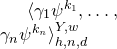 $\langle \gamma_1 \psi^{k_1}, \ldots, \gamma_n \psi^{k_n}\rangle_{h,n,d}^{Y,w}$
as
$\langle \gamma_1 \psi^{k_1}, \ldots, \gamma_n \psi^{k_n}\rangle_{h,n,d}^{Y,w}$
as
 \begin{equation}\int_{[QLG_{\underline Z}(\mathrm{Crit}(w), d)]^{\rm vir}} \boldsymbol{r} \cdot \prod_{i=1}^n (ev_i^*(\beta_i) \cup \psi_i^{k_i} ).\end{equation}
Consider the following diagram

where $U_{\underline Z}$
is defined as the fiber product. Because the map
$U_{\underline Z}$
is defined as the fiber product. Because the map $A \to \pi_*( \mathcal{V}_\Gamma|_\Sigma)$
is surjective,
$A \to \pi_*( \mathcal{V}_\Gamma|_\Sigma)$
is surjective, $\underline {\widetilde{ev}}$
is smooth. We have the following relationship between
$\underline {\widetilde{ev}}$
is smooth. We have the following relationship between $ [QLG_{\underline Z}(\mathrm{Crit}(w), d)]^{\rm vir}$
and the virtual class
$ [QLG_{\underline Z}(\mathrm{Crit}(w), d)]^{\rm vir}$
and the virtual class $[QLG_{h,n}(Y, d)]^{\rm vir}$
of Definition 3.11.
$[QLG_{h,n}(Y, d)]^{\rm vir}$
of Definition 3.11.
Proposition 3.14.
Let $c\colon QLG_{\underline Z}(\mathrm{Crit}(w), d) \to QLG_{\underline Z}(Y, d)$
denote the inclusion. Then,
$c\colon QLG_{\underline Z}(\mathrm{Crit}(w), d) \to QLG_{\underline Z}(Y, d)$
denote the inclusion. Then,
 $$ c_*([QLG_{\underline Z}(\mathrm{Crit}(w), d)]^{\rm vir}) = e_{\rm loc}(\widetilde j^* E, \widetilde j^*\beta)$$
in $H_*(QLG_{\underline Z}(Y, d))$
.
$H_*(QLG_{\underline Z}(Y, d))$
.
Proof. By [Reference Kiem and LiKL20, Theorem 5.1], the pushforward of the cosection-localized virtual class $c_*([QLG_{\underline Z}(\mathrm{Crit}(w), d)]^{\rm vir})$
is simply the usual virtual class
$c_*([QLG_{\underline Z}(\mathrm{Crit}(w), d)]^{\rm vir})$
is simply the usual virtual class $[QLG_{\underline Z}(Y, d)]^{\rm vir}$
on
$[QLG_{\underline Z}(Y, d)]^{\rm vir}$
on $QLG_{\underline Z}(Y, d)$
, with respect to the relative perfect obstruction theory
$QLG_{\underline Z}(Y, d)$
, with respect to the relative perfect obstruction theory $\mathbb{R} \pi_*(\widetilde{\mathcal{V}}_\Gamma)^\vee$
. Thus, it suffices to show that
$\mathbb{R} \pi_*(\widetilde{\mathcal{V}}_\Gamma)^\vee$
. Thus, it suffices to show that $[QLG_{\underline Z}(Y, d)]^{\rm vir} = e_{\rm loc}(\widetilde j^* E,\widetilde j^* \beta)$
.
$[QLG_{\underline Z}(Y, d)]^{\rm vir} = e_{\rm loc}(\widetilde j^* E,\widetilde j^* \beta)$
.
Recall the discussion preceding Definition 3.11. Let $\mathcal{A} \to \mathcal{B}$
be a resolution of
$\mathcal{A} \to \mathcal{B}$
be a resolution of $\mathcal{V}_\Gamma|_{\mathfrak{C}_{\underline g}}$
satisfying the properties of Proposition 3.5. Compose the surjective map
$\mathcal{V}_\Gamma|_{\mathfrak{C}_{\underline g}}$
satisfying the properties of Proposition 3.5. Compose the surjective map $\mathcal{A} \to \mathcal{V}_\Gamma|_{\Sigma_i}$
with (3.1) and let
$\mathcal{A} \to \mathcal{V}_\Gamma|_{\Sigma_i}$
with (3.1) and let $\widetilde{\mathcal{A}}$
denote the kernel. We have the following commutative diagram of sheaves on
$\widetilde{\mathcal{A}}$
denote the kernel. We have the following commutative diagram of sheaves on $\mathfrak{C}_{\underline g}$
, where all columns and rows are short exact sequences.
$\mathfrak{C}_{\underline g}$
, where all columns and rows are short exact sequences.

It follows from the second bullet in Proposition 3.5 that the map
 $${\pi_{\underline g}}_*(\mathcal{A}) \to {\pi_{\underline g}}_*\bigg(\! \bigoplus_{i=1}^n {\sigma_i}_* \mathcal{H}_i^\perp\!\bigg)$$
is surjective; therefore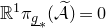 $\mathbb{R}^1 {\pi_{\underline g}}_*(\widetilde {\mathcal{A}}) = 0$
. Let
$\mathbb{R}^1 {\pi_{\underline g}}_*(\widetilde {\mathcal{A}}) = 0$
. Let $\widetilde A$
denote the vector bundle
$\widetilde A$
denote the vector bundle ${\pi_{\underline g}}_*(\widetilde {\mathcal{A}})$
.
${\pi_{\underline g}}_*(\widetilde {\mathcal{A}})$
.
Pushing forward (3.5), we observe that $U_{\underline Z}$
is the intersection of U with
$U_{\underline Z}$
is the intersection of U with $\textrm{tot} ( \widetilde A) \subset \textrm{tot} (A)$
. Furthermore, the two-term complex
$\textrm{tot} ( \widetilde A) \subset \textrm{tot} (A)$
. Furthermore, the two-term complex
 $$[\widetilde j^* E^\vee \xrightarrow{\beta^\vee} \widetilde j^* p_A^*(\widetilde A)^\vee]$$
gives a resolution of $\mathbb{R} \pi_*(\widetilde{\mathcal{V}}_\Gamma)^\vee$
on
$\mathbb{R} \pi_*(\widetilde{\mathcal{V}}_\Gamma)^\vee$
on $U_{\underline Z}$
, and
$U_{\underline Z}$
, and $QLG_{\underline Z}(Y, d)$
is the zero locus of the section
$QLG_{\underline Z}(Y, d)$
is the zero locus of the section $\widetilde j^* \beta \in \Gamma( U_{\underline Z}, \widetilde j^* E)$
. By the general discussion in [Reference Behrend and FantechiBF97, § 6], it follows that
$\widetilde j^* \beta \in \Gamma( U_{\underline Z}, \widetilde j^* E)$
. By the general discussion in [Reference Behrend and FantechiBF97, § 6], it follows that $[QLG_{\underline Z}(Y, d)]^{\rm vir}$
is the localized top Chern class
$[QLG_{\underline Z}(Y, d)]^{\rm vir}$
is the localized top Chern class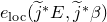 $e_{\rm loc}(\widetilde j^* E, \widetilde j^* \beta)$
as desired.
$e_{\rm loc}(\widetilde j^* E, \widetilde j^* \beta)$
as desired.
3.4 The special case of proper evaluation maps
In this section we explain how, if the evaluation maps $ ev_i\colon QLG_{h,n}(Y, d) \to IY$
are proper, there is a simple expression for compact-type GLSM invariants that does not require use of a cosection.
$ ev_i\colon QLG_{h,n}(Y, d) \to IY$
are proper, there is a simple expression for compact-type GLSM invariants that does not require use of a cosection.
Proposition 3.15.
Let $\gamma_1, \ldots, \gamma_n$
be classes arising as the pushforward of
$\gamma_1, \ldots, \gamma_n$
be classes arising as the pushforward of $\beta_1, \ldots, \beta_n$
via maps
$\beta_1, \ldots, \beta_n$
via maps $H^*(Z_i) \to \mathcal{H}_{\rm ct}(Y, w)$
as in § 3.3, with each
$H^*(Z_i) \to \mathcal{H}_{\rm ct}(Y, w)$
as in § 3.3, with each $Z_i$
satisfying Assumption 3.12. Assume that
$Z_i$
satisfying Assumption 3.12. Assume that $ev_i\colon QLG_{h,n}(Y, d) \to IY$
is proper for
$ev_i\colon QLG_{h,n}(Y, d) \to IY$
is proper for $1 \leq i \leq n$
. Then, (3.3) is equal to
$1 \leq i \leq n$
. Then, (3.3) is equal to
 \begin{equation}\int_{[QLG_{h,n}(Y, d)]^{\rm vir}} \boldsymbol{r} \cdot {ev_1^c}^*({j_1}^c_* \beta_1) \cup \cdots \cup {ev_n^c}^*({j_n}^c_* \beta_n) \cup \prod_{i=1}^n ( \psi_i^{k_i} ),\end{equation}
where ${ev_i^c}^*$
and
${ev_i^c}^*$
and ${j_i^c}_*$
denote the pullback and pushforward in compactly supported cohomology, and
${j_i^c}_*$
denote the pullback and pushforward in compactly supported cohomology, and $[QLG_{h,n}(Y, d)]^{\rm vir}$
is the (non-localized) virtual class of Definition 3.11.
$[QLG_{h,n}(Y, d)]^{\rm vir}$
is the (non-localized) virtual class of Definition 3.11.
Proof. By assumption,
 $$QLG_{\underline Z}(Y, d) = U_{\underline Z} \cap QLG_{h,n}(Y, d) = \underline {ev}^{-1}(\underline Z)$$
is proper.
By Proposition 3.14, (3.3) is equal to
 \begin{align}&\int_{QLG_{\underline Z}(Y, d)} \boldsymbol{r} \cdot \prod_{i=1}^n ev_i^*(\beta_i) \cup \prod_{i=1}^n ( \psi_i^{k_i} )\cap e_{\rm loc}(\widetilde j^* E,\widetilde j^* \beta),\end{align}
which simplifies to
 \begin{align}&\int_{QLG_{\underline Z}(Y, d)} \boldsymbol{r} \cdot \prod_{i=1}^n ev_i^*(\beta_i) \cup \prod_{i=1}^n ( \psi_i^{k_i} )\cap \widetilde j^! (e_{\rm loc}( E, \beta)) \nonumber\\[5pt]&\quad=\int_{QLG_{\underline Z}(Y, d)} \boldsymbol{r} \cdot \prod_{i=1}^n ev_i^*(\beta_i) \cup \prod_{i=1}^n ( \psi_i^{k_i} )\cap j^! (e_{\rm loc}( E, \beta)) \nonumber\\[5pt]&\quad=\int_{\underline Z} \boldsymbol{r} \cdot\underline {ev}_*\bigg({\underline {ev}}^*(\underline {\beta}) \cup \prod_{i=1}^n (\psi_i^{k_i} )\cap j^! (e_{\rm loc}( E, \beta))\!\bigg)\nonumber\\[5pt]&\quad=\int_{\underline Z} \boldsymbol{r} \cdot \underline {\beta} \cap \underline {ev}_* j^! \bigg( \prod_{i=1}^n ( \psi_i^{k_i} ) \cap e_{\rm loc}( E, \beta)\!\bigg)\nonumber\\[5pt]&\quad=\int_{\underline Z} \boldsymbol{r} \cdot \underline {\beta} \cap j^*{\underline {ev}}_* \bigg( \prod_{i=1}^n ( \psi_i^{k_i} ) \cap e_{\rm loc}( E, \beta)\!\bigg).\end{align}
The equality of (3.7) with the first line is by definition of $e_{\rm loc}(E, \beta)$
and [Reference FultonFul13, Proposition 14.1 (d)(ii)]. The first equality is compatibility of Gysin pullbacks [Reference FultonFul13, Theorem 6.2 (c)]. The final equality is [Reference FultonFul13, Theorem 6.2 (a)]. Here,
$e_{\rm loc}(E, \beta)$
and [Reference FultonFul13, Proposition 14.1 (d)(ii)]. The first equality is compatibility of Gysin pullbacks [Reference FultonFul13, Theorem 6.2 (c)]. The final equality is [Reference FultonFul13, Theorem 6.2 (a)]. Here, $\underline {\beta}$
denotes the exterior product of
$\underline {\beta}$
denotes the exterior product of $\beta_1$
through
$\beta_1$
through $\beta_n$
.
$\beta_n$
.
Let $j_*^c\colon H^*(\underline Z) \to H^*_{\rm cs}(\prod_{i=1}^n I Y)$
denote the pushforward to compactly supported cohomology. Then, (3.8) is equal to
$j_*^c\colon H^*(\underline Z) \to H^*_{\rm cs}(\prod_{i=1}^n I Y)$
denote the pushforward to compactly supported cohomology. Then, (3.8) is equal to
 \begin{align}&\int_{\prod_{i=1}^n I Y} j_*^c(\underline {\beta}) \cap {\underline {ev}}_* \bigg(\!\boldsymbol{r} \cdot \prod_{i=1}^n ( \psi_i^{k_i} )\cap e_{\rm loc}( E, \beta)\!\bigg)\nonumber\\&\quad=\int_{QLG_{h,n}(Y, d)} \boldsymbol{r} \cdot {\underline {ev}^c}^*j_*^c(\underline {\beta}) \cup \prod_{i=1}^n ( \psi_i^{k_i} )\cap e_{\rm loc}( E, \beta)\nonumber\\&\quad=\int_{QLG_{h,n}(Y, d)} \boldsymbol{r} \cdot{\underline {ev}^c}^*\bigg(\!\bigotimes_{i=1}^n {j_i}_*^c({\beta_i}) \!\bigg) \cup \prod_{i=1}^n ( \psi_i^{k_i} )\cap e_{\rm loc}( E, \beta)\nonumber\\&\quad=\int_{QLG_{h,n}(Y, d)} \boldsymbol{r} \cdot {ev_1^c}^*({j_1}^c_* \beta_1) \cup \cdots \cup {ev_n^c}^*({j_n}^c_* \beta_n) \cup \prod_{i=1}^n ( \psi_i^{k_i} )\cap e_{\rm loc}( E, \beta).\end{align}
The first and second lines are each applications of the projection formula (with respect to the maps j and $\underline {ev}$
, respectively). The second equality is simply by functoriality of the Kunneth formula, which holds for compactly supported cohomology as well.
$\underline {ev}$
, respectively). The second equality is simply by functoriality of the Kunneth formula, which holds for compactly supported cohomology as well.
The last line of (3.9) is exactly (3.6), finishing the proof.
Lemma 3.16
If $n\geq 2$
, the expression
$n\geq 2$
, the expression $ {ev_1^c}^*({j_1}^c_* \beta_1) \cup \cdots \cup {ev_n^c}^*({j_n}^c_* \beta_n)$
in Proposition 3.15 is equal to
$ {ev_1^c}^*({j_1}^c_* \beta_1) \cup \cdots \cup {ev_n^c}^*({j_n}^c_* \beta_n)$
in Proposition 3.15 is equal to $ev_1^*(\phi^w(\gamma_1)) \cup_{\rm cs} ev_2^*(\phi^w( \gamma_2)) \cup \cdots \cup ev_n^*(\phi^w( \gamma_n))$
.
$ev_1^*(\phi^w(\gamma_1)) \cup_{\rm cs} ev_2^*(\phi^w( \gamma_2)) \cup \cdots \cup ev_n^*(\phi^w( \gamma_n))$
.
Proof. As shown in [Reference ShoemakerSho21], for a proper map f, $\phi^{\rm cs} \circ {f^c}^* = f^* \circ \phi^{\rm cs}$
, and
$\phi^{\rm cs} \circ {f^c}^* = f^* \circ \phi^{\rm cs}$
, and $\phi^{\rm cs} \circ f^c_* = f_* \circ \phi^{\rm cs}$
. Then, under our assumption that
$\phi^{\rm cs} \circ f^c_* = f_* \circ \phi^{\rm cs}$
. Then, under our assumption that $n \geq 2$
, by (2.4) we have
$n \geq 2$
, by (2.4) we have
 \begin{align*}&{ev_1^c}^*({j_1}^c_* \beta_1) \cup {ev_2^c}^*({j_2}^c_* \beta_2) \\&\quad=\phi^{\rm cs}({ev_1^c}^*({j_1}^c_* \beta_1)) \cup_{\rm cs} \phi^{\rm cs}({ev_2^c}^*({j_2}^c_* \beta_2)) \\&\quad= ev_1^*({j_1}_*\phi^{\rm cs}( \beta_1)) \cup_{\rm cs} ev_2^*({j_2}_*\phi^{\rm cs}( \beta_2))\\&\quad= ev_1^*({j_1}_*( \beta_1)) \cup_{\rm cs} ev_2^*({j_2}_*( \beta_2))\\&\quad= ev_1^*(\phi^w(\gamma_1)) \cup_{\rm cs} ev_2^*(\phi^w( \gamma_2)).\\[-30pt]\end{align*}
Note that in the presence of proper evaluation maps, (3.6) is defined regardless of Assumption 3.12. Motivated then by Proposition 3.15, we use (3.6) and Lemma 3.16 to define compact-type GLSM invariants in the case in which the evaluation maps are proper.
Definition 3.17 Let $\gamma_1, \ldots, \gamma_n$
be classes in
$\gamma_1, \ldots, \gamma_n$
be classes in $\mathcal{H}_{\rm ct}(Y, w)$
. Assume that
$\mathcal{H}_{\rm ct}(Y, w)$
. Assume that $n\geq 2$
and the evaluation maps
$n\geq 2$
and the evaluation maps $ev_i$
are proper for
$ev_i$
are proper for $1 \leq i \leq 2$
. Define the GLSM invariant
$1 \leq i \leq 2$
. Define the GLSM invariant $\langle \gamma_1 \psi^{k_1}, \ldots, \gamma_n \psi^{k_n}\rangle_{h,n,d}^{Y,w}$
as
$\langle \gamma_1 \psi^{k_1}, \ldots, \gamma_n \psi^{k_n}\rangle_{h,n,d}^{Y,w}$
as
 \begin{equation}\int_{ [QLG_{h,n}(Y, d)]^{\rm vir}} \boldsymbol{r} \cdot ev_1^*(\phi^w(\gamma_1)) \cup_{\rm cs} ev_2^*(\phi^w( \gamma_2)) \cup \cdots \cup ev_n^*(\phi^w( \gamma_n)) \cup \prod_{i=1}^n ( \psi_i^{k_i} ).\end{equation}
Remark 3.18 We note that Definition 3.13 and (3.6) depend, a priori, on the choices of $\beta_1, \ldots, \beta_n$
, which are pushed forward via
$\beta_1, \ldots, \beta_n$
, which are pushed forward via ${j_i'}_*$
to obtain
${j_i'}_*$
to obtain $\gamma_1, \ldots, \gamma_n$
. Definition 3.17, on the other hand, does not rely on such choices.
$\gamma_1, \ldots, \gamma_n$
. Definition 3.17, on the other hand, does not rely on such choices.
Elements of the kernel of the map
 $$\phi^w\colon \mathcal{H}(Y, w) \to H^*_{\rm CR}(Y)$$
are often referred to as broad sectors. There are conjectures (see, e.g., [Reference Clader, Janda and RuanCJR21, Conjecture 2.13]) about when GLSM invariants with broad insertions are zero. Such results are known as broad vanishing. The following ‘corollary’ is immediate from our definition.
Corollary 3.19 Broad vanishing holds for compact-type insertions in the presence of proper evaluation maps. More precisely, assume that $ev_i\colon QLG_{h,n}(Y, d) \to IY$
is proper for
$ev_i\colon QLG_{h,n}(Y, d) \to IY$
is proper for $1 \leq i \leq n$
, and that
$1 \leq i \leq n$
, and that $n \geq 2$
. For
$n \geq 2$
. For $\gamma_1, \ldots, \gamma_n \in \mathcal{H}_{\rm ct}(Y, w)$
, the invariant
$\gamma_1, \ldots, \gamma_n \in \mathcal{H}_{\rm ct}(Y, w)$
, the invariant $\langle \gamma_1 \psi^{k_1}, \ldots, \gamma_n \psi^{k_n}\rangle_{h,n,d}^{Y,w}$
is zero if any
$\langle \gamma_1 \psi^{k_1}, \ldots, \gamma_n \psi^{k_n}\rangle_{h,n,d}^{Y,w}$
is zero if any $\gamma_i$
lies in the broad subspace
$\gamma_i$
lies in the broad subspace $\ker(\phi^w) \subset \mathcal{H}(Y, w)$
.
$\ker(\phi^w) \subset \mathcal{H}(Y, w)$
.
In practice, Definition 3.17 is quite restrictive. Evaluation maps from moduli spaces of LG maps are rarely proper. In the next section, we show that in the special case in which $h=0$
and
$h=0$
and $n=2$
, the evaluation maps are always proper and the definition applies. We will see in later sections that this case is of special relevance to mirror symmetry.
$n=2$
, the evaluation maps are always proper and the definition applies. We will see in later sections that this case is of special relevance to mirror symmetry.
4. Genus zero, two marked points
Let $\pi\colon \mathfrak{C} \to \mathfrak{M}_{0,2}(BG, d)^\theta$
denote the universal curve. The following observation is immediate from the definitions.
$\pi\colon \mathfrak{C} \to \mathfrak{M}_{0,2}(BG, d)^\theta$
denote the universal curve. The following observation is immediate from the definitions.
Lemma 4.1 [Reference Heath and ShoemakerHS22, Lemma 3.1]. Let $\operatorname{Spec} \mathbb{C} \to \mathfrak{M}_{0,2}(BG, d)^\theta$
be a morphism and let
$\operatorname{Spec} \mathbb{C} \to \mathfrak{M}_{0,2}(BG, d)^\theta$
be a morphism and let $\mathcal{C}$
be the curve obtained by pulling back
$\mathcal{C}$
be the curve obtained by pulling back $\pi$
. The coarse underlying curve
$\pi$
. The coarse underlying curve $\underline {\mathcal{C}}$
is a chain of
$\underline {\mathcal{C}}$
is a chain of $\mathbb{P}^1$
’s with a marked point at either end of the chain. The same holds for
$\mathbb{P}^1$
’s with a marked point at either end of the chain. The same holds for $\mathfrak{M}_{0,2}(B\Gamma, d)_{\omega_{\pi, \mathrm{log}}}^\theta$
.
$\mathfrak{M}_{0,2}(B\Gamma, d)_{\omega_{\pi, \mathrm{log}}}^\theta$
.
Lemma 4.1 implies the following simple but important fact.
Lemma 4.2 Over both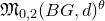 $\mathfrak{M}_{0,2}(BG, d)^\theta$
and
$\mathfrak{M}_{0,2}(BG, d)^\theta$
and $ \mathfrak{M}_{0,2}(B\Gamma, d)_{\omega_{\mathcal{C}, \mathrm{log}}}^\theta$
, the log-canonical bundle
$ \mathfrak{M}_{0,2}(B\Gamma, d)_{\omega_{\mathcal{C}, \mathrm{log}}}^\theta$
, the log-canonical bundle $\omega_{\pi, \mathrm{log}} = \omega_\pi(\Sigma_1 + \Sigma_2)$
is canonically trivialized by a nowhere-vanishing global section
$\omega_{\pi, \mathrm{log}} = \omega_\pi(\Sigma_1 + \Sigma_2)$
is canonically trivialized by a nowhere-vanishing global section $\mathcal{O}_{\mathfrak{C}} \to \omega_{\pi, \mathrm{log}}$
characterized by the property that on any fiber, the residue around
$\mathcal{O}_{\mathfrak{C}} \to \omega_{\pi, \mathrm{log}}$
characterized by the property that on any fiber, the residue around $p_1$
is equal to
$p_1$
is equal to $2\pi i$
.
$2\pi i$
.
Proof. We prove the statement for $ \mathfrak{M}_{0,2}(B\Gamma, d)_{\omega_{\mathcal{C}, \mathrm{log}}}^\theta$
, but the proof is identical for
$ \mathfrak{M}_{0,2}(B\Gamma, d)_{\omega_{\mathcal{C}, \mathrm{log}}}^\theta$
, but the proof is identical for $\mathfrak{M}_{0,2}(BG, d)^\theta$
.
$\mathfrak{M}_{0,2}(BG, d)^\theta$
.
Consider the long exact sequence
 \begin{align}0 \to &\pi_* (\omega_\pi(\Sigma_2)) \to \pi_* (\omega_\pi(\Sigma_1 + \Sigma_2)) \xrightarrow{\rho} \omega_\pi(\Sigma_1 + \Sigma_2)|_{\Sigma_1} \nonumber\\\to & R^1\pi_* (\omega_\pi(\Sigma_2)) \to R^1\pi_* (\omega_\pi(\Sigma_1 + \Sigma_2)) \to 0. \end{align}
By degree considerations and an induction argument, $H^0(\omega_{\mathcal{C}}(p_2)) = 0$
for any source curve
$H^0(\omega_{\mathcal{C}}(p_2)) = 0$
for any source curve $\mathcal{C}$
. By Serre duality,
$\mathcal{C}$
. By Serre duality, $H^1 (\omega_{\mathcal{C}}(p_2))$
is isomorphic to
$H^1 (\omega_{\mathcal{C}}(p_2))$
is isomorphic to $H^0 (\mathcal{O}_{\mathcal{C}}(-p_2))$
, which is also zero for any source curve
$H^0 (\mathcal{O}_{\mathcal{C}}(-p_2))$
, which is also zero for any source curve $\mathcal{C}$
. Therefore,
$\mathcal{C}$
. Therefore,
 $$R^0\pi_* (\omega_\pi(\Sigma_2)) = R^1\pi_* (\omega_\pi(\Sigma_2)) = 0$$
and the map $\rho$
is an isomorphism. Furthermore, the residue map provides a canonical isomorphism
$\rho$
is an isomorphism. Furthermore, the residue map provides a canonical isomorphism
 \[\operatorname{Res}: \omega_\pi(\Sigma_1 + \Sigma_2)|_{\Sigma_1}\xrightarrow{=} \mathcal{O}_{ \mathfrak{M}_{0,2}(B\Gamma, d)_{\omega_{\mathcal{C}, \mathrm{log}}}^\theta}.\]
The constant section corresponding to $2 \pi i \in \Gamma( \mathfrak{M}_{0,2}(B\Gamma, d)_{\omega_{\mathcal{C}, \mathrm{log}}}^\theta, \mathcal{O}_{ \mathfrak{M}_{0,2}(B\Gamma, d)_{\omega_{\mathcal{C}, \mathrm{log}}}^\theta})$
is therefore the image of a global section
$2 \pi i \in \Gamma( \mathfrak{M}_{0,2}(B\Gamma, d)_{\omega_{\mathcal{C}, \mathrm{log}}}^\theta, \mathcal{O}_{ \mathfrak{M}_{0,2}(B\Gamma, d)_{\omega_{\mathcal{C}, \mathrm{log}}}^\theta})$
is therefore the image of a global section
 \[s \in \Gamma( \mathfrak{M}_{0,2}(B\Gamma, d)_{\mathcal{O}_{\mathfrak{C}}}^\theta, \pi_*(\omega_\pi(\Sigma_1 + \Sigma_2))).\]
This section is itself defined by a global map $f\colon \mathcal{O}_{\mathcal{C}} \to \omega_\pi(\Sigma_1 + \Sigma_2)$
.
$f\colon \mathcal{O}_{\mathcal{C}} \to \omega_\pi(\Sigma_1 + \Sigma_2)$
.
We show that f is nowhere vanishing, which can be checked fiberwise. Let $\operatorname{Spec} \mathbb{C} \to \mathfrak{M}_{0,2}(B\Gamma, d)_{\omega_{\mathcal{C}, \mathrm{log}}}^\theta$
be a morphism and let
$\operatorname{Spec} \mathbb{C} \to \mathfrak{M}_{0,2}(B\Gamma, d)_{\omega_{\mathcal{C}, \mathrm{log}}}^\theta$
be a morphism and let $\mathcal{C}$
be the corresponding curve. By Lemma 4.1, the log-canonical bundle
$\mathcal{C}$
be the corresponding curve. By Lemma 4.1, the log-canonical bundle $\omega_{\mathcal{C}}(p_1 + p_2)$
is degree zero on each irreducible component, and is therefore trivial. By considering the composition
$\omega_{\mathcal{C}}(p_1 + p_2)$
is degree zero on each irreducible component, and is therefore trivial. By considering the composition $\operatorname{Res} \circ \rho$
, we see that locally f sends 1 to
$\operatorname{Res} \circ \rho$
, we see that locally f sends 1 to $dx/x$
, where x is a local coordinate around
$dx/x$
, where x is a local coordinate around $p_1$
. This local section extends uniquely to a section of
$p_1$
. This local section extends uniquely to a section of $\omega_{\mathcal{C}}(p_1 + p_2)$
, which is nowhere vanishing because
$\omega_{\mathcal{C}}(p_1 + p_2)$
, which is nowhere vanishing because $\omega_{\mathcal{C}}(p_1 + p_2)$
is trivial.
$\omega_{\mathcal{C}}(p_1 + p_2)$
is trivial.
Proposition 4.3. There is a canonical isomorphism $\mathfrak{M}_{0,2}(BG, d)^\theta \cong \mathfrak{M}_{0,2}(B\Gamma, d)_{\omega_{\mathcal{C}, \mathrm{log}}}^\theta$
. Under this isomorphism, the universal curves are identified. The principal bundles are related via
$\mathfrak{M}_{0,2}(BG, d)^\theta \cong \mathfrak{M}_{0,2}(B\Gamma, d)_{\omega_{\mathcal{C}, \mathrm{log}}}^\theta$
. Under this isomorphism, the universal curves are identified. The principal bundles are related via
 \begin{equation} \mathcal{P}_\Gamma = \mathcal{P}_G \times_{\langle J \rangle} \mathbb{C}^*\end{equation}
and fit into an exact sequence
 \begin{equation}0 \to \mathcal{P}_G \to \mathcal{P}_\Gamma \to \xi_*(\mathcal{P}_\Gamma) \cong \omega_{\pi, \mathrm{log}}^\circ \cong \mathcal{O}_{\mathfrak{C}}^\circ \to 0.\end{equation}
Proof. By Lemma 4.1, any fiber of the universal curve $\mathfrak{C} \to \mathfrak{M}_{0,2}(B\Gamma, d)_{\omega_{\mathcal{C}, \mathrm{log}}}^\theta$
consists of a chain of irreducible components. By the previous proposition, there is a canonical isomorphism
$\mathfrak{C} \to \mathfrak{M}_{0,2}(B\Gamma, d)_{\omega_{\mathcal{C}, \mathrm{log}}}^\theta$
consists of a chain of irreducible components. By the previous proposition, there is a canonical isomorphism $ \mathcal{O}_{\mathfrak{C}} \to \omega_{\pi, \mathrm{log}}$
over
$ \mathcal{O}_{\mathfrak{C}} \to \omega_{\pi, \mathrm{log}}$
over $\mathfrak{M}_{0,2}(B\Gamma, d)_{\omega_{\mathcal{C}, \mathrm{log}}}^\theta$
. We can therefore identify
$\mathfrak{M}_{0,2}(B\Gamma, d)_{\omega_{\mathcal{C}, \mathrm{log}}}^\theta$
. We can therefore identify $\mathfrak{M}_{0,2}(B\Gamma, d)_{\omega_{\mathcal{C}, \mathrm{log}}}^\theta$
with
$\mathfrak{M}_{0,2}(B\Gamma, d)_{\omega_{\mathcal{C}, \mathrm{log}}}^\theta$
with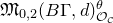 $\mathfrak{M}_{0,2}(B\Gamma, d)_{\mathcal{O}_{\mathcal{C}}}^\theta$
.
$\mathfrak{M}_{0,2}(B\Gamma, d)_{\mathcal{O}_{\mathcal{C}}}^\theta$
.
Therefore, it suffices to find a canonical isomorphism $i_1\colon \mathfrak{M}_{0,2}(BG, d)^\theta \to \mathfrak{M}_{0,2}(B\Gamma, d)_{\mathcal{O}_{\mathcal{C}}}^\theta$
. The morphism is defined as follows. For a family of curves
$i_1\colon \mathfrak{M}_{0,2}(BG, d)^\theta \to \mathfrak{M}_{0,2}(B\Gamma, d)_{\mathcal{O}_{\mathcal{C}}}^\theta$
. The morphism is defined as follows. For a family of curves $\mathcal{C} \to S$
and a principal G-bundle
$\mathcal{C} \to S$
and a principal G-bundle $\mathcal{P}_G \to \mathcal{C}$
, we define the principal
$\mathcal{P}_G \to \mathcal{C}$
, we define the principal $\Gamma$
-bundle
$\Gamma$
-bundle
 $$\mathcal{P}_\Gamma := \mathcal{P}_G \times_{\langle J \rangle}\mathbb{C}^*,$$
where J acts on $\mathbb{C}^*$
by
$\mathbb{C}^*$
by $e^{2 \pi i/d_w}$
. Note that there is a canonical isomorphism from
$e^{2 \pi i/d_w}$
. Note that there is a canonical isomorphism from
 $$\xi_*(\mathcal{P}_\Gamma) = \mathcal{P}_\Gamma/G = \mathbb{C}^*/\langle J \rangle \times \mathcal{C}$$
to $\mathcal{O}_{\mathcal{C}}^\circ = \mathbb{C}^*\times \mathcal{C}$
. This defines the morphism
$\mathcal{O}_{\mathcal{C}}^\circ = \mathbb{C}^*\times \mathcal{C}$
. This defines the morphism $i_1$
.
$i_1$
.
On the other hand, there is a map $i_2\colon \mathfrak{M}_{0,2}(B\Gamma, d)_{\mathcal{O}_{\mathcal{C}}}^\theta \to \mathfrak{M}_{0,2}(BG, d)^\theta$
defined as follows. For a family of curves
$i_2\colon \mathfrak{M}_{0,2}(B\Gamma, d)_{\mathcal{O}_{\mathcal{C}}}^\theta \to \mathfrak{M}_{0,2}(BG, d)^\theta$
defined as follows. For a family of curves $\mathcal{C} \to S$
and a principal
$\mathcal{C} \to S$
and a principal $\Gamma$
-bundle
$\Gamma$
-bundle $\mathcal{P}_\Gamma \to \mathcal{C}$
with an isomorphism
$\mathcal{P}_\Gamma \to \mathcal{C}$
with an isomorphism $\eta: \mathcal{P}_\Gamma/G \cong \mathcal{O}_{\mathcal{C}}^\circ$
, define
$\eta: \mathcal{P}_\Gamma/G \cong \mathcal{O}_{\mathcal{C}}^\circ$
, define $\mathcal{P}_G$
as the kernel of the map
$\mathcal{P}_G$
as the kernel of the map
 $$ \mathcal{P}_\Gamma \to \mathcal{P}_\Gamma/G \xrightarrow{\eta} \mathcal{O}_{\mathcal{C}}^\circ.$$
It is straightforward to check that $\mathcal{P}_G \to \mathcal{C}$
is a principal G-bundle. This defines the morphism
$\mathcal{P}_G \to \mathcal{C}$
is a principal G-bundle. This defines the morphism $i_2$
.
$i_2$
.
Given a principal G-bundle $\mathcal{P}_G $
arising as the kernel of a map
$\mathcal{P}_G $
arising as the kernel of a map $\mathcal{P}_\Gamma \to \mathcal{O}_{\mathcal{C}}^\circ$
, there is a well-defined map
$\mathcal{P}_\Gamma \to \mathcal{O}_{\mathcal{C}}^\circ$
, there is a well-defined map $\mathcal{P}_G \times \mathbb{C}^* \to \mathcal{P}_\Gamma$
given by
$\mathcal{P}_G \times \mathbb{C}^* \to \mathcal{P}_\Gamma$
given by $(g, \lambda) \mapsto \lambda \cdot i(g)$
, where
$(g, \lambda) \mapsto \lambda \cdot i(g)$
, where $i: \mathcal{P}_G \to \mathcal{P}_\Gamma$
is the inclusion and the action of
$i: \mathcal{P}_G \to \mathcal{P}_\Gamma$
is the inclusion and the action of $\mathbb{C}^*$
on
$\mathbb{C}^*$
on $\mathcal{P}_\Gamma$
is defined by identifying the torus
$\mathcal{P}_\Gamma$
is defined by identifying the torus $\mathbb{C}^*$
with
$\mathbb{C}^*$
with $\mathbb{C}^*_R \subset \Gamma$
. This induces an isomorphism
$\mathbb{C}^*_R \subset \Gamma$
. This induces an isomorphism
 $$\mathcal{P}_G \times_{\langle J \rangle} \mathbb{C}^* \cong \mathcal{P}_\Gamma.$$
It follows that the morphisms $i_1$
and
$i_1$
and $i_2$
are inverse to one another.
$i_2$
are inverse to one another.
Proposition 4.4. There is a canonical isomorphism
 $$Q_{0,2}(Y, d) \cong QLG_{0,2}(Y, d).$$
Under this isomorphism, the virtual classes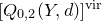 $[Q_{0,2}(Y, d)]^{\rm vir}$
and
$[Q_{0,2}(Y, d)]^{\rm vir}$
and $[QLG_{0,2}(Y, d)]^{\rm vir}$
are identified.
$[QLG_{0,2}(Y, d)]^{\rm vir}$
are identified.
Proof. The space $ Q_{0,2}(Y, d)$
(respectively,
$ Q_{0,2}(Y, d)$
(respectively, $QLG_{0,2}(Y, d) $
) is an open subset of the space of sections of
$QLG_{0,2}(Y, d) $
) is an open subset of the space of sections of $\mathcal{P}_G \times_G V$
(respectively,
$\mathcal{P}_G \times_G V$
(respectively, $\mathcal{P}_\Gamma \times_\Gamma V$
) over
$\mathcal{P}_\Gamma \times_\Gamma V$
) over $\mathfrak{M}_{0,2}(BG, d)^\theta $
(respectively,
$\mathfrak{M}_{0,2}(BG, d)^\theta $
(respectively, $ \mathfrak{M}_{0,2}(B\Gamma, d)_{\omega_{\mathcal{C}, \mathrm{log}}}^\theta$
). By Proposition 4.3,
$ \mathfrak{M}_{0,2}(B\Gamma, d)_{\omega_{\mathcal{C}, \mathrm{log}}}^\theta$
). By Proposition 4.3, $\mathfrak{M}_{0,2}(BG, d)^\theta $
and
$\mathfrak{M}_{0,2}(BG, d)^\theta $
and $ \mathfrak{M}_{0,2}(B\Gamma, d)_{\omega_{\mathcal{C}, \mathrm{log}}}^\theta$
are equal. On the universal curve over
$ \mathfrak{M}_{0,2}(B\Gamma, d)_{\omega_{\mathcal{C}, \mathrm{log}}}^\theta$
are equal. On the universal curve over $\mathfrak{M}_{0,2}(BG, d)^\theta = \mathfrak{M}_{0,2}(B\Gamma, d)_{\omega_{\mathcal{C}, \mathrm{log}}}^\theta$
, the inclusion
$\mathfrak{M}_{0,2}(BG, d)^\theta = \mathfrak{M}_{0,2}(B\Gamma, d)_{\omega_{\mathcal{C}, \mathrm{log}}}^\theta$
, the inclusion $\mathcal{P}_G \hookrightarrow \mathcal{P}_\Gamma$
from (4.2) allows one to identify the vector bundles
$\mathcal{P}_G \hookrightarrow \mathcal{P}_\Gamma$
from (4.2) allows one to identify the vector bundles
 \begin{equation} \mathcal{V}_G = \mathcal{P}_G \times_G V = \mathcal{P}_\Gamma \times_\Gamma V = \mathcal{V}_\Gamma.\end{equation}
Both $ Q_{0,2}(Y, d)$
and
$ Q_{0,2}(Y, d)$
and $QLG_{0,2}(Y, d) $
are then defined as the subspace of
$QLG_{0,2}(Y, d) $
are then defined as the subspace of $\textrm{tot}( \pi_*( \mathcal{V}_G)) = \textrm{tot}( \pi_*( \mathcal{V}_\Gamma))$
, where the section u maps to the
$\textrm{tot}( \pi_*( \mathcal{V}_G)) = \textrm{tot}( \pi_*( \mathcal{V}_\Gamma))$
, where the section u maps to the $\theta$
-unstable locus at finitely many points, each distinct from the marked points and nodes. This proves the first statement.
$\theta$
-unstable locus at finitely many points, each distinct from the marked points and nodes. This proves the first statement.
By (4.4), the obstruction theories for $ Q_{0,2}(Y, d)$
and
$ Q_{0,2}(Y, d)$
and $QLG_{0,2}(Y, d) $
relative to
$QLG_{0,2}(Y, d) $
relative to $\mathfrak{M}_{0,2}(BG, d)^\theta = \mathfrak{M}_{0,2}(B\Gamma, d)_{\omega_{\mathcal{C}, \mathrm{log}}}^\theta$
are equal:
$\mathfrak{M}_{0,2}(BG, d)^\theta = \mathfrak{M}_{0,2}(B\Gamma, d)_{\omega_{\mathcal{C}, \mathrm{log}}}^\theta$
are equal:
 $$ \mathbb{R} \pi_*(\mathcal{V}_G)^\vee = \mathbb{R} \pi_*(\mathcal{V}_\Gamma)^\vee;$$
thus the virtual classes coincide.
Corollary 4.5.
If $h=0$
and
$h=0$
and $n=2$
, the evaluation maps
$n=2$
, the evaluation maps $ev_i\colon QLG_{0,2}(Y, d) \to IY$
are proper. Given classes
$ev_i\colon QLG_{0,2}(Y, d) \to IY$
are proper. Given classes $\gamma_1, \gamma_2 \in \mathcal{H}_{\rm ct}(Y, w)$
and
$\gamma_1, \gamma_2 \in \mathcal{H}_{\rm ct}(Y, w)$
and $d \in \operatorname{Eff}([V/G])$
,
$d \in \operatorname{Eff}([V/G])$
,
 $$\langle\gamma_1 \psi^{k_1}, \gamma_2\psi^{k_2}\rangle_{0,2,d}^{(Y, w)} = \langle\phi^w(\gamma_1)\psi^{k_1}, \phi^w(\gamma_2)\psi^{k_2}\rangle_{0,2,d}^{Y}.$$
Proof. Proposition 4.4 identifies the moduli spaces $Q_{0,2}(Y, d)$
and
$Q_{0,2}(Y, d)$
and $QLG_{0,2}(Y, d)$
. It is left to check that the respective evaluation maps are equal under this identification. This follows from the definition of the evaluation maps on
$QLG_{0,2}(Y, d)$
. It is left to check that the respective evaluation maps are equal under this identification. This follows from the definition of the evaluation maps on $QLG_{0,2}(Y, d)$
(§ 3.2), together with the fact that the universal principal G- and
$QLG_{0,2}(Y, d)$
(§ 3.2), together with the fact that the universal principal G- and $\Gamma$
-bundles are related via the exact sequence given in (4.3). The first claim then holds by Lemma 3.7.
$\Gamma$
-bundles are related via the exact sequence given in (4.3). The first claim then holds by Lemma 3.7.
The equality of invariants is then immediate from Definition 3.17 and Proposition 4.4.
5. Adding light points
In this section, we recall the definition of quasimap invariants with light points, and define GLSM invariants with light points in a special case.
5.1 Quasimap invariants
In [Reference Ciocan-Fontanine and KimCFK16], Ciocan-Fontanine and Kim define quasimap invariants with light points, and use these to define a new class of generating functions of quasimap invariants. These functions are shown to be related to more standard generating functions of Gromov–Witten invariants via wall crossing, but they have the benefit of being readily computable.
In the language of quasimaps, light points are obtained by replacing the moduli space $ Q_{h,n}(Y, d)$
with
$ Q_{h,n}(Y, d)$
with $ Q_{h,n}(Y \times (\mathbb{P}^0)^k, (d,1^k))$
, where
$ Q_{h,n}(Y \times (\mathbb{P}^0)^k, (d,1^k))$
, where $(d, 1^k)$
is shorthand for
$(d, 1^k)$
is shorthand for $(d, 1, \ldots, 1) \in \hom_\mathbb{Z}( \widehat{(G \times (\mathbb{C}^*)^k)} , \mathbb{Q})$
. The basepoint of a degree-one quasimap to
$(d, 1, \ldots, 1) \in \hom_\mathbb{Z}( \widehat{(G \times (\mathbb{C}^*)^k)} , \mathbb{Q})$
. The basepoint of a degree-one quasimap to $\mathbb{P}^0:= [\mathbb{C}\mathbin{/\mkern-6mu/}_{\operatorname{id}} \mathbb{C}^*]$
marks a single point on the source curve. We call these points light because they may collide with one another in the moduli space of stable quasimaps.
$\mathbb{P}^0:= [\mathbb{C}\mathbin{/\mkern-6mu/}_{\operatorname{id}} \mathbb{C}^*]$
marks a single point on the source curve. We call these points light because they may collide with one another in the moduli space of stable quasimaps.
Definition 5.1. Define the moduli space of genus-h, n-pointed, degree-d quasimaps with k light points to be
 $$Q_{h,n|k}(Y, d):= Q_{h,n}(Y \times (\mathbb{P}^0)^k, (d,1^k)).$$
Define
 $$[Q_{h,n|k}(Y, d)]^{\rm vir}:= [Q_{h,n}(Y \times (\mathbb{P}^0)^k, (d,1^k))]^{\rm vir}.$$
Label the light marked points as $q_1, \ldots, q_k$
. Note that light marked points may collide with each other, but not with heavy points or nodes. On the quasimap moduli space
$q_1, \ldots, q_k$
. Note that light marked points may collide with each other, but not with heavy points or nodes. On the quasimap moduli space $Q_{h,n|k}(Y, d)$
, there exist evaluation maps
$Q_{h,n|k}(Y, d)$
, there exist evaluation maps $\hat{ev}_j$
at the light marked points that map to the stack quotient [Reference Ciocan-Fontanine and KimCFK16, § 2.3]. They may be defined as the composition
$\hat{ev}_j$
at the light marked points that map to the stack quotient [Reference Ciocan-Fontanine and KimCFK16, § 2.3]. They may be defined as the composition
 $$\hat{ev}_j^Q \colon Q_{h,n|k}(Y, d) \xrightarrow{\hat{s}_j} \mathcal{C} \xrightarrow{[u_G]} [V/G],$$
where $\hat{s}_j\colon Q_{h,n|k}(Y, d) \to \mathcal{C} $
is the section of the universal curve given by the jth light point. We note that the light markings defined here have no orbifold structure.
$\hat{s}_j\colon Q_{h,n|k}(Y, d) \to \mathcal{C} $
is the section of the universal curve given by the jth light point. We note that the light markings defined here have no orbifold structure.
Quasimap invariants with light-point insertions are defined in [Reference Ciocan-Fontanine and KimCFK16]. The following is a slight modification of the definition in [Reference Ciocan-Fontanine and KimCFK16] to the case in which Y is not assumed to be proper.
Definition 5.2. Given $\gamma_1 \in H^*_{\rm CR,cs}(Y)$
,
$\gamma_1 \in H^*_{\rm CR,cs}(Y)$
, $\gamma_2, \ldots, \gamma_n \in H^*_{\rm CR}(Y)$
, and
$\gamma_2, \ldots, \gamma_n \in H^*_{\rm CR}(Y)$
, and $\alpha_1, \ldots, \alpha_k \in H^*([V/G])$
, define
$\alpha_1, \ldots, \alpha_k \in H^*([V/G])$
, define $\langle \gamma_1 \psi^{k_1}, \ldots, \gamma_n \psi^{k_n}| \alpha_1, \ldots, \alpha_k\rangle_{h,n|k,d}^{Y}$
to be
$\langle \gamma_1 \psi^{k_1}, \ldots, \gamma_n \psi^{k_n}| \alpha_1, \ldots, \alpha_k\rangle_{h,n|k,d}^{Y}$
to be
 $$ \int_{[Q_{h,n}(Y, d)]^{\rm vir}}\boldsymbol{r} \cdot{ev_1^c}^*(\gamma_1) \cup \psi_1^{k_1} \cup \prod_{2 \leq i \leq n} ( ev_i^*(\gamma_i) \cup \psi_i^{k_i}) \cup \prod_{j=1}^k \hat{ev}^{Q *}(\alpha_j), $$
where ${ev_1^c}^*$
is the pullback in compactly supported cohomology.
${ev_1^c}^*$
is the pullback in compactly supported cohomology.
Given $\gamma_1, \gamma_2 \in H^*_{\rm CR,ct}(Y)$
,
$\gamma_1, \gamma_2 \in H^*_{\rm CR,ct}(Y)$
, $\gamma_3, \ldots, \gamma_n \in H^*_{\rm CR}(Y)$
, and
$\gamma_3, \ldots, \gamma_n \in H^*_{\rm CR}(Y)$
, and $\alpha_1, \ldots, \alpha_k \in H^*([V/G])$
, define
$\alpha_1, \ldots, \alpha_k \in H^*([V/G])$
, define
 $$\langle \gamma_1 \psi^{k_1}, \ldots, \gamma_n \psi^{k_n}| \alpha_1, \ldots, \alpha_k\rangle_{h,n|k,d}^{Y}$$
to be
 $$ \int_{[Q_{h,n|k}(Y, d)]^{\rm vir}}\boldsymbol{r} \cdot{ev_1}^*(\gamma_1) \cup_{\rm cs} {ev_2}^*(\gamma_2) \cup \psi_1^{k_1} \cup \psi_2^{k_2} \cup \prod_{3 \leq i \leq n} (ev_i^*(\gamma_i) \cup \psi_i^{k_i} )\cup \prod_{j=1}^k \hat{ev}^{Q *}_j(\alpha_j). $$
5.2. GLSM invariants
In this section, we use the same type of modification of the target $[V/G]$
to define LG quasimaps with light points and their corresponding GLSM invariants in the special case of
$[V/G]$
to define LG quasimaps with light points and their corresponding GLSM invariants in the special case of $h=0, n=2$
.
$h=0, n=2$
.
Definition 5.3. Define the space of genus-h, n-pointed, degree-d LG quasimaps with k light points to be
 $$QLG_{h,n|k}(Y, d):= QLG_{h,n}(Y \times (\mathbb{P}^0)^k, (d,1^k)).$$
On the moduli space of LG quasimaps, there exist light evaluation maps to $[V_0 /(G/\langle J\rangle)]$
, where
$[V_0 /(G/\langle J\rangle)]$
, where $V_0$
is the
$V_0$
is the $\mathbb{C}^*_R$
-fixed locus of V. The evaluation map at the jth light point is defined as
$\mathbb{C}^*_R$
-fixed locus of V. The evaluation map at the jth light point is defined as
 \begin{equation}\hat{ev}^{QLG}_j\colon QLG_{h,n|k}(Y, d)\xrightarrow{\hat s_j} \mathcal{C} \xrightarrow{[u_\Gamma]} [V/\Gamma] \xrightarrow{\operatorname{proj}} [V_0/\Gamma] \to [V_0 /(G/\langle J\rangle)],\end{equation}
where the last map is induced by the homomorphism $\Gamma \to G/\langle J \rangle$
(note that
$\Gamma \to G/\langle J \rangle$
(note that $\langle J \rangle$
acts trivially on
$\langle J \rangle$
acts trivially on $V_0$
).
$V_0$
).
Remark 5.4. (Motivating the space of LG quasimaps with light points.) Let $Y^0_J$
denote the
$Y^0_J$
denote the $\mathbb{C}^*_R$
-invariant locus of the Jth twisted sector
$\mathbb{C}^*_R$
-invariant locus of the Jth twisted sector $Y_J$
. Assume that
$Y_J$
. Assume that $Y^0_J = [V_0 \mathbin{/\mkern-6mu/}_\theta G]$
and consider the substack of
$Y^0_J = [V_0 \mathbin{/\mkern-6mu/}_\theta G]$
and consider the substack of $QLG_{h,n+k}(Y, d)$
of LG quasimaps, where the last k marked points each map via the evaluation map to
$QLG_{h,n+k}(Y, d)$
of LG quasimaps, where the last k marked points each map via the evaluation map to $Y^0_J$
:
$Y^0_J$
:
 $$QLG_{h,n+k}(Y, d)(Y^0_J)_{j=1}^k := \bigcap_{j=1}^k ev_j^{-1}(Y^0_J).$$
The space $QLG_{h,n+k}(Y, d)(Y^0_J)_{j=1}^k$
contains an open subset
$QLG_{h,n+k}(Y, d)(Y^0_J)_{j=1}^k$
contains an open subset $QLG_{h,n+k}(Y, d)^\circ(Y^0_J)_{j=1}^k$
defined by the condition that
$QLG_{h,n+k}(Y, d)^\circ(Y^0_J)_{j=1}^k$
defined by the condition that $\omega_{\mathcal{C}}(p_1 + \cdots + p_n) \otimes L_\theta^{\otimes \epsilon}$
is ample for all
$\omega_{\mathcal{C}}(p_1 + \cdots + p_n) \otimes L_\theta^{\otimes \epsilon}$
is ample for all $\epsilon \gt 0 $
.
$\epsilon \gt 0 $
.
On the other hand, let $QLG_{h,n|k}(Y, d)^\circ$
denote the open substack of
$QLG_{h,n|k}(Y, d)^\circ$
denote the open substack of $QLG_{h,n|k}(Y, d)$
consisting of quasimaps for which the light points are disjoint from each other and from basepoints, and
$QLG_{h,n|k}(Y, d)$
consisting of quasimaps for which the light points are disjoint from each other and from basepoints, and $\omega_{\mathcal{C}}(p_1 + \cdots + p_n) \otimes L_\theta^{\epsilon}$
is ample for all
$\omega_{\mathcal{C}}(p_1 + \cdots + p_n) \otimes L_\theta^{\epsilon}$
is ample for all $\epsilon \gt 0 $
.
$\epsilon \gt 0 $
.
Following the arguments of [Reference Favero and KimFK20, § 5.4], by applying a Hecke modification and forgetting the orbifold structure at the last k marked points, one can define a map
 $$QLG_{h,n+k}(Y, d)^\circ(Y^0_J)_{j=1}^k \to QLG_{h,n|k}(Y, d)^\circ,$$
which, due to the gerbe structure at the last k marked points, is a $\mu_{d_w}^k$
-gerbe (in particular, the map on coarse spaces is an isomorphism).
$\mu_{d_w}^k$
-gerbe (in particular, the map on coarse spaces is an isomorphism).
Furthermore, one can check using the proof of [Reference Favero and KimFK20, Lemma 5.5 (1)] that the evaluation maps are compatible, i.e. for $1 \leq j\leq k$
the following diagram commutes.
$1 \leq j\leq k$
the following diagram commutes.
![Commutative diagram showing QLGh,n+k(Y, d) composed with Y0J repeated k times mapping to QLGh,n|k(Y, d). Vertical arrows labeled evn+j and ev0J,QLG descend to Y0J equals [V0] over theta G and to C[V0 over (G over J)], joined by a horizontal arrow.](https://static.cambridge.org/binary/version/id/urn:cambridge.org:id:binary:20260704090412932-0043:S0010437X26103017:S0010437X26103017_eqnU80.png?pub-status=live)
Thus, under mild assumptions, the space $QLG_{h,n|k}(Y, d)$
may be viewed, up to a
$QLG_{h,n|k}(Y, d)$
may be viewed, up to a $\mu_{d_w}^k$
-gerbe structure, as an alternative compactification of
$\mu_{d_w}^k$
-gerbe structure, as an alternative compactification of $QLG_{h,n+k}(Y, d)^\circ(Y^0_j)$
where the last k points are allowed to coincide. This is the motivation behind Definition 5.3. We expect these invariants to be related to GLSM invariants with all heavy marked points via a wall-crossing formula as in [Reference PinharryPin20, Reference ZhouZho20].
$QLG_{h,n+k}(Y, d)^\circ(Y^0_j)$
where the last k points are allowed to coincide. This is the motivation behind Definition 5.3. We expect these invariants to be related to GLSM invariants with all heavy marked points via a wall-crossing formula as in [Reference PinharryPin20, Reference ZhouZho20].
Let $j\colon [V_0/(G/\langle J\rangle)] \to [ V^J/(G/\langle J\rangle)]$
denote the obvious inclusion of stacks. The
$j\colon [V_0/(G/\langle J\rangle)] \to [ V^J/(G/\langle J\rangle)]$
denote the obvious inclusion of stacks. The $(G/\langle J\rangle)$
-equivariant analogue of (2.3) and Definition 2.5 defines the pushforwards
$(G/\langle J\rangle)$
-equivariant analogue of (2.3) and Definition 2.5 defines the pushforwards
 $$j_*\colon H^*([V_0/(G/\langle J\rangle)]) \to H^*([ V^J/(G/\langle J\rangle)])$$
and
 $$j'_*\colon H^*( [V_0/(G/\langle J\rangle)]) \to H^*([V^J/(G/\langle J\rangle)], w^{+\infty}).$$
Viewing j as the zero section of a vector bundle, we note that $j_*\circ j^*(\gamma)= e(V_{d_w}) \cup \gamma$
, where here
$j_*\circ j^*(\gamma)= e(V_{d_w}) \cup \gamma$
, where here $V_{d_w}$
denotes the vector bundle
$V_{d_w}$
denotes the vector bundle $[(V^J \times V_{d_w})/(G/\langle J\rangle)] \to [V^J/(G/\langle J\rangle)]$
. As before, if
$[(V^J \times V_{d_w})/(G/\langle J\rangle)] \to [V^J/(G/\langle J\rangle)]$
. As before, if
 $$\phi^w\colon H^*([ V^J/(G/\langle J\rangle)], w^{+\infty}) \to H^*([ V^J/(G/\langle J\rangle)])$$
is the $(G/\langle J\rangle)$
-equivariant pullback of the map of pairs
$(G/\langle J\rangle)$
-equivariant pullback of the map of pairs $(V_0, \emptyset) \hookrightarrow (V^J, w^{+\infty})$
, then
$(V_0, \emptyset) \hookrightarrow (V^J, w^{+\infty})$
, then
 \begin{equation} j_* = \phi^w \circ j'_*.\end{equation}
Definition 5.5. Given classes $\gamma_1, \gamma_2 \in \mathcal{H}_{\rm ct}(Y, w)$
and
$\gamma_1, \gamma_2 \in \mathcal{H}_{\rm ct}(Y, w)$
and
 $$\tilde \sigma_1, \ldots, \tilde \sigma_k \in H^*([V/(G/\langle J\rangle)], w^{+\infty})$$
arising as the pushforward of $\sigma_1, \ldots, \sigma_k \in H^*([V_0/(G/\langle J\rangle)])$
via
$\sigma_1, \ldots, \sigma_k \in H^*([V_0/(G/\langle J\rangle)])$
via $j'_*$
, define
$j'_*$
, define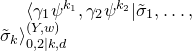 $\langle\gamma_1 \psi^{k_1}, \gamma_2\psi^{k_2}| \tilde \sigma_1, \ldots, \tilde \sigma_k\rangle_{0,2|k,d}^{(Y, w)}$
to be
$\langle\gamma_1 \psi^{k_1}, \gamma_2\psi^{k_2}| \tilde \sigma_1, \ldots, \tilde \sigma_k\rangle_{0,2|k,d}^{(Y, w)}$
to be
 \[ \int_{ [QLG_{0,2|k}(Y, d)]^{\rm vir}} \boldsymbol{r} \cdot ev_1^*(\phi^{\rm cs}(\gamma_1)) \cup_{\rm cs} ev_2^*(\phi^{\rm cs}(\gamma_2)) \cup \psi^{k_1} \cup \psi^{k_2} \cup \prod_{j=1}^k \hat{ev}^{QLG *}_j(\sigma_j). \]
In the toric setting under a natural assumption, we verify that the above invariants are well defined. This is the main setting in which we perform computations (see Corollary 6.19).
Proposition 5.6.
Suppose that $G = (\mathbb{C}^*)^k$
and
$G = (\mathbb{C}^*)^k$
and $(\mathrm{Sym}^\bullet(V^\vee))^\Gamma = \mathbb{C}$
. Then, the above definition does not depend on the particular
$(\mathrm{Sym}^\bullet(V^\vee))^\Gamma = \mathbb{C}$
. Then, the above definition does not depend on the particular $\sigma_i$
chosen such that
$\sigma_i$
chosen such that $j'_*(\sigma_i) = \tilde \sigma_i$
.
$j'_*(\sigma_i) = \tilde \sigma_i$
.
Proof. We claim that $j'_*$
is injective. By (5.2),
$j'_*$
is injective. By (5.2), $j'_*$
is injective if
$j'_*$
is injective if $j_*$
is injective. Note that
$j_*$
is injective. Note that
 $$j^*\colon H^*([V^J/(G/\langle J\rangle)]) \to H^*([V_0/(G/\langle J\rangle)])$$
is an isomorphism; thus the claim holds whenever $j_* \circ j^* = e(V_{d_w}) \cup ( - )$
is injective.
$j_* \circ j^* = e(V_{d_w}) \cup ( - )$
is injective.
Because G is a torus, $V_{d_w}$
splits as a sum of one-dimensional representations. We claim that none of these are trivial. Suppose on the contrary that
$V_{d_w}$
splits as a sum of one-dimensional representations. We claim that none of these are trivial. Suppose on the contrary that $V_{d_w}$
contains a trivial rank-one G-representation L’ as a summand. Let p be the degree-
$V_{d_w}$
contains a trivial rank-one G-representation L’ as a summand. Let p be the degree- $d_w$
homogeneous coordinate on L’. Because w is degree
$d_w$
homogeneous coordinate on L’. Because w is degree $d_w$
, we may write it as
$d_w$
, we may write it as
 $$w = p \cdot w_p + w',$$
where $w_p$
is a an element of
$w_p$
is a an element of $\mathrm{Sym}^\bullet(V_0^\vee)$
and w’ does not depend on p. Because p is G-invariant and each monomial of W is G-invariant, we conclude that
$\mathrm{Sym}^\bullet(V_0^\vee)$
and w’ does not depend on p. Because p is G-invariant and each monomial of W is G-invariant, we conclude that $w_p$
is G-invariant. The assumption
$w_p$
is G-invariant. The assumption $(\mathrm{Sym}^\bullet(V^\vee))^\Gamma = \mathbb{C}$
implies that
$(\mathrm{Sym}^\bullet(V^\vee))^\Gamma = \mathbb{C}$
implies that $\mathrm{Sym}^\bullet(V_0^\vee)^G = \mathbb{C}$
. Consequently
$\mathrm{Sym}^\bullet(V_0^\vee)^G = \mathbb{C}$
. Consequently $w_p$
is constant. If
$w_p$
is constant. If $w_p \neq 0$
, then the critical locus Z(dw) is empty, as it lies in
$w_p \neq 0$
, then the critical locus Z(dw) is empty, as it lies in $\partial w/\partial p = w_p = 0$
. Thus
$\partial w/\partial p = w_p = 0$
. Thus $w_p$
must be zero, so
$w_p$
must be zero, so $w = w'$
. Because L’ is a trivial representation, the critical locus Z(dw) is therefore isomorphic to
$w = w'$
. Because L’ is a trivial representation, the critical locus Z(dw) is therefore isomorphic to $Z(dw'|_{p=0}) \times \mathbb{C}$
, where
$Z(dw'|_{p=0}) \times \mathbb{C}$
, where $Z(dw'|_{p=0})$
is the critical locus in
$Z(dw'|_{p=0})$
is the critical locus in $\{p = 0\} \subset V$
. This contradicts the assumption that Z(dw) is proper over
$\{p = 0\} \subset V$
. This contradicts the assumption that Z(dw) is proper over $\operatorname{Spec} \mathbb{C}$
.
$\operatorname{Spec} \mathbb{C}$
.
Because $V_{d_w}$
has no trivial summands, its Euler class is a non-zero polynomial in
$V_{d_w}$
has no trivial summands, its Euler class is a non-zero polynomial in $H^*([ V^J/(G/\langle J\rangle)]) \cong \mathbb{C}[t_1, \ldots, t_k]$
. This proves that
$H^*([ V^J/(G/\langle J\rangle)]) \cong \mathbb{C}[t_1, \ldots, t_k]$
. This proves that $j_* \circ j^* = e(V_{d_w}) \cup ( - )$
is injective.
$j_* \circ j^* = e(V_{d_w}) \cup ( - )$
is injective.
Remark 5.7. The above argument holds for other groups G as well, under the conditions on G that $H^*(G/\langle J \rangle)$
embeds in an integral domain and the only representations with trivial Euler class contain a trivial summand.
$H^*(G/\langle J \rangle)$
embeds in an integral domain and the only representations with trivial Euler class contain a trivial summand.
Let $i\colon [V_0/G] \to [V/G]$
denote the inclusion and let
$i\colon [V_0/G] \to [V/G]$
denote the inclusion and let $r\colon [V_0/G] \to [V_0/(G/\langle J\rangle)]$
denote the
$r\colon [V_0/G] \to [V_0/(G/\langle J\rangle)]$
denote the $\langle J \rangle$
-gerbe. The pullback
$\langle J \rangle$
-gerbe. The pullback $r^*$
is an isomorphism by the Lyndon–Hochschild–Serre spectral sequence for the extension
$r^*$
is an isomorphism by the Lyndon–Hochschild–Serre spectral sequence for the extension
 $$1 \to \langle J\rangle \to G \to G/\langle J\rangle \to 1$$
and the fact that $H^*(B\langle J\rangle, \mathbb{C}) = \mathbb{C}$
. Define the map
$H^*(B\langle J\rangle, \mathbb{C}) = \mathbb{C}$
. Define the map
 \begin{align*}\tau\colon H^*([V/G]) \to & H^*([ V^J/(G/\langle J\rangle)], w^{+\infty}) \\ \alpha \mapsto &j'_*((r^*)^{-1}i^*\alpha).\end{align*}
We have the following comparison between quasimap invariants and GLSM invariants with light points.
Theorem 5.8.
Given classes $\gamma_1, \gamma_2 \in \mathcal{H}_{\rm ct}(Y, w)$
and
$\gamma_1, \gamma_2 \in \mathcal{H}_{\rm ct}(Y, w)$
and $\alpha_1, \ldots, \alpha_k \in H^*([V/G])$
,
$\alpha_1, \ldots, \alpha_k \in H^*([V/G])$
,
 \[\langle\gamma_1 \psi^{k_1}, \gamma_2\psi^{k_2}| \tau(\alpha_1), \ldots, \tau(\alpha_k)\rangle_{0,2|k,d}^{(Y, w)} = \langle\phi^w(\gamma_1)\psi_1^{k_1},\phi^w(\gamma_2)\psi_2^{k_2}| \alpha_1, \ldots, \alpha_k\rangle_{0,2|k,d}^{Y}.\]
Proof. First recall that, by definition,
 \begin{align*}QLG_{0,2|k}(Y, d) &= QLG_{0,2}(Y \times (\mathbb{P}^0)^k, (d,1^k)),\\Q_{0,2|k}(Y, d) & = Q_{0,2}(Y \times (\mathbb{P}^0)^k, (d,1^k)).\end{align*}
By Proposition 4.4 applied to the spaces on the right, $QLG_{0,2|k}(Y, d)$
and
$QLG_{0,2|k}(Y, d)$
and $Q_{0,2|k}(Y, d)$
are canonically isomorphic and their virtual classes are identified.
$Q_{0,2|k}(Y, d)$
are canonically isomorphic and their virtual classes are identified.
Next, we compare the light evaluation maps. For $1 \leq j\leq k$
, we have the following commuting diagram.
$1 \leq j\leq k$
, we have the following commuting diagram.
![Commutative diagram showing an isomorphism from Q0,2|k(Y, d) to QLG0,2|k(Y, d). Vertical maps descend through quotient stacks [V over G], [V0 over G], and [V0 over (G over J)] on the left, and [V over Gamma], [V0 over Gamma], and [V0 over (Gamma over C R asterisk)] on the right, with horizontal, projection, and evaluation maps connecting corresponding objects.](https://static.cambridge.org/binary/version/id/urn:cambridge.org:id:binary:20260704090412932-0043:S0010437X26103017:S0010437X26103017_eqnU92.png?pub-status=live)
We see that
 $$ \hat{ev}_j^{Q *} \alpha = \hat{ev}_j^{QLG *}(r^*)^{-1}i^*\alpha.$$
The result then follows from Definition 5.5.
6. Generating functions
In this section, we show how certain derivatives of I-functions for Y can be used to obtain generating functions of GLSM invariants for (Y, w). In the toric setting, we provide an explicit formula for GLSM I-functions.
6.1 The S-operator
Definition 6.1. Let $\mathbb{C}[[q]]$
denote the Novikov ring:
$\mathbb{C}[[q]]$
denote the Novikov ring:
 $$\mathbb{C}[[q]] := \mathbb{C}[[ \mathrm{Eff}(V, G, \theta)]],$$
where we denote the element $d \in \mathbb{C}[[ \mathrm{Eff}(V, G, \theta)]]$
by
$d \in \mathbb{C}[[ \mathrm{Eff}(V, G, \theta)]]$
by $q^d$
.
$q^d$
.
Let ${\boldsymbol{t}} = \sum_{1 \leq j \leq m} t^j T_j$
, where
${\boldsymbol{t}} = \sum_{1 \leq j \leq m} t^j T_j$
, where $T_j\in H^*([V/G])$
and
$T_j\in H^*([V/G])$
and $t^j$
are formal parameters. For
$t^j$
are formal parameters. For $\gamma_1 \in H^*_{\rm CR,cs}(Y)$
,
$\gamma_1 \in H^*_{\rm CR,cs}(Y)$
, $ \gamma_2 \in H^*_{\rm CR}(Y)$
and
$ \gamma_2 \in H^*_{\rm CR}(Y)$
and $k_1, k_2 \geq 0$
, define the generating function
$k_1, k_2 \geq 0$
, define the generating function
 \[\langle\!\langle \gamma_1 \psi^{k_1}, \gamma_2\psi^{k_2}\rangle\!\rangle_{0,2}^{Y}({\boldsymbol{t}}) := \sum_{d \in\mathrm{Eff}(V, G, \theta)} \sum_{k \geq 0} \frac{q^d}{k!} \langle \gamma_1\psi^{k_1}, \gamma_2\psi^{k_2} | {\boldsymbol{t}}, \ldots, {\boldsymbol{t}}\rangle_{0, 2|k, d}^Y,\]
where
 \[\langle \gamma_1\psi^{k_1}, \gamma_2\psi^{k_2} | {\boldsymbol{t}}, \ldots, {\boldsymbol{t}}\rangle_{0, 2|k, d}^Y := \int_{[Q_{0, 2|k}(Y, d)]^{\rm vir}} \boldsymbol{r} \cdot{ev_1^c}^*(\gamma_1) \cup ev_2^*(\gamma_2)\cup \psi_1^{k_1} \cup \psi_2^{k_2}\prod_{j=1}^{k} \hat{ev}_j^{Q *}({\boldsymbol{t}}).\]
Alternatively, for $\gamma_1, \gamma_2 \in H^*_{\rm CR,ct}(Y)$
,
$\gamma_1, \gamma_2 \in H^*_{\rm CR,ct}(Y)$
, $\langle\!\langle \gamma_1\psi^{k_1}, \gamma_2\psi^{k_2}\rangle\!\rangle_{0,2}^{Y}({\boldsymbol{t}})$
is defined similarly, but replacing
$\langle\!\langle \gamma_1\psi^{k_1}, \gamma_2\psi^{k_2}\rangle\!\rangle_{0,2}^{Y}({\boldsymbol{t}})$
is defined similarly, but replacing ${ev_1^c}^*(\gamma_1) \cup ev_2^*(\gamma_2)$
with
${ev_1^c}^*(\gamma_1) \cup ev_2^*(\gamma_2)$
with $ev_1^*(\gamma_1) \cup_{\rm cs} ev_2^*(\gamma_2)$
.
$ev_1^*(\gamma_1) \cup_{\rm cs} ev_2^*(\gamma_2)$
.
Definition 6.2. Let $\{ \tilde \gamma_i\}_{i \in \tilde I}$
be a basis for
$\{ \tilde \gamma_i\}_{i \in \tilde I}$
be a basis for $H^*_{\rm CR}(Y)$
and let
$H^*_{\rm CR}(Y)$
and let $\{ \tilde \gamma^i\}_{i \in \tilde I}$
be the dual basis in
$\{ \tilde \gamma^i\}_{i \in \tilde I}$
be the dual basis in $H^*_{\rm CR,cs}(Y)$
. The (light-point, quasimap) S-operator on
$H^*_{\rm CR,cs}(Y)$
. The (light-point, quasimap) S-operator on $H^*_{\rm CR}(Y)[[q]][[t^i]][z, z^{-1}]$
is defined by
$H^*_{\rm CR}(Y)[[q]][[t^i]][z, z^{-1}]$
is defined by
 \[S^{Y}(q, {\boldsymbol{t}}, z)(\gamma) := \sum_{i \in \tilde I} \tilde\gamma_i \left\langle\!\!\left\langle \frac{\tilde \gamma^i}{z-\psi}, \gamma\right\rangle\!\!\right\rangle_{\!0, 2}^{\!\!Y}({\boldsymbol{t}}).\]
As shown in [Reference Ciocan-Fontanine and KimCFK16], the inverse of S is given by $L^{Y}(q, {\boldsymbol{t}}, z) = {S^Y}^*(q, {\boldsymbol{t}}, -z)$
,
$L^{Y}(q, {\boldsymbol{t}}, z) = {S^Y}^*(q, {\boldsymbol{t}}, -z)$
,
 \[L^{Y}(q, {\boldsymbol{t}}, z)(\gamma) := \sum_{i \in \tilde I} \tilde\gamma_i \left\langle\!\!\left\langle\tilde \gamma^i,\frac{\gamma}{-z- \psi}\right\rangle\!\!\right\rangle_{\!0, 2}^{\!\!Y}({\boldsymbol{t}}).\]
Recall from § 2.3 that there is a perfect pairing on $H^*_{\rm CR,ct}(Y)$
. Let
$H^*_{\rm CR,ct}(Y)$
. Let $\{ \gamma_i\}_{i \in I}$
be a basis for
$\{ \gamma_i\}_{i \in I}$
be a basis for $H^*_{\rm CR,ct}(Y)$
and let
$H^*_{\rm CR,ct}(Y)$
and let $\{ \gamma^i\}_{i \in I}$
be the dual basis.
$\{ \gamma^i\}_{i \in I}$
be the dual basis.
Lemma 6.3.
The operator $S^{Y}(q, {\boldsymbol{t}}, z)$
preserves the compact-type subspace, i.e. if
$S^{Y}(q, {\boldsymbol{t}}, z)$
preserves the compact-type subspace, i.e. if $\gamma \in H^*_{\rm CR,ct}(Y)[[q]][[t^i]][z, z^{-1}]$
, then
$\gamma \in H^*_{\rm CR,ct}(Y)[[q]][[t^i]][z, z^{-1}]$
, then $S^{Y}(q, {\boldsymbol{t}}, z)(\gamma)\in H^*_{\rm CR,ct}(Y)[[q]][[t^i]][z, z^{-1}]$
. The same holds for
$S^{Y}(q, {\boldsymbol{t}}, z)(\gamma)\in H^*_{\rm CR,ct}(Y)[[q]][[t^i]][z, z^{-1}]$
. The same holds for $L^{Y}(q, {\boldsymbol{t}}, z)$
. For
$L^{Y}(q, {\boldsymbol{t}}, z)$
. For $\gamma$
as above, we have
$\gamma$
as above, we have
 $$S^{Y}(q, {\boldsymbol{t}}, z)(\gamma) = \sum_{i \in I} \gamma_i\left\langle\!\!\left\langle \frac{\gamma^i}{z- \psi},\gamma\right\rangle\!\!\right\rangle_{\!0, 2}^{\!\!Y}({\boldsymbol{t}}).$$
Proof. The generating function $S^{Y}(q, {\boldsymbol{t}}, z)(\gamma)$
may be alternatively defined as
$S^{Y}(q, {\boldsymbol{t}}, z)(\gamma)$
may be alternatively defined as
 \[\gamma + \sum_{d \in \operatorname{Eff}} \sum_{k \geq 0} \frac{q^d}{k!} \widetilde{ev_1}_* \bigg(\frac{ev_2^*(\gamma)}{z - \psi} \prod_{j=1}^{k} \hat{ev}_j^{Q *}({\boldsymbol{t}}) \cap [Q_{0, 2|k}(Y, d)]^{\rm vir}\! \bigg), \]
where $\widetilde{ev_1}$
is the composition of
$\widetilde{ev_1}$
is the composition of ${ev_1}$
with the involution
${ev_1}$
with the involution $I\colon IY \to IY\!$
. Both
$I\colon IY \to IY\!$
. Both $ev_1$
and
$ev_1$
and $ev_2$
are proper by Lemma 3.7. By [Reference ShoemakerSho21, Proposition 2.5],
$ev_2$
are proper by Lemma 3.7. By [Reference ShoemakerSho21, Proposition 2.5], $\widetilde{ev_1}_*$
and
$\widetilde{ev_1}_*$
and ${ev_2}^*$
preserve a cohomology of compact type. This proves the first statement. The same argument applies to
${ev_2}^*$
preserve a cohomology of compact type. This proves the first statement. The same argument applies to $L^{Y}(q, {\boldsymbol{t}}, z)$
.
$L^{Y}(q, {\boldsymbol{t}}, z)$
.
The final statement follows from the first together with the observation that, for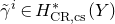 $\tilde \gamma^i \in H^*_{\rm CR,cs}(Y)$
and
$\tilde \gamma^i \in H^*_{\rm CR,cs}(Y)$
and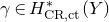 $\gamma \in H^*_{\rm CR,ct}(Y)$
,
$\gamma \in H^*_{\rm CR,ct}(Y)$
,
 \begin{align*}{ev_1^c}^*(\tilde \gamma^i) \cup ev_2^*(\gamma) = {ev_1}^*(\phi^{\rm cs}(\tilde \gamma^i)) \cup_{\rm cs} ev_2^*(\gamma).\\[-30pt]\end{align*}
For the remainder of the paper, we will assume the following.
Assumption 6.4. The compact-type subspace $H^*_{\rm CR,ct}(Y)$
is spanned by the pushforwards from smooth proper substacks Z lying in
$H^*_{\rm CR,ct}(Y)$
is spanned by the pushforwards from smooth proper substacks Z lying in $w^{-1}(0)$
.
$w^{-1}(0)$
.
If Assumption 6.4 holds, then $ \phi^w (\mathcal{H}_{\rm ct}(Y, w)) = H^*_{\rm CR,ct}(Y).$
We expect it to hold quite generally.
$ \phi^w (\mathcal{H}_{\rm ct}(Y, w)) = H^*_{\rm CR,ct}(Y).$
We expect it to hold quite generally.
Lemma 6.5. The assumption holds for Y a toric stack ( $G \cong (\mathbb{C}^*)^k$
).
$G \cong (\mathbb{C}^*)^k$
).
Proof. We first consider the case in which $Y = V \mathbin{/\mkern-6mu/}_\theta G$
is a simplicial toric variety. Let
$Y = V \mathbin{/\mkern-6mu/}_\theta G$
is a simplicial toric variety. Let $V = \operatorname{Spec} ( \mathbb{C}[x_i]_{\{1\leq i\leq r\}})$
. Given
$V = \operatorname{Spec} ( \mathbb{C}[x_i]_{\{1\leq i\leq r\}})$
. Given $I \subset \{1, \ldots, r\}$
, let
$I \subset \{1, \ldots, r\}$
, let $Y_I \subset Y$
denote the closed subspace defined by the equations
$Y_I \subset Y$
denote the closed subspace defined by the equations $\{x_i = 0\}_{i \in I}$
.
$\{x_i = 0\}_{i \in I}$
.
Let $\Sigma$
denote the toric fan for
$\Sigma$
denote the toric fan for $Y\!$
, which may be obtained from the GIT description by, for instance, [Reference Coates, Iritani and JiangCIJ18]. Following the description by Borisov and Horja of compactly supported cohomology [Reference Borisov and Paul HorjaBPH15, Proposition 2.4], the compact-type cohomology
$Y\!$
, which may be obtained from the GIT description by, for instance, [Reference Coates, Iritani and JiangCIJ18]. Following the description by Borisov and Horja of compactly supported cohomology [Reference Borisov and Paul HorjaBPH15, Proposition 2.4], the compact-type cohomology $H^*_{\rm ct}(Y)$
is generated by the images of the maps
$H^*_{\rm ct}(Y)$
is generated by the images of the maps $H^*(Y_I) \to H^*(Y)$
for I ranging over all subsets of
$H^*(Y_I) \to H^*(Y)$
for I ranging over all subsets of $ \{1, \ldots, r\}$
such that
$ \{1, \ldots, r\}$
such that $\sigma_I := \operatorname{cone}\{v_i\}_{i \in I}$
is a cone of
$\sigma_I := \operatorname{cone}\{v_i\}_{i \in I}$
is a cone of $\Sigma$
and the interior
$\Sigma$
and the interior $\sigma_I^\circ$
is contained in
$\sigma_I^\circ$
is contained in $|\Sigma|^\circ$
. One can check, for these choices of I, that
$|\Sigma|^\circ$
. One can check, for these choices of I, that $Y_I$
is proper over
$Y_I$
is proper over $\operatorname{Spec} \mathbb{C}$
. Thus, to verify Assumption 6.4 in this case, it suffices to show that for each such choice of I, the restriction of w to
$\operatorname{Spec} \mathbb{C}$
. Thus, to verify Assumption 6.4 in this case, it suffices to show that for each such choice of I, the restriction of w to $Y_I$
is identically zero.
$Y_I$
is identically zero.
Here $Y_I$
may be constructed as a GIT quotient of
$Y_I$
may be constructed as a GIT quotient of $\operatorname{Spec} ( \mathbb{C}[x_i]_{\{i \notin I\}})$
by G. Because
$\operatorname{Spec} ( \mathbb{C}[x_i]_{\{i \notin I\}})$
by G. Because $Y_I$
is proper over
$Y_I$
is proper over $\operatorname{Spec} \mathbb{C}$
, any algebraic function on
$\operatorname{Spec} \mathbb{C}$
, any algebraic function on $Y_I$
is constant. As a result, any G-invariant function in
$Y_I$
is constant. As a result, any G-invariant function in $\mathbb{C}[x_i]_{\{i \notin I\}}$
is constant on a non-empty open subset of
$\mathbb{C}[x_i]_{\{i \notin I\}}$
is constant on a non-empty open subset of $\operatorname{Spec} ( \mathbb{C}[x_i]_{\{i \notin I\}})$
, and therefore on all of
$\operatorname{Spec} ( \mathbb{C}[x_i]_{\{i \notin I\}})$
, and therefore on all of $\operatorname{Spec} ( \mathbb{C}[x_i]_{\{i \notin I\}})$
. It follows that
$\operatorname{Spec} ( \mathbb{C}[x_i]_{\{i \notin I\}})$
. It follows that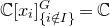 $\mathbb{C}[x_i]_{\{i \notin I\}}^G = \mathbb{C}$
. Because w is homogeneous of degree
$\mathbb{C}[x_i]_{\{i \notin I\}}^G = \mathbb{C}$
. Because w is homogeneous of degree $d_w \gt 0$
with respect to the R-charge, it contains no constant term. Therefore, w is zero on
$d_w \gt 0$
with respect to the R-charge, it contains no constant term. Therefore, w is zero on $\operatorname{Spec} \mathbb{C}$
. Since
$\operatorname{Spec} \mathbb{C}$
. Since $w|_{Y_I}: Y_I \to \mathbb{C}$
factors through
$w|_{Y_I}: Y_I \to \mathbb{C}$
factors through $\operatorname{Spec} (\mathbb{C} = \mathbb{C}[x_i]_{\{i \notin I\}}^G)$
, we conclude that
$\operatorname{Spec} (\mathbb{C} = \mathbb{C}[x_i]_{\{i \notin I\}}^G)$
, we conclude that $Y_I \subset w^{-1}(0)$
.
$Y_I \subset w^{-1}(0)$
.
In the general case in which Y is a stack, we must consider the Chen–Ruan cohomology $H^*_{\rm CR,ct}(Y) = H^*_{\rm ct}(IY)$
. Observe that:
$H^*_{\rm CR,ct}(Y) = H^*_{\rm ct}(IY)$
. Observe that:
-
(1) each component
$Y_g \subset IY$
is itself a toric stack arising as a GIT quotient; and -
(2) the cohomology of
$Y_g$
(with coefficients in
$\mathbb{C}$
) is equal to the cohomology of its coarse space, the simplicial toric variety
$|Y_g|$
.


Working component by component, the result then follows from the previous case.
By Assumption 6.4, the map $\phi^w\colon \mathcal{H}_{\rm ct}(Y, w) \to H^*_{\rm CR,ct}(Y)$
is surjective. Choose a splitting
$\phi^w\colon \mathcal{H}_{\rm ct}(Y, w) \to H^*_{\rm CR,ct}(Y)$
is surjective. Choose a splitting
 $$\sigma^w\colon H^*_{\rm CR,ct}(Y) \to \mathcal{H}_{\rm ct}(Y, w).$$
Denote the image of $\sigma^w$
by
$\sigma^w$
by $ \mathcal{R}_c(Y, w)$
. Although there is no canonical choice of
$ \mathcal{R}_c(Y, w)$
. Although there is no canonical choice of $ \mathcal{R}_c(Y, w)$
, by the broad vanishing result of Corollary 3.19, the
$ \mathcal{R}_c(Y, w)$
, by the broad vanishing result of Corollary 3.19, the $h=0$
,
$h=0$
, $n=2$
GLSM invariants with heavy-point insertions in
$n=2$
GLSM invariants with heavy-point insertions in $\mathcal{H}_{\rm ct}(Y, w)$
are fully determined by the GLSM invariants with insertions from
$\mathcal{H}_{\rm ct}(Y, w)$
are fully determined by the GLSM invariants with insertions from $ \mathcal{R}_c(Y, w)$
.
$ \mathcal{R}_c(Y, w)$
.
Definition 6.6. Let $\{ \gamma_i\}_{i \in I}$
be a basis for
$\{ \gamma_i\}_{i \in I}$
be a basis for $H^*_{\rm CR,ct}(Y)$
and let
$H^*_{\rm CR,ct}(Y)$
and let $\{ \gamma^i\}_{i \in I}$
be the dual basis. Define the (light-point, LG quasimap) S-operator on
$\{ \gamma^i\}_{i \in I}$
be the dual basis. Define the (light-point, LG quasimap) S-operator on $\mathcal{H}_{\rm ct}(Y, w)[[q]][[t^i]][z, z^{-1}]$
by
$\mathcal{H}_{\rm ct}(Y, w)[[q]][[t^i]][z, z^{-1}]$
by
 \[S^{(Y, w)}(q, {\boldsymbol{t}}, z)(\gamma) := \sum_{i \in I}\sigma^w(\gamma_i) \bigg\langle\!\!\bigg\langle \frac{\sigma^w(\gamma^i)}{z- \psi},\gamma\bigg\rangle\!\!\bigg\rangle_{\!0, 2}^{\!\!(Y, w)}({\boldsymbol{t}}),\]
where ${\boldsymbol{t}} = \sum_{1 \leq j \leq m} t^j T_j$
with
${\boldsymbol{t}} = \sum_{1 \leq j \leq m} t^j T_j$
with $T_j\in H^*([ V^J/(G/\langle J\rangle)], w^{+\infty})$
, and the variables
$T_j\in H^*([ V^J/(G/\langle J\rangle)], w^{+\infty})$
, and the variables $t^j$
are formal parameters.
$t^j$
are formal parameters.
Proposition 6.7.
Whenever $P(q, {\boldsymbol{t}}, z) \in H^*_{\rm CR,ct}(Y)[[q]][[t^i]][z, z^{-1}]$
,
$P(q, {\boldsymbol{t}}, z) \in H^*_{\rm CR,ct}(Y)[[q]][[t^i]][z, z^{-1}]$
,
 \[S^{(Y, w)}(q, \tau({\boldsymbol{t}}), z)(\sigma^w(P(q, {\boldsymbol{t}}, z))) = \sigma^w(S^{Y}(q, {\boldsymbol{t}}, z)(P(q, {\boldsymbol{t}}, z))).\]
Proof. This follows immediately from Theorem 5.8.
6.2 I-functions
Definition 6.8. A $(0^+, 0^+)$
I-function for Y is any function
$(0^+, 0^+)$
I-function for Y is any function $I(q, {\boldsymbol{t}}, z)$
of the form
$I(q, {\boldsymbol{t}}, z)$
of the form
 $$S^{Y}(q, f({\boldsymbol{t}}), z)P(q, {\boldsymbol{t}}, z)$$
where $f \in H^*([V/G])[[t^i]]$
is a formal cohomology-valued function satisfying
$f \in H^*([V/G])[[t^i]]$
is a formal cohomology-valued function satisfying $f(0) = 0$
, and
$f(0) = 0$
, and $P(q, {\boldsymbol{t}}, z)$
lies in
$P(q, {\boldsymbol{t}}, z)$
lies in $H^*_{\rm CR}(Y)[[q]][[t^i]][z]$
(in particular, it contains only positive powers of z).
$H^*_{\rm CR}(Y)[[q]][[t^i]][z]$
(in particular, it contains only positive powers of z).
Remark 6.9. The notation ‘ $(0^+, 0^+)$
’ comes from [Reference Ciocan-Fontanine and KimCFK16], where
$(0^+, 0^+)$
’ comes from [Reference Ciocan-Fontanine and KimCFK16], where $S^Y$
is denoted by
$S^Y$
is denoted by $\mathbb{S}^{(0^+ \theta, 0^+)}$
. The first
$\mathbb{S}^{(0^+ \theta, 0^+)}$
. The first $0^+$
in the expression indicates that we are considering
$0^+$
in the expression indicates that we are considering $0^+$
-stable quasimap invariants of
$0^+$
-stable quasimap invariants of $[V\mathbin{/\mkern-6mu/}_\theta G]$
and the second indicates that all marked points after the first two are light points.
$[V\mathbin{/\mkern-6mu/}_\theta G]$
and the second indicates that all marked points after the first two are light points.
Remark 6.10. Let $S^Y_{\operatorname{GW}}$
denote the analogous operator to
$S^Y_{\operatorname{GW}}$
denote the analogous operator to $S^Y\!$
, but replacing quasimap invariants with Gromov–Witten invariants and replacing light points with heavy points [Reference Cox and KatzCK99, (10.14)]. Then,
$S^Y\!$
, but replacing quasimap invariants with Gromov–Witten invariants and replacing light points with heavy points [Reference Cox and KatzCK99, (10.14)]. Then, $S^Y_{\operatorname{GW}}(q, {\boldsymbol{t}}, z)(\mathbf 1)$
is Givental’s J-function,
$S^Y_{\operatorname{GW}}(q, {\boldsymbol{t}}, z)(\mathbf 1)$
is Givental’s J-function, $J^Y(q, {\boldsymbol{t}}, z)$
. In the language of Givental’s symplectic formalism, if a function
$J^Y(q, {\boldsymbol{t}}, z)$
. In the language of Givental’s symplectic formalism, if a function $I({\boldsymbol{t}} ,z)$
takes the form
$I({\boldsymbol{t}} ,z)$
takes the form $S^Y_{\operatorname{GW}}(q, f({\boldsymbol{t}}), z)P(q, {\boldsymbol{t}}, z)$
with
$S^Y_{\operatorname{GW}}(q, f({\boldsymbol{t}}), z)P(q, {\boldsymbol{t}}, z)$
with $P(q, {\boldsymbol{t}}, z)$
in
$P(q, {\boldsymbol{t}}, z)$
in $H^*_{\rm CR}(Y)[[q]][[t^i]][z]$
, then
$H^*_{\rm CR}(Y)[[q]][[t^i]][z]$
, then $I({\boldsymbol{t}} ,z)$
lies on a tangent space
$I({\boldsymbol{t}} ,z)$
lies on a tangent space $T_\tau \mathcal{L}^Y$
of the overruled Lagrangian cone
$T_\tau \mathcal{L}^Y$
of the overruled Lagrangian cone $\mathcal{L}^Y$
for
$\mathcal{L}^Y$
for $\tau = J^Y(q, f({\boldsymbol{t}}), z)$
. Results on
$\tau = J^Y(q, f({\boldsymbol{t}}), z)$
. Results on $\epsilon$
-wall crossing such as [Reference Ciocan-Fontanine and KimCFK14, Theorem 7.3.1] and [Reference Cheong, Ciocan-Fontanine and KimCCFK15, Theorem 4.6] suggest that
$\epsilon$
-wall crossing such as [Reference Ciocan-Fontanine and KimCFK14, Theorem 7.3.1] and [Reference Cheong, Ciocan-Fontanine and KimCCFK15, Theorem 4.6] suggest that $(0^+, 0^+)$
I-functions will also lie on a tangent space
$(0^+, 0^+)$
I-functions will also lie on a tangent space $T_\tau \mathcal{L}^Y$
for some
$T_\tau \mathcal{L}^Y$
for some $\tau$
. This is the motivation behind Definition 6.8.
$\tau$
. This is the motivation behind Definition 6.8.
The relationship between the I-functions for toric stacks defined in [Reference Cheong, Ciocan-Fontanine and KimCCFK15, Reference Coates, Corti, Iritani and TsengCCI+15] and other $(0^+, 0^+)$
I-functions is clarified in Proposition 6.14. The connection to GLSM I-functions (as defined below) is given in Theorem 6.15.
$(0^+, 0^+)$
I-functions is clarified in Proposition 6.14. The connection to GLSM I-functions (as defined below) is given in Theorem 6.15.
Definition 6.8 can be generalized to the setting of GLSMs. As usual we restrict our attention to compact-type insertions.
Definition 6.11. A $(0^+, 0^+)$
GLSM I-function for
$(0^+, 0^+)$
GLSM I-function for $(V, G, \theta, w)$
is any function of the form
$(V, G, \theta, w)$
is any function of the form
 $$S^{(Y, w)}(q, f({\boldsymbol{t}}), z)P(q, {\boldsymbol{t}}, z),$$
where $f \in H^*([ V^J/(G/\langle J\rangle)], w^{+\infty})[[t^i]]$
is a formal cohomology-valued function satisfying
$f \in H^*([ V^J/(G/\langle J\rangle)], w^{+\infty})[[t^i]]$
is a formal cohomology-valued function satisfying $f(0) = 0$
, and
$f(0) = 0$
, and $P(q, {\boldsymbol{t}}, z) $
lies in
$P(q, {\boldsymbol{t}}, z) $
lies in $ \mathcal{H}_{\rm ct}(Y, w)[[q]][[t^i]][z].$
Lemma 6.12.
If a $(0^+, 0^+)$
I-function for Y
$(0^+, 0^+)$
I-function for Y $I(q, {\boldsymbol{t}} ,z)= S^{Y}(q, {\boldsymbol{t}}, z) P(q, {\boldsymbol{t}}, z)$
is supported in a cohomology of compact type, then so is
$I(q, {\boldsymbol{t}} ,z)= S^{Y}(q, {\boldsymbol{t}}, z) P(q, {\boldsymbol{t}}, z)$
is supported in a cohomology of compact type, then so is $P(q, {\boldsymbol{t}}, z)$
.
$P(q, {\boldsymbol{t}}, z)$
.
Proof. By [Reference Cheong, Ciocan-Fontanine and KimCCFK15, Proposition 3.7], we have $P(q, {\boldsymbol{t}}, z) = L^Yf(q, {\boldsymbol{t}}, z)I(q, {\boldsymbol{t}} ,z)$
. By Lemma 6.3,
$P(q, {\boldsymbol{t}}, z) = L^Yf(q, {\boldsymbol{t}}, z)I(q, {\boldsymbol{t}} ,z)$
. By Lemma 6.3, $L^{Y}(q, {\boldsymbol{t}}, z)$
preserves the compact-type subspace.
$L^{Y}(q, {\boldsymbol{t}}, z)$
preserves the compact-type subspace.
Next, we recall the definition of the Big I-function, $\mathbb{I}^Y(q, {\boldsymbol{t}}, z)$
, of [Reference Ciocan-Fontanine and KimCFK16, Reference Cheong, Ciocan-Fontanine and KimCCFK15]. The
$\mathbb{I}^Y(q, {\boldsymbol{t}}, z)$
, of [Reference Ciocan-Fontanine and KimCFK16, Reference Cheong, Ciocan-Fontanine and KimCCFK15]. The $0^+$
-quasimap graph space
$0^+$
-quasimap graph space $QG_{0,n|k}(Y, d)$
is the space of genus-zero quasimaps (with k light points) to
$QG_{0,n|k}(Y, d)$
is the space of genus-zero quasimaps (with k light points) to $[V\mathbin{/\mkern-6mu/}_\theta G] \times [\mathbb{C}^2 \mathbin{/\mkern-6mu/}_{\operatorname{id}} \mathbb{C}^*]$
of degree (d, 1) that are
$[V\mathbin{/\mkern-6mu/}_\theta G] \times [\mathbb{C}^2 \mathbin{/\mkern-6mu/}_{\operatorname{id}} \mathbb{C}^*]$
of degree (d, 1) that are $0^+$
-stable on the first factor and
$0^+$
-stable on the first factor and $\infty$
-stable (Kontsevich-stable) on the second factor:
$\infty$
-stable (Kontsevich-stable) on the second factor:
 $$QG_{0,n|k}(Y, d) := Q_{0,n|k}^{0^+, \infty}(Y \times \mathbb{P}^1, (d,1)).$$
The graph space may be viewed as the moduli space of quasimaps to Y such that each source curve has a distinguished component whose coarse underlying curve is equipped with a parametrization, induced by the degree-one map to $\mathbb{P}^1$
.
$\mathbb{P}^1$
.
Consider the $\mathbb{C}^*$
-action on
$\mathbb{C}^*$
-action on $\mathbb{P}^1$
that scales the first homogeneous coordinate. This induces a natural
$\mathbb{P}^1$
that scales the first homogeneous coordinate. This induces a natural $\mathbb{C}^*$
-action on the graph space. The evaluation maps
$\mathbb{C}^*$
-action on the graph space. The evaluation maps $ev_i:QG_{0,n|k}(Y, d) \to IY$
for
$ev_i:QG_{0,n|k}(Y, d) \to IY$
for $1 \leq i \leq n$
and
$1 \leq i \leq n$
and $\hat{ev}_j^{Q}\colon QG_{0,n|k}(Y, d) \to [V/G]$
for
$\hat{ev}_j^{Q}\colon QG_{0,n|k}(Y, d) \to [V/G]$
for $1 \leq j \leq k$
are equivariant, where the action of
$1 \leq j \leq k$
are equivariant, where the action of $\mathbb{C}^*$
on IY and
$\mathbb{C}^*$
on IY and $[V/G]$
is trivial. Let
$[V/G]$
is trivial. Let $z \in H^*_{\mathbb{C}^*}(pt)$
denote the equivariant parameter
$z \in H^*_{\mathbb{C}^*}(pt)$
denote the equivariant parameter
 $$z := e_{\mathbb{C}^*}(T_0\mathbb{P}^1),$$
the first Chern class of $T\mathbb{P}^1$
at
$T\mathbb{P}^1$
at $0 \in \mathbb{P}^1$
. Denote by
$0 \in \mathbb{P}^1$
. Denote by $p_0$
and
$p_0$
and $p_\infty$
the classes in
$p_\infty$
the classes in $H^*_{\mathbb{C}^*}(\mathbb{P}^1)$
determined by the conditions
$H^*_{\mathbb{C}^*}(\mathbb{P}^1)$
determined by the conditions
 $$p_0|_0 = z, p_0|_\infty = 0, p_\infty|_0 = 0, p_\infty|_\infty =-z.$$
Fix $ n=1$
. Define
$ n=1$
. Define $F^{k,d}_{1,0}$
to be the
$F^{k,d}_{1,0}$
to be the $\mathbb{C}^*$
-fixed locus such that the source curve is irreducible, the heavy marked point
$\mathbb{C}^*$
-fixed locus such that the source curve is irreducible, the heavy marked point $p_1$
lies over
$p_1$
lies over $\infty$
, there is a basepoint of degree
$\infty$
, there is a basepoint of degree $d(L_\theta)$
over 0, and all light points are concentrated over 0. Let
$d(L_\theta)$
over 0, and all light points are concentrated over 0. Let $\iota_d\colon F^{k,d}_{1,0} \to QG_{0,n|k}(Y, d)$
denote the inclusion.
$\iota_d\colon F^{k,d}_{1,0} \to QG_{0,n|k}(Y, d)$
denote the inclusion.
Definition 6.13. Define
 $$ \operatorname{Res}_{F^{k,d}_{1,0}}({\boldsymbol{t}}^k) := \frac{ev_1^*(p_\infty) \cup \prod_{j=1}^k \hat{ev}_j^{Q *}({\boldsymbol{t}}) \cap [F^{k,d}_{1,0}]^{\rm vir}}{e_{\mathbb{C}^*}( N^{\rm vir}_{F^{k,d}_{1,0}})},$$
where $N^{\rm vir}_{F^{k,d}_{1,0}}$
is the virtual normal bundle in the sense of [Reference Graber and PandharipandeGP99]. Define
$N^{\rm vir}_{F^{k,d}_{1,0}}$
is the virtual normal bundle in the sense of [Reference Graber and PandharipandeGP99]. Define
 \begin{equation}\mathbb{I}^Y(q, {\boldsymbol{t}}, z) := \sum_{d \in\mathrm{Eff}(V, G, \theta)} \sum_{k \geq 0} \frac{q^d}{k!} (\widetilde{ev_1} \circ {\iota_d})_*\operatorname{Res}_{F^{k,d}_{1,0}}({\boldsymbol{t}}^k).\end{equation}
We view $\mathbb{I}^Y(q, {\boldsymbol{t}}, z)$
as a power series in the q and
$\mathbb{I}^Y(q, {\boldsymbol{t}}, z)$
as a power series in the q and $t^i$
variables, whose coefficients lie in the localized equivariant cohomology ring
$t^i$
variables, whose coefficients lie in the localized equivariant cohomology ring $H^*_{CR, \mathbb{C}^*, \operatorname{loc}}(Y) = H^*_{\rm CR}(Y)[z, z^{-1}].$
By [Reference Cheong, Ciocan-Fontanine and KimCCFK15, Remark 4.3], $\mathbb{I}^Y(q, {\boldsymbol{t}}, z)$
is equal to the I-function defined in [Reference Cheong, Ciocan-Fontanine and KimCCFK15, Definition 4.1]. In the toric case, if
$\mathbb{I}^Y(q, {\boldsymbol{t}}, z)$
is equal to the I-function defined in [Reference Cheong, Ciocan-Fontanine and KimCCFK15, Definition 4.1]. In the toric case, if ${\boldsymbol{t}} \in H^2([V/G])$
, this coincides with the ‘S-extended stacky I-function’ of [Reference Coates, Corti, Iritani and TsengCCI+15]. By [Reference Cheong, Ciocan-Fontanine and KimCCFK15, (4.2)], it is a
${\boldsymbol{t}} \in H^2([V/G])$
, this coincides with the ‘S-extended stacky I-function’ of [Reference Coates, Corti, Iritani and TsengCCI+15]. By [Reference Cheong, Ciocan-Fontanine and KimCCFK15, (4.2)], it is a $(0^+, 0^+)$
I-function in the sense of Definition 6.8.
$(0^+, 0^+)$
I-function in the sense of Definition 6.8.
Given $\rho \in H^*([V/G])$
, define
$\rho \in H^*([V/G])$
, define
 $$z\partial _\rho \mathbb{I}^Y(q, {\boldsymbol{t}}, z) := z\frac{\partial }{\partial s} \mathbb{I}^Y(q, {\boldsymbol{t}} + s \rho, z)|_{s = 0}.$$
Proposition 6.14.
The derivative $z\partial _\rho \mathbb{I}^Y$
is a
$z\partial _\rho \mathbb{I}^Y$
is a $(0^+, 0^+)$
I-function for
$(0^+, 0^+)$
I-function for $Y\!$
.
$Y\!$
.
Proof. This has been stated in [Reference Kim and LhoKL18, Equation (2-8)] in the case in which the target is projective space. The proof follows from localization on the graph space as in [Reference Ciocan-Fontanine and KimCFK14, § 5.4]. We outline the argument here.
Let $\{ \tilde \gamma_i\}_{i \in \tilde I}$
be a basis for
$\{ \tilde \gamma_i\}_{i \in \tilde I}$
be a basis for $H^*_{\rm CR}(Y)$
and let
$H^*_{\rm CR}(Y)$
and let $\{ \tilde \gamma^i\}_{i \in \tilde I}$
be the dual basis in
$\{ \tilde \gamma^i\}_{i \in \tilde I}$
be the dual basis in $H^*_{\rm CR,cs}(Y)$
. Define
$H^*_{\rm CR,cs}(Y)$
. Define
 $$P_{\rho}(q, {\boldsymbol{t}}, z) := \sum_{i \in \tilde I} \tilde \gamma_i \langle\!\langle\tilde \gamma^i \otimes p_\infty| \rho \otimes p_0\rangle\!\rangle_{0, 1|1}^{QG(Y)^{0^+, 0^+}}({\boldsymbol{t}}),$$
where $\langle\!\langle -\rangle\!\rangle^{QG(Y)^{0^+, 0^+}}({\boldsymbol{t}})$
is the double-bracket generating function of
$\langle\!\langle -\rangle\!\rangle^{QG(Y)^{0^+, 0^+}}({\boldsymbol{t}})$
is the double-bracket generating function of $(0^+, 0^+)-stable$
graph space invariants as in [Reference Kiem and LiKL20, § 2.2]. Because
$(0^+, 0^+)-stable$
graph space invariants as in [Reference Kiem and LiKL20, § 2.2]. Because $P_{\rho}(q, {\boldsymbol{t}}, z)$
is defined before localization, it lies in
$P_{\rho}(q, {\boldsymbol{t}}, z)$
is defined before localization, it lies in $H^*_{\rm CR}(Y)[[q]][[t^i]][z]$
(i.e. it contains only positive powers of the equivariant parameter z).
$H^*_{\rm CR}(Y)[[q]][[t^i]][z]$
(i.e. it contains only positive powers of the equivariant parameter z).
After localization on the graph space, we obtain
 $$P_\rho(q, {\boldsymbol{t}}, z) = {S^{Y}}^*(q, {\boldsymbol{t}}, -z)(z \partial _\rho \mathbb{I}^Y(q, {\boldsymbol{t}}, z)).$$
Applying the operator $S^{Y}(q, {\boldsymbol{t}}, z)$
to both sides, we conclude that
$S^{Y}(q, {\boldsymbol{t}}, z)$
to both sides, we conclude that
 \begin{align*}z \partial _\rho \mathbb{I}^Y(q, {\boldsymbol{t}}, z) = S^{Y}(q, {\boldsymbol{t}}, z) P_\rho(q, {\boldsymbol{t}}, z).\\[-33pt]\end{align*}
We arrive at one of the main theorems of the paper, which describes how $(0^+, 0^+)$
GLSM I-functions arise as derivatives of the big I-function of
$(0^+, 0^+)$
GLSM I-functions arise as derivatives of the big I-function of $Y\!$
.
$Y\!$
.
Theorem 6.15.
Given a class $\rho \in H^*([V/G])$
, if
$\rho \in H^*([V/G])$
, if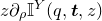 $z \partial _\rho \mathbb{I}^Y(q, {\boldsymbol{t}}, z)$
lies in a cohomology of compact type, then
$z \partial _\rho \mathbb{I}^Y(q, {\boldsymbol{t}}, z)$
lies in a cohomology of compact type, then $\sigma^w(z \partial _\rho \mathbb{I}^Y(q, {\boldsymbol{t}}, z))$
is a
$\sigma^w(z \partial _\rho \mathbb{I}^Y(q, {\boldsymbol{t}}, z))$
is a $(0^+, 0^+)$
GLSM I-function for
$(0^+, 0^+)$
GLSM I-function for $(V,G, \theta, w)$
.
$(V,G, \theta, w)$
.
Proof. By Proposition 6.14, we can write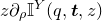 $z \partial _\rho \mathbb{I}^Y(q, {\boldsymbol{t}}, z)$
as
$z \partial _\rho \mathbb{I}^Y(q, {\boldsymbol{t}}, z)$
as $S^{Y}(q, {\boldsymbol{t}}, z) P_\rho(q, {\boldsymbol{t}}, z)$
for
$S^{Y}(q, {\boldsymbol{t}}, z) P_\rho(q, {\boldsymbol{t}}, z)$
for $ P_\rho(q, {\boldsymbol{t}}, z) \in H^*_{\rm CR}(Y)[[q]][[t^i]][z]$
. By Lemma 6.12,
$ P_\rho(q, {\boldsymbol{t}}, z) \in H^*_{\rm CR}(Y)[[q]][[t^i]][z]$
. By Lemma 6.12, $ P_\rho(q, {\boldsymbol{t}}, z)$
lies in a compact-type cohomology:
$ P_\rho(q, {\boldsymbol{t}}, z)$
lies in a compact-type cohomology: $ P_\rho(q, {\boldsymbol{t}}, z) \in H^*_{\rm CR,ct}(Y)[[q]][[t^i]][z]$
. Applying Proposition 6.7, we conclude that
$ P_\rho(q, {\boldsymbol{t}}, z) \in H^*_{\rm CR,ct}(Y)[[q]][[t^i]][z]$
. Applying Proposition 6.7, we conclude that
 \begin{align*}\sigma^w(z \partial _\rho \mathbb{I}^Y(q, {\boldsymbol{t}}, z)) &= \sigma^w(S^{Y}(q, {\boldsymbol{t}}, z) P_\rho(q, {\boldsymbol{t}}, z)) \\&= S^{(Y, w)}(q, \tau({\boldsymbol{t}}), z)(\sigma^w( P_\rho(q, {\boldsymbol{t}}, z))),\end{align*}
which is of the form given in Definition 6.11.
6.3 The toric case
In this section, we focus on the case in which G is a torus, and give specific conditions for when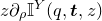 $z \partial _\rho \mathbb{I}^Y(q, {\boldsymbol{t}}, z)$
lies in a cohomology of compact type. We then use Theorem 6.15 and the explicit formula for
$z \partial _\rho \mathbb{I}^Y(q, {\boldsymbol{t}}, z)$
lies in a cohomology of compact type. We then use Theorem 6.15 and the explicit formula for $\mathbb{I}^Y(q, {\boldsymbol{t}}, z)$
from [Reference Cheong, Ciocan-Fontanine and KimCCFK15] to obtain an explicit I-function for any toric GLSM.
$\mathbb{I}^Y(q, {\boldsymbol{t}}, z)$
from [Reference Cheong, Ciocan-Fontanine and KimCCFK15] to obtain an explicit I-function for any toric GLSM.
Let $(V, G, \theta, w)$
be a GLSM such that
$(V, G, \theta, w)$
be a GLSM such that $G = (\mathbb{C}^*)^k$
. Let
$G = (\mathbb{C}^*)^k$
. Let
 $$\rho_1, \ldots, \rho_r \in \widehat G $$
denote the characters of G that define the action on $V = \mathbb{C}^r$
. By abuse of notation, we also use
$V = \mathbb{C}^r$
. By abuse of notation, we also use $\rho_1, \ldots, \rho_r $
to denote the corresponding cohomology classes in
$\rho_1, \ldots, \rho_r $
to denote the corresponding cohomology classes in $H^2([V/G])$
. We identify the coordinates
$H^2([V/G])$
. We identify the coordinates $x_1, \ldots, x_r$
on V with the homogeneous coordinates on
$x_1, \ldots, x_r$
on V with the homogeneous coordinates on $[V/G]$
and
$[V/G]$
and $[V\mathbin{/\mkern-6mu/}_\theta G]$
.
$[V\mathbin{/\mkern-6mu/}_\theta G]$
.
In [Reference Ciocan-Fontanine and KimCFK16, Reference Cheong, Ciocan-Fontanine and KimCCFK15], $\mathbb{I}^Y$
is computed explicitly for toric varieties. Choose characters
$\mathbb{I}^Y$
is computed explicitly for toric varieties. Choose characters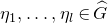 $\eta_1, \ldots, \eta_l \in \widehat G$
that generate
$\eta_1, \ldots, \eta_l \in \widehat G$
that generate $H^*([V/G])$
as an algebra. Then, in the expression
$H^*([V/G])$
as an algebra. Then, in the expression ${\boldsymbol{t}} = \sum_{1 \leq j \leq m} t^j T_j$
, each
${\boldsymbol{t}} = \sum_{1 \leq j \leq m} t^j T_j$
, each $T_j\in H^*([V/G])$
may be expressed as
$T_j\in H^*([V/G])$
may be expressed as
 $$T_j = p_j(\eta_1, \ldots, \eta_l) =: p_j(\eta_s),$$
for some polynomial $p_j(x_s):=p_j(x_1, \ldots, x_l)$
in l variables. For
$p_j(x_s):=p_j(x_1, \ldots, x_l)$
in l variables. For $g \in G$
, let
$g \in G$
, let $\mathbb{1}_g$
denote the fundamental class of the twisted sector
$\mathbb{1}_g$
denote the fundamental class of the twisted sector $Y_g$
, and for
$Y_g$
, and for $d \in\mathrm{Eff}(V, G, \theta)$
, let
$d \in\mathrm{Eff}(V, G, \theta)$
, let
 $$g_d = ( e^{2 \pi i \langle d, \rho_1\rangle}, \ldots, e^{2 \pi i \langle d, \rho_r\rangle}) \in G.$$
With this notation, the big I-function is given by
 \begin{align}\mathbb{I}^Y({\boldsymbol{t}}, q, z) =& \sum_{d \in\mathrm{Eff}(V, G,\theta)}q^d \exp \bigg( \frac{1}{z} \sum_{j=1}^l t^j p_j(\eta_s +z\langle d, \eta_s\rangle) \!\bigg) \nonumber\\& \times \frac{\prod_{i| \langle d, \rho_i\rangle\lt 0} \prod_{ \langle d, \rho_i\rangle \leq \nu\lt 0} (\rho_i + ( \langle d, \rho_i\rangle - \nu)z)}{\prod_{i| \langle d, \rho_i\rangle \gt 0} \prod_{ 0 \leq \nu \lt \langle d, \rho_i\rangle} (\rho_i + ( \langle d, \rho_i\rangle - \nu)z)} \mathbb{1}_{g_d^{-1}}, \end{align}
where the products on the second line run over all integers $\nu$
in the specified range [Reference Cheong, Ciocan-Fontanine and KimCCFK15, Corollary 5.6 (2)].
$\nu$
in the specified range [Reference Cheong, Ciocan-Fontanine and KimCCFK15, Corollary 5.6 (2)].
Lemma 6.16.
Fix $d \in\mathrm{Eff}(V, G, \theta)$
and
$d \in\mathrm{Eff}(V, G, \theta)$
and $k \geq 0$
. The composition
$k \geq 0$
. The composition
 $$F^{k,d}_{1,0} \xrightarrow{\iota_d} QG_{0, 1|k} (Y, d) \to \operatorname{Spec} ( \mathbb{C}[x_i]_{\{1\leq i\leq r\}}^G)$$
factors through $\operatorname{Spec} ( \mathbb{C}[x_i]_{\{i|\langle d, \rho_i\rangle = 0\}}^G)$
.
$\operatorname{Spec} ( \mathbb{C}[x_i]_{\{i|\langle d, \rho_i\rangle = 0\}}^G)$
.
Proof. By [Reference Cheong, Ciocan-Fontanine and KimCCFK15, Theorem 2.7], $QG_{0, 1|k} (Y, d)$
is proper over
$QG_{0, 1|k} (Y, d)$
is proper over $\operatorname{Spec} ( \mathbb{C}[x_i]_{\{1\leq i\leq r\}}^G)$
. Because G is abelian, the vector bundle
$\operatorname{Spec} ( \mathbb{C}[x_i]_{\{1\leq i\leq r\}}^G)$
. Because G is abelian, the vector bundle $\mathcal{P} \times_G V \to \mathcal{C}$
splits as
$\mathcal{P} \times_G V \to \mathcal{C}$
splits as
 $$\mathcal{P} \times_G V = \prod_{i=1}^r \mathcal{L}_i.$$
Here, $\mathcal{L}_i$
is the line bundle obtained as the pullback of
$\mathcal{L}_i$
is the line bundle obtained as the pullback of $[(V \times \mathbb{C}_{\rho_i})/G] \to [V/G]$
via the map
$[(V \times \mathbb{C}_{\rho_i})/G] \to [V/G]$
via the map $\mathcal{C} \to [V/G]$
.
$\mathcal{C} \to [V/G]$
.
Restrict the universal curve to $F^{k,d}_{1,0}$
and denote it by
$F^{k,d}_{1,0}$
and denote it by
 $$\pi_F: \mathcal{C}_F \to F^{k,d}_{1,0}.$$
By definition of $F^{k,d}_{1,0}$
and
$F^{k,d}_{1,0}$
and $0^+$
-stability, each fiber of
$0^+$
-stability, each fiber of $\pi_F$
is irreducible. If
$\pi_F$
is irreducible. If $\langle d, \rho_i\rangle \lt 0$
, then
$\langle d, \rho_i\rangle \lt 0$
, then $\mathcal{L}_i \to \mathcal{C}_F$
has negative degree on each fiber. Therefore, the universal section of
$\mathcal{L}_i \to \mathcal{C}_F$
has negative degree on each fiber. Therefore, the universal section of $\mathcal{L}_i \to \mathcal{C}_F$
is zero, i.e.
$\mathcal{L}_i \to \mathcal{C}_F$
is zero, i.e. $\mathcal{C}_F$
maps to the locus
$\mathcal{C}_F$
maps to the locus $\{x_i = 0\} \subset [V/G]$
. Consequently,
$\{x_i = 0\} \subset [V/G]$
. Consequently, $F^{k,d}_{1,0}$
maps properly to the closed subset
$F^{k,d}_{1,0}$
maps properly to the closed subset $\operatorname{Spec} ( \mathbb{C}[x_i]_{\{i|\langle d, \rho_i\rangle \geq 0\}}^G)$
of
$\operatorname{Spec} ( \mathbb{C}[x_i]_{\{i|\langle d, \rho_i\rangle \geq 0\}}^G)$
of $\operatorname{Spec} ( \mathbb{C}[x_i]_{\{1\leq i\leq r\}}^G)$
.
$\operatorname{Spec} ( \mathbb{C}[x_i]_{\{1\leq i\leq r\}}^G)$
.
Next, we describe how the degree $d\in \hom_\mathbb{Z} ( \widehat G, \mathbb{Q})$
defines a subgroup of G. By possibly replacing d with a multiple n d for some
$d\in \hom_\mathbb{Z} ( \widehat G, \mathbb{Q})$
defines a subgroup of G. By possibly replacing d with a multiple n d for some $n \in \mathbb{N}$
, we can assume that d lies in
$n \in \mathbb{N}$
, we can assume that d lies in $\hom_\mathbb{Z} ( \widehat G, \mathbb{Z})$
. Consider the isomorphism
$\hom_\mathbb{Z} ( \widehat G, \mathbb{Z})$
. Consider the isomorphism
 \begin{align*}\hom(\mathbb{C}^*, G) &\to \hom_\mathbb{Z} ( \widehat G, \mathbb{Z}), \\f &\mapsto (\chi \mapsto \chi \circ f \in \hom(\mathbb{C}^*, \mathbb{C}^*) \cong \mathbb{Z}),\end{align*}
which is canonical up to a choice of isomorphism $\hom(\mathbb{C}^*, \mathbb{C}^*) \cong \mathbb{Z}$
. Under this identification,
$\hom(\mathbb{C}^*, \mathbb{C}^*) \cong \mathbb{Z}$
. Under this identification, $d(\mathbb{C}^*)$
is a subgroup of G. Consequently,
$d(\mathbb{C}^*)$
is a subgroup of G. Consequently,
 $$\mathbb{C}[x_i]_{\{i|\langle d, \rho_i\rangle \geq 0\}}^G \subset \mathbb{C}[x_i]_{\{i|\langle d, \rho_i\rangle \geq 0\}}^{d(\mathbb{C}^*)} = \mathbb{C}[x_i]_{\{i|\langle d, \rho_i\rangle = 0\}}.$$
The last equality follows from the fact that the $d(\mathbb{C}^*)$
-invariant polynomials in
$d(\mathbb{C}^*)$
-invariant polynomials in $\mathbb{C}[x_i]_{\{i|\langle d, \rho_i\rangle \geq 0\}}$
are exactly the polynomials that are homogeneous of degree zero with respect to the grading:
$\mathbb{C}[x_i]_{\{i|\langle d, \rho_i\rangle \geq 0\}}$
are exactly the polynomials that are homogeneous of degree zero with respect to the grading: $\deg_d(x_i) := \langle d, \rho_i\rangle$
. Thus,
$\deg_d(x_i) := \langle d, \rho_i\rangle$
. Thus,
 $$\mathbb{C}[x_i]_{\{i|\langle d, \rho_i\rangle \geq 0\}}^G = \mathbb{C}[x_i]_{\{i|\langle d, \rho_i\rangle = 0\}}^G.$$
Combining this with the previous paragraph concludes the proof.
Next, we give conditions for when a derivative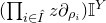 $(\prod_{i \in {\hat I}}z\partial _{\rho_i} ) \mathbb{I}^Y$
is supported in a cohomology of compact type.
$(\prod_{i \in {\hat I}}z\partial _{\rho_i} ) \mathbb{I}^Y$
is supported in a cohomology of compact type.
Proposition 6.17.
Let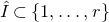 ${\hat I} \subset \{1, \ldots, r\}$
be such that
${\hat I} \subset \{1, \ldots, r\}$
be such that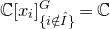 $ \mathbb{C}[x_i]_{\{i \notin {\hat I}\}}^G = \mathbb{C}$
. Then,
$ \mathbb{C}[x_i]_{\{i \notin {\hat I}\}}^G = \mathbb{C}$
. Then,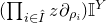 $(\prod_{i \in {\hat I}}z\partial _{\rho_i} ) \mathbb{I}^Y$
lies in
$(\prod_{i \in {\hat I}}z\partial _{\rho_i} ) \mathbb{I}^Y$
lies in $H^*_{\rm CR,ct}(Y)[[q]][[t^i]][z, z^{-1}]$
.
$H^*_{\rm CR,ct}(Y)[[q]][[t^i]][z, z^{-1}]$
.
Proof. Fix $d \in \hom_\mathbb{Z} ( \widehat G, \mathbb{Q})$
,
$d \in \hom_\mathbb{Z} ( \widehat G, \mathbb{Q})$
, $k \geq 0$
and
$k \geq 0$
and $g \in G$
. Let
$g \in G$
. Let $QG_{0, (g)|k} (Y, d)$
denote the open and closed subset of
$QG_{0, (g)|k} (Y, d)$
denote the open and closed subset of $QG_{0, 1|k} (Y, d)$
that maps to the twisted sector
$QG_{0, 1|k} (Y, d)$
that maps to the twisted sector $Y_g$
under
$Y_g$
under $ev_1$
. Let
$ev_1$
. Let $F^{k,d}_{g,0}$
denote the intersection of the fixed locus
$F^{k,d}_{g,0}$
denote the intersection of the fixed locus $F^{k,d}_{1,0}$
with
$F^{k,d}_{1,0}$
with $QG_{0, (g)|k} (Y, d)$
. We prove the statement for each the summand
$QG_{0, (g)|k} (Y, d)$
. We prove the statement for each the summand
 $$\mathbb{I}^Y_{d,k,g} := \widetilde{ev_1}_*\operatorname{Res}_{F^{k,d}_{g,0}}({\boldsymbol{t}}^k)$$
of $\mathbb{I}^Y(q, {\boldsymbol{t}}, z)$
.
$\mathbb{I}^Y(q, {\boldsymbol{t}}, z)$
.
Let $I(g) \subset \{1, \ldots, r\}$
denote the set of indices such that g acts trivially on
$I(g) \subset \{1, \ldots, r\}$
denote the set of indices such that g acts trivially on $\mathbb{C}_{\rho_i}$
, i.e.
$\mathbb{C}_{\rho_i}$
, i.e. $\rho_i(g) = 1$
. The twisted sector
$\rho_i(g) = 1$
. The twisted sector $Y_g$
is equal to the vanishing locus
$Y_g$
is equal to the vanishing locus $\{x_i = 0\}_{i \notin I(g)} \subset Y\!$
. The map
$\{x_i = 0\}_{i \notin I(g)} \subset Y\!$
. The map $QG_{0, (g)|k} (Y, d) \to \operatorname{Spec} ( \mathbb{C}[x_i]_{\{1\leq i\leq r\}}^G)$
factors as
$QG_{0, (g)|k} (Y, d) \to \operatorname{Spec} ( \mathbb{C}[x_i]_{\{1\leq i\leq r\}}^G)$
factors as
 $$QG_{0, (g)|k} (Y, d) \to Y_g \to \operatorname{Spec} ( \mathbb{C}[x_i]^G_{i \in I(g)}) \to \operatorname{Spec} ( \mathbb{C}[x_i]_{\{1\leq i\leq r\}}^G).$$
Let ${\hat I}^0_d(g) \subset {\hat I}$
denote the set of indices
${\hat I}^0_d(g) \subset {\hat I}$
denote the set of indices $i \in {\hat I} \cap I(g)$
such that
$i \in {\hat I} \cap I(g)$
such that $\langle d, \rho_i\rangle = 0$
. and let
$\langle d, \rho_i\rangle = 0$
. and let ${\hat I}^1_d(g) \subset {\hat I}$
denote the set of indices
${\hat I}^1_d(g) \subset {\hat I}$
denote the set of indices $i \in {\hat I}\cap I(g)$
such that
$i \in {\hat I}\cap I(g)$
such that $\langle d, \rho_i\rangle \neq 0$
. Using the explicit formula for
$\langle d, \rho_i\rangle \neq 0$
. Using the explicit formula for $\mathbb{I}^Y$
given in [Reference Cheong, Ciocan-Fontanine and KimCCFK15], we observe that for
$\mathbb{I}^Y$
given in [Reference Cheong, Ciocan-Fontanine and KimCCFK15], we observe that for $i \in {\hat I}^0_d(g)$
,
$i \in {\hat I}^0_d(g)$
,
 $$\partial _{\rho_i} \mathbb{I}^Y_{d,k,g} = \rho_i \mathbb{I}^Y_{d,k,g}.$$
Let $Z_{{\hat I}^0_d(g)} := \{x_i = 0\}_{i \in {\hat I}^0_d(g)} \subset IY$
and let
$Z_{{\hat I}^0_d(g)} := \{x_i = 0\}_{i \in {\hat I}^0_d(g)} \subset IY$
and let $s_0\colon Z_{{\hat I}^0_d(g)} \to IY$
denote the inclusion. Consider the following commutative diagram
$s_0\colon Z_{{\hat I}^0_d(g)} \to IY$
denote the inclusion. Consider the following commutative diagram

where $F_{{\hat I}^0_d(g)}$
is the fiber product of
$F_{{\hat I}^0_d(g)}$
is the fiber product of $\widetilde{ev_1} \circ \iota_d$
and
$\widetilde{ev_1} \circ \iota_d$
and $s_0$
. Then,
$s_0$
. Then,
 \begin{align} \bigg(\prod_{i \in {\hat I}^0_d(g)}\partial _{\rho_i}\!\bigg)\mathbb{I}^Y_{d,k,g} &= \bigg(\prod_{i \in {\hat I}^0_d(g)} \rho_i\!\bigg)\mathbb{I}^Y_{d,k,g} \\ \nonumber&= {s_0}_*{s_0}^* \mathbb{I}^Y_{d,k,g}\\ \nonumber&= {s_0}_*{s_0}^* (\widetilde{ev_1} \circ {\iota_d})_*\operatorname{Res}_{F^{k,d}_{g,0}}({\boldsymbol{t}}^k) \\ \nonumber&= {s_0}_* (\widetilde{ev_1} \circ {\iota_d})'_* {s_0}^! \operatorname{Res}_{F^{k,d}_{g,0}}({\boldsymbol{t}}^k) .\end{align}
The map $c_{{\hat I}^0_d(g)}$
is seen to be proper because
$c_{{\hat I}^0_d(g)}$
is seen to be proper because $\widetilde{ev_1} \circ {\iota_d}$
,
$\widetilde{ev_1} \circ {\iota_d}$
, $s_0$
, and
$s_0$
, and $c_g$
are [Sta20, Lemma 01W6]. In addition, since
$c_g$
are [Sta20, Lemma 01W6]. In addition, since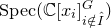 $\operatorname{Spec} ( \mathbb{C}[x_i]^G_{i \notin {\hat I}})$
is assumed to be a point, so is
$\operatorname{Spec} ( \mathbb{C}[x_i]^G_{i \notin {\hat I}})$
is assumed to be a point, so is $\operatorname{Spec} ( \mathbb{C}[x_i]^G_{i \in I(g) \setminus {\hat I}})$
. We conclude that
$\operatorname{Spec} ( \mathbb{C}[x_i]^G_{i \in I(g) \setminus {\hat I}})$
. We conclude that $F_{{\hat I}^0_d(g)}$
is proper.
$F_{{\hat I}^0_d(g)}$
is proper.
Finally, (6.3) gives us
 \begin{align*}\bigg(\prod_{i \in {\hat I}}z\partial _{\rho_i}\! \bigg) \mathbb{I}^Y_{d,k,g} & = z^{|{\hat I}|} \prod_{i \in {\hat I} \setminus {\hat I}^0_d(g)}(\partial _{\rho_i}) \prod_{i \in {\hat I}^0_d(g)}(\partial _{\rho_i}) \mathbb{I}^Y_{d,k,g} \\& = z^{|{\hat I}|} \prod_{i \in {\hat I} \setminus {\hat I}^0_d(g)}(\partial _{\rho_i}) {s_0}_* (\widetilde{ev_1} \circ {\iota_d})'_* {s_0}^! \operatorname{Res}_{F^{k,d}_{g,0}}({\boldsymbol{t}}^k) \\&= {s_0}_*(\widetilde{ev_1} \circ {\iota_d})'_* {s_0}^! (z^{|{\hat I}|} \prod_{i \in {\hat I} \setminus {\hat I}^0_d(g)}(\partial _{\rho_i}) \operatorname{Res}_{F^{k,d}_{g,0}}({\boldsymbol{t}}^k) ).\end{align*}
This exhibits $(\prod_{i \in {\hat I}}z\partial _{\rho_i} ) \mathbb{I}^Y_{d,k,g} $
as the pushforward of a class on the proper stack
$(\prod_{i \in {\hat I}}z\partial _{\rho_i} ) \mathbb{I}^Y_{d,k,g} $
as the pushforward of a class on the proper stack $F_{{\hat I}^0_d(g)}$
. We conclude that
$F_{{\hat I}^0_d(g)}$
. We conclude that $(\prod_{i \in {\hat I}}z\partial _{\rho_i} ) \mathbb{I}^Y_{d,k,g} $
lies in
$(\prod_{i \in {\hat I}}z\partial _{\rho_i} ) \mathbb{I}^Y_{d,k,g} $
lies in $ H^*_{\rm ct}(Y_g)[[q]][[t^i]][z, z^{-1}] $
.
$ H^*_{\rm ct}(Y_g)[[q]][[t^i]][z, z^{-1}] $
.
Theorem 6.18 (functions for toric GLSMs). Let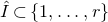 ${\hat I} \subset \{1, \ldots, r\}$
be such that
${\hat I} \subset \{1, \ldots, r\}$
be such that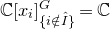 $ \mathbb{C}[x_i]_{\{i \notin {\hat I}\}}^G = \mathbb{C}$
. Let
$ \mathbb{C}[x_i]_{\{i \notin {\hat I}\}}^G = \mathbb{C}$
. Let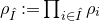 $\rho_{\hat I} := \prod_{i \in {\hat I}} \rho_i$
. Then,
$\rho_{\hat I} := \prod_{i \in {\hat I}} \rho_i$
. Then, $\sigma^w (z\partial _{\rho_{\hat I}} \mathbb{I}^Y)$
is a
$\sigma^w (z\partial _{\rho_{\hat I}} \mathbb{I}^Y)$
is a $(0^+, 0^+)$
GLSM I-function.
$(0^+, 0^+)$
GLSM I-function.
Proof. From the explicit description of the $\mathbb{I}^Y\!$
, we observe that
$\mathbb{I}^Y\!$
, we observe that $z\partial _{\rho_{\hat I}} \mathbb{I}^Y = (\prod_{i \in {\hat I}}z\partial _{\rho_i} ) \mathbb{I}^Y\!$
. The theorem then follows immediately from Theorem 6.15 and Proposition 6.17.
$z\partial _{\rho_{\hat I}} \mathbb{I}^Y = (\prod_{i \in {\hat I}}z\partial _{\rho_i} ) \mathbb{I}^Y\!$
. The theorem then follows immediately from Theorem 6.15 and Proposition 6.17.
Let $c_i$
denote the degree of
$c_i$
denote the degree of $x_i$
with respect to the
$x_i$
with respect to the $\mathbb{C}^*_R$
-action. A natural choice of
$\mathbb{C}^*_R$
-action. A natural choice of ${\hat I}$
is given by
${\hat I}$
is given by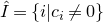 ${\hat I} = \{i | c_i \neq 0\}$
. In this case,
${\hat I} = \{i | c_i \neq 0\}$
. In this case, $\mathbb{C}[x_i]_{i \notin {\hat I}} = (\mathbb{C}[x_i]_{1\leq i\leq r})^{\mathbb{C}^*_R}$
, and
$\mathbb{C}[x_i]_{i \notin {\hat I}} = (\mathbb{C}[x_i]_{1\leq i\leq r})^{\mathbb{C}^*_R}$
, and $\mathbb{C}[x_i]_{i \notin {\hat I}}^G = (\mathbb{C}[x_i]^{\mathbb{C}^*_R}_{1\leq i\leq r})^G = (\mathbb{C}[x_i]_{1\leq i\leq r})^\Gamma$
.
$\mathbb{C}[x_i]_{i \notin {\hat I}}^G = (\mathbb{C}[x_i]^{\mathbb{C}^*_R}_{1\leq i\leq r})^G = (\mathbb{C}[x_i]_{1\leq i\leq r})^\Gamma$
.
Corollary 6.19. If $(\mathbb{C}[x_i]_{1\leq i\leq r})^\Gamma = \mathbb{C}$
, then
$(\mathbb{C}[x_i]_{1\leq i\leq r})^\Gamma = \mathbb{C}$
, then
 \begin{align}\mathbb{I}^{(Y, w)}({\boldsymbol{t}}, q, z) :=& \sum_{d \in\mathrm{Eff}(V, G,\theta)}q^d \exp \bigg( \frac{1}{z} \sum_{j=1}^l t^j p_j(\eta_s +z\langle d, \eta_s\rangle) \!\bigg) \nonumber\\&\times \sigma^w\bigg( \frac{\prod_{i| c_i \neq 0, \langle d, \rho_i\rangle\leq 0} \prod_{ \langle d, \rho_i\rangle \leq \nu\leq 0} (\rho_i + ( \langle d, \rho_i\rangle - \nu)z)}{\prod_{i| c_i \neq 0, \langle d, \rho_i\rangle \gt 0} \prod_{ 0 \lt \nu \lt \langle d, \rho_i\rangle} (\rho_i + ( \langle d, \rho_i\rangle - \nu)z)} \nonumber \\& \qquad\quad \times\frac{\prod_{ i| c_i = 0, \langle d, \rho_i\rangle\lt 0} \prod_{ \langle d, \rho_i\rangle \leq \nu\lt 0} (\rho_i + ( \langle d, \rho_i\rangle - \nu)z)}{\prod_{ i| c_i = 0, \langle d, \rho_i\rangle \gt 0} \prod_{ 0 \leq \nu\lt \langle d, \rho_i\rangle} (\rho_i + ( \langle d, \rho_i\rangle -\nu)z)} \mathbb{1}_{g_d^{-1}} \!\bigg) \end{align}
is a GLSM I-function for (Y, w).


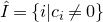
7. Examples and comparisons
In this section, we give explicit formulas for $(0^+, 0^+)$
I-functions for particular GLSMs. We show that for many GLSMs where mirror theorems have already been proven, the
$(0^+, 0^+)$
I-functions for particular GLSMs. We show that for many GLSMs where mirror theorems have already been proven, the $(0^+, 0^+)$
I-functions that arise from Theorem 6.18 agree with previously computed I-functions, including in many instances where concavity and/or convexity fail.
$(0^+, 0^+)$
I-functions that arise from Theorem 6.18 agree with previously computed I-functions, including in many instances where concavity and/or convexity fail.
7.1 FJRW theory
The first example of a GLSM is the case in which G is finite and $w\colon [\mathbb{C}^n/ G] \to \mathbb{C}$
is a quasihomogeneous polynomial with an isolated singularity at the origin. These are sometimes called affine-phase GLSMs. The corresponding invariants are known as FJRW invariants and have been defined by Fan, Jarvis, and Ruan [Reference Fan, Jarvis and RuanFJR13] prior to defining enumerative invariants for more general GLSMs. FJRW mirror theorems have been proven in the case in which w is a Fermat polynomial [Reference Chiodo and RuanCR10, Reference Chiodo, Iritani and RuanCIR14, Reference Lee, Priddis and ShoemakerLPS16] and in the case in which w is a chain polynomial and G is maximal [Reference GuéréGuá16].
$w\colon [\mathbb{C}^n/ G] \to \mathbb{C}$
is a quasihomogeneous polynomial with an isolated singularity at the origin. These are sometimes called affine-phase GLSMs. The corresponding invariants are known as FJRW invariants and have been defined by Fan, Jarvis, and Ruan [Reference Fan, Jarvis and RuanFJR13] prior to defining enumerative invariants for more general GLSMs. FJRW mirror theorems have been proven in the case in which w is a Fermat polynomial [Reference Chiodo and RuanCR10, Reference Chiodo, Iritani and RuanCIR14, Reference Lee, Priddis and ShoemakerLPS16] and in the case in which w is a chain polynomial and G is maximal [Reference GuéréGuá16].
Here, we compute a $(0^+, 0^+)$
GLSM I-function for a GLSM representing the LG model (Y, w) in the case in which
$(0^+, 0^+)$
GLSM I-function for a GLSM representing the LG model (Y, w) in the case in which $Y = [\mathbb{C}^n / G]$
and G is a finite subgroup of
$Y = [\mathbb{C}^n / G]$
and G is a finite subgroup of $(\mathbb{C}^*)^n$
. Assume that
$(\mathbb{C}^*)^n$
. Assume that $w = w(x_1, \ldots, x_n)$
is homogeneous of degree
$w = w(x_1, \ldots, x_n)$
is homogeneous of degree $d_w$
with respect to a
$d_w$
with respect to a $\mathbb{C}^*_R$
-action, where
$\mathbb{C}^*_R$
-action, where $\mathbb{C}^*_R$
acts with weight
$\mathbb{C}^*_R$
acts with weight $c_i$
on
$c_i$
on $x_i$
. Under the assumption that Z(dw) is proper over
$x_i$
. Under the assumption that Z(dw) is proper over $\operatorname{Spec} \mathbb{C}$
, w has an isolated singularity at the origin of
$\operatorname{Spec} \mathbb{C}$
, w has an isolated singularity at the origin of $\mathbb{C}^n$
.
$\mathbb{C}^n$
.
The first step is to present Y as a GIT quotient by a torus:
 $$Y = [\mathbb{C}^{n+s} \mathbin{/\mkern-6mu/}_\theta (\mathbb{C}^*)^{s}].$$
The simplest case is when $G = \langle J \rangle$
. Let
$G = \langle J \rangle$
. Let $\widetilde G = \mathbb{C}^*$
act on
$\widetilde G = \mathbb{C}^*$
act on $\widetilde V = \operatorname{Spec} \mathbb{C}[x_1, \ldots, x_n, p]$
with weights
$\widetilde V = \operatorname{Spec} \mathbb{C}[x_1, \ldots, x_n, p]$
with weights $(c_1, \ldots, c_n, -d_w)$
. Then,
$(c_1, \ldots, c_n, -d_w)$
. Then, $\widetilde w = p \cdot w$
is
$\widetilde w = p \cdot w$
is $\widetilde G$
-invariant. We extend the
$\widetilde G$
-invariant. We extend the $\mathbb{C}^*_R$
-action from
$\mathbb{C}^*_R$
-action from $\mathbb{C}^n$
to
$\mathbb{C}^n$
to $\widetilde V$
by letting
$\widetilde V$
by letting $\mathbb{C}^*_R$
act trivially on the p coordinate. Choose
$\mathbb{C}^*_R$
act trivially on the p coordinate. Choose $\theta = (-1)$
; then the GLSM
$\theta = (-1)$
; then the GLSM $(\widetilde V, \widetilde G, \theta, \widetilde w)$
represents the LG model (Y, w).
$(\widetilde V, \widetilde G, \theta, \widetilde w)$
represents the LG model (Y, w).
Let $\eta_{p}\colon \widetilde G \to \mathbb{C}^*$
denote the homomorphism of weight
$\eta_{p}\colon \widetilde G \to \mathbb{C}^*$
denote the homomorphism of weight $-d_w$
, viewed as an element of
$-d_w$
, viewed as an element of $H^*([\widetilde V/\widetilde G])$
. Define
$H^*([\widetilde V/\widetilde G])$
. Define ${\boldsymbol{t}} = t \cdot \eta_{p}$
in the notation of (6.2). Then, the corresponding big I-function of (6.2) is given by
${\boldsymbol{t}} = t \cdot \eta_{p}$
in the notation of (6.2). Then, the corresponding big I-function of (6.2) is given by
 \begin{align*}\mathbb{I}^Y({\boldsymbol{t}}, q, z) = \sum_{k \geq 0} \frac{q^{k/d_w} e^{tk} \prod_{i=1}^n \prod_{0\lt \nu \leq c_i k/d_w} z(-c_i k/d_w + \nu) }{z^k k!} \mathbb{1}_{e^{2 \pi i k/d_w}}.\end{align*}
When Y is a finite quotient of affine space, the map $\phi^w\colon \mathcal{H}_{\rm ct}(Y, w) \to H^*_{\rm CR,ct}(Y)$
is an isomorphism, so
$\phi^w\colon \mathcal{H}_{\rm ct}(Y, w) \to H^*_{\rm CR,ct}(Y)$
is an isomorphism, so $\sigma^w = (\phi^w)^{-1}$
. The class
$\sigma^w = (\phi^w)^{-1}$
. The class $\mathbb{1}_{e^{2 \pi i k/d_w}}$
is of compact type if and only if
$\mathbb{1}_{e^{2 \pi i k/d_w}}$
is of compact type if and only if
 $$\{i | c_i k/d_w \in \mathbb{Z}\} = \emptyset.$$
For such k, let $\varphi_{k-1} = \sigma^w(\mathbb{1}_{e^{2 \pi i k/d_w}})$
(note the shift in index).
$\varphi_{k-1} = \sigma^w(\mathbb{1}_{e^{2 \pi i k/d_w}})$
(note the shift in index).
We observe that $\mathbb{C}[x_1, \ldots, x_n]^G = \mathbb{C}$
. Therefore, by Theorem 6.18, a
$\mathbb{C}[x_1, \ldots, x_n]^G = \mathbb{C}$
. Therefore, by Theorem 6.18, a $(0^+, 0^+)$
GLSM I-function is obtained as
$(0^+, 0^+)$
GLSM I-function is obtained as
 $$\mathbb{I}^{(Y, w)}({\boldsymbol{t}}, q, z) := \sigma^w (z\partial _{\eta_p}\mathbb{I}^Y)= \sigma^w\left(\!z \frac{\partial }{\partial t}\mathbb{I}^Y\!\right).$$
Here, one observes that the coefficient of $q^{k/d_w}$
in
$q^{k/d_w}$
in $\mathbb{I}^Y({\boldsymbol{t}}, q, z)$
is zero if
$\mathbb{I}^Y({\boldsymbol{t}}, q, z)$
is zero if $k\gt 0$
and
$k\gt 0$
and $\{i | c_i k/d_w \in \mathbb{Z}\} \neq \emptyset$
. It follows that
$\{i | c_i k/d_w \in \mathbb{Z}\} \neq \emptyset$
. It follows that $z ({\partial }/{\partial t})\mathbb{I}^Y$
is supported in
$z ({\partial }/{\partial t})\mathbb{I}^Y$
is supported in $ H^*_{\rm CR,ct}(Y)$
, thus verifying Proposition 6.17 directly in this case. Explicitly, we have
$ H^*_{\rm CR,ct}(Y)$
, thus verifying Proposition 6.17 directly in this case. Explicitly, we have
 \begin{equation}\mathbb{I}^{(Y, w)}({\boldsymbol{t}}, q, z) = \sum_{\substack{ k \geq 1 \\ \{i | c_i k/d_w \in \mathbb{Z}\} = \emptyset}} \frac{q^{k/d_w} e^{tk} \prod_{i=1}^n \prod_{0\lt \nu \leq c_i k/d_w} z(-c_i k/d_w + \nu) }{z^{k-1} (k-1)!} \varphi_{k-1}.\end{equation}
This function agrees with previously computed FJRW I-functions; for instance, with the non-equivariant limit of [Reference Chiodo, Iritani and RuanCIR14, Equation (40)] up to the substitution $u = -q^{1/d_w}e^t$
and a factor of
$u = -q^{1/d_w}e^t$
and a factor of $-z$
. In the case in which w is a Fermat polynomial, the mirror theorem of Chiodo, Iritani, and Ruan [Reference Chiodo, Iritani and RuanCIR14, Theorem 3.10] implies that (7.1) is equal to the FJRW J-function after a change of variables and a scaling. From our perspective, this may be interpreted as an
$-z$
. In the case in which w is a Fermat polynomial, the mirror theorem of Chiodo, Iritani, and Ruan [Reference Chiodo, Iritani and RuanCIR14, Theorem 3.10] implies that (7.1) is equal to the FJRW J-function after a change of variables and a scaling. From our perspective, this may be interpreted as an $\epsilon$
-wall-crossing result from
$\epsilon$
-wall-crossing result from $(0^+, 0^+)$
-stability to
$(0^+, 0^+)$
-stability to $(\infty, \infty)$
-stability for the case in which w is Fermat. We emphasize, however, that (7.1) is a generating function of
$(\infty, \infty)$
-stability for the case in which w is Fermat. We emphasize, however, that (7.1) is a generating function of $(0^+, 0^+)$
-stable GLSM invariants for any choice of quasihomogeneous w with isolated singularity at the origin.
$(0^+, 0^+)$
-stable GLSM invariants for any choice of quasihomogeneous w with isolated singularity at the origin.
For a more general finite group G, write G as a product of cyclic groups,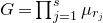 $G = \prod_{j=1}^s \mu_{r_j}$
. Choose generators
$G = \prod_{j=1}^s \mu_{r_j}$
. Choose generators $\omega_j \in \mu_{r_j}$
and suppose that
$\omega_j \in \mu_{r_j}$
and suppose that
 $$\omega_j \cdot (x_1, \ldots, x_n) = (e^{2 \pi i c_{1j}/r_j} x_1, \ldots , e^{2 \pi i c_{nj}/r_j} x_n).$$
For notational simplicity, let us assume that $\omega_1 = J$
, so
$\omega_1 = J$
, so $r_1 = d_w$
.Footnote
2
$r_1 = d_w$
.Footnote
2
Define $\widetilde V = \operatorname{Spec} \mathbb{C}[x_1, \ldots,x_n, p_1, \ldots, p_s]$
by
$\widetilde V = \operatorname{Spec} \mathbb{C}[x_1, \ldots,x_n, p_1, \ldots, p_s]$
by $\widetilde G = (\mathbb{C}^*)^s$
, where the jth factor of
$\widetilde G = (\mathbb{C}^*)^s$
, where the jth factor of $\mathbb{C}^*$
acts on
$\mathbb{C}^*$
acts on $\widetilde V$
with weights
$\widetilde V$
with weights
 $$(c_{1j}, \ldots, c_{nj}, 0 \ldots, -r_j, \ldots, 0),$$
where the term $-r_j$
occurs in the
$-r_j$
occurs in the $(n+j)$
th coordinate. Then,
$(n+j)$
th coordinate. Then, $[\mathbb{C}^n /G]$
may be expressed as a GIT stack quotient
$[\mathbb{C}^n /G]$
may be expressed as a GIT stack quotient $[\widetilde V \mathbin{/\mkern-6mu/}_\theta \widetilde G]$
, where
$[\widetilde V \mathbin{/\mkern-6mu/}_\theta \widetilde G]$
, where
 $$\theta (\lambda_1, \ldots, \lambda_s) = \bigg( \prod_{j=1}^s\lambda_j \!\bigg)^{\!{\kern-1pt}{-}1}.$$
If we define $\widetilde w$
to be
$\widetilde w$
to be $p_1\cdots p_s w(x_1, \ldots, x_n)$
, then
$p_1\cdots p_s w(x_1, \ldots, x_n)$
, then $(\widetilde V, \widetilde G, \theta, \widetilde w)$
is a GLSM representing the LG model (Y, w).
$(\widetilde V, \widetilde G, \theta, \widetilde w)$
is a GLSM representing the LG model (Y, w).
Define $\eta_{p_1}\colon \widetilde G \to \mathbb{C}^*$
by
$\eta_{p_1}\colon \widetilde G \to \mathbb{C}^*$
by $\eta_{p_1} (\lambda_1, \ldots, \lambda_s) = \lambda_1^{-r_1}$
and let
$\eta_{p_1} (\lambda_1, \ldots, \lambda_s) = \lambda_1^{-r_1}$
and let ${\boldsymbol{t}} = t \cdot \eta_{p_1} \in H^*([\widetilde V/\widetilde G])$
. In this case, the big I-function of [Reference Ciocan-Fontanine and KimCFK16, Reference Cheong, Ciocan-Fontanine and KimCCFK15] (as well as the ‘S-extended stacky I-function’ of [Reference Coates, Corti, Iritani and TsengCCI+15]) is
${\boldsymbol{t}} = t \cdot \eta_{p_1} \in H^*([\widetilde V/\widetilde G])$
. In this case, the big I-function of [Reference Ciocan-Fontanine and KimCFK16, Reference Cheong, Ciocan-Fontanine and KimCCFK15] (as well as the ‘S-extended stacky I-function’ of [Reference Coates, Corti, Iritani and TsengCCI+15]) is
 \begin{equation}\mathbb{I}^Y({\boldsymbol{t}}, q, z) = \sum_{d_1, \ldots, d_s \geq 0} \frac{ e^{td_1} \prod_{j=1}^s q_j^{d_j/r_j}}{ \prod_{j=1}^sd_j! z^{d_j}} \bigg( \prod_{i=1}^n \prod_{0\lt \nu \leq \sum_{j=1}^s c_{ij} d_j/r_j } z\bigg( \!{-} \sum_{j=1}^s c_{ij} d_j/r_j + \nu\bigg)\!\bigg) \mathbb{1}_{\!J^{d_1} \prod_{j=2}^s \omega_j^{d_j}}.\end{equation}
As before, we note that for $(d_1, \ldots, d_s) \neq (0, \ldots, 0)$
, the coefficient of
$(d_1, \ldots, d_s) \neq (0, \ldots, 0)$
, the coefficient of $\prod_{j=1}^s q_j^{d_j}$
is zero unless
$\prod_{j=1}^s q_j^{d_j}$
is zero unless $\{i | \sum_{j=1}^s c_{ij} d_j/r_j \in \mathbb{Z} \} = \emptyset$
, i.e. unless
$\{i | \sum_{j=1}^s c_{ij} d_j/r_j \in \mathbb{Z} \} = \emptyset$
, i.e. unless $ \mathbb{1}_{\!J^{d_1} \prod_{j=2}^s \omega_j^{d_j}} \in H^*_{\rm CR,ct}(Y)$
. Therefore,
$ \mathbb{1}_{\!J^{d_1} \prod_{j=2}^s \omega_j^{d_j}} \in H^*_{\rm CR,ct}(Y)$
. Therefore, $z ({\partial }/{\partial t}) \mathbb{I}^Y(q, {\boldsymbol{t}}, z) $
lies in a compact-type cohomology.
$z ({\partial }/{\partial t}) \mathbb{I}^Y(q, {\boldsymbol{t}}, z) $
lies in a compact-type cohomology.
Then, by Theorem 6.15, a $(0^+, 0^+)$
GLSM I-function is given by
$(0^+, 0^+)$
GLSM I-function is given by $\sigma^w( z ({\partial }/{\partial t}) \mathbb{I}^Y(q, {\boldsymbol{t}}, z) )$
:
$\sigma^w( z ({\partial }/{\partial t}) \mathbb{I}^Y(q, {\boldsymbol{t}}, z) )$
:
 \begin{align}\mathbb{I}^{(Y, w)}({\boldsymbol{t}}, q, z) = \sum_{\substack{ d_1\geq 1 \\ d_2, \ldots, d_s \geq 0 \\ \{i | \sum_{j=1}^s c_{ij} d_j/r_j \in \mathbb{Z} \} = \emptyset}} &\bigg( \frac{ e^{td_1} \prod_{j=1}^s q_j^{d_j/r_j}}{ (d_1-1)!z^{d_1 - 1} \prod_{j=2}^s d_j! z^{d_j}} \nonumber\\ &\times \prod_{i=1}^n \prod_{0\lt \nu \leq \sum_{j=1}^s c_{ij} d_j/r_j } z\bigg( \!{-} \sum_{j=1}^s c_{ij} d_j/r_j + \nu\!\bigg)\!\bigg) \sigma^w\big( \mathbb{1}_{\!J^{d_1} \prod_{j=2}^s \omega_j^{d_j}}\!\big). \end{align}
Again, this formula agrees with FJRW I-functions previously computed in special cases (again up to a simple change of variables and scaling). For w a Fermat polynomial but G no longer necessarily cyclic, (7.3) appears in [Reference Acosta and ShoemakerAS18] (based on the work in [Reference Lee, Priddis and ShoemakerLPS16]). The restriction of (7.3) to $q_2 = \cdots = q_s = 0$
recovers the FJRW I-function for chain polynomials with
$q_2 = \cdots = q_s = 0$
recovers the FJRW I-function for chain polynomials with $G = G_{\rm max}$
maximal as computed by Guéré in [Reference GuéréGuá16, Equation (98)].Footnote
3
$G = G_{\rm max}$
maximal as computed by Guéré in [Reference GuéréGuá16, Equation (98)].Footnote
3
7.2 Complete intersections
Let X be a smooth orbifold with a projective coarse moduli space arising as a toric GIT stack quotient $X = [V_1 \mathbin{/\mkern-6mu/}_\theta G]$
. An I-function for X,
$X = [V_1 \mathbin{/\mkern-6mu/}_\theta G]$
. An I-function for X, $\mathbb{I}^X({\boldsymbol{t}}, q, z)$
, has been given in (6.2). Choose characters
$\mathbb{I}^X({\boldsymbol{t}}, q, z)$
, has been given in (6.2). Choose characters $\tau_j \in \widehat G$
for
$\tau_j \in \widehat G$
for $1 \leq i \leq n$
, and G-equivariant functions
$1 \leq i \leq n$
, and G-equivariant functions $f_j(\underline x)\colon V_1 \to \mathbb{C}_{\tau_j}$
. Assume that the intersection of
$f_j(\underline x)\colon V_1 \to \mathbb{C}_{\tau_j}$
. Assume that the intersection of $Z(f_1, \ldots, f_n) \subset V$
with the
$Z(f_1, \ldots, f_n) \subset V$
with the $\theta$
-semistable locus
$\theta$
-semistable locus $V_1^{\rm ss}$
is smooth of codimension n. Let Z denote the corresponding complete intersection
$V_1^{\rm ss}$
is smooth of codimension n. Let Z denote the corresponding complete intersection $[Z (f_1, \ldots, f_n) \cap V_1^{\rm ss} / G]$
in X. Let
$[Z (f_1, \ldots, f_n) \cap V_1^{\rm ss} / G]$
in X. Let $L_{\tau_j} \to X$
denote the line bundle associated to the character
$L_{\tau_j} \to X$
denote the line bundle associated to the character $\tau_j$
. The quantum Lefschetz hyperplane theorem [Reference Kim, Kresch and PantevKKP03, Reference Ciocan-Fontanine, Kim and MaulikCFKM14] allows one to obtain an I-function for Z from an I-function for the ambient space X whenever the line bundles
$\tau_j$
. The quantum Lefschetz hyperplane theorem [Reference Kim, Kresch and PantevKKP03, Reference Ciocan-Fontanine, Kim and MaulikCFKM14] allows one to obtain an I-function for Z from an I-function for the ambient space X whenever the line bundles $L_{\tau_j}$
are each convex. If X is a smooth variety,
$L_{\tau_j}$
are each convex. If X is a smooth variety, $L_{\tau_j}$
is convex whenever it is semi-positive; however, this is no longer the case when X is an orbifold. This failure of convexity has presented a significant obstacle in proving a quantum Lefschetz statement for orbifold complete intersections [Reference Coates, Gholampour, Iritani, Jiang, Johnson and ManolacheCGI+12]; however, such a statement has recently been proven by Wang [Reference WangWan25] when X is toric.
$L_{\tau_j}$
is convex whenever it is semi-positive; however, this is no longer the case when X is an orbifold. This failure of convexity has presented a significant obstacle in proving a quantum Lefschetz statement for orbifold complete intersections [Reference Coates, Gholampour, Iritani, Jiang, Johnson and ManolacheCGI+12]; however, such a statement has recently been proven by Wang [Reference WangWan25] when X is toric.
As described by Witten [Reference WittenWit97], one can associate to the above data a GLSM, $(V, G, \theta, w)$
. Let
$(V, G, \theta, w)$
. Let $V_2 = \operatorname{Spec} \mathbb{C}[p_1, \ldots, p_n]$
be the n-dimensional representation of G such that the action of G on the jth factor is given by the dual of
$V_2 = \operatorname{Spec} \mathbb{C}[p_1, \ldots, p_n]$
be the n-dimensional representation of G such that the action of G on the jth factor is given by the dual of $\tau_j$
. Let
$\tau_j$
. Let $V = V_1 \times V_2$
and define a potential
$V = V_1 \times V_2$
and define a potential $w\colon V \to \mathbb{C}$
by
$w\colon V \to \mathbb{C}$
by
 $$w = \sum_{j=1}^n p_j \cdot f_j(\underline x).$$
By construction, w is G-invariant. Let $\mathbb{C}^*_R$
-act on V with weight 0 on
$\mathbb{C}^*_R$
-act on V with weight 0 on $V_1$
and weight 1 on
$V_1$
and weight 1 on $V_2$
. Then, w is homogeneous of degree 1. Assume that each
$V_2$
. Then, w is homogeneous of degree 1. Assume that each $L_{\tau_j}$
is semi-positive in the sense of [Reference WangWan25, Definition 2.6], and that
$L_{\tau_j}$
is semi-positive in the sense of [Reference WangWan25, Definition 2.6], and that $V^{\rm ss} = V_1^{\rm ss} \times V_2$
, so that
$V^{\rm ss} = V_1^{\rm ss} \times V_2$
, so that $[V \mathbin{/\mkern-6mu/}_\theta G] \to [V_1 \mathbin{/\mkern-6mu/}_\theta G]$
is a vector bundle. Then,
$[V \mathbin{/\mkern-6mu/}_\theta G] \to [V_1 \mathbin{/\mkern-6mu/}_\theta G]$
is a vector bundle. Then, $(V, G, \theta, w)$
is a GLSM that is expected to correspond in some sense to the complete intersection Z; in particular, the GLSM invariants of
$(V, G, \theta, w)$
is a GLSM that is expected to correspond in some sense to the complete intersection Z; in particular, the GLSM invariants of $(V, G, \theta, w)$
should agree with the Gromov–Witten/quasimap invariants of Z up to a sign.
$(V, G, \theta, w)$
should agree with the Gromov–Witten/quasimap invariants of Z up to a sign.
Let $Y = [V \mathbin{/\mkern-6mu/}_\theta G]$
. For
$Y = [V \mathbin{/\mkern-6mu/}_\theta G]$
. For $g \in G$
and
$g \in G$
and $\tau_j$
a character, define
$\tau_j$
a character, define $\iota_g(\tau_j)$
to be the rational number such that for
$\iota_g(\tau_j)$
to be the rational number such that for $l \in \mathbb{C}_{\tau_j}$
,
$l \in \mathbb{C}_{\tau_j}$
,
 $$g \cdot l = e^{2 \pi i \iota_g(\tau_j)}l$$
and $0 \leq \iota_g(\tau_j) <1$
. By [Reference Heath and ShoemakerHS22, Lemma 2.14], the compact-type Gromov–Witten state space
$0 \leq \iota_g(\tau_j) <1$
. By [Reference Heath and ShoemakerHS22, Lemma 2.14], the compact-type Gromov–Witten state space $H^*_{\rm CR,ct}(Y)$
is equal to
$H^*_{\rm CR,ct}(Y)$
is equal to $\operatorname{im}(i_*)$
, where
$\operatorname{im}(i_*)$
, where $i\colon IX \to IY$
is the inclusion of the zero section, and is generated as an
$i\colon IX \to IY$
is the inclusion of the zero section, and is generated as an $H^*(Y)$
-module by classes of the form
$H^*(Y)$
-module by classes of the form $e(E^\vee_g) \mathbb{1}_g$
, where
$e(E^\vee_g) \mathbb{1}_g$
, where $E_g$
denotes the (pullback to IY of the) direct sum
$E_g$
denotes the (pullback to IY of the) direct sum
 $$ \bigoplus_{\{j| \iota_g(\tau_j) = 0\}} L_{\tau_j}.$$
Let $j\colon IZ \to IX$
denote the closed immersion of inertia stacks. Assume that the Chen–Ruan Poincaré pairing on the ambient cohomology
$j\colon IZ \to IX$
denote the closed immersion of inertia stacks. Assume that the Chen–Ruan Poincaré pairing on the ambient cohomology
 $$H^*_{\rm CR, amb}(Z) := \operatorname{im}(j^*)$$
is non-degenerate. This is equivalent to the condition that $H^{\operatorname{even}}(IZ) = \operatorname{ker}(j_*) \oplus \operatorname{im}(j^*)$
(see [Reference Iritani, Mann and MignonIMM16]), and holds, for instance, if each line bundle
$H^{\operatorname{even}}(IZ) = \operatorname{ker}(j_*) \oplus \operatorname{im}(j^*)$
(see [Reference Iritani, Mann and MignonIMM16]), and holds, for instance, if each line bundle $L_{\tau_j}$
is ample.
$L_{\tau_j}$
is ample.
Under the above assumption, by [Reference Heath and ShoemakerHS22, Lemmas 6.5, 6.7] there exists an isomorphism
 $$\widetilde{\Delta}\colon H^*_{\rm CR,ct}(Y) \to H^*_{\rm CR, amb}(Z)$$
characterized by the fact that for $\alpha \in H^*(X_g) \subset H^*(IX)$
,
$\alpha \in H^*(X_g) \subset H^*(IX)$
,
 $$\widetilde{\Delta} (i_*(\alpha)) = e^{\pi i \sum_{j=1}^n \iota_g(\tau_j)} j^*(\alpha).$$
In this case, the composition
 $$\widetilde{\Delta} \circ \phi^w\colon \mathcal{H}_{\rm ct}(Y, w) \to H^*_{\rm CR, amb}(Z)$$
is an isomorphism when restricted to $ \mathcal{R}_c(Y, w)$
. We use this state-space identification to compare the GLSM I-functions obtained by Corollary 6.19 with the I-functions computed by Wang in [Reference WangWan25, § 3.1].
$ \mathcal{R}_c(Y, w)$
. We use this state-space identification to compare the GLSM I-functions obtained by Corollary 6.19 with the I-functions computed by Wang in [Reference WangWan25, § 3.1].
Begin with the I-function for Y from (6.2). One can easily check that
 \begin{align}\mathbb{I}^Y({\boldsymbol{t}}, q, z) =& \sum_{d \in\mathrm{Eff}(V, G, \theta)}q^d \mathbb{I}^X_d({\boldsymbol{t}}, z)\prod_{j=1}^n \prod_{ 0\lt \nu \leq \langle d, \tau_j \rangle } (-\tau_j + ( - \langle d, \tau_j \rangle + \nu)z) \mathbb{1}_{g_d^{-1}},\end{align}
where $\mathbb{I}^X_d({\boldsymbol{t}}, z)$
is the factor in front of
$\mathbb{I}^X_d({\boldsymbol{t}}, z)$
is the factor in front of $ \mathbb{1}_{g_d^{-1}}$
in the
$ \mathbb{1}_{g_d^{-1}}$
in the $q^d$
coefficient of
$q^d$
coefficient of $\mathbb{I}^X({\boldsymbol{t}}, q, z)$
. By Corollary 6.19, the expression
$\mathbb{I}^X({\boldsymbol{t}}, q, z)$
. By Corollary 6.19, the expression $\mathbb{I}^{(Y, w)}({\boldsymbol{t}}, q, z) :=\sigma^w(\prod_{j=1}^n (z\partial _{\tau_j})\mathbb{I}^Y({\boldsymbol{t}}, q, z))$
is an I-function for the GLSM (Y, w).
$\mathbb{I}^{(Y, w)}({\boldsymbol{t}}, q, z) :=\sigma^w(\prod_{j=1}^n (z\partial _{\tau_j})\mathbb{I}^Y({\boldsymbol{t}}, q, z))$
is an I-function for the GLSM (Y, w).
After applying $\prod_{j=1}^n (z\partial _{\tau_j})$
to (7.4), we obtain a more explicit expression:
$\prod_{j=1}^n (z\partial _{\tau_j})$
to (7.4), we obtain a more explicit expression:
 \begin{align*}\mathbb{I}^{(Y, w)}({\boldsymbol{t}}, q, z) =&\sigma^w\bigg(\sum_{d \in\mathrm{Eff}(V, G, \theta)}q^d \mathbb{I}^X_d({\boldsymbol{t}}, z)\prod_{j=1}^n \prod_{ 0\leq \nu \leq \langle d, \tau_j \rangle }(-\tau_j + ( - \langle d, \tau_j \rangle + \nu)z)\mathbb{1}_{g_d^{-1}}\!\bigg) \\=& \sigma^w\bigg(\sum_{d \in\mathrm{Eff}(V, G, \theta)}q^d \mathbb{I}^X_d({\boldsymbol{t}}, z)\prod_{j=1}^n \prod_{ 0\leq \nu \lt \langle d, \tau_j \rangle }(-\tau_j + ( - \langle d, \tau_j \rangle + \nu)z)e(E_{g_d^{-1}}^\vee) \mathbb{1}_{g_d^{-1}}\!\bigg).\end{align*}
Pulling out the negative signs from each factor, the product $\prod_{ 0\leq \nu \lt \langle d, \tau_j \rangle } (-\tau_j + ( - \langle d, \tau_j \rangle + \nu)z)$
may be written as
$\prod_{ 0\leq \nu \lt \langle d, \tau_j \rangle } (-\tau_j + ( - \langle d, \tau_j \rangle + \nu)z)$
may be written as
 \begin{align*}&\prod_{j=1}^n \prod_{ 0\leq \nu \lt \langle d, \tau_j \rangle } (-1)^{\lceil \langle d, \tau_j \rangle \rceil } (\tau_j + ( \langle d, \tau_j \rangle - \nu)z) \\&\quad =\prod_{j=1}^n \prod_{ 0\leq \nu \lt \langle d, \tau_j \rangle } e^{-\pi i ( \langle d, \tau_j \rangle + \iota_{g_d^{-1}}( \tau_j)) } (\tau_j + ( \langle d, \tau_j \rangle - \nu)z)\end{align*}
After applying the change of variables $q^d \mapsto q^d e^{\pi i \sum_j\langle d, \tau_j \rangle}$
and the linear map
$q^d \mapsto q^d e^{\pi i \sum_j\langle d, \tau_j \rangle}$
and the linear map $\widetilde{\Delta} \circ \phi^w$
, we recover
$\widetilde{\Delta} \circ \phi^w$
, we recover
 \begin{align*}&\widetilde{\Delta} \circ \phi^w (\mathbb{I}^{(Y, w)}({\boldsymbol{t}}, q, z))|_{q^d \mapsto q^d e^{\pi i \sum_j \langle d, \tau_j \rangle}} \\&\quad =j^* \circ i^* \bigg(\sum_{d \in\mathrm{Eff}(V, G, \theta)}q^d \mathbb{I}^X_d({\boldsymbol{t}}, z)\prod_{j=1}^n \prod_{ 0\leq \nu \lt \langle d, \tau_j \rangle } (\tau_j + ( \langle d, \tau_j \rangle - \nu)z) \mathbb{1}_{g_d^{-1}}\!\bigg). \end{align*}
This coincides exactly with the I-function for Z obtained by Wang in [Reference WangWan25, § 3.1]. Thus,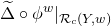 $\widetilde{\Delta} \circ \phi^w|_{\mathcal{R}_c(Y, w)}$
identifies
$\widetilde{\Delta} \circ \phi^w|_{\mathcal{R}_c(Y, w)}$
identifies $\mathbb{I}^{(Y, w)}({\boldsymbol{t}}, q, z)$
with the I-function for Z after the change of variables
$\mathbb{I}^{(Y, w)}({\boldsymbol{t}}, q, z)$
with the I-function for Z after the change of variables $q^d \mapsto q^d e^{\pi i \sum_j\langle d, \tau_j \rangle}$
.
$q^d \mapsto q^d e^{\pi i \sum_j\langle d, \tau_j \rangle}$
.
7.3 Hybrid models
Going beyond Gromov–Witten and FJRW theory, one of the few examples of a class of GLSM where mirror theorems have been proven are so-called hybrid models, which simultaneously generalize both the Gromov–Witten theory of hypersurfaces and FJRW theory. These GLSMs arise when one starts with a GLSM representing a complete intersection as in the previous section, but chooses a new stability condition $\theta_-$
. These have been computed by Clader and Ross in [Reference Clader and RossCR18, Reference Clader and RossCR21].
$\theta_-$
. These have been computed by Clader and Ross in [Reference Clader and RossCR18, Reference Clader and RossCR21].
More precisely, let $G = \mathbb{C}^*$
act on
$G = \mathbb{C}^*$
act on $V = \operatorname{Spec} \mathbb{C}[x_1, \ldots, x_m, p_1, \ldots, p_n] \cong \mathbb{C}^{m + n}$
with weights
$V = \operatorname{Spec} \mathbb{C}[x_1, \ldots, x_m, p_1, \ldots, p_n] \cong \mathbb{C}^{m + n}$
with weights $(w_1, \ldots, w_m, -d_1, \ldots, -d_n)$
. Choose polynomials
$(w_1, \ldots, w_m, -d_1, \ldots, -d_n)$
. Choose polynomials $f_1(\underline x), \ldots, f_n(\underline x)$
such that
$f_1(\underline x), \ldots, f_n(\underline x)$
such that
 $$Z(f_1, \ldots, f_n) \subset \mathbb{P}(w_1, \ldots, w_m)$$
is a smooth complete intersection. Define $\theta_{+/-} = (+/- 1) \in \widehat G \cong \mathbb{Z}$
and let
$\theta_{+/-} = (+/- 1) \in \widehat G \cong \mathbb{Z}$
and let $w = \sum_{j=1}^n p_j f_j(\underline x)$
. If we let
$w = \sum_{j=1}^n p_j f_j(\underline x)$
. If we let $\mathbb{C}^*_R$
act with weight 0 on
$\mathbb{C}^*_R$
act with weight 0 on $x_i$
and 1 on
$x_i$
and 1 on $p_j$
for each
$p_j$
for each $1 \leq i \leq m$
,
$1 \leq i \leq m$
, $1 \leq j \leq n$
, then w is homogeneous of degree 1. The GLSM
$1 \leq j \leq n$
, then w is homogeneous of degree 1. The GLSM $(V, G, \theta_+, w)$
represents the complete intersection
$(V, G, \theta_+, w)$
represents the complete intersection $Z(f_1, \ldots, f_n)$
, as evidenced above. The GLSM
$Z(f_1, \ldots, f_n)$
, as evidenced above. The GLSM $(V, G, \theta_-, w)$
is called a hybrid model. In this case,
$(V, G, \theta_-, w)$
is called a hybrid model. In this case,
 $$Y := [V \mathbin{/\mkern-6mu/}_{\theta_-} G] = \bigoplus_{i=1}^m \mathcal{O}_{\mathbb{P}(d_1, \ldots, d_n)}(-w_i).$$
Let H denote the class $c_1(\mathcal{O}_{\mathbb{P}(d_1, \ldots, d_n)}(1))$
supported on the untwisted sector
$c_1(\mathcal{O}_{\mathbb{P}(d_1, \ldots, d_n)}(1))$
supported on the untwisted sector $H^*(Y) \subset H^*_{\rm CR}(Y)$
(here, we use
$H^*(Y) \subset H^*_{\rm CR}(Y)$
(here, we use $\mathcal{O}_{\mathbb{P}(d_1, \ldots, d_n)}(1)$
to denote the line bundle
$\mathcal{O}_{\mathbb{P}(d_1, \ldots, d_n)}(1)$
to denote the line bundle $[(V \times \mathbb{C}_{\theta_-}) \mathbin{/\mkern-6mu/}_{\theta_-} G]$
corresponding to the character of
$[(V \times \mathbb{C}_{\theta_-}) \mathbin{/\mkern-6mu/}_{\theta_-} G]$
corresponding to the character of $\widehat G$
with weight
$\widehat G$
with weight $-1$
). Let
$-1$
). Let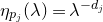 $\eta_{p_j}(\lambda) = \lambda^{-d_j}$
and let
$\eta_{p_j}(\lambda) = \lambda^{-d_j}$
and let ${\boldsymbol{t}} = \sum_{j=1}^n t_j \eta_{p_j} \in H^*([V/G])$
. Let
${\boldsymbol{t}} = \sum_{j=1}^n t_j \eta_{p_j} \in H^*([V/G])$
. Let $d = \operatorname{lcm}(d_1, \ldots, d_n)$
. Then, the big I-function of Y is given by
$d = \operatorname{lcm}(d_1, \ldots, d_n)$
. Then, the big I-function of Y is given by
 \begin{align}\mathbb{I}^Y({\boldsymbol{t}}, q, z) &= \sum_{k \geq 0} q^{k/d}\bigg( \prod_{j=1}^n e^{t_j(d_j H/z + d_jk/d)} \nonumber \\ &\qquad\qquad\quad\,\times \frac{\prod_{i=1}^m \prod_{0\lt \nu \leq w_i k/d} ( -w_i H + ( - w_i k/d + \nu)z)}{\prod_{j=1}^n \prod_{0\leq \nu \lt d_jk/d} ( d_j H + (d_jk/d - \nu) z)} \mathbb{1}_{e^{2 \pi i k/d}}\!\bigg).\end{align}
Because $\mathbb{C}[x_1, \ldots, x_m]^G = \mathbb{C}$
, the function
$\mathbb{C}[x_1, \ldots, x_m]^G = \mathbb{C}$
, the function
 $$\bigg(\prod_{j=1}^n z \partial _{\eta_j}\!\bigg) \mathbb{I}^Y({\boldsymbol{t}}, q, z) = \bigg(\prod_{j=1}^n z \frac{\partial }{\partial t_j} \bigg) \mathbb{I}^Y({\boldsymbol{t}}, q, z)$$
lies in $H^*_{\rm CR,ct}(Y)$
. Therefore, an I-function for
$H^*_{\rm CR,ct}(Y)$
. Therefore, an I-function for $(V, G, \theta_-, w)$
is obtained as
$(V, G, \theta_-, w)$
is obtained as
 \begin{align}\mathbb{I}^{(Y, w)}({\boldsymbol{t}}, q, z) :=&\, \sigma^w\bigg(\!\bigg(\prod_{j=1}^n z \frac{\partial }{\partial t_j} \bigg)\mathbb{I}^Y({\boldsymbol{t}}, q, z)\!\bigg) \nonumber \\=&\, \sum_{k \geq 0} q^{k/d}\sigma^w \bigg( \prod_{j=1}^n e^{t_j(d_j H/z + d_jk/d)} \nonumber \\ &\qquad\quad\qquad\quad\!\!\times \frac{\prod_{i=1}^m \prod_{0\lt \nu \leq w_i k/d} ( -w_i H + ( - w_i k/d + \nu)z)} {\prod_{j=1}^n \prod_{0\lt \nu \lt d_jk/d} ( d_j H + (d_jk/d - \nu) z)} \mathbb{1}_{e^{2 \pi i k/d}}\!\bigg). \end{align}
This recovers the hybrid-model I-function computed by Clader and Ross in [Reference Clader and RossCR18, Reference Clader and RossCR21]. Their I-function appears, for instance, as $I^{X_-, W}$
in [Reference Clader and RossCR18, § 7.4], in the proof of Lemma 7.6. Specializing
$I^{X_-, W}$
in [Reference Clader and RossCR18, § 7.4], in the proof of Lemma 7.6. Specializing $t_1 = \cdots = t_n = 0$
in (7.6) recovers this function.Footnote
4
$t_1 = \cdots = t_n = 0$
in (7.6) recovers this function.Footnote
4
There are two assumptions, denoted (A1) and (A2), required for the mirror theorem in [Reference Clader and RossCR18]. The first implies a version of concavity for the hybrid model invariants, and the second guarantees that the I-function is supported in the narrow cohomology (a stronger condition than being of compact type). However, (7.6) gives a $(0^+, 0^+)$
I-function regardless of these assumptions.
$(0^+, 0^+)$
I-function regardless of these assumptions.
Acknowledgements
I would like to thank H. Fan, T. Jarvis, and Y. Ruan for explaining the GLSM and patiently answering many questions. Several ideas in this paper are inspired by collaboration with I. Ciocan-Fontanine, J. Guéré, D. Favero, and B. Kim. I am very grateful to them for all that I learned during our time working together. I also thank K. Aleshkin, E. Clader, J. Knapp, Y.-P. Lee, M. Liu, N. Priddis, M. Romo, D. Ross, Y. Shen, and G. Xu for helpful conversations on GLSMs and FJRW theory. Finally, I thank the anonymous referees for their careful reading of the manuscript and many valuable comments.
Conflicts of interest
None.
Financial support
This work was partially supported by National Science Foundation Grant No. DMS-1708104 and Simons Foundation Travel Grant No. 958189.
Journal information
Compositio Mathematica is owned by the Foundation Compositio Mathematica and published by the London Mathematical Society in partnership with Cambridge University Press. All surplus income from the publication of Compositio Mathematica is returned to mathematics and higher education through the charitable activities of the Foundation, the London Mathematical Society and Cambridge University Press.

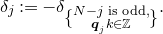





 Open access

