

Introduction
The policy of the current English Government is that anyone with eligible social care needs should be offered a personal budget by a Council with Adult Social Services Responsibilities (CASSR), preferably in the form of a direct payment. This is an amount of money calculated from an assessment of need and made available to someone with social care needs in lieu of directly provided care or support. The English Department of Health made available a £500 million ‘Transformation Grant’ to CASSRs in 2009 to implement personal budgets and direct payments (Department of Health 2008a, 2009). ‘Cash for Care’ schemes of this kind are becoming common in some European countries and other developed nations. Reasons for their introduction vary, but broadly coalesce around provision of enhanced choice and autonomy, as well as to create care ‘markets’ to help fill gaps in service provision, to support a shift from institutional to home-based care, to strengthen and support family-based care and to promote greater cost-effectiveness and efficiency (Arntz and Thomsen Reference Arntz and Thomsen2011; Da Roit and Le Bihan Reference Da Roit and Le Bihan2010; Moran et al. Reference Moran, Glendinning, Wilberforce, Stevens, Netten, Jones, Manthorpe, Knapp, Fernández, Challis and Jacobs2013; Pilling and Christensen Reference Pilling and Christensen2014; Rummery Reference Rummery2011; Timonen, Convery and Cahill Reference Timonen, Convery and Cahill2006; Ungerson and Yeandle Reference Ungerson and Yeandle2007). Pavolini and Ranci have also suggested that in Europe, policies designed to promote independence and autonomy are associated with attempts to respond to population ageing by recognising dependency as a ‘social risk against which citizens have a right to public protection’ (Reference Pavolini and Ranci2015: 257).
Moran et al. also note a ‘dearth of quality empirical data on the impact, experiences and outcomes of cash for care schemes on older people’ (Reference Moran, Glendinning, Wilberforce, Stevens, Netten, Jones, Manthorpe, Knapp, Fernández, Challis and Jacobs2013: 827). Though there is evidence that direct payments can be an effective way of enabling younger adults to achieve better outcomes (Glendinning et al. Reference Glendinning, Challis, Fernández, Jacobs, Jones, Knapp, Manthorpe, Moran, Netten, Stevens and Wilberforce2008; Hatton and Waters Reference Hatton and Waters2011; Manthorpe et al. Reference Manthorpe, Hindes, Martineau, Cornes, Ridley, Spandler, Rosengard, Hunter, Little and Gray2011), this is in some ways unsurprising. Younger disabled adults have campaigned for many years for more direct control over funding to meet their care and support needs (Glasby and Littlechild Reference Glasby, Littlechild, Leece and Bornat2006; Morris Reference Morris, Glendinning and Kemp2006). By contrast, evidence has suggested that older service users fare less well (Glendinning et al. Reference Glendinning, Challis, Fernández, Jacobs, Jones, Knapp, Manthorpe, Moran, Netten, Stevens and Wilberforce2008; Moran et al. Reference Moran, Glendinning, Wilberforce, Stevens, Netten, Jones, Manthorpe, Knapp, Fernández, Challis and Jacobs2013; Netten et al. Reference Netten, Jones, Knapp, Fernandez, Challis, Glendinning, Jacobs, Manthorpe, Moran, Stevens and Wilberforce2012; Woolham and Benton Reference Woolham and Benton2013). The initial enthusiasm of many CASSRs for this approach to service delivery may also be a consequence of widespread acknowledgement of the failure of care management reforms two decades earlier to deliver more personalised social care (Woolham et al. Reference Woolham, Daly, Steils and Ritters2015).
This paper is based on research carried out in three English local authority sites in 2012–13 and compares the outcomes of older direct payment and managed personal budget users (managed budgets describe an arrangement whereby the budget amount, calculated in the same way as a direct payment, is made available to a third party – e.g. a relative, local care management team or equivalent – to be spent on meeting the person's care needs). Comparing outcomes between these two groups of older service users provides new empirical evidence to test contested perspectives about the value of direct payments for older people, in the United Kingdom (UK) and in other countries which have implemented or are in the process of implementing similar cash-for-care schemes.
The paper begins by outlining the claims made by advocates and critics of personal budgets and direct payments about their impact before describing the postal survey used to collect the data. The findings are then presented in four sections. In the first, respondent data are presented, followed by data on budget amounts received by both groups. The third section considers budget holder views about the difference the budget may have made to them and their control over care and support. In the fourth section the outcomes for direct payment and managed budget holders are compared. The implications of these findings are then discussed.
Background: claims made about the impact of personal budgets and direct payments, and research evidence
The introduction of personal budgets and direct payments remains controversial amongst UK and international social work and social care academics, as well as policy groups and think-tanks, attracting both strong advocates and equally strong opponents.
Advocates
Supporters of personal budgets and direct payments have argued that they will save money through reductions in expensive professional-led assessments and more efficient use of funding (Leadbeater Reference Leadbeater2004; Leadbeater, Bartlett and Gallagher Reference Leadbeater, Bartlett and Gallagher2008) and that because care and support is ‘self-directed’ it will be better targeted on the priorities of the person needing support (Duffy Reference Duffy2006, Reference Duffy2008; Duffy and Waters Reference Duffy, Waters, Poll and Duffy2008). It has also been claimed that personal budgets will end what has been described as the ‘professional gift’ in which care and support is ‘bestowed’ on recipients by social workers (Duffy Reference Duffy, Needham and Glasby2014); instead conferring power to budget holders as consumers and therefore enhanced choice and control (Department of Health 2005: 8) which advocates claim will lead to much greater independence.
Critics
Criticism of personal budgets in England, and the values underpinning these, has sometimes been fierce. Ferguson (Reference Ferguson2007) expresses concern about potential consequences of the transfer of responsibility via personal budgets and direct payments from the state to often vulnerable individuals. Clarke, Smith and Vidler (Reference Clarke, Smith and Vidler2006), Clarke (Reference Clarke2007) and Clarke, Newman and Westmarland (Reference Clarke, Newman and Westmarland2008) question the appropriateness of ‘choice’ as an objective of public services, in general, and social care, in particular, and, with Daly (Reference Daly2012), raise important questions about the way choice and consumer-led approaches to service delivery negatively re-define and reconceptualise citizenship. Beresford (Reference Beresford2008, Reference Beresford2009a , Reference Beresford2009b , Reference Beresford2011) suggests current policies are greatly at odds with the emancipatory and participatory ideals of disability campaigners, and it has also been suggested that personal budgets and personalisation are a means of introducing neo-liberal policies in social care and welfare (Ferguson Reference Ferguson2007; Roulstone and Morgan Reference Roulstone and Morgan2009).
An important, but sometimes overlooked, strand of this debate has specifically focused on the appropriateness of personal budgets for older people, who are by a considerable margin the largest group of social care users in the UK. A key concern has been the lack of fit between personal budgets policy and the needs, requirements and aspirations of older people. These policies, and the values that underpin them (sometimes referred to as the ‘personalisation agenda’), gain their clearest expression in three key documents relating to personal budgets and direct payments. These are the Putting People First concordat (HM Government 2007), Shaping the Future of Care Together (HM Government 2009) and A Vision for Adult Social Care (Department of Health 2010). The first calls for personalised adult social care that offers support to enable all adults – irrespective of illness or disability – to ‘participate as active and equal citizens, both economically and socially’ (HM Government 2007: 2). Personal budgets are seen as a key to achieving these goals, with increasing use of direct payments. The second develops this vision of the purpose of personal budgets to enable full participation of all adults in the life of the community through, for example, ‘extended, further or higher education, training to prepare for a job, employment, bringing up children, caring for other family members, volunteering [and] involvement in sport, leisure and social activities’ (HM Government 2009: 60). The third renews and clarifies these values, arguing that ‘Care must … be about reinforcing personal and community resilience, reciprocity and responsibility, to prevent and postpone dependency and promote greater independence and choice’ (Department of Health 2010: 5).
Lloyd (Reference Lloyd2010) and Barnes (Reference Barnes2011) draw attention to the inappropriateness of these policies to the needs of older people. Referring to the Shaping the Future policy document, Lloyd (Reference Lloyd2010: 193) suggests ‘policy aims such as these represent a highly instrumental view of social care, portraying services as a means of restoring people to their functions as active citizens’ and argues that the ‘personalisation agenda’ fails to acknowledge the full range of needs of older people, and particularly those who seek social care at the point in their lives when their health begins to decline, towards the end of their life. Barnes has also suggested that the vision for the transformation of adult social care expressed in Putting People First assumes
…a high level of self-knowledge and reflexivity, substantial predictability in relation to needs and the circumstances in which they may be met and a willingness to take on responsibility of constantly reviewing whether the support and help being given is enabling the achievement of objectives. (2011: 158)
These preconditions are often not available to older people in declining health, or who lack capacity through dementia. Lloyd describes this group of people as ‘necessarily dependent’: people who by reason of illness or frailty associated with old age are unable to fulfil the required policy assumptions of autonomy and independence.
Research into outcomes of personal budgets and direct payments
Moving from policy analysis and argument to research evidence, personal budgets and direct payments have been equally controversial. Early evaluations of outcomes for people using personal budgets were completed by the independent-sector organisation, In Control. Findings from three studies were published. In the first, Poll et al. (Reference Poll, Duffy, Hatton, Sanderson and Routledge2006: 41) used a pre/post design to examine outcomes – defined as ‘socially significant changes’ for 31 users of their model of self-directed support. On each of the measures used, their evaluation produced positive findings. A second study (Hatton et al. Reference Hatton, Waters, Duffy, Senker, Crosby, Poll, Tyson, O'Brien and Towell2008), based on interviews with 196 participants, also produced positive findings in relation to eight defined outcomes. More recently, the Personal Outcomes Evaluation Tool survey (Hatton and Waters Reference Hatton and Waters2011) – a much larger survey of 1,114 respondents in ten CASSRs – found that a majority of older budget holders reported positive outcomes in relation to seven types of outcome. Data from this third study was also re-analysed with a focus specifically on 417 participants aged over 65 (Hatton and Waters Reference Hatton and Waters2012). This analysis suggested that older people were more likely than younger adults to say that their personal budget had made ‘no difference’ to them (Hatton and Waters Reference Hatton and Waters2012: 3).
Though the findings of In Control have been influential in the decision by the previous Government to introduce this approach to service delivery (the 2008 publication included a foreword from the then Under-Secretary of State for Care Services), their studies are flawed. Findings from the first were based on an extremely small sample and although in the second study the sample was larger, not all participants answered all the questions. The third study was the only one to consider outcomes for older people but the age range (65+) was not representative of older social care users, who are on average much older. None of the studies used formally validated scales to measure outcomes (in each study different outcomes were defined and measured) and each was based on evidence obtained from self-selecting local authorities and respondents.
The Individual Budgets Support Evaluation Network (IBSEN) trial (Glendinning et al. Reference Glendinning, Challis, Fernández, Jacobs, Jones, Knapp, Manthorpe, Moran, Netten, Stevens and Wilberforce2008) used a more rigorous research design to examine outcomes. Using two validated scales focusing on general health and adult social care outcomes, it found that though personal budgets delivered good outcomes for younger adults, for older people, findings were negative.
Both Netten et al. (Reference Netten, Jones, Knapp, Fernandez, Challis, Glendinning, Jacobs, Manthorpe, Moran, Stevens and Wilberforce2012) and Moran et al. (Reference Moran, Glendinning, Wilberforce, Stevens, Netten, Jones, Manthorpe, Knapp, Fernández, Challis and Jacobs2013) conducted further analyses of data collected for the IBSEN trial. Netten compared outcomes from the use of individual budgets on four different groups of budget users, one of which was older people. For three of the groups – all younger adults – budget ownership was associated with improved wellbeing, but for older people, budgets were associated with a negative impact on psychological wellbeing.
Moran et al. focused specifically on the impact of individual budgets on older people. They found that older people spent their budget mostly on personal care because the size of their budget did not allow for spending on social and recreational activities that might contribute to good wellbeing; many experienced worse psychological and physical health and anxiety about managing their own support than younger budget users. Both Netten et al. and Moran et al. concluded that for potential benefits of individual budgets to be realised for older people, budgets needed to be larger. They also suggested that older budget holders needed access to support to set up and manage their budget and continuity of support to enable adequate responses to be made to frequent changes of need arising from fluctuating health.
Woolham and Benton (Reference Woolham and Benton2013) also adopted elements of the IBSEN design in an evaluation of the impact of the introduction of self-directed support and personal budgets in a single local authority. Their study found that though the average size of the personal budget was twice that received by people receiving more ‘traditionally’ organised services, outcomes for older budget holders were little different.
The Government's response post-IBSEN
The Department of Health indicated that, post-IBSEN, it intended to provide detailed guidance to enable better support that would improve outcomes for older people (Department of Health 2008c). Though no evidence has been provided to date of improved outcomes for this group, it did subsequently publish good practice guidance (Department of Health 2008b, 2010). Research was also commissioned elsewhere to find out how to use personal budgets most effectively for older people (Carr Reference Carr2013; Newbronner et al. Reference Newbronner, Chamberlain, Bosanquet, Bartlett, Sass and Glendinning2011) and further guidance was published by the Alzheimer's Society (Lakey and Saunders Reference Lakey and Saunders2011) and Age UK (Feltoe and Orellana Reference Feltoe and Orellana2013; Orellana Reference Orellana2010). The Think Local Act Personal initiative was also supported by the Department of Health to share good practice in the implementation of the ‘personalisation agenda’.
However, despite the lack of evidence of better outcomes for older people, after the IBSEN report was published the policy debate shifted from whether personal budgets and direct payments should be introduced to how to make them work for older people with social care needs.
None of the studies referred to above found that personal budgets enabled better outcomes for older people, but personal budgets and direct payments remain of central importance to the present Government's social care policies (Department of Health 2010). A significant shortcoming of these early studies was that, arguably, their findings were based on very ‘early’ measures of outcome; as individual personal budgets had only been in place for a short time (Netten et al. Reference Netten, Jones, Knapp, Fernandez, Challis, Glendinning, Jacobs, Manthorpe, Moran, Stevens and Wilberforce2012: 1562). Since then a number of factors might plausibly be expected to have had a positive impact on outcomes for older people. These include the aforementioned high levels of support and guidance offered to CASSRs to enable them to make budgets work successfully for older people. Additionally, the more general development of local care markets, the bedding in of new processes required to set up and manage budgets, and staff training in the use of personal budgets and direct payments might also have had positive impacts.
Given the continuing importance of personal budgets and direct payments, this paper therefore now considers if, several years after the Department of Health Transformation Grant, they now deliver better outcomes for older people with adult social care needs.
Methods
Data were obtained by a postal survey of older people (aged 75+) who were in receipt of a personal budget. Other criteria to select eligible participants were that that they should:
-
• be living in an ordinary community dwelling or sheltered housing (not residential or nursing care);
-
• have sufficient mental capacity to consent to, and participate in, a postal survey;
-
• be well enough to take part.
The survey took place between January and August 2013 in three CASSRs: two large shire counties and one unitary council, respectively, on the south coast, in the north-west and in the north-east of England. The UK Data Protection Act meant that the administration of the survey was managed by each CASSR to protect the privacy of participants.
The proposed sample size was 1,500 (500 in each site), equally divided between direct payment users and managed personal budget users (i.e. 250 in each group, in each site). The rationale for this was that it would provide the basis for a comparative analysis of outcomes, and an overall response rate of 33 per cent (500 returns) would produce an acceptable overall confidence interval of ±4.3 per cent. Prior to administering the survey, the terminology used in the questionnaire and covering letter was checked by the CASSR contact in each site who confirmed that the terms used should have been familiar to participants. These terms – and the phrasing of questions, covering letters and information sheets – were also reviewed by an advisory group of older people and unpaid carers prior to the start of data collection.
Data analysis
Three validated outcome scales were included in the survey. These were EQ-5D-3L (version 4; EuroQol Group 1990), which measures health status; the Sheldon–Cohen Perceived Stress Scale (PSS; Cohen, Kamarck and Mermelstein Reference Cohen, Kamarck and Mermelstein1983); and the Adult Social Care Outcomes Toolkit (SCT4 or ASCOT; Netten et al. Reference Netten, Beadle-Brown, Caiels, Forder, Malley, Smith, Towers, Trukeschitz, Welch and Windle2011), which measures social care-related quality of life (SCRQoL). Each was chosen to find out if possession of a direct payment enabled respondents to achieve better outcomes than those with a managed budget. EQ5D-3L comprises two elements: the first is a self-rated ‘perceived health status’ question, which asks respondents to rate their own health on a scale of 1–100 on a visual analogue scale where 100 represents the best imaginable health state and 1 the worst imaginable. The second element is a five-question, three-item scale focusing on mobility, self-care, ability to perform usual activities, pain/discomfort and anxiety/depression. Scores are used to create health-state scores that correspond to these five health-state items, with a score of 1 indicating ‘no problems’, 2 indicating ‘some problems’ and 3 indicating ‘extreme problems or inability to perform the activity’. The PSS is another well-established measure. The version used was a ten question, four-item scale. Scores range from 0 to 40, with higher scores representing higher levels of stress. Finally, the Adult Social Care Outcomes Scale was developed specifically to measure SCRQoL. The SCT4 scale used presents data on SCRQoL on eight dimensions: accommodation, cleanliness, food and drink, safety, social life, occupation, control and dignity. The scale consists of eight questions with four items. Gender and age data are also collected and used to make appropriate weightings to the scores. These range from 0 or below (worse than dead) to 1 (could not be better).
The statistical analysis of collected data was carried out using SPSS software (version 20).
The questionnaire also contained an open question inviting respondents to describe ‘one good thing’ about having a personal budget; 204 respondents answered this question and their data were also transcribed and thematically analysed.
Results
Response rate
In practice, two of the CASSRs did not have the required number of direct payment users who met the eligibility criteria for the study. One CASSR was also unable to identify 250 managed budget users.
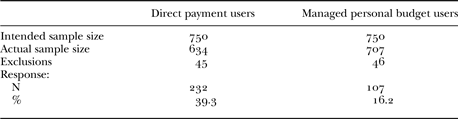
In total 339 people responded to the survey, with over twice as many respondents coming from direct payment users (Table 1). Despite checking the terminology with host CASSRs, the low response rate specifically amongst managed personal budget users may at least partly be explained by feedback from managed personal budget users stating they had not heard of personal budgets until they had received the questionnaire and therefore felt they could not answer the questions.
Response rates to budget holder postal surveys
Response bias
In two of the sites effectively all direct payment users who met the criteria for the study were included, therefore the data were a complete enumeration rather than a sample. However, to assess potential response bias across both groups in all sites, comparison was made between the demographic backgrounds of samples and respondents.
As can be seen in Table 2, there was a reasonably close correspondence between non-respondent and respondent profiles, suggesting that response bias was relatively low. Independent samples t-tests confirmed no significant difference between sample and respondents in respect of age (p = 0.252), and χ2 tests revealed no significant differences by gender (p = 0.361), ethnic group (p = 0.208) or budget size (p = 0.187).
Demographic profile of sample and respondents

Note: N is given in parentheses.
Budget amounts
Information about budget amounts was sought to see if there were differences in budget size between the two groups that might reasonably be expected to affect outcomes. These could only be obtained from two of the sites. The figures presented in Table 3, which show the weekly budget amount, exclude cases where no budget information was provided. Gaps in budget information reflect administrative problems: local authorities did not find it easy to obtain this data.
Budget amounts (£ per week) amongst direct payment and managed budget respondents

Note: SD: standard deviation.
The mean size of direct payment user budgets was £196.79 per week which was £18.42 per week (or about 10%) more than those allocated to managed budget users. An independent samples t-test indicated that this was a statistically significant difference (p = 0.032). Some of this disparity might be ascribed to the greater overheads that direct payment users may face – e.g. in relation to the costs of recruiting a Personal Assistant (PA) or in managing the budget. However, there was no evidence from the survey data that large numbers of direct payment users were using PAs, or that there were additional charges for support services; and it could also be argued that agency rates might be expected to be higher than those for individual PAs, even with these on-costs for recruitment included.
Limitations
It was not possible to randomise participants into direct payment and managed budget groups and the study achieved fairly low response rates, though this is not unusual in postal surveys, in general, and in surveys of older people, in particular, though the overall confidence interval target was met. Despite checking, it seemed likely that a number of managed budget users did not know they were receiving a managed budget, which may have affected response rates for this group. Coverage by local authority was also limited to three sites, which were opportunistically selected.
Budget holder views about the difference the budget made to their control over care and support
Responses to three questions are presented in Table 4 to compare the views of direct payment and managed budget users about potential benefits of budget ownership.
Views of direct payment (DP) and managed personal budget (MPB) users about benefits of budget ownership

Table 4 suggests that compared to people who had a managed personal budget, direct payment users were more likely to feel able to exercise control over timing and task. Larger proportions of managed budget users said they had never tried to make changes. Prima facie, these findings suggest more control was available to people with a direct payment, or that direct payment users were more likely than managed budget users to want to exercise control, and had the resources to do so.
Respondents were asked to describe ‘one good thing about personal budgets’ and thematic analysis was made of responses. Analysis confirmed that direct payment users appreciated the flexibility, choice, empowerment and control offered by direct payments. However, it was also apparent that these things were usually seen not as a ‘good in themselves’ or in the abstract, but as a practical means of enabling care and support to be provided in particular ways. Having an opportunity to choose the care worker and develop a trusting relationship with them was very frequently mentioned by respondents:
You can have one carer that you get to know. We feel intimidated and insecure if we have different people coming into the house.
It ensures total control of who the care worker is: the same face all the time.
[I appreciate] having the same care assistants, familiar with my dementia.
My daughter … has control over changing things with carers herself rather than having to wait and go through social services.
I have a personal friend, she hoovers and does the laundry, sets the bed and sorts my clothes, etc. I pay her personally. She also prepares my food and massages me.
The ability of older direct payment users to manage their direct payment also seemed to depend on the availability of someone to help manage it. Responses to another question in the survey that asked ‘Does anyone help you with paperwork associated with your personal budget?’ indicated that 197 (86%) of direct payment users and 65 (66%) of managed personal budget users said they received help with paperwork (N = 329, χ2 = 31.98, p = 0.000).
Despite the high value that most respondents seemed to place on their personal budget, and findings that might reasonably suggest that possession of a budget conferred a sense of empowerment and control, this did not always seem to ‘translate’ into practical improvements to everyday life. Three questions were included in the survey to find out how much control respondents were actually able to have over three basic activities of daily living.
As Table 5 suggests, though direct payment users were more likely to feel they had choice over when these basic activities of daily living occurred, control was not axiomatic. Between a quarter and a third were unable to exercise full control over when they ate, went to bed or bathed/showered.
Do you decide any of the following things?

Outcomes for direct payment and managed budget holders
Each of the outcome scale scores are presented below.
EQ-5D-3L. Mean scores for direct payment and managed budget users were 43.3 for direct payment users and 45.6 for managed budget users. Data from the two groups were not normally distributed (Kolmogorov–Smirnov test of normality produced a score of p < 0.001 for both groups) and a Mann–Whitney test was used to assess whether the difference between the two groups of scores was statistically significant. There was no statistically significant difference between the EQ-5D-3L scores (p = 0.509).
Health-state score profiles are presented in Figure 1.
Stacked column graph showing EQ-5D-3L sub-scales.

Profiled scores between the two groups suggest that the health-state domains that respondents from both groups were most likely to feel they were unable to carry out related to ‘self-care’ and the ‘performance of usual activities’. The score profiles were also similar between the two groups.
PSS
Mean perceived stress scale scores were 17.1 for direct payment users and 18.7 for managed budget users. Kolmogorov–Smirnov tests of normality (p = 0.001 for direct payment users and p = 0.160 for managed budget users) also suggested a Mann–Whitney test for statistical significance. There was no statistically significant difference between PSS scores (p = 0.58).
ASCOT
Figures 2 and 3 compare profiles of direct payment and managed budget users from the ASCOT scale. Overall SCRQoL scores were similar, with direct payment users achieving overall SCRQoL scores just five points higher than those for managed budget users. For both groups, though needs relating to accommodation, cleanliness, and food and drink were met for the overwhelming majority, large proportions of respondents in both groups also had unmet needs relating to opportunities for social contact, occupation and control. Kolmogorov–Smirnov tests of normality were p < 0.001 for direct payment users and p = 0.029 for managed budget users, and a Mann–Whitney test was again used to establish if the difference between the two scores was statistically significant. There was also no statistically significant difference between overall ASCOT scores for the two groups (p = 0.68).
Spider graph showing profile of the Adult Social Care Outcomes Toolkit social care-related quality of life (SCRQoL) outcomes for direct payment users.

Spider graph showing profile of Adult Social Care Outcomes Toolkit social care-related quality of life (SCRQoL) outcomes for managed personal budget users.

Relationships between budget size and ASCOT, PSS and EQ-5D-3L perceived health status total scores
To find out if the size or the type of budget affected outcomes, relationships were tested using regression methods with the type of budget (direct payment or managed) included as a dummy variable, so that equality of slopes could be tested between types of budget holder using the method described by Draper and Smith (Reference Draper and Smith1981).
First, in the comparison with the EQ-5D-3L perceived health status score, there was no significant relationship between size of budget and perceived health status (F 1,198 = 0.00, p = 0.995), no significant difference between types of budget holder (F 1,198 = 3.74, p = 0.055) and no significant differences in slopes between the two types of budget holder (F 1,198 = 0.62, p = 0.431).
Second, in the comparison with the PSS score, there was no significant relationship between budget size and PSS score (F 1,187 = 0.29, p = 0.591), no significant difference between types of budget holder (F 1,187 = 1.22, p = 0.270) and no significant differences in slopes between the two types of budget holder (F 1,187 = 0.35, p = 0.555).
Third, in the comparison with the ASCOT score, there was a significant negative relationship between size of budget and the ASCOT score (F 1,221 = 6.90, p = 0.009), but no significant difference between types of budget holder (F 1,221 = 2.85, p = 0.093) nor significant differences in slopes between the two types of budget holder (F 1,221 = 0.21, p = 0.646).
These scores suggest the absence of any significant relationship between budget size and outcomes apart from in respect of the overall ASCOT score where there was a negative relationship: i.e. people with higher ASCOT scores also received larger budgets. This finding could be attributed to good quality assessment activity by social care staff, whereby those with higher assessed needs received more funding.
Discussion
The high value that many survey participants attached to budget ownership might be sufficient justification for the implementation of personal budgets and direct payments for some. However, as we stated earlier, some people did not know that their care was arranged via a personal budget, and others may have been comparing their situation not to care arrangements before receiving the budget but their situation prior to receiving any form of paid care. Our evidence suggests that predictions made by advocates of this approach to service delivery – that direct payments would improve outcomes – are not supported. Our findings also raise questions about why, after the publication of extensive practice guidance to local authorities, our findings should not show more clearly the hoped for benefits of direct payments for older people, which we now consider below.
Budget size and outcomes
A particular concern of some commentators has been that, in a climate of continuing financial austerity in public services, the budget amounts may be sufficient to pay only for basic personal care (Beresford Reference Beresford2011; Moran et al. Reference Moran, Glendinning, Wilberforce, Stevens, Netten, Jones, Manthorpe, Knapp, Fernández, Challis and Jacobs2013; Slasberg, Beresford and Schofield Reference Slasberg, Beresford and Schofield2012). The Association of Directors of Adult Social Services (2015) has estimated that since 2009 an average of between 25 and 30 per cent has been cut from CASSR budgets. There is also evidence that younger adults receive larger personal budgets (Health and Social Care Information Centre 2013b). Our study also supports findings from Moran et al. (Reference Moran, Glendinning, Wilberforce, Stevens, Netten, Jones, Manthorpe, Knapp, Fernández, Challis and Jacobs2013) that amongst both older direct payment and managed budget groups, high levels of unmet need remained in relation to opportunities for social contact with others and to spend leisure time in meaningful ways. This suggests that budget amounts may, more often than not, have been insufficient to cover anything other than personal care needs. Put bluntly, many survey respondents may have remained lonely and bored regardless of whether they had either a direct payment or managed personal budget. However, though larger budget amounts might be a pre-condition for helping to address these unmet needs, their availability – even if possible in a climate of continuing austerity – may not automatically address these issues, as Woolham and Benton (Reference Woolham and Benton2013) have demonstrated.
The relationship between outcomes and policies
Earlier, we drew attention to the ‘lack of fit’ between policies underpinning the implementation of personal budgets and the needs of older people. Others (Orellana Reference Orellana2010; Rabiee Reference Rabiee2013) have also argued that older people do not want to change or transform their lives to become empowered, independent citizens – for most, this is not an unrealised aspiration. Rather, the overwhelming majority of respondents to our survey could be described as ‘necessarily dependent’ (Lloyd Reference Lloyd2010) – people who were unable to fulfil the policy goals of independence and full participation but were instead adjusting to the consequences of ageing and the prospect of increasing dependence on others. It may be relevant here to draw attention to the fact that average life expectancy in the UK in 2010 was 82.4 years for females and 78.5 years for men (Office for National Statistics 2011) – several years below the mean age of respondents in our survey. Also noteworthy is that our study excluded people with dementia or those who were too unwell to take part: arguably the very groups of people for whom the policy aspirations of independence and full participation in wider society through possession of a direct payment are most unrealistic.
The role of paid care and support
Lloyd's concept of ‘necessarily dependent’ suggests a need for a different set of policy aspirations for older social care users. As Lewis and West (Reference Lewis and West2014) argue, the focus of policy makers over the last decade on extending choice and increasing competition in social care markets overlooks the importance of the care relationship in securing good quality care. Our findings lend support to this perspective. Many respondents to our survey used direct payments as an opportunity to obtain care or support that, crucially, also offered the possibility of developing relationships of trust and reciprocity with those who provided their care and support. Our findings also suggest that while older people may, like anyone else, wish to exercise choice and control over their lives, their ability to do so may depend on the availability of someone who can be entrusted with the task of implementing these choices and exercising day-to-day control to ensure they are realised. The poor uptake of direct payments amongst older people nationally (Health and Social Care Information Centre 2013a) is usually seen as a problem that requires the removal of bureaucratic obstacles (Boyle Reference Boyle2013) and the neutralising of professional resistance (Smith Reference Smith2010). From this different perspective, it can be ascribed to the absence of someone with whom older people can develop a relationship of trust and can turn to for accessible, authoritative help when their needs or circumstances change. A number of authors (Barnes Reference Barnes2011; Lloyd Reference Lloyd2010; Milne et al. Reference Milne, Sullivan, Tanner, Richards, Ray, Lloyd, Beech and Phillips2014; Ray et al. 2014) have drawn attention to how market-based service designs ignore the importance of this care relationship, which contributes to the marginalisation of many vulnerable older people within the care system. The increasingly ‘process-driven’ approach to the introduction of personal budgets in England and attendant pre-occupation with ‘time and task’ rather than the quality of the care relationship built up over time would require significant change in current policy direction and a much greater focus on good quality care. Ray et al. (2014) and Milne et al. (Reference Ray, Milne, Beech, Phillips, Richards, Sullivan, Tanner and Lloyd2014) have also drawn attention to the multiple, complex needs of many older people, the potential importance of gerontological social work in helping to address these and how successive UK legislation over the previous 25 years has contributed to its decline. Our findings lend support to those who might argue that rather than the ‘right’ to be offered a direct payment enshrined in current policies, older people living with multiple and often complex needs may be better served by a ‘right’ of access to skilled professional support from a gerontology specialist, able to work with them to ‘co-produce’ person-centred care and support. This different process would require advice giving, empathy and support over a longer period than usually possible currently in most operational social care settings, but there is some evidence of better, more sustainable and effective outcomes in the longer term (Milne et al. Reference Ray, Milne, Beech, Phillips, Richards, Sullivan, Tanner and Lloyd2014; Ward and Barnes Reference Ward and Barnes2015).
Wider significance of findings
Other developed nations have introduced or are introducing cash-for-care schemes to reform long-term care. Though these differ significantly from country to country, they all appear to share the same overriding objectives of increasing choice and reducing both costs (Arntz and Thomsen Reference Arntz and Thomsen2011) and dependency (Pavolini and Ranci Reference Pavolini and Ranci2008). This present study adds to evidence from the UK that suggests that hypothecated savings are unlikely for older people due to their specific needs for information and support. The absence of research evidence for the effectiveness of direct payments in delivering better outcomes for older people may therefore suggest a need to reconsider whether ‘cash-for-care’ is the most appropriate model of care delivery for older people who need care and support. This leads us to question the appropriateness of claims of ‘dependency as a social risk’ from which the public should be ‘protected’ (Pavolini and Ranci Reference Pavolini and Ranci2008). Our findings concur with others that many older people who need help from social care agencies are ‘necessarily dependent’ and that the policy goal of independence is an inappropriate one for most frail elderly people.
Conclusions
Our evidence suggests that older direct payment users do not achieve significantly better outcomes compared to older managed budget users. Nationally, though older people are by far the most numerous users of personal social care, efforts to promote uptake of direct payments amongst older people have had limited success: an issue reflected in findings from this study, in which two of the three CASSRs taking part were unable to identify a full sample.
Our study suggests that direct payments for older people have not had the ‘transformative’ impact that policy makers may have anticipated or hoped for. There appear to be a number of reasons for this. One is budget size (which restricts the ability of budget holders to spend money on anything other than personal care). Another equally important but more often overlooked issue is that most older people may want different things from personal budgets and direct payments to younger people, and these continue to be unrecognised and unacknowledged in current policies. Our study suggests that rather than a renewed focus on ways of trying to make personal budgets and direct payments work for older people, it may be necessary to accept the need for policy change focused on developing specialist gerontological social work to enable the co-production of person-centred, non-personal budget-based forms of care and support.
Acknowledgements
The authors are grateful for helpful observations made on an earlier draft of this paper by Professor Caroline Glendinning and Professor Howard Davis. This article presents independent research funded by the National Institute for Health Research (NIHR)/School for Social Care Research (grant T976/T19-032). The views expressed in this publication are those of the authors and not necessarily those of the NIHR, School for Social Care Research, the Department of Health or the UK National Health Service. This study received a favourable ethical opinion from the host institution's Research Ethics Committee, the Social Care Research Ethics Committee on 2 May 2012 (reference 12/IEC08/0013). Subsequent ethical approval was also obtained from one of the three local authority sites that agreed to host the study.



