





Introduction
Weed competition is a major constraint to profitable peanut production, with potential yield losses reaching 80%, depending on weed species and population density (Daramola et al. Reference Daramola, MacDonald, Kanissery, Tillman, Singh, Ajani and Devkota2024; Pai et al. Reference Pai, Balachandra and Kamath2025). In addition to reducing yield, uncontrolled weeds can interfere with digging and harvesting operations, thereby reducing harvest efficiency and increasing economic losses (Daramola et al. Reference Daramola, MacDonald, Kanissery, Tillman, Singh, Ajani and Devkota2024; Everman et al. Reference Everman, Burke, Clewis, Thomas and Wilcut2008). Several agronomic and morphological traits of peanut contribute to vulnerability to weed interference, including its prostrate growth habit, relatively short canopy height, long growing season (140 to 160 d), and wide row spacing (91 to 102 cm) (Everman et al. Reference Everman, Burke, Clewis, Thomas and Wilcut2008; Yadav et al. Reference Yadav, Yates, Russell, Ganie, Price and Maity2025). These characteristics create favorable conditions for weed establishment and proliferation, ultimately reducing crop productivity. As a result, peanut growers rely heavily on applying multiple herbicides throughout the growing season to maintain weed control and protect yields (Daramola et al. Reference Daramola, Iboyi, MacDonald, Kanissery, Singh, Tillman and Devkota2023; Leon et al. Reference Leon, Jordan, Bolfrey-Arku, Dzomeku, Korres, Burgos, Duke, Korres, Burgos and Duke2019). However, growing concerns about environmental contamination, rising management and fuel costs, and the risk of herbicide-resistant weed populations from intensive herbicide use have sparked renewed interest in integrated weed management strategies that combine cultural and chemical weed control methods (Godar et al. Reference Godar, Norsworthy, Barber, Farr and Smith2025; Nath et al. Reference Nath, Singh, Choudhary, Datta, Nandan and Singh2024).
The extent of weed infestation in peanut fields is often influenced by cultural practices, particularly tillage system (Leon et al. Reference Leon, Jordan, Bolfrey-Arku, Dzomeku, Korres, Burgos, Duke, Korres, Burgos and Duke2019). In the southeastern United States, peanut growers have traditionally relied on intensive tillage systems that involve both primary and secondary tillage operations to establish residue-free seedbeds (Leon et al. Reference Leon, Jordan, Bolfrey-Arku, Dzomeku, Korres, Burgos, Duke, Korres, Burgos and Duke2019). However, conservation tillage practices, especially strip-tillage, in which the soil within the crop row is tilled while the spaces between rows remain undisturbed, have gained widespread acceptance in recent years (Foote et al. Reference Foote, Jordan, Gorny, Dunne, Lux, Ahumada, Shew, Brandenburg and Ye2024; Jordan et al. Reference Jordan, Auman, Brandenburg, Buol, Collins, Dorfman, Dunne, Foote, Gorny, Lux, Reisig, Roberson, Royals, Shew and Washburn2024). The shift toward strip-tillage in the southeastern United States is largely driven by its agronomic and environmental benefits, including enhanced soil quality, improved water retention, reduced erosion, and lower input costs relative to conventional tillage (Farmaha et al. Reference Farmaha, Sekaran and Franzluebbers2022; Pimentel et al. Reference Pimentel, Henry, Brye, Runkle, Ashworth, Mersiovsky and Thompson2025). In addition, tillage systems influence weed dynamics by affecting weed seed survival, density, emergence timing, and community composition (Oreja et al. Reference Oreja, Torcat Fuentes, Barrio, Schiavinato, Rosso and de la Fuente2025). This occurs through changes in the vertical distribution of weed seeds in the soil profile, which in turn affects weed management (Feledyn-Szewczyk et al. Reference Feledyn-Szewczyk, Smagacz, Kwiatkowski, Harasim and Woźniak2020; Oreja et al. Reference Oreja, Torcat Fuentes, Barrio, Schiavinato, Rosso and de la Fuente2025). Herbicide input requirements under conventional and reduced tillage systems have been shown to vary depending on weed species (Ghosh et al. Reference Ghosh, Das, Kumar, Dubey, Saurabh, Prakash, Raman, Raj, Kumar, Barman and Das2025; Price and Wilcut Reference Price and Wilcut2002). For example, Price and Wilcut (Reference Price and Wilcut2002) reported that preemergence application of diclosulam in strip-tillage to peanut crops provided complete (100%) control of common ragweed (Ambrosia artemisiifolia L.) without the need for supplemental herbicide applications. In contrast, effective control of other weed species such as broadleaf signalgrass (Brachiaria platyphylla Griseb.), common lambsquarters (Chenopodium album L.), morningglories (Ipomoea spp.), prickly sida (Sida spinosa L.), and yellow nutsedge (Cyperus esculentus L.) required additional early postemergence and mid-postemergence herbicide treatments. Moreover, the same study found that greater herbicide inputs were required under strip-tillage systems than conventional tillage to achieve satisfactory control of these species. Conversely, Stephenson and Brecke (Reference Stephenson and Brecke2011) observed no significant difference in herbicide input requirements between conventional and strip-tillage systems for the control of common cocklebur (Xanthium strumarium L.), Florida beggarweed [Desmodium tortuosum (Sw.) DC], Ipomoea spp, and sicklepod. These contrasting findings may be due to differences in weed species composition, emergence patterns, and environmental conditions between studies. Strip-tillage systems retain more surface residue and reduce soil disturbance, which can delay or extend weed emergence and favor species that adapt to residue-covered environments, often necessitating additional herbicide inputs (Ngwira et al. Reference Ngwira, Aune and Thierfelder2014; Nichols et al. Reference Nichols, Verhulst, Cox and Govaerts2015). In contrast, species with broad germination niches across tillage systems, such as sicklepod, may be adequately controlled with standard herbicide applications regardless of tillage system (Stephenson and Brecke Reference Stephenson and Brecke2011).
Among the various factors that influence weed competition in peanut, planting date plays a critical role (Daramola et al. Reference Daramola, MacDonald, Kanissery, Tillman, Singh, Ajani and Devkota2024). Tillage operations at various planting dates can create seasonal shifts in soil temperature and moisture conditions, which in turn affect weed seed survival and emergence patterns (Duke and Egley Reference Duke, Egley and Duke2018). In the southeastern United States, peanuts are typically planted between mid-April and early June. This planting window can influence crop development, alter the competitive balance between the crop and weed species, and ultimately affect weed suppression (Kharel et al. Reference Kharel, Devkota, MacDonald and Tillman2022). Adjusting planting dates to periods when weed pressure is lower may enhance the crop’s competitive advantage by reducing early season weed interference (Barnes and Oliver Reference Barnes and Oliver2003). For instance, Klingaman and Oliver (Reference Klingaman and Oliver1994) reported that sicklepod exhibited reduced competitiveness with soybean [Glycine max (L.) Merr.] when the crop was planted in May rather than June, a response attributed to temperature effects on sicklepod growth. Similarly, Abouziena et al. (Reference Abouziena, Abd El Wahed, Eldabaa and El-Desoki2013) observed a 44% reduction in the biomass of large crabgrass [Digitaria sanguinalis (L.) Scop.] when peanut planting was delayed from mid-April to mid-May; however, this delay also resulted in a 20% reduction in peanut yield over an earlier planting. This highlights the complexity of balancing weed suppression with crop productivity, particularly as growers adjust tillage systems and planting dates in response to prevailing weed species. Despite growing interest in integrated weed management, to our knowledge, no studies have examined the combined effects of tillage system, planting date, and herbicide program on weed control and peanut performance. Therefore, the objective of this study was to evaluate the effects of tillage systems (conventional tillage and strip-tillage), planting dates (late April, mid-May, and early June), and herbicide programs (reduced and intensive herbicide inputs) on weed management and peanut performance. We hypothesized that early planting, in combination with reduced herbicide input, would provide effective weed suppression and increase peanut yield comparable to those achieved with intensive herbicide inputs in conventional and strip tillage systems.
Materials and Methods
Description of Experimental Site
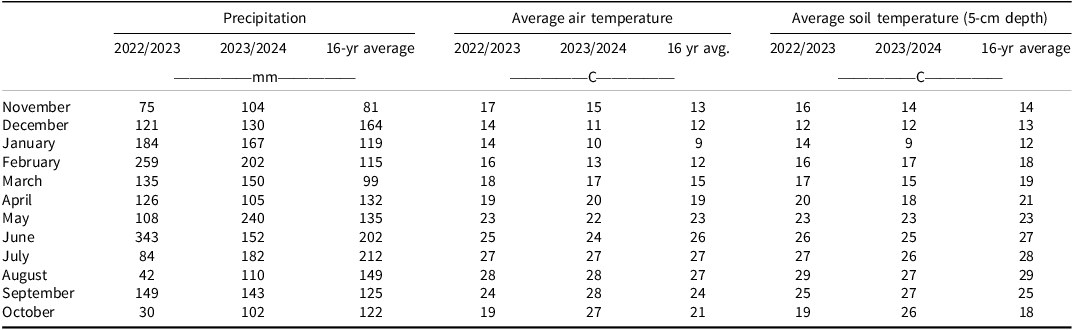
Field experiments were conducted during the 2023 and 2024 growing seasons at the West Florida Research and Education Center near Jay (30.776542°N, 87.147662°W; elevation 62 m asl). The study fields had previously been planted with soybean in both years. The soil at the research site is classified as Red Bay fine sandy loam (fine-loamy, kaolinitic, thermic Rhodic Kandiudults), with an organic matter content of 2.1% and a pH of 5.6. Naturally occurring weed populations were used to evaluate the effects of experimental treatments. The dominant weed species across both years included Benghal dayflower, crowfoot grass, goosegrass, red spiderling, and sicklepod. Additional weed species, such as barnyardgrass [Echinochloa crus-galli (L.) P. Beauv.], Florida beggarweed, and ivyleaf morningglory [Ipomoea hederacea (L.) Jacq.], were also present but occurred inconsistently across plots and were therefore excluded from statistical analyses. Weather data, including monthly cumulative rainfall and average soil and air temperatures during the peanut growing period, are summarized in Table 1.
Weather conditions at West Florida Research and Education Center, during the experiment period. a

a Sixteen-year averages are 2007 to 2023.
Experimental Design and Treatments
The experiment was arranged in a randomized complete block design with a split-split-plot arrangement and four replications. Tillage system was assigned as the main plot factor, with two levels: conventional tillage and strip-tillage. In the conventional tillage system, the soil was prepared using a tractor-mounted moldboard plow to a depth of 8 cm, followed by disking, harrowing, and leveling prior to planting. In the strip-tillage system, paraquat (Gramozone SL 2.0, Syngenta Crop Protection, Greensboro, NC) was applied at 1.1 kg ai ha−1 at 1 wk before planting to terminate existing vegetation. Planting rows were then prepared using a strip-tillage implement, leaving interrow areas undisturbed (Price and Wilcut Reference Price and Wilcut2002). The subplot factor consisted of three planting dates: early (late April), mid (mid-May), and late (early June). Herbicide programs, assigned as the sub-sub-plot factor, included three levels (described in Table 2): intensive herbicide input (preemergence followed by early postemergence followed by mid-postemergence applications), reduced herbicide input 1 (preemergence followed by mid-postemergence herbicides), and reduced herbicide input 2 (preemergence followed by early postemergence herbicides). A nontreated control was included for comparison in both study years. Peanut cultivar Georgia-12Y was planted in single rows on 91-cm centers at a seeding rate of 20 seeds m−1 across all planting date treatments. Each plot measured 7.6 m in length and 3.6 m in width. Preemergence herbicides were applied the day after planting, early postemergence herbicides at 30 d after planting (DAP), and mid-postemergence herbicides at 60 DAP. All herbicide treatments were applied using a CO2-pressurized backpack sprayer equipped with TTI11002 nozzles (TeeJet Technologies, Springfield, IL), calibrated to deliver 140 L ha−1 at a travel speed of 4.8 km h−1. All agronomic practices, including fertilizer, fungicide, insecticide, and gypsum applications, followed recommendations provided by the University of Florida Cooperative Extension Service (Wright et al. Reference Wright, Tillman, Small, Ferrell and DuFault2016).
Herbicide programs evaluated including the elimination of either none or one of the herbicide application timings.

a Abbreviations: EPOST, early postemergence; MPOST, mid-postemergence; PRE, preemergence.
b Valor SX; Valent U.S.A. Corporation, Walnut Creek, CA (0.06 kg ai ha−1).
c Gramoxone SL 3.0; Syngenta Crop Protection, LLC, Greensboro, NC (0.25 kg ai ha−1).
d Basagran; Winfield Solutions, Research Triangle Park, NC (0.33 kg ai ha−1).
e Dual Magnum; Syngenta, Crop Protection (1.33 kg ai ha−1).
f Storm; United Phosphorus Inc., King of Prussia, PA (0.25 kg ai ha−1).
g Butyric 200; Winfield Solutions (0.25 kg ai ha−1).
h Strongarm; Dow AgroScience, Indianapolis, IN (0.22 kg ai ha−1).
Data Collection
Data were collected on weed control, weed density and biomass, peanut canopy height, and peanut yield. Weed density and biomass were assessed at early season and late-season intervals corresponding to 28 d after preemergence and mid-postemergence herbicide applications, respectively. Weed density was determined by counting the total number of individual weeds within two 0.5-m2 quadrats, randomly placed in the two center rows of each plot. Weeds within each quadrat were harvested by clipping at the soil surface, oven-dried at 60 C for 48 h, and weighed to determine dry biomass, expressed in grams per square meter (g m−2). Peanut canopy height was measured from the soil surface to the top of the canopy of four plants in the two center rows of each plot. At harvest maturity, plants in the center two rows of each plot were mechanically inverted using a digger-shaker-inverter (Kelley Manufacturing, Tifton, GA) and subsequently harvested using a two-row peanut combine (Lilliston, Albany, GA). Digging timing was determined using the hull-scrape maturity profile board method, which classifies pods according to mesocarp color to estimate days until optimum digging, as described by Williams and Drexler (Reference Williams and Drexler1981). Yield data were expressed in kilograms per hectare (kg ha−1) and adjusted to 10.5% moisture content, following the method described by Mulvaney and Devkota (Reference Mulvaney and Devkota2020).
Statistical Analysis
Data were analyzed using the GLIMMIX procedure in SAS (version 9.4) (SAS Institute Inc., 2012). The initial model included year, tillage system, planting date, herbicide program, and all interactions involving year. When significant year by treatment interactions were detected, data were analyzed separately by year; otherwise, data were pooled across years. For pooled or within-year analyses, tillage system, planting date, and herbicide program were treated as fixed effects, and all two-way and three-way interactions (tillage by planting date by herbicide program) were included in the model. Year and replication nested within year were considered random effects. Data were evaluated for normality and homogeneity of variance, and square-root transformations were applied when necessary. Treatment means were separated using the Tukey HSD test at P ≤ 0.05, and back-transformed means are presented.
Results and Discussion
Early Season Weed Control
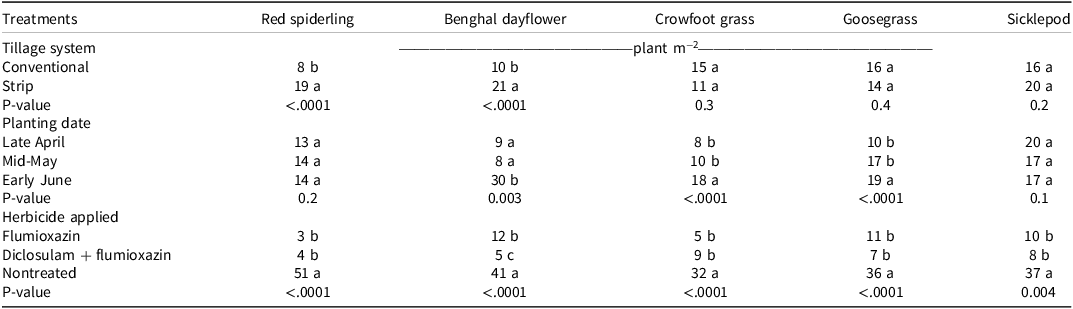
No significant treatment by year interactions were detected; therefore, data were pooled across years. Tillage system significantly influenced red spiderling and Benghal dayflower densities at 28 d after preemergence herbicide application (Table 3). Early season densities of red spiderling and Benghal dayflower were 57% and 52% lower, respectively, under conventional tillage than under strip-tillage. Reduced weed densities under conventional tillage were likely associated with less favorable conditions for germination and emergence of small-seeded species. Soil disturbance under conventional tillage redistributes weed seeds deeper within the soil profile, limiting their exposure to light and reducing germination potential (Ghosh et al. Reference Ghosh, Das, Kumar, Dubey, Saurabh, Prakash, Raman, Raj, Kumar, Barman and Das2025; Oreja et al. Reference Oreja, Torcat Fuentes, Barrio, Schiavinato, Rosso and de la Fuente2025). Previous studies have shown that conventional tillage that incorporates disking and cultivation typically buries weed seeds at depths of 2 to 5 cm, whereas reduced tillage systems concentrate viable seeds within the upper 2 cm of soil, where emergence is more favorable (Chauhan and Johnson Reference Chauhan and Johnson2009; Farmer et al. Reference Farmer, Bradley, Young, Steckel, Johnson, Norsworthy, Davis and Loux2017). These findings are consistent with earlier reports documenting greater Benghal dayflower populations under reduced tillage systems compared with conventional tillage (Brecke et al. Reference Brecke, Stephenson and Hutto2005). In addition, species that are capable of vegetative propagation, such as Benghal dayflower, are often favored in minimally disturbed soils, contributing to their persistence in conservation tillage systems (Matloob et al. Reference Matloob, Khaliq, Tanveer, Hussain, Aslam and Chauhan2015).
Effects of tillage system, planting date, and herbicide program on weed densities at 28 d after preemergence herbicide application, averaged over 2 yr. a

a Means within a column followed by a different letter are significantly different at α ≤ 0.05.
Tillage system had no significant effect on density of sicklepod (Table 3). The lack of response may be attributed to the species’ relatively large seed size (weighing 23 to 28 mg) and reduced dependence on light for germination (Leishman and Westoby Reference Leishman and Westoby1994; Norsworthy and Oliveira, Reference Norsworthy and Oliveira2006). Larger-seeded species such as sicklepod possess greater carbohydrate reserves, enabling successful emergence from greater soil depths and under low-light conditions (Clay and Griffin Reference Clay and Griffin2000; Milberg et al. Reference Milberg, Andersson and Thompson2000). Previous studies examining tillage effects on sicklepod have reported variable responses. Consistent with the present findings, Brecke and Shilling (Reference Brecke and Shilling1996) observed no effect of tillage on sicklepod density. In contrast, Barnes and Oliver (Reference Barnes and Oliver2003) reported improved sicklepod control under conventional tillage compared with a no-till system.
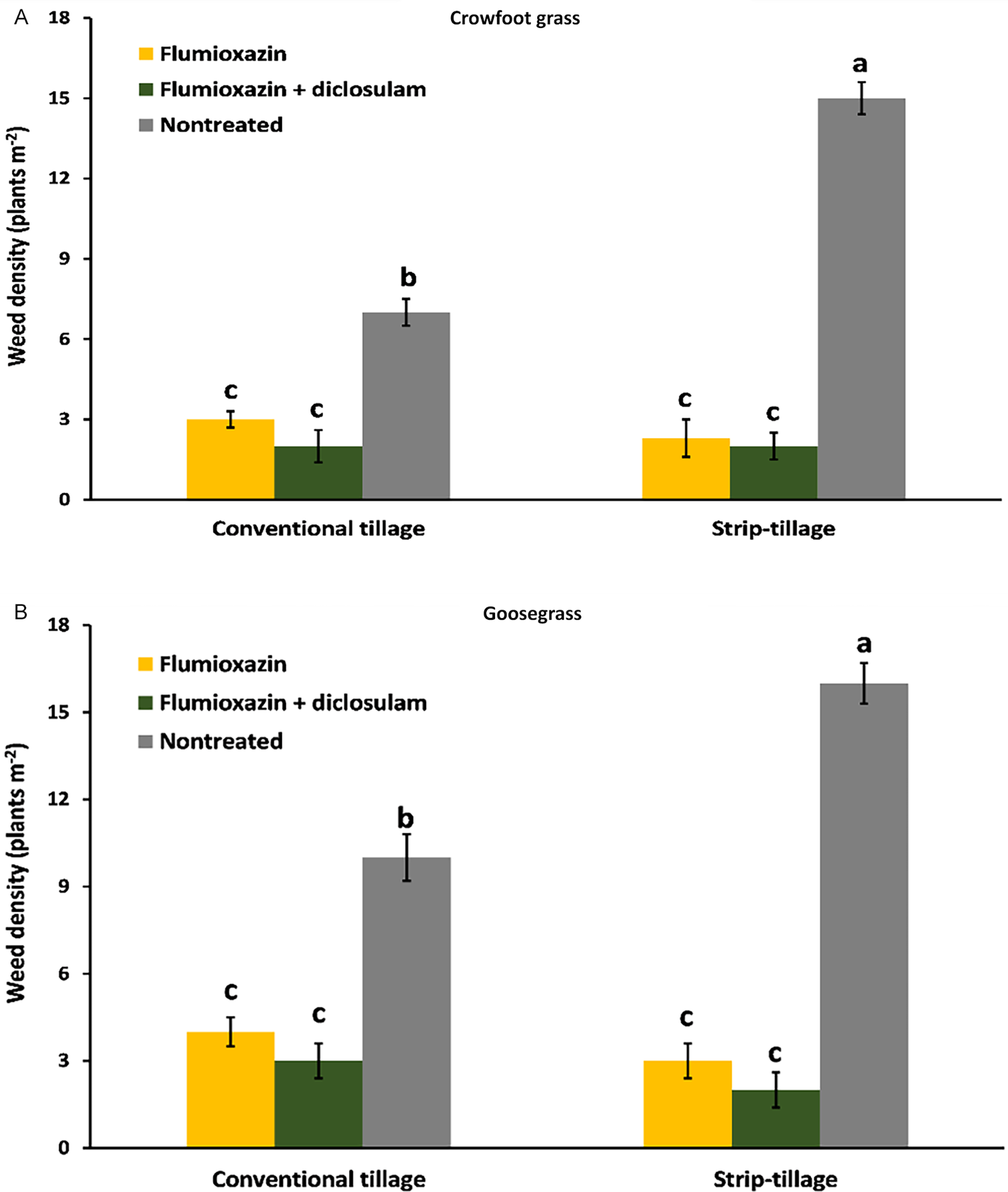
The main effect of tillage system did not affect the densities of crowfoot grass and goosegrass. However, significant tillage by preemergence herbicide interactions were detected for both species (Figure 1). In the absence of preemergence herbicide, strip-tillage resulted in the greatest densities of crowfoot grass (14 plants m−2) and goosegrass (16 plants m−2), representing increases of 75% and 60%, respectively, compared with conventional tillage (Figure 1). When flumioxazin was applied alone or in combination with diclosulam, densities of both species were reduced to 2 to 3 plants m−2 for crowfoot grass and 3 to 4 plants m−2 for goosegrass, with no differences between tillage systems. These results indicate that preemergence herbicide efficacy was not influenced by tillage system. Greater grass densities in untreated strip-tillage plots likely reflect minimal soil disturbance, which maintains weed seeds near the soil surface where conditions favor germination. In contrast, conventional tillage redistributes seeds deeper in the soil profile, potentially reducing emergence of small-seeded grasses. Similar trends have been reported for goosegrass under reduced or zero-tillage systems (Chauhan and Johnson Reference Chauhan and Johnson2008). Although strip-tillage concentrates seeds near the soil surface (Hossain et al. Reference Hossain, Begum, Hashem, Rahman, Ahmed, Hassan, Javed, Shabbir, Hadifa, Sabagh and Bell2021), this positioning may enhance herbicide interception and activity, explaining the comparable weed suppression observed across tillage systems when preemergence herbicides were applied.
Effect of tillage system and herbicide program interaction on crowfoot grass (A) and goosegrass (B) densities in peanut 28 d after preemergence herbicide application. Data are averaged over 2 yr. Bars with the same letter are not significantly different at α ≤ 0.05.

Planting date did not affect densities of red spiderling or sicklepod at 28 d after preemergence herbicide application (Table 3). However, densities of Benghal dayflower, crowfoot grass, and goosegrass were significantly influenced by planting date. Compared with June planting, planting peanut in April and May resulted in lower Benghal dayflower densities (8 to 9 plants m−2) than June planting (30 plants m−2). No differences were observed between April and May planting dates. Similarly, crowfoot grass densities were approximately 50% lower when planting occurred in April and May (8 to 10 plants m−2) than in June (18 plants m−2). Goosegrass density was lowest when peanut was planted in April (10 plants m−2) and increased to 17 to 19 plants m−2 with May and June plantings, representing a 70% to 90% increase relative to April (Table 3). These results indicate that emergence of Benghal dayflower, crowfoot grass, and goosegrass increased as planting was delayed. This response likely reflects the relatively late emergence patterns of these species (Chauhan and Johnson Reference Chauhan and Johnson2009; Norsworthy Reference Norsworthy2008). Similar trends were reported by Webster et al. (Reference Webster, Grey, Flanders and Culpepper2016), who observed peak Benghal dayflower emergence after June in cotton. Although peanut is a poor early season competitor because of its short stature and slow canopy development (Chaudhari et al. Reference Chaudhari, Jordan, Grey, Prostko and Jennings2018), earlier planting likely shifted the period of reduced competitiveness ahead of peak weed emergence. Consequently, April and May plantings of peanut improved early season crop-weed competition and reduced weed densities.
Herbicide program significantly affected the density of all evaluated weed species at 28 d after preemergence herbicide application (Table 3). Relative to the nontreated control, preemergence applications of flumioxazin, applied alone or in combination with diclosulam, improved control of all species. When applied alone, flumioxazin reduced weed densities by 69% to 94%. The addition of diclosulam to flumioxazin did not improve control of red spiderling, crowfoot grass, goosegrass, or sicklepod. In contrast, the flumioxazin + diclosulam mixture significantly enhanced Benghal dayflower control, reducing density by 58% compared with flumioxazin alone (Table 3).
Late-Season Weed Density and Biomass
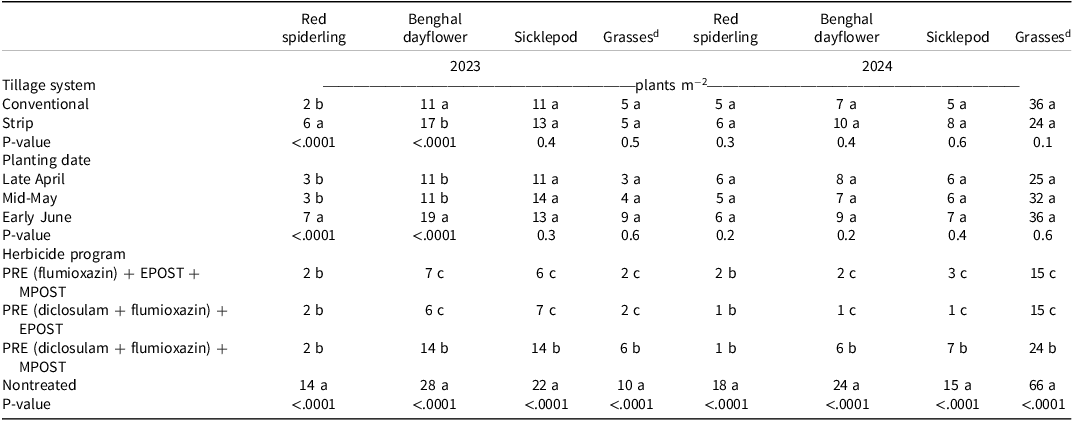
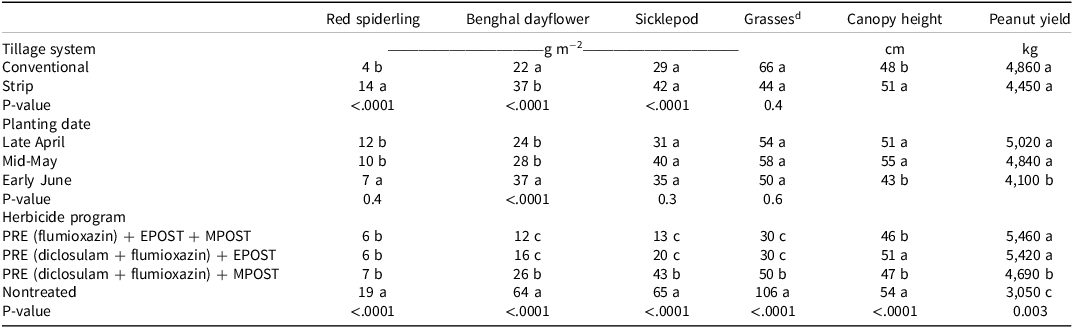
Significant year by treatment interactions were detected for weed densities at 28 d after mid-postemergence herbicide application; therefore, density data are presented separately by year (Table 4). In contrast, no significant year by treatment interactions were observed for weed biomass; therefore, biomass data were pooled across years (Table 5). In 2024, tillage system did not significantly affect densities of red spiderling, Benghal dayflower, sicklepod, or combined grass species (crowfoot grass and goosegrass) at 28 d after mid-postemergence application. However, in 2023, conventional tillage reduced red spiderling and Benghal dayflower densities by 67% and 35%, respectively, compared with strip-tillage at the late-season evaluation. Tillage system also influenced late-season weed biomass. The biomass values for red spiderling, Benghal dayflower, and sicklepod were reduced by 71%, 41%, and 31%, respectively, with conventional tillage relative to strip-tillage, whereas the biomass of grass weeds was unaffected (Table 5). Greater weed biomass under strip-tillage likely reflects the relatively undisturbed soil environment, which conserves soil moisture and nutrients and may promote more vigorous weed growth (Nichols et al. Reference Nichols, Verhulst, Cox and Govaerts2015). Similar responses have been reported in previous studies documenting increased weed biomass under reduced or no-tillage systems (Ngwira et al. Reference Ngwira, Aune and Thierfelder2014). Although sicklepod density was not affected by tillage in the present study, reduced late-season biomass under conventional tillage suggests that soil disturbance may limit plant growth and competitiveness later in the season. This response may provide an important management advantage, because large sicklepod plants can interfere with peanut digging and harvesting operations (Daramola et al. Reference Daramola, MacDonald, Kanissery, Tillman, Singh, Ajani and Devkota2024).
Effects of tillage system, planting date, and herbicide program on weed densities at 28 d after mid-postemergence herbicide application. a –c

a Abbreviations: EPOST, early postemergence; MPOST, mid-postemergence; PRE, preemergence.
b Means within a column followed by a different letter are significantly different at α ≤ 0.05.
c EPOST herbicides (paraquat + bentazon + S-metolachlor) were applied at 30 d after planting. MPOST herbicides (acifluorfen:bentazon + 2,4-DB) were applied at 60 d after planting.
d Grasses include crowfoot grass and goosegrass.
Effects of tillage system, planting date, and herbicide program on weed biomass at 28 d after mid-postemergence herbicide application, averaged over 2 yr. a –c

a Abbreviations: EPOST, early postemergence; MPOST, mid-postemergence; PRE, preemergence.
b Means within a column followed by a different letter are significantly different at α ≤ 0.05.
c EPOST herbicides (paraquat + bentazon + S-metolachlor) were applied at 30 d after planting. MPOST herbicides (acifluorfen:bentazon + 2,4-DB) were applied at 60 d after planting.
d Grasses include crowfoot grass and goosegrass.
Planting date did not significantly affect late-season densities of sicklepod or combined grass species (crowfoot grass and goosegrass) in either 2023 or 2024 (Table 4). However, planting date influenced red spiderling and Benghal dayflower densities in 2023. April and May plantings reduced red spiderling and Benghal dayflower densities by 57% and 42%, respectively, compared with June planting. In contrast, planting date had no effect on the densities of these species in 2024. The greater late-season densities observed with the June planting in 2023 may be related to elevated temperatures and high amounts of late-summer rain (Table 1), which likely favored late-season weed emergence. In addition, peanut planted in May had achieved full canopy closure by the time of evaluation, whereas June-planted peanut attained only 86% canopy cover. Reduced canopy development when peanut was planted in June may have increased light penetration to the soil surface, thereby promoting red spiderling and Benghal dayflower emergence and growth. Although information on red spiderling germination ecology is limited, these results suggest that this species, like Benghal dayflower, may pose a greater challenge in late-planted peanut. With respect to biomass (Table 5), planting date significantly affected Red spiderling and Benghal dayflower. Benghal dayflower biomass was reduced by 24% to 35% when peanut was planted, respectively, in April and May, relative to a June planting. Red spiderling biomass was reduced by 30% to 41% with a June planting compared with earlier plantings. The lack of planting date or tillage effects on broadleaf weed densities in 2024 may be attributed to increased competition from grass species, which were more prevalent late in the season. Broadleaf weed populations were generally lower in 2024, particularly in grass-infested plots, consistent with previous findings that dense grass stands can suppress broadleaf weeds through shading and competition for water and nutrients (Procopio et al. 2004).
Herbicide treatment significantly influenced densities and biomass of all evaluated weed species at 28 d after mid-postemergence application in both years (Tables 4 and 5). All herbicide applications resulted in lower weed densities and biomass relative to the nontreated controls. Red spiderling densities and biomass were similar among herbicide treatments, indicating that a reduced-input option consisting of preemergence followed by either early postemergence or mid-postemergence applications were as effective as more intensive applications that included preemergence, early postemergence, and mid-postemergence treatments. In contrast, treatments that excluded early postemergence and relying only on preemergence and mid-postemergence applications resulted in greater densities and biomass of Benghal dayflower, sicklepod, and grass species compared with treatments that incorporated early postemergence herbicides. The reduced performance of these treatments likely reflects the absence of early postemergence suppression, allowing weeds to reach advanced growth stages before the mid-postemergence application of herbicides. These results highlight the importance of timely early postemergence treatments for managing rapidly growing species such as Benghal dayflower, sicklepod, and annual grasses. Furthermore, inclusion of a mid-postemergence application in this study did not improve suppression of Benghal dayflower, sicklepod, or grass species beyond that achieved with preemergence followed by early postemergence treatments. Both programs resulted in similar weed densities and biomass at 28 d after mid-postemergence application (Tables 4 and 5). However, this response is likely influenced by the specific mid-postemergence herbicide used, because the label of the product applied in this study indicates it has limited activity on these species. Previous research indicates that alternative mid-postemergence herbicides, such as imazapic, can provide improved control or suppression of sicklepod and annual grasses depending on application timing and weed size (Daramola et al. Reference Daramola, MacDonald, Kanissery, Tillman, Singh, Ajani and Devkota2024, Reference Daramola, MacDonald, Kanissery, Tillman, Singh, Ajani and Devkota2025; Grey et al. Reference Grey, Bridges, Prostko, Eastin, Johnson and Vencill2003). Therefore, the contribution of mid-postemergence herbicides to overall weed management may vary depending on herbicide selection and the target weed spectrum.
Peanut Canopy Height and Yield
No significant treatment by year interactions were detected for peanut canopy height; therefore, data were pooled across years. Canopy height at 28 d after the mid-postemergence herbicide application was significantly influenced by tillage system, planting date, and herbicide program (Table 5), whereas the three-way interaction among these factors was not significant. Strip-tillage resulted in a canopy height increase of 6% compared with conventional tillage. This response may be related to improved soil moisture retention with reduced tillage systems, as previously reported (Van den Putte et al. Reference Van den Putte, Govers, Diels, Gillijns and Demure2010). Peanut planted in June exhibited 16% to 22% lower canopy height than peanut planted in April and May, with no differences between April and May. Reduced canopy development with the June planting was likely associated with lower precipitation and drought stress during mid-season to late-season growth (Table 1), consistent with previous reports linking limited rain to reduced peanut canopy development (Daramola et al. Reference Daramola, MacDonald, Kanissery, Tillman, Singh, Ajani and Devkota2024; Kharel et al. Reference Kharel, Devkota, MacDonald and Tillman2022).
Peanut canopy height was reduced by 8% to 10% when early postemergence applications included paraquat + bentazon + S-metolachlor relative to programs without this treatment. Despite this temporary reduction, peanut yield was not adversely affected. Transient stunting and reduced canopy growth are common when paraquat is applied to peanut, but previous studies indicate that yield is generally unaffected when applications occur before the pegging stage (Daramola et al. Reference Daramola, MacDonald, Kanissery, Tillman, Singh, Ajani and Devkota2024; Eason et al. Reference Eason, Grey, Tubbs, Prostko and Li2020).
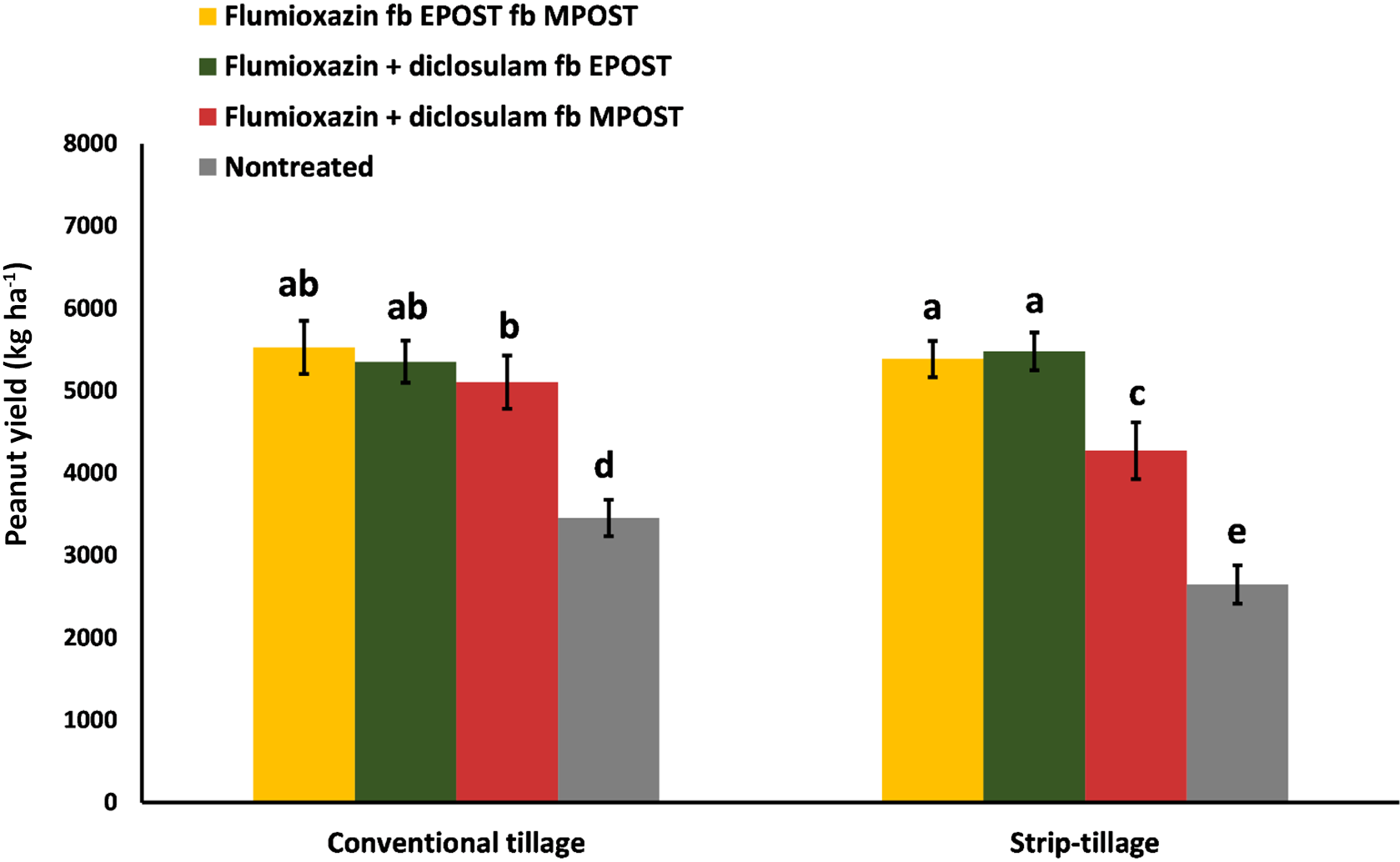
Peanut yield was not influenced by tillage system but was significantly affected by planting date, herbicide program, and the tillage by herbicide program interaction (Table 5; Figure 2). When effective weed control was achieved using either preemergence followed by early postemergence herbicides or more comprehensive programs that included mid-postemergence applications, yields were similar between conventional and strip-tillage systems, indicating that yield potential under strip-tillage can be comparable to conventional systems when weed interference is minimized. In contrast, under reduced-input programs that excluded early postemergence applications or in the absence of herbicide treatment, yields were 23% to 30% greater under conventional tillage than under strip-tillage (Figure 2). This difference corresponds with greater late-season weed biomass observed in strip-tillage systems (Table 5), which likely increased crop-weed competition during critical reproductive growth stages. Previous research has shown that early season and mid-season weed interference can substantially reduce peanut yield by limiting light interception, soil moisture availability, and nutrient uptake (Everman et al. Reference Everman, Burke, Clewis, Thomas and Wilcut2008). Additionally, reduced soil disturbance and increased residue in strip-tillage systems can enhance weed emergence and persistence, thereby increasing reliance on effective herbicide programs for maintaining yield (Ngwira et al. Reference Ngwira, Aune and Thierfelder2014; Nichols et al. Reference Nichols, Verhulst, Cox and Govaerts2015). The greater yield response to intensive herbicide programs observed with strip-tillage (21% to 22%) compared with conventional tillage (5% to 8%) further supports this interpretation (Figure 2). These findings suggest that strip-tillage systems are more sensitive to inadequate weed control, because weeds that escape early season management can persist and exert greater competitive pressure later in the season. Similar trends have been reported in conservation tillage systems in which yield stability is closely linked to effective weed suppression (Nichols et al. Reference Nichols, Verhulst, Cox and Govaerts2015). Overall, these results demonstrate that while strip-tillage can maintain peanut yield comparable to conventional tillage, this outcome is highly dependent on the implementation of comprehensive weed management strategies. Without adequate weed control, the yield advantages of reduced tillage systems may be offset by increased weed interference.
Effect of tillage system and herbicide program interaction on peanut yield in 2023 and 2024 (data averaged over 2 yr). The EPOST treatment was an early postemergence application of paraquat + bentazon + S-metolachlor. The MPOST treatment was a mid-postemergence application of acifluorfen + bentazon + 2,4-DB. Bars with the same letter are not significantly different at α ≤ 0.05. Abbreviation: fb, followed by.

Practical implications
This study demonstrates that the effectiveness of tillage and planting date for weed suppression in peanut production is dependent on the dominant weed species present. Conventional tillage generally improved early season and late-season control of several problematic broadleaf weeds and may allow for reduced herbicide inputs compared with strip-tillage systems. In contrast, strip-tillage required more comprehensive and carefully timed herbicide treatments to achieve comparable weed control and yield. Late-season observations at harvest were consistent with the weed density and biomass trends observed at 28 d after mid-postemergence application, confirming that programs that included early postemergence herbicides provided more consistent season-long suppression, whereas programs that relied only on preemergence followed by mid-postemergence treatments resulted in greater late-season infestation of Benghal dayflower, sicklepod, and grass species. These findings indicate that tillage practices should be integrated with properly timed preemergence and postemergence herbicide applications to optimize weed management. In particular, early season weed control remains critically important, because delayed or insufficient control can allow weeds to persist and reduce both yield and harvest efficiency, especially for species such as sicklepod that can interfere with digging and inversion operations. While the mid-postemergence treatment evaluated in this study provided limited additional benefit beyond effective preemergence followed by early postemergence treatments, this response is herbicide-specific. Alternative mid-postemergence herbicides, such as imazapic, may provide improved control of species like sicklepod and annual grasses when applied at appropriate timings and weed growth stages, highlighting the importance of selecting herbicides based on the target weed spectrum.
Planting peanut in late April or early May reduced late-season weed density and biomass compared with June planting, likely by promoting earlier peanut canopy development and improving crop competition. Importantly, no tomato spotted wilt virus symptoms were observed in the peanut crops planted in April in this study, although the risk of this disease when peanut is planted early is well documented and may vary with environment and cultivar. Growers should therefore balance the benefits of early planting for weed suppression with potential disease risks and select cultivars and management practices accordingly. While conventional tillage may provide greater flexibility for herbicide reduction, effective weed control in both tillage systems depends on timely early season interventions and appropriate herbicide selection. Strip-tillage systems, in particular, require integrated and system-specific weed management practices to avoid yield losses associated with inadequate control. Future research should evaluate whether imazapic applied at approximately 28 to 32 d after planting can improve sicklepod control under diverse production conditions, particularly in relation to weed size and growth stage at application. Additionally, further studies are needed to refine herbicide programs that optimize weed control, harvest efficiency, and yield within conservation tillage systems.
Acknowledgment
We thank the field technical support team at West Florida Research and Education Center, in Jay, Florida, for their technical support.
Funding
This research received financial support from the U.S. Department of Agriculture–National Institute of Food and Agriculture via Hatch Project FLAWFC-005843, and from the Florida Peanut Producers Association Checkoff fund, G000430-2200-60820000-209-P0177604.
Competing Interests
The authors declare they have no competing interests.


 Open access

