

Introduction
Sustainability has been one of the main keywords of the Common Agricultural Policy (CAP) of the European Union. It means both sustainable rural incomes and also sustainable environmental responses to management systems, including biodiversity enhancement or maintenance. Overgrazing is an environmental problem in many favoured areas but in other less favoured areas undergrazing or absence of grazing is the big environmental, economic and therefore social problem resulting in the abandonment of these marginal areas. This situation occurs when the main factor affecting sustainability and biodiversity, that is grazing animal management, is not controlled (Milne and Osoro, Reference Milne, Osoro, Laker and Milne1997). It is clear that shepherds and animals, working together have created the landscape and its biodiversity. Moderate grazing pressure has been suggested as a means to both increase biodiversity level and to achieve economic sustainability because it will provide an adequate level of animal feeding and reproduction (Jones, Reference Jones, Wheeler and Mochrie1981).
We know that goats have the capacity to control biomass accumulation of gorse (Krause et al., Reference Krause, Beck and Dent1984; Radcliffe, Reference Radcliffe1985) and other species with low palatability (Fraser and Gordon, Reference Fraser, Gordon, Laker and Russel1995) and the capacity to adapt to harsh environmental conditions (Silanikove, Reference Silanikove2000). In sheep, differences between breeds have been observed in herbage intake (Vulich et al., Reference Vulich, Hanrahan and O'Riordan1990), diet selection (Revesado et al., Reference Revesado, Mantecón, Frutos, González, Lawrence, Parker and Rowlinson1994) and even in ruminal degradation rate (Carro et al., Reference Carro, Giradles, Ramilla, González and Mantecón1993). However very little information is available about differences in grazing behaviour and performance between breeds of goats managed on marginal lands in temperate areas. Hoste et al. (Reference Hoste, Leveque and Dorchies2001) found some differences in grazing behaviour between Angora and Saanen goat breeds in French rangelands.
The objective of this work was to study the grazing behaviour (diet components and chemical composition) and live-weight changes per animal and per hectare during the grazing season of two breeds of non-lactating goats, managed under poor soil and vegetation quality conditions, with the aim of improving management of these marginal lands for sustainable production systems that maintain high levels of biodiversity and reduce the fire risk by controlling biomass accumulation. Parallel studies of the effects on floral and faunal diversity and their relationships are being prepared by R. Celaya et al. and B.M. Jáuregui et al., respectively (personal communications).
Material and methods
Study site
The experimental plots were located in Illano, western Asturias (north-west Spain), at 900 to 950 m a.s.l. (43° 21′ N, 6° 53′ W). The climate is characteristic of medium altitude mountains in temperate humid areas under oceanic influence, with mean annual rainfall of 1600 mm, mostly occurring from October to January, and mean annual temperature of 10.2°C, with a minimum monthly mean of 5.2°C in February and a maximum monthly mean of 16.9°C in August. The vegetation was a heath community dominated by heather species (Erica umbellata, E. cinerea, Calluna vulgaris and Daboecia cantabrica) and gorse (Ulex gallii) that constitute a short shrubland of 25 to 30 cm canopy height. Tall heather species (up to 2 m high) such as E. australis subsp. aragonensis and E. arborea were also more sparsely present. Herbaceous plants were scarce and covered the gaps remaining among the shrubs; the most abundant were tough and unpalatable grasses such as Pseudarrhenatherum longifolium and Agrostis curtisii.
Experimental design
Nine plots of 0.6 ha, allocated in three blocks, were established on a west facing slope. Three grazing treatments were randomly allocated within each of the three blocks: Local Celtiberic goat breed at high stocking rate (LH), Cashmere breed at high stocking rate (CH) and Cashmere breed at low stocking rate (CL). The high stocking rate was seven Local goats per plot (11.7 per ha) or nine Cashmere goats per plot (15 per ha) while the low stocking rate was four Cashmere goats per plot (6.7 per ha). The different animal numbers in LH and CH was because of the different live weight (LW) of Local goats (43 kg LW) and Cashmere goats (33 kg LW).
Animals and management
Non-lactating, non-pregnant female goats were set-stocked in all treatments. The experiment lasted 4 years (2002-2005). The grazing season extended from May-June to October-November, depending on the animals' condition. In 2005 the grazing season finished at the end of August because of a severe drought during the entire summer that reduced the available green foliage, penalising the animal performance in LH treatment, where the mean body condition of the animals was 2.1.
Vegetation sampling and measurements
Plant availability. The above ground biomass on the short shrubland was sampled by cutting the vegetation contained in five randomly placed 0.2 × 1 m2 quadrats in each paddock to ground level. Biomass harvesting was carried out three times in each year, at the beginning of the grazing season (May-June), in August and in October (except in 2005). The harvested material was frozen until it was manually sorted into its main components (heather, gorse, other shrubs and herbaceous plants).
Biomass of tall heather was assessed twice (June 2003 and 2005) from 10 to 20 Erica shrubs randomly selected in each grazed plot and in an adjacent ungrazed control plot. One shoot per shrub was cut at ground level and green shoots and leaves were manually sorted from the woody stems.
Plant material was dried in an air-forced oven at 80°C for 24 h and weighed.
Plant cover was assessed by recording 100 random contacts per plot using a HFRO swardstick (Barthram, Reference Barthram1986) at the beginning (May), middle (August) and end (October) of each grazing season.
Chemical composition. Samples of the vegetation components collected at different seasons, coinciding with the dates of diet composition estimates (October 2003; July, August and October 2004; July and August 2005), were immediately frozen at − 20°C and then freeze-dried and milled through a 1-mm screen. Samples were analysed for ash and Kjeldahl-N according to the Association of Official Analytical Chemists procedures (AOAC, 1990). Crude fat (CF) was determined (AOAC, 1990) using petroleum ether as a solvent (Tecator Soxtec System HT 1043). Neutral-detergent fibre (NDF), acid-detergent fibre (ADF), acid-detergent lignin (ADL) and nitrogen bound to acid-detergent fibre (ADFN) were analysed by the methods of Van Soest et al. (Reference Van Soest, Robertson and Lewis1991) and Robertson and Van Soest (Reference Robertson, Van Soest, James and Theander1981). Hemicellulose and cellulose were calculated as the difference between NDF and ADF, and ADF and ADL, respectively.
Measurements in animals
Diet composition. Diet composition of each individual goat was estimated on six different dates (October 2003; July, August and October 2004; July and August 2005) using the n-alkane technique. Faecal and herbage samples of the main vegetation components, tall heather (Erica australis and E. arborea), short heather (E. umbellata and E. cinerea), gorse and grasses (Pseudarrhenatherum longifolium and Agrostis curtisii) were collected at each sampling date and their alkane profile was analysed according to the method of Mayes et al. (Reference Mayes, Lamb and Colgrove1986) with minor modification (Oliván and Osoro, Reference Oliván and Osoro1999). The proportions of the main vegetation components in the diet were estimated using an optimisation procedure which minimises the sum of squared discrepancies between the actual alkane proportions in faeces (after an adjustment for incomplete faecal recovery) and the calculated proportions (different combinations of vegetation components) (Dove and Moore, Reference Dove and Moore1995). Alkane faecal concentrations (from C25 to C33) were corrected with recovery values obtained in previous validation studies (Ferreira et al., Reference Ferreira, Oliván, Rodrigues, Garcia and Osoro2005) performed in metabolic pens with goats fed on diets containing different combinations of the main vegetation components present in the current field study.
Live weight and body condition. Animals were weighed and their body condition scored (Russel, Reference Russel1990) at the beginning and end of each experimental grazing season and monthly during the grazing season. To study the changes in LW and body condition, grazing season was divided in two periods: period 1 (from May-June to mid August) and period 2 (from August to October-November). LW changes per hectare (productivity) were the result of the individual daily LW changes multiplied by the grazing days and the stocking rate (number of goats per hectare).
Statistical analysis
Data on animal performance (for period 1, period 2 and the whole grazing season) were analysed by analysis of variance (anova). Effects of year (2002, 2003, 2004), block (1, 2, 3) and treatment (CL, CH, LH), and the interactions between them were examined with individual LW and body condition changes as dependent variables. Data on productivity per hectare from the experimental plots were analysed for year, treatment and year × treatment effects. Year 2005 was excluded from the analysis as in this year the animals began the grazing season with a significantly lower body condition score and thus showed a compensatory performance during spring, and because goats had to be taken out of the experimental plots early due to the severe summer drought. Breed effect was studied within the high stocking rate treatments (CH v. LH) while the effects of stocking rate were studied within the Cashmere breed (CH v. CL).
Relationships between productivity and available vegetation (plant cover, biomass) were studied by bivariate Pearson correlation analysis, distinguishing between breeds and grazing periods.
Results
Available vegetation
Biomass. Total above ground biomass on the short heathland was higher (P = 0.055) during 2003-2005 under the low stocking rate, CL treatment (14 666 kg dry matter (DM) per ha), than under the high stocking rate treatments, CH (11 127 kg DM per ha) and LH (9 378 kg DM per ha). The biomass composition changed little over time with the Cashmere breed treatments, being higher (P < 0.05) for percentage of heather (69% in CL, 64% in CH) and lower (P < 0.05) for percentage of herbaceous plants (8 to 12%) than under the LH treatment (54% heather, 17% herbs). There were no significant differences between treatments in the biomass percentages of gorse and other shrubs (Figure 1).
Plant biomass quantity and composition from 2003 to 2005 under goat grazing on each treatment. CL: Cashmere breed at low stocking rate; CH: Cashmere breed at high stocking rate; LH: Local breed at high stocking rate. a: May-June; b: August; c: October. Vertical bars show standard errors of the means for total biomass.

Tall heather. Biomass of tall heather scrubs (means of 2003 and 2005) was 107, 88 and 64 g DM per shoot under CL, CH and LH treatments respectively (s.e.d. 10.7, P = 0.081). These shoot weights under goat grazing were significantly (P < 0.01) lower than for shrubs sampled from the ungrazed areas (195 g DM). Leaves accounted for 14.2%, 9.5% and 1.5% (s.e.d. 1.72, P < 0.01) of the total DM of the shoot for CL, CH and LH treatments respectively, significantly (P < 0.05) lower than for ungrazed shoots where leaf accounted for 20.6% of total DM.
Cover. Percentage cover of the different vegetation categories under the CL treatment were similar right through the experiment whereas more marked changes were observed at high stocking rate. Cover of short and tall heather both decreased more under LH than under CH whilst the cover of herbs and dead matter increased more, with no differences in gorse cover (Table 1).
Cover mean percentages of the heathland at the beginning of each grazing season (May-June) under three goat grazing treatments (CL: Cashmere breed at low stocking rate; CH: Cashmere breed at high stocking rate; LH: Local breed at high stocking rate)

Chemical composition. In general the chemical composition of the main components of the vegetation shows the poor nutritive value of these types of natural communities (Table 2). As expected, cell wall components (NDF) represented the highest fraction in all vegetation components. Heather species and gorse were characterised by high levels of ADL (>230 g/kg DM), contrasting with the low levels in the herbaceous species (grasses). In general CP content was low, with the exception of gorse (mean value across the grazing season 108 g/kg DM). The high CF content of the two types of heather (26 and 35 g/kg DM in short and tall heather) should be noted.
Mean (±s.e.) chemical composition (g/kg DM) of the main vegetation components found in the experimental plots across the grazing season†
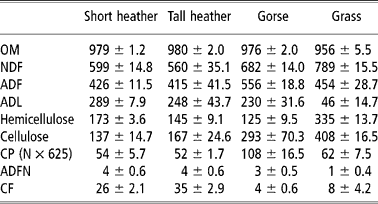
† OM = organic matter; NDF = neutral-detergent fibre; ADF = acid-detergent fibre; ADL = acid-detergent lignin; CP = crude protein; ADFN = nitrogen bound to acid-detergent fibre; CF = crude fat.
Diet composition
Heather species were the main component of the diet, in all treatments and all periods. Within these, short heather was dominant (60 to 90%), while the inclusion of tall heather was low, increasing at the end of the grazing season. Gorse was only important for Cashmere goats in July, accounting for 20 to 30% of the diet. The percentage of grasses in the diet was also very low (generally less than 15%), except in August of the last year when it constituted between 25 and 35% of the diet (Figure 2).
Diet composition of goats grazing on heathlands at different seasons. CL: Cashmere breed at low stocking rate; CH: Cashmere breed at high stocking rate; LH: Local breed at high stocking rate.

Live-weight and body condition changes
Treatment effects. Treatments had a significant (P < 0.001) effect on LW changes of goats in individual periods and over the whole grazing season (Table 3). Goats in the LH treatment lost body weight (overall mean of 30 g/day during the period 2002-2004) while Cashmere goats in treatments CH and CL were able to maintain their initial body weight. In period 1, Cashmere goats gained significantly (P < 0.001) more (35 to 37 g/day across years 2002-2005) than the local goats (8 g/day). In period 2, when the quantity and quality of available vegetation were lower as a consequence of grazing, the differences between treatments were larger than in period 1. Cashmere goats lost a mean of 28 and 40 g/day across years in period 2 for treatment CL and CH respectively, significantly (P < 0.001) less than local goats in treatment LH (79 g/day). Changes in body condition score were related to the LW changes. Goats in treatment LH lost 0.28 units of body condition during the grazing season in the period 2002-2004 while Cashmere goats in treatments CL and CH lost 0.10 and 0.09 units respectively (P < 0.001).
Live-weight (LW) and body condition (BC) changes of Cashmere goats at low (CL) or high (CH) stocking rate and of local goats at high stocking rate (LH) during the different periods† of four grazing seasons grazing on heathlands

† Period 1 from May-June to mid August; period 2 from August to October-November.
‡ Approaching significance (P < 0.1).
To study the effects of breed, the two treatments at high stocking rate (CH and LH) were compared. Local goats were significantly (P < 0.001) heavier (43.3 kg LW) than Cashmere goats (33.4 kg LW). However the differences in the body condition at the beginning of the grazing season were less than 0.1 units in any year, except in the last year (2005) when the local goats had a significantly (P < 0.001) poorer body condition (2.15) than the Cashmere goats (2.5 to 2.6). The differences in LW changes during the grazing season were highly significant (P < 0.001). Local goats had poorer LW changes than Cashmere goats, with differences across years of 8 v. 35 g/day in period 1, − 79 v. − 40 g/day in period 2 and − 30 v. − 1 g/day over the whole grazing season respectively. Thus percentage LW change relative to the initial LW also differed very significantly (P < 0.001), being +10.3% in period 1, − 6.5% in period 2 and +0.4% over the whole grazing season for Cashmere goats while for local goats the values were +1.4%, − 10.7% and − 9.4% respectively.
Local goats had greater losses in body condition in period 1 ( − 0.06 units, P < 0.01), in period 2 ( − 0.33, P < 0.001) and over the whole grazing season ( − 0.39, P < 0.001) than Cashmere goats where the changes averaged +0.06, − 0.13 and − 0.07 in period 1, period 2 and overall, respectively.
Despite the great difference in stocking rate between CL and CH (ratio of 1:2), it did not significantly affect LW changes. Only in period 2 was there a clear tendency (P = 0.078) for lower losses ( − 28 g/day) for those goats at the lower stocking rate (CL) compared with goats under the CH treatment ( − 40 g/day), with a similar difference (P = 0.058) when the changes were related to the initial live weight. Changes in body condition during the grazing periods were very similar between high and low stocking rate treatments.
Year effects. Year had a highly significant (P < 0.001) effect on LW and body condition changes in period 1, period 2 and during the whole grazing season. For the local goats LW changes tended to worsen from year to year in both periods, with the exception of the last year (2005), when the local goats were in poor body condition (2.2) at the beginning of the grazing season. However Cashmere goats maintained their live weight, although with some differences between years (Table 3).
Interactions. The year × treatment interaction was significant (P < 0.001) for the LW changes in period 1 and approached significance (P = 0.056) for the changes during the whole grazing season. Likewise this interaction was significant for percentage LW changes relative to the initial LW for period 1 (P < 0.001) and for the overall grazing season (P < 0.01).
The interaction between breed and year was highly significant (P < 0.001) for LW changes in period 1 and approached significance (P = 0.08) in period 2 and was therefore significant for the changes over the whole grazing season (P < 0.05). Other interactions were not significant for any of the dependent variables studied.
Productivity per hectare
Treatment effects. Because of the different number of animals per hectare, differences between treatments in LW change per hectare were greater than for LW change of individual animals. During period 1, the LW gain per hectare (mean of 4 years) was only 4.9 kg for the LH treatment while for treatments CL and CH it was 22.1 and 44.0 kg (P < 0.001, Table 4) respectively. Treatment also had a highly significant effect (P < 0.001) in period 2. Goats lost weight in all treatments, but local goats lost 58.8 kg/ha while Cashmere goats lost 33.9 and 11.6 kg/ha under CH and CL treatments respectively (means of 3 years). For the overall grazing season (mean of 3 years), goats lost 51.0 kg/ha in LH treatment while they maintained weight in treatment CH ( − 0.6 kg/ha) and gained 4.1 kg/ha in treatment CL (P < 0.001).
Productivity per hectare (kg live weight per ha) in goat grazing systems on heathlands under three treatments (CL: Cashmere breed at low stocking rate; CH: Cashmere breed at high stocking rate; LH: Local breed at high stocking rate)

† Period 1 from May-June to mid August; period 2 from August to October-November.
‡ Approaching significance (P < 0.1).
Year effects and interactions. Year had a significant effect on LW change per hectare in period 1 (P < 0.01) but not in period 2, in which goats lost weight in all treatments and years. Treatment × year interaction was significant (P < 0.05) for the LW changes per hectare in period 1, because the local goats gained more weight per hectare than Cashmere goats in the 1st year. However in the following years they had significantly worse LW changes per hectare than Cashmere goats (Table 4).
Correlations. Correlations showed that available vegetation affected the productivity per hectare of the two goat breeds in a different way and this was related to differences in grazing behaviour (Tables 5 and 6). The productivity of local goats in period 1 (from May to August) was positively related to total biomass (P < 0.01) and to cover percentages of both tall (P < 0.01) and short (P < 0.001) heather, while it was negatively related to the percentage of herbaceous plants (P < 0.01) and dead matter (P < 0.001). Thus, as the cover percentage of grasses was increasing and that of heather was decreasing from 2002 to 2005 (r = − 0.90, P < 0.001), the performance of local goats was worsening, except for the last year in which goats began the grazing season with a lower body condition score (2.1 v. 2.6) and so showed a compensatory performance. Therefore, it seems that local goats require at least moderate availability of green heather shoots, as they show a higher preference for these shrubs, including tall heather, than Cashmere goats. The increase in cover of grasses, with a low nutritive quality, does not compensate the progressive decrease in the availability of green heather. On the contrary, the productivity of Cashmere goats in period 1 was less affected by the available vegetation, either biomass amounts or canopy composition, and it was positively related to the percentage of herbaceous plants (P < 0.05) and negatively to gorse percentage (P < 0.1).
Correlations between productivity per hectare (kg live weight per ha) according to period† and goat breed, and the cover percentage of the main vegetation components in each experimental plot (years 2002-2004)
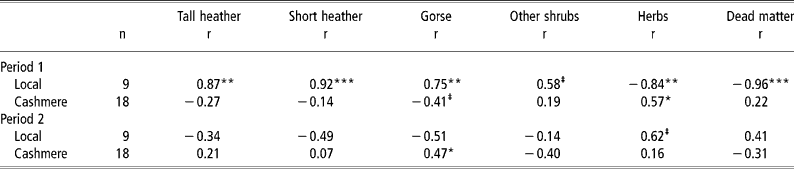
† Period 1 from May-June to mid August; period 2 from August to October-November.
‡ Approaching significance (P < 0.1).
Correlations between productivity per hectare (kg live weight per ha) according to period† and goat breed, and available biomass amount and composition (percentage of the main components) in each experimental plot (years 2002-2004)

† Period 1 from May-June to mid August; period 2 from August to October-November.
‡ Approaching significance (P < 0.1).
However, in period 2 the sign of the correlation coefficient was the opposite in most of the cases. The productivity of local goats was negatively, though non-significantly, affected by shrub percentage in the canopy while it was positively related to the percentage of herbaceous plants (P < 0.1). On the contrary, the productivity of Cashmere goats was not significantly affected by herbaceous plants and it was positively related to gorse percentage and to total biomass amount (P < 0.05). These relationships can be explained because of the higher biomass available at the lower stocking rate treatment (CL) which reduces the weight losses of these animals in the second half of the grazing season compared with the goats managed at high stocking rate (CH).
Discussion
Breed was the main factor affecting LW changes, but in this case breed also means body size, 33 v. 43 kg LW. Various studies have shown the effect of body size on efficiency and productivity. Osoro et al. (Reference Osoro, Oliván, Celaya and Martínez1999) working under alpine natural vegetation conditions with two breeds of sheep with similar body weights (33.1 and 42.4 kg) to those of goats used in the present work, found a significant interaction between the sward height of preferred species and breed on LW changes. Also the same group (Osoro et al., Reference Osoro, Martínez and Celaya2002) working in perennial ryegrass-white clover pastures with the same breeds of sheep found a better productivity of the smaller breed under any sward height conditions. In general higher individual LW gains are obtained by those animals with larger body size, but in this study this occurred only in the 1st month of the first grazing season (year 2002) when the local goats achieved higher LW gains than the Cashmere goats. Intake capacity is affected by body size, being in general higher for bigger animals, but at the same time this bigger body size results in higher total nutrient requirements for maintenance, therefore the nutrient availability for production would be lower (Silanikove, Reference Silanikove2000). Fitzhugh (Reference Fitzhugh1978) concluded that important genotype × environment interactions could affect production efficiency as a consequence of differences in energy requirements and output.
On the other hand, goat breed could be affecting grazing behaviour and diet selection capacity. In sheep, differences between breeds have been observed in herbage intake (Vulich et al., Reference Vulich, Hanrahan and O'Riordan1990), diet selection (Revesado et al., Reference Revesado, Mantecón, Frutos, González, Lawrence, Parker and Rowlinson1994) and even in ruminal degradation rate (Carro et al., Reference Carro, Giradles, Ramilla, González and Mantecón1993). Very little information is available comparing feeding behaviour of different breeds of goats. We have previously found, in plots under initial conditions, that Local goats, which are taller and bigger than Cashmere goats, showed a more browser type of foraging behaviour, eating higher percentages of Erica australis scrubs than the Cashmere goats. However, those differences in relation to browsing were not observed in the present study because at the time of the first diet selection measurements (October 2003) tall heather presence in those plots grazed under LH treatment was already clearly reduced (Table 1), the percentages of leaves in the tall heather being 2.1, 7.9 and 14.1% under LH, CH and CL treatments respectively, as a consequence of the previous grazing (years 2002 and 2003). Differences in grazing behaviour between breeds of goats were also observed by Hoste et al. (Reference Hoste, Leveque and Dorchies2001). These authors found that Angora goats did not browse whereas the average time spent browsing by Saanen does was more than 10% of their outdoors time. As consequence the time spent grazing by Angora goats was longer (close to 48% of total time) whereas it approximated only 36% in Saanen goats.
Illius and Gordon (Reference Illius and Gordon1987) indicated that body size could influence an animal's ability to harvest herbage in conditions of low availability, with larger animals being at a disadvantage in such situations. Therefore the breed differences could be largely explained by differences in body size, and the consequent allometric relationships with food intake, digestibility and selectivity.
Heather was the main component of the diet for all goats (more than 60% under any conditions), whereas gorse was only important in the diets in July (20 to 30%) though its cover was also low (8 to 17%). The higher crude fat content of heather and also the high cover of these plants would contribute to the low presence of gorse in the diet, despite the higher protein content of this legume. Clark et al. (Reference Clark, Lambert, Rolston and Dymock1982), working in pastures with 10 to 25% gorse cover, found that gorse percentage in goats' diet was 32% in summer-autumn. The percentage of gorse in the diet was lower in our conditions but the relationship between the percentage in the canopy and in the diet was similar in both studies.
Despite the capacity of goats to incorporate high percentages of woody species in their diet, the low nutritive quality of heather, as demonstrated by its inability to meet animal requirements in sheep (Hodgson and Eadie, Reference Hodgson, Eadie and O'Toole1986; Maxwell et al., Reference Maxwell, Grant, Milne, Sibbald and O'Toole1986), appears not to meet requirements even in goats. Goats exhibit a great selectivity and ability to exploit seasonal variations in the quality of the components on the dwarf-shrub community (Fraser and Gordon, Reference Fraser, Gordon, Laker and Russel1995). However that ability was very limited in the present study by the poor quality of the components including the herbaceous species whose availability was also very low. The general low protein content (6 to 7%) of the main components of the vegetation relative to the protein requirements of the goats (14% for non-lactating goats; Russel, Reference Russel1990) and the low digestibility (50 to 60%) of these components (Ferreira et al., Reference Ferreira, Oliván, Rodrigues, Garcia and Osoro2005) explain the LW mobilisation after the first few weeks during which the animals can still select new shoots with higher protein content and digestibility.
Under rangeland conditions, available quantity is not, in general, the main limiting factor and the poor quality and low digestibility of the vegetation components are the main factor affecting intake rate (Grant and Maxwell, Reference Grant, Maxwell, Usher and Thompson1988). The relationship between digestibility and intake in these vegetation types is known when the DM digestibility is lower than 0.70 (Osoro and Cebrian, Reference Osoro and Cebrián1989).
Merchant and Riach (Reference Merchant and Riach1994) indicated that goats also need green pasture with high nutritive value with a level of organic matter digestibility above 0.68. However in the present experiment the few herbaceous species (Pseudarrhenatherum longifolium and Agrostis curtisii) available had a very poor quality, and therefore, they could not compensate for the low nutritive value of the woody (heather and gorse) components as would be possible with ryegrass-white clover pastures. Clark et al. (Reference Clark, Lambert, Rolston and Dymock1982) and Radcliffe (Reference Radcliffe1986) found high percentages (50 to 70%) of grass in the diet of goats grazing on mixed vegetation of grass-clover pasture and woody species (Ulex europaeus) when the grass availability was high. Also, Oliván et al. (Reference Oliván, Osoro and Celaya1997) found that inclusion of herbaceous species was around 40% in the diet of goats grazing on plots including improved pastures but with heather-gorse vegetation covering 50 to 70% of the total area. The results of this study also confirm that goats need a proportion of high quality leafy material to maintain good levels of performance as was also observed by Hughes et al. (Reference Hughes, Sykes and Poppi1984) and Lu (Reference Lu1988).
Despite the differences in stocking rate (1:2), it did not significantly affect LW or body condition changes, only tending to be significant (P = 0.058) for the LW changes of period 2. This means that vegetation availability despite a reduction from 15 500 to 11 240 kg DM per ha in the grazing period across the 4 years did not change enough to significantly affect Cashmere LW changes. However, in all years some tendency was observed for worse individual performance under high stocking rate in period 2, when herbage availability was reduced as consequence of the grazing pressure in period 1. This confirms again that quality, in general terms, is a more important factor than availability under rangeland conditions.
The highest productivity was achieved under the CL treatment. Looking at the changes in biomass it appears that it had a low-moderate grazing pressure. Jones (Reference Jones, Wheeler and Mochrie1981) indicated that productivity was related to grazing pressure with decreasing the productivity under both low and high grazing pressures. Also moderate grazing pressures have been suggested to maximise biodiversity (Milne and Osoro, Reference Milne, Osoro, Laker and Milne1997). In the current study, the highest floristic diversity was found for the CH treatment with an intermediate grazing disturbance, while diversity and abundance of wild fauna were affected in different ways depending on the taxa considered (unpublished data).
Integrating areas of improved pastures to be managed together with these heathland vegetation communities as a two pasture system, as suggested by Cunningham (Reference Cunningham and Coop1982), or within the same plots as proposed by Osoro et al. (Reference Osoro, Oliván, Celaya and Martínez1999), which will also contribute to the reduction of parasite burden (Osoro et al., Reference Osoro, Benito-Peña, Frutos, García, Ortega-Mora, Celaya and Ferre2007), appears to be the way to achieve sustainable systems in these upland vegetation communities. It would also contribute to the reduction of the significant fire hazard and hence to the maintenance or increase of overall biodiversity.
Conclusions
This type of heathland, with a very low growth potential and poor quality herbaceous species, would not allow the development of sustainable animal production systems, unless it could be integrated within the management strategy for about 3 to 4 months during the summer grazing season using dry goats after weaning at the end of spring grazing, that is between the spring (lactating) and autumn (mating). Alternatively it could be used as part of a mixed vegetation community where areas of heathland are integrated with areas of improved pastures.
Stocking rate could be as high as 7 to 14 goats per ha without significant negative effects on animal performance and this would aid in controlling or even reducing the accumulation of undesirable woody biomass which would reduce the fire risk and consequent soil erosion and the loss of these natural landscapes. However within that range, because of the differences between breeds in their grazing behaviour and performance, the stocking rates should be lower for those breeds with higher browsing behaviour.
Acknowledgements
We gratefully acknowledge the staff of Illano experimental farm (SERIDA) for their field work in animal management and samplings. This study is part of an EU funded project (FORBIOBEN QLK5-CT2201-00 130).



