


Traditionally, studies on the effect of diet on overweight and obesity have been based on the analysis of energy and nutrient intake(Reference Rocandio, Ansotegui and Arroyo1, Reference Andrade, Pereira and Sichieri2). However, the complexity of the human diet is a limiting factor for this type of approach, since people usually ingest vastly different types of foods. Thus, the effect of specific food components cannot be easily identified, and it is reasonable to assume the occurrence of an interactive combination of these in any diet(Reference Fung, Rimm and Spiegelman3, Reference Jacques and Tucker4).
Statistical procedures, such as factor and cluster analyses, have been used for the identification of dietary patterns for more than 20 years as a means of identifying at-risk population subgroups. These methods allow for the development of dietary recommendations and guidelines that can be justified in more rational terms(Reference Correa Leite, Nicolosi and Cristina5, Reference Wirfalt, Hedblad and Gullberg6), as the identified patterns can be a proxy of the real food availability conditions and provide a more realistic representation of the eating habits of a studied population(Reference Hu7). These analyses can be particularly important when dealing with underprivileged segments of large urban populations(Reference Lin, Bermudez and Tucker8, Reference Newby, Muller and Hallfrisch9), who are at increased risk of becoming obese in most countries(Reference Monteiro, Conde and Popkin10).
In Brazil, Household Budget Surveys developed between 1970 and 2003 have evidenced important shifts in eating habits. The availability of traditional foods such as pulses, rice, vegetables and fruits has decreased, whereas the intake of industrialised cookies and sodas increased by as much as 400 %(Reference Levy-Costa, Sichieri and Pontes Ndos11). These changes have been identified in studies that analysed eating patterns considering individual food intake. Sichieri et al. (Reference Sichieri, Castro and Moura12). observed that two eating patterns prevailed in urban areas in the Brazilian Northeast and Southeast in 1996–7: the mixed pattern, which included an array of diverse foods, and the traditional pattern, which was strongly based on rice and beans. In a hospital-based case–control study on oral cancer, Marchioni et al. (Reference Marchioni, Latorre Mdo and Eluf-Neto13) analysed data from 260 cases and 257 controls in São Paulo from 1998 to 2001. These authors identified three eating patterns: prudent (characterised by the intake of fruits, vegetables and meat); traditional (including cereals and pulses); snacks (mainly composed of sweets, dairy and processed meat).
In Brazil, the prevalence of excessive weight is rising, and it reached approximately 50 %(14) in 2002–3; it is thus the most serious nutritional problem in the country. Studies on the role of the different eating habits in the development of excessive weight gain and obesity are needed in order to appropriately define nutritional and food guidance for different groups of the population. Therefore, this work aimed to identify eating patterns and to explore their associations with the variations in anthropometric indicators of excessive weight among low-income adults from the metropolitan region of Rio de Janeiro, Brazil.
Methods and procedures
Study design and setting
Data that are reported were obtained from a population-based cross-sectional study that was conducted in 2005 in the district of Campos Elíseos in the municipality of Duque de Caxias, which is located in the Rio de Janeiro metropolitan area (Rio de Janeiro State, Brazil). Campos Elíseos is one of the poorest districts in the region, and there were 244 000 inhabitants in 2000(15).
Subjects in the present study were adults aged 19–65 years who lived in permanent private residences in the study area. The sample design consisted of three stages of sampling: census tracts, houses and individuals. Initially, seventy-five census tracts (out of the original 322) were selected. A total of fifteen households were selected in each of these, resulting in a total of 1125 residences. Inside each census tract, households were ranked according to income, allowing for systematic sampling of individuals according to this variable. Finally, individuals in each household were randomly selected.
Food intake was assessed by a previously validated(Reference Sichieri and Everhart16) semi-quantitative FFQ administered by interview. This questionnaire included eighty-two food items, their respective reference portions and eight options for reporting the frequency of intake during the preceding year.
Subjects' weights were measured using a digital scale with a maximum capacity of 150 kg and a precision of 100 g (Plenna®, São Paulo, Brazil). They were weighed while barefoot, wearing light clothing and standing at the centre of the scale, with arms hanging alongside the body. Height was measured using a portable stadiometer with a maximum range of 200 cm and a precision of 0·1 cm (model 206; Seca®, Hamburg, Germany)(Reference Gordon, Chumlea, Roche, Lohman, Roche and Martorel17). An inelastic tape with a maximum length of 150 cm and a precision of 0·1 cm was used for the measurement of waist circumference (WC). The BMI (weight/height2) was calculated. Overweight was defined as a BMI in the range of 25–29·9 kg/m2, and obesity was defined as a BMI ≥ 30 kg/m2(18). Following the procedures suggested by Callaway et al. (Reference Callaway, Chumlea, Bouchard, Lohman, Roche and Martorel19), the WC was double-measured at the point of minimum abdominal circumference. A maximum variation of 0·5 cm was accepted between the two waist measurements; when a larger difference was found, both the measurements were repeated. The mean of the two valid measurements was used as the final WC value(Reference Callaway, Chumlea, Bouchard, Lohman, Roche and Martorel19).
The present study was conducted according to the Declaration of Helsinki guidelines, and all procedures involving human subjects/patients were approved by the Ethics Committee of the Institute of Social Medicine (State University of Rio de Janeiro, Brazil). Written informed consent was obtained from all the subjects.
Statistical analysis
The eighty-two food items in the FFQ were transformed into daily consumption frequencies and were then collapsed into twenty-one food groups, taking into account their nutritional characteristics and consumption frequencies (Table 1).
Food groups and food items from a semi-quantitative FFQ given to 1009 subjects living in a low socio-economic neighbourhood in the Rio de Janeiro metropolitan area (Rio de Janeiro, Brazil)

Factor analysis and principal component analysis were used to identify the eating patterns. In factor analysis, a smaller set of variables (known as ‘factors’, ‘components’ or, in the case of the present study, ‘patterns’) are extracted from the correlation structure of a given set of variables. In the present study, the set of variables used to extract the factors were the twenty-one food groups. The procedure generated factor loadings for each food group related to each dietary pattern extracted. The factor loadings measure the correlation between the identified dietary pattern and the food groups. Larger factor loading values indicate a greater contribution of that food group to the dietary pattern. The identified factors (or patterns) are able to represent the variance of the original data(Reference Basilevsky20).
The Bartlett Test of Sphericity and the Kaiser–Meyer–Olkin Measure of Sampling Adequacy were used to assess data adequacy for factor analysis. Factors were rotated by the Varimax procedure to improve the interpretation of the results. Retention of factors was based on the scree test(Reference Cattel21). Food items were retained in the pattern if the factor loading value was equal to or above 0·30, and the least acceptable communality (i.e. the proportion of variance of each variable that could be explained by the factors) was 0·25(Reference Basilevsky20). The internal consistency of the detected factors was further assessed using the Cronbach α index, and values above 0·60 were considered acceptable(Reference Basilevsky20). Patterns were named according to their interpretation and food items included. There was no substantial difference in the dietary patterns by sex, so analyses were performed for both men and women combined to maximise the statistical power. Interactions between food patterns and sex were also tested in the regression analysis.
The association between nutritional patterns and BMI and WC was analysed using linear regression models. Independent variables included the factor scores of the identified food patterns, whereas confounding covariates comprised (a) age in years as a continuous variable, (b) education in years of study as a continuous variable, (c) cigarette smoking (categorised as current smokers, ex-smokers and non-smokers) and (d) level of physical activity (classified as light, moderate or intense, according to the frequency of physical activity involved in leisure, work and domestic activities as well as of physical activity related to moving to and from work or school). Because total energy intake may affect BMI and WC, it is arguable whether energy intake should be included in these models; nevertheless, we fit a model for each analysis having total energy intake as a covariate to see whether this adjustment would change our estimates. Frequency histograms were used to assess data normality. All analyses were performed with SPSS – Statistical Package for Social Sciences – 13.0 software (SPSS, Inc., Chicago, IL, USA).
Results
From a total of 1253 eligible subjects, 222 subjects (17·7 %) were excluded due to reporting of less plausible energy intakes (i.e. below 2100 kJ (500 kcal)) per day (n 5) or above 25 200 kJ (or 6000 kcal) per day (n 217)). Additionally, twenty-two subjects (1·8 %) were excluded due to missing anthropometric data. Therefore, the analysis was performed on 1009 individuals (males: 34 %, n 339, and females: 66 %, n 670). These subjects had an average age of 38·7 years (sd 11·97). The overall prevalence of being overweight was 34·9 %, without any statistically significant sex differences. The overall prevalence of obesity was 19·1 % (12·3 % for men and 22·4 % for women; P = 0·001).
Both the Kaiser–Meyer–Olkin index (0·75) and Bartlett's test (P < 0·01) indicated that the correlation among the variables was sufficiently strong for a factor analysis. Scree test results allowed for the identification of three dietary patterns with eigenvalues equal to 3·42 (mixed), 2·11 (Western) and 1·79 (traditional). The mixed pattern (loading heavily on cereals, fish and shrimps, leafy greens, vegetables, roots, meat, eggs, sausage and caffeinated beverages) explained 16·3 % of the data variation. The Western pattern (consisting of fast foods, soft drinks, juice, milk and dairy, sweets, cakes and cookies) explained 10·0 % of the data variation. The traditional pattern (consisting of rice and beans, bread, sugar, salad dressings and fats) explained 8·5 % of the total variation. Together, the three factors explained 34·9 % of the dietary intake variance.
All the food groups were associated with one of the identified patterns. Although one item (sugar) presented a communality value below the critical 0·25 threshold, it was still kept in the analysis since it is a food important for the intake of energy. Furthermore, the dependent variables (BMI and WC) are related to energy balance. The additional indicators of internal consistency were also acceptable (Table 2).
Food patterns, factor loads and communalities (h 2) resulting from a factor analysis with 1009 subjects living in a low socio-economic neighbourhood in the Rio de Janeiro metropolitan area (Rio de Janeiro, Brazil)
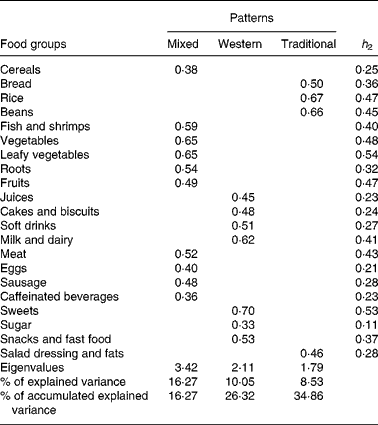
Table 3 shows that the traditional pattern was inversely associated with both BMI (β = − 1·15, P < 0·01) and WC (β = − 20·86, P < 0·01) among women. This relationship was statistically significant even after adjusting for age, education, cigarette smoking, physical activity and energetic consumption (BMI: β = − 1·12, P < 0·01 and WC: β = − 14·68, P = 0·003). The association of the Western pattern with BMI and WC was also identified among women, even after adjusting for age, education, cigarette smoking, physical activity and energetic consumption (BMI: β = 0·74, P = 0·02 and WC: β = 13·61, P = 0·02).
(Regression and probability values)
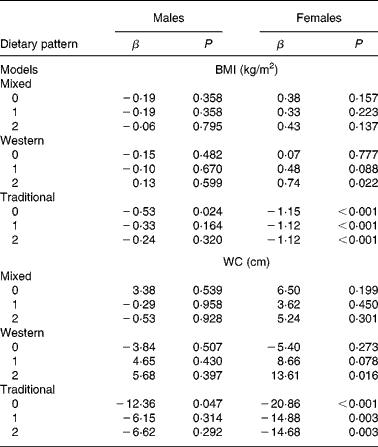
Model 0, crude; Model 1, adjusted by age, education, cigarette smoking and physical activity; Model 2, Model 1+energy intake.
Discussion
Three dietary patterns (mixed, Western and traditional) were identified among adults living in an urban, low socio-economic status area in Brazil. The traditional pattern, characterised by the consumption of basic staple foods (e.g. rice and beans), had a protective effect on BMI and WC among women. Additionally, the Western pattern, which mainly consisted of fast food, sweets and sweetened beverages, was positively associated with WC and BMI among females. A lack of association between any of the identified dietary patterns and BMI and WC among men was also observed. This is probably because of the lower prevalence of obesity among men than among women, since the food patterns were similar for both the groups. These findings depict the significant variability in food intake observed among the studied population, and contribute to the understanding of the dietary profile of population groups living in the periphery of highly urbanised metropolitan areas of the country.
Other studies in Brazil found dietary patterns similar to the traditional pattern described(Reference Sichieri, Castro and Moura12, Reference Marchioni, Latorre Mdo and Eluf-Neto13, Reference Sichieri22), and these studies also observed an inverse association of this pattern with BMI(Reference Sichieri, Castro and Moura12, Reference Sichieri22). A possible explanation for the protective role of the traditional pattern is the low glycaemic index of this food combination. Sugiyama et al. (Reference Sugiyama, Tang and Wakaki23) demonstrated that the combination of rice and beans has a lower glycaemic index than rice alone, which could justify the inverse relationship between the traditional pattern and WC observed in the present study. In addition, the protective effect of dietary fibre on excess body weight has been shown in several studies(Reference Slavin24–Reference Howarth, Saltzman and Roberts26), and the high fibre content of beans(Reference Howarth, Saltzman and Roberts26) is one of the reasons for recommending the consumption of this food in many dietary guidelines(27–29). The reduced variety of food items observed in the traditional pattern may play a role in BMI reduction. An 18-month controlled trial among Brazilian women did not demonstrate a protective role of the traditional diet(Reference Sichieri, Moura and Genelhu30), suggesting that the monotonousness of the diet (more than the dietary pattern) was the mechanism behind the diet's protective effect against weight gain. It is reasonable to hypothesise that the absence of an effect of the mixed pattern on BMI and WC may be related to the monotonousness v. diversity hypothesis.
On the other hand, a traditional diet, also containing rice and beans, of Puerto Ricans was associated with the presence of the metabolic syndrome. In Puerto Rico, however, the highest factor loading for this diet was attributed to oils (0·77); the second highest was attributed to rice (0·76), with beans receiving a lower factor loading (0·55)(Reference Noel, Newby and Ordovas31). In the Brazilian traditional diet, in contrast, beans and rice had similar factor loadings (0·66 and 0·67), whereas fats had a smaller loading (0·46). Moreover, the consumption of these foods appears to be a marker of a more consistently home-prepared diet, with lower consumption of processed foods and less frequent out-of-home eating; these trends result in a reduced intake of fats and high-energy-dense foods. In Brazil, the consumption of foods away from home is highly associated with the consumption of soft drinks, deep-fried snacks and sweets, as shown in an analysis of the 2002–3 Household Budget Survey. Even though soft drinks and sit-down meals had the highest frequencies of consumption away from home, sit-down meals were the most expensive and probably not common among low-income segments of the population(Reference Bezerra and Sichieri32).
Other studies also found a pattern similar to the Western pattern observed in the present study. In these studies, this pattern usually included red meat, sweets, desserts, foods containing high fat content and/or processed cereal and sometimes eggs, dairy products and sweetened beverages(Reference Fung, Rimm and Spiegelman3, Reference Paradis, Perusse and Vohl33, Reference Schulze, Fung and Manson34). Such food components have been associated with metabolic problems due to their high levels of fat, Na and sugar(Reference Schulze, Fung and Manson34–Reference Hoffmann, Blaudszun and Brunken37), and these components are also well known to be associated with weight gain. For instance, the Nurses' Health Study II, which followed 51 670 nurses in the USA between 1991 and 1999, identified that a dietary pattern composed of processed meats, cereals, potatoes, sweets and desserts was associated with weight gain(Reference Schulze, Fung and Manson34). Moreover, a case–control analysis of women with breast cancer(Reference Murtaugh, Herrick and Sweeney36) found that adherence to a Westernised pattern (whole dairy products, processed cereals, salad dressings, fats, fast food, bacon, sausage, red meat and sugar) was associated with both being overweight and obesity, even after controlling for age, physical activity, race and energetic consumption.
In the present study, the pattern that included healthy foods also included sausages and red meat, which are not considered healthy; for this reason, this pattern was designated as mixed. The association between the mixed pattern and the increase in anthropometric indicators may be related to reverse causation, as it is possible that subjects concerned with excessive body weight choose to eat low-energy foods such fish, fruits and vegetables.
Other studies have also identified similar ‘mixed’ patterns, usually including the consumption of cereals, meats, eggs, fruits, fish, caffeinated beverages and vegetables(Reference Sichieri22, Reference Mishra, McNaughton and Bramwell38–Reference McNaughton, Mishra and Stephen40). These studies observed that these mixed patterns were inversely associated with WC and blood pressure(Reference McNaughton, Mishra and Stephen40), and that the subjects with BMI in the range of 20–24·9 kg/m2 had higher factor loadings for the so-called mixed pattern(Reference Mishra, McNaughton and Bramwell38). The mixed pattern found in the present study shares common components with ‘prudent’ or ‘healthy’ patterns identified in other studies(Reference Fung, Rimm and Spiegelman3, Reference Paradis, Perusse and Vohl33, Reference Schulze, Fung and Manson34, Reference Varraso, Fung and Barr41–Reference Perrin, Dallongeville and Ducimetiere44). In these studies, a clear pattern including vegetables, fruits and fish could be detected; four of them also included chicken(Reference Fung, Rimm and Spiegelman3, Reference Schulze, Fung and Manson34, Reference Varraso, Fung and Barr41, Reference Newby, Weismayer and Akesson42), three observed cereal ingestion(Reference Fung, Rimm and Spiegelman3, Reference Schulze, Fung and Manson34, Reference Wu, Hu and Willett43), and one included eggs(Reference Newby, Weismayer and Akesson42).
The limitations of the present study are related to the cross-sectional study design, which does not allow observation of the effect of independent variables and instead only permits association of independent and dependent variables. Additionally, the factor analysis encompasses several decisions that were made arbitrarily (e.g. decision to include the variables in the patterns). Such conditions undermine the comparability of the present study with other studies. Considering the similarity between the food groups included in the analysis and magnitude of the factor loadings, such a comparison should be established. Moreover, the results obtained with factor analysis are not easily translated to the individual level as this method attributes factor scores based on the correlations between the food groups(Reference Hearty and Gibney45).
The present study was useful in providing a better understanding of the nutritional habits of the studied population, and therefore, offering insights into the possibilities of intervention for groups at risk of becoming overweight or experiencing obesity or metabolic disorders. The associations observed in women support the current recommendations that (1) promote the regular intake of the traditional Brazilian diet based on the ‘rice and beans’ combination, and (2) discourage the intake of high-energy-dense foods. This is especially important given the evidence that changes in food availability are taking place in the country. These changes include the large-scale introduction of high-energy-dense foods and the reduced availability of beans, and they can be considered as components of the nutritional transition process. Such changes are certainly one of the factors related to the increase in excessive weight rates.
In conclusion, the present study identified three dietary patterns that were internally consistent and comparable to those identified in analogous studies carried out in Brazil. Among women, we suggest that a diet based on rice and beans may have a protective role against weight gain. In addition, the mixed pattern was associated with increases in both BMI and WC, although the possibility of reverse causality remains.
Acknowledgements
We thank the National Council for Scientific and Technological Development of Brazil (CNPq) (grant no. 503139 2003-3), the Brazilian National Cancer Institute (INCA) for the research financial support and the CAPES (Coordenação de Aperfeiçoamento de Pessoal de Nível Superior), which supported one of the authors (D. B. C.) during her Masters studies. The authors declare that there is no conflict of interest. The contributions of the authors are as follows: D. B. C. was involved in study design, data management, statistical analysis and interpretation, and manuscript design and writing. R. S. was involved in study design and supervision, data analysis and data interpretation. R. M. V. R. d. A. was involved in data analysis, data interpretation and manuscript writing. R. A. P. was involved in study design and supervision, data management, analysis and interpretation, and manuscript design and writing.



