




Introduction
The human species has recently begun to reckon with the consequences of its impact on the Earth. Geologists have proposed a new epoch, named the Anthropocene, to delineate between the Holocene and one characterised by the effect of humans on the planet—primarily anthropogenic climate change (Crutzen Reference Crutzen2002). Evidence of this geological layer was first identified in ice cores, which show increasing carbon dioxide and methane starting in the late eighteenth century (Crutzen Reference Crutzen2002: 23). Recent studies have gone further, demonstrating that the Anthropocene is stratigraphically distinct from the Holocene through layers containing plastics, chemicals and radiation (Waters et al. Reference Waters2016). It is therefore increasingly evident that archaeologists in the future will have significantly different datasets and methods. What will the archaeology of our present—the ‘future past’—look like?
Traditionally, the archaeological record has been conceptualised as artefacts, features, sites and ecofacts, linked through geographical, temporal or cultural boundaries (e.g. Mesoamerican, Bronze Age, Minoan) (Binford Reference Binford1964). These categories, however, have proven problematic (Olsen et al. Reference Olsen, Shanks, Webmoor and Witmore2012: 8). In lieu of the global layers that delineate the Anthropocene, it is necessary to expand the scope of the archaeological record beyond traditional definitions that are bounded by sites or cultures. In response to global warming, a theory of time-transgressive entities of vast geographical scope, known as hyperobjects, has been developed (Morton Reference Morton2013). Edgeworth (Reference Edgeworth, de Souza and Costa2018) argues that archaeological strata have active environmental agency and constitute more than just a ‘record’—a term that denotes passivity. Instead, he proposes an “archaeosphere” that comprises the “totality of archaeological evidence or humanly modified ground [which] can itself be considered a hyperobject” (Edgeworth Reference Edgeworth2016: 107). He envisions that the lithosphere, hydrosphere, atmosphere, biosphere and archaeosphere all intermesh (Edgeworth Reference Edgeworth, de Souza and Costa2018: 23).
The term ‘hypanthropos’ has been proposed by Witmore (Reference Witmore2014) to replace the unspecified ‘anthropos’ of the Anthropocene, and signal the emergence of a radical transformation—in his words “a metabolic assemblage in excess of monstrosity”—found in soil, water and air (Witmore Reference Witmore2014, Reference Witmore2019: 140–41). Hypanthropos combines hyper and hypo to convey a sense of something both beyond and beneath past understandings of anthropos. As these past definitions of anthropos were formulated on grounds different from this “outrageous aggregate monstrosity”, Witmore (Reference Witmore2019: 143) suggests ‘Hypanthropocene’ as a more fitting term for this epoch.
A human-generated hyperobject, which exceeds human individuals themselves, comprises archaeological sites, global warming and ozone depletion. Due to the spatial and temporal scale of the hyperobject, it is something that we exist inside. Pétursdóttir (Reference Pétursdóttir2017: 182 & 194) writes: “The very reason we speak of the Anthropocene is not that we have lost connection with the past but rather that we increasingly are unable to pretend that it's gone” and it is “overwhelmingly present and threatening”. Objects possess hidden aspects that are not fully comprehensible, which Harman (Reference Harman2018: 12) terms their “darkness”. ‘Dark’ artefacts, such as radioactive waste, are found in the Anthropocene (Hudson Reference Hudson2014), and Anthropocene archaeology examines “how they endure and outlive us, and how they interact outside our control and domain” (Pétursdóttir Reference Pétursdóttir2017: 194). Material culture, which is currently at the heart of archaeology, plays a diminished role in the Anthropocene hyperobject, which extends beyond physical objects. As the role of artefacts recedes, future archaeologists will rely more on ecofacts, and perhaps new categories of archaeological information, to write past narratives.
The archaeological record as a hyperobject
The ‘speculative turn’ in philosophy challenges correlationism, or the subject-object relations that have typified philosophy since Kant, in favour of flat ontologies that do not privilege the human mind over external entities (Harman Reference Harman2018: 12). Archaeology has contributed significantly to flat ontologies through symmetrical archaeology (Witmore Reference Witmore2007; Olsen et al. Reference Olsen, Shanks, Webmoor and Witmore2012), among other object-oriented approaches (archaeologists new to such approaches may find the term ‘entity’ more suitable than ‘object’ due to the pre-existing usage of the latter within the field). Object-oriented ontology is a prominent flat ontology, which argues that real objects are withdrawn or withheld, in the Heideggerian sense, and we only perceive their sensual properties where they come into contact with other objects (Harman Reference Harman2018: 7). Object-oriented ontology is significant for the present discussion, as it has identified a type of previously unacknowledged object, which Morton (Reference Morton2013) names hyperobject. It describes entities of vast temporal and geographical scope, such as black holes and global warming. The Big Bang, for example, dates to the beginning of time and we cannot see it, but its gravity waves are passing through our bodies right now (Morton Reference Morton2013: 64). We cannot perceive them directly with our sensory organs, but the Big Bang's residue is visible every time we see static on a television. Thus, we live inside the Big Bang hyperobject and perceive it only using instrumentation. Hyperobjects can also be biological, such as the biosphere or phytoplankton colonies, and Morton (Reference Morton2013: 58) conceived of hyperobjects to understand the biological creation—by humans—of global warming.
Due to their vast scale, hyperobjects present conceptual and methodological challenges. Their geographical and temporal scale makes them “thinkable”, but not directly observable (Morton Reference Morton2013: 12). As a result, we observe aspects of hyperobjects, rather than the whole object, interacting with other entities. This means that hyperobjects simultaneously inhabit small and vast spaces, which makes their appearance “strange” or “uncanny” (Morton Reference Morton2013: 55). Global warming is evident through scientific instruments, but is not directly observable. Instead, we have local experiences such as extreme weather events or increasingly frequent sunburn. These manifestations are not global warming itself, but the effects of it interacting with other objects (e.g. sea, skin). Morton (Reference Morton2013) refers to this as ‘nearness’ and ‘stickiness’, as the hyperobject cannot be avoided even if it appears far away. We cannot see the Big Bang or global warming, but their effects are all around us. Global warming is not only a hyperobject, it is also a component of a broader hyperobject that encompasses human residue on Earth. “Residue” (Edgeworth Reference Edgeworth, de Souza and Costa2018: 19) is an apt term, as it describes the unintentional vestiges of human activity, and reflects hyperobjects’ ‘stickiness’ and ‘indifference’.
In object-oriented ontology, an object is anything that “is more than its pieces and less than its effects” (Harman Reference Harman2018: 53). Human activity is the commonality between a series of ecological crises, including global warming, the sixth mass extinction, and global layers of radiation, chemicals and plastics. It is evident that human ‘residue’ on Earth is an object that produces effects on a geographical and temporal scale, and that qualifies as a hyperobject.
As a field that examines timescales beyond human lifetimes, archaeology is well suited to consider hyperobjects (Witmore Reference Witmore2007). But why is the archaeological record a hyperobject, rather than a biological byproduct, as other species produce? First, if humans vanished today, the hyperobject would continue to exist for centuries. The global radiation layer will remain for over 20 000 years (Waters et al. Reference Waters2016) and radioactive waste for 250 000 years (Rao Reference Rao2001). Other aspects, such as the hole in the ozone layer and anthropogenic climate change, would continue for centuries.
Second, there is no part of Earth that is not affected. Human culture is sticky and clings to everything. Humans are an ecosystem-independent species numbering over seven billion, and their effect is global. Climate change is altering DNA and causing migrations and behavioural changes (Caldwell et al. Reference Caldwell2007). We can identify the direct effects of the hyperobject, such as global warming, extinctions and increasing ultra-violet (UV) radiation, and the cultural reactions, such as hybrid cars, nature parks and sunscreen. Greenhouse gases and rising temperatures are consequences of culture and reveal information about the human experience, but they also affect culture and are not ‘material’. Thus, the archaeological record is not an assemblage of material culture, but an archaeosphere or hypanthropos, with agency.
It is debated whether the Anthropocene began in 1945, or with the Industrial Revolution, or with hominin control of fire 400 000 years ago (Steffen et al. Reference Steffen2015; Scott Reference Scott2017). Witmore (Reference Witmore2014: 129) contends that searching for the Anthropocene's origin is futile and arbitrary, as present circumstances are the result of fossil-fuel consuming societies. The discussion should instead focus on humans as agents on a geological scale (Edgeworth et al. Reference Egdeworth2019).
Traditional archaeological methods can observe aspects of the hyperobject, but increasingly, scientific methods reveal its effects (e.g. Waters et al. Reference Waters2016). Hyperobjects “exert downward causal pressure on shorter-lived entities” (Morton Reference Morton2013: 67), causing asymmetry, which, in the case of global warming, removes a level of agency from humans. In order to address the hyperobject's large-scale asymmetric effect upon us, ecofacts come to the forefront of inquiry, while artefacts recede.
Artefacts and features are material culture that include, but are not limited to, human-made objects, buildings and sites. In contrast, ecofacts are environmental indicators of human activity, including direct deposits such as anthropogenic sediments and indirect deposits like pollen, which are indicative of anthropogenic environmental change. Ecofacts have played an increased role in archaeological interpretations through geoarchaeology, palaeoethnobotany and ancient DNA analysis (e.g. Roberts et al. Reference Roberts2017; Rothacker et al. Reference Rothacker2018). Identification of anthropogenic terra preta soils, for example, has revolutionised our understanding of prehistoric Amazonian land-use (Roberts et al. Reference Roberts2017). Meanwhile, Harper (Reference Harper2017: 15) has re-framed the Roman Empire through environmental data, arguing that the Romans “had no idea of the contingent and parlous environmental foundations of what they had built”; while elements of his synthesis have been criticised (Haldon et al. Reference Haldon2018), Harper's argument of contingent existence based on factors of vast timescales is accepted. Rather than through artefacts, these large-scale narratives are therefore evident through ecofacts.
Artefacts cannot be separated into their components without losing their function. Normark (Reference Normark2014), however, has coined the term hyperfact to describe entities that exist in multiple forms while maintaining their essence. Water is used by humans in many ways, yet it maintains its essence, making it neither cultural nor natural (Normark Reference Normark2014: 189). The Anthropocene introduces several entities that do not easily fit within our conventional archaeological categories; hyperfact is one such new category. Radioactivity, for example, cannot be directly observed and exists on different scales, which better fits the category of hyperfact than artefact or ecofact. As hyperfacts are used by humans while maintaining their essence, they possess lives beyond human use. The ‘dark artefact’ afterlives erupt out of human intentions into unexpected manifestations. This is especially evident with radiation (Hudson Reference Hudson2014: 84; Pétursdóttir Reference Pétursdóttir2017: 196). In this period of asymmetry, ecofacts, hyperfacts and dark artefacts allow for an understanding of Anthropocene cultures.
Finding cultural narratives in Anthropocene deposits
Future archaeologists will interpret cultural narratives from multi-scalar sources spanning from the molecular to planetary. This is not an imagined future; these are anthropogenic data that currently exist. At the smallest scale, synthetic elements—Periodic Table numbers 43, 61, 85, 87 and 93–115—do not occur naturally, but are used in medicine and technologies, such as smoke detectors (Stoker Reference Stoker2007: 275). Humans have modified DNA for millennia through domestication, including “all Linnaean animal classes—mammals, birds, reptiles, amphibians, fish, insects, and even, arguably, bacteria” (Zeder Reference Zeder2012: 161). Clustered Regularly Interspaced Short Palindromic Repeats (CRISPR) now even allows for direct—if illegal—gene editing of humans (Ran et al. Reference Ran2013), with two children born recently in China being the first genetically modified humans (Zhang Reference Zhang2019). Anthropogenic climate change is also affecting the DNA of species through temperature change, ecosystem stresses and increased UV radiation (Caldwell et al. Reference Caldwell2007).
The splitting of the atom is a defining scientific advancement of the modern era and its most distinctive indicator is the global radiation layer that appeared in the 1950s (Waters et al. Reference Waters2016). Radiation from early atomic testing has permeated everything, increasing radioactivity in terrestrial metals and within the teeth of individuals born after 1945 (Spalding et al. Reference Spalding2005; Holmes et al. Reference Holmes, Ulmanu and Roberts2017: 1). Anthropogenic radiation is not a material, yet it has agency that shapes policy, architecture and clothing. It is a product of energy creation, only perceptible as heat or through instrumentation, and it has profound effects. The 1986 Chernobyl meltdown created a radiation zone that is still causing biological mutations (Møller & Mousseau Reference Møller and Mousseau2006). Sponge divers believe that Chernobyl caused the Mediterranean sponge blight (Kalafatas Reference Kalafatas2003: 52), permanently ending highly developed, insular cultures in a single summer. This radioactive waste has a half-life of 250 000 years, yet the entirety of anatomically modern humans’ existence is only approximately 200 000 years old. This raises the question of what our species will be when the waste is finally inert.
In the future, a Geiger counter may become as common as a trowel for Anthropocene archaeologists (Figure 1). The global radiation layer creates a temporal, stratigraphic divide (Spalding et al. Reference Spalding2005), similar to the KT boundary in palaeontology. A site anywhere in the world can be temporally oriented based on its position relative to this radiation layer. Global chemical signatures from pesticides, leaded petrol and fertiliser serve as similar stratigraphic boundaries (Waters et al. Reference Waters2016: 137).
A dosimetrist checks radioactivity with a Geiger counter while wearing field gear that may become common for Anthropocene archaeologists (Presslab/Shutterstock).

Five extinction events over the course of Earth's history eliminated >75 per cent of species (Ceballos et al. Reference Ceballos2015). A ‘sixth extinction’ is underway, based on a vertebrate extinction rate that is 100 times higher than the baseline (Ceballos et al. Reference Ceballos2015). Similar to the extinction horizon observed for Pleistocene megafauna, future archaeologists may observe a horizon separating Holocene layers with wild mammals from Anthropocene layers missing. Instead, a preponderance of domesticated species will be evident. Human biomass, together with our domesticated species, currently outweighs twenty-fold the combined biomass of all mammals in nature (Bar-On et al. Reference Bar-On, Phillips and Milo2018). Given preservation rates, we may pass the threshold of ‘wild’ species being visible in the palaeontological record.
Human activity has given rise to serious ecological issues, with implications for ourselves as well as other species. Irregular and extreme weather events caused by climate change, for example, are amplifying droughts (Figure 2)—a significant contributing factor to the Syrian civil war and subsequent mass migration from the country (Gleick Reference Gleick2014). There is uncertainty whether crops can adapt to temperature changes (Gregory et al. Reference Gregory, Ingram and Brklacich2005: 2145). Ecologists have confronted an uncomfortable truth that there is no ‘nature’ remaining: “Nature is simply reified history”, argues Morton (Reference Morton2013: 58). National parks are viewed as ‘nature’, but they are culturally manufactured to fit an interpretation of ‘nature’ prior to modern humans (Angermeier Reference Angermeier1994). Pritchard (Reference Pritchard2002) demonstrates that the environments and species found in Yellowstone National Park reflected the human managers’ perception of ‘natural Yellowstone’, rather than any objective nature. Indeed, most national parks maintain a reified and static ‘nature’ through a strategy of culling certain species while bolstering others (Angermeier Reference Angermeier1994; Morton Reference Morton2007: 164). Moreover, post-human landscapes do not return to a primordial state. Instead, new plants develop over abandoned sites (e.g. Mathews Reference Mathews, Tsing, Swanson, Gan and Bubandt2017), indicating buried human strata (Parcak Reference Parcak2009: 92). While an abandoned cultural landscape can become a non-human landscape, it never returns to its pre-human form.
Anthropocene environmental crises include drought, such as in the Aral Sea (top), and increased extreme weather events, such as Hurricane Harvey (bottom) (Daniel Prudek/Shutterstock; MDay Photography/Shutterstock).

Materials have been crucial in understanding past cultures, whether stone, bronze or iron. Childe (Reference Childe1929: v–vi), for example, stated that
We find certain types of remains—pots, implements, ornaments, burial rites, house forms—constantly recurring together. Such a complex of regularly associated traits we shall term a ‘cultural group’ or just a ‘culture’. We assume that such a complex is the material expression of what today would be called a people.
Yet, such materials may be less useful to future archaeologists. Mass production creates enormous quantities of goods that are transported globally, resulting in artefacts with less meaningful connections to individuals or place. Today, the presence of Ikea furniture, Walmart dishes and Styrofoam cups designed for disposability reveal less about any individual culture. Miller (Reference Miller2010: 9) correctly argues that even mass-produced goods have different meanings based on context. The objects, however, will probably generate less meaning for future archaeologists than other sources, such as digital data.
Computers are integral to many contemporary cultures for communication, information storage and mechanised labour. A decade ago, a computer was a standalone, contained technology, but the Internet of Things has integrated everyday objects into computer networks, and 2.5 quintillion bytes of data are generated each day (Marr Reference Marr2018: 1). An understanding of contemporary culture is impossible without reference to digital data or the Internet (Aycock Reference Aycockin press).
The study of an ancient artefact typically consists of describing its outward characteristics and context: its design, materials, shape and spatial location on-site, and cultural significance. In addition, inward examination of an artefact, such as petrology or isotope analysis, provides supplementary data to the context. Although an artefact's inward data are limited, digital data are the opposite. Computers can be the same model, but the data stored within may differ considerably. We cannot engage with the vast quantities of digital data in the same way that we can with historical archaeology, where textual accounts supplement archaeological evidence. Rather, digital data are primary, formative and the drivers of culture and cultural identity (e.g. Reinhard Reference Reinhard2018). There is, however, mounting concern of a ‘Digital Dark Age’ as degrading compact discs, hard drives and file formats cause data to disappear from the digital-historical record (Jeffrey Reference Jeffrey2012: 554). Despite the enormous amount of data created, less information may survive from the present than from earlier periods.
Anthropogenic greenhouse gases are global in scale. CO2 is higher now than in any period in the last three million years (Waters et al. Reference Waters2016). Chlorofluorocarbons have degraded the ozone layer (Figure 3), increasing UV radiation and causing genetic mutations (Kelfkens et al. Reference Kelfkens, de Gruijl and van der Leun1990). Global warming is physically altering the seafloor and glaciers are receding (Sulpis et al. Reference Sulpis2018). This will result in sea-level rise, affecting coastal settlements (Nicholls & Cazenave Reference Nicholls and Cazenave2010). Oceans, which cover 70 per cent of the planet, have borne the majority of the impact of this anthropogenic activity, for example, through microplastics (Cole et al. Reference Cole, Lindeque, Halsband and Galloway2011). Waste has collected in oceanic gyres. The ‘Great Garbage Patch’ in the Pacific Ocean measures over 1.6 million km2 and is composed of ~1.8 trillion plastic pieces (Lebreton et al. Reference Lebreton2018). In terms of surface area, it is the planet's largest cultural deposit, even though located 1600km from land.
The depletion of the ozone layer over Antarctica from 1979–2008 is evident through scientific instrumentation, but it is not directly observable (NASA/Goddard Space Flight Center/Ozone Processing Team).

The long-term impact of the anthropogenic hyperobject is measured in centuries and millennia. Seventy-five per cent of the effects of global warming will persist for 500 years—and 7 per cent for 100 000 years (Morton Reference Morton2013: 58–59). It will shape the social, political and cultural development of our species. Historically disenfranchised groups will bear the brunt of social and economic burdens, while developing countries will fall further behind industrialised leaders. Ironically, the latter have disproportionally contributed to the hyperobject. These changes are certain to leave an imprint in the archaeological record. The hyperobject affects the existing archaeological record through capitalism's market for certain artefacts, driving widespread and systematic looting of archaeological sites (Campbell Reference Campbell2013). Anthropocene archaeologists may therefore struggle to find undisturbed contexts.
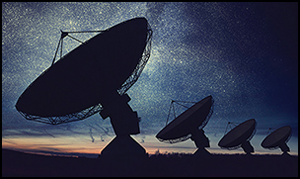
The human residue extends beyond the Earth's bounds. There are orbiting satellites, space stations and debris from hundreds of launches since 1957, while material from NASA's missions remain on Mars and the Moon (Gorman Reference Gorman2014; O'Leary & Capelotti Reference O'Leary and Capelotti2015). Researchers have begun examining the archaeology of the International Space Station (Walsh & Gorman Reference Walsh and Gorman2021). The Voyager 1 satellite has travelled 21 billion kilometres, leaving our solar system for interstellar space. The most significant cultural assemblage in space, however, may be radiowaves. Travelling 100 light years from Earth—28 000 times further than Voyager 1—one could listen to our earliest radio transmissions (Bennett Reference Bennett2017). It is through radiowaves that humans may contribute something to deep time, far outlasting physical structures.
Discussion
The Anthropocene is not defined simply by human impact on the environment, but also by the unintended creation of a hyperobject that is changing the climate through the persistence of objects. Inside the hyperobject, archaeology ceases to be bounded in the conventional manner. Pétursdóttir (Reference Pétursdóttir2017: 196) argues that “Traditionally, meaning in archaeology is constructed through the inherent, hierarchical ordering of archaeological assemblages confined to certain localities, and relations between these”, but Anthropocene objects extend beyond these bounds. While we may be able to observe a Palaeolithic stone tool from the outside, the layer of radiation blanketing the planet interacts with our very tissues. It is part of us. This archaeology cannot be addressed through processual or post-processual paradigms. Anthropocene archaeology is altogether different and requires new approaches, such as symmetrical archaeology, new materialism, supermodernity and others (Witmore Reference Witmore2007; Dawdy Reference Dawdy2009; Olivier Reference Olivier2011; Olsen et al. Reference Olsen, Shanks, Webmoor and Witmore2012; Edgeworth Reference Edgeworth2016; Harrison Reference Harrison2016; Pétursdóttir Reference Pétursdóttir2017; González-Ruibal Reference González-Ruibal2019).
The narrative of contemporary societies cannot be told without the splitting of the atom, the Internet and anthropogenic climate change. Arguably, our present material record makes no sense without non-material sources: radiation and radio waves are not material culture, but are cultural, durable and provide significant information (Figure 4). Just as physicists measure gravity waves as the archaeo-energy of the Big Bang, archaeology will use energy sources to learn about cultures. These new sources are dark artefacts, which are strange and distant from what we currently consider archaeology to be. The Anthropocene archaeologist, however, will likely be well versed in them. Physically bounded flat ‘containers’, such as artefacts, sites, features and assemblages (Table 1), are giving way to unbounded dark objects erupting with unintended and persistent qualities: archaeo-energy, hyperfacts, digital-facts and ecofacts.
Archaeo-energy contains cultural information, such as the global radiation layer and radio waves (Lukasz Pawel Szczepanski/Shutterstock; Vchal/Shutterstock).

Conventional, bounded, categories of archaeological data compared with unbounded categories.

Traditional definitions of archaeology were designed for a field that is now in the past. Already, looters are targeting ships sunk during the World Wars because pre-atomic steel has lower background radiation (Holmes et al. Reference Holmes, Ulmanu and Roberts2017: 1). This is a phenomenon unique to the Anthropocene: the value is neither intrinsic nor aesthetic, but due to the fact that it is less Anthropocenic than metal found on land. Murder investigators distinguish unidentified victims born after 1945 from the radiation in their teeth (Spalding et al. Reference Spalding2005). An excavation on the University of California at Davis campus revealed dogs encased in concrete that remain radioactive after death due to medical experiments with strontium-90 and radium-226 (Morton Reference Morton2013: 34). This is the nature of archaeology in a field reshaped to teach the lessons of an Anthropocene rather than Holocene Earth. Can a ‘deposit’ be in the atmosphere or space? Is it a ‘site’ if travelling at 27 500km per hour around the planet? Traditional archaeology becomes problematic upon entering the Anthropocene: we must define archaeology for a future of sequencing DNA, collecting microplastics and detecting radioactivity.
Defining archaeology for the future past
The challenge of the Anthropocene necessitates a “jolting of the archaeological imagination” (Pétursdóttir Reference Pétursdóttir2017: 192). The definition of archaeology might be different for our future colleagues. The etymology of the term is Greek—archaiologia is derived from a combination of archaios (ancient or old) and logia (study or learning). Most ‘ancient or old’ objects survive as part of the material record, which is a significant component of most definitions: “Archaeology is basically about three things: objects, landscapes and what we make of them. It is quite simply the study of the past through material remains” (Gamble Reference Gamble2000: 15). The current definitions of archaeology are designed for hearths and handaxes. A definition encompassing the entirety of human residue would be more helpful.
The concept of ‘old’ is problematic and limiting (Nativ & Lucas Reference Nativ and Lucas2020). Shanks (Reference Shanks, Tusa and Kirkinen1995: 17) argues that archaeology “focuses upon the gap between the lived past and its ruin now”. Consideration of our Anthropocene future could be seen as pondering the gap between the lived present and ruined future. This is because of the persistence and monstrosity of Anthropocene objects, which continue beyond human control and lifetimes (Pétursdóttir Reference Pétursdóttir2017; Witmore Reference Witmore2019). Their persistence precludes a gap (Hudson Reference Hudson2014: 85; Nativ & Lucas Reference Nativ and Lucas2020: 853): we are integrated into the objects’ present and future. Global warming and radioactive waste were produced in the past, and indeed in the present, but their agency extends into the future. The Human Interference Task Force's study of radioactive waste facilities required imagining distant futures, such that their Waste Isolation Pilot Plant, for example, includes warnings designed to communicate without the English language and with very different or non-humans in mind (Trauth et al. Reference Trauth, Hora and Guzowski1993). Archaeology, then, becomes the study of human cultures across time, examining past and future objects. This is not philosophical, but methodological. The study of past plastics must include present humans contaminated with mercury (Hudson Reference Hudson2014: 83) and the study of Lucca's present forest in Italy is the study of past agriculture that reshaped the landscape and the species inhabiting it (Mathews Reference Mathews, Tsing, Swanson, Gan and Bubandt2017: G145).
What is it we are doing as archaeologists? Are we focused solely on material culture? Hodder (Reference Hodder2012: 218) acknowledges archaeology's material bias, stating that “things are really flows of matter, energy and information but I have focused largely on those flows that produce hard matter that endures”, while “gases, vapors, smells and sounds” do not receive much attention. It is not that archaeologists fail to understand the significance of the immaterial, but rather that they have difficulty addressing these entities methodologically. Archaeology is therefore the study of culture, with the material record offering the best source to understand life during the Pleistocene and Holocene. This may not be the case for the Anthropocene.
More idealised definitions of archaeology get to the heart of the matter. Schiffer (Reference Schiffer1999: 64) states that “Anthropology is the only discipline that can access evidence about the entire human experience on this planet”, while Hurst Thomas (Reference Thomas1989: 31) argues that “It's not what you find, it's what you find out”. If archaeology's aim is to understand the human experience, then material culture is simply one vector through which to do so. A definition must reflect the diversity of cultural information available (Witmore Reference Witmore2014; Pétursdóttir Reference Pétursdóttir2017), including radiation and atmospheric CO2. These material and immaterial entities distinguish the Anthropocene from the Holocene and form the core of study for the future archaeologist. Hence, archaeology examines the sum of human residue and its persistence on Earth and beyond.
Conclusion
Archaeology is expanding beyond the material record and, arguably, the study of the past. Human residue cannot be regarded as comprising spatially and temporally flat ‘containers’: that is, the tangible objects denoted by the term ‘artefact’; ecofacts are increasingly significant for identifying large-scale narratives. Cultural evidence is simultaneously both miniscule, existing at a molecular level, and immense, expanding hundreds of light years beyond our planet. It includes radiation, radio waves and greenhouse gases. Humans have created a hyperobject—whether known as the archaeological record, archaeosphere or hypanthropos—of vast timescales that will remain for hundreds of thousands of years. As Nativ and Lucas (Reference Nativ and Lucas2020) argue for historical continuity in archaeology, exposing the false past/present dichotomy, the field must also confront its object- and surface-based worldview. Anthropocene archaeology begins when archaeologists seek cultural meaning from archaeo-energy or sites in space; the definition needs to expand, however, to allow conceptual space for new theories and methodologies.
Acknowledgements
I would like to thank Sara Rich and Martina Caruso for numerous discussions. This article drew inspiration from Matt Edgeworth, Alice Gorman, Johan Normark, Bjørnar Olsen, Þóra Pétursdóttir, Christopher Witmore and others. I extend my gratitude to the anonymous reviewers whose comments improved the article.
Funding statement
This research received no specific grant from any funding agency or from commercial and not-for-profit sectors.


 Open access

