



Diet quality often declines throughout early childhood as the child transitions from breast-feeding or infant formula to complementary foods and then to family foods(Reference Au, Gurzo and Paolicelli1–Reference Briefel, Reidy and Karwe3). Poor diet quality in early childhood has been associated with worse dietary behaviours and obesity risk later in childhood(Reference Okubo, Crozier and Harvey4–Reference Emmett and Jones6). Compared to non-Latino White children, young Latino children are more likely to have obesity and worse diet quality, including higher consumption of infant formula, juice and sugary drinks(Reference Ahluwalia7–Reference Miles and Siega-Riz9). Preliminary research suggests that consumption of toddler milk (i.e. nutrient-fortified milk-based drinks marketed for children 12–36 months old that typically contain added sugar) may be an emerging issue in early childhood diet quality, particularly among Latino children(Reference Romo-Palafox, Pomeranz and Harris10,Reference Harris, Fleming-Milici and Frazier11) . In a recent survey, 60 % of parents stated they believed toddler milk provided nutrients that could not be obtained from other foods and beverages(Reference Romo-Palafox, Pomeranz and Harris10). This study also found that Latino parents were more likely to have served toddler milk in the last month than non-Latino White parents(Reference Romo-Palafox, Pomeranz and Harris10). However, further research is needed to understand why parents may be providing toddler milk to their children.
The American Academy of Pediatrics and other major nutrition and health organisations recommend against the consumption of toddler milk because it can interfere with sustained breast-feeding, often contains added sugar and provides no unique nutritional value beyond what an adequate diet would provide(Reference Lott, Callahan and Duffy12). Available evidence in the USA indicates that parents may not be aware of these recommendations and many believe toddler milk is healthy(Reference Romo-Palafox, Pomeranz and Harris10,Reference Romo-Palafox, Gershman and Pomeranz13) . Among Latino parents, preliminary studies suggest favourable toddler milk perceptions may be influenced by targeted marketing by formula companies, misleading nutrition-related claims on the product packaging or cultural norms related to toddler milk(Reference Romo-Palafox, Pomeranz and Harris10,Reference Harris, Fleming-Milici and Frazier11) . One study also identified differences in toddler milk provision between primarily English-speaking and primarily Spanish-speaking Latino parents(Reference Romo-Palafox, Pomeranz and Harris10). This is an important finding given other studies have identified differences in child feeding behaviours and dietary behaviours more generally by level of acculturation(Reference Power, O’Connor and Orlet Fisher14–Reference Pérez-Escamilla and Putnik17).To inform public health nutrition interventions and policies to reduce toddler milk consumption, more research is needed to better understand what types of parental characteristics, including Latino ethnicity and acculturation, are associated with favourable perceptions of and purchases of toddler milk.
To that end, this study aimed to explore why parents may be providing toddler milk to their children among Latino and non-Latino parents, describe parent interpretations of claims on toddler milk, and explore correlates of perceived toddler milk healthfulness and past purchases.
Methods
Participants
In October 2019, we recruited an online convenience sample using a survey research platform, CloudResearch Prime Panels, as part of a separate experiment examining the impact of warning designs on sugary drink perceptions among Latino and non-Latino parents. The study procedures have been reported elsewhere. The panel company used purposive sampling to obtain a sample with roughly half Latinos and half non-Latinos. Participants were eligible if they were currently residing in the USA, at least 18 years old, and had at least one child between 2 and 12 years old. Participants had the option to complete the survey in English or Spanish.
Procedures
All study participants provided written informed consent. Participants completed an online survey programmed into Qualtrics survey software. After answering questions about the warnings experiment, participants answered questions related to toddler milk. Upon completion of the survey, participants received incentives in cash, gift cards or reward points from Prime Panels. Prior to data collection, the study was pre-registered on AsPredicted.org: https://aspredicted.org/bw59b.pdf.
Measures
Participants were first shown images of two toddler milk varieties (Nido Kinder 1+ and Enfagrow Toddler Next Step) and the survey displayed a definition of toddler milk that stated toddler milks ‘are intended for children at least 12 months old and are different from formulas like Enfamil and Similac that are for babies younger than 12 months old’ to minimise confusion with infant formula (exact item wording for all measures appears in online supplementary material, Supplemental Table 1). We selected these brands because prior research has shown they are heavily advertised on Spanish-language TV(Reference Harris, Fleming-Milici and Frazier11).
Demographic measures
Latino ethnicity was assessed using self-report with an item from the US Census(18): ‘Are you of Hispanic, Latino, or Spanish origin?’, coded as ‘yes’ or ‘no’. Latino ethnicity in our analyses is not an indicator of biological differences but is a representation of the sociopolitical processes that differentially impact individuals in the USA based on ethnicity. We also examined years living in the USA as a measure of acculturation because diet and other health behaviours have been shown to change over time in the USA among Latino immigrants(Reference Pérez-Escamilla and Putnik17). Participants were asked how many years they had lived in the USA, and we recoded responses into three categories (born in the USA, lived in the USA more than 10 years or lived in the USA 10 years or less) based on the distribution in our sample. Parent and child sugary drink consumption were assessed using items adapted from previously validated measures(Reference Lora, Davy and Hedrick19,Reference Hedrick, Savla and Comber20) . All other demographic variables were assessed via self-report.
Toddler milk perceptions and behaviours measures
The survey then assessed familiarity with toddler milk (defined as ever seeing toddler milk in a store), purchases of toddler milk, reasons for purchasing toddler milk, perceived toddler milk healthfulness(Reference Hall, Lazard and Grummon21) and healthfulness compared to regular milk (comparative healthfulness). The primary outcome was perceived healthfulness of toddler milk, which was assessed with one item ‘How healthy or unhealthy would it be for a toddler to drink this beverage every day?’ with a five-point Likert-style response scale, adapted from a prior study(Reference Hall, Lazard and Grummon21). Finally, participants were shown an image of Nido Kinder 1+, and open-ended responses assessed parent interpretations of two claims (‘Helps Support Healthy Growth’ and ‘Immunity’) on the Nido Kinder 1+ package. We selected these claims because they are two predominant claims on the front of the package.
Analysis
Our analytic sample included 1078 parents. We first ran descriptive statistics for survey items that assessed toddler milk familiarity, purchases, reasons for purchase, perceived healthfulness and comparative healthfulness. For the open-ended claim responses, we developed a codebook to quantitatively code all open-ended responses into themes. Prior to coding, a fluent Spanish speaker (AR) translated all Spanish open-ended responses to English. We iteratively revised the codebook after an initial round of coding 5 % of responses. Three coders (ED, IH and AR) divided and double-coded all responses. We resolved all coding discrepancies by consensus.
We used multivariable logistic regression to evaluate the associations between whether the participant had ever purchased toddler milk and Latino ethnicity, years living in the USA, parent sugary drink consumption, child sugary drink consumption, parent age, gender, use of the Supplemental Nutrition Assistance Program (SNAP) in the last year, education, BMI, annual household income and presence of children 3 years old or younger in the household. We used Stata’s margins command to calculate and compare the predicted probabilities of having ever purchased toddler milk for each covariate. This logistic regression analysis was exploratory and not included in the pre-registration.
We also examined predictors of perceived toddler milk healthfulness using multivariable linear regression. The model included the same set of covariates as the logistic regression model. There were no indications of multicollinearity, although residuals appeared skewed based on Shapiro–Wilk test, so we also ran an ordinal logistic regression model. The same covariates were statistically significant in the linear and ordinal models, so we retained the linear model for ease of interpretation.
We conducted sensitivity analyses to determine if exposure to different stimuli in previous parts of the survey (questions not related to toddler milks) affected perceived healthfulness of toddler milk. None of the experimental arms were associated with the outcome (P > 0·10), and the patterns of the direction of effect and statistical significance of the other predictors in the model remained the same, so we retained the model without group assignment. Additionally, to better understand the role of acculturation among Latino populations specifically, we conducted sensitivity analyses to limit the years in the US variable to only Latino participants (29 participants excluded from analyses). The patterns of the direction of effect and statistical significance of all predictors in the model remained the same with the exception of healthy weight or underweight which became a significant predictor of purchases in the logistic regression. We retained the original years in the US variable to maintain a larger sample size. Adjusted models used complete case analyses to handle missing data, dropping cases with missing data on any of the variables included in the model.
All analyses were conducted using STATA version 16.1, with two-tailed tests and a critical alpha of 0·05.
Results
Demographic characteristics
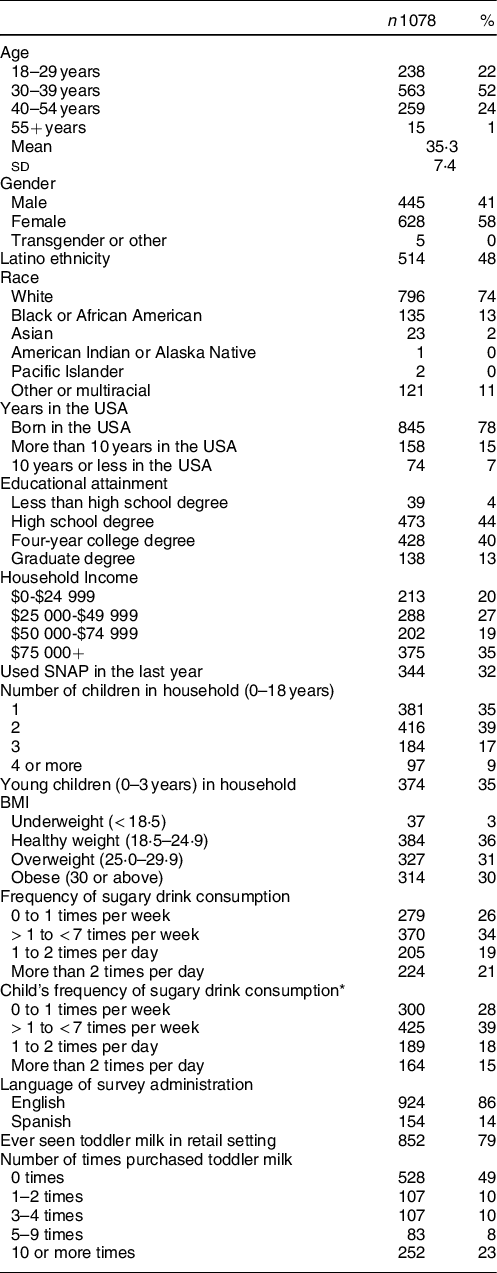
The mean age of participants was 35·3 years (Table 1). About one-third (35 %) had a child 3 years old or younger in the household. Slightly more than half of the participants (58 %) were female and 48 % of participants identified as Latino or Hispanic. Most participants (78 %) were born in the USA, 15 % were not born in the USA and had lived in the USA more than 10 years, and 7 % were not born in the USA and had lived in the USA for 10 years or less. Almost all immigrants who had lived in the USA more than 10 years (85 %) and those who had lived in the USA 10 years or less (92 %) were Latino. About half of participants had a high school degree or less (48 %). Similarly, about half (47 %) of participants had an annual household income of less than $50 000, and 32 % used SNAP in the last year. About two-thirds (61 %) of parents were either overweight or had obesity. Most participants (74 %) and their children (72 %) consumed sugary drinks at least once a week. Most participants completed the survey in English (86 %).
Participant demographic characteristics
SNAP: Supplemental Nutrition Assistance Program.
* Asked about one child aged 2–12 years with the most recent birthday.
Toddler milk familiarity and purchases
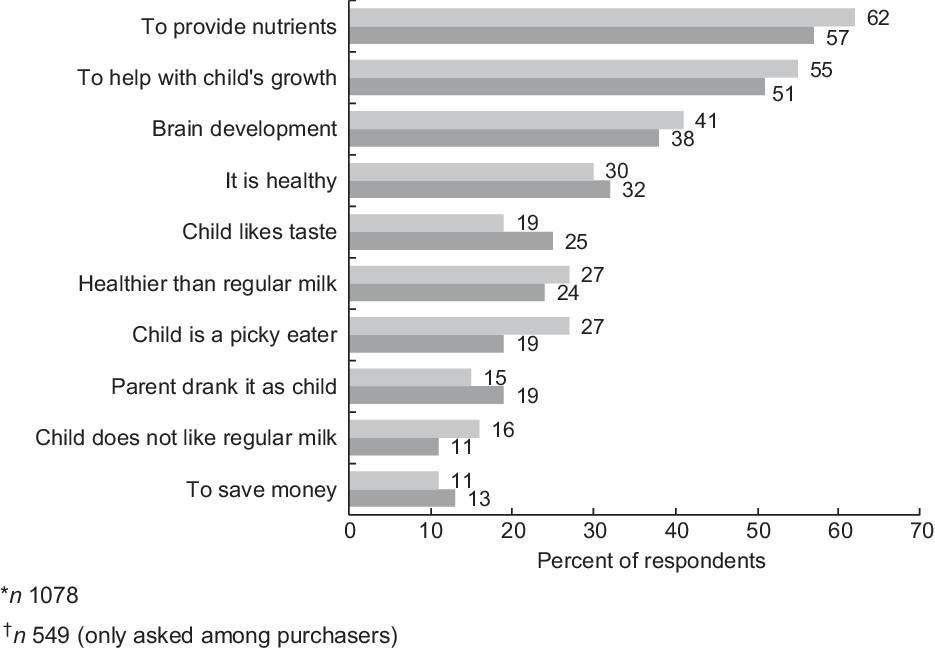
Most parents (79 %) were familiar with toddler milk (i.e. had seen it in a store) (Table 1). About half of parents (51 %) had previously purchased toddler milk, and about one-quarter (23 %) had purchased it ten or more times (Table 1). Among parents who had purchased toddler milk, the most common reasons for purchasing included to provide vitamins and nutrients (57 %), to support growth (51 %) and brain development (38 %), because toddler milk is healthy (32 %), and because their child liked the taste (25 %) (Fig. 1). Parents’ perceptions of why they thought other parents would provide toddler milk to their children were similar to their own reasons for purchasing (Fig. 1).
Reasons parents reported they purchased toddler milk and that other parents would purchase toddler milk.  Other parents*;
  personal†
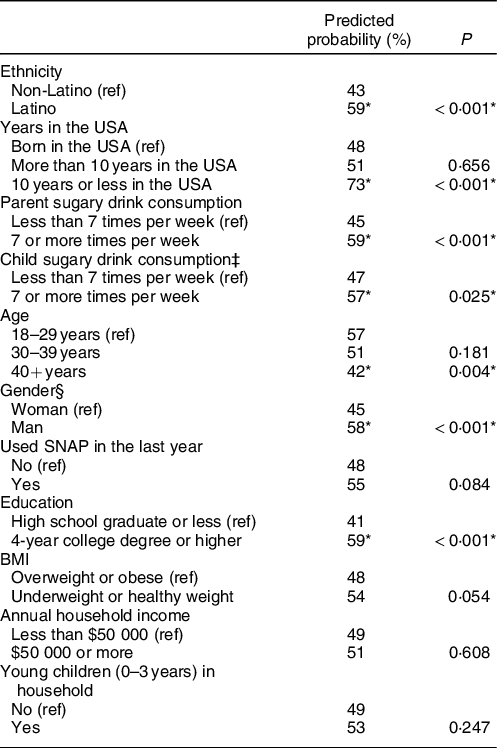
In adjusted analyses, Latino parents were more likely (predicted probability = 59 %) to have ever purchased toddler milk compared to non-Latino parents (43 %) (P < 0·001) (Table 2). Compared to parents born in the USA (48 %), parents who had lived in the USA 10 years or less were also more likely (73 %) to have purchased toddler milk (P < 0·001). There was no difference between parents born in the USA and parents who had lived in the USA more than 10 years (51 %) (P = 0·656). Other factors associated with greater likelihood of purchasing toddler milk were greater sugary drink consumption among both the parent and the child, being male, and having at least a 4-year college degree (all P < 0·05). Older parents (40 year or older) were less likely to have purchased toddler milk than parents aged 18–29 years (P = 0·004). There were no differences in the likelihood of purchasing toddler milk by household income (P = 0·608).
Differences in predicted probability of having ever purchased toddler milk among demographic groups (n 1051†)
SNAP: Supplemental Nutrition Assistance Program.
* Predicted probabilities are statistically significantly different at an alpha of 0·05.
† Missing BMI data from sixteen participants, age data from three, Latino ethnicity data from one, years in the USA data from one, SNAP data from one and past purchase data from one.
‡ Asked about one child aged 2–12 years with the most recent birthday.
§ Transgender participants were excluded from analyses due to small sample size (n 5).
Comparative and perceived healthfulness of toddler milk
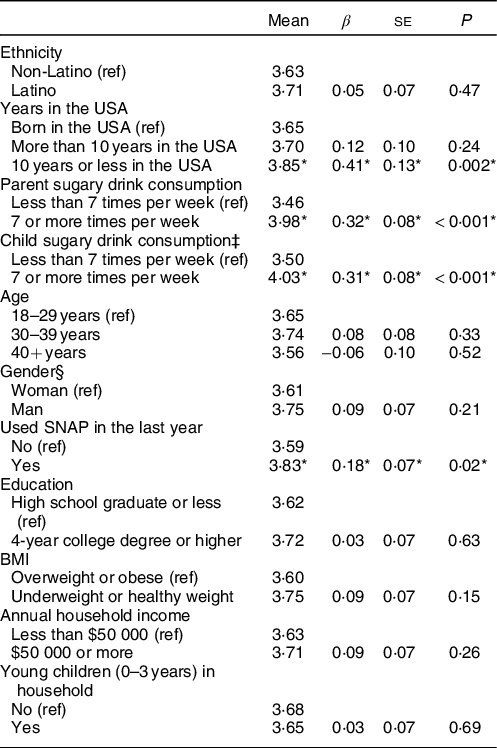
Most parents said that toddler milk was as healthy (38 %) as or healthier (44 %) than regular milk (i.e. comparative healthfulness). Similarly, when asked how healthy it would be for a toddler to consume toddler milk every day (i.e. perceived healthfulness), more than half of parents (57 %) reported this would be healthy (4 or 5 on Likert scale). In multivariable regression, Latino ethnicity was not associated with perceived healthfulness (Table 3). Parents who had lived in the USA 10 or fewer years perceived toddler milk as healthier compared to parents born in the USA (β = 0·41, P = 0·002). Other factors associated with greater perceived healthfulness were using SNAP in the last year (β = 0·18, P = 0·02), greater parent sugary drink consumption (β = 0·32, P < 0·001) and greater child sugary drink consumption (β = 0·31, P < 0·001).
Correlates of perceived healthfulness of toddler milk (n 1052†)
SNAP: Supplemental Nutrition Assistance Program.
* Statistically significant at an alpha of 0·05.
† Missing BMI data from sixteen participants, age data from three, Latino ethnicity data from one, years in the US data from one, SNAP data from one.
‡ Asked about one child aged 2–12 years with the most recent birthday.
§ Transgender participants were excluded from analyses due to small sample size (n 5).
Interpretations of product claims
When asked to interpret the claim ‘Helps Support Healthy Growth’, parents’ open-ended responses were most often directly related to growth (34 %) (Table 4). Some parents had broader interpretations of this claim such as thinking that the claim meant toddler milk contained vitamins, minerals or other nutrients (32 %) or that toddler milk was healthy or good for children (13 %). In interpreting the claim ‘Immunity’, most parents (61 %) stated this claim meant toddler milk prevented illness or boosted the immune system. Some parents (10 %) stated the immunity claim meant toddler milk contained vitamins, minerals or other nutrients that support the immune system. Few parents stated that the claims were misleading or expressed scepticism about the claims (2 % of healthy growth and 1 % of immunity responses).
Prevalence of themes identified in open-ended parent interpretations of two claims (‘Helps Support Healthy Growth’ and ‘Immunity’) on Nido Kinder 1+ toddler milk packaging
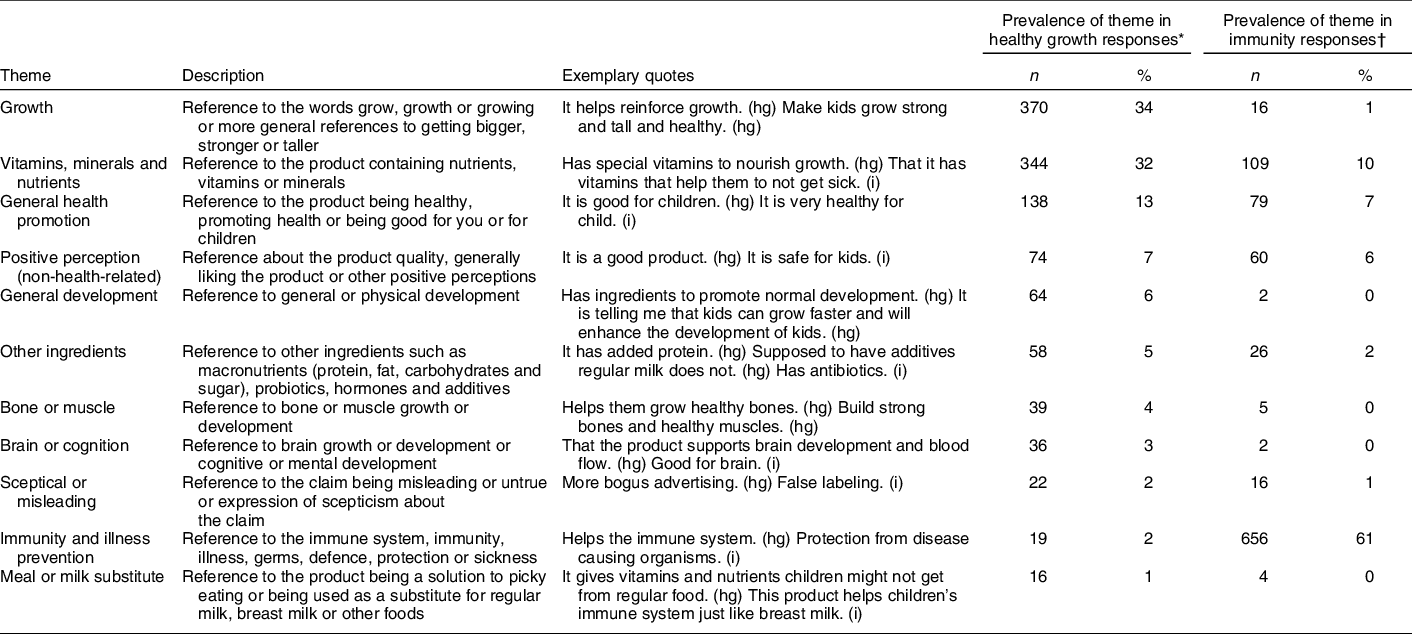
hg, Quote was a response to the ‘Helps Support Healthy Growth’ claim.
i, Quote was a response to the ‘Immunity’ claim.
* n 1074 item wording: this product says ‘Helps support healthy growth’. What does the phrase ‘Helps support healthy growth’ tell you about the product?
† n 1073 item wording: this product says ‘Immunity’. What does the word ‘Immunity’ tell you about the product?
Discussion
This study adds to the growing body of evidence suggesting toddler milk may be an emerging public health nutrition concern in the USA, particularly in Latino communities. Despite recommendations from the American Academy of Pediatrics and other national health organisations against toddler milk consumption, more than half of parents in our study stated it would be healthy for a toddler to drink toddler milk every day (4 or 5 on perceived healthfulness item). This is consistent with findings from other studies which have demonstrated many parents believe toddler milk is healthy(Reference Romo-Palafox, Pomeranz and Harris10,Reference Romo-Palafox, Gershman and Pomeranz13) . Additionally, most parents thought toddler milk was as healthy as or healthier than regular milk. This finding is concerning as toddler milk often contains added sugars and can be more than four times the cost of an equivalent amount of regular milk(Reference Lott, Callahan and Duffy12). Future studies should explore whether parents are using toddler milk as a replacement for regular milk given the high prevalence of misperceptions about the comparative healthfulness of toddler milk and regular milk in our sample.
In our study, Latino ethnicity was associated with a greater likelihood of having purchased toddler milk, but not with greater perceived healthfulness of toddler milk. We also found that participants who had lived in the USA 10 years or less were more likely to have purchased toddler milk and had greater perceived healthfulness compared to participants born in the USA. Only one other study has examined the role of Latino ethnicity and acculturation in toddler milk provision and found that primarily English-speaking Latino parents were slightly more likely to report providing toddler milk than primarily Spanish-speaking Latino parents, and Latino parents were more likely to report providing toddler milk than non-Latino parents(Reference Romo-Palafox, Pomeranz and Harris10). Given evidence of targeted marketing of toddler milk to Latinos through advertisements on Spanish-language TV(Reference Harris, Fleming-Milici and Frazier11) and use of Spanish language on toddler milk packaging(Reference Pomeranz, Palafox and Harris22), as well as documented disparities in diet quality and obesity among Latino children, taken together, these findings are cause for concern. It is possible that toddler milk may be displacing more nutrient-dense foods and contributing to sweet taste preferences given the added sugar content(Reference Lott, Callahan and Duffy12). However, more research is needed using nationally representative samples to understand if there are ethnicity-based disparities in toddler milk consumption, the impact of toddler milk consumption on overall diet quality, what role acculturation may play in toddler milk consumption and if these relationships differ based on parents’ level of education or other socio-demographic characteristics.
Additionally, we found in the regression analyses greater parent and child sugary drink consumption were associated with greater perceived healthfulness and greater likelihood of purchasing toddler milk. This may be an indicator of toddler milk contributing to sweet taste preferences in early childhood(Reference Ventura and Mennella23), but directionality cannot be established. Sugary drink reduction efforts should consider including information about toddler milk recommendations in early childhood. Parents who had participated in SNAP in the last year also had greater perceived healthfulness of toddler milk. Finally, we found more highly educated parents were more likely to have purchased toddler milk, which is consistent with prior research(Reference Romo-Palafox, Pomeranz and Harris10,Reference Romo-Palafox, Gershman and Pomeranz13) . No research has explored why more educated parents may be more likely to purchase toddler milk. More educated parents may be more likely to look for alternatives to regular milk, use nutrition-related claims in toddler milk purchasing decisions(Reference Wills, genannt Bonsmann and Kolka24,Reference Steinhauser, Janssen and Hamm25) or have more favourable interpretations of these claims(Reference Romo-Palafox, Gershman and Pomeranz13), but this should be examined in future studies.
Our findings also suggest that parents extended the meaning of toddler milk claims as a statement about the overall healthfulness of the product, a phenomenon known as a ‘health halo’ effect(Reference Burton, Cook and Howlett26). For instance, parents’ interpretations of the claim ‘Helps Support Healthy Growth’ demonstrated the ‘health halo’ effect when parents mentioned benefits like vitamin content or brain development that were not included in the claim. This finding is in line with prior studies that have explored parent perceptions of toddler milk claims(Reference Romo-Palafox, Pomeranz and Harris10,Reference Romo-Palafox, Gershman and Pomeranz13) . For example, one study asked parents to indicate what various messages on a toddler milk package told them about the product and responses included giving toddlers nutrition they would not get from other sources, being necessary for toddlers to have correct nutrition, and being better for toddlers than regular milk, none of which were included in the claims(Reference Romo-Palafox, Gershman and Pomeranz13). Moreover, when asked to state what two claims told them about toddler milk, few parents in our sample expressed scepticism about the claims or thought the claims were misleading. Future studies should use experimental methods to examine the causal impact of toddler milk claims on parent purchase behaviours.
Many of the claims on toddler milk are considered structure/function claims by the US Food and Drug Administration (FDA). FDA does not require premarket approval of structure/function claims on food products nor that these claims be substantiated by scientific evidence(27). Additionally, the claims on some toddler milk products are present in English and Spanish (as well as other product information), further evidence of targeted marketing by formula companies to Latino communities(Reference Pomeranz, Palafox and Harris22). Experts have called for stricter regulations of these claims within FDA and for Congressional, Federal Trade Commission (FTC), or other government agency actions to prevent other forms of misleading toddler milk marketing(Reference Pomeranz and Harris28–31). Our findings provide initial evidence that these stricter regulations may be warranted. For example, the FDA could establish a regulatory structure that specifically applies to products intended for young children or infant formula manufacturers with contracts with the Special Supplemental Nutrition Program for Women, Infants, and Children could be required to comply with the WHO International Code of Marketing of Breast-Milk Substitutes(Reference Harris and Pomeranz30). In addition to governmental entities, public health advocates will be key players in voicing concern about targeted marketing and putting pressure on formula companies to shift their practices(Reference Harris and Pomeranz30). For example in 2020, a citizen’s petition was filed with FDA calling for specific actions to prevent confusing or misleading toddler milk labelling and marketing(31).
This study adds to the small existing body of research on toddler milk in the USA and provides novel information on socio-demographic characteristics associated with toddler milk perceptions and purchases. Another strength of this study is our use of a large and diverse sample. However, the use of a convenience sample may limit the external validity of our findings. Additionally, previous research has demonstrated possible confusion between toddler milk and infant formula due to similarities in product packaging(Reference Romo-Palafox, Gershman and Pomeranz13,Reference Cattaneo, Pani and Carletti32–Reference Pereira, Ford and Feeley34) , but we provided a definition of toddler milk and the intended age range for toddler milks at the beginning of the survey to minimise confusion.
Conclusions
This study provides evidence that misperceptions about toddler milk healthfulness are common among all parents, but Latinos may disproportionately purchase toddler milk. These findings can inform targeted public health interventions to improve diet quality and reduce obesity disparities in early childhood. For example, health care providers such as paediatricians and public health nutrition educators should consider providing anticipatory guidance to Latino parents about toddler milk consumption. Additionally, public health advocates should pursue efforts to reduce targeted marketing of toddler milk to Latino communities and to improve FDA regulations of claims on products intended for young children. Finally, public health researchers should use nationally representative studies such as the National Health and Nutrition Examination Survey to explore the prevalence of toddler milk consumption in the USA and if there are disparities in consumption.
Acknowledgements
Acknowledgements: N/A. Financial support: We are grateful to the Carolina Population Center for general support (P2C HD050924). The survey data used in this study were supported by a grant from Healthy Eating Research, a national programme of the Robert Wood Johnson Foundation. The views expressed here do not necessarily reflect the views of the Foundation. MGH was supported by K01HL147713 from the National Heart, Lung, and Blood Institute of the National Institutes of Health (NIH). The content is solely the responsibility of the authors and does not necessarily represent the official views of the NIH. Conflict of interest: The authors declare that they have no competing interests. Authorship: MGH, EWD and LST led the conceptualisation and methodology of the study. MGH, LST and ICAH led the data collection. EWD led the data analysis, with contributions from LST, ICAH, APCR and MGH. All authors participated in data interpretation. EWD led original manuscript draft preparation and all authors contributed to writing and reviewing the manuscript. Ethics of human subject participation: This study was conducted according to the guidelines laid down in the Declaration of Helsinki and all procedures involving research study participants were approved by the University of North Carolina Institutional Review Board. Written informed consent was obtained from all subjects/patients.
Supplementary material
For supplementary material accompanying this paper visit https://doi.org/10.1017/S1368980021000264



