



Nutritious diets are integral to children’s healthy growth and development( Reference Engle and Huffman 1 , Reference Feinstein, Sabates and Sorhaindo 2 ). Specifically, researchers have demonstrated a clear connection between children’s nutrition and both their physical and cognitive health and abilities, inclusive of higher academic performance( 3 – Reference Papamandjaris 5 ). It is important for children to develop healthy eating habits at an early age, as research indicates that food preferences and dietary habits established during childhood can impact their habits in later life( Reference Birch 6 – Reference Mikkila, Rasanen and Raitakari 8 ). During the early years, children’s eating practices are highly influenced by others, such as family members, caregivers and/or child-care providers( Reference Birch and Ventura 9 ). Given the increasing prevalence of childhood obesity, healthy nutrition practices are a key element to ensuring appropriate growth and wellness( Reference Birch and Ventura 9 – Reference Berg, Buechner and Parham 11 ).
The child-care setting might serve as an ideal venue to initiate the development of pre-schoolers’ healthy eating habits and facilitate a positive eating environment. With over half of Canadian pre-schoolers enrolled in child care( Reference Bushnik 12 ), coupled with the number of meals/snacks prepared and served to pre-schoolers by providers during care hours, the existing gap in Canadian research assessing the nutrition environment in child-care settings (i.e. frequency of food group servings, staff behaviours, nutrition training and policy) is concerning. Investigations of the child-care nutrition environment are warranted to ensure that pre-schoolers are being cared for in settings that are conducive to healthy eating( Reference Geoffroy, Power and Touchette 13 ).
As pre-schoolers tend to consume approximately half to two-thirds of their total daily energy intake while in child care( Reference Gidding, Dennison and Birch 14 , 15 ), this setting is particularly important for influencing the day-to-day nutritional intake of children as well as shaping what they view as normal dietary choices. Researchers who have previously examined the foods and beverages served in the child-care environment( Reference Natale, Page and Sanders 10 , Reference Benjamin Neelon, Vaughn and Ball 16 – Reference Maalouf, Evers and Griffin 20 ) have underscored that the meals and snacks provided to pre-schoolers should be of greater nutritional value. For example, Sisson and colleagues( Reference Sissons, Campbell and May 19 ) conducted a study of child-care centres in Oklahoma, USA and found that the meat served to young children was frequently high in fat and/or fried, whereas vegetables, high-fibre and whole-grain food options were lacking. Furthermore, work by Erinosho and colleagues( Reference Erinosho, Dixon and Young 21 ) indicated that although the staff in many child-care centres in the USA served healthy foods and beverages, increased efforts are necessary for children to meet recommendations in their dietary intake (e.g. increasing the availability of water and vegetables).
With respect to the nutrition environment and feeding practices in child-care settings, researchers in the USA( Reference Sissons, Campbell and May 19 , Reference Maalouf, Evers and Griffin 20 , Reference Erinosho, Hales and McWilliams 22 ) and the Netherlands( Reference Gubbels, Kremers and Stafleu 23 ) have suggested that many of the current nutrition policies (e.g. bringing food from home or holiday/celebration foods), environments (e.g. whether meals are served in prepared portions or ‘family style’, or the presence of posters about nutrition in the classroom) and feeding practices (e.g. whether staff consume healthy foods in front of children or encourage children to try new foods) could be improved to achieve best practices( Reference Ammerman, Benjamin and Ball 24 , Reference Benjamin Neelon and Briley 25 ). Given that eating habits( Reference Larson, Story and Wall 26 ) and food preferences( Reference Nicklas, Baranowski and Baranoski 27 , Reference Skinner, Carruth and Wendy 28 ) can be acquired at a young age, it is essential for child-care providers to act as positive role models and for the child-care environment to be supportive of healthy eating( Reference Benjamin Neelon and Briley 25 ).
Currently, there are no national nutrition guidelines for Canadian child-care facilities( Reference Skinner, Carruth and Wendy 28 ) and consequently, regulations vary across the provinces and territories. This introduces the potential for substantial variation between the nutrition practices in child-care facilities across Canada (and similar differences are apparent in the USA)( Reference Benjamin, Cradock and Walker 29 ). Also concerning, Romaine et al.’s( Reference Romaine, Mann and Kienapple 30 ) Canadian study of thirty-five licensed child-care centres found that less than half of menu planners had undertaken the training recommended by their legislative body (i.e. that menu planning be supervised by a person with child nutrition-related knowledge). Efforts to support healthy nutrition practices in child care are clearly warranted.
Compared with centre-based child-care facilities (which tend to be highly regulated by provincial legislation and share many key features across Canada), less research has focused on nutrition in home-based child-care programmes (which tend to vary substantially as they are privately owned/operated by the child-care providers and run out of their homes)( Reference Natale, Page and Sanders 10 ). Of the limited studies that concentrate on both settings (i.e. homes and centres), Natale and colleagues( Reference Natale, Page and Sanders 10 ) found several significant differences in the nutrition and physical activity practices between a large sample of home-based and centre-based facilities in Miami, USA. Consequently, it is important to gather an understanding of the nutrition environment in both types of facilities( Reference Natale, Page and Sanders 10 ) because 30 % of children under the age of 6 years who receive non-parental care are enrolled in home-based programmes( Reference Bushnik 12 ). Collecting such information across Canadian provinces is particularly crucial given the lack of comprehensive child-care nutrition regulations and the knowledge that differences, such as resources and regulations, could exist between these two types of child-care settings( Reference Natale, Scott and Messiah 31 – Reference Tandon, Garrison and Christakis 33 ).
In light of the possible variation in food offerings in early learning programmes, the purpose of the present exploratory study was to assess and compare the nutrition environment and practices of home- and centre-based child-care facilities in London, Ontario, Canada as they relate to pre-schoolers.
Methods
Study design and sample
Using a cross-sectional study design, and as part of the larger Learning Environments’ Activity Potential for Preschoolers (LEAPP) study( Reference Tucker, Vanderloo and Newnham-Kanas 34 ), centre-based and home-based child-care facilities were recruited in London, Ontario, Canada. Full-day kindergarten classrooms were not included in the current analysis as they did not provide food to the children in attendance. Centre-based facilities were randomly selected from a repository which lists child-care centres in London, which listed all centres across the city of London. Various methods were used to recruit home-based facilities (i.e. contacted the London District Home Child Care Network; contacted other child-focused non-profit organizations; placed advertisements in a local magazine and newspaper; posted on social media pages, child-care blogs, etc.) as no central document listing these facilities was available. Additional details regarding recruitment initiatives can be read elsewhere( Reference Tucker, Vanderloo and Newnham-Kanas 34 ).
Data collection was coordinated with child-care directors at centre-based facilities to recruit one classroom within their facility and directly with the child-care providers of the home-based settings. To meet the inclusion criteria for the study, only classrooms within centre-based facilities that provided care to children of pre-school age (i.e. 2·5 to 5 years) were invited to participate. Home-based child-care settings were eligible if the provider cared for at least one child of pre-school age who was not her/his own child. All pre-schoolers in participating facilities received parental/guardian consent prior to data collection.
Of the facilities that agreed to participate in the study, one full-day observation of each eligible setting (which contained children of pre-school age) was undertaken between September 2011 and June 2013 by two trained researchers using the Environment and Policy Assessment and Observation (EPAO) tool( Reference Ball, Benjamin and Hales 35 , Reference Ward, Hales and Haverly 36 ). The observation started from the time the first pre-schooler arrived at the setting in the morning and ended when the last child left for the day. Consenting child-care providers were also asked to complete a brief demographic questionnaire to solicit a number of individual- and family-based variables. All study materials and procedures were approved by the University of Western Ontario’s Research Ethics Board.
Measures
Environment and Policy Assessment and Observation (EPAO) tool
The EPAO tool is a reliable and valid measure designed to objectively examine the child-care setting’s nutrition and physical activity environment by assessing related policies and practices( Reference Ward, Hales and Haverly 36 ). The tool provides detailed observation procedures (i.e. a protocol) for use in child-care facilities and is used to perform a thorough one-day facility assessment followed by a review of all nutrition and physical activity documents from the facility. However, for the purpose of the present paper, only the nutrition portion of this instrument was of particular focus. Specifically, the following eight nutrition-related subscales were examined by the researchers: (i) fruits and vegetables (e.g. the number of fruit servings provided to pre-schoolers over one day in care); (ii) whole grains and low-fat meats (e.g. the number of lean meat/fish servings); (iii) high-sugar/high-fat foods (e.g. the number of fried/pre-fried vegetable servings); (iv) beverages (e.g. the number of 100 % fruit juice servings); (v) staff behaviours (e.g. staff pressured children to eat more than they wanted to; staff ate with the children or separately; staff ate the same/different food as children); (vi) nutrition environment (e.g. presence and location of vending machines); (vii) nutrition training and education (e.g. the inclusion of a documented nutrition curriculum); and (viii) nutrition policy (e.g. whether healthier items were encouraged in holiday/celebration food guidelines; see Ward et al.( Reference Ward, Hales and Haverly 36 ) for a complete description of each subscale).
Two trained researchers spent one full day in each participating facility in order to undertake this assessment. Quietly and unobtrusively, the researchers took a detailed account of each facility’s nutrition environment and practices as per the EPAO specifications (e.g. type/frequency of foods served, staff behaviours/prompts, etc.). If required, the cooks and/or child-care providers were asked to verify uncertainties about food/beverage items (e.g. the percentage of fat in the milk, etc.). Following the observation segment of the EPAO, a review of all nutrition-related policies and documents (e.g. weekly menus, nutrition policies, nutrition-related training materials for staff and nutrition education opportunities) from the participating facilities was conducted. As the observation procedure consisted of a single day of data collection, weekly menus were examined by the same two researchers to provide a more comprehensive and reliable measure of the frequency and quality of foods/beverages served at the facilities. Menus were also analysed to determine if there was consistency between the number and type of food items served to pre-schoolers and those listed on the written menu for that day of the week. The method by which data were extracted from the facility-provided menus and other nutrition-related documents was dictated by the specifications listed in the document review portion of the EPAO tool( Reference Ward, Hales and Haverly 36 ).
Child-care provider demographic questionnaire
Participating child-care providers were asked to complete a questionnaire that comprised items such as sex, age, highest level of education completed, type of child-care facility, length of current employment and child-care facility information (e.g. the ratio of children to providers at the facility).
Statistical analysis
All analyses were carried out using the statistical software package IBM SPSS Statistics version 21. Using the results from the child-care provider demographic questionnaire, frequencies and percentages were calculated for the characteristics of child-care providers.
The EPAO Scoring Guideline developed by Ward et al.( Reference Ward, Hales and Haverly 36 ) was used to derive eight nutrition subscale scores (all out of 20 and based on a combination of items from the observation and document review segments of the tool) for each early learning facility; explicit instructions on how to tally the findings from the EPAO were outlined. For example, to receive a perfect subscale score on the nutrition policy subscale, the centre needed a policy that specifically met the requirements in two out of the nine categories listed in the Nutrition and Physical Activity Self-Assessment for Child Care (NAP SACC) document( Reference Ammerman, Benjamin and Ball 24 ). All item responses from the observation and document review were converted to a three-point scale (ranging from 0 to 2). Individual subscale scores were calculated by averaging the subscale-specific items scores and then multiplied by ten. The eight nutrition-related subscale scores were then averaged to obtain a total nutrition environment EPAO score, out of 20, for each facility. A higher score represents a child-care facility adhering to a greater number of practices supportive of healthy nutrition.
All items within the nutrition portion of the EPAO tool were coded by two reviewers. Intra-class correlation coefficients (ICC) were calculated to examine inter-rater reliability across all eight subscales of the EPAO as well as the total nutrition environment EPAO score. All ICC were calculated using an absolute agreement definition. Four subscales had perfect correlation between the two reviewers on the composite scores; as such, ICC values were not calculated for these subscales. ICC were computed for fruits and vegetables (ICC=0·981), beverages (ICC=0·988), whole grains and low-fat meats (ICC=0·999), high-sugar/high-fat foods (ICC=0·986), as well as the total nutrition environment EPAO score (ICC=0·996). Given that all subscale scores represented composite scores, average measures of the ICC were used. Inter-rater reliability analyses were also run on the scores of the subscales that differed between reviewers; the percentage agreement for fruits and vegetables, beverages, whole grains and low-fat meats, high-sugar/high-fat foods and the total nutrition environment EPAO score was 90·6 % (κ=0·906, P<0·001), 91·1 % (κ=0·911, P<0·001), 95·0 % (κ=0·950, P<0·001), 86·3 % (κ=0·863, P<0·001) and 88·1 % (κ=0·881, P<0·001), respectively; and all suggest near-perfect agreement( Reference Landis and Koch 37 ). In light of the high agreement noted between both reviewers’ scores, only the scores from Reviewer 1 were used for the purpose of the present paper.
Using the data obtained from the EPAO assessments, overall frequencies and percentages were calculated for the categorical variables for each type of facility (i.e. specific questions from the EPAO observation portion of the tool such as the number and percentage of facilities that served fruit on the day of observation). Means and standard deviations were calculated for each nutrition subscale score (derived from the EPAO Scoring Guideline) according to the type of child-care environment. The means and standard deviations for the total nutrition environment EPAO scores for each type of facility were also calculated. The data’s normality was assessed using the Kolmogorov–Smirnov test. The whole grains and low-fat meats, beverages, nutrition environment, nutrition training and education, and nutrition policy subscales were found to be non-normally distributed (P<0·05), and as such, non-parametric Mann–Whitney U tests were used to explore differences in those scores across the centre- and home-based child-care environments. For the remaining subscales that were normally distributed (P>0·05; i.e. fruits and vegetables, high-sugar/high-fat foods, staff behaviours and mean total nutrition environment EPAO score), independent-samples t tests were conducted to determine whether subscale scores varied by type of child-care environment.
Results
Study sample
A total of nineteen child-care facilities (ten home-based and nine classrooms from centre-based settings) participated in the study. The mean number of children cared for at participating home-based facilities was 4 (range=3–6; however, not all children in home-based programmes were of pre-school age) and 11 for pre-school classrooms in centre-based facilities (range=7–16). During child-care hours, all meals were prepared and provided to the children by the child-care facilities.
Of the participating home-based and centre-based child-care facilities, all providers (n 36) were female, with the vast majority employed full-time (n 34). Among centre-based child-care providers (n 25), 92 % had completed university or college and 8 % had completed graduate school. Of the home-based child-care providers (n 11), 72·7 % had completed a university or college degree and none had completed graduate school.
Individual EPAO nutrition subscale scores
For the eight nutrition subscale scores, the mean for home-based facilities ranged from 2·0 to 17·0 (out of 20) and the mean for centre-based facilities ranged from 3·6 to 17·4 (out of 20; Table 1). While the difference between subscale scores between the two settings neared significance (P=0·055), the whole grains and low-fat meats subscale score was also approaching statistical significance (P=0·059). Given the limited sample size and lack of significant variation detected between home- and centre-based child-care settings for both the total nutrition environment EPAO scores and most of the individual nutrition subscale scores, the frequencies and percentages of foods/beverages provided for home- and centre-based facilities were collapsed to represent all participating child-care settings as a whole.
Mean EPAO nutrition subscale scores and total nutrition environment EPAO score for child-care facilities in London, Ontario, Canada, September 2011–June 2013

EPAO, Environment and Policy Assessment and Observation tool.
All scores out of 20 (where 20 indicates a perfect score).
* Two home-based child-care facilities were removed from data analysis due to an incomplete document review (i.e. no weekly menu provided).
† Non-normally distributed data; therefore non-parametric test used.
Specific frequencies of food and beverage items served on the day of observation at all facilities, as well as characteristics of the nutrition environment, are discussed below and presented in Tables 2 and 3.
Frequency of food/beverage items served on the day of observation within the child-care facilities in London, Ontario, Canada, September 2011–June 2013
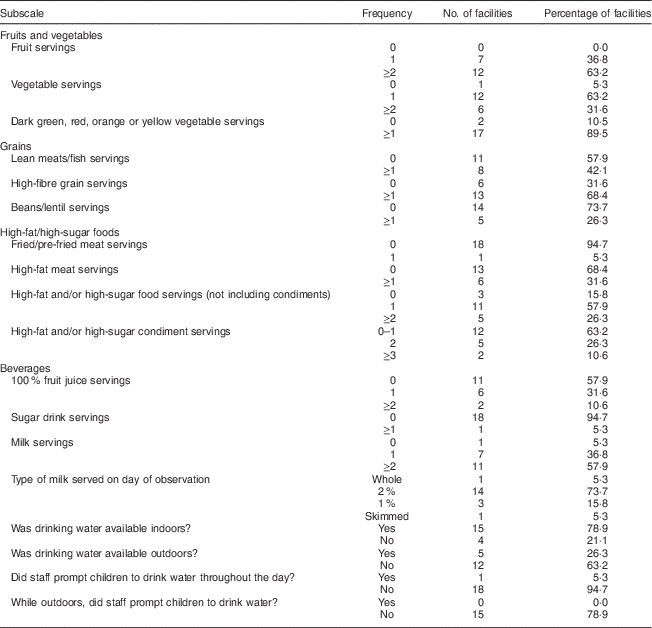
Column totals may not add up to the total number of facilities observed (i.e. n 19) as outdoor playtime did not always occur, staff were not observed eating at every facility, or if the facility did not provide a weekly menu. All items presented in this table were measured via the observation portion of the EPAO (Environment and Policy Assessment and Observation) tool.
Nutrition practices among child-care facilities in London, Ontario, Canada, September 2011–June 2013
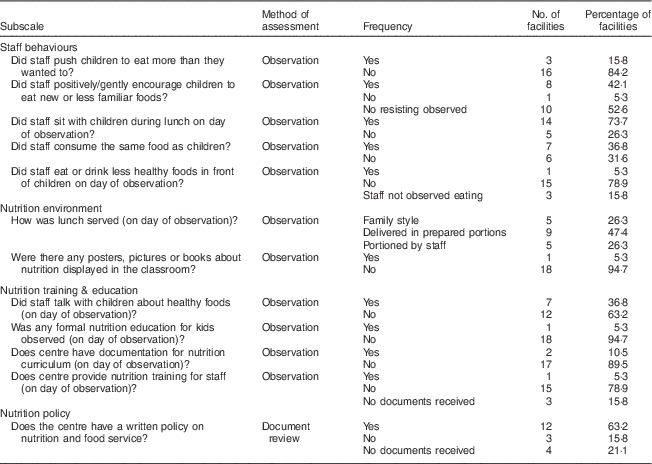
Column totals may not add up to the total number of facilities observed (i.e. n 19) as outdoor playtime did not always occur, staff were not observed eating at every facility, or if the facility did not provide a weekly menu.
Fruits and vegetables
Over half of facilities served fruit twice or more on the day of observation; the majority of facilities met the EPAO-recommended seven or more servings of fruit on their weekly menu, as evidenced by a perfect score on this item. Vegetables were less commonly offered: many facilities did not offer two or more vegetable servings on the observation day and only a third had weekly menus consistent with best practices (i.e. seven or more weekly servings of vegetables, as recommended in the EPAO scoring tool). One dark vegetable serving was provided during the day (see Table 2 for a more detailed description) in over half of the facilities; interestingly, 58·8 % of facilities specified dark vegetables four or more times on their weekly menu and nearly a quarter of the facilities had inconsistencies (i.e. less were served) between their dark vegetable menu listings and actual servings on the day of observation.
Whole grains and low-fat meats
Fish/lean meats were rare. Beans/lentils were excluded from the weekly menus of over half of the participating facilities. Many facilities offered one or more servings of high-fibre grains during the day of observation, but just over a third did not include the EPAO-recommended number of whole grains on their weekly menu (i.e. four servings or greater). In comparison to home-based settings, centre-based facilities adhered to a more favourable practice on two items: the number of times that lean meats/fish was served on the day of observation as well as the number of times that high-fibre grains appeared on the weekly menu.
High-sugar/high-fat foods
While most facilities did not serve any fried/pre-fried meat items during the observation day, some facilities offered high-fat meats (e.g. ham, pork, pepperoni). Very few facilities refrained from including high-fat meats on their weekly menu. It seemed common practice for facilities to offer high-fat and/or high-sugar foods (e.g. cookies, candies, sweetened cereal; not including condiments) at least once per day, and these food items consistently appeared on all facilities’ weekly menus a minimum of four times.
Beverages
Almost all facilities restricted sugar-based drinks and many appeared to keep 100 % fruit juice servings to a minimum. However, almost a quarter of the facilities’ fruit juice menu listings were inconsistent with the items actually served on the observation day (i.e. they served more than what was listed), and just over half of facilities had multiple fruit juice servings listed on their weekly menu. Milk (typically 2 % milk fat) was frequently served to pre-schoolers twice or more per day, and a third of facilities’ weekly menus included seven or more servings. While drinking-water was commonly available indoors, it was less available outdoors and staff rarely prompted children to drink water throughout the day whether indoors or outdoors.
Staff behaviours
Child-care staff sat with children during lunch at most facilities, and the number of facilities where staff did not consume the same food as children was almost as frequent as the number of facilities where they did. Child-care staff were observed consuming less healthy foods in front of the children at only one centre, and staff were not observed eating in three facilities.
Nutrition environment and nutrition policy
Nutrition-related posters, pictures or books were rarely seen on-site in child-care facilities. A third of facilities either did not have a written policy pertaining to nutrition and food services or they provided no relevant nutrition-related documentation.
Nutrition training and education
Staff were observed discussing healthy foods with children in their care at a third of facilities, although few facilities provided any formal nutrition education to the pre-schoolers in care. Most facilities had neither a nutrition curriculum nor nutrition training for staff.
Total nutrition environment EPAO score for all child-care settings
While the difference between the two types of child-care arrangements for the mean total nutrition environment EPAO scores was approaching significance (Table 1; P=0·055), the centre-based facilities (12·12 out of 20) did score slightly higher in comparison to the home-based ones (9·81 out of 20).
Discussion
The present study was the first Canadian exploratory study to objectively assess and compare the environmental factors related to 2·5- to 5-year-old pre-schoolers’ nutritional intake (e.g. types/frequency of foods served, training and education, policies, staff behaviours, etc.) across a sample of home- and centre-based child-care programmes in London, Ontario, Canada. While studies have explored the nutrition environment of child-care facilities internationally( Reference Natale, Page and Sanders 10 , Reference Benjamin Neelon, Vaughn and Ball 16 , Reference Sissons, Campbell and May 19 , Reference Maalouf, Evers and Griffin 20 , Reference Erinosho, Hales and McWilliams 22 ), this environment is not well understood in Canada and research comparing the nutrition-related policies and practices in home- v. centre-based child-care facilities is limited. When comparing the overall nutrition environment of centre- and home-based facilities, results from the study indicate that a possible trend exists in favour of centre-based facilities. Future explorations that include a larger sample size could help to confirm if these differences exist and the specific aspects of the nutrition environment which account for these differences. Overall, findings from our initial study suggest that the nutrition environment within both types of child-care programme may require improvement. Specific environmental factors that influence the nutrition-related choices and practices of children during their time in these programmes are discussed below. Child-care professionals, researchers, policy makers and public health professionals could collaborate to develop provincial guidelines (and subsequent training) that support child-care facilities to create a healthier nutrition environment by making improvements in the following areas: food and beverage servings; staff behaviours; nutrition training and education; and nutrition policy.
Food and beverage servings
Of the domains measuring foods and beverages served to pre-schoolers, the fruits and vegetables domain showed the most encouraging results. On the day of observation, child-care facilities also achieved particularly positive scores pertaining to: (i) fruit servings provided to children and appearing on the weekly menu; (ii) dark vegetable servings; (iii) high-fibre grain servings; and (iv) a limited number of high-fat or fried/pre-fried meat items served. Our observation that most facilities met best practices for the number of fruit servings is consistent with other studies( Reference Benjamin Neelon, Vaughn and Ball 16 , Reference Sissons, Campbell and May 19 , Reference Maalouf, Evers and Griffin 20 ). As discussed by Nicklas et al.( Reference Nicklas, Baranowski and Baranoski 27 ), child-care meals are opportune times for pre-schoolers to continually be exposed to healthy items, as researchers have demonstrated that repeated exposure to food items might influence development of food preferences( Reference Pliner 38 , Reference Stark, Collins and Osnes 39 ).
Based on the findings from the present study, designing child-care menus to ensure pre-schoolers receive adequate servings of vegetables in general and dark vegetables in particular should be a priority. Additionally, we found that high-fibre products such as whole grains and beans/lentils are not consistently included in child-care menus for pre-schoolers. In Nova Scotia, Canada, Romaine and colleagues( Reference Romaine, Mann and Kienapple 30 ) found that child-care centre menus did not consistently include beans, peas, lentils and other legumes; all items recognized as important sources of Fe, fibre, folate and protein. Given the number of meals and snacks served in care, child-care facilities have the opportunity to help shape children’s standard mealtime routine by providing vegetables as well as whole grains and legumes as a part of each meal; modifications to menu planning within the child-care environment are needed.
Staff behaviours
Of the eight subscales, staff behaviour received the highest score. Of the staff behaviours observed, the staff at the majority of child-care programmes (73·7 %) sat with the pre-schoolers during meals and rarely consumed unhealthy foods in front of the children. Maalouf et al.( Reference Maalouf, Evers and Griffin 20 ) and Erinosho et al.( Reference Erinosho, Hales and McWilliams 22 ) also reported that the staff in their studies rarely ate unhealthy foods in front of pre-schoolers in care; however, in Maalouf et al.’s study( Reference Maalouf, Evers and Griffin 20 ), staff rarely sat with children during mealtimes. The work by Gubbels et al.( Reference Gubbels, Kremers and Stafleu 23 ) found that providers’ eating practices within the centre-based child-care environment were highly associated with children’s dietary intake. Interestingly, all staff in our study did not tend to consume the same food as the children in their care. Given that children of pre-school age are more likely than older children to be influenced by adult figures at mealtimes( Reference Addessi, Galloway and Visalberghi 40 ), emphasizing the importance of child-care providers modelling healthy eating and nutrition behaviours is key. The child-care venue presents a unique opportunity for providers to use enthusiastic modelling to encourage pre-schoolers’ healthy eating, especially because such demonstration has been recognized as an effective way to influence children’s eating practices( Reference Gidding, Dennison and Birch 14 , Reference Gubbels, Kremers and Stafleu 23 , Reference Benjamin Neelon and Briley 25 , Reference Wilkinson and McCargar 41 , Reference Hendy and Raudenbush 42 ). Future research could build on the present study to see if nutrition policies around staff’s food consumption (whether their food choices are consistent with what is served at the child-care facilities or whether they choose to bring their own food from home) influence their modelling of healthy eating and nutrition behaviours to the children in their care.
Nutrition training and education
The present study revealed that nutrition training and education at participating child-care facilities warrants the most attention. In fact, Benjamin Neelon et al.( Reference Benjamin Neelon, Vaughn and Ball 16 ) recognized that ‘although childcare providers have a responsibility to serve nutritious meals and snacks, they often receive limited training and little guidance in creating environments that support healthy eating’ (p. 216). Data from the present study showed that it was rare for child-care facilities to have a documented nutrition curriculum for pre-schoolers in care or to offer nutrition training for staff. The significance of nutrition education for children as well as nutrition training for staff is well documented( Reference Benjamin Neelon, Vaughn and Ball 16 , Reference Benjamin Neelon and Briley 25 , Reference Fuller, Keller and Olson 43 ). Evidently, nutrition-related training and education for staff, and the development of a nutrition curriculum for pre-schoolers, should be viewed as a priority moving forward to support healthy eating among pre-schoolers. Additionally, education/training for menu planners and cooks may also help ensure foods prepared are nutritionally adequate as well as appealing to young children( Reference Erinosho, Dixon and Young 21 ). In light of the lack of training provided to child-care staff and cooks, combined with the variation in regulations regarding menu review by dietitians, ample room exists to improve the menu planning process in London child-care facilities.
Nutrition policy
The findings from the current preliminary work indicate that nutrition policies within child-care facilities in London, Ontario are lacking. In comparison to Ontario, the Manual for Food and Nutrition in Regulated Child Care Settings in Nova Scotia provides a more stringent and comprehensive set of recommendations including extra sections on healthy modelling of food( 44 ), family involvement and foods not to serve. As per the recommendations from the Ontario Society of Nutrition Professionals in Public Health( 15 ), the Day Nurseries Act should be updated to a version similar to Nova Scotia’s and appropriately reflect changes in Canada’s Food Guide. Since the publications of these recommendations, the Ontario Government has recognized that the nutrition requirements in Regulation 262 are ‘significantly outdated’ and has recently proposed amendments to the nutrition requirements (e.g. ‘follow the latest version of Canada’s Food Guide, have menus reviewed by a registered dietician, and establish policies/procedures describing their approach to providing high-quality meals/snacks and positive meal time experiences’)( 45 ). Based on the research from the NAP SACC self-assessment tool( Reference Ammerman, Benjamin and Ball 24 , Reference Ward, Hales and Haverly 36 ), the policies created should promote positive nutrition through topics such as menus and variety, foods offered outside regular mealtimes, nutrition education, etc.
Implementing policies at child care could be one effective avenue to improve the overall nutrition environment. Previous research by Erinosho’s team( Reference Erinosho, Hales and McWilliams 22 ) found that while some policies around healthy modelling were associated with healthier staff nutrition behaviours, the mere presence of such policies did not always result in healthier staff behaviours; however, these researchers questioned if the policies were fully enforced. Ward et al.’s( Reference Ward, Vaughn and Story 46 ) recent work with experts and stakeholders also echoed the concern that many nutrition and physical activity-related child-care policies with positive intentions have been implemented, yet achieve limited results. It might be the case that policies, combined with effective staff training and education, might be a more effective and realistic solution.
Strengths and limitations
The present study contributes to the scarce body of research that compares the nutrition environment across child-care settings in Canada and a strength of the work was the use of direct-observation methods to collect data via a valid and reliable tool. While the current paper highlights important preliminary findings regarding the nutrition environment in home- and centre-based child-care facilities, it is not without its limitations. First, the EPAO tool has been validated to use within centre-based child-care facilities( Reference Ward, Hales and Haverly 36 ), but not within home-based programmes. Consequently, the appropriateness and validity of the findings solicited from this single-day observation, albeit direct, may have been compromised for the home-based sample. Second, the EPAO failed to capture information on all types of food served within the child-care environment including cheese, yoghurt and eggs, all of which appeared to be popular food choices among the participating facilities in the study. Collecting such data would undoubtedly provide a more accurate picture of the nutrition environment and menus developed within this unique setting. Third, it is also important to note that food actually consumed by the pre-schoolers was not measured; only the availability and number of servings were observed. Therefore, there may be some discrepancy between what was available and what was actually consumed; having this information would provide a more accurate picture of the nutritional intake of children in care. Fourth, as only nineteen child-care facilities were included in the study, caution should be taken when interpreting the results. Lastly, while every effort was made to ensure a representative sample (i.e. geographic areas, socio-economic status, etc.), this was not always possible as there was no single repository listing all home-based child-care facilities across the city (which therefore may have resulted in some selection bias). While it is likely that the centre-based facilities in the present study may share a number of similarities with other cross-country facilities based on comparable legislation, variation is expected to exist between home-based facilities as they are individually operated and managed out of their child-care provider’s home. As such, the generalizability of our findings may have been impacted.
Conclusions
This is the first Canadian study tasked with exploring and comparing the nutrition environment of pre-schoolers attending home- and centre-based child-care facilities. The findings of this work highlighted some strengths and weaknesses with regard to the nutrition environment across both types of child-care settings, including the lack of significant differences between these two settings. Additional research is needed to further explore and confirm these findings. Future work is recommended to develop policies pertaining to the nutrition environment in child-care settings and the impact of these policies on nutritional practices. The present findings suggest that support for child-care staff (e.g. through guidelines and training) may be needed, and that such changes may also help guide the ratification of current legislation to provide more specific direction around nutrition in child-care facilities. Child-care directors could collaborate with nutrition professionals to increase the nutrition-related training for child-care menu planners and early childhood educators, to help improve the nutritional quality of foods and beverages served to pre-schoolers. These groups could also work together to create a nutrition curriculum in order to provide nutrition education to pre-schoolers.
Acknowledgements
Acknowledgements: The authors wish to thank the home- and centre-based child-care facilities that agreed to participate in this study. The authors are also grateful to the pre-schoolers and their families for their involvement. Thanks are extended to Dr Courtney Newnham-Kanas for her assistance with data collection and reviewing sections of the manuscript, and to Emie Angeles for helping with data entry. Financial support: This project was funded by the Canadian Institutes of Health Research, the Heart and Stroke Foundation of Canada and the Public Health Agency of Canada (P.T., CIHR Award # GIR 112690). The Canadian Institutes of Health Research, the Heart and Stroke Foundation of Canada and the Public Health Agency of Canada had no role in the design, analysis or writing of this article. Conflict of interest: None. Authorship: P.T., J.D.I. and S.M.B. were all involved with the conception, design and implementation of the study. O.J.M.M. and L.M.V. carried out data collection/analyses and drafted the manuscript; P.T., J.D.I. and S.M.B. provided their expertise, revisions and comments on the manuscript. Ethics of human subject participation: This study was conducted according to the guidelines laid down in the Declaration of Helsinki and all procedures involving human subjects were approved by the University of Western Ontario’s Research Ethics Board. Written informed consent was obtained from all child-care centre directors and child-care providers of home-based programmes, and all pre-schoolers received written parental/guardian consent.



