


The prevalence of childhood overweight and obesity is increasing rapidly( Reference Wang and Lobstein 1 , 2 ). Consumption of energy-dense (snack) food and sugar-sweetened beverages (SSB) contributes to childhood overweight and obesity( Reference Rennie, Johnson and Jebb 3 ). In children, energy-dense snacking and SSB intake have shown large increases over time( Reference Piernas and Popkin 4 ). In contrast, it is widely acknowledged that children consume less fruit than is recommended( Reference Currie, Roberts and Morgan 5 – Reference Rodenburg, Oenema and Kremers 9 ), whereas fruit consumption is associated with a healthy body weight( Reference Alinia, Hels and Tetens 10 – 12 ). Because snacking habits established in childhood often track through to adulthood( Reference Mikkilä, Räsänen and Raitakari 13 , Reference Kelder, Perry and Klepp 14 ), unhealthy snacking (energy-dense snacks and SSB intake) should be discouraged and fruit snacking promoted at an early age. However, effective promotion of healthy eating requires understanding of the factors determining these behaviours.
The home environment is a critical context for the development of children's snacking behaviour( Reference Pinard, Yaroch and Hart 15 – Reference Golan and Crow 17 ). Parents play a key role in shaping the home environment, e.g. by using specific feeding styles. Parental feeding styles can be measured in various ways (e.g. references 18 and 19). Four commonly used aspects of parental feeding are Instrumental Feeding (i.e. using food to regulate a child's behaviour), Emotional Feeding (i.e. using food to temper a child's emotions), Encouragement to eat, and Control over eating( Reference Wardle, Sanderson and Guthrie 18 ). Insight into such parental influences on children's snacking behaviour and weight may help the development of interventions targeted at parents( Reference Pearson, Biddle and Gorely 20 – Reference Van der Horst, Oenema and Ferreira 22 ). However, data on parental feeding styles in relation to child snacking behaviour and BMI are inconsistent (see reference 23), e.g. there is evidence for positive associations, no associations and inverse associations of controlling feeding styles with child energy-dense snacking and weight. Explanations for such conflicting results include the study design (e.g. experimental v. observational studies and the cross-sectional nature of most studies) and the variety of parental feeding style measures used. The present study examines two ways to elucidate the relationship between parental feeding styles and child snack intake/weight, i.e. multidimensionality of parental feeding style constructs and higher-order moderation of general parenting.
The four feeding styles commonly distinguished are complex and multidimensional constructs (e.g. references Reference Sleddens, Kremers and De Vries23 and Reference Ogden, Reynolds and Smith24). For example, Ogden et al.( Reference Ogden, Reynolds and Smith 24 ) found evidence for expanding the existing conceptualisation of parental control into Overt Control and Covert Control. So far, parental control has mainly been operationalized in Overt Control, which is parental control over child food intake such that it can be detected by the child, e.g. by being firm about how much the child should eat. On the other hand, Covert Control is a way of parental control which is undetectable for the child, e.g. avoiding buying/having sweets/crisps in the home. In the study by Ogden et al., Overt Control was found to be unrelated to energy-dense snacking in children, while Covert Control was negatively associated with child snack intake( Reference Ogden, Reynolds and Smith 24 ). This implies that adding the construct of Covert Control may elucidate the relationship between a controlling feeding style and child energy-dense snacking. However, studies are needed to replicate such findings, and to examine whether Overt Control and Covert Control also have differential effects on other snacking behaviours and weight.
The relationship between parental feeding styles and child snacking/weight has mainly been studied in an isolated perspective by not incorporating a broader parenting context. However, based on research and ecological systems theory( Reference Bronfenbrenner 25 ), there is a trend to integrate general parenting as a potential higher-order moderator in studies on parenting practices, e.g. to clarify mechanisms related to the impact of specific parenting on child consumption and weight (e.g. references Reference Ventura and Birch21 and Reference Kremers, Brug and de Vries26–Reference Sleddens, Gerards and Thijs30). This implies that the impact of parental feeding styles on child snacking and weight may differ depending on the parents’ general parenting style. A parenting style generates the environmental/emotional context for child rearing, and can be operationalized into three dimensions: Involvement, Behavioural Control and Psychological Control( Reference Darling and Steinberg 31 ). Behavioural Control was found to have a positive impact on the relationship between parental modelling of fruit intake and child fruit intake (i.e. a more pronounced positive association between parental and child fruit intake among children of parents who consumed relatively large amounts of fruit) and Psychological Control a negative impact (i.e. a more pronounced positive association between parental and child fruit intake among children of parents who consumed relatively little fruit)( Reference Rodenburg, Oenema and Kremers 9 ). This raises the question whether Psychological Control, seen as a risk factor for problem behaviour in general( Reference Barber and Harmon 32 , Reference Finkenauer, Engels and Baumeister 33 ), also moderates the associations between parental feeding styles and child snacking/weight in an unfavourable way and whether Behavioural Control moderates the associations in a favourable way.
Associations between parental feeding styles and child snacking/weight are generally examined in cross-sectional studies, whereas longitudinal studies are sparse( Reference Ventura and Birch 21 , Reference Carnell and Wardle 34 – Reference Webber, Cooke and Hill 36 ). Therefore, in the present study we examined cross-sectional and longitudinal (one-year follow up) associations of parental feeding styles with child snacking (fruit intake, energy-dense snacking and SSB intake) and child weight in a community-based sample of (on average) 9-year-old children. We also examined whether adding Covert Control to the generally accepted concept of Overt Control may elucidate the relationship between a controlling feeding style and child snacking/weight. Finally, we examined whether the potential associations between parental feeding styles and child snacking/weight would be moderated by general parenting.
Methods
Study design and procedure
Data for the current study were retrieved from the longitudinal IVO Nutrition and Physical Activity Child cohorT (INPACT). INPACT was conducted according to the Declaration of Helsinki and all procedures were approved by the Medical Ethical Committee of the Erasmus MC (University Medical Center Rotterdam). Written informed consent was obtained from all participants.
INPACT is an observational study focusing on modifiable determinants of overweight in the home environment of primary-school children in the Netherlands, with emphasis on parental influences. The study included four assessments, in which qualified research assistants measured the children's height/weight at school and primary caregivers completed a questionnaire at home. Questionnaires recorded data on dietary intake of the child and potentially relevant home environmental factors, including parenting style dimensions, parental feeding style dimensions and sociodemographic variables. Assessments took place with a one-year time interval and started in the autumn of 2008 (baseline).
INPACT was conducted among primary-school children in southern Netherlands (Eindhoven area). All general primary schools in the area were invited to participate in the INPACT study. Of the 265 schools invited, ninety-one took part. The response rate from rural and urban schools was equal. The primary caregivers of third-grade students (aged 8 years) were invited to participate in the cohort study, together with their child. Of the 2948 parent–child dyads invited, 1839 (62·4 %) gave informed consent to participate in the INPACT study for four years.
The present study was based on data from 2008 (baseline), 2009 and 2010. Sociodemographic variables and parenting style dimensions were measured at baseline, parental feeding style dimensions were measured in 2009 when the children were (on average) 9 years of age, while child fruit intake, snack intake, SSB intake and weight were measured in 2008, 2009 and 2010. Parent–child dyads who completed the parent questionnaires from baseline to 2010, and had valid child height/weight data in 2009 and 2010, were included in the present study, resulting in 1275 parent–child dyads (69·3 % of the original cohort). Logistic regression analyses on selective dropout from baseline to 2010 showed that non-Western and Western immigrant parent–child dyads dropped out more often. There was no selective dropout regarding child age/gender and parental education level.
Measures
Parental feeding styles
Parental feeding styles were parent-reported and measured using a validated Dutch translation( Reference Sleddens, Kremers and De Vries 23 ) of the Parental Feeding Style Questionnaire (PFSQ), designed and validated by Wardle and colleagues( Reference Wardle, Sanderson and Guthrie 18 ). This twenty-seven-item measure assessed four feeding style dimensions: Instrumental Feeding, Emotional Feeding, Encouragement to eat, and Control over eating. The original measure, as well as the Dutch translation, have adequate to good internal consistency( Reference Wardle, Sanderson and Guthrie 18 , Reference Sleddens, Kremers and De Vries 23 ). The control dimension of the PFSQ assessed Overt Control. Covert Control over eating was measured with three items, based on a five-item measure of Covert Control designed by Ogden et al.( Reference Ogden, Reynolds and Smith 24 ); this measure of Covert Control has adequate internal consistency (Cronbach's α of the original five-item measure = 0·79).
Missing data on the parental feeding style items (1·4 % at the highest for an Encouragement item) were imputed using the mean value of respondents without a missing value. Table 1 presents additional information on the five parental feeding style dimensions in our sample.
Descriptive and scale information of parental feeding styles and parenting style dimensions
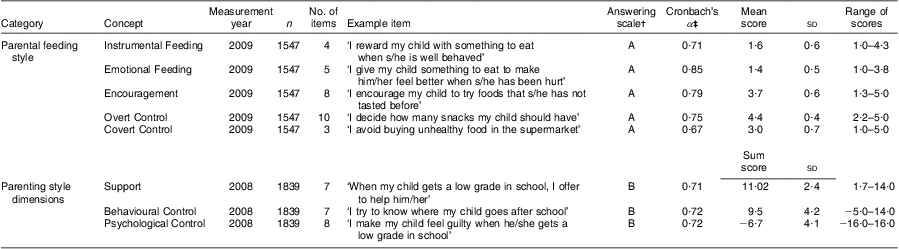
†Answering scale A: never (1) to always (5); answering scale B: completely disagree (−2) to completely agree (+2).
‡The reliability of the parental feeding style scales was assessed by calculating Cronbach's α values (internal consistency) and (average) corrected item–total correlations, which indicate the degree to which an individual item relates to the total scale score. Corrected item–total correlations ≥0·30 are regarded as good and ≤0·15 as unreliable( Reference Nunnally 63 ). Average corrected item–total correlations were good and ranged from 0·41 to 0·67. One corrected item–total correlation was <0·30 (0·21 for an Overt Control item).
Children's snacking behaviour
Child fruit, energy-dense snack and SSB intakes were measured with a questionnaire based on validated FFQ( Reference Bogers, Van Assema and Kester 37 , Reference Haraldsdottir, Thorsdottir and de Almeida 38 ). The primary caregivers reported how many days in a normal week their children consumed, in between meals: (i) fruit (fresh, bottled and/or canned; no juice); (ii) savoury snacks (e.g. potato crisps, peanuts and sausage rolls); (iii) sweet snacks (e.g. candies, chocolates and candy bars); (iv) cake or large biscuits; and (v) SSB. Answering categories ranged from ‘none or less than 1 day a week’ to ‘7 days a week’. They also reported the number of servings consumed by their children on such a day. For fruit, answering categories ranged from ‘0 pieces per day’ to ‘more than 3 pieces per day’, by increments of half a piece of fruit. Reported consumption of more than 3 pieces/d (n 12) was recoded as 4 pieces/d. For savoury snacks, sweet snacks and cake or large biscuits, answering categories ranged from ‘0’ to ‘10 servings a day’. For SSB, answering categories ranged from ‘0 glasses per day’ to ‘more than 5 glasses per day’, by increments of half a glass. It was specified that one glass equals 200 ml; one can equals 330 ml or 1·5 glasses; one bottle equals 500 ml or 2·5 glasses. Reported consumption of more than 5 glasses/week (n 7) was recoded as 6 glasses/week. Total child fruit and SSB intakes were expressed in servings per week and calculated by multiplying frequency and quantity. Total child energy-dense snack intake was also expressed in servings per week and calculated by multiplying frequencies of savoury snacks, sweet snacks and cakes with their corresponding quantities, and summing these scores. Missing values on these measures were not imputed due to the low number of missing values (1·0 % at the highest, for child snacking).
Children's weight
Child BMI was based on the child's [weight (kg)]/[height (m)]2 as measured by the qualified research assistants. Children were measured at school according to standard procedures in light clothing without shoes, to the nearest 0·1 kg and 0·1 cm. BMI Z-scores were calculated( Reference Cole, Bellizzi and Flegal 39 ) based on age- and gender-specific values from the 1997 National Growth Study in the Netherlands( Reference Fredriks, Van Buuren and Wit 40 ).
Parenting style
Parenting style was measured using the Dutch translation( Reference Beyers and Goossens 41 ) of an instrument based on earlier work by Steinberg et al.( Reference Steinberg, Elmen and Mounts 42 , Reference Lamborn, Mounts and Steinberg 43 ) and used in many studies worldwide( Reference Kremers, Brug and de Vries 26 , Reference Beyers and Goossens 41 , Reference Huver, Engels and Vermulst 44 , Reference Pearson, Atkin and Biddle 45 ). With twenty-two items, the instrument assessed the parenting style dimensions of Support, Behavioural Control and Psychological Control (Table 1).
Demographics and other potential confounders
Measured potential confounders included child's gender, age and ethnic background, parental education level, parental fruit, energy-dense snack and SSB intakes, and parental BMI.
To assess the child's ethnic background, the primary caregiver reported the country of origin of both parents. According to standard procedures of Statistics Netherlands( 46 ), a child was classified as native Dutch if both parents were born in the Netherlands, as a Western immigrant if at least one parent was born outside the Netherlands but inside Europe, North America, Oceania, Indonesia or Japan, and as a non-Western immigrant if at least one parent was born in Turkey, Africa, Latin America or Asia. The primary caregiver also reported on his/her highest level of education. According to international classification systems( 47 ), parental education level was defined as low (primary school and lower vocational/lower general secondary education), medium (intermediate vocational education, higher general secondary education and university preparatory), high (higher vocational education and university) or non-defined.
Parental fruit, energy-dense snack and SSB intakes were measured and calculated in the same way as child fruit, energy-dense snack and SSB intakes. To assess parental BMI, the primary caregiver reported his/her own height/weight and that of his/her partner. He/she also reported whether he/she and the partner were the child's biological parents. Maternal and paternal BMI (for biological parents only) were calculated on the basis of their answers (n maternal BMI = 1204, 5·6 % missing; n paternal BMI = 1058, 17·0 % missing). To maintain statistical power, missing values on maternal and paternal BMI were imputed using the group mean.
Strategy for analyses
To describe the study population, we computed means, standard deviations and/or proportions for the sociodemographic variables, parental feeding style dimensions, parenting style dimensions, child snacking behaviour and child BMI Z-scores.
To explore associations between the key study variables, Pearson's correlations were computed between parental feeding style dimensions (assessed in 2009), parenting style dimensions (assessed in 2008), child fruit intake in 2010, energy-dense snacking in 2010, SSB intake in 2010 and BMI Z-score in 2010. Next, separate linear regression analyses were performed to establish the longitudinal relationship between parental feeding style dimensions and child snacking/child BMI Z-score in 2010, adjusted for child age, gender, ethnic background and parental education level. In models with child snacking as dependent variable (e.g. child fruit consumption), we also controlled for child BMI in 2009 and parental snacking in 2010 (i.e. parental fruit consumption). In models with child BMI Z-score as dependent variable, we controlled for the sociodemographic variables and parental BMI in 2010. In these models, underweight children in 2009 (ninety-one of 1275 children) were excluded to prevent distortion of the results (for underweight children, an increase in BMI would be favourable whereas it would be unfavourable for normal weight, overweight and obese children). International cut-off scores were used to determine whether a child was underweight( Reference Cole, Bellizzi and Flegal 39 ).
To determine whether parental feeding style dimensions predicted changes in child snacking and BMI Z-score between 2009 and 2010, we repeated the linear regression analyses additionally adjusted for child snacking in 2009 and child BMI Z-score in 2009, respectively. Finally, to explore whether longitudinal associations between parental feeding style dimensions in 2009 and child snacking/weight in 2010 were similar to cross-sectional associations, we performed cross-sectional linear regression analyses (parental feeding style dimensions and child snacking/weight in 2009), applying the same adjustment procedure as in the longitudinal analyses.
In the final set of regression analyses we examined whether parenting style dimensions moderated significant longitudinal associations between parental feeding styles and (changes in) child snacking/child weight. Moderation was tested by adding interaction terms to the regression analyses. If interaction terms were significant (significance level of 0·1)( Reference Rosnow and Rosenthal 48 ), stratified analyses were conducted by dichotomizing the sample on the relevant parenting dimension (median split).
All analyses were conducted using the statistical software package IBM SPSS Statistics version 19·0.
Results
In 2008, at baseline (n 1839), 7 % of the children were underweight, 79 % had normal weight and 14 % were overweight (of whom 3 % were obese). The age of the children was 8 years (77 %) or 9 years (20 %; range 7–10 years, mean 8·2 (sd 0·5) years). Boys (50·5 %) and girls (49·5 %) were represented in almost equal numbers. Of all children, 17 % were from a non-Dutch ethnic background (with one or both parents born abroad), of whom 9 % were from non-Western countries and 8 % were from Western countries. Of all primary caregivers, 21 % had finished education at a low level, 45 % at a medium level, 32 % at a high level and 2 % at a non-specified level (see Measures section for classification system used). Of the primary caregivers, 1 % were underweight, 66 % had a normal weight and 33 % were overweight (of whom 9 % were obese).
Parental feeding style and parenting style dimensions are described in Table 1. Parental feeding styles were measured in 2009, when the children were (on average) 9 years of age. Children had an average weekly fruit consumption of 7·3 (sd 4·2) pieces in 2009 and 6·9 (sd 4·3) pieces in 2010, an average weekly energy-dense snack intake of 9·8 (sd 5·8) pieces in 2009 and 9·9 (sd 6·1) pieces in 2010, an average weekly SSB intake of 9·2 (sd 8·2) glasses in 2009 and 8·9 (sd 8·2) glasses in 2010, and an average BMI Z-score of 0·2 (sd 0·9) in both 2009 and 2010 when underweight children were excluded.
Pearson's correlations between the key study variables are reported in Table 2. It showed, among others, a positive correlation between Overt Control and Covert Control (r = 0·09, P < 0·01), a negative association between child energy-dense snacking and child BMI Z-score in 2010 (r = −0·10, P < 0·001) and a negative association between child SSB intake and child BMI Z-score in 2010 (r = −0·06, P < 0·05). Results of the regression analyses with child snacking/child BMI Z-score in 2010 as the dependent variable (Table 3, column ‘β 2010’) showed negative associations of Instrumental Feeding and Emotional Feeding with child fruit intake and positive associations with child energy-dense snack intake. Encouragement was negatively associated with child energy-dense snack and SSB intakes; Overt Control was also negatively associated with child energy-dense snack and SSB intakes; while Covert Control was positively associated with child fruit intake, negatively associated with child energy-dense snack and SSB intakes, and positively associated with child BMI Z-score. Effect sizes of the cross-sectional associations between parental feeding styles with child snacking/child BMI Z-score (Table 3, column ‘β 2009’) were generally similar to those for 2010, but fewer of the cross-sectional associations reached statistical significance.
Pearson's correlations of key study variables (n 1275)

PFSQ, Parental Feeding Style Questionnaire; SSB, sugar-sweetened beverage.
Correlation is significant at the: *0·05 level (two-tailed), **0·01 level (two-tailed), ***0·001 level (two-tailed).
†Underweight children excluded.
Associations of parental feeding styles (2009) with child fruit intake, energy-dense snacking, SSB intake and BMI Z-score in 2009, in 2010 and in 2010, controlled for 2009 values

SSB, sugar-sweetened beverage; β, standardized regression coefficient; SES, socio-economic status.
In secondary analyses, bootstraps were performed, testing H0: β Overt Control = β Covert Control. If P > 0·1, Overt Control and Covert Control have no differential effect; if P < 0·05, Overt Control and Covert Control have a differential effect; 0·05<P < 0·1 signals a trend towards a differential effect.
Correlation is significant at the: *0·05 level (two-sided), **0·01 level (two-sided), ***0·001 level (two-sided).
†n 1248 for 2009, n 1245 for 2010 and n 1244 for 2010–2009; n deviates from sample size in Table 2 because of missing values on control variables.
‡n 1230 for 2009, n 1233 for 2010 and n 1217 for 2010–2009; n deviates from sample size in Table 2 because of missing values on control variables.
§n 1248 for 2009, n 1239 for 2010 and n 1238 for 2010–2009; n deviates from sample size in Table 2 because of missing values on control variables.
∥n 1163 for 2009, 2010 and 2010–2009; n deviates from sample size in Table 2 because of missing values on control variables; underweight children in 2009 were excluded from analyses with child BMI Z-score as dependent variable. Repeated analyses including underweight children resulted in similar findings.
¶Models adjusted for age, gender, SES, ethnicity, child BMI in 2009 and parental fruit/snack/SSB intakes in 2009.
††Models adjusted for age, gender, SES, ethnicity, child BMI in 2009 and parental fruit/snack/SSB intakes in 2010.
‡‡Models adjusted for age, gender, SES, ethnicity, child BMI in 2009, parental fruit/snack/SSB intakes in 2009 and 2010, and additionally child fruit/snack/SSB intakes in 2009.
§§Models adjusted for age, gender, SES, ethnicity and parental BMI in 2009.
∥∥Models adjusted for age, gender, SES, ethnicity and parental BMI in 2010.
¶¶Models adjusted for age, gender, SES, ethnicity, parental BMI in 2009 and 2010, and additionally child BMI Z-score in 2009.
Results of regression analyses with child snacking/child BMI Z-score in 2010 as the dependent variable in which we additionally adjusted for child snacking/child BMI Z-score in 2009 (Table 3, column ‘β 2010–2009’), showed that Instrumental Feeding predicted a small decrease in child fruit consumption between 2009 and 2010 (β = −0·05, P < 0·05), a small increase in energy-dense snacking (β = 0·08, P < 0·01) and a minimal increase in child BMI Z-score (β = 0·02, P < 0·05). Emotional Feeding predicted a small increase in child energy-dense snacking (β = 0·07, P < 0·01), while Encouragement predicted a small decrease in child energy-dense snacking between 2009 and 2010 (β = −0·07, P < 0·01). Both Overt Control and Covert Control predicted small decreases in child energy-dense snack and SSB intakes (Overt Control: β snacking = −0·07, P < 0·01 and β SSB intake = −0·07, P < 0·05; Covert Control: β snacking = −0·06, P < 0·01 and β SSB intake = −0·08, P < 0·01), while Covert Control also predicted a minimal increase in child BMI Z-score between 2009 and 2010 (β = 0·02, P < 0·05).
Based on the results of the regression analyses, secondary analyses were performed to test the potential differential effect of Overt Control and Covert Control on child snacking behaviour and weight. In bootstrapping analyses, by constructing 1000 replicas of the observed data set, it was tested whether β Covert Control was significantly different from β Overt Control (P < 0·05). Bootstrapping analyses revealed that Overt Control and Covert Control had differential effects on child BMI Z-score in 2010, with Covert Control displaying a stronger, positive association. In addition, a trend (0·05<P < 0·1) was found for child BMI Z-score in 2009 and for changes in fruit intake between 2009 and 2010, with Covert Control displaying a positive change in fruit intake (Table 3).
Moderation analyses on significant longitudinal associations between parental feeding styles and (changes in) child snacking/child weight and subsequent stratified analyses revealed that the negative association between Instrumental Feeding and child fruit consumption was present only if primary caregivers scored relatively high on Behavioural Control, while the negative association between Overt Control and child SSB intake was present only when primary caregivers scored relatively low on Behavioural Control (Table 4). In addition, the positive association between Emotional Feeding and child energy-dense snack intake was present only in children of parents who conducted high levels of Psychological Control, while the negative association between Covert Control and child energy-dense snacking was present only in children of parents who conducted low levels of Psychological Control (Table 4). The parenting style dimension of Support did not moderate any of the significant longitudinal associations between parental feeding styles and child snacking/weight.
Associations of parental feeding styles with child snacking, stratified by psychological control and behavioural control
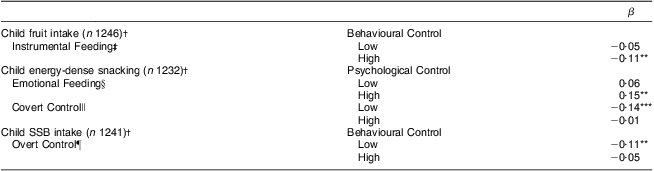
SSB, sugar-sweetened beverage; β, standardized regression coefficient
Moderation was tested on significant longitudinal associations between parental feeding style subscales and (changes in) child intake/child BMI Z-score in 2010 (Table 3, column ‘β 2010’ and column ‘β 2010–2009’). Stratified analyses were only conducted for significant interaction terms. Stratified analyses were conducted by dividing the sample on the relevant parenting dimension in two (median split) and three groups, but stratification into two groups proved to be sufficient.
Correlation is significant at the: **0·01 level (two-sided), ***0·001 level (two-sided).
†n deviates from sample sizes in Table 2 because of missing values on control variables.
‡P interaction term = 0·063.
§P interaction term = 0·077.
∥P interaction term < 0·001.
¶P interaction term = 0·074.
Discussion
Our study is one of the few to take into account the multidimensionality of parental feeding constructs, i.e. parental control over eating. Unlike previous findings( Reference Ogden, Reynolds and Smith 24 ), in the present study Overt Control and Covert Control had no differential effect on (changes in) child energy-dense snack intake, as both were negatively related to child snack intake. However, they were differentially related to child BMI Z-score, while a trend was observed for changes in child fruit intake between 2009 and 2010. These new findings support the conclusion of Ogden et al.( Reference Ogden, Reynolds and Smith 24 ) that Overt Control and Covert Control are separate constructs. In our study, Covert Control was positively related to child BMI Z-score, both cross-sectionally and prospectively, but the effect size of the predicted change in BMI Z-scores during one year was almost zero. This suggests that Covert Control might be an effective parental strategy in response to child weight problems. This latter idea is not new( Reference Ogden, Reynolds and Smith 24 ) and is in line with data showing that parents modify their feeding practices (i.e. pressure to eat, restriction and monitoring) in response to the child's (perceived) weight, dietary behaviours and/or eating style( Reference Webber, Cooke and Hill 36 , Reference Webber, Hill and Cooke 49 – Reference Gregory, Paxton and Brozovic 51 ). In addition to the supportive effect of Overt Control and Covert Control on decreasing snack (and SSB) intake, Covert Control was also supportive in increasing child fruit intake. This suggests that parents who exert higher levels of Covert Control might replace the home availability of unhealthy snacks by home availability of fruit, which is positively related to fruit intake( Reference Pinard, Yaroch and Hart 15 , Reference Pearson, Biddle and Gorely 20 , Reference Van der Horst, Oenema and Ferreira 22 , Reference Rasmussen, Krølner and Klepp 52 ).
Consistent with previous findings( Reference Sleddens, Kremers and De Vries 23 ), Encouragement was negatively related to child energy-dense snack intake, indicating that parental encouragement might be influenced by health beliefs: parents encourage their children's interest in and curiosity for a variety of healthy foods, resulting in the consumption of less unhealthy foods( Reference Sleddens, Kremers and De Vries 23 , Reference Webber, Hill and Cooke 49 ).
Although Covert Control may be responsive to child weight, Instrumental Feeding and Emotional Feeding are less likely to be so because these styles are used for non-nutritive purposes. In previous studies, a positive association was found between Instrumental/Emotional Feeding and child energy-dense snack intake, indicating that parental use of energy-dense snacks as rewards may increase a child's preference for the ‘rewarding’ food( Reference Birch, Birch and Marlin 53 , Reference Newman and Taylor 54 ), which is expected to promote overeating of these products in children( Reference Sleddens, Kremers and De Vries 23 ). Our longitudinal findings on Instrumental Feeding (and to a lesser extent on Emotional Feeding) support this by assuming that these feeding styles might have a detrimental effect on child fruit intake, energy-dense snack intake and weight in the long run.
Prospective studies with a longer follow-up, in which all measures are assessed at baseline and follow-up, are needed to elucidate the causal pathways between various parental feeding styles and children's snacking behaviour and weight. To our knowledge, Webber et al.( Reference Webber, Cooke and Hill 36 ) were the first to study bidirectional longitudinal associations between a range of parental feeding styles and child adiposity, and concluded that monitoring and pressure to eat were responsive to the child's weight status. A next step is to test whether these responsive feeding styles lead to desired changes in child weight.
An increasing number of studies on parenting practices and child weight/intake include general parenting as a potential higher-order moderator( Reference Rodenburg, Oenema and Kremers 9 , Reference Sleddens, Gerards and Thijs 30 , Reference van der Horst, Kremers and Ferreira 55 , Reference Taylor, Wilson and Slater 56 ), thus incorporating a broader, non-food specific parenting context. To our knowledge, ours is the first study to relate parental feeding styles to child snacking and weight and include general parenting as a higher-order moderator, implying that the impact of parental feeding styles on child snacking and weight may differ depending on the parent's general parenting style. It is shown that some significant associations between parental feeding styles and outcome measures depend on the degree of Psychological Control and Behavioural Control. As hypothesized, a high level of Psychological Control was unfavourable for child snacking; this voided the negative association between Covert Control and child energy-dense snacking, and presented a positive association between Emotional Feeding and child energy-dense snacking. These findings demonstrate that it is not advisable for parents to use this method of control( Reference Rodenburg, Oenema and Kremers 9 , Reference Barber and Harmon 32 , Reference Finkenauer, Engels and Baumeister 33 ). Unexpectedly, our results indicate that low (instead of high) levels of Behavioural Control void the unfavourable negative association between Instrumental Feeding and child fruit intake, and increase the favourable negative association between Overt Control and child SSB intake. However, because of the large number of interaction terms tested, our moderation results should be interpreted with caution and more studies are needed before firm conclusions can be drawn.
Although our study has the strength of combining parental feeding styles, snack intake, weight and parenting style in one study, which is exceptional in this field of research( Reference Ventura and Birch 21 ), some limitations should be mentioned. First, we measured snack intake based on FFQ which may evoke social desirability bias and lead to overestimation of fruit consumption and underestimation of energy-dense snack and SSB intakes in parents and children( Reference Baranowski, Smith and Baranowski 57 , Reference Van Assema, Brug and Ronda 58 ), especially in overweight subjects (e.g. references 59 and 60). Selective misreporting may explain the unexpected, negative correlations between energy-dense snacking and SSB intake on the one hand and child BMI Z-score on the other. However, there is evidence that selective misreporting in overweight children does not occur when parents report their child's food intake( Reference Hise, Sullivan and Jacobsen 61 ), which is the case in our study. Reversed causality might be an alternative explanation for the negative correlations, implying that parents of children with a normal weight do not react on their child's energy-dense snacking and SSB intake (i.e. they do not get a signal that the amounts of energy-dense snacking are unhealthy), while parents of overweight children do.
Second, although parent-reported child snack intake may not lead to selective misreporting, parents might underestimate actual snacking intake of their children, as they are exposed to school food environments that parents may not be fully aware of. Because Dutch primary-school children bring their own snacks and food to school, underestimating of snacking intake had probably no (large) effect on our results. A third limitation is that our prospective study had a short follow-up of one year and did not measure parental feedings styles at both time points. Because of that, the benefits of a longitudinal approach could not be fully exploited. Fourth, we used an adapted version of Ogden's Covert Control scale. We combined two original items (‘avoiding buying biscuits and cakes’ and ‘avoiding buying sweets and crisps’) into one item on avoiding buying unhealthy foods. Moreover, we skipped one item on ‘avoiding going to cafés or restaurants with your children which sell unhealthy food’. A reduction in scale items from five to three might explain a lower Cronbach's α value of the adapted scale (0·67) compared with the original one (0·79)( Reference Field 62 ). However, the internal consistency of the adapted scale was still acceptable (0·67)( Reference Field 62 , Reference Nunnally 63 ) and our scale showed similar associations with child energy-dense snack intake as the original Covert Control scale. Fifth, parents reported on their general parenting style and feeding style, while there is evidence that child-reported parenting measures are more strongly related to child weight-related outcomes( Reference Taylor, Wilson and Slater 56 , Reference Barr-Anderson 64 , Reference Haines, Neumark-Sztainer and Hannan 65 ). However, child reports demand high literary skills of children, which cannot be expected from (on average) 9-year-old children. Finally, dropout analyses showed selective dropout on ethnicity; however, as this was not a main predictor and was controlled for, this probably had no effect on our results.
Conclusion
The current study indicates that both Instrumental Feeding and Emotional Feeding may have a detrimental impact on children's snacking behaviour by decreasing fruit intake and increasing energy-dense snack intake. In contrast, Encouragement, Overt Control and Covert Control may lead to less energy-dense snacking and less SSB intake. Overt Control and Covert Control appeared to have a differential effect on child BMI Z-score, which supports the idea that Overt Control and Covert Control should be treated as separate constructs. Psychological Control by parents had a detrimental impact on child energy-dense snack intake, i.e. voiding the protective effect of Covert Control on child snacking, while strengthening the positive association between Emotional Feeding and child snacking. Finally, our results suggested that Covert Control may be responsive to child weight, while Instrumental Feeding may cause an increase in child weight. Prospective studies with a longer follow-up are needed to clarify the causal pathways between the various parental feeding styles and children's snacking behaviour and weight.
Acknowledgements
Sources of funding: Financial support for the INPACT study was provided by ZonMw, the Netherlands Organisation for Health Research and Development (grant ID no. 121010011). ZonMw had no influence on the data analyses, interpretation and presentation. Conflict of interest: None of the authors had a conflict of interest. Authors’ contributions: The authors’ responsibilities were as follows. G.R., A.O., S.P.J.K. and D.v.d.M. designed the study. G.R. and D.v.d.M. conducted the study. G.R. performed the statistical analyses. All authors were involved in writing the manuscript and had final approval of the submitted version. Acknowledgements: The authors thank Ester Sleddens for providing them with the validated Dutch version of the PFSQ. The authors are very grateful to the schools, teachers, children and parents who participated in the INPACT study and to the research assistants who assisted in conducting the INPACT study.



