


A notable characteristic of the Mediterranean diet is the abundant consumption of olive oil, rich in the MUFA oleic acid. Olive oil is the typical culinary fat used in Mediterranean countries that can account for almost 20 % of total energy intake. Early ecological studies have shown inverse associations between average country consumption of olive oil and the risk of CVD( Reference Keys 1 – Reference Tracy 3 ) or total mortality( Reference Keys, Menotti and Karvonen 4 , Reference Gjonça and Bobak 5 ). In addition, there is also evidence to support that olive oil intake may have a beneficial influence on cardiovascular risk factors( Reference Lopez-Miranda, Perez-Jimenez and Ros 6 – Reference Ruiz-Canela and Martinez-Gonzalez 9 ). Of potential importance, some minor components of olive oil other than oleic acid have been suggested to contribute to anti-inflammatory, antioxidant and other bioactive properties that can benefit the endothelium, favourably modulate haemostatic factors and improve the stability of the arteriosclerotic plaque( Reference Huang and Sumpio 7 – Reference Ruiz-Canela and Martinez-Gonzalez 9 ). In contrast, the ‘Pooling Project of Cohort Studies on Diet and Coronary Disease’ showed potential harmful associations between MUFA intake and the risk of CHD( Reference Jakobsen, O'Reilly and Heitmann 10 ), thus challenging the paradigm that olive oil is cardio-protective. At least, these results do not support that olive oil may exert cardiovascular protection mainly because it is a good source of MUFA. A potential explanation for these divergent findings is that the source of MUFA (animal fat in the studies included in the Pooling Project( Reference Jakobsen, O'Reilly and Heitmann 10 ) v. olive oil in the studies conducted in Mediterranean countries) may differentially influence the association between MUFA intake and the risk of CHD. Thus, there are several reasons to systematically assess whether olive oil consumption exerts protection against CHD and/or stroke.
Several case–control and prospective cohort studies have examined the association between consumption of olive oil and the risk of CHD and stroke. However, there are inconsistencies in outcomes between these studies( Reference Bertuzzi, Tavani and Negri 11 – Reference Alemany 13 ). The role of olive oil as the hallmark of the Mediterranean diet has been deemed to be exchangeable with other sources of monounsaturated fats to obtain also a high-quality, overall healthy food pattern( Reference Willett, Sacks and Trichopoulou 2 ). The PREDIMED (PREvención con DIeta MEDiterránea (Prevention with Mediterranean Diet)) randomised controlled trial has recently shown that a Mediterranean diet supplemented with either virgin olive oil or tree nuts was able to reduce the incidence of CVD in primary prevention among high-risk subjects( Reference Estruch, Ros and Salas-Salvado 14 ). Despite a significant protection for the primary combined end-point (myocardial infarction and stroke), the protection provided by the diet supplemented with extra-virgin olive oil as well with tree nuts in separate analyses was only significant for stroke, but not for myocardial infarction. Therefore, the association of olive oil consumption with the risk of myocardial infarction and/or stroke is not yet certain and more evidence is still needed, even after the PREDIMED randomised controlled trial. We conducted a meta-analysis of case–control and prospective cohort studies to quantify the association between olive oil consumption and the risk of CHD and stroke, and to assess the consistency of all published observational findings with those of the PREDIMED primary prevention trial.
Methods
In accordance with the Preferred Reporting Items for Systematic Reviews and Meta-Analyses standard criteria( Reference Moher, Liberati and Tetzlaff 15 ) (PRISMA checklist, see online supplementary material), we systematically searched published studies that investigated the possibility of an association between olive oil intake and cardiovascular events (myocardial infarction or stroke) in the following electronic databases: PubMed (from 1970), Embase (from 1947), the Cochrane Library (from 1993), Web of Science (from 1900) and Ovid (from 1946) up to December 2013. Relevant keywords relating to olive oil intake (‘olive oil’) were searched in combination with keywords relating to cardiovascular events (‘cardiovascular disease’ or ‘cardiovascular event’ or ‘myocardial infarction’ or ‘coronary heart disease’ or ‘coronary artery disease’ or ‘ischemic heart disease’ or ‘angina’ or ‘stroke’ or ‘cerebrovascular disease’), and in combination with keywords relevant to the study methods (‘incidence’ or ‘cohort’ or ‘follow-up’ or ‘case-control’ or ‘hazard ratio’ or ‘odds ratio’ or ‘relative risk’ or ‘rate ratio’). (An example of a search algorithm is included in the online supplementary material.) We also reviewed the bibliographies of the extracted articles and reviews to locate additional publications. The language of publication was not restricted.
Studies were included in the present meta-analysis if they satisfied the following criteria: the study design was case–control, or a cohort with prospective follow-up; the exposure of interest was olive oil consumption; the outcome was CHD event (both fatal and non-fatal myocardial infarction) or stroke (either ischaemic or haemorrhagic); the investigators reported relative risks (RR) with 95 % CI for at least three quantitative categories of olive oil intake. Additionally, we excluded reviews, editorials, comments, letters without sufficient data, abstracts of meeting presentations, non-human studies and studies that did not specifically consider olive oil consumption on CHD events or stroke incidence, or for which estimates for olive oil associations were not available. Studies of other exposures (such as ‘oil’ or ‘vegetable oil’ without specification, or the whole Mediterranean dietary pattern without specification of olive oil consumption) and reporting outcomes of other diseases were also excluded. If results from a study population were reported more than once, we used the results with the longest follow-up time.
Data extraction
We extracted the following information from each study: authors; year of publication; study name; study location; study design; time of data acquisition; number of centres involved; dietary assessment method; number of FFQ items; olive oil consumption categories; median or mean intake of olive oil; validation of nutrients; validation of FFQ in study population; average duration of follow-up in years; sample size (cases and controls in case–control studies; number of participants and incident cases in cohort studies); participants' characteristics (age, sex, country of residence, percentage of smokers among the incident cases); end-points (CHD event, stroke or both); methods of outcome ascertainment; covariates adjusted in multivariable analysis; RR (95 % CI) for all categories of olive oil consumption. For studies that reported olive oil intake as portions per week or per d, we assumed that each portion was equivalent to 25 g olive oil. When studies had several adjustment models, we extracted those that reflected the maximum extent of adjustment for potentially confounding variables. For studies that lacked the unit of consumption (i.e. indicating only ‘portions’ consumed), the categories were estimated by multiplying the frequency of consumption with an average portion size according to the mean intake reported. We contacted the authors if the data of interest were not directly shown in the publications( Reference Estruch, Ros and Salas-Salvado 14 , Reference Samieri, Feart and Proust-Lima 16 ). To resolve discrepancies, we used group consensus and consulted a third reviewer. Data extraction was performed independently by two authors (L. J. D. and M. A. M.-G.) using a standard extraction form. The study protocol is available at http://www.unav.edu/departamento/preventiva/publicaciones (accessed 1 December 2012).
Study quality assessment
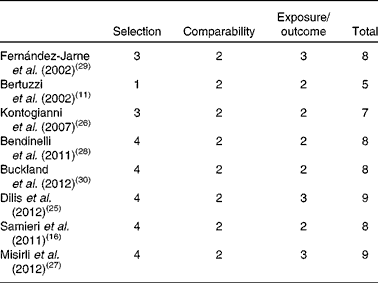
The quality of all selected studies was assessed using the scores proposed by the modified Newcastle–Ottawa Quality Assessment Scale (NOS)( Reference Wells, Shea and O'Connell 17 ). The modified NOS grading standard, including case–control or cohort study, includes the following features: (1) selection, total score 4; (2) comparability, total score 2; (3) exposure (case–control)/outcome (cohort), total score 3. A high score (>7) in a 0- to 9-point scale indicates high methodological quality.
Statistical analysis
RR and 95 % CI were taken as the magnitude of association for all studies, and OR or hazard ratios were considered equivalent to RR. Any results stratified by sex were treated as two separate reports. Those articles reporting both CHD and stroke were also treated as two separate reports. Owing to the distinct cut-off points for categories in different articles, we computed a RR with 95 % CI for an increased intake of 25 g/d for each report. The method described by Greenland & O'Rourke( Reference Greenland, O'Rourke, Rothman, Greenland and Lash 18 ) was also used to estimate the pooled RR of an increment in 10 g/d in olive oil consumption taking into account the reported RR for categories of olive oil consumption in each of the primary studies. Median or mean olive oil consumption in each category was used as the corresponding dose of consumption. We used preferentially the median; in those studies where the median was not reported, we used the mean. The midpoint of the upper and lower boundaries was considered as the dose of each category if the median or mean intake per category was not available. If the highest category was open-ended, the midpoint of the category was set at 1·5 times the lower boundary.
We assessed whether between-study heterogeneity existed using Cochran's Q χ2 test and quantified the proportion of heterogeneity with the I 2 statistic( Reference Higgins and Thompson 19 – Reference Higgins 21 ). The I 2 statistic describes the percentage of total variation in RR estimates that can be attributed to heterogeneity. However, we interpreted it with caution given the small number of studies included in the present meta-analysis( Reference Thorlund, Imberger and Johnston 22 ). Therefore, combined associations were estimated using both fixed and random association meta-analysis. Given that heterogeneity was apparent, we used a random-effects model (DerSimonian and Laird method). Forest plots were used to examine the overall effect. The funnel plot and the Egger test (P< 0·1) were used to assess small-study effects such as publication bias. The trim and fill method was performed to identify and correct for funnel plot asymmetry arising from publication bias( Reference Duval and Tweedie 23 ).
We conducted analyses stratified by study design and outcome. We also sequentially repeated the meta-analysis after excluding one study at a time as sensitivity analysis. All statistical analyses were performed with Stata version 12 (StataCorp LP) using the metan and glst user-written commands( Reference Sterne 24 ). All tests were two-sided with a significance level of 0·05.
Results
Literature search
Figure 1 shows the results of literature research and selection (see also online supplementary material). We identified 436 records in PubMed, 270 records in Embase, one record in the Cochrane Library, 262 records in the Web of Science and 156 records in Ovid before December 2013. After exclusion of duplicates, we screened 825 records. After exclusion of studies that did not fulfil the inclusion criteria, eighteen remaining articles were relevant for the present meta-analysis. The full-text review of these eighteen articles led to the exclusion of nine of them because of the reasons mentioned in Fig. 1. Finally, nine articles were available to be included in the quantitative meta-analysis (details of the included and excluded studies during the final selection process are available in the online supplementary material). Of these articles, two provided two reports; therefore, eleven estimates of effect were available to be combined. Dilis et al. ( Reference Dilis, Katsoulis and Lagiou 25 ) included a separate report for RR for each sex, and the PREDIMED trial provided separate reports for stroke and myocardial infarction.
Flow diagram for identification and selection process of relevant studies examining the effects of olive oil consumption and the incidence of CVD events (CHD and stroke; see online supplementary material).

Study characteristics
A summary of the information extracted from the included studies is shown in Tables 1–3 (see also online supplementary material). In all studies, participants had no prior diagnoses of CVD at baseline. The present meta-analysis consisted of 101 460 participants for CHD and 38 673 participants for stroke. The total number of cases of CHD and controls in case–control studies were 1526 and 1727, respectively. Among the participants in cohort studies, 1367 cases of CHD were observed during a follow-up period ranging from 4·8 to 10·4 years, and 543 cases of stroke were observed during a follow-up period ranging from 4·8 to 10·6 years. All studies were conducted in Mediterranean countries. Only three studies were from Greece: a case–control study( Reference Kontogianni, Panagiotakos and Chrysohoou 26 ) and two studies conducted within the EPIC (European Prospective Investigation into Cancer and Nutrition)-Greece cohort( Reference Dilis, Katsoulis and Lagiou 25 , Reference Misirli, Benetou and Lagiou 27 ). We included two Italian studies: a case–control study( Reference Bertuzzi, Tavani and Negri 11 ) and the EPIC-Italy cohort( Reference Bendinelli, Masala and Saieva 28 ). A cohort study assessing the incidence of stroke was conducted in France( Reference Samieri, Feart and Proust-Lima 16 ). A case–control( Reference Fernández-Jarne, Martinez-Losa and Prado-Santamaria 29 ), a cohort( Reference Buckland, Travier and Barricarte 30 ) and a randomised controlled trial( Reference Estruch, Ros and Salas-Salvado 14 ) were carried out in Spain.
Study design characteristics of nine epidemiological studies investigating incident myocardial infarction or stroke in relation to olive oil consumption

RCT, randomised controlled trial; NA, not applicable; NR, not reported.
Characteristics of nine epidemiological studies investigating incident myocardial infarction or stroke in relation to olive oil intake (Mean or median values and ranges)

AMI, acute myocardial infarction; MONICA, multinational MONItoring of trends and determinants in CArdiovascular disease; NR, not reported; ECG, electrocardiogram; EPIC, European Prospective Investigation into Cancer and Nutrition; AHA, American Heart Association; ICD, International Classification of Diseases; RCT, randomised controlled trial.
* Two or more ECG showing specific changes, ECG showing probable changes plus abnormal cardiac enzymes, or typical symptoms plus abnormal enzymes.
Relative risk (RR) estimates for the association of olive oil intake and incident myocardial infarction or stroke in nine epidemiological studies (Relative risks and 95 % confidence intervals)

MET, metabolic equivalents; AMI, acute myocardial infarction; NR, not reported; HR, hazard ratio; EPIC, European Prospective Investigation into Cancer and Nutrition; BP, blood pressure; RCT, randomised controlled trial; AF, atrial fibrillation.
Olive oil consumption was measured by validated FFQ in all studies; available intraclass correlation coefficients v. food records in published validation studies were 0·71( Reference Estruch, Ros and Salas-Salvado 14 , Reference Fernández-Jarne, Martinez-Losa and Prado-Santamaria 29 ), 0·50( Reference Bertuzzi, Tavani and Negri 11 ), 0·45 for men and 0·70 for women( Reference Dilis, Katsoulis and Lagiou 25 – Reference Misirli, Benetou and Lagiou 27 ), 0·48 for men and 0·60 for women( Reference Bendinelli, Masala and Saieva 28 ), 0·60 for men and 0·67 for women( Reference Buckland, Travier and Barricarte 30 ), respectively. Only the PREDIMED study( Reference Estruch, Ros and Salas-Salvado 14 ) used repeated measurements to update dietary information, using repeated FFQ during each year of follow-up to more accurately reflect the dietary intakes over the follow-up. In addition, the PREDIMED study was the single study that used biomarkers of virgin olive oil intake in a random subsample of participants. This assessment showed good compliance with the recommended consumption of virgin olive oil.
Association between olive oil consumption and the risk of CHD
We included three case–control studies( Reference Bertuzzi, Tavani and Negri 11 , Reference Kontogianni, Panagiotakos and Chrysohoou 26 , Reference Fernández-Jarne, Martinez-Losa and Prado-Santamaria 29 ), three cohort studies( Reference Dilis, Katsoulis and Lagiou 25 , Reference Bendinelli, Masala and Saieva 28 , Reference Buckland, Travier and Barricarte 30 ) with four reports and the PREDIMED trial( Reference Estruch, Ros and Salas-Salvado 14 ) in the present meta-analysis of olive oil consumption and the risk of CHD. We found no evidence for a significant association between olive oil consumption and the risk of CHD (Fig. 2). The random-effects model assessing CHD as an outcome showed a pooled OR of 0·73 (95 % CI 0·44, 1·21) in case–control studies and 0·96 (95 % CI 0·78, 1·18) in cohort studies for a 25 g increase in olive oil consumption. The summary RR of CHD for an increase in olive oil consumption of 25 g/d was 0·87 (95 % CI 0·72, 1·05; P= 0·14; Table 4). We found evidence of heterogeneity among the studies (P< 0·001, I 2= 77 %; Fig. 2). The Egger regression test provided some evidence of publication bias (P= 0·06). The trim and fill method( Reference Duval and Tweedie 23 ) did not add any study; therefore, the mean of the analysis remained unchanged. The exclusive consideration of cohort studies, either with the PREDIMED trial (RR 0·94, 95 % CI 0·78, 1·14) or without it (RR 0·96, 95 % CI 0·78, 1·18), also failed to find evidence of a significant inverse association between olive oil consumption and CHD.
Relative risks (RR) and 95 % CI for fully adjusted random-effects models examining the associations between olive oil consumption in relation to the incidence of CHD and stroke in the meta-analysis of nine studies (three case–control, five cohort studies and one randomised controlled trial). (A colour version of this figure can be found online at http://www.journals.cambridge.org/bjn).

Relative risks (RR) of CHD and stroke according to design and outcome* (Relative risks and 95 % confidence intervals)

PREDIMED, PREvención con DIeta MEDiterránea (Prevention with Mediterranean Diet).
* All cardiovascular end-points combined: P (Egger test) for publication bias – all, P= 0·06; CHD, P= 0·07; stroke, P= 0·11.
Association between olive oil consumption and the risk of stroke
The present meta-analysis involved only three articles, two cohort studies( Reference Samieri, Feart and Proust-Lima 16 , Reference Misirli, Benetou and Lagiou 27 ) and the PREDIMED trial( Reference Estruch, Ros and Salas-Salvado 14 ). All of them consistently reported significant inverse associations of a similar magnitude. For cohort studies assessing stroke, the combined RR of stroke for an increment of 25 g olive oil consumed per d was 0·76 (95 % CI 0·67, 0·86; P< 0·001), with a negligible change after including the PREDIMED trial. No heterogeneity of effect estimates on RR was observed (P= 0·44, I 2= 0 %). The Egger test for publication bias did not reach significance (P= 0·11), although the number of studies was small.
Association between olive oil consumption and the risk of CVD
When all articles were combined, using either CHD or stroke as end-points, the combined RR of CVD for an increment of 25 g olive oil consumed per d was 0·82 (95 % CI 0·70, 0·96; P= 0·01). Substantial heterogeneity of effect estimates on RR was observed (P< 0·001, I 2= 77 %). The Egger test reached statistical significance (P= 0·06), and the funnel plot (Fig. 3; see online supplementary material) suggested that publication bias cannot be discarded.
Funnel plot of studies (three case–control, five cohort studies and one randomised controlled trial) investigating olive oil consumption in relation to the incidence of CVD (CHD and stroke; see online supplementary material).  , Pseudo 95 % CI. RR, relative risk.

No substantial differences were found when we separated the studies in three groups according to the inclusion of only women, only (or almost exclusively) men or an approximate 50 % men and 50 % women in the study (data not shown).
Association between olive oil consumption and a dose–response trend in the risk of CHD and stroke
When we used the method of Greenland & O'Rourke( Reference Greenland, O'Rourke, Rothman, Greenland and Lash 18 ) to estimate the pooled RR associated with a 10 g/d increment in olive oil consumption using all study quantiles, we needed to exclude the study by Kontogianni et al. ( Reference Kontogianni, Panagiotakos and Chrysohoou 26 ) because it did not provide specific information on separate categories of olive oil consumption and at least three categories are needed for the assessment of dose–response associations with this procedure. We found a RR of 0·94 (95 % CI 0·86, 1·03; random-effects model, I 2= 71 %, P for heterogeneity = 0·004) for CHD and a RR of 0·90 (95 % CI 0·86, 0·95; fixed-effects model; I 2= 0 %, P for heterogeneity = 0·61) for stroke. Table 5 shows study quality assessment.
We also conducted a sensitivity analysis to ascertain whether significant outcomes were related to any one particular study, by sequentially excluding each of them, one at a time. As shown in Table 6 (see also online supplementary material), the results were similar when each particular study was excluded.
Quality assessment of studies according to the Newcastle–Ottawa Scale( Reference Wells, Shea and O'Connell 17 )
Sensitivity analysis of relative risks (RR) for each study being removed at a time (Relative risks and 95 % confidence intervals)

Discussion
The present meta-analysis identified no significant association between olive oil consumption and the risk of CHD, but a significantly reduced risk of stroke associated with the consumption of olive oil. Substantial heterogeneity among studies was observed for CHD, but not for stroke. Combined results of observational epidemiological studies for both CHD and stroke are in agreement with the recent findings of the PREDIMED randomised controlled trial. The PREDIMED trial reported that participants who were allocated to receive a quarterly allotment of 15 litres of virgin olive oil obtained a significant 30 % reduction in the primary end-point of the trial, which was a composite of myocardial infarction or stroke or death from cardiovascular causes( Reference Estruch, Ros and Salas-Salvado 14 ). However, with respect to the components of the primary end-point, only the comparisons of stroke risk reached statistical significance in the PREDIMED trial, and no significant inverse associations were obtained for myocardial infarction or death from cardiovascular causes. It should be kept in mind, as a limitation for inference, that publication bias or small-study effects were present. Regarding publication bias, although the Egger test detected a significant influence of small studies, the trim and fill method did not add any further study; nevertheless, it should be emphasised that this method lacks statistical power when the number of primary studies is less than ten.
The inverse association between olive oil consumption and the risk of stroke was fairly consistent, but the scarcity of studies on this outcome should be acknowledged. The absence of significant results for CHD should not be viewed as surprising or disappointing. It is true that olive oil is the hallmark of the Mediterranean dietary pattern and that this dietary pattern is able to obtain a sizable reduction in cardiovascular risk( Reference Martinez-Gonzalez and Gea 31 , Reference Jacobs, Gross and Tapsell 32 ). This apparent paradox can be explained because of several reasons: (1) any single dietary factor is unlikely to have a large effect on the risk of a multifactorial disease, such as CHD; (2) the appropriate exposure to be assessed should probably be virgin olive oil instead of all kinds of olive oil mixed together; (3) misclassification bias (with a higher propensity to shift estimates towards the null than away from the null) is likely to be present in all included studies because of the inherent measurement errors present in the tools used to evaluate olive oil consumption; (4) overadjustment for intermediate mechanisms by which olive oil can reduce the risk of CHD would also attenuate the potential association between olive oil consumption and the risk of CHD. It is recognised that in an attempt to estimate the total effect of an exposure on some outcome, control for intermediate factors in the causal chain (i.e. overadjustment) will generally bias estimates of the total effect of the exposure on the outcome( Reference VanderWeele 33 ). One of the mechanisms by which olive oil is suggested to work is through its effects on lipid profiles. Only two of the studies( Reference Dilis, Katsoulis and Lagiou 25 , Reference Bendinelli, Masala and Saieva 28 ) reported the association between olive oil intake and the risk of CHD without adjusting for serum lipid concentrations, and they found a positive( Reference Bendinelli, Masala and Saieva 28 ) and a negative( Reference Dilis, Katsoulis and Lagiou 25 ) association. In any case, it is noteworthy to remark that an intermediate link, such as lipid concentrations, in the causal chain should not be treated as a confounder.
In a previous assessment of Mediterranean diet and mortality in the EPIC-Greece cohort( Reference Trichopoulou, Costacou and Bamia 34 ), olive oil was associated with only a small and non-significant reduction in mortality, whereas the inverse association between mortality and the ratio of monounsaturated fats:saturated fats was stronger and statistically significant. This finding also contributes to the view that the overall pattern has a beneficial effect beyond that of olive oil.
In addition, other plant-based sources of MUFA such as nuts and other vegetable oils can have a similar effect than olive oil on blood lipids, inflammatory pathways and oxidative stress. There is a possibility that the effect of minor polyphenolic components of olive oil, which are present in the virgin variety of olive oil but not in the ordinary refined variety, are able to make a large difference in the potential protection that olive oil consumption can afford against the risk of CHD. In the PREDIMED trial, the intervention provided only virgin olive oil. Differences in the intake of both varieties (virgin olive oil v. ordinary refined variety, which is low in polyphenols) were not taken into account in most observational studies included in the present meta-analysis, with only one exception being the study by Buckland et al. ( Reference Buckland, Travier and Barricarte 30 ) that reported a stronger protection among consumers of virgin olive oil. There is a need for further studies that fully take into account these differences given the available evidence to support a beneficial effect of these polyphenols on coronary risk factors( Reference Esposito, Marfella and Ciotola 35 – Reference Visioli and Bernardini 38 ).
An important point is whether persons consuming more olive oil may reduce their intake of energy from other macronutrients to maintain an energy balance. This would be pertinent to stroke which is often considered to be elevated among individuals having higher intakes of carbohydrate( Reference Oh, Hu and Cho 39 ). However, the results of all the studies included in the present meta-analysis were adjusted for total energy intake, which may reduce this possible source of confounding. Another important point to consider is that a lower risk of stroke may not due only to olive oil intake, but also due to a lower carbohydrate or lower glycaemic load, which is another hallmark of the Mediterranean diet. However, with the information available in the primary studies included in the present meta-analysis, it is not possible to solve this question, and future studies specifically designed to address this specific issue are warranted.
More importantly, emphasis is needed to assert that the available observational evidence on olive oil consumption and hard clinical events of CVD is scarce in spite of many published reviews and many reports of mechanistic studies using only intermediate end-points as the outcome. The small number of studies available for inclusion in the present meta-analysis forced us to combine different study designs, each with distinct limitations (e.g. residual confounding in prospective cohort studies and recall bias in retrospective case–control studies, while randomised controlled trials should in principle be free of both biases). The limitation derived from the few number of available studies also applies to the P value for Cochran's Q test of heterogeneity, which would be underpowered, and does not accurately quantify heterogeneity. Unfortunately, the scarce number of studies did not allow us to explore detailed assessments to explain heterogeneity, such as subgroup, stratified analysis or meta-regression. The current recommendation is that at least ten studies are needed to perform meta-regression analysis( Reference Thompson and Higgins 40 ). Although this is a general recommendation and fewer studies are possible when goodness of fit is appropriate or when it becomes a practical necessity or in hypothesis development, perhaps, and more importantly, underlying assumptions of heterogeneous methods may limit the reliability of meta-regression analysis when the number of studies is scarce.
Nevertheless, some points can be discussed regarding possible sources of heterogeneity observed in the present meta-analysis. There are two studies in the forest plot (Fig. 2) that deviate from the general result, indicating a non-favourable effect of olive oil on the incidence of CHD events: one is a case–control study by Bertuzzi et al. ( Reference Bertuzzi, Tavani and Negri 11 ) and another is a cohort study by Dilis et al. ( Reference Dilis, Katsoulis and Lagiou 25 ). The first study( Reference Bertuzzi, Tavani and Negri 11 ) did not have a matched design compared with the other case–control study( Reference Fernández-Jarne, Martinez-Losa and Prado-Santamaria 29 ) included in the meta-analysis. The case–control study using a matched design reported instead an inverse association( Reference Fernández-Jarne, Martinez-Losa and Prado-Santamaria 29 ). More importantly, another possible source of heterogeneity might be related to the case definition and eligibility criteria; in the study by Bertuzzi et al. ( Reference Bertuzzi, Tavani and Negri 11 ), patients with a previous history of CVD were not explicitly excluded. It is possible that subjects who know or suspect that they had previous manifestations of CHD may be motivated to increase their consumption of olive oil (i.e. a reverse causality bias might account for a direct association between olive oil consumption and the risk of CHD if subjects with a previous history of CVD are not excluded).
Regarding the cohort study by Dilis et al. ( Reference Dilis, Katsoulis and Lagiou 25 ), a possible source of heterogeneity may lie on the fact that the mean olive oil intake at baseline, both in men and women, was very high (53 and 45 g/d, respectively), in comparison with other cohort studies( Reference Bendinelli, Masala and Saieva 28 , Reference Buckland, Travier and Barricarte 30 ) (24·7 and 10 g/d per 8368 kJ (2000 kcal), respectively) and with the intervention arm of the PREDIMED trial( Reference Estruch, Ros and Salas-Salvado 14 ) (29·3 g/d). High olive oil consumption at baseline, characteristic of the population from Greece, may have attenuated the ability to identify an association between olive oil intake and the risk of CHD, because even subjects in the lower categories may consume a sufficient amount.
The quality of some case–control studies, in accordance with the modified NOS( Reference Wells, Shea and O'Connell 17 ), was not high (Table 5; see online supplementary material). The publication of the PREDIMED randomised controlled trial is supportive and demonstrative of the protection afforded by virgin olive oil against a combined cardiovascular end-point and also against the stroke component of this combined end-point. However, a randomised controlled trial also has inherent limitations including limited external validity of its results, the lack of ability to ascertain a dose–response trend and the constraint for inferences to be made only to the limits of the attained contrast (really observed differences) between the intervention and the control groups. No conclusion can be inferred beyond the limits of the observed contrast in randomised trials. In this sense, the intervention group of the PREDIMED trial exhibited good compliance with the intended goals of virgin olive oil consumption, but participants allocated to the control group were fairly similar to those of the intervention group in many aspects of their diets, and only small between-group differences in the diets during the trial were observed.
In conclusion, the overall evidence supports a protection of olive oil consumption against hard cardiovascular end-points, and specifically against stroke. However, the evidence is scarce and no significant protection can be afforded specifically against CHD; in addition, publication bias can affect these results. Further studies with larger sample sizes and a better distinction between virgin v. ordinary olive oil with respect to the risk of CHD are needed.
Supplementary material
To view supplementary material for this article, please visit http://dx.doi.org/10.1017/S0007114514000713
Acknowledgements
The present meta-analysis was financially supported by the official funding agency for Biomedical Research of the Spanish Government, Instituto de Salud Carlos III, through grants provided to research networks (RTIC G03/140 and RTIC RD 06/0045), and specific grants from Fondo de Investigación Sanitaria–Fondo Europeo de Desarrollo Regional (PI07/0240 and PI1002658), the Spanish Ministry of Health, Plan Nacional sobre Drogas, Programa 231-A Grant 2010/087 and CIBER Fisiopatologia de la Obesidad y Nutricion (CIBERobn) – CB12/03/30017. The funding sources had no role in the design and conduct of the study; collection, management, analysis and interpretation of the data; and preparation, review or approval of the manuscript.
The authors' contributions were as follows: M. A. M.-G. and L. J. D. were responsible for the initial plan, study design, conducting the study, data interpretation and manuscript drafting; M. A. M.-G. and M. D.-R. were responsible for the statistical analysis; M. A. M.-G. and L. J. D. were responsible for the data collection, data extraction and data interpretation; M. A. M.-G., L. J. D. and M. D.-R. were responsible for the data interpretation, manuscript drafting, critical revision of intellectual content and approval of the final version of the manuscript.
There are no conflicts of interests.



