




Introduction
The discovery of musical instruments in the archaeological record is relatively rare. In this article, we report on two antler artefacts from the site of Go O Chua in southern Vietnam, which we interpret as a type of stringed musical instrument known as a chordophone. Go O Chua is a settlement and burial site dated to the early Metal Age (pre-Oc Eo and Oc Eo phases, c. 3000–1250 BP). While the discovery of these two artefacts has previously been briefly reported alongside the large collection of bone and other finds stored in the Long An Provincial Museum (Ngô & Bùi Reference Ngô and Bùi1997; Đặng et al. Reference Đặng, Võ and Văn2008; Vương Reference Vương2008: 100), neither has been examined in detail, particularly from an archaeo-musicological perspective. Here, we use macro- and microscopic analyses to examine how these two artefacts were manufactured from the pedicle, burr and main beam of deer antlers. Following an overview of the material evidence for early musical instruments in Southeast Asia and a description of the Go O Chua objects and their context, ethnographic analogy is used to investigate their potential use as chordophones.
Musical instruments in Southeast Asia: archaeological evidence
The rarity of musical instruments in the archaeological record probably reflects taphonomic issues, as instruments made from organic materials are less likely to be preserved. In Southeast Asia, most known finds of prehistoric musical instruments are made of stone or metal. This differs from those found elsewhere, such as European Palaeolithic examples, which are usually made of bone, ivory or antler (Morley Reference Morley2013: 100). In Vietnam, the earliest known musical instruments recovered from archaeological contexts are pitched stone percussion plates known as lithophones (Miller & Williams Reference Miller and Willliams2008: 30). First recorded in 1949 (Schaeffner Reference Schaeffner1951; Condominas Reference Condominas1952; The New Scientist 1957), they have subsequently been found in many parts of the country, particularly in the south-central region (Phu Yen, Khanh Hoa and Binh Thuan), the south-east (Dong Nai, Binh Duong and Binh Phuoc) and the central highlands (Dac Lac, Dak Nong and Lam Dong) (Bùi et al. Reference Bùi, Nguyễn and Đặng2017). These plates would probably have been laid horizontally on cords stretched across wooden or bamboo frames and struck like xylophones. Relative dating suggests that these lithophones may have been used c. 3000 BP (Condominas Reference Condominas1952; Ngo Reference Ngo1988; Nishimura Reference Nishimura2002; Phạm Reference Phạm2007; Trần et al. Reference Trần, Nguyễn, Đỗ and Kato2016). With the exception of the lithophones, however, other musical instruments from Vietnam during this period are unknown.
There is markedly more evidence for musical traditions in later prehistoric Southeast Asia. Bronze-cast drums (often with musical iconography), cymbals, bells and bronze rattles have all been recovered from sites dating to the Sa Huynh and Dong Son periods (c. 2500–2000 BP) (Janse Reference Janse1941, Reference Janse1961; Higham Reference Higham1996: 114; Reinecke Reference Reinecke and Tingley2009). The conspicuous iconographic reliefs on Khmer structures in Cambodia (seventh century AD onwards) not only have depictions of instruments—for example, pan pipes, coin clappers and other concussion idiophones—but also provide evidence of how they were played (Stark Reference Stark, Peregrine and Ember2001:17; Nicolas Reference Nicolas and Tan2021). While metal artefacts survive, many instruments would have been made from perishable materials. That these have left little direct evidence makes the two Go O Chua artefacts all the more remarkable.
Go O Chua: archaeological context
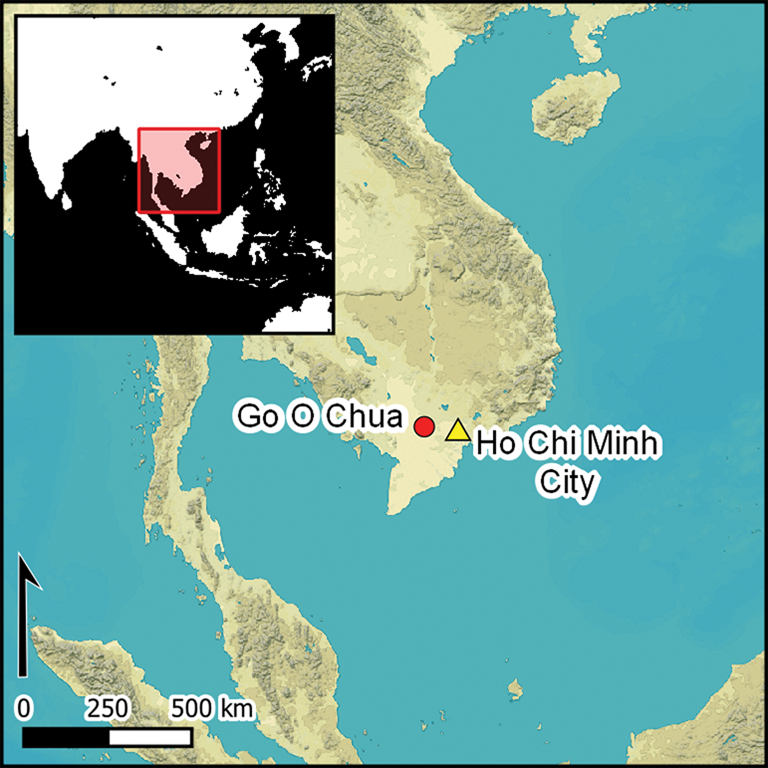
Go O Chua (meaning Pagoda Mound) is located in the lower Mekong Delta, in the Vam Co Tay River basin, within Vinh Hung District, Long An Province (11°00′18″N, 105°46′18″E). The site lies approximately 100km west-northwest of Ho Chi Minh City, and some 140km from the modern coastline (Figure 1). Go O Chua is a burial and settlement site defined by three mounds—the northern, central and southern mounds—extending some 450m in length, with a maximum width of 150m, giving a total area of approximately 65 000m2 (Vương Reference Vương2008: 17) (Figure 2). Various local and international teams investigated the site between 1997 and 2008, cumulatively excavating some 280m2 (Ngô & Bùi Reference Ngô and Bùi2001; Bùi et al. Reference Bùi, Reinecke, Nguyễn and Văn2004; Đặng et al. Reference Đặng, Võ and Văn2008). This makes Go O Chua one of the most extensively excavated sites in southern Vietnam.
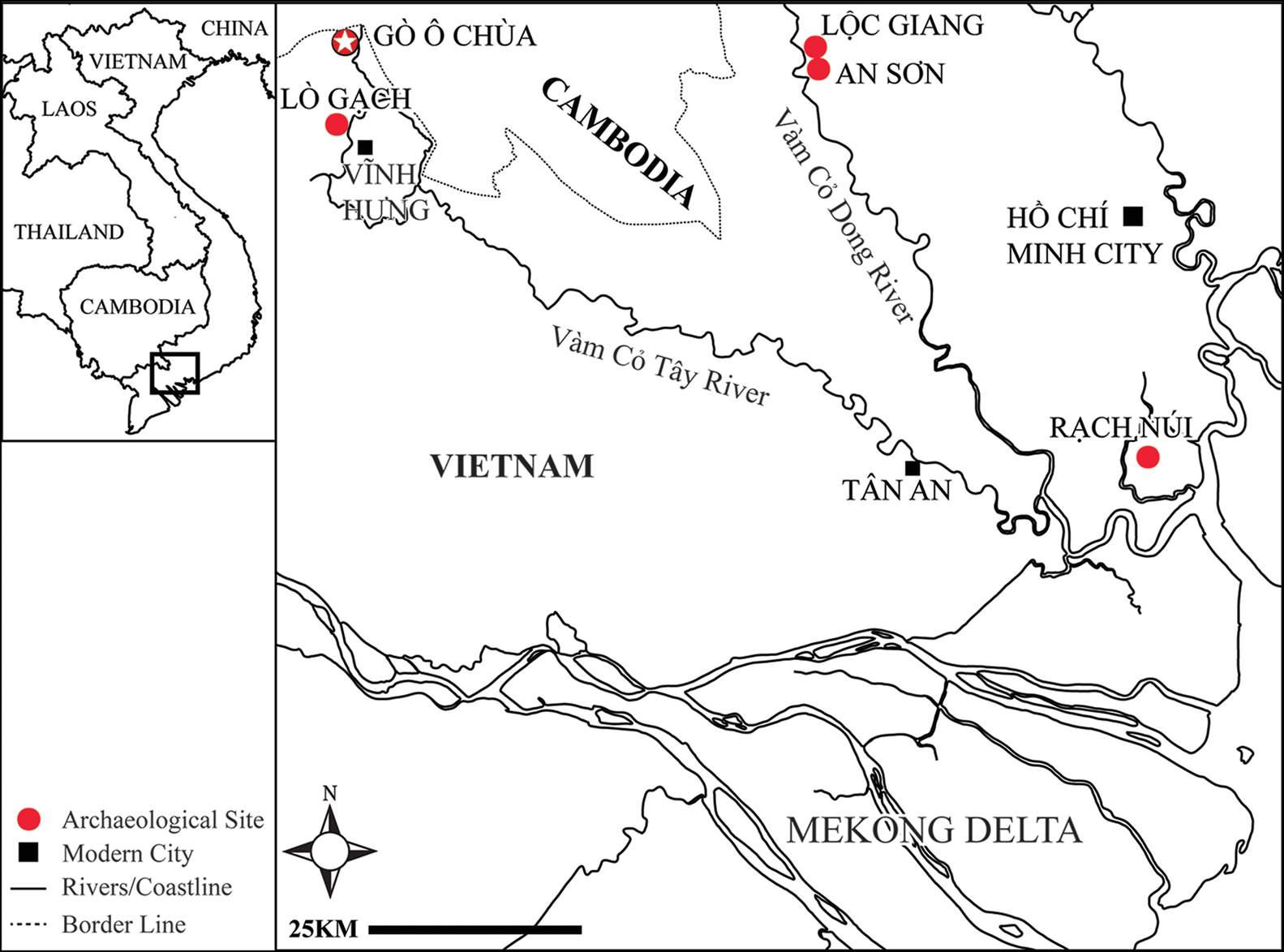
Location of Go O Chua (marked with a star) and other archaeological sites in southern Vietnam; the smaller inset map shows part of Mainland Southeast Asia, with the area covered by the main map shown as a rectangle (illustration by J.R. Hull).
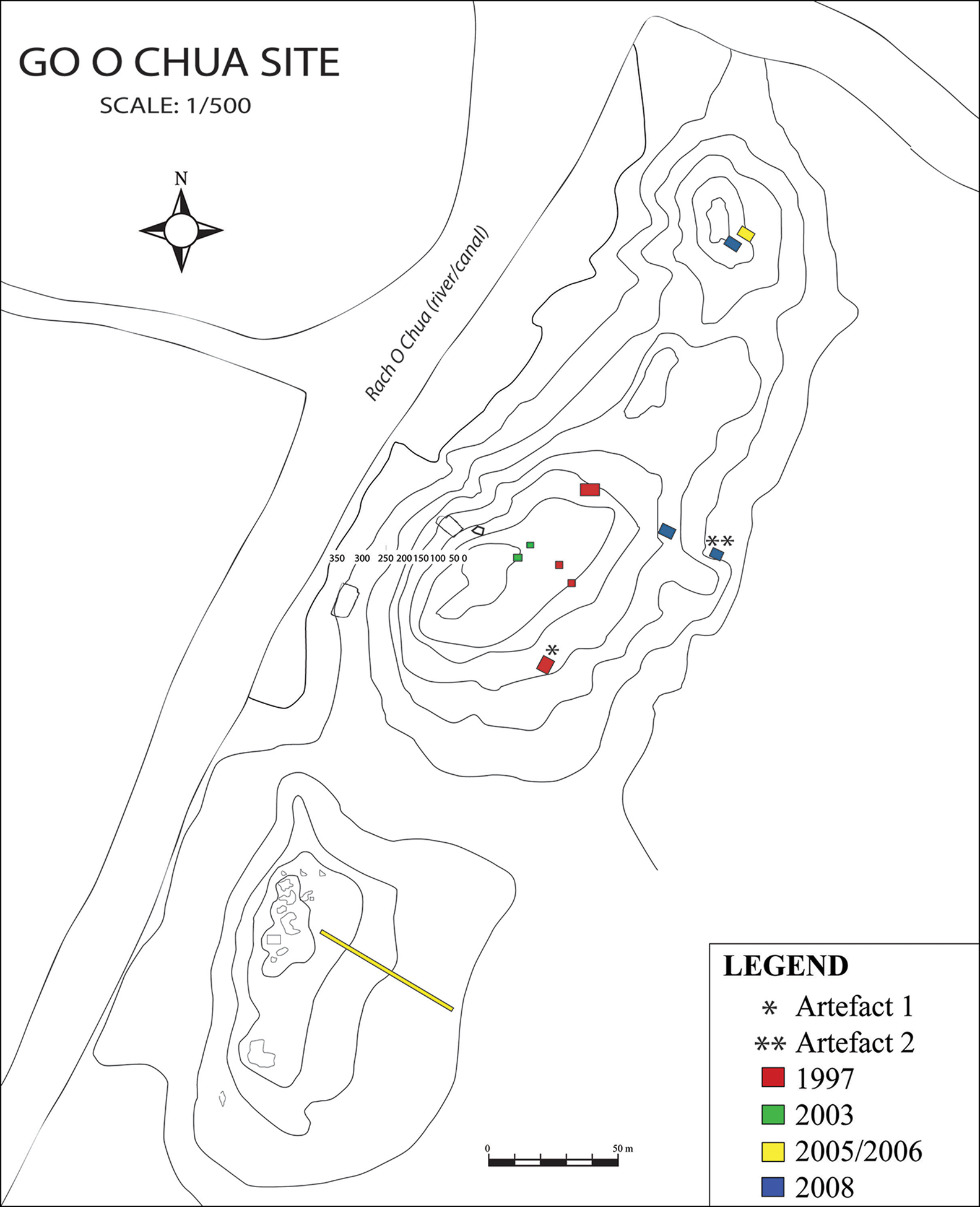
Go O Chua site plan with location of Artefact 1 (in Trench H2, 1997 excavation, marked *) and Artefact 2 (in Trench H3, 2008 excavation, marked **) (illustration by F.Z. Campos, modified after Vương Reference Vương2008: 143).
The excavations have identified numerous inhumations and jar burials, with associated grave goods including pottery vessels, metal tools, ornaments and pig mandibles (Vương Reference Vương2008; Reinecke Reference Reinecke, Tjoa-Bonatz, Reinecke and Bonatz2012). The site has also yielded a considerable number of distinctive, three-footed ceramic pedestals that possibly represent kiln furniture for pottery production (Vương Reference Vương2011) or evaporation dishes for salt production (Reinecke et al. Reference Reinecke, Nguyễn and Bùi2004; Reinecke Reference Reinecke, Li and von Falkenhausen2010). Other finds include bronze, iron and stone implements, as well as clay pellets, spindle whorls, ceramic casting moulds for metalworking, complete and fragmented pottery vessels, broken ceramic pedestals, and ornaments produced from various types of organic and inorganic raw materials. Go O Chua is notable for its large assemblage of osseous artefacts (n = 327) compared with other regional sites, which strongly suggests local expertise in bone-working. A complex production system observed in Go O Chua is demonstrated by the presence of numerous waste materials and artefacts in various stages of production.
The first recorded archaeological excavation of Go O Chua took place in 1997, when two large trenches (H1 and H2) and two test pits were excavated. A further large trench (H3) was opened in 2008. Trenches H1 and H2, opened in the uppermost part of the central mound, yielded numerous three-footed pedestals, as well as pottery, ceramic discs and pellets, and other artefacts, including spindle whorls, grinding tables, and iron arrows and spearheads (Ngô & Bùi Reference Ngô and Bùi1997; Vương Reference Vương2008). The upper layers of Trench H1 (layers 2–6) and Trench H2 (layers 2–5) were identified as dating to the Oc Eo phase (second century BC to twelfth century AD). The earlier layers (layers 7–12 in Trench H1 and layers 6–8 in Trench H2) are considered to belong to the pre-Oc Eo phase (early Metal Age).
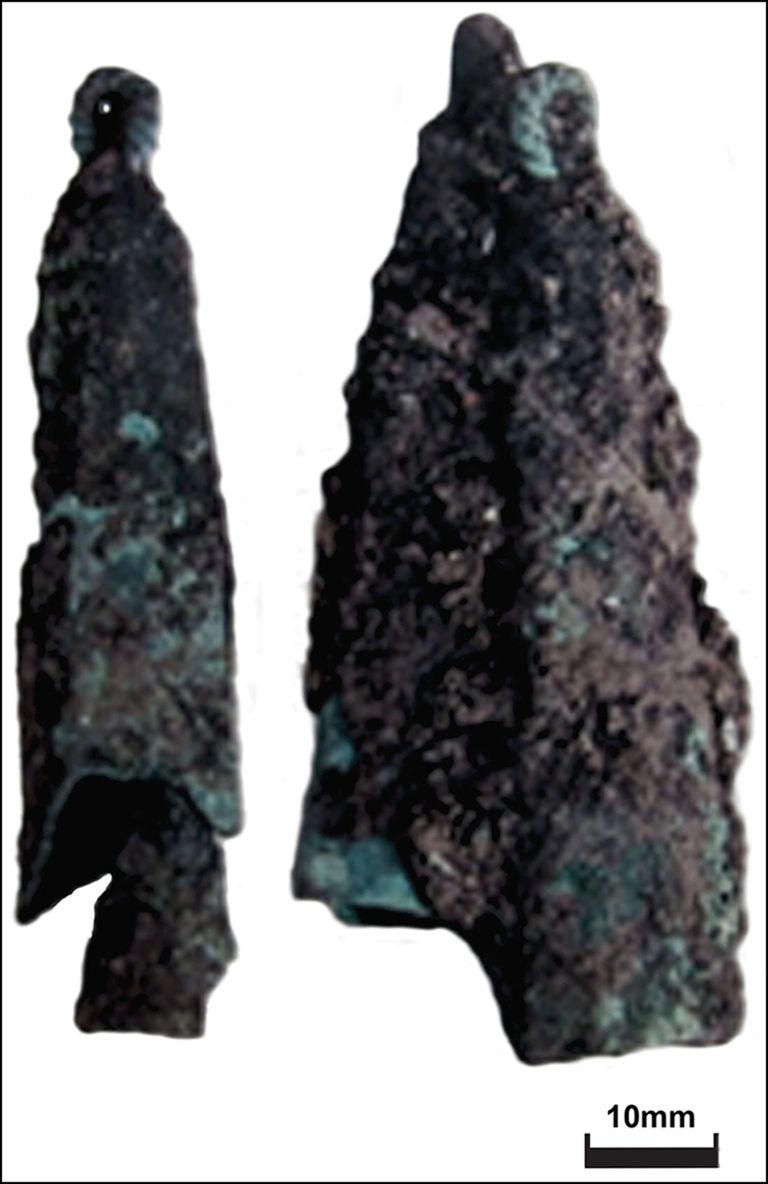
Three identical bronze bells were found in burial contexts in Trench H1 during the 1997 excavation (Figure 3). These bells are 90mm long, 26mm wide and 16mm deep (Vương Reference Vương2008: 36). All three were cast from the same mould type and have small, perforated suspension loops. They are comparable to bells from Lang Vac (Dong Son Culture), Prohear (Cambodia) and Zhouyuan (China) (Trinh & Nguyen Reference Trịnh and Nguyễn2001; Reinecke, et al. Reference Reinecke, Laychour and Sonetra2009; Campbell Reference Campbell2014).
Bronze bells recovered during the 1997 excavation of Trench H1 (photograph by Vương T.H.).
The two artefacts that form the focus of this article were recovered from trenches H2 and H3. The large, almost complete deer antler, Artefact 1, was recovered from a secure context in Trench H2 (layer 6). Iron and bronze artefacts were found above this layer (mostly in layer 4), while the lowest layer (8) contained animal bones. The lowest layers are interpreted as the initial, pre-construction phase of the site, belonging to the early occupation of Go O Chua. A similar object (Artefact 2) was discovered during the 2008 excavation season in layer 8 of Trench 3; based on dates obtained from the trench's upper layers, layer 8 relates to the pre-Oc Eo phase. Both artefacts were excavated from the central mound at approximately the same depth, some 0.25m asl (based on a 4.81m asl datum point for the central mound).
Direct dating of Artefact 1 has proven impossible, as nitrogen pre-screening indicated that no organic material survives. Given the artefact's archaeological and cultural significance, further attempts to date it are deemed impracticable. Radiometric dates obtained for charcoal and bone samples from various contexts at the site (Bùi et al. Reference Bùi, Reinecke, Nguyễn and Văn2004; Reinecke Reference Reinecke2006; Đặng et al. Reference Đặng, Võ and Văn2008; Vương Reference Vương2008), combined with relative dating of the pottery sequences, suggest that Go O Chua was continuously occupied throughout the early Metal Age, from c. 3000 BP (pre-Oc Eo phase) until the Oc Eo phase (Ngô & Bùi Reference Ngô and Bùi2001: 18; Nishimura Reference Nishimura2005). Since Artefacts 1 and 2 were recovered from layers dated to the pre-Oc Eo phase, they are conservatively estimated to be minimally 2000 years old.
The artefacts
In-depth analyses of the antler artefacts were conducted between 2012 and 2016 during visits to Long An Museum in Tân An Province. In addition, Jennifer R. Hull (Reference Hull2018, Reference Hull, David and Hmrčiarikin press) has examined more than 600 osseous artefacts from the Neolithic settlements of An Son, Rach Nui and Loc Giang (c. 4000–3200 cal. BP), as well as the Metal Age sites of Go O Chua and Lo Gach (c. 3000 cal BP) (locations on Figure 1). Most of these artefacts were identified as arrowheads, points, adzes, fishing implements and parts of weaving looms. None even remotely resemble the two antler artefacts discussed here.
Artefact 1
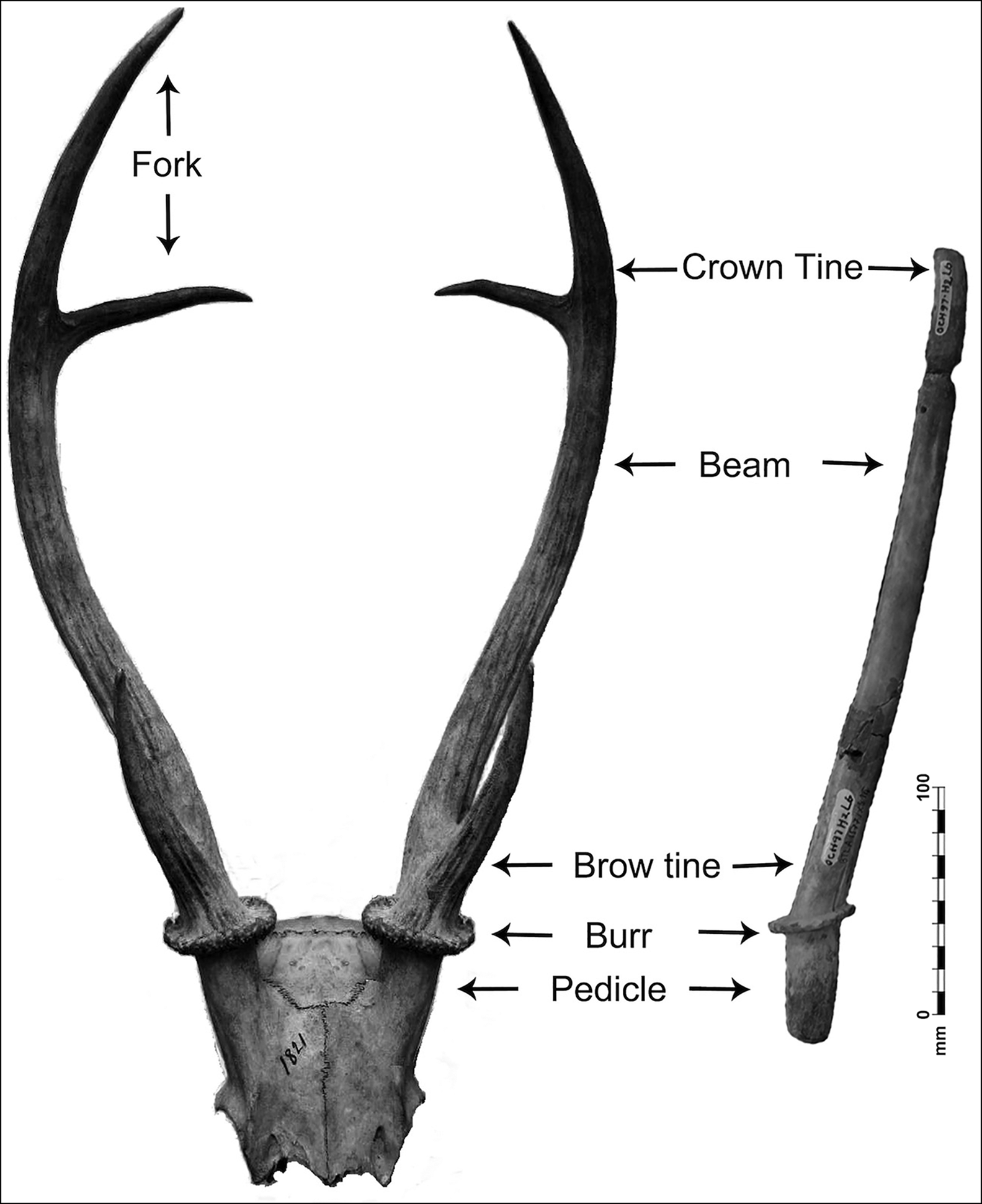
Artefact 1 was manufactured from a single piece of antler, including the pedicle, burr, beam, and brow and crown tine (Figure 4). Antlers are calcified cranial structures that are shed annually and regrown by apical growth centres at particular stages of a (male) deer's life (Goss Reference Goss1983). Since naturally shed antlers detach at the burr, the inclusion of the bony pedicle indicates that the deer had died or was killed before its antlers were removed. Due to intra- and interspecific variability in antler morphology, it is impossible to identify the Cervidae species with certainty, but the most probable source was either Sambar deer (Rusa unicolor) or Hog deer (Axis porcinus). The Sambar deer inhabits a wide range of forest habitat across Mainland Southeast Asia (Timmins et al. Reference Timmins2015b), while the Hog deer, which thrives on grasslands near rivers, is now an endangered species both in Vietnam and worldwide (Tordoff et al. Reference Tordoff, Timmins, Smith and Mai2003; Timmins et al. Reference Timmins2015a).
Artefact 1 (right), indicating modified areas (illustration & photograph by F.Z. Campos), compared with (left) a Hog deer (Axis porcinus) skull from the Harvard Museum of Comparative Zoology, USA (photograph courtesy of J. Ochoa).
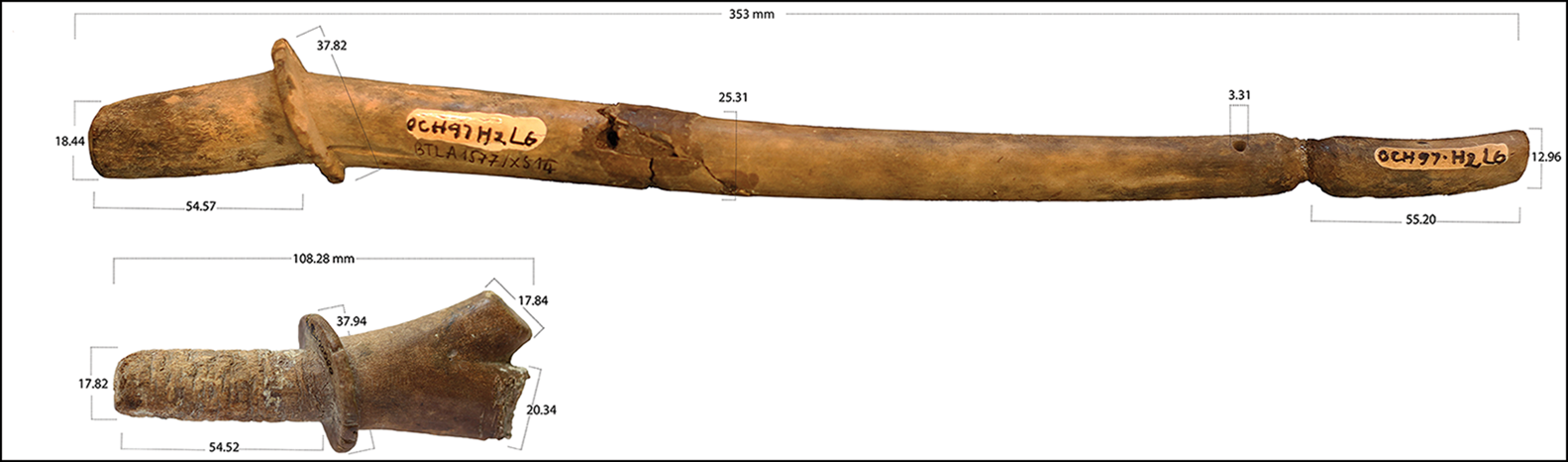
Although the artefact is broken, it is considered to be a complete object. Its total length is 353mm, with a diameter at the distal end of 12.96mm and a maximum breadth close to the burr of 25.31mm (Figure 5). The length of the main beam had been scraped to produce a uniform elongated shape and ground to a smooth surface. All the extraneous tines were removed, with clear evidence for shaping at the point of breakage between the main, larger part of the antler and the smaller distal piece. The slightly flattened base of the pedicle was roughly shaped by flaking and then finished by grinding, its corners showing clear signs of abrasion and a slightly polished contour, whilst the length had been scraped and then ground until smooth and straight (Figure 6).
Artefact 1 (top) and Artefact 2 (bottom), showing detailed measurements (in mm) (illustration by F.Z. Campos; photographs by F.Z. Campos and J.R. Hull).
Axial view of the base of the pedicle (lower inset) and the flattened burr (top enlarged image) of Artefact 1 (illustration and photographs by J.R. Hull).
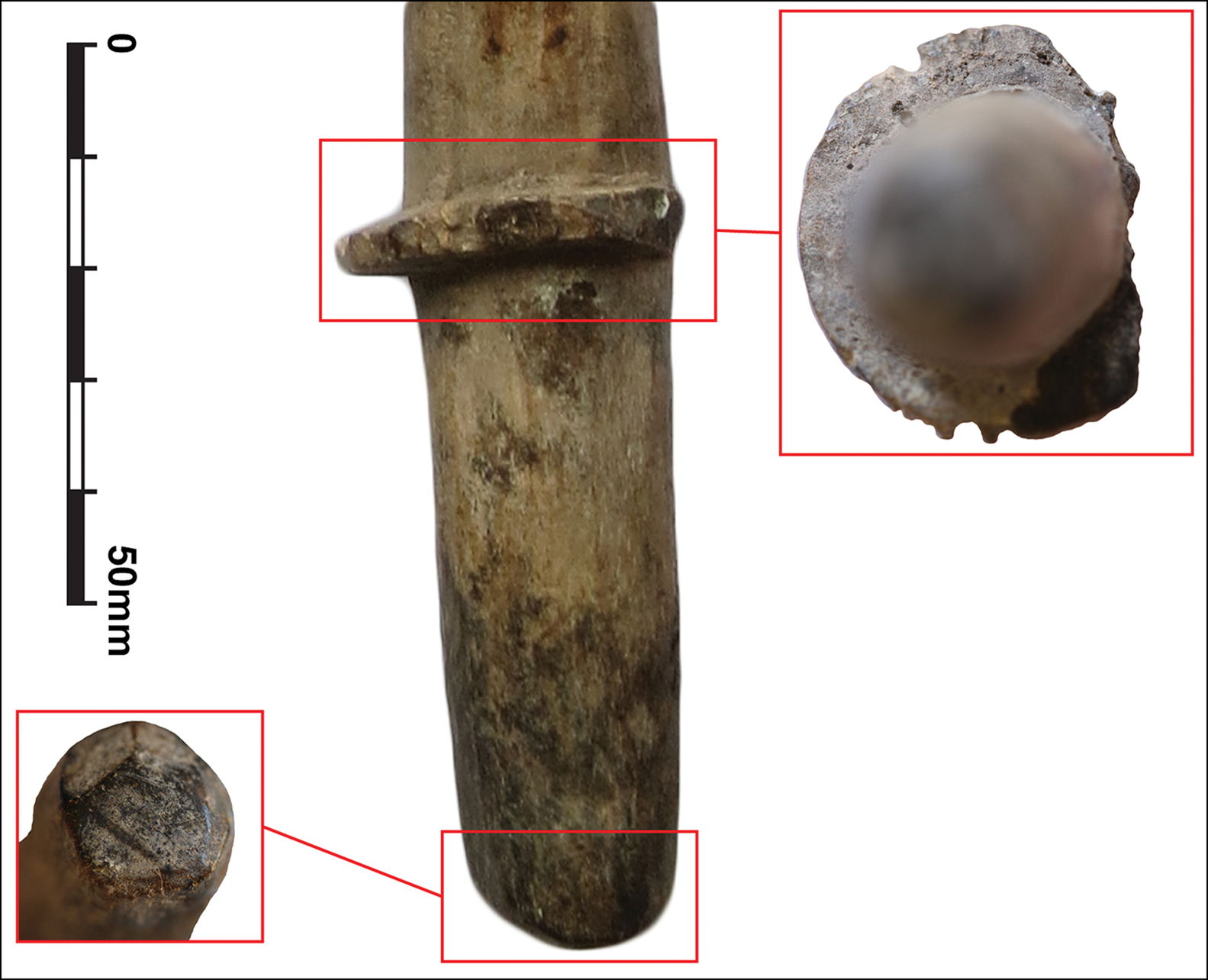
The burr is incomplete and has rough areas where the adjacent brow tine was removed. The portion of the burr that remains has been significantly reduced in thickness, and the rough natural surface smoothed on both superior and inferior surfaces. There are places around the burr, however, that retain the rough outer surface of the antler. The burr displays a distinct, 4.14mm-wide notch with extensive wear of a narrower area less than 2mm wide, possibly caused by a string (Figure 7C).
Artefact 1: A) Prominent groove with striations close to the distal end of the antler, with breakage point at its narrowest; B) the adjacent, smooth hole and enlarged image, showing that the hole had probably been made by a metal drill; C) notch, probably from a string passed along the burr that functioned as the instrument's bridge (illustration and photographs by F.Z. Campos).
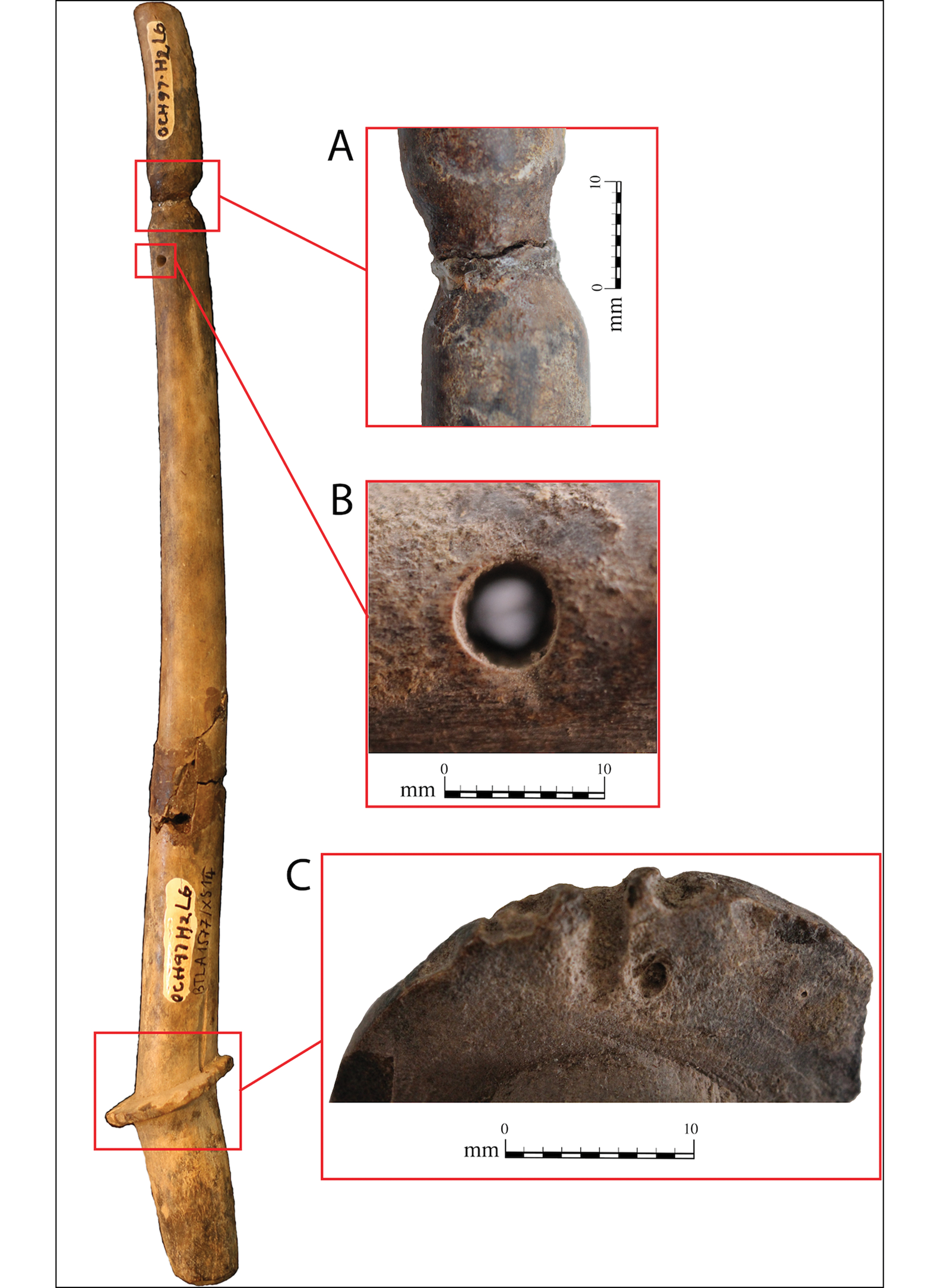
A 11.32mm-long groove with an hour-glass shape (Figure 7A) was carved close to the distal end of the beam, whose diameter was reduced by careful scraping, although its surface does not appear to have been finished in the same way as the rest of the artefact. On discovery, the artefact was found to be broken at this point. Conservation work to glue the fragments back together has obscured much of the surface morphology, which inhibits the identification of use-wear. Nonetheless, this groove displays several residual marks and striations that strongly suggest that a string or similar was wound around this area. A smooth, circular perforation, 3.31mm in diameter, had been drilled through the antler beam close to this groove (Figure 7B). This perfectly round hole, with its even, vertical sides, suggests that the drill used was probably made of metal, as observed on beads perforated by metal bits (Nguyễn Reference Nguyễn1996; Georjon et al. Reference Georjon2021).
Artefact 2
Artefact 2 is remarkably similar in manufacture to Artefact 1 and displays comparable use-wear evidence. This basal fragment of an antler, which includes the burr, is most likely to have come from a Sambar deer (Figure 8A). Unlike Artefact 1, the base of the brow tine was retained, while the rest of the artefact was scraped, with visible chatter marks (beneath the polish), and abraded, creating a smooth surface with a slight lustre. The missing beam would have made up the length of the object; it was apparently removed after the artefact broke or went out of use (Figure 8B). The breakage of the beam prevents identification of other potential characteristic features, such as a groove or peg hole, but the burr remains intact, and its initial modifications are evident (Figures 8D & E).
A) Modern skull of a Sambar deer (Rusa unicolor) (courtesy of the Australian Museum, Sydney); B–E) Artefact 2 (C), with details of manufacture and use-wear; F) antler pre-form recovered from the site in 2008 (illustration and photographs by J.R. Hull).
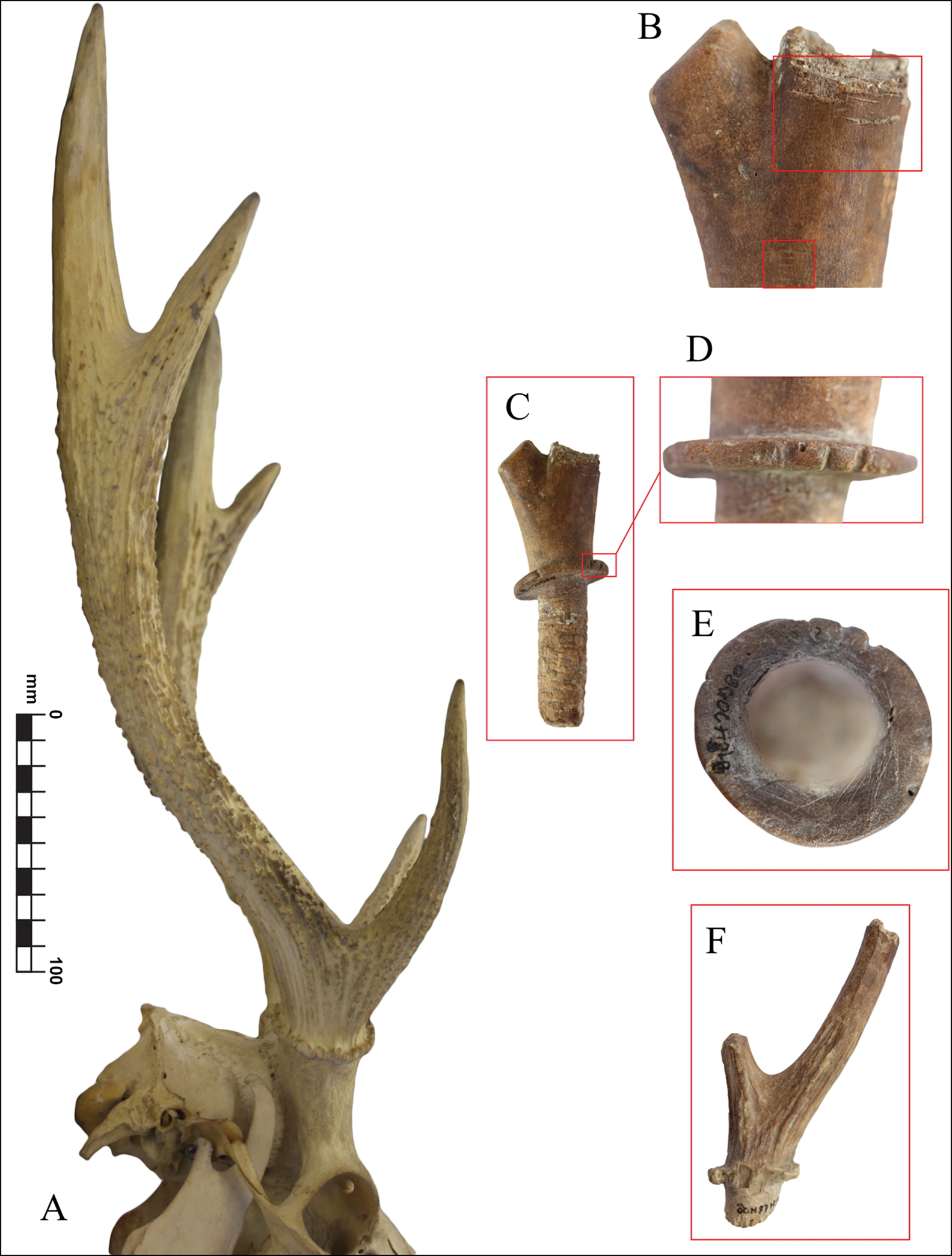
Similar to Artefact 1, the pedicle has been shaped into a roughly straight cylindrical form by shaving, as evidenced by the prominent inception lines (indentations caused by the initial impact of the scraper or chisel) (Figure 8C). Unlike the smoothly polished pedicle of Artefact 1, however, the pedicle of Artefact 2 was only roughly ground (Figure 5). The burr had been thinned and polished around its circumference, with several fine, straight striations visible on the underside. These striations are concentric, and possibly represent impact points resulting from the shaving of the pedicle. The burr also exhibits one definite (plus a possible) small drill hole—presumably a remnant from the early stages of creating a groove, possibly for a string. A second adjacent groove shows slight use-wear, possibly representing an early stage in manufacture or an abandoned, unused notch for a putative string.
Interpretation as musical instruments
Both artefacts display features that suggest their interpretation as musical instruments, similar to a chordophone. The pedicle or base is slightly flattened and roughly shaped, but the corners are clearly abraded and slightly polished. The abrasion of the pedicle of Artefact 1 may have resulted from the artefact being placed directly on a hard surface, in a player's lap, or perhaps even on a resonator (see Figure 9A), held in a way that movement against the surface on which it was placed resulted in minor abrasion. The lack of similar abrasion on Artefact 2 may imply that its pedicle was not meant to be seen, perhaps being covered with a sheath or soft material. Inception lines on Artefact 2's pedicle may have been deliberately intended to produce a rough surface to secure a thick thread and hold such a fabric in place. This feature could have improved stability, with the base similarly placed on a hard surface or in a player's lap.
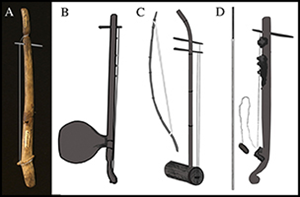
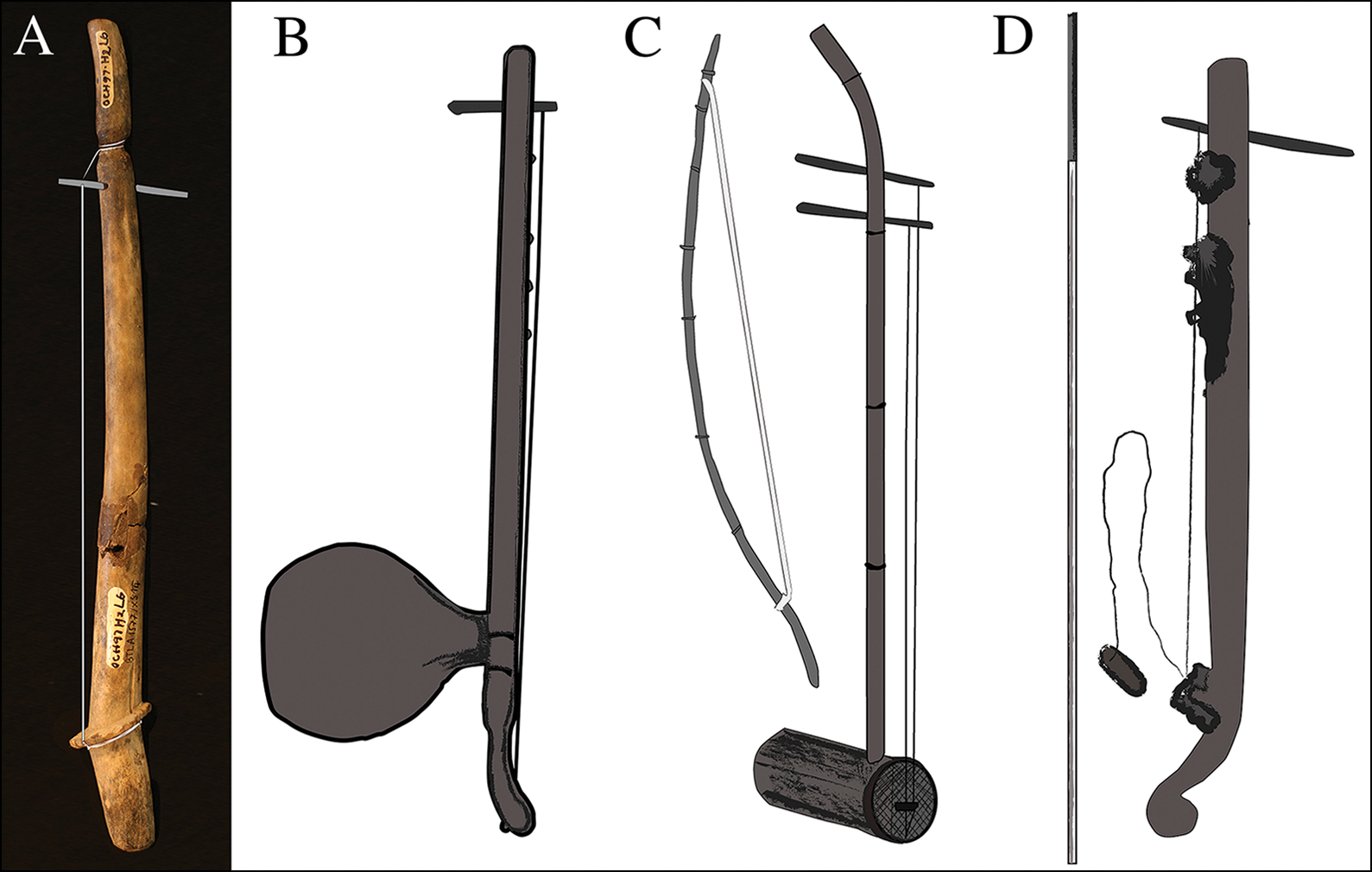
A) Reconstruction of Artefact 1, compared with examples of Vietnamese musical instruments: B) the Bro JoRai; C) Co Ke; and D) K'Ny (illustration and photographs by F.Z. Campos).
The working and use-wear on the burr of both artefacts is of particular relevance. The burr of Artefact 1, reduced to a thin band around the proximal end of the beam, features a 4.14mm-wide notch, with narrower associated wear of 2mm (Figure 7C). It is likely that a string was attached to the pedicle, close to the burr, and held by the notch, with the burr acting as a bridge. The string would have extended along the beam and have been secured around the hourglass-shaped groove at the distal end. As a point of comparison, the diameters of the strings used on an acoustic guitar range from 0.35 to 1.43mm. The use-wear traces observed on the notch on the burr of Artefact 1 could have been made by a string of similar thickness. While the incomplete Artefact 2 lacks evidence of a groove on the beam, the notching on the burr and shaping of the pedicle suggest that it may have been strung in a similar manner. The bridge is a defining feature of a stringed instrument. A 2300-year-old fragment of a bridge, possibly from a lyre, was excavated in 2010 at High Pasture Cave on the Isle of Skye in Scotland (Birch & Wildgoose Reference Birch and Wildgoose2013); it has a similar notch, presumably for a string, with a wear pattern resembling that observed on Artefact 1.
The perforation on Artefact 1, close to the distal groove in the antler beam (Figure 7B), provides another clue. The hole, probably made with a metal drill, is aligned with the notch in the burr, possibly to insert a wooden or bamboo peg with a string secured around it. This peg would have enabled the string to be tightened or loosened to tune the instrument. Each string of an instrument requires a separate peg and notch on the bridge. Consequently, Artefact 1 can only have had a single string and is thus to be considered an example of a monochord.
The apparent similarities in morphology and measurements between Artefact 1 and Artefact 2 strongly suggest that they shared the same function. In addition, a third worked deer antler, recovered during the 2008 excavation season, exhibits scrape marks and a smoothed surface on parts of the beam, indicating that it was a preform (Figure 8F), perhaps in the process of being reworked into an item comparable to Artefacts 1 and 2.
Discussion
The presence of a clearly worn groove on the bridge (burr) of the antler objects and provision for a single peg on Artefact 1 suggest that these putative instruments each had a single string. Figure 9A shows a reconstruction of the type of chordophone that Artefact 1 may have represented, compared with traditional Vietnamese musical instruments. For instance, the Bro—a stringed musical instrument from the central highlands—featured a single string in its early forms (Figure 9B). Although originally strung with pandanus fibre polished with beeswax, contemporary versions use metal strings. The instrument has three to four frets made from dried beeswax. The modern version usually has a second string, which is always open when played, primarily for ostinato. This instrument is usually played by a male musician as a solo instrument or as an accompaniment to a folk song. Originally, players placed a resonating gourd against their bare chest or close to the body and plucked the strings with the right hand, while the left hand pressed the frets. Today, players tend to use a plectrum (To Reference To1997).
The K'ny is a bowed monochord and is a uniquely Vietnamese instrument that is common among the Bahnar, Jo Rai, Se Dang and Ro ngao of northern and central Vietnam (Figure 9D). This instrument has a bridge and a hole at the distal end for a wooden tuning peg (which would fit the hole observed on Artefact 1) and has no resonator. The vibrating string was formerly made from spun wild palm or pandanus fibre but today is made of industrial metal wire. The instrument's length varies between 400 and 700mm, while the diameter of the neck is approximately 20–30mm.
The bow used to play the K'ny was traditionally made from a piece of bamboo and was not strung. Sound is produced through friction, achieved by rubbing the bamboo against the string. To amplify the sound, the player uses a silk thread (e.g. from an old parachute) or synthetic thread, with one end tied to the string, and the other end attached to a round piece of bamboo root sheath (or, today, a piece of PVC or aluminium pipe) that is placed in the player's mouth and kept taut. The vibration of the instrument's string is transmitted along the thread while the musician controls the oscillation with the mouthpiece, which acts as a resonator. The player can further control the sound by changing the shape of the mouth, sometimes combining this with subtle singing or speaking. The Bahnar call this ‘the K'ny singing’; indeed, traditional beliefs suggest that this is the K'ny as the ‘speaker of spirits’, and thus the musical instrument has been considered sacred (To Reference To1997).
Traditional instruments, such as the Co Ke (Figure 9C) of the Muong cultural group, are perhaps the best-known type of bowed fiddle across Southeast Asia. Very similar to the Dan Nhi (two-stringed fiddle) or the Chinese erhu, the Co Ke is a bowed instrument; it has a rounded neck that is 15mm in diameter and 650–780mm in length. The bow is made from a thin bamboo stem that is held taut and arched using pandanus or bamboo sheath strings approximately 530mm in length (Cò ke - Họ dây 2015). The bow is usually held in the right hand and played using vibrato, staccato or separated bowing, while the left hand presses the strings, which are made of silk or pandanus fibre and held in place by two pegs. A piece of bamboo is used as a resonator. This measures 50mm in diameter and 130mm in length. Both Artefacts 1 and 2 may possibly have had a similar resonator attached to the pedicle and burr, secured with strings; further evidence is, however, required to support this hypothesis.
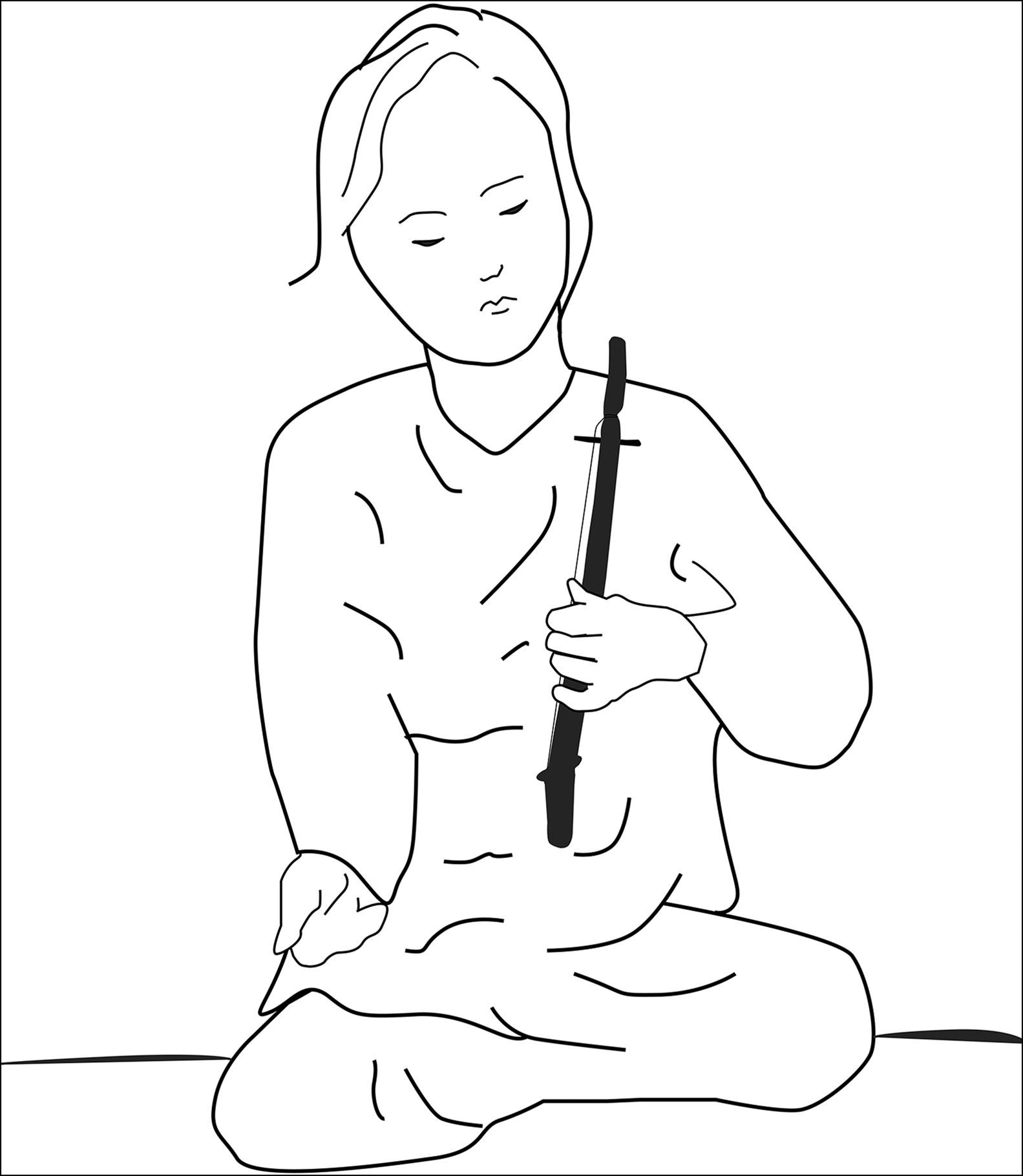
These ethnographically observed instruments are just a few among many other traditional chordophones in the region that are similar with the artefacts discussed here. Although the artefacts from Go O Chua could have been played in a multitude of ways, a possible set-up for Artefact 1 is presented in Figure 10, based on the ethnographic analogies discussed above. Traditional musicians typically sit either on the floor or on a chair, while the instrument is held close to the player's body. A resonator could be added, in a manner similar to the chest-resonated monochord described by Malm (Reference Malm1967: 130) as phin nam tao or phin pia—a stick zither from Thailand. The manufacture of these antler instruments would have required technical know-how and precision; indeed, as well as experience with specialised craft skills, we might also expect an understanding of music—perhaps the manufacturers were musicians themselves.
How Artefact 1 could have been played (illustration by F.Z. Campos).
Conclusion
Examination of two antler artefacts from Go O Chua, and a review of ethnographic parallels, lead us to conclude that these objects likely represent stringed musical instruments known as chordophones. This would make them the first such instruments archaeologically recovered in Vietnam and, perhaps, among the oldest stringed musical instruments identified in Southeast Asia to date. Although we cannot rule out that Artefacts 1 and 2 might have served some alternative purpose, features such as the notching of the burr to form a bridge, and the groove in the beam, as well as the drilled hole present on Artefact 1, are all characteristic of chordophones. The single bridge notch and possible peg hole on Artefact 1 suggest that this was probably a single-stringed chordophone, or an early form of monochord. Analogies between its design and ethnographic Vietnamese musical instruments provide insights into its form and use, expanding our knowledge of prehistoric music. The similarities to extant chordophones, such as the K'ny, suggest that Vietnamese musical instruments of this type could be of considerable antiquity, perhaps extending back 2000 years or more. This, in turn, would suggest a long continuity of some aspects of musical traditions in this region, despite significant changes in the materials used to manufacture these instruments. Finally, the discovery and analysis of the Go O Chua antler artefacts invites serious assessment of assemblages from other archaeological excavations; such work may lead to the identification of further similar objects, giving a new impetus to archaeo-musicological research in Southeast Asia and beyond.
Acknowledgements
We thank members of the Department of Culture, Sports and Tourism of Long An province (Vietnam) and Long An Provincial Museum for permission to analyse the artefacts at the Australian National University (ANU) radiocarbon facility. We also acknowledge the support of Bùi Phát Diệm, Đỗ Thi Lan and Trần Thi Kim Quý for additional information, and access to materials and references. We thank Đặng Văn Thắng from the University of Social Science and Humanities in Ho Chi Minh City, Bùí Chi Hoang, Nguyễn Quốc Manh and Nguyễn Khải Quỳnh from the Centre for Archaeological Studies, Southern Institute of Sustainable Development in Ho Chi Minh City, Tran Tan Vinh and Nguyễn Kim Dung from the Institute of Archaeology, Hanoi, and Judith Cameron (ANU) for additional information on Go O Chua. We are grateful to Rachel Wood for providing documentation on dating samples from Go O Chua sent to ANU and for her invaluable expertise in dating Artefact 1. We also thank Jean Kennedy and Philip Piper for their comments and suggestions on early drafts and the reviewers for providing insights and recommendations. Finally, we thank the Australian Museum and Janine Ochoa for photographs and access to additional modern zooarchaeological comparanda.
Funding statement
This research was part-supported by the Australian Government Research Training Program (RTP) scholarship.


 Open access

