

1. Introduction
Micro, small and medium enterprises (MSMEs) engaged in manufacturing activities are ubiquitous across sub-Saharan Africa (SSA; Sonobe and Otsuka, Reference Sonobe and Otsuka2014). Despite their sizeable contributions to poverty reduction through the provision of a myriad of employment opportunities for the vast majority of the unemployed (World Bank, 2012; Sonobe and Otsuka, Reference Sonobe and Otsuka2014), there are lingering concerns about their potency to engage in occupational activities that degrade the environment (Löschel et al., Reference Löschel, Pei, Wang, Sturm, Buchholz and Zhao2021). The environmental concerns arising from the operations of MSMEs in developing countries are accentuated by gaps in legislative frameworks governing the environment, incapacitation of environmental protection authorities (O'Connor, Reference O'Connor1994), and the tendency of most MSMEs to operate informally, outside the purview of government regulations (Eskeland and Jimenez, Reference Eskeland and Jimenez1992).
Enforcement of environmental standards and regulations through on-site inspections is one of the possible ways governments use to curtail the prevalence of environmentally harmful activities of MSMEs. Whilst the theoretical underpinnings of the efficaciousness of enforcement on compliance are robust (e.g., Stigler, Reference Stigler1970), empirical literature relating thereto is still growing and is largely focused on developed countries, and a handful of large developing countries outside SSA (Earnhart, Reference Earnhart2004; Gray and Shimshack, Reference Gray and Shimshack2011; Duflo et al., Reference Duflo, Greenstone, Pande and Ryan2018; Shi et al., Reference Shi, Bu and Xue2021). Very few empirical studies using MSMEs’ plant-level data on environmental protection enforcement and firm compliance specifically focus on SSA. This gap persists despite industrial pollution being a leading cause of global environmental degradation and a serious threat in SSA. MSMEs in SSA predominantly operate in the informal sector, which is proliferating at an unprecedented rate (Gutiérrez-Romero, Reference Gutiérrez-Romero2021), rendering them difficult to regulate, with the majority deliberately circumventing existing regulations. This makes it imperative at this point to evaluate the efficacy of environmental protection policies already in place and assess the effectiveness of alternative ones to address gaps in existing policies brought about by the uniqueness of circumstances engendered by (informal) MSMEs’ industrial domination in SSA. This brings us to our first objective, linking enforcement and compliance with environmental regulations among MSMEs in Zimbabwe.
The strength of enforcement in inducing compliance with environmental standards is likely to be facilitated by trust in the institutions that enact laws and policies, or those that exercise government authority to enforce the laws and policies (Cui and Liu, Reference Cui and Liu2022). Institutional trust has been linked with enhanced compliance with environmental regulations in a variety of settings (e.g., Harring and Jagers, Reference Harring and Jagers2013; Rhodes et al., Reference Rhodes, Axsen and Jaccard2017; Kulin and Johansson Sevä, Reference Kulin and Johansson Sevä2020; Kitt et al., Reference Kitt, Axsen, Long and Rhodes2021). The low levels of institutional trust in many developing countries (e.g., Newton et al., Reference Newton, Stolle, Zmerli and Uslaner2017) also makes it imperative to unpack the heterogeneity that trust in the institutions has on the role of regulatory enforcement on compliance with environmental protection standards, constituting the second objective of the paper. Notwithstanding the levels of institutional trust among MSME owners, compliance imposes a cost on the entrepreneur, which may make it optimal for entrepreneurs to rationally bribe inspectors (Duflo et al., Reference Duflo, Greenstone, Pande and Ryan2018). Our third objective speaks to the efficacy of environmental inspections on inducing compliance in a context where rules can be routinely evaded by entrepreneurs through bribery.
We address these three objectives on the basis of a large-scale dataset of a nationally representative cross-section of MSMEs we collected in Zimbabwe through the Technological and Commercial Information Promotion System in 2021. In our efforts to unpack the role of environmental enforcement on compliance, we are cognizant that environmental enforcement efforts are not entirely exogenous but are likely endogenously generated as a function of the perceived compliance behaviour of the entrepreneurs (e.g., Gray and Shimshack, Reference Gray and Shimshack2011), rendering least-square estimates biased in general. We circumvent the problem by resorting to the doubly robust Inverse Probability Weighted Regression Adjustment (IPWRA) method (e.g., Wooldridge, Reference Wooldridge2007).
We offer four major insights. First, environmental regulatory inspections of MSMEs are associated with compliance with environmental protection standards. Second, compared to MSME owners who do not trust regulatory institutions, the impact of regulatory inspections on compliance with environmental protection standards is higher when MSME owners trust the regulatory institutions. Third, regardless of the level of trust in institutions, the potential for MSME owners to bribe regulatory agency officials dampens the effectiveness of regulatory inspections in inducing compliance with environmental protection standards. Finally, in the absence of trust in institutions, regulatory inspections have no statistically significant effect on compliance with environmental protection standards for corrupt entrepreneurs.
The remainder of this paper is organized as follows. Section 2 situates the paper in the existing literature and specifies our hypotheses. Section 3 discusses the IPWRA method employed, while Section 4 provides a discussion of the results. Section 5 concludes and offers policy recommendations.
2. Background, literature review and hypotheses
2.1. Background: manufacturing MSMEs and their environment in SSA and Zimbabwe
SSA has been experiencing de-industrialization since the mid-1990s, with the gross industrial sector’s value addition declining from 37.6 per cent in 1994 to 27.8 per cent in 2018 (Bhorat and Oosthuizen, Reference Bhorat and Oosthuizen2020). This trend, coupled with technological advancements that have replaced semi-skilled and unskilled labour in the few remaining large industries, has led many workers to find opportunities in the cottage industry. The cottage industry in SSA is predominantly informal and unregulated, comprising mostly manufacturing MSMEs. Notably, an estimated 65 per cent of all MSMEs in SSA operate informally (Medina et al., Reference Medina, Jonelis and Cangul2017). Given the MSME sector’s potential to absorb the majority of the working-age population, which is projected to surge by 306.6 per cent by 2100 in SSA (Bhorat and Oosthuizen, Reference Bhorat and Oosthuizen2020), it is crucial to plan for sustainable industrial development, including effective environmental management and regulation. This will help mitigate the growing disease burden resulting from environmental degradation caused by industrial waste and other sources (UN Environment, 2019).
Regulatory institutions find it easier to follow up on registered firms to enforce the law, and the availability of proper records makes it easier to track firms and ensure transparency (O'Connor, Reference O'Connor1994). This is in stark contrast to the challenges faced in regulating MSMEs, which is an arduous task given their ubiquity across and within SSA countries (e.g., Sonobe and Otsuka, Reference Sonobe and Otsuka2014). Evading the law is not very difficult for most MSMEs, as they can easily migrate to new locations without notice, conceal their transactions by dealing in cash, or misrepresent their activities (Ufere et al., Reference Ufere, Perelli, Boland and Carlsson2012). The situation is further compounded by the fact that most enterprises are in the informal sector, which excludes them from being legally compelled to satisfy compulsory requirements necessary for formalization (Eskeland and Jimenez, Reference Eskeland and Jimenez1992; Gutiérrez-Romero, Reference Gutiérrez-Romero2021).
In the absence of a comprehensive enterprise register of MSMEs, regulatory institutions in Zimbabwe have adopted a solution of conducting random inspections at MSME premises to verify compliance with regulations as required by law. If they are found non-compliant, they are liable to pay spot fines, sometimes with significant penalties, as prescribed by law. However, the lack of formal registration and proper records to ensure transparency increases the temptation for both regulating institutions to engage in underhanded activities and enterprises to pay bribes to avoid severe penalties (e.g., Duflo et al., Reference Duflo, Greenstone, Pande and Ryan2018).
2.2. Literature review and hypotheses
2.2.1. The role of enforcement on compliance
Notwithstanding their potential to contribute to poverty reduction through the provision of employment opportunities for the poor (World Bank, 2012; Sonobe and Otsuka, Reference Sonobe and Otsuka2014), manufacturing MSMEs have adverse effects on the environment through the release of pollutants and engagement in occupational activities that degrade the environment (Löschel et al., Reference Löschel, Pei, Wang, Sturm, Buchholz and Zhao2021). This issue becomes urgent in developing countries, given the weaknesses in regulatory frameworks (O'Connor, Reference O'Connor1994) and the poor mapping of MSMEs operating in the informal sector (Eskeland and Jimenez, Reference Eskeland and Jimenez1992; Gutiérrez-Romero, Reference Gutiérrez-Romero2021), which makes them fall outside the purview of systematic regulatory enforcement.
A significant portion of empirical literature on the effectiveness of enforcing environmental protection standards on MSME compliance focuses on developed countries, likely due to the lack of enterprise-level databases in developing countries (Magat and Viscusi, Reference Magat and Viscusi1990; Earnhart, Reference Earnhart2004; Gray and Shimshack, Reference Gray and Shimshack2011; Walls and Zheng, Reference Walls and Zheng2021). These studies highlight the role of enforcement in inducing compliance with environmental standards by enterprises. Specifically, Earnhart (Reference Earnhart2004), Magat and Viscusi (Reference Magat and Viscusi1990), and Walls and Zheng (Reference Walls and Zheng2021) demonstrated that inspections or threats thereof reduced pollution rates in North America. The effect of enforcement on compliance is not necessarily contemporaneous, as inspections reduce future violations (Magat and Viscusi, Reference Magat and Viscusi1990). It is also not localized to the inspected firm, as inspection can generate spillovers beyond the inspected firm (Shimshack and Ward, Reference Shimshack and Ward2008, Reference Shimshack and Ward2022). Moreover, using data from water pollutants in the US pulp and paper industry, Shimshack and Ward (Reference Shimshack and Ward2008) suggest that inspections not only stimulate compliance but also overcompliance with environmental standards by enterprises.
To our knowledge, empirical studies on the efficacy of regulation in inducing compliance in developing countries are concentrated outside SSA, largely in China and India (Bu and Shi, Reference Bu and Shi2021; Shi et al., Reference Shi, Bu and Xue2021). The studies confirm that enforcement drives compliance. However, in SSA, research on this topic is limited, likely due to the lack of databases tracking regulatory enforcement and compliance. This scarcity of research is particularly concerning, given the region’s significant environmental challenges stemming from pollution and unregulated industrial activities. This situation may be exacerbated by the fact that MSMEs, which dominate the manufacturing sector, are often informal and operate outside the formal regulatory framework or frequently disregard existing rules. This leads us to our first hypothesis linking regulatory inspections and compliance:
Hypothesis 1: Regulatory inspections induce compliance with environmental protection standards by MSMEs.
2.2.2. The moderating role of institutional trust in the effect of regulation on compliance
The effectiveness of environmental management authorities in developing countries in ensuring MSME compliance with environmental protection standards is compromised by gaps and weaknesses in environmental regulatory frameworks, and a lack of funding and expertise (Eskeland and Jimenez, Reference Eskeland and Jimenez1992). The potency of such weak regulatory power to induce MSME compliance with environmental regulations relies heavily on institutional trust in regulatory agencies among MSME owners (Cui and Liu, Reference Cui and Liu2022). Even in the presence of sufficient regulatory power, as in developed countries, Rhodes et al. (Reference Rhodes, Axsen and Jaccard2017) propose that compliance with regulations is a function of trust in institutions, since people may not have sufficient time or skills to independently assess regulated issues.
Empirical studies confirm that there is a higher likelihood of compliance when there is trust in the regulatory agency (e.g., Harring and Jagers, Reference Harring and Jagers2013; Rhodes et al., Reference Rhodes, Axsen and Jaccard2017; Kulin and Johansson Sevä, Reference Kulin and Johansson Sevä2020; Kitt et al., Reference Kitt, Axsen, Long and Rhodes2021; Drews et al., Reference Drews, Savin, van den Bergh and Villamayor-Tomás2022). Specifically, Harring and Jagers (Reference Harring and Jagers2013) attribute high levels of support for carbon taxes in Sweden to high levels of trust in government. Moreover, Drews et al. (Reference Drews, Savin, van den Bergh and Villamayor-Tomás2022) found that higher climate policy acceptance in Spain is linked to favourable views about the government's handling of the COVID-19 crisis. Against this backdrop, we speculate that MSME owners’ trust in institutions reinforces the potency of regulatory power to induce compliance and propose the following hypothesis:
Hypothesis 2: Regulatory inspections are more effective in inducing compliance with environmental protection standards when MSMEs have trust in regulatory institutions than when they do not.
2.2.3. The moderating role of corruption in the effect of regulation on compliance under different trust statuses
Regardless of trust in institutions, the efficacy of regulations in inducing compliance with environmental standards is likely to be compromised when rational, self-interested entrepreneurs have the opportunity to bribe environmental management authorities (Dincer and Fredriksson, Reference Dincer and Fredriksson2018). Ufere et al. (Reference Ufere, Perelli, Boland and Carlsson2012) confirm that entrepreneurs in developing countries often bribe regulators and further note that entrepreneurs in Nigeria are not merely victims of bribe-demanding government agents but also actively attempt to bribe them. When possible, some entrepreneurs will bribe the government to tolerate environmental degradation, as compliance is costly (Zhou et al., Reference Zhou, Luo, Ye and Tao2022).
The problem of entrepreneurs bribing environmental regulators is exacerbated in developing countries due to weak institutional environments characterized by government corruption, underdeveloped legal frameworks, poorly remunerated public officials, and, in some cases, the acceptance of bribery as a social norm (Gauthier et al., Reference Gauthier, Goyette and Kouamé2021). Empirical studies confirm that corruption hampers environmental regulation compliance (e.g., Biswas and Thum, Reference Biswas and Thum2017; Damania, Reference Damania2002; Fredriksson and Svensson, Reference Fredriksson and Svensson2003; Dincer and Fredriksson, Reference Dincer and Fredriksson2018; Zhou et al., Reference Zhou, Luo, Ye and Tao2022). Damania (Reference Damania2002) identifies corruption as a primary factor contributing to environmental degradation in developing countries and suggests that complete deregulation may be necessary in cases where corruption cannot be curbed. Moreover, Zhou et al. (Reference Zhou, Luo, Ye and Tao2022) find that reducing corruption can enhance compliance in a quasi-experimental setting. Fredriksson and Svensson (Reference Fredriksson and Svensson2003) argue that corruption is less damaging to the efficacy of environmental regulations as political instability increases. The study closest to ours is Dincer and Fredriksson (Reference Dincer and Fredriksson2018), who find that the effect of corruption on environmental regulation depends on trust. Against this background, we speculate that, regardless of trust status, corruption undermines the impact of inspections on compliance, but this perversion is more pronounced when trust is lacking. We therefore propose the following interlinked hypotheses:
Hypothesis 3.1. Corruption reduces the effect of regulatory inspections on compliance with environmental protection standards.
Hypothesis 3.2. The effect of corruption on reducing the likelihood of enterprises complying with regulatory inspections and upholding environmental protection standards is larger if there is no trust in the institutions.
3. Methods
3.1. Data and measurement of key variables
Our dataset consists of 4,776 manufacturing MSMEs collected in Zimbabwe in 2021 through the Technological and Commercial Information Promotion System. A detailed account of the data generation process is provided in online Appendix A1. To ensure the reliability of our findings, we implemented several measures to encourage candid responses from survey participants. We assured respondents of confidentiality and explicitly stated that the data collected would be shared solely in an aggregated format for research purposes, with no individual responses being identified or reported separately. Additionally, we clarified that there would be no legal or tax implications resulting from their participation. Interviews were conducted privately with firm owners in the absence of workers, creating a safe and confidential environment for respondents to share their thoughts and experiences. With these measures in place, we were able to collect reliable data on the key variables of interest.
We define an enterprise as having been subject to regulatory inspections, 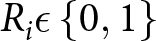 ${R_i}\epsilon \left\{ {0,1} \right\}$, based on the question: ‘How many times were you visited or inspected by environmental management authorities in the past year?’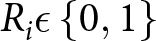 ${R_i}\epsilon \left\{ {0,1} \right\}$ takes the value of 1 if the entrepreneur was visited at least once and 0 otherwise.
Compliance with environmental standards, 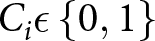 ${C_i}\epsilon \left\{ {0,1} \right\}$, is determined by the question: ‘Do you take any measures to help protect the environment at your establishment?’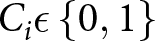 ${C_i}\epsilon \left\{ {0,1} \right\}$ takes the value of 1 if the response is ‘Yes’ and 0 otherwise.
Institutional trust, 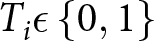 ${T_i}\epsilon \left\{ {0,1} \right\}$, is measured by the question: ‘If you are caught on the wrong side of the law, do you trust the court system to treat you fairly?’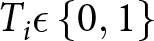 ${T_i}\epsilon \left\{ {0,1} \right\}$ takes the value of 1 if the response is ‘Yes’ and 0 otherwise.
Corruption, 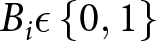 ${B_i}\epsilon \left\{ {0,1} \right\}$, is defined based on the question: ‘Have you ever solicited to give gifts or informal payments to public officials regarding customs duty, business taxes, business licensing, or regulations?’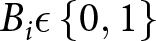 ${B_i}\epsilon \left\{ {0,1} \right\}$ takes the value of 1 if the response is ‘Yes’ and 0 otherwise.
The measures for compliance and corruption, while informative, have limitations that may affect the interpretation of estimates. The compliance variable captures whether the entrepreneur takes any environmental protection measures, but does not distinguish between substantive investments and minimal actions, nor does it reference a specific regulatory standard. This may overstate true compliance levels if respondents report minor actions. The corruption variable is not specific to environmental regulators and spans multiple domains (customs, taxes, licensing), potentially capturing general bribery propensity rather than environmental-specific corruption. These measurement issues likely attenuate estimated effects towards zero, meaning our reported treatment effects may be conservative lower bounds. Classical measurement error in binary treatment or outcome variables biases estimates towards zero, reducing the probability of detecting true effects (Ramírez-Hassan and Caly-Amador, Reference Ramírez-Hassan and Caly-Amador2026).
Additionally, the cross-sectional design cannot rule out reverse causality (e.g., compliant firms being more likely to be inspected). We address this in robustness checks and note that causal claims are conditional on the selection-on-observables assumption.
3.2. IPWRA procedure for estimating treatment effects
To establish the relationship between regulatory inspections and compliance with environmental protection protocols among manufacturing MSMEs, we estimate the average treatment effect on the treated (ATT). The ATT measures the average difference in outcomes (compliance with environmental protection protocols) between enterprises that received regulatory inspections (treatment group) and those that did not receive regulatory inspections (control group). We define ATT following Takahashi and Barrett (Reference Takahashi and Barrett2014) as follows:
 \begin{equation}ATT = E\{ {Y_{i1}} - {Y_{i0}}|{T_i} = 1\} = E({Y_{i1}}\left| {{T_i} = 1) - E({Y_{i0}}} \right|{T_i} = 1),\end{equation}
where  ${Y_{i1}}$ and ${Y_{i0}}$ are the potential outcomes when the MSME received environmental inspections and when it did not, respectively, and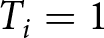 ${T_i} = 1$ if the enterprise received regulatory inspections and 0 otherwise. Using ‘non-experimental’ observational data, as in our case, we can only observe either ${Y_{i1}}$ or ${Y_{i0}}$ and not both. This is referred to as the counterfactual problem and has been cited by Holland (Reference Holland1986) as the fundamental problem of causal inference. Given that the assignment of enterprises into groups of those that receive regulatory inspections and those that do not is not random, the groups may differ systematically, as some underlying variable(s) may impact the assignment process (Gray and Shimshack, Reference Gray and Shimshack2011; Chen et al., Reference Chen, Liu and Liang2022). This results in self-selection bias, which confounds our outcomes.
To estimate unbiased treatment effects, various models employ different methods to construct the unobserved counterfactuals and produce a balanced grouping of treatment and control observations with sufficient overlap between the groups. Some models rely on the correct specification of the treatment equation to produce an unbiased ATT, such as the Propensity Score Matching approach (e.g., Kairiza et al., Reference Kairiza, Kembo, Magadzire and Pallegedara2023) and the Inverse Probability Weights (IPW) estimator (e.g., Kang and Schafer, Reference Kang and Schafer2007). Others rely on the correct specification of the outcome model, such as the Regression Adjustment (RA) model (e.g., Wooldridge, Reference Wooldridge2007).
In this study, we use the IPWRA model, which combines the IPW and RA models to produce a doubly robust model that requires only the treatment equation or the outcome equation to be correctly specified to produce an unbiased ATT as enunciated in Wooldridge (Reference Wooldridge2007) and empirically applied in Chigusiwa et al. (Reference Chigusiwa, Kembo and Kairiza2023) among others.
To estimate the ATT using IPWRA for the relationship between regulatory inspections and compliance with environmental protection protocols among manufacturing MSMEs, we begin by calculating the IPWs by weighting the observations based on the inverse probability of receiving regulatory inspections. We specify the equation for the probability or propensity score of receiving regulatory inspections, following Wooldridge (Reference Wooldridge2007), as follows:
 \begin{equation}\hat p\left( X \right) = \Pr \left( {{T_i} = 1{\text{|}}X} \right) = f\left\{ {h\left( X \right)} \right\} = E({T_i}|X),\end{equation}
where  $X$ is a vector of observed firm-level variables that influence treatment and ${f^*}\{ \} $ is a normal cumulative distribution function. X represents a vector of the entrepreneurs’ characteristics (such as gender, age, education and management training) and enterprise characteristics (such as size, years in existence and subsector), as well as location dummies (depicting ten provinces in the country). A Probit model is used to estimate Equation (2). The estimated propensity scores are used to construct IPWs that balance the distribution of observed covariates between the treatment and control groups. This weighting procedure creates a pseudo-population in which treatment assignment is independent of measured baseline characteristics.
Following Hirano and Imbens (Reference Hirano and Imbens2001), the weights for the enterprises that received regulatory inspections 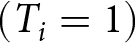 $\left( {{T_i} = 1} \right)$ are set to be 1, and for those that did not receive regulatory inspections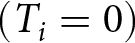 $\left( {{T_i} = 0} \right)$ are set to be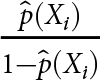 $\frac{{\hat p\left( {{X_i}} \right)}}{{1 - \hat p\left( {{X_i}} \right)}}$, where $\hat p$ are the estimated propensity scores. The weights can thus be specified as
 \begin{equation}{w_i} = {T_i} + \left( {1 - {T_i}} \right)\frac{{\hat p\left( {{X_i}} \right)}}{{1 - \hat p\left( {{X_i}} \right)}}\,.\end{equation}
The ATT for the regression adjustment model can therefore be expressed (Wooldridge, Reference Wooldridge2007) as
 \begin{equation}AT{T_{RA}} = {n_1}^{ - 1}\{ \mathop \sum \limits_{i = 1}^N {T_i}[{\hat m_1}\left( {{X_i},{\delta _1}} \right) - {\hat m_0}\left( {{X_i},{\delta _0}} \right)]\} ,\end{equation}
where  ${n_1}$ is the number of enterprises that received regulatory inspections and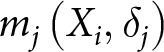 ${m_j}\left( {{X_i},{\delta _j}} \right)$ is the postulated regression model for the enterprises that received regulatory inspections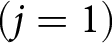 $\left( {j = 1} \right)$ and those that did not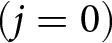 $\,\left( {j = 0} \right)$ based on observed covariates $X$ and parameters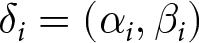 ${\delta _i} = \left( {{\alpha _i},{\beta _i}} \right)$ for all treatment units $i$.
$i$.
By estimating regression models 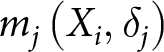 ${m_j}\left( {{X_i},{\delta _j}} \right)$ in the RA equation (Equation 4) using the IPW in Equation (3), we obtain the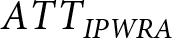 $AT{T_{IPWRA}}$ estimator. $\hat m_1^*\left( {{X_i},{\delta _1}} \right) = \alpha _1^* + X\beta _1^*$ is the inverse probability weighted least squares for enterprises that received regulatory inspections and $\hat m_0^*\left( {{X_i},{\delta _0}} \right) = \alpha _0^* + X\beta _0^*$ is the inverse probability weighted least squares for those that did not. Thus, the ATT for the IPWRA can be expressed as
 \begin{equation}{\text{AT}}{{\text{T}}_{{\text{IPWRA}}}} = N_1^{ - 1}\sum ^{N}_{i = 1} [\left( {\alpha _1^* + X\beta _1^*} \right) - (\alpha _0^* + X\beta _0^*)] = \left( {\hat \alpha _1^* - \hat \alpha _0^*} \right) + {\bar X_1}\left( {\hat \beta _1^* - \hat \beta _0^*} \right),\end{equation}
where 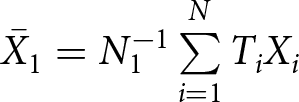 ${\bar X_1} = N_1^{ - 1}\mathop \sum \limits_{i = 1}^N {T_i}{X_i}$ is the average over the subsample that received regulatory inspections.
As a result, producing the IPWRA estimates includes two stages: first, we estimate the propensity scores 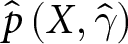 $\hat p\left( {X,\hat \gamma } \right)$, and then we construct the IPW linear least squares estimates. A balance of covariates after IPW is given in Appendix Table A1, which shows that, after IPW, there is no difference in the characteristics of treated and control groups.
In the RA component of the IPWRA model, we estimate separate outcome regression models for the treatment and control groups, including the covariates that influence the outcome of interest. Specifically, the RA model is used to predict the potential outcomes for each enterprise under both treatment and control conditions, based on the observed covariates. We estimate a probit model using the maximum likelihood estimation procedure for the binary outcome models in our RA specification, and we obtain the standard errors using the delta method. By using inverse probability weighting, we ensure that the RA models are estimated on a balanced sample of treatment and control observations, reducing bias and enabling more reliable causal inferences. We produce robust standard errors because the primary sampling unit is the firm, and inspections are not systematically clustered at a higher level in our cross-sectional design. Combining the conditional mean model and the propensity score model yields a doubly robust estimator for the ATT since only one of the two models must be correctly specified to yield asymptotically efficient results (Wooldridge, Reference Wooldridge2007).
To address potential biases stemming from unobserved heterogeneity that may influence the likelihood of being visited for environmental inspection, we supplement the IPWRA estimator with an Endogenous Switching Probit (ESP) model, which accounts for endogeneity induced by unobserved factors (e.g., Ma et al., Reference Ma, Zheng and Nnaji2023). For instance, an enterprise’s level of environmental awareness or its internal environmental management practices might be an unobserved characteristic that influences both the likelihood of being selected for an environmental inspection and the outcome of interest. If such unobserved characteristics are not accounted for, they could bias the estimated effects of being inspected. By employing the ESP model, we can control for these unobserved factors and provide a more robust estimate of the effect of being visited for environmental inspection.
4. Results and discussion
4.1. Descriptive analysis
4.1.1. Distribution of MSMEs in Zimbabwe
Table 1 presents the distribution of MSMEs in Zimbabwe, revealing that micro-scale enterprises with five employees or fewer dominate the sample, accounting for 84.48 per cent. Small enterprises with 6–30 employees comprise 14.66 per cent, while medium-sized manufacturing enterprises with 31–75 employees make up a mere 0.86 per cent. This distribution is consistent with Otsuka et al.’s (Reference Otsuka, Jin and Sonobe2018) observation that most manufacturing enterprises in Africa remain small and rarely experience growth.
Distribution of MSMEs in Zimbabwe

4.1.2. Balance of covariates
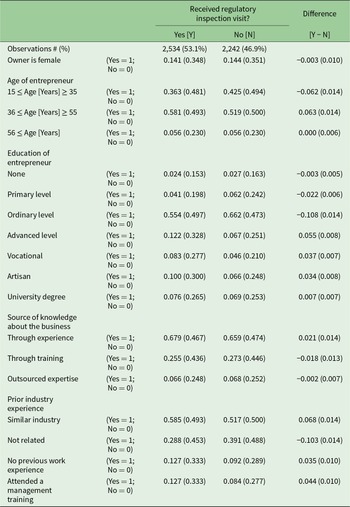
Table 2 presents the descriptive statistics of the sampled entrepreneurs, stratified by whether they received at least one inspection by environmental management agency officials during the year. Notably, 53.1 per cent of manufacturing MSMEs in Zimbabwe received such inspections. Given the limited technological infrastructure, environmental regulation enforcement is predominantly conducted on-site, where inspectors verify compliance with established environmental protection standards. A substantial proportion of entrepreneurs, 47 per cent, operate in an environment where compliance with environmental standards is not effectively regulated or enforced, which is consistent with the prevalence of informality among entrepreneurs, as noted by Medina et al. (Reference Medina, Jonelis and Cangul2017).
Background characteristics of MSMEs entrepreneurs by regulatory inspection visitation status
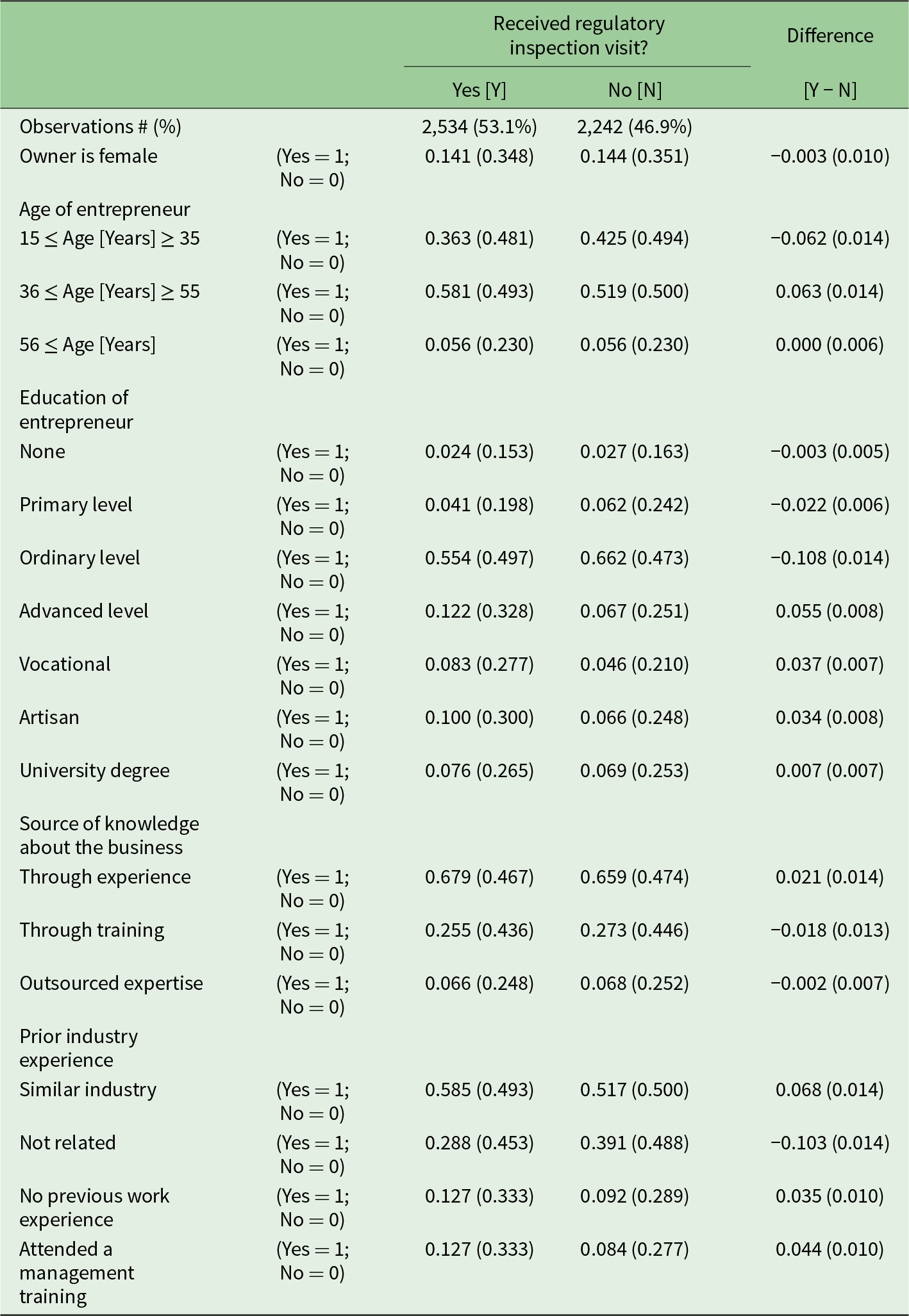
Notes: Standard deviations and errors in parentheses. Total sample size is 4,776. The final column shows the results of the two-tailed t-test for the difference in the means.
The results in Table 2 indicate significant differences in the characteristics of entrepreneurs whose enterprises were inspected and those that were not. Specifically, entrepreneurs of inspected enterprises tend to be older and possess higher levels of education. Furthermore, inspected enterprises are more likely to have attended managerial training, underscoring the importance of human capital in determining inspection likelihood. These differences are statistically significant at the 1 per cent level, suggesting that entrepreneurs with higher human capital endowments are more likely to be inspected.
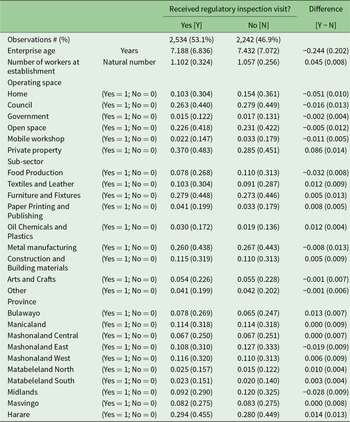
Table 3 shows that differences between inspected and non-inspected enterprises extend beyond compliance status to key operational characteristics. Inspected enterprises employ a larger number of workers, indicating more visible operations. They are also more likely to operate from private premises, whereas non-inspected enterprises more commonly function from homes or mobile workshops. In addition, the sectoral composition of inspected enterprises differs markedly, with a lower representation in food production and a higher concentration in oil, chemicals and plastics. This pattern likely reflects regulatory targeting, as enterprises in oil, chemicals and plastics face greater environmental risks and are therefore more subject to inspections related to pollution control and waste management. The table also reveals slight provincial variations in inspection likelihood, with enterprises in Mashonaland East and Midlands provinces being less likely to be inspected, while those in Bulawayo are more likely to be inspected, albeit at the 10 per cent level of significance.
Background characteristics of MSMEs by regulatory inspection visitation status
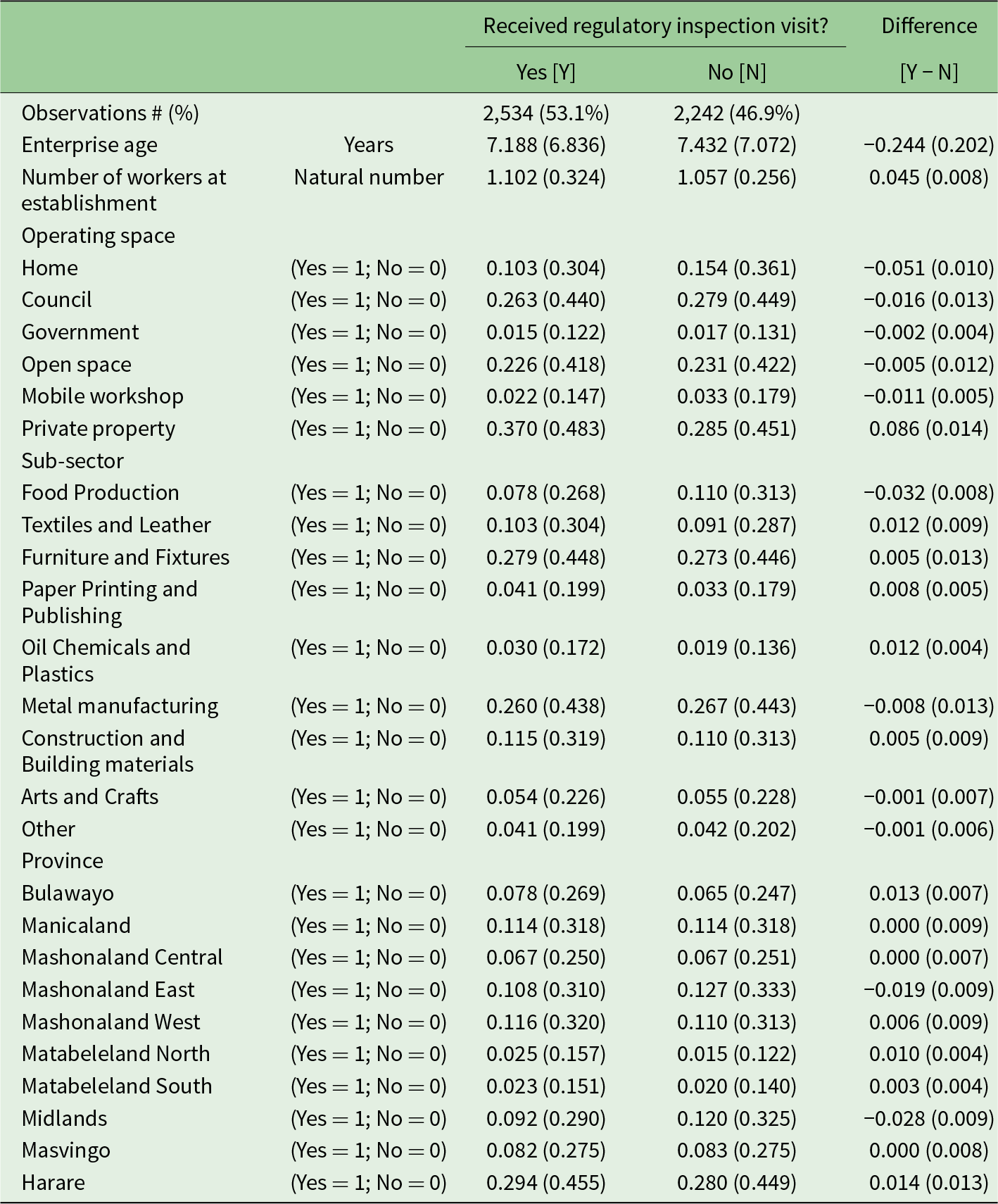
Notes: Standard deviations and errors in parentheses. Total sample size is 4,776. The final column shows the results of the two-tailed t-test for the difference in the means.
The differences in the background characteristics of the firms that received environmental inspections and those that did not indicate that there is self-selection associated with receiving environmental inspections (e.g., Gray and Shimshack, Reference Gray and Shimshack2011; Chen et al., Reference Chen, Liu and Liang2022). The presence of self-selection into environmental inspections necessitates the use of the doubly robust estimator, specifically the IPWRA method, to account for selection bias stemming from observed heterogeneity. Balance diagnostics reported in Appendix Table A1 indicate that, after weighting, the treated and control groups are broadly comparable, with no statistically significant differences across observed background characteristics. An overidentification test for covariate balance (Appendix Table A2) nonetheless reveals some residual imbalance ( $\chi^{2}$(40) = 59.52, p = 0.024), suggesting that while the weighting procedure substantially improved balance, minor discrepancies persist. Visual inspection of the Love plot (Appendix Figure A1), together with the fact that the vast majority of standardized differences fall below conventional thresholds, supports the overall adequacy of the weighting approach.
Specifically, Figure A1 compares standardized covariate bias before and after inverse probability weighting and shows pronounced imbalance prior to weighting, with several covariates exceeding accepted thresholds. After weighting, standardized biases are markedly reduced and clustered around zero, with nearly all covariates well below the 10 per cent threshold commonly used to indicate acceptable balance. In addition, Figure A2 demonstrates sufficient overlap in propensity scores between treated and control groups, lending support to the common support assumption.
Nevertheless, participation decisions may also be influenced by unobserved factors such as entrepreneurial ability or latent firm-specific attributes (e.g., Ma et al., Reference Ma, Zheng and Nnaji2023). To address this concern, we complement the IPWRA analysis with an ESP model, with the results reported alongside each other. The ESP framework explicitly accounts for selection on unobservables, thereby providing a robustness check on the baseline IPWRA estimates and strengthening the credibility of the causal inference.
4.1.3. Environmental compliance by enforcement, trust and corruption
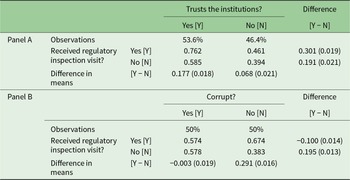
Panel A of Table 4 shows that, regardless of trust in institutions, a visit by environmental management authorities increases the probability that an enterprise is compliant with environmental standards. Among enterprises that trust in institutions, a visit by an environmental management agency increases the probability of compliance with environmental standards by 17.7 per cent before controlling for observed confounders. The corresponding difference for those who do not trust institutions is 6.8 per cent. These findings provide tentative evidence in support of Hypothesis 1 of this study, which posits that inspections by the environmental management agency increase the probability that an enterprise is compliant with environmental standards.
Compliance by regulatory inspection, trust and corruption status
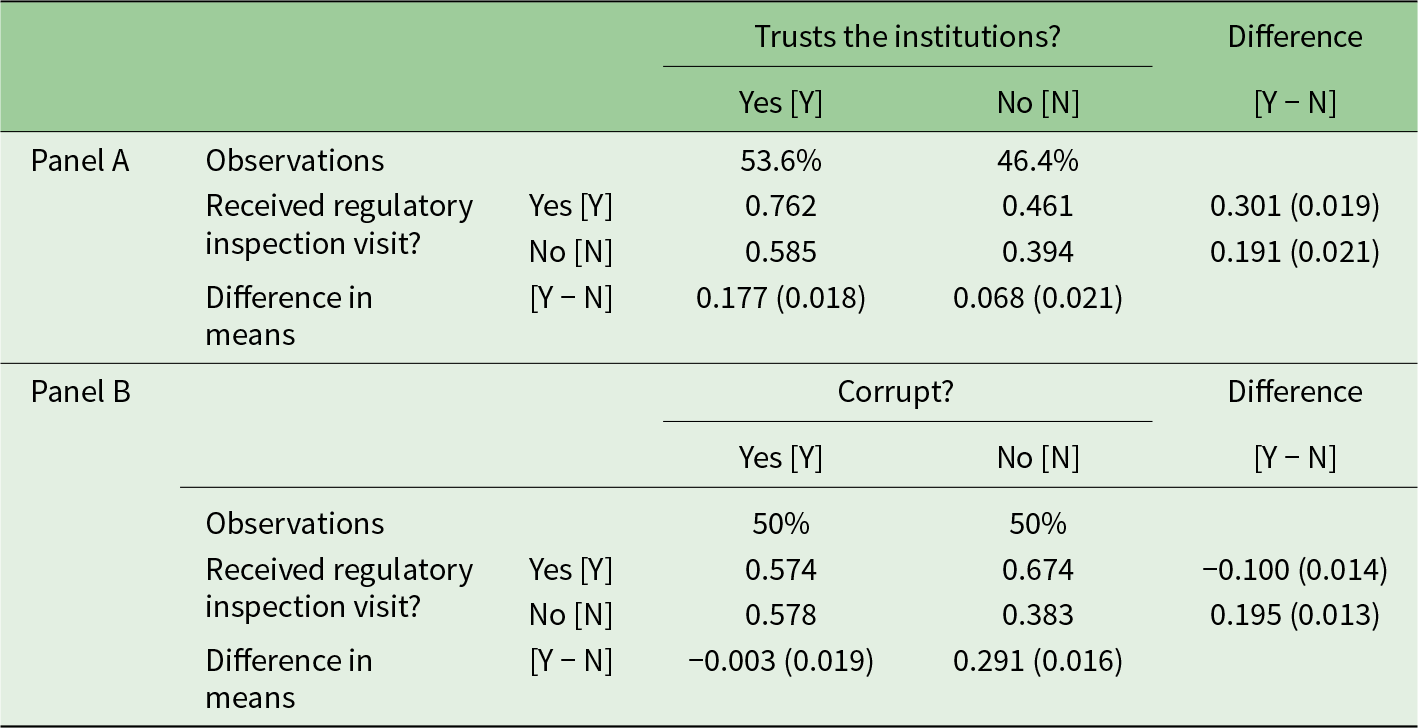
Notes: Standard errors in parentheses. Total sample size is 4,776. For each panel, the final column and row show the results of the two-tailed t-test for the difference in the means.
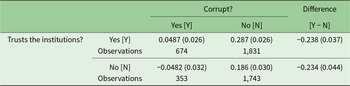
Panel B of Table 4 reveals that, for the subsample of entrepreneurs who are corrupt, inspections by the environmental management agency are irrelevant in increasing compliance with environmental standards. In contrast, for the subsample of entrepreneurs who are not corrupt, inspections by the environmental management agency increase the probability that the enterprise is compliant with environmental standards. Among enterprises visited by the environmental management agency, corruption on the part of the entrepreneur reduces the probability of compliance with environmental standards by 10 per cent at the 1 per cent level of significance. This finding supports Hypothesis 3 of this paper, which states that, regardless of the entrepreneur’s trust in institutions, corruption on the part of the entrepreneur reduces the efficacy of inspections in increasing environmental compliance.
4.2. Treatment effects of enforcement on compliance
4.2.1. Homogeneous treatment effects of inspections on compliance with environmental standards
Table 5 reports the average treatment effect of inspection visits on compliance with environmental standards, based on the full IPWRA estimation that incorporates inverse probability weights estimated and the regression adjustment equations using the full set of control variables presented in Tables 1–3.Footnote 1 The results show that inspection visits by the environmental management agency increase the probability of enterprise compliance with environmental standards by 12 per cent at the 1 per cent level of significance. This finding supports Hypothesis 1 of this study, which posits that inspections by the environmental management agency increase the probability that the enterprise is compliant with environmental standards. Our findings are consistent with earlier studies, such as Magat and Viscusi (Reference Magat and Viscusi1990), among others, which find that enforcement induces compliance with environmental standards.
IPWRA and ESP estimates of treatment effects of enforcement on compliance

Notes: Sample size is 4,601. Standard errors in parentheses.
4.2.2. Trust heterogeneity in the treatment effects of inspections on compliance with environmental standards
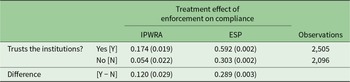
The treatment effects presented in Table 6 represent the average treatment effects previously presented in Table 5, disaggregated by entrepreneurs’ trust in institutions. This disaggregation reveals that while environmental inspections are beneficial in improving compliance regardless of institutional trust, they are more effective in enhancing environmental compliance when entrepreneurs trust the institutions. For those who trust the institutions, inspections improve environmental compliance by 17.4 per cent at the 1 per cent level of significance. In contrast, the treatment effect of inspections on environmental compliance for those who do not trust the institutions is 5.4 per cent at the 5 per cent level of significance. Notably, the difference in treatment effects between the two groups is 12.0 per cent, which is statistically significant at the 1 per cent level. These findings support Hypothesis 2 of this study, which suggests that the effect of inspections on compliance is amplified when entrepreneurs trust the institutions. IPWRA estimates are robust to the ESP specification also presented in Table 6. Our results are consistent with previous studies, such as those by Harring and Jagers (Reference Harring and Jagers2013), which attribute support for environmental policies to high levels of trust in government.
Trust in the institution differences in the treatment effects of regulatory inspection visit on compliance
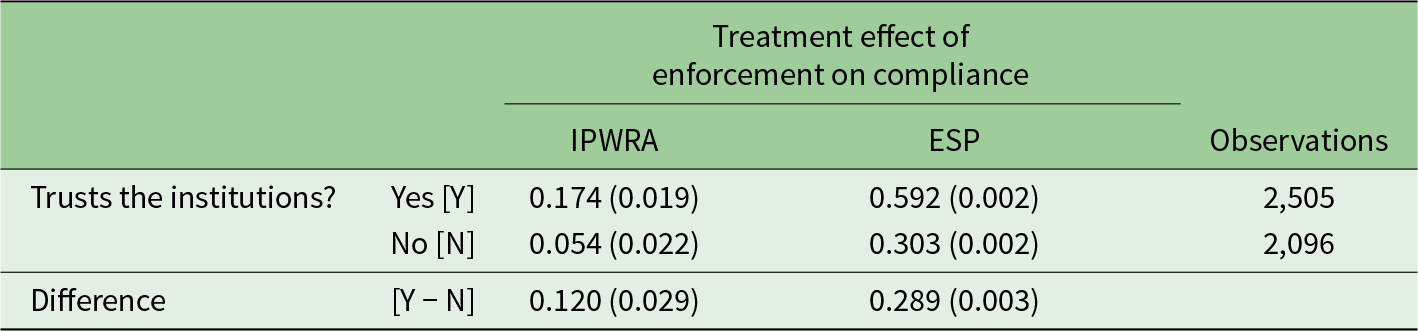
Notes: Sample size is 4,601. Standard errors in parentheses.
4.2.3. Corruption heterogeneity in the treatment effects of inspections on compliance with environmental standards
Table 7 presents a further disaggregation of the treatment effects in Table 6 by corruption, revealing that corruption undermines the efficacy of environmental inspections in enhancing compliance, irrespective of entrepreneurs’ institutional trust status. This finding lends support to Hypothesis 3.1, which posits that corruption reduces the effectiveness of inspections in promoting environmental compliance, regardless of institutional trust. Specifically, for corrupt entrepreneurs lacking institutional trust, inspections have no discernible impact on compliance, while those with institutional trust exhibit a marginally significant response at the 10 per cent level. In contrast, non-corrupt entrepreneurs benefit substantially from inspections, with compliance increasing by 28.7 and 18.6 per cent for those with and without institutional trust, respectively. These results corroborate the findings of Zhou et al. (Reference Zhou, Luo, Ye and Tao2022), who document a positive association between corruption reduction and compliance, and are also consistent with Damania's (Reference Damania2002) proposition that deregulation may be warranted in environments where corruption is pervasive. Furthermore, the findings support Hypothesis 3.2, which suggests that the regulatory dampening effects of corruption are more pronounced in the absence of institutional trust.
IPWRA estimates of the differences in the treatment effects of regulatory inspection visit on compliance by corruption status
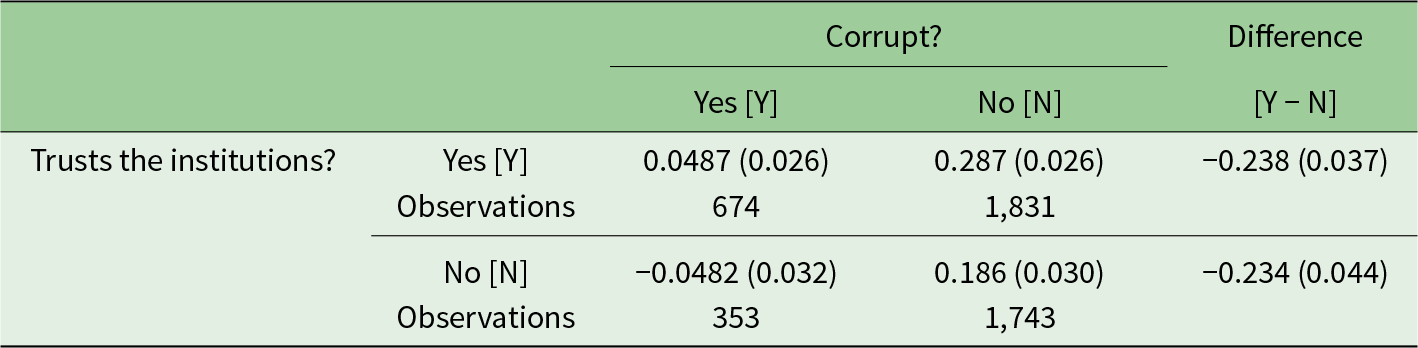
Notes: Sample size is 4,601. Standard errors in parentheses.
4.2.4. Robustness and falsification tests
We test the robustness of our IPWRA estimates using an ESP model, which allows for selection on unobservables under joint normality of the error terms. The ESP estimates, which are presented in Table 5 and whose estimation is described in online Appendix C1, are qualitatively similar, though larger in magnitude, supporting our main conclusions. However, without an exclusion restriction, ESP relies on functional form for identification and should be interpreted as complementary.
To probe residual confounding, we conducted placebo tests using pre-determined owner characteristics (gender, age and education) as outcomes and present these results in Appendix Table A3. Inspections should not affect these variables (Dreber et al., Reference Dreber, Johannesson and Yang2024). The estimated effects were statistically insignificant 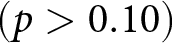 $(p \gt 0.10)$, easing concerns about overt omitted variable bias. Nevertheless, reverse causality remains plausible in cross-sectional data; we therefore interpret our estimates as associations consistent with a causal story under selection-on-observables, acknowledging that the true causal effect may be partially biased upward if inspections target already compliant firms.
5. Conclusions and policy recommendations
Due to the limited amount of data on monitoring and enforcement, these issues have been the subject of a very limited number of empirical analyses at the plant level in SSA. Furthermore, owing to the paucity of formal institutions, we also investigate the role of institutional trust and corruption tendencies in reinforcing the effect of regulatory inspections on the compliance of manufacturing MSMEs with environmental protection standards, based on the 2021 Technological and Commercial Information Promotion System manufacturing survey in Zimbabwe.
Our findings indicate that enforcement of environmental standards is associated with compliance with environmental standards among manufacturing MSMEs. Moreover, trust in institutions appears to amplify the efficacy of enforcement in inducing compliance with environmental standards in inducing compliance. Regardless of the trust status, the probability of bribing regulators by MSMEs reduces the potency of enforcement in inducing compliance among MSMEs. In actuality, in the absence of trust in the institutions, environmental inspections have no statistically significant effect on environmental compliance for corrupt entrepreneurs.
The significance of regulatory inspections on the compliance behaviour of firms highlights the importance of strengthening regulatory institutions in developing countries. Our findings further suggest that measures to strengthen regulatory authorities need to be complemented by implementing measures that enhance the legitimacy of public institutions and reduce corruption.
Our study is subject to certain limitations, notably the potential for reverse causality between institutional inspections and compliance with environmental regulations among MSMEs, which may induce endogeneity and biased estimates of the treatment effect. Specifically, the level of compliance may influence the frequency of inspections, thereby violating the exogeneity assumption and potentially leading to inconsistent estimates. While identifying suitable instrumental variables to address this endogeneity concern can be challenging, future research could consider employing experimental designs to randomize frequency of inspections.
Supplementary material
The supplementary material for this article can be found at https://doi.org/10.1017/S1355770X26100576.
Competing interests
The authors declare none.