


Obesity continues to rise in the USA despite decades of clinical approaches and community-based interventions. Current estimates indicate 39·8 % of adults and 20·0 % of children (aged 6–19 years) in the USA are obese (BMI≥30·0 kg/m2)( Reference Hales, Carroll and Fryar 1 ). Arkansas has the fourth highest adult obesity prevalence in the nation, with adult obesity at 35·7 % and childhood obesity (BMI≥95th percentile) ranging from 14·4 % (age 1–4 years) to 20·0 % (age 10–17 years)( Reference Hales, Carroll and Fryar 1 ). US immigrants often face even higher prevalence of obesity( Reference Choi 2 ). According to the 2003 New Immigrant Survey (NIS), more than 45 % of new immigrants are either overweight or obese( Reference Jasso, Massey and Rosenzweig 3 ). Considering that immigrants comprise 12·5 % of the total population and are increasing in population size, it is crucial to address immigrant obesity( Reference Jasso, Massey and Rosenzweig 3 ).
Pacific Islanders face higher rates of obesity( Reference Schiller, Lucas and Ward 4 ) and obesity-related chronic conditions( Reference Okihiro and Harrigan 5 , Reference Hawley and McGarvey 6 ). The Center for Disease Control and Prevention’s National Health Interview Survey documented that 44 % of Pacific Islanders surveyed in 2010 were obese, compared with 37 % of African Americans and 32 % of Hispanics/Latinos( Reference Schiller, Lucas and Ward 4 ). North-west Arkansas is home to a large and growing Marshallese Pacific Islander community with an estimated 12 000 Marshallese living in Arkansas compared with approximately 40 000 residing in the USA( 7 , Reference McElfish 8 ). The health disparities of Marshallese residing in north-west Arkansas are even more pronounced. A health screening study with Pacific Islanders in Arkansas revealed 90 % of adult participants (n 401) were overweight or obese( Reference McElfish, Rowland and Long 9 ).
Research consistently demonstrates that exclusive breast-feeding decreases the risk of obesity and cardiometabolic disease for both mother and infant( Reference Schwarz, Ray and Stuebe 10 , Reference Ram, Bobby and Hailpern 11 ) and may protect against obesity in children into adulthood( Reference Arenz, Rückerl and Koletzko 12 ). Early introduction of formula or complementary foods and discontinuation of breast-feeding increase the risk of obesity and diabetes( 13 ). Further, as infants and children transition to the family diet, family diet preferences and practices exert an influence on children’s preferences and consumption levels( Reference Thompson 14 ). Available evidence shows that obesity risk among immigrant children is influenced by a number of personal and environmental factors including formula supplementation, early introduction of solid foods before 4 months of age, family’s length of stay in the USA, changes in dietary and physical behaviours, and economic and social barriers( Reference Kaiser, Aguilera and Horowitz 15 – Reference Huh, Rifas-Shiman and Taveras 18 ). However, there is little to no data on the key influences on infant and child feeding practices among Pacific Islander immigrants who have high obesity rates.
The Pacific Islander population in the USA is increasing, with significant and rapid growth in Southern states. Arkansas has seen a 252 % growth in the Pacific Islander population between 2000 and 2010; the vast majority are from the Republic of the Marshall Islands( Reference Hixson, Hepler and Kim 19 ). The health disparities are embedded in a complex history between the USA and the Marshallese people. The US military conducted nuclear testing in the Marshall Islands between 1946 and 1958, detonating sixty-seven fission and thermonuclear devices equivalent to 7200 Hiroshima-sized bombs( Reference Barker 20 ). As a result, areas of the Marshall Islands were contaminated, disrupting their dominant food sources of fish and locally grown plants. The Marshallese lifestyle and diet shifted to a Western diet high in simple carbohydrates and fat and a more sedentary lifestyle after the era of nuclear testing. The majority of foods are now imported from outside the country( Reference Hawley and McGarvey 6 ). Rice is the primary staple food in addition to simple-carbohydrate foods such as ramen noodles (quick cooking noodles), doughnuts and pancakes. Consumption of fruits and vegetables is very low( Reference Gittelsohn, Haberle and Vastine 21 ). These same foods continue to be staples in their diet after migration to the USA due to their familiarity and low cost( Reference Hallgren, McElfish and Rubon-Chutaro 22 , Reference McElfish, Hallgren and Henry 23 ). After the nuclear testing, the USA conducted research on exposed Marshallese to understand the effects of nuclear radiation on human subjects. The research was conducted without informed consent or information provided in the native language. As a result, the Marshallese community exhibits distrust of research due to this historical trauma( Reference Minkler 24 , Reference Wallerstein 25 ).
To overcome the challenges of this historical trauma, the University of Arkansas for Medical Science established a community-based participatory research (CBPR) partnership with the Marshallese community. CBPR is a research approach seeking to involve community partners in all aspects of the research process( Reference Vaughn, Jacquez and Lindquist-Grantz 26 ). This type of research is uniquely suited for engaging indigenous and immigrant populations to overcome historical trauma( Reference Vaughn, Jacquez and Lindquist-Grantz 26 , Reference Townsend, Dillard and Hosoda 27 ). The present study was developed based on a CBPR partnership focused on maternal and child health. The research was conducted through a collaboration of academic and Marshallese community researchers. The research question guiding the study was: What are the key influences on infant and child feeding practices within the Marshallese community? Understanding the influences will help inform interventions, practices and policies.
Research design and methodology
Recruitment and sampling
As part of the CBPR collaborative, the research team has spent the past five years meeting with the Marshallese community members to determine and prioritize the community’s primary health concerns. The present study was developed after numerous group discussions which included academic and Marshallese community researchers. From these discussions, maternal and child health was determined a priority to addressing and preventing obesity and diabetes.
Participants were recruited through community organizations, specifically the Arkansas Coalition of Marshallese, pastors and community contacts developed through CBPR fieldwork. Specifically, participants were approached by bilingual community co-investigators. The inclusion criteria specified participants be Marshallese women with children aged 1–3 years and/or caregivers of those children. Caregivers were defined as someone other than the parent who cares for the child. Caregivers were often older women (called ‘aunties’) in the Marshallese community. Marshallese community co-investigators felt it was important to include caregivers because they have a significant influence over infant and child feeding practices within the Marshallese community.
Theoretical framework
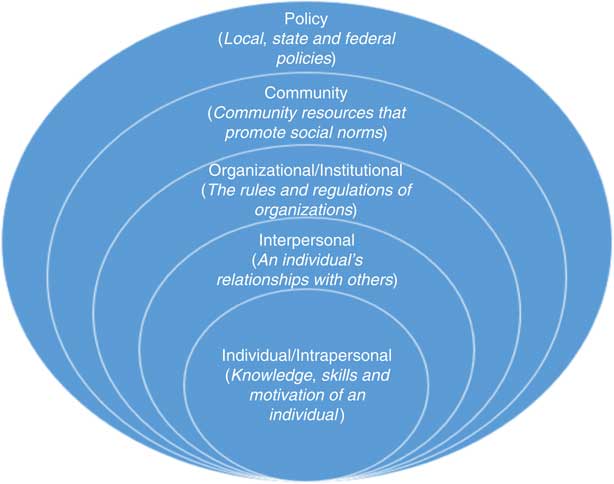
The Social Ecological Model (SEM) considers the intrapersonal, interpersonal, organizational and policy influences on health and can be used to identify factors potentially amenable to intervention and modification( Reference Gregson, Foerster and Orr 28 ) (Fig. 1). The SEM was used as a guiding theoretical framework for the present study. The SEM acknowledges the interdependent, reciprocal and cumulative influence of factors at multiple levels including: (i) intrapersonal factors (individual autonomy); (ii) interpersonal factors (social networks); (iii) organizational factors (health-care services); (iv) and policy factors (policies affecting access to food)( Reference Gregson, Foerster and Orr 28 ). The SEM focuses on multiple pathways that may directly inform health promotion interventions and policies.
(colour online) Social Ecological Model. Adapted from McLeroy et al.( Reference McLeroy, Bibeau and Steckler 56 )
Research design
A qualitative descriptive design approach, using focus groups with Marshallese mothers and caregivers, was chosen to allow participants to use their own words to describe the key influences of their infant and child feeding practices. A qualitative descriptive design provides a summary of experiences and meanings participants ascribe to those experiences( Reference Neergaard, Olesen and Andersen 29 ). A semi-structured focus group guide with open-ended questions was used to encourage participants to speak candidly while maintaining consistent inquiries across the focus groups. The focus group discussion guide was developed in partnership with the CBPR team and through extensive fieldwork (Table 1). Broad questions were designed to encourage open dialogue. Probes were used to clarify nuances.
Focus group discussion guide
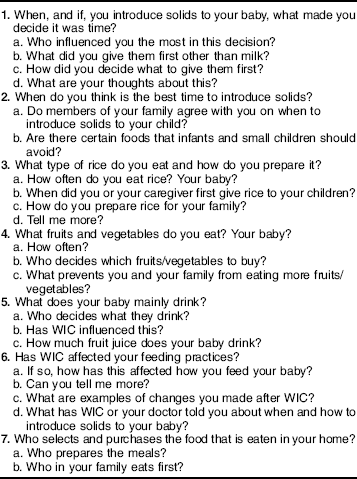
WIC, Special Supplemental Nutrition Program for Women, Infants, and Children.
Data collection
From November 2016 to February 2017, a purposive sample of twenty-seven participants took part in four focus groups. Each focus group consisted of mothers and/or caregivers. Based upon Marshallese community co-investigators’ input, the CBPR team included both mothers and/or caregivers within the focus groups. Marshallese community co-investigators stated that it was important to include caregivers because they have a significant influence over maternal care within the Marshallese community as the women collectively raise the children. Care was taken to ensure all participants’ voices were heard. The group size ranged from five to ten with an average focus group size of seven participants. A female bilingual (Marshallese and English) community co-investigator, trained in research methods, facilitated each focus group. Focus groups took approximately 1 h and were conducted at the office of a community-based organizational partner. Participants were provided a meal and a $US 25 gift card for their participation.
A summary of the project and consent form was reviewed by the participants; all materials were provided to the participants in Marshallese. After consent, participants completed a brief written survey that included questions on demographic characteristics (Tables 2 and 3).
Participant demographics: mothers with children aged 1–3 years from the Marshallese community in Arkansas, USA, November 2016–February 2017
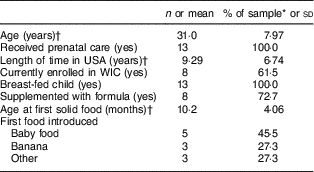
WIC, Special Supplemental Nutrition Program for Women, Infants, and Children.
* Percentages are based on the number of valid responses for each item. Percentages may not total 100 due to rounding.
† Mean and sd are reported for continuous variables.
Participant demographics: caregivers of children aged 1–3 years from the Marshallese community in Arkansas, USA, November 2016–February 2017
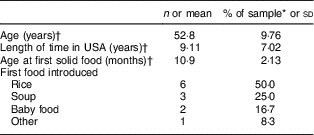
* Percentages are based on the number of valid responses for each item.
† Mean and sd are reported for continuous variables.
Data analysis
Focus groups were audio-recorded and transcribed verbatim by a female bilingual community co-investigator. Transcripts were then translated from Marshallese to English and checked for accuracy by two female bilingual research staff. The CBPR team coded transcripts for emergent themes. All themes were collaboratively discussed to ensure scientific rigour, intercoder agreement and develop the most salient themes within the data. There were two primary coders and one confirmation coder. Codes were finalized and organized in a codebook. MAXQDA 12 software was used to manage the transcribed data( 30 ). MAXQDA 12 was designed to facilitate and support qualitative, quantitative and mixed-methods data through a constant coding process. The qualitative results revealed four primary themes that emerged regarding the most key influences on infant and child feeding practices within the Marshallese community. Because the study uses the SEM as the theoretical framework, the emergent themes were organized into the SEM levels. Throughout the process, the Marshallese community co-investigators provided feedback to ensure that the nuanced meanings of participants’ responses were captured.
Results
There were four focus groups conducted (denoted as FG1–FG4 below). After the first two focus groups, no new themes or sub-themes emerged suggesting saturation was reached. While the additional focus groups did not add new themes, they did continue to add richness to the data. Quotes from all focus groups are included. The mean age was 31·0 years for mothers and 52·8 years for caregivers. The average length of time living in the USA was just over 9 years for both mothers and caregivers. Every mother reported receiving prenatal care, and 61·5 % of participants were currently accessing the Special Supplemental Nutrition Program for Women, Infants, and Children (WIC).
All mothers reported breast-feeding their infants, and 80 % reported using some type of milk supplementation. Mothers reported the mean age to introduce solids to be 10·2 months. Caregivers reported the appropriate age to introduce solids to infants was 8·18 months, but when asked what age the caregiver actually introduced solids the mean age was 10·9 months. Mothers reported that the most common first food introduced was baby food (45·5 %), whereas caregivers reported that the most common first food introduced was rice (50·0 %).
Influences on infant and child feeding practices
Participants discussed the key influences on infant and child feeding practices within the Marshallese community. Themes emerged within multiple levels of the SEM. At the intrapersonal level, mothers’ and caregivers’ autonomy emerged. At the interpersonal level, child-led and familial influences emerged. At the organizational level, health-care provider influences emerged, and at the policy level, WIC influences emerged.
Intrapersonal influences
Mothers’ and caregivers’ autonomy
Mothers and caregivers discussed how they perceived themselves as having a significant degree of autonomy in decisions related to infant and child feeding practices. One participant said:
‘As for me, I am the one that chooses when my child is ready to eat regular food. If the time comes for them to start eating regular food then I will feed them. My family members have no say in when I choose to feed my children regular food.’ (FG3)
Another participant said:
‘No one did bother with what I have to do with my children.’ (FG4)
Participants agreed and said that:
‘No one minds what I do to my kids, it is just me.’ (FG4)
When we specifically asked about who or what influenced their infant and child feeding practices, one participant said:
‘We already know [what] we are required to do. Like breast-feeding, they show us what to do, but I was already doing them.’ (FG3)
Participants agreed that it was the role of the female of the house to determine these practices. When asked about the role of fathers in this process, one participant stated:
‘His job is to give me money so I can go purchase foods.’ (FG4)
Overall, participants stated:
‘It is usually us mothers who decide.’ (FG3)
Interpersonal influences
While mothers discussed being the primary decision maker in infant feeding, participants also discussed interpersonal relationships as being highly influential in their infant and child feeding practices. Within the interpersonal influences theme two sub-themes emerged: (i) child-led influence and (ii) familial influence.
Child-led influence
Participants described the perceived desires and needs of their infants and children as having an especially strong influence on infant and child feeding practices. Much of the discussion surrounding breast-feeding supplementation was predicated on child-led feeding. One caregiver participant described how her daughter (the infant’s mother) decided when to introduce solid foods, saying:
‘She started giving her child solid food when the child was 3 months old. She did so to make the child’s tummy fully satisfied which prevents the child from being fussy, and then child would be full for a while.’ (FG1)
Child-led feeding practices not only determined when solid food was introduced, but also what foods were introduced. One participant said:
‘Usually, some of our children while growing up, they would usually avoid vegetables.’ (FG1)
Participants described children as being very influential in what food choices were made for their families and exerting powerful influence over the food choices. As one participant said:
‘If we do not get what they want they will scream their heads off inside the store stating that the WIC or SNAP [Supplemental Nutrition Assistance Program] benefit is theirs.’ (FG1)
Participants described that, overall,
‘The children buys [chooses] the foods and the parents prepare them.’ (FG1)
Familial influence
Participants discussed the pervasiveness of familial influence on their infant and child feeding practices. The majority of participants, both mothers and caregivers, described turning to elders and family when deciding when and what foods to introduce to their infants. One mother said:
‘My mom instructed me to start feeding my child.’ (FG2)
Another mother described relying on both parents for infant feeding advice when she stated:
‘Since it was our first child, and we have no clue as to what to do. So they [parents] were the one that direct us.’ (FG2)
The discourse on familial influence went beyond instructions from the mothers’ parents. One participant described getting information
‘From our mom, dad, grandma, and the older ladies; they would stick by our side and assist.’ (FG1)
Another participant stated:
‘When someone is a single mom and needs help our family would help us out with what we do.’ (FG1)
Participants described a communal effort to not only help mothers know what to feed, but also would supply food if needed. As one participant described:
‘As we are all aware that us Marshallese have good hearts and will not watch one suffer. They would help us out.’ (FG1)
The overall sentiment from the mothers and caregivers was:
‘You know how Marshallese are, we ask each other. Well of course, that is part of our culture, when we do not have enough, we do what we usually do.’ (FG4)
Organizational influences
Health-care providers’ influence
Mothers and caregivers differed on their views of health-care providers’ influence on infant and child feeding practices. Majority of the caregivers described health-care providers as influential on when and what food to introduce, both in the Marshall Islands and in the USA. For example, one caregiver said:
‘I have a child that lives in the Marshall Islands, when I used to go to my check-up appointments, the doctors usually says, “When the child turns 6 months old, you can start feeding her solid foods but use the blender to soften up the foods, make sure to cook them so they are soft; for instance, if it is a rice make sure to make it soft to a point where it is like a soup so the child has no problem eating it”.’ (FG4)
Caregivers discussed health-care providers as being helpful despite their economic means, and caregivers discussed health-care providers with high regard, respect and deference. For example, one caregiver stated:
‘They [health-care providers] are the ones that educate and encourage us. We have to give them praises for even though they did not have enough resources back then they were doing all their best with us. For those of us that lived in those times, financial assistance was scarce to our children. And we ought to give them praises for all they have done. They would advise us to feed our children this and that.’ (FG1)
The mothers’ discourse varied on whether they thought health-care professionals were influential. Some mothers described the experience as encouraging. For example, one mother described:
‘Here in the States, the doctors are the ones that encourage us to start feeding our children.’ (FG2)
Meanwhile other mothers described health-care providers as not being influential on how to feed their infants and said:
‘The doctor place, they do not ask you how the child is fed? They do not tell you how to feed them.’ (FG3)
Another mother described fear in following her health-care provider’s suggestions on when to introduce solids when she said:
‘There are times when the doctors tell us to start the feeding process, but we are afraid they might choke.’ (FG2)
Lastly, one mother described relying on previous observations rather than health-care provider’s advice when she said:
‘So we do not have to follow what others do since we saw what our parents did while growing up, and we learned by observing. So for us, I do not believe we need to go to a doctor and that doctor will say what we need to do.’ (FG4)
Policy influences
At the policy level, the influence of WIC on Marshallese participants’ infant and child feeding practices was discussed and WIC was the most pervasive theme within the interviews. There were three sub-themes that emerged regarding WIC including: (i) WIC’s influence on breast-feeding and/or formula-feeding; (ii) WIC’s influence on introduction of complementary foods; and (iii) limitations of WIC to meet infant and child feeding needs.
WIC’s influence on breast-feeding and/or formula-feeding
WIC was described as influential on participants’ infant feeding practices regarding both breast-feeding and formula-feeding. WIC was discussed most in the context of working outside the home and WIC’s support for pumping breast milk and providing free formula. For example, one participant said:
‘When I went to WIC … They told me to pump at times that I am at work so I can store the milk.’ (FG3)
Another participant stated:
‘The good thing about it [WIC] is that it helps us. When we go to work, child can have formulas but when we are at home we breast-feed them.’ (FG1)
Participants discussed using formula because
‘You get free milk [formula] from the WIC programme.’ (FG4)
Although the participants described utilizing free formula as a positive benefit, there was negative discourse about the effect this had on breast-feeding. As one participant said:
‘[The] reason why it is bad is because the new mothers, the young mothers, depend a lot on the milk [formula] rather than breast-feed their children.’ (FG1)
WIC’s influence on introduction of complementary foods
WIC was described as influential on both when and what complementary foods were introduced via nutrition classes, food vouchers and the food being provided. As one participant stated:
‘There was one point that I attended a nutrition class, and I was told that once my child reach 6 months she can start taking food. When my child turns 6 [months], I will begin to receive WIC voucher which I can use to purchase my baby foods with. And I was also told that I can start feeding my child solid foods. And I got this information out of the WIC programme. But I have not got any information from his doctor since he is not due back yet. This was the information I received from the WIC programme on when to introduce solid food to my child.’ (FG1)
Participants discussed the introduction of complementary food education they received and the effect this had on detecting food allergies, with one stating:
‘I watched a video at the WIC place, just like how she said, to introduce one food at a time, you cannot mix the food with another, so that you can know what your child is allergic to. And it also showed ways on how to feed them, how much you should give the baby, and this movie explained it.’ (FG3)
Limitations of WIC to meet infant and child feeding needs
The overall discourse about WIC was that it was influential and helpful in providing food vouchers for healthy food. However, the participants discussed that WIC’s provisions were not enough for their families’ needs, and they were still challenged to get enough formula and healthy food. For example, one participant said:
‘It could only last a day. It could be just one day, and everything is gone.’ (FG4)
Another participant continued:
‘Yes, for my grandchildren, when they drink the WIC milk [formula], it only last two weeks, they do not last a month, it is not enough for a month, sometimes I have to go around and see where I can get some more.’ (FG4)
Participants discussed the provisions of WIC running out and limiting their consumption of fresh fruits and vegetables. One participant said:
‘The thing that prevent some families from eating fruits and greens is because there is no money, and it is not time for WIC yet.’ (FG3)
Another participant agreed and stated:
‘When there are fruits, they eat them … and when there is no more, that is when they stop, until the next WIC is, we go and get some more. Or we wait until we have enough money to go and buy.’ (FG3)
Participants not only described relying on WIC for healthy food options but also discussed the economic inability to provide fresh fruits and vegetables for their families beyond WIC vouchers. As one participant said:
‘They only eat when we have WIC for them and when it is out, we wait until there is money to buy.’ (FG3)
Another participant said:
‘The moment you ran out of fruits and vegetables that is when you stop eating it.’ (FG2)
Participants stated that:
‘There is no money to purchase more so we cannot eat more.’ (FG2)
Overall, participants described the inadequate WIC supply for the clan-like family as highly influential in children’s limited consumption of healthy food, and most specifically fruits and vegetables. One participant said:
‘The child, they stop because the fridge is empty but if there are some [fruits and vegetables], they will keep eating and eating.’ (FG4)
Discussion
The purpose of the present study was to examine the key influences on infant and child feeding practices among a Marshallese community at each social ecological level. Although there have been previous studies with immigrant women to examine influences on infant and child feeding, the present study is the first to examine these influences with Marshallese immigrant women in the USA( Reference Ayala, Baquero and Klinger 31 – Reference Kumanyika 33 ). The SEM provided a valuable framework for examining the effects of the interpersonal, intrapersonal, organizational and policy levels that influence infant and child feeding practices among Marshallese immigrant women.
A novel finding of the study was the mothers’ and caregivers’ perception of autonomy in making decisions regarding infant and child feeding practices despite the collectivist culture of the Marshallese community. Participants were quite confident in their individual decision regarding child feeding practices, and sometimes described being the sole, autonomous influence on what and when their infant ate. Although individual influence was discussed, the discourse was collectivist in nature with phrases such as ‘us mothers decide’. Much of the discussion differentiated their decision from outside influence from health-care providers. This finding is not uncommon among other immigrant women wherein mothers view themselves as being solely responsible for children’s eating and feeding behaviours( Reference Lindsay, Machado and Sussner 34 ). In addition, participants described child-led influence on feeding practices wherein children determined when and what foods to eat, even if these were unhealthy choices. This finding aligns with previous studies with immigrant families wherein mothers reported being highly responsive to children’s requests for unhealthy food( Reference Evans, Seth, Smith and Harris 35 , Reference Hennessy, Hughes and Goldberg 36 ). Research among Brazilian, Haitian and Latina women demonstrates that low-income immigrant mothers consistently have a high responsive feeding style to their child’s needs( Reference Tovar, Hennessy and Pirie 37 , Reference Tovar, Hennessy and Must 38 ). The causes of this high responsive feeding style to immigrant children are not well understood and merit further research.
An anticipated finding was the confirmation of familial influence on infant and child feeding practices. Prior literature has documented that the Marshallese community is very family-oriented( Reference McElfish, Bridges and Hudson 39 , Reference Yeary, Long and Bursac 40 ). However, familial influences extended well beyond what complementary foods to introduce and when. Participants described relying on extended family and community members for additional provisions when food, money and/or WIC rations were low. This extension of familial influence was described by participants as ‘part of our culture’. These findings are similar to previous literature that identified 25 % of Marshallese living on the Marshall Islands share their US Department of Agriculture commodity foods with extended family and community members( Reference Gittelsohn, Haberle and Vastine 21 ). These cultural practices are indicative of collectivist food sharing identified in other literature on Pacific Islander communities( Reference Hallgren, McElfish and Rubon-Chutaro 22 , Reference Novotny, Vijayadeva and Grove 41 – Reference Aitaoto, Braun and Ichiho 43 ). Evidence of multigenerational female influence on breast-feeding and child feeding behaviour is documented among other immigrant communities globally, suggesting that interventions to target childhood obesity need to consider the role and influence of the extended family( Reference Aubel, Touré and Diagne 44 , Reference Aubel 45 ), especially among Pacific Islander communities( Reference Tapera, Harwood and Anderson 46 , Reference Scott, Shreve and Ayers 47 ).
At the organizational level, caregivers described health-care providers as more influential in providing information on infant feeding, and when and what complementary foods to introduce to infants, compared with the mothers. However, caregivers seem to be referring to health-care providers within the Marshall Islands and it is unclear if this influence is present in the USA. Research demonstrates that racial/ethnic minority and/or immigrant women experience fear, perceptions of mistreatment and have an overall lack of trust of health-care providers( Reference Wheatley, Kelley and Peacock 48 – Reference Sword, Heaman and Brooks 50 ). Further, this generational discord may be indicative of the linguistic and/or cultural barriers that health-care providers may exhibit within the USA for Marshallese mothers( Reference Ayers, Hawley and Purvis 51 ). Previous research with Latina immigrant mothers has described participants’ desire to have educational information from health-care providers but in their native language( Reference Lindsay, Machado and Sussner 34 , Reference Sherry, McDivitt and Birch 52 , Reference Crawford, Gosliner and Anderson 53 ). Despite this disharmony, older women are held in high esteem within the Marshallese culture and, therefore, caregivers may still provide a strong influence in viewing health-care providers as an influential resource on infant and child feeding information.
There was significant discussion regarding WIC as a policy-level influence. Participants viewed the nutrition education, food vouchers, breast pumps, formula and advice for infant and child feeding from WIC as positive. The breast pumps and formula were described as particularly important for mothers who worked outside the home. Prior literature also shows immigrant mothers working outside the home more after moving to the USA, which constrains their ability to breast-feed( Reference Scott, Shreve and Ayers 47 ). This is also consistent with previous research that identified the influential role of WIC in providing parental education and healthy food options to low-income Latina immigrant women( Reference Lindsay, Machado and Sussner 34 , Reference Sherry, McDivitt and Birch 52 , Reference Crawford, Gosliner and Anderson 53 ). Although participants in the present study described WIC’s free formula as helpful economically, they also expressed concern for how this deterred breast-feeding for new mothers. Previous studies with immigrant women, including Marshallese, have identified successive generations are utilizing formula rather than breast-feeding once they come to the USA, and the literature attributes this decline in breast-feeding as due in part to the free formula from WIC( Reference Scott, Shreve and Ayers 47 , Reference Kimbro, Lynch and McLanahan 54 ). WIC does provide an increased voucher for food if participants exclusively breast-feed their infants, but the present study participants did not mention this option and may be unaware of this opportunity. This dichotomy merits further investigation. It is important to understand how influential WIC is in deterring breast-feeding in immigrant families. WIC education and food vouchers did appear to have a positive influence on when and what foods were offered to children. Particularly the mothers discussed following the guidelines from WIC on which foods to introduce and when to introduce those foods. Interestingly, both mothers and caregivers described a late onset of the introduction of complementary foods compared with other immigrant families( Reference Kaiser, Aguilera and Horowitz 15 , Reference Wiley, Cloutier and Wakefield 17 , Reference Huh, Rifas-Shiman and Taveras 18 ).
Participants described WIC’s provisions as not being substantial enough for their clan-like families. The inability of WIC’s provisions to support Marshallese families may be indicative of the cultural difference between Western individualistic and Marshallese collectivist definitions of family, and therefore family size. For example, the definition of family in the Marshallese community typically includes multiple extended biological and non-biologically affiliated community members who may live in a household( Reference Berman 55 ). This variance in the definition of family may not be understood in WIC’s policies for allocation of provisions based on family size. Further, there may be a misunderstanding in viewing WIC’s provisions as fully sufficient for feeding their family rather than supplemental. However, similar to Marshallese families in the Marshall Islands, there was discussion of sharing WIC provisions within the Marshallese community when food supplies were low, potentially demonstrating collectivist food sharing( Reference Gittelsohn, Haberle and Vastine 21 ).
Study strengths and limitations
The limitations of the present study included a non-random, small sample size from a single geographic area. While the sample size allowed us to reach saturation and was appropriate for the exploratory study, the findings may not be generalizable to other Pacific Islanders outside Arkansas. Despite the limitations, the study contributes to the gap in the literature on the key influences on infant and child feeding practices within a Marshallese community in the USA. The inclusion of caregivers and mothers is demonstrated as a strength to the study and provided insight into the dietary acculturation and generational variances on the key influencers of infant and child feeding practices among the participants.
Practice and policy implications
Understanding the key influences on infant and child feeding practices informs interventions, practices and policies. Participants described the strong influence of family in their feeding practices, whether this was determining when and what complementary foods to introduce, or for additional food provisions. Educational interventions should focus on family and caregivers to have the greatest effect. Caregivers viewed health-care providers as a positive influence on infant and child feeding practices. Given the value placed on older women’s opinions, health-care providers need to be encouraged to talk about infant and child feeding practices more with their Marshallese patients. At the policy level, it appears that although WIC provided support via nutrition classes, breast pumps, formula, food vouchers and the food being provided, this was not perceived as adequate for Marshallese families. Further, the lack of discussion about breast-feeding incentives that WIC provides suggests the need to inform the community of these opportunities. Additionally, incorporating more information on community resources such as local food pantries and community gardens during the distribution of WIC could be beneficial, because it appeared that fruits and vegetables are highly desired within the Marshallese community but participants reported not being able to purchase them.
Conclusion
The present study is the first to explore the key influencers of infant and child feeding practices among Marshallese immigrant women in the USA. It is an important addition to the gap in the literature as it provides insight into a culture with high rates of obesity and cardiometabolic health disparities. The study results indicated that multiple intrapersonal-, interpersonal-, organizational- and policy-level factors influence Marshallese immigrant women’s infant and child feeding practices. Understanding these multidimensional influences is necessary to inform and create culturally tailored interventions to reduce health disparities within the Marshallese community.
Acknowledgements
Financial support: The CBPR partnership support was provided from the University of Arkansas for Medical Sciences Translational Research Institute (grant number UL1TR000039), which was funded through the National Institutes of Health’s National Center for Research Resources and National Center for Advancing Translational Sciences. Grant funding ($US 1200) was received from Sigma Theta Tau Pi Theta Chapter (grant number 0402-82275-21-000). In addition, the CERT programme was funded by the Patient Centered Outcomes Research Institute (PCORI) (grant number #1513-UAMS). Research reported in this publication was also partially supported by the National Institute of General Medical Sciences of the National Institutes of Health (award number P20GM109096). The content is solely the responsibility of the authors and does not necessarily represent the official views of the National Institutes of Health. Neither the University of Arkansas for Medical Sciences Translational Research Institute, which was funded through the National Institutes of Health’s National Center for Research Resources and National Center for Advancing Translational Sciences, nor the Sigma Theta Tau Pi Theta Chapter, nor the National Institute of General Medical Sciences of the National Institute of Health had a role in the design, analysis or writing of this article. Conflict of interest: None. Authorship: K.V.J., A.L.S., M.D.S. and P.A.M. formulated the research questions and design of the study. K.V.J., A.L.S., M.D.S., V.A.S. and B.L.A. implemented the study. Data were analysed by M.D.S., V.A.S., B.R. and B.L.A. B.L.A. and P.A.M. wrote the manuscript. R.M., K.V.J., A.L.S., M.D.S., V.A.S. and N.L.H. edited the manuscript. Ethics of human subject participation: This study was conducted according to the guidelines laid down in the Declaration of Helsinki and all procedures involving human subjects were approved by the University of Arkansas’ Institutional Review Board (#16-07-010). Informed consent was obtained from all subjects and formally recorded.



