





No single agent has yet been developed specifically for the treatment of post-traumatic stress disorder (PTSD). Evidence supporting the effectiveness of psychotropic medications other than antidepressants in the treatment of PTSD is relatively limited, and evidence for the effectiveness of antidepressants in military-related PTSD is inconsistent as effectiveness was primarily limited to non-veterans.Reference Hoskins, Pearce, Bethell, Dankova, Barbui and Tol 1 , Reference Jonas, Cusack, Forneris, Wilkins, Sonis and Middleton 2 Therefore, it may be useful to identify clinical predictors of the choice of psychotropic medication in the treatment of PTSD in clinical settings, especially early in treatment to identify the association of specific symptom patterns with use of specific agents. PTSD is a multi-faceted disorder characterised by heterogeneous symptom clusters, including re-experiencing, avoidance, numbing, dysphoric arousal (e.g. sleep difficulties) and anxious arousal (e.g. hypervigilance) that may be differentially responsive to different classes of psychopharmacologic intervention. In this study, we applied both a conventional diagnostic approach and a theory-driven dimensional and cross-diagnostic approach to the clinical presentation of PTSD to better understand the basis for providers’ choices of four different psychotropic medication classes among veterans of the recent military conflicts in Iraq and Afghanistan who entered a first episode of treatment for PTSD in the US Veterans Health Administration (VHA) system.
It is estimated that more than 300 000 US military personnel who have served in the conflict in Iraq and Afghanistan in the years since 11 September 2001 have suffered from a wide range of psychiatric sequelae of their deployment to the war zone.Reference Tanielian and Jaycox 3 Several studies have documented a high prevalence of mental health problems in this population, with some suggesting that as many as 43% of returning soldiers have met diagnostic criteria for a mental disorder at some time following their deployment.Reference Harpaz-Rotem and Rosenheck 4 – Reference Seal, Bertenthal, Miner, Sen and Marmar 8 PTSD has become the signature psychiatric diagnosis associated with exposure to war zone trauma over the past four decades.
Within the US VHA, the vast majority of veterans who are diagnosed with PTSD receive pharmacological treatment (80%), with about 79% of these receiving prescriptions for antidepressants, the only class of medication approved by the US FDA for the treatment of PTSD.Reference Mohamed and Rosenheck 9 Data on the pharmacological treatment of PTSD among privately insured Americans also show high prescription rates, with more than 60% of individuals diagnosed with PTSD prescribed psychotropic medications.Reference Harpaz-Rotem, Rosenheck, Mohamed and Desai 10
Although there is some evidence to suggest a limited positive effect of a number of psychotropic medications on the remediation of some depressive and anxiety symptoms associated with PTSD (see UK-NICE, Australia-ACPMH, Cochrane review on Pharmacotherapy for PTSD, and USA VA/DoD clinical practice guidelines for a full review), 11 – Reference Stein, Ipser and Seedat 14 the prescription of antipsychotics to individuals diagnosed with PTSD in the absence of psychosis or a bipolar disorder diagnoses remains highly controversial. Although some evidence for effectiveness has emerged in small clinical trials,Reference Hamner, Faldowski, Ulmer, Frueh, Huber and Arana 15 , Reference Carey, Suliman, Ganesan, Seedat and Stein 16 a recent large multisite study did not find any significant benefits in alleviating PTSD symptoms by risperidone.Reference Krystal, Rosenheck, Cramer, Vessicchio, Jones and Vertrees 17 Nevertheless, a recent clinical trial has found quetiapine monotherapy to be effective in alleviating PTSD symptoms, specifically of re-experiencing and hyperarousal, compared with placebo.Reference Villarreal, Hamner, Canive, Robert, Calais and Durklaski 18 This issue is of a great research interest, as almost one of every five veterans in the United States treated with psychotropic medications receives antipsychotics even in the absence of psychosis or bipolar disorder diagnoses.Reference Leslie, Mohamed and Rosenheck 19
The prescription of sedative–hypnotic medications for PTSD is also not recommended as they have failed to demonstrate efficacy in treating PTSD and pose a risk of addiction or dependency.Reference Lund, Bernardy, Vaughan-Sarrazin, Alexander and Friedman 20 , Reference Lader, Tylee and Donoghue 21 Although there was a concern that benzodiazepines may alter the effectiveness of exposure psychotherapies, a recent study found that patients prescribed benzodiazepines did not have weaker response to prolonged exposure.Reference Rosen, Greenbaum, Schnurr, Holmes, Brennan and Friedman 22 Additionally, prazosin, an alpha-1 adrenergic blocker used as a generic antihypertensive agent, has shown significant effects in reducing nightmares and hypervigilance in PTSDReference Raskind, Peskind, Hoff, Hart, Holmes and Warren 23 – Reference Taylor, Martin, Thompson, Williams, Mellman and Gross 28 but its adoption among clinicians nationwide shows wide geographic variation, although its use seems to be increasing.Reference Harpaz-Rotem and Rosenheck 29 , Reference Hermes, Harpaz-Rotem and Rosenheck 30
No study has yet examined correlates of psychotropic medications use specifically among veterans of the recent Iraq/Afghanistan conflicts entering treatment for first episode of PTSD. Data are also lacking regarding rates of prescribing various medication classes and timing of these prescriptions. Notably, no study of which we are aware has employed a dimensional approach to identifying how aspects of the heterogeneous clinical presentation of PTSD may inform prescribing patterns as potential tailoring of drug choice to specific PTSD clinical presentation may be needed for effective treatment.Reference Davidson 31 We sought in this study to examine prescription patterns of four major medication classes commonly used in the treatment of military-related PTSD – antidepressants, anxiolytics/sedatives/hypnotics, antipsychotics and prazosin among veterans who presented for their first episode of PTSD treatment at the US veterans hospitals nationwide between 2008 and 2011. In addition, beyond receiving a diagnosis of PTSD, we examined a subset of veterans whose symptoms were assessed by a standard, well-validated measure of PTSD symptom severity, the PTSD Checklist Military version (PCL-M)Reference Weathers, Huska and Keane 32 around the time they entered PTSD treatment.
We were specifically interested in two aspects of medication prescribed for PTSD when entering first treatment episode for PTSD: how the full spectrum of PTSD symptoms and specific symptom clusters, as well as psychiatric comorbidities, relate to the classes of psychotropic medications prescribed and how long after the initial PTSD diagnosis they were initiated.
It has recently been suggested that clinicians should address specific PTSD symptom clusters differently, for example, fear-based PTSD symptoms (e.g. re-experiencing symptoms) have been found to be specifically associated with initiation of mental health treatment, whereas dysphoria-related PTSD symptoms (e.g. emotional numbing symptoms) are associated with greater likelihood of staying in treatment.Reference Harpaz-Rotem, Rosenheck, Pietrzak and Southwick 33 Thus, in this study we were interested in evaluating how component aspects of the PTSD phenotypes (re-experiencing, avoidance, emotional numbing, dysphoric arousal and anxious arousal) relate to initial prescribing choices in first-episode treatment of PTSD. We used the 5-factor model of PTSD symptoms, which has recently been found to provide the best representation of military-related PTSD symptoms in a sample of over 323 000 US veterans.Reference Harpaz-Rotem, Tsai, Pietrzak and Hoff 34
Method
Sample and source of data
We compiled a sample of all US veterans nationwide who served in the recent Iraq and/or Afghanistan conflict who were first diagnosed with PTSD by VA clinicians between 2008 and 2011. Data were extracted from the US VA PTSD registry that compiles data from all veterans who were assigned a PTSD diagnosis at the VA nationwide since 1 October 2001 through the present time. Four inclusion criteria were used to define the sample: (1) Iraq and/or Afghanistan veteran, as identified through a US Department of Defense Roster provided annually to VA; (2) first diagnosis of PTSD, as suggested by an absence of any PTSD diagnoses in VHA since 2001 (i.e. the previous 7–10 years); (3) no prescription of any psychotropic medication or prazosin in the 120 days before first PTSD diagnosis; and (4) had a valid PCL assessment 60 days before or after their initial PTSD diagnosis.
Demographic and diagnostic data on comorbidities were obtained from the US national administrative VA databases and data on prescription were obtained from the Drug Benefit Management System files. Prescription data were obtained on each individual for at least 365 days after the date of the first PTSD diagnosis. If no psychotropic medication prescriptions were received within 365 days, no further data were obtained. If a psychotropic prescription was prescribed within 365 days from first diagnosis, data were obtained for the next 365 days. Thus, the maximum period of prescription documentation was 2 years following the index diagnosis day. Out of 105 813 veterans who met inclusion criteria 1–3, 63 090 (60%) met inclusion criterion #4 of a valid PCL. The study was approved and granted a waiver of written informed consent by the institutional review boards.
Assessments
Demographic data included age, gender, ethnicity, marital status, zip code of current residence (to identify whether the veteran lived in an urban or rural area) and service-connected disability rating. Rural or urban residence was determined by the Rural–Urban Commuting Areas (RUCA) system based on the zip code of current residence.
Clinical data
Psychiatric diagnoses were extracted from participants’ medical records based on the International Classification of Diseases 9th edition (ICD-9). Psychiatric diagnoses that were documented during the 365 days before and after the first PTSD diagnosis (309.81) were identified as comorbid and classified into the following categories: schizophrenia, other psychosis, bipolar disorder, major depressive disorder (MDD), other depression, anxiety disorders, alcohol use, drug use and personality disorder (see supplementary materials for detailed ICD-9 code classification for each disorder).
In addition, an assessment of the severity of each of the five PTSD symptom clusters was available by PCL-M version (PCL) data, which were collected on each veteran. PCL data included scores on each of the 17 individual items, which were used to compute sub-scores for each of five PTSD symptom factors, as established previously.Reference Shevlin, McBride, Armour and Adamson 35 As PTSD symptoms are heterogeneous, we applied the five-factor model of PTSD in our analyses, as it has been found to optimally represent the dimensional structure of PTSD symptoms among US veterans.Reference Harpaz-Rotem, Tsai, Pietrzak and Hoff 34 , Reference Pietrzak, Tsai, Harpaz-Rotem, Whealin and Southwick 36 The five factors include the following symptom clusters from the DSM-IV PCL measure: re-experiencing (DSM-IV Criterion B, items 1–5), avoidance (DSM-IV Criterion C, items 1–2), emotional numbing (DSM-IV Criterion C, items 3–7), dysphoric arousal (i.e. irritability, sleep and concentration difficulties; DSM-IV Criterion D, items 1–3) and anxious arousal (i.e. hypervigilance, exaggerated startle response; DSM-IV Criterion D, items 4–5).
Psychotropic medications were classified into four major classes that are most commonly used in the treatment of PTSD: antidepressants, anxiolytics/sedatives/hypnotics, antipsychotics and prazosin (for a list of medications listed in each class, please see supplementary materials).
Data analysis
First, we conducted a multivariable logistic regression to compare veterans of Operation Iraq Freedom (OIF), Operation Enduring Freedom (OEF) and Operation New Dawn (OND) with and without PCL data with respect to sociodemographic and diagnostic data to identify any biases in the sample regarding availability of PCL data. Second, we computed the proportion of veterans who received a prescription for any psychotropic medication in the four classes of interest, during the year after initial diagnosis. Bivariate odds ratios were then computed to evaluate associations between demographic characteristics, comorbid diagnoses and PCL scores (converted to standardised z-scores) and the likelihood of receiving a prescription for any psychiatric medication in each of the four classes within 365 days of their first PTSD diagnosis. All significant variables were then entered into a multivariable model. Third, with the subgroup of veterans who were prescribed psychotropic medication, multivariable logistic regression analyses were conducted to identify patient characteristics that were independently associated with the prescription of any medication and with each of the four medication classes. Fourth, we computed descriptive data on the average number of days between first PTSD diagnosis and receipt of any medication and each of the four classes of medication. Multivariable linear regression modelling was then used to assess the association between patient demographic, comorbid diagnostic and PCL scores and the number of days between the initial PTSD diagnosis and the first prescription.
Results
A total of 105 819 US Iraq and Afghanistan veterans newly diagnosed with PTSD were identified during the observation period. A total of 63 090 (60%) had a valid PCL and met study inclusion criteria. Demographic and clinical characteristics of the subgroup of veterans with a PCL score were largely similar to the group of veterans without a PCL score. Owing to large numbers, the groups differed significantly on several demographic variables (see supplementary materials for details). However, when adjusted for demographic and clinical data, multivariable logistic regression analysis revealed that veterans with a PCL score were no more likely to receive a prescription for psychotropic medication than veterans who did not have a PCL score. Thus, the final study sample comprised 63 090 individuals with a valid PCL score. Among them, 42 936 (68.1%) received a new psychotropic medication prescription within 365 days of their initial PTSD diagnosis.
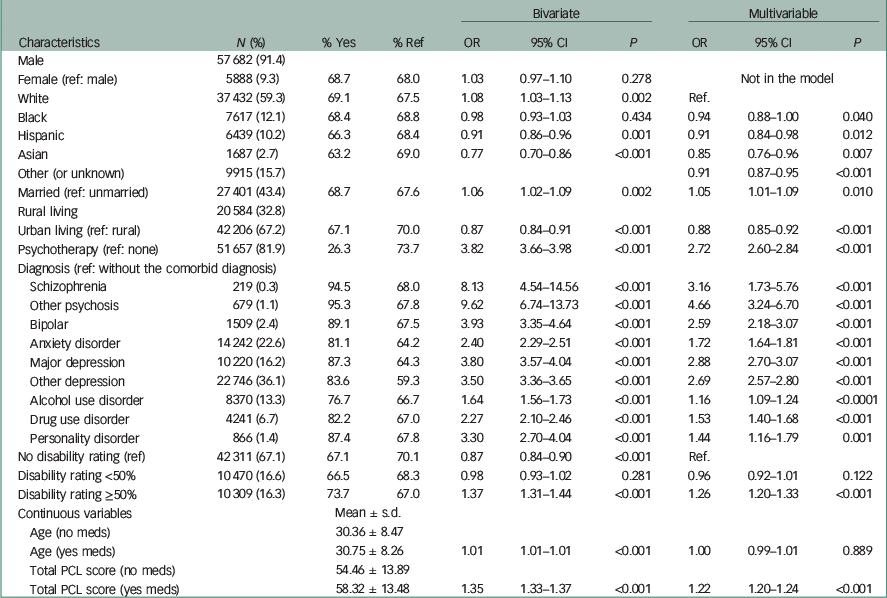
Individuals who were prescribed psychotropic medications had significantly higher PCL scores (mean=58.32, s.d.=13.48) compared with those who did not receive a prescription (mean=54.46, s.d.=13.89; t=35.51, P<0.001, Cohen's d=0.28). A single z-score unit increase on the standardised total PCL was associated with 26% greater likelihood of a pharmacological treatment (Table 1). In addition to PTSD symptom severity, receiving a prescription was associated with comorbid psychiatric diagnoses and with being rated with a functional disability of 50% or more. Veterans living in urban areas were less likely to receive a prescription for psychotropic medications than those who are living in rural areas, and ethnic minorities were also less likely to receive a prescription than White veterans. Adjusting for all other covariates, veterans who received psychotherapy where significantly more likely to prescribed psychotropic medication for PTSD (OR=2.72; Table 1).
| Characteristics | N (%) | % Yes | % Ref | Bivariate | Multivariable | ||||
|---|---|---|---|---|---|---|---|---|---|
| OR | 95% CI | P | OR | 95% CI | P | ||||
| Male | 57 682 (91.4) | ||||||||
| Female (ref: male) | 5888 (9.3) | 68.7 | 68.0 | 1.03 | 0.97–1.10 | 0.278 | Not in the model | ||
| White | 37 432 (59.3) | 69.1 | 67.5 | 1.08 | 1.03–1.13 | 0.002 | Ref. | ||
| Black | 7617 (12.1) | 68.4 | 68.8 | 0.98 | 0.93–1.03 | 0.434 | 0.94 | 0.88–1.00 | 0.040 |
| Hispanic | 6439 (10.2) | 66.3 | 68.4 | 0.91 | 0.86–0.96 | 0.001 | 0.91 | 0.84–0.98 | 0.012 |
| Asian | 1687 (2.7) | 63.2 | 69.0 | 0.77 | 0.70–0.86 | <0.001 | 0.85 | 0.76–0.96 | 0.007 |
| Other (or unknown) | 9915 (15.7) | 0.91 | 0.87–0.95 | <0.001 | |||||
| Married (ref: unmarried) | 27 401 (43.4) | 68.7 | 67.6 | 1.06 | 1.02–1.09 | 0.002 | 1.05 | 1.01–1.09 | 0.010 |
| Rural living | 20 584 (32.8) | ||||||||
| Urban living (ref: rural) | 42 206 (67.2) | 67.1 | 70.0 | 0.87 | 0.84–0.91 | <0.001 | 0.88 | 0.85–0.92 | <0.001 |
| Psychotherapy (ref: none) | 51 657 (81.9) | 26.3 | 73.7 | 3.82 | 3.66–3.98 | <0.001 | 2.72 | 2.60–2.84 | <0.001 |
| Diagnosis (ref: without the comorbid diagnosis) | |||||||||
| Schizophrenia | 219 (0.3) | 94.5 | 68.0 | 8.13 | 4.54–14.56 | <0.001 | 3.16 | 1.73–5.76 | <0.001 |
| Other psychosis | 679 (1.1) | 95.3 | 67.8 | 9.62 | 6.74–13.73 | <0.001 | 4.66 | 3.24–6.70 | <0.001 |
| Bipolar | 1509 (2.4) | 89.1 | 67.5 | 3.93 | 3.35–4.64 | <0.001 | 2.59 | 2.18–3.07 | <0.001 |
| Anxiety disorder | 14 242 (22.6) | 81.1 | 64.2 | 2.40 | 2.29–2.51 | <0.001 | 1.72 | 1.64–1.81 | <0.001 |
| Major depression | 10 220 (16.2) | 87.3 | 64.3 | 3.80 | 3.57–4.04 | <0.001 | 2.88 | 2.70–3.07 | <0.001 |
| Other depression | 22 746 (36.1) | 83.6 | 59.3 | 3.50 | 3.36–3.65 | <0.001 | 2.69 | 2.57–2.80 | <0.001 |
| Alcohol use disorder | 8370 (13.3) | 76.7 | 66.7 | 1.64 | 1.56–1.73 | <0.001 | 1.16 | 1.09–1.24 | <0.0001 |
| Drug use disorder | 4241 (6.7) | 82.2 | 67.0 | 2.27 | 2.10–2.46 | <0.001 | 1.53 | 1.40–1.68 | <0.001 |
| Personality disorder | 866 (1.4) | 87.4 | 67.8 | 3.30 | 2.70–4.04 | <0.001 | 1.44 | 1.16–1.79 | 0.001 |
| No disability rating (ref) | 42 311 (67.1) | 67.1 | 70.1 | 0.87 | 0.84–0.90 | <0.001 | Ref. | ||
| Disability rating <50% | 10 470 (16.6) | 66.5 | 68.3 | 0.98 | 0.93–1.02 | 0.281 | 0.96 | 0.92–1.01 | 0.122 |
| Disability rating ≥50% | 10 309 (16.3) | 73.7 | 67.0 | 1.37 | 1.31–1.44 | <0.001 | 1.26 | 1.20–1.33 | <0.001 |
| Continuous variables | Mean ± s.d. | ||||||||
| Age (no meds) | 30.36 ± 8.47 | ||||||||
| Age (yes meds) | 30.75 ± 8.26 | 1.01 | 1.01–1.01 | <0.001 | 1.00 | 0.99–1.01 | 0.889 | ||
| Total PCL score (no meds) | 54.46 ± 13.89 | ||||||||
| Total PCL score (yes meds) | 58.32 ± 13.48 | 1.35 | 1.33–1.37 | <0.001 | 1.22 | 1.20–1.24 | <0.001 | ||
Among the subgroup of 42 936 veterans who received any psychotropic prescription, the majority were prescribed an antidepressant (92.1%), followed by anxiolytics/sedatives/hypnotics (41.8%) and prazosin (23.6%). Although only 4.7% veterans in our sample were diagnosed with bipolar disorder, schizophrenia or any other psychotic disorder, 20.1% of veterans newly diagnosed with PTSD were prescribed antipsychotics.
As shown in Table 2, multivariable regression analyses indicated that increased severity of emotional numbing symptoms cluster on the PCL was independently associated with increased likelihood of receiving a prescription for antidepressants within 365 days of their initial PTSD diagnosis. Comorbid diagnoses of major depressive, other depressive, anxiety and alcohol use disorders were also associated with increased likelihood of receiving an antidepressant prescription, as were being married and Black (as compared to White). Veterans with a comorbid diagnosis of bipolar disorder and/or other psychosis (other than schizophrenia) were less likely to be prescribed antidepressants, as were veterans who were living in an urban v. rural area.

| Characteristics | N (%) | Antidepressant | Anxiolytics | Antipsychotics | Prazosin | ||||||||
|---|---|---|---|---|---|---|---|---|---|---|---|---|---|
| N=39 563 (92.1%) | N=17 927 (41.8%) | N=8644 (20.1%) | N=10 144 (23.6%) | ||||||||||
| OR | 95% CI | P | OR | 95% CI | P | OR | 95% CI | P | OR | 95% CI | P | ||
| Male (ref) | 39 220 (91.3) | ||||||||||||
| Female | 3716 (8.7) | NS | 1.18 | 1.10–1.27 | <0.001 | 0.68 | 0.62–0.75 | <0.0001 | 0.67 | 0.62–0.74 | <0.001 | ||
| Ethnicity | |||||||||||||
| White (ref) | 25 870 (60.3) | ||||||||||||
| Black | 5209 (12.1) | 1.25 | 1.10–1.41 | <0.001 | 0.62 | 0.58–0.66 | <0.001 | NS | 0.85 | 0.79–0.91 | <0.001 | ||
| Hispanic | 4267 (9.9) | 0.70 | 0.50–0.99 | 0.045 | 0.93 | 0.76–1.15 | 0.529 | NS | 1.47 | 1.18–1.83 | 0.001 | ||
| Asian | 1067 (2.5) | 0.92 | 0.73–1.15 | 0.466 | 0.84 | 0.73–0.95 | 0.008 | NS | 1.28 | 1.11–1.48 | 0.001 | ||
| Other (or unknown) | 6523 (15.2) | 1.04 | 0.95–1.14 | 0.379 | 0.87 | 0.72–1.06 | 0.161 | NS | 1.00 | 0.95–1.06 | 0.926 | ||
| Married (ref: not married) | 18 828 (43.9) | 1.12 | 1.04–1.20 | 0.003 | 1.06 | 1.02–1.10 | 0.008 | NS | 1.07 | 1.02–1.12 | 0.007 | ||
| Urban living (ref: rural) | 28 330 (66.3) | 0.90 | 0.83–0.97 | 0.008 | NS | 0.91 | 0.86–0.96 | <0.001 | NS | ||||
| Comorbid diagnosis | |||||||||||||
| Schizophrenia | 207 (0.5) | NS | 1.96 | 1.47–2.63 | <0.001 | 17.08 | 10.74–27.17 | <0.001 | NS | ||||
| Other psychosis | 647 (1.5) | 0.51 | 0.40–0.65 | <0.001 | NS | 14.60 | 11.72–18.17 | <0.001 | 1.31 | 1.11–1.56 | 0.002 | ||
| Bipolar | 1345 (3.1) | 0.37 | 0.32–0.44 | <0.001 | 1.66 | 1.48–1.85 | <0.001 | 7.39 | 6.52–8.37 | <0.001 | 1.24 | 1.09–1.40 | 0.001 |
| Anxiety disorder | 11 557 (26.9) | 1.11 | 1.02–1.21 | 0.020 | 1.69 | 1.62–1.77 | <0.001 | 1.20 | 1.13–1.27 | <0.001 | 1.07 | 1.02–1.13 | 0.008 |
| Major depression | 8919 (20.8) | 2.44 | 2.16–2.74 | <0.001 | 1.28 | 1.22–1.34 | <0.001 | 1.62 | 1.53–1.72 | <0.001 | 1.33 | 1.26–1.40 | <0.001 |
| Other depression | 19 016 (44.3) | 2.00 | 1.84–2.16 | <0.001 | 1.12 | 1.08–1.17 | <0.001 | 1.44 | 1.37–1.52 | <0.001 | 1.14 | 1.09–1.19 | <0.001 |
| Alcohol use disorder | 6422 (15.0) | 1.43 | 1.28–1.61 | <0.001 | 0.86 | 0.81–0.92 | <0.001 | 1.31 | 1.23–1.41 | <0.001 | 1.14 | 1.06–1.22 | <0.001 |
| Drug use disorder | 3487 (8.1) | NS | 1.16 | 1.08–1.26 | <0.001 | 1.95 | 1.79–2.12 | <0.001 | 1.29 | 1.19–1.41 | <0.001 | ||
| Personality disorder | 757 (1.8) | NS | 1.30 | 1.12–1.51 | 0.001 | 2.90 | 2.46–3.41 | <0.001 | NS | ||||
| No disability rating (ref) | 23 877 (66.1) | ||||||||||||
| Disability rating <50% | 6964 (16.2) | NS | 1.00 | 0.95–1.06 | 0.872 | 0.84 | 0.78–0.90 | <0.001 | 0.91 | 0.85–0.97 | 0.004 | ||
| Disability rating ≥50% | 7595 (17.7) | NS | 1.37 | 1.30–1.44 | <0.001 | 1.38 | 1.29–1.47 | <0.001 | 1.13 | 1.06–1.20 | <0.001 | ||
| Age | 30.75 ± 8.26 | NS | NS | 0.98 | 0.98–0.99 | <0.001 | NS | ||||||
| PCL scores | 58.32 ± 13.48 | ||||||||||||
| PCL re-experiencing* | NS | 1.13 | 1.10–1.17 | <0.001 | 1.28 | 1.23–1.32 | <0.001 | 1.46 | 1.43–1.52 | <0.001 | |||
| PCL avoidant* | NS | NS | NS | NS | |||||||||
| PCL numbing* | 1.17 | 1.12–1.23 | <0.001 | NS | 1.10 | 1.06–1.13 | <0.001 | 0.92 | 0.90–0.95 | <0.001 | |||
| PCL dysphoric arousal* | NS | 1.07 | 1.04–1.10 | <0.001 | 0.95 | 0.92–0.99 | 0.007 | NS | |||||
| PCL anxious arousal* | NS | 0.96 | 0.94–0.99 | 0.007 | NS | NS | |||||||
NS, not significant.
* z-scores
Increased severity of re-experiencing and dysphoric arousal symptoms and decreased severity of anxious arousal symptoms were associated with the prescription of anxiolytics/sedatives/hypnotics (Table 2). Comorbid diagnoses of anxiety disorder, schizophrenia, bipolar, MDD, other depression, drug use disorder and personality disorder were associated with greater likelihood of receiving a prescription for an anxiolytic/sedative/hypnotic. Veterans diagnosed with alcohol use disorder were less likely to receive such prescriptions. Black and Asian veterans were less likely than White veterans to receive a prescription for an anxiolytic/sedative/hypnotic medication, whereas females, married individuals and those who received disability rating 50% or more (compared with veterans who were not rated as disabled) were more likely to receive such a prescription.
Controlling for the effects of comorbid psychosis and/or bipolar disorder diagnoses, veterans with greater severity of re-experiencing and numbing symptoms were significantly more likely to receive a prescription for an antipsychotic medication, whereas veterans with higher anxious arousal symptoms were less likely to be prescribed an antipsychotic (Table 2). As expected, veterans diagnosed with schizophrenia were more than 17 times more likely than others to receive a prescription for an antipsychotic, and veterans with ‘other psychoses’ were more than 14 times more likely to receive such a prescription. All other recorded comorbid diagnoses were also associated with increased likelihood of being prescribed an antipsychotic. Female gender, older age and urban residence were associated with reduced likelihood of an antipsychotic prescription. Disability rating of 50% or more was associated with greater likelihood of receiving an antipsychotic prescription.
Of the five PTSD symptom clusters, the likelihood of receiving a prescription for prazosin was only associated with increased severity of re-experiencing symptoms (OR=1.46). Increased severity of emotional numbing symptoms was additionally associated with lower likelihood of receiving a prescription for prazosin (Table 2). All comorbid psychiatric disorders, excluding personality disorder, were associated with increased likelihood of receiving prazosin, especially MDD (OR=1.33) and other psychosis (OR=1.31). Females and Blacks were less likely to receive a prescription for prazosin as were individuals who were at less than 50% disability rating. Veterans with disability ratings of 50% or more were more likely to receive prazosin as were married veterans, Hispanic and Asian veterans (compared with White veterans).
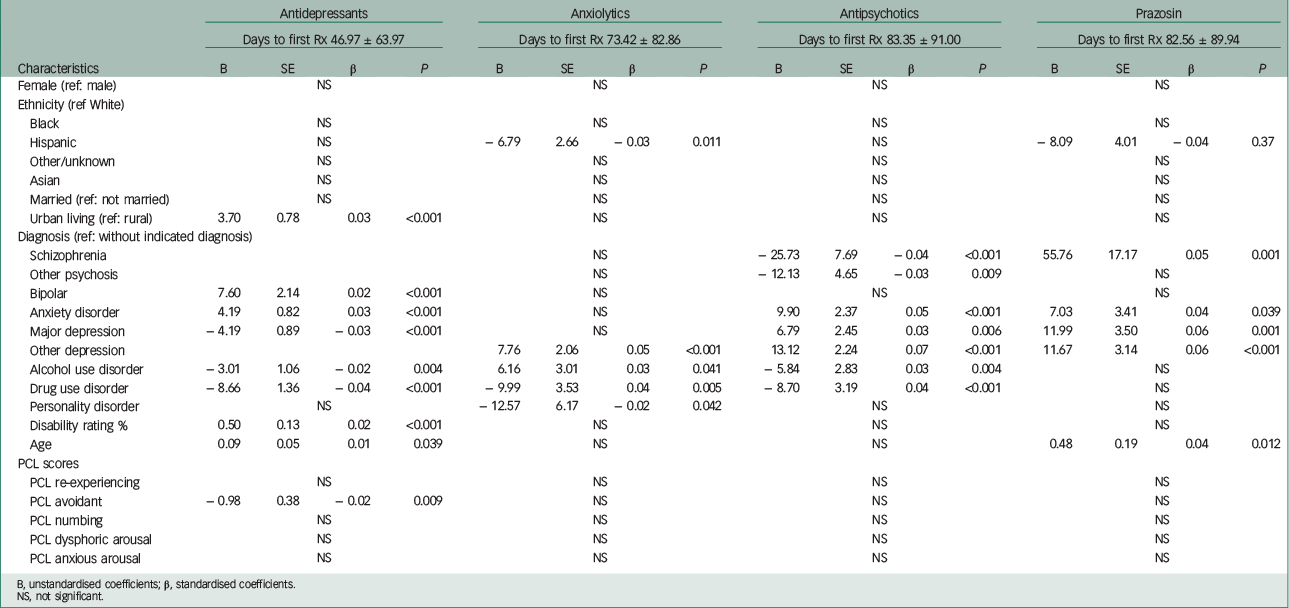
Table 3 presents the association of the demographic and clinical variables with the time of first prescription received for each of the four separate medication categories. Prescriptions for antidepressants were received on average within 46.97 days (s.d.=63.97) of the first PTSD diagnosis, followed by 73.42 (s.d.=82.86) days for anxiolytics, 82.56 (s.d.=89.94) days for prazosin and 83.85 (s.d.=91.00) days for antipsychotics.
| Characteristics | Antidepressants | Anxiolytics | Antipsychotics | Prazosin | ||||||||||||
|---|---|---|---|---|---|---|---|---|---|---|---|---|---|---|---|---|
| Days to first Rx 46.97 ± 63.97 | Days to first Rx 73.42 ± 82.86 | Days to first Rx 83.35 ± 91.00 | Days to first Rx 82.56 ± 89.94 | |||||||||||||
| B | SE | β | P | B | SE | β | P | B | SE | β | P | B | SE | β | P | |
| Female (ref: male) | NS | NS | NS | NS | ||||||||||||
| Ethnicity (ref White) | ||||||||||||||||
| Black | NS | NS | NS | NS | ||||||||||||
| Hispanic | NS | − 6.79 | 2.66 | − 0.03 | 0.011 | NS | − 8.09 | 4.01 | − 0.04 | 0.37 | ||||||
| Other/unknown | NS | NS | NS | NS | ||||||||||||
| Asian | NS | NS | NS | NS | ||||||||||||
| Married (ref: not married) | NS | NS | NS | NS | ||||||||||||
| Urban living (ref: rural) | 3.70 | 0.78 | 0.03 | <0.001 | NS | NS | NS | |||||||||
| Diagnosis (ref: without indicated diagnosis) | ||||||||||||||||
| Schizophrenia | NS | − 25.73 | 7.69 | − 0.04 | <0.001 | 55.76 | 17.17 | 0.05 | 0.001 | |||||||
| Other psychosis | NS | − 12.13 | 4.65 | − 0.03 | 0.009 | NS | ||||||||||
| Bipolar | 7.60 | 2.14 | 0.02 | <0.001 | NS | NS | NS | |||||||||
| Anxiety disorder | 4.19 | 0.82 | 0.03 | <0.001 | NS | 9.90 | 2.37 | 0.05 | <0.001 | 7.03 | 3.41 | 0.04 | 0.039 | |||
| Major depression | − 4.19 | 0.89 | − 0.03 | <0.001 | NS | 6.79 | 2.45 | 0.03 | 0.006 | 11.99 | 3.50 | 0.06 | 0.001 | |||
| Other depression | 7.76 | 2.06 | 0.05 | <0.001 | 13.12 | 2.24 | 0.07 | <0.001 | 11.67 | 3.14 | 0.06 | <0.001 | ||||
| Alcohol use disorder | − 3.01 | 1.06 | − 0.02 | 0.004 | 6.16 | 3.01 | 0.03 | 0.041 | − 5.84 | 2.83 | 0.03 | 0.004 | NS | |||
| Drug use disorder | − 8.66 | 1.36 | − 0.04 | <0.001 | − 9.99 | 3.53 | 0.04 | 0.005 | − 8.70 | 3.19 | 0.04 | <0.001 | NS | |||
| Personality disorder | NS | − 12.57 | 6.17 | − 0.02 | 0.042 | NS | NS | |||||||||
| Disability rating % | 0.50 | 0.13 | 0.02 | <0.001 | NS | NS | NS | |||||||||
| Age | 0.09 | 0.05 | 0.01 | 0.039 | NS | NS | 0.48 | 0.19 | 0.04 | 0.012 | ||||||
| PCL scores | ||||||||||||||||
| PCL re-experiencing | NS | NS | NS | NS | ||||||||||||
| PCL avoidant | − 0.98 | 0.38 | − 0.02 | 0.009 | NS | NS | NS | |||||||||
| PCL numbing | NS | NS | NS | NS | ||||||||||||
| PCL dysphoric arousal | NS | NS | NS | NS | ||||||||||||
| PCL anxious arousal | NS | NS | NS | NS | ||||||||||||
B, unstandardised coefficients; β, standardised coefficients.
NS, not significant.
Antidepressants were prescribed in a significantly shorter period of time for those individual who presented with higher PCL scores on the avoidance subscale and for individuals who had a comorbid diagnosis of major depressive disorder, alcohol and drug use disorder (Table 3). A significantly shorter period passed between initial PTSD diagnosis and a prescription for anxiolytic/sedative/hypnotic in the presence of drug use and personality disorders and for Hispanic when compared with White veterans. As expected, comorbid diagnoses of schizophrenia and other psychotic disorders were associated with a significantly fewer days between the first PTSD diagnosis and first prescription of an antipsychotic medication in contrast to comorbid diagnoses of drug and alcohol abuse (Table 3). Finally, more rapid prescription of prazosin was only associated with Hispanic (v. White) ethnicity.
Discussion
The results of this study bring new insights to the pharmacological treatment of war-related PTSD in real-world practice. The addition of a dimensional approach to the investigation of pharmacoepidemiology, similar to that advocated by the US NIMH RDoC approach,Reference Insel, Cuthbert, Garvey, Heinssen, Pine and Quinn 37 has yielded new information on the association between the severity of PTSD symptom clusters and other comorbid psychiatric diagnoses and the specific agents prescribed.
As there is substantial concern about the off-label use of antipsychotic medications in the treatment of PTSD, it is notable that our data further suggest that beyond the presence of comorbid psychotic or bipolar disorder, severity of PTSD symptoms of either re-experiencing (intrusive memories) or emotional numbing (depression) is associated with increased likelihood of using these agents independently of other factors. The use of antipsychotics to treat re-experiencing symptoms is likely related to the facts that these symptoms can appear similar to psychotic symptoms,Reference Gaudiano and Zimmerman 38 and the largest controlled trial of an antipsychotic in the treatment of PTSD did find modest benefits in this specific domain.Reference Krystal, Rosenheck, Cramer, Vessicchio, Jones and Vertrees 17 Moreover, comorbidity of psychosis and bipolar disorder were both associated with a more rapid prescription of an antipsychotic medication, and a comorbid mood disorder was associated with more delayed prescription of antipsychotics following initial PTSD diagnosis suggesting that antipsychotics might be used to augment antidepressants if an extended trial fails to fully treat depressive symptoms, as several antipsychotics have been approved for this use in the United States since 2007.Reference Seida, Schouten, Mousavi, Hamm, Beaith and Vandermeer 39 The relationship of antipsychotics to numbing symptoms may also reflect their use to treat refractory depression. We can thus speculate that prescribers used antipsychotics first to treat re-experiencing symptoms and later to treat MDD symptoms that are unresponsive to antidepressants alone and/or to further suppress specific PTSD symptoms of numbing and of intrusive memories that were highly elevated.
Another source of concern in the pharmacological treatment of PTSD has been the use of anxiolytics/sedative-hypnotics. Our data, however, indicated that independently of comorbid diagnosis of anxiety, there was a direct association between the severity of re-experiencing and dysphoric arousal symptoms and the prescription of these agents. Post hoc multivariable analyses separating the items of these two symptom clusters clearly indicated that only the sleep disturbance items (nightmares B2, OR=1.08, 95% CI=1.04–1.11 and sleep difficulties D1, OR=1.15, 95% CI=1.12–1.19) were associated independently with use of anxiolytics. This finding is consisted with the recommended prescribing practices for zolpidem to regulate sleep difficulties and clonazepam for rapid eye movement (REM) sleep disturbance that many veterans experience in association with war-related nightmares.
As reported in other studies, individuals with coexisting diagnoses of substance use disorders and schizophreniaReference Mohamed and Rosenheck 9 , Reference Harpaz-Rotem, Rosenheck, Mohamed and Desai 10 were less likely to be prescribed anxiolytics/sedatives/hypnotics, perhaps to avoid the risk of addiction in this vulnerable sub-population. However, if these medications were used for individuals with comorbid substance use disorders, they were prescribed within a significantly shorter period of time from initial PTSD diagnosis, potentially to address more urgent issues associated with these comorbid conditions.
When examining the prescription of antidepressants in the treatment of PTSD, the study found that only severity of the PTSD emotional numbing symptoms cluster was associated with increased likelihood of receiving such prescriptions, after adjusting for demographic and comorbid diagnoses. Antidepressants were prescribed more rapidly in the presence of major depressive or substance use disorders and for those individuals with elevated avoidant symptoms. Thus, our data suggest that a prescription of antidepressants in the treatment of PTSD is specifically targeted at managing more severe PTSD numbing symptoms above and beyond the effect of comorbid mood disorder diagnoses and that more severe avoidant behaviour leads to a more rapid prescription.
As prazosin continues to show growing evidence for effectiveness in the treatment of PTSD, especially in alleviating nightmares and hyperarousal symptoms,Reference Raskind, Peterson, Williams, Hoff, Hart and Holmes 25 it is notable that this study demonstrated that it appears to be specifically prescribed in the presence of re-experiencing symptoms (e.g. nightmares). When we unpack the PCL symptoms of re-experiencing and dysphoric arousal in a post hoc multivariable logistic regression analysis, after adjusting for other demographic and clinical variables, we find that PCL items B2 (nightmares; OR=1.45, 99%CI=1.40–1.51) and D1 (sleep disturbance; OR=1.04; 99%CI=1.01–1.08) were the only PTSD symptoms independently associated with increased likelihood of receiving prazosin. These results suggest that prescribers choose to start veterans on prazosin to specifically target sleep disturbance symptoms associated with the re-experiencing and dysphoric arousal clusters.
The challenges in prescribing psychotropic medications for the treatment of PTSD remain significant as no single agent has been developed exclusively for its treatment, and the effectiveness of different agents is inconsistent across studies and populations (i.e. civilians v. veterans). Overall, the more frequently the agent is prescribed at the VA (e.g. antidepressants), the more rapidly it is prescribed after the initial diagnosis. Our data indicate that, in general, providers follow the US VA/DoD Clinical Practice Guidelines recommended for the management of PTSD, which suggest an SSRI or SNR and/or trauma focus psychotherapy should be the first-line treatment after initial PTSD diagnosis (Algorithm B-2 page 29). 11 In our sample, 92% of individuals who received pharmacotherapy were first treated with an SSRI or SNRI, and this class of medication was prescribed on average almost a month prior to the deployment of any other psychotropic medication. Moreover, 82% of the sample also received psychotherapy following the initial diagnosis of PTSD and those who received psychotherapy were more likely to receive a prescription suggesting that combining pharmacotherapy and psychotherapy is the most common practice when treating a first episode of PTSD at the US Department of Veterans Affairs. However, it is unclear what proportion of the psychotherapy provided was trauma focus psychotherapy because of the limitation of the administrative data set. Nevertheless, as our sample was restricted to those individuals who had a PCL score associated with their initial PTSD treatment episode, we suspect that the majority of psychotherapy initiated was trauma focus as such a symptom measure is a requirement for this form of therapy at the VA.
By a naturalistic clinical setting and a theory-driven, dimensional and transdiagnostic approach to PTSD symptom clusters, results of this study provide specificity regarding how the clinical presentation of military-related PTSD symptoms is associated with providers’ prescribing choices beyond what has been previously reported. This study was conducted in a large sample and was especially illuminating with regard to the off-label prescribing of antipsychotics and anxiolytic/hypnotic-sedative medications, linking these agents to specific symptom clusters. The dimensional approach goes beyond the expected associations with common comorbid psychiatric disorders to indicate apparent effort to suppress elevated re-experiencing symptoms associated with the use of these two classes of medications. Moreover, the deployment of antipsychotics was significantly delayed compared with that of antidepressants (almost twice as long), suggesting that these medications may have been used to augment antidepressants specifically to further alleviate emotional numbing symptoms of PTSD.


 Open access


eLetters
No eLetters have been published for this article.