


Obesity is a major public health concern(Reference Flegal, Carroll and Ogden1, Reference Ogden, Carroll and Curtin2). The transition from adolescence to adulthood is recognized as an influential age for excess weight gain, marked by poor dietary patterns and physical inactivity(Reference Nelson, Story and Larson3). This age also represents an important time when many individuals move out of their family home, relocate to new environments and establish independent lifestyles. However, little scholarly work to date has examined the determinants of dietary behaviours and weight gain during this age(Reference Nelson, Story and Larson3). In particular, we know little about the contextual factors influencing eating and food choices among young adults. Given the unique attributes of the young adult years(Reference Nelson, Story and Larson3), exploratory research is needed to better characterize meal patterns and the contextual factors associated with food choices that are most relevant to young adults’ lives.
Previous research suggests that the frequency of family meals is positively associated with dietary quality and other favourable outcomes among both children and adolescents(Reference Larson, Neumark-Sztainer and Hannan4–Reference Boutelle, Fulkerson and Neumark-Sztainer9). However, once adolescents graduate from high school and begin to establish lifestyles independent from their families, their mealtime patterns may decline substantially in quality and structure and may shift to irregular times. Young adults are among the most frequent consumers of fast food, convenience products and nutrient-poor dietary choices compared with other age groups (see Nelson et al.(Reference Nelson, Story and Larson3) for a recent review of this literature). A significant proportion of young adults report eating ‘on the run’ and recent research suggests that such a style of eating is consistently associated with less favourable nutritional factors(Reference Larson, Nelson and Neumark-Sztainer10). Furthermore, few young adults engage in some of the key practices known to contribute to healthy dietary intake, like home food preparation and meal planning(Reference Larson, Perry and Story11).
Overall, scant research to date has examined issues around young adults’ meal patterning in detail, and nutrition promotion interventions in young adults are urgently needed. However, in order to develop these types of behavioural intervention strategies and appropriate nutrition education messages for young adults, we first need a better understanding of young adults’ meal patterns, including the characteristics of and factors surrounding their meals and eating occasions. To address these gaps in the literature, the purposes of the present study were to examine: (i) the situational characteristics of young adults’ eating occasions including away-from-home eating, social influences, multi-tasking during meals and timing of eating occasions; and (ii) how these situational characteristics were associated with specific types of foods/beverages consumed at meals and snacks.
Methods
Participants
Young adulthood represents a diverse set of lifestyle characteristics; thus, we recruited forty-eight participants (18–23 years, twenty-seven females) during 2008–2009 from four lifestyle groups: (i) attending college/university and living on campus (n 12); (ii) attending college/university and living independently from parents/family (off campus) (n 12); (iii) attending college/university and living with parents (n 12); and (iv) not attending college/university and living independently from parents/family (n 12). Participants were recruited by posting flyers throughout 2- and 4-year colleges/universities, in coffee houses and shops and on local websites (e.g. Craig's List) frequented by young adults in the Minneapolis/St. Paul area. Participants were instructed to call or email study staff, who then assessed their eligibility for participation in the study. Study procedures were approved by the University of Minnesota Institutional Review Board.
Procedure
In study visits at the University of Minnesota, participants completed a thirty-eight-item survey assessing food purchasing habits and relevant behaviours, and were given a Palm® Z22 handheld Personal Digital Assistant (PDA) device (http://www.palm.com/) to record their consumption of foods and beverages for the 7 d period between the two study visits. PDA devices were pre-programmed for food log entry using Pendragon Forms software (http://www.pendragonsoftware.com/). Participants were instructed to log every eating (and/or drinking) occasion during a 7 d period, as soon after the eating occasion concluded as possible. A pre-programmed script led participants through a series of fourteen items used to characterize eating occasions, including the following.
1. Start and end time of the eating occasion.
2. Location type: e.g. home, workplace or school/university.
3. Social context (‘Who was/is with you?’): e.g. by myself, one or more friends, or one or more family members.
4. Food/beverages consumed.
5. Other activities while eating: e.g. watching television or using a computer; hereafter referred to as ‘multi-tasking’.
6. Pre-planning of food choices. Participants were asked: ‘Did you specifically think about what you would eat before you started eating? When did you start thinking about which foods or beverages you would select?’ Response options included: ‘No, just beforehand’, ‘Yes, about 30 minutes’, ‘Yes, a few hours before’ and ‘Yes, more than a few hours before’.
Drop-down menus, including pre-set, categorical response options with an ‘other’ category (which allowed for open-text entry), were available for nearly all questions. However, food and beverage entries were recorded entirely in free-text form, allowing participants to include appropriate descriptors of the food/beverages that they consumed. To minimize participant burden, beverages were recorded only if participants drank more than 1 cup (8 oz) at one sitting. Participants were given detailed written instructions and in-person tutorials on how to use the PDA. Qualitative exit interviews with participants indicated that they were able to easily navigate the PDA program and felt comfortable doing so.
Other relevant data were self-reported by participants in the survey form; these data included sociodemographic characteristics and current living situations.
Analysis
Analyses consisted of descriptive sample characteristics of young adults’ eating occasions (away-from-home eating, social context, multi-tasking during meals, timing of eating occasions), as well as how these situational characteristics were associated with specific types of foods/beverages consumed at meals and snacks. In all analyses, the unit of analysis was eating occasion; there were 1237 eating occasions among the forty-eight participants, with each participant reporting multiple eating occasions over the measurement week. The food data were coded using pre-existing categories adapted from existing protocols for another study which used PDA to collect food-related data (Away from home and out of school: adolescent physical activity and BMI changes occurring with driving and eating out, Principal Investigator: DA Cohen). Each food item recorded by a participant was placed in one category (e.g. ‘muffin’ was categorized as ‘Cookies and sweetened baked goods’). Categories were available for food items that were missing detail; for example, ‘milk’ was coded as ‘Milk’, while if a participant indicated that they drank ‘skimmed milk’ the category for ‘Skimmed milk’ was used. We did not attempt to document portion size of foods consumed.
All analyses controlled for the nested nature of the data (i.e. the multiple observations per participant). Logistic regression analyses were utilized to calculate all P values (e.g. to determine whether the percentages of participants eating and drinking specific foods and beverages at home were significantly different from the percentages of participants eating and drinking these foods and beverages away from home). In analyses comparing eating occasions that occurred at home v. away from home, participants living on college campuses (n 12) were considered to be eating ‘at home’ when eating on campus and ‘away from home’ when off campus. Preliminary analyses stratified by living situation indicated that in-home v. away-from-home comparisons were similar among participants not living on campus (n 36) and those living in dormitories (n 12); thus, for the ease of interpretation, these groups were combined and results were presented for the sample as a whole.
Analyses were conducted using SPSS version 17·0 (SPSS Inc., Chicago, IL, USA) and STATA version 8·0 (Stata Corporation, College Station, TX, USA) statistical software packages.
Results
Nearly half of the study participants were male (44 %; Table 1). Mean age was approximately 21 years and 83 % of the sample was white, reflecting the overall geographic region. By design, participants represented a range of lifestyle characteristics, including college enrolment status (not attending college, attending part-time, attending full-time), employment status and living situation.
Descriptive characteristics of the study sample: young adults aged 18–23 years (n 48), Minneapolis/St. Paul metropolitan area (Minnesota, USA)
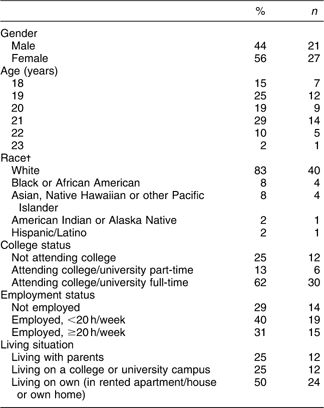
†Not mutually exclusive; participants were instructed to select all that apply.
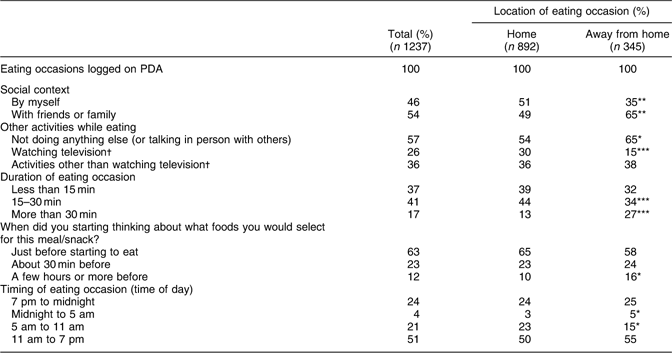
Table 2 describes the situational and contextual differences in eating occasions that occurred at home v. away from home. Overall, approximately half of the eating occasions (46 %) occurred alone, 26 % involved watching television and 36 % involved activities other than television. Nearly 40 % of eating occasions lasted less than 15 min and another 41 % lasted 15–30 min. For a majority of eating occasions (63 %), participants did not think about what they would eat or drink until immediately prior to the eating occasion. More than half (51 %) of all eating events occurred between 11 am and 7 pm, another quarter (24 %) occurred between 7 pm and midnight, 21 % occurred between 5 am and 11 am, and the remaining 4 % of eating occasions were recorded between midnight and 5 am.
Descriptive characteristics of eating occasions among the study sample: young adults aged 18–23 years (n 48), Minneapolis/St. Paul metropolitan area (Minnesota, USA)
PDA, Personal Digital Assistant.
All values above are calculated based on the total eating occasions logged by forty-eight participants, except where otherwise noted.
Significant differences in eating characteristics within sub-categories of location (i.e. home v. away from home), controlling for multiple observations among individual participants: *P ≤ 0·05, **P < 0·01, ***P < 0·001.
†Categories are not mutually exclusive (i.e. participants could report watching television as well as doing other activities, including using a computer, talking on the phone, text messaging, etc.).
Compared with eating occasions that occurred away from home, at-home eating events were more likely to occur alone and to be accompanied by television viewing (P ≤ 0·001; Table 2). At-home eating occasions were also less likely to last at least 30 min (P ≤ 0·001), and participants eating at home were less likely to have thought about what they would eat a few hours or more in advance of at-home eating (P ≤ 0·05). In addition, a significantly larger proportion of away-from-home eating occasions occurred in the very early morning (between midnight and 5 am), whereas a significantly larger proportion of at-home eating occasions occurred during typical breakfast hours (5 am to 11 am; P ≤ 0·05).
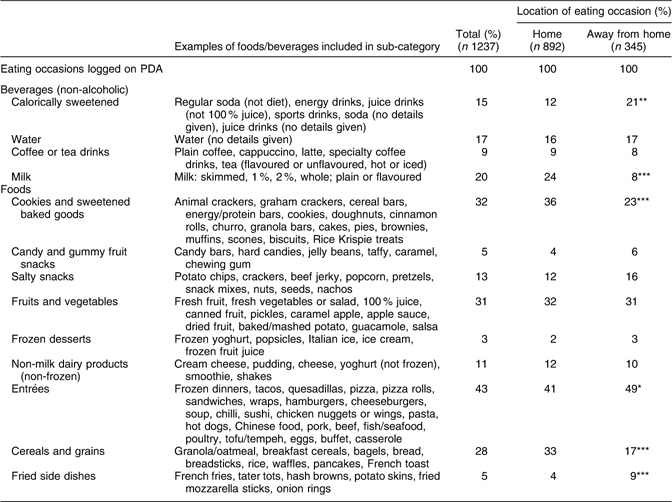
Table 3 details the types of foods and beverages consumed at home v. away from home. Eating occasions at home were more likely to include cookies and baked goods, milk, cereals and grains, but were less likely to include calorically sweetened beverages, entrée items and fried side dishes (P ≤ 0·05). Among participants living in dormitories, on-campus (compared with off-campus) eating occasions were more likely to include fruits and vegetables (44 % v. 28 %, respectively) and milk (28 % v. 11 %), but less likely to include calorically sweetened beverages (11 % v. 25 %) and salty snacks (13 % v. 25 %; all P ≤ 0·05, data not shown).
Types of foods consumed by location of eating occasion among the study sample: young adults aged 18–23 years (n 48), Minneapolis/St. Paul metropolitan area (Minnesota, USA)
PDA, Personal Digital Assistant.
Some categories (low-energy beverages, other beverages, alcohol) are not included in the table because of their small sample size (i.e. appearing on thirty PDA records or fewer for the full sample).
Significant differences in eating characteristics within sub-categories of location (i.e. home v. away from home), controlling for multiple observations among individual participants: *P ≤ 0·05, **P < 0·01, ***P < 0·001.
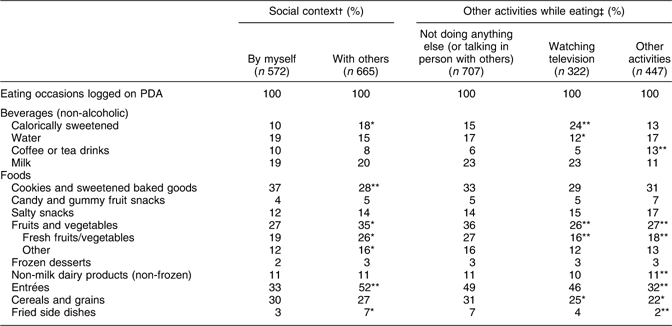
Table 4 displays the extent to which the types of foods consumed at each eating occasion varied by situational characteristics, including social context and multi-tasking. Overall, eating occasions that occurred alone (v. with others) were more likely to include snack foods such as cookies and sweetened baked goods, but were less likely to include calorically sweetened beverages, fruits and vegetables, entrée items and fried side dishes (all P ≤ 0·05). Eating occasions that occurred in a more ‘traditional’ meal setting (e.g. eating that occurred while not doing anything else, or while talking in person with others) were less likely to include calorically sweetened beverages and coffee/tea, and were more likely to include healthier meal items (such as water, fruit, vegetables, cereal and grains) as well as entrée items and fried side dishes, compared with eating events that occurred while watching television or multi-tasking (P ≤ 0·05).
Types of foods consumed by contextual characteristics of eating occasions among young adults aged 18–23 years (n 48), Minneapolis/St. Paul metropolitan area (Minnesota, USA)
PDA, Personal Digital Assistant.
Significant differences in food types within sub-categories of social context and activities while eating, controlling for multiple observations among individual participants: *P ≤ 0·05, **P < 0·01.
†For social context, statistically significant differences are compared with ‘by myself’ as the reference group in analyses.
‡For activities while eating, statistically significant differences are compared with ‘not doing anything else (or talking in person with others)’ as the reference group in analyses. ‘Other activities’ designation comprised the following self-reported responses: using a computer, driving/riding in vehicle, reading, talking on phone/text message, and other. Categories are not mutually exclusive (i.e. participants could report watching television as well as doing other activities, including using a computer, talking on the phone, text messaging, etc.).
Table 5 details the differences in the types of foods consumed by time of day. Compared with eating occasions that occurred between 11 am and 7 pm, those occurring late at night (7 pm to midnight) and/or in the early morning (midnight to 5 am) were less likely to include milk, fruits and vegetables, and entrée items, and were more likely to include salty snacks (P ≤ 0·05). Eating occasions occurring between 5 am and 11 am were less likely than those occurring between 11 am and 7 pm to include calorically sweetened beverages, salty snacks, fresh fruits and vegetables, entrée items and fried side dishes, and were more likely to include coffee or tea drinks, milk, cookies and sweetened baked goods, and cereals and grains (P ≤ 0·05).
Types of foods consumed by across various times of day among young adults aged 18–23 years (n 48), Minneapolis/St. Paul metropolitan area (Minnesota, USA)
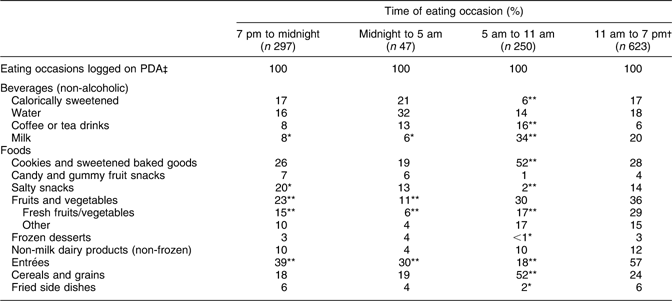
PDA, Personal Digital Assistant.
Significant differences in food types within sub-categories of time of eating occasion, controlling for multiple observations among individual participants: *P ≤ 0·05, **P < 0·01.
†For time of eating occasion, statistically significant differences are compared with ‘11 am to 7 pm’ as the reference group in analyses.
‡For a limited number of eating occasions (n 20, 1·6 %), time was not recorded.
Discussion
The purpose of the current research was to examine situational characteristics of young adults’ eating occasions including away-from-home eating, social influences, multi-tasking during meals and timing of eating occasions, as well as to examine how these situational characteristics were associated with specific types of foods and beverages consumed throughout the day. Participants in the study logged various characteristics of all eating occasions (n 1237) over a one-week period. The findings in our young adult sample indicate that a large proportion of eating occasions occurred alone, while watching television or engaging in other activities; were completed within a 15 min time frame; and occurred with virtually no pre-contemplation or planning of food choices or meal selections. Previous research indicates that factors such as planning one's meals ahead of time and eating in the absence of other activities (e.g. television viewing) may be key determinants of healthy dietary patterns(Reference Crawford, Ball and Mishra12, Reference Barr-Anderson, Larson and Nelson13); as such, these may be important target areas for future nutrition promotion interventions among young adults.
In addition, these findings indicated that among young adults, at-home eating occasions were associated with higher intakes of certain snacks and convenience foods (such as cookies and sweetened baked goods) and fewer traditional meal items (such as entrées, fruits and vegetables) as compared with away-from-home eating occasions. These results may represent a phenomenon that is somewhat unique to this age group. Overall, nearly half of all adults in the USA report eating three or more meals each week that have been prepared commercially away from home(Reference Kant and Graubard14), including a large proportion from fast-food restaurants(Reference Larson, Neumark-Sztainer and Story15). Compared with meals prepared at home, commercially prepared meals have been shown generally to contain more energy, fat, sodium and cholesterol, as well as lower levels of beneficial nutrients (e.g. fibre, calcium)(Reference Guthrie, Lin and Frazao16). Given that the young adult age group is among the most frequent consumer of fast food and convenience food products(Reference Nelson, Story and Larson3), these issues present serious concerns that may, at least in part, account for the substantial excess weight gain and poor nutritional status observed at this age. Of even greater concern, however, is the fact that young adults may be becoming increasingly ill-equipped to prepare healthy meals at home, lacking the knowledge, skills, resources, time and/or motivation to prepare food on their own(Reference Larson, Perry and Story11). Our findings highlight the fact that many young adults are consuming foods at home that require little to no preparation, such as cookies, baked goods and cereal, and may be lacking the fundamental knowledge and skills equipping them to cook healthy meals at home. The significance of these issues is underscored by the fact that these are young adults of reproductive age who soon may be starting families of their own.
Findings from the present study also suggest that more traditional meal settings (i.e. eating with others in the absence of multi-tasking) may be associated with several healthier dietary characteristics, including the consumption of more fruits and vegetables and/or fewer cookies and sweetened baked goods. Previous research has shown that although a majority of young adults enjoy and value eating with others, many report a lack of time to sit down and eat structured meals with others(Reference Larson, Nelson and Neumark-Sztainer10). Research by Larson et al. from Project EAT (Eating Among Teens), a large population-based cohort study of adolescents transitioning into young adulthood, has shown that eating meals with others is associated with better overall dietary quality, including higher intakes of fruits, vegetables, calcium and fibre, as well as lower intakes of fat and saturated fat(Reference Larson, Nelson and Neumark-Sztainer10). These findings are also supported by a growing body of research suggesting that children and adolescents who report more frequent family meals have more favourable intakes of fruits, vegetables and several key nutrients(Reference Neumark-Sztainer, Larson and Fulkerson5). Overall, more effort is needed to support young adults in engaging in thoughtful and healthful food choices. Encouraging structured meal settings that are socially engaging may be an important mechanism through which these behaviours could be supported.
Although we found that most young adults’ eating occasions occurred during the day (11 am to 7 pm), a notable proportion occurred later at night. Approximately one-quarter of eating events occurred between 7 pm and midnight, and a relatively small proportion (4 %) occurred between midnight and 5 am. Late-night eating events were less likely to include healthier items such as fruits, vegetables and milk, and more likely to consist of salty snacks eaten away from home. Limiting the excess energy consumed during late-night eating events may be an important issue to be addressed among young adults in order to prevent weight gain over time. In general, promoting healthy choices during typical breakfast hours may also be needed among young adults; our findings indicate that young adults who ate breakfast during these hours were more likely to make some healthier choices (e.g. more cereals, grains, milk) and were less likely to make others (e.g. more sweetened baked goods, less fresh fruit).
Recently, there has been a widespread call to ‘Bring back home economics education’, as described in the recent editorial in the Journal of the American Medical Association with this title by Lichtenstein and Ludwig(Reference Lichtenstein and Ludwig17). Frequent home food preparation has been associated with better dietary outcomes among both adolescents and young adults(Reference Larson, Perry and Story11, Reference Larson, Story and Eisenberg18) and is often cited as a critical skill that is lacking among these age groups. Interestingly, however, recently national survey data indicate that the proportion of students enrolled in Family and Consumer Science (i.e. ‘home economics’) programmes in US secondary schools has not changed since the 1950s(Reference Werhan and Way19). It is unlikely that these courses alone are sufficient in equipping adolescents to begin a life-long habit of healthy home food preparation. More intensive effort needs to be invested in helping adolescents and emerging adults develop the skills by which to prepare healthy meals at home on most nights of the week, to sustain such long-term healthful lifestyle habits and to cope with the obesogenic environments in which we live. Comprehensive efforts will need to be targeted not only within schools, but also within family, home and community settings.
Nutrition promotion efforts that are specifically targeted towards young adults are urgently needed. The findings from the present research provide a better understanding of the contexts in which young adults eat, which is important in developing more relevant nutrition promotion interventions and nutrition education messaging for this age group. Although we are lacking data on specific nutrient intake within our study, many of the food and beverage items recorded by participants on the PDA food logs were generally energy-dense and not of high nutritional quality. For example, many of the entrées reported here could be described as ‘convenience foods’ and/or ‘fast foods’, including frozen dinners, tacos, pizza, hamburgers, chicken fingers and wings. Different dietary assessment methods (e.g. 24 h recalls) are needed in future studies to explore the nutrient composition of participants’ dietary intakes in a more precise way. Although our data collection methodology was limited in this respect, it allowed us to capture a wide range of contextual characteristics that occur around mealtimes, which are not typically available from 24 h dietary recalls. In addition, qualitative exit interviews conducted in our study suggested that participants may have been able to more readily log this wide array of mealtime factors due to the real-time nature of the data collection.
An additional important limitation of the present study is the small sample size. Despite the fact that data were collected on over 1200 eating events, these data were collected from forty-eight young adult participants, which limits our ability to examine differences within specific subgroups of participants (e.g. by gender, age group or lifestyle characteristics). Although future research is needed among larger samples to explore these issues in greater depth, such data collection among large samples may be logistically challenging, particularly given that the scoring of these data (e.g. categorizing food types) can be a very time-intensive and laborious process for research staff. Therefore, these time- and labour-intensive methods may be best utilized for small-scale, exploratory and hypothesis-generating research studies, which may then inform more targeted data collection in larger samples. For example, it would be possible to add data collection on a limited number of specific contextual features of interest to 24 h dietary recall data collection within larger study samples, in order to obtain meal-specific data on contextual factors. In addition, carefully obtained 24 h recall data may also be used to better understand the association between the timing of eating occasions throughout the day and overall dietary quality.
In summary, additional work is needed to promote healthy, at-home food preparation and eating among young adults and in the population as a whole. In a recently released report, the 2010 US Dietary Guidelines Advisory Committee identified nine key changes that are needed in the overall food environment in order to support Americans in meeting the recommendations of the Dietary Guidelines. The first change identified in their report is to ‘improve nutrition literacy and cooking skills, including safe food handling skills, and empower and motivate the population … to prepare and consume healthy foods at home’(20). The transition from adolescence to young adulthood may be an important age for acquiring and reinforcing these skills(Reference Larson, Perry and Story11, Reference Larson, Story and Eisenberg18). Overall, this is a particularly influential developmental age for excess weight gain and poor dietary habits(Reference Nelson, Story and Larson3) and most young adults fail to meet national recommendations for health. Establishing more structured and routine meal patterns and preparing healthy foods at home are major challenges for many young adults today. Effective strategies to promote healthy eating patterns, including home meal preparation, are urgently needed among young adults.
Acknowledgements
Additional supplementary study materials are publicly available online (http://www.sph.umn.edu/facstaff/ourfaculty/f_res.asp?PID=493&fn=Melissa%20Nelson%20Laska), including PDF documents that contain all of the content contained in the PDA screens viewed by study participants, as well as written instructions given to participants for use with the PDA protocol.
Funding for the study was provided by the National Cancer Institute (NCI), Transdisciplinary Research in Energetics & Cancer Initiative (NCI Grant 1 U54 CA116849-01, Examining the Obesity Epidemic Through Youth, Family and Young Adults, Principal Investigator: Robert Jeffery). Additional support was provided by Award Number K07CA126837 from NCI (Principal Investigator: Melissa Nelson Laska). The content of the present manuscript is solely the responsibility of the authors and does not necessarily represent the official views of NCI. NCI did not play a role in designing the study, collecting the data or analysing/interpreting the results.
The authors have no conflicts of interest to declare. M. N. L. conceived the idea, designed and directed the study, and led the writing of the manuscript. D. G. conducted the statistical analyses. S. G. M. led data collection, study administration and food data coding. L. L. helped develop the food coding system. M. N. L., D. G., S. G. M., L. L. and J. F. all contributed to the interpretation of findings and critical revision of the manuscript. The authors would like to thank Anne Samuelson, Pamela Carr and Dawn Ann Nelson for their assistance with data collection and coding, as well as Andrew Odegaard for his assistance with PDA data programming and processing.



