


Introduction
The number of rhinoceroses poached annually in South Africa has increased exponentially in recent years, with a record 1,215 individuals poached in 2014, compared to 13 in 2007 (Ferreira et al., Reference Ferreira, Botha and Emmett2012; WWF, 2015). A further 1,175 rhinoceroses were poached in 2015, and rhinoceros population growth is expected to become negative if current poaching levels continue (Emslie & Knight, Reference Emslie and Knight2014; DEA, 2016). This raises concern for the survival of rhinoceroses in Africa, as South Africa is home to 93% of the continent's white rhinoceros Ceratotherium simum and 41% of its black rhinoceros Diceros bicornis (Emslie & Knight, Reference Emslie and Knight2014).
Increased poaching pressure can be attributed to rising demand for rhinoceros horn in Asian consumer countries such as China and Vietnam, where it is valued as a status symbol and for its perceived medicinal properties (Child, Reference Child2012; Milliken & Shaw, Reference Milliken and Shaw2012; Biggs et al., Reference Biggs, Courchamp, Martin and Possingham2013; Ngwakwe & Mokgalong, Reference Ngwakwe and Mokgalong2014). The supply of rhinoceros horn has been restricted by CITES (2016), which prohibits all international trade of horn. Some have argued that this has resulted in maintenance of high prices for rhinoceros horn, and facilitated the emergence of a lucrative illegal trade (Leader-Williams, Reference Leader-Williams1992; Eustace, Reference Eustace2012; Biggs et al., Reference Biggs, Courchamp, Martin and Possingham2013; Dutton et al., Reference Dutton, Gratwicke, Hepburn, Herrera, Macdonald, Macdonald and Willis2013; Duffy, Reference Duffy2014). Alternative efforts designed to complement the trade ban, such as militarized anti-poaching operations, dehorning of rhinoceroses, and demand reduction efforts in consumer countries, have thus far been insufficient to curb the escalating poaching problem (Lindsay & Taylor, Reference Lindsay and Taylor2011; Martin, Reference Martin2012; Biggs et al., Reference Biggs, Courchamp, Martin and Possingham2013; Kagande & Musarurwa, Reference Kagande and Musarurwa2014; Di Minin et al., Reference Di Minin, Laitila, Montesino-Pouzols, Leader-Williams, Slotow and Goodman2015).
Proponents of a legal trade argue that the sale of stockpiled and sustainably harvested horn from live rhinoceroses could supply the demand for horn, fund anti-poaching efforts, reduce the incentives to poach rhinoceroses and increase incentives for conservation of rhinoceroses by private landowners (Child, Reference Child2012; Biggs et al., Reference Biggs, Courchamp, Martin and Possingham2013). However, uncertainties exist regarding the potential effects of legal trade on consumer demand, and the feasibility of intensive breeding programmes for supplying rhinoceros horn in the long term (Collins et al., Reference Collins, Fraser and Snowball2013a,Reference Collins, Fraser and Snowballb). The corruption currently associated with illegal trade may persist if trade is legalized (Rademeyer, Reference Rademeyer2012). If the price of rhinoceros horn is not reduced there is also the possibility that competition from illegal traders will remain strong and continue to undermine legal trade (Collins et al., Reference Collins, Fraser and Snowball2013a). Taking into account this uncertainty, long-term demand management strategies based on consumer education and behaviour modification may be more effective in curbing poaching than legal trade (Crookes & Blignaut, Reference Crookes and Blignaut2015). Either way, the debate over whether or not to legalize trade in rhinoceros horn continues (Biggs et al., Reference Biggs, Courchamp, Martin and Possingham2013; Collins et al., Reference Collins, Fraser and Snowball2013a,Reference Collins, Fraser and Snowballb; Crookes & Blignaut, Reference Crookes and Blignaut2015).
Private owners are custodians of c. 25% of South Africa's rhinoceroses. The successful implementation of legal trade in rhinoceros horn would require buy-in from, and primarily affect, these stakeholders. However, the perceptions of a potential legal trade among key stakeholders on private game reserves have not been adequately considered.
The objective of this research was to explore the perceptions of legal trade in rhinoceros horn and its potential implications for reserve management among private conservation stakeholders in the Eastern Cape Province of South Africa. In particular we explored (1) how stakeholders perceive the prospect of regulated legal trade in rhinoceros horn, and (2) the expected implications for management among private conservation stakeholders.
Study area
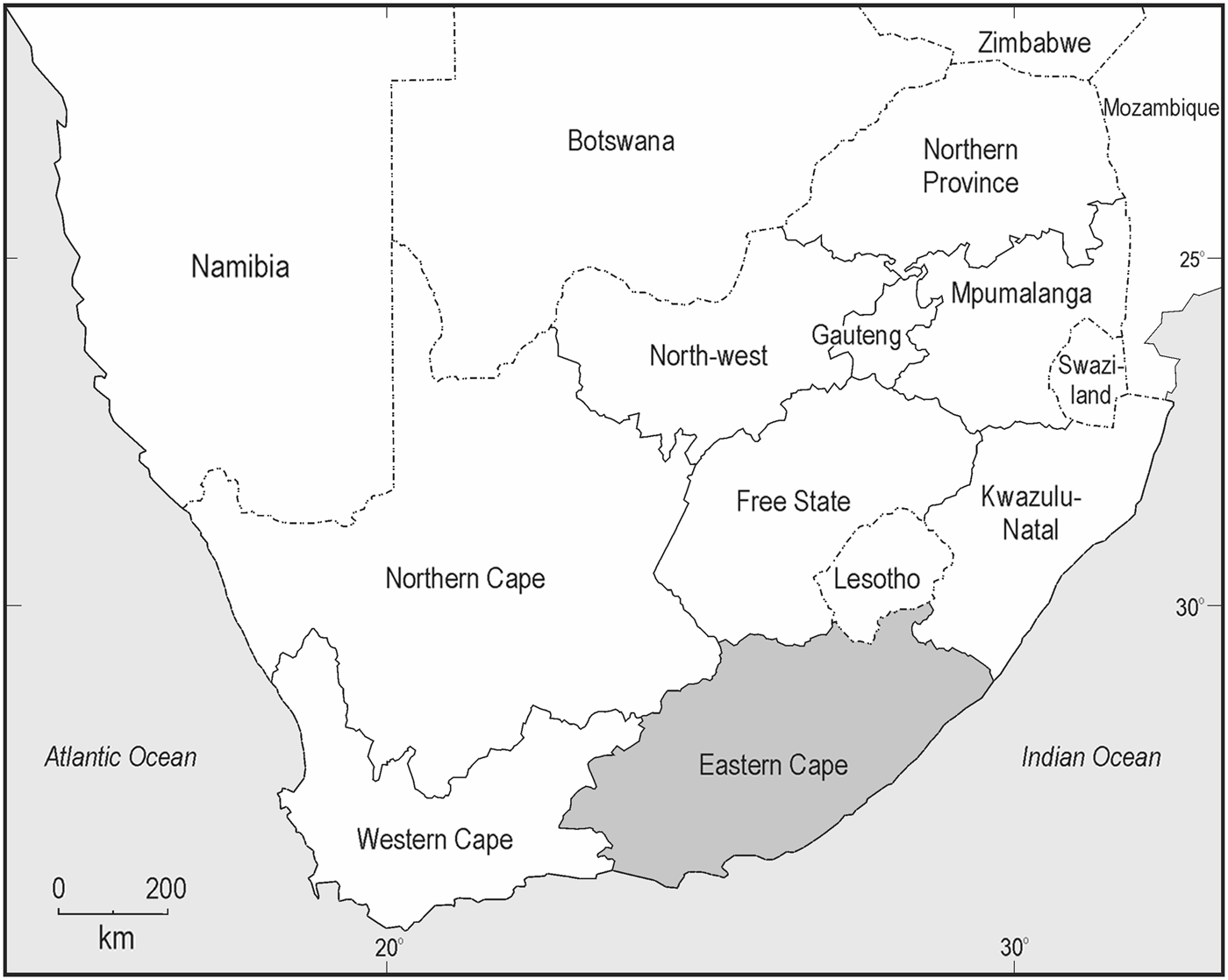
This study focused on private game reserves in the Eastern Cape Province of South Africa (Fig. 1). The Eastern Cape (169,000 km2) is situated in the south-east of the country and constitutes 13% of South Africa's total land area (Hamman & Tuinder, Reference Hamman and Tuinder2012). The majority of reserves included in the study were located in the Cacadu district, with the exception of two reserves located in the Amatole district.
The location of Eastern Cape Province, South Africa.
Circa 10% of the land in the Eastern Cape is under conservation of some sort, with 20% (1,540 km2) of the province's conservation estate comprising private conservation areas (Sims-Castley et al., Reference Sims-Castley, Kerley, Geach and Langholz2005; Hamman & Tuinder, Reference Hamman and Tuinder2012). The growth of ecotourism (and hunting) as a lucrative land use has increased the number of private game reserves in the province, with large tracts of marginal pastoral land being converted for game ranching and ecotourism operations (Smith & Wilson, Reference Smith and Wilson2002; Sims-Castley et al., Reference Sims-Castley, Kerley, Geach and Langholz2005; Cumming et al., Reference Cumming, Allen, Ban, Biggs, Biggs and Cumming2015).
Both white and black rhinoceroses are found on private game reserves in the Eastern Cape (Langholz & Kerley, Reference Langholz and Kerley2006; ECPTA, 2015). Unlike the indigenous black rhinoceros, the white rhinoceros is outside its natural range in the Eastern Cape but has been introduced on reserves with suitable grassland habitat in a bid to increase the appeal of these areas for tourists (Skead, Reference Skead1987; Sims-Castley et al., Reference Sims-Castley, Kerley, Geach and Langholz2005; Langholz & Kerley, Reference Langholz and Kerley2006). Of the 42 rhinoceroses poached in the Eastern Cape during 2010–2015, 15 were poached in 2014 (WESSA, 2015). Poaching in the province increased further in 2016, with a record 19 rhinoceroses having been killed by 10 October, and there is cause for concern among private conservation stakeholders that rhinoceros poaching in the Eastern Cape will continue to increase (Wilson, Reference Wilson2016).
Methods
An inductive approach was taken for this study as the research was aimed at building an in-depth understanding of a complex topic on which no previous empirical research had been conducted (Newing, Reference Newing2010). Data were collected by means of semi-structured interviews with key informants, which comprised open-ended and closed-ended questions, yielding qualitative and quantitative data (Supplementary Material 1; Bernard, Reference Bernard2002; Newing, Reference Newing2010). The purpose of the key informant interviews was to capture a representative reflection of the perceptions of key stakeholders involved in private game reserve management in the Eastern Cape regarding the potential legalization of trade in rhinoceros horn and associated implications for reserve management.
Data collection took place during June–October 2015. Key informants were contacted initially by email and telephone to arrange interviews, and contact was made with additional informants by means of snowball sampling through referrals. Interviews were conducted with 25 informants from 17 private game reserves. Increasing the sample size proved to be challenging because of security concerns; many potential informants were reluctant to be interviewed for fear that poachers would gain access to information they shared about rhinoceroses. The sample of 17 reserves comprises c. 37% of the 46 reserves with rhinoceroses in the Eastern Cape.
Ten of the 25 informants were rhinoceros owners. The other 15, referred to broadly as managers, included full-time conservation management practitioners who specialized in a variety of activities, such as anti-poaching, security and crime intelligence, game capture, veterinary medicine, ecology, and general game ranch management. Most of the informants worked full-time on reserves with rhinoceroses and were actively involved in the day-to-day management of these reserves, with the exception of two owners who did not live and work permanently on the reserves where their rhinoceroses were kept but still had a strong philanthropic interest in rhinoceros conservation. Two of the reserves were used exclusively for rhinoceros breeding, one was primarily a hunting reserve, and one offered both hunting and photographic safaris. The other 13 reserves were primarily ecotourism operations that supplemented their income from ecotourism by selling excess game to other reserves. With the exception of the two rhinoceros breeding operations, all the reserves comprised extensive natural areas, where rhinoceroses could roam freely among other species.
Interviews were guided by a set of broad key questions while also giving the informant the freedom to raise issues they felt were relevant (Newing, Reference Newing2010). We used a five-point Likert scale for closed-ended questions. Interviews were recorded, with the permission of informants (and later transcribed), and recordings were supported by hand-written notes. Given the contentious nature of rhinoceros poaching, informants were assured anonymity, and the names and locations of farms have not been disclosed (Supplementary Material 2). Key informants were free to decline to discuss topics or answer questions. Care was taken not to lead informants with suggestive questions or the personal opinions of the interviewer.
Qualitative data were transcribed and coded to identify key themes, patterns and relationships. Where suitable, qualitative data were converted to quantitative data by assigning a code to a recurring theme, counting the number of times the theme occurred and interpreting the numerical data from the count using descriptive statistics (Newing, Reference Newing2010). Quantitative data and direct quotes from informants are used as evidence to support claims and illustrate nuances (Taylor-Powell & Renner, Reference Taylor-Powell and Renner2003; Thomas, Reference Thomas2006; Newing, Reference Newing2010).
Results
Perceptions of poaching
All of the informants interviewed acknowledged that rhinoceros poaching was a problem in the Eastern Cape (Table 1). Nineteen of the 25 informants believed that rhinoceros poaching posed a threat to conservation in general in the Eastern Cape, whereas the remainder suggested that the effects of poaching were limited to rhinoceros species alone (Table 1). Seventeen informants perceived poaching as a threat to their personal safety and 11 perceived it as a threat to their livelihood (Table 1).
Summary of informants’ perceptions of rhinoceros poaching.

When discussing safety concerns, informants raised various issues, including the fear of encountering armed poachers, the dangers of storing rhinoceros horn on the property, and fears for the safety of their families or staff. Informants who perceived poaching as a threat to their livelihoods were concerned about the diminishing returns they were getting for selling live rhinoceroses, or pointed out the importance of rhinoceroses for attracting tourists, citing fears that reduced occupancy rates would lead to job losses if rhinoceroses were removed from the reserve.
Thirteen informants suggested that rhinoceros poaching was resulting in a decreased interest in rhinoceros conservation (Table 1), with some indicating that they had considered or were considering removing rhinoceroses from their property. Twelve informants expressed concern about the costs associated with protecting the rhinoceroses on their reserves, as security costs increase with the threat of poaching (Table 1). Eight informants suggested rhinoceros poaching in the Eastern Cape was increasing, with some (n = 5) suggesting that poaching pressure was shifting from the north of South Africa to the Eastern Cape as militarized anti-poaching efforts intensified in the Kruger National Park and surrounds (Table 1). Eight informants expressed dissatisfaction with the level of law enforcement provided by the state in the province. Five suggested that poaching in the Eastern Cape was more sophisticated than elsewhere in South Africa, referring to the professional manner in which rhinoceroses had been poached in the province, and the use of dart guns by poachers (Table 1).
Perceptions of legal trade in rhinoceros horn
Level of agreement/disagreement that trade should be legalized
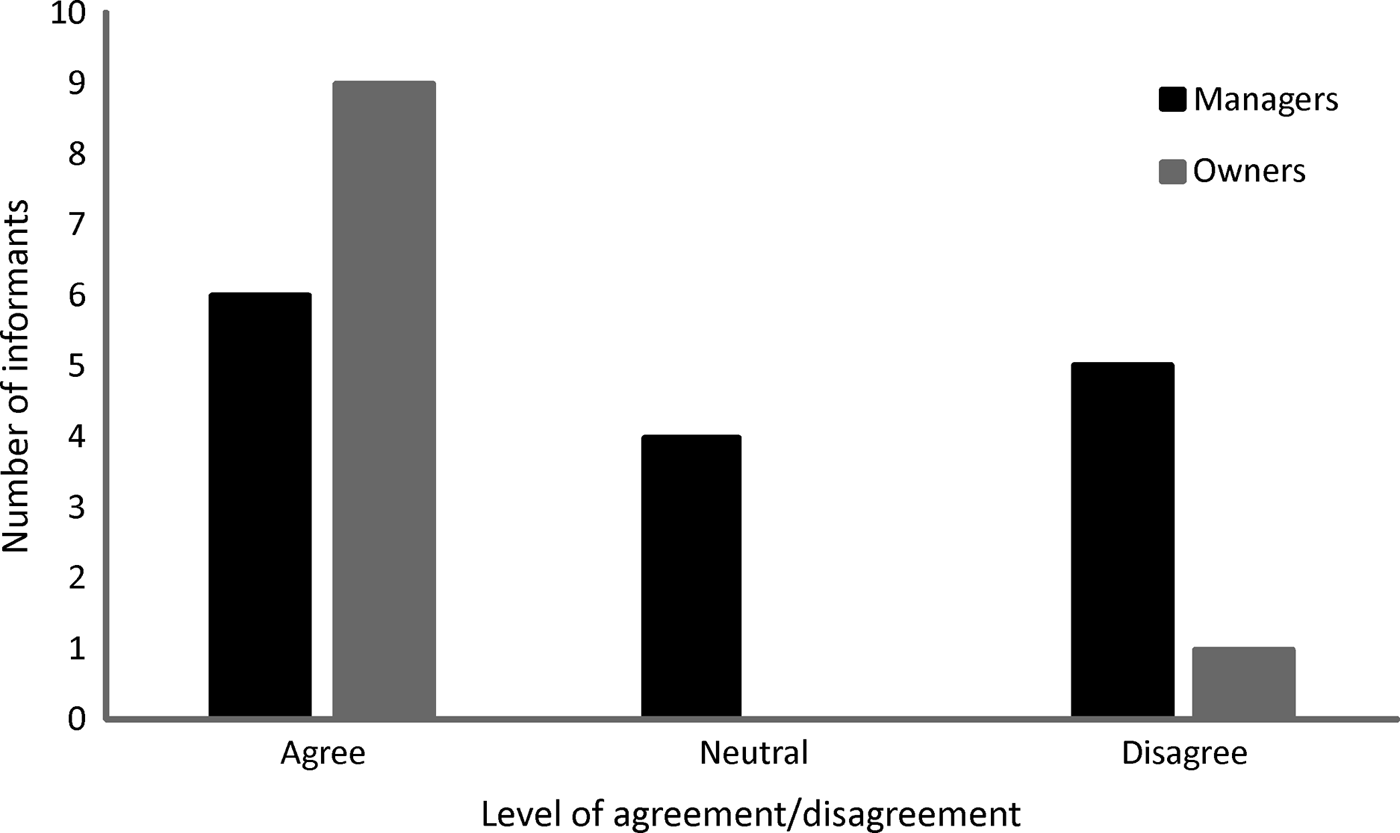
More than half of the respondents either agreed or strongly agreed that regulated trade in sustainably harvested rhinoceros horn should be legalized (Fig. 2). Rhinoceros owners were in favour of legal trade, whereas opinion among managers was more balanced (Fig. 2).
Level of agreement/disagreement among rhinoceros owners (n = 10) and managers (n = 15) that regulated trade in sustainably harvested rhinoceros horn should be legalized.
Positive perceptions of legal trade
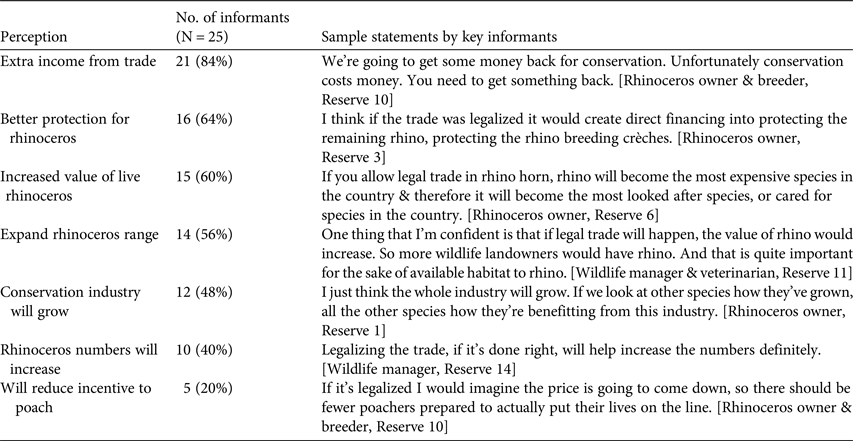
Most informants (n = 21) highlighted the additional income from trading in rhinoceros horn as a positive outcome of legalizing trade (Table 2). Sixteen informants suggested that legal trade would result in rhinoceros species being better protected (Table 2). Some informants explained how money from trade in rhinoceros horn could directly finance the protection of rhinoceroses by giving reserves the means to improve their anti-poaching presence or invest in new technology such as aerial drones or fence-line cameras. Others felt legalization would lead to an increase in the value of live rhinoceroses and create more of an incentive for owners to invest money in their protection (Table 2). Several informants referred to the thriving trade in rare game species in South Africa, citing successes in the trade in species such as buffalo Syncerus caffer, bontebok Damaliscus pygargus dorcas, sable Hippotragus niger and roan antelope Hippotragus equinus as examples of how placing value on live rhinoceroses (and not just horn as a by-product) may ensure their protection. Fourteen informants suggested that legal trade in rhinoceros horn would help to expand the natural ranges of rhinoceros species, with some highlighting the broader benefits for biodiversity conservation and the conservation industry that would come from increasing South Africa's conservation estate to accommodate more rhinoceroses (Table 2).
Summary of informants’ positive perceptions of legal trade in rhinoceros horn.
Negative perceptions of legal trade
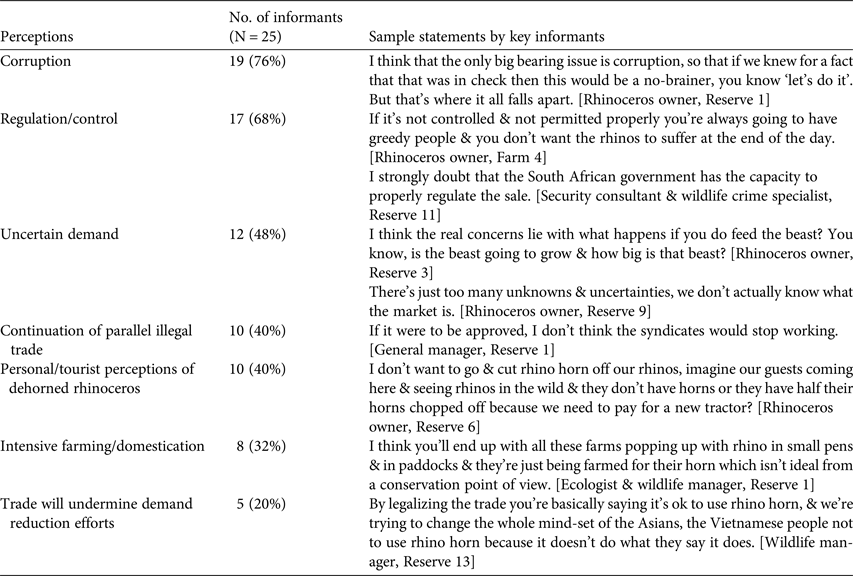
Corruption (n = 19) and poor enforcement of regulations (n = 17) were major concerns among most informants (Table 3). Many informants questioned the capacity of the South African government to regulate the sale of rhinoceros horn, with some suggesting that trade would only work if regulation was carried out independently of the government by a private entity. Ten informants raised the concern that illegal trade would continue to operate parallel to legal trade in the absence of adequate regulation (Table 3). Twelve informants were concerned about the uncertainty of demand for rhinoceros horn in consumer countries, with some expressing fears that legalizing trade would exacerbate demand (Table 3). Five informants were concerned that legalizing trade would undermine demand reduction efforts in consumer countries by encouraging consumption of rhinoceros horn. Ten informants raised concerns about perceptions of dehorned rhinoceroses, either because they personally did not like the idea of rhinoceroses without horns or they were concerned about tourists wanting to see intact rather than dehorned rhinoceroses. Eight informants were concerned about rhinoceroses being farmed intensively for their horns and becoming domesticated (Table 3).
Summary of informants’ negative perceptions of legal trade in rhinoceros horn.
Implications of legal trade in rhinoceros horn for reserve management
Rhinoceros owners were more relevant informants in this case as they had the power to decide whether or not their reserves would participate in the rhinoceros horn trade. Managers’ opinions about how their reserves would participate were more speculative, and in cases where both owner and manager from the same reserve were interviewed (n = 5) the manager's opinion of trade participation differed from that of the owner in every case.
The term dry horn is used to describe stockpiled rhinoceros horn that has not been harvested for the purpose of trade. This includes horn that has broken off accidentally (e.g. following a fight or when a rhinoceros has been confined to a boma or trailer during transport), horn from rhinoceroses that have died of natural causes, and horn that has been removed in an attempt to reduce the risk of poaching. The majority of informants predicted they would trade in dry horn if trade were legalized (Fig. 3).
Anticipated participation in legal trade by rhinoceros owners (n = 10) and managers (n = 15).
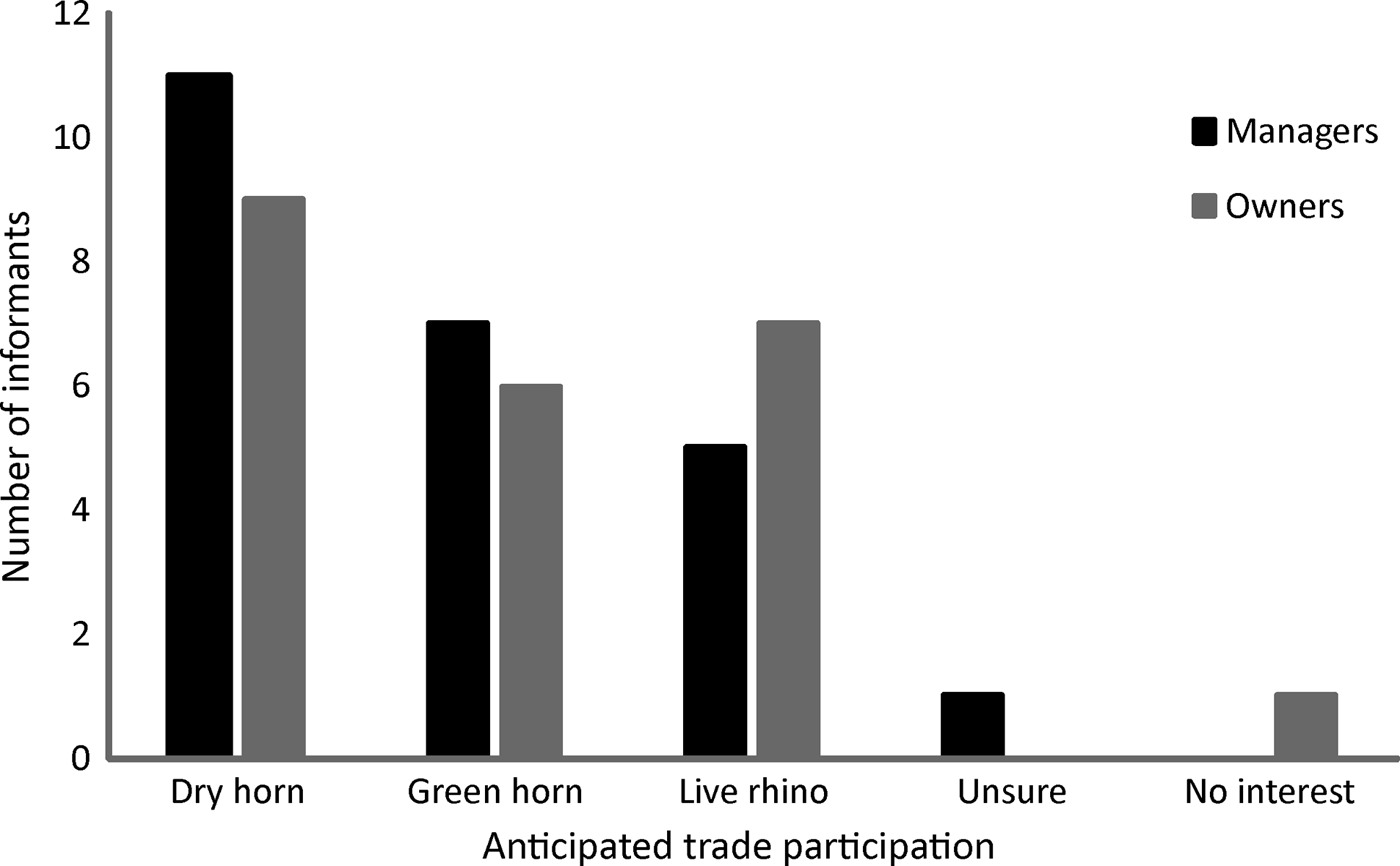
The term green horn is used for horn that has been harvested sustainably from live rhinoceroses for the purpose of trading. Several informants suggested they would harvest and sell green horn from their reserve if trade were legalized (Fig. 3). However, most informants suggested that they would take a conservative approach to harvesting horn, with the exception of the manager of a breeding operation that had been set up for the purpose of harvesting horn in anticipation of trade being legalized (Fig. 3). Suggested conservative approaches to harvesting horn included harvesting only from excess bulls that would otherwise be sold to hunting farms, removing and selling horns only from aggressive bulls that had injured other animals, and harvesting only a small portion of horn from each rhinoceros in a herd.
Seven owners said that they would trade more in live rhinoceros if trade were legalized, and most owners were more enthusiastic about the live rhinoceros trade than trade in the horn itself (Fig. 3). Informants provided various reasons for their interest in trading more in live rhinoceroses, including the expectation that live rhinoceroses would cease to become a liability (if legalized rhinoceros horn trade decreased poaching) and would thus become more valuable, as well as the feeling among some rhinoceros owners that they would have more peace of mind regarding the future welfare of rhinoceroses they sold, as they would be less likely to be used for trophy hunts:
I wouldn't have a problem selling a live rhino to someone who is going to harvest its horn if I know the animal is going to stay alive. [Rhinoceros owner, Reserve 10]
Overall, most informants anticipated their reserves would not be much involved in the legal trade in rhinoceros horn, and for the most part their day-to-day management activities would not change. None of the informants predicted any large-scale changes to reserve management. Some predicted minor changes, such as security upgrades, increasing the size of their rhinoceros herd or being able to do more as a result of increased funding, but the general response among informants was that business would continue as usual on their reserves, as illustrated by the following examples of typical statements regarding the potential implications of legal trade in rhinoceros horn for reserve management:
I don't think there would be challenges. I suppose it would be like when we dehorn now. [General manager, Reserve 17]
It shouldn't have a big effect; we're going to be doing the same thing whether we dehorn or not. [Rhinoceros owner, Reserve 9]
Perspectives on CITES
At the time of data collection the South African government was still exploring the possibility of proposing the legalization of international rhinoceros horn trade. Twenty-two of 25 informants suggested the trade ban would not be lifted. In explaining their lack of faith that legal trade could become a reality in 2016, informants referred to negative public opinion regarding legal trade, and a lack of understanding of the issue of rhinoceros poaching among the general public. Moreover, there was reference to the strong financial influence on CITES by ‘anti-trade’ NGOs, and the ‘flawed’ voting system at the 17th meeting of the Conference of the Parties to CITES (CoP17), where, of 181 member countries, South Africa had only one vote despite being the main custodian of wild rhinoceroses. Typical comments by informants regarding CITES CoP17 included the following:
There's probably a good chance that it won't be approved, just because of the general public who are very out of touch with reality. [Rhinoceros owner, Reserve 1]
Personally I don't think it will be legalized because of all the NGOs throughout the world. They've got a huge budget. [Rhinoceros owner and breeder, Reserve 10]
The bulk of all rhino in the world is in South Africa, and South Africa have got one vote of all the members at CoP17, so how could all those countries that have got no rhino decide how we should manage our population? So it's an absolutely ridiculous situation that we're in. [Wildlife manager and veterinarian, Reserve 11]
In the months following data collection a decision was made by the South African government not to issue a proposal at CoP17, and a last-minute trade proposal by Swaziland was rejected.
Discussion
The aim of this study was to explore the perceptions of legal trade in rhinoceros horn, and its potential management implications, among stakeholders in the private conservation industry in the Eastern Cape of South Africa. Despite harbouring several concerns regarding the viability of legal trade, many respondents perceived legal trade as a positive and useful strategy for rhinoceros conservation. In particular, respondents who supported lifting of the trade ban highlighted that legalization of trade would bring much-needed revenue for rhinoceros protection and would help to reduce poaching pressure. This suggests that legal trade in rhinoceros horn would have the support of private conservation industry stakeholders, although disparities exist between owners and managers of rhinoceroses, and several informants had a negative view of legal trade. Manager buy-in in particular could be more challenging to secure in the event that trade was legalized. Most informants predicted there would be few changes to reserve management if trade were legalized, which suggests concerns that many farmers would convert to intensive farming of domesticated rhinoceroses may not reflect reality.
The threat of corruption and the question of whether legal trade could be regulated effectively were key concerns among most informants. These concerns are not unfounded. Conservation is vulnerable to corruption, especially when dealing with valuable commodities such as rhinoceros horn (Bennett, Reference Bennett2015; Smith et al., Reference Smith, Biggs, St John, ‘t Sas-Rolfes and Barrington2015). Corruption among government officials who manage natural resources is not uncommon, especially in developing countries such as South Africa (Smith et al., Reference Smith, Muir, Walpole, Balmford and Leader-Williams2003; Laurance, Reference Laurance2004). There is also a considerable degree of regulatory uncertainty in the private wildlife sector in South Africa because of the fragmented nature of state authority and a lack of legislation supporting a clear regulatory framework for the game farming industry (Kamuti, Reference Kamuti2014). Despite widespread concerns among respondents, however, many still maintained that trade should be legalized. Corruption is a key concern but the risk could be curtailed by means of a well thought out trade mechanism, such as a central selling organization as suggested by Biggs et al. (Reference Biggs, Courchamp, Martin and Possingham2013). Regardless of whether trade is legal or not, corruption in conservation is a critical issue and requires careful management when dealing with trade in wildlife products (Smith et al., Reference Smith, Biggs, St John, ‘t Sas-Rolfes and Barrington2015).
Conflict exists between various factions of conservation management worldwide, and Africa is no exception. Whereas it is common for the state and the private sector to advocate for the commoditization of nature, conservation activists frequently view nature to be an inalienable good (Snijders, Reference Snijders2014). Our informants highlighted such conflicts between NGOs and private conservation stakeholders by suggesting that CITES was under the control of anti-legal trade lobbyists associated with international conservation NGOs, who respondents felt were likely to influence voting on legalization at the CoP17. The relationship between members of the private wildlife industry in South Africa and conservation NGOs is generally hostile, with industry stakeholders viewing NGOs as inhibiting the potential for conservation through ‘green capitalism’, and NGOs viewing industry stakeholders as profiting from activities that have negative outcomes for the conservation and well-being of species (Snijders, Reference Snijders2014). The successful implementation of legal trade may rely on cooperation between conservation NGOs and private stakeholders, which would require disagreements over the use of wildlife to be negotiated. The conflict between conservation NGOs and rhinoceros owners may be seen as a conflict of interests between the urban elite, who contribute significant funds to conservation NGOs, and rhinoceros owners, who bear the costs of protection and management. Non-market strategies put forward by NGOs to combat poaching do not fit in with the pragmatic, utilitarian approach to conservation preferred by private custodians of rhinoceroses. A potential solution in this case may be to establish more dialogue between stakeholders who have differing views on how best to combat rhinoceros poaching, and promote compromise between supporters and detractors of legal trade; for example, conservative harvesting methods could be employed to combat poaching in the short term, alongside continued efforts to reduce consumer demand in the long term. This could be seen as a more realistic solution to the poaching crisis, given the time it will take for consumer education campaigns to take effect and the rapid rate at which rhinoceros numbers are plummeting towards extinction.
Our findings suggest there is strong support for legal trade in rhinoceros horn among rhinoceros owners specifically. This was expected, as according to a national survey by the Private Rhino Owners Association 97% of rhinoceros owners in South Africa support the lifting of the trade ban (Duffy et al., Reference Duffy, Emslie and Knight2013). This is probably because rhinoceros owners stand to gain the most from trading in rhinoceros horn and live rhinoceroses if trade is legalized, and lose the most from poaching. In many cases the overall business viability of reserves with rhinoceroses is being threatened by the high costs of poaching. A concern among detractors of legal trade is that stakeholders in the private conservation industry will put commercial interests ahead of conservation goals when given the opportunity to utilize the value of their rhinoceroses. However, many landowners with rhinoceroses may be lifestyle entrepreneurs, who are interested in the lifestyle facilitated by the ownership of wildlife and private conservation land. This is reflected in the perceptions of participants in this study, and research has shown similar motivations among nature-based tourism operators in Australia (Biggs et al., Reference Biggs, Ban and Hall2012).
Informants mostly predicted that their participation in legal trade would be minimal, suggesting negligible implications for the way private game reserves in the Eastern Cape are managed. Rhinoceros owners expressed more interest in trading live rhinoceroses and stockpiled horn than in sustainably harvesting rhinoceros horn for trade, and those who expressed interest in harvesting rhinoceros horn did not foresee significant changes to management. Despite this view, however, new rhinoceros ranches may emerge in the province to supply the legal horn trade, and reserves that already have rhinoceroses may increase their holding. Potential management implications should therefore still be considered.
If trade were legalized, management costs could increase initially, as management strategies would need to be adjusted to address new challenges associated with breeding programmes, rhinoceros protection and the harvesting of horn (Collins et al., Reference Collins, Fraser and Snowball2013a; Di Minin et al., Reference Di Minin, Laitila, Montesino-Pouzols, Leader-Williams, Slotow and Goodman2015). Managers may have to address animal welfare issues regarding trade in live rhinoceroses, legal implications surrounding trade, and possible trade-offs between profit and conservation (Ferreira et al., Reference Ferreira, Pfab and Knight2014). Management objectives tailored to high-priority species could have a negative impact on the persistence of other species, and it is important to ensure that management strategies tailored towards rhinoceroses consider the welfare of other species in protected areas (Le Saout et al., Reference Le Saout, Hoffmann, Shi, Hughes, Bernard and Brooks2013).
Captive breeding of rhinoceroses to supply horn for legal trade could require large amounts of land and costly protection measures, and may only be feasible for the white rhinoceros, as the black rhinoceros is less suited to intensive breeding (Collins et al., Reference Collins, Fraser and Snowball2013a). There is a history of domestic herbivore-driven land degradation and biodiversity loss associated with overstocking in South Africa, and this may become a problem with rhinoceroses if they are farmed intensively (Cousins et al., Reference Cousins, Sadler and Evans2008; Rutherford et al., Reference Rutherford, Powrie and Husted2014). Extralimital white rhinoceroses have been favoured over the indigenous black rhinoceros by reserves in the Eastern Cape because of their more favourable temperament, and the stocking of large numbers of white rhinoceroses by several reserves has raised concerns regarding possible adverse effects on the structure and function of local ecosystems (Castley et al., Reference Castley, Boshoff and Kerley2001; Sims-Castley et al., Reference Sims-Castley, Kerley, Geach and Langholz2005; Langholz & Kerley, Reference Langholz and Kerley2006; Kerley et al., Reference Kerley, Landman, Kruger, Owen-Smith, Scholes and Mennell2008; Maciejewski & Kerley, Reference Maciejewski and Kerley2014). Intensive farming of the white rhinoceros may therefore be less viable in the Eastern Cape.
The impact of trade policy on land use is uncertain. Legalization of trade in rhinoceros horn may catalyse the expansion of private protected areas in South Africa and thus help to disperse rhinoceros populations into areas that historically formed part of their natural range. However, it is important that potential management policies and trade mechanisms are focused on ensuring that rhinoceros species are conserved in natural areas and not just farmed intensively on ranches. As highlighted by participants in this study, rhinoceros poaching and its associated risks and costs are threatening the viability of conservation as a land use for private land owners. Future policy decisions regarding rhinoceros management may therefore influence the expansion or reduction of private protected areas in South Africa, and may have implications for the persistence of other species that share this land with populations of the white and black rhinoceros. Therefore, we argue that rhinoceros poaching in Africa should not be treated as a two-species issue, and these broader implications should be taken into account when developing and implementing future rhinoceros management policy.
More conservative methods of harvesting horn, such as shaving a small portion of horn from free-ranging wild rhinoceros, could be explored as alternatives to intensive ranching and full dehorning. The recent lifting of a moratorium on domestic trade in rhinoceros horn, on 20 May 2016, may open up a variety of opportunities for the utilization of privately owned rhinoceroses and rhinoceros horn, including a potential futures market for rhinoceros horn, based on the assumption that international trade will one day become legal; traditional Chinese medicine tourism, where consumers travel to South Africa to use rhinoceros horn; veterinary tourism associated with the darting of rhinoceroses and harvesting of small portions of horn; and trophy hunting and ‘green hunts’ where rhinoceroses are darted and a trophy is taken in the form of a photograph. Income from trophy hunting provided an important financial incentive for private landholders to conserve rhinoceros species prior to the implementation of the moratorium.
Incentives for private investment in biodiversity conservation are limited, and private landowners have shown reluctance to participate in conservation strategies that are not beneficial to them (Clough, Reference Clough2000). Private landowners have played a key role in past successes in rhinoceros conservation in South Africa but if poaching continues to undermine the financial viability of stocking rhinoceroses on private land there is a danger that many landowners will choose to cease stocking the species (Smith et al., Reference Smith, Roberts, Duffy and St John2013). Under the trade ban, incentives for private investment in rhinoceros conservation have decreased as a result of the increased security measures necessary to protect rhinoceroses, reductions in live sales, and tighter restrictions on trophy hunting (Duffy et al., Reference Duffy, Emslie and Knight2013). Institutions such as CITES that enforce the ban on rhinoceros horn trade provide little help to private game ranchers in protecting themselves and their rhinoceroses from poachers, and the private landholders incur the costs of poaching whilst criminals reap the benefits (Child, Reference Child2012; Pernetta, Reference Pernetta2014; Lee & Du Preez, Reference Lee and Du Preez2015). Reduced investment in rhinoceroses by private landowners could serve to decrease the range of rhinoceros species in South Africa as more landowners choose to sell off their rhinoceroses and less private land is used for conservation (Child, Reference Child2012; Duffy et al., Reference Duffy, Emslie and Knight2013).
This explorative study has provided insights from the conservation stakeholders that are among those most directly affected by CITES policies on rhinoceros horn. We have highlighted the importance of engaging with owners and managers, who are not only on the front line of the poaching crisis but who will also find themselves on the front line of implementing any future policy changes. As such, these are core stakeholders whose views and experiences must be taken seriously in multinational decision making regarding trade in rhinoceros horn.
Currently CITES does not allow for private custodians of rhinoceroses to have any real influence on policy decisions regarding trade in rhinoceros horn, despite the profound impact that trade restrictions have on their conservation enterprises. It is important to note that the rhinoceros poaching crisis is a time-sensitive issue. Conflict between conservation authorities and practitioners in South Africa regarding the best course of action in the fight against rhinoceros poaching is taking up precious time that could otherwise be spent developing workable solutions that address the concerns of both parties and are in the interest of rhinoceros conservation.
Thus far, the South African government has not outlined a clear way forward for rhinoceros conservation, instead opting to continue along a management trajectory that some argue has proven insufficient to address the poaching issue. The lack of a clear vision for future South African rhinoceros conservation policy needs to be addressed urgently, and the needs of local rhinoceros custodians should be considered in formulating this vision. Clarity is required regarding the government's core conservation goal for rhinoceros species; i.e. whether poaching should be regarded as an emergency issue exclusive to rhinoceros species or whether broader issues of poverty alleviation, land use and the conservation of other species should be taken into account when considering options for rhinoceros management. The question of how rhinoceros conservation and protection will be funded is also important, and whether to continue relying on state, NGO and donor funding or to create opportunities for private stakeholders to generate funds from the utilization of live rhinoceroses and their horn.
The small sample size was a limitation to this research project, and is associated with the reluctance of stakeholders to share information regarding rhinoceroses because of fears that leaked information will lead to their reserves being targeted by poachers. Nonetheless, the study group represents private rhinoceros custodians as important stakeholders in rhinoceros conservation. It is hoped that this study will pave the way for future research that considers the perceptions of stakeholders across South Africa, and that the scope of future studies will be broadened to incorporate other key stakeholders, such as those who would be responsible for regulating a potential legal trade.
Finally, regardless of whether or not trade is legalized it is clear that action is needed to combat the growing problem of rhinoceros poaching, and that this action must be multifaceted. Policies could include the promotion of more effective law enforcement and incentives for local people to protect rhinoceroses, as well as demand reduction strategies such as legal trade and/or consumer education (Ripple et al., Reference Ripple, Newsome, Wolf, Dirzo, Everatt and Galetti2015). In the development of these policies it is critical that the perceptions of the people who are most active in rhinoceros conservation, such as those represented here, are taken into account.
Acknowledgements
This work is based on research supported in part by the National Research Foundation of South Africa (grant numbers 93446 & 90694).
Author contributions
OW led the research design, fieldwork, primary data analysis, and the writing of the article. GC and DB made significant contributions to the research design, implementation, analysis and write-up of this research.
Biographical sketches
At the time of writing Oliver Wright was a post-graduate student in the Department of Environmental Science at Rhodes University, South Africa. He is now a conservation practitioner working in the private sector in South Africa. Georgina Cundill has worked on issues of environmental governance, social justice and natural resource management in South Africa and Chile. Duan Biggs has worked on a wide range of conservation issues, including illegal wildlife trade and community-based conservation.



