


The decrease in child mortality, which is associated with other human and social development factors, has allowed for the world’s largest adolescent population ever known( Reference Blum, Bastos and Kabiru 1 ). There was the prospect that more than 1·22 billion people would be between the ages of 10 and 19 years in 2017, with the majority of them living in low- and middle-income countries( 2 ). As they become adolescents, multiple characteristics and vulnerabilities arise that are associated with unhealthy behaviours and can compromise their health. A multidisciplinary approach is necessary to investigate these factors and to support effective strategies of intervention( Reference Blum, Bastos and Kabiru 1 ).
Due to increasingly representative frequencies around the world( Reference Bibiloni, del, Pons and Tur 3 , Reference Moraes, Lacerda and Moreno 4 ), obesity and hypertension have been established as challenges for adolescent health care. Both conditions are related to the incidence of non-communicable diseases in adult life and are associated with several modifiable risk factors, such as excess body weight, consumption of unhealthy foods, sedentary lifestyle, alcohol consumption, smoking and socio-economic level. It is unrealistic to expect adolescents to be able to manage, successfully and without support, the modification of these factors( Reference Ewald and Haldeman 5 ).
School is an important space for coexistence and the influence of its environmental characteristics on the behaviours and attitudes related to health( Reference Morton, Atkin and Corder 6 , Reference Azeredo, Levy and Araya 7 ), food consumption( Reference Godin, Chacón and Barnoya 8 , Reference Azeredo, de Rezende and Canella 9 ) and nutritional status( Reference Fitzpatrick, Datta and Henderson 10 – Reference Fox, Dodd and Wilson 12 ) of students has been investigated. In Brazil, 98·6 % of the population between the ages of 6 and 14 years and 85 % between the ages of 15 and 17 years had access to school in 2015( 13 ), and generally at least one of their daily meals were made on school grounds. These meals may be supported by the government, in the case of public schools, or purchased by students in commercial establishments inside the school or in its immediate vicinity. The set of structures that comprise the necessary scope that make these meals possible constitute the school food environment, which has the potential to positively or negatively influence the formation of customs and habits among adolescents( Reference Azeredo, de Rezende and Canella 9 , Reference Fitzpatrick, Datta and Henderson 10 ).
There are still few studies that have evaluated established health outcomes, such as hypertension and obesity, considering environmental influence, especially in Latin American countries. Therefore, the objective of the present study was to characterize the school food environment in schools participating in the Study of Cardiovascular Risk in Adolescents (ERICA) and to identify individual and contextual factors associated with hypertension and obesity in adolescents from Brazilian schools.
Methods
The present study was reported according to the recommendations of the Strengthening the Reporting of Observational Studies in Epidemiology (STROBE) statement( Reference von Elm, Altman and Egger 14 ).
Study design
Data from ERICA, a national school-based survey that was conducted between the years of 2013 and 2014, were analysed, with the main objective of estimating the frequency of cardiovascular risk factors in this population.
Setting and participants
The ERICA methodology, including the instruments, samples and data collection procedures, were detailed by Bloch et al.( Reference Bloch, Szklo and Kuschnir 15 ) and Vasconcellos et al. ( Reference Vasconcellos, Silva and Szklo 16 ). Adolescents aged 12–17 years were evaluated. They answered a questionnaire to evaluate information referring to themselves or to their families. The questionnaire was self-administered and the selection of responses was performed in a personal digital assistant (LG model GM750Q), without the intervention of the researchers( Reference Bloch, Szklo and Kuschnir 15 ).
The study population was composed of students enrolled in public and private schools located in urban and rural areas of Brazilian state capitals and municipalities with more than 100 000 inhabitants. The exclusion criteria considered for the study were having a permanent or temporary physical or mental deficiency and, if female, being pregnant.
Variables and measurement
Data related to the following topics were analysed: (i) adolescent health (outcomes), i.e. hypertension and obesity; (ii) contextual characteristics (exposure variables related to school), i.e. location area, administrative dependence, offer, sale and advertisement of foods; and (iii) individual characteristics (confounders), i.e. demographics (sex, age, race/ethnicity and stage of sexual maturation) and behavioural (physical activity, consumption of meals prepared on the school premises, purchase of foods in school).
Adolescent health (outcomes)
Adolescents whose blood pressure was greater than or equal to the 95th percentile, considering their height, sex and age, were classified as hypertensive, according to an epidemiological approach adapted to the guidelines found in the 4th report on the diagnosis, evaluation, and treatment of high blood pressure in children and adolescents( 17 ). Blood pressure was measured after a rest period of 5 min, with the measurements performed three times on the adolescent’s right arm using an appropriately sized cuff, according to the arm circumference. A 3 min interval between each measurement was considered and the first measurement was discarded; thus, the mean between the two last measurements was used for evaluation. A digital device validated for use in adolescents( Reference Stergiou, Yiannes and Rarra 18 ) (Omron model 705-IT; Omron Healthcare, Bannockburn, IL, USA) was used. The classification of obesity followed the WHO proposal, using Z-score > 2 by the BMI-for-age index( Reference de Onis, Onyango and Borghi 19 ). For the BMI calculation, weight and height were measured in duplicate( Reference Bloch, Szklo and Kuschnir 15 ). A portable stadiometer to was used to measure height (Alturaexata, Minas Gerais, Brazil) with 1 mm precision and 213 cm capacity. Weight was measured with a digital scale (Líder-P150, São Paulo, Brazil) with 50 g precision and a maximum capacity of 200 kg. The adolescents wore light clothes, were barefoot and maintained proper body posture.
Contextual characteristics (exposure variables related to school)
The exposure variables included the location area (urban or rural) and the administrative dependence (public or private) of the school; characteristics of the school food environment were also evaluated. The latter were investigated through interviews with the principal or head of the school and through observation of the physical conditions of the environment by the field interviewer. From the interview or the observation, the following questions and categories of responses were collected: (i) ‘Does the school offer meals prepared on your premises?’ (yes; no); (ii) ‘Is there any form of commercialization of food in school?’ (yes; no); (iii) ‘What foods are sold?’ (sweets, lollipops, chocolates, etc.; sweet or salty cookies; soft drinks); (iv) ‘At school, are there vending machines that sell foods like soft drinks, sweets, potato chips and others?’ (yes; no); (v) ‘Is there advertisement for industrialized foods (commercially prepared foods/highly processed foods) in school?’ (yes; no); (vi) ‘What products are advertised at school?’ (sweets, lollipops, chocolates, etc.; salty or sweet cookies; soft drinks); (vii) ‘At the school entrance or in its immediate vicinity, are there any street vendors selling foods or non-alcoholic beverages?’ (yes; no); and (viii) ‘What is sold?’ (foods, sweets, chocolates, lollipops, popcorn, etc.; beverages; foods and beverages). An approximate distance of 100 m from the entrance, the sides and the back of the school were established in order to determine the school’s immediate vicinity.
Individual characteristics (confounders)
The demographic variables analysed were as follows: sex, age and age range (<15 years, ≥15 years) and race/ethnicity (white, black or brown, Asian, indigenous). To measure the practice of physical activity, an adapted version of the Self-Administered Physical Activity Checklist was used, validated for the Brazilian adolescent population. Those who declared to have practised physical activities for a period of ≥300 min/week were considered sufficiently active, and those who practised for <300 min/week were considered insufficiently active( Reference Farias Júnior, Lopes and Mota 20 ). The consumption of meals prepared on the school premises was evaluated by the question ‘Do you eat the meal offered by the school?’ and the purchase of food in the cafeteria was evaluated by the question ‘Do you buy foods in the school cafeteria?’ The answers were categorized as ‘yes’ or ‘no’, regardless of frequency. To evaluate the stage of sexual maturation, the adolescents were presented with illustrations of the Tanner scale( Reference Tanner 21 ) for self-evaluation of the development of the following criteria: breasts for girls, genitalia for boys, and pubic hair for both. The scale is composed of five illustrations for each criterion, varying from less to more developed, and the adolescents recorded in the personal digital assistant only one illustration per criterion. For the purpose of the study, the highest score between two criteria was considered for each adolescent. Those who selected at least one of the more developed illustrations, such as the fourth or the fifth, were considered to be at an advanced stage of sexual maturation.
Bias
Efforts were made to prevent errors in ERICA. Among these efforts, the anthropometric and blood pressure measurements were performed by trained researchers using appropriate and calibrated equipment, when pertinent, and immediately inserted into the personal digital assistant to create the database. During the data collection period, a central quality control of the measurements was performed, seeking to identify tendencies or patterns that could point to problems in the procedures. The detailing of this step was also described by Bloch et al.( Reference Bloch, Szklo and Kuschnir 15 ).
Study size
The definition of the sample size and the selection of participants were reported in detail by Vasconcellos et al. ( Reference Vasconcellos, Silva and Szklo 16 ). Briefly, it was a complex sample with three levels of selection. Thirty-two geographic strata were considered, in addition to the five Brazilian macro-regions, with calculated sizes for each stratum.
In the first stage, the probability of selecting a school was proportional to its size and inversely proportional to the distance between the school municipality and the state capital. In the second stage, three combinations were selected for each school from the morning and afternoon shifts with the eligible grades (7th to 9th grades of elementary school and the three grades from secondary school). In the third selection stage, a class with each combination of shifts (morning or afternoon) and grades was selected with equal probability, totalling three classes per school. All the students from the selected classes were invited to participate in the study. Adolescents aged 12–17 years without permanent or temporary physical or mental disabilities or pregnancy were considered eligible. There was a total of 102 327 students in the drawn classes from 1251 schools selected.
Statistical methods
In the descriptive phase, the prevalence and distribution of the characteristics studied in the sample in general, and their relationship to hypertension and obesity outcomes, were calculated. The proportions are presented along with their 95 % CI, with consideration of the natural weights of the sampling design and the use of post-stratification estimators. In the analytical phase, in order to investigate the association between the characteristics of the school food environment and hypertension and obesity, multilevel logistic regression models with mixed effects were constructed in sequential stages, considering the school as a second level. In the first step, an empty model was used, without the inclusion of independent variables, to obtain the variance attributed to the school. Subsequently, the independent variables were individually tested for each outcome and those with P < 0·20 were selected for the multivariate analysis. Three models were then constructed: the first one including only the characteristics of the school food environment at a contextual level, the second including characteristics at the individual level, and the third model adding the two levels. The variables that were not significant in models 1 and 2 were not included in model 3.
The multivariate analysis was also adjusted for sex, age, stage of sexual maturation, presence of obesity (only when hypertension was the outcome of interest), physical activity and the school’s administrative dependence (public/private). Sex, age and the administrative dependence of the school were also tested as possible variables of interaction by stratified analysis to decide the best design of the model. The level of significance considering the final model was P < 0·05.
For each stage, in addition to the associations, changes in the variance related to the school were analysed. Aiming for a better interpretation of this variance, which was originally obtained in a logarithmic scale( Reference Larsen and Merlo 22 ), the present study used the latent variable method to define the intraclass correlation coefficient, assuming an individual-level variation equal to π 2/3, i.e. 3·29( Reference Merlo, Chaix and Ohlsson 23 ). The intraclass correlation coefficient provided the variation percentage assigned to the school level. Then, the proportional change in variance (PCV) for each model was determined, according to the suggested formula by Merlo and co-wrokers( Reference Merlo, Chaix and Ohlsson 23 , Reference Merlo, Yang and Chaix 24 ): PCV = [(V a – V b )/V a ] × 100, where V a is the estimated variance for each model and V b is the variance of the empty model. The PCV made it possible to assess the percentage of change in the variance attributed to the set of independent variables inserted in the models. The weights originated from the sample design were considered in all stages of the modelling for the individual and contextual levels( Reference Vasconcellos, Silva and Szklo 16 ).
All analyses were performed with the survey (‘svy’) command in the statistical software package Stata version 15. For the multilevel analysis, the ‘melogit’ command was used.
Ethical aspects
The Declaration of Helsinki guided the conduction of ERICA, the original project for which was approved by the Human Research Ethics Committee of the Federal University of Rio de Janeiro in 2009 (protocol number 45/2008). Subsequently, the study was also approved by the ethics committees of the other twenty-six federated units of Brazil, since data were collected in their territories as well. Only adolescents who agreed to participate were included and, therefore, signed a term of free and informed consent.
Results
The analysis included 73 399 adolescents who were students from 1247 schools located in 122 municipalities. All information on losses and refusals, as well as comparisons between participants and non-participants of ERICA, were described previously( Reference Silva, Klein and Moura Souza 25 ). In the present study, the response rate was 71·7 % for the set of individual information analysed (student questionnaire, blood pressure and anthropometry) and 99·7 % for information from the school questionnaire, from which information on the school food environment was extracted.
The mean age of the studied population was 14·4 years. The prevalence of hypertension was 9·6 (95 % CI 9·0, 10·3) % and of obesity was 8·4 (95 % CI 7·9, 8·9) %. Hypertension was more frequent among male adolescents who studied in rural areas and who were more active. Obesity, on the other hand, was more prevalent in urban areas and among adolescents who were male, older and white (compared with black and brown). Students of schools that offered meals prepared on the premises had a lower prevalence of obesity (7·8 %, 95 % CI 7·3, 8·4 %) compared with those who studied where meals were not offered (11·0 %, 95 % CI 9·7, 12·3 %). A contrary situation was observed among those who studied in schools that sold food in the cafeteria, where the prevalence was 9·2 (95 % CI 8·6, 9·9) %, whereas in schools where there was no commercialization of foods, obesity prevalence was 7·3 (95 % CI 6·6, 8·2) % (Table 1).
Distribution of the characteristics of school-going adolescents aged 12–17 years and of the prevalence of hypertension and obesity in relation to school and individual characteristics. Study of Cardiovascular Risks in Adolescents (ERICA), Brazil, 2013–2014

† Sufficiently active, ≥300 min/week; insufficiently active, <300 min/week( Reference Farias Júnior, Lopes and Mota 20 ).
‡ Higher stage of self-assessment by the Tanner criteria, with the selection of illustrations 4 or 5 being considered advanced( Reference Tanner 21 ).
§ Variables used to calculate the natural weights and calibration factors of the sample.
The sale of ultra-processed beverages and foods in the school cafeteria, as well as in the school’s immediate vicinity, was observed both in public and private schools (Table 2). Almost all of the students in private schools (98·6 %) were exposed to the commercialization of foods, in contrast to less than half of the students in public schools. Inside the schools, unhealthy foods such as candies were available to the largest number of adolescents, followed by soft drinks. For more than 70 % of the private-school students, it was possible to buy soft drinks inside the school, compared with 35·2 % of students in public schools. The sale of foods and beverages in the school’s immediate vicinity was available for more than 50 % of the students. Almost all of the public-school students were enrolled in schools that offered planned meals, while for the private school network, this frequency was 8·4 %.
Distribution of school-going adolescents aged 12–17 years in public and private schools in relation to characteristics of the school food environment. Study of Cardiovascular Risks in Adolescents (ERICA), Brazil, 2013–2014
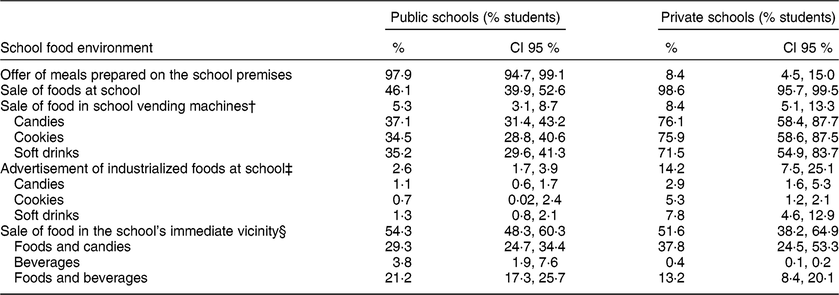
† Vending machines: candies (sweets, lollipops, chocolates, etc.), cookies (sweet or salty), potato chips, soft drinks and others.
‡ Advertisement of industrialized foods: candies (sweets, lollipops, chocolates, etc.), cookies (sweet or salty) and soft drinks.
§ Immediate vicinity: foods and candies (sweets, chocolates, lollipops, popcorn, etc.); beverages; foods and beverages.
In the analysis of hypertension-associated factors, the variables related to the offer and sale of food at school were not included in the multilevel logistic regression models, since they did not reach the statistical significance required in the crude analysis (P > 0·20). In the final model that included contextual and individual variables (model 3, Table 3), lower odds of hypertension were observed among adolescents when food was sold in the immediate vicinity of the school (contextual variable) and when adolescents consumed meals offered by the schools (individual variable), in relation to the respective comparison groups. On the other hand, higher odds of hypertension were observed among the students who bought food in the school cafeteria than among those who did not.
Association between contextual and individual characteristics of the school food environment and hypertension in school-going adolescents aged 12–17 years. Study of Cardiovascular Risks in Adolescents (ERICA), Brazil, 2013–2014
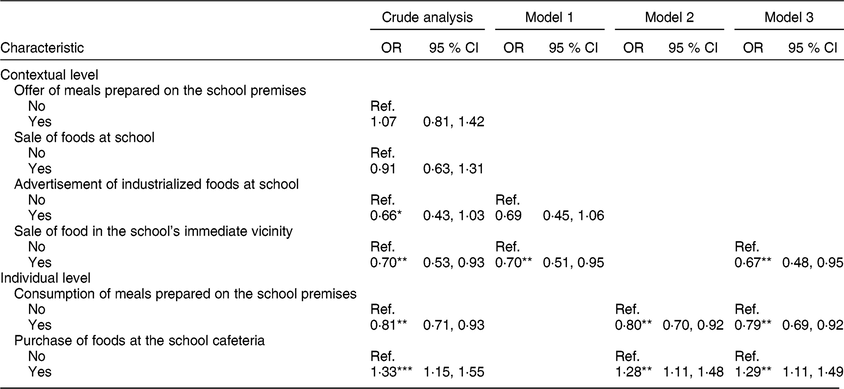
Ref., reference category.
Model 1, contextual variables; model 2, individual variables; model 3, contextual and individual variables. All models were adjusted for sex, age, puberty stage, obesity, physical activity and type of school administrative dependency (public/private).
* P < 0·20, **P < 0·05, ***P < 0·001.
In the null model, when the outcome was hypertension, the intraclass correlation coefficient indicated that approximately 13·8 % of the total variance was attributed to the school level and 86·2 % to the individual level. With the addition of independent variables of the contextual level (model 1), the PCV was −7·4 %, and with the individual-level variables (model 2), the PCV was −18·2 %. In model 3, the PCV indicated that −12·4 % of the variance change at the school level was attributed to the set of contextual and individual variables related to the food environment.
In the analysis of factors associated with obesity, the variables advertisement of industrialized food, sale of food in the school’s immediate vicinity and consumption of meals prepared on the school premises were not included in the multilevel logistic regression models, since they did not reach the level of statistical significance required in the crude analysis (P > 0·20). In terms of the contextual aspects, adolescents who studied in schools that offered meals had 35 % lower odds of obesity than those who studied in schools that did not offer meals (model 3, Table 4). The intraclass correlation coefficient of the null model when the outcome considered was obesity was 13·9 % (similar to hypertension), but the changes in variance at the school level attributed to the independent variables were different (PCV = 12·4, 9·5 and 11·3 % for models 1, 2 and 3, respectively; Table 5).
Association between contextual and individual characteristics of the school food environment and obesity in school-going adolescents aged 12–17 years. Study of Cardiovascular Risks in Adolescents (ERICA), Brazil, 2013–2014
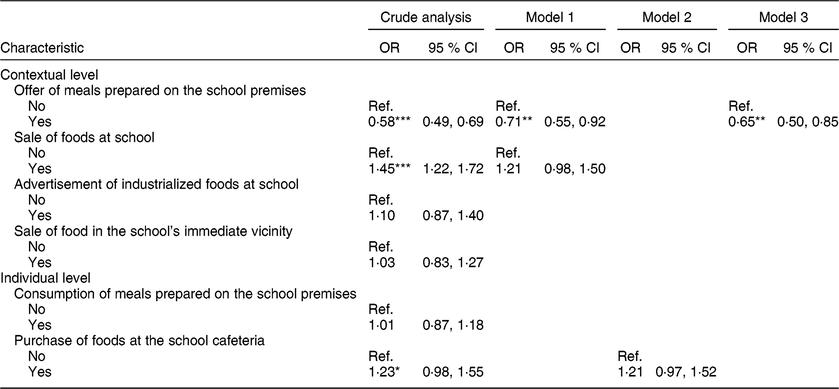
Ref., reference category.
Model 1, contextual variables; model 2, individual variables; model 3, contextual and individual variables. All models were adjusted for sex, age, puberty stage, physical activity and type of school administrative dependency (public/private).
* P < 0·20, **P < 0·05, ***P < 0·001.
Relative contribution of school-level and individual factors in the variance of hypertension and obesity in school-going adolescents aged 12–17 years. Study of Cardiovascular Risks in Adolescents (ERICA), Brazil, 2013–2014
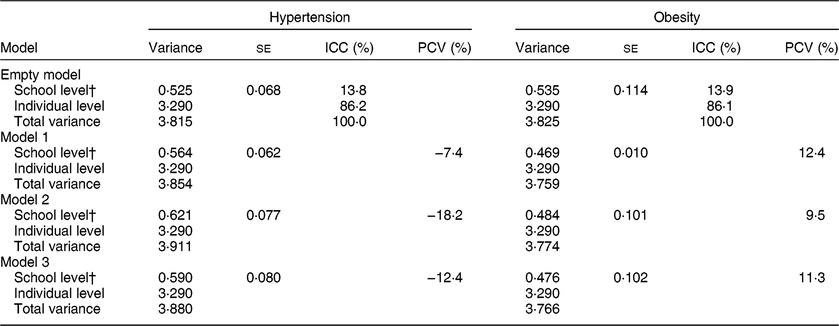
ICC, intraclass correlation coefficient obtained by the latent variable method( Reference Larsen and Merlo 22 ); PCV, proportional change in variance( Reference Merlo, Chaix and Ohlsson 23 , Reference Merlo, Yang and Chaix 24 ).
Empty model, without independent variables; model 1, contextual variables; model 2, individual variables; model 3, contextual and individual variables.
† The school-level variance (se) was obtained using multilevel logistic regression of mixed effects (‘melogit’ command, Stata version 15).
The variables sex, age and school’s administrative dependence did not modify the effect of the associations in the stratified analysis; therefore, the effect of the interaction on both outcomes was discarded and the models were constructed with the total sample.
Discussion
The present study is the first to evaluate the characteristics of the school food environment that were associated with hypertension and obesity in Brazilian adolescents. It was observed that there is a relationship between the offering and consumption of meals prepared on the school premises and lower odds of obesity and hypertension, respectively. Purchasing food at school was also an important factor associated with the increased odds of hypertension in this analysis. In addition, the results point to the expressive presence of negative aspects related to the food environment in schools.
Inadequate food consumption is a recognized risk factor in the literature for CVD( Reference Rezende, de, Azeredo and Canella 26 ) and the lack of regulation for the commercialization of products, such as soft drinks and candies, inside schools is a worrying and alarming fact. The effect of public policies and regulations related to food consumption at school has been investigated in many settings. In a study with North American adolescents between the ages of 12 and 13 years in public schools, compared being a student in a state with no policy, it was found that being a student in a state with strong or weak policies on school feeding regulations was associated with a lower probability of adolescents being overweight or obese and having more adequate food consumption( Reference Datar and Nicosia 27 ). Regulations aiming to improve the school food environment were still capable of modifying the association between the availability and consumption of soft drinks in American schools, thus mitigating the risk of excessive intake( Reference Taber, Chriqui and Vuillaume 28 ).
Similar to Brazil, it is very common in other countries to sell ultra-processed foods, such as soft drinks and candies, inside schools. In a study that analysed characteristics of the food environment in sixty-three Irish schools, 68·3 % also sold foods, 51·8 % sold soft drinks and 60·7 % sweets( Reference Callaghan, Molcho and Nic Gabhainn 29 ). In the study of 176 schools located in British Columbia, Canada, 43·1 % provided access to industrialized sugar-sweetened beverages to their students( Reference Mâsse, de Niet-Fitzgerald and Watts 30 ). In the USA, in a national sample representative of students selected in 835 schools, more than 70 % of the students from middle and high schools had access to the sale of non-state-subsidized foods that had a less healthy nutritional profile( Reference Terry-McElrath, O’Malley and Johnston 31 ). Studies of this nature in developing countries are scarcer, but in Guatemala City, Guatemala, 1042 students had their schools’ food environments evaluated, and the sale and advertisement of industrialized foods were also observed( Reference Godin, Chacón and Barnoya 8 ). In general, vending machines that sell foods and beverages are not very common in Brazilian schools, in contrast to developed countries( Reference Taber, Chriqui and Vuillaume 28 , Reference Mâsse, de Niet-Fitzgerald and Watts 30 ). Even so, 5 and 8 % of the public- and private-school students, respectively, had access to this equipment inside schools, thus increasing the number of negative characteristics found.
The influence of the school food environment on adolescents’ food choices and consumption has been studied( Reference Azeredo, de Rezende and Canella 9 , Reference Terry-McElrath, O’Malley and Johnston 31 , Reference Cutumisu, Traoré and Paquette 32 ), but its relationship to already established diseases is less recognized( Reference Park, Choi and Wang 33 , Reference Richmond, Elliott and Franzini 34 ). In a systematic review of studies that evaluated effective interventions for beneficial effects on the BMI of children and adolescents, Driessen et al.( Reference Driessen, Cameron and Thornton 35 ) discussed the importance of considering different simultaneous actions, because changes in BMI are multifactorial and require time to materialize. As far as we know, there are no studies that have evaluated school-level interventions for the prevention and control of hypertension. These data point to the importance of the identification of factors associated with the diseases studied, aiming towards the elaboration of interventions capable of promoting real changes in this scenario. In this sense, the present study pointed to school feeding as a factor negatively associated with the odds of both hypertension and obesity, thus indicating its importance.
In Brazil, the National School Feeding Program (PNAE, in Portuguese) is a public policy reviewed periodically that aims to offer high-quality meals to all public-school students at no charge. The federal government subsidizes part of the costs, and there is a complementation by the state and municipal governments. In ERICA, almost all of the public-school principals stated that they offer their students meals prepared on the school premises that follow the PNAE guidelines with menus prepared by nutritionists( 36 , 37 ). On the other hand, in private schools, there are no state subsidies for the provision of meals prepared on the school premises, but a fraction of its principals declared that they do offer it. These meals, however, are financed by the students themselves and by those responsible for them. What differentiates these meals from the commercialized foods in the cafeteria is the fact that usually they are planned meals by nutritionists.
The prevalence of obesity and hypertension estimated in the present study is indicative of concern for Brazilian public health managers. The country has a public and universal health system that proves to be very difficult to sustain financially. Non-communicable diseases, related in large part to the incidence of hypertension and obesity, are responsible for the utilization of a substantial portion of these resources( Reference Paim, Travassos and Almeida 38 , Reference Schmidt, Duncan and Silva 39 ). The likelihood of an adolescent with these diseases having these conditions in adulthood is greater than that of other adolescents who do not have these conditions. This fact makes the school a privileged space for interventions that aim to change unhealthy lifestyles, such as inadequate eating habits, since access to these institutions is great( 13 , Reference Driessen, Cameron and Thornton 35 ).
The offer of a meal prepared on the school premises has been shown to be relevant at the contextual level for obesity, regardless of its consumption by adolescents. It is possible that offering planned and high-quality meals is associated with other positive factors, such as those related to physical activity and health promotion in these schools, which needs to be studied further. On the other hand, the consumption of these meals was relevant for hypertension, probably because of the quality of the meals and because they replaced the purchase of ultra-processed foods of low nutritional value at the school cafeteria. In a 2012 study also carried out with Brazilian adolescents, for students who were in their 9th year of elementary school, the availability of unhealthy foods for purchase in schools was related to a higher consumption of these foods by adolescents, while the offer of meals through PNAE was a factor of protection for this unhealthy consumption( Reference Azeredo, de Rezende and Canella 9 ). In the USA, the consumption of school-offered meals improved the intake of fruits and vegetables by students with lower family incomes( Reference Longacre, Drake and Titus 40 ).
Unexpectedly, the sale of food and beverages in the school’s immediate vicinity was associated with lower odds of hypertension. Although it was not expected that these commercialized products had adequate nutritional value, the kinds of foods and beverages offered were not investigated; therefore, there is a need to evaluate this association in greater detail. A systematic review that verified the relationship between the commercialization of foods in the immediate school vicinity and children and adolescents’ body weights did not find robust evidence that there is an environmental influence in this case( Reference Williams, Scarborough and Matthews 41 ). Two studies that integrated this review also presented negative associations between the commercialization of foods and body weight or adiposity( Reference Seliske, Pickett and Boyce 42 , Reference Laska, Hearst and Forsyth 43 ). Factors such as the cross-sectional design of the study and the lack of more details of the composition of these environments were cited as possible hypotheses to explain these results. No studies evaluating hypertension as an outcome were found.
Finally, the analysis of the models’ variance showed that the school environment explains a portion of the prevalence of the studied outcomes, with a probable influence over it, although the majority of the variance is explained at the individual level. The PCV of most models in relation to the null models indicates that the characteristics associated with the food environment in schools are related to these changes, both at the contextual and individual levels. In this sense, positive changes in the school food environment during adolescence may be a potential strategy to prevent and control the diseases studied.
Some methodological limitations must be taken into consideration in terms of the interpretations and generalizations made from the present study. The estimated prevalence of hypertension may be overestimated because blood pressure was evaluated on only one occasion, while the recommended practice for clinical diagnosis would be at least two measurements at different times( 17 ). However, in the attempt to reduce this bias, it is important to highlight the fact that, even though they were taken on the same day, three blood pressure measurements were performed; the first measurement was discarded, and the mean of the last two measurements was used for analysis. Moreover, this limitation is frequent in cross-sectional studies with the size of ERICA, where standardization of the measures is of great importance and increasing the number of visits would imply an unfeasible financial and logistical burden. Regarding the instrument used to collect the data at the individual level, because it was a self-administered questionnaire, there was no interference from the interviewer; however, it cannot be guaranteed that the respondents fully understood and interpreted all the questions adequately. Yet, some items of the questionnaire were answered in the form of ‘yes’ or ‘no’, which prevents further explanation of the results.
Despite the reported limitations, ERICA established great methodological care in the data collection, seeking to measure blood pressure and the anthropometric measures in a standardized manner, with trained evaluators using validated equipment. The analysis process of the data quality during the entire collection period, with continuous training of the evaluators whose applied measurements may have deviated from standard references and the substitution of equipment that could raise doubts about its calibration, also collaborated to ameliorate these limitations. The robust statistical analysis that took account of the sample design of the study at all levels can also be considered a strong point and increases confidence in the results.
Conclusion
Contextual and individual characteristics related to the school food environment were associated with hypertension and obesity. The importance of the offer and consumption of planned meals and the negative influence of the purchase of foods at school cafeterias are emphasized. A high frequency of commercialization of ultra-processed foods in schools was also identified, pointing to the need for regulation and supervision of these spaces aiming to construct a healthy environment capable of improving the health of adolescents.
Acknowledgements
Acknowledgements: The authors thank Drs Mauricio Vasconcellos (National School of Statistical Sciences, Brazil), Lucia R.S. Freitas (Ministry of Health, Brazil), Catarina M. Azeredo (Federal University of Uberlandia, Brazil) and Juan Merlo (Lund University, Sweden) for their contributions to the improvement of the analysis. These contributors consented to be named here. Financial support: ERICA received funding from the Department of Science and Technology and Strategic Inputs, Brazil; the Ministry of Health (DECIT/SCTIE/MS) and Sectoral Health Fund (CT-Saúde), Brazil; and the Ministry of Science, Technology, and Innovation (MCTI), Brazil (protocol numbers FINEP 01090421 and CNPq 565037/2010-2). The funders had no role in the design, analysis or writing of this article. Conflict of interest: The authors declare that they have no conflicts of interest. Authorship: V.S.S.G., E.S.D. and K.M.B.C. conceptualized and designed the study and reviewed the final version of the manuscript. V.S.S.G. also drafted the initial manuscript and conducted the statistical analyses, with collaboration of E.C.D. L.A.B. integrated the coordinator team of the survey. All authors contributed to analysis and interpretation of the data, approved the final version of the manuscript and agreed to be accountable for all aspects of the work. Ethics of human subject participation: The Declaration of Helsinki guided the conduction of ERICA, the original project for which was approved by the Human Research Ethics Committee of the Federal University of Rio de Janeiro in 2009 (protocol number 45/2008). Subsequently, the study was also approved by the ethics committees of the other twenty-six federated units of Brazil, since data were collected in their territories as well. Only adolescents who agreed to participate were included and, therefore, signed a term of free and informed consent.
Author ORCID
Vivian SS Gonçalves, 0000-0001-6893-8263.



