



While the Supplemental Nutrition Assistance Program (SNAP) was created to mitigate hunger and improve health among the nation’s poor, SNAP has come under scrutiny as some studies have shown that participants’ dietary behaviours and weight status are less healthy than their income-eligible, non-SNAP participant counterparts( Reference Landers 1 – Reference Jilcott, Liu and Dubose 7 ). SNAP participants have lower overall diet quality( Reference Leung, Ding and Catalano 2 – Reference Andreyeva, Luedicke and Henderson 5 ) resulting in higher adiposity (as measured by BMI and waist circumference) when compared with their income-eligible non-SNAP participant counterparts( Reference Leung, Willett and Ding 6 – Reference Watt, Appel and Roberts 8 ). Obesity and chronic disease risk are potentially ameliorated by higher diet quality, including more fruit and vegetable (FV) consumption and less sugar-sweetened beverage (SSB) and fast-food consumption( Reference Hartley, Igbinedion and Holmes 9 – Reference Hu 12 ). Increasing FV consumption is a worthy public health nutrition goal, as many FV are classified as both healthy and sustainable foods( Reference Friel, Barosh and Lawrence 13 ). One study found that limiting consumption of red meat and eating more FV could substantially reduce an individual’s food-related greenhouse gas emissions( Reference Weber and Matthews 14 ). Therefore, efforts to promote healthier food consumption among SNAP participants are greatly needed.
Both financial access and geographic access to healthy foods are important determinants of FV consumption. More specifically, FV consumption in low-income populations may be greater when fresh produce is more accessible( Reference Sharkey, Johnson and Dean 15 – Reference Caspi, Kawachi and Subramanian 17 ). Farmers’ market shopping among low-income consumers would likely increase these individuals’ FV consumption, as well as improve local economies through promotion of sustainable direct farmer-to-consumer marketing efforts. A joint statement by the Academy of Nutrition and Dietetics, the American Nurses Association, the American Planning Association and the American Public Health Association defined a sustainable food system as one that ‘conserves, protects, and regenerates natural resources, landscapes and biodiversity’ and ‘meets our current food and nutrition needs without compromising the ability of the system to meet the needs of future generations’( 18 ). Farmers’ markets often sell locally grown products and many farmers who sell at markets practise sustainable farming techniques, which protect natural resources and conserve farmland for future food needs( Reference Stagl 19 ). Thus, local farmers’ markets are a crucial part of a healthy, sustainable food system. However, not much is known about whether shopping at farmers’ markets is associated with better diet quality( Reference McCormack, Laska and Larson 20 , Reference Millichamp and Gallegos 21 ), and if so, how to promote shopping at farmers’ markets among low-income consumers.
To help overcome these barriers, creative interventions have been developed. ‘Double Bucks’ and similar interventions, whereby low-income individuals’ SNAP benefits are multiplied when used at local farmers’ markets, have shown promise. In Philadelphia, Young et al. found that when SNAP participants were given incentives to spend $US 5 of SNAP benefits at a local farmers’ market, SNAP transactions increased and participants reported consuming more FV( Reference Young, Aquilante and Solomon 22 ). In New York City, ‘Health Bucks’ resulted in greater SNAP benefit redemption in markets( Reference Baronberg, Dunn and Nonas 23 ). As part of a large initiative funded by the Centers for Disease Control and Prevention, North Carolina’s Community Transformation Grant Project (NC CTG-Project) is seeking to increase farmers’ market use among North Carolina residents and particularly among those at greatest risk for obesity( 24 ). Research suggests a relationship between voucher programmes, farmers’ market use and improved diet( Reference Young, Aquilante and Solomon 22 , Reference Baronberg, Dunn and Nonas 23 ), yet more evidence in a variety of settings is needed.
Despite the fact that shopping at farmers’ markets is a cost-effective way for individuals of limited income to purchase and consume recommended amounts of FV( Reference McGuirt, Jilcott and Liu 25 ), there are barriers to farmers’ market shopping, such as lack of awareness of market locations, lack of ability to redeem SNAP benefits at markets and lack of transportation to markets( Reference Leone, Beth and Ickes 26 , Reference Racine, Smith and Laditka 27 ). Given national proposals for support of Double Bucks at farmers’ markets( Reference Carman 28 ), more research is needed to better understand and identify barriers to the use of SNAP benefits at farmers’ markets, as efforts to promote increased FV consumption through the use of farmers’ markets will be ineffective if barriers are not addressed. Furthermore, it is important to learn about barriers to and facilitators of farmers’ market shopping among SNAP participants because state-wide CTG-Project efforts are underway to increase accessibility and promotion of markets, particularly for low-income consumers( 24 ). Thus, we conducted a quantitative survey to examine farmers’ market shopping patterns, awareness of the location of farmers’ markets, perceived v. objective access to markets, and barriers to and facilitators of shopping at farmers’ markets among SNAP participants in eastern North Carolina. We also examined associations between farmers’ markets shopping and self-reported dietary behaviours (including FV, SSB and fast-food consumption) and BMI.
Methods
Study setting and participants
The present study was conducted as part of an evaluation of NC CTG-Project Farmers’ Market Initiatives. The study was set in Pitt County, a county with a small urban centre and large surrounding rural area in eastern North Carolina. We recruited SNAP participants from the Pitt County Department of Social Services waiting room. Participants were eligible if they were English speakers, received SNAP benefits, over 21 years of age and a primary food shopper for the household. A consent form was provided to eligible individuals who were interested in participating in the study. Potential participants were asked if they had any study-related questions. Interested individuals signed an informed consent form. A $US 10 gift card to a local supercentre was provided upon survey completion. The East Carolina University Institutional Review Board approved the study.
A screening form was used to track eligibility and refusal data. Of 298 screened, two were not eligible because they were not a primary household food shopper; eleven were not eligible because they were not 21 years of age or older; forty-five were not eligible because they did not currently receive SNAP benefits; and thirty-five refused.
Study survey
Participants were offered a chance to complete the face-to-face survey on their own or have it administered by the interviewer. The surveys took 20–40 min to complete depending on mode of administration, literacy level of the participant and if the participant had distractions (e.g. being called up to the desk, had children to watch while completing the survey). The survey assessed farmers’ market shopping frequency, shopping at various markets throughout Pitt County, awareness of markets, access to markets, and barriers to and facilitators of use of farmers’ markets. The survey also assessed dietary behaviours such as FV, SSB and fast-food consumption. Items on the survey are described in greater detail below.
Farmers’ market shopping, awareness and access
Participants were asked ‘How often in the past 12 months did you buy fruits or vegetables that were locally grown from a farmers’ market, community-supported agriculture (CSA), roadside stand, or pick-your-own produce farm?’( Reference Jilcott Pitts, Wu and McGuirt 16 ) Answer choices ranged from two or more times per week to never. Due to distribution of responses, ‘farmers’ market shopping’ was dichotomized into never v. ever purchasing produce from a farmers’ market in the past 12 months.
Farmers’ market awareness was assessed by asking participants to mark a box beside each of sixteen Pitt County markets if they had ‘heard of it before’ and if they ‘knew how to find’ the market (i.e. knew where the market was located). The positive responses were summed to create an awareness score, ranging from 0 to 32, as used in prior research( Reference Jilcott Pitts, Wu and McGuirt 16 ). We calculated the mean awareness score, as well as the number of participants who were aware of the market closest to home. Participants were also asked to check a box beside each of the sixteen markets they had shopped at before.
Farmers’ market access (objectively measured and perceived) was quantified in the following four ways: (i) the mean distance (using the road network) from the participants’ residential address to all markets that the participants used was calculated using Google Application Programmable Interface (API); (ii) participants were asked at which market in Pitt County they shopped the most frequently and the distance from their residential address to this specific market of their choosing was calculated using Google API; (iii) participants were asked to estimate the travel distance from their residential address to the most frequently visited market; and (iv) the minimum distance from the residential address to the closest market was calculated using Google API. The first, second and fourth methods were objective measures, while the third was a self-reported, perceived measure of access. We also examined the number of participants who shopped at the farmers’ market that was closest to their residential address.
Facilitators of use of farmers’ markets were measured by asking, ‘What is the main reason you shop at this or another farmers’ market? If you never shop at farmers’ markets, what is the main thing that would motivate you to shop at farmers’ markets?’ This question was followed by a list of possible facilitators, informed by prior studies( Reference Leone, Beth and Ickes 26 , Reference Racine, Smith and Laditka 27 ). For barriers, participants were asked, ‘What is the main thing that stops you from shopping at farmers’ markets?’ This question was followed by a list of possible barriers. For both the facilitators and barriers questions, participants could hand-write in unlisted facilitators or barriers. Participants selected their top three barriers and top three facilitators.
Dietary behaviours
FV consumption was assessed using the validated Block Fruit, Vegetable, and Fiber screener( Reference Ritenbaugh, Ritenbaugh and Treiber 29 , Reference Block, Gillespie and Rosenbaum 30 ). FV servings per day were calculated using the standard protocol, summing responses to the seven fruit and vegetable items and using Nutrition Quest’s age- and gender-specific equations( Reference Ritenbaugh, Ritenbaugh and Treiber 29 , Reference Block, Gillespie and Rosenbaum 30 ).
Because declines in obesity prevalence are dependent on substitution of more healthful foods such as FV for less healthful foods such as energy-dense, nutrient-poor foods like SSB and fast foods( Reference Bontrager Yoder and Schoeller 31 ), we measured not only FV consumption, but also SSB and fast-food consumption. The underlying hypothesis is that individuals who shop at a farmers’ market would become more interested in eating healthfully, and would thus displace unhealthy food and beverage consumption with healthier consumption patterns. SSB consumption was measured using the validated Beverage Intake Questionnaire (Bev-Q)( Reference Hendrick, Comber and Estabrooks 32 ). The Bev-Q includes nineteen beverage items ranging from water to sugar-sweetened beverages, milk, alcohol and energy drinks. The respondent provided the frequency with which each beverage item was consumed, and if consumed, the amount consumed each time. Fast-food consumption was measured using eight-items that were used in the Michigan Behavioural Risk Factor Surveillance system( Reference Anderson, Rafferty and Lyon-Callo 33 ). For the purposes of the present study, to quantify fast-food consumption, we used responses from a single question from the eight-item scale (‘How often do you usually go to a fast-food restaurant, like McDonalds, Hardee’s or Burger King?’) and respondents could answer times per day, week or month.
BMI
BMI was calculated using self-reported height and weight, and corrected for systematic error (under-reporting of weight among overweight and obese individuals and based upon demographic characteristics) using age, race and sex( Reference Jain 34 ). We used both corrected and uncorrected BMI in analyses.
Statistical analysis
Means and standard deviations were calculated for continuous variables, and frequencies and percentages were calculated for categorical variables. We examined differences in various demographic characteristics and dietary behaviours between those who reported never v. ever shopping at farmers’ markets using Mann–Whitney U tests for continuous variables and χ 2 tests for categorical variables. In multiple logistic regression analyses with farmers’ market use (dichotomous) as the dependent variable, the independent variables were farmers’ market awareness and the four access variables (continuous). In multiple linear regression analyses with dependent variables of BMI, FV, SSB and fast-food consumption, the independent variable was farmers’ market use. All analyses were adjusted for race (black or non-black), age (continuous in years), education (high school or college or greater), sex (male or female) and public transportation (yes or no) to indicate whether or not individuals used public transportation. Alpha was set at 0·05 to indicate statistical significance. Analyses were conducted in the SAS statistical software package version 9·2.
Results
Participant characteristics
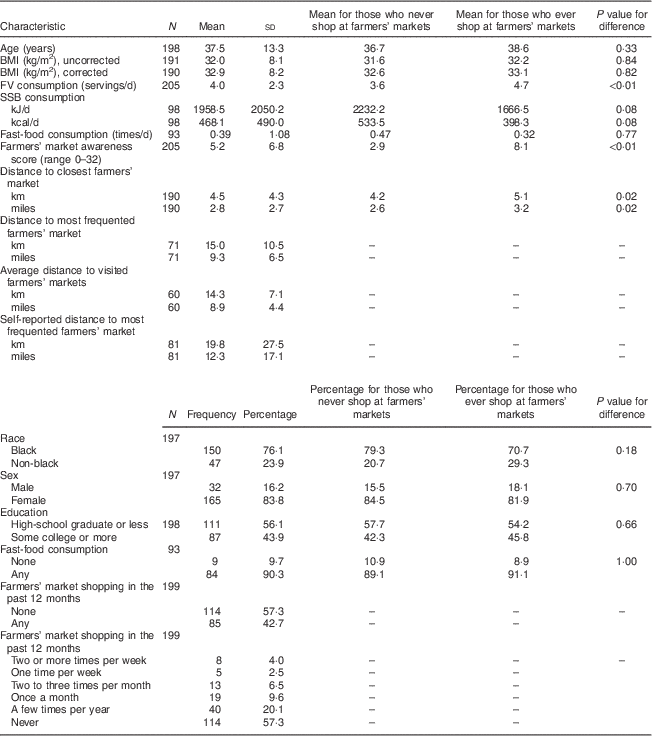
Table 1 lists participant demographic characteristics (n 205). Mean age was 37·5 years and mean BMI was 32·9 kg/m2. Three-quarters of participants were black, 84 % were female and 56 % had a high-school education or less. SNAP participants self-reported eating 4·0 servings of FV per day (as assessed using the Block Screener), 1958 kJ/d (468 kcal/d) from SSB, and 91 % reported ever eating fast food. Of the 205 participants completing the main questionnaire, a sub-sample of 106 participants completed the SSB and fast-food questionnaire (n 98 and n 93 because of missing responses for SSB or fast-food questions).
Participant characteristics among Supplemental Nutrition Assistance Program participants, and differences between those who reported never v. ever shopping for produce at farmers’ markets in the past 12 months, eastern North Carolina, USA, April–July 2013
FV, fruit and vegetable; SSB, sugar-sweetened beverage.
Farmers’ market shopping
Eighty-five participants (43 %) had been to a farmers’ market or produce stand in the past 12 months. The mean farmers’ market awareness score was 5·3 out of a possible score of 32. Seventy-one (37 %) participants were aware of the market closest to their residential address. The percentage of participants who were aware of the market closet to their home was statistically significantly greater among those who ever v. never visited a farmers’ market (53·8 % v. 25·5 %, P<0·001). The mean objectively measured distance to the closest farmers’ market (from participants’ homes) was 4·5 km (2·8 miles), while the mean objectively measured distance to the most frequently visited farmers’ market was 15·0 km (9·3 miles) and the mean self-reported distance to the most frequently visited farmers’ market was 19·8 km (12·3 miles). Twenty-three (12 %) participants shopped at the farmers’ market closest to their residential address (data not shown). In addition, we found that the market where the most (32 %) participants shopped was 13·95 (sd 8·0) km (8·67 (sd 5·0) miles) from participants’ homes.
Table 1 also shows differences between study participants who reported never v. ever shopping at farmers’ markets. SNAP participants who reported ever shopping at a farmers’ market reported consuming 4·7 servings of FV per day v. 3·6 servings for SNAP participants who reported never shopping at farmers’ markets. Although not statistically significant, SNAP participants who reported never shopping at farmers’ markets consumed more SSB and fast food than those who reported shopping at farmers’ markets. Awareness of local farmers’ markets was higher among farmers’ market shoppers v. non-shoppers, whereas farmers’ market shoppers lived further from the closest farmers’ market than did non-shoppers.
Barriers to and facilitators of farmers’ market shopping
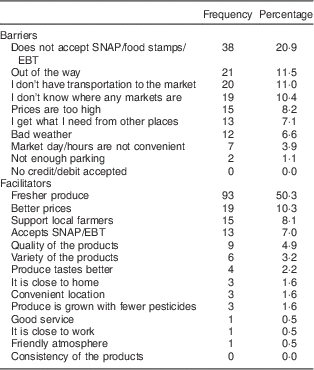
Table 2 shows a wide variety of responses regarding barriers to and facilitators of farmers’ market shopping. The top five barriers to shopping at farmers’ markets included: does not accept SNAP/electronic benefit transfer (EBT), out of the way, lack of transportation, lack of knowledge of market locations and high prices. The top five facilitators were: fresher produce, better prices, support for local farmers, accepts SNAP/EBT and quality of the products. Hand-written barriers included ‘Too far’, ‘never really thought of it’, ‘no money’, ‘food is dirty’, ‘expensive’, ‘hours unknown’, ‘no frozen products’, ‘convenience’, ‘mold’ and ‘transportation.’ Hand-written facilitators included ‘meat’, ‘produce curiosity’, ‘freshness’, ‘to get kids to eat fruits and veggies’, ‘WIC coupons’, ‘salad’, ‘ease of shopping’ and ‘might pass by and will stop’.
Barriers to and facilitators of farmers’ market shopping among Supplemental Nutrition Program (SNAP) participants in eastern North Carolina, USA, April–July 2013
EBT, electronic benefit transfer.
Associations between farmers’ market shopping and awareness, dietary behaviours and BMI
In multivariable linear regression analyses, farmers’ market shopping was associated with awareness of farmers’ markets (estimate=0·18 (se 0·04), P<0·0001) but was not significantly associated with age, race, sex, education, distance to farmers’ markets or public transportation. When adjusted for age, race, sex, education and public transportation, FV consumption was positively associated with farmers’ market shopping (estimate=1·07 (se 0·33), P=0·0013). In multivariate models, neither corrected nor uncorrected BMI was associated with farmers’ market shopping. Total energy from SSB consumed and fast-food consumption were not statistically significantly associated with farmers’ market shopping.
Discussion
Among SNAP participants in the present study, the prevalence of farmers’ market shopping in the past 12 months was 42·7 %. This is similar to other studies which have found that prevalence of farmers’ market shopping in this population was 32–40 %( Reference Racine, Smith and Laditka 27 ). Farmers’ market shopping was associated with awareness of farmers’ market locations. This supports another finding from the present study that a main barrier to farmers’ market use is lack of knowledge of farmers’ market locations, and is in line with findings that a barrier to farmers’ market shopping was lack of knowledge of market locations( Reference Leone, Beth and Ickes 26 ). Alternatively, it could be that those who were more interested in farmers’ markets were more likely to take steps to find out the market locations. The mean distance to the most frequently visited farmers’ market was ~14 km (~9 miles) from the individuals’ home address, while the perceived distance was greater (~20 km (~12 miles)), indicating that individuals perceive the distance as much greater than it actually is. The market where the most (32 %) participants shopped was the County Farmers’ Market, which is very well advertised, has competitive pricing, has many vendors, and accepts WIC Farmers’ Market vouchers and Senior Farmers’ Market Nutrition Program vouchers (but not SNAP/EBT). Taken together, these results indicate that a main facilitator of farmers’ market shopping may not necessarily be making the markets closer to individuals, but making individuals aware of proximal markets and the amenities offered at each.
As found by Grin et al.( Reference Grin, Gayle and Saravia 35 ) and Jilcott Pitts et al.( Reference Jilcott Pitts, Wu and McGuirt 16 ), shopping at farmers’ markets was associated with greater FV consumption. As a dietary pattern characterized by consumption of FV can reduce food-related greenhouse gas emissions( Reference Weber and Matthews 14 ), it is important for environmental as well as nutritional reasons to determine ways to increase population-level produce consumption. The positive association seen between farmers’ market shopping and produce consumption also suggests that efforts to increase farmers’ market shopping among low-income consumers could improve diet quality and health. However, these associations may also be a result of a healthier eating identity among those who shop at farmers markets( Reference Blake, Freedman and Bell 36 ) compared with those who do not shop at farmers’ markets. Previously mentioned, Young et al.( Reference Young, Aquilante and Solomon 22 ) suggest that when incentive programmes are provided at farmers’ markets in low-income areas, providing greater financial access to markets, participants report eating more FV than non-participants. However, in the current study, neither objectively measured nor perceived access (distance) to farmers’ markets was associated with farmers’ market use. In fact, those who shopped at farmers’ markets lived further from markets than those who did not report shopping at farmers’ markets. Increasingly, there are programmatic and policy efforts to increase geographic access to healthy food sources such as farmers’ markets. Findings of the current study suggest that it may be at least as important to promote other types of access, such as financial access (through Double Bucks programmes), awareness or social access (including comfort with market culture)( Reference McGuirt, Ward and Elliot 37 ), to promote farmers’ market shopping among low-income consumers. To promote consumption of healthy and sustainable FV( Reference Friel, Barosh and Lawrence 13 ), more work is needed to determine how to ameliorate financial, social and geographic access barriers to farmers’ market shopping among low-income consumers.
The top barrier to farmers’ market shopping among SNAP participants was ‘Does not accept SNAP/food stamps/EBT’. One way to improve financial and social access is by expanding SNAP/EBT access and promotion at farmers’ markets, which could also create significant gains for small and mid-sized farmers who sell their produce in such direct farm-to-consumer venues. Expanding SNAP/EBT access would encourage sustainability through promoting local and organic FV and improving transparency, as consumers can ask questions directly of farmers. Currently, Pitt County does not have any farmers’ markets with SNAP/EBT access, but state-wide efforts are underway to increase access this resource in farmers’ markets.
It is important to examine associations between farmers’ market use and dietary behaviours other than FV consumption, because increased FV consumption alone will not necessarily have a beneficial impact on obesity among SNAP participants unless such healthy dietary behaviours displace less healthy dietary behaviours (e.g. SSB and fast-food consumption)( Reference Bontrager Yoder and Schoeller 31 ). Thus, we examined associations between farmers’ market shopping and SSB and fast-food consumption. However, we did not find statistically significant associations between farmers’ market use and other dietary behaviours (SSB and fast-food consumption). This may be because of limited power to detect significant effects due to a small sample size.
Study strengths include the use of valid and reliable measures of FV and SSB consumption in an understudied population. We also used an objective measure of distance to farmers’ markets and multiple measures of access to farmers’ markets. We examined the association between farmers’ market use and less healthy dietary behaviours (SSB and fast-food consumption). Limitations include the use of a small, convenience sample, the potential for diet measurement error, inability to validate SNAP enrolment, and systematic bias in self-reported height and weight to calculate BMI (although we attempted to correct for this). Another limitation includes the dichotomous measure of farmers’ market shopping frequency (never v. ever buying produce at a farmers’ market in the past 12 months). Finally, as this is a cross-sectional analysis, causality cannot be inferred.
Future research should focus on the effects of farmers’ market shopping on overall diet quality and on consumption of healthy and sustainable foods. Barriers to shopping at farmers’ markets, including markets not accepting SNAP/EBT, market locations being out of the way, lack of transportation, lack of knowledge of market locations and high prices, should be addressed in future interventions to increase SNAP participants’ use of farmers’ markets. Facilitators such as the ability to procure fresher produce, better prices, support for local farmers, accepting SNAP/EBT and quality of the products should be emphasized in future interventions. Future interventions should also evaluate whether increasing awareness of proximity to farmers’ markets translates to increased shopping frequency at farmers’ markets.
Acknowledgements
Acknowledgements: The authors thank Nadya Majette and Matthew McConaughey for help in reviewing the literature. Financial support: This work was supported in part by the East Carolina University Department of Public Health and in part by a cooperative agreement with the Centers for Disease Control and Prevention (CDC) (grant number FOA CDC-RFA-DP11-1115PPHF11). Portions of this project’s work involve the Communities Transformation Grant initiative supported by CDC funding. However, the findings and conclusions in this paper are those of the authors and do not necessarily represent the official position of the Centers for Disease Control and Prevention. Conflict of interest: None. Authorship: S.B.J.P. formulated the research question, designed the study and drafted the manuscript. Q.W. contributed to study design, analysed the data and helped interpret the data. C.E.D. and C.L.D. collected the data, contributed to study design and data analysis and interpretation. C.J.M.D. contributed to data analysis and interpretation, as well as assisted in the literature review. S.L.B., J.M., R.W. and A.S.A. contributed to study design, interpretation of data analysis and manuscript preparation. All authors reviewed and provided critical intellectual feedback on the manuscript. Ethics of human subject participation: This study was reviewed and approved by the East Carolina University Institutional Review Board.



