


Introduction
Concerns about declining soil organic C (SOC) and increased greenhouse gas emissions due to farming practices such as intensive tillage, excessive rates of N fertilizer and bare fallows have encouraged adoption of conservation agricultural practices such as no-tillage, crop rotations and residue retentionReference Johnson, Franzluebbers, Weyers and Reicosky 1 , Reference Luo, Wang and Sun 2 . However, while no-till farming is suited for broadacre crops it is unsuitable for most vegetable crops. The latter rely on tillage to perform basic management operations such as preparation of beds and management of weeds. These tillage operations disrupt soil aggregates exposing the physically protected soil organic matter (SOM) leading to loss of SOCReference Six, Elliott and Paustian 3 , Reference von Lützow, Kögel-Knabner, Ekschmitt, Matzner, Guggenberger, Marschner and Flessa 4 and declines in soil productivity.
Crop residue management plays an important role in maintaining SOC in horticulture, especially where annual crop rotations rely on frequent tillage. Residue management options include removal from the field, incorporating into the soil, burning in situ, composting or use as mulch for a succeeding cropReference Wilhelm, Johnson, Hatfield, Voorhees and Linden 5 , Reference Yadvinder, Bijay and Timsina 6 . The removal of crop residues from the field is mainly driven by the demand for other farm usesReference Yadvinder, Bijay and Timsina 6 , Reference Valzano, Murphy and Koen 7 or for industrial purposes such as biofuel productionReference Hoskinson, Karlen, Birrell, Radtke and Wilhelm 8 . Retention of crop residues can help increase yields, improve soil nutrients and conserve soil water in semi-arid conditionsReference Wilhelm, Johnson, Hatfield, Voorhees and Linden 5 , Reference Johnson, Allmaras and Reicosky 9 .
A vegetable system returns very small quantities of its residue, whereas at the same time it is more susceptible to soil degradation due to its dependence on heavy tillageReference Jackson, Ramirez, Yokota, Fennimore, Koike, Henderson, Chaney, Calderón and Klonsky 10 , Reference Chan, Dorahy, Tyler, Wells, Milham and Barchia 11 . Organic soil management systems (SMS) use organic sources (such as crop residue and compost) for fertilization but conventional SMS use mineral fertilizers as the main source of crop nutritionReference Mondelaers, Aertsens and Van Huylenbroeck 12 , Reference Chirinda, Olesen, Porter and Schjønning 13 . Soil nutrient reserves and underlying nutrient cycling processes in organically cropped soils are similar to that in conventionally managed soils; however, the former holds nutrients in less-available formsReference Stockdale, Shepherd, Fortune and Cuttle 14 , Reference Berry, Sylvester-Bradley, Philipps, Hatch, Cuttle, Rayns and Gosling 15 as they are in some form of SOM, which is of greater significance.
Organic crop producers have limited tools for managing weeds unlike conventional producers who use herbicidesReference Chirinda, Olesen, Porter and Schjønning 13 , Reference Bond and Grundy 16 . Weed management is ranked as the number one constraint to organic production and research on weed management is a top priority for UK farmersReference Turner, Davies, Moore, Grundy and Mead 17 . Mechanical cultivation is a common method of managing weeds in organically managed farmsReference Bond and Grundy 16 which not only impacts negatively to the SOM and soil structure, but also involves use of fossil fuel, negating the advantages of organic farmingReference Wood, Lenzen, Dey and Lundie 18 . Hand removal of weeds is tedious and too labor intensive to be a commercially viable option. Research studies examining alternative management strategies of using cover crop residues for suppression of weeds in vegetables are reported in the literatureReference Fisk, Hesterman, Shrestha, Kells, Harwood, Squire and Sheaffer 19 , Reference Mennan, Ngouajio, Kaya and Isik 20 . The strategy exploits allelopathic properties of these residues to suppress weeds through the release of phytotoxins from decomposing residueReference Weston 21 . Thus, we undertook to study the effect of corn residue incorporation on the weed biomass in a vegetable production system.
Performance of farming systems is widely assessed using crop yield as an indicator, and high yields are essential to achieving food security because land resources are finiteReference Foley, Ramankutty, Brauman, Cassidy, Gerber, Johnston, Mueller, O'Connell, Ray, West, Balzer, Bennett, Carpenter, Hill, Monfreda, Polasky, Rockstrom, Sheehan, Siebert, Tilman and Zaks 22 . Individual studies comparing yields between organic and conventional systemsReference Pimentel, Hepperly, Hanson, Douds and Seidel 23 – Reference Poudel, Horwath, Lanini, Temple and van Bruggen 25 reported varied results from one study to another. A global scale review and synthesis by Badgley et al.Reference Badgley, Moghtader, Quintero, Zakem, Chappell, Avilés-Vázquez, Samulon and Perfecto 26 concluded that organic agriculture balanced, or even exceeded conventional yields, and could provide sufficient food on current agricultural land. However, TrewavasReference Trewavas 27 argued that organic agriculture may have lower yields and would thus need more land to produce the same quantity of food as conventional farms. Hence, more research is needed to understand the yield differences between the two systems.
A generally held perception among food consumers is that organically produced crops possess higher nutritional quality than those produced conventionallyReference Herencia, García-Galavís, Dorado and Maqueda 28 . However, the literature on food nutrition reports a lack of clear, consistent differences between the nutrient contents of organic and conventional produceReference Biao, Xiaorong, Zhuhong and Yaping 29 , Reference Hoefkens, Vandekinderen, De Meulenaer, Devlieghere, Baert, Sioen, De Henauw, Verbeke and Van Camp 30 .
The focus of this paper is on understanding the plant and soil responses to residue incorporation (in organic and conventional SMS), using sweet corn (Zea mays L. var. rugosa)/cabbage (Brassica oleracea L.) as a model through a 2-year field trial. Annual sweet corn production is estimated at 62,575 t from a total area of 5942 ha and the annual cabbage production is estimated at 81,563 t from a total area of 2020 ha in AustraliaReference Rab, Fisher and O'Halloran 31 .
The specific objectives were to examine the effect of organic and conventional SMS with corn residue management (incorporation=+RES or removal=−RES) on Australian vegetable production:
-
(a) yields and biomass production of sweet corn and cabbage,
-
(b) nutrient uptake by cabbage heads,
-
(c) in-crop weed biomass in cabbage, and
-
(d) soil nutrients.
Materials and Methods
Site and climate
An SMS field trial was conducted over 24 months at two sites in the Armidale area (30.48°S and 151.65°E, elevation 1063 m) of New South Wales, Australia, with two contrasting soil types: a medium loam brown Chromosol (referred to as Chromosol) and a heavy clay black Vertosol (referred to as Vertosol) in the Australian soil classification systemReference Isbell 32 (Table 1). These correspond to Alfisol and Vertisol, respectively, in the USDA classification 33 .
Mean values for selected soil properties for 0–0.1 m depth of field trial sites (n=4).

Monthly rainfall and minimum and maximum temperatures (daily averages) during the experiment are presented in Fig. 1 which details the climatic conditions of the two sites and was from the nearest weather station (~5 km away from both trial sites). The rainfall is summer dominant with the hottest weather in the January–February period and the coldest in the June–July period 34 .
Monthly rainfall and minimum and maximum temperatures during the experiment.

Experimental design and set-up
A rotation of sweet corn (cv. Early Leaming) in summer and cabbage (cv. Sugarloaf) in winter was grown with two SMS (organic or conventional), and two residue management practices (+RES, or −RES) on both the Chromosol and Vertosol sites. The experiment commenced in December 2009 and ended in December 2011 completing four cropping seasons. A randomized layout with a two-way factorial design was adopted at each site and each treatment had four replicates. Each plot was 6 m×2 m. Corn was sown on December 14, 2009 and November 15, 2011 using a tractor-mounted seeder and planting density maintained at 70,000 plants ha−1 in four rows spaced 0.5 m apart.
The macro-nutrients supplied to both crops by organic and mineral fertilizersReference Hoffmann, Schulz, Csitári and Bankó 35 were balanced since comparative studies on conventional and organic farming rarely balance the nutrient inputs in farming systems researchReference Wells, Chan and Cornish 36 – Reference Marinari, Lagomarsino, Moscatelli, Di Tizio and Campiglia 38 . Corn was fertilized in the organic and conventional SMS at the recommended rate of 200:50:40 kg ha−1 N:P:K 39 . The fertilizer combinations to meet the nutrient requirement for corn are in Table 2. Commercially available organic fertilizers (New Era High N and Organic Life Garden Food) were applied pre-sowing for organic SMS, whereas urea, trifos and muriate of potash were used in the conventional SMS. Half of the fertilizers were banded along the four rows and the other half spread evenly over each plot. Half of the N fertilizer in conventional SMS was applied at sowing and the rest as a top dressing 1 month after sowing. Weeds in organic SMS were managed using a chipping hoe at 3 and 7 weeks after sowing. Weeds in conventional SMS were managed using 2 liters ha−1 atrazine (C8H14ClN5) (480 g l−1 of S-triazine as active ingredient) at pre-emergence and 3 weeks after sowing. No other crop protection was required for corn in both years. The crop was irrigated using drip irrigation. After harvesting cobs on April 23, 2010 and March 21, 2011, corn stover was shredded mechanically with a mulching machine, spread evenly across the +RES plots at 14.8 t dry weight ha−1 (estimated average yield) and incorporated using a rotary hoe to a depth of 0.15–0.2 m. The residue had average C:N ratios of 43:1 in 2010 and 53:1 in 2011.
Nutrient composition of organic and mineral fertilizers and the rates applied to corn crop.

Cabbage seedlings were manually transplanted at 8 weeks old at 40,000 plants ha−1 (four rows per plot) on May 4, 2010 and April 7, 2011. The cabbages were fertilized with 120:65:45 kg ha−1 N:P:K 40 using the same products as in the corn. The fertilizer combinations to meet this nutrient requirement for cabbage are shown in Table 3. Fertilizers were applied in a similar way as for corn and irrigated by drip irrigation. Gypsum was applied (333 kg ha−1) as a sulfur supplement in mid-June to all plots (Table 3). Weeds in conventional plots were managed by manually pulling out the weeds with minimum soil disturbance at 3 and 7 weeks after transplanting. Weeds in organic plots were managed using a chipping hoe at 3 and 7 weeks after transplanting. In all plots, cabbage moth (Mamestra brassicae L.) and cabbage white butterfly (Pieris brassicae L.) caterpillars were controlled using Dipel® (active ingredient=4320 international units of potency mg−1 of Bacillus thuringiensis var. kurstaki) twice in September 2010 with a 15-day interval, but there was no need for insect control with the 2011 crop.
Nutrient composition of organic and mineral fertilizers and the rates applied to cabbage crop.

Crop and weed sampling and determination of dry weights
Both corn and cabbage were harvested manually from 1 m×1 m random quadrats in the two center rows, maintaining 0.5 m edge buffers on four sides of each plot. From each plot, corn cobs and stover were collected separately. Corn cobs were removed and the remaining plant parts (stover) were collected by cutting the plant at the soil surface. Any fallen leaves of corn were collected with the stover and not mixed with weeds. From each of the crop harvested-quadrats, all weeds were collected by cutting at ground level. The fresh weights of all components were measured, oven-dried at 70 °C to a constant weight and reweighed.
Cabbages were harvested with one inner wrapper leaf on both sides of the head. From each plot, cabbage heads and weed biomass were collected on October 14, 2010 and September 16, 2011 from a 1 m×1 m random quadrat. The fresh weight of each component was measured, oven-dried at 70 °C to a constant weight and reweighed.
Plant tissue analysis
A ground (<0.5 mm) sub-sample of cabbage head was used to determine the concentrations of total P and K with an inductively coupled plasma-optical emission spectrometer (ICP-OES) after extraction with a 7:3 70% perchloric acid/30% hydrogen peroxide solution using a sealed chamber digestion methodReference Anderson and Henderson 41 . Another sub-sample (<0.5 mm) of the dried plant samples was analyzed by a complete combustion method at 950 °C in a furnace (TruSpec Carbon and Nitrogen Analyser, LECO Corporation) for determination of total N.Nutrient uptake by cabbage heads was calculated by multiplying the measured nutrient concentrations with the corresponding dry biomass.
Soil analyses
Two gram of air-dried soil (<2mm) was tumbled with 40 ml of 1 M NH4Cl adjusted to pH 7 (with 20% NH4OH) for 1 h and filtered through a Whatman No. 42 filterReference Rayment and Higginson 42 . The filtrate was analyzed in the ICP-OES for the determination of exchangeable cations Ca, Mg, Na and K. Total N was determined on air-dried samples (<0.5 mm) by the same method as mentioned for the plant tissue analysis. Ammonium N was determined after extraction with 2 M KClReference Keeney, Nelson and Page 43 . Colwell P was determined in a 0.5 M NaHCO3 (pH of 8.5) extract that was shaken with 1 M H2SO4 acid, followed by additions of polyvinyl alcohol and malachite green reagent, and absorbance measured on a spectrophotometer at 630 nmReference Motomizu, Wakimoto and Toei 44 .
Statistical analysis
A four-way analysis of variance (ANOVA) was used to assess the effects of residue management, SMS, soil type and year on the yield components of corn and cabbage, weed biomass, nutrient uptake (N, P and K) by cabbage heads and soil nutrients using R version 2.11 45 . Variance homogeneity was checked by plotting residual versus fitted values and the q–q plots to assess the normality assumptions of ANOVA. Data were transformed to stabilize variance where assumptions were not met. P values <0.05 were considered significant. Mean values of data are presented along with 95% confidence intervals (standard error×1.96)Reference Brandstätter 46 .
Results
Corn phases
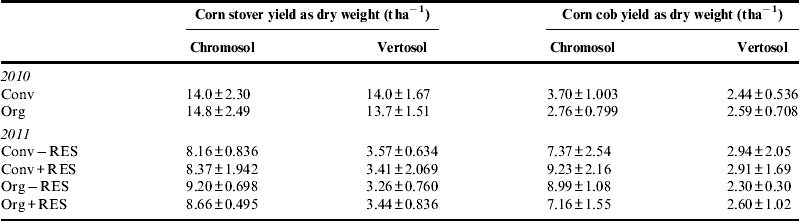
Cob and stover yields are reported as dry weights only to compensate for differences in moisture content. The ANOVA on the cob and stover yield was performed on log transformed data to stabilize variances. Note that no residue had been applied to the field sites during the 2010 corn cropping period because it was the first season of corn. Corn stover and cob yields (Table 4) varied significantly for soil type and year as did their interaction (P<0.001). All other main terms and interactions terms were not significant. Stover yield was reduced in 2011 compared with 2010 by 40% (5.8 t ha−1) in the Chromosol and by 75% (10.5 t ha−1) in the Vertosol due to heavy rain during the crop establishment phase. Cob yield was increased in 2011 compared with 2010 by 153% in the Chromosol; however, the corresponding increase was only 14% in the Vertosol site.
Effect of soil type and SMS treatments on corn stover and cob yields in 2010 and 2011. Means±95% confidence intervals shown. Conv±RES=conventional soil management treatments with or without residue incorporation; Org±RES=organic soil management treatments with or without residue incorporation.
Cabbage phases
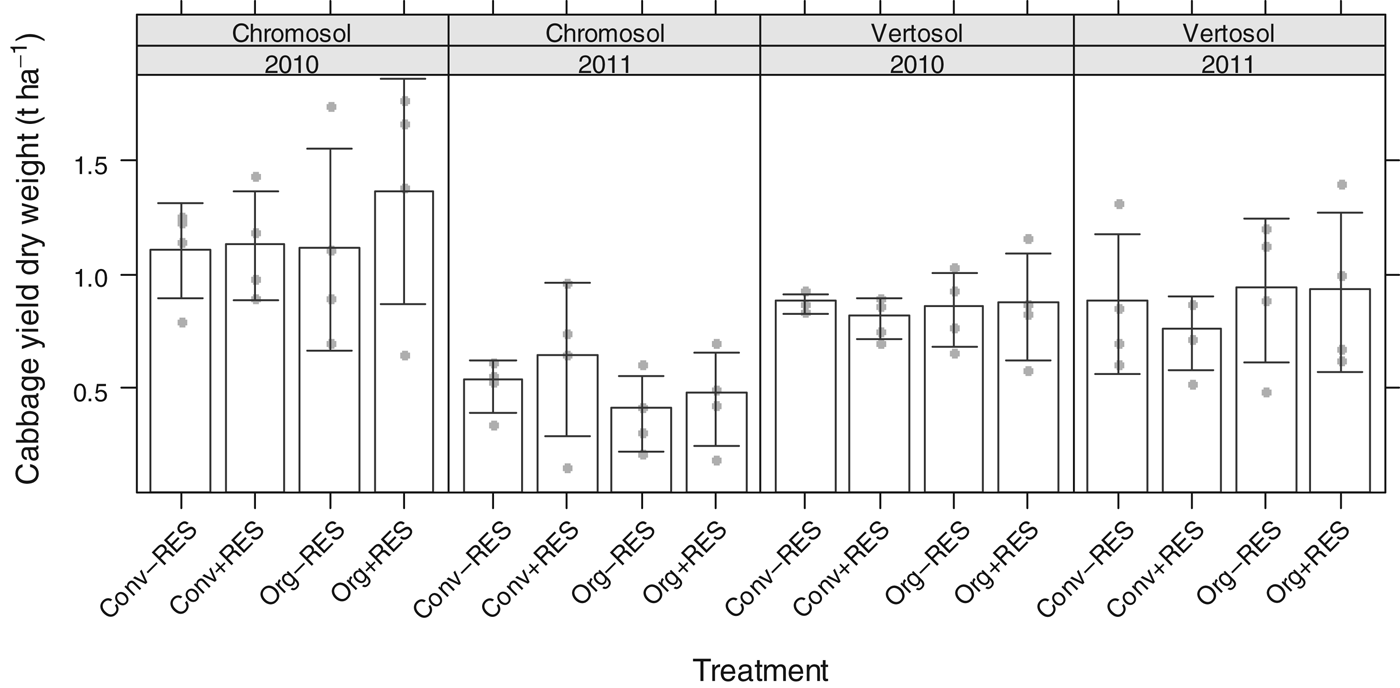
As for corn, only dry weights are reported for cabbage yield and weed biomass. The dry matter of cabbage heads was highly influenced by year (P<0.001), but the other terms were not significant (Fig. 2). The only significant interaction was between soil type and year (P<0.001). The average cabbage yield decreased by 58% in 2011 in the Chromosol site but there was an increase of 3% at the Vertosol site over the same period. There was a very low correlation between the cabbage yield and weed biomass (r 2=0.05) suggesting that the presence of weeds did not affect cabbage yield.
Effect of soil type, residue and SMS treatments on cabbage yield in 2010 and 2011. Means±95% confidence intervals shown. Gray dots are raw data points. Conv±RES=conventional soil management treatments with or without residue incorporation; Org±RES=organic soil management treatments with or without residue incorporation.
Weeds in cabbage
The ANOVA of weed biomass in cabbage was performed on log transformed data. Weed biomass was significant (P<0.001) for the residue incorporation. Soil type was significant (P<0.01) for the SMS (Fig. 3). The only two interactions, SMS×soil type (P<0.05) and residue×year (P<0.01) were significant. The role of incorporated residue as a management tool for weed suppression was evident by the fact that the residue incorporated treatments reduced the average weed biomass by 37% compared with the treatments without residue. Average weed biomass in the conventional SMS was reduced by 41% in the Vertosol site compared with the Chromosol site. However, in the organic SMS, the corresponding reduction was much higher at 66%. The most dominant weed species in the Chromosol site was shepherd's purse (Capsella bursa-pastoris L.) followed by deadnettle (Lamium amplexicaule L.) and the most dominant weed at the Vertosol site was deadnettle followed by wireweed (Polygonum aviculare L.).
Effect of soil type, residue and SMS treatments on in-crop weed biomass in cabbage in 2010 and 2011. Gray dots are raw data points. Means±95% confidence intervals shown. Conv±RES=conventional soil management treatments with or without residue incorporation; Org±RES=organic soil management treatments with or without residue incorporation.

Nutrient uptake by cabbage heads
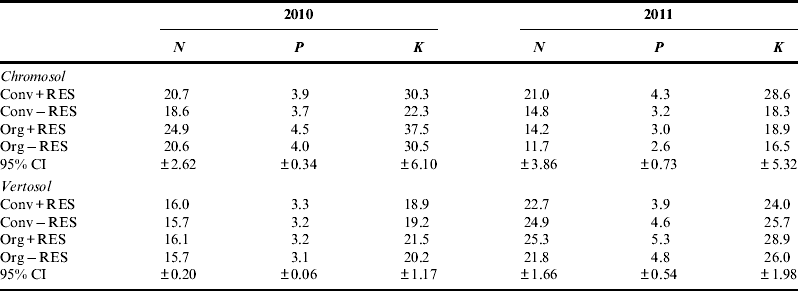
Uptake of N, P and K by cabbage heads is presented in Table 5. The ANOVA for the N, P and K uptake by cabbage head showed that none of the main terms were significant, nor were any interactions except for the soil type×year, which was significant at P<0.01. The average uptake of N, P and K in the Chromosol site was reduced by 27, 19 and 32%, respectively, in 2011, whereas there was an increase of 49, 45 and 31%, respectively in the Vertosol site, compared with 2010.
Treatment means of nutrients uptake (kg ha−1) by cabbage heads for two soil types in 2010 and 2011. Means±95% confidence intervals (CI) shown. Conv±RES=conventional soil management treatments with or without residue incorporation; Org±RES=organic soil management treatments with or without residue incorporation.
Effect of treatments on soil properties
Total- and ammonium-N and Colwell P
Soil total N status after cabbage harvest varied significantly for residue and soil type (P<0.001), and for the SMS and year (P<0.05) (Table 6). No interaction terms were significant. The residue incorporated treatments, on average, increased total N by 7% compared with the treatments without residue. The difference in soil type was a result of the Vertosol having 77% more total N compared to the Chromosol. The organic SMS had 3.6% total N compared with the conventional SMS. Between the 2 years, 2011 had 4.3% more total N than in 2010.
Soil nutrients and other properties for 0–0.1 m depth for the two sites by two sampling times. Treatment means with 95% confidence interval (CI) of means presented. Conv±RES=conventional soil management treatments with or without residue incorporation; Org±RES=organic soil management treatments with or without residue incorporation.
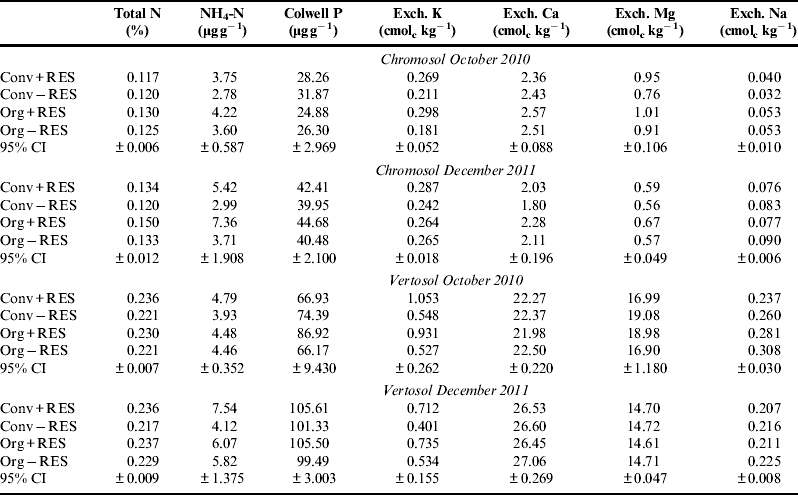
Ammonium-N was significantly (P<0.01) influenced by residue treatment and by the year (Table 6). No other main terms and interactions were significant. The residue incorporated treatments had 39% more NH4-N than the treatments without residue. Between the 2 years, there was 35% more NH4-N in 2011 compared with the values in 2010. Owing to the use of air-dried samples NO3-N measured was negligible and is not reported.
Colwell P in soil was significantly (P<0.001) influenced by soil and year (Table 6). No other main terms and interactions were significant. The Vertosol site had 153% more Colwell P than the Chromosol site. There was a 43% increase in Colwell P values for 2011 than for 2010.
Exchangeable cations
Exchangeable Ca and Mg in soil were highly influenced by soil type and year (P<0.001) and there was a significant interaction (P<0.001 for Ca and P<0.05 for Mg) (Table 6). Other factors and interactions were not significant for exchangeable Ca and Mg. On average, exchangeable Ca for 2010 was 17% lower than that for 2011 in the Chromosol; however, the Vertosol had 10% higher quantity of exchangeable Ca over the same period, which produced the significant interaction between soil and year. The significant interaction between soil and year for exchangeable Mg was due to 34% average reduction in 2011 compared to 2010 in the Chromosol, whereas there was an average reduction of 18% in the Vertosol.
Exchangeable K in the soil was significantly influenced by residue incorporation and soil type (P<0.001) and by the year (P<0.01) (Table 6). The two-way interactions, residue×soil type and soil type×year were highly significant (P<0.001) and residue×year was moderately significant (P<0.01). The increase of exchangeable K due to the incorporated residue was greater (71%) in the Vertosol site than at the Chromosol site (24%), on average. The increase in exchangeable K in 2010 due to residue incorporation was 74% in 2010 compared with the treatments without residue. The corresponding increase in 2011 was only 39%, which is about half the increase in 2010.
Exchangeable Na was significantly influenced by SMS (P<0.01) and soil type (P<0.001) (Table 6). The only two significant interactions were SMS×year (P<0.05) and soil type×year (P<0.001). On average, exchangeable Na in organic SMS was 22 and 3.5% higher than conventional SMS in 2010 and 2011, respectively, which produced the significant interaction between SMS and year. Soil type and year significantly interacted because the average exchangeable Na increased by 84% in 2011 for the Chromosol, but decreased by 21% during the same time for the Vertosol.
Discussion
Agronomic outcomes for corn and cabbage
In a vegetable enterprise, sweet corn is a compatible rotation crop that not only has relatively high economic value, but also produces a large quantity of stover for retention on the soil surface or for incorporation in soilReference Yadvinder, Bijay and Timsina 6 , Reference Valzano, Murphy and Koen 7 reducing the likelihood of declining SOM in vegetable systemsReference Jackson, Ramirez, Yokota, Fennimore, Koike, Henderson, Chaney, Calderón and Klonsky 10 , Reference Chan, Dorahy, Tyler, Wells, Milham and Barchia 11 . In this study, there were no significant differences between the SMS treatments for yields of sweet corn cobs and stover, and cabbage head. This could partly be attributable to the equivalent quantities N, P and K nutrients appliedReference Hoffmann, Schulz, Csitári and Bankó 35 to both the organic and conventional SMS. Crop yields in organic systems are generally lower than the yields from conventional systems, mainly due to use of readily soluble nutrients and use of pesticides in the latter systemReference Pimentel, Hepperly, Hanson, Douds and Seidel 23 , Reference Azadi, Schoonbeek, Mahmoudi, Derudder, De Maeyer and Witlox 47 . Elsewhere average corn yield of a chisel-plough-based organic system was reported to be 28% less than the no-till conventional systemReference Teasdale, Coffman and Mangum 24 . In another study, average corn yields of the organic systems were lower, similar and higher than the conventional systems for the initial 5-year phase, after a 5-year transition period and for five drought-year period, respectively in the Rodale Institute experimentReference Pimentel, Hepperly, Hanson, Douds and Seidel 23 .
A meta-analysis comparing yield performance of organic and conventional vegetable production systems reported that, on average, yields in organic systems were 33% lower than conventional systemsReference Seufert, Ramankutty and Foley 48 . Lotter et al.Reference Lotter, Seidel and Liebhardt 49 suggested that improved soil water-holding capacity may be related to the higher organic yields in drier seasons, while crop losses due to weed competition may contribute to lower organic yields.
It should be noted that the short implementation period of the organic SMS (2 years) may not have been sufficient to produce the expected yield differences because the nutrient levels in the soils may not have reached the limiting levels upon imposition of the treatmentsReference Seufert, Ramankutty and Foley 48 . Lower crop productivity in organic systems reported in literature could be ascribed to limited N supply restricting growthReference Berry, Sylvester-Bradley, Philipps, Hatch, Cuttle, Rayns and Gosling 15 .
In other studies, corn residue incorporation rates were reported to have no significant effect on wheat (Triticum aestivum L.) grain yields in a 2-year study, but the chisel-plough treatment with 25–50% corn residue incorporation with 150 kg N ha−1 raised grain yieldsReference Alijani, Bahrani and Kazemeini 50 . Contrastingly, Shafi et al.Reference Shafi, Bakht, Jan and Shah 51 reported a significant increase in grain and stover yields of maize following a post-harvest incorporation of corn residue in both years of a 2-year study. The limited effect of residue incorporation on yield of cabbage head may be attributed to high average C:N ratios of residue immobilizing NReference Moritsuka, Yanai, Mori and Kosaki 52 , Reference Trinsoutrot, Recous, Bentz, Lineres, Cheneby and Nicolardot 53 .
Water did not easily drain away in the clay Vertosol (42% (v/v) water-holding capacity) compared with the sandy Chromosol (16% (v/v) water-holding capacity) where water drained away relatively quicklyReference Isbell 32 which caused the between-sites and between-years yield differences. In 2010, the Chromosol site was affected by frost during the grain-filling period while slight lodging hampered the crop at Vertosol site, manifesting as cob yield differences between the 2 years. Differences in cabbage yield between two sites and years could be attributed to the differences in weed competition as revealed by weed biomasses.
Nutrient uptake
Uptake of N, P and K by cabbage heads showed no significant difference between the SMS and residue management treatments. This finding is consistent with the literature on food nutrition, which commonly reports a lack of clear, consistent differences between the nutrient contents of organic and conventional produceReference Biao, Xiaorong, Zhuhong and Yaping 29 , Reference Hoefkens, Vandekinderen, De Meulenaer, Devlieghere, Baert, Sioen, De Henauw, Verbeke and Van Camp 30 , Reference Smith-Spangler, Brandeau, Hunter, Bavinger, Pearson, Eschbach, Sundaram, Liu, Schirmer, Stave, Olkin and Bravata 54 . A review of 223 studies comparing nutrient levels of organically and conventionally produced foods found no nutritional benefits except for higher P levels in organic foodReference Smith-Spangler, Brandeau, Hunter, Bavinger, Pearson, Eschbach, Sundaram, Liu, Schirmer, Stave, Olkin and Bravata 54 and other authors have also reported similar findingsReference Biao, Xiaorong, Zhuhong and Yaping 29 , Reference Hoefkens, Vandekinderen, De Meulenaer, Devlieghere, Baert, Sioen, De Henauw, Verbeke and Van Camp 30 . However, we did not find such a difference possibly due to the short timeframe and equivalent N, P and K applied for both organic and conventional SMS. A meta-analysis of 39 papers comparing nutrient composition reported that only nitrate was significantly lower in organic carrot, lettuce and potato, higher in organic spinach and not different for other nutrientsReference Hoefkens, Vandekinderen, De Meulenaer, Devlieghere, Baert, Sioen, De Henauw, Verbeke and Van Camp 30 . In a more recent study, nitrate concentration in the edible parts was significantly lower in crops grown in organically fertilized plots, with a tendency for lower N and higher P content in organic crops cultivated in the same crop cycleReference Herencia, García-Galavís, Dorado and Maqueda 28 .
Residue incorporation effects on weed biomass
The in-crop weed biomass for cabbage was significantly reduced by residue incorporation. Similar to our finding, oilseed rape (Brassica napus L.) residue incorporation was reported to have reduced by 50–96% weed biomass in potato (Solanum tuberosum L.) cropReference Boydston and Hang 55 . Reduction of weed biomass indicates the ability of decomposing corn residue to suppress of weedsReference Weston 21 , Reference Cheema and Khaliq 56 , Reference Gallandt, Liebman and Huggins 57 . Therefore, crop residue incorporation could be a supplementary weed management strategyReference Fisk, Hesterman, Shrestha, Kells, Harwood, Squire and Sheaffer 19 , Reference Mennan, Ngouajio, Kaya and Isik 20 to mechanical cultivation available to organic growersReference Bond and Grundy 16 , Reference Turner, Davies, Moore, Grundy and Mead 17 . Such practice could possibly save on the costs of cultivation and herbicide in organic and conventional agriculture, respectively, which warrants more research.
Some authors have claimed that non-chemical weed control methods in cabbage such as mulching and cultivation are as effective as herbicidesReference Dillard, Bellinder and Shah 58 . In slower growing crops such as corn and cabbage, the use of mulch for weed control can be cost effective, being cheaper than hand-weeding and more effective than common tillage practicesReference Kristiansen, Sindel and Jessop 59 . Weed biomass in the Vertosol was observed to be lower as the site has been intensively cropped for trials for several decades, whereas the Chromosol site was converted from pasture to infrequent cropping about 7 years prior to initiation of the experiment.
Soil nutrients
Soil total N was impacted positively by the incorporated residue and the SMS possibly due to N input through residue and organic fertilizers. While sources of N in organically grown crops affect crop productivity by limiting the amount of available N to meet the crop demandReference Stockdale, Shepherd, Fortune and Cuttle 14 , Reference Berry, Sylvester-Bradley, Philipps, Hatch, Cuttle, Rayns and Gosling 15 , organic systems have the potential to meet the N requirement if sources of N (leys, N-rich residues and uncomposted manure), timing of supply and choices of crops are carefully matchedReference Berry, Sylvester-Bradley, Philipps, Hatch, Cuttle, Rayns and Gosling 15 . Organic management is also reported to have significantly lower levels of nitrate and soluble N in soil compared with conventional managementReference van Diepeningen, de Vos, Korthals and van Bruggen 60 . Furthermore, N mineralization rates of a conventional system have been reported to be 100% higher than an organic systemReference Poudel, Horwath, Lanini, Temple and van Bruggen 25 . Therefore, organic SMS is likely to hold more N to increase N use efficiency and at the same time reduce the losses of N into the environment.
The release of N from the decomposed residue increased the average total N and NH4-N levels compared with the treatments without residue. Owing to a cumulative effect across years, 2011 had higher total N and NH4-N levels than in 2010, on average. This observation was possibly because the increase in soil temperature could have stimulated decomposition and microbial transformation of N, as the soil samples in 2011 were collected in December, a relatively warmer month compared with October in 2010. The treatments in the Vertosol had higher levels of average total N due to the Vertosol's inherent higher N status than the ChromosolReference Isbell 32 .
The effect of soil type is likely simply due to the nutrient-rich Vertosol having higher levels of Colwell P and exchangeable K compared with the relatively poor Chromosol. The effect of year may have been due to a cumulative effect similar to that mentioned for total N levels. While a timeframe of 2 years may be too short to produce significant changes in P levels, Nachimuthu et al.Reference Nachimuthu, Kristiansen, Guppy, Lockwood and King 61 reported that there was a major overlap between P inputs for organic and conventional vegetable farms in eastern Australia, since conventional vegetable farmers were also found to apply organic inputs such as green manure and composts. They also found high levels of labile P in both farming systems in all study sites and so concluded that the organic vegetable farms were not nutritionally deficient. In another study of organic vegetable production systems in Australia, two alternative vegetable systems that received high inputs of compost were reported to increase soil C, total N, total P and exchangeable cations compared with three conventional systems and the high mineral fertilizer recipient treatment had highest potentials to release P into the environmentReference Wells, Chan and Cornish 36 . Vegetable systems in the greater Sydney metropolitan region of NSW are reported to accumulate exchangeable cations (Ca, Mg, and K) and P as a consequence of high rates of inorganic fertilizers and poultry manure inputs as well as excessive cultivationReference Chan, Dorahy, Tyler, Wells, Milham and Barchia 11 . Hence, to reduce the burden on external supply of organic materials to maintain soil fertility and to counteract the negative effect of excessive cultivation for weed control, sweet corn is suggested as a rotation crop in a vegetable system.
Conclusion
Yields of corn and cabbage under the organic SMS were equivalent to the conventional SMS. In other words, performance in the organic SMS can be matched to that in the conventional SMS if the macro-nutrients are balanced. The short experimental period of 2 years may have been insufficient to produce the anticipated yield differences reported in the literature. No clear difference in the nutrient uptake between the organic and conventional SMS was found and is consistent with the literature.
Corn residue-induced inhibitions on weed biomass may be used as a supplementary tool to mechanical weed control for organic SMS, potentially reducing the negative impacts of cultivation on SOC. Further, it could potentially reduce the costs of herbicides used in conventional SMS. Soil incorporation of residue and organic SMS are separately capable of improving total N and exchangeable K, indicating the long-term fertility gains of these treatments. The slower nutrient releasing characteristics of organic fertilizer can not only reduce nutrient losses to the environment, but also benefit successive crops.
Acknowledgements
The principal author was funded by the Endeavour Postgraduate Award of Australia Awards, and the University of New England (UNE) and the Primary Industries Innovation Centre (a joint venture of NSW DPI and UNE). Agronomic support by Craig Birchall, biometrical guidance by Bruce McCorkell and technical assistance by Leanne Lisle, Michael Faint, David Edmonds, Greg Chamberlain, Gary Cluley, Jan Carruthers and George Henderson are gratefully acknowledged. Thanks to two anonymous reviewers for their valuable comments.



