



Pre-eclampsia (PE) is a maternal complication in pregnancy characterized by hypertension. It accounts for 2–8 % of all complications during pregnancy and 16 % of all maternal deaths( Reference Steegers, von Dadelszen and Duvekot 1 ). In a study conducted by the WHO in twenty-four low- and middle-income countries, the prevalence of PE and eclampsia combined was 4 %( Reference Bilano, Ota and Ganchimeg 2 ). PE, as a placenta-dependent disorder, can lead to intra-uterine growth restriction and premature delivery, which pose a health threat to the developing child( Reference Bilano, Ota and Ganchimeg 2 ). The aetiology of PE remains unknown and poorly characterized with regard to the pathophysiology involved in the development of hypertension. Nevertheless, the pathogenesis of PE is thought to involve a number of biological processes that may be affected by vitamin D status and availability of the precursor, 25-hydroxycholecalciferol (25-OH-D3), that is subsequently activated to the hormone 1,25-dihydroxycholecalciferol (1,25-(OH)2D3)( Reference Haugen, Brantsaeter and Trogstad 3 ).
The latest narrative review( Reference Genuis 4 ) together with two systematic reviews of twenty-five studies found that inadequate vitamin D status (defined as 25-hydroxyvitamin D (25-OH-D)<20 ng/ml) during pregnancy increased the risk of PE( Reference Tabesh, Salehi-Abargouei and Tabesh 5 , Reference Hypponen, Cavadino and Williams 6 ). More importantly, a meta-analysis of data from twenty-four studies found that women with circulating 25-OH-D3 levels less than 20 ng/ml (50 nmol/l) in pregnancy experienced an increased risk of PE, preterm birth and small-for-gestational-age infants( Reference Wei 7 , Reference Wei, Qi and Luo 8 ), which is in agreement with previous publications( Reference Aghajafari, Nagulesapillai and Ronksley 9 – Reference Thorne-Lyman and Fawzi 11 ). However, almost all the studies included in the meta-analysis were from countries that enrich foods with vitamin D, raising the question of whether the pattern is the same in countries without a vitamin D food fortification policy. A recently published case–cohort study of women at 26 weeks’ gestation or less, carried out before the fortification programme in the USA (1959–1966), revealed that pregnant women with 25-OH-D levels of 20 ng/ml or higher had a 40 % reduction in severe PE risk compared with 25-OH-D levels less than 20 ng/ml( Reference Bodnar, Simhan and Catov 12 ).
More recently, the epimer of 25-hydroxycholecalciferol (3-epi-25-OH-D3) has been found to represent up to 40 % of the total 25-OH-D in infants and 17 % in adults( Reference Singh, Taylor and Reddy 13 – Reference Stepman, Vanderroost and Stockl 16 ). To date, the role and function of 3-epi-25-OH-D3 are unknown but it has been suggested to have less calcaemic activity( Reference Fleet, Bradley and Reddy 17 ) and could thus pose a greater risk of hypertensive disorders when total vitamin D status is low. However, there is no input by authorities regarding interpretation of 3-epi-25-OH-D3 and the Institute of Medicine recommends that serum/plasma total 25-OH-D of only 20 ng/ml (50 nmol/l) is needed to support bone health while values below 12 ng/ml (30 nmol/l) are generally consistent with deficiency( Reference Ross 18 ).
To achieve optimal health, it is important that women of reproductive age, pregnant mothers and their newborn infants receive adequate amounts of vitamin D. The RDA for vitamin D was advised as 15 µg/d (600 IU/d) for covering the requirements of 97·5 % of the population for ages 1–70 years and as 10 µg/d (400 IU/d) for breast-fed infants (0–12 months)( Reference Ross, Manson and Abrams 19 ). Oral intakes of vitamin D are sometimes unable to meet the requirements in pregnancy even with regular use of prenatal vitamins( Reference Bodnar, Catov and Simhan 20 – Reference Lee, Smith and Philipp 22 ). In the context of Serbia where food sources are limited and single vitamin D supplements for adults are rarely present in the market, the primary source of vitamin D is UVB, which is limited during winter from October to March. The winter period is characterized by a higher incidence of PE in Serbia( Reference Velickovic 23 ). According to the Serbian national health-care programme, it is mandatory for infants (0–12 months) to receive vitamin D drops (10–15 µg/d (400–600 IU/d)), but there is no similar practice for adults. Available data indicate that for Serbian adults, the intake of vitamin D is below the recommended dietary intake of 15 µg/d (600 IU/d)( Reference Novakovic, Cavelaars and Bekkering 24 , Reference Djekic-Ivankovic, Weiler and Nikolic 25 ).
The aim of the present study was to examine vitamin D intake and status of women with and without PE and their newborn infants in Serbia, a country without a mandatory vitamin D food fortification policy, and to describe the proportion of total 25-OH-D3 in the 3-epimeric form in relation to maternal and neonatal outcomes. The hypothesis was that at delivery, women with PE and their infants would have lower vitamin D status based on total 25-OH-D, 25-OH-D3 and 3-epi-25-OH-D3 compared with healthy control pregnancies.
Materials and methods
Participants
As a part of a national integrated project, a case–control study was conducted between January and the beginning of April 2011, when UVB exposure is minimal. After hospital admission for childbirth at the Department of Gynecology and Obstetrics, a Clinical Center of Serbia, pregnant women were invited to participate in the study. Selection bias was minimized by recruiting from the major Clinical Center managing PE in Serbia. In the study time frame all women with PE were recruited, which represents more than 75 % of all PE cases treated in hospital over the year( Reference Velickovic 23 ). In order to match cases and controls, the next healthy woman of similar age, admitted for childbirth, was invited to participate. All women with PE and 91 % (n 33) of approached controls agreed to participate. Sixty mothers and their infants completed the study. Written consent was obtained from all mothers. Half of the mothers met criteria for PE (case) and half were healthy matched controls (control). Inclusion criteria for all mothers were: nulliparity, monofetal pregnancy, non-smokers and previously healthy women. Diagnostic criteria for PE were based on WHO criteria: systolic blood pressure above 140 mmHg and diastolic blood pressure above 90 mmHg, as well as proteinuria. Gestational age was established based on last menstrual date confirmed by sonographic examination prior to 20 weeks of gestation. Cases and controls were matched 1:1 based on maternal age (19–35 years) and time frame of recruitment (week of delivery). Immediately before or after delivery, maternal blood samples were collected and all mothers completed a validated Women and Reproductive Health FFQ (WRH-FFQ) to determine their vitamin D intake from diet and vitamin D supplements. At delivery, umbilical cord blood was collected. Maternal and infant characteristics were obtained from the medical record.
FFQ
The WRH-FFQ was developed and validated against three 24 h recalls in Serbia( Reference Djekic-Ivankovic, Weiler and Nikolic 25 ). Using the WRH-FFQ, women were asked to report the portion size and frequency of food items consumed in the month prior to delivery. During the interview a trained dietitian provided women with instructions relating to frequencies of consumption and portion sizes (small, medium, large) presented as photographs included in the WRH-FFQ. The questionnaire contained ninety food items and twelve additional questions regarding the frequency of use of multivitamin/mineral and supplements as well as imported vitamin D-fortified products available in Serbia. The WRH-FFQ also contained a general questionnaire on age, education level, previous medical conditions, detailed vitamin supplements and medication use, lifestyle habits (smoking, physical activity/exercise, alcohol and coffee/tea consumption) as well as exposure to solariums or UV lamps (tanning) during the last 3 months.
Calculation of nutrient intakes
Nutrient intakes resulting from the FFQ were estimated using the Serbian food composition database( Reference Gurinovic, Milesevic and Kadvan 26 ). Manufacturers’ specifications were used to estimate the nutrient content of supplements. The total daily intake of vitamin D (IU/d) was calculated using the dietary assessment software tool DIET ASSESS( Reference Gavrieli, Naska and Berry 27 , Reference Gurinovic, Milesevic and Novakovic 28 ). Total vitamin D intake was calculated by adding intakes from supplements to intakes from food. Total vitamin D intakes of mothers were expressed relative to both the Estimated Average Requirement (EAR) of 10 µg/d (400 IU/d) and the RDA for vitamin D of 15 µg/d (600 IU/d) for adults (19–50 years) according to the Institute of Medicine recommendations( Reference Ross 18 ). The proportions of women below the EAR and the RDA were calculated since these recommendations represent healthy levels of intake in accordance with good vitamin D status when exposure to UVB is minimal( Reference Ross, Taylor and Yaktine 29 ). Since they contain detailed guidance for pregnancy, Canada’s Food Guide Servings (http://www.hc-sc.gc.ca/fn-an/food-guide-aliment/track-suivi/table_female-femme_preg-ence_age19-50-eng.php) were used as a reference to compare daily food serving intakes of case and control women in the month before delivery.
Vitamin D status assessment
Venous blood samples of mothers on the day of delivery and umbilical cord blood were collected into lithium heparin tubes. Blood was immediately processed and plasma frozen at −80°C. Plasma samples were shipped to Canada (McGill University) on dry ice and stored at −80°C until analysis. Maternal and cord blood samples from delivery were measured for plasma 25-OH-D3, 25-hydroxyergocalciferol (25-OH-D2), 3-epi-25-OH-D3, 24,25-dihydroxycholecalciferol (24,25-(OH)2D3) and total 25-OH-D by LC–MS/MS at Queen’s University( Reference Kaufmann, Gallagher and Peacock 30 ). LC–MS/MS analysis involved running plasma extracts in triplicate along with sets of calibrators and quality control samples. Samples from the Vitamin D External Quality Assessment Scheme (DEQAS), with National Institute of Standards and Technology (NIST) reference values, were used as quality assurance samples. Inter-assay variability between the batches of LC–MS/MS assays for 25-OH-D3 usually has a bias between −0·7 % and −17 % from the reference DEQAS/NIST values. DEQAS certifies laboratories based upon 75 % of results lying within a ±15 % deviation from NIST reference values. The LC–MS/MS method fell well within these limits. Quality control curves for 25-OH-D2 were employed, but were disregarded as the samples showed low 25-OH-D2 content. Although 24,25-(OH)2D3 calibrators spiked with 24R,25-(OH)2D3 were employed, currently there is no external quality assessment scheme for this analyte as DEQAS/NIST is yet to formally assign 24,25-(OH)2D3 content to the DEQAS circulated samples. Plasma 1,25-dihydroxyvitamin D (1,25-(OH)2D) was assessed by ELISA competitive enzyme immunoassay (Alpco, Salem, NH, USA) for twenty-eight mothers (case: n 14; control: n 14) where sufficient volume of sample was available. The intra-assay CV for 1,25-(OH)2D was 8·6 %.
Biochemical parameters and mineral status assessment
Standard biochemistry was obtained from the hospital chart. Biochemical tests (see online supplementary material, Supplemental Table 1) performed as part of the routine patient care were recorded for mothers, including renal function (serum creatinine, urea), liver function (bilirubin, alanine transaminase, aspartate transaminase and γ-glutamyl transferase) and an acute-phase reactant (C-reactive protein (CRP)). Analyses were performed in the certified laboratory of the Clinical Center of Serbia, which participated in the Serbian National External Quality Assessment Scheme (SNEQAS) for medical biochemistry programmes and obtained a Certificate of Proficiency for 2011–2012. Standard biochemical parameters were analysed on a Beckman Coulter AU480 Chemistry System, complete blood count on a haematological analyser (Abbott Cell-Dyn® 3700) and CRP was analysed using laser nephelometry (Siemens BN ProSpec System). Plasma and cord levels of Ca, Mg, Fe, Zn and Cu were determined by flame atomic absorption spectroscopy on a Varian SpectrAA-10 instrument according to a previously described method( Reference Qi 31 ). The Se level in plasma samples was measured by flow injection hydride generation atomic absorption spectrometry on the same spectrometer equipped with a Varian VGA-76 hydride unit( Reference Yu, Horng and Hsu 32 ). The intra-assay CV for Mg, Fe, Zn, Cu and Se were 1·24 %, 3·42 %, 2·25 %, 3·07 % and 5·63 %, respectively.
Ethical approval
The study was conducted according to the guidelines set in the Declaration of Helsinki and all procedures were approved by the Ethics Review Board of the Clinical Center of Serbia and the McGill University Research Ethics Board of the Faculty of Agricultural and Environmental Sciences for analyses in Canada.
Statistical analysis
Characteristics of mothers with and without PE were compared using the χ 2 test or Fisher’s exact test for categorical variables and Student’s unpaired t test for continuous variables. To identify differences between cases and controls a mixed-model ANOVA was used followed by Bonferroni post hoc testing. Normality (Kolmogorov–Smirnov test) and homogeneity of variances (Levene’s test) were tested prior to post hoc Bonferroni testing. Non-parametric correlation analyses were used to relate plasma levels of vitamin D with maternal and neonatal outcomes since data were not normally distributed. Linear multiple regression analyses were performed to explore linkages between CRP, as a dependent variable, and minerals and vitamin D metabolites as independent variables. A P value of ≤0·05 was accepted as significant. Data are expressed as mean and standard deviation unless otherwise stated. All analyses were performed using the statistical software package SAS version 9·4.
Results
There were no differences between the case and control groups with respect to mother’s age, as shown in Table 1. However, BMI pre-pregnancy and at delivery were significantly higher in mothers with PE. Case infants were delivered predominantly by caesarean section at an earlier gestational age compared with controls (Table 1), with the latter resulting in a significant difference in all anthropometric measurements between infant groups (Table 2). Moreover, the weight-for-age Z-score suggested that the case infants were smaller for gestational age and sex. Apgar scores were also lower in the case infants.
Characteristics of mothers in the case (with pre-eclampsia) and control group (without pre-eclampsia), Serbia, January–April 2011

SBP, systolic blood pressure; DBP, diastolic blood pressure; RBC, red blood cells; Le, leucocytes; PL, platelets; CRP, C-reactive protein.
Characteristics at birth of infants in the case (mothers with pre-eclampsia) and control group (mothers without pre-eclampsia), Serbia, January–April 2011
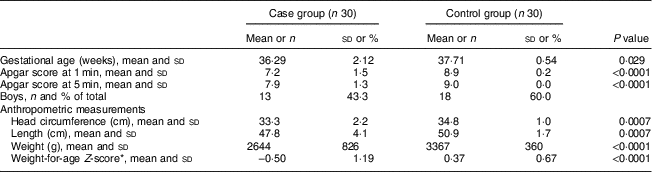
* Adjusted for gestational age and sex( Reference Kramer, Platt and Wen 58 , 59 ).
Estimated daily energy and nutrient intakes assessed by the WRH-FFQ and numbers of food servings are shown in Table 3. Divergence in dietary patterns of case compared with control mothers on a daily basis was reflected in higher intakes of meat and grain food servings, chocolate and amount of oil used for cooking without meeting recommendations for daily vegetable, fruit and milk servings (Table 3). The top five food sources of vitamin D identified by the WRH-FFQ were meat, eggs and fatty fish, with all fish varieties being imported except trout. Regardless of group, more than 75 % of mothers drank 250 ml of coffee and 250 ml of herbal tea (peppermint or chamomile tea) every day, while 55 % consumed at least 250 ml of soft drinks daily.
Dietary intake of case (with pre-eclampsia) and control (without pre-eclampsia) women in the month before delivery, Serbia, January–April 2011

EAR, Estimated Average Requirements; ND, not defined.
* Based on 30 d estimated using the Women and Reproductive Health FFQ (WRH-FFQ)( Reference Djekic-Ivankovic, Weiler and Nikolic 25 ).
† Estimated Average Requirements( 60 ).
‡ In pregnancy include an extra two to three Food Guide Servings from any of the four food groups each day.
Case and control mothers had almost identical mean vitamin D intakes from supplements and diet (Table 1). Overall, vitamin D intake assed by the WRH-FFQ was below the EAR (10 µg/d (400 IU/d)) for 77 % of all mothers (case: 86·7 % (n 26/30); control: 66·7 % (n 20/30)). Only one woman (3·3 %) in each group reached the RDA due to vitamin D supplement use of 15 µg/d (600 IU/d), whereas 23 % of cases and 33 % of controls met the EAR. None of the sixty mothers consumed commercially available food products with added vitamin D and no vitamin supplement use was reported by twelve (40·0 %) mothers in the case and eleven (36·7 %) mothers in the control group. The majority of mothers who reported using a vitamin supplement used 6·25 µg (250 IU) of vitamin D in the form of a multivitamin pill for pregnancy (MamaVit®, PharmaSwiss or Centrum Materna®, Wyeth).
Although vitamin D intake was comparable between groups, as well as total blood Ca concentration (case: 99·1 (sd 8·9); control: 95·8 (sd 21·6) mg/l; P=0·7430), women with PE had significantly lower total plasma 25-OH-D, 25-OH-D3, 25-OH-D2 and 3-epi-25-OH-D3 (Fig. 1), while 24,25-(OH)2D3 (case: 0·8 (sd 0·6); control: 0·8 (sd 0·4) ng/ml; P=0·2381) and 25-OH-D3:24,25-(OH)2D3 ratio (case: 16·8 (sd 6·6); control: 18·7 (sd 3·7); P=0·2944) were not different. Moreover, mothers with PE had significantly lower concentrations of plasma 1,25-(OH)2D (case: 56·5 (sd 26·6); control: 81·0 (sd 25·7) pg/ml; P=0·0178). Infants, on the contrary, did not differ significantly with respect to total plasma 25-OH-D, 25-OH-D3, 25-OH-D2, 3-epi-25-OH-D3 (Fig. 2), 24, 25-(OH)2D3 (case: 0·5 (sd 0·3); control: 0·5 (sd 0·2) ng/ml; P=0·8295) or 25-OH-D3:24,25-(OH)2D3 ratio (case: 16·8 (sd 4·5); control: 19·9 (sd 4·2); P=0·0935), but similar patterns were noticed between case and control infants as in their mothers (Figs 1 and 2). Lastly, infants of mothers with PE had slightly elevated 3-epi-25-OH-D3 content expressed as a percentage of total 25-OH-D3 (case: 7·9 (sd 1·1); control: 7·0 (sd 1·4) % of total 25-OH-D3; P=0·0054).
Vitamin D status of mothers in the case (with pre-eclampsia; n 30) and control group (without pre-eclampsia; n 30), Serbia, January–April 2011: (a) 25-hydroxycholecalciferol (25-OH-D3); (b) total 25-hydroxyvitamin D (25-OH-D); (c) 3-epimer of 25-hydroxycholecalciferol (3-epi-25-OH-D3); and (d) 25-hydroxyergocalciferol (25-OH-D2). ———, 20 ng/ml target to support bone health; – – – – –, below 12 ng/ml is consistent with deficiency; · · · · ·, below 10 ng/ml is consistent with severe deficiency. Results are presented as scatter plots with mean and sd. Differences between groups tested with the Mann–Whitney test: (a) P=0·002; (b) P=0·0006; (c) P=0·0007; and (d) P<0·0001

Vitamin D status of infants in the case (mothers with pre-eclampsia; n 23) and control group (mothers without pre-eclampsia; n 26), Serbia, January–April 2011: (a) 25-hydroxycholecalciferol (25-OH-D3); (b) total 25-hydroxyvitamin D (25-OH-D); (c) 3-epimer of 25-hydroxycholecalciferol (3-epi-25-OH-D3); and (d) 25-hydroxyergocalciferol (25-OH-D2). ———, 20 ng/ml target to support bone health; – – – – –, below 12 ng/ml is consistent with deficiency; · · · · ·, below 10 ng/ml is consistent with severe deficiency. Results are presented as scatter plots with mean and sd. Differences between groups tested with the Mann–Whitney test: (a) P=0·0627; (b) P=0·0571; (c) P=0·4122; and (d) P=0·6963

In 97 % of PE and 77 % of control mothers, plasma concentration of total 25-OH-D was below 20 ng/ml (Fig. 1), a concentration needed to support bone health as identified by the Institute of Medicine. Values <12 ng/ml were observed in 67 % of case and 27 % of control mothers, which are generally consistent with deficiency. Severe deficiency, defined as total plasma 25-OH-D level <10 ng/ml( Reference Holick 33 ), was present in 47 % of women with PE and 17 % of controls (Fig. 1). Regardless of group, 94 % of all infants had total 25-OH-D level below 20 ng/ml, 80 % of them were deficient (<12 ng/ml) and 59 % of all infants displayed severe deficiency (<10 ng/ml; Fig. 2).
Mineral status is presented in Table 4. No differences were observed for maternal Ca, Mg, Fe, Zn or Cu, but Se was higher in the case group. In contrast, only Ca was lower in case infants. According to regression analyses, plasma Mg level was directly related to serum CRP in PE and 75 % of the variation in CRP was associated with serum Ca, Mg, Fe, Se, Cu and Zn (adjusted R 2=0·750; see online supplementary material, Supplemental Table 2), but not with 25-OH-D3 and 1,25-(OH)2D.
Plasma minerals assessed by atomic absorption spectroscopy among the case (with pre-eclampsia) and control (without pre-eclampsia) women and infants, Serbia, January–April 2011
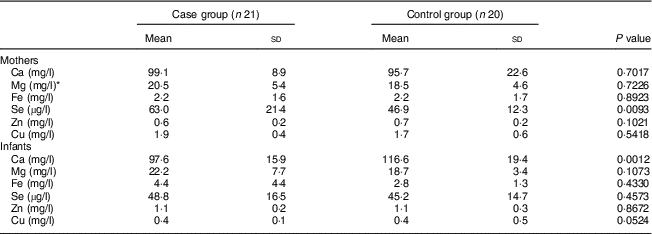
* Case group was treated with 20 % MgSO4 for 24 h prior to delivery (10 ml intramuscularly every 8 h).
Weak correlations were found for maternal outcomes such as systolic and diastolic blood pressure, gestational week and BMI at delivery with 3-epi-25-OH-D3 and total 25-OH-D levels (Table 5). In infants, Spearman correlation coefficients of the 3-epi-25-OH-D3 percentage of total 25-OH-D3 in relation to neonatal outcomes were: r=−0·3526 (95 % CI −0·5845 to −0·06743; P=0·014) and r=−0·3004 (95 % CI −0·5448 to −0·009116; P=0·038) for Apgar score at 1 min and 5 min, respectively, and r=−0·3856 (95 % CI −0·6091 to −0·1053; P=0·007) for delivery type.
Correlations of vitamin D metabolites with maternal outcomes, Serbia, January–April 2011

3-epi-25-OH-D3, 3-epimer of 25-hydroxycholecalciferol; 25-OH-D, 25-hydroxyvitamin D; SBP, systolic blood pressure; DBP, diastolic blood pressure.
Regarding lifestyle, there were no reports of smoking during pregnancy; thirteen mothers reported drinking a glass of wine weekly (case: n 6; control: n 7); and only one control mother exercised moderately during the last month of pregnancy. Only three women reported taking a daily walk longer than 30 min. Case and control mothers were not different with respect to percentage married (case: 100 %; control: 92 %), percentage living in an urban setting (case: 90 %; control: 93 %) or level of education, defined as high school (case: 57 %; control: 50 %) and post-secondary education (case: 43 %; control: 50 %).
Discussion
The aim of the present study was to examine vitamin D intake and status of women with and without PE and their infants in Serbia, a country without mandatory vitamin D food fortification, and to describe the proportion of total 25-OH-D3 in the epimeric form in relation to maternal and neonatal outcomes.
Detailed insight into the diet of mothers showed higher intake of vitamin D-containing supplements in the control than in the case group, although overall vitamin D intake was similar. Divergent dietary patterns of case compared with control mothers were reflected in higher intakes of meat and grain food servings without meeting recommendations for daily vegetable, fruit and milk servings. Canada’s food guide in pregnancy recommends including an extra two to three food servings from any of the four food groups each day (http://www.hc-sc.gc.ca/fn-an/food-guide-aliment/track-suivi/table_female-femme_preg-ence_age19-50-eng.php). Mothers with PE exceeded recommended intake for twelve servings (ten grain and two meat servings) while milk, fruit and vegetable intakes did not meet targets. On the other hand, the control group exceeded recommended servings for fruit and vegetables besides grain and meat servings. A few case–control studies have suggested a beneficial effect of higher fruit and/or vegetable (dietary fibre) consumption on PE( Reference Zhang, Williams and King 34 , Reference Qiu, Coughlin and Frederick 35 ).
Mothers with PE had higher pre-pregnancy BMI as well as BMI at delivery. Higher consumption of protein and energy as evidenced by a greater number of daily servings of grain, meat and oils may have contributed to greater BMI at delivery. Higher BMI may have the potential to lower 25-OH-D as observed in the PE group since higher BMI and adiposity are negatively associated with vitamin D status( Reference Pourshahidi 36 ). While the total estimated intake of vitamin D may be similar between the PE and control groups, more circulating 25-OH-D may be sequestered in fat over time and be unavailable in women with greater BMI( Reference Pourshahidi 36 , Reference Gallagher, Yalamanchili and Smith 37 ), thus potentially contributing to lower vitamin D status in the PE group.
The most pressing observation in the current study was a high prevalence of vitamin D deficiency and insufficiency among pregnant women and their infants in Serbia. Similar results of vitamin D status were observed in women with PE from northern India (case: 9·7 (sd 4·95); control: 14·8 (sd 6·68) ng/ml) who did not reported using a vitamin D supplement( Reference Singla, Gurung and Aggarwal 38 ). In a study from Iran conducted during the winter months, mothers had higher 25-OH-D levels (case: 15·3 (sd 13·6); control: 23·3 (sd 15·3) ng/ml)( Reference Mohaghegh, Abedi and Dilgouni 39 ) most likely because they had more endogenous vitamin D synthesis due to the lower latitude of Iran and correspondingly higher UVB exposure compared with Serbia. In a critical review on the maternal–infant impact of vitamin D deficiency for countries with a similar latitude to Serbia, the prevalence of deficiency was between 36 and 72 %( Reference Lee, Smith and Philipp 22 , Reference Weinert and Silveiro 40 ). A recently published study on healthy mothers and infants from Turkey also reported a high incidence (55·7 %) of severe deficiency( Reference Alp, Tekgunduz and Akkar 41 ). Even with vitamin D supplementation of 10 µg/d (400 IU/d), the incidence of severe deficiency in women can be as high as 50 %( Reference Lee, Smith and Philipp 22 ). This is similar to results in our study where more than 50 % of PE mothers showed severe deficiency with on average 6·25 µg (250 IU) of daily vitamin D supplementation.
In comparing mothers and infants, the cord blood 25-OH-D3 levels were 70·4 % of maternal values for controls and 81·1 % for cases, which is in agreement with typically 75 % of maternal values reported in infants( Reference Kovacs 42 ). A high prevalence of vitamin D deficiency (total 25-OH-D level <12 ng/ml) was present in mothers as well as the majority of all infants (80 %), while 74 % of case and 46 % of control infants displayed severe deficiency (<10 ng/ml). Similarly, a high proportion with severe deficiency (84 %) was present in PE infants from Tunis( Reference Fares, Sethom and Khouaja-Mokrani 43 ). In the US cohort study conducted in the 1960s, before the vitamin D food fortification policy was implemented, a high incidence of deficiency was present in mothers and newborns( Reference Eckhardt, Gernand and Roth 44 ), pointing out that this problem exists across regions and can be mitigated by vitamin D-fortified food and supplementation. The high prevalence of vitamin D deficiency in mothers and infants in the present study highlights that this population may be at risk of developing bone diseases( Reference Javaid, Crozier and Harvey 45 , Reference Cooper, Javaid and Westlake 46 ) and should be supplemented with vitamin D.
Furthermore, caution is necessary during classification into categories for vitamin D status (deficient, insufficient and adequate). LC–MS/MS detection of 3-epi-25-OH-D3 in a relatively high percentage of total 25-OH-D raises the question of inclusion of 3-epi-25-OH-D3 in interpretation of vitamin D status, but more studies on 3-epi-25-OH-D3 are needed to better understand its role. This will be important for adequate treatments and so that a consensus on the appropriate cut-offs for circulating vitamin D metabolites can be established and further confirmed based on functional outcomes. Although the majority of infants were vitamin D deficient, 3-epi-25-OH-D3 was present and detectable in all samples. On average, the contribution of 3-epi-25-OH-D3 to the total 25-OH-D3 pool in cord blood was 7·1 % in the control and 8·1 % in the case group compared with 10 % for vitamin D-supplemented Canadian healthy infants( Reference Bailey, Perumal and Yazdanpanah 47 ). Higher 3-epi-25-OH-D3 percentages (43 %) were reported for Spanish infants younger than 1 month and born in winter or autumn( Reference Granado-Lorencio, Garcia-Heras and Blanco-Navarro 48 ). However, 25-OH-D3 concentrations of Spanish (30·4 ng/ml) and Canadian (26·1 ng/ml) infants were higher than those of infants in our study (control: 9·88; case: 8·11 ng/ml) suggesting that the proportion of 3-epimer might be associated with the 25-OH-D3 concentration and/or vitamin D supplementation. Since infants did not have significantly different 3-epi-25-OH-D3 levels, the slight differences between groups in infant 3-epi-25-OH-D3 percentage content might be due to the younger mean gestational age of case infants because an inverse relationship between age and percentage of 3-epi-25-OH-D3 in total 25-OH-D has been observed( Reference Bailey, Perumal and Yazdanpanah 47 , Reference Yazdanpanah, Bailey and Walsh 49 ).
Although the biological origin and function of 3-epi-25-OH-D3 in infants are unknown, a very few studies have shown that there is an increase of 3-epi-25-OH-D3 with vitamin D supplementation and a dose–response pattern in infants in the first year of life( Reference Gallo, Comeau and Vanstone 14 , Reference Bailey, Perumal and Yazdanpanah 47 ). In adult rodents it has been reported that endogenous synthesis of 3-epi-25-OH-D3 follows a dose–response relationship to cholecalciferol intake without impact on bone health outcomes and with more prominent response in females compared with males( Reference Bianchini, Lavery and Agellon 50 ). Overall, more studies in animal and human subjects are needed to understand better the significance, role and function of 3-epi-25-OH-D3 in infancy and pregnancy.
In pregnant women with diabetes mellitus type 1, when the risk for PE is increased( Reference Evers, de Valk and Visser 51 ), it has been reported that 3-epi-25-OH-D3 is associated with a key marker of glycaemic control (HbA1c)( Reference Bennett, Casey and McPeake 52 ). There is no information available concerning the association of 3-epi-25-OH-D3 with PE, but the relationship between PE and vitamin D status has been studied. Bodnar and colleagues reported that maternal vitamin D deficiency may be a risk factor for severe PE, but not for its mild subtypes. Cases of PE were considered severe if they had at least one of the following: systolic blood pressure ≥160 mmHg, diastolic blood pressure ≥110 mmHg, proteinuria of 5 g/24 h, pulmonary oedema or convulsions/eclampsia( Reference Bodnar, Simhan and Catov 12 ). Based on these criteria, 97 % of our case group had severe PE with systolic blood pressure ≥160 mmHg and diastolic blood pressure ≥110 mmHg, together with plasma concentration of total 25-OH-D below 20 ng/ml. It is believed that at this threshold, 1,25-(OH)2D production is compromised. Indeed, for 43 % (12/28) of all tested mothers and for 76 % (13/17) of tested deficient mothers, plasma concentration of 1,25-(OH)2D was below 60 pg/ml (156 pmol/l), which is recommended as a minimum level in pregnancy for the third trimester. However, 1,25-(OH)2D was in the recommended reference range of 60–119 pg/ml (156–309 pmol/l)( Reference Abbassi-Ghanavati, Greer and Cunningham 53 ) for the third trimester of pregnancy for all (11/11) tested mothers with plasma concentration of total 25-OH-D above 12 ng/ml, suggesting adequate production of 1,25-(OH)2D.
Based on this observation compromised production of 1,25-(OH)2D3 might be expected for 78 % of all deficient infants in our study (case: 87 %; control: 59 %), but sufficient volume of infants’ samples was not available to confirm this postulation. In addition, it has been reported previously that severe PE is associated with the highest risks of adverse perinatal outcomes, including preterm birth and fetal growth restriction( Reference Martineau and Khan 10 , Reference Haugen and Helland 54 – Reference Khalessi, Kalani and Araghi 56 ) while gestational vitamin D deficiency has been linked to increased risk of caesarean delivery and bacterial vaginosis infections( Reference Genuis 4 , Reference Aghajafari, Nagulesapillai and Ronksley 9 , Reference Olmos-Ortiz, Avila and Durand-Carbajal 57 ). In our study 52 % of PE and 8 % of control infants were born preterm, before 37 weeks of pregnancy, and 20 % were SGA, while 70 % of PE and 3·3 % of control infants were delivered by caesarean section. Moreover, blood Ca was lower in case infants and they had lower overall Z-scores as well. Thus interventions to improve both maternal and fetal outcomes are warranted and data in our study underscore the need for prenatal educational interventions to decrease the health risks attributable to unhealthy lifestyle behaviours and eating patterns in pregnancy.
The present study displays several limitations including the lack of control of supplement compliance, the cross-sectional approach, the limited number of samples and possible selection bias as the study was conducted in one Clinical Center focused on treating the most severe cases. The strength of our study is the collection of information on detailed dietary vitamin D intake in winter in determining the difference in vitamin D status between cases of PE and healthy controls.
Conclusion
The present study showed a high prevalence of vitamin D deficiency (total 25-OH-D<12 ng/ml) observed in 47 % of all mothers and 77 % of all infants while almost all other participants had insufficient vitamin D status (25-OH-D3<20 ng/ml). The reasons may be lack of vitamin D food fortification and inadequate intake of prenatal vitamins containing vitamin D, as well as negligible subcutaneous production in the winter due to minimal UVB at 44·8°N latitude. Despite similar vitamin D intake from supplements and diet of PE and control mothers, women with PE had significantly lower plasma 25-OH-D3, 3-epi-25-OH-D3 and 1,25-(OH)2D while 24,25-(OH)2D3 was similar. Infants, on the contrary, did not differ significantly in total plasma 25-OH-D3, although case infants were born at an earlier gestational age and there was a significant difference in all anthropometric measurements between case and control infants. These data underscore that the strategy of Serbian public health should include improvement of mothers’ dietary intake and sun exposure, and vitamin supplementation when needed, as well as a tight control of PE.
Acknowledgements
Acknowledgements: The authors are grateful to Sherry Agellon from McGill University who helped with vitamin D analyses and Zoran Pavlovic who helped with mineral status assessment, as well as to Marina Nikolic and Aleksandra Konic-Ristic for their advice and assistance in preparation and transport of the samples to Canada. The authors acknowledge the assistance of medical and nursing staff of the Department of Gynecology and Obstetrics, a Clinical Center of Serbia, for their help in recruiting patients and ensuring the smooth conduct of the trial. Financial support: This work was supported by the Ministry of Education, Science and Technological Development of the Republic of Serbia (grant number III 41030). The Ministry of Education, Science and Technological Development of the Republic of Serbia had no role in the design, analysis or writing of this article. Vitamin D analyses were funded by an unrestricted fund at McGill University. Conflict of interest: None. Authorship: M.G. and L.M.M. designed the research framework; M.D.-I., V.A.-K. and J.K. conducted the study at the Clinical Center of Serbia; H.W. and M.D.-I. formulated the research question on vitamin D and as lead researchers planned and conducted research on vitamin D; G.J., M.K., H.W. and M.D.-I. conducted biochemical analyses; M.D.-I. and H.W. analysed data; M.D.-I. and H.W. drafted and revised the paper; M.D.-I. had primary responsibility for final content. All authors read and approved the final manuscript. Ethics of human subject participation: This study was conducted according to the guidelines set in the Declaration of Helsinki and all procedures were approved by Ethics Review Board in Serbia and the McGill University Research Ethics Board of the Faculty of Agricultural and Environmental Sciences for analyses in Canada. Written informed consent was obtained from all participants.
Supplementary Material
To view supplementary material for this article, please visit http://dx.doi.org/10.1017/S1368980016000409



