



Introduction
A fundamental question when studying bilingualism is how bilingual speakers select a target word in the intended language. Lexical selection refers to the mechanism by which a lexical item is chosen during production or recognition for further processing. Although it has become clear that lexical selection is sensitive to the activation level of the lexical representation (e.g., Caramazza, Reference Caramazza1997; Levelt, Reference Levelt1989; Roelofs, Reference Roelofs1992), the nature of this selection and the level at which selection is made is still debatable (see Kroll, Bobb & Wodniecka, Reference Kroll, Bobb and Wodniecka2006; Rodriguez-Fornells, Van der Lugt, Rotte, Britti, Heinze & Münte, Reference Rodriguez-Fornells, Van der Lugt, Rotte, Britti, Heinze and Münte2005 for overviews). Lexical selection can be language-specific when selection is restricted to the target language, or language-nonspecific when selection takes into consideration the non-target language as well. In the latter view, the non-intended representations may act as competitors (e.g., Green, Reference Green1998). However, in the former, sensitivity to the level of activation is enough for the correct selection and no competition is involved (see e.g., Costa, Reference Costa, Kroll and Groot2005; La Heij, Reference La Heij, Kroll and Groot2005 for overviews). As bilinguals interact in language contexts engaging either one or both of the languages they speak, the activation state of their languages may change accordingly. Processing language in this case should be flexible in a way that allows adequate adaptation to the language in hand. This idea has led many to adopt the view that lexical selection in bilinguals is a dynamic process that can be either language specific or language nonspecific depending on several factors such as proficiency, language use and whether the context language specifies words in one or both languages (e.g., Grosjean, Reference Grosjean, Grosjean and Li2013).
However, prior studies that have examined lexical selection in bilinguals have used either a single language context (first language “L1”, e.g., Van Assche et al. (2009), or second language “L2”, e.g., Libben & Titone (Reference Libben and Titone2009)) or a context in which L1 and L2 are intermixed in the same block (e.g., Gullifer et al., Reference Gullifer, Kroll and Dussias2013; Titone, Libben, Mercier, Whitford & Pivneva, Reference Titone, Libben, Mercier, Whitford and Pivneva2011). These experimental language contexts may not be optimal in capturing the flexibility of lexical selection in those bilinguals from codeswitching communities who sometimes use their languages jointly within the same sentence, although, at other times, they need to speak and comprehend in one language only. Given that habitual switching shapes the cognitive mechanisms, engaged to control language during lexical selection, differently from when the languages are used separately (e.g., Green, Reference Green2011), codeswitching bilinguals offer a unique opportunity to examine the flexibility of the selection system in a more ecologically valid way by assigning the same bilingual individuals to unilingual and switching language contexts like those found in their daily linguistic situations. Thus far, to investigate the nature of lexical selection, researchers have taken advantage of the cross-language interaction that arise from the activation of words that look or sound similar in both languages namely cognates.
Lexical selection and cognate effects
Cognates, words with similar meaning across languages but with overlapping orthographic and or phonological representations, have been widely used to assess cross-language interaction in bilinguals. The logic behind using cognates is that, while processing just in one language, words that look or sound similar in both languages, if activated, may interact (e.g., Dijkstra, Timmermans & Schriefers, Reference Dijkstra, Timmermans and Schriefers2000) leading to a cognate effect (i.e., differences in the processing time between cognates and non-cognates). The cognate facilitation effect (i.e., faster responses to cognates) is assumed to result from the activation of the phonological information of the same word in the non-target language that contributes to the activation of the same features in the target word leading to easier selection and or faster responses compared to words that are unique to one language. The cognate facilitation effect has been taken to support the nonspecific view of lexical selection consistent with the idea that there should not be any observable difference between cognate and non-cognate words had the phonological information of the non-target word not been activated and contributed to the activation of the phonological features of the target word. Facilitation was seen even when bilinguals planned to use only one language (e.g., Costa, Caramazza & Sebastián-Gallés, Reference Costa, Caramazza and Sebastián-Gallés2000; Hoshino & Kroll, Reference Hoshino and Kroll2008) or when context called for only one language (e.g., Dijkstra, Grainger & Van Heuven, Reference Dijkstra, Grainger and Van Heuven1999; Wu & Thierry, Reference Wu and Thierry2010). Additionally, in several studies, the same set of materials did not produce a difference for monolingual participants, indicating that the cognate effect is specific to the bilingual experience (e.g., Hoshino & Kroll, Reference Hoshino and Kroll2008).
Nevertheless, several factors were found to determine the cross-language interaction during lexical selection. One of such factors is the extent to which these shared words look or sound similar in both languages. The degree of similarity between the cognates’ semantic, phonological and orthographic representations across both languages influences the cognate effect and how the subsequent competition is resolved (e.g., Jared & Kroll, Reference Jared and Kroll2001; Jared & Szucs, Reference Jared and Szucs2002; Schwartz, Kroll & Diaz, Reference Schwartz, Kroll and Diaz2007). For instance, in Schwartz et al.’s naming study, cognates with dissimilar phonology and similar orthography caused slower naming (i.e., inhibition), whereas cognates with similar phonology and dissimilar orthography did not. Cognate facilitation effects were found even when the bilinguals’ languages are of different scripts such as English and Japanese (e.g., Gollan, Forster & Frost, Reference Gollan, Forster and Frost1997; Hoshino & Kroll, Reference Hoshino and Kroll2008). These results suggest that phonology in both languages of the bilingual is activated independently from similarity in orthography, and that the phonological properties of lexical items in the non-intended language may interact and interfere with lexical selection. In addition, factors such as sentential context and semantic constraints, language contexts, and the bilinguals’ L2-proficiency may also modulate cross-language interaction during lexical selection. In the following sections, we will address these factors individually.
Cognate effects and sentential context
The main question here is whether sentence context, and the semantic cues it provides, would decrease the activation of the non-target language allowing for an earlier lexical selection. In the latter case, the cognate effect observed when processing words out of context is predicted to be reduced or eliminated. Yet, when cognates were placed in sentences, the facilitation effect was still observed in sentences with semantically neutral contexts (e.g., Schwartz & Kroll, Reference Schwartz and Kroll2006), suggesting that context alone does not eliminate the activation of the non-target language. Moreover, results from eye-tracking data (e.g., Libben & Titone, Reference Libben and Titone2009) revealed that cognate facilitation occurred in both semantically biased and neutral sentences on early stage reading time measures but was eliminated in biased sentences on late reading measures. Libben and Titone argued that lexical access is therefore nonspecific in the beginning of word processing but becomes more specific due to sentence information towards the later stages. In addition, since effects to cognates in neutral sentences were as robust as effects found to cognates when used out of context, these results suggest that the top-down influence of semantic context on lexical selection is rather limited. However, the fact that other studies continue to find cognate effects even in biased sentences (see e.g., Van Assche, Drieghe, Duyck, Welvaert & Hartsuiker, Reference Van Assche, Drieghe, Duyck, Welvaert and Hartsuiker2011) may suggest that word recognition is completely bottom-up.
Cognate effects and language context
Another factor that may influence the cognate effect is the language context involved during production or comprehension. The presence of both languages in the same context helps establish a bilingual mode (Grosjean, Reference Grosjean2008, Reference Grosjean, Grosjean and Li2013) that ultimately promotes language non-selectivity and cross-language interaction. For instance, when L2-French filler sentences were intermixed in one block with L1-English sentences in Titone et al. (Reference Titone, Libben, Mercier, Whitford and Pivneva2011), cognate facilitation occurred during early and late stages of L1 reading measures and in both neutral and biased contexts in total reading time measures. This suggests that, in a bilingual context, lexical access proceeds in rather a nonspecific manner during which words from both languages may interact and hence influence lexical selection. However, in a bilingual context, languages can either alternate between sentences or alternate within a single sentence as is the case for some bilinguals from codeswitching communities. Relatively speaking, studies that have used mixed language at the sentence level remain scarce. In fact, when cognates were inserted in a mixed language context (e.g., Dijkstra, Van Hell & Brenders, Reference Dijkstra, Van Hell and Brenders2014), cognate effects (facilitation or inhibition) were larger, suggesting that the language context affected cross-language interaction. Since the mixing of languages or switching between languages has been associated with a processing cost – that is, it takes longer to respond when alternating between languages than when using the same language as the previous trial (e.g., Gollan & Ferreira, Reference Gollan and Ferreira2009; Meuter & Allport, Reference Meuter and Allport1999) – it would be interesting to examine how the cognate effect interacts with the reported switch cost.
Cognate effects and switch costs
Neuroimaging studies revealed increased brain activity in areas involved in cognitive and language control mechanisms during language switching especially when selecting an item in the less dominant language (e.g., Abutalebi, Annoni, Zimine, Pegna, Seghier, Lee-Jahnke, Lazeyras, Cappa & Khateb, Reference Abutalebi, Annoni, Zimine, Pegna, Seghier, Lee-Jahnke, Lazeyras, Cappa and Khateb2008; Crinion, Turner, Grogan, Hanakawa, Noppeney, Devlin & Price, Reference Crinion, Turner, Grogan, Hanakawa, Noppeney, Devlin and Price2006). This is because selecting a word in the intended language is achieved through the lateral inhibition of the non-intended language, and thus, switch costs reflect the time taken to overcome the previously inhibited language (Green, Reference Green1998). In the above-mentioned switching studies, bilinguals named pictures out of context. However, natural codeswitching is often contextual and can be produced without hesitations, pauses or corrections, suggesting that codeswitches are not random interference of one language with the other but are governed by structural constraints (e.g., MacSwan, Reference MacSwan2005; Myers-Scotton, Reference Myers-Scotton2006). Furthermore, switching within a sentence implies that the elements being switched do not generally come from the same grammatical category, as in the case of cued language switching paradigms (Kroll, Dussias, Bogulski & Valdés Kroff, Reference Kroll, Dussias, Bogulski and Valdés Kroff2012), suggesting that processing contextual codeswitching may not thus be as effortful.
Among the few studies that examined lexical selection using codeswitched sentences, Gullifer, Kroll and Dussias (Reference Gullifer, Kroll and Dussias2013) and Ibáñez, Macizo and Bajo (Reference Ibáñez, Macizo and Bajo2010) used inter-sentential (between sentences) codeswitching but did not report a significant switch cost or an effect of switching on the magnitude of the cognate effect. This means that information provided by the sentence context may help bilinguals overcome the inhibition required during lexical selection. These results, however, may not be extended to intra-sentential (within sentence) codeswitching used in our study, since this type of switching may be fundamentally different and linguistically more challenging. Consistent with this interpretation, studies that used intra-sentential codeswitching did find some processing cost even when the codeswitch was highly predictable (e.g., Altarriba, Kroll, Sholl & Rayner, Reference Altarriba, Kroll, Sholl and Rayner1996). Instead, results from an ERP study (Moreno, Federmeier & Kutas, Reference Moreno, Federmeier and Kutas2002) appear to suggest that codeswitches are processed as a change in form more than a change in meaning, but that they are not more difficult to process as elements per se. Switch costs may thus disappear when switching to the other language is more obvious.
More interestingly, at the switch site, switch costs may interact with the cognate effects. That is, if the switch is a cognate, the subsequent cognate effects (facilitation or inhibition) may determine the cost. In Dijkstra et al. (Reference Dijkstra, Van Hell and Brenders2014), English cognate switches produced facilitation effects when preceded by a Dutch context, and Dutch cognate switches yielded inhibition effects when the preceding context was English. However, there was no interaction between cognate effects and language context.
Cognate effects and language proficiency
A major factor yet to influence the cognate effect and thus lexical selection in bilinguals is L2-proficiency. Bilinguals with lower L2-proficiency have weaker connections between L2 lexical forms and their concepts (e.g., Kroll, Van Hell, Tokowicz & Green, Reference Kroll, Van Hell, Tokowicz and Green2010), suggesting that L2 lexical activation and retrieval in low proficient bilinguals is delayed compared to L1, and that the processing of orthographic, phonological and semantic information is slower than in proficient bilinguals (e.g., Van Hell & Tanner, Reference Van Hell and Tanner2012). Therefore, the time course of cross-language interaction and resolving the outcome competition thereof depend on the bilingual's knowledge in both languages, meaning that recognition of a cognate is affected by the difference in proficiency between the speaker's two languages.
Studies that manipulated proficiency have shown that cognate facilitation is typically larger in the weaker language (e.g., Costa et al., Reference Costa, Caramazza and Sebastián-Gallés2000; Poarch & Van Hell, Reference Poarch and Van Hell2012) suggesting that the co-activation of semantic, phonological and orthographic codes is related to differences in proficiency between L1 and L2 (e.g., Van Hell & Dijkstra, Reference Van Hell and Dijkstra2002). In an English auditory word recognition study, Blumenfeld and Marian (Reference Blumenfeld and Marian2007) demonstrated that parallel activation in the bilingual's languages was modulated by differences in proficiency and particularly by proficiency in the non-target German language. While L1-German speakers activated German during processing cognate and non-cognate English targets, less proficient L2-German (L1-English) speakers activated German, only when English targets were cognates. Furthermore, cross-language competition, caused by phonological overlap between English targets and their German competitors, occurred earlier and was resolved faster in German–English bilinguals (highly proficient in L1-German) than in English–German bilinguals (less proficient in L2-German). This suggests that high proficiency bilinguals are faster in resolving language competition due to enhanced language control mechanisms.
Competition from cross-language interaction has been shown to arise at different loci (semantic, lexical or phonological levels) (e.g., Kroll et al., Reference Kroll, Bobb and Wodniecka2006; Costa, Colomé, Gómez & Sebastián-Gallés, Reference Costa, Colomé, Gómez and Sebastiaán-Gallés2003). Since low proficiency in L2 is related to slower processing, proficiency may play a role in determining the levels at which competition may occur, leading to the suggestion that cross-language competition may arise at more levels in low than in high proficiency bilinguals. Likewise, at each level of lexical selection, competition may yield different outcomes depending on the linguistic features involved, suggesting that the type of cognate effect may also differ between low and high proficiency bilinguals.
Thus far, the review of studies on lexical selection and the cognate effect in bilinguals reveals that previous studies have examined some of the factors influencing cross language interaction in bilinguals; however, very few have explored how these factors interact within the same bilinguals and specifically in those who habitually codeswitch. Additionally, those studies were mainly reading experiments and studies using auditory stimuli remain very scarce. Aiming for a more ecologically valid methodology, we used auditory sentence context to examine how various factors (proficiency, semantic constraint, and language context) are related to response time in producing cognates in switching versus non-switching experimental language conditions. Unless specified (i.e., facilitation or inhibition), we use the term “cognate effect” henceforth to refer to any difference in response time between cognates and non-cognates.
The current study
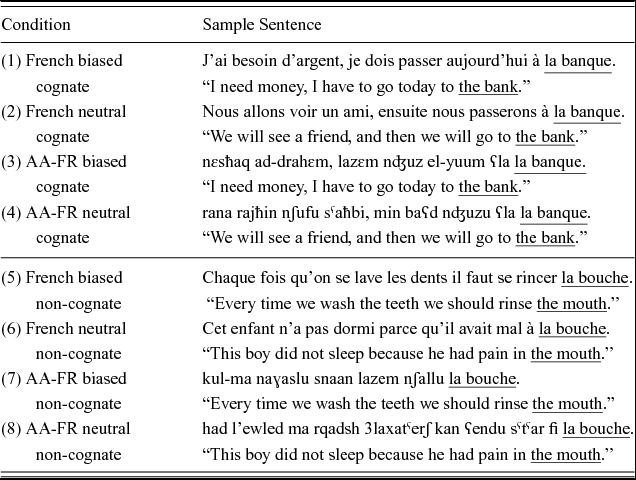
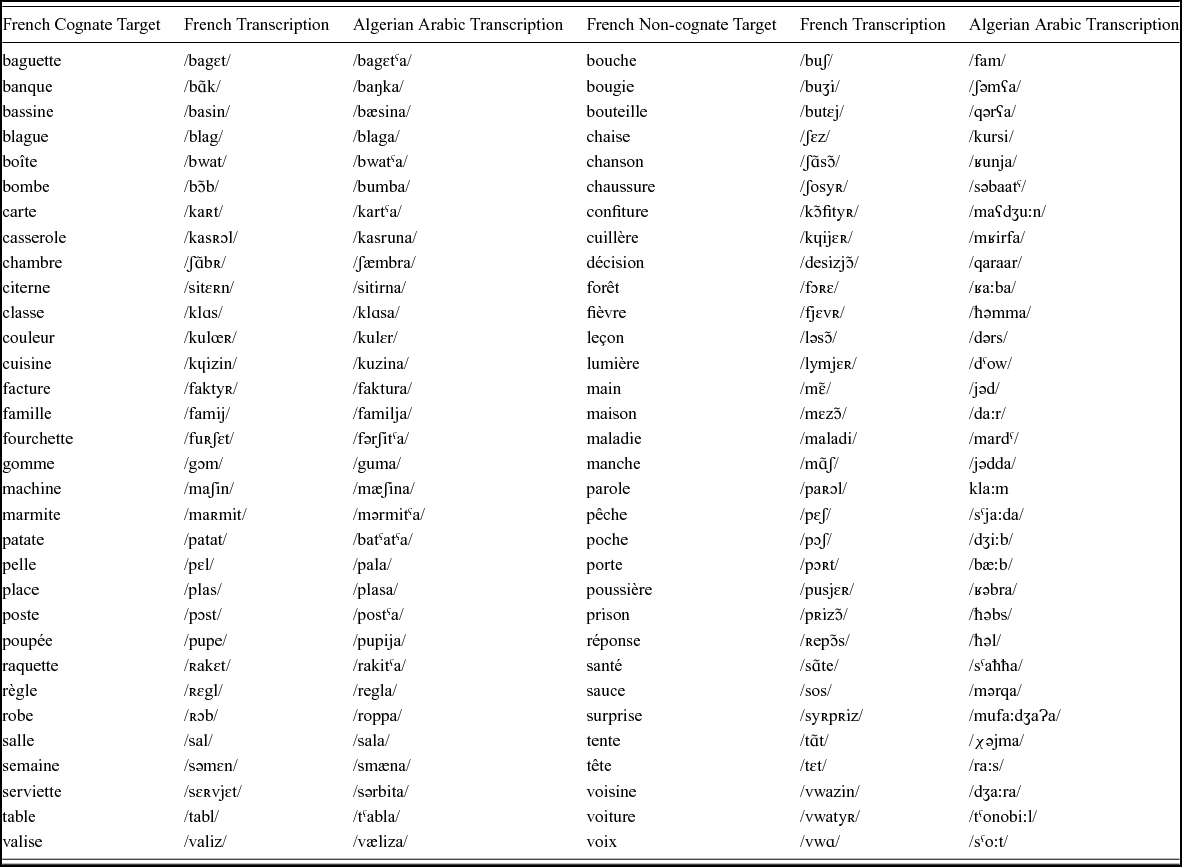
We investigated lexical selection and cross-language interaction, as indexed by the cognate effect, in Algerian bilinguals who habitually codeswitch (i.e., voluntarily codeswitch in daily conversations) between Algerian Arabic (AA) and French, but who vary in how frequently they daily codeswitch. We employed French cognate and non-cognate targets (see Appendix 1) embedded at the end of French or AA sentence contexts. We further manipulated the sentence context that was heard prior to the French target words such that it was either semantically constraining towards the targets (“biased”) or not (“neutral”). Bilinguals listened to the sentence context either in French e.g., “J'ai besoin d'argent, je dois passer aujourd'hui à. . .” or in AA “nɛsħaq ad-drahɛm, lazɛm nʤuz el-yuum ʕla. . .” (I need money, I have to go today to. . .), then immediately after, they performed a naming task on the visually presented French cognate/non-cognate targets that completed the sentences they heard e.g., “la banque” (the bank) in the example above. This presentation, therefore, created sentences that were entirely in French (non-switch trials), and sentences that started in AA and finished in French (switch trials). Response times (RTs), i.e., the time between the onset of the visual target presentation, e.g., “la banque”, and the onset of its naming, were recorded and compared between the switch and non-switch experimental trials.
In particular, our first goal was to examine whether lexical selection in codeswitching bilinguals is always language nonspecific or whether it can be language specific when influenced by semantic and language contexts, thus affecting cross-language interaction and narrowing the selection to the intended language. We hypothesized that if lexical selection is always language nonspecific (e.g., De Bot & Schreuder, Reference De Bot, Schreuder, Schreuder and Weltens1993; Hermans, Bongaerts, De Bot & Schreuder, Reference Hermans, Bongaerts, De Bot and Schreuder1998; Poulisse & Bongaerts, Reference Poulisse and Bongaerts1994), the presence or absence of cognate effect would not differ between switching and non-switching sentences. This is because both languages are activated, whether listening to a context that is in French or in AA, causing cross-language interaction for cognates relative to non-cognates. We predicted that cognate effects both in switching and non-switching sentences should be more visible in the semantically neutral contexts, since they have been more regularly found in neutral than in biased contexts (e.g., Duyck, Van Assche, Drieghe & Hartsuiker, Reference Duyck, Van Assche, Drieghe and Hartsuiker2007; Van Hell & de Groot, Reference Van Hell and de Groot2008). If instead, lexical selection is language specific (e.g., Costa, Reference Costa, Kroll and Groot2005; Costa, Miozzo & Caramazza, Reference Costa, Miozzo and Caramazza1999), the presence or absence of cognate effects should differ between switching and non-switching contexts. We predicted that cognate effects should be present in the switching context only. This is because the non-switching French context reduces lexical activation and interference from AA restricting lexical selection to items in the target French language. Conversely, the switching context increases activation in both languages leading to greater cross-language interaction for cognates. Overall, if language selectivity increases in a semantically biased context, cognate effects should be much weaker in that context than in a context that is semantically neutral.
Our second goal was to see whether L2-proficiency affects the production of cognates in different language contexts. Precisely, we examined whether cross-language interaction yields different or similar cognate effects in codeswitching bilinguals with different levels of L2-French proficiency in switching and non-switching sentences. That is, whether both low and high proficiency bilinguals display the same types of cognate effects (facilitation, inhibition or both), or whether they show different types of cognate effects (e.g., facilitation for high but inhibition for low proficiency). There is more evidence that high proficiency bilinguals show more automatic L2 processing than low proficiency bilinguals (e.g., Abutalebi & Green, Reference Abutalebi and Green2007), activate their languages in parallel (e.g., Blumenfeld & Marian, Reference Blumenfeld and Marian2013), control better for L1 interferences (e.g., Elston-Güttler, Gunter & Kotz, Reference Elston-Güttler, Gunter and Kotz2005a) and may access their L2 without inhibiting their L1 (e.g., Costa & Santesteban, Reference Costa and Santesteban2004). We predicted that low proficiency bilinguals show larger cognate effect; however, we reserved prediction regarding whether the cognate effect is facilitation or inhibition.
Our third aim was to examine whether cognate effects modulate the switching cost in bilinguals who frequently codeswitch. According to the nonspecific view, the selection process in switching contexts would incur extra time “switch cost” compared to that in non-switching contexts because of the need to switch between language schemas. However, studies that looked into the relationship between habitual language switching and cognitive control processes (e.g., Prior & Gollan, Reference Prior and Gollan2011; Soveri, Rodriguez-Fornells & Laine, Reference Soveri, Rodriguez-Fornells and Laine2011) have shown that everyday switching was related to reduced mixing costs. We asked whether producing cognates at the switch point interacts with switch costs in bilinguals who regularly codeswitch. We predicted reduced switching costs where cross-language interaction yields cognate facilitation only in the switching conditions. In the latter case, shorter RTs to cognates reduce the difference in RTs between the switching and non-switching conditions.
The research questions we asked are listed below:
What is the nature of lexical selection in habitually codeswitching bilinguals, specific or nonspecific?
Does L2-proficiency modulate the cognate effect in habitually codeswitching bilinguals?
Does the cognate effect modulate switch costs in bilinguals who are on the high end of the codeswitching frequency continuum?
Method
Participants
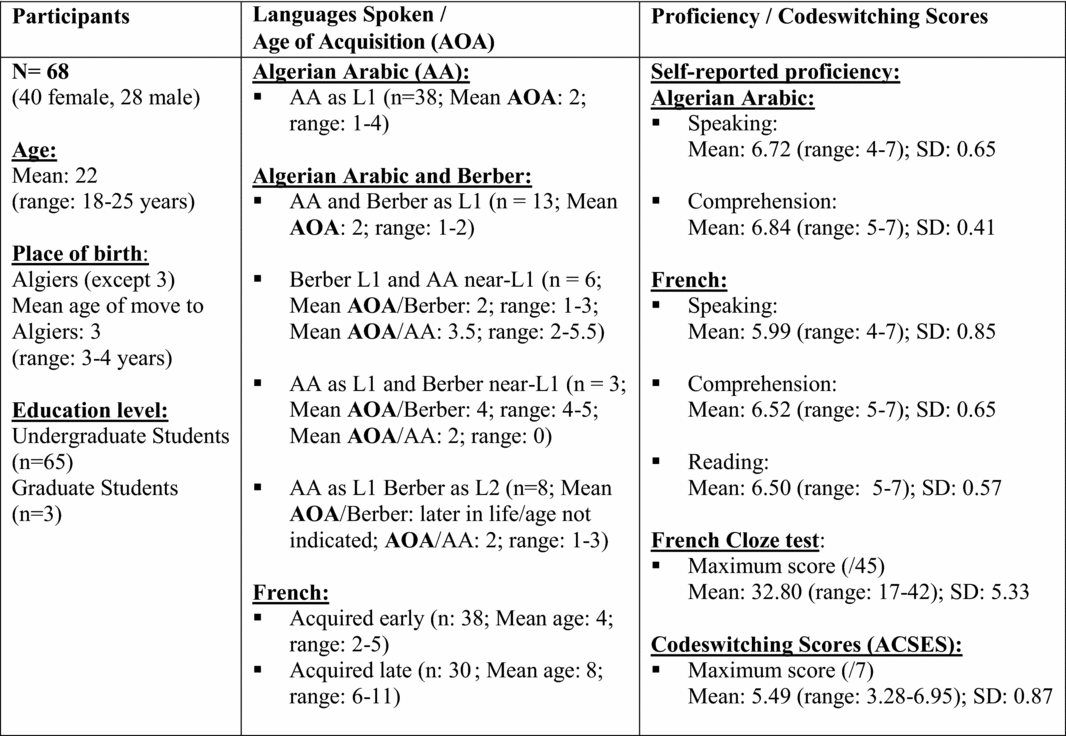
We recruited sixty-eight Algerian bilinguals, mostly undergraduate students. Participants were native speakers of AA or Berber near-native speakers of AAFootnote 1. They were also exposed to French either early, usually at home through parents and television, or late starting at school. All participants were, at the time of the experiment, receiving their college instruction in French and thus the lower proficient bilinguals in the current study may be described as intermediate. All participants reported codeswitching between AA and French with friends and family. Participants’ characteristics are detailed in Figure 1. Besides the naming experiment, participants completed a French proficiency test, a codeswitching habits survey, a bilingual interview, a semantic fluency task, a digit span task and the Simon task. Results from the last four tasks are not included in the current analysis.
Participants’ characteristics in the overall group.
French proficiency test
Proficiency in French was assessed using the French Cloze Test (Tremblay, Reference Tremblay2011). The test consists of a text containing 45 blanks, of which 23 are content words (nouns, main verbs, etc.) and 22 are function words (determiners, pronouns, etc.). The participants had to provide a word from their own for each blank. Based on a bank of possible answers (see Tremblay, Reference Tremblay2011), each correct answer was scored “1”. Test scores were converted into percent accuracy rates.
Assessment of codeswitching habits
Although our bilinguals come from a codeswitching community, they differ in the amount of the daily use of each language and/or codeswitching. To examine the effect of these individual differences on lexical selection, participants reported their language use and switching habits using a French translated version of The assessment of codeswitching experience survey “ACSES” (Blackburn & Wicha, Reference Blackburn and Wicha2011). Codeswitching scores were the averages of the responses given to questions related to the daily use of languages and codeswitching frequency. The scores were on a 1–7 scale where “1” is someone who never switches and “7” is someone who always switches. The questions that were the basis for the codeswitching scores are in Appendix 2.
The bilingual interview
Because the presentation of the stimuli was blocked by language condition (Switching/Non-switching), we conducted an interview to establish a bilingual mode prior to the switching block. Participants were asked questions around their field of study and their hobbies. The experimenter was a bilingual speaker of the same AA dialect and also codeswitched. Participants were informed that they could use AA, French or both as wanted. Questions were either in French, AA or codeswitched between AA and French using both intra- and inter-sentential codeswitching. When participants tended to use one language rather than both, the interviewer used more of the other language that was not used as much or codeswitched more to encourage them keep both languages engaged. The interview lasted between 10 and 20 minutes.
Materials and design
The experimental stimuli consisted of 64 French (FR) target words (underscored in Table 1), 32 of which were cognates and 32 non-cognates. Each word was embedded in AA and French contexts that were either semantically biased or neutral. Stimuli, thus, included 32 French non-switching and 32 AA-FR switching sentences. There were four non-switching and four switching conditions (Table 1), with eight sentences per condition. Three factors were manipulated: Switch “language context” (switching/non-switching); Constraint (biased/neutral) and Cognate Status (cognate/non-cognate). The French cognate and non-cognate targets were compared in both switching “AA” and non-switching “FR” contexts, and in both biased and neutral contexts. Differences in RTs to cognates compared to non-cognates were indicative of a “cognate effect”, with cognate “facilitation” referring to shorter RTs to cognates and “inhibition” referring to longer RTs to cognates compared to non-cognates. Shorter RTs to the targets in the non-switching trials compared to those in the switching trials were interpreted as switch costs.
Sample of experimental French non-switching sentences and AA-FR switching sentences.
The biased and neutral sentences were constructed using the cloze probabilities for the cognate and non-cognate targets obtained via a Qualtrix online completion study. Seventy-six Algerian bilinguals who did not take part in the current study saw the French sentences without the target words and completed them with three best continuations of their own. The mean cloze probabilities for the targets are provided in Table 2.
Cloze probabilities for the target French words embedded in biased and neutral French sentence contexts.

*Significant difference between the two groups (p-value <.05)
Sentences in AA were close translations to the French sentences. In all sentences, the French targets (feminine nouns and feminine definite articles) occurred at the end of the sentence. In the absence of a frequency corpus data by Algerian speakers, we determined the targets’ frequencies via an online survey completed by twelve Algerian bilinguals. Participants saw each of the target words and rated them on a 1–9 scale (1 = least frequent; 9 = most frequent) based on their familiarity with and/or the frequency of using or hearing the words. Table 3 gives the targets’ mean frequency and length, and the mean duration of the auditory sentence fragmentsFootnote 2. Overall, cognates were more frequent than non-cognates [t(62) = 2.40, p < .05], but they were not significantly longer [t(62) = 0.17, p > .05]. To control for these differences, the targets were counterbalanced across the lists and conditions such that length and frequency did not significantly differ between the conditions in each list, then we regressed the RTs on length and frequency as explained in the result section.
Mean target words frequency and length, and mean duration of sentence (heard context) in AA and French. Range is given between parentheses, frequency scale (1-9).

We also constructed 64 French filler sentences for the non-switching block and 64 AA-FR and AA-only filler sentences for the switching block. AA-only fillers were used to minimize the expectation of AA sentences ending in a codeswitch. Half of all the fillers contained words (nouns, verbs, adjectives or adverbs) to name somewhere in the middle. The rest of the fillers were only heard (a 1/3 in each block). Half of the fillers contained cognates (AA and FR) but these were never presented for naming. Ten more sentences similar to the experimental and filler trials were constructed for the practice sessions (5 for each block).
In all trials, switching was from AA to French. We avoided switching from French to AA because AA is usually spoken and a visual presentation of the targets in AA would incur extra difficulty. Since Cognate Status was a between item manipulation, we therefore constructed four lists following a Latin Square design. Each list contained 192 sentences, 96 in block1 (non-switching) and 96 in block2 (switching). In each block, there were 32 experimental sentences and 64 filler items. Each experimental target appeared only once throughout the entire list, and no list contained more than one version of each sentence. Fillers were the same across the four lists. Sentences in each list were pseudo-randomized to avoid order effects, and each participant saw only one randomly assigned list. All sentences were recorded by an adult female, native speaker of AA, who was also proficient in French, using a Marantz PMD660 digital recorder, recording 16-bit stereo PCM sound at a sampling rate of 44.1 kHz. Sentences were coded and segmented using Praat (Boersma, Reference Boersma2001), and normalized for intensity to control for variation in the amplitude.
Response times to the targets were measured using a Cross-Modal Naming task (CMN). The CMN allows for the presentation of auditory stimuli (e.g., Hernández, Bates & Avila, Reference Hernández, Bates and Avila1996; Love, Maas & Swinney, Reference Love, Maas and Swinney2003), which makes it suitable to study speech and languages with no tradition of writing such as AA. As an on-line method, the CMN is able to measure what is active during the ongoing processing of a sentence and is sensitive to contextual effects (e.g., Cieślicka & Heredia, Reference Cieślicka, Heredia, Heredia, Altarriba and Cieślicka2015; Tabossi, Reference Tabossi1988, Reference Tabossi1996). In order to minimize possible strategic processing (Heredia & Stewart, Reference Heredia, Stewart, Heredia and Altarriba2002) the visual target words were presented on the screen at the offset of the last word heard in the auditory part of the sentence. With such a presentation, we assumed that the effects obtained for the RTs reflect the participants’ analysis of the sentence context attained immediately at the end of the auditory fragments.
Procedure
Participants first completed the French proficiency test followed by a microphone test to minimize failure in the voice triggering due to low voice. They next started the non-switching block with a practice session of five non-switch trials and received feedback on their performance. This block was always presented first to examine cross-language interaction during French processing. To control for language mode, the language that was used or heard before and during the administration of the first block was restricted to French. Participants then completed the semantic fluency task in French, the Simon and digit span tasks and the bilingual interview before moving to the switching block which started with a practice session of five switch and non-switch trials. Finally, participants completed the semantic fluency task in Arabic and the Codeswitching Survey.
Stimuli were presented on a computer screen using E-Prime 2.0 (Psychology Software Tools, Pittsburgh, PA). Participants were seated about 50 cm away from the computer, wearing a headphone set through which the auditory stimuli were presented. The participants’ naming responses were recorded with a head-mounted microphone attached to the computer. In front of the participants, a standing microphone was placed attached to a response button box on the right side of the computer. The microphone served as a voice trigger through which RTs were collected. Participants were instructed to listen carefully to the auditory content and read aloud the words displayed on the screen as quickly and accurately as possible. They were also told to pay attention to the content because later they would be asked questions about the stimuli material. Participants had to press any button on the response box to proceed to a trial. As illustrated in Figure 2, participants first saw a “Prêt” (Ready) sign at the center and pressed a button to proceed when they were ready to start. The “Ready” sign then changed to a cross sign “+” inside a rectangle and remained on the screen during the listening part. At the offset of the last word heard, the target words replaced the cross sign and remained there for a duration that was equal to the word's length (in letters) times 150 plus 1200 msec. When the display time ended, either the “Ready” sign started the following experimental trial, or listening resumed in the case of a filler trial with naming in the middle. In the case of fillers with no naming, the entire sentence was heard before the “Ready” sign for the next trial appeared.
Illustration of an experimental trial.

Results
The analysis included only responses that were clearly fluent containing no hesitation or stammering. Consequently, 1.4% of the data from the non-switching conditions and 1.97% from the switching conditions were removed leaving 4278 correct data points for both switching and non-switching conditions. Accuracy was close to ceiling across the eight conditions with a mean accuracy of 99.6% (range: 99.2% –99.8%), [t(6) = 0.95, p = .38].
All analyses were conducted on the log transformed residual RTs to control for potential effects of the target's length, frequency and the trials’ position in the experiment. Residuals were calculated by means of a linear mixed effect model conducted on the log transformed response times in the experimental trials, with target length (in number of characters), target frequency and trial order as fixed effects, and a by-subject random intercept. Trial order was included as a factor to account for the effects of presenting the non-switching trials always first and prior to the switching trials. Such presentation may cause differences in the automaticity of naming the targets or in attending to the stimuli between the blocks and between earlier and later trials within the same block. RTs estimated by this model were then subtracted from the log transformed RTs to obtain the log residual RTs. Outliers were then removed from each condition for each participant using the means -/+3 standard deviations method. This procedure affected 47 (1%) data points in all conditions. Analysis was therefore conducted on 4231 data points.
We ran tests of correlations using the rcorr () function in the Hmisc package in R (R core team, 2015, version 3.1.3) to determine which individual-differences factors to include in the model. We explored correlations between codeswitching (ACSES scores), age of acquisition (AOA) of French, and proficiency in French (Cloze Test scores). A strong negative correlation between AOA and proficiency was found, r = −0.52, p < 0.01, suggesting that the later French was acquired, the less proficient the bilingual. However, correlations – between codeswitching and AOA, and codeswitching and proficiency – did not reach significance: with AOA r = 0.11, p = 0.38; with proficiency r = 0.16, p = 0.19. We consequently included proficiency and codeswitching, but not AOA as factors in the targets’ RTs analysis.
We analyzed RTs measures using a linear mixed effects model in R as implemented in the package lme4 (Bates, Maechler, Bolker & Walker, Reference Bates, Maechler, Bolker and Walker2015, version 1.1–7). We included semantic constraint (Biased/Neutral: “Biased” coded as −.5; “Neutral” as .5), switch (Switching/Non-switching: “Switching” coded as −.5; “Non-switching” as .5), cognate status (Cognate/Non-cognate: “Cognate” coded as −.5; “Non-cognate” as .5), their interactions, and the continuous variables of French proficiency, codeswitching habits and sentence context duration as fixed effects. The random effects structure included by-subject and by-item random intercepts, with the fixed effects semantic constraint, switch, and their interactions as by-subject and by-item random slopes. After centering the fixed effects to minimize collinearity, the maximal variance inflation factor was 1.13, and there were no signs of collinearity in the analysis (fixed effect correlations rs < .21). We report regression coefficients (β) and t-values, with absolute t-values of 1.96 or larger considered as significant. Significant interactions were followed-up with other linear mixed models fitted for each specific group. Although the analysis was made on the log transformed residualized RTs, for the reader's convenience, the means reported in the main text were given for the raw RTs in milliseconds. For every analysis reported here, a maximal model was fitted, and the model converged without simplifying the random slope structure (Barr, Levy, Scheepers & Tily, Reference Barr, Levy, Scheepers and Tily2013).
Overall group analysis
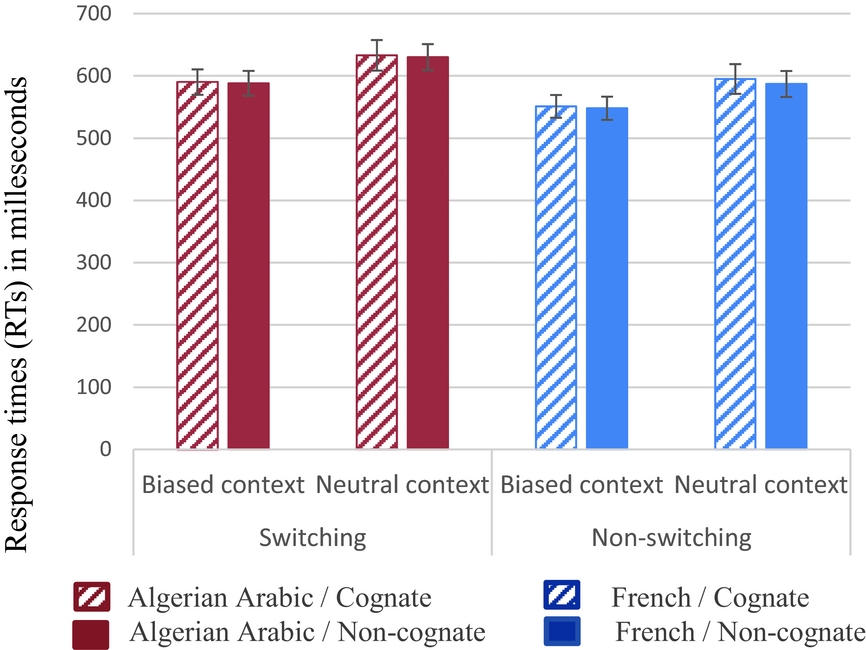
Analysis on the residual RTs for the entire group of participantsFootnote 3 (Table 4) only showed a main effect for semantic constraint and a marginal switch by proficiency interaction. However, neither switch nor cognate status or codeswitching habits effects were significant (Figure 3), and no other interactions were significant. In the next sections, we will address each of these effects.
Results of the residual Reaction times mixed effects analysis for the whole group.
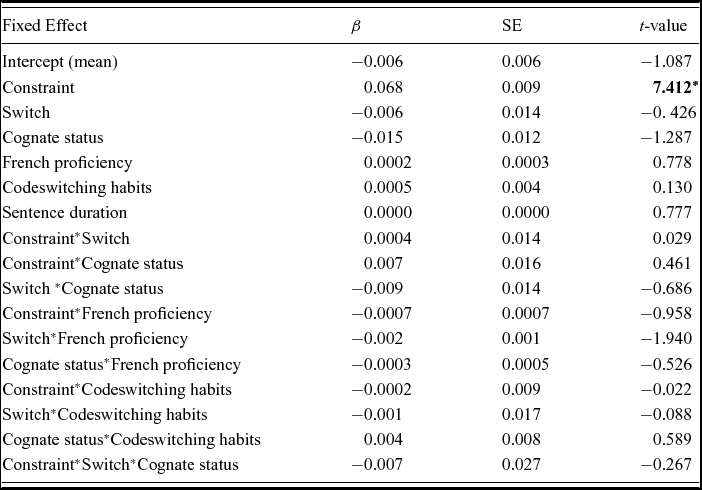
SE: Standard Error, (*): Significant t-value (p <.05)
Cognate effects in switching/non-switching and in biased/neutral context conditions. Error bars are the standard errors of the mean response times (RTs) to the French targets.
Semantic constraints
The results yielded a significant main effect for semantic constraint [β = 0.07, S.E. = 0.009, t = 7.41]. Participants’ RTs were shorter for the targets presented after biased contexts (M = 569ms, SD = 161) than for those presented after neutral contexts (M = 611ms, SD = 188). The semantic constraint effect did not differ between switching conditions (43ms) and non-switching conditions (41ms).
Language context (Switch) and French proficiency
The near-significant interaction between switch and French proficiency [β = −0.002, SE 0.001, t = −1.940] revealed a difference in RTs between high and lower proficiency bilinguals. However, an analysis by French proficiency did not reveal a significant effect of switch for both high [β = −0.04, S.E. = 0.02, t = −1.55] and lower proficiency groups [β = 0.03, S.E. = 0.02, t = 1.16].
Analysis of the frequently codeswitching group
To explore the third question in the current study – i.e., whether the cognate effect reduces switch costs in those bilinguals who frequently codeswitch – we conducted an analysis on a data set restricted to those participants who reported frequent codeswitching. Therefore, from the overall group, we constructed a group of bilinguals who frequently codeswitched based on the codeswitching scores from ACSES (n = 48; Score > 5, range: 5.05-6.95). The analysis on the frequently codeswitching group (Table 6), as for the overall group, showed a constraint effect [β = 0.07, S.E. = 0.01, t = 6.05] and a switch by proficiency interaction [β = −0.003, S.E. = 0.001, t = −2.59].
Results of the Residual Reaction times mixed effects analysis for the frequently codeswitching group.

SE: Standard Error, (*): Significant t-value (p <.05)
To explore this interaction, we constructed two proficiency groups using the median of the French proficiency test scores. As indicated in Table 7, the high and lower proficiency groups each contained 24 participants and differed only in AOA and French proficiency. A linear mixed effects model was constructed separately for each proficiency group using a structure similar to the one in the overall analysis without the codeswitching and proficiency factors.
Participant characteristics in the proficiency groups.

*Significant difference between the two groups (p-value <.05)
High proficiency group
The analysis (Table 8) revealed a significant main effect of constraint [β = 0.07, S.E. = 0.01, t = 4.62]. RTs were 44ms shorter in biased contexts (M = 541ms, SD = 159) compared to neutral (M = 585ms, SD = 184). No other effects were significant. Particularly, RTs did not differ between cognates (M = 541ms, SD = 162) and non-cognates (M = 542ms, SD = 155) in biased contexts, and did not differ between cognates (M = 586ms, SD = 163) and non-cognates (M = 584ms, SD = 180) in neutral contexts.
Results of the Residual Reaction times mixed effects analysis for the proficiency groups, frequent codeswitchers only.

SE: Standard Error, (*): Significant t-value (p <.05)
Low proficiency group
A main effect of constraint [β = 0.06, S.E. = 0.01, t = 4.11] was also revealed for the lower proficiency group (Table 8). RTs were 45ms shorter in biased (M = 577ms, SD = 155) than in neutral contexts (M = 622ms, SD = 194). Besides, there was a near-significant interaction between semantic constraint and cognate status [β = 0.04, S.E. = 0.02, t = 1.91]. Separate analyses for cognate and non-cognate targets showed a significant effect of semantic constraint for non-cognates [β = 0.09, S.E. = 0.02, t = 5.16] but not for cognates [β = 0.04, S.E. = 0.02, t = 1.70]. RTs for non-cognates were 52ms shorter in biased contexts (M = 574ms, SD = 158) than in neutral (M = 626ms, SD = 176). RTs for cognates were also numerically shorter in biased (M = 580ms, SD = 152) than in neutral contexts (M = 617ms, SD = 210), but this difference was smaller (37ms) than for non-cognates.
More interestingly, the analysis also revealed a three-way interaction between semantic constraint, switch and cognate status [β = −0.09, S.E. = 0.04, t = −2.04]. The mean RTs revealed the presence of a cognate effect in the switching conditions. To explore the significance of this interaction, we conducted separate lmer models for each language context (switching/non-switching) and for each semantic constraint context (biased/neutral). Results showed that, in the switching language context (AA), the cognate effect in biased contexts was significant [β = −0.05, S.E. = 0.03 t = −2.01]. RTs to cognates were longer (M = 597ms, SD = 149) compared to non-cognates (M = 579ms, SD = 147). The cognate effect in the neutral context was, however, marginal [β = 0.05, S.E. = 0.03, t = 1.81]. RTs were numerically shorter for cognates (M = 616ms, SD = 203) than for non-cognates (M = 643ms, SD = 172).
In the non-switching language context (FR), the cognate effect was not significant either in the biased context [β = −0.009, S.E. = 0.02, t = −0.36] or in the neutral [β = −0.008, S.E. = 0.03, t = −0.32]. In the biased context, RTs to cognates were 5ms shorter (M = 564ms, SD = 153) than those to non-cognates (M = 569ms, SD = 169). In the neutral context, RTs to cognates were 7ms longer (M = 617ms, SD = 218) than RTs to non-cognates (M = 610ms, SD = 178).
General discussion
Previous research has suggested that lexical selection in bilinguals may be language specific, nonspecific, or dynamically moving between specific and nonspecific depending on internal and external factors such as semantic constraints, language context, L2-proficiency and language use. We examined the interaction between these factors in bilinguals who habitually codeswitch between AA and French. We asked whether the cross-language interaction that manifests in the cognate effect is modulated by semantic constraints and language context. We compared RTs to French cognates and non-cognates in non-switching French sentences and AA-FR switching sentences. The overall group analysis showed a strong semantic constraint effect, suggesting that listeners used the semantic cues provided by the biased context to anticipate forthcoming words. However, there was no significant cognate effect, suggesting that lexical selection was language specific regardless of language context. Conversely, the above results were different once bilinguals who frequently codeswitched were compared based on their proficiency in L2 French as will be discussed below.
Lexical selection and proficiency
The (post-hoc) analysis by proficiency group showed that lexical selection differed between high and low proficiency bilinguals who frequently codeswitch. While there still was no significant cognate effect among high proficient bilinguals, an interaction between cognate status, semantic constraint and language context (switch) emerged among lower proficiency bilinguals driven by the switching conditions, where AA was the language context. There was an inhibition effect (longer RTs) to naming the French cognates in the semantically biased context and a tendency towards a facilitation effect (shorter RTs) in the neutral context. Thus, in the biased context, lower proficiency bilinguals were slowed down when cognates were at the switch point. However, in the neutral context, which does not constrain anticipation to a specific lexical item, cognates seemed to facilitate lexical selection even when they appeared in a language that is different from that of the preceding context.
The inhibition effect may suggest a few things. First, inhibition in the semantically biased context suggests that lexical selection was language nonspecific. The top-down information provided by the context could restrict both lexical activation and anticipation of upcoming cognates to AA. The anticipated upcoming AA cognates, thus, conflicted for selection with the bottom-up information provided by the target French cognates in the naming task, suggesting that inhibition was the outcome of this conflict: that is, it reveals the time taken to resolve the selection conflict caused by top-down and bottom-up processing. Second, inhibition probably occurred at the phonological level. We assumed that at the onset of the target French cognate, the lexical node for the equivalent AA cognate was already highly activated due to the biased context, and its phonological information was possibly retrieved. At the same time, the French phonological representation received activation from the orthographic representation of the visual French cognate. Hence, interference occurred at the phonological level during which the phonological representations of both AA and French cognates competed for selection. The third suggestion is that competition was due to the amount of overlap between cognates in French and AA. The cognates we used in this study are not identical. They obviously do not share orthography but also do not completely overlap in phonology (e.g., /b k/ vs. /baŋka/ “bank”). The effect of phonological overlap in cognates is not consistent across studies. Phonological similarity has been found to play a role in cross-language interaction even when the words interacting do not share the orthographic form. For instance, enhanced cross-language priming effects were found to Hebrew–English cognates (Gollan et al., Reference Gollan, Forster and Frost1997), and facilitation effects were observed to Japanese–English cognates (Hoshino & Kroll, Reference Hoshino and Kroll2008). In the absence of orthographic similarity between these languages, the priming and facilitation suggest that the cognates’ phonological information in both languages were retrieved, but also that the phonological segments of the non-target lemma contributed to the activation of the target lemma making its selection faster. However, because cognates across languages differ in the degree of their orthographic and phonological overlapping properties, the question is how much phonological overlap is necessary for a reliable facilitation to occur. When the degree of overlap in the cognates’ meaning, orthography and phonology was manipulated (Dijkstra et al., Reference Dijkstra, Grainger and Van Heuven1999), facilitation was observed to cognates sharing semantics, orthography and phonology or to those sharing semantics and orthography. However, cognates sharing only semantics and phonology did not yield significant effects, suggesting that lexical competition is influenced by the degree of the cognates’ phonological and orthographic overlap across the bilingual's languages. Furthermore, instead of facilitation, an interference effect was reported by Schwartz et al. (Reference Schwartz, Kroll and Diaz2007) for Spanish–English cognates with similar orthography but dissimilar phonology across the two languages. However, the effect of the degree of phonological similarity was no more significant when cognates differed in orthography. The different nature of the tasks utilized in the above studies may have accentuated the diverse role of phonology in cross-language interactions. For instance, Gollan et al. used a priming task, Dijkstra et al. used a progressive demasking task and a visual lexical decision task, whereas Schwartz et al. used a word naming task. Given that different tasks tap on different levels of lexical processing depending on whether they are production or comprehension tasks, the divergent results for the role of phonology would not be surprising.
Our suggestion that inhibition took place at the phonological level in our study seems to be supported by a study testing a comparable pair of language varieties. Boukadi, Davies and Wilson (Reference Boukadi, Davies and Wilson2015) asked Tunisian Arabic–French bilinguals to name non-cognate pictures in French while ignoring the auditory distractors presented at different SOAFootnote 4 either in French (monolingual) or in Arabic (bilingual). In the monolingual conditions, the results showed a phonological facilitation to the distractors within the target language, whereas in the bilingual conditions, Arabic phonological distractors produced an interference effect. It seems that the degree of similarity in the phonological forms across the languages determined the nature of cross-language interaction. The participants in Boukadi et al.’s study were intermediate proficiency bilinguals who may be similar to our lower proficiency bilinguals. If this is the case, their results are analogous with our results from the lower proficiency group. Based on the above, both the degree of phonological overlap and the nature of the naming task may have contributed to the cognate inhibition effect in the current study.
Similarly, facilitation in the neutral context suggests that lexical selection was language nonspecific. However, in this case, the top-down information provided by the AA context did not restrict lexical activation to AA, and participants did not anticipate a specific lexical item prior to the target French cognates. It was at the onset of the French targets that the phonological and lexical/semantic representations in both languages were activated by the orthographic representations of the cognates. In addition, because the activation of the candidates depends on the degree of similarity between the input form and the internal representations (Dijkstra & Van Heuven, Reference Dijkstra and Van Heuven2002), the French lemma should have received greater activation from the French orthographic input. However, since the larger similarity between AA and French cognates is at the semantic level, facilitation must have occurred at that level. The converged activation at the semantic representation received from both lemmas facilitated the selection of the targets. It remains to mention that the weak facilitation effect in our switching conditions in the neutral context may be the result of another effect at a different level. We propose that cross-language interaction occurred at two levels, facilitation at the semantic level and inhibition at the phonological level, and that the converging result yielded a weak facilitation effect. In other words, phonological interference at the phonological level weakened facilitation at the semantic level.
The absence of cognate effects in highly proficient bilinguals suggests that lexical selection was restricted to French, the naming language. Proficient bilinguals could minimize lexical competition even in the switching conditions where the non-target AA was strongly activated via the sentence context: indicating that, as L2-proficiency increases, bilinguals become better at controlling their languages in different language contexts. This confirms previous findings from both behavioral and neurocognitive data showing that higher proficiency is associated with better skills in negotiating lexical competition and conflict monitoring (e.g., Abutalebi & Green, Reference Abutalebi and Green2007; Kroll, Bobb, Misra & Guo, Reference Kroll, Bobb, Misra and Guo2008; Bialystok & Craik, Reference Bialystok and Craik2010), and in suppressing interference from the non-target language (e.g., Blumenfeld & Marian, Reference Blumenfeld and Marian2007; Elston-Güttler, Paulmann & Kotz, Reference Elston-Güttler, Paulmann and Kotz2005b). More specifically, our high proficiency group differed from the lower proficiency group in the switching conditions where lexical selection was taxing, particularly, because it was in French, a less dominant language for the lower proficiency bilinguals. In line with these results, Abutalebi et al. (Reference Abutalebi, Annoni, Zimine, Pegna, Seghier, Lee-Jahnke, Lazeyras, Cappa and Khateb2008) demonstrated that bilinguals exhibit stronger brain activation when they produce language in a bilingual context than in a monolingual context, showing even greater brain activation when they are required to select a lexical target in their less dominant language. Our proficient bilinguals were also exposed earlier to French (as mentioned in the result section, AOA of French correlated with proficiency), supporting results from Rodriguez-Fornells et al. (Reference Rodriguez-Fornells, Kramer, Lorenzo-Seva, Festman and Munte2012) showing increased cognitive control for bilinguals who were exposed to both languages early in their life.
Finally, we have mentioned that both bottom-up and top-down processes were involved during lexical selection. However, the fact that cognate effects occurred in both semantic contexts for the lower proficiency bilinguals suggests that context could not restrict cross-language interaction, and that processing was more bottom-up for these bilinguals. In contrast, context could eliminate cross-language interaction for proficient bilinguals, suggesting that processing was more top-down. These results suggest that processing in bilinguals may become more top-down as proficiency increases. This hypothesis predicts that both high and low proficiency bilinguals would show cognate effects when target words are presented in isolation, and hence no top-down information can be used.
Lexical selection and codeswitching
An interesting finding for cross-language interaction in the low proficiency bilinguals was the interaction between cognate status and language context (switch). The opposing effects to cognates (facilitation vs. inhibition) as a function of the semantic constraints of the preceding context emerged in the switching conditions. Cognates in the biased context not only did not facilitate lexical selection, but they hindered it. At the switch point, cognates were harder to name and increased the switching cost. However, in the neutral context, when no predictions for future lexical items were made, there was no commitment to a particular language. In the latter case, bilinguals benefited from lexical interaction making the selection of French cognates at the switch point easier. Specifically, our results from cognate effects in the neutral switching conditions indicate that switching may be facilitated when lexical access is nonspecific (no commitment to one language) and when no specific predictions of future words are made (no commitment to a lexical item).
Since bilinguals in codeswitching communities seem to select items from either language they speak without an apparent disfluency (Gardner-Chloros, McEntee-Atalianis & Paraskeva, Reference Gardner-Chloros, McEntee-Atalianis and Paraskeva2013), it has been suggested that language control in these speakers differs from that in bilinguals who keep their languages separate (e.g., Green, Reference Green2011). If the habit of using both languages in everyday conversations induces different modes of language control (Green & Abutalebi, Reference Green and Abutalebi2013; Green & Wei, Reference Green and Wei2014), then the frequency of exercising that habit may have consequences on how bilinguals resolve cross-language interactions. We explored this idea in the current paper by testing bilinguals who codeswitched between their languages but who differed in the frequency of the daily switching. In the overall group analysis, the amount of habitual codeswitching did not have a significant effect, possibly due to the large variability in the group (but see Kheder & Kaan, Reference Kheder and Kaan2016). However, the results from the subgroup of bilinguals who reported frequent codeswitching revealed a different nature of lexical selection, depending on proficiency in French. This suggests that the frequency of habitual codeswitching may modulate switching costs as suggested in some previous studies (e.g., Soveri, et al., Reference Soveri, Rodriguez-Fornells and Laine2011). It is worth mentioning, though, that the codeswitching score computed from the survey ACSES reflects an average of the frequency of the daily use of both languages and the frequency of switching in the same conversation. However, this score does not differentiate between bilinguals who use intra-sentential and those who use inter-sentential codeswitching. If the cognitive processes that are engaged to control language differ in these types of codeswitching, our stimuli may have affected the bilinguals’ RTs differently. A more detailed investigation on the type of codeswitching the bilinguals use recurrently would be an informative follow-up study on how language use affects language production and comprehension.Footnote 5
Conclusion
The observed interaction between cognate effects, semantic and language context in the lower but not in the high proficiency group demonstrates that indeed the presence and nature of cross-language interaction (facilitation vs. inhibition) are affected by multiple factors such as language context, semantic constraint and L2-proficiency. Cross-language interaction among lower proficient bilinguals occurring only in the switching conditions suggests that lexical selection is dynamic, ranging from specific to nonspecific. The results from the current study suggest that lexical selection in high proficiency bilinguals differ quantitatively from that in lower proficiency bilinguals. Lexical selection was more language nonspecific among lower proficient than among high proficient L2 speakers: supporting the view that the stronger the L2 is, the more language specific lexical selection is (e.g., Costa, Santesteban & Ivanova, Reference Costa, Santesteban and Ivanova2006). Finally, absence of cross-language interaction in the non-switching conditions among the high proficiency group suggests that proficient bilinguals, even those who frequently codeswitch, can process L2 like monolinguals. Furthermore, cross-language interaction in the switching and not in the non-switching contexts among the lower proficiency group confirms that lower proficiency bilinguals cannot fully control for language interference, but when helped with language context (unilingual) they can minimize interference and function like proficient bilinguals. If language non-selectivity is the default for lexical selection (Kroll et al., Reference Kroll, Bobb and Wodniecka2006), the current results have contributed in exploring the factors under which language selectivity as an exception may occur.
Appendix 1 French/Algerian Arabic Cognate and Non-cognate Targets
Appendix 2 The Assessment of Codeswitching Experience Survey
Part 2: Codeswitching
Which of the following best describes you?

Of the time you spend speaking to Algerian/French bilinguals, how much do you spend. . .

Of the time you spend speaking to Algerian/French bilinguals, how much do you spend speaking to people who. . .

Do you switch between languages within a conversation when speaking with . . .

Did you switch between your languages within a conversation or mix your languages . . .

Please rate how often you do each of the following:

How many years of your life have you spent mixing your languages?

Please rate how much you agree with the following statements:

A code-switcher is someone who uses two languages in the same conversation.
FOR EXAMPLE:
« Parfois je change uniquement kelma dans la phrase. Comme je peux utiliser plusieurs phrases en français, men ba3d nardja3 lil 3arbia bash nkamel el hadra.»
(Sometimes I change only one word in the sentence. Or I might speak several sentences in French, and then go back to Arabic to finish the conversation)
Are you a code-switcher? (See above)

Supplementary material
To view supplementary material for this article, please visit https://doi.org/10.1017/S1366728918000500



