





Impact statement
Design strategies are a helpful tool not only in architecture but also in material development and optimization. Properties can be tuned and many previous limitations overcome. In the case of mycelium composites, one limitation that is frequently pointed out is the growth conditions in the core of thicker materials. A lack of growth corresponds to less interconnection of the substrate by fungal mycelium. As a potential solution, bio-welding allows to combine individual pre-formed layers with a high surface-to-volume ratio before stacking them and allowing the fungus to combine them. We investigated the influence of different factors on the bio-welding process and resulting material properties to deduce the relevance of those parameters and how they might be optimized. Furthermore, potential pitfalls of the bio-welding process itself were revealed, and we discuss their influence on material properties and provide recommendations for optimization. Overall, our data contribute to a facilitated implementation of bio-welded mycelium composites in other laboratories that can now dive more deeply into individual aspects instead of figuring out a standard operating procedure first.
Introduction
The use of fungal mycelium to bind organic residues into coherent materials has attracted considerable attention in academia and industry in the last twenty years (Alaneme et al. Reference Alaneme, Anaele, Oke, Kareem, Adediran, Ajibuwa and Anabaranze2023). Particularly white rot fungi are capable of colonizing a variety of different substrates and create cohesion before they are inactivated by drying (Huang et al. Reference Huang, Wei and Hadigheh2024). Predominantly, these materials are investigated for their potential in packaging, sound absorption, thermal insulation or architectural design applications (Alaneme et al. Reference Alaneme, Anaele, Oke, Kareem, Adediran, Ajibuwa and Anabaranze2023; Alemu et al. Reference Alemu, Tafesse and Mondal2022; Sydor et al. Reference Sydor, Bonenberg, Doczekalska and Cofta2021), but more recently, also the active growth and response to different stimuli (electrical, optical or chemical) of living fungi are explored (Adamatzky and Gandia Reference Adamatzky and Gandia2022; Elsacker et al. Reference Elsacker, Søndergaard, van Wylick, Peeters and de Laet2021; Phillips et al. Reference Phillips, Weerasekera, Roberts, Gandia and Adamatzky2024). Some of these applications, especially architectural design objects, require large dimensions. However, researchers working with mycelium composites are well aware of their thickness limitation. Growth of the fungal binder in the material core is sparse compared to the surface due to reduced oxygen and heat transfer (Elsacker et al. Reference Elsacker, Søndergaard, van Wylick, Peeters and de Laet2021; Jones et al. Reference Jones, Bhat, Kandare, Thomas, Joseph, Dekiwadia, Yuen, John, Ma and Wang2018; Moreaux Reference Moreaux, Zied and Pardo-Giménez2017; Wadsö and Andersson Reference Wadsö and Andersson1998). Thus, materials exceeding a certain thickness become fragile (Dessi-Olive Reference Dessi-Olive2022). This limit can be extended slightly by reducing the packing density of the substrate or through active aeration, but the mechanical properties do not necessarily benefit from the reduced density and the risk of drying out (Elsacker et al. Reference Elsacker, Vandelook, Brancart, Peeters and de Laet2019; Unger Reference Unger2022). The approach of bio-welding thinner layers of mycelium composites is a more promising option to actually overcome the issue. Hyphae cannot only form strong interactions with lignocellulosic biomass but also form a strong interconnected mycelium matrix through branching and fusion. This is demonstrated by tough fruiting bodies in nature as well as man-made pure mycelium materials (d’Errico et al. Reference d’Errico, van den Brandhof, Bogomolova and Wösten2025; Müller et al. Reference Müller, Klemm and Fleck2021). Bio-welding has mostly been applied in studies on architectural design so far, providing a proof of concept but no in-depth investigation of material properties (Dahmen Reference Dahmen2017; Dessi-Olive Reference Dessi-Olive2022; Modanloo et al. Reference Modanloo, Ghazvinian, Matini and Andaroodi2021). One recent exception was the study by Raslan et al. (Reference Raslan, Elsacker, Debnath and Dade-Robertson2025), which investigated the mechanical properties of bio-welded composites with different surface interventions. Several other factors can determine the success and effectiveness of bio-welding. Our study aimed to provide insights into different parameters involved in the fabrication process and their effect on the internal bond strength (IBS) and thermal conductivity (determined with a heat flow meter and a needle probe device) of mycelium composites. The selection of two fungi for composite production was based on a screening experiment with Fomes fomentarius (FF), Ganoderma sessile (GS), Pycnoporus sanguineus (PS), Stereum hirsutum (SH), Trametes pubescens (TP) and Trametes versicolor (TV). In this way, our study included white rot genera that are frequently used (Ganoderma and Trametes), occasionally used (Fomes and Pycnoporus) or have been barely used in mycelium composites so far (Stereum) (Aiduang et al. Reference Aiduang, Chanthaluck, Kumla, Jatuwong, Srinuanpan, Waroonkun, Oranratmanee, Lumyong and Suwannarach2022). Stereum hirsutum was of particular interest due to its fast growth and promising potential for these materials (Cartabia et al. Reference Cartabia, Girometta, Milanese, Baiguera, Buratti, Branciforti, Vadivel, Girella, Babbini, Savino and Dondi2021; Verhelst et al. Reference Verhelst, Vandersanden, Nouwen and Rineau2024). Their hyphal extension rate on beech sawdust was assessed, as well as their capability to bridge gaps and the strength of mycelium connections between two wood cubes. All of these traits could potentially be of relevance for bio-welding, and their actual role is discussed after evaluating their respective material properties. SH and TV were selected for the fabrication of bio-welded mycelium composites based on beech sawdust in two different particle sizes. Further variations in the production process included two different growth durations, composites of 1, 2 or 4 layers, and the orientation of the layers in the material. Recommendations concerning all of the invested parameters and beyond are summarized to facilitate the production of bio-welded mycelium composites and optimize their properties in future studies.
Materials and methods
Fungal screening
Growth and morphology
The growth of the six fungi (Table S1) on potato dextrose agar (PDA) was recorded with a camera (D780 Body, Nikon Corporation, Tokyo, Japan) equipped with a Nikon AF-S 60/2.8 G ED Micro lens and a stereo microscope (S8 APO, Leica Microsystems GmbH, Wetzlar, Germany). The hyphal extension rate on beech wood was assessed with a method adapted from Felle et al. (Reference Felle, Estenfelder, Wenig, Berendt, Eder, Cheng and Benz2026), where a 15 ml tube was filled with 4 g of beech sawdust and 6 g of water, autoclaved and inoculated with a colonized agar plug (d = 15 mm) in the cap. The tube was cut open on the opposite side and sealed with micropore tape to allow for air exchange. The maximum outreach of hyphae (growing from bottom to top) was measured on four points daily during the 14 days of incubation at 26°C and 90% relative humidity (RH) in the dark. To exclude the lag phase and potential effects of more aeration at the top, the hyphal extension rate was calculated in a height span of 10 to 70 mm (height until taper: 96 mm).
Bridging gaps
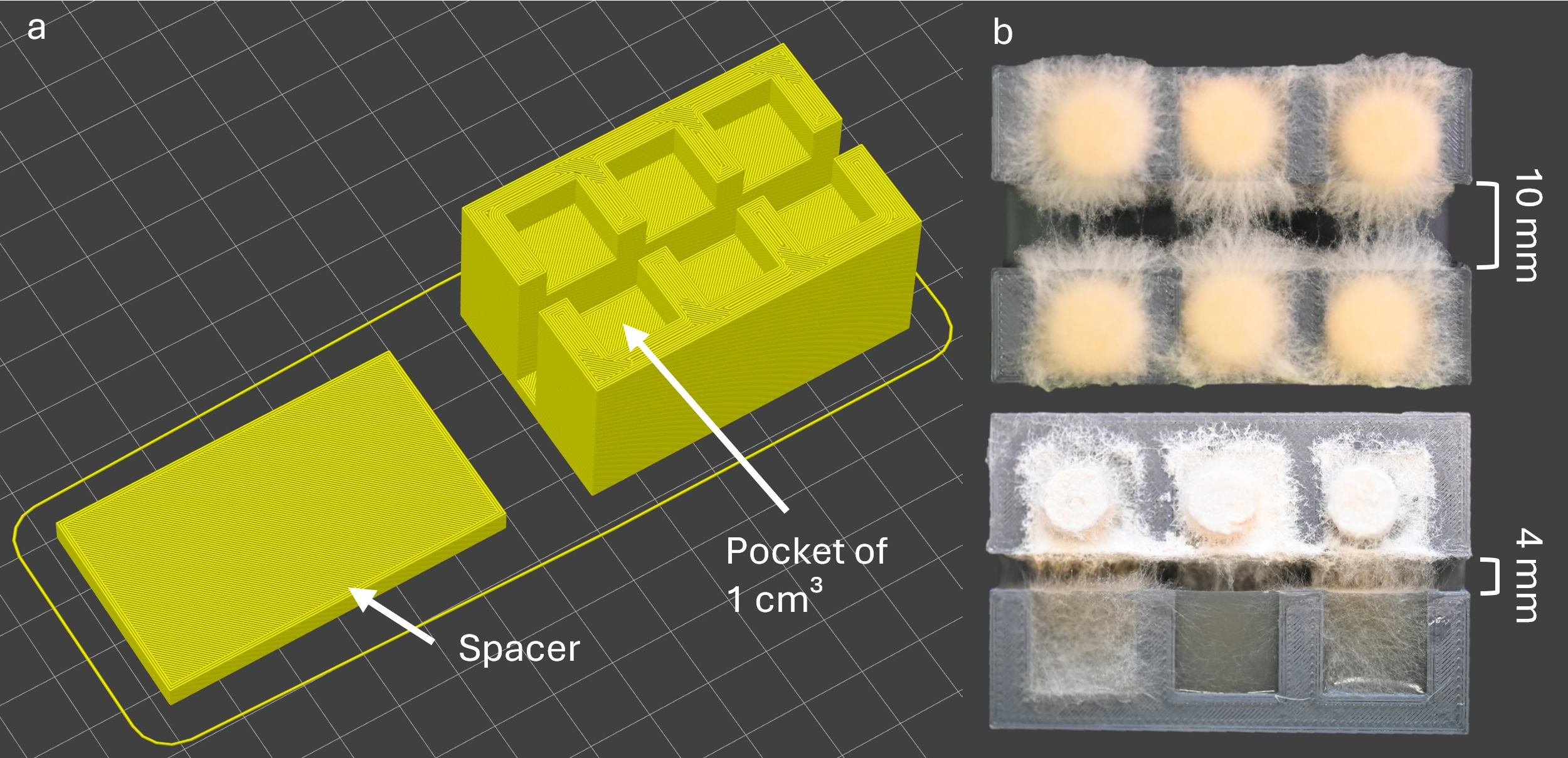
The maximum distance that the hyphae of the tested fungi can bridge was tested on a 3D-printed polylactic acid (PLA) setup adapted from Gantenbein et al. (Reference Gantenbein, Colucci, Käch, Trachsel, Coulter, Rühs, Masania and Studart2023) (Figure 1a). PrusaSlicer 2.8.0 was used to model and print the setups with an infill of 5%. PLA with a diameter of 1.75 mm was extruded at 205°C onto the printing bed (60°C) of the filament printer (MK4, Prusa Research a.s., Prague, Czech Republic). The pockets of the setup were filled with PDA (20 µg/ml tetracycline was used to prevent bacterial contamination) and each fungus was inoculated either on one side or both sides of the gaps with different distances to evaluate if and how fast the gaps were bridged (Figure 1b). The distance was increased incrementally by 1 mm until it was too large to be overcome.
3D model of the gap-bridging setup (a). SH bridging a gap of 10 mm from both sides (top) and PS bridging 4 mm from one side (bottom) (b).

Figure 1. Long description
The block of the gap bridging setup has three pairs of pockets that are directly facing each other, but are separated by a gap. Each pocket has a negative volume of 1 cm³ and the spacer fits tightly into the gap. This ensures that PDA can be poured into the pockets and the medium shows a defined surface after the spacer is removed, which is visible in the photographs. The latter show setups that are filled with PDA and inoculated with PDA plugs either on both sides (for SH) or one side (for PS). SH bridges a gap of 10 mm with the aerial hyphae extending slightly semi-circular, so that they mainly bridge in the center of the pockets. For PS, the success of briging is visible by hyphal growth in the pocket that was not inoculated.
Binding wood over a distance
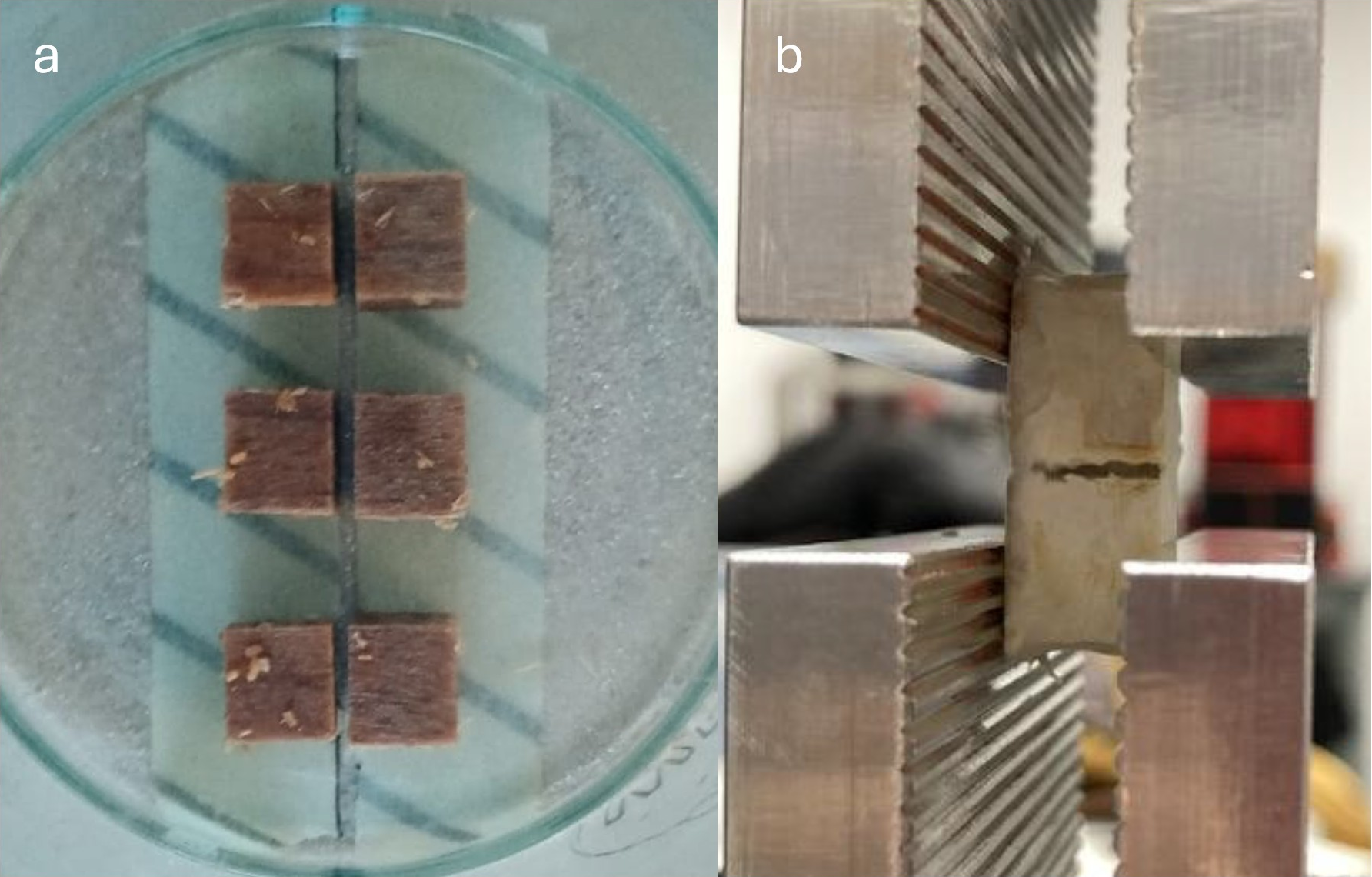
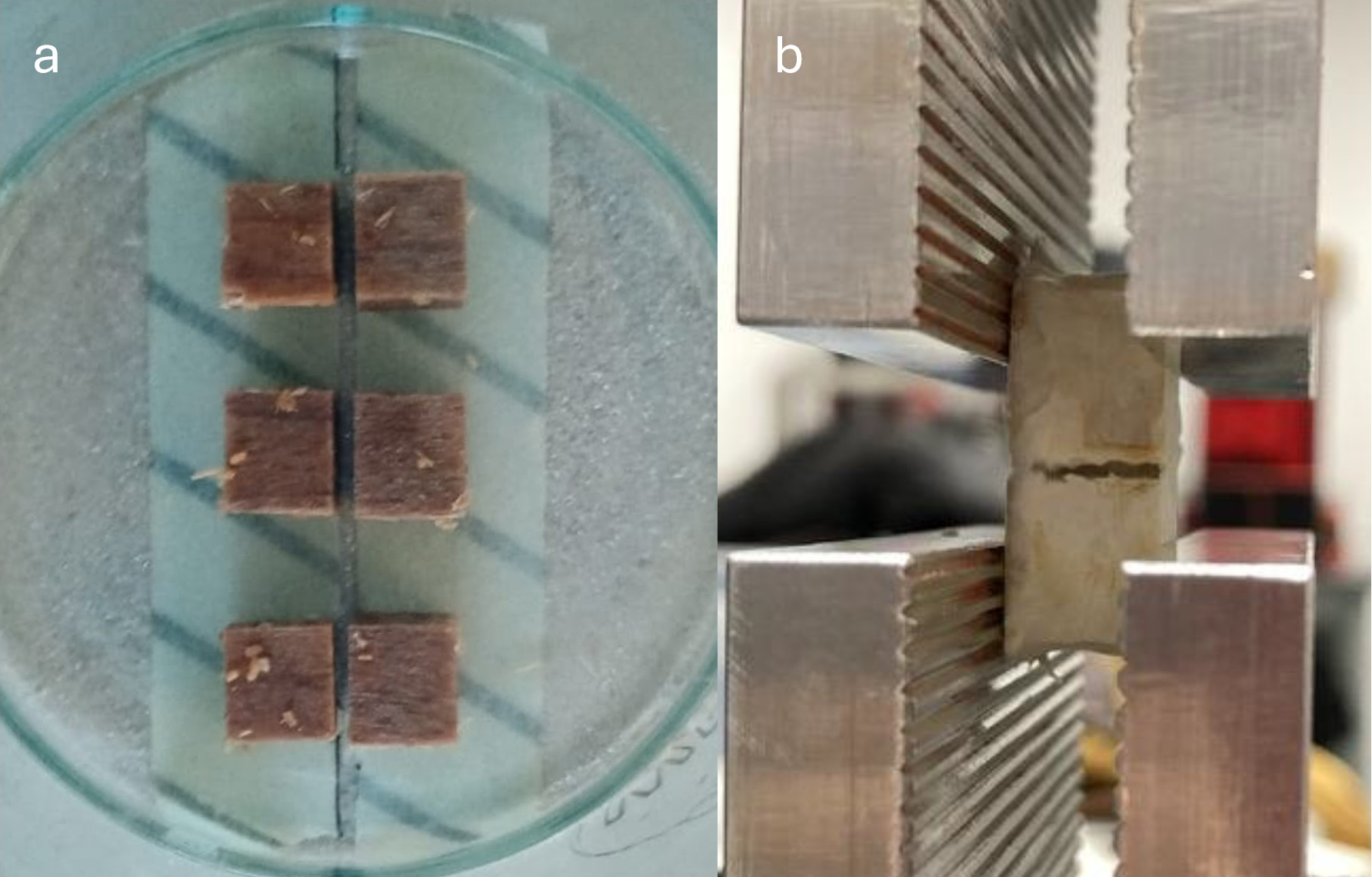
Beech wood cubes (10 × 10 × 10 mm) were soaked and autoclaved in potato dextrose yeast broth (PDY). Twelve cubes per fungus were buried in 80 g (dry weight) sawdust substrate (Appendix Table S2) and inoculated with 40 ml of a homogenized fungal liquid culture (prepared in the same way as described in the “Composite fabrication” below). After 9 days of incubation at 26°C and 90% RH, the wafers were removed, cleaned from mycelium and sawdust and placed 2 mm apart face-to-face (wood vessels facing each other) in pairs (Figure 2a). They were given 2 weeks at the same incubation conditions to connect through the outgrowing mycelium before they were dried at 60°C and tested in tension at a speed of 2.5 mm/min with a universal testing machine (Figure 2b, Z2.5, ZwickRoell GmbH & Co. KG, Ulm, Germany). The tensile strength was calculated by dividing the maximum force by the cross-section (100 mm2). Afterwards, the cubes were cut in half with a microtome, gold-coated and observed with a scanning electron microscope (SEM, JSM-IT100, Jeol Ltd., Tokyo, Japan).
Placement of the inoculated wood cubes (a) and tensile testing after incubation and drying (b).
Composite fabrication
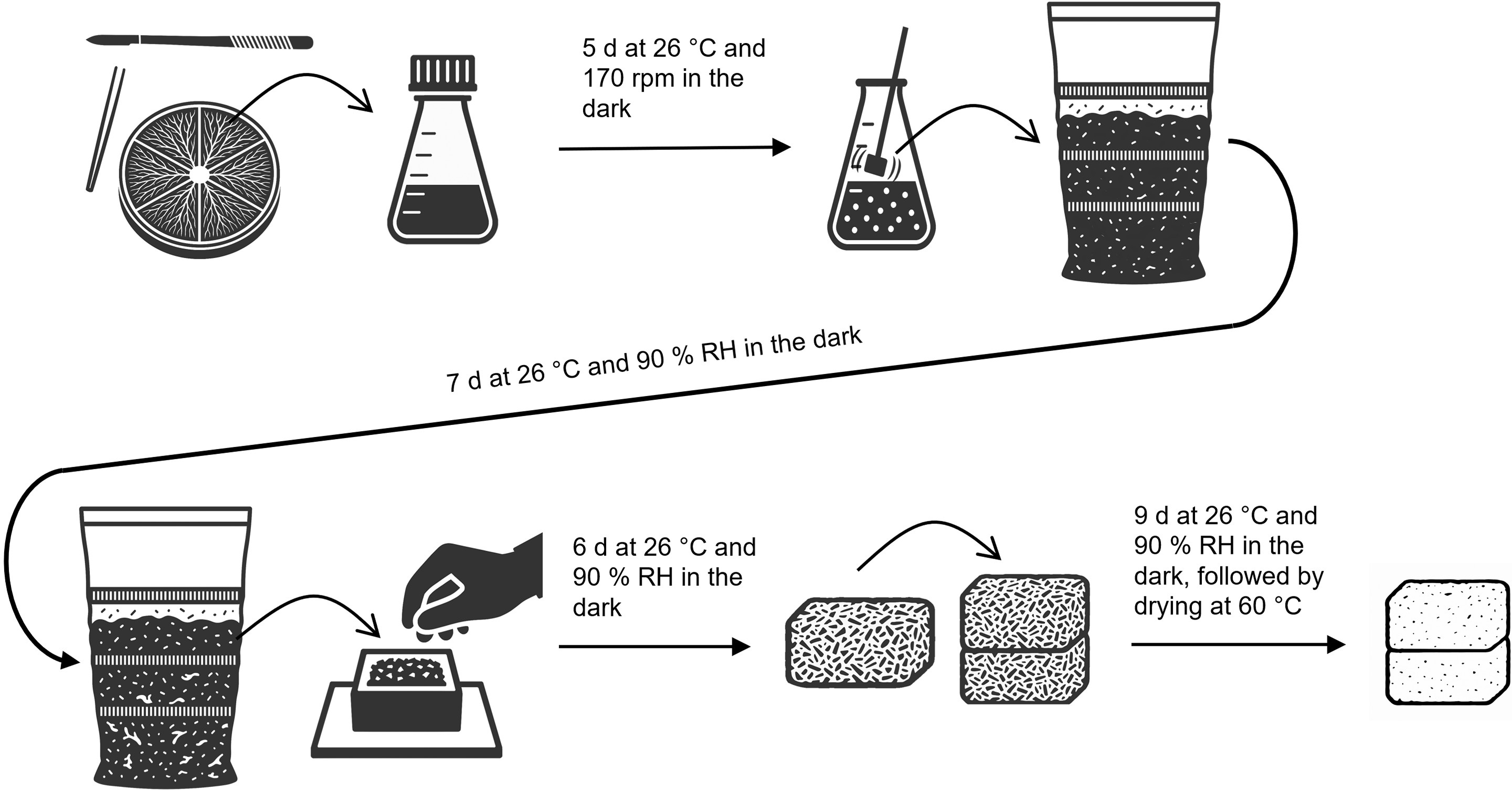
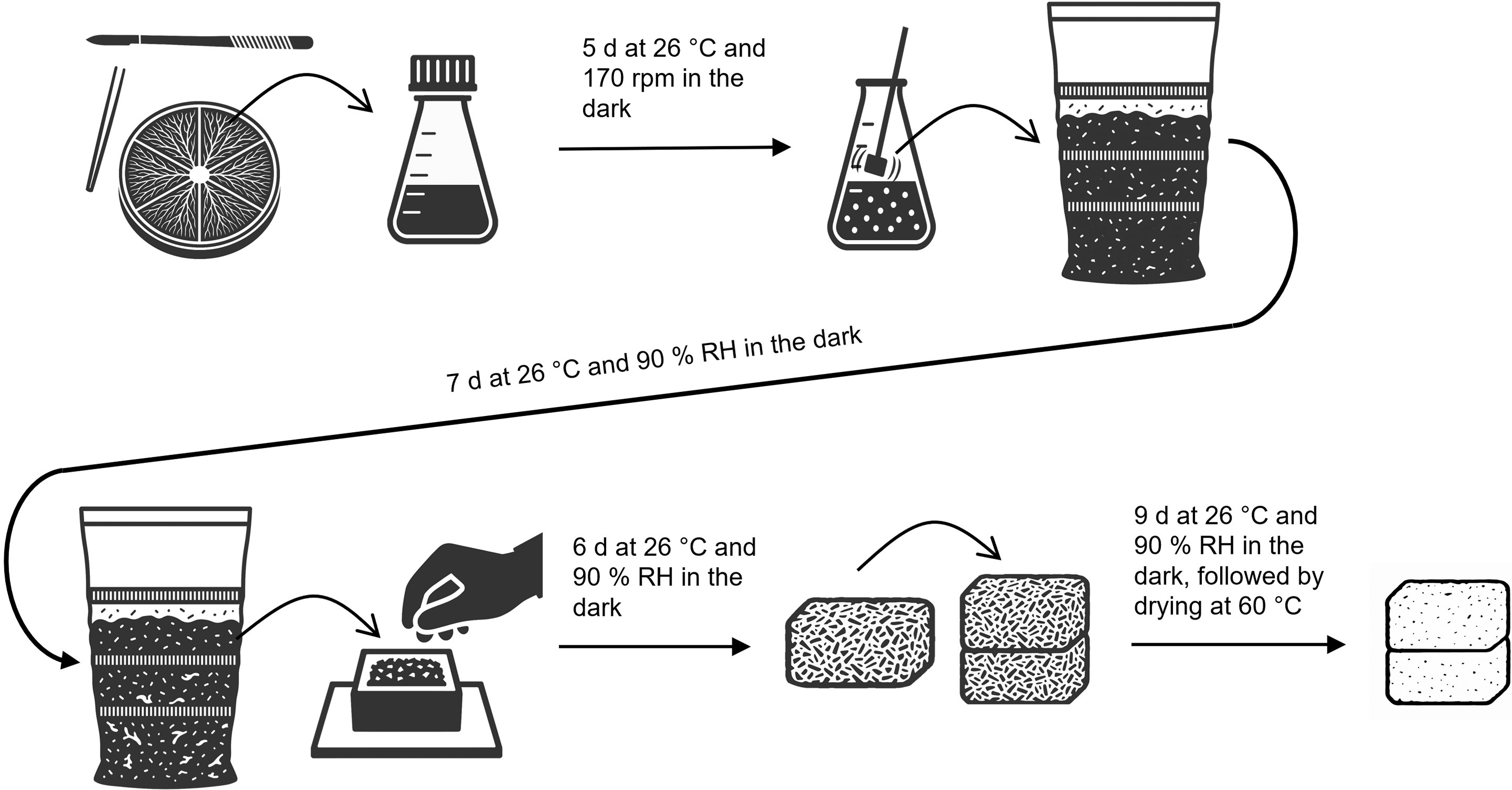
TV was selected for composite fabrication due to its fast growth and high binding strength, whereas SH showed the largest morphological contrast to the other fungi and performed best in the gap-bridging experiment. Fully colonized PDA plates were cut into six pieces and each one was used to inoculate 100 ml of PDY in a 250 ml baffled shake flask with a membrane screw cap (Figure 3). After 5 days at 170 rpm and 26°C in a dark incubation shaker (New Brunswick Innova 42R, Eppendorf SE, Hamburg, Germany), the culture was homogenized with an Ultra-Turrax® dispersing instrument (TP18/10, IKA®-Werke GmbH & Co. KG, Staufen, Germany). Sawdust substrate (Appendix Table S2) of two different particle sizes, being 0.5–1.0 mm and 0.75–2.5 mm (Räuchergold® HB 500–1000 or HBK 750–2000, respectively, J. Rettenmaier & Söhne GmbH + Co KG, Rosenberg, Germany), was inoculated with the homogenate at a wet mass ratio of 4:1 (e.g., 250 g homogenate per 1 kg of wet substrate) in plastic bags with filter membranes (PP75/BEH4+1/V22-49, SacO2, Deinze, Belgium). After 7 days at 26°C and 90% RH in the dark, the colonized sawdust was transferred into silicone frames (52 × 52 × H mm) for the IBS test and silicone molds (135 × 135 × 50 mm) for thermal conductivity assessment. As substrate compression in the frames/molds was performed manually, slight differences in density appeared (Appendix Table S3) that cannot be unambiguously attributed to other factors, such as particle size, fungal species or layer count. The frames (only closed on the sides but open at the top and bottom) and molds (only open on the top) were incubated in plastic boxes for 6 days at the same conditions. The height of the frames was 52 mm for composites consisting of only one layer in the end, 26 mm for 2-layer composites and 13 mm for 4-layer composites. For the specimens for thermal conductivity measurements, the molds were 50 mm high and only filled to a height of 13 mm for the 4-layer variant. To investigate potential effects of the layer orientation on IBS, three sets of 2-layer composites were produced with the initial top layers facing each other (TT), or bottom layers facing each other (BB), or bottom and top (BT). In the 4-layer composites, all three possible layer combinations were present in each specimen. Stacking of the layers took place directly after separation from the frames/molds and the stacks were oriented with an initial top side facing the bottom (except for TV2F_TT). Incubation continued for 9 more days before the composites were dried at 60°C. During drying, a mass of 5.5 g/cm2 of cross-sectional area was applied to avoid warping. The resulting materials were labeled according to fungal species (TV or SH), number of layers (1, 2 or 4) and particle size (F for fine or C for coarse). The growth duration inside and outside of the silicone frames was reduced from 6 to 5 days and from 9 to 3 days, respectively, for the composites TV1FR and TV4FR.
Schematic of the fabrication process of bio-welded mycelium composites. Pictograms were generated using Microsoft Copilot GPT-5 (accessed in February 2026) by uploading each element of the fabrication process as a photograph and asking for conversion into a black and white pictogram.
Internal bond strength test
Mycelium composites were glued to loading blocks (yokes) of cross-laminated timber with white wood adhesive (WB 215 F, Türmerleim GmbH, Ludwigshafen, Germany). During curing for at least 24 h, a 500 g load was put onto each specimen to ensure optimal contact. The tensile tests were performed perpendicular to the surface at a speed of 1.5 mm/min according to the EN 319 standard (Deutsches Institut für Normung e. V. 1993) with a universal testing machine (Z2.5, ZwickRoell GmbH & Co. KG, Ulm, Germany). The maximum force was divided by the cross-sectional area of the specimens to calculate the IBS.
Thermal conductivity measurements
Thermal conductivity of the mycelium composites was assessed in both dry and humid environments using two complementary measurement methods. For dry conditions, a heat flow meter (TCA 300 Basic, Taurus Instruments GmbH, Weimar, Germany) was utilized with the temperature of the heating and cooling plates being 20°C and 0°C, respectively. The specimens were measured directly after removal from the oven at 60°C. Heat flux transducers measured the temperature difference between the upper and lower specimen surfaces and the thermal conductivity was calculated from the measured heat flux, temperature gradient, specimen cross-sectional area and thickness. For measurements at 50% ± 4% relative humidity and 23°C ± 1°C, a needle probe instrument (Therm 2227-2, Ahlborn GmbH, Holzkirchen, Germany) was employed. The needle was inserted approximately 5 cm into the specimens, ensuring a minimum distance of 1 cm from any surface. A heating wire within the probe generated controlled heat, while embedded temperature sensors recorded the material’s time-dependent thermal response to determine the thermal conductivity.
Statistical analysis
R 4.5.0 was used to check for significant differences in the data sets with the Kruskal-Wallis test and reveal between which groups they appear with Dunn’s post-hoc test (R Core Team 2025). A confidence interval of 0.95 was chosen and the non-parametric tests were selected due to the relatively small sample size.
Results and discussion
Fungal screening
Three screening experiments were designed to reveal differences in the hyphal extension rate of the six different fungi: 1) maximum gap-bridging distance, 2) growth on beech sawdust and 3) tensile strength of mycelium connecting two beech wood cubes. While the fungus must be able to colonize the substrate in a reasonable time frame to make the process efficient and to be competitive with contaminants, which cannot always be excluded, particularly the bridging capability of hyphae is of interest for the bio-welding process to ensure a proper connection of the individual layers. Finally, the established connections should withstand mechanical stress, where the species selection can have a substantial impact.
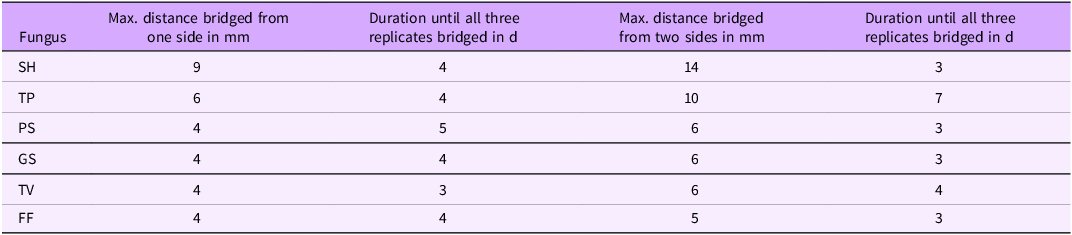
All tested species were capable of bridging at least 4 mm gaps from one side and 5 mm gaps when growing from both sides of a gap within a few days (Table 1). Gantenbein et al. (Reference Gantenbein, Colucci, Käch, Trachsel, Coulter, Rühs, Masania and Studart2023) reported the maximum distance bridged by Ganoderma lucidum from one side to be 2.5 mm. Apart from the difference in species, we suspect that the width of the pockets, which were more than double in our setup, facilitated bridging, as hyphae can support each other. This could lead to the longer outreach in the center that we frequently observed (e.g., for SH in Figure 2b). For G. resinaceum (synonymous with GS according to “IndexFungorum” [https://www.indexfungorum.org/]), bridging of 5 mm gaps in sawdust-based composites was demonstrated (Elsacker et al. Reference Elsacker, Søndergaard, van Wylick, Peeters and de Laet2021). When bio-welding mycelium composites, there are always some spots where the layers are in direct contact. The connection is, therefore, easily established and can potentially also enable the bridging of larger gaps compared to setups where no initial contact between the mycelia of both sides is given.
The maximum distance that the tested fungi could bridge from one or two sides, including the duration until all three replicates bridged

Table 1. Long description
SH bridged the highest distance of 9 mm when inoculated on one side and 14 mm when bridging from both sides. TP comes second with 6 mm and 10 mm, respectively. The other candidates bridged 4 mm and 6 mm, respectively, with the exception of FF, which only bridged 5 mm when inoculated from both sides. The experiment took 3-7 days.
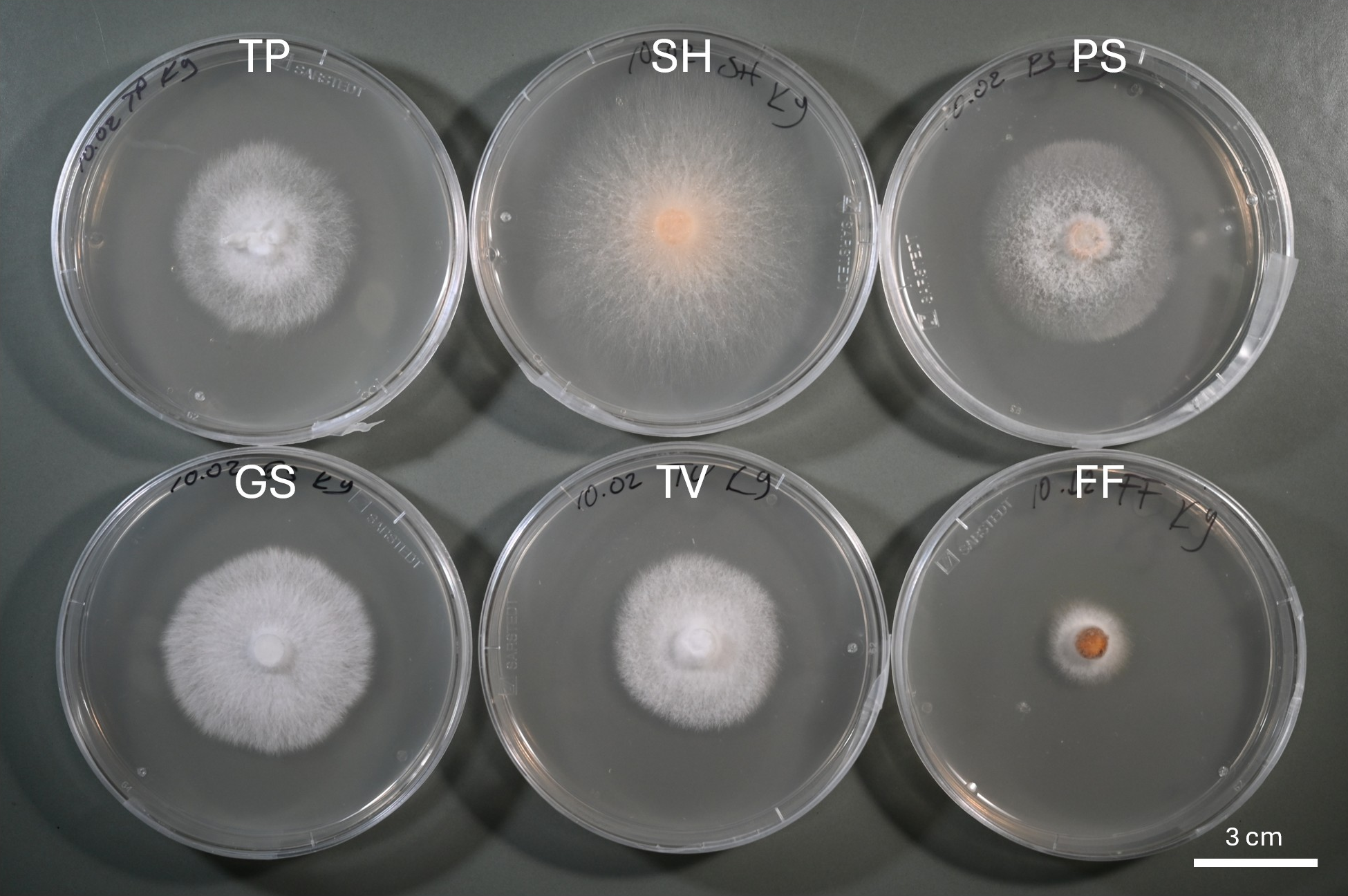
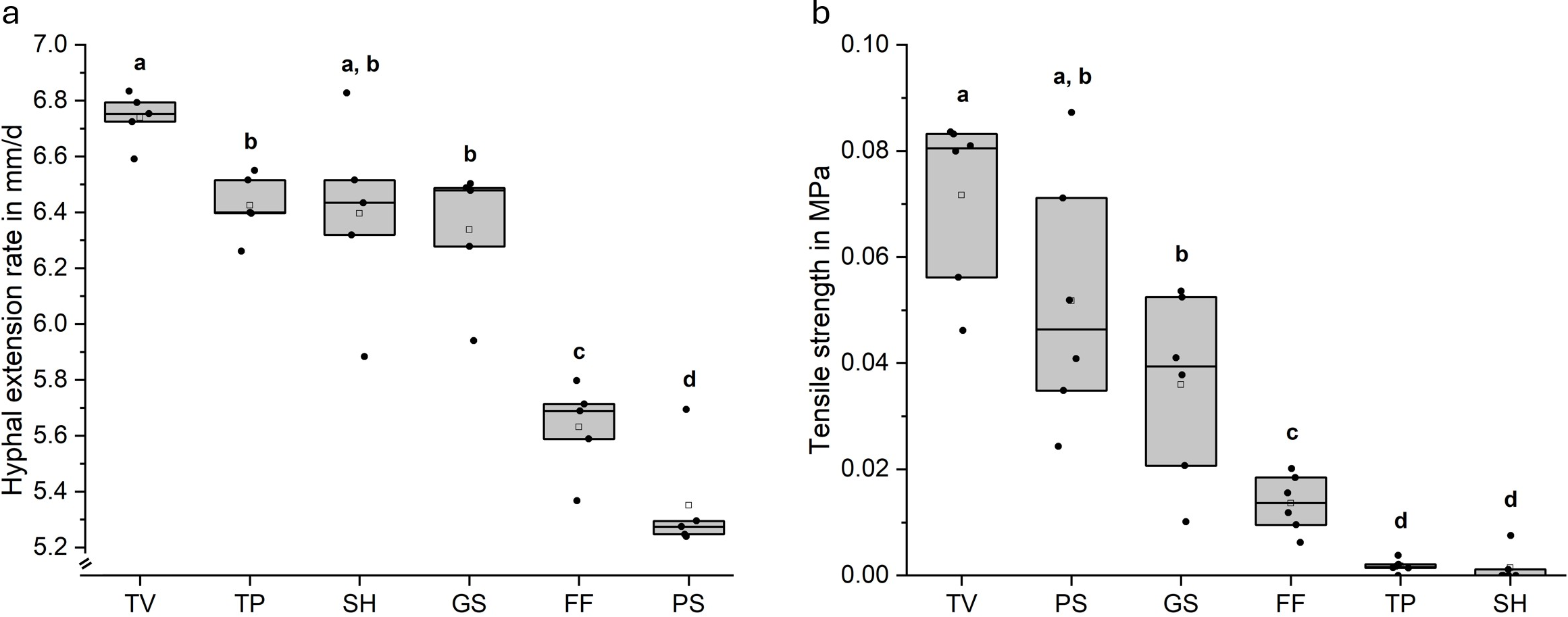
When selecting fungi for producing and/or bio-welding mycelium composites, their “growth rate” is one of the most obvious criteria. It is important to note that hyphal extension on a lignocellulosic substrate differs from that on standard culture media. This becomes directly obvious when comparing the hyphal extension on PDA (Figure 4) to the one on beech sawdust (Figure 5a). In many studies, the growth rate is deduced from the hyphal extension on a surface (Felle et al. Reference Felle, Estenfelder, Wenig, Berendt, Eder, Cheng and Benz2026; Nussbaum et al. Reference Nussbaum, von Wyl, Gandia, Romanens, Rühs and Fischer2023; Schritt et al. Reference Schritt, Vidi and Pleissner2021). Growth, however, takes place in three dimensions and thus does not necessarily correlate with extension (Moore et al. Reference Moore, Robson and Trinci2020). Still, it can make sense to eliminate fungi that extend substantially slower than others on the substrate intended for composite production. Furthermore, growth screenings, such as the one performed in this study, at least allow for a qualitative estimate of mycelial density. In our setup, TV showed the highest hyphal extension rate on sawdust particles with TP, SH and GS following close behind, and all being substantially faster than FF and PS (Figure 5a). While this is partly contrasting to the colonization of PDA plates, where SH was faster than all others and FF by far the slowest (Figure 4), the mycelial density of SH was clearly lowest on both media (Figure S1 and Figure S2). This can either be a growth strategy driven by unsuitable environmental conditions or a general characteristic of SH that would supposedly be detrimental to the binding of substrate particles (Nussbaum et al. Reference Nussbaum, von Wyl, Gandia, Romanens, Rühs and Fischer2023).
Picture of the six white rot fungi used for the screening, displaying different growth after 3 days on PDA.

Figure 4. Long description
The PDA plates show similar hyphal extension (colony diameter being roughly 4.8 cm) for TP, PS, and GS. TP and PS formed a denser network in the center, which thins toward the growth front, while GS and the slightly slower-growing TV are dense across the whole colonized area. SH grew substantially faster, but the mycelium density is lowest. FF only covers a few millimeters of PDA around the inoculum.
Hyphal extension rates of the six different fungi on beech sawdust (a) and tensile strength of the mycelium connecting two beech wood cubes over a distance of 2 mm (b). All data points (n = 5 for the extension rate and n = 6 for the tensile strength) are plotted (black circles) together with the arithmetic mean (white squares), the median (black line) and the interquartile range (grey boxes). Different letters above the data indicate statistically significant differences between the groups of each graph (Dunn, p ≤ 0.05).

Figure 5. Long description
The hyphal extension rate ranges from 6.59 to 6.83 mm/d, with an average of 6.74 mm/d for TV. The numbers for TP are 6.26-6.55 mm/d with an average of 6.42 mm/d, for SH 5.88-6.83 mm/d with an average of 6.40 mm/d, for GS 5.94-6.50 mm/d with an average of 6.34 mm/d, for FF 5.37-5.80 mm/d with an average of 5.63 mm/d, and for PS 5.24-5.69 mm/d with an average of 5.35 mm/d. The ranges for the tensile strength are 0.046-0.084 MPa with an average 0.072 MPa of for TV, 0.024-0.087 MPa with an average of 0.052 MPa for PS, 0.010-0.054 MPa with an average 0.036 MPa of for GS, 0.006-0.020 MPa with an average 0.014 MPa of for FF, 0.000-0.004 MPa with an average 0.002 MPa of for TP, and 0.000-0.008 MPa with an average 0.001 MPa of for SH.
Interestingly, SH and TP – that had bridged the largest gaps – performed worst in terms of the strength of mycelium connections tested with wood cubes (Figure 5b), supporting a more explorative growth strategy with fast extension but presumably a lower mycelium density. Clear differences in tensile strength were observed between different fungi, reaching more than 70 kPa for TV. To achieve strong connections, the mycelium biomass itself and the contact area with the substrate should be maximized. Furthermore, the strength of the individual hyphae correlates with the binding strength as long as the physical anchoring and chemical binding to the wood are sufficient (Bai et al. Reference Bai, Niu and Qin2026). Therefore, and as described for mycelium composites before, the species and growth conditions are crucial for the mechanical performance (Haneef et al. Reference Haneef, Ceseracciu, Canale, Bayer, Heredia-Guerrero and Athanassiou2017).
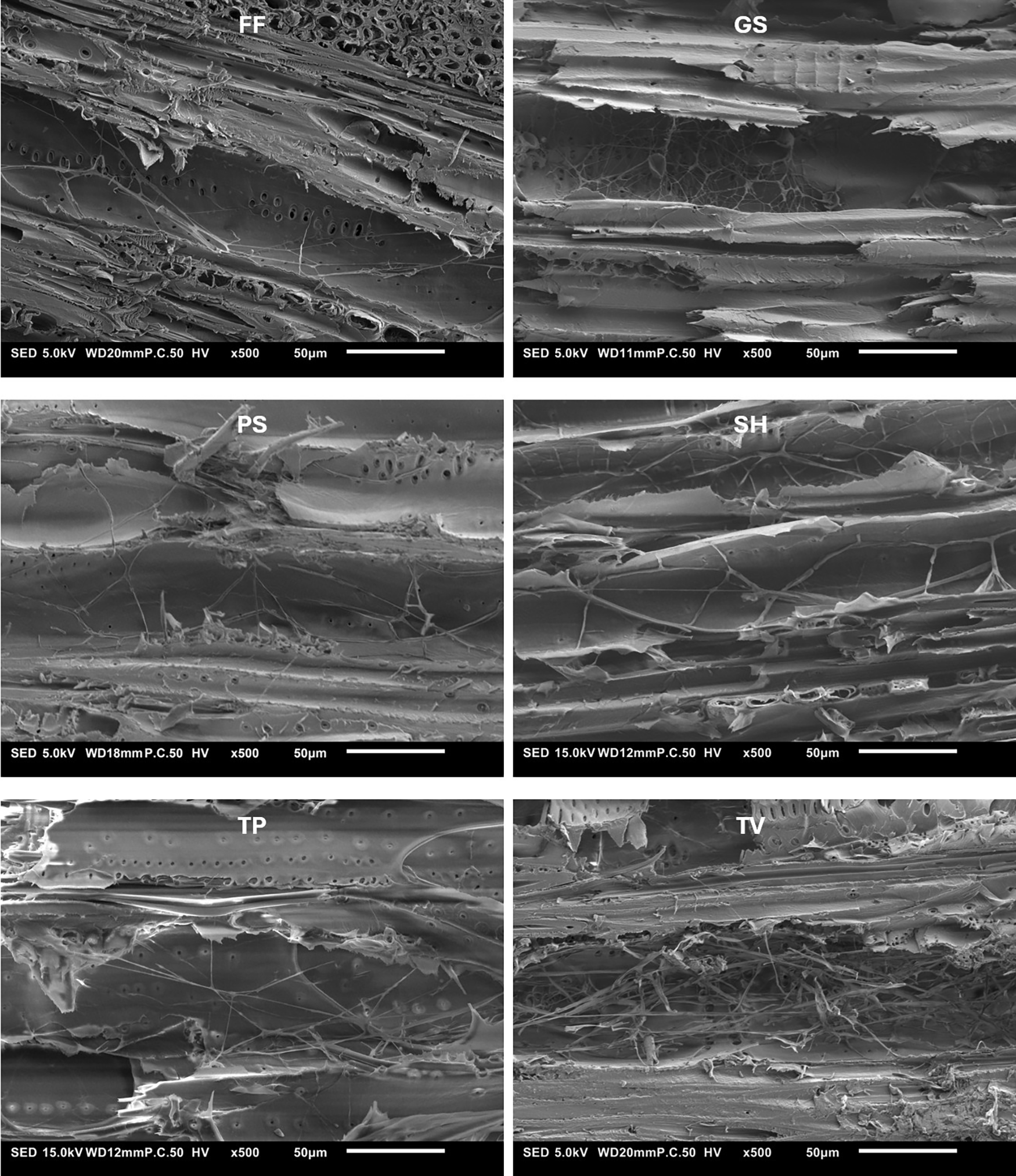
Additional SEM analysis from the center of the wood cubes demonstrated that all fungi completely penetrated them within 23 days and obviously predominantly used the wood vessels to spread. They exhibited different quantities, branching habits and diameters of hyphae (Figure 6). Especially GS and TV formed dense networks in some of the cavities.
SEM images from the center of wood cubes colonized by the different fungi showing hyphae in the wood vessels.

Internal bond strength
The fabricated mycelium composites were subjected to tension perpendicularly to the bio-welded interface to directly challenge the strength of the connection. For applications where materials are subjected to a shear load in parallel to the binding surface, bio-welding was already shown to increase the stress resistance, especially when implementing interlocking mechanisms at the binding site (Saez et al. Reference Saez, Grizmann, Trautz and Werner2022). Similarly, a higher toughness during 3-point bending was demonstrated for bio-welded composites (Boisvert et al. Reference Boisvert, Poulin, Elkoun, Cabana, Robin, Robert and Bérubé-Simard2026). To achieve a welding interface that can withstand the same or a higher internal bond strength as the composite during perpendicular load, optimizations are required (Raslan et al. Reference Raslan, Elsacker, Debnath and Dade-Robertson2025). In addition to the effect of bio-welding, the influence of wood particle size, growth duration and fungal species was investigated to determine the most suitable adjustments.
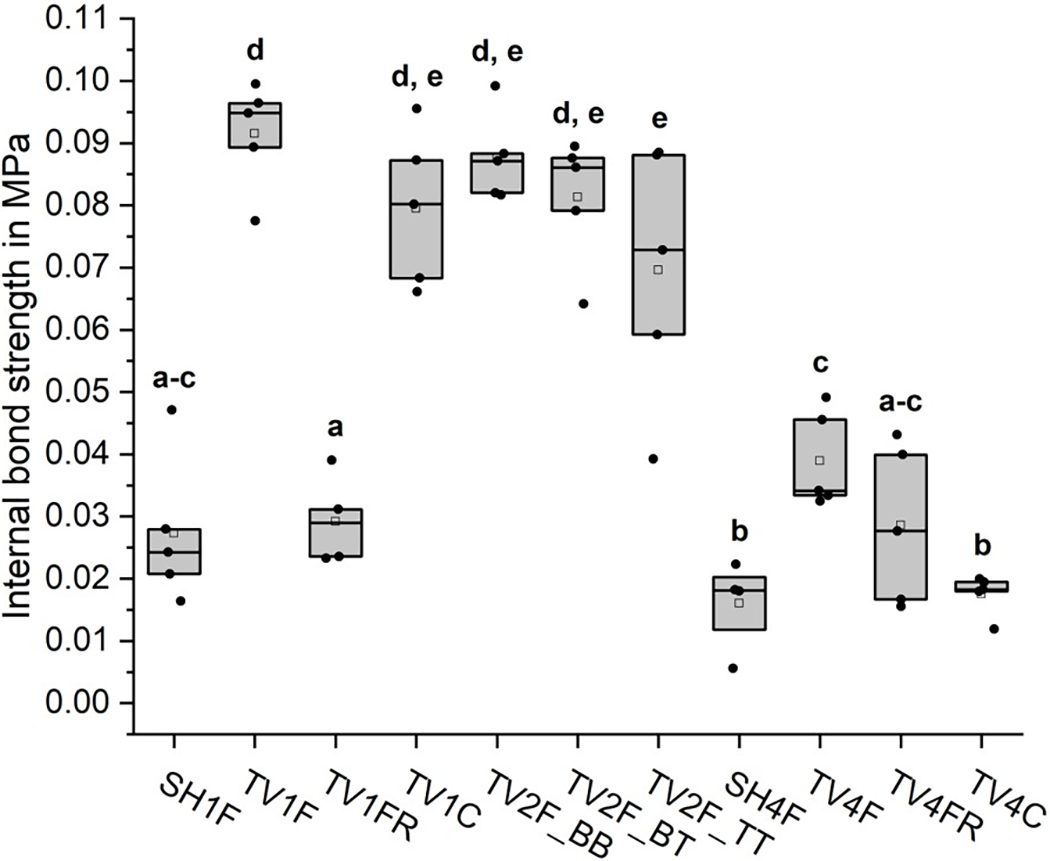
The IBS results can be separated into two main groups: (1) all materials with four layers, with reduced growth time, and those with SH withstood less than 50 kPa, while it was around 70–100 kPa for all others (2). The better performance of TV, aligned with the results of the binding strength screening experiment, indicates that most gaps between the composite layers could be bridged by this fungus despite its comparatively small bridging distance capacity. Composites with finer particles were stronger, which could be explained by more contact points for smaller particles, leading to easier interconnection by mycelium. Usually, a smaller particle size also correlates with strength due to elevated density (Mani et al. Reference Mani, Tabil and Sokhansanj2006). However, this was not observed in the present study, as the more narrow particle size distribution compared to the larger particles counteracted the effect (Roquier Reference Roquier2024). The decreased IBS for specimens with coarser particles was more pronounced for composites with multiple layers, indicating limitations of the bio-welding, potentially due to a rougher surface. In contrast, the effect of reduced growth duration was only significant in the single-layer composites, but not for the bio-welded ones. This indicates that other factors, such as the surface smoothness of the layers and their alignment, were more crucial than the duration for the bio-welding process. The same factors might mask the species effect between TV4F and SH4F, whereas TV1F and SH1F differ more substantially. Nevertheless, any differences in single-layer composites are important to consider. As soon as the fabrication protocol is adapted to avoid interlayer failure, the IBS of the materials themselves becomes limiting. Consequently, the use of TV instead of SH and a prolonged growth duration are indeed compelling. The ideal growth duration is, of course, species-dependent and extensive colonization can also weaken the material (Gan et al. Reference Gan, Soh, Saeidi, Javadian, Hebel and Le Ferrand2022; Nussbaumer and Benz Reference Nussbaumer and Benz2026).
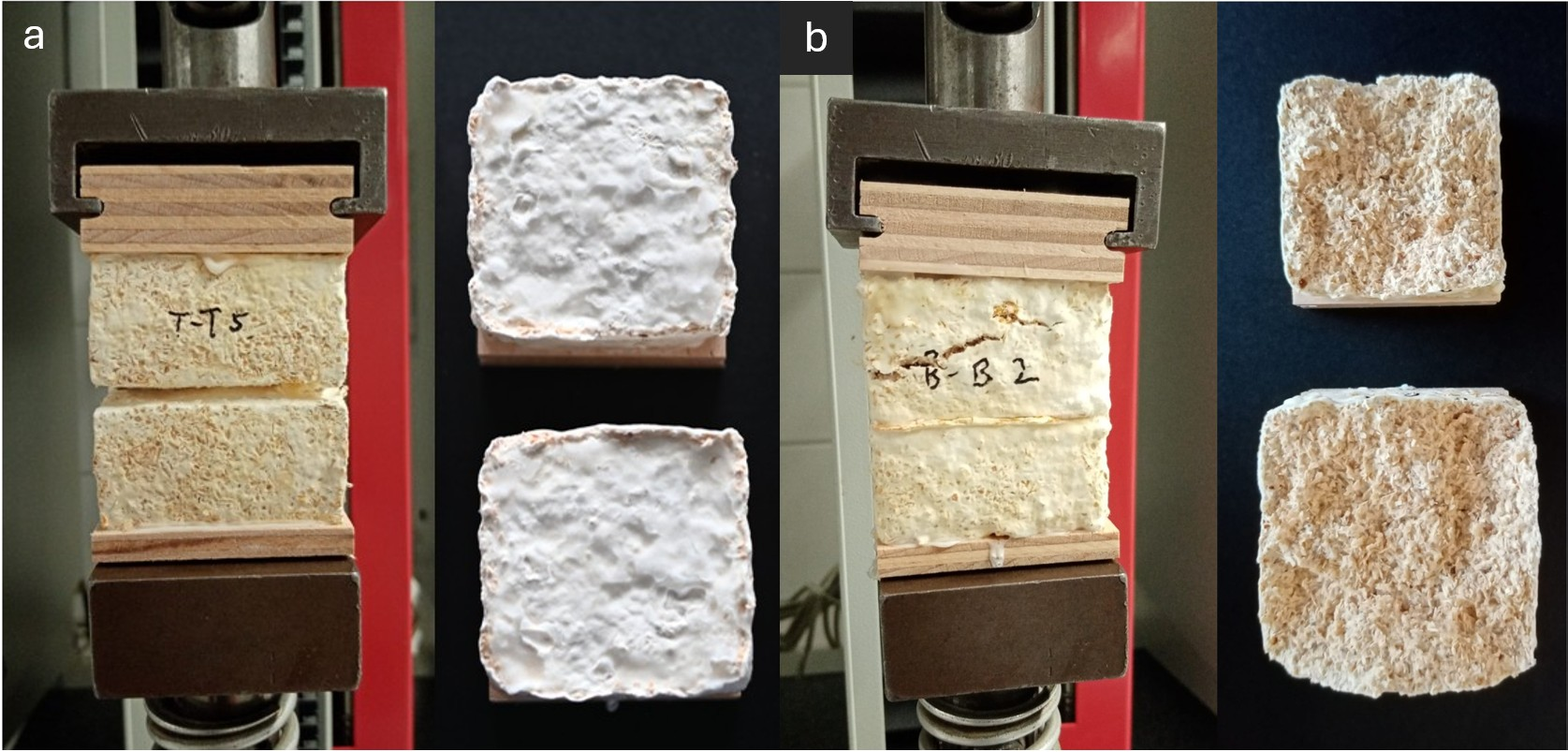
For bio-welded composites, not only the IBS is relevant, but also the failure point, because it provides information about the weakest spot in the material. While in the composites consisting of four layers, all possible layer orientations were introduced in each specimen, three different variants of 2-layer composites were manufactured to investigate the IBS of bio-welded layers with different orientations (BB, BT, TT). It was observed that 80% of 4-layer composites failed in the interface where two initial top layers faced each other. This layer interface was also the point at which all cracks in TV2F_TT emerged, including some specimens with perfect layer delamination (Figure 7a) and others with cracks extending through the layers. In contrast, three out of five TV2F_BT and all five TV2F_BB exhibited intralayer rather than interlayer failure (Figure 7b). The most obvious explanation is that the flatter bottom surfaces ensure better contact and less tilting of the stacked layers. Especially in composites with multiple layers, tilting can occur, resulting in non-parallel surfaces and an uneven stress distribution. Depending on how the peaks and valleys of the rougher top surfaces align, they can cancel out or add up, leading to a larger data spread as observed for TV2F_TT (Figure 8) and previously reported by others (Raslan et al. Reference Raslan, Elsacker, Debnath and Dade-Robertson2025). Surface growth of the fungus could assist in roughness reduction when the mycelium can grow along a defined surface. Design approaches to implement this include a mold that is closed (with perforation to allow temperature and oxygen exchange) on all sides or flipping of mold frames after filling them. Raslan et al. (Reference Raslan, Elsacker, Debnath and Dade-Robertson2025) achieved an increase in strength and a shift from intralayer to interlayer failure by adding nutrients onto the bio-welding surfaces in their study. Interestingly, the nutrients were not added directly before layer stacking, but over five consecutive days beforehand. Consequently, it was not necessarily a growth booster for the welding process but could have contributed to a leveling of the surfaces through the nutrient particles and growing mycelium.
Interlayer failure of a TV2F_TT specimen that resulted in a perfect separation of the layers (a) and intralayer failure of a TV2F_BB specimen (b).

Figure 7. Long description
Failure occurred right at the layer interface, so that the fractured surfaces were completely covered by mycelium, as in unfractured composites for TV2F_TT. For TV2F_BB, a crack extends through the middle of the top layer and wood sawdust with hardly any visible mycelium was exposed on the fractured surfaces.
Internal bond strength (IBS) of mycelium composites made from two different fungi and substrate particle sizes and consisting of 1, 2 or 4 layers. The growth duration was reduced by 7 days for samples ending with an “R”. For 2-layer composites, all layer orientations (TT = top to top; BT = bottom to top; BB = bottom to bottom) were analyzed. All data points (n = 5, except SH4F: n = 4) are plotted (black circles) together with the arithmetic mean (white squares), the median (black line) and the interquartile range (grey boxes). Different letters above the data indicate statistically significant differences between the groups (Dunn, p ≤ 0.05).

Figure 8. Long description
The IBS ranges from 0.016-0.047 MPa with an average of 0.027 MPa for SH1F, 0.077-0.099 MPa with an average of 0.092 MPa for TV1F, 0.046-0.063 MPa with an average of 0.055 MPa for TV1FR, 0.022-0.065 MPa with an average of 0.048 MPa for TV1C, 0.082-0.099 MPa with an average of 0.088 MPa for TV2F_BB, 0.064-0.090 MPa with an average of 0.081 MPa for TV2F_BT, 0.039-0.089 MPa with an average of 0.070 MPa for TV2F_TT, 0.006-0.022 MPa with an average of 0.016 MPa for SH4F, 0.032-0.049 MPa with an average of 0.039 MPa for TV4F, 0.016-0.043 MPa with an average of 0.029 MPa for TV4FR, and 0.012-0.020 MPa with an average of 0.018 MPa for TV4C.
Thermal conductivity
Bio-welding is used to achieve better and more homogeneous colonization of mycelium composites, especially for larger objects. Depending on the application, the impact of this process on other properties is of interest. One of those is thermal insulation, where already a small change in performance can have large consequences on the energy efficiency of buildings and consequently on the choice between conventional or mycelium-bound insulators. Here, the thermal conductivity of single-layer and 4-layer composites was measured using two different devices to assess potential effects.
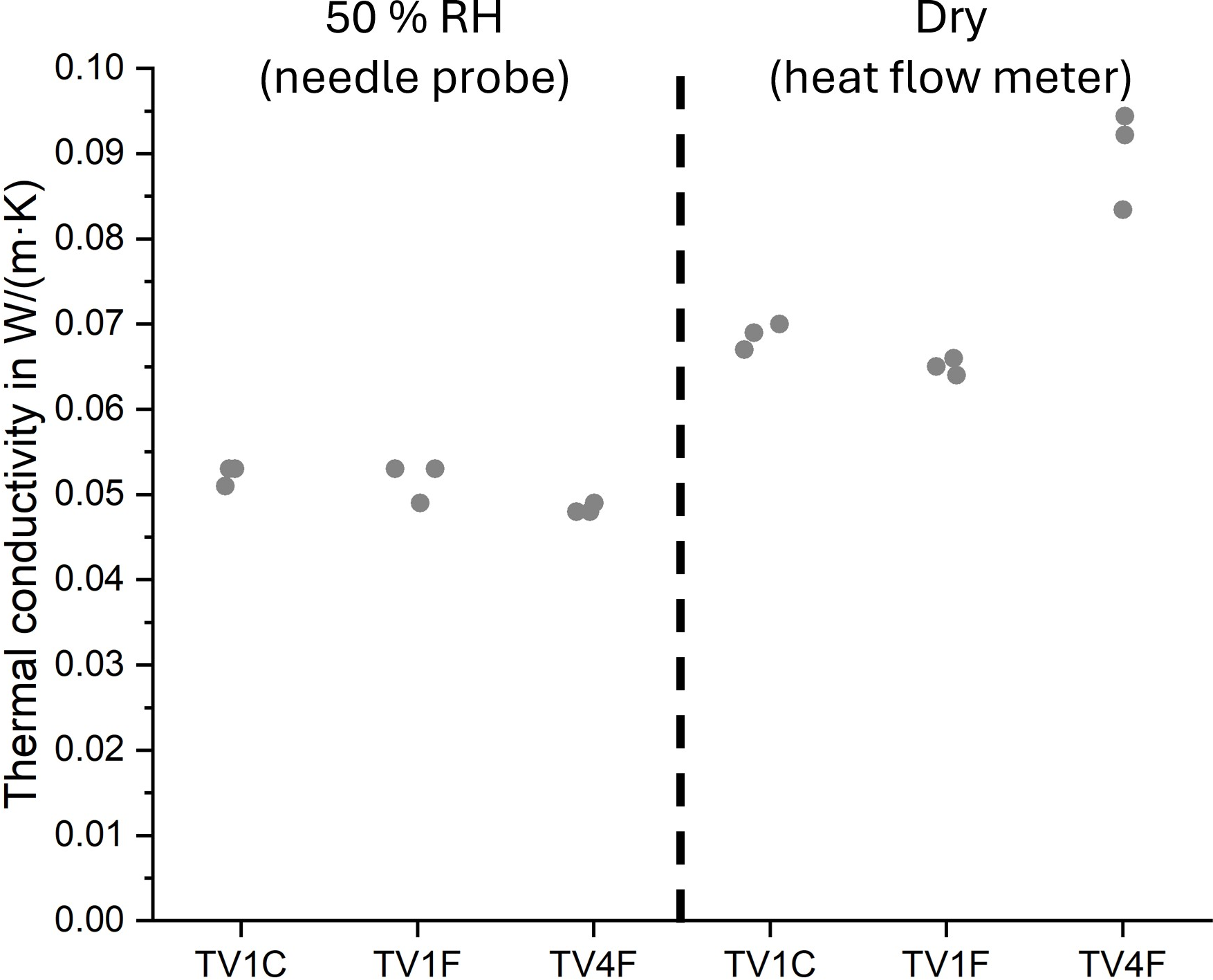
The two different measurement techniques gave divergent results, with lower thermal conductivity values for the needle probe method despite conditioning at 50% RH (Figure 9). This method did not reveal clear differences between the composites with different particle sizes or numbers of layers. The heat flow meter yielded clearly higher thermal conductivity values for the 4-layer composites. Most likely, this effect was not reflected in the other measurement method because the local measurement did not capture anisotropy effects across the entire specimen. A disadvantage of the heat flow meter, however, is that contact resistance and heat losses on uneven surfaces can pose problems (Wildman et al. Reference Wildman, Shea, Walker and Henk2024). For samples that are mostly isotropic, the needle probe might be more accurate, but when consisting of several layers, the heat flow across the whole cross-section of the specimens should be determined. The bio-welded composites for the thermal conductivity measurements were more uneven than the ones for the IBS test because the filling height of the molds could only be adjusted through markings on the side, but there was no precise way to ensure that the height in the center was the same – in contrast to composites that were filled all the way to the edge of the mold/frame where overhanging particles could be scraped away with a flat object inched along the top edge. This unevenness led to the emergence of larger pores between the layers, increasing heat conduction and potentially favoring convection, thereby raising thermal conductivity (Liu and Zhao Reference Liu and Zhao2022). This could partly explain why the density (Table S3) – often correlating with thermal conductivity – being highest for TV1C and lowest for TV4F was not a reliable indicator for the thermal insulation performance.
Thermal conductivity of mycelium composites made from TV and fine or coarse particles, consisting of 1 or 4 layers. The measurement results of the three replicates are plotted.

Figure 9. Long description
At 50 % RH, thermal conductivities of 0.051, 0.053, and 0.053 W/(m∙K) were measured for TV1C, 0.049, 0.053, and 0.053 W/(m∙K) for TV1F, and 0.048, 0.048, and 0.049 W/(m∙K) for TV4F. In the dry state, it was 0.067, 0.069, and 0.070 W/(m∙K) were measured for TV1C, 0.064, 0.065, and 0.066 W/(m∙K) for TV1F, and 0.083, 0.092, and 0.094 W/(m∙K) for TV4F.
Conclusion
The growth rate of a fungus is a common selection criterion for its use in mycelium composites, but the current study showed that it is important to test this parameter on the substrate intended for composite fabrication and that hyphal extension does not reflect three-dimensional growth, biomass production or the formation of a stable hyphal network. Another important criterion is that the fungi must be able to overcome gaps to ensure a good connection between the layers. With our screening setups, we found that all of the tested species can bridge gaps of at least 5 mm on PDA and can connect wood cubes across an air gap of 2 mm. Theoretically, the fungi should thus be able to bridge (most of) the typically smaller voids within and between layers. To answer the question of how strong these mycelium bridges are, we conceptualized a new method of testing the strength of mycelium connecting two wood cubes. Although the setup cannot be translated 1:1 to composite conditions, and the optimal growth duration of the fungi might be different from what we used, the results of this screening provide valuable insights into the binding of wood. For example, TV, the fungus that created a significantly stronger connection between wood cubes compared to SH, also resulted in stronger composites.
The present study revealed that bio-welding mycelium composites poses the risk of compromising the internal bond strength of the materials if the process is not optimized. In our study, the surface roughness of the combined layers was discovered to be a key determinant for bio-welding. When combining the smooth bottom layers, the connection that the fungus established was stronger than the layers themselves. As it is impossible to combine only bottom layers as soon as the layer count exceeds 2, the surface roughness should be minimized or the welding process should be assisted, for instance by adding nutrients between the layers (Raslan et al. Reference Raslan, Elsacker, Debnath and Dade-Robertson2025). A smoother surface is not only crucial for a strong connection but also to ensure uniform thickness of composites, as bumps can otherwise add up. Between the layers, also valleys can add up and lead to bigger cavitations that increase heat conduction and potentially favor convection effects. Consequently, smoother layers can supposedly also avoid a rise in thermal conductivity associated with larger pores.
To maximize the significance of results in studies about biomaterials, all replicates within one group should ideally have identical properties, but also the comparability between different groups is important. Despite identical media composition, inoculation ratios and growth conditions, we noticed batch differences. Consequently, we recommend producing materials in a single batch – especially those where only one parameter (such as the number of layers) is varied to investigate its impact on material characteristics. Moreover, manual production steps, specifically mold filling, should be standardized as much as possible whenever the composite density is of interest (e.g., the influence of layering on density). This can be realized by weighing in the amount each mold receives or by defined compression (Schritt et al. Reference Schritt, Vidi and Pleissner2021).
Overall, the combined results from the study contribute to the facilitated implementation of the bio-welding strategy for different use cases by pointing out common challenges and addressing how to overcome them. Moreover, material characteristics of bio-welded mycelium composites demonstrated, among other things, that with smooth surfaces, the binding of the layers by mycelium can be stronger than the individual layers themselves.
Supplementary material
The supplementary material for this article can be found at https://doi.org/10.1017/S2977905726100365.
Data availability statement
The authors confirm that the data supporting the findings of this study are available within the article and/or its supplementary materials.
Acknowledgements
We are grateful for the strains of Ganoderma sessile and Trametes pubescens, which we received from Dr. Harald Kellner and Dr. René Ullrich from the TU Dresden – IHI Zittau and for the strain of Pycnoporus sanguineus gifted by ASA Spezialenzyme GmbH.
Author contributions
Funding acquisition: J.P.B. Project administration: J.P.B. Resources: J.P.B. Conceptualization: J.P.B.; M.N. Supervision: J.P.B.; M.N. Methodology: K.Y.; M.N. Investigation: K.Y.; M.N. Software: M.N. Data curation: K.Y.; M.N. Validation: M.N. Formal analysis: M.N. Visualization: K.Y.; M.N. Writing – original draft: M.N. Writing – review & editing: J.P.B.; K.Y. All authors approved the final submitted draft.
Financial support
This work was supported by the IMT Institute for Management and Technology GmbH (M.N., J.P.B.).
Competing interests
None.
Ethical standards
The research meets all ethical guidelines, including adherence to the legal requirements of the study country. This journal follows the COPE guidelines regarding ethics and as such requires that you include an Ethics Statement detailing relevant approvals such as IRB, the ethical treatment of human and animal research participants and informed consent as appropriate to the study. Further details can be found on our Publishing Ethics Page.


 Open access

