

[P]lace acts dialectically so as to create the people who are of that place. These qualities of locales and landscapes give rise to a feeling of belonging and rootedness, … to a power to act and a power to relate that is both liberating and productive.
(Tilley Reference Tilley1994, 26)
INTRODUCTION
The quest for the Lakedaimonians – the people, their territory and their political body – remains a treacherous task. Ever since antiquity, the Lakedaimonians were equated with the Spartans, although the distinction between the two, at various moments in time, is also clearly recognised in the ancient sources. Despite significant progress in some areas of research, conflation lingers on. Announcing an all-new solution would seem contemptuous. In the period under scrutiny here, Late Helladic (LH) IIIB to the late Archaic period, dynamic developments in the southern Peloponnese make the search for a fixed formula a red herring to begin with. Two recent developments shed, however, new light on the issue, inviting and indeed encouraging a re-assessment. First, in terms of broad conceptualisation, historical scholarship is gradually emancipating itself from the exclusiveness of constructivist approaches to early Greek literary tradition. Inquiries in the historical essence of tradition have gained new prominence, although this does of course not ignore the implicit risks associated with such an approach, including methodological challenges and the dangers of overlooking cultural fluidity and change. The local turn – perspectives on Greek history from the vantage point of the local – is key to the realignment. Second, ongoing archaeological excavations of the Mycenaean palace at Aghios Vasileios near Xirokambi and in the Sanctuary of Apollo at ancient Amyklai add novel data to the jigsaw.
Combining both strands by means of an archaeohistorical investigation, this article approaches the early Lakedaimonians through the study of place. It examines their historical evolution through the lens of two sites – a palace and a sanctuary – that were of prime importance to their prehistory and transition into Geometric and Archaic times. The inquiry is structured in four steps. (1) The analysis of documentary and material evidence shows that the Lakedaimonians were a fluid group of varying size and shape, with the Mycenaean palace at Aghios Vasileios at their centre. (2) To grasp their sense of togetherness yet also account for fluidity across time, the concept of belonging is established. (3) The inquiry gauges how the identification of the palace alters the prevailing picture of early Lakedaimonian and Spartan interactions. The Sanctuary of Apollo at Amyklai surfaces from this as a key site of mediation. (4) Placing Amyklai in its local context, it is argued that the Aghia Kyriaki hill, in succession to the palace of Aghios Vasileios, became the central node in the cultural fabric of the Lakedaimonians. In conclusion, the article sheds new light on the notorious problem of Amyklai’s presumed role as fifth kome of the Spartan politeia.
THE EARLY LAKEDAIMONIANS: LINEAR B AND NEW ARCHAEOLOGICAL EVIDENCE
An appropriate way to explore the earliest traces of the Lakedaimonians is to turn to the Linear B evidence. Rescue excavations in Thebes starting in 1993 have brought to light a set of Linear B tablets that contain lists of offerings to certain divinities. Three of these mention a ra-ke-da-mo-ni-jo and ra-ke-da-mi-ni-jo (‘Lakedaimonian’). On the fourth tablet, a person is identified as ra-ke-da-mo-ni-jo-u-jo, hence as ‘son of (the) Lakedaimonian’ or ‘Lakedaimonian son’ (Fq 229.4, 258.3, 273.3, Gp 227.2 [Aravantinos, Godart and Sacconi Reference Aravantinos, Godart and Sacconi2001]). Prior to these findings, from documents from Mycenae, a ra-ke-da-no and its dative ra-ke-da-no-re were known (Docs 2, nos 106 and 107 [Ge 603.4 and 604.3]). These are understood by the Diccionario Micénico (Aura Jorro and Adrados Reference Aura Jorro and Adrados1993, II.216–17, s.v. ra-ke-da-no) as Λακεδ-ανωρ, either ‘Lakonian man’ or ‘Lakonian strength’. The compound bears the same first member as Λακεδ-αιμων, relating to it possibly as a hypocoristic form (Szemerényi Reference Szemerényi1960, 15; cf. Chantraine Reference Chantraine1999, s.v. “Λακεδαίμων”). Hence, the Laked-/aimonians are attested at this time in documentary evidence from two different palatial sites.
There has been a lively debate since the discovery of the documents from Thebes over the nature of the designation ‘Lakedaimonian’ (Λακεδαιμόνιος). Combination of the adjective with the word ‘son’ (υἱός) seems to point to a personal name or patronymic. Further discussion of the documents has established persuasively that the rendering of a single person, bearing the same name as the historical region of Lakedaimon by pure chance, is rather unlikely. If a personal name, it must have derived from or related to an ethnic adjective, a toponym, or the name of a region. The ritual context of the lists suggests a high social standing of the individuals, unless they were the king or another high-ranking official (Aravantinos, Godart and Sacconi Reference Aravantinos, Godart and Sacconi2001, 213–16; cf. Hall Reference Hall and Flensted-Jensen2000, 85–6; Tosti Reference Tosti2020, 8). There is no reason to dismiss the link between the Lakedaimonians referenced in Thebes and a region of Lakedaimon. This is not to say that Linear B Lakedaimon was congruent, let alone identical with that in later periods; recent efforts to gauge the ‘political’ landscape of the Late Helladic period point to a series of settlements in close proximity to one another, with a cooperative rather than competitive relationship (see Hitchcock, Chapin, and Reynolds Reference Hitchcock, Chapin and Reynolds2020 and the contributions to Wiersma and Tsouli Reference Wiersma and Tsouli2022). On a minimalist interpretation, the evidence from the archives in Thebes is best understood as relating to a region familiar to contemporaries in the Peloponnese and beyond.
Excavations at Aghios Vasileios, approximately 12 km south of Sparta, on the western banks of the Eurotas near the road to Xirokambi, have established a critical link to the Linear B records from Thebes and Mycenae. The chapel of Aghios Vasileios (202 masl) is situated on the central spot of a hill range that runs north-east to south-west, rising about 30 m from the alluvial plain of the Eurotas (Figs 1 and 2). Steep on its northern edges and gently sloping to the south, the hilltop offers a commanding view over the valley below. Numerous Bronze Age sites are close by, including the royal tomb of Vapheio and its adjacent settlement of Palaiopyrgi, Therapne (c. 11 km north on the other side of the Eurotas), and the site of Amyklai about 6 km to the north/north-west. South of Amyklai, in the so-called spilakia area, several clusters of Mycenaean rock-cut tombs have been discovered that attest to formidable human activity along this sector of the Eurotas corridor (see below).
The central Eurotas Valley. © Amykles Survey Project.

Aerial view of the Aghios Vasileios hilltop from the west. Photograph by V. Georgiadis, from Wiersma et al. Reference Wiersma2022, 124. © Corien Wiersma, Aghios Vasileios Survey Project (printed with permission).

Late Helladic traces on the Aghios Vasileios hill were known from earlier survey works in the 1960s and 1990s. The discovery on the surface of five fragmented Linear B tablets in 2008, the first Linear B evidence found in Laconia, sparked hopes that this was the location of the Bronze Age palace of ‘Sparta’.Footnote 1 Ongoing excavations, complemented also by pedestrian survey campaigns and geophysical work, have subsequently brought to light the remains of several monumental LH IIIA buildings and a large court, along with a cache of 21 bronze swords and other valuable objects. A large number of fresco fragments, many with high-quality figurative images, was found in different sectors of the excavation area, which hints at extensive decorations of the built structures (Voutsaki et al. Reference Voutsaki2019; Wiersma et al. Reference Wiersma and Xanthopoulou2020; Wiersma et al. Reference Wiersma2022; Vasilogamvrou et al. Reference Vasilogamvrou and Bennet2024). South of the chapel, a complex labelled the West Stoa by the excavators was discovered (Buildings D and E, the occurrence of a façade with colonnades has led to the tentative designation; Fig. 3). From the debris fallen from the first floor of the building at its destruction, presumably in the mid thirteenth century, an assemblage of Linear B documents was unearthed. Many pieces are in a fragmented state, others fully intact. At the time of writing (in 2026), 204 components have been retrieved, which belong to the basic types of Linear B archival documents. Of these, 105 tablets were reconstructed, nine string nodules, and three clay labels. The West Stoa assemblage alone ranks Aghios Vasileios fourth in terms of quantity of finds of Linear B records among Aegean sites, after Knossos, Pylos, and Thebes (Vasilogamvrou et al. Reference Vasilogamvrou and Bennet2024, 48–54).
Aghios Vasileios, schematic map of hill range by C. Wiersma (Wiersma et al. Reference Wiersma2022, 126). Legend: (1) North Cemetery, (2) Building B, (3) Chapel, (4) Building A, (5) Buildings D-E, so-called West Stoa and Court Complex, (6) Test Trench III with fresco deposit, (7) Chamber Tomb and Test Trenches, (8) Quarry. Areas surveyed are indicated in grey. © Corien Wiersma, Aghios Vasileios Survey Project (printed with permission).

First publication of the material sheds new light on the nature of the site. Typologically, the editors do not detect significant differences from the administrative practice evidenced at Pylos, Mycenae, or Thebes; the Aghios Vasileios material blends into archival practices in palaces elsewhere. The slate of personnel and commodities recorded is presented in ideograms as well as modificatory technical terms. It includes information pertaining to livestock, aromatic substances and spices, animal products, oil, wool and textiles as well as artefacts (Vasilogamvrou et al. Reference Vasilogamvrou and Bennet2024, 65–71). An inscribed string nodule bears the sign-group wa-na-ko-to (AV Wq 117.β), which is understood as explicit reference to the wanax as the person at the centre of the community. If a possessive genitive, ‘pertaining to the wanax’, the nodule accentuates the authority of the king in economic and possibly also religious terms; the supreme role of the wanax in religious affairs is well attested in other Mycenaean administrative centres (Vasilogamvrou et al. Reference Vasilogamvrou and Bennet2024, 72–3). Although the available records so far yield little information on historical place names, two toponyms survive. One is Etis, appearing in the locative e-ti-wa-i and tentatively situated near Neapoli Voion (AV Or. 18.3; Vasilogamvrou et al. Reference Vasilogamvrou and Bennet2024, 71–2; cf. Zavvou Reference Zavvou2002; Shipley Reference Shipley, Hansen and Nielsen2004, no. 330). Another toponym appears on a fragmented tablet as me-sa-pi-jo, which recalls the place name Messapeai, a settlement and cult site at modern Anthochori, about 1 km south-east of Xirokambi.Footnote 2 This evidence is arguably meagre but it does document, in principle, that the king’s administrative arm extended beyond the Aghios Vasileios hilltop and its surroundings, engaging in peripheral affairs in the wider Eurotas Valley and the Cape Maleas region.
Given the state of ongoing investigations and continued field work, it is too early to determine whether the Linear B assemblage from the West Stoa constitutes the central administrative archive of the palace, similar to the archival complexes in Pylos and Thebes. The dense concentration of finds, derived from the basic types of documents and covering a broad range of topics, might point in this direction. A definite answer to this question depends also on how the finds relate to the overall picture of the site which will emerge from future studies. At this time, the data suggests that the rise of monumental structures started in LH III and that the site experienced significant growth. The researchers from the Aghios Vasileios Survey Project argue that the settlement cluster around the monumental core remained relatively small in size, measuring up to 4 to 6 ha. Around the built-up zone, they recorded a halo of finds, highlighting burial and other special activities (chamber tomb in the south-western corner of the hill as well as the northern cemetery). With these, the site grows to 9 ha and maybe to 17 ha in total, when diffuse traces identified in magnetometry investigation are added. By means of the comparison with other palatial centres in the mainland, Aghios Vasileios thus appears of commensurate size, although maybe at the lower end of the available data sets (cf. Wiersma et al. Reference Wiersma2022, 141–2).
Other bodies of evidence evoke the typical traits of a Late Bronze Age palatial centre. Beyond built structures and the archival records, these include the rich fresco decorations, the objectscape, and the designation of special activity areas in immediate vicinity to the built-up zone (Wiersma et al. Reference Wiersma2022, 133–9). It bears little promise at this time to benchmark the findings from Aghios Vasileios against that of other palaces (in terms of Linear B quantities, Aghios Vasileios certainly does match the record of others). While the comparison of segregated bodies of evidence is subject to ongoing study and future field work, it is critical to observe that the full array of all of these bodies taken together, condensed in a natural environment that offers in itself a striking point of similarity with other palaces, makes it difficult not to conclude that Aghios Vasileios was the palatial centre of the Eurotas Valley. In other words, and more pointedly, the wanax of the Lakedaimonians now has a new home.Footnote 3
CHARTING TOGETHERNESS: THE SENTIMENT OF BELONGING
Given the strong administrative and economic performance of Aghios Vasileios, the Bronze Age setting was most likely conducive to notions of togetherness. The sheer size of the domain implied that a large number of people was drawn toward the hilltop from near and far: functionaries and scribes, craftsmen and women, farmers, peasants, among others. Despite their diverse social status and local background, quotidian agency – for instance, the performance of labour or shared ritual practice – brought them together. Carrying out tasks and fulfilling duties under the aegis of the palace, they were pulled toward a shared centre of gravity.
The emerging sentiment is notoriously difficult to chart. For instance, in the study of Greek regional identities, it has become a commonplace to see regional ethne such as the Boiotians, Aitolians, Arkadians, among others, as collectives built on essentially changing, flexible, and relatively late constructions of togetherness; in some cases, these collectives came into effect only shortly before and throughout the Archaic period. In scholarship, the pathways of ethnogenesis are charted via the analysis of various cultural expressions, including material culture, language, and tradition (Ulf Reference Ulf1996; Hall Reference Hall1997). All of these expressions require, however, places of interaction, which is why the role of regional (sometimes labelled ‘federal’) sanctuaries has been considered critical in the rise of ethnic identity formation processes across the Greek world (Beck and Funke Reference Beck and Funke2015; Funke and Haake Reference Funke and Haake2013).
The notion of place has gained new prominence in this vein of inquiry. Spatial semantics of place, it has long been argued by Henri Lefebvre, are not confined to physical constellations – the random conditions of any location pinned down on the map. Rather, through its imagined, metaphorical quality, place might suggest ‘actual and potential assembly at a single point, or around that point. It implies, there, the possibility of accumulation’ (Lefebvre Reference Lefebvre1991, 101). The double quality of place is that it is both a stage of interaction and a locus for the production of social space. In particular, it has the capacity to preserve and generate traditions and beliefs that lend meaning to those who gain access to it. The connection is vital. As has been observed, the embedding of tradition in place imprinted deeply on the communication of memory, since it was exposed to the
long-term sentiments, conditions, and beliefs as they prevailed in place: for instance, images of primordial descent and ownership of the land, the social reality of economic practice, cultural distinction, communal expertise, the legacy of ancestral calamity, and so forth. These sentiments predetermined the course of the conversation. And, as the debate unfolded, they rendered validity to communal assessments. (Beck Reference Beck2020, 34–5)
The lens of place thus allows for an exemplary synopsis of people, geography, and cultural practice, highlighting their interplay in a concrete setting and constellation.
This explanatory potential of place transpires further when it is married with the notion of belonging, broadly construed. To begin with, belonging is not a synonym for identity. Scholars typically aim to highlight the identity of a collective that is used as its signifier. Despite the prominence of this approach, concerns have been voiced that foreground the problem of change, divergence, or, at times, competition and conflict between identities. Belonging delivers a more nuanced prospect, as it stresses the heterogeneity and especially the volatility of shared sentiments both within and between groups. Belonging plays out in diverse arenas. For instance, people might cultivate sentiments of belonging to a group or an organisation. Most eminently, they might belong to a specific place or territory that serves as a referential quantity for them, encapsulating and indeed energising the idea of togetherness. Participating in and belonging to any of these categories and adhering to their implicit foundations is neither static nor all-inclusive. On the contrary, the intensity with which belonging in any one arena is experienced might vary over time; sometimes, sentiments established in relation to one area intersect with another arena, while at other times they might compete or be in open conflict. What unites these vectors is that they are bracketed by beliefs and discursive practices, no matter how symbolic or shrouded, that fuse the idea of belonging with meaning (cf. Day Reference Day2011; Harders and Schnicke Reference Harders, Schnicke, Harders and Schnicke2022).
The Aghios Vasileios hilltop can be understood as the nexus where the vectors of an early Lakedaimonian sense of belonging intersected – and from where this sense drew inspiration in return. Although the palace attracted diverse groups of people from very different backgrounds, it allowed them to establish ties of togetherness: of belonging to a group of people and to a proto-political and religious collective, both centred and oriented toward a place that brought, in Christopher Tilley’s (Reference Tilley1994, 26–7) sense, stability and energy to their interactions. It is but obvious that the size and shape of the Lakedaimonians, and their inner cohesion, for that matter, changed over time. The development into the historical period was neither linear nor uninterrupted; new power brokers further triggered multiple moments of recalibration. All the while, the early literary tradition attests to the long duration, and resilience, of a sense of belonging. In the language of Greek ethnogenesis, it appears that the Lakedaimonians of the historical period were not dissimilar from other Greek ethne that cherished ideas of a shared past.Footnote 4 In the case of the Lakedaimonians, the essence of this idea related back to the palatial period and the memories of a shared past it had fostered. The longue durée of the sentiment is, however, neither obvious nor self-explanatory. It requires further consideration. This leads to the next step in the inquiry, the muddled terrain of Spartan–Lakedaimonian interactions in the pre-Classical period.
LAKEDAIMONIAN-SPARTAN ORTHODOXIES, PAST AND PRESENT
Localisation of the Mycenaean palace provides new insight into the Iron Age history of the Eurotas region. It is helpful to recall briefly the current consensus in scholarship, narrow as it might be, and gauge how the discovery of the palace blends into the prevailing picture.
Archaic Sparta has no physical continuity in place that runs back to the LH III period. A low number of sherds from Late Helladic times hints at activities on the acropolis, the area of the modern stadium, and the eastern edge of the city around Artemis Orthia. On the other hand, the near complete absence of Submycenaean material suggests a gap in human occupation from the end of LH III until c. 950 BCE (cf. Christesen and Kramer Reference Christesen and Kramer2024, 235–40). The most plausible and also most widely accepted explanation is that people later subsumed under the label of ‘the Spartans’ were new arrivals in the area. Scattered groups of people trickled into the upper Eurotas Valley from the late Bronze Age; Spartan tradition, starting with Tyrtaios, said that much. A critical mass of migrants, consolidated within and identifiable by others as a collective whose foreign roots remained visible was, however, only reached in later times. After Tyrtaios, various strands of storytelling streamlined the memories of these movements and poured them into the Dorian foundation saga. In the version recounted at Sparta, the legend presented Spartan rule over the southern Peloponnese as the outcome of a conflict with others, notably the Messenians and Argives.
The issue of the ‘Dorian invasion’ is of course fraught with complex interpretative problems. Few scholars today, if any, subscribe to romantic renderings of a coherent migration movement. Instead, constructivist views that see the literary tradition, either in part or in its entirety, as expression of a rationalising myth from Classical times have gained much prominence.Footnote 5 Between these positions lies a wide gulf of nuances. There are also viable alternatives, including the point of lively micro-migrations in the Eurotas Valley in the Early Iron Age (EIA) period; the latter complicates the interpretation in that it is clearly plausible but even less substantiable. Essentialising renderings recognise these caveats. In this sense, they do not create a firm dichotomy between rationalising and historicising approaches. Rather, the essentialising stance is willing to acknowledge, in principle, the capacity of later traditions to preserve elements of historical value and meaning to those who engaged in the practices of memory-making – in the case of the ‘Dorian invasion’, the memory of loose, diverse, and incoherent groups who, over a protracted period of time, had come to the valley from elsewhere. The origins from away, no matter how opaque, were not forgotten; on the contrary, later tradition refashioned them into a catchy narrative of wandering Dorians.Footnote 6 In the Eurotas Valley, they encountered, and intermingled with, populations that dwelled on the satellite remains of the palace: descendants of the Lakedaimonians of the Linear B records. Demographic change over several generations effected the rise of new habitations in the area around the Palaiokastro plateau; the process was most likely complemented by micro-movements within the Eurotas region.Footnote 7 After a period of tension and turmoil, the situation cooled off on the understanding that the people in the area of Palaiokastro were maybe not the only but in any case the most important leaders in the region.
Historical tradition framed this process as a conflict between Spartans and Lakedaimonians, but it is noteworthy that their war was otherwise not vividly remembered. Traditions from the Classical period did recall some violent encounter, but its course and nature remain shadowy (see below). One reason for this could be that the conflict was soon overlaid by the beginnings of the Messenian Wars, gearing up from the second half of the eighth century and directing attention away from the Eurotas. Tradition unanimously remembers the Spartans as the main actors in this, but it has been established that the Lakedaimonians both participated in the hostilities and drew benefit from their outcome.Footnote 8 Another explanation, working in conjunction with the first, was that the conflict was not too fierce in nature. Maybe the various stakeholders, after peaks of violence, moved toward reconciliation; whether this was for the sake of the Messenian enterprise or due to other circumstances is unknown.
The little that is known about Protogeometric Sparta, largely from pottery from burials and cult sites, suggests a condensation around the Palaiokastro plateau, with activities attested on the south, south-west, and east of the hill. The process continued into the Geometric period, when activities picked up speed. From the material record, a shift within the settlement in the direction of the plateau is visible (Christesen and Kramer Reference Christesen and Kramer2024, 241). The attested clustering might have been part of a larger process that consolidated the settlement via a rising proto-urban core. Scattered around this centre were the sites of Athena Chalkioikos, Artemis Orthia, and the Heroon of Astrabakos; cult activity in the former began at around 800 BCE, in the Heroon of Astrabakos about one century earlier (Fig. 4).Footnote 9 With this in mind, it is tempting to see the condensation of the settlement as a process brought about not only coterminously with but in causal relation to the resolution of the conflict with the Lakedaimonians. Indeed, it is possible that the ancient etymological explanation of the name of Sparta as ‘sown’ or ‘generated city’ (σπάρτη, from σπείρω) was itself indicative of such an interdependence, signposting a settlement that was brought about only late and secondary to the pre-existing villages in the area (cf. Hall Reference Hall and Flensted-Jensen2000, 86; Beck Reference Beck2025, 269).
Protogeometric Sparta, from Christesen and Kramer Reference Christesen and Kramer2024, 242. © Paul Christesen and Nathaniel Kramer (printed with permission).

It is plausible, then, to see the urban condensation of Sparta and the settlement with the Lakedaimonians as interrelated processes. In his discussion of Spartan–Lakedaimonian relations in the Archaic and Classical periods, Jonathan Hall (Reference Hall and Flensted-Jensen2000) has brought to light the discursive benefits for the Spartans when they moved toward conciliation with the Lakedaimonians. The intent was not simply to root claims of leadership in the region, a strategy that might have been obvious in light of ongoing self-assertions of the Spartans as conquerors from abroad. More so, the Spartans were better off by promoting themselves as ‘new protectors of the old Lakedaimonian heritage’ and, effectively, as ‘natural guardians of their fellow Lakedaimonians’ (Hall Reference Hall and Flensted-Jensen2000, 87), celebrating concord instead of conflict. Such a consensus, fueled with the acknowledgement of Sparta’s leadership, worked not only well without administrative measures and/or the consistent demarcation of territories, but it actually rendered such arrangements unnecessary.
The Spartans fostered their political organisation within; the Great Rhetra might have even included one prominent Lakedaimonian hotspot into its framework (see below). Similar processes of politicisation of the community took place in the Lakedaimonian cities; their attested status as poleis in the later Archaic and Classical periods cannot have occurred out of the blue. But the interplay was free from governing measures. No treaties between Spartans and Lakedaimonians are attested until well into the Classical period, for instance, the demarcation of territories, the award of privileges, or the stipulation of contractual obligations. This might be so by chance. The rich array of corresponding regulations hailing from across mainland Greece and the Peloponnese suggests, however, that such provisions did not exist to begin with. Instead of hardwired political solutions, both sides operated on implicit assumptions and beliefs, traceable in traditions of Lakedaimonian belonging to the land and heroic genealogies of wandering Spartiatai. These two strands, too, were not in competition but worked complementarily.Footnote 10
For the Lakedaimonians the arrangement was equally beneficial. When memories of the Bronze Age palace regained new prominence, this inadvertently upgraded the prestige of the communities in the Eurotas Valley. The sentiment created a ripple into the peripheral regions of the former palace domain, towards the capes and the Parnon area. Judging from the dynamic growth of settlements across these regions from the early Archaic period, concord with the Spartans seems to have had an energising effect, bringing new life and meaning to the sentiment of belonging. The place attesting to this vibrance is Therapne. Following the state of scholarship at the time, Hall (Reference Hall and Flensted-Jensen2000, 86) had argued that Therapne was the location of the former palace; hence, it was the site from where the Lakedaimonians drew inspiration in their rekindling of past memories. Yet this identification posed substantial problems, including Therapne’s less than moderate size, its limited monumental design and functional zoning, and the total lack of administrative traces.Footnote 11
The new Bronze Age topography projects a sharper image. To be sure, it does not void the importance of Therapne. Building off a late Geometric shrine, the hilltop terrace was refashioned in the course of the eighth century. Inspiration for the project did most likely not derive from a Mycenaean tomb but other material remains that prompted the enactment of a cult for Menelaos and Helen.Footnote 12 This marked the earliest phase of what Alkman called ‘the holy temple of well-towered Therapne’ (ναὸς ἁγνὸς εὐπύργω Σεράπνας; F 14 Campbell). The rise of the shrine was thus triggered by the desire to reconnect with Mycenaean times. To the Spartans, this effected an appropriation of the cultural legacy of the epic tradition, while for the Lakedaimonians, it put an exclamation mark behind their palatial past and authority as preservers of its tradition. The new Menelaion, in this sense, was not only a prime site where reconciliation between Spartans and Lakedaimonians becomes tangible, but it indicates the assertive role the Lakedaimonians were able to absorb in this process. When, from the late eighth century, the ethnikon ‘Lakedaimonians’ signalled new messages of belonging, the steep career of the name was possible because it drew on the cultural capital from the palatial past that was meaningful to Lakedaimonians and Spartans alike.
The picture that emerges puts interactions on a new footing. It moves from conflict to concord, from dependency to belonging. For as much as can be said, the foundations of this formative period also mark a new point of departure for the understanding of the history in later periods. From the first half of the sixth century BCE, the Lakedaimonians occur in the epigraphic record. On a marble seat at Olympia, the accompanying inscription commemorates ‘the Lakedaimonian Gorgos, proxenos of the Eleans’ as its dedicator.Footnote 13 This type of agency continues in the sixth century and on through the Classical period. Previous scholarship places the discussion of this evidence in the context of perioikic dependency, that is, it gauges areas of autonomous action of the Lakedaimonian cities that added to a perioikic experience otherwise dictated by Spartan oppression. In this vein of inquiry, the citizens of perioikic communities have been labelled ‘a social underclass’ (MacDowell Reference MacDowell1986, 27), subject to their ‘ultimate masters, the Spartiates’, displaying loyalty to them only out of fear of punishment (Powell Reference Powell2016, 249). Paul Cartledge (Reference Cartledge2002, 153–4) has observed that the roughness ‘dealt out by the Spartans to their foreign allies may have been felt the more strongly by the perioikoi’, who were typically ‘oppressed by military burden’.
This image has been altered by scholars who emphasise the ‘cultural-political unity’ of Lakedaimonians and Spartans, a union that was held together by informal networks of power rather than sheer force (notably Shipley Reference Shipley and Whitby2001, 186–7 [quoted]; Reference Shipley2006; Ducat Reference Ducat and Powell2018). Advances in historical scholarship are complemented by recent study of archaeological assemblages from sanctuaries that betray little if any distinction between Spartans and Lakedaimonians. Examples of prime importance include the sanctuaries of Apollo Tyritas, Apollo Maleates, and Apollo Hyperteleatas, all three located in Lakedaimonian ‘deep space’, at a remote distance from Sparta: the first in Thyreatis, a disputed realm between Sparta and Argos; Maleates at a secluded, high elevation in the Parnon region, at modern Kosmas; and the last at the gates of the Cape Maleas region, beside the Molaoi plain. In-depth study of these sites by Nicolette Pavlides showcases their quality as gathering places that united Spartans and Lakedaimonians. As central nodes in the religious life of their surrounding communities, they allowed elite populations of the respective areas to meet the Spartans at eye level.Footnote 14 The gap is closing also in the materiality of dedications. As Adrien Delahaye (Reference Delahaye, Rönnberg and Sossau2022, 132) has posited, Spartans and Lakedaimonians
seem to have used productions belonging to a shared Lakedaimonian koine. They form a Lakedaimonian group unified by cultural and identity features, … [S]tatus is not an issue, nor is there any archaeological evidence indicating the existence of a system in which the perioikoi would have been dedicated to supply a Spartan clientele. The perioikic settlements, as Sparta, can be seen both as production and consumption centres, even though the latter was at another scale.
The broad trajectory of the early Lakedaimonians endorses these renderings. The long-term markers were set by a lively sense of belonging and a lasting attachment to place. When the Spartans entered the scene, they effected no permanent friction or disruption to these sentiments but, rather, their reframing: placed under the wings of a new guardian, Lakedaimonian legacies seem to have gained an all-new weight. Intense loyalties to Sparta exhibited by the Lakedaimonians in later times most likely took their point of departure from precisely this period of reconciliation. The one place that was remembered as the landmark of confrontation was Amyklai, which adumbrates its importance in the exchanges between the various stakeholders.
AMYKLAI IN CONTEXT: THE LOCAL PERSPECTIVE
The cult centre of Apollo Amyklaios has long been identified on the hill of Aghia Kyriaki in the modern village Amykles, c. 5 km south of Sparti. A series of excavation projects between 1889 and 1925, conducted by different teams, unveiled much of the hilltop sanctuary. In 2005, the Amykles Research Project (ARP) returned to the Kyriaki hill to advance the understanding of the site’s principal monuments, including the architecture of the throne of Apollo. Since 2023, the investigative scope extends into the surroundings of the hill and the countryside to the south, where the ARP facilitates a field survey project complementary to its sanctuary excavations, to identify the settlement of ancient Amyklai.Footnote 15 On its eastern edge, the oval-shaped hilltop (203 masl) drops toward the Eurotas, while blending smoothly into the plain below to the west/south-west (Figs 5 and 6). Measuring c. 4900 m2 on its flat surface, the Amyklaion hill is smaller than that of Aghios Vasileios 6 km south, but the natural environment of both sites is otherwise similar, including the commanding 360-degree view both offer across the plain.Footnote 16
The Aghia Kyriaki hilltop from the south with modern town of Sparta in the background top right. © Amykles Research Project.

Sitemap of the Amyklaion sanctuary, indicating phases of site development. The earliest peribolos wall is marked in purple. © Amykles Research Project.

Larger quantities of pottery and up to 30 pits for pithoi document a human settlement on the south-east slopes of the hill in the Early Helladic II period. The habitat was either abandoned or discontinued in the Late Bronze Age when the hilltop was refashioned into an open-air sanctuary. The discovery of over 150 votives (female psi-type figurines, hand- and wheel-made animal figurines) dedicated to an unknown female deity wearing a polos with an attached snake evokes a lively scene. Several rhytons used for libations further betray opulent banqueting activities. Based on these findings, ARP researchers rank the site among the most vibrant sanctuary places in the Peloponnese in the thirteenth century (Demakopoulou Reference Demakopoulou2011–12; Vlachou Reference Vlachou, Tsingarida and Lemos2017, 15–17).
The functional focus on religion and cult makes it clear that agency on the hill was carried out in dialogue with the hinterland. It is obvious to think of Aghios Vasileios as the anchor of any such association. Chronology is key to this scenario. The current state of excavations at Aghios Vasileios suggests that site occupation ended in early LH IIIC; to date, no Linear B tablets from the later parts of the thirteenth century have been found. Mycenaean cult activity at Amyklai is attested only from LH IIIB2 times. Hence, judging from the available material evidence, the overlap between both was only about one or two generations. Maybe the palace was the driving force behind the LH IIIB refashioning of the hilltop at Amyklai during that time. The ceramic records from both sites have not yet become available to allow for full-fledged comparative examination.Footnote 17 The Eurotas corridor between Aghios Vasileios and Aghia Kyriaki was in any case inducive to close ties.Footnote 18 Mycenaean funerary activity at Vapheio and in the spilakia area attests to a web of human agency. At Vapheio, the tholos tomb complex was surrounded by a sizeable habitation area through the LH III period, extending c. 350 m south to the hill of Palaiopyrgi, which adds to the picture of busy exchanges.Footnote 19 In this constellation, it might not be misleading to think of Amyklai as a ceremonial outpost, used and maybe reserved for the celebration of festivals and other ritual action in the LH IIIB2 period.Footnote 20
Across the Taygetos, a place called pa-ki-ja-ne has been identified as a chief sanctuary of Nestor’s domain. Tentatively located c. 4 km to the north-east of the palace, the Pylos tablets indicate a high volume of traffic to pa-ki-ja-ne. Sacrificial offerings and other material goods were frequently sent out to the sanctuary, which also served as the end point of a procession route. Attested activities on site include ritual gift-giving to the deities and extensive banqueting. Maybe the king of Pylos was inaugurated in a festive ceremony at pa-ki-ja-ne, which once again bolstered its importance for the palace.Footnote 21 Amyklai could have absorbed a comparable role in the late kingdom of the Lakedaimonian wanax. Parallels in banqueting and dedication practice suggest that much. If true, the hill of Aghia Kyriaki was not only a prominent cult site of the palace, but the central node in Late Bronze Age religious communications in the region.
On the Kyriaki hill, Mycenaean finds were retrieved from unstratified deposits with Protogeometric and Geometric pottery, scattered across various sections. ARP researchers have therefore argued for a striking continuity of ritual practice into the Submycenaean period; the site might have even been a ‘meeting point of the apparently small communities settled in the wider area’ (Vlachou Reference Vlachou2011–12; Reference Vlachou, Tsingarida and Lemos2017, 14). If life at the palatial centre to the south had come to an end already by LH IIIB2/C at the latest, the sanctuary at Aghia Kyriaki might have absorbed some of its activities; however, the narrow functional focus on religion and cult at the Amyklai hilltop seems to have required a proxy of some sort elsewhere. Still, it is conceivable that activities at Amyklai took off as a consequence of the palace’s demise, for instance, because of the abandonment of cult activities there.Footnote 22 This could also explain robust performance in Submycenaean times. Be that as it may, human intervention on the hill did not come to an end. On the contrary, judging from the ceramic assemblages from the twelfth/eleventh centuries, it appears that activities both amplified and diversified, announcing the beginning of a new phase in the tenth century. Pottery remains the largest source of information for this development. A high volume of fragments of small open drinking vessels forms the largest part of evidence, with skyphoi, cups, and a number of kantharoi as the most common types (Vlachou Reference Vlachou2011–12, 113–16). Ritual offerings in this period were chiefly bronzes, including pins, spearheads, and iron swords, intermingled with smaller clay drinking vessels (Vlachou Reference Vlachou2011–12, 117–19; Demakopoulou Reference Demakopoulou2011–12, 110). Rather than representing offerings by female donors, the high volume of miniature spindle whorls and few loom weights suggest that textiles were also dedicated already in this early period (Vlachou Reference Vlachou, Tsingarida and Lemos2017, 31–2).
While highlighting the uninterrupted use of the area, the change in votive practice and new prominence of tableware suggests that the core of collective activities now comprised mostly intense drinking, dining, and dancing (Vlachou Reference Vlizos2010–11, 120; cf. also Vlachou Reference Vlachou and Kerschner2024). Larger quantities of pottery manifest both the regularity of activities and a larger number of people progressively gathering on and around the hill. Whether this is indicative of a higher volume of visitors to the sanctuary or of the growth of its surrounding settlement is yet uncertain; the two explanations are not mutually exclusive. Either way, the material record indicates that, in the three centuries after the demise of the Mycenaean palace, the Kyriaki hill gradually became a new nucleus in the central Eurotas region.
From the late ninth century, an increasing range of votives with new variations in shape and decoration showcases an accelerated transformation and intensification of ritual practices. Dedications of weapons and prestige items, combined with a noticeable refinement of pottery styles, hint at the importance the sanctuary had in elite communications, the display of social status and authority in particular. A series of outstanding metal workings of one female and three male human figures, the latter naked and armed, casts a spotlight on this in the second quarter of the eighth century BCE (Vlizos Reference Vlizos, Frielinghaus and Stroszeck2017; cf. Vlachou Reference Vlachou and Kerschner2024, 337; Stibbe Reference Stibbe2008; Reference Stibbe2009). Construction of the first monumental peribolos wall falls into the decades shortly after these dedications (Fig. 6).Footnote 23 In sum, it is clear that the Amyklaion sanctuary was the new landmark at the time, with a material record unmatched in the southern Peloponnese.Footnote 24 Formerly a ceremonial outpost of Aghios Vasileios, the site had embraced a new role, that of a preserver – and perpetuator – of time-honoured traditions. Most eminently, this entailed the enshrining of a common Lakedaimonian past. A physical place and memory marker at the same time, the Kyriaki hill lent realness to scattered memories among the Lakedaimonians, directing them to a site of prime authority and fusing them with new energy.Footnote 25
This is the material backdrop to the early literary tradition. The Catalogue of Ships lists Amyklai among the Lakedaimonian cities that partook in the campaign against Troy (Iliad 2.584, no epithet). Hesiod does not mention the settlement or sanctuary, but he places king Amyklas in the second generation of his genealogy of the Lakedaimonians, born to Sparte and the eponymous hero-king Lakedaimon (F 120.1 Most). Amyklas’ sons were Arkalos and Hyakinthos. Centuries later, Pausanias said that the town of Amyklai, founded by Amyklas (9.3.1), was the main bulwark of the Achaians that blocked the Spartan/Dorian progress southwards. Together with Geronthrai and Pharis, the Amyklaians offered staunch resistance. Their steadfastness prolonged the war, the gravity of which was also indicated by the grand trophy set up by the Dorians to commemorate their final victory under the reign of King Teleklos (3.2.6; cf. also 3.12.9).
Pausanias’ picture of an ‘eyeball-to-eyeball conflict’ has been dismissed as ‘historically worthless’.Footnote 26 For one, the notion of a conflict of epic magnitude between Dorians and Achaians is a fantasy. Arrival of the ‘(proto-)Spartans’ in the Peloponnese post c. 950 BCE and the rise of Amyklai to the prime sanctuary in the region occurred more-or-less coterminously, with no visible cultural distinction in the material record, let alone disruption. Inclusion of Geronthrai and Pharis into the narrative prima facie adds to the credibility because it diversifies the number of stakeholders. But the desire to make sense of the geography of this sector of the valley and its natural road network, which forked at Amyklai east to Geronthrai and south to Pharis (Palaiopyrgi?), is also obvious. Their surrender prior to the fall of the Achaian spearhead Amyklai, as Pausanias has it, is hard to imagine.
Rejecting the authenticity of a conflict between Sparta and Amyklai out of hand would be ill-founded. It is worthwhile, however, to recall that it left next to no traces in the literary tradition (Pausanias’ grand sweep notwithstanding). In fact, scant evidence surfaces only in Pindar and Aristotle, both times in conjunction with the enigmatic Theban-Spartan clan of the Aigeidai. In Isthmian 7.14–15 (for Strepsiades of Thebes), Pindar says that ‘the Aigeidai, the descendants (of blessed Thebes), at Pythian behest took Amyklai’ (cf. Beck Reference Beck2025, 266). Aristotle made a similar connection (F 532 Rose3). When the Spartans did not progress in their war against Amyklai, they received an oracle from Delphi to seek the friendship of the Theban Aigeidai. These came and lent assistance. Their leader was a certain Timomachos, a man later credited with teaching the Spartans military ways, for which he was honoured in the Amyklaian Hyakinthia. In Aristotle’s times, his brazen breast plate was shown during the festival (Aristotle F 532 Rose3 from Lakedaimonion Politeia = Scholiast to Pindar, Isthmian 7.14–15; cf. Ephoros BNJ 70 F 6; Beck Reference Beck2025, 268).Footnote 27
These passages are extremely muddled. Although they reference an Amyklaian war, their focus is on another topic, that is, the origins and different branches of the clan of the Aigeidai (in Thebes, in Sparta, and on Thera), further complicated by the changing relations between Thebes and Sparta in the fourth century BCE. The role assigned to the Theban Timomachos speaks to post-Leuktra discourses rather than eighth-century realities (Cartledge Reference Cartledge2002, 93; Beck Reference Beck2025, 269). What can be extrapolated from this is simply that a war took place; that it was considered a game-changer; and that the clan of the Aigeidai staked particular claims on the road towards the final settlement. At its core, the substance of the (meagre) tradition speaks to a series of military encounters that were neither straightforward nor quickly resolved. Changes in the ritual practice at the Amyklaion sanctuary in the eighth century, the urban development of Sparta, and the Messenian Wars as an inevitable terminus ante quem suggest that this period of heightened violence dated around c. 760 to 740. Once resolved, union with Amyklai released all sorts of cultural and military energies that altered the course of affairs in the southern Peloponnese. In a nutshell, once the bottleneck of Amyklai was overcome, Sparta became Sparta.
For the longest time, the typical way to frame the narrative of the Amyklaian war has been to present it as a history of annexation and conquest; Pausanias had seen a Dorian victory monument! More recent research, appreciating the coherence of material evidence from Sparta and Amyklai, entertains the idea of assimilation. Also, the spatial turn has inspired readings whereby the Amyklaion absorbed the role of an extra-urban sanctuary, situated in a distinctly liminal or peripheral location vis-à-vis the city of Sparta. In this vein, the Spartans’ approach to the Kyriaki hilltop followed the conscious design ‘to emphasise and reinforce the centre’s separation from and hierarchical domination over the periphery’ (Cartledge Reference Cartledge1998, 46; see also Richer Reference Richer and Ogden2010, 243). In politics, the role of Amyklai attested in a document from Hellenistic times as fifth obe or kome of Sparta further implies integration into the Spartan politeia (see below). All of these renderings are worth considering. But the common thrust behind them – their one-directional, top-down view from the centre of power to the margins of the polis – requires balance. It should be brought into conversation with local dynamics in Amyklai itself. Is it possible to unmute local voices at Amyklai?
Intensified religious practice in the Sanctuary of Apollo suggests that anthropogenic activity in the surroundings, too, increased in the Archaic period. By Polybios’ times, the town was spread out around the Kyriaki hill on three sides, with the Amyklaion ‘located in the precinct of the city that sloped toward the sea’ (5.19.3: κεῖται δὲ τῆς πόλεως ἐν τοῖς πρὸς θάλατταν κεκλιμένοις μέρεσι). Data collected in an ongoing field survey and remote sensing imagery project, carried out in collaboration with the local ephorate and researchers from the ARP, sheds new light on the area south of the sanctuary. The first campaign (2024) has revealed massive amounts of roof-tiles of great typological variety and wide chronological range from the Archaic period to Roman times, with high-density clusters immediately south of the sanctuary hill and in the area north and east of the Amykles football stadium (Fig. 7). The habitational character of these clusters can be inferred from the discovery of an array of finds indicating domestic activity (Nomicos, Nenci et al. Reference Nomicos and Nenciin press, §§ 83–9). Another area of visible artefact density and longevity of human agency across time is the so-called plateau area, where previous scholarship had identified various spilakia (‘little caves’) cut into the slopes of the plateau (Nomicos, Nenci et al. Reference Nomicos and Nenciin press, §§ 98–105; cf. Banou Reference Banou1996, 14, 32, 77–8, 105–6 and plan 3; Gallou Reference Gallou2020, 24–5). New evidence for workshop activity might suggest funerary and other activity beyond the Mycenaean spilakia (Nomicos, Nenci et al. Reference Nomicos and Nenciin press, § 112; cf. §§ 10, 76, 89).
Map indicating artefact density from 2024 survey campaign between the Amyklaion hill and the Sanctuary of Alexandra-Kassandra. Survey area is bordered in black. © Amykles Survey Project.

To the west of the stadium, architectural remains of an Archaic domestic building were reported to have surfaced during rescue excavations on private land in 2011 and 2013.Footnote 28 Half a kilometre south, earlier rescue excavations in the 1960s near the Aghia Paraskevi church had brought to light a votive deposit of the Sanctuary of Alexandra-Kassandra (cf. Pausanias 3.19.6), including hundreds of pottery sherds and miniature vessels, two large-sized terracotta heroic relief plaques, and a perirrhanterion base with relief decoration. The pottery has been dated to the Early Archaic to Classical periods. Among the inscribed sherds, one bears the name of Agamemnon, which supposes that the site (in the sixth century?) was associated with the heroised Agamemnon; later local tradition had it that the reputed tomb of Agamemnon was in Amyklai. Pausanias says that the shrine for Alexandra-Kassandra and Agamemnon was within the settlement, which makes it another orientation mark, albeit in Roman times.Footnote 29 More survey and excavation work is needed to label traces of human activity in the area between Apollo Amyklaios and Alexandra-Kassandra with certainty and unravel how both cult sites blended in and correlated with the surrounding settlement. At this time, the identified clusters between the two sanctuaries already hint at a blend of habitational and other functional activities in the area associated by Polybios with the city of Amyklai.
The picture on the Kyriaki hill is clearer. Dramatic changes from the mid eighth century are visible in several building activities. To this first monumental phase of the sanctuary belongs the construction of the precinct wall and the first wooden, aniconic xoanon of Apollo (late seventh century), placed upon a large bathron (Korres Reference Korres2011–12). The famous throne of Apollo was erected two generations later in a second monumental phase (mid sixth century), which also witnessed the construction of a circular stepped altar and the sheathing of the existing xoanon with a full-body bronze cover (Fig. 8). The new cult statue (14 m high) with helmet on its head and spear and bow in hands was the iconic monument of the sanctuary for centuries to come. In bright sunlight, the shiny bronze turned the statue into a day-time beacon, marking the most prominent orientation point in this sector of the Eurotas Valley (Fig. 9; see only Delivorrias Reference Delivorrias2009).
Schematic 3D reconstruction of thronos with bathron and statue of Apollo Amyklaios by T. Kazolias. © Amykles Research Project.

Viewshed map of the Amyklaion by N. Nenci, indicating its visibility in the central Eurotas Valley and adjacent regions. Viewshed analysis is based on the NASA SRTM 1 arc-second digital elevation model (DEM), calculating theoretical visibility within a 30 km radius from seven observation points distributed across the summit of the Amyklaion hill (1.6 m eye height). A control run using a 14 m observer height for the cult statue yielded a very similar pattern and may indicate that the statue enhanced the recognisability of the hilltop rather than significantly extending its visibility range. © Amykles Survey Project.

According to Pausanias (3.19.3), the monumental base of the pillar, the bathron, was the spot where Hyakinthos was buried. In Hesiod (F 120.6 Most), Hyakinthos figured as the son of Amyklas and Diomede. His tomb was refurbished during the second monumental phase, but veneration went back to the eighth century at least. The initial bathron, now securely reconstructed as a 3 × 3 m base from massive limestone blocks, served both as the tomb and altar of the divine hero (Petropoulou Reference Petropoulou2011–12; cf. Korres Reference Korres2011–12). Hyakinthos was a known quantity since LH III. His name was pre-Greek; linguistically it might point to Indo-European roots from the turn of the third millenium (Burkert Reference Burkert1985, 19; Cartledge Reference Cartledge2002, 69). Be that as it may. The location of an altar or shrine for his potential Mycenaean worship (in conjunction with the prominent female deity on site?) has not been identified. It has been suggested, however, that the seventh-century tomb/altar structure, situated in the highest point of elevation, corresponded with the earlier ritual centre on the hill. Presumably Mycenaean veneration of Hyakinthos persisted through the EIA in the form of a divine ancestor cult or hero worship (the pottery assemblages from that time make this very likely) before the spot absorbed a new religious meaning.
Apollo’s arrival on the hilltop is attested from the seventh century but will have occurred in one way or another in the generations before (cf. Petropoulou Reference Petropoulou2011–12, 154; Vlachou Reference Vlachou, Tsingarida and Lemos2017, 31, 38). Interlocking Apollo’s xoanon with an older hero tomb by means of a finessed monumental structure, the ensemble made several powerful statements: for one, it made a highly suggestive connection. At the same time, it gave voice to an old, time-honoured continuity – both of the place of worship and the divine personae. It is of course uncertain just how much festival participants of the seventh century knew about the history of the shrine; presumably not much. But Hyakinthos had an ancient ring to his name, an evocative quality that triggered associations of the past – associations of heroic times that, alongside rising sentiments of Lakedaimonian togetherness, now experienced all-new vibrance and attraction.
It so happens that some of the voices are remotely audible. Alkman’s choral poetry was composed at the same time as the first monumental phase at Amyklai. It is attested to have been performed in the sanctuary (T 27 Campbell). The remaining fragments showcase keen interest in the local diversity and cultural richness of the Eurotas region (F 62 and 92 Campbell). On the papyrus of a second-century CE hypomnema (T 9 Campbell = P. Oxy. 2506 fr.1 col. II), the scholiast references a verbatim quotation of Alkman’s poem Hyakinthia, ‘I heard the nightingales, which by (the waters) of the Eurotas … the Amyklaian … best governed …’.Footnote 30 Claude Calame (Reference Calame, Collins and Orion2019, 303–5, 319–20) has demonstrated that the composition was most likely part of a maiden-song, with the chorus evoking its activity or that of another female chorus singing at Amyklai. The performance of choirs of boys is attested as early as the second half of the seventh century BCE. It is well conceivable that these were complemented by choruses of young girls. In his description of the Hyakinthia festival, Athenaios, drawing on Polykrates (BNJ 588 F 1, from Athenaios 4.139e, fourth–second century BCE?), states that their songs were of varied origins. They were songs thus not necessarily and in any case not exclusively Spartan in nature but included an epichoric song repertoire from different places. ‘Very many choruses of young men come in and sing some of the local compositions; and dancers mixing among them perform motions in the ancient fashion to the flute and the song’ (trans. A. Bayliss BNJ 588: χοροί τε νεανίσκων παμπληθεῖς εἰσέρχονται καὶ τῶν ἐπιχωρίων τινὰ ποιημάτων ᾄδουσιν, ὀρχησταί τε τούτοις ἀναμεμιγμένοι τὴν κίνησιν ἀρχαϊκὴν ὑπὸ τὸν αὐλὸν καὶ τὴν ᾠδὴν ποιοῦνται).
On the one hand, then, songs from different Lakedaimonian places were sung, enveloped by dance and other ritual practices. They accentuated the fact that festival participants derived from a variety of local settlements across the region. On the other hand, the celebrants emphasised the idea of togetherness. For instance, Bakchylides’ ‘Ode for the Lakedaimonians’ (F 20 Campbell), shown to have been performed during a festival in honour of Apollo, set out to praise that ‘the blonde (daughters) of the Lakedaimonians sang a song such as this’ (ξανθαὶ Λακεδα[ιμονίων κόραι τοιόνδε μέλος κ[ελάδησαν: 20.1–3 Campbell). The ode makes an intriguing association between Menelaos (‘the blonde’ in Homer), a joint Lakedaimonian song culture, and the place of its performance.Footnote 31 These songs, each in their own way, amplified the sense of belonging among the ritual community. The quality of choral poetry to serve as a forceful marker of these sentiments has been noted by many; choral song has been characterised as ‘a machine for the production of pure presence, conjuring the gods and merging chorus members and audience alike with the divine for the space of the performance’ (Kurke Reference Kurke, Papadopoulos and Urton2012, 218). Animated through the power of song, the performance at Amyklai thus triggered sentiments, no matter how opaque, of a deep past that united people and place under the divine couple of Apollo and Hyakinthos.
The Classical Hyakinthia were among the most prominent festivals in Sparta. Lasting for three days and including various types of ritual practices (procession, prayer, sacrifices, musical and athletic competitions, and more), the Hyakinthia set the sanctuary and settlement of Amyklai in a state of euphoria. Indeed, Polykrates says that no one missed the event; in fact, ‘it happened that the entire city emptied for the feast’.Footnote 32 Participation was open to Amyklaians and other Lakedaimonians as well as the Spartans, free and unfree, men and women alike, which highlighted the integrative character of the festival and amplified its impact on society. In this sense, the Hyakinthia have been variously compared with the Athenian Panathenaia. Much like in Athens, they are typically labelled the Spartans’ ‘principal “national” religious festival’ (Cartledge Reference Cartledge1998, 44), with a purpose ‘to give Sparta an opportunity for self-representation as did the Panathenaia for Athens’.Footnote 33
These verdicts might be to the point, but they also underappreciate the local texture of what was going on. They ignore the local encoding of memory, that is, the ‘long-term sentiments, conditions, and beliefs as they prevailed in place’ and that imprinted so firmly on the communication of tradition.Footnote 34 In addition to local song and dance, the Hyakinthia actively recalled the long duration of Amyklai’s history, prior to the arrival of the Spartans. Later parades of Timomachos’ armour, most likely on the initiative of an elite clan that proclaimed special ties with Amyklai, pointed in the same direction (above). The organisation of the ceremonies, too, was in the hands of the local people at Amyklai, so much so that the Amyklaians in the Spartan army were dismissed from active campaigns to return home and make the necessary preparations (Xenophon, Hellenika 4.5.11).
These local signatures will have been even more visible in earlier times. In fact, it appears that the festival was subject to a unique local discourse constellation. When Spartans travelled along the Hyakinthian Way (Athenaios 4.173f) to attend, they moved, literally, outside their quotidian comfort zone toward a destination beyond. The Lakedaimonians, on the other hand, from the central and lower Eurotas plains or the Parnon region, came to a ceremonial centre of old, a genuinely Lakedaimonian place, rich in tradition and meaning that spoke to their heritage. The Hyakinthia were thus a prime occasion for Spartans and Lakedaimonians to engage and interact, with both sides coming to the conversation from a different starting point. Other sanctuaries have been shown to lend similar structure to the exchanges between the two sides, including elite dialogues at the sanctuaries of Apollo in Thyreatis, the Parnon region, and the entrance to the Maleas peninsula (above). But only Amyklai, because of its distinct location, carried the thick legacy of a Lakedaimonian past. More so than anywhere else, Spartans and Lakedaimonians met in Amyklai on an equal footing. Beyond the festival days, this quality of the sanctuary allowed for less formalised, but by no means less meaningful, exchanges between the two groups. Amyklai was an ideal-type space in-between, a middle ground that allowed for mediation.
Recent research advances the picture of elite interactions from the late eighth century in that it teases out the ways in which ritual performance – feasting, singing and dancing, dedicatory practices, and others – provided ancestral and social models for the transformation of hetairiai, clans, and other aggregations into political communities. Alongside evolving concepts of religion and politics, and energised also by a new sense of materiality, the performative and communicative dimensions of ritual are seen as a gateway to the generation of consensual meaning (cf. only Mohr Reference Mohr2013; Meister and Seelentag Reference Meister and Seelentag2020). Amyklai aligns seamlessly with this type of inquiry, demarcating a central hub in the charged, but ultimately conciliatory, exchanges between Spartans and Lakedaimonians.
CONCLUSION AND CODA: THE FIFTH-KOME PROBLEM
The previous sections have traced, in diachronic fashion, the cultural topography of two distinct but related hilltops in the central Eurotas Valley. Both locations were landmarks in the formation, articulation, and magnification of a marked sense of togetherness among the early Lakedaimonians. As central nodes in the web of regional conversations, they fostered a particular attachment to, and association with, place. Their close vicinity also invited lively cross-fertilisations of meaning, characterised by longevity as much as by changing purpose over time. In terms of change, the inquiry has revealed an intriguing spatial dynamic. Initially set on the fringes and maybe a satellite of the Mycenaean palace further south, the Sanctuary of Apollo at Amyklai gradually absorbed its own agency, wielding magnetic pull over the inhabitants of the central Eurotas region.
To chart the rise of a shared sentiment of Lakedaimonian togetherness, the concept of belonging was employed. Belonging is understood as an arguably loose concept, but this trait also makes it a viable tool to address fluctuations in size and shape of the entities under scrutiny. While the inhabitants of any one community might have nourished a sense of belonging to the Lakedaimonians at one moment in time, this sense might have decreased or temporarily vanished at another, before being rekindled at a later time. The exact trajectories are often contingent, dependent on the specific context of elite and other interpersonal interactions.
Place lends stability and endurance to sentiments of belonging. Discussion of Aghios Vasileios and the Sanctuary at Amyklai has highlighted this meaning-making quality of place. From the eighth century, Apollo’s statue on the hilltop of Aghia Kyriaki was, quite literally, a beacon signalling the idea of Lakedaimonian togetherness. The quest for a clearly defined catchment area and, by implication, set territory in which this signal was received is futile. For much of the time period under investigation, the idea of a demarcated Lakedaimonian territory is anachronistic to begin with. The body of literary sources attests to the fluidity of the Lakedaimonians, but it also identifies the central Eurotas Valley as the core-region toward which all sentiments of communality were directed. In the EIA, these sentiments were maybe less pronounced in the eastern Parnon region and the central and eastern capes of the Peloponnese.Footnote 35 But the inhabitants of those regions, too, were variously drawn into the orbit of Aghios Vasileios and Amyklai, from an early moment in time. In the heartland, attachment to the land gave rise to and was endorsed by highly evocative traditions of autochthony and primordial descent. The environmental localism behind Lakedaimon’s heroic family tree, interwoven with Spartan stories of migration, showcases how narratives of belonging and practices of landscape-making contributed to a very peculiar model of ethnogenesis in the Eurotas region.
These conclusions shed new light on the notorious problem of Amyklai’s presumed role as fifth kome of Sparta. According to an opinion held widely in scholarship, the town of Amyklai, upon the final settlement with Sparta, was integrated in the political body of the Spartans as their fifth village, adding on to the four existing urban wards of Kynosoura, Limnai, Mesoa and Pitana. In this view, Amyklai formed a subdivision of the Spartan state. Discussion of the issue is informed by dispersed references in the ancient sources, set apart by several centuries:
-
• The latest of these – the only one that attributes to Amyklai the status of an obe – is an honorary decree by the Amyklaians (IG V.1.26), stipulated to be set up in the Sanctuary of Alexandra (lines 14–15). The inscription is dated on the grounds of letter forms to the second or first century BCE. Beyond the Amyklaian obe (lines 11 and 15), no other village is mentioned.Footnote 36
-
• In the early decades of the fourth century BCE, Amyklaians served as infantrymen in the Spartan army with a clearly distinguishable place of origin. According to Xenophon, they were discharged from campaign service because of their obligations with the upcoming Hyakinthia (Hellenika 4.5.11–12; cf. above). Xenophon’s narrative could imply that the Amyklaians were a military subdivision of the Spartan civic body.
-
• One generation earlier, Thucydides, in a particularly charged section of his History that juxtaposes the settlement structures of Athens and Sparta, comments that Sparta, to future visitors who saw its ‘scattered settlement, devoid of temples or expensive buildings, more a collection of villages (κατὰ κώμας) in the old Greek way, would seem rather disappointing’ (1.10). Later lexicographical sources equated the term obe with that of kome, which is why Thucydides’ reference has been understood sometimes as testimony to the correlation between Sparta’s loose settlement structure and the organisation of its citizen body in five obai, including Amyklai (Hesychios s.v. “ὠάς, ὠβɑί, ὠγή”; cf. Hornblower Reference Hornblower1991, 34–5).
-
• Another two centuries earlier, the Great Rhetra famously advised, among other measures, to ‘phyling the phylai and obing the obai’ (Tyrtaios F 4 Gerber, from Plutarch, Lykourgos 6), which evidences the existence of obai from an early moment in time.Footnote 37
It is easy to see why, and how, these bodies of evidence are meshed together into the fifth-village hypothesis. The emerging picture is highly suggestive. After a period of hostility, Amyklai was integrated into the Spartan state by way of granting it a privileged status. The move was supported by the fact that the settlement of Sparta had comprised scattered villages, initially four; adding a fifth to the existing political body left the spirit of the overall design unchanged, while serving as an enticement to the people of Amyklai to submerge themselves into the Spartan politeia (cf. Wade-Gery Reference Wade-Gery1958, 37–85 [in conversation with V. Ehrenberg]; followed by Cartledge Reference Cartledge2002, 92–3).
There is no need for an in-depth revision of the debate here. The problems pertaining to the evidence, to each reference individually as much as to their piecing together to the larger picture, have been variously addressed.Footnote 38 The trigger to seamless integration, the hazy circumstances of the war between Amyklai and Sparta around the mid eighth century, has already been discussed. Archaeological fieldwork in the settlement of Sparta does not contradict the idea of a dispersed habitation pattern, nor does it support the mantra of Sparta’s kome structure; the findings to date are inconclusive.Footnote 39 Thucydides, commenting on the disappointing, if not backward urban layout of the city, had in any case a different narrative purpose in mind than an accurate depiction of the scene.Footnote 40 More problems pertain to the komai. Pausanias, with the typical drama, attests to a conflict between the four city-komai before their coming together by means of a one-time act of reconciliation (3.16.9). Unlikely as this is, localisation of the villages Kynosoura, Limnai, Mesoa, and Pitana in the urban environment of Sparta poses a problem in itself. Their names are attested in scattered pieces of evidence, Mesoa and Kynosoura less frequently though. Limnai has been tentatively localised in the area around Artemis Orthia, but it is, too, largely absent from the literary record. Only for Pitana, the heaviest hitter in the written sources, have stamped roof-tiles from its mudbrick wall in the west of the acropolis survived that allow for a secure localisation. All in all, the image of four komai in the city, although often evoked in scholarship, is shaky (cf. Christesen and Kramer Reference Christesen and Kramer2024, 260; Lupi Reference Lupi, Hodkinson and Powell2006, 202). In fact, the sources never even say that there was a canonical number of four/five komai. The figure is merely inferred from the configuration of Spartan magistracies, the number of ephors in particular.
In light of these concerns, certainty is out of reach. The previous sections suggest, however, that it is possible to bring nuance to the debate. Unlike the phylai, which were based on kinship- and clan-structures, the Spartan obai are typically regarded as territorial units: they comprised people who dwelled in certain areas of town. In addition to membership in a phyle, active citizenship required that Spartiatai lived in one of the designated obai. The extent of these clusters is unknown, if they were at all similar. The variegated landscape will have fostered differences in size and shape. Amyklai is the most prominent example of a potential settlement cluster/kome, although – or rather, because – it is located outside the modern town of Sparti. Archaeology has identified other sites of anthropogenic activity outside today’s city. The most comprehensive collection of data is that from the Laconia Survey Project (Cavanagh et al. Reference Cavanagh1996, 2.288–93). Knowledge about the region has grown further since the early 2000s through findings from archaeological fieldwork, often rescue excavations carried out by the local ephorate. For the period from 2006 to 2014, the ephorate reports a grand total of 110 new findspots in the city of Sparta and surroundings, with a visible clustering of Archaic habitational and funerary activities in the corridor of Magoula, Kamares, Polydendro, and Sykaraki, that is, along the Hyakinthian Way from Sparta to the Amyklaion (Vasilogamvrou and Tsouli Reference Vasilogamvrou and Tsouli2021, 30–3). These datasets suggest a dynamic development in the outskirts of the modern city, with density clusters fluctuating over time. In such a scenario, alongside perpetuated demographic change, it would be surprising if the outlook and actual number of obai remained unaltered over the centuries.
An inscription from the early fifth century that is only rarely taken into consideration documents the name of a puzzling oba. The stele was reported to be found in the area of the settlement at Amyklai, in the quadrant of the Sanctuary of Alexandra-Kassandra (IG V.1.722). What can be retrieved from the badly damaged stone is a dedication formulated in deliberative style, made ‘among’ or ‘between the obe of the Arkaloi …’ (πεδ[ά] ὀϝᾶς Ἀρκάλον [ πεδά = aeolic for μετά]). Arkalos was reported by Pausanias (3.1.3; 7.18.5) to be one of Amyklas’ sons. It has therefore been suggested to see the oba of the Arkaloi as identical to that of Amyklai: for unknown reasons, the oba chose to refer to itself here as named after Amyklas’ son rather than the eponymous hero himself.Footnote 41 Although possible, this rendering might not be particularly convincing. Epigraphical record from the Sanctuary of Apollo, scarce as it is, suggests that the inhabitants of the place otherwise emphasised their origin from Amyklas.Footnote 42 Another possibility is that the Arkaloi were a neighbourhood in the oba of the Amyklaioi that, in the context of the document, was called an oba in a pars pro toto fashion. Polybios (5.19.3, cited above) attests to the existence of different precincts of Amyklai which could refer to a neigbourhood such as Arkalos. Yet another solution is that there was in fact more than one oba in the settlement area of Amyklai, which, effectively, jeopardises the orthodoxy of a grand total of five obai. Was there a higher number of obai in the Spartan state at some moment in time? It might go too far to challenge the five-komai orthodoxy on the grounds of the stele of the Arkaloi alone. The document serves as a reminder, however, that the search for an overtly constitutional arrangement, set and static over the centuries, is counterintuitive to the nature of the issue at hand.Footnote 43
From the later eighth century, habitation and settlement clusters in the Peloponnese developed at an accelerated speed. As urban communities expanded and diversified within, they inspired and attracted all sorts of agencies – cultural, economic, political; quotidian and exceptional – that turned them into places charged with local meaning. Amyklai was one of the emerging hubs. Seeing how its sanctuary flourished from the EIA, the Aghia Kyriaki hill and surroundings appear a hotspot in historical processes commonly associated with the ‘rise of the polis’, even though the development there took a direction different from that of an emerging run-of-the-mill city-state (if there was such a thing). Entanglement with Sparta sent Amyklai on a unique trajectory. The peculiarity of this path was remembered well into the Roman period, when Amyklai (re-)asserted its role as an oba – a term that triggered the idea of ties with Lykourgos’ famed Great Rhetra, sanctioned by Apollo, the prime divinity of Amyklai.
It would be misleading, however, to conceive of Amyklai’s role within Sparta mostly in administrative terms. The Rhetra was a living organism, shaped over the course of generations and responsive to change. The same applied, most likely, to the grid-coverage of the Spartan territory with obai. Critical to the establishment of citizen status, obai were focal points of lived solidarity, local discourse environments in a wider web of Spartan conversations. Amyklai nourished the most distinct, most distinguishable discourse of all. Compared to other Spartan villages, it had a genuinely local voice: one that recalled a shared Lakedaimonian past and translated it into sentiments of belonging in the present. Presumably, this was expressed also in the language of politics and Amyklai at some point was made an oba of Sparta. More importantly, the Sanctuary of Apollo served as a place that embodied a shared sense of Lakedaimonianness, which gave the Aghia Kyriaki hill and its surroundings their distinct cultural profile.
ACKNOWLEDGEMENTS
I am deeply grateful to my colleagues and friends at the Amykles Research Project (ARP), its director Stavros Vlizos, co-director Adrien Delahaye, and wonderful team members, notably Sophia Nomicos, Nicola Nenci, and Afroditi Vlachou, for the assistance they provided when this paper was researched and written. Second, special thanks go to Maria Tsouli from the Ephorate of Antiquities of Laconia for her support. I would further like to thank the Cluster of Excellence ‘Religion and Politics’ at the University of Münster for sponsorship of the 2024 field season in the settlement area of Amyklai, carried out as part of the subproject B3–49 ‘Belonging in/to Lakonia. An archaeohistorical study on the Sanctuary of Apollo at Amyklai and its surroundings’ (co-directors Hans Beck and Sophia Nomicos). A very special thanks goes to the core group of our students from Münster who participated in the project, Lukas Duisen, Emilia Bachmann, Daniel Hagen, Kim Renzel and Tim-Luca Landsmann. In the process of writing, Massimo Nafissi has been a critical friend throughout, which was much appreciated. The anonymous peer reviewers of BSA have offered rich advice. I thank them for their help to advance my argument and improve the structure of the manuscript. Finally, I am grateful for the feedback I have received from the participants of the ‘20 Years of the Amykles Research Project’ conference in Sparta (28–9 August 2025), and I gladly acknowledge the inspiration from student audiences at the Universities of Sydney, Auckland, and Duisburg-Essen who sat through presentations of earlier versions of this article.


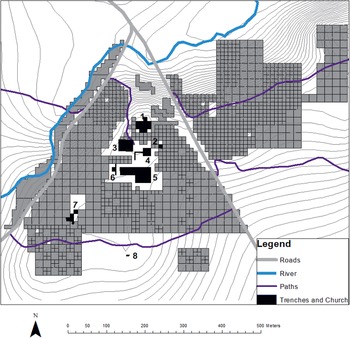


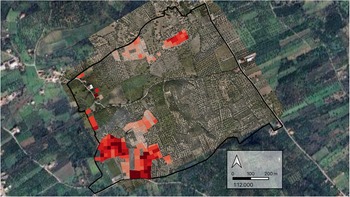


 Open access

