Introduction
Nature conservation and reducing the rate of biodiversity loss have become increasingly important, as reflected in an increase in the extent of protected areas and nature restoration activities (Chape et al., Reference Chape, Harrison, Spalding and Lysenko2005). Simultaneously, however, land-use conflicts and other socio-economic pressures, such as poverty alleviation, have resulted in opposition to this kind of investment. For this reason, some authors have argued for the need for accurate assessment of the effectiveness of biodiversity conservation investments, not only in terms of the conservation outcome but also in terms of the socio-economic impact on the communities in which these projects are taking place (Bockstael et al., Reference Bockstael, Freeman, Kopp, Portney and Kerry Smith2000; Adams et al., Reference Adams, Aveling, Brockington, Dickson, Elliott and Hutton2004; Ferraro & Pattanayak, Reference Ferraro and Pattanayak2006; Homewood, Reference Homewood, Collen, Pettorelli, Baillie and Durant2013; Fernandes et al., Reference Fernandes, Guiomar and Gil2015; Ferraro & Pressey, Reference Ferraro and Pressey2015; Gurney et al., Reference Gurney, Pressey, Cinner, Pollnac and Campbell2015).
Restoration ecology is considered to be economically viable (Aronson et al., Reference Aronson, Clewell, Blignaut and Milton2006, Reference Aronson, Milton and Blignaut2007; Bullock et al., Reference Bullock, Aronson, Newton, Pywell and Rey-Benayas2011; ten Brink et al., Reference ten Brink, Mazza, Badura, Kettunen and Withana2012). Aronson et al. (Reference Aronson, Clewell, Blignaut and Milton2006) advocated for combined policies for nature conservation, restoration ecology and sustainable economic development. Although the benefits of restoration can surpass its costs, outcomes may be variable and must be assessed and understood correctly. The USA has been a pioneer of studies on the socio-economic impact of the restoration industry; for example, BenDor et al. (Reference BenDor, Lester, Livengood, Davis and Yonavjak2015) found evidence that nature restoration was positive for national employment and economic growth, and that the restoration industry in the USA has economic multiplier effects of 1.6–2.59 and employment multiplier effects of 1.48–3.8. The economic calculators developed to assess the local restoration economy estimated that USD 1 million invested in forest and watershed restoration in Oregon supported 16.3 jobs and resulted in an economic output of USD 2,311,468 (University of Oregon, 2013). The Trust for Public Land has calculated that each USD 1 invested in conservation returns USD 4–10 (The Trust for Public Land, 2016).
In Europe, other institutions and researchers have estimated the socio-economic impact of conservation projects. Shiel et al. (Reference Shiel, Rayment and Burton2002) estimated that GBP 19 million spent per year by the Royal Society for the Protection of Birds (RSPB), UK, and visitors to its reserves supported, directly and indirectly, the equivalent of > 1,000 full-time jobs. Following a similar method Molloy et al. (Reference Molloy, Thomas and Morling2011) found that the RSPB spent GBP 65.9 million in 2009 and that this supported, directly and indirectly, the equivalent of > 1,872 full-time jobs. In Portugal the LIFE Priolo project directly supported 21.6 jobs and indirectly 4.2–6 jobs, and had an estimated total economic impact (direct and indirect) of EUR 3,017,498 over 4 years (Cruz & Benedicto, Reference Cruz and Benedicto2009).
Environmental benefits are the main objective of conservation projects, but they may not be evident in the short term, and projects may be neglected at times of economic crisis. By careful and effective planning and implementation of conservation projects, governmental and non-governmental institutions can channel economic resources that otherwise might not reach communities. Therefore understanding the socio-economic impact of restoration investments may play a key role in increasing political and public support for projects, and may provide an opportunity to instruct future initiatives on ways to enhance immediate benefits to local or regional economies.
Assessment of the socio-economic impacts of nature conservation projects can show that interventions benefit not only the natural capital but also local and regional economies. Although some evidence of the socio-economic benefits of biodiversity conservation has been published, especially regarding improvements in the delivery of ecosystem services (Pagiola et al., Reference Pagiola, Ramírez, Gobbi, de Haan, Ibrahim, Murgueitio and Ruíz2007; Kari & Korhonen-Kurki, Reference Kari and Korhonen-Kurki2013), not many assessments have considered the direct economic impact of these projects. To our knowledge, the socio-economic impact of nature conservation projects is not usually considered, at least for projects in small, insular communities.
In Europe the Natura 2000 Network consists of 26,410 terrestrial sites, comprising 18.36% of the land area (European Commission, 2013), and nine bioregions (Atlantic, Continental, Alpine, Mediterranean, Boreal, Macaronesian, Pannonian, Steppic and Black Sea). These are home to c. 1,200 non-bird species and 193 threatened bird species (European Commission, 2015a). The LIFE Programme was started in 1992, with the main objective of supporting the creation and conservation of Natura 2000 sites (European Commission, 2015b). Since 1992, successive funding instruments (LIFE I, LIFE II, LIFE III and LIFE+; 2,750 projects in total) have contributed c. EUR 3.49 billion to the protection of the environment (EUR 2.14 billion for LIFE+ alone). A new LIFE+ funding instrument (2014–2020) has been released and will remain in place at least until 2020, with a budget of EUR 3.4 billion (European Commission, 2015c), but given the economic situation in Europe the allocation of funds for conservation is being compromised in terms of economic priorities. In this context, evaluating the socio-economic impacts of LIFE projects becomes more pertinent.
EU-funded LIFE initiatives are not conceived to be tools for improving the economic development of the project localities. However, they may have significant socio-economic impacts in both the short and long term (Cruz et al., Reference Cruz, Benedicto and Gil2011; D'Amato et al., Reference D'Amato, Kettunen, Cruz, Benedicto, Gil, Kettunen and ten Brink2013). It is essential to understand what these impacts are, and to assess how LIFE projects can be oriented to increase their positive influence. We present a case study of the socio-economic impact of the LIFE project Safe Islands for Seabirds (2009–2012; SPEA, 2013), in Portugal's Azores Archipelago, with a particular focus on the island of Corvo, where most of the project tasks were undertaken.
Corvo Island and the impact of the LIFE project Safe Islands for Seabirds
Corvo is the smallest, most remote, and least populated island in the Azores Archipelago, with 437 inhabitants (INE, 2011). The tertiary sector is the main focus of economic activity, although farming is also a source of revenue for a proportion of the local population. Corvo is an important area for seabird breeding in the Azores, especially for Cory's shearwater Calonectris borealis. The environmental value of the island for seabirds and their habitats led to the successful application and development of the LIFE project entitled Safe Islands for Seabirds (LIFE07 NAT/P/000649), hereafter Corvo LIFE Project, which took place mainly on Corvo during 2009–2012.
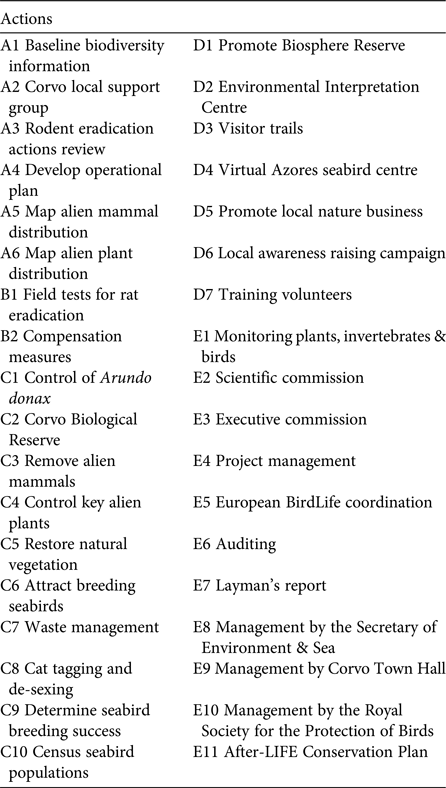
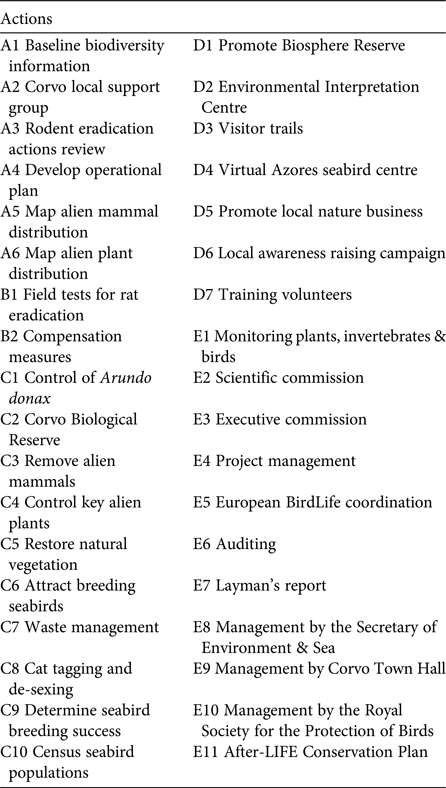
The project was coordinated by Sociedade Portuguesa para o Estudo das Aves (a BirdLife International partner), in partnership with the municipality of Corvo, the Secretary of Environment and Sea (on behalf of the Azores Regional Government) and the RSPB. It had a budget of EUR 1,014,236 and was composed of 35 actions related to the conservation of species and their habitats, applied research, and communication (Table 1). The project included environmental education and awareness actions focused on the value of local ecosystems and good environmental practices. Those actions targeted the local school community and the wider population. The main objective of the project was to study the feasibility of a process for the eradication of invasive mammalian species (cats, rodents, goats and sheep) from Corvo Island, as well as to assess the impact of these mammals, and of alien plant species (mainly cane and tamarisk), on seabird breeding success and their natural habitats, respectively. In the context of this project Hervías et al. (Reference Hervías Parejo, Benedicto Royuela, Rodríguez-Luengo, Ramos, Medina and Geraldes2015) provided an insight into the local risks and costs associated with these invasive species, and indicated the lack of legislation concerning invasive alien species on small Portuguese islands.
Actions of the Safe Islands for Seabirds LIFE project in the Azores Archipelago, Portugal.
Methods
In our analysis we followed the methods used in Cruz & Benedicto (Reference Cruz and Benedicto2009), Cruz et al. (Reference Cruz, Benedicto and Gil2011) and D'Amato et al. (Reference D'Amato, Kettunen, Cruz, Benedicto, Gil, Kettunen and ten Brink2013). This methodology was created ad hoc in the context of the LIFE Priolo project (Cruz & Benedicto, Reference Cruz and Benedicto2009; Cruz et al., Reference Cruz, Benedicto and Gil2011) to address a new challenge, as there had been no previous studies of this kind for LIFE projects. Applying this methodology provides the opportunity to investigate whether it is replicable to other cases. This combination of methods is used to assess both direct and indirect impacts of the project on the local and regional economy and employment. The methods consist of gathering and analysing information about the project expenditure and direct job creation, and investigating what multiplier effects occurred in terms of the economy and employment (Fig. 1). The direct impacts are associated with the project expenditure and direct job creation. The indirect impacts are the wealth and employment derived from the direct impacts, calculated by means of economic and employment multipliers.
General framework for evaluating the socio-economic impact of the conservation project.

Understanding the direct economic impacts involves collating expenses, resulting from the implementation of the project actions, with a geographical disaggregation of the expenditure, to obtain a clear view of how and where the resources allocated for the project were used. Studying the indirect economic impact of this type of project offers an opportunity to also identify and assess the overall benefits to the local and regional economy. The main tools used are economic multipliers (Department of Prospective Evaluation and Planning, 2005; Benedicto, Reference Benedicto2012). Regarding the impact on employment, the methods used assess direct job creation (project staff and trainees), the jobs supported indirectly by the project, and the expenditure of staff members, trainees and volunteers. We used employment multipliers (Shiel et al., Reference Shiel, Rayment and Burton2002; Department of Prospective Evaluation and Planning, 2005; Cruz et al., Reference Cruz, Benedicto and Gil2008; Gantioler & ten Brink, Reference Gantioler, ten Brink, Kettunen and ten Brink2013) to assess employment supported indirectly by the project; i.e. 0.1 jobs supported for every one job created directly (Shiel et al., Reference Shiel, Rayment and Burton2002; Molloy et al., Reference Molloy, Thomas and Morling2011). We estimated that expenditures between EUR 26,316 (Department of Prospective Evaluation and Planning, 2005) and EUR 49,975 (Cruz et al., Reference Cruz, Benedicto and Gil2008, based on Shiel et al., Reference Shiel, Rayment and Burton2002), could support one job in the region.
Results
Direct economic impact
The direct expenses of the project (staff expenses, trips, external assistance, equipment, creation and implementation of Corvo Biological Reserve, consumables, other costs and overheads) and their geographical distribution are outlined in Table 2. Of these, 43.3% were accumulated in the Azores, and 26.4% on Corvo Island.
Geographical and categorical distributions of the direct expenditure (EUR) of the Corvo LIFE project.

Corvo Biological Reserve is the most significant environmental amenity created in the context of the project, constituting one of its main actions (Action C2). It is expected to have a long-term impact on local society, biodiversity conservation and the landscape, and the municipality is committed to maintaining this amenity into the future. Expenditure on the Reserve amounted to EUR 117,579.83, 83% of which was paid to a specialist company from New Zealand to design and build a pest-proof fence. If we exclude the fence from our analysis of the geographical distribution of the project expenses we conclude that 30.9% of the budget was spent directly on Corvo, and 48.0% in the Azores.
Indirect economic impact
Assessment of indirect economic impacts is relevant because this information provides a deeper and more accurate understanding of how the conservation project has influenced local socio-economic dynamics. Considering various economic sectors, Portugal's Department of Prospective Evaluation and Planning (2005) calculated that for every EUR 100 invested by the Azores Regional Government, the regional gross domestic product increased by EUR 90.40 (economic multiplier of 90.40%), not accounting for variation between islands. In the case of the Corvo LIFE project, 48% of the expenses accumulated in the region (EUR 344,212.50) were labour-related expenses on Corvo Island (EUR 163,979.26). Considering this figure and the size of the local economy, we used a conservative multiplier of 60% (Benedicto, Reference Benedicto2012). Therefore, the direct expenses of the project (EUR 344,212.50) increased the Azorean gross domestic product by EUR 206,527.50 during the 4 years of the project. This is equivalent to EUR 51,632 per year. Taking into account that the regional gross domestic product in 2010 was EUR 3,728,000,000 (SREA, 2015) this implies a 0.0014% increase.
On Corvo Island, where the total project expenditure was EUR 209,732 (a mean of EUR 52,433 per year), the economic impact of the project was considerable. There are no available statistics for the island's gross domestic product but if we multiply the regional per capita gross domestic product by the number of inhabitants on the island (437 in 2011), we estimate a local gross domestic product of EUR 6,481,980 in 2011. Thus, local expenditure by the project represents 0.81% of the island's gross domestic product. The project expenditures and their multiplier effect also had an indirect impact on employment creation.
Employment
Jobs created directly by the project consisted mostly of project staff: three full-time staff members lived on the island for the duration of the project, during 2009–2012, and a coordinator was present intermittently during this time. Additionally, 25 trainees and volunteers played a strategic role in project development. They participated in the project at no cost, and were fundamental to the economic impacts of the project through their contribution to the local economy. The trainees and volunteers provided a total of 2,179 work days, or the equivalent of 1.5 full-time jobs, during the 4 years of the project.
Based on Shiel et al. (Reference Shiel, Rayment and Burton2002), Cruz et al. (Reference Cruz, Benedicto and Gil2008) and Molloy et al. (Reference Molloy, Thomas and Morling2011), we conclude that each full-time job created directly by the project supported 0.1 jobs in the local economy. According to Gantioler & ten Brink (Reference Gantioler, ten Brink, Kettunen and ten Brink2013), 0.5 is a common multiplier (i.e. one job indirectly supporting 0.5 jobs). However, given the small size of Corvo's local economy, and that most goods are imported, we consider 0.1 to be an appropriate and realistic multiplier. Therefore, we estimate that the 4.5 directly supported jobs (permanent staff, trainees and volunteers) indirectly supported 0.45 jobs per year in the local economy.
Project expenditure in the Autonomous Region of the Azores, including Corvo (EUR 179,888.40, excluding staff expenses; annual mean: EUR 44,972), also contributed indirectly to supporting jobs. According to Shiel et al. (Reference Shiel, Rayment and Burton2002), for every GBP 28,500 spent on the management of Nature Reserves in the UK during 2001–2002 the equivalent of one full-time job was supported. This amount was equivalent to EUR 49,975 in 2010. Based on regional data (Department of Prospective Evaluation and Planning, 2005), every EUR 26,316 spent by the Azores Regional Government during 2000–2003 supported one full-time job in the region. However, the multiplier effect of government expenditure may be higher than that of the project because government expenditure is across multiple sectors. Moreover, multiplier effects are smaller in the economies of small islands because their dependency on external production results in higher capital outflow (Baaijens et al., Reference Baaijens, Nijkamp and Van Montfort1998). Considering these data from a conservative point of view, we used a range of EUR 26,316–49,975 for the estimation of the multiplier effect. Thus we estimate that the mean annual expenditure of EUR 44,972 supported 0.9–1.7 full-time jobs in the Azores during the 4 years of the project.
We also consider that friends and family members of the project staff (who might not otherwise have visited the island) contributed to the regional economy. Visitors and non-resident collaborators spent 1,200 days on Corvo during the 4 years of the project (a mean of 300 days per year). As a reference, the Azorean government estimates that during 2008–2012, 2,352 tourists spent 6,117 nights on the island (c. 0.14% of nights spent throughout the whole archipelago; SREA, 2015). We estimate that, on average, every visitor spent EUR 10 per day (Cruz et al., Reference Cruz, Benedicto and Gil2008), which gives a mean expenditure of EUR 3,000 per year by visitors and non-resident collaborators associated with the project. To estimate the number of jobs supported indirectly by this expenditure (0.06–0.11 jobs) we used the same range used to estimate the number of jobs supported indirectly by project expenditure (excluding staff expenses; EUR 26,316–49,975). Overall, we conclude that the project supported 6–7 jobs directly and indirectly in the Azores region, mainly on Corvo Island (5–6 jobs; Table 3).
Jobs supported directly and indirectly by the Corvo LIFE project, with the equivalent number of full-time jobs supported per year.

Positive impacts on local natural and urban amenities
The project also provided an opportunity to improve local natural and man-made amenities, and several project actions were aimed at implementing infrastructure for educational and leisure purposes: Corvo Biological Reserve (2.5 ha; Action C2), High-altitude Biological Reserve (15 ha; Action C5), Anti-predator test area (Action C2), Pedagogical content for the local Environmental Interpretation Centre (Action D2), Greenhouse in the school to cultivate native plant species (Action C5), and Development of new visitor trails (Action D3).
Project actions also had multiple impacts in terms of the preservation and enhancement of local ecosystem services (present and future): preservation of biodiversity (the conservation actions supported the preservation of local biodiversity), leisure and tourist value (the project has produced leaflets and guides, and local amenities; e.g. new visitor trail, content for the Environmental Interpretation Centre), landscape value (conservation of the natural landscape, preservation of its uniqueness), water supply (the conservation of natural areas at high altitude benefits the island's water basins and protects the water supply), scientific value (increased knowledge about local ecosystems, for informed decision making), and educational value (environmental education campaigns targeted at the local population to increase local awareness of the challenges the island faces).
Discussion
Because of their isolation, oceanic islands have a high level of biological endemism (Chapuis et al., Reference Chapuis, Boussès and Barnaud1994; Dumont et al., Reference Dumont, Russell, Lecomte and Le Corre2010). They are therefore important for biological diversity and are often the focus of conservation projects. Given the small scale of oceanic islands and archipelagos, which limits their economic development, it is worthwhile assessing the socio-economic impact of conservation projects. In the Corvo LIFE project 26.4% of project expenditure was on the small island of Corvo, which shows that even without an explicit economic objective such projects can have a substantial impact on small and local economies, benefiting local contractors. However conservation projects should actively consider how they can benefit the local population and increase the sense of local ownership of the project; for example, by employing local workers in the project or using local shops and contactors for supplies. In addition to the direct economic impact of a project, it is also important to assess the indirect socio-economic and environmental impact that such projects have in the long term, which is particularly relevant in terms of local natural and urban amenities. It is also crucial to understand that disclosure of the socio-economic benefits of conservation projects is important for obtaining local support.
We calculated that the Corvo LIFE project contributed both directly (EUR 209,731.96 spent and 4.5 jobs created, mostly on Corvo Island) and indirectly (EUR 206,527.50 increase in the Azores regional gross domestic product, and 1.5–2.5 jobs supported indirectly) to the regional economy. In addition, through environmental restoration the project improved amenities for the local population (increasing the island's attractiveness and improving local people's quality of life).
Comparing the impacts of various conservation projects (Shiel et al., Reference Shiel, Rayment and Burton2002; Cruz & Benedicto, Reference Cruz and Benedicto2009; Molloy et al, Reference Molloy, Thomas and Morling2011; University of Oregon, 2013; BenDor et al., Reference BenDor, Lester, Livengood, Davis and Yonavjak2015; The Trust for Public Land, 2016) is not always relevant because the impact depends on the methodology used, the initial budget (annual and total), whether or not the value of ecosystem services is included (e.g. the potential increase in carbon capture or the preservation of landscapes and habitats valued for their outdoor recreation potential), the geographical and social situation at the project location, and the duration of the project. Furthermore, there are non-quantifiable benefits, such as positive impacts on local natural and urban amenities, which may not be considered. Therefore, we propose that conservation projects should be assessed using a standard methodology, which would facilitate the aggregation of data and give a broader insight into the socio-economic impact of conservation projects worldwide.
In this analysis we implemented the methods developed by Cruz & Benedicto (Reference Cruz and Benedicto2009) and Cruz et al. (Reference Cruz, Benedicto and Gil2011). These methods were relatively easy to implement and replicate, as they are based mainly on keeping a correct record of the project's expenses and employment. However, we consider that there is room for improvement, particularly in the case of conservation projects on small, remote islands; for example, through estimating island- or region-specific multipliers, and taking into account that not all economic sectors are affected equally (but see Boardman, Reference Boardman2013). Such improvements, although challenging, would increase the accuracy of the results and strengthen the credibility of the process. To estimate these specific multipliers for Corvo and the Autonomous Region of Azores it would be necessary to conduct a survey to assess the economic input–output model and economic fluxes of the companies most affected by project and staff expenditure (e.g. Nielsen-Pincus & Moseley, Reference Nielsen-Pincus and Moseley2010; Morrissey & O'Donoghue, Reference Morrissey and O'Donoghue2013). This is a costly and time-consuming process and was not possible within the project schedule. We recommend the development of a standardized tool to provide simulated (in the pre-project assessment phase) or real information (during and after the project) to local communities and stakeholders, at a low opportunity cost, on the expected or current socio-economic impacts of a conservation project. As an incentive for stakeholder involvement or public participation, or as a decision-support instrument, this tool should be reliable, and easy to use and understand by all concerned actors (decision makers, managers, stakeholders and local people).
We emphasize the need to rethink the whole process of designing and pre-assessing conservation projects (before approval for funding), to optimize their impact on local economies, and increase awareness among local people, practitioners and decision makers of the local socio-economic benefits derived from such projects. It is of fundamental and strategic importance to increase awareness among project leaders, managers and sponsors of the need to prioritize expenditure in the regions or locations where the projects take place, to maximize their socio-economic impact at the local/regional level. It is reasonable to assume that an awareness of a project's socio-economic benefits would ensure stronger local support for conservation efforts.
Acknowledgements
We thank the anonymous referees for their comments. We also thank Brunel University for funding JBR's PhD, and Professors Susan Buckingham and Malcolm Eames, José Dumange, the Kranz family, Rudi Hammad, the LIFE project (LIFE07NAT/P/000649) team and the people of Corvo Island. AG's participation in this study was supported by the Post-Doctoral Research Project #SFRH/BPD/100017/2014 of the Fundação para a Ciência e Tecnologia, funded by Portugal's Ministry of Education and Science, and by the European Social Fund.
Author contributions
JBR, AdlC and AG designed the methodology, SHP, PG and LC collected data, JBR and AdlC conducted data analysis, and JBR and SHP wrote the article.
Biographical sketches
José Benedicto Royuela’s research interests include sustainability, multi-criteria analysis, participative foresight scenario building, and the socio-economic impacts of conservation projects. Sandra Hervías Parejo’s research interests include insular ecosystems, conservation biology, biological invasions and the role of mutualistic interactions in ecosystem functions. Azucena de la Cruz evaluated the ecosystem services provided by the Special Protection Area Pico da Vara/Ribeira do Guilherme and has worked on environmental education, sustainable development and conservation aspects of LIFE projects. Pedro Geraldes has coordinated and participated in several conservation projects with local stakeholder involvement in Portugal, Spain and Cape Verde. Luis T. Costa has supervised large-scale projects on protected area management and conservation of threatened species. Artur Gil’s current research is focused on the development of remote-sensing-based environmental indicators to support decision making on land management and environmental planning in remote regions.