

Introduction
In recent years there has been considerable interest in the potential benefits of physical activity in relation to dementia. Evidence suggests that leading a physically active lifestyle can have a protective effect for those at risk of developing vascular dementia (Aarsland et al. Reference Aarsland, Sardahaee, Anderssen and Ballard2010; Leone and Deudon Reference Leone and Deudon2008). Physical activity may exert a positive effect on cognition for people with the condition (Lautenschlager, Cox and Flicker Reference Lautenschlager, Cox and Flicker2008; Littbrand, Stenvall and Rosendahl Reference Littbrand, Stenvall and Rosendahl2011; Ortega, Regan and Orrell Reference Ortega, Regan and Orrell2010). Additionally, exercise may assist in the management of depression (Thunė-Boyle et al. Reference Thuné-Boyle, IIiffe, Cerga-Pashoja, Lowery and Warner2012) and the behavioural disturbances associated with dementia (Fan and Chen Reference Fan and Chen2011). Being physically active may also improve the ability of people living with dementia to perform everyday activities (Rolland, Pillard and Klapouszczak Reference Rolland, Pillard and Klapouszczak2007). However, the potential for physical activity to enhance the wellbeing for people with dementia in a broader sense remains under-explored (Bowes et al. Reference Bowes, Dawson, Jepson and McCabe2013). This is despite the fact that physical activity is widely associated with positive mental health outcomes generally (Biddle and Mutrie Reference Biddle and Mutrie2008). Nevertheless, it has been noted that those who provide physical activity for people with dementia often do so because they consider these activities facilitate social interaction, are enjoyable and promote self-esteem, and therefore support wellbeing (Bowes et al. Reference Bowes, Dawson, Jepson and McCabe2013).
Other gaps in the literature exist. For example, with the occasional exception (Malthouse and Fox Reference Malthouse and Fox2014), few studies have attempted to consider the experience of physical activity from the point of view of the person with dementia or explore the factors which influence participation. Consequently, little is known about what benefits people with dementia attribute to physical activity or what makes physical activity meaningful for them. Whilst we know that people with dementia may adopt strategies to cope with the effects of dementia (Clare Reference Clare2003; de Boer et al. Reference de Boer, Hertogh, Droes, Riphagen, Jonker and Eefsting2007), it is unclear whether physical activity may play a role in such strategies. Furthermore, there is a shortage of research that explores how people with dementia living in the community engage in physical activity (Littbrand, Stenvall and Rosendahl Reference Littbrand, Stenvall and Rosendahl2011). Most research on wellbeing which includes people with dementia has been undertaken in care settings (Moyle et al. Reference Moyle, Venturto, Griffiths, Grimbeek, Mcallister, Oxlade and Murfield2011), although the majority of people with dementia live in their own homes (Alzheimer's Society 2013). Finally, it has been noted that the influence of ethnicity has been largely overlooked as people from ethnic minority communities living with dementia are poorly represented in research studies (Banerjee et al. Reference Banerjee, Samsi, Petrie, Alvir, Treglia, Schwam and De Valle2009; Botsford, Clarke and Gibb Reference Botsford, Clarke and Gibb2011; Hulko Reference Hulko2009; Milne and Chryssanthopoulou Reference Milne and Chryssanthopoulou2005; O'Connor, Phiney and Hulko Reference O'Connor, Phiney and Hulko2010). Ethnicity is important to consider because the number of people in the United Kingdom (UK) with dementia from ethnic minority communities is growing (Alzheimer's Society 2013) and the uptake of services in such groups is low compared to the wider population (Mukadam, Cooper and Livingston Reference Mukadam, Cooper and Livingston2011).
Wellbeing is generally considered to be a subjective and transient state (Hasselkus and Murray Reference Hasselkus and Murray2007) which can be defined as the extent to which an individual considers their life to be desirable, pleasant and good (Diener Reference Diener and Diener2009). Psycho-social models of dementia which focus on the social factors that influence the experience of dementia have been helpful in exploring wellbeing and dementia (Cook Reference Cook2008). Concepts such as positioning (Sabat and Harré Reference Sabat and Harré1992) and malignant social psychology (Kitwood Reference Kitwood1997) have been particularly influential, conceiving of wellbeing as being contingent on self or personhood being supported through social interaction. According to Kitwood (Reference Kitwood1997), wellbeing is dependent on the fulfilment of five needs: comfort, identity, inclusion, occupation and attachment. In contrast, ‘ill-being’ refers to the consequences of these needs not being met. In acknowledging the importance of social processes, attention is drawn to the factors which threaten the wellbeing of people living with dementia, including the effects of stigma (Alzheimer's Society 2011), social exclusion (Katsuno Reference Katsuno2005) and the loss of competence, control, access to meaningful activity and significant relationships (Steeman et al. Reference Steeman, Dierckx de Casterle, Godderis and Grypdonck2006). Both wellbeing and ill-being are considered measurable through observational techniques such as Dementia Care Mapping (DCM) (Bradford Dementia Group 2005). However, researchers have reported difficulties in applying this tool successfully due to the dynamic and highly complex nature of physical activities (Whyte Reference Whyte2010). Despite their value in understanding the experience of dementia, psycho-social approaches have two limitations: the subjective lived experience of dementia is neglected and a focus on the social realm results in the role of the body being ignored.
Embodiment offers a complementary theoretical framework with which to explore the experience of dementia that addresses these shortcomings (Martin, Kontos and Ward Reference Martin, Kontos and Ward2013). The concept has evolved from twentieth-century phenomenology and is concerned with the role that the body plays during human interaction with the social and physical environment (Phinney and Chesla Reference Phinney and Chesla2003). Fundamental to the embodiment perspective is a rejection of the dichotomous representation of mind and body (Kontos Reference Kontos2004). Rather than being under the control of the mind, bodies are ‘mentalised’ (Leder Reference Leder1990) which means that the body possesses an ability to interact with the world purposefully at a pre-reflective level or ‘ready at hand’ manner without impacting on our consciousness (Merleau-Ponty Reference Merleau-Ponty1962). Whether or not they have dementia, human beings engage with their environment in a predominantly embodied manner through habitual activity, gesture and social etiquette (Kontos Reference Kontos2004). Kontos (Reference Kontos2004) argues that the body's potential for expression and purposeful action provides the basis for what she describes as ‘embodied selfhood’. The suggestion that aspects of self exist independent of cognition and that bodies possess a degree of agency has implications when considering the impact that dementia has on selfhood. According to Kontos (Reference Kontos2004), the standard representation of dementia outlined by Davis (Reference Davis2004) in which progressive cognitive impairment results in a gradual erosion of agency and an associated loss of self is misleading. Aspects of selfhood persist despite cognitive decline because they are embodied and people with dementia may interact coherently with the world through their embodied nature. Whilst psycho-social and embodiment perspectives provide an opportunity to understand the experience of people with dementia, these approaches have rarely been applied specifically to physical activity. This study applied both of these theoretical perspectives and sought to identify factors that influenced how a group of community-dwelling people with dementia participated in physical activity and explored how being physically active impacted on their wellbeing.
Methods
Study design and setting
A broadly ethnographic approach was adopted in which participant observation and interviews were conducted with people living with dementia and their carers. The study was located in an ethnically and economically diverse city in northern England. Field work took place in three wellbeing cafés and four day centres attended by people with dementia living in the community. The wellbeing cafés were part of a network of community-based resources designed to provide social support and promote the mental health of older people. Wellbeing cafés were staffed predominantly by volunteers and were located in church halls and similar locations on a monthly or bi-monthly basis. One provided a service specifically for older people of Eastern European descent and included people with dementia. The others were accessed primarily by people with dementia from white/British backgrounds. Field work also took place in four more traditional day centres: one lottery-funded project attended by women from south Asian backgrounds and three others provided by statutory agencies. Two of the day centres provided a service specifically for people with dementia. Physical activity at the wellbeing cafés consisted of unstructured dance accompanied by live music. At the day centres, regular group exercise sessions were provided. Activities included games which usually involved the use of parachutes and balls. Walking in the wider community took place at one of the day centres.
Recruitment of participants
The research proposal and related procedures were approved by the Bradford Research Ethics Committee (reference 10/H1302/14) as part of the National Research Ethics Service. Individuals were considered for inclusion if they attended the wellbeing café or day centre on a regular basis and had a diagnosis of dementia and/or considered themselves to have dementia. Informal carers and staff who led or took part in activities were also invited to participate and written consent was obtained. The principles of the Mental Capacity Act 2005 were adhered to during recruitment: namely that a diagnosis of dementia per se did not mean a lack of capacity. In order to support individuals who lacked capacity in taking an active role in the consent process, an approach based on Dewing's process consent model (Dewing Reference Dewing2007) was adopted. The researcher approached individuals attending the day centre or café and their carers, engaged them in conversation, and offered them written and verbal information about the study. This initial contact allowed their level of interest to be gauged and their capacity to give informed consent for inclusion to be assessed. If a potential participant was found to lack capacity but appeared interested in being included in the study, consent was sought from a personal consultee first and then a nominated consultee. Participants were reminded of the study and the role of the researcher on each subsequent visit and verbal consent was re-established. This approach was repeated when recruiting participants with dementia to the interview stage. Participants were asked to self-identify their ethnicity with the assistance of categories used in the UK census (Office for National Statistics 2009). Pseudonyms were allocated to study participants and the day centre or wellbeing café that they attended.
Data generation and analysis
Over the space of a year, 39 sessions of observation lasting approximately two hours were undertaken, during which the researcher engaged in physical activity alongside participants in each of the seven locations. Between two and nine visits were undertaken at each site according to the degree of social complexity and number of participants present. On two occasions the researcher accompanied people with dementia and their carers as they walked around their neighbourhood. The researcher focused on how individuals with dementia interacted with the social and physical environment whilst performing activity. Unconsented individuals who were not involved in the study were informed of the research on each visit and reassured that the researcher's attention would be directed towards those for whom consent or assent had been obtained. Brief contemporaneous notes were discretely made during sessions with more detailed descriptions written up immediately afterwards and discussed with colleagues. Within these field notes the researcher recorded evidence of wellbeing, referring to the Bradford Wellbeing Profile, a component of DCM (Bradford Dementia Group 2008). This is an observational tool to monitor how people with dementia present psychologically and interacting with others. The profile comprises 14 positive indicators of engagement and positive feelings. A further 14 negative indicators identify when the individual is withdrawing and experiencing negative feelings. In a review of the literature, Brooker (Reference Brooker2005) found that the tool has been shown to be reliable and identifies similar levels of quality of life to proxy measures. Although, it was also noted that people with dementia rate their quality of life better than DCM scores may suggest.
The process of observation helped to identify potential interviewees and inform interview questions. During the next phase, the researcher interviewed participants alone in a side room immediately after activities ended. The following questions were asked: ‘What has physical activity meant to you through your life?’, ‘How do you feel when you're dancing/exercising?’, ‘How do you feel about coming here?’ and ‘How do you feel at the end of the group?’ Interviews lasted between five and 20 minutes and were audio recorded. Recordings were transcribed on the same day and additional notes were made regarding the nature of the interaction.
Data derived from observations including evidence of wellbeing were considered alongside interview transcripts. Thematic analysis was employed to organise and interpret the combined data according to commonalities, relationships and differences existing within it (Gibson and Brown Reference Gibson and Brown2009). A five-stage approach was used during data analysis (Green and Thorogood Reference Green and Thorogood2009). The first stage involved the familiarisation with the data through the process of transcription and repeated readings. During the second stage elements within the remaining data that were considered relevant to the research questions were identified for more detailed exploration. They were arranged as themes or sub-themes according to their relative importance and frequency, and descriptive labels reflecting their content and hierarchical nature were assigned to them. An initial coding template was then created in which themes and sub-themes were grouped into categories (King Reference King, Cassell and Symon2012). When parts of the data were not represented effectively through the application of the template it was refined accordingly. During the third stage, the remaining data were coded and the template adapted further when difficulties arose allocating codes to data. A copy of the coded data was created during the fourth stage. Comparison between the original data and the copy sorted according to themes allowed the researcher to switch focus from the individual participant or fieldwork site to a wider thematic picture. In the fifth stage, further interpretation of data took place using both embodiment and social interactionist perspectives.
Findings
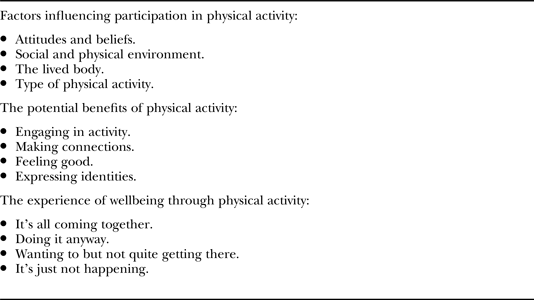
Nineteen individuals with a diagnosis of dementia (11 women and eight men, aged 60–91 years) and seven informal carers and staff were recruited for the initial participant observation stage. Eleven individuals (seven women and four men, aged 60–87 years) with a dementia diagnosis were interviewed. Participants came from a range of ethnic backgrounds and all were able to walk. Findings are arranged in three categories containing a range of dimensions. The first category contains dimensions relating to attitudes and beliefs regarding physical activity and the factors which influenced participation in it. The second category contains dimensions relating to the potential benefits resulting from physical activity and the impact that being active had on wellbeing. The third category contains a typology of outcomes which reflects how factors identified in the first two categories shape the experience of physical activity (see Table 1).
Physical activity and wellbeing: categories and dimensions
Attitudes and beliefs
Most people with dementia in the study appeared well-motivated to take part in physical activity irrespective of their gender, level of cognitive impairment and ethnicity. One interview participant described how she looked forward to activities at the day centre: ‘I enjoy everything here… when I leave at the end of one week I can't wait to come again’ (Stella, 75 years). Many individuals engaged in physical activity with enthusiasm, despite considerable physical frailty in some cases. When asked about their motivation to take part in activities, participants from all backgrounds expressed positive attitudes towards physical activity. Several expressed strong feelings about taking part: ‘My first passion is to get out there and walk! And I mean a real walk. Not from here to town. You know, from here to Bridgeworth and back [a hilly ten mile round trip]. A really good walk’ (Jacinta, 60 years). Several individuals described themselves as active people; it was part of who they were: ‘I'm not the kind of person who can sit down for a long time. I've got to be doing something. Even if it's going out sweeping the drive … I might have only done it yesterday’ (Jack, 80 years). For some people, the value attached to movement reflected a lifelong commitment to physical activity. The relationship that they had with walking, dance and football was often an enduring one which continued throughout their experience of dementia. One participant described her life-long love of walking and spoke about her attachment to the outdoors: ‘That's what I like. I like the countryside as well. It's nice to be walking around and seeing things. I've climbed all the big mountains in the Lake District’ (Olive, 74 years). Most people interviewed reported positive beliefs relating to physical activity, namely that being physically active bestowed positive effects on their health. Belief in these benefits could be expressed in general terms, such as ‘It's good for you’, or could be more specific. For example, Jacinta considered that exercise kept her brain working and Stella claimed that regular exercise provided aesthetic benefits: ‘I know if I look in the mirror … I look better now than I did years ago, simply because I've been doing exercises’ (Stella, 75 years). It is worth noting that not all attributed their positive beliefs to a lifelong relationship with physical activity; several recounted that they had been advised to be active by health-care professionals such as their general practitioner.
Social and physical environment
The degree of available social support directly influenced participation in physical activity. For example, Jacinta and Simon reported that they were dependent on others to go walking and the lack of available support restricted participation. Similarly, at the day centres and wellbeing cafés, people were generally reliant on their spouse or staff to guide and assist them in performing activities. Assertive leadership on the part of staff was also important in facilitating physical activity. Participation was usually enhanced when staff interacted with individuals in a spontaneous, non-verbal manner through gesture and physical contact. Activities during which skilled entertainers created a celebratory atmosphere could therefore have a powerful effect.
We are invited to stand in a circle holding hands while the singer performs ‘New York, New York’. We follow the entertainer's example and begin to move together; step step, kick. Step step kick! Most people manage to perform the expected movements. (Fieldnote: Browgate Wellbeing Café)
Some individuals appeared reluctant to join in with the dancing. One interviewee discussed her reluctance: ‘I'm not one of those who want to throw themselves into a dance. It's just when it's Christmas or anything like that when I join in’ (Mary, 76 years). Generally, secure social environments featuring a high level of acceptance by those present during physical activities facilitated high levels of participation and consequently led to expressions of wellbeing. Finally, certain characteristics of the physical space were found to be influential. Spacious environments in which activities were undisturbed facilitated participation. Conversely, this was much less likely in cluttered, noisy environments.
The lived body
The restless nature of people's bodies could exert a positive influence on engagement in physical activity. Several individuals engaged in seated rocking, rhythmic limb movement and pacing, both during the activity sessions and at other times. During interviews, participants sometimes expressed an awareness of a compulsion to move. Simon described how he often got up in the middle of the night and repeatedly climbed the stairs: ‘Doris [Simon's wife] can't understand it. You know really I should go to bed and I don't … I go and I go … walk, walk away’ (Simon, 73 years). Bodies could act as repositories of embodied skills and abilities that could be employed in the context of physical activity. These included the ability to dance, to maintain a rhythm during activities such as clapping, and to throw and catch objects effectively. The manner in which these skills were employed during physical activity could be enhanced by the disinhibiting effects of dementia. For instance, several participants danced with an enthusiasm and lack of self-consciousness that surprised their spouses. But bodies did not always provide a reliable resource. Several people recognised that they had become less active as they had got older and this was seen as an inevitable part of ageing. Some reported painful joints and physical frailty which made participation in physical activity difficult.
Type of physical activity
The use of music and rhythm could be very effective in facilitating physical activity. This was evidenced by people tapping their feet, twirling their wrists and rocking from side to side. Spontaneous, playful and collaborative activities which included the use of balloons, balls and parachutes also facilitated engagement. At Chellowfont Day Centre where people rarely interacted spontaneously with each other, two people with dementia were able to engage with each other using a balloon independent of staff.
Joe (76 years) bounces the balloon on his head before using his knee and then his foot to keep it in the air. Ronald (78 years) takes Joe's lead and bounces it on his knee before kicking it. The balloon passes between them and they both stand up and reach for it at the same time. There is a buzz of excitement in the room. (Fieldnote: Chellowfont Day Centre)
On the other hand, participants’ engagement was sometimes limited by the cognitive demands associated with the activity. For instance, individuals did less well when given complex instructions to follow.
Engaging in activity
During interviews, individuals identified benefits arising from the performance of physical activity. For example, Jacinta (60 years) reported that walking provided diversion for her and kept her mind off her difficulties. Jack (80 years) commented that dancing at the wellbeing café enabled him to burn off energy that had accumulated over previous days and this resulted in a sense of ‘relief’. People in the study sometimes expressed pride in their ability to perform physical activity.
Making connections
Engaging in physical activity could clearly facilitate relatedness. Several people commented that the most important part of attending the wellbeing café was to mix with others who shared their experience of dementia. Physical activity enabled this interaction to take place by providing a context for non-verbal communication. At the day centres and cafés, most individuals with more advanced dementia rarely spoke or acknowledged the presence of others except when dancing or taking part in exercise groups. Although many struggled with speech, they were able to communicate through eye contact, mirroring the movements of others, holding hands, and by exchanging nods and smiles. Mary recognised the significance of communicating with others through gesture: ‘When you wave to somebody at the other side [of the café]. There's ways and means … [of communicating] … instead of just talking to people, isn't there?’ (Mary, 76 years). The ability to connect with others through physical activity was particularly evident during free-flowing activities when individuals were encouraged to move in a spontaneous manner and attention was focused on each other rather than the completion of a task. Physical activity also provided the opportunity for shared experience. Although Megan (85 years) was unable to talk to others, dancing allowed her to initiate social contact and share an activity with others.
Megan is gently led onto the dance floor by two volunteers. She looks lost but her calm expression suggests that she is comfortable with being here. Megan smiles as she starts to move her body gracefully to the music. She joins a circle of others and her smile broadens. She looks across the hall in my direction and beckons me to join her. (Fieldnote: Stanford Wellbeing Café)
Physical activity could also provide a source of humour and shared laughter; dislodging ceiling tiles with a ball propelled by a parachute was the cause of great amusement during one day centre exercise group. Bercik (87 years) spoke about his enjoyment of larking around during the dancing at the wellbeing café.
Researcher: Is there anything in particular that you enjoyed?
Bercik: Messing about! (laughs)
Researcher: You seemed to be having a lot of fun.
Bercik: Making people laugh!
Feeling good
Many individuals reported experiencing pleasure from engaging in physical activity. For instance, Jacinta enjoyed the sensation of being immersed in water when she swam and commented on the physical sensations that followed walking: ‘Won-der-ful! Abso-lutely wonderful! You can feel … yourself can't you? You're all nice and warm. So … and then, from there, home and into the bath’ (Jacinta, 60 years). Positive mood effects associated with physical activity were also reported. Barbara (75 years) described feeling ‘great’ when dancing. Taking part in physical activity at the cafés and day centres often appeared to energise people. In the flow of activity, individuals could appear at ease with themselves and others in ways not seen at other times. When Jacinta walked in the neighbourhood outside the day centre she became animated and energised. She spoke fluently, with a varied tone of voice, gesticulating with her hands and greeting people as she passed them. Simon also presented very differently when dancing at the wellbeing café compared to when he was interviewed.
I watch Simon (73 years) and I'm struck by the contrast between his behaviour at the café and his presentation during his interview. After arriving he is immediately on the dance floor. His body language is confident and assertive. Laughing loudly; he appears liberated and energised. He holds the hands of those next to him aloft and is singing exuberantly at the top of his voice. (Fieldnote: Browgate Wellbeing Café)
Expressing identities
Engaging in dance and exercise to music enabled people with dementia to act as creative and agentic individuals capable of constructing a variety of identities. For instance, some appeared to relish the opportunity to take centre stage and adopt the role of performer. Dancing at the wellbeing cafés provided an opportunity for couples to define their relationship as equal partners rather than care provider and recipient. Similarly, the light-hearted flirting that took place during dancing there facilitated expressions of sexuality. Clearly physical activity enabled self-expression through movement; Gladys (91 years) performed exercises in a particularly expressive manner.
While the others stand up and dance Gladys remains in her chair. Nevertheless, she moves her body along to the music. She is small and frail; one of the older members of the group. She twirls her wrists in a delicate, intricate and stylised manner. (Fieldnote: Chellowfont Day Centre)
Similarly, performing exercise could provide an opportunity for people with dementia to take the initiative from staff and take the lead. For example, during one exercise class a group of six individuals with dementia began to sing and clap their hands spontaneously and staff responded by clapping too.
It's all coming together
There were occasions when high levels of engagement in physical activity and clear evidence of wellbeing were noted. This occurred when several factors converged. The combination of a supportive and accepting social and physical environment, recognisable music, familiar activities and a celebratory ambiance was particularly successful. Some individuals appeared liberated, occasionally even intoxicated as they performed activities. A wide range of wellbeing indicators were noted; many of the people were alert and displayed pleasure, they expressed creativity and humour, and acted with a sense of purpose.
Doing it anyway
Sometimes there were high levels of participation in physical activity and clear evidence of wellbeing but the process by which this occurred was not necessarily in the manner intended by those running the groups. People occasionally performed activities in their own way, at times overcoming considerable barriers to do so, rather than following instructions delivered by staff or a DVD. At times people were defiant and refused to conform. They could engage in activities and express wellbeing despite incongruous music, minimal social support and chaotic environments.
Wanting to but not quite getting there
Sometimes there was limited participation and little observed wellbeing. Whilst individuals appeared motivated to be active, this did not result in full engagement. For example, at one of the wellbeing cafés a combination of cramped space and less assertive volunteers was associated with limited participation and little evidence of wellbeing. Here there was little response from staff and volunteers to expressions of exuberance on the part of people with dementia. Under these conditions engagement was generally restricted to individuals clapping, tapping feet and rocking in time with the music whilst they remained seated. Similarly, at Chellowfont Day Centre, rule-bound and inflexible activities could render engagement difficult. Sometimes the lack of social support prevented physical activity completely.
It's just not happening
At other times there was little or no engagement in physical activity. Some people reported that they did not want to take part or excused themselves on the grounds of ill-health. Occasionally individuals expressed their lack of engagement by walking out of physical activity sessions at the day centres. Sometimes physical frailty, inhibition and chaotic environments combined to form a powerful barrier which prevented physical activity from taking place. Furthermore, at times there was evidence of ill-being during exercise sessions at the day centres. On occasion people appeared listless, withdrawn and presented as ‘outsiders’. However, non-engagement in physical activity was not always entirely negative. Individuals could still show evidence of wellbeing when helping to run the activities and when watching others perform them.
Discussion
Physical activity and wellbeing
This study contributes to the developing evidence base which indicates that community-dwelling people with dementia may possess a positive attitude towards physical activity and are likely to welcome opportunities to engage in it (Malthouse and Fox Reference Malthouse and Fox2014). The positive attitudes expressed by some people in the study were partly based on the advice they had received from health-care professionals. The suggestion that people with dementia are able to retain advice despite their cognitive difficulties implies that actively promoting physical activity for those in the early stages of the condition may be effective. This motivation to be active appeared to be based on a number of factors. It was apparent that individuals valued group exercise and dance because these activities were enjoyable and made them feel good. The proposition that physical activity can be enjoyed by people with dementia is supported by studies that have explored walking for people with the condition (Eggermont and Scherder Reference Eggermont and Scherder2006; Duggan et al. Reference Duggan, Blackman, Martyr and Van Schaik2008).
A number of factors contributed to their enjoyment. For some people, the ability to perform aspects of physical activity was a source of pride. A sense of pride in the capabilities of one's body has been noted in research that has included older people in the wider population (Bullington Reference Bullington2006). However, the opportunity to take pride in one's body may be particularly valued by people with dementia because they may struggle to find other ways of maintaining self-esteem due to the adverse psycho-social effects of the condition (de Boer et al. Reference de Boer, Hertogh, Droes, Riphagen, Jonker and Eefsting2007; Sabat Reference Sabat, Moghaddam and Harré2003). This study found that physical activity can provide an opportunity for meaningful occupation and this is recognised as an important influence on the wellbeing of people with dementia (Perrin, May and Anderson Reference Perrin, May and Anderson2008). Given that opportunities to engage in meaningful activity are often limited as a consequence of living with dementia, the chance to engage in occupation may be particularly welcomed (Steeman et al. Reference Steeman, Dierckx de Casterle, Godderis and Grypdonck2006).
People in this study appeared to be motivated to engage in physical activity because it provided an opportunity for social interaction and this is recognised as another component of wellbeing for people with dementia (Katsuno Reference Katsuno2005; Vernooij-Dassen Reference Vernooij-Dassen2007). Whilst important for everyone, successful social interaction is particularly relevant for people with dementia because they are at risk of restricted social contact (Cook Reference Cook2008; Duggan et al. Reference Duggan, Blackman, Martyr and Van Schaik2008) and feeling left out in social situations (Wolverson, Clarke and Moniz-Cook Reference Wolverson, Clarke and Moniz-Cook2010). Physical activity may have been valued because it provided a context within which individuals were able to connect with others non-verbally. In common with other studies, people could be aware of their difficulties with spoken language and found conversation difficult (Phinney and Chesla Reference Phinney and Chesla2003) whilst retaining the ability to communicate through touch, facial expression and gesture (Hubbard et al. Reference Hubbard, Cook, Tester and Downs2002). Findings from this research suggest that embodied skills, such as the ability to throw and catch, can also be important in enabling people with dementia to interact effectively without speech. Kontos (Reference Kontos2004) noted that in the right circumstances people with dementia can remain engaged in the world because such pre-reflective abilities can remain relatively intact.
A further possible reason why people in the study appeared well motivated to engage was that physical activities enabled self-expression and the maintenance of identities that had become fragile due to the cognitive and social effects of dementia. Whilst people with dementia may have difficulty constructing valued identities (Westius, Kallenberg and Norberg Reference Westius, Kallenberg and Norberg2010) and positioning themselves socially in an effective manner (Ryan, Bannister and Anas Reference Ryan, Bannister and Anas2009), maintaining identities that are unrelated to the condition is one of the ways in which they resist the effects of the condition (MacRae 2008). Other studies, which have included people with dementia, have noted that dancing enables self-expression (Nyström and Lauritzen Reference Nyström and Lauritzen2005; Whyte Reference Whyte2010). This study suggests that other forms of physical activity, such as group exercise, can also provide a context for this process.
Physical activity could provide people in the study with a means to express humour and playfulness. It is recognised that people in the advanced stages of dementia retain the ability to express humour (Moos Reference Moos2011) and that humorous interactions with others are an important component of happiness for them (Person and Hanssen Reference Person and Hanssen2015). According to Hubbard et al. (Reference Hubbard, Cook, Tester and Downs2002), ‘larking about’ provides an effective way for staff and people with dementia to communicate. Low et al. (Reference Low, Brodaty, Goodenough, Spitzer, Bell, Fleming, Casey, Zhixin and Chenoweth2013) evaluated weekly humour sessions run in care homes and found that quality of life increased and agitation decreased for people with dementia in the study. Kitwood (Reference Kitwood1997) stated that play has great value in itself and should be encouraged in care environments. In this study, interactions between people with dementia and others were sometimes flirtatious. Weeks (Reference Weeks2003) commented that sexuality can provide the source of passionate feelings and commitments, and is one of the most spontaneous and natural aspects of being human.
Physical activity could also have an empowering effect and enabled some participants to momentarily exert social power. This is significant because people with dementia often experience a loss of control and independence (Langdon, Eagle and Warner Reference Langdon, Eagle and Warner2007; Steeman et al. Reference Steeman, Dierckx de Casterle, Godderis and Grypdonck2006). Duggan et al. (Reference Duggan, Blackman, Martyr and Van Schaik2008) noted that access to the outdoors can help to meet the needs of identity, inclusion and occupation for people with dementia. These constitute three of the five needs that Kitwood (Reference Kitwood1997) associated with the maintenance of personhood and the facilitation of wellbeing. Findings from this study suggest that in the right circumstances, engagement in physical activity can meet these needs and also address the additional needs for comfort and attachment through the soothing effects of movement and a sense of relatedness.
Factors influencing participation in physical activity
In this study, physical activity was most readily performed and effective in promoting wellbeing when it appeared to be undertaken with minimal mental effort. Phinney, Chaudhury and O'Connor (Reference Phinney, Chaudhury and O'Connor2007) noted that people with dementia enjoyed activities that required small amounts of thinking and talking. Others have commented that walking is effective in providing occupation because it is simple and doable (Duggan et al. Reference Duggan, Blackman, Martyr and Van Schaik2008). The use of music and rhythm clearly facilitated engagement in physical activity and expressions of wellbeing. Others have found that music supports movement for people with dementia (Kontos Reference Kontos2004; Nyström and Lauritzen Reference Nyström and Lauritzen2005; Palo-Bengtsson, Winblad and Ekman Reference Palo-Bengtsson, Winblad and Ekman2002). Music is considered powerful because it can be processed at a pre-conscious level (Nyström and Lauritzen Reference Nyström and Lauritzen2005). This study found that activities that encourage spontaneity and a sense of celebration can also have a positive effect on participation. Kitwood (Reference Kitwood1997) stated that many people with dementia retain the ability to celebrate and it is through celebration that divisions between care-giver and cared-for comes closest to disappearing.
Several individuals appeared to be compelled to be active and restlessness is considered a common behaviour associated with dementia (Dewing Reference Dewing2005). However, this study is unusual in its finding that people with cognitive difficulties may be aware of their need to move and the impact that this has on others. Similarly, individuals sometimes performed physical activity in a strikingly unselfconscious manner. Displays of disinhibition and elation on the part of people with dementia can be viewed as problematic (Passmore Reference Passmore2005). However, this study suggests that community-based physical activity can provide a context within which these expressions of elation are socially acceptable.
The nature of the interaction between those with dementia and activity leaders was crucial. Findings from this study support the proposal of Hubbard et al. (Reference Hubbard, Cook, Tester and Downs2002) that activities for people with dementia are most likely to succeed if led by individuals who interact effectively in non-verbal ways. Similarly, the provision of a supportive social environment is important given the vulnerability that people with dementia can experience in social situations (Sabat Reference Sabat, Moghaddam and Harré2003; Westius, Kallenberg and Norberg Reference Westius, Kallenberg and Norberg2010). Findings from this study support the proposition that activities encouraging expressions of humour and laughter are most effective when they take place in a safe social environment amongst trusted individuals (Takeda et al. Reference Takeda, Hashimoto, Kudo, Okochi, Tagami, Morihara, Sadick and Tanaka2010). Given the complex interplay of factors influencing engagement, it is unsurprising that this study found that an uncluttered and distraction-free physical environment facilitated participation.
Clearly, activities were not embraced by all. At times, social inhibition appeared to make participation in dance difficult for people with dementia and their carers. Palo-Bengtsson and Ekman (Reference Palo-Bengtsson and Ekman2000) noted that social dancing led to emotional arousal that could be difficult for staff. In certain circumstances, these inhibitions could be overcome by a combination of familiar activities, effective leadership and the presence of assertive carers.
Limitations
This study has several limitations that reflect the fact that research which includes people living with dementia can be challenging. Conducting interviews proved difficult. Recall could be limited and interviews were brief because participants sometimes struggled to grasp questions and express their thoughts. This was expected and was one of the reasons why observations were also undertaken. This also highlights the value of providing opportunities for people with dementia to express themselves non-verbally. Similarly, whilst it was possible to verify participants’ diagnosis, the type of dementia and severity of cognitive impairment was not identified. These factors make comparisons with other studies difficult. However, in this research dementia was viewed as a social/embodied experience rather than an illness that can be staged in a meaningful way.
Conclusion
There has been a tendency for previous research in this field to neglect the perspective of people living with dementia. Consequently, the influence of social factors and the degree to which aspects of embodied selfhood can influence the experience of physical activity and the wellbeing associated with it has been overlooked. Furthermore, few studies have included participants from diverse ethnic backgrounds and those living in the community. The research presented here contributes towards the development of a broader view. Most people with dementia in this study were motivated to engage in community-based physical activity. They embraced opportunities to take part in it and experienced a range of benefits as a result. Evidence of wellbeing was particularly apparent during activities that facilitated the use of pre-reflective embodied abilities and which took place in supportive physical and social environments. In the UK, it has been recommended that interventions for people with dementia are tailored to their individual needs (National Institute for Health and Clinical Excellence 2011) and this seems to be particularly important in the context of physical activity. Recent policy has called for community-based services to support people with dementia (Department of Health 2009, 2012; World Health Organization 2012). Findings from this study suggest that physical activity could be a valuable component of these services.
Acknowledgements
The author would like to thank Bradford District Care Trust, The Alzheimer's Society, and the staff, carers and people living with dementia who participated in the study. Thanks also to Mike Lucock, Sharon Wray, Mary Godfrey and Jennifer Airlie for their helpful comments.



