


1. Introduction
In previous research on third language (L3) learning, it has been shown that transfer can occur both from the mother tongue (L1) and a second language (L2).1 Different factors which could explain why one particular language constitutes the transfer source have been discussed. The factors most commonly mentioned in this respect are (psycho)typology, proficiency level in L2 and L2 status, which have all proven to be of importance in different ways. In this paper, we will also discuss an aspect which has not received much attention in the literature thus far (neither on L2 learning nor on L3 learning): explicit metalinguistic knowledge (MLK) in the L1. Explicit MLK can be defined as the conscious knowledge of the linguistic rules of a particular language. This knowledge is normally developed through formal learning of the language in question. In the present study we aim at exploring the role of explicit MLK in the L1 for transfer source in L3 learning. We will argue that explicit MLK in the L1 can be a determining factor for transfer in L3 learning under certain circumstances. In addition to explicit MLK, we will further explore the role of the L2 status factor. According to the L2 status factor (Bardel & Falk, Reference Bardel and Falk2007; Falk & Bardel, Reference Falk and Bardel2010, Reference Falk and Bardel2011), a previously formally learned L2 is more likely to transfer into an L3 due to the many cognitive and situational characteristics that a formally learned L2 and a formally learned L3 have in common (among others, the degree of explicit MLK). Such characteristics are normally not present in the L1 (see Bardel & Falk, Reference Bardel, Falk, Cabrelli Amaro, Flynn and Rothman2012). However, if the learner has also studied the L1 formally, s/he may have a relatively high degree of explicit MLK in the L1. In such cases, assuming that the L1 has reached an additional status which equals that of a formally learned L2, will transfer be more likely to stem from the L1? This is investigated in the present study. The data was gathered from 40 learners of Dutch as an L3, at the very first encounter with the language, i.e. the initial state, a research area that has gained much attention in the last years (see Gullberg & Indefrey, Reference Gullberg and Indefrey2010). The participants of this study all have Swedish as L1 and English as L2, and at least one Romance (Catalan, French, Italian, Latin, Portuguese and/or Spanish) additional L2. Some of them also have other L2s: Arabic, Bulgarian, Greek, Hungarian, Mandarin, Old Church Slavonic, Russian, and Swedish Sign Language. The observed structure in this study is attributive (color) adjective placement (e.g. “a grey dog”), a structure that is expressed in the same manner in both L1 Swedish and L3 Dutch (adjective + noun, e.g. en grå hund in Swedish) but in a different way in the Romance L2s (noun + adjective, e.g. un chien gris in French).
2. Background
In the research field of L3 learning, several studies convincingly show that an L2, to a larger extent than an L1, is transferred into the L3. This transfer from L2 is found both at the level of syntax (e.g. Klein Gunnewiek, Reference Klein Gunnewiek2000; Leung, Reference Leung and Hooghiemstra2002; Sánchez Pérez, Reference Sánchez Pérez2011) and lexicon (e.g. De Angelis, Reference De Angelis2005; Lindqvist, Reference Lindqvist2009; Williams & Hammarberg, Reference Williams and Hammarberg1998). As already mentioned, different factors have been suggested in the literature in order to explain why the L2 is preferred as a transfer source, for instance the L2 status factor, (psycho)typology, recency and proficiency level (both in L2 and L3). Below we will discuss some of these factors and interpret them within Paradis’ neurolinguistic framework (as in Bardel & Falk, Reference Bardel, Falk, Cabrelli Amaro, Flynn and Rothman2012), and also discuss some studies that focus on the role of explicit MLK in L2 and L3 learning, in order to further our understanding of what determines the role of the background languages in L3 learning.
2.1 The L2 status factor
The L2 status factor predicts that an L2, that is a foreign language, rather than the L1 will be transferred in L3 learning (Bardel & Falk, Reference Bardel, Falk, Cabrelli Amaro, Flynn and Rothman2012; Falk & Bardel, Reference Falk and Bardel2010). Syntactic transfer from an L2 has been found both when transfer from the L2 led to target-like word order and when it did not, that is when transfer from the L1 would have led to target-like word order (e.g. Bardel & Falk, Reference Bardel and Falk2007). The rationale for the impact of the L2 status factor is as follows. A formally learned L2 and a formally learned L3 have many cognitive and situational similarities, elements that are completely different in the acquisition of an L1. These are: age of onset, outcome, learning situation, learning strategies, degree of awareness of the language learning process and degree of MLK. Thus, the role of explicit MLK is one of the characteristics that are similar between L2 and L3 under the condition that the languages are learned formally. However, it is reasonable to assume that a learner can develop explicit MLK of the L1 as well, by formal learning of the L1, in parallel to the implicit linguistic competence (ILC) of the L1. The explicit MLK of an L1 has much in common with the knowledge of the foreign languages L2/L3 and might therefore be transferred into L3, following the same line of reasoning as in the case of the L2 status factor. Thus, it can be hypothesized that the L1 in such cases resembles a formally learned L2 in terms of the above-mentioned elements. Consequently, it can be argued that in these cases some of the elements specific to the L2 status factor also apply to the L1. For a discussion of the status of English as an L2 in Sweden, see Section 4.4 below. In Section 2.2 we will discuss what is behind the L2 status factor by taking a neurolinguistic model into account (as proposed in Bardel & Falk, Reference Bardel, Falk, Cabrelli Amaro, Flynn and Rothman2012).
2.2 The declarative/procedural model
According to the declarative/procedural model as proposed by Paradis (Reference Paradis and Ellis1994, and further developed in 2004, 2009), our capacity of verbal communication in L1 includes ILC (phonology, morphology, syntax and the lexicon, the latter containing morphosyntactic properties) and explicit MLK. There is a fundamental difference between procedural and declarative memory in relation to ILC and explicit MLK. The ILC of an L1 is sustained by procedural memory, while vocabulary is sustained by declarative memory. For later (formally) learned languages, knowledge of all linguistic levels is sustained by declarative memory because they are learned explicitly.
Explicit MLK is the conscious knowledge of language facts and, if the language is learned in a formal context, the degree of MLK is increased (Paradis, Reference Paradis2009, p. x). Thus, when the L2 is learned formally, the presence of explicit MLK can in the normal case be taken for granted. However, this can be questioned in the case of L2 English in Sweden, as it may be considered as a second language rather than a foreign language due to its omnipresence in Swedish society (see Section 4.4 below). Also in the L1, explicit MLK can be learned to various degrees in adulthood, through for instance studies of the language in question, teaching, or a special interest in questions concerning the native language.Footnote 2 As suggested by Bardel and Falk (Reference Bardel, Falk, Cabrelli Amaro, Flynn and Rothman2012), the declarative/procedural model can, in fact, serve as an explanation of the impact of the L2 status factor. This line of reasoning is also present in the following quote:
Within the framework of the implicit/explicit perspective . . . all late-learned languages (L2, L3, Ln) are sustained to a large extent by declarative memory. As such, they are more likely to manifest dynamic interference from one another than from the native language(s). (Paradis, Reference Paradis, Stemmer and Whitaker2008, p. 344).
In other words, with the declarative/procedural model we are able to understand the strong impact of the L2 status factor in L3 learning due to the languages (L1 and L2/L3) having different cerebral representations. Paradis (Reference Paradis2009, pp. 15–16) acknowledges that implicit knowledge can develop through extensive L2 (or L3) practice leading to automatization of morphosyntax, something that manifests itself in performance systematicity and basically “looks like” the performance of native speakers. According to Paradis, “it is at best very rare that the L2 grammar in its entirety will be internalized and hence subserved by procedural memory” (Paradis, Reference Paradis2009, p. 16). Conversely, as already explained above, explicit MLK can be developed in the L1 through, for example, formal studies. However, explicit MLK and ILC are always two separate knowledge bases working side by side without interaction.
2.3 The role of explicit metalinguistic knowledge in language learning
Within the research field of multilingual learning, MLK and the awareness of this kind of knowledge are assumed to play an important role for the development of multilingualism and the learning of new languages (see e.g. Jessner, Reference Jessner2008). It has been suggested in several studies that multilinguals possess a higher degree of metalinguistic awareness than monolinguals (Rivers & Golonka, Reference Rivers, Golonka, Long and Doughty2009, p. 254), and that metalinguistic awareness enables the multilingual learner to detect similarities and differences between languages more easily, both between L1 and L3 and between L2 and L3 (Jessner, Reference Jessner2008). Metalinguistic awareness may be defined as the capacity to reflect upon and manipulate linguistic features, rules or data (see Baker, Reference Baker2006, p. 156; Bono, Reference Bono2011, p. 30; Jessner, Reference Jessner2008, p. 276; Tunmer & Herriman, Reference Tunmer, Herriman, Tunmer, Pratt and Herriman1984, p. 12). It is not always quite clear in the literature on multilingualism how the two concepts metalinguistic knowledge and metalinguistic awareness are assumed to relate to each other. As already mentioned, in the context of the present study we define MLK as the conscious knowledge about the linguistic rules of a particular language. As explained by Roehr and Gánem-Gutiérrez (Reference Roehr and Gánem-Gutiérrez2009, pp. 165–166), “explicit knowledge is knowledge that can be brought into awareness, that is potentially available for verbal report, and is represented declaratively” (but as the authors point out on p. 177, footnote 1, there is no common agreement among researchers that conscious awareness is a defining characteristic of knowledge about language).
The role of MLK and metalinguistic awareness in L3 learning has been underscored and investigated in a number of studies. In an early study on L3 learning and the role of explicit MLK regarding the L2, Thomas (Reference Thomas1988) compared bilingual college students learning French as an L3 with monolinguals learning French as an L2. The results showed that the English–Spanish bilinguals had an advantage over the English monolinguals when learning the grammar and lexicon of French. Thomas also conducted a second analysis, in which she divided the L3 learners into two groups, depending on whether they had studied their L2 formally or whether it was acquired in a natural context. The bilinguals who had received formal instruction in the L2 had an advantage over those who had learned the L2 informally. The findings of the study highlight the importance of formal instruction for bilinguals’ capacity to develop a metalinguistic knowledge that can be useful in the learning of an L3.
Few L3 studies make specific claims about the role of explicit MLK regarding the L1 (but see Bono, Reference Bono2011, and Otwinowska-Kasztelanic, Reference Otwinowska-Kasztelanic2011, who emphasize that multilingualism enhances metalinguistic awareness in L1). Explicit knowledge about the L1 can develop as a function of literacy, and is probably further enhanced by foreign language learning (Vygotsky, Reference Vygotsky1986, p. 160). However, in our opinion, it seems plausible that the degree of MLK will vary between multilingual individuals, and therefore it may be important to test MLK in L1. If the actual metalinguistic knowledge of the L1 is tested, stronger conclusions can be drawn about the role of such knowledge for success in foreign language learning (Elder & Manwaring, Reference Elder and Manwaring2004, p. 161).
The impact of either L1 or L2 often seems to be related to the role of (psycho)typology (if the L1 is closely related to the L3, the L1 influences, if the L2 is more closely related, the L2 influences). This factor, as originally described by Kellerman (Reference Kellerman, Gass and Selinker1983), and many after him, see e.g. Rothman (Reference Rothman2011), can be related to explicit MLK. For instance, Odlin (Reference Odlin1989) suggests that if a language is to be transferred on psychotypologic grounds, the learner has to make a judgment “that particular structures in a previously learned language are quite like – if not the same as – structures in the target language” (Odlin, Reference Odlin1989, p. 142). It thus seems that in order to be able to make this judgement, the learner has to resort to her/his explicit MLK in both languages, for transfer to take place.
In sum, there are studies that investigate how explicit MLK in the L2 can have an impact on foreign language learning. Results from Bono (Reference Bono2011), Jessner (Reference Jessner2008) and Thomas (Reference Thomas1988) point in the direction that the explicit MLK in the L2 facilitates the learning process. Elder and Manwaring (Reference Elder and Manwaring2004) investigate the role of MLK of the target language grammar and find that explicit knowledge of L2 grammar is a good predictor of overall L2 proficiency. Very few studies explore the role of MLK of L1 in a systematic way.
Explicit MLK provides the multilingual learner with tools that are suitable for detecting similarities and differences between the background languages and the target language, and hereby s/he has an advantage, when compared to a monolingual, who (is assumed to) lack this explicit MLK in the L1. For the purpose of this study, we aim at testing explicit MLK in the L1 and investigate how this aspect has an impact on transfer source in L3 learning.
2.4 Placement of the attributive adjective in L3 Dutch, L1 Swedish and L2 French, Spanish and Italian
In this section, we provide an account of how the structure consisting of attributive (color) adjectives and nouns is expressed in the languages involved in the present study. Starting with Dutch (the L3, example (1)) and Swedish (the L1, example (2)), we find exactly the same word order, where the adjective precedes the noun:
-
(1)

-
(2)
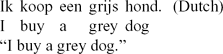
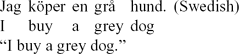
In Romance languages (of which the participants have knowledge), the opposite pattern is found, that is, the (color) adjective is placed after the noun (example (3) is from French, example (4) from Spanish and example (5) from Italian).Footnote 3
-
(3)
-
(4)
-
(5)
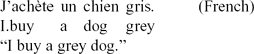
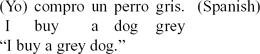
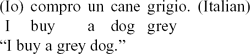
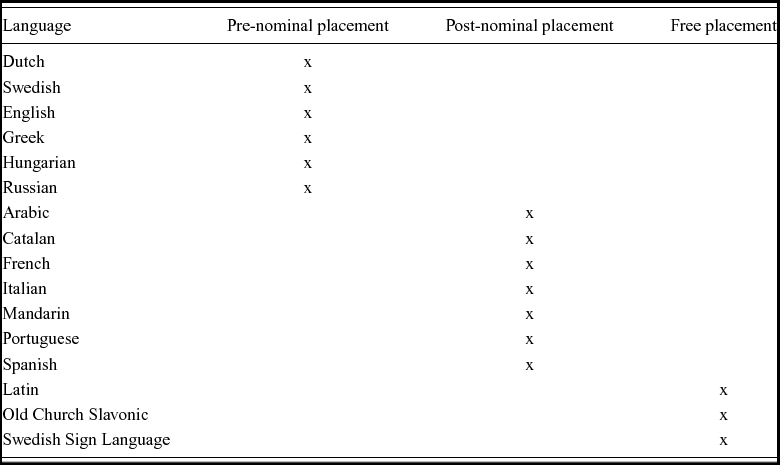
Table 1 shows color adjective placement in the languages involved in this study. As can be seen in this table, six of the languages exhibit a structure in which the adjective precedes the noun, and seven languages exhibit the opposite word order. In three of the languages the placement of attributive adjectives is free, i.e. they may be placed before or after the noun that is being modified.
Color adjective placement in the involved languages.
3. Research question and hypotheses
Our research question is: Is there a relationship between the degree of explicit MLK in L1 Swedish and the degree of correctness regarding adjective placement in the initial state of L3 Dutch? In other words, we are interested in whether the participants are able to make use of their explicit MLK in their L1 and take advantage of the fact that a certain structure is expressed in the same way in both the L1 and the L3. In line with the declarative/procedural model, we hypothesize that the participants with a high degree of explicit MLK in L1 will transfer from their L1. That is, their explicit knowledge of the fact that in Swedish adjectives are placed before the noun will result in a correct placement to a larger extent than for those with a low degree of explicit MLK. In other words, we assume that, in these cases, the L1 will obtain a status similar to a formally learned L2, and consequently the characteristics of the L2 status factor will play a role here too.
On the basis of the L2 status factor, which predicts that transfer will occur from the L2 by default, we further hypothesize that participants with a low degree of explicit MLK in L1 will transfer from their L2. We believe that these participants will not be able to take advantage of the fact that this structure is expressed exactly in the same way in the L1 and the L3, since they do not posses this explicit knowledge about their L1, to the same extent as the participants with a high degree of explicit MLK. Thus, we hypothesize, in line with the L2 status factor, that transfer will mainly occur from the formally learned L2s in these cases. Recall that transfer from the L1 will result in a correct adjective structure, whereas transfer from a Romance L2 will result in an erroneous adjective structure.
4. Data collection
4.1 Participants
An announcement inviting people to participate in a study concerning the first encounter with a new language was posted at the universities of Stockholm and Uppsala as well as on Facebook, and distributed via various e-mail lists. No information was given as to what language they were going to encounter. Three criteria were specified in the announcement: (i) Participants had to have only Swedish as L1, as we wanted to investigate the role of explicit MLK in L1 Swedish. (ii) Participants had to have no previous studies of German at all, because of its typological closeness to both Swedish and, especially, Dutch. It would not have been possible to isolate the transfer source for participants with German as L2. (iii) Participants had to have knowledge of at least one Romance language, because the color adjective placement in Romance languages is different from that in Germanic languages. No specific condition was given concerning English as all Swedes are exposed to English more or less on a daily basis. This search for participants resulted in a group covering a variety of experiences in relation to languages and language studies. Some participants were naïve language users with no previous language studies except for the compulsory language education in school. Other participants were enrolled in different language courses at university level at the time of the data collection. Finally there were participants who were, or had been, teachers of Swedish.
Forty-five native speakers of Swedish agreed to participate in the study. It turned out that five persons had to be excluded from the study (drop-off rate 11%) due to the following reasons: One did not fulfill all the tasks, one did not have any knowledge of a Romance language (as manifested in the placement test, see Section 4.4 below), one had studied German up to level A2 and the last two were, by accident, given the correct adjective–noun structure by the interlocutor. The remaining 40 participants were aged between 18 and 51 years (mean = 31), and they were 30 females and 10 males. It would have been preferred to have a more even distribution between males and females. However, the distribution corresponds to our general impression that more women than men enroll in language courses. The participants filled in a background form concerning previously studied languages and bio-data. The form, as well as an agreement between participant and researchers, were completed before the recording. The participants had knowledge of the following background languages: Swedish (40 participants), English (40), French (33), Spanish (27), Italian (11), Latin (10), Russian (5), Arabic (2), Greek (2), Hungarian (2), Portuguese (2), Bulgarian (1), Catalan (1), Old Church Slavonic (1), Mandarin (1), Swedish Sign Language (1). They had studied between two and nine foreign languages (mean = 3.5 languages).
4.2 L3 tasks
The data comes from oral production. Two participants were recorded at a time, together with a Dutch-speaking person, during approximately 25 minutes’ interaction. During the interaction, the participants first received a “language shower” with some Dutch input. They were invited to introduce themselves, and were then given prompt cards with pictures illustrating Dutch verbs, along with the Dutch verb written on a different card. The participants were to match the words with the pictures, and produce the words orally. After this, the participants were asked to perform two tasks. During the first task, the participants were given a Filofax page where different activities (varying between the two individuals) were marked. The task was to find a time for playing tennis together, using the verbs from the prompt cards. This task aimed at eliciting the placement of the finite verb. This part of the data will be investigated in future research. In the second task, the participants were asked to reach an agreement about buying a dog. They were given a sheet with a picture of three dogs in different colors and some words and expressions appeared on the sheet (e.g. vrolijk “happy”, and nijdig “angry”). The interlocutor was very careful not to provide the target language structure (e.g. een blauwe hond “a blue dog”), but behaved in such a way that the participants had to produce the structure by themselves. This task aimed at tapping the NP-internal position of the attributive adjective, which is the focus of the present study.
Before starting the data collection, the tasks had been piloted with 13 students at beginner levels in Swedish and German, and further used for a study on L3 Swedish. The tasks worked out satisfactorily.
4.3 Metalinguistic test in L1 Swedish
After the recording, the participants were given a metalinguistic test to fill out immediately. The test contained seven questions on Swedish grammar that require varying degrees of explicit MLK, e.g., “Explain where the adjective is placed in relation to its noun.” and “How is past participle created for verbs belonging to group 1?”. The test yielded twelve points. There was no time limit. The idea with this test was to correlate the results with the results of adjective placement from the recording.
4.4 Placement tests in the L2s
In order to define the proficiency level of the participants’ L2s, written tests were given after the recordings. Folkuniversitetet's (Swedish open university) standardized placement tests were used. These tests have been developed in accordance with the CEFR (Common European Framework of Reference) scale A1–C2 (see Council of Europe, 2001). These tests are available in English, French, Italian, Spanish and German. Given our interest in possible transfer from Romance L2s, it was important to test the participants’ proficiency level in these languages. This had to be done in order to ensure that they had knowledge corresponding to at least an A2 level. Participants who did not reach this level in any Romance language were excluded from the study. Some of the participants had knowledge of other languages, and in those cases self-assessment was used in order to define proficiency level. The CEFR levels (A1–C2) were later transformed into the numeric values 1–5 in order to facilitate statistical comparisons (A1 and A2 were merged into a common beginner level). Following this calculation, the participants had a mean result of 4.8 out of 5 in English, while the mean value for the other L2s was 2.2 out of 5. This indicates that the participants have a very high level of proficiency in English, as opposed to the other L2s, and it raises the question whether English has a different status than the other L2s. It seems that this language is approaching L1 status, not only when taking proficiency level into account, but also considering the amount of input Swedes generally get from different media. In fact, it is probably fair to say that Swedes are exposed to the English language on a daily basis. For a discussion of the status of English in Sweden, see for example Josephson (Reference Josephson2004).
5. Method (scoring)
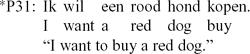
The recordings were transcribed in Chat format (MacWhinney, Reference MacWhinney2000). All instances of either noun + adjective or adjective + noun were counted by two researchers. The structures were analyzed in terms of correct or incorrect adjective placement. As the participants produced a varying number of adjectives, the analysis will be based on the percentage of correctly vs. incorrectly placed adjectives. There were a few utterances in which there were one or more constituent(s) between the noun and the adjective, as in example (6). (Example annotations like *P07 indicate participant number seven, the symbol # marks a pause.)
-
(6)

This kind of utterance was discarded from the analysis because one cannot with certainty exclude the possibility that the participant attempted to produce a relative construction with a predicative adjective.
The next step was to correct the metalinguistic test. All the results were entered into an Excel spreadsheet, in order to perform statistical analyses. In addition to the above-mentioned data, the results of the placement tests were included in the file.
5.1 Statistical methods and data management
Statistical comparisons in order to test differences between two independent groups were made by using Student's t-test for uncorrelated means, following validation for normal distribution using the Shapiro Wilk test. The Pearson correlation coefficient was used in order to test independence between variables. In addition, descriptive statistics was used to characterize the data. All analyses were carried out by use of the SAS system (SAS Institute Inc., 2008) and the 5% levels of significance were considered. In the case of a statistically significant result the probability value (p-value) has been given.
6. Results
A total number of 239 adjective structures was observed in the data. The figures in Table 2 concerning adjective placement are percentages, as explained above.
Results on L1 metalinguistic test and adjective placement (40 participants).
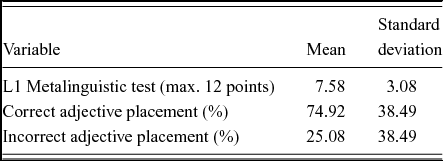
The table shows that the mean on the L1 metalinguistic test is 7.58 (max. 12 points). The number of correct answers ranges from one to 12, and the standard deviation is 3.08. As for adjective placement, it can be noted that approximately 75% of the adjectives were correctly placed before the noun, while about 25% were incorrectly placed after the noun. Thus, in spite of the similarities regarding adjective placement between L1 Swedish and L3 Dutch, a quarter of the used adjectives appear in post-nominal position. The following examples show two correct instances, in (7) and (8), and two incorrect instances, in (9) and (10).
-
(7)
-
(8)
-
(9)
-
(10)

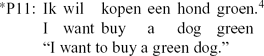
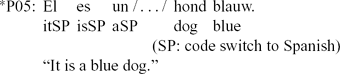
In order to answer our research question regarding a possible relationship between degree of explicit L1 MLK and transfer source in L3 learning, we tested the correlation between the adjective placement and the results on the metalinguistic test in Swedish. A Pearson correlation analysis was carried out. The result of the correlation analysis is shown in Table 3 and illustrated in Figure 1.
Correlation analysis between explicit MLK and adjective placement.

The percentage of correctly and incorrectly placed adjectives in the two groups.

As can be seen in Table 3, there was a strong and significant correlation between both correct and incorrect adjective placement and the results on the metalinguistic test. In other words, a high result on the metalinguistic test correlates with a correct adjective placement, whereas a low result on the metalinguistic test correlates with an incorrect adjective placement.
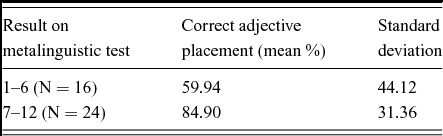
The participants were then divided into two groups: those with a low degree of explicit MLK (results ranging from 1 to 6 on the test), and those with a high degree of explicit MLK (results ranging from 7 to 12 on the test). When compared by means of a t-test, it turned out that there were significant differences between the two groups regarding adjective placement, p < .05. In other words, those with a high degree of explicit MLK in their L1 produced significantly more correct adjective structures in L3, than those with a low degree of explicit MLK (see Table 4). Although the standard deviation values seem to indicate a larger variation in the low explicit MLK group than in the high explicit MLK group, the difference is not significant (p = .1361). Figure 1 clearly shows that high explicit MLK in the L1 is associated with a high percentage of correctly placed adjectives in the L3.
Comparison of adjective placement by participants with low explicit MLK (1–6) and high explicit MLK (7–12).
7. Discussion and conclusions
Our research question was: Is there a relationship between the degree of explicit MLK in L1 Swedish and the degree of correctness regarding adjective placement in the initial state of L3 Dutch? The results clearly show that there is such a relationship in the sense that high explicit MLK in the L1 correlates with the percentage of correctly placed adjectives, and vice versa: low explicit MLK correlates with the percentage of incorrectly placed adjectives. Furthermore, the high MLK group produced significantly more correct adjective structures than the low MLK group (84.9% vs. 60%).
The results are thus in line with Paradis’ (Reference Paradis2004, Reference Paradis2009) framework, and with what we expected, that is explicit MLK in the L1 seems to favor transfer from this language in the initial state of L3 learning in participants in the high MLK group. As suggested above this transfer is probably due to the fact that their L1 has many similarities with a formally learned L2 regarding the elements supposed to be specific to the L2 (e.g., age of onset, learning situation, learning strategies and degree of awareness of the learning process). The specificities of the L2 status factor thus seem to apply to the L1 in this particular case, as there are very few incorrectly placed adjectives among the participants with high explicit MLK. That is, transfer cannot have occurred from Romance L2s, since the adjective is correctly placed. However, in the low explicit MLK group, we do find incorrectly placed adjectives to a significantly larger extent. It thus seems that the participants in this group transfer this structure from their Romance L2, as it is not present in their L1. It can also be noted that influence from Romance languages seems to occur at the lexical level as well (recall example (10) above). Cases like these support our analysis that Romance L2s, rather than English L2, seem to be activated. The fact that the Romance L2s are activated can be explained with the L2 status factor (Bardel & Falk, e.g. Reference Bardel, Falk, Cabrelli Amaro, Flynn and Rothman2012). As we have seen, the L2 status factor predicts that transfer will occur from a formally learned L2 by default. We acknowledge that correct use of the adjective structure could be explained with transfer from L2 English. However, all the participants had a very high level of proficiency of English (mean 4.8 out of 5), which strengthens our interpretation that they do not transfer the adjective placement from English. This is in line with Falk and Bardel (Reference Falk and Bardel2010), who suggest that an L2 can reach such a high proficiency that it loses its L2 status. In addition, as discussed in Section 4.4, English has a special status in Sweden, in that it is encountered at a very early age and is present in everyday life for the major part of the population and that Swedes therefore do not apprehend English as a foreign language, but rather as a second language in Sweden. In other words, the L2 status factor elements may not apply to English in learners with a high proficiency level, like the ones in the present study. As a consequence, it seems plausible that the explicit MLK is less activated in English in comparison to the other L2s, which have been learned formally to a larger extent (see footnote 2 above).
We can conclude that our hypotheses were confirmed though we acknowledge that there are certain limitations of the study. For example, in a future study a larger sample, which covers more than one language structure, should be analyzed. Furthermore, in order to ascertain that L2 English does not play a role under circumstances similar to the ones in the present study, which we have claimed in this paper, participants’ explicit MLK in L2 English should be tested in future research of this kind. It would also be interesting to investigate other language combinations, for instance the opposite to the one in the present study.


 Open access

