


Introduction
Subjective wellbeing (SWB) has been a prominent topic in ageing studies, probably because of its significant contribution to health and longevity (Diener and Chan Reference Diener and Chan2011; George Reference George2010). Although ageing is viewed as a process of declines, social and emotional functioning appears to increase with age; particularly, some studies in the United States of America (USA) find that SWB is as good in older adults as in younger adults, or even better (Carstensen, Fung and Charles Reference Carstensen, Fung and Charles2003). Indeed, socio-demographic characteristics, such as age, gender and marital status, are weakly correlated with SWB, as shown in a meta-analysis of 148 studies conducted in Western countries (DeNeve and Cooper Reference DeNeve and Cooper1998). Yet race and ethnicity may play different roles across countries. An extensive body of literature documents increasing health disparities between Blacks and Whites in the USA (e.g. Barger, Donoho and Wayment Reference Barger, Donoho and Wayment2009; George Reference George2010; Williams and Jackson Reference Williams and Jackson2005). Contrary to the prevalent argument of racial disparities, a recent local survey in the USA showed that non-Hispanic Black older adults were as happy as non-Hispanic White peers (Musa et al. Reference Musa, Beach, Briem, Schlarb and Schulz2014). Like the ‘race paradox in mental health’ (Mouzon Reference Mouzon2014: 32), we refer to this finding as ‘the race paradox in happiness’, that is, Black Americans are as happy as or even happier than Whites, an unexpected pattern given that Black Americans are more socio-economically disadvantaged and in poorer physical health than Whites. Moreover, this phenomenon is relevant to the racial crossover effect; namely health inequality between Blacks and Whites is attenuated at very old age in the USA (Lin, Beck and Finch Reference Lin, Beck and Finch2014), and the old-old (ages 80 and older) Blacks have better perceived wellbeing than White peers.
The race paradox in happiness is not necessarily surprising, however, as some literature shows that life conditions have little effects on SWB, suggesting race as a measure of life conditions may not correlate to SWB (DeNeve and Cooper Reference DeNeve and Cooper1998; Shmotkin Reference Shmotkin2005). Despite the mixed findings on racial disparities in the USA, few studies have explored the potential pathways of social support and social engagement that may vary by racial groups and elucidated the equivocal findings about the race paradox in SWB. To improve our understanding of the race paradox, we first analyse the local survey data that revealed this controversial paradox and puzzled the local residents, and then replicate the cross-sectional analysis in a nationally representative sample to explore whether it is a national trend towards the race–happiness paradox in American society. Since the local study was conducted in a region that has historically been one of the oldest counties in the nation, it is definitely not a representative sample of the USA and its local environment may contribute to the race paradox. Thus, the comparisons between the local and national samples will allude to the role of locality or environment factors in the race paradox of happiness and help address the local puzzle. Although racial disparities take different forms and vary by degrees across countries (Bramley et al. Reference Bramley, Hebert, Tuzzio and Chassin2005; Lasser, Himmelstein and Woolhandler 2004), information and lessons learned from the USA may benefit other nations in terms of identifying both risk and resilient factors and reducing health disparities based on race/ethnicity, gender and social class.
Racial differences in SWB in the USA
SWB refers to both cognitive and affective evaluations that people make about their lives (Diener Reference Diener2000). Such evaluations reflect either judgements of one's life or the relative dominance of positive versus negative affect (Shmotkin Reference Shmotkin2005). Judgement on life or life satisfaction, and the dominance of positive affect or happiness, are often used to denote SWB in general (Shmotkin Reference Shmotkin2005). Life satisfaction is conceptualised as relatively stable orientation towards life, and it is not affected by transient moods; whereas happiness is less stable and less cognitive (George Reference George2010). SWB is a critical component of psychological and health assessments, and a better understanding of its determinants is needed for policy and practice interventions to promote health and wellbeing (Barger, Donoho and Wayment Reference Barger, Donoho and Wayment2009).
In the USA, racial disparities in SWB have been observed consistently over time, with narrowing gaps in older age (Yang Reference Yang2008). Although most studies found that non-Hispanic Blacks have significantly lower levels of self-reported SWB than non-Hispanic Whites (George Reference George2010), this line of research has been challenged. As Mouzon (Reference Mouzon2014) pointed out, non-Hispanic Blacks experienced better mental health outcomes than Whites, with lower rates of major psychiatric disorders. These studies used the measures of psychiatric diagnoses and self-esteem, which are distinct from SWB (Hughes and Thomas Reference Hughes and Thomas1998; Mouzon Reference Mouzon2014). It is documented that objective life conditions, as reflected by socio-demographic characteristics, i.e. age, gender, race/ethnicity, marital status, education and income, have little impact on SWB (Shmotkin Reference Shmotkin2005). The findings about the small associations between socio-economic status and SWB support the idea that people are happy to the extent they enjoy liveable conditions that can meet their needs. That is, wealth may not bring happiness, and affluence has little influence on SWB beyond the provision of necessities (Diener and Biswas-Diener Reference Diener and Biswas-Diener2002; Myers Reference Myers2000). The lower likelihood of psychiatric disorder diagnosis in Blacks and the weak wealth–SWB relationship imply a small contribution of race/ethnicity to SWB in Americans.
Socio-emotional selectivity theory (SST)
As older people realise that they are gradually approaching the end of life, they are likely to be involved in selective relationships to maximise positive affect and diminish negative affect, thus increasing emotional investments in intimate or rewarding social relationships and engaging in pro-social activities of helping others, which may further lead to enhanced appreciation of life (Carstensen and Lockenhoff Reference Carstensen and Löckenhoff2003). According to the SST, older adults place great importance on emotionally meaningful activities and derive increasing satisfaction and emotional wellbeing from contributing to others (Carstensen and Lockenhoff Reference Carstensen and Löckenhoff2003; Windsor, Anstey and Rodgers Reference Windsor, Anstey and Rodgers2008). Through carefully selecting social partners and social activities, older adults are better than younger adults at predicting how a context will make them feel (Sims, Hogan and Carstensen Reference Sims, Hogan and Carstensen2015). Social relationships affect wellbeing via social support and social engagement (Huxhold, Fiori and Windsor Reference Huxhold, Fiori and Windsor2013). Empirical evidence has extensively documented that supportive social ties and engagement in pro-social activities are beneficial to SWB (e.g. Kahana et al. Reference Kahana, Bhatta, Lovegreen, Kahana and Midlarsky2013; Pilkington, Windsor and Crisp Reference Pilkington, Windsor and Crisp2012). Relationships with spouse, children, neighbours and friends are essential for receiving emotional support. Lack of spouse or partner is associated with lesser wellbeing, including lower life satisfaction, lower quality of life and higher mortality (Berg et al. Reference Berg, Hoffman, Hassing, McClearn and Johansson2009; Jakobsson, Hallberg and Westergen Reference Jakobsson, Hallberg and Westergren2004; Litwin and Stoeckel Reference Litwin and Stoeckel2013). Perceived social support is most strongly associated with SWB in later life (George Reference George2010).
Social engagement or attachment to the social structure via community roles can promote SWB (Kahana et al. Reference Kahana, Bhatta, Lovegreen, Kahana and Midlarsky2013; Pilkington, Windsor and Crisp Reference Pilkington, Windsor and Crisp2012). Social engagement may provide a sense that one is needed by others, promote positive role identities and fulfil goals that benefit others (Huxhold, Fiori and Windsor Reference Huxhold, Fiori and Windsor2013; Kahana et al. Reference Kahana, Bhatta, Lovegreen, Kahana and Midlarsky2013). Perceiving oneself as being socially engaged at old age is important for evaluating individual wellbeing (Huxhold, Fiori and Windsor Reference Huxhold, Fiori and Windsor2013). Volunteering and religious participation are two main community roles (George Reference George2010), or forms of social engagement. Volunteering is viewed as an emotionally meaningful activity that provides role identity and emotional support (Hendricks and Cutler Reference Hendricks and Cutler2004; Winsor, Anstey and Rodgers Reference Windsor, Anstey and Rodgers2008). Volunteer engagement is associated with a wide range of positive health-related and psychological outcomes for older adults, including enhanced SWB, probably because volunteers tend to have more supportive social networks than non-volunteers (Pilkington, Windsor and Crisp Reference Pilkington, Windsor and Crisp2012). Further, volunteering has been traditionally linked to religion in the USA, as the significance of helping others is a common tenet in many religious traditions (Wuthnow Reference Wuthnow and Wuthnow1991). Religious commitment is associated with greater wellbeing and meaning in life for some traditions (Tix et al. Reference Tix, Dik, Johnson and Steger2013). In addition, religion may buffer the relationship between deprivation and SWB, that is, religious people living in a deprived neighborhood are higher in SWB than their non-religious peers living in the same neighborhood (Hoverd and Sibley Reference Hoverd and Sibley2013). In summary, supports received from social networks and provided to others are affective and/or affirmative exchanges based on individual selective choices, which can meet individual goals and sustain wellbeing.
Despite extensive research that demonstrated the associations of social support and social engagement with SWB, there is limited evidence concerned with how these associations vary by racial groups in late life. Race is a social status that affects life chances to develop social network resources, and significant racial differences exist in the characteristics of social networks among Americans (Ajrouch, Antonucci and Janevic Reference Ajrouch, Antonucci and Janevic2001). Compared with Whites, Blacks have smaller networks, but more contacts with network members and more family members in the network (Ajrouch, Antonucci and Janevic Reference Ajrouch, Antonucci and Janevic2001). Racial differences diminish with increasing age (Ajrouch, Antonucci and Janevic Reference Ajrouch, Antonucci and Janevic2001). In addition, the church plays a more prominent role among Blacks; church attendance has more influential impacts on volunteering in Blacks than in Whites (Musick, Wilson and Bynum Reference Musick, Wilson and Bynum2000).
The present study aims to investigate whether socio-emotional activity pathways to SWB vary by race and to find out whether the race paradox, as documented in the local study, trends in a nationally representative sample in the USA. Previous studies examined racial differences in social networks and SWB separately, implying that the associations between social networks and SWB may vary by race. With declining psycho-social resources, older adults, especially Blacks, may sustain SWB via social support and engagement in social roles. Using both local and national samples of Americans aged 55 and over, this study aims to:
1. Evaluate racial differences in SWB.
2. Examine the relative contributions of socio-demographics, health, social support and social engagement to SWB.
3. Assess whether the associations of social support and social engagement with SWB vary between non-Hispanic Whites and Blacks.
4. Investigate a racial crossover effect in SWB, that is, whether non-Hispanic Blacks have higher levels of SWB than Whites at age 80 and older.
Methods
Study samples
Two samples from the USA were used in the analyses. A local sample was drawn from the 2014 Survey of Older Adults in Allegheny County (SOAAC), and a national sample from the 2014 Health and Retirement Study (HRS). The SOAAC was conducted between January and April 2014, with the aim of providing a comprehensive analysis of ageing in Allegheny County. The target population was non-institutionalised English-speaking adults aged 55 and older living in the county (Musa et al. Reference Musa, Beach, Briem, Schlarb and Schulz2014). Non-Hispanic Blacks were over-sampled to allow stable estimates and reliable racial comparisons (Musa et al. Reference Musa, Beach, Briem, Schlarb and Schulz2014). Random digit dialling telephone samples of landlines and cellular phones were drawn to conduct the survey, and the interview completion rate was 68 per cent among the eligible. A total of 1,049 interviews were completed. For the purpose of comparing racial difference and due to the small number of other races (N = 21), we included non-Hispanic Whites (N = 931) and non-Hispanic Blacks (N = 104) in the final weighted sample. The survey was approved by the Institutional Review Board of the University of Pittsburgh.
The HRS is an ongoing biennial panel survey of nationally representative middle-aged and older adults residing in the contiguous USA. It is sponsored by the National Institute on Aging and conducted by the University of Michigan. The sample for this study included respondents aged 55 and older, non-Hispanic Whites and Blacks, who completed the Leave-Behind questionnaire (LB) in 2014. Since 2006, a rotating and random half of the core panel HRS respondents were selected to complete an enhanced face-to-face interview. The other half of the sample was selected for 2008, and the design is repeated at a four-year interval. The LB includes questions on psycho-social aspects of individual life, such as positive and negative social interactions, life satisfaction and happiness. The study sample consisted of 7,718 respondents, with 6,422 non-Hispanic Whites and 1,296 Blacks.
Measures
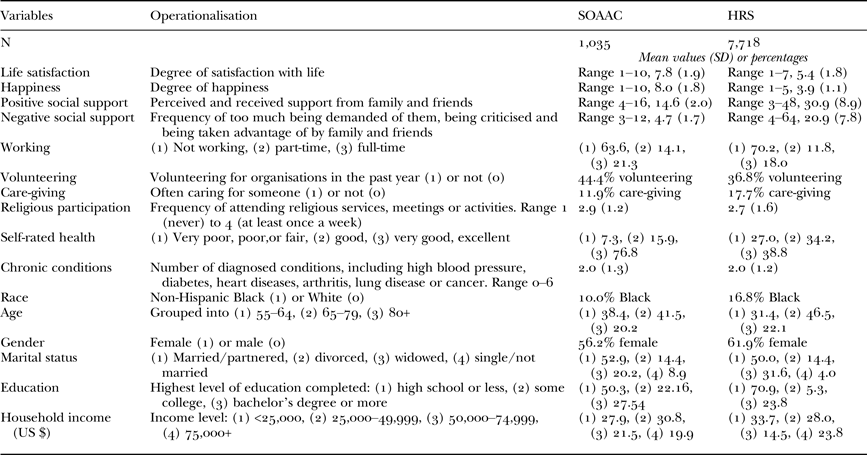
There are minor differences in item wording and response ranges between the two surveys. The HRS has more comprehensive sets of psychological wellbeing, social relationship and socio-economic status variables. Nonetheless, similar survey questions provide confidence in comparisons. Table 1 lists the variable operationalisation and descriptive statistics of both samples. SWB is in general denoted by life satisfaction and happiness, as suggested in the literature (e.g. Shmotkin Reference Shmotkin2005), and both are available in the two studies.
Operationalisation and descriptive statistics of variables in the Survey of Older Adults in Allegheny County (SOAAC) and Health and Retirement Study (HRS) samples
Note: SD: standard deviation.
Life satisfaction
In the SOAAC, respondents were asked to rate their satisfaction with life, with responses ranging from 1 (very dissatisfied) to 10 (very satisfied). The HRS asked respondents to rate the statement ‘I am satisfied with my life’, with responses ranging from 1 (strongly disagree) to 7 (strongly agree).
Happiness
The SOAAC asked ‘How happy would you say you are?’ Responses were given from 1 (very unhappy) to 10 (very happy). The HRS asked ‘During the past 30 days, to what degree did you feel happy?’ Responses were recoded from 1 (not at all) to 5 (very much).
Positive social support
The SOAAC asked respondents to rate the statements that they have people to talk to when they feel lonely, to take them to the doctor when they are sick and to turn to when they need suggestions. They were also asked about the satisfaction with the help and support received. The responses were recoded from 1 (definitely false) to 4 (definitely true). The summary score of these four items was used (Cronbach's α = 0.78). The HRS asked about the extent to which respondents felt being understood by, relied on and opened up to spouse or partner, children, other family members and friends. The summary score of 12 items were used with recoded responses from 1 (not at all) to 4 (a lot) (Cronbach's α = 0.78). Higher scores indicated more support in both samples.
Negative social support
Negative social support was measured by the summary of three items in the SOAAC, which asked how often too much was demanded of them, they were criticised or they were taken advantage of by others. Responses were given on a four-point scale from 1 (never) to 4 (very often) (Cronbach's α = 0.67). In the HRS, 16 items were used, asking how often spouse/partner, children, other family members and friends made too many demands on them, criticised them, let them down or got on their nerves. Reponses were given from 1 (not at all) to 4 (a lot) (Cronbach's α = 0.83). Higher scores indicated more negative strain.
Social engagement
Two variables were used, including volunteering for organisations (yes/no) and religious participation (1 = never to 4 = at least once a week) from both surveys. In addition, we controlled for employment status (full-time, part-time or not working) and caring for others (yes/no), because these two critical activities are not as discretionary as volunteering or religious participation and yet have health implications for older adults.
Health
Self-rated health was measured by the respondents’ rate on their health in general, ranging from very poor (1) to excellent (6) in the SOAAC, and poor (1) to excellent (5) in the HRS. Due to uneven distributions in responses, self-rated health was recoded into very poor, poor or fair (1), good (2) and very good or excellent (3) in both samples. Another variable – chronic conditions – was used to measure objective health, and it was the total number of diagnosed conditions, including high blood pressure, diabetes, heart disease, arthritis, lung disease or cancer (range 0–6).
Socio-demographic variables included age in three groups, i.e. young-old (55–64), middle-old (65–79) and old-old (80 or over), gender (male or female), marital status (married/partnered, divorced, widowed or single/not married), education measured by the highest level of education completed (high school or less, some college, bachelor's degree or higher) and household income. In the SOAAC, respondents were asked about the household's total yearly income on a six-point scale (1 = <US $25,000 to 6 = 150,000+). In the HRS, household income was a continuous measure, summing job earnings, worker compensation, pension income, Social Security benefits and capital income of family members living in the household. To adjust for the measure differences and make comparable between two samples, we recoded household income into four levels: (1) <US $25,000, (2) 25,000–49,999, (3) 50,000–74,999 and (4) 75,000 + .
Data analysis
For research aim 1, we examined SWB differences by comparing life satisfaction and happiness between non-Hispanic White and Black participants in two samples, using bivariate and simple regression analyses. For aim 2, we examined, in turn, the relative contributions of race, other socio-demographics, health, social engagement and social support to the variances in SWB using multiple regression analyses. This strategy characterises the relative importance of these blocks of variables to SWB. We reported R 2 effect size estimates to determine the variances in SWB explained by each block of variables. For aim 3, to test racial differences in the socio-emotional activity pathways to SWB, we created and tested the moderation effects of race with social engagement and social support, respectively. For aim 4, we tested the race crossover effect by examining the moderation effect between age and race on SWB. The interaction terms were tested one by one after controlling for socio-demographics, health, social engagement and social support. In each test, Blacks were compared against Whites in each dummy-coded category (e.g. volunteers) or the effect of a continuous independent variable (e.g. positive social support) on SWB.
In the analyses, we used personal-level weight variables to adjust for non-responses and to ensure data representativeness. Variables of positive and negative social support were transformed due to uneven distributions. In addition, less than 4 per cent of the observations had missing values, except household income with 10 per cent missing in the SOAAC and 15 per cent in the HRS. Therefore, a hot decking imputation procedure was applied to complete the missing data so that all observations were used in multiple regression analyses. This procedure involved identifying an observation with complete data that was similar to the observation with missing data. Then the missing data were filled in using the values of the non-missing data from the similar observation. All analyses were conducted using Stata 14.0 (Stata Corp, College Station, TX, USA).
Results
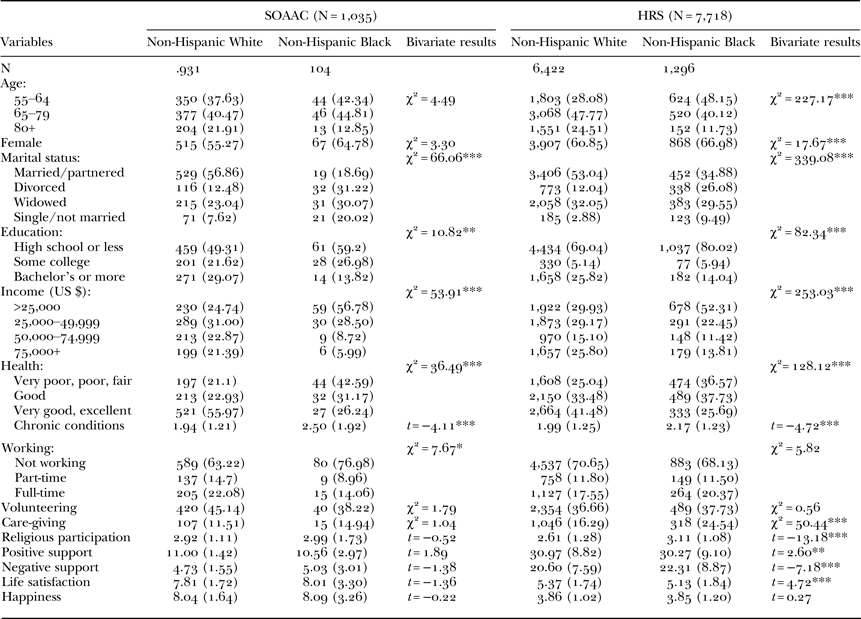
Bivariate analyses showed there were significant racial differences in marital status, education, income, self-rated health and chronic conditions in both samples (Table 2). Compared with non-Hispanic Whites, Blacks were more likely to be not married, with less education and household income, and in poor health. In the HRS sample, non-Hispanic Blacks were more representative in the groups of the young-old (55–64), female, more religious participation, care-givers, with less positive social support but more negative strains. Also, they had less life satisfaction than Whites.
Comparisons by race in the Survey of Older Adults in Allegheny County (SOAAC) and Health and Retirement Study (HRS) samples
Significance levels: * p < 0.05, ** p < 0.01, *** p < 0.001.
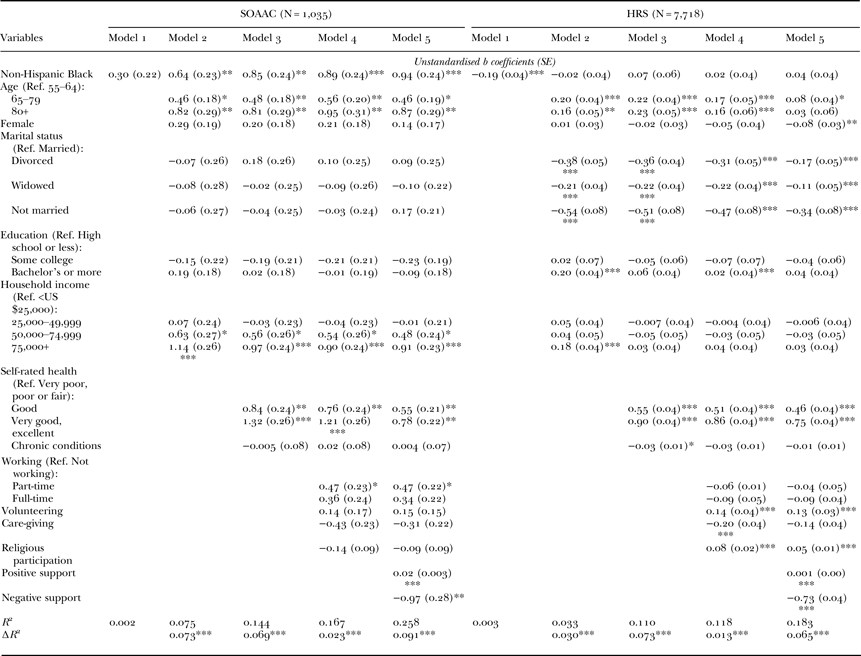
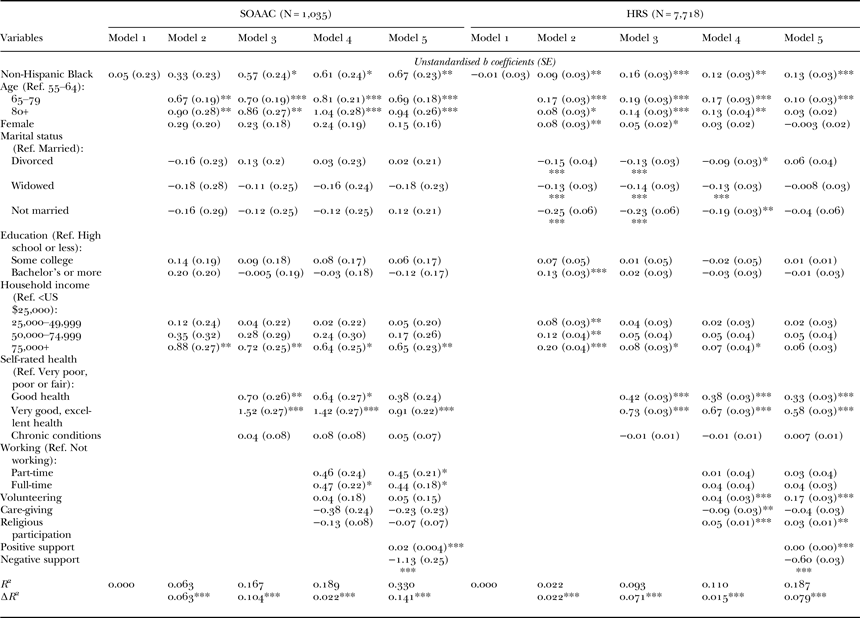
To further assess racial differences, five-step hierarchical multiple regression analyses were conducted. Results showed that in the SOAAC sample initially there was no difference in life satisfaction between the two racial groups (Model 1 in Table 3). After controlling for socio-demographics, health, social engagement and social support, racial differences were consistently observed, and non-Hispanic Blacks had significantly higher life satisfaction than Whites (Models 2–5). By contrast, in the HRS sample, non-Hispanic Blacks initially had a lower level of satisfaction (Model 1), but this racial difference tapered off and no difference was observed after equalising socio-demographics, health and social resources (Models 2–5). As to happiness, at first racial differences were not observed in either sample (Model 1 in Table 4), but Blacks were happier after equalising health and social resources (Models 3–5 in the SOAAC, Models 2–5 in the HRS). In general, respondents of the middle-old and old-old age groups, with good or better health, more positive support and less negative strain had higher life satisfaction and happiness than their counterparts in both samples.
Multiple regression analyses of life satisfaction in the Survey of Older Adults in Allegheny County (SOAAC) and Health and Retirement Study (HRS) samples
Notes: SE: standard error. Ref.: reference category.
Significance levels: * p < 0.05, ** p < 0.01, *** p < 0.001.
Multiple regression analyses of happiness in the Survey of Older Adults in Allegheny County (SOAAC) and Health and Retirement Study (HRS) samples
Notes: SE: standard error. Ref.: reference category.
Significance levels: * p < 0.05, ** p < 0.01, *** p < 0.001.
Overall, race only contributed a very small amount (0.3 per cent or less) to the variance in SWB, as shown by R 2 values in Model 1 (Tables 3 and 4). Adding socio-demographic variables increased the explained variance by 2–7 per cent (Model 2). Adding self-rated health and chronic conditions increased the explained variance by 7–10 per cent (Model 3). Social engagement explained an additional 1–2 per cent (Model 4) and social support increased the explained variance by 7–14 per cent (Model 5). Health and social support accounted for more variances in SWB than did other variables.
Table 5 displays the moderation effects between race and age, social engagement and social support. The racial crossover effect was consistently observed in happiness, that is, the old-old (80+) Blacks were happier than White peers in both samples, but not in life satisfaction. In addition, the moderation effect between race and positive social support was statistically significant in relation to life satisfaction. The coefficient on the interaction term indicated that the relationship between social support and satisfaction was different for Whites and Blacks. Specifically, the relationship was weaker for Blacks. The race moderation effects on the relationships of age cohort and volunteering with life satisfaction were not consistent between two samples, probably due to sample differences and less satisfaction reported by Black respondents in the HRS sample.
Interaction effects between race and age, social engagement and social support
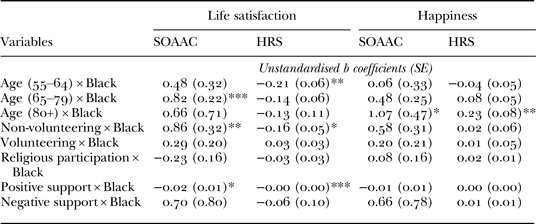
Notes: SOAAC: Survey of Older Adults in Allegheny County. HRS: Health and Retirement Study. SE: standard error. In each analysis, Blacks were compared against White counterparts, e.g. Blacks aged 55–64 were compared with Whites aged 55–64 after controlling for all covariates.
Significance levels: * p < 0.05, ** p < 0.01, *** p < 0.001.
Discussion
This study was motivated by a local paradoxical finding that Black older adults were as happy as White peers despite their disadvantaged social positions in American society (Musa et al. Reference Musa, Beach, Briem, Schlarb and Schulz2014). The race paradox in happiness may be attributed to socio-emotional activity, or the potential role of social support and social engagement in promoting SWB, especially among Blacks. Yet this assumption has rarely been investigated in previous research. In this study, we examined racial differences in SWB and whether the socio-emotional activity pathways varied by racial groups. Because the local findings might reflect the environmental effects and link with community characteristics, we compared a national sample with the local data to assess whether the race paradox trended nationally.
Analyses of two study samples indicate that the race–happiness paradox existed in both local and national data. No racial difference was initially observed from bivariate analyses; however, Blacks tended to be happier than Whites after adjusting for social resources variables, as shown in the hierarchical regression analyses. Findings about life satisfaction were somewhat equivocal between two samples, but still indicated the race paradox, that is, Blacks were at least as satisfied as Whites despite their disproportionate exposure to adversity. The local sample showed no racial difference from the bivariate analyses, and Blacks seemed more satisfied after equalising health and social resources. By contrast, in the HRS sample, Blacks reported less satisfaction than did White respondents, while the difference disappeared once taking into consideration other factors. Indeed, the size of the differences between two racial groups was very small, as indicated by the effect sizes that we calculated afterwards, with Cohen's d less than 0.10 in four comparisons. When we examined the age group difference by race, we found there was a racial crossover effect on happiness, that is, Blacks of the old-old group seemed happier than White peers.
Findings provide support for the socio-emotional selectivity theory to some extent in that social support was consistently related to life satisfaction and happiness in both samples, but social engagement had different associations with SWB across two samples. Social support is generally provided by close others. If close relationships are maintained in older age, it is very likely to have high-quality emotional support and instrumental assistance, which may lead to high SWB (George Reference George2010; Huxhold, Fiori and Windsor Reference Huxhold, Fiori and Windsor2013). Social support gained from close relationships may reduce stress in everyday life, help maintain positive interpersonal attachments and promote healthy behaviours (Adams, Leibbrandt and Moon Reference Adams, Leibbrandt and Moon2011). Particularly, positive social support seemed more important for Whites to maintain life satisfaction, which was contradictory to our expectation.
The findings regarding the relationships between social engagement and SWB were mixed. We found the positive relationship of SWB with volunteering and religions participation in the HRS, but not in the local sample. The mixed findings may be attributive to the differences in sample respondents and specific environmental effects. Generally, volunteers tend to have more positive social ties relative to non-volunteers, which further relate to better SWB (Pilkington, Windsor and Crisp Reference Pilkington, Windsor and Crisp2012). Rather than through volunteering or church participation, respondents in our local sample may engage in other social activities or interactions with friends, neighbours and relatives, and develop strong place attachment and a sense of community, which further boost their emotional wellbeing.
Consistent with previous research (e.g. Mouzon Reference Mouzon2014; Shmotkin Reference Shmotkin2005), our study found that socio-demographic characteristics had small associations with SWB. The diminished or disappeared racial differences in SWB may imply the potential influences of other factors such as time period, birth cohort, and changes in the technological, environmental, economic and socio-cultural contexts on individual evaluations of life conditions and wellbeing (Lin, Beck and Finch Reference Lin, Beck and Finch2014). Also, SWB may not be a direct product of social stratification based on social class, race/ethnicity and gender, that is, a higher rank in social positions does not necessarily produce greater wellbeing. Along with recent empirical evidence, our study has challenged the assumption that social disadvantages create mental health disadvantages (McLeod Reference McLeod, Aneschensel, Phelan and Bierman2013). For example, despite women's social disadvantages relative to men, women differ from men in the types, rather than the level of mental health problems; particularly, this gender gap is much smaller for Blacks than for Whites, probably due to the low rates of Black women (Rosenfield and Mouzon Reference Rosenfield, Mouzon, Aneschensel, Phelan and Bierman2013). The empirical evidence suggests that subjective meanings and evaluations are fluid and negotiable, which can be used to counteract the distressing effects of social disadvantages (McLeod Reference McLeod, Aneschensel, Phelan and Bierman2013). Despite the increasing socio-economic inequalities in health in industrialised nations, SWB or mental health problems may not be directly associated with social class; or at least the associations do not hold for all indicators of social positions or at all ages (McLeod Reference McLeod, Aneschensel, Phelan and Bierman2013). Although our study focused on the USA, SWB issues are relevant to broader efforts to investigate the happiness paradox, social inequalities, and coping strategies within and between nations worldwide.
One limitation of the current study is that we do not have a comprehensive set of measures of selected relationships and activities, as postulated from the SST. Although the HRS and the SOAAC surveys asked about the presence, quantity and quality of social support and engaged activities, these measures do not allow us to examine whether older adults were selectively engaged in the relationships and activities and whether their socio-emotional goals had been met. Other types of activities, such as informal and leisure activity, and information about the amount of activity engagement were missing, which may explain the variance in SWB. Also, an important indicator of SWB, that is, perceived quality of life was not asked in the local study, thus limiting our investigation of significant aspects of wellbeing in later life, including self-realisation, pleasure, sense of control and autonomy (Litwin and Stoeckel Reference Litwin and Stoeckel2013). Further, SWB should be studied as a dynamic process of pursuing happiness rather than as a static attribute of being happy (Shmotkin Reference Shmotkin2005). That is, the cross-sectional study design cannot establish the causal relationship. It is possible that older people with higher SWB are likely to perceive positive support and to engage in pro-social activities. Future studies need to rely on longitudinal data or socially experimental designs to test the dynamic pathways from selected social relationships and activities to SWB.
Unlike other developed Western nations, the US government does not routinely provide health statistics by class, and race is often treated as a proxy for social class given the fact that Black Americans are over-represented among socio-economically disadvantaged groups (Kawachi, Daniels and Robinson Reference Kawachi, Daniels and Robinson2005). Yet race and social class are separate constructs, and potential interactions between race- and class-based disparities should be considered (Kawachi, Daniels and Robinson Reference Kawachi, Daniels and Robinson2005). Due to the small associations between socio-demographics and SWB, as documented in the literature and in our study, it is plausible that the happiness paradox may exist across social positions too, and our findings could have worldwide implications. External circumstances affect SWB, but individual actions and attitudes may have a greater influence (Huppert Reference Huppert2009). A universal approach to promote SWB in later life could target sustainable development of social support networks and quality, and identify effective emotional and behavioural coping strategies.
In conclusion, our study underscores the importance of social support and investment in socio-emotional relationships in maintaining or improving subjective wellbeing among middle- and old-aged Americans. We document a national trend of the race paradox in SWB and that generally Black older Americans are at least as satisfied as, and even happier than White peers, indicating the absence of disparities in emotional wellbeing. SWB is not defined in accordance with socio-economic positions or physical health conditions. More research efforts are recommended to focus on other potential mechanisms such as coping strategies, personal attributes of optimism and positivity, regulation of individual desires, and socio-cultural contexts among Black older adults or other socio-economically disadvantaged groups to explain their relatively better subjective wellbeing.
Acknowledgements
We are grateful to Allegheny County Department of Human Services, Area Agency on Aging, and United Way of Allegheny County for their support in The State of Aging in Allegheny County.



