


Population-level information on dietary intake of adolescents is important for assessing and monitoring the growing problem of overweight in youth(Reference Ball and McCargar1–Reference Garriguet3). Researchers frequently rely on self-reported dietary intake as a component of nutritional assessments(Reference McPherson, Hoelscher, Alexander, Scanlon and Serdula4, Reference Livingstone and Robson5). However, errors in self-reported dietary energy intake (EI) data have been identified compared with the doubly labelled water (DLW) methodology(Reference Johansson, Solvoll, Bjorneboe and Drevon6–Reference Jonnalagadda, Mitchell, Smiciklas-Wright, Meaker, Van Heel, Karmally, Ershow and Kris-Etherton8), especially in adolescents(Reference Bandini, Schoeller, Cyr and Dietz9–Reference Livingstone, Prentice, Coward, Strain, Black, Davies, Stewart, McKenna and Whitehead11) and females(Reference Johansson, Solvoll, Bjorneboe and Drevon6, Reference Briefel, Sempos, McDowell, Chien and Alaimo12) who tend to under-report(Reference Livingstone, Prentice, Coward, Strain, Black, Davies, Stewart, McKenna and Whitehead11). The problem of under-reporting may be further compounded among overweight and obese children and adolescents(Reference Bandini, Schoeller, Cyr and Dietz13–Reference Maffeis, Schutz, Zaffanello, Piccoli and Pinelli16) compared to their normal-weight counterparts.
To assess the accuracy of self-reported dietary intake data(Reference Johnson-Down, O’Loughlin, Koski and Gray-Donald7, Reference Goldberg, Black, Jebb, Cole, Murgatroyd, Coward and Prentice17–Reference Carter, Whiting, Drinkwater, Zello, Faulkner and Bailey19), several researchers used a ratio of reported EI to estimated BMR (BMRest). This strategy was originally proposed to determine whether self-reported EI could reasonably represent long-term habitual intake, or provide a plausible measure of actual dietary intake, given day-to-day variability in EI(Reference Goldberg, Black, Jebb, Cole, Murgatroyd, Coward and Prentice17). The expected ratio of 1·55 was established for sedentary adults(Reference Goldberg, Black, Jebb, Cole, Murgatroyd, Coward and Prentice17); however, age- and gender-specific cut-offs have not been established for younger populations. Among Canadian children and adolescents, Gray-Donald et al.(Reference Johnson-Down, O’Loughlin, Koski and Gray-Donald7) reported an EI:BMRest of 1·79 (sd 0·71) among a low-income, multiethnic, urban (Montréal, Québec) population of 9–12-year-olds (n 498), using dietary intake from a dietitian-administered single 24 h recall interview. However, lower EI:BMRest ratios of 1·37 (sd 0·45) (males) and 1·22 (sd 0·41) (females) have also been reported in a sample of 227 Saskatoon, Saskatchewan children and adolescents (8–17 years), based on dietary data collected using a single paper-based 24 h recall(Reference Carter, Whiting, Drinkwater, Zello, Faulkner and Bailey19).
Despite their associated limitations, self-report questionnaires or surveys are likely to continue to be the primary source of nutritional data in population-based research. A novel web-based survey (the Food Behaviour Questionnaire or FBQ), which measures food and physical activity behaviour among children and adolescents, was developed at the University of Waterloo(Reference Hanning, Woodruff, Lambraki, Jessup, Driezen and Murphy20, Reference Minaker, McCargar, Lambraki, Jessup, Driezen, Calengor and Hanning21) and was implemented with grade 9 and 10 students from Ontario and Alberta. Therefore, the purpose of the present research was to assess the accuracy of self-reported dietary energy among adolescents by gender and weight status, using the EI:BMRest ratio from a validated web-based dietary survey. The primary objective was to investigate the hypothesis that this method of dietary assessment would increase the likelihood of accurately reporting sensitive information. Given the anonymity of the web-based approach, it was anticipated that social expectation bias would be reduced, thereby decreasing the degree of under-reporting (e.g. reporting plausible energy intakes).
Methodology
A cross-sectional study design was used. Participants were recruited from Ontario and Alberta schools using a two-stage (school board, school) stratified, randomised sampling procedure. Of the forty-two school boards approached, twenty-eight agreed to participate (67 %). School-level response rates were 45 % for both public and Catholic schools and 24 % for private schools. In total, thirty-three public, fourteen Catholic and ten private schools participated.
Ethics approval was obtained from the University of Waterloo Office of Research Ethics, the University of Alberta Human Research Ethics Board and from school boards requiring a formal research application process. Either active or passive parental consent was obtained based on school preference.
Data were collected using the FBQ between November 2002 and June 2003 (85 % weekdays and 15 % weekends). The FBQ was designed to assess nutrient intake, food behaviours and physical activity patterns of children and adolescents through the use of a 24 h dietary recall, FFQ, and other nutrition and physical activity behavioural questions. Participants provided demographic and anthropometric data including age, grade, sex, height and weight, and identified whether they were currently eating less or more than usual in order to lose or gain weight. Dietary data were collected with the use of a 24 h recall, for breakfast, lunch, dinner and snacks based on a listing of ~500 foods. Photo images and prompts assisted with the estimation of portion sizes and encouraged students to provide comprehensive dietary data. A number of approaches have established the validity of this tool. A concurrent validation study of the web-based dietary recall compared to a dietitian-administered recall for the same 24 h period was conducted with grade 6 to 8 students (n 51), using the methods and food models of the Ontario Food Survey(Reference Hanning, Jessup, Lambraki, MacDonald and McCargar22). The two methods of dietary recall (FBQ and dietitian-administered) showed good agreement for total energy and macronutrients with intraclass correlation coefficients (ICC) and Pearson’s correlations ranging from 0·51 (ICC) and 0·55 (p) for protein to 0·66 (ICC) and 0·7 (p) for total energy and fat (all significant, P < 0·001), suggesting that the web-based survey has good relative validity against other recall techniques. Moreover, when compared with a direct observation of the noon meal from the previous day (n 15), the FBQ produced 87 % agreement in food items selected. It should be noted that the use of alternative validation methods (e.g. limits of agreement) could produce slightly altered correlation coefficients. However, our validation work compares favourably to correlations reported in a comprehensive review of dietary assessment methods, including diet records and FFQ(Reference McPherson, Hoelscher, Alexander, Scanlon and Serdula4). It is reasonable to assume that the accuracy of reporting using the FBQ would have been even better for grade 9 and 10 students as a function of maturity and more sophisticated computer skills.
Nutrient analyses software (ESHA Food Processor, Salem, OR, USA)(23) was used to calculate EI from the 24 h recall, based on 2001b Canadian Nutrient File(24) data. BMI (wt (kg)/ht (m)2) was calculated from self-reported height and weight and was used to classify participants as normal weight, overweight or obese(Reference Cole, Bellizzi, Flegal and Dietz25). BMR was estimated using age- and sex-specific formulae, adjusting for individual weight(26). Reporting status was identified using the ratio EI:BMRest. A mean EI:BMRest ratio less than 1·74:1 was used to indicate under-reporting in the 13–16 year age group(Reference Johnson-Down, O’Loughlin, Koski and Gray-Donald7, Reference Black18). The decision to use 1·74 as the cut-off for under-reporting was based on the methods proposed by Goldberg et al.(Reference Goldberg, Black, Jebb, Cole, Murgatroyd, Coward and Prentice17), which were established as an estimate of the minimum plausible energy intake required for energy balance, taking into account the sample size and the number of days of data collection, and subsequently adjusting for increased energy expenditure among adolescents(Reference Black18). This cut-off point is further supported by a review of DLW studies(Reference Champagne, DeLany, Harsha and Bray14) of 13–17-year-old male and female adolescents in which the mean EI:BMR ratios were 1·75 and 1·73 for males and females, respectively.
Differences in the reporting status for normal weight, overweight and obese participants were assessed using a one-way ANOVA and Fisher’s LSD post hoc comparisons, by gender. The level of significance of all statistical analyses was set at 0·05. All statistical analyses were generated using SPSS version 11.5 (SPSS Inc., Chicago, IL, USA).
Results
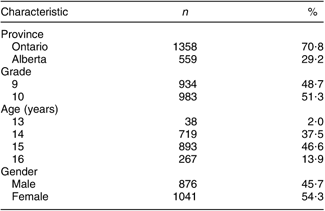
A total of 2754 grade 9 and 10 students completed the survey. Students were excluded due to missing data on sex (n 24), height and/or weight (n 426), or dietary data (n 24). Additional exclusions were based on age (<13 years or >16 years, n 13), implausible EI (<2093 or >25121kJ/d (<500 or >6000 kcal/d), n 97), or extreme self-reported height, weight and BMI values (±3 sd beyond age- and sex-adjusted means, n 59). A total of 1917 participants were included in the analysis (Table 1). There were no systematic differences in sex, age or BMI classification based on the exclusion criteria. Of the 1917 students, 71 % were from Ontario and 29 % from Alberta. Age ranged from 13 to 16 years (mean = 14·72 (sd 0·72) years) (Table 1). Females were slightly over-represented at 54 %. Based on self-reported BMI, 80 %, 17 % and 3 % of participants were classified as normal weight, overweight and obese, respectively (Table 2). The prevalence of overweight and obesity was higher among male compared to female participants (χ 2 = 59·9 (df = 2), P < 0·001).
Characteristics of 1917 students included in the study
Prevalence of overweight and obesity by gender
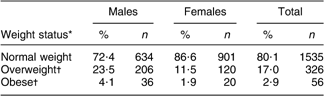
*Body weight status (BMI) was classified according to Cole et al.Reference Cole, Bellizzi, Flegal and Dietz(25).
†Males and females were significantly different, P < 0·001.
Obese males reported consuming significantly less energy over the previous 24 h period (8227 (sd 4325) kJ/d (1965 (sd 1033) kcal/d)) compared to normal weight (11300 (sd 4501) kJ/d (2699 (sd 1075) kcal/d); P < 0·001) and overweight (10919 (sd 4639) kJ/d (2608 (sd 1108) kcal/d); P < 0·001) males. Among females, total energy was not significantly different among normal weight (7921 (sd 3450) kJ/d (1892 (sd 824) kcal/d)), overweight (7252 (sd 2956) kJ/d (1732 (sd 706) kcal/d)) and obese (7390 (sd 3282)kJ/d (1765 (sd 784) kcal/d)) participants.
The mean EI:BMRest ratio across all participants was 1·4 (sd 0·6), indicating that under-reporting (<1·74) was prevalent among this sample. The mean ratio for males was 1·50 (sd 0·7) compared to 1·32 (sd 0·6) for females, suggesting that under-reporting was more common among females (t = 6·27, P < 0·001). Only 32 % of males and 19 % of females had an EI:BMRest ratio >1·74. The mean EI:BMRest decreased as a function of increasing weight status for both males (F = 33·21, P < 0·001) and females (F = 14·28, P < 0·001) (Table 3).
Mean EI:BMRest ratioFootnote * by genderFootnote † and weight statusFootnote ‡ across all participants
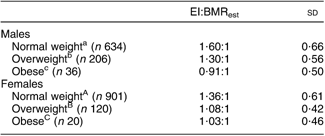
EI, energy intake; BMRest, estimated BMR.
* A mean ratio of <1·74:1 indicates under-reporting.
† EI:BMRest is significantly different between genders, P < 0·001.
‡ EI:BMRest is significantly different among the weight categories (a > b < c; A > B), P < 0·001.
After eliminating students who said that they were eating less than usual to lose weight (n 101 males, n 262 females), the mean EI:BMRest ratio was 1·56 (sd 0·6) and 1·41 (sd 0·6) for males and females, respectively (F = 21·49, P < 0·001) (Table 4). Nevertheless, the pattern of decreased EI:BMRest as a function of increasing weight status persisted for both males (F = 20·54, P < 0·001) and females (F = 5·80, P < 0·005).
Mean EI:BMRest ratioFootnote * by genderFootnote † and weight statusFootnote ‡ after removing participants who reported eating less to lose weight
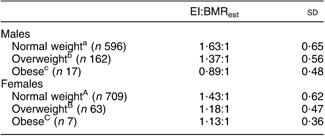
EI, energy intake; BMRest, estimated BMR.
* A mean ratio of <1·74:1 indicates under-reporting.
† EI:BMRest is significantly different between genders, P < 0·001.
‡ EI:BMRest is significantly different among the weight categories (a > b < c; A > B), P < 0·001.
Discussion
Self-reported EI as a function of sex and weight status was investigated using a validated web-based dietary survey. The mean EI:BMRest ratio across all participants was 1·4 (sd 0·6), providing evidence of under-reporting. In large population-based surveys, normal random variation across all participants should produce a mean EI that accurately reflects intake on a group basis(Reference Black, Goldberg, Jebb, Livingstone, Cole and Prentice27). Earlier studies comparing EI to total energy expenditure and BMR found no evidence of under-reporting among young children and early adolescents (4–12 years)(Reference Johnson-Down, O’Loughlin, Koski and Gray-Donald7, Reference Johnson, Driscoll and Goran28, Reference Fisher, Johnson, Lindquist, Birch and Goran29); however, recent studies of adults have revealed overall under-reporting when dietary intake was assessed via 24 h recall(Reference Jonnalagadda, Mitchell, Smiciklas-Wright, Meaker, Van Heel, Karmally, Ershow and Kris-Etherton8) and FFQ(Reference Johansson, Solvoll, Bjorneboe and Drevon6). It is possible that under-reporting was influenced by the older age of participants in the present study (13–16 years), compared to those in earlier studies. This is partially supported by a recent study(Reference Bandini, Schoeller, Cyr and Dietz9) having found a decline in reporting accuracy from middle childhood through adolescence among normal-weight girls. Our finding that under-reporting was more common among females is consistent with patterns observed among adolescents(Reference Livingstone and Black30) and adult populations(Reference Johansson, Solvoll, Bjorneboe and Drevon6). A recent study of Canadian children and adolescents (8–17 years, n 227)(Reference Carter, Whiting, Drinkwater, Zello, Faulkner and Bailey19) reported a mean EI:BMRest ratio of 1·37 for males and 1·22 for females, ratios that are slightly lower but consistent with the gender differences observed in the present study.
The mean EI:BMRest also decreased as a function of increasing weight status for males and females, a finding that replicates results reported in studies of children(Reference Johnson-Down, O’Loughlin, Koski and Gray-Donald7), adolescents(Reference Fisher, Johnson, Lindquist, Birch and Goran29) and adults(Reference Johansson, Solvoll, Bjorneboe and Drevon6), possibly as a result of social desirability bias(Reference Johnson-Down, O’Loughlin, Koski and Gray-Donald7, Reference Lissner31). This systematic difference suggests that the accuracy of dietary reporting may be confounded by weight status in the adolescent population.
Since the EI:BMRest ratio is influenced not only by under-reporting of actual intake but also by under-eating or dieting(Reference Black18), it was not surprising that removing participants who indicated that they were eating less than usual to lose weight resulted in higher mean EI:BMRest ratios in both males and females. The patterns of under-reporting as a function of sex (higher in females) and weight status (higher in overweight and obese participants), however, remained stable even when those who reported eating less than usual were removed from the analysis.
The utilisation of EI:BMRest to assess under-reporting status has limitations. BMR can be measured or estimated using several different methodologies. In the present study, the WHO equations (based on weight)(26) were chosen, based on the predictive accuracy for this age group(Reference Tverskaya, Rising, Brown and Lifshitz32) and to facilitate comparisons with previous research in children and adolescents(Reference Johnson-Down, O’Loughlin, Koski and Gray-Donald7). However, it is possible that the WHO equations overestimate BMR in obese participants(Reference Tverskaya, Rising, Brown and Lifshitz32), thus providing an overestimate of the degree of under-reporting for this subgroup. Conversely, it is possible that under-reporting of weight, especially among females(Reference Johnson, Driscoll and Goran28), may have overestimated the EI:BMRest ratio, suggesting that our estimates of under-reporting status may be conservative. While the cut-off of 1·74 to indicate under-reporting was based on the well-documented methods of Goldberg et al.(Reference Goldberg, Black, Jebb, Cole, Murgatroyd, Coward and Prentice17) and supported by DLW studies with males and females of similar age, it is possible that this value may not accurately reflect physical activity levels of participants in the current study. Although the use of self-reported heights and weights is considered to be reliable for this age group(Reference Strauss33), measured height and weight should be obtained where possible.
Self-reported EI for males and females (11087 and 7834 kJ/d (2648 and 1871 kcal/d), respectively) were similar to those reported from the latest US NHANES (IV) Survey(Reference Briefel and Johnson34) but were lower (~837kJ (~200kcal)) than those from a recent survey of Canadian adolescents(Reference Garriguet3). The FBQ was designed to address potential methodological limitations associated with nutritional surveys by building in prompts to assist the students’ memory and providing visuals to assist in the estimation of portion sizes. Additionally, it was anticipated that the anonymity associated with the web-based survey would increase the likelihood that students would be truthful in reporting sensitive information, such as body weight or junk food intake. It is possible, however, that the close proximity of other students in computer labs may have undermined this potential methodological advantage.
A single 24 h recall is thought to provide a valid estimate of mean dietary intake for groups, provided data are collected across all days of the week and seasons(Reference Gray-Donald, Jacobs-Starkey and Johnson-Down35). The majority of the current data (85 %) was derived from non-weekend days, which may have influenced energy intakes. Likewise, because 70 % of Ontario students completed the survey during the fall or winter and 90 % of Alberta students completed the survey in the spring, there was potential for seasonal effects on dietary measures. An analysis of seasonal differences, however, revealed only a small but significant difference in the intake of carbohydrates. It should be noted, given day-to-day variability in intake, that the use of multiple 24 h recalls will provide a more accurate assessment of usual intake at the individual level, which would assist in capturing the association between dietary intake and health outcomes.
Although schools were recruited using a stratified random sampling process, the low response rate raises uncertainty concerning the representativeness of the sample. Nevertheless, the sample reflects a range of socio-economic statuses and urban/rural locales(Reference Minaker, McCargar, Lambraki, Jessup, Driezen, Calengor and Hanning21).
The present study highlights the methodological challenges associated with the use of self-reported dietary data. Evidence of a systematic under-reporting of dietary intake, as a function of gender and weight status, was seen in the current study using a web-based survey; the findings are similar to observations among adolescents using paper-based 24 h recalls and dietitian interviews. Despite the associated limitations of misreporting, population-based research is likely to continue to rely on self-reported dietary survey data. Further refinements to dietary assessment approaches using electronic technology should aim at reducing this bias. It would be valuable to determine whether more detailed instructions (by the researcher or classroom teacher), presence of the classroom teacher (a person more familiar to the student) and closely monitored computer labs (e.g. zero communication between students during the survey) could aid in improving participant anonymity and reducing social expectation bias. Perhaps these quality control measures, rather than technological advances, would reduce reporting errors in children and adolescents.
Acknowledgements
Sources of funding: This research was funded by the Beef Information Centre, Canada. S.J.W. is funded by a Doctoral Student Award from the Danone Institute of Canada.
Conflict of interest: All authors declare no conflict of interest (financial or personal) with the funding agency (Beef Information Centre).
Authorship responsibilities: V.A.V. and S.J.W. wrote the manuscript based on V.A.V.’s Masters thesis and S.J.W.’s PhD comprehensive examination. R.M.H. is the supervisor of both V.A.V. and S.J.W. L.J.M. served as a committee member for both V.A.V. and S.J.W., and J.H. served as a committee member for V.A.V. All authors read, provided feedback and approved the final manuscript.
Ackknowledgements: The authors are grateful of the committed research assistance of Kate Storey, Irene Lambraki, Pete Driezen, Leia Minaker and Dr Stephen Brown.



